#web-development
2 messages · Page 117 of 1
 hushed barn
 native tide
only 10... wow
@hushed barn maybe change what your view returns
and does your console say anything?
hushed barn
but if i cant even open an empty page
console says nuthing
it worked yesterday but doesnt work anymore i didnt do anything
 steady maple
if ur 10 u cant be on discord
native tide
this ain't the place...
hushed barn
yes well i can be with a guardians permission and if i am mature enough
steady maple
oh ok
native tide
@hushed barn and the other routes work fine?
hushed barn
Yea but the from products.views import* does nothing to my code
unused imposrt statement
native tide
you don't need that.
from products.views import * imports everything form products.views, but in your products app you import them anyway
 slim beacon
firewall wouldnt stop you from connecting locally i think
hushed barn
yea true but maybeee ya know
native tide
well, I think it points to something external blocking it. Nothing shows in the console, and the routes look right
@hushed barn Can you send us a picture of your console
The "run" tab in pycharm
native tide
simpler to just send a screenshot of the run tab
native tide
well... there's your answer... since you ran into an error the server stops and when you retry the connection the server isn't running so it refuses to connect
hushed barn
yea well thanks a lot tryna fix this up
 blazing sapphire
am i doing something wrong here. it just doesnt get redirected to the home route
  res.sendFile(__dirname + '/client/test.html');
});

app.post('/test', function (req, res) {
  setTimeout(function () {
    res.redirect('/')
  }, 5000)
})```@blazing sapphire what if you specify the function in setTimeout outside of that block, then reference it inside setTimeout? I don't know whether that's the right usage of it.
blazing sapphire
even if i remove setTimeout, it still doesnt work
native tide
@blazing sapphire are you using react?
blazing sapphire
no
hushed barn
@native tide im dying here why does this show errors im doing it exactly like i read the page
native tide
read the error on the side, hover over the red for the error
you need a comma on the products path
because its a list
hushed barn
ok thanks
native tide
hey guys I just learned the basics of flask by watching a 1hr video by FreeCodeCamp
i'm confused what should I do now?
what projects should I make?
I tried googling but still confused lol
help
 native tide
ok
so I can a covid tracker with python like this (or some other way) and deploy it using flask and heroku? @rustic pebble
 rustic pebble
Yes
native tide
and is that code the only way to make a covid tracker?
rustic pebble
No
native tide
I want to do something by myself and not copy the code
rustic pebble
You can create your own wrapper
native tide
wrappers = decorators?
rustic pebble
No
You can make a background job that checks this folder:

GitHub
Novel Coronavirus (COVID-19) Cases, provided by JHU CSSE - CSSEGISandData/COVID-19
Every day
And updates a database with all countries
rustic pebble
Or you can just increment the day by 1 in this url
https://github.com/CSSEGISandData/COVID-19/blob/master/csse_covid_19_data/csse_covid_19_daily_reports/11-24-2020.csv
It is CSV so parsing it is easy
rustic pebble
Its not rly scraping since you have direct access to the file
native tide
oh
rustic pebble
All you need is the raw
So basically this link
https://raw.githubusercontent.com/CSSEGISandData/COVID-19/master/csse_covid_19_data/csse_covid_19_daily_reports/11-24-2020.csv
A simple request would do it
data = requests.get(f'https://raw.githubusercontent.com/CSSEGISandData/COVID-19/master/csse_covid_19_data/csse_covid_19_daily_reports/{current_month}-{current_day}-{current_year}.csv').text
As simple as that
native tide
oh
I get it
so I have to parse the repo and check for new files daily (for which I can write an automated script? or smth? idk)
then I can make a flask application that displays it on webpage
?
rustic pebble
You can get current date with the following
from datetime import datetime
current_month = datetime.now().strftime("%m")
current_day = datetime.now().strftime("%d")
current_year = datetime.now().strftime("%Y")
The best would be to use a database
native tide
ok
I have postgrs and mysql installed on my laptop but I never used them
let me search on my own
gtg to eat
rustic pebble
Which provides on ORM
native tide
ik that
rustic pebble
Object Relation Map
rustic pebble
sure
native tide
Will script(js) file be running on browser when rendering html using flask?
native tide
@rustic pebble what is that raw github link ? and from where you got that ?
I decide to first write a python code and then try to make a flask page on it
 bright trench
o
 past cipher
how to read a config key in my main route files? I thought it was something like app.config['secret_key']
secret key is set inside init
I want to read the value inside one of my routes
nvm done it, I imported app instead of doing from app import app
native tide
how does web development works with python?
 pine yew
@past cipher you'll also need current_app inside of a view
@native tide the same way as other languages, through a web framework. In Python, you have quite a selection but the most stable choices are Django and Flask
Django gives you more tools out of the box, Flask is extensible and relies on plugins
native tide
why would you make a web with python instead of using basic html?
past cipher
thanks @pine yew I already got it sorted
@native tide you use Python for the back-end
you still need to use html
for front-end
pine yew
native tide
why would you make a web with python instead of using basic html?
There are two parts to a website, the backend and frontend. Your backend is usually written in pretty much any language, such as Python. Your frontend will always be a collection of html, css, and javascript.
pine yew
no, not really
pine yew
I use something called FastAPI because I mostly make REST APIs at work
and it has a lot of great features
 snow sierra
but, how can you explain member everything about Django to HTML ?? sometimes Youtube or other sources are better and the best than chatting here :x it is not Negative Feedback. it is reality.. as i started python, django, html, js, css and other more... i am not pro.
 haughty turtle
when I call create_user() on a User model does this check first if the user exits?
native tide
@haughty turtle afaik the username has the unique constraint so if a user already exists with such a username you'll run into that error.
So, by that metric, yes
haughty turtle
Cool, thanks
this is correct also for email? I mean as I am not using usernames just first and last name, email, pass
native tide
I don't think the email has the unique constraint
@haughty turtle you can expand on Django's user model with your own field constraints with AbstractUser. You'll still have the User methods such as .is_authenticated etc. maybe that's what you're looking for
haughty turtle
def register_user(request):
    if request.method =="POST":
        request = json.loads(request.body.decode('utf-8'))
        first_name = request['fname']
        last_name = request['lname']
        email = request['email']
        password = request['password']
        re_password = request['re_password']
        if password == re_password:
            u = User.objects.get(email=email)
            if u:
                User.objects.create_user(first_name=first_name, last_name=last_name, email=email, password=password)
            else:
                pass
        else:
pass``` @native tide Should that be good for now in checking wether email existLooks fine, but in this scenario if the email already exists, the user won't know. (User will just return an error server-side if the unique constraint isn't fulfilled). So, I would manually check whether the email is available before saving the object.
Oh, and that being said, you'll have to add your own constraint for email if you want it to be unique
haughty turtle
yeah I am going to add that in that if a email exist it will throw a setCustomValidity('Email is Already Registered.'); on the email input in my JS
native tide
Oh, cool. Are you using React? @haughty turtle
haughty turtle
Vanilla
native tide
Ah, ouch.
native tide
Depends on your use case. If it's something simple, no bother.
But using a framework something like React is great, and the libraries available speeds up really tedious tasks such as forms, etc
haughty turtle
I will look into it after I finish the page and rewrite from Vanilla JS into a framework, my last project had 500 lines in Vanilla JS , this one probably more
native tide
But if you can write it in vanilla JS I think that's already gave you a boost in understanding the frameworks.
I went straight into React without JS knowledge and didn't know any of the terminology (I still don't understand the DOM lol) so you'll do fine
haughty turtle
Cool, nice to know, haha dove straight into the DOM in day 1, I mean I got the hang of JS in just one day, it was pretty straightforward.
Frameworks just offer a benefit in dev speed or more? guess I will have to look into it.
native tide
Yea, dev speed, page speed (React can manipulate the virtual DOM instead of the whole DOM, so no refreshing of the page) and makes everything AJAX and smooth.
I wouldn't have anything to compare it too as the only JS I use is within the framework
But it will differ slightly, if you use React the main language is JSX which varies but only slightly
 frank wedge
Hello,
I need help with two question, if someone could help me.
-
What is the proper way to chain methods based on conditions?
If I have a class with multiple methods and on my object I would like to chain some of those methods only if certain conditions are met. How would I do that? -
What is the proper encoding method for transfering data to another webservice? API service.
I'm trying to send a JSON text to another service and it seems to return an error for some characters like +, <, >... etc.
Thank you.
native tide
hello everyone
 devout coral
Hello
Anyone here have some experience with Boto3 and S3. I have a Django application and am wanting to migrate to using S3 for media files and maybe static as well. Would this be a simple transition assuming the application is already running and I have files locally of course? If so how would I go about doing it? Setting ip boto3 normally and it will upload everything automatically?
native tide
if anyone need web hosting for your websites
join this free giveaway
by my brother

KingSumo Giveaways
5 Hostinger Yearly Business Shared Hosting Giveaway by Kripesh Adwani. Hosted by KingSumo Giveaways
 lavish prismBOT
5. Do not provide or request help on projects that may break laws, breach terms of services, be considered malicious or inappropriate. Do not help with ongoing exams. Do not provide or request solutions for graded assignments, although general guidance is okay.
pine yew
!rule 6 actually
lavish prismBOT
6. No spamming or unapproved advertising, including requests for paid work. Open-source projects can be shared with others in #python-general and code reviews can be asked for in a help channel.
 dense slate
This is probably the 100000th time someone asked this but... Vue or React (or something else) and why - for Django or just in general?
pine yew
I like vue v3's more FP approach, just personal style
I also like their use of single-file components (SFC)
native tide
class NoteSerializer(ModelSerializer):
    class Meta:
        model = Note
        fields = ["name", "content", "notebook", "slug"]

        notebook = CharField(required=False)
        content = CharField(required=False, allow_null=True, allow_blank=True)
Does anyone know why even though I've specified my content field to not be required, it's still being required?
I guess the same guess for notebook
haughty turtle
@native tide Grow your email list through Viral Giveaways Not allowed and its not a open-source project, you require a email for it. It does not belong here and you might as well remove it.
@dense slate If you are looking for a job then React as its more popular, Vue is Opened Source, I will main it for personal projects, but employers mostly look for React based on what is being shown.
dense slate
Is allow_null a more recent Django change? I thought it was just null=True.
@haughty turtle Future employability aside, from ease of use and just pleasure of working with it, sounds like Vue?
haughty turtle
VueJS I have heard alot of good things about they say its the best of both worlds between React and Angular
Its a highly active project, and making sure to stay ahead of Google and Facebook, I will make sure to learn it as my main framework when not in relation to employment
 hollow scaffold
Django: real quick question, is there a way to automatically create x instance of a model if x instance doesn't exist?
I.E. (delete all model instances,) or (new django db is created): if no instances exist, a default instance automatically gets generated
hollow scaffold
Thanks, I'll take a look
for reference this is my current fix lol, but have to pass exceptions for initial migration to not throw an error
def getMainMenu(): # TODO FIX THIS SHIT
    try:
        # Check if menu is empty
        if not MainMenuLink.objects.all():
            link1 = MainMenuLink.objects.create(title='Home', url='/')
            link1.save()

...
            logging.error(f"No MainMenuLink objects exist, creating defaults")
    except:
        pass
        # Return menu
        return MainMenuLink.objects.all()
    finally:
        pass
lol
native tide
This is so strange
I'm making a new note, it's appended to my client-side "list of notes", but if I am hovering over a note when I "submit", it does not show until my mouse leaves that div (that note). I have been pondering over my code for about an hour now and im so lost...
hollow scaffold
@kindred whale thanks btw, works great
haughty turtle
@native tide Can you show a snippet of the code
Have you include any code that would stop the function that refreshes your items on screen from running, I have accidently done this before, where inside my function I would call an if statement to check if the item hovered is not the same to the refresh my items
native tide
Dude, I actually just fixed it randomly. Holy fucking shit
It came to the point where I'm just changing stuff randomly without thinking
and it worked...
And that "snippet" would be 500+ lines 😳
So thank god for that 👍
haughty turtle
yeah would of loved to help back, but would of needed to review code. Glad you got it fixed though
you should go back step by step and undo changes until you find that ramdom piece that fixed it so you can understand the problem better for future references
@native tide
native tide
Yeah
It was totally unexpected because the functionality of my component essentially mirrors the functionality of ones I already wrote (successfully).
And going line by line, everything seemed to work fine.
haughty turtle
Boom created a Custom User and just registered and logged in
native tide
I think it's something with the inner workings of React. I have a parent component with a child component, and when I press "submit" to make that note, that child component is updating the state of the parent component.
I realized a lot of the state changes of the child component were reverting the state of the parent component to its DEFAULT. So, I just removed the state-changes from the child component, and placed it all in the useEffect hook of the parent component. And that worked.
So I think what was happening was that there was some async stuff going on not as expected, still not sure lol, don't really want to know
@haughty turtle Nice!
haughty turtle
You have any resources that would give me a depper understanding on how sessions work
I know there is the db, cookies, or file storage sessions
but I want to understand how this would be able to authenticate a user with user info being stored server side
Only finding detailed information on cookie based sessions
native tide
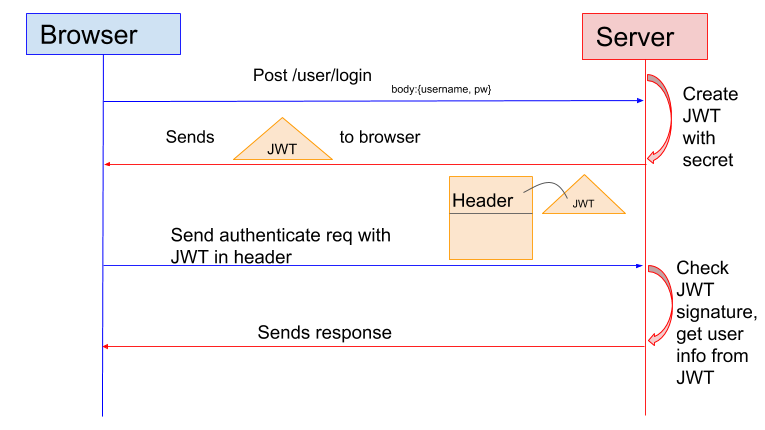
I'm pretty sure that Django gives every user a session token which is then stored client-side as a cookie, and on every request that token is included in the request header...
Actually I think I'm wrong on that one
Pretty sure that's token authentication which is different
 haughty turtle
Django uses database based sessions which are stored on the database as default
while Flask uses cookie bases sessions as default
native tide
This is giving some good info so far

MDN Web Docs
You now know how easy it is to use sessions to improve your interaction with anonymous users.
"Django uses a cookie containing a special session id to identify each browser and its associated session with the site. The actual session data is stored in the site database by default (this is more secure than storing the data in a cookie, where they are more vulnerable to malicious users). You can configure Django to store the session data in other places (cache, files, "secure" cookies), but the default location is a good and relatively secure option."
That's pretty confusing to me.
So, Django stores each user's session ID in a database, and stores it as a cookie. Then on every request compares the cookie ID to the session ID...
How is that different to token authentication?
haughty turtle
You can read it and write to request.session at any point in your view. You can edit it multiple times```it seems to grab it from request.session but yeah have to dig into it
native tide
# Get a session value by its key (e.g. 'my_car'), raising a KeyError if the key is not present
my_car = request.session['my_car']
Yeah
The mozilla docs explain it well
I might need to use the session auth to track stuff like website visits
But I still don't get how it's different to token auth
haughty turtle
    if request.method =="POST":
        new_request = json.loads(request.body.decode('utf-8'))
        first_name = new_request['fname']
        last_name = new_request['lname']
        email = new_request['email']
        password = new_request['password']
        re_password = new_request['re_password']
        if password == re_password:
            try:
                u = User.objects.get(email=email)
                print('Email already in use.')
            except:
                User.objects.create_user(first_name=first_name, last_name=last_name, email=email, password=password)
                print('User Created.')
                user = authenticate(request, email=email, password=password)
                if user is not None:
                    login(request, user)
return redirect('http://127.0.0.1:8000/portal/')```I am trying to redirect but it does nothing
 late gale
hey can someone help me here
def delete(request, pk):
    order = OrderItem.objects.get(id=pk)
    if request.method == 'POST' :
        order.delete
    elif order.DoesNotExist:
        order_name = order.name
        order_name.delete()

    return redirect('Cart')

    context = {'order': order}

    return render(request, 'products/delete.html', context)
i am trying to make the user delete the an order added to the cart by the id and it removed but if i came and add it again it says it does not exist because it has new id now so i am trying to delete it using order name or idk
 verbal snow
Im trying to raise Django's Http404 to use their 404 page, however, it 500's
https://docs.djangoproject.com/en/3.1/ref/views/#the-404-page-not-found-view
haughty turtle
@late gale You should not be removing items from cart server side
That is something you take care of in the frontend, with JS
native tide

Gist
Introduction to sessions. GitHub Gist: instantly share code, notes, and snippets.
haughty turtle
what you are doing is deleting the item from the database so this is the reason why you are getting such error, as users should not be allowed to delete global items that other users would need, that is an admin function.
Will save that to read later @native tide
Thanks
late gale
@haughty turtle oh so you mean i have to use javascript to delete i will try then
thank you
native tide
@late gale you can delete by order_number and every time something is put into the cart (or bought) assign it a new unique order number
Just a thought.
haughty turtle
Could do that also, but then doing this in Django would it not be more complicated and offer worse UX, as for changes to take effect on the browser would cause for a reload, while JS does it without reloading
?
native tide
Oh yeah JS would be the better option for sure
You'd have something like the order_number thing as an API instead in that case
late gale
but how i can select an order item like if i added an id to the <h1> tag this will remove all my order items not a certain one
haughty turtle
show me your html
late gale
ok
haughty turtle
just a snippet is fine
late gale
                    </div>
                    {% for item in order.orderitem_set.all %}
                    <div class="cart-row">
                        <div style="flex:2"><img class="row-image" src="{{item.product.image.url}}"></div>
                        <div style="flex:2"><p style="font-family: inherit;">{{item.product.name}}</p></div>
                        <div style="flex:1"><p style="font-family: inherit;">${{item.product.price|floatformat:2}}</p></div>
                        <div style="flex:1"><p class="quantity" style="font-family: inherit;">{{item.quantity}}</p></div>
                        <div style="flex:1"><p>${{item.get_total|floatformat:2}}</p></div>
                        <div style="flex:1">
                        <a class="btn btn-sm btn-dark" href="{% url 'Products' item.product.id %}" style="font-family: inherit;">Update</a>
                        </div>
                        <div style="flex:1">
                            <a class="btn btn-sm btn-danger" style="font-family: inherit;" href="{% url 'Products_Delete' item.product.id %}">Remove</a>

                        </div>
                    </div>
                    {% endfor %}
there is the part
<a class="btn btn-sm btn-danger" style="font-family: inherit;" href="{% url 'Products_Delete' item.product.id %}">Remove</a>
thats the remove btn
hope u get what i am trying to say
haughty turtle
you need to loop through all of your remove buttons and add a eventlistener
haughty turtle
on click then grab its parent element
    for ( let l = 0; l < pwLength; l++) {
        document.querySelectorAll('.cart_trash')[l].addEventListener('click', function() {
            this.parentElement.remove();
            localStorage.removeItem(this.parentElement.getAttribute('id').replace(/_/g, " "))
            let totalC = parseFloat( parseFloat(document.querySelector('#total_cost').innerHTML.replace(/[^.\d]/g, '')).toFixed(2) - parseFloat(this.parentElement.childNodes[6].innerHTML.replace(/[^.\d]/g, '')).toFixed(2) ).toFixed(2);
            document.querySelector('#total_cost').innerHTML = `Total: $${totalC}`;
            if ( cart_count () < 1 ) {
                document.querySelector('#overlay_wrapper').style.display = 'none'
            }
        });
}```this is an example that I just recently used
late gale
oh ok let me see
haughty turtle
it has some extra stuff in there but just focus on the loop, the eventlistener, and this grabs the object that your item is in get the parent and delete it.
check if the item count in the cart is 0 to then exit out of the cart display
update new total price
 tacit sleet
Okay I'm admittedly new to Django but am a bit baffled on this one. I have django running in docker. Template loads fine. I have a file called main.js in my static folder that 404s when the template tries to load it. Works perfectly in my 'prod' docker-compose using nginx and gunicorn, but running in the dev server it 404s. What the am I missing?
Grabbed a shell in the container and confirmed with diffsettings that STATIC_ROOT is configured to point to that directory (/app/staticfiles), and that the file is definitely there and has the correct permissions
STATIC_ROOT = '/app/staticfiles'
file exists in that folder and has the correct permissions:
total 16
drwxr-xr-x 3 appuser appuser 4096 Nov 25 21:10 .
drwxrwxr-x 7 appuser appuser 4096 Nov 25 21:10 ..
drwxr-xr-x 6 appuser appuser 4096 Nov 25 20:57 admin
-rw-rw-r-- 1 appuser appuser 31 Nov 25 21:10 main.js```@haughty turtle the item isnt removed yet
there is only one remove button i think no loop needed
look
                            <button type="submit" id="button" value="Remove" class="btn btn-sm btn-danger"></button>

                        </div>
                    </div>
                    {% endfor %}
                    <script>
                        document.getElementById("button").addEventListener('click', function(){
                            var order_item = document.getElementById("order_item").remove()
                        })
                    </script>
it just removed the button .
or wait
oh it worked @haughty turtle but the problem is if i refreshed it came back again
haughty turtle
because you have your button wrapped in a div
so you have to remove the parent of the parent of your button
@late gale have to head out
haughty turtle
also you need a loop because you have a button for every item {% for item in order.orderitem_set.all %}
haughty turtle
because of the for loop, on refresh it refresh everything
late gale
i tried to click on the second button but not worked
haughty turtle
so you have make sure to verify where you are grabbing your items from {% for item in order.orderitem_set.all %}
late gale
and how i gonna loop in this tbh
haughty turtle
on refresh you are setting displaying all items from django again
 grizzled sand
Hello everyone. Could i represent this function view to class based ListView?
I've confused because in django documentation says, ListView - Each generic view needs to know what model it will be acting upon. This is provided using the model attribute.
as i understand with model = My_model, but if i want add more the one model to this view, how can i do that?
Thanks!
def index(request):
    '''
    Function for display homepage
    '''
    # Generate count main objects
    num_books = Book.objects.filter(genre__name__icontains='').count()
    num_instances = BookInstance.objects.all().count()
    num_genres = Genre.objects.all().count()
    # Avalible books (status='a')
    num_instances_avalible = BookInstance.objects.filter(status__exact='a').count()
    num_authors = Author.objects.count()
    num_articles = Article.objects.filter(category__name__icontains='').count()

    # Number of visits to this view, as counted in the session variable.
    num_visits = request.session.get('num_visits', 0)
    request.session['num_visits'] = num_visits+1

    # Render HTML-tamplate index.html with data inside variables 'context'
    return render(
        request,
        'index.html',
        context={
            'num_books': num_books,
            'num_instances': num_instances,
            'num_instances_avalible': num_instances_avalible,
            'num_authors': num_authors,
            'num_genres': num_genres,
            'num_visits': num_visits,
            'num_articles': num_articles,
        },
    )
I have to head out wife is waiting for me, instead of using django to display each item in your cart try to use js
haughty turtle
So when a user clicks add to cart you send the items they added over to Django? @late gale
haughty turtle
@late gale are you dealing with registered users?
snow sierra
haughty turtle
```py
def register_user(request):
if request.method =="POST":
reques...
let me know why here is not request.POST['fname'] instead of request['fname'] .. etc.. ????
 wary turret
Hello! I'm looking to start a personal project that needs a webserver backend. Just a few endpoints and some light DB access. Is Flask still the way to go? or is there something new/interesting I should check out?
haughty turtle
@snow sierra because I sent a POST through fetch in JS,
My items was attached into it's body as JSON
snow sierra
oops sorry, yes ( request = json.loads(request.body.decode('utf-8')) )
late gale
@haughty turtle nope guest users
haughty turtle
If you are using guest user then no reason to send this over to Django
late gale
i did i can remove all the orders using django from the remove button but cant remove specific one
haughty turtle
Could be due to the cascade on delete, show your model, but what I want to say is that if you are logging a user in then you shouldn't be sending this over to Django until the user is ready to finalize the purchase then you cross reference your items from your models to make sure they are paying the correct price.
 trim star
I am trying to run unit tests in django python3 manage.py tests and I get the following error:
django.contrib.messages.api.MessageFailure: You cannot add messages without installing django.contrib.messages.middleware.MessageMiddleware
And messages is in INSTALLED_APPS
and MIDDLEWARE
haughty turtle
Even then if you log a user, me personally I would save this as a JSON through the use of fetch and save it under my User model. Then I would be able to grab it and loop through it. Even then point being you will still need JS to provide better UX, the way you are going would require a reload. @late gale
The way you are displaying your items in your HTML requires a reload for changes to take effect. Not recommended
 vestal hound
@grizzled sand that doesn’t really work... it has to be one model per view.
can be nested thoughthis
 gaunt marlin
@trim star did you add django.contrib.messages.middleware.MessageMiddleware' to your MIDDLEWARE settings ? https://docs.djangoproject.com/en/3.1/topics/http/middleware/#activating-middleware
i presume that you also had django.contrib.messages in your INSTALLED_APPS
 twilit needle
hushed barn
yes well i can be with a guardians permission and if i am mature enough
twilit needle
hushed barn
yes well i can be with a guardians permission and if i am mature enough
BRUH no thats against discord's tos but dont worry I wont report you
import axios from 'axios';
import pixStore from '../redux/store';

axios.defaults.xsrfHeaderName = "X-CSRFToken"
axios.defaults.xsrfCookieName = 'csrftoken'
axios.defaults.headers.common['Authorization'] = JSON.parse(pixStore.getState().token);

export default axios;```I did this to make axios default headers but still my requests are failing because they arent authorized
the api says I need the auth token in the header
But I already have it, right?
What am I doing wrong here? pls help me
I console.logged JSON.parse(pixStore.getState().token) Its the correct token
gaunt marlin
most api will also following the format of "Authorization: Bearer <token>"
twilit needle
xhr.js:177 POST http://127.0.0.1:8000/api/logout/ 401 (Unauthorized)
(anonymous) @ xhr.js:177
e.exports @ xhr.js:13
e.exports @ dispatchRequest.js:50
Promise.then (async)
l.request @ Axios.js:61
r.forEach.l.<computed> @ Axios.js:87
(anonymous) @ bind.js:9
onClick @ sideBar.jsx:41
We @ react-dom.production.min.js:52
Ye @ react-dom.production.min.js:52
(anonymous) @ react-dom.production.min.js:53
Er @ react-dom.production.min.js:100
Cr @ react-dom.production.min.js:101
(anonymous) @ react-dom.production.min.js:113
ze @ react-dom.production.min.js:292
(anonymous) @ react-dom.production.min.js:50
Nr @ react-dom.production.min.js:105
Zt @ react-dom.production.min.js:75
Jt @ react-dom.production.min.js:74
t.unstable_runWithPriority @ scheduler.production.min.js:18
$o @ react-dom.production.min.js:122
Le @ react-dom.production.min.js:292
Gt @ react-dom.production.min.js:73
sideBar.jsx:46 Error: Request failed with status code 401
    at e.exports (createError.js:16)
    at e.exports (settle.js:17)
at XMLHttpRequest.p.onreadystatechange (xhr.js:62)```ohh
axios.defaults.headers.common['Authorization'] = 'Bearer ' + JSON.parse(pixStore.getState().token);
like this?
@gaunt marlin
gaunt marlin
yeah
gaunt marlin
no need for <>
twilit needle
okayb thanks Ill try it
gaunt marlin
i just use it to tell it's for token
gaunt marlin
MDN Web Docs
The HTTP 401 Unauthorized client error status response code indicates that the request has not been applied because it lacks valid authentication credentials for the target resource.
twilit needle
function logoutUser() {
axios.post('/api/logout/')
.then(() => {
dispatch({type: "CLEAR_AUTH"});
<Redirect to='/login/' />
})
.catch(error => {console.log(error)});
}``` karmic egret
can anyone suggest me some helpful tutorial for flask-security
twilit needle
this is how I make the request
and I import axios from here
import axios from '../../tools/csrfConfig';``` where I defined the default headersanything wrong here?
twilit needle
token auth django
trim star
gaunt marlin
<@!739119338573004803> did you add `django.contrib.messages.middleware.MessageMi...
Yes I did
twilit needle
my other endpoints which dont need authentication are fine
gaunt marlin
i think you mean authToken of DRF, not Django(django don't have it)
@twilit needle then i think you would need to use the format of "Authorization: Token <token>" https://www.django-rest-framework.org/api-guide/authentication/#tokenauthentication
as you see from the example
Authorization: Token 9944b09199c62bcf9418ad846dd0e4bbdfc6ee4b
Django, API, REST, Authentication
jwt you use Bearer, auth token you use Token
 glass badger
Can Django work as a sub-domain to a SquareSpace website?
twilit needle
axios.defaults.headers.common['Authorization'] = 'Authorization: Token ' + JSON.parse(pixStore.getState().token);``` am trying this @gaunt marlin@twilit needle don't do that, you don't need the after authorization
twilit needle
okay
lol
axios.defaults.headers.common['Authorization'] = 'Authorization ' + JSON.parse(pixStore.getState().token);```this?
it doesnt work though
same error in console
gaunt marlin
axios.defaults.headers.common['Authorization'] = 'Token ' + JSON.parse(pixStore.getState().token);
is ok , i don't know about axios so i guess this is the way to set header
twilit needle
http http://127.0.0.1:8000/hello/ 'Authorization: Token 9054f7aa9305e012b3c2300408c3dfdf390fcddf'```I saw this example
twilit needle
yeah but it didnt
one sec
@api_view(["POST"])
@permission_classes((IsAuthenticated,))
def logout(request):
    try:
        request.user.auth_token.delete()
    except (AttributeError, Exception):
        pass
    logout(request._request)
    return Response(status=HTTP_200_OK)
this is my view
gaunt marlin
what did the api return?
gaunt marlin
did you check your token? to see if it's correct?
twilit needle
um yes
its correct
am sure

Simple is Better Than Complex
In this tutorial you are going to learn how to implement Token-based authentication using Django REST Framework (DRF).The token authentication works by excha...
am referring to this
GUESS WHAT IT WORKED
and I know why
axios.defaults.headers.common['Authorization'] = 'Token ' + JSON.parse(pixStore.getState().token);
we're supposed to do this
the Authorization: part was this
axios.defaults.headers.common['Authorization']
axios automatically passes it as a dict
so we shouldnt do Authorization:
gaunt marlin
well yeah that what headers.common is for
twilit needle
yeahh
gaunt marlin
set the header values
twilit needle
lol I was so stupid
gaunt marlin
so it can pack into dictionary
gaunt marlin
gaunt marlin
```js
axios.defaults.headers.common['Authorization'] = 'Token ' + JSON.parse(pix...
@twilit needle i suggested you this earlier but you said it returned 401 which make me confused
twilit needle
Ohh
sorry I think I mistook you
Maximum update depth exceeded. This can happen when a component repeatedly calls setState inside componentWillUpdate or componentDidUpdate. React limits the number of nested updates to prevent infinite loops.
now I get this error duh
when I try to login
import React from 'react';
import { Route, Redirect } from 'react-router-dom';
import {useSelector} from 'react-redux';
import {IsNull} from '../../tools/easierJavascript';

const PrivateRoute = ({component: Component, ...rest}) => {
    const user = JSON.parse(useSelector(state => state.user));
    return (
        <Route {...rest} render={props => (
            (!IsNull(user)) ? <Component {...props} /> : <Redirect to='/login/' />
        )} />
    );
};```problem is with this
gaunt marlin
well that is axios error which i'm no expert in
twilit needle
no its reactjs error
function AppRouter () {
    return (
       <Router>
           <div className="appRouter">
                <Switch>
                  <PrivateRoute path='/app/' component={App} exact />} />
                  <Route exact path="/" render={() => (<Redirect to="/app/" />)} />
                  <AuthenticationRoute path='/login/' component={LoginMount} />
                  <AuthenticationRoute path='/register/' component={RegistrationMount} />
                </Switch>
            </div>
       </Router>
   );
So I have a router for my app
gaunt marlin
well react use axios to doing requests
twilit needle
and it has PrivateRoute components
gaunt marlin
oh ok got it
twilit needle
the private route component is running an infinite loop?
Maximum update depth exceeded. This can happen when a component repeatedly calls setState inside componentWillUpdate or componentDidUpdate. React limits the number of nested updates to prevent infinite loops.```I got this error
nevermind
I think I solved it
I didnt json.parse the user in another component
gaunt marlin
@trim star i think your case might be like this https://stackoverflow.com/questions/55843504/django-messages-middleware-issue-while-testing-post-request

Stack Overflow
I'm trying to test an UpdateView that adds a message to the redirected success page. It seems my issue comes from messages because of pytest returns:
django.contrib.messages.api.MessageFailure: ...
 iron beacon
gn everyone
I'm kinda new to web-dev, mostly the authentication part got me confused
My question is how is token more secure then username and password authentication to REST APIs?
I'm currently developing a REST API and there's a endpoint to retrieve the user token based on its username and password.
In that case is not the same thing? If someone get your password it might aswell get your token in that way
gaunt marlin
@iron beacon token is to identify which user calling the api,
you first send username/password to authenticate that user is correct and give them a short live token, for example to call /profile api you would send user token instead of sending username/password again. If you want to secure from man in the middle attack(if someone stole your token), this is where SSL come in, it's use to encrypt your network traffic. If you use authentication setting up SSL is MANDATORY. TLDR: Token itself don't have any security, it just use to identify user, if you want secure then encrypt your api host with SSL
iron beacon
Oh, so that's why the DRF documentation mentions that you need to use HTTPS instead of HTTP when working with tokens
gaunt marlin
yep
hushed barn
Anyone here who can help with a django url displaying this image
@ me if you have an answer pwease Thanks!
vestal hound
hushed barn
@ me if you have an answer pwease Thanks!
...at a guess, your server isn't running.
hushed barn
vestal hound
...at a guess, your server isn't running.
I did the wunserver command?
vestal hound
hushed barn
I did the wunserver command?
the what?
hushed barn
vestal hound
the what?
In terminal i did the runserver command
vestal hound
there is a time and place to act cute, but this isn't it IMO...
so is it actually running?
check your terminal
hushed barn
vestal hound
check your terminal
Can you send me the exact command i should be using
vestal hound
hushed barn
Can you send me the exact command i should be using
python manage.py runserver...?
hushed barn
vestal hound
there is a time and place to act cute, but this isn't it IMO...
python manage.py runserver
hushed barn
vestal hound
`python manage.py runserver`...?
That feeling when your so dumb how did i not remember every time i restart i gotta run the server Thank you! maybe i should quit coding when i still can i probably should not code when im 10
native tide
hii
native tide
hiya
native tide
native tide
Hi
I want to compare modell value with request value ( Django )
log
{'type': 'textbox', 'group': 'content', 'name': 'textbox_00', 'settings': {'text': 'Ny text?'}}
{'type': 'inputs', 'group': 'content', 'name': 'inputs_01', 'settings': {'input1': 'Ja', 'input2': 'Nej', 'type': 'button'}}
<QuerySet [<SettingsPair: input1: Ja>, <SettingsPair: input2: Nej>, <SettingsPair: type: button>]>
None
{'type': 'textbox', 'group': 'content', 'name': 'textbox_00', 'settings': {'text': 'Ny text?'}}
{'type': 'inputs', 'group': 'content', 'name': 'inputs_01', 'settings': {'input1': 'Ja', 'input2': 'Nej', 'type': 'button'}}
code
for ui in found_question_uis:
        settings = print(ui.settings.all())
        print(settings)
        for req_ui in request_ui_components:
            print (req_ui)
@hushed barn everyone hits the point you have hit and makes silly mistakes wether you are 10 or 50 or anywhere in-between learning something new is the same for everyone. I started around that age messing with C++ and regret giving up to just pick back up on it at 23 years old. Also you should probably stop stating that you are under the age of Discord ToS might get your account suspended, either way your never to young or old to learn how to code.
 meager pecan
haughty turtle
meager pecan
haughty turtle
🤔
 weary dragon
Hello guys, have you some resources from where i can learn django? i have some experience with flask
native tide
@weary dragon pretty printed / corey shafer do great django courses
weary dragon
alright then, thanks
native tide
am I doing it right?
 vestal dove
 feral condor
hello I have this model in django ```class Trip(models.Model):
bus = models.ForeignKey(Bus, on_delete=models.PROTECT, related_name='trip_detail')
class Seat(models.Model):
bus = models.ForeignKey(Bus, on_delete=models.PROTECT, related_name='seats')
label = models.CharField(max_length=100)
x = models.PositiveIntegerField()
y = models.PositiveIntegerField()
class Bus(models.Model):
number_plate = models.CharField(max_length=100, primary_key=True)
travel_agency = models.CharField(max_length=256)```how can i serialize Seat fields from Trip?
travel_agency = serializers.ReadOnlyField(source='bus.travel_agency')gives travel_agency but couldnt reach Seat fields
 sterile peak
I am going mad trying to work with zeep and one WSDL.. is there anyone experienced with this
native tide
@vestal dove you need to use blueprints
@feral condor Open the database in a DB viewer (SQLite browser) and see what fields were generated
Then you will know how to navigate
 versed python
Anyone here who has worked with Django and ariadne? I am having a tough time implementing user authentication and want to see some example repos if you have one.
native tide
Hey guys... I am looking to build an application that is going to have two bits that need to work independently. One would be talking (mostly receiving) to a MQTT bus, the other one would offer a REST API to serve as an endpoint for a system downrange. I did something similar a couple years ago and then I decided to use Threading. I ran my server in one thread and web server in the other while they exchanged data throuh Queues.
I guess my question would be what would be the go-to approach for something like this today?
Thank you in advance for any advice you may give!
haughty turtle
Could you not also use a text file called logs and check up on it to then see when its updated and if so then read it and perform a action, as far as best practices I do not know, I have done something similar with Sockets for apps on different system, but if they are on the same seems like a log file would serve the purpose
Ah take a look at this

GeeksforGeeks
A Computer Science portal for geeks. It contains well written, well thought and well explained computer science and programming articles, quizzes and practice/competitive programming/company interview Questions.
@native tide
native tide
@haughty turtle yes, I have considered this option too.
haughty turtle
https://docs.python.org/3/library/ipc.html the python docs reference the use of signal or mmap modules for IPC on same machine. Might be worth taking a look at
@native tide
 thin dome
anyone here?
i want help
with my django project
i am facing a error
error is '<module 'home.urls' from 'D:\\Programs\\Hello\\home\\urls.py'>' does not appear to have any patterns in it. If you see valid patterns in the file then the issue is probably caused by a circular import.
verbal snow
For some reason i get this when going to the django admin panel
https://haste.powercord.dev/wenosesone
thin dome
are u reponding to me?
verbal snow
How would I respond to you with and admin panel error?
thin dome
sorry
native tide
@thin dome show us urls.py
native tide
home\urls.py
thin dome
ok
from django.urls import path
from home import views

urlpatterns = [
    path("", views.index, name="home")
]
@verbal snow 'User' object has no attribute 'pk' What is your User object in this case?
@thin dome did you register you app in settings.py
thin dome
how to? in tutorial he doent open settings.py @native tide
i m learning so idk that error and other stuff
native tide
So open settings.py and show me INSTALLED_APPS
verbal snow
native tide
<@!679118121943957504> ``'User' object has no attribute 'pk'`` What is your `Use...
I have a separate user model than the admin user model. Which one?
trim star
gaunt marlin
<@!739119338573004803> did you add `django.contrib.messages.middleware.MessageMi...
Yes I had those items but for some reason when I run the tests it fails
thin dome
    'django.contrib.admin',
    'django.contrib.auth',
    'django.contrib.contenttypes',
    'django.contrib.sessions',
    'django.contrib.messages',
    'django.contrib.staticfiles',
]``` @native tidewhat is your appname? is it home? If so, add 'home` to installed_apps
native tide
@verbal snow Do you know what file that error is in, User object has no attribute pk?
@thin dome No, just 'home'
thin dome
ok
native tide
The name of the app
thin dome
    'home'
    'django.contrib.admin',
    'django.contrib.auth',
    'django.contrib.contenttypes',
    'django.contrib.sessions',
    'django.contrib.messages',
    'django.contrib.staticfiles',
]```like this?
thin dome
then how?
verbal snow
native tide
<@!679118121943957504> Do you know what file that error is in, `User` object has...
Looks like a django file itself
Looks like admin logs
Logs.py of admin
native tide
@thin dome Yeah, that's not a django problem, that's a basic python problem. Give me an example of a list.
native tide
Now compare that to your INSTALLED_APPS
thin dome
['home']?
native tide
@verbal snow I'm gonna need more information than the error, maybe you're calling .pk incorrectly? I don't know
native tide
Ok, do you have a custom User model?
thin dome
is it ['home']?
verbal snow
No
thin dome
help mememememememememeeeeeee
native tide
@verbal snow So what are your models looking like?
Flask or Django. Which is best?
And WHy?
thin dome
flask for small apps django for big
native tide
@thin dome You just gave me an example of the list. Now compare it to INSTALLED_APPS.
native tide
thin dome
flask for small apps django for big
Learning Django will be fine?
thin dome
i am learning it too @native tide
native tide
you need a comma after 'home'
thin dome
ok nice mentor
native tide
thin dome
i am learning it too <@456226577798135808>
Ohk Thank You.
so I asked you to compare it to your list so that you'd see that you need a comma
thin dome
is this right?
    'django.contrib.admin',
    'django.contrib.auth',
    'django.contrib.contenttypes',
    'django.contrib.sessions',
    'django.contrib.messages',
'django.contrib.staticfiles',```what type is INSTALLED_APPS
Can we do the things which JS can do like adding animations to button with django?
@native tide Not really, unless you use CSS animations
Django is a backend framework
thin dome
INSTALLED APPS is list
native tide
exactly... so why are you doing this? ['home']
Ohk and can we render js(frontend js) with django.
yep
within a html?
mhm
like having a js file for html.
and we render html so that js is also rendered.
thin dome
    'home',
    'django.contrib.admin',
    'django.contrib.auth',
    'django.contrib.contenttypes',
    'django.contrib.sessions',
    'django.contrib.messages',
    'django.contrib.staticfiles',
]```Yeah and having index.js linked with html
native tide
Then its fine i can then make a nice frontend too.
 untold topaz
Anyone here familiar with XML and XML Queries??
verbal snow
native tide
Do you have any project with django like having a text box linked with sql?
verbal snow
this is my models
but the error looks like it has to do with the admin User model
I have my own user model
thin dome
this is my rootROOT_URLCONF = 'Hello.urls'
verbal snow
But it is not sub classing the admin one
native tide
@verbal snow Possibly, in your admin model are you setting this?:
unique_id = models.AutoField(primary_key=True)```@native tide
@thin dome No, open up the urls.py , you should have 2
Want to see how the code looks like.
thin dome
yes
native tide
thin dome
yes
For me?
thin dome
this is my hello url=```from django.contrib import admin
from django.urls import path,include
urlpatterns = [
path('admin/', admin.site.urls),
path('', include('home.urls'))
]
no i was saying it to @native tide
native tide
Ohk
thin dome
u indian?
native tide
Yes.
 simple surge
hi
verbal snow
native tide
<@!679118121943957504> Possibly, in your admin model are you setting this?:
```p...
What admin model?
simple surge
I`m, luqm,an
verbal snow
I'm not editing any admin models, nor am I subclassing any of them
thin dome
@native tide
native tide
@verbal snow But you made your own admin model, right?
native tide
thin dome
u indian?
Why are you asking btw?
thin dome
yes
verbal snow
native tide
<@!679118121943957504> But you made your own admin model, right?
No
Thats what I've been trying to say
thin dome
man help meeeeeeeeeeeeee
verbal snow
I'm not doing anything with any admin models
thin dome
@verbal snow can u help me?
verbal snow
What is it?
thin dome
mproperlyConfigured: The included URLconf '<module 'home.urls' from 'D:\Programs\Hello\home\urls.py'>' does not appear to have any patterns in it. If you see valid patterns in the file then the issue is probably caused by a circular import.
this error
verbal snow
thin dome
can u come to vc i will screen share
native tide
no
thin dome
ok
is this what u want
from django.urls import path
from home import views

urlpatterns = [
    path("", views.index, name="home")
]
this is my app urls
native tide
give it a path, like 'example/' and see what the issue is then
thin dome
i was creating fornt page
means if there is just url then it will go home page
so its just " "
native tide
Ok, it was just a debugging thing, what's your views.index?
thin dome
# Create your views here.
def index(request):
return HttpResponse("this is homepage")```this is my views.py
native tide
So if you want it in the homepage, why don't you just do
path("", views.index(whatever the route is), name="homepage") in your main urls.py
verbal snow
whats so hard to understand
native tide
so is your issue fixed now?
thin dome
yes
but include doent work
but i think thats ok
this is my main urls```from django.contrib import admin
from django.urls import path,include
from home import views
urlpatterns = [
path('admin/', admin.site.urls),
path("", views.index, name="homepage"),
]
because in your main urls.py, you are specifying the routes for your apps.
so
path("products/", include(products.urls))```
will setup a url for `site/products`

Then in your `products` app you can do:

```py
path("product-1/", views.index, name="product-1")
which is for the url site/products/product-1/
So if you have an app, make sure it has it's own url.
native tide
use google
thin dome
ok
native tide
Can we do register and login logic from a single route in django?
@native tide yep
@native tide give me some hints
how would you do that?
I want home address to be redirected to login/register page
can't you just have 2 forms which do different things when submitted
when they are not logged in or registered
native tide
native tide
can't you just have 2 forms which do different things when submitted
oh right
Can I redirect to two different pages? (login and home) from a single (home address) route?
@native tide
why not
sure
again, I need hint for that
that would be awesome
anyway, are you working on ML project sir?
well, if Login form is submitted, redirect to x, if signup form is submitted, redirect to y
not atm but I'd be interested to hear about it
but, the project urls.py file would give me an error if I set two app with same route ('') right?
haughty turtle
In your view @native tide
In your urls.py it would grab the first one that matches
native tide
haughty turtle
In your urls.py it would grab the first one that matches
so, how do I do that whole thing working?
@native tide Oh I misunderstood that question
say, I have an app for home route leading to dashboard with an empty route in projects, urls.py
You can have one route, have a view, that view can take information from the request (which specifies stuff, like login or register and THEN redirect you to another route)
and same for login page (app)
haughty turtle
The norm is that you send a user to login and from there you place a link that sends them to the register page
@native tide
native tide
native tide
You can have one route, have a view, that view can take information from the req...
so, the url should be different?
Well can you explain in layman terms what you want to achieve?
haughty turtle
He just wants to create a normal login registration page, but the thing is @native tide that you would have no way to find out if the user wants to login or register without them clicking a link for either or
native tide
haughty turtle
The norm is that you send a user to login and from there you place a link that s...
I am actually trying to move the static website which was designed with html/css, now, I am trying to add blog on it. but, I designed the login/register form in a single page
then, I also don't want the login/register page routes to be url/login or url/register
got me?
haughty turtle
Well how would you know what a user wants to do ?
native tide
wdym?
haughty turtle
You have to have a link saying to either register or login, from there you can use JS to display the either form depending on which was clicked
You want the log in and register to be on the same page correct, you can choose to display a log in form and have a Register Account link under the form
Upon clicking the link with JS you can hide the display of the login form and show the sign up one
You send a fetch POST to the server and specify wether it's a Login or Signup and handle that in your views.
native tide
Still don't know what he wants lol. You can have the login/register on the same page, and if LoginForm.is_valid() you can redirect to (/homepage/) and you can do the same for the RegisterForm, it's got nothing to do with the routes
Can I DM one of you guys to show what I am trying to make?
native tide
haughty turtle
Upon clicking the link with JS you can hide the display of the login form and sh...
I have created a page like this
haughty turtle
And you are struggling to toggle which forms to display?
haughty turtle
in Django all you need is a view to send a POST request through fecth in JS that contains your form data and then type of form sent wether Login or Register.. with that you either register the user and log them in or just log them in and then send them to the dashboard
tacit sleet
Yesterday someone that was helping me with a Django issue mentioned that they hadn't done Django in a while - is that because Django isn't the best option for a python frontend and I should consider something else? I'm building a portal a user will oauth into to manage some settings (via API calls to another service) and take a subscription payment via Stripe
native tide
are you good at JS?
tacit sleet
Writing JS for this is my first real exposure to it, so no
native tide
php?
tacit sleet
I'd prefer not - I'm familiar enough to know I'm not a huge fan of PHP
if I did something other than python it'd be JS, but that's a bigger undertaking since I'd have so much to learn
If the answer is python is a bad option and just go learn JS I'm okay with that
native tide
I am no expert but Python isn't bad. But, if you were familiar with JS, I would suggest JS. But, if you have to start from the beginning, it doesn't worth
because django is capable of doing your things
tacit sleet
thanks!
haughty turtle
Django for backend, JS frontend
JS is built into the browser client side so it allows for real time changes in the browser while you secure your website and any sensitive info with Django and it's backend which handles any request sent to your server
tacit sleet
yeah that's what I'm doing now. Using JS to do the event handling for button clicks and passing things to django for payment/etc.
native tide
in django how to add like a global filter to a model. So everytime this model is called, that filter is applied to it before.
tacit sleet
I just wanted to make sure I shouldn't go to an all JS solution like node or something
haughty turtle

Clever Solution
Node.js and Django: differences and similarities. Arm yourself with the optimal technology stack to advance your proficiency in web development.
Seems like Django offers better security and faster deployment then node.js
 quick cargo
thats low key comparing an entire language to a framework tho
 surreal nest
Hi guys
I have a question about the http protocole
Let’s say a client made a request and the server responded back
How does the client know how to ask new requests depending of the servers’s answer ?
surreal nest
Nvm, seems that the client make himself the new request depending on the response of the server
native tide
@native tide what's your ML project btw?
 minor horizon
I just have created a fast api running in a docker container. It shows that it's running, but it's absolutely not responding to my posts. Any ideas?
This is the dockerfile:
FROM python:3.6.9-alpine

WORKDIR /fapi

COPY . /fapi

RUN pip install --upgrade pip setuptools wheel
RUN pip install -r /fapi/requirements.txt

EXPOSE 8000

CMD [ "uvicorn", "api:app" ]
And I run it via: docker run -p 8000:8000 fapi:test
And this is the output:
INFO:     Started server process [1]
INFO:     Waiting for application startup.
INFO:     Application startup complete.
INFO:     Uvicorn running on http://127.0.0.1:8000 (Press CTRL+C to quit)
 native monolith
minor horizon
I just have created a fast api running in a docker container. It shows that it's...
native monolith
minor horizon
I just have created a fast api running in a docker container. It shows that it's...
have you tried localhost?
curl - X POST localhost:8000/
native monolith
is your app working on this port ?
minor horizon
Sorry, what do you mean by address?
native monolith
127.0.0.1 aka local host is reachable as localhost inside, but im not sure
minor horizon
I would love to if you help me, I'm kinda stuck here
Hmm
I just tried 0.0.0.0, not working either
when I run it via like uvicorn api:app, it works well. Without docker
PORTS seems right, right?
curl -X GET 0.0.0.0:8000/ i get the error curl: (56) Recv failure: Connection reset by peer
native monolith
try adding output ip
Docker Forums
Hi, The solution to mapping port while running the container. docker run -d --net=host myvnc that will expose and map the port automatically to your host Thank you Asura
minor horizon
This worker, thanks! But I doesn't fit for me yet, I need to understand this
What if I don't want to use host's network, isn't the isolating containers best practice?
native monolith
I would tell you If I knew
minor horizon
I see. Thanks a lot!
native tide
Has anybody deployed a django + react application before? What hosting service did you use? Please let me know 🙂
haughty turtle
Would it be any different than a normal setup?
native tide
I don't know what the "normal" setup is
haughty turtle
check out linode
native tide
I feel like linode doesn't have the relevant reputation to be able to discuss on a resume...
Compared to something like AWS or GCP
but I've heard AWS is not for beginners
so I think I'll use heroku or GCP
or digital ocean. but i've not heard much about that
haughty turtle
Umm what's the difference between Linode and AWS?
Aren't they both VPS
@native tide
 short nacelle
AWS is awesome, use S3 Buckets to host static websites
thin dome
how to use render?
gaunt marlin
render of Django?
 humble rapids
I know this is unrelated. But does anyone here have a good understanding of the library 'pyglet' in python and would be willing to help me out?
native tide
native tide
<@456226577798135808> what's your ML project btw?
trying to implement a linear regression problem solution in my webapp
gaunt marlin
@thin dome render() is to use within your app views, it render which html template to return with values passing to that template. To read more on the function you can see this https://docs.djangoproject.com/en/3.1/topics/http/shortcuts/#render
If you haven't done the django tutorial pages it mention on how to use it https://docs.djangoproject.com/en/3.1/intro/tutorial03/#write-views-that-actually-do-something
thin dome
ya i solved it
 pseudo marsh
Hey there, I needed some help with html
on this page
https://leetcode.com/problems/poor-pigs/
Inspect element, and you will find a div tag like this:
<div class = "content__u3I1 question-content__JfgR" >
I'm not so good with web development, Could someone help me figure out where this class = "content__u3I1 question-content__JfgR"is?
I want to copy the question description from the page and format it just like it is formatted on leetcode
I tried looking at the link rel stylesheets thing in the <head> tag but I couldn't figure it out
vestal hound
pseudo marsh
Hey there, I needed some help with html
on this page
<https://leetcode.com/prob...
it's automatically generated by some frontend framework
karmic egret
can anyone suggest me helpful videos and article for flask security, especially on how can I manage and personifize my own login, logout, etc websites
pseudo marsh
vestal hound
it's automatically generated by some frontend framework
well how do I format the question the way they did on my page then?
vestal hound
pseudo marsh
well how do I format the question the way they did on my page then?
...is that even legal?
pseudo marsh
that sounds really weird
vestal hound
pseudo marsh
and how'd you tell it was automatically generated
nobody calls their CSS classes "content_U3I1"
anyway
pseudo marsh
lol that was the only reason?
vestal hound
pseudo marsh
well how do I format the question the way they did on my page then?
you mean replicate the whole page?
or just the question?
rustic pebble
Frontend framework for sure, React does that
pseudo marsh
will not be able to respond till thhen
pseudo marsh
aight I'm back
pseudo marsh
vestal hound
or just the question?
well just the question, is that doable?
pseudo marsh
rustic pebble
Frontend framework for sure, React does that
Uh is there an easy way to replicate it then?
rustic pebble
Well React is a huge frontend framework, there is nothing easy going with it lmao
@pseudo marsh
pseudo marsh
I mean
I didn't intend to have it identical, just something that looked similarly formatted to that piece of text
I don't think that would require me to invest time into react imo
vestal hound
define "similarly formatted"
pseudo marsh
For now I'll just do with the bareblocks html part of it and add some backticks in there to make a few words stand out and that'll suffice
Have a similar look
rustic pebble
You cannot replicate SPA-like behavior without a SPA framework and as all things, learning one takes time and devotion
vestal hound
pseudo marsh
Have a similar look
not specific enough
pseudo marsh
yeah I didn't anticipate a task as simple as this would require all that effort, is all
vestal hound
I have no idea what you mean by the "look"
vestal hound
which is a pretty subjective thing
rustic pebble
ye
vestal hound
rustic pebble
Or by the styling of the web page?
this, but which aspect of the styling?
rustic pebble
Yes
pseudo marsh
I just wanted to have this piece of text somewhere else
and for it to have the same look as this
rustic pebble
That's styling and has nothing to do with react
vestal hound
basic CSS
vestal hound
do you know CSS?
pseudo marsh
Right, and I figured the styling depended on the class name which was kinda what I think I asked originally
vestal hound
pseudo marsh
Right, and I figured the styling depended on the class name which was kinda what...
hm.
do you know how CSS classes work?
pseudo marsh
Yeah a bit, and I figured the style for this was coming from the css class I asked about earlier?
rustic pebble
There is no css class actually, you create an element, you create a class attribute for that HTML element then you can directly edit that element's style by using its class name as an identifier in css
So basically
pseudo marsh
ie, I wanted the definition for the class so I coudl have a similar wstyle
rustic pebble
<p class="test">this is a test paragraph</p>
This has a class with the name of test
in order to style that object you can do 2 things
either in-line styling by adding a style attribute
vestal hound
pseudo marsh
ie, I wanted the definition for the class so I coudl have a similar wstyle
ah, then not really
in this specific case
those classes are for content projection
not for styling the question text itself
rustic pebble
or by creating a css file and doing the following
.test {
  /* add style here
}
I understand that, which was why
<div class = "content__u3I1 question-content__JfgR" >
I was looking for where "content__u3I1 question-content__JfgR" was defined
oh
rustic pebble
that's for content projections yet
it probably inherits style from a parent element
pseudo marsh
vestal hound
not for styling the question text itself
so so whwere's the styling for the question text?
right
vestal hound
pseudo marsh
so so whwere's the styling for the question text?
p sure it isn't even a custom style
just HTML
and a cursory examination of the HTML appears to bear that out
pseudo marsh
oh right
wait what's the difference between
content projections and well, the style for the question being displayed?
vestal hound
pseudo marsh
content projections and well, the style for the question being displayed?
content projection basically means
dynamically creating content.
for example
workflow might be like
- fetch question data from DB
- parse question data
- render question data into its slot <- this is content projection
styling affects the process of rendering i.e. what it looks like
as opposed to what it is
pseudo marsh
content projection is just the 3rd point in that list, is that what you meant by the arrow?
vestal hound
so the classes you originally talked about can be thought of as internal bookkeeping data so the framework "remembers" where the content should be
on the other hand, styles are about, given certain content, what it should look like
vestal hound
pseudo marsh
content projection is just the 3rd point in that list, is that what you meant by...
yes
and
that's basically a bunch of strong, code, ol etc. tags.
pseudo marsh
oh so like, content projections is for structuring the page
styling is for actually formatting individual parts of the structure, did I understand that right?
pseudo marsh
and styling is a css thing, yeah?
well I guess that makes sense
Thank you both of you 👍
vestal hound
yw
vestal hound
pseudo marsh
and styling is a css thing, yeah?
yes, but in this case
the CSS is not really relevant
it's just HTML tags
look at the HTML generated and you can tell
pseudo marsh
oh right
so I was able to copy just the html part of it and I got this
Which looks just the same
right, this was so simple and I'd been struggling for so long
thank you 🙂
vestal hound
yw! 👋
native monolith
what is general method for returning results to user from backend ?
new route? access to resource? other?
vestal hound
native monolith
what is general method for returning results to user from backend ?
you could return an ID and check periodically
or use WebSockets
or SSEs
you mean like
delayed right
vestal hound
native monolith
id? so what you mean by id?
return an ID
that lets the client do a separate GET request
then the client polls periodically
vestal hound
up to you
native monolith
thats why I asked for general case 😄
vestal hound
native monolith
thats why I asked for general case 😄
it is literally up to you
there is no general case here
that said, for polling you would at least need some JS in either case
even if you're not running a SPA
native monolith
yes yes thanks 😄
I also wonder how to make upload progress bar 🤔 , since I am runnig local I do no see when upload happens
is it when I click submit or when it is sending post request?
vestal hound
native monolith
I also wonder how to make upload progress bar 🤔 , since I am runnig local I do ...
hm you'd need JS for this
native monolith
i rephrase question
native monolith
File upload happens at POST request or GET in FORM input?
vestal hound
POST
native monolith

native monolith
page without post 😄
I run js here and do basic validation then redirect to page with only POST
vestal hound
but your form submission is still a POST, right
native monolith
yes, I get files with POST
vestal hound
native monolith
yes, I get files with POST
you mean upload?
native monolith
yes
Form is on GET page, and redirects to POST
  <form action='{{ url_for("validate_image") }}'
        method="POST" enctype="multipart/form-data"
        onchange="ValidateFileIfImage()"  >
    ...
    <button id="submitBt" type="submit" class="btn btn-primary">Confirm</button>
@vestal hound Hm it works.
You just need define get_context_data in your view.
        context = super(IndexListView, self).get_context_data(**kwargs)
        context['team_list'] = Team.published.all()
        context['servicesPackages_list'] = ServicesPackage.published.all()
return context ```huh what works
past cipher
trying to deploy via Heroku, and i'm getting internal server error
2020-11-27T11:07:45.292994+00:00 app[web.1]: Traceback (most recent call last):
2020-11-27T11:07:45.292995+00:00 app[web.1]: File "/app/.heroku/python/lib/python3.6/site-packages/gunicorn/workers/sync.py", line 134, in handle
2020-11-27T11:07:45.292995+00:00 app[web.1]: self.handle_request(listener, req, client, addr)
2020-11-27T11:07:45.292996+00:00 app[web.1]: File "/app/.heroku/python/lib/python3.6/site-packages/gunicorn/workers/sync.py", line 175, in handle_request
2020-11-27T11:07:45.292996+00:00 app[web.1]: respiter = self.wsgi(environ, resp.start_response)
2020-11-27T11:07:45.293088+00:00 app[web.1]: TypeError: module.__init__() argument 1 must be str, not dict
020-11-27T11:07:45.416214+00:00 app[web.1]: respiter = self.wsgi(environ, resp.start_response)
2020-11-27T11:07:45.416214+00:00 app[web.1]: TypeError: module.__init__() argument 1 must be str, not dict
2020-11-27T11:07:45.416474+00:00 app[web.1]: 10.61.214.174 - - [27/Nov/2020:11:07:45 +0000] "GET /favicon.ico HTTP/1.1" 500 0 "-" "-"
2020-11-27T11:07:45.417231+00:00 heroku[router]: at=info method=GET path="/favicon.ico" host=thawing-dawn-32152.herokuapp.com request_id=81d3082f-9625-4693-a85c-3d1c300dfe06 fwd="82.44.25.251" dyno=web.1 connect=1ms service=3ms status=500 bytes=244 protocol=https
any idea what is wrong ?
 leaden perch
Hi everyone who know flask?
native monolith
do I need to expose port in docker?
when im using ports in dockercompose? 🤔
haughty turtle
@leaden perch if you have a question just ask, someone with knowledge in flask will answer
karmic egret
how do I get over the original template , and set up my own template for login, logout, etc in flask security
I mean I did not set up any route yet in my program,
yet this page can show up
past cipher
you must of already created that page
and why use flask-security
why not flask login ?
Here is a login I created a month or two back for a digital store:
https://github.com/MrNaughtZero/Sellux/blob/master/app/auth/auth_routes.py
@karmic egret
karmic egret
@past cipher What is the major difference between flask security and flask login
Because my teacher suggest me to us flask security
past cipher
security is dead I believe unless its started being maintained again
karmic egret
okay, thanks
 rancid lintel
I'm planning on creating a web crawler that collects new posts from my favorite blogs and returns the response in a JSON format. I'm familiar with how Django rest frameworks work so I decided to proceed with it. My problem is though how can I call a web crawler from an API with a post request?
 compact crest
Hi all I have a question if you could help me, i'm trying to sort a column by images in Wordpress (Tablepress) but i don't know how to do it, any idea?
karmic egret
I figure out that you can also use the session in flask to build a login in system. What is the difference between this and using flask login library
lavish prismBOT
Bad argument
Converting to "int" failed for parameter "pep_number".
native tide
oops
hey guys, I want to know that if the logic in that jinja syntax I applied is right or not?
past cipher
native tide
yeah
no
I mean I tried the for loop logic separately and it works
but idk how to implement it in jinja
past cipher
it looks correct
karmic egret
and who can recommend me some starter article flask login
because I am still new to the library
native tide
hello guys, I need help in #help-mushroom
Can someone help me out with a feature in Django? I wanted to implement a so called "save for later" or "pins" feature to my blogs app that will save that post from that user and display it to a specific template called "pins" (just like on instagram, the save button). I'd appreciate it, thanks!
past cipher
store the post id in the database and then call it on the saved later page
a
@native tide
native tide
hello
hi
I am doing a django project and I'm trying to override template and static folders, I encountered an error
@native tide wanna hear?
no
idk
about django
oh
i'm a beginner
I have a problem, you wanna hear?
let me see
I want a list (probably) of dates from the day covid started cuz i'm making a covid-tracker app (flask)
rn it only lists latest updates
it's a very basic app
I want to make a drop down menu from where we can see cases for a specific date
I think I can get the date by performing a requests on this link
@native tide ?
yeah show me the dictionary (json) data
yeah
I pasted it on hastebin
I see
how about you re read the documentation
api doc
ohk
o