#data-science-and-ml
1 messages · Page 317 of 1
 sick swan
ill try installing
if you dont mind using v1.8.0 use: pip install torch==1.8.0+cpu torchvision==0.9.0+cpu torchaudio==0.8.0 -f https://download.pytorch.org/whl/torch_stable.html
sick swan
Collecting torch==1.8.1+cpu
  Downloading https://download.pytorch.org/whl/cpu/torch-1.8.1%2Bcpu-cp38-cp38-win_amd64.whl (190.5 MB)
Collecting torchvision==0.9.1+cpu
  Downloading https://download.pytorch.org/whl/cpu/torchvision-0.9.1%2Bcpu-cp38-cp38-win_amd64.whl (845 kB)
Collecting torchaudio===0.8.1
  Downloading torchaudio-0.8.1-cp38-none-win_amd64.whl (109 kB)
 blissful nymph
Looking in links: https://download.pytorch.org/whl/torch_stable.html
ERROR: Could not find a version that satisfies the requirement torch==1.8.0+cpu
ERROR: No matching distribution found for torch==1.8.0+cpu
Download them manually then
blissful nymph
i tried like 5 but they all say
ERROR: torch-1.8.0+cpu-cp38-cp38-win_amd64.whl is not a supported wheel on this platform.
@blissful nymph can you screen share by any chance?
sick swan
Join <#764232549840846858 >
uggh
Im in Code/Help 1
Scroll down in left pane and see
blissful nymph
its says not permission to speek
sick swan
ok just accept friend req xD
 desert oar
it's often much easier to use conda when installing machine learning libraries
download anaconda and use the anaconda prompt instead of the regular windows command prompt
i believe so, yes. at least, that's what i've done when i've used torch. see https://pytorch.org/tutorials/beginner/basics/data_tutorial.html#creating-a-custom-dataset-for-your-files and https://pytorch.org/tutorials/beginner/basics/data_tutorial.html#preparing-your-data-for-training-with-dataloaders
 daring spoke
Hello! I'm reading a piece of code written way back in 2013 with Python2. Here is the code:python I = np.resize( np.array([0,1,2,1,2,3], dtype=np.uint32), (n-1)*(2*3)) I += np.repeat( 4*np.arange(n-1), 6) if I run this piece of code I get the error below:```
Traceback (most recent call last):
File "/tmp/sessions/b1d0dbc9bba9adb6/main.py", line 143, in <module>
I += np.repeat( 4*np.arange(n-1), 6)
TypeError: Cannot cast ufunc add output from dtype('int64') to dtype('uint32') with casting rule 'same_kind'
 serene scaffold
daring spoke
Hello! I'm reading a piece of code written way back in 2013 with Python2. Here i...
serene scaffold
daring spoke
Hello! I'm reading a piece of code written way back in 2013 with Python2. Here i...
can you make everything int64?
daring spoke
I don't know what you mean by that. I'm not familiar to the language, and the code isn't mine, it is from a paper. These two lines are but pieces of a much bigger puzzle.
serene scaffold
daring spoke
I don't know what you mean by that. I'm not familiar to the language, and the co...
TypeError: Cannot cast ufunc add output from dtype('int64') to dtype('uint32') with casting rule 'same_kind'
One of the arrays consists of 64 bit integers, whereas the other is "uint32", which I actually haven't heard of, so my guess is that it's an older system.
daring spoke
Exactly, it is written in Python2 with an older version of numpy.
This is my first experience in python and numpy, so I don't know what to do 😄
serene scaffold
daring spoke
This is my first experience in python and numpy, so I don't know what to do 😄
any reason you're working with python 2 in your first project?
daring spoke
im not
this is from a paper im reading
im porting the code to another language
but i don't understand the syntax so I run it to see what it does to the input
serene scaffold
try deleting dtype=np.uint32 from the code
daring spoke
and I do the same operation in a different language
serene scaffold
and just have I = np.resize(np.array([0,1,2,1,2,3]), (n-1)*(2*3)) for that line.
daring spoke
it runs, but now the question is how do i make sure it produces the correct output?
 velvet thorn
serene scaffold
`TypeError: Cannot cast ufunc add output from dtype('int64') to dtype('uint32') ...
velvet thorn
serene scaffold
`TypeError: Cannot cast ufunc add output from dtype('int64') to dtype('uint32') ...
unsigned 32 bit int
which is narrower
daring spoke
hmm
positive int64 = uint32?
i won't need negatives since these are indexes to an array
i believe this is done to save memory space by the author?
desert oar
I = np.resize( np.array([0,1,2,1,2,3], dtype=np.uint32), (n-1)*(2*3))
I += np.repeat( 4 * np.arange(n-1, dtype=np.uint32), 6)
this works for me
desert oar
!e ```python
import numpy as np
n = 3
I = np.resize( np.array([0,1,2,1,2,3], dtype=np.uint32), (n-1)(23))
I += np.repeat( 4 * np.arange(n-1, dtype=np.uint32), 6)
print(I)
 arctic wedgeBOT
@desert oar :white_check_mark: Your eval job has completed with return code 0.
[0 1 2 1 2 3 4 5 6 5 6 7]
is that what you want? no idea. does it work without an error? yes.
daring spoke
hmm, but you added dtype=np.uint32 to the second line 🤔 I'd rather have the code unchanged to avoid any unforeseen bugs 😦
velvet thorn
daring spoke
positive int64 = uint32?
nope
a uint32 has enough space (-1) to store the positive numbers you could contain in a hypothetical signed int33
powers of 2.
velvet thorn
daring spoke
i believe this is done to save memory space by the author?
is it really necessary…?
daring spoke
i would
i have no problems with that
im trying to figure out why the author didnt
velvet thorn
otherwise it’s a narrowing conversion which is rightfully rejected
daring spoke
was it significant to use uint32? or did he just felt like it?
velvet thorn
daring spoke
im trying to figure out why the author didnt
could have been a mistake
daring spoke
uint32 and int64 are very different in the way they are typed tho
velvet thorn
daring spoke
uint32 and int64 are very different in the way they are typed tho
no like
a planning mistake
and then
sometime along the way numpy started disallowing implicit narrowing conversions
serene scaffold
@desert oar I figured out how to do that transformation without using any for loops: df.values.reshape((24, 3, 10)).transpose((1, 0, 2)).
daring spoke
I found this: https://github.com/numpy/numpy/issues/7225, in the link they talk about the same problem and it is fixed by writingpython np.add(I, np.repeat( 4*np.arange(n-1), 6), out=I, casting="unsafe") instead of python I += np.repeat( 4*np.arange(n-1), 6)
!e import numpy as np n = 3 I = np.resize( np.array([0,1,2,1,2,3], dtype=np.uint32), (n-1)*(2*3)) I += np.repeat( 4 * np.arange(n-1, dtype=np.uint32), 6) I2 = np.resize( np.array([0,1,2,1,2,3]), (n-1)*(2*3)) np.add(I2, np.repeat( 4*np.arange(n-1), 6), out=I2, casting="unsafe") print(I) print(I2)
how do i run this?
velvet thorn
yes, it is as I said
The behavior Gizeh depends on has been deprecated since 1.7.
but why wouldn't you just make the original array bigger?
unless you actually get a memory error...
daring spoke
well, it doesn't really matter. I only want to see the output of the original code.
and since the experinced people say the two lines I wrote are the "same"
i finally start porting it
did it. 🙂
desert oar
serene scaffold
<@!389497659087650836> I figured out how to do that transformation without using...
i didn't know transpose accepted arguments
good trick
serene scaffold
😁
desert oar
also good call on the reshape
i didn't use it because i wasn't sure what order it would reshape in
how do i bookmark that
.bm 850167557101060096 using reshape + transpose to replace a for loop with groupby and pd.concat
 strange elbowBOT
You have to stop.
@desert oar, please enable your DMs to receive the bookmark.
serene scaffold
desert oar
i didn't use it because i wasn't sure what order it would reshape in
if you have time for a follow-up: I just fiddled around with the orders of numbers (I knew it had to be 24, 3, and 10), and for the next operation where I needed to specify an axis, I tried 0, then 1, then -1, etc, until I got an output with the right dimensions. Is there a good resource for understanding all this dimensionality and axis stuff?
the linalg class I took only had up to 2-d matrices
desert oar
yeah it gets a little mind-bending when you try to generalize row-major/c-order and column-major/fortran-order to 3+ dimensions
honestly, i don't (yet)
it's something i've been working on understanding better myself
that, and einsum
 tidal bough
https://www.labri.fr/perso/nrougier/from-python-to-numpy/
is a very decent guide on the basics of numpy's internals and some examples of how to vectorize stuff in different ways
An open-source book about numpy vectorization techniques, based on experience, practice and descriptive examples
it kinda covers shapes and the like
desert oar
thanks, this looks great
i always get tripped up because the visual display kind of doesn't follow the order you might expect
!e ```python
import numpy as np
print( np.arange(30).reshape(5,3,2) )
@desert oar :white_check_mark: Your eval job has completed with return code 0.
001 | [[[ 0  1]
002 |   [ 2  3]
003 |   [ 4  5]]
004 |
005 |  [[ 6  7]
006 |   [ 8  9]
007 |   [10 11]]
008 |
009 |  [[12 13]
010 |   [14 15]
011 |   [16 17]]
... (truncated - too many lines)
Full output: https://paste.pythondiscord.com/metahademo.txt?noredirect
desert oar
!e ```python
import numpy as np
print( np.arange(30).reshape(5,3,2).ravel() )
@desert oar :white_check_mark: Your eval job has completed with return code 0.
001 | [ 0  1  2  3  4  5  6  7  8  9 10 11 12 13 14 15 16 17 18 19 20 21 22 23
002 |  24 25 26 27 28 29]
@light aurora :white_check_mark: Your eval job has completed with return code 0.
hello world!
i'll have to read through that numpy document
@light aurora use #bot-commands to test the bot 🙂
desert oar
that's the name of a channel
serene scaffold
 light aurora
Oh haha. I was checking it out
light aurora
Oh haha. I was checking it out
feel free to head back here if you want to talk about data science (and not fight club)
light aurora
serene scaffold
feel free to head back here if you want to talk about data science (and not figh...
Will do!
 hollow falcon
ughh how to make a new column = class and assign all the value that i already locate as food

i tried to use assign it is not working at least for me
desert oar
here's one way to do it
bank_statement['class'] = None

is_atm_withdrawal = bank_statement['Transaction Details'] \
                    .str.contains('ATM WITHDRAWAL')
bank_statement.loc[is_atm_withdrawal, 'class'] = 'food'
another, slicker but less easy to read i think
is_atm_withdrawal = bank_statement['Transaction Details'] \
                    .str.contains('ATM WITHDRAWAL')
bank_statement['class'] = is_atm_withdrawal.map({True: 'food', False: None})
 velvet thorn
desert oar
yeah it gets a little mind-bending when you try to generalize row-major/c-order ...
velvet thorn
desert oar
yeah it gets a little mind-bending when you try to generalize row-major/c-order ...
it’s good to think of it in terms of actual memory layout I think
that helped me
desert oar
i'll have to ponder that. i know that "raveling" runs across rows by default, and that this corresponds to row-major/c-order
is it that F-order runs "along" the outermost (leftmost) dimension first, and C-order runs along the innermost (rightmost) dimension first?
x = np.arange(30).reshape(5,3,2)
x.ravel(order='C')  # 0 1  2  3 ...
x.ravel(order='F')  # 0 6 12 18 ...
 unborn sonnet
I am trying to graph a log function with a given base value
it is giving the error
File "D:\programs\program (1).py", line 52, in __init__
    y= math.log(b,x)
TypeError: only size-1 arrays can be converted to Python scalars
Is there any other way I could write this?
 azure tree
unborn sonnet
I solved my own issue
azure tree
unborn sonnet
I solved my own issue
That's a Friday for every programmer
unborn sonnet
working with matplotlib in tkinter. both new to me
velvet thorn
desert oar
i'll have to ponder that. i know that "raveling" runs across rows by default, an...
okay how I think about this is...imagine memory is linear:
0, 1, 2 ... n-2, n-1, n
no matter how many dimensions you have, in C-order, for any two values, the distance between them will depend most on the first axis, and then the second, and so on, and the reverse is true for F-order.
in other words, for all arrays a, a[0, 0, ..., 0, 0, n - 1] and a[0, 0, ..., 0, 0, n] will always be next to each other in memory, in C-order, and a[n - 1, 0, 0, ..., 0, 0] and a[n, 0, 0, ..., 0, 0] for F-order
and individual axes can be thought of as sub-arrays
for which this rule applies recursively
honestly I don't think that answered your question, sorry
desert oar
no that does actually help
in F-order, these are contiguous:
a[n - 1, 0, 0, ..., 0, 0]
a[n    , 0, 0, ..., 0, 0]
i'll try to think of it in those terms
 subtle spoke
does this site help?
https://numpy.org/doc/stable/reference/generated/numpy.isfortran.html
 iron basalt
desert oar
yeah it gets a little mind-bending when you try to generalize row-major/c-order ...
iron basalt
desert oar
yeah it gets a little mind-bending when you try to generalize row-major/c-order ...

In computing, row-major order and column-major order are methods for storing multidimensional arrays in linear storage such as random access memory.
The difference between the orders lies in which elements of an array are contiguous in memory. In row-major order, the consecutive elements of a row reside next to each other, whereas the same hold...
desert oar
ty
iron basalt
For 2D: i = col + num_cols * row
desert oar
yep, 2d is the easy case
iron basalt
For N-D you just repeat the pattern
desert oar
In row-major order, the last dimension is contiguous
[[1, 2, 3],
 [4, 5, 6]]
the "last dimension" is what in this case?
the shape is (2, 3), so the "last dimension" would be "across rows", and each row is length 3?
iron basalt
3D: i = x + num_xs * (y + num_ys * (z))
desert oar
so the last number in the numpy shape is the "size" of the dimension
iron basalt
So technically, the last dimension can be anything, row major and column major only refer to memory layout, but you could have that abstracted away. One should access elements in order of the memory layout for speed reasons (cache prediction).
desert oar
numpy is row major by default, so im using that convention
iron basalt
It's the C convention, so under that.
Your 1D actual memory looks like this: [1, 2, 3, 4, 5, 6]
desert oar
right, that much i understand
iron basalt
when you now are looping over this 2D array you have 2 indices: [0, 0]
desert oar
(0, 0) -> 0, (0, 1) -> 3, etc.
iron basalt
To loop over this 2D array you want to start with the last index, since counting it up loops in-order in the actual 1D array.
From i = col + num_cols * row
col is indices[1]
desert oar
ahhh
iron basalt
row is indices[0]
desert oar
it's about which dimension gets incremented
now that makes a lot of sense
so in row major 2d, you move "across rows" by incrementing the column
iron basalt
if you loop by increasing the first dimension first, you will skip N items with each increment which is out of order memory access and your cpu may not be able to predict your movement resulting in a cache miss.
desert oar
generalized to 3d, you could call the dimensions "layer", "row", and "column" - in row-major order, you still increment the "column" first
iron basalt
You can go in any order, but if you are doing say, elementwise addition, you want the fastest ordering.
desert oar
yeah, i'm assuming that's what we are doing
iron basalt
yes numpy will do this
since this ordering is also contiguous
it can make use of the cpu's vector instructions, fetching say, 4 elements at a time
iron basalt
Numpy makes heavy use of vector operations
desert oar
!e ```python
import numpy as np
x = np.ascontiguousarray([[1,2,3],[4,5,6]])
y = np.asfortranarray([[10,10,10],[100,100,100]])
print( x * y )
@desert oar :white_check_mark: Your eval job has completed with return code 0.
001 | [[ 10  20  30]
002 |  [400 500 600]]
something like x3 to x5 performance increase from just the vector ops (not including the gains from in-order which are VERY big).
desert oar
so that * operation up there will be significantly slower than normal, because numpy has to traverse y in non-contiguous order
iron basalt
In general the CPU likes contiguous homogeneous data and a predictable access pattern (just moving up by one is very predictable (with no if statements either to change this pattern)).
Both C and Fortran style are contiguous, but the complete opposite ordering
desert oar
holy shit that is very much slower
iron basalt
In Fortran style, the first index increments the fastest.
desert oar
x = np.ascontiguousarray([[1,2,3],[4,5,6]])
y = np.asfortranarray([[10,10,10],[100,100,100]])
In [7]: %timeit x*y
1.44 µs ± 220 ns per loop (mean ± std. dev. of 7 runs, 1000000 loops each)
versus
x = np.ascontiguousarray([[1,2,3],[4,5,6]])
y = np.ascontiguousarray([[10,10,10],[100,100,100]])
In [9]: %timeit x*y
490 ns ± 31.8 ns per loop (mean ± std. dev. of 7 runs, 1000000 loops each)
@iron basalt right, so when the arrays don't have the same memory layout, numpy has to traverse one of them out of order
iron basalt
desert oar
<@!119925597395877889> right, so when the arrays don't have the same memory layo...
yes, also anything that makes it not contiguous will be a lot slower, like say a slice with a non constant stride (random indices picked is probably the worst case).
desert oar
In [10]: x = np.asfortranarray(x); y = np.asfortranarray(y)

In [11]: %timeit x*y
500 ns ± 33.2 ns per loop (mean ± std. dev. of 7 runs, 1000000 loops each)

In [12]: x = np.ascontiguousarray(x)

In [13]: %timeit x*y
1.39 µs ± 141 ns per loop (mean ± std. dev. of 7 runs, 1000000 loops each)
Well even with a stride > 1, it will not be as good
Elementwise operations of same shaped, some ordering arrays is the ideal scenario for speed.
(Same dtype)
Funnily, on the GPU, the time it takes to transpose a large matrix is not very big and so matrix multiply algorithms will first transpose the memory layout of one of the two matrices before doing the multiply.
So both can be accessed in order when doing the multiply.
(GPU have other quirks like loving powers of 2 for matrix sizes so if you want faster NN you can try making your weight matrices round to the nearest power of 2 for their sizes (depending on the matrix multiply algorithm impl, but the really fast ones check if you have a power of 2 and then do their fastest version))
desert oar
np.arange(7*3*10).reshape((7,3,10)).reshape((7,3,5,2), order='F')
array([[[[  0,   5],
         [  1,   6],
         [  2,   7],
         [  3,   8],
         [  4,   9]],

        [[ 10,  15],
         [ 11,  16],
         [ 12,  17],
         [ 13,  18],
         [ 14,  19]],
...
i was not expecting this
i was expecting something like
array([[[[  0,   ?], ...] ,...],
       [[[  1,   ?], ...], ...]])
IDR, but numpy may also check the size of the last dimension to see if it's a multiple in size of the vector operation size on your cpu and if it is, it can do a faster loop. So if your final dimension (C contiguous) is a multiple of say 4, it would not surprise me if numpy has a faster loop for it.
In my code I check for this.
It looks right to me. If look at just the last two dimensions
and imagine the rest did not exist.
5 rows, 2 columns
desert oar
right, but that's not "column major" then, is it?
iron basalt
The memory layout is separate.
desert oar
i expected order='F' to mimic the column-major memory layout
iron basalt
If you have 5 rows and 2 columns, this does not change no matter the memory layout
If you are thinking that the indexing order should change, numpy may keep them the same for both so the layout is abstracted away from you
desert oar
https://numpy.org/doc/stable/reference/generated/numpy.reshape.html?highlight=reshape#numpy.reshape
‘F’ means to read / write the elements using Fortran-like index order, with the first index changing fastest, and the last index changing slowest.
iron basalt
So with reshape
iron basalt
The order here actually specify the order it reads from the array being reshaped.
desert oar
right, i had to think about that
iron basalt
Not the memory layout of the array itself
Read the elements of a using this index order,
It could have the other memory layout in reality, but they are overloading/reusing the terminology to explain which order it will read from a.
iron basalt
>>> a = np.arange(10).reshape((5, 2), order="F")
>>> a
array([[0, 5],
       [1, 6],
       [2, 7],
       [3, 8],
       [4, 9]])
>>> b = np.arange(10).reshape((5, 2), order="C")
>>> b
array([[0, 1],
       [2, 3],
       [4, 5],
       [6, 7],
       [8, 9]])
>>> a[1]
array([1, 6])
>>> b[1]
array([2, 3])
 opaque stratus
Hey
Anyone here very experienced with NLP?
I would even pay a little fee for some assistance/guidance.
desert oar
ahhh
ok this is good stuff
In [63]: np.arange(10).reshape((2,5)), np.arange(10).reshape((2,5)).reshape((5, 2), order="F")
Out[63]:
(array([[0, 1, 2, 3, 4],
        [5, 6, 7, 8, 9]]),
 array([[0, 7],
        [5, 3],
        [1, 8],
        [6, 4],
        [2, 9]]))
i still have a hard time generalizing this to 3+ dims in my brain
let me try a bigger example
iron basalt
>>> a = np.array([[1, 2, 3], [4, 5, 6], [7, 8, 9]], order="C")
>>> a
array([[1, 2, 3],
       [4, 5, 6],
       [7, 8, 9]])
>>> b = np.array([[1, 2, 3], [4, 5, 6], [7, 8, 9]], order="F")
>>> b
array([[1, 2, 3],
       [4, 5, 6],
       [7, 8, 9]])
>>> a[1]
array([4, 5, 6])
>>> b[1]
array([4, 5, 6])
>>>
Numpy arrays can have a different memory layout but will always be indexed in the same way (row, col). Or in N-D (..., w, z, y, x).
desert oar
np.arange(24).reshape((6,2,2)), np.arange(24).reshape((6,2,2)).reshape((2,3,4), order='F')
np.arange(24).reshape((6,2,2)), np.arange(24).reshape((6,2,2)).reshape((2,3,4), order='C')
this is example is helping me (not posting output due to length)
iron basalt
It's always a bit hard to tell what numpy is doing due to it having so many cases and its dynamic nature.
I have read a lot of its C code, but it's a lot of stuff added over time.
At the way bottom is does a simple loop (stuck in a C macro) in which it has an array of indices and it adds one to the current dimension and if that dimension overflows (reaches the end) it sets that index back to zero and moves up a dimension and repeats.
desert oar
right
iron basalt
A sort of multi-dimensional "i += 1"
desert oar
i think reshaping is best expressed in those terms too, now that im coming to understand it in higher dimensions
i think this is what the docs are trying to say
iron basalt
Reshaping is just changing an array which holds lengths along each dimension (the shape array) and also the strides array (how much do you move along the 1D array for this given dimension).
Changing the memory layout would require allocating more memory and copying over the elements in the new order (this becomes the new data pointer).
desert oar
yeah that much i get. the trick is knowing which i,j,k coordinate points to which element after the reshape
x = np.arange(24).reshape((6,2,2))
y = x.reshape((2,3,4), order='F')
this means
y[0,0,0] <- x[0,0,0]
y[1,0,0] <- x[1,0,0]
y[0,1,0] <- x[2,0,0]
y[1,1,0] <- x[3,0,0]
etc.
Yeah that's pretty hard to think about because it's both reshaping and doing a different ordering at the same time.
desert oar
whereas
x = np.arange(24).reshape((6,2,2))
y = x.reshape((2,3,4), order='C')
means
y[0,0,0] <- x[0,0,0]
y[0,0,1] <- x[0,0,1]
y[0,0,2] <- x[0,1,0]
y[0,0,3] <- x[0,1,1]
y[0,1,0] <- x[1,0,0]
etc.
so the "order" refers to both the "source" and "target" arrays in this case
desert oar
hard to wrap your head around what that means until you work through it one element at a time
iron basalt
It's pretty annoying / difficult to think about the other ordering when having worked in another for a long time.
desert oar
i can imagine
iron basalt
The C ordering has some pretty good reasons as to why one pick it over Fortran, but IDK maybe there is some kind of internet war about it and I don't want to start anything.
 lapis sequoia
Hey what's the difference between RidgeCV, LassoCV and GridSearchCV
?
isn't it just easier to use GridSearchCV?
it makes sense in terms of specification on the model, but isn't Grid much more flexible?
velvet thorn
lapis sequoia
isn't it just easier to use `GridSearchCV`?
you can think of GridSearchCV as a more general form
 thorn bobcat
yo
desert oar
lapis sequoia
Hey what's the difference between `RidgeCV`, `LassoCV` and `GridSearchCV`
Ridge and lasso both allow for much more efficient computation than naive grid search
lapis sequoia
So it is basically computational aspect?
thorn bobcat
can someone give me some good resources for understanding backpropogation, gradient descent and cost functions?
I'm just getting into Neural networks and was trying to complete a book about it http://neuralnetworksanddeeplearning.com/chap1.html but I'm stuck not understanding the non feed - forward part of the code and book.
desert oar
lapis sequoia
So it is basically computational aspect?
Yes.
In LASSO you can actually compute the entire "path" of regularization from no regularization until all weights are 0 without refitting the model at each step.
And in ridge regression, you can compute an approximation to leave-one-out cross validation without actually re-fitting the model N times.
desert oar
thorn bobcat
can someone give me some good resources for understanding backpropogation, gradi...
Cost functions should be pretty straightforward. For any set of model parameters (eg weights in a neural network), it tells you how well the model performs. The core technique of machine learning, and more broadly the core technique of model fitting, is to find the parameters that minimize a cost function on your dataset.
Gradient descent is an algorithm for finding the minimum of a function. It is often used to minimize cost functions in machine learning because it can be performed on a wide variety of functions, and it does not require you to load the entire data set into memory at once, which is essential for training huge models on huge amounts of data.
Backpropagation is a technique for computing the gradient of the cost function, which is a necessary step in most optimization routines, including gradient descent. The gradient is a basic topic in multidimensional calculus; it's a multidimensional extension of the derivative. Backpropagation more or less amounts to using the chain rule for finding derivatives. If you don't know what the chain rule is and you don't know what gradients are, you would benefit from learning about those topics in calculus.
thorn bobcat
desert oar
Cost functions should be pretty straightforward. For any set of model parameters...
well I'm not sure if I understand this correctly but the cost function is [output - expected output ]^2 as a vector of all the outputs - expected outputs?
desert oar
Kind of. That is the cost or loss "at each data point". You would need to collect them together (usually just summing them) to get the total loss for the model
thorn bobcat
also for gradient descent aren't we calculating the slope between our points trying to find the lowest point basically the negative gradient to somehow find the point that achieves the greatest change in our results.
desert oar
And that is one possible loss function. There are others
thorn bobcat
desert oar
Kind of. That is the cost or loss "at each data point". You would need to collec...
sum over number of inputs right?
desert oar
thorn bobcat
sum over number of inputs right?
Yes
desert oar
thorn bobcat
also for gradient descent aren't we calculating the slope between our points try...
That is the intuition yes
thorn bobcat
desert oar
That is the intuition yes
hm.. I don't understand the math behind it, think a calculas course would help?
desert oar
thorn bobcat
hm.. I don't understand the math behind it, think a calculas course would help?
Yes, definitely
thorn bobcat
or should I just do practical work and tf, kiras , tutorials.
desert oar
thorn bobcat
or should I just do practical work and tf, kiras , tutorials.
Both, if you have time!
thorn bobcat
like this makes no sense to me as a cost function

why 1/2n?
is there some sort of resources that just gives me the calculas needed to pursue common Neural networks
or should I study calculas from scratch?, I've studied it before but I haven't used it for so long it's like I am a fresher..
desert oar
You don't need to start from scratch but this is a great opportunity to re-learn things
If you remember what the power rule is, try applying it to that expression and see what happens to the 2 in front
thorn bobcat
like the neural networks and deep learning book is a great resource, looking for something like that but with more focus on explaining the math.
desert oar
I think that would be a great resource, I don't know if one exists
I think a lot of the machine learning books out there assume you already know the math
thorn bobcat
ahh guess I gotta do calculas.
I was hoping to jump into Object detection within a month.
trying to build a CNN to detect civilians and military personnel in CCTV footage.
there's alot of object detection tutorials out there but I feel like if I just follow the tutorials, I'll lose out on the educational experience of building it myself or understanding how it works on a lower level
 acoustic forge
Any web scraping legends here? :))
I have a question on how I could achieve something. Essentially, I need to scrape this site https://emm.newsbrief.eu/NewsBrief/searchresults/en/advanced.html?lang=en&sourceCountry=US&source=ABCnews%2Ccnn%2Cfoxnews%2Cnytimes%2Chuffingtonpost-us-en&atLeast=vaccine&dateFrom=2021-01-12&dateTo=2021-05-31&queryType=advanced
However, there is a short delay between the actual articles are loaded, which means scrapy doesn't pick it up in its initial response. Does anybody have an idea on how I could work around this, so I can get scrape the articles?
serene scaffold
acoustic forge
Any web scraping legends here? :))
I don't see how this is a data science question
lapis sequoia
desert oar
Yes.
In LASSO you can actually compute the entire "path" of regularization from...
ok cheers!
desert oar
thorn bobcat
I was hoping to jump into Object detection within a month.
you still can, but you have to accept that you might not understand all the math yet. i think it's a good thing to do both concurrently
get the feel for the code, working with the data, and the intuition of building models
while also gradually learning or re-learning the underlying math
it becomes an interactive exploratory process
 umbral raptor
Hello fellows. Is some one working with ML classifiers using preferably PyTorch ? I have a question regarding transfer learning between to similar problems on text classification with different number of classes of each model.
More over, I have used a pretrained BERT model and I have fine-tune it using a big dataset with 3 classes [dataset_size * 3]. I am wondering if I can load it's states or the full model and change the output size from e.g. [classifier_size * 3] του [classifier_size * 9] and fine-tune with a [dataset_size * 9] dataset. Is that even possible ?
 late shell
Hello, I'm trying to plot the probability curve from logistic regression for binary classification using just 1 feature. Following is my code :
y_pred_probs = log_reg.predict_proba(X_test)
y_pred_probs = y_pred_probs[:, 1]
plt.scatter(X_test, Y_test)
plt.plot(X_test, y_pred_probs)
plt.grid()
plt.show()
But I'm getting some crazy graph, not the S-curve.
 lapis sequoia
I know it sounds a bit weird, but someone is familiar with good python IDE for m.l that runs on ipad?
serene scaffold
umbral raptor
Hello fellows. Is some one working with ML classifiers using preferably PyTorch ...
is it possible to group certain classes together for the purposes of transfer learning?
umbral raptor
serene scaffold
is it possible to group certain classes together for the purposes of transfer le...
It could be possible if I wanted to go from 9 to 3 but I need the opposite. To final classifier must be of 9 classes. And I cant split them *
umbral raptor
serene scaffold
is it possible to group certain classes together for the purposes of transfer le...
I wonder if that way is possible. Steps:
- Load Pretrained BERT model
- Fine-tune it using the 3-class dataset (as a 3-class classifier) and save the hidden layer weights
- Re-load Pretrained BERT model
- Load saved weight on BERT (as a 9-class classifier)
- Fine-tune it using 9-class dataset (as a 9-class classifier) and save model state
 grave frost
lapis sequoia
I know it sounds a bit weird, but someone is familiar with good python IDE for m...
grave frost
lapis sequoia
I know it sounds a bit weird, but someone is familiar with good python IDE for m...
it can't lol
grave frost
umbral raptor
I wonder if that way is possible. Steps:
1. Load Pretrained BERT model
2. Fine-t...
what is exactly your task/dataset?
umbral raptor
grave frost
what is exactly your task/dataset?
The first large dataset consists of [[text, label (3 sentiment classes)]] whereas the other small dataset consists of [[text, label (9 emotions classes)]] . I guess that I can transfer learning from the large sentiment dataset the a similar problem for which I have a small dataset for fine tuning and testing. I will fine-tune a pretrained BERT model and the final classifier will predict emotions (multi-label) from text
grave frost
umbral raptor
The first large dataset consists of [[text, label (3 sentiment classes)]] wherea...
aight, you can try
doesn't gurantee a good accuracy toh
umbral raptor
Their is also an other solution, is to use 9+3 outputs and train different part of the model each time. Its called multi-task learning. The thing is that I haven't done any of those before. In the first case I might need to save the weights in an order not to conflicts with the different output size weights. So I am looking for some one how might have done it before.
Or else I get something like this
RuntimeError: Error(s) in loading state_dict for BertClassifier:
    size mismatch for classifier.2.weight: copying a param with shape torch.Size([3, 30]) from checkpoint, the shape in current model is torch.Size([9, 30]).
    size mismatch for classifier.2.bias: copying a param with shape torch.Size([3]) from checkpoint, the shape in current model is torch.Size([9]).
This when I load 3-class model saved weights on a 9-class classifier
Which makes absolutely sence
grave frost
umbral raptor
Or else I get something like this
```text
RuntimeError: Error(s) in loading sta...
you load a 3-class weights file onto a 3-class model, remove the relevant layers in the end, convert it to 9-class and then train
 late prairie
One of the profs in our uni EE department wants to order a new multi-GPU server for ML/DL, "faster than" his current quad-2080ti system.
But the RTX 30x0 series is sooo backordered everywhere. The just-out RTX 3080Ti looks promising for this build, but its sooo overbought - people camping outside BestBuy overnight. Are we doomed?
I'm kind of hoping that system integrators will get some inventory sequestered from the retail shopping mania / bots / scalpers
umbral raptor
grave frost
you load a 3-class weights file onto a 3-class model, remove the relevant layers...
I didn't get you. Here I loaded 3-class weights into a 9-class classifier and normally returned an error. What are you suggesting exactly ? If I understand you are suggesting to change the classifier's architecture/design, the output layer specifically, between loading previous states and fine tuning on the new set ?
grave frost
umbral raptor
I didn't get you. Here I loaded 3-class weights into a 9-class classifier and no...
I don't think you get it - if you load 3-class weights on 9-class classifier, the only thing different is the output softmax layer. if you just remove that layer, you can load the 3-class weights, and then add another layer for constructing a 9-class classifier
the output layer specifically, between loading previous states and fine tuning on the new set ?
exactly
lapis sequoia
anyone who can help me with confusion matrix ?
 narrow dagger
@lapis sequoia I can, whats up?
 atomic tide
👍

 mild moth
haha
atomic tide
Ah, I've had a few beers, give me a break 😄
lapis sequoia
atomic tide
Ah, I've had a few beers, give me a break 😄
anyways have a good rest of your day
 harsh frost
good job @atomic tide
lapis sequoia
props to the mod team
atomic tide
Alright, let's get back to data science and AI
 mystic harbor
grave frost
mystic harbor
grave frost

what's happening here lol
Quick Pytorch question: collate_fn is NOT supposed to be a generator, right? I have a IterableDataset which would yield a single value - the collator function is supposed to unify those samples into a batch (like a single 2-Dim tensor), right?
umbral raptor
grave frost
I don't think you get it - if you load 3-class weights on 9-class classifier, th...
I thing I get it. I am not actually using a softmax layer but a sigmoid with argmax on top to get the highest probability. I forgot to mention the in the first case I have a 3 -lass multi-class classifier where in the second case I have a 9-class multi-label classifier, so I dump the argmax for multiple labels. So that serves me well I guess. So what I need to do is change the classifier mid way. Now I get why people use notebooks instead of python classes. They are easier to play with.
grave frost
umbral raptor
I thing I get it. I am not actually using a softmax layer but a sigmoid with arg...
using softmax or sigmoid; doesn't matter
umbral raptor
grave frost
using softmax or sigmoid; doesn't matter
No it doesn't, I am just talking too much I guess. Thank you for your help
daring spoke
Hey! I'm having a hard time understanding the np.dtype function. For example, what is the type of dash_phase? python utype = np.dtype( [('color', 'f4', 4), ('translate', 'f4', 2), ('dash_phase', 'f4', 1), ('dash_period','f4', 1), ('dash_index', 'f4', 1), ('dash_caps', 'f4', 2), ('closed', 'f4', 1)] )
what does 'f4' mean? what does 1 mean?
tidal bough
daring spoke
Hey! I'm having a hard time understanding the `np.dtype` function. For example, ...
That seems to be a dtype of a Structured Array
https://numpy.org/doc/stable/user/basics.rec.html
Each tuple has the form (fieldname, datatype, shape) where shape is optional. fieldname is a string (or tuple if titles are used, see Field Titles below), datatype may be any object convertible to a datatype, and shape is a tuple of integers specifying subarray shape.
so the color field here is a subarray of 4 f4 values, say
(f4 seems to mean f32, a single-precision float)
tidal bough
yup, if I'm reading it right
daring spoke
but how is this possible? dash_pattern is a stringpython if self.dash_atlas: dash_index, dash_period = self.dash_atlas[dash_pattern] U['dash_index'] = dash_index ... dash atlas defined as:```python
class DashAtlas(object):
def __init__(self,shape=(64,1024,4)):
    self['solid']                 = (1e20,0),      (1,1)
    self['densely dotted']        = (0,1),         (1,1)
    self['dotted']                = (0,2),         (1,1)
    self['loosely dotted']        = (0,3),         (1,1)
    ...```
dash_index is a single float, yet it takes two floats?
tidal bough
where does it take two floats here?
tidal bough
yeah, but why is dash_index two floats?
grave frost
Quick Pytorch question: collate_fn is NOT supposed to be a generator, right? I have a IterableDataset which would yield a single value - the collator function is supposed to unify those samples into a batch (like a single 2-Dim tensor), right?
daring spoke
it gets two floats from dash_atlas's [] operator
tidal bough
It looks like whatever self.dash_atlas[dash_pattern] returns is unpacked into two variables
if it's an array of 2 elements, then dash_index ends up assigned the first of them
daring spoke
for example self.dash_atlas['solid'] is (1e20,0), (1,1)
dash_index gets (1e20,0)?
it is two floats
tidal bough
ah, I see now
daring spoke
how is this possible?
tidal bough
not sure. My next step would be using a debugger to see what dash_index and U['dash_index'] are here, at runtime
 wide rose
    raise ValueError("Target size ({}) must be the same as input size ({})".format(target.size(), input.size()))

ValueError: Target size (torch.Size([21334])) must be the same as input size (torch.Size([21334, 2])``` anyone have any idea how to fix this?We would need to know more about what you're trying to do. However it looks like you're trying to do a mathematical operation that isn't possible.
wide rose
nah i figured it out took forever
it has to do with the fact that the BCE loss functions wants the same dim as input and output
so I have to just have one at the end which makes sense
opaque stratus
We auto-matically compiled a list of 640 abuse terms by recursively traversing the WordNet hierarchy for all the hyponyms of the root phrases“tobacco”for tobacco,“alco-holic drink”for alcohol, and“sedative”,“narcotic”, and“controlled substance”for drugabuse. There were 46 terms for tobacco (e.g., cigarette, cigar), 324 terms for alcohol(e.g., wine, porter, scotch), and 270 terms for drug (e.g., heroin, cocaine).
I am trying to replicate the task above. Can anyone help me?
 spiral lodge
Should I learn Tensorflow or Pytorch?
grave frost
opaque stratus
We auto-matically compiled a list of 640 abuse terms by recursively traversing t...
look up stemming in python
grave frost
spiral lodge
Should I learn Tensorflow or Pytorch?
starting with Tensorflow is much easier
serene scaffold
grave frost
starting with Tensorflow is much easier
why
grave frost
serene scaffold
why
because you have to write a minimal amount of code
serene scaffold
If I have an (a, b, c) shaped array, and I do a calculation along the third dimension, why is the shape of the resulting array (b, a)?
actually it's not. nevermind 😄
 pulsar karma
Can anyone tell me why I'm getting this random error? (My code was working fine last time I checked...)
Error:
line 113
except:
^
IndentationError: expected an indented block
velvet thorn
pulsar karma
Can anyone tell me why I'm getting this random error? (My code was working fine ...
your indentation is wrong somewhere
velvet thorn
serene scaffold
If I have an `(a, b, c)` shaped array, and I do a calculation along the third di...
it never is
but I suppose you knew that already 🥴
serene scaffold
velvet thorn
but I suppose you knew that already 🥴
I forgot that I had transposed it and that my actions had consequences.
wide rose
if you are going to write minimal code @serene scaffold go with fast ai its much better
wide rose
class dataset(Dataset):

  def __init__(self,x,y):
    self.x = torch.tensor(x,dtype=torch.float32).unsqueeze(1)
    self.y = torch.tensor(y,dtype=torch.float32).unsqueeze(1)
    self.length = self.x.shape[0]

  def __getitem__(self,idx):
    return self.x[idx],self.y[idx]

  def __len__(self):
    return self.length

trainset = dataset(train_x,train_y)
trainloader = DataLoader(trainset,batch_size=21334,shuffle=False)

class Net(Module):

    def __init__(self):
        super(Net, self).__init__()

        self.nn = nn.Sequential(
            nn.Conv2d(1, 1, kernel_size = 4, stride = 1),
            ReLU(inplace = True),
            nn.MaxPool2d(kernel_size = 4, stride = 1),
            nn.Conv2d(1, 1, kernel_size = 3, stride = 1),
            ReLU(inplace = True),
            nn.MaxPool2d(kernel_size = 6, stride = 2),
            nn.Conv2d(1, 1, kernel_size = 2, stride = 2),
            ReLU(inplace = True),
            nn.MaxPool2d(kernel_size = 2, stride = 2),
            ReLU(inplace = True),
            nn.Flatten(),
            nn.Linear(16,1),

            )

    def forward(self, x):
        x = self.nn(x)
        return x


model = Net()

optimizer = SGD(model.parameters(), lr = .01)

criterion = nn.BCEWithLogitsLoss()```does anyone see any glaring errors with that code?
the net does not seem to be working at all
trying to predict gender
 winged stratus
can you show your training loop?
 steel hill
Does anyone know of an easy way to take data from a CSV and then plot that onto a normal curve?
lapis sequoia
What's a normal curve?
Have you tried matplotlib? There are a lot of examples you can just modify. So no need to do a tutorial or something.
steel hill
A normal curve, like when you plot data that is something like, age or height, it follows a general "normal curve" with standard deviations and such
lapis sequoia
Bruh
subtle spoke
like your nickname mate
 dull turtle
hello i am working on Logistic regression problem
i am getting this error python ValueError: could not convert string to float: 'Test Type' when i do python fitted_model = clf.fit(X, y) this
can anyone help me in this ?
data = pd.read_csv(r"C:\Users\birha\OneDrive\Desktop\test_geak_minds/ml_classification.csv")
print(data)
le = preprocessing.LabelEncoder()
x_2 = data.apply(le.fit_transform)
X = data.columns[0:3]
print(X)
y = data.columns[-1]
print(y)
# Fit (train) the Logistic Regression classifier
clf = linear_model.LogisticRegression()
fitted_model = clf.fit(X, y)
# Predict
prediction_result = clf.predict([("upload",1135, -105)])
print("prediction_result:", prediction_result)``` my code this way exotic maple
dull turtle
i am getting this error ```python
ValueError: could not convert string to float:...
exotic maple
dull turtle
i am getting this error ```python
ValueError: could not convert string to float:...
you need to encode the field. ML models do not automatically encode or preprocess categorical fields
grave frost
exotic maple
you need to encode the field. ML models do not automatically encode or preproces...
¯_(ツ)_/¯
uhh, most models do have custom pre-processing layer tho
but I follow your reasoning
 light merlin
Is anyone good with the os system and knows how to find specified paths?
I have a win error 3 and I have no idea what the actual name of the path is.
light merlin
I am trying to use jupyter notebook for a convolution neural network
and I am trying to use the os system to get the pictures and mutate the folders within the notebook
 uncut orbit
yea
go to kaggle
search for the data
look at the file name
even then it should appear in the downloads folder
regaardless of os'
light merlin
I downloaded a couple singular zips
for example:
C:\Users\spart\Downloads\cheetah_train_resized.zip
The actual name on kaggle is cheetah_train_resized but I moved all of the pictures I need into a new folder with multiple animals
My folder is C:\Users\spart\OneDrive\Desktop\cheetah-vs-hyena-vs-jaguar-vs-tiger
It has a subfolder called train and it has the thousands of images
 heady tide
\
 grave frost
heady tide
\
grave frost
heady tide
\
use print
 uncut monolith
how can i transform rectangular form numbers into real ones? Please help
serene scaffold
uncut monolith
how can i transform rectangular form numbers into real ones? Please help
what do you mean "rectangular numbers"?
dull turtle
exotic maple
you need to encode the field. ML models do not automatically encode or preproces...
my error python ValueError: could not convert string to float: 'upload'
my code python Traceback (most recent call last): File "E:/task/log_reg_1.py", line 33, in <module> logmodel.fit(X_train, y_train)
serene scaffold
@dull turtle There must be more to it than this. What values are X_train and y_train?
(like, what literally are they, rather than what purpose they serve)
dull turtle
serene scaffold
<@!672406849538097173> There must be more to it than this. What values are `X_tr...
can i share my full code ?
serene scaffold
dull turtle
can i share my full code ?
I would just share what print(X_train, y_train) display.
dull turtle
serene scaffold
I would just share what `print(X_train, y_train)` display.
when i do X_train, y_train.. ```python
Test Type Data Speed(kbps) Signal Strength
154 upload 6420 -90
56 download 2035 -79
1875 upload 3748 -90
208 download 15617 -107
2719 download 2176 -82
... ... ... ...
2763 upload 5374 -85
905 upload 8575 -102
1096 upload 10233 -95
235 upload 13229 -94
1061 upload 3176 -97
154 4G
56 3G
1875 4G
208 4G
2719 4G
..
2763 4G
905 4G
1096 4G
235 4G
1061 4G
``` this i get
serene scaffold
dull turtle
when i do X_train, y_train.. ```python
Test Type Data Speed(kbps) Signa...
You'll need to come up with a different way to encode Test Type
You'll probably need to do that for y_train as well
dull turtle
serene scaffold
You'll need to come up with a different way to encode `Test Type`
see i am doing one-hot-encoding ```python
le = preprocessing.LabelEncoder()
encoded = data.apply(le.fit_transform)
print("encoded...")
print(encoded)
X = data.drop("Technology", axis=1) #independent variable
y = data['Technology'] #dependent variable
#split data in 70% training
X_train, X_test, y_train, y_test = train_test_split(X, y, test_size = 0.3, random_state = 1)
print("X_train, y_train..")
print(X_train, y_train)``` plz check
serene scaffold
dull turtle
see i am doing `one-hot-encoding` ```python
le = preprocessing.LabelEncoder()
en...
I don't see you using encoded after you make it
dull turtle
serene scaffold
I don't see you using `encoded` after you make it
encoded... python Test Type Data Speed(kbps) Signal Strength Technology 0 0 1650 49 0 1 1 311 49 0 2 0 398 10 1 3 0 488 2 1 4 0 428 7 1 ... ... ... ... ... 3246 0 253 35 0 3247 1 176 37 0 3248 1 197 39 0 3249 1 209 23 0 3250 1 469 37 0 plz cehck
dull turtle
dull turtle
see i am doing `one-hot-encoding` ```python
le = preprocessing.LabelEncoder()
en...
so i need to use python X = data.drop("Technology", axis=1) #independent variable y = data['Technology'] encoded here
?
serene scaffold
dull turtle
so i need to use ```python
X = data.drop("Technology", axis=1) #independent var...
data.apply doesn't modify data. encoded is separate from data.
dull turtle
X = encoded.drop("Technology", axis=1)  #independent variable
y = encoded['Technology'] ``` this way?
serene scaffold
dull turtle
```python
X = encoded.drop("Technology", axis=1) #independent variable
y = enco...
try that
dull turtle
dull turtle
```python
X = encoded.drop("Technology", axis=1) #independent variable
y = enco...
this worked @serene scaffold
serene scaffold
dull turtle
this worked <@!253696366952316929>
Great work!
dull turtle
!pastebin
arctic wedgeBOT
Pasting large amounts of code
If your code is too long to fit in a codeblock in discord, you can paste your code here:
https://paste.pydis.com/
After pasting your code, save it by clicking the floppy disk icon in the top right, or by typing ctrl + S. After doing that, the URL should change. Copy the URL and post it here so others can see it.
dull turtle
can u plz check my output https://paste.pythondiscord.com/elimesulin.yaml here @serene scaffold
my code here https://paste.pythondiscord.com/icinefuxom.py
serene scaffold
dull turtle
can u plz check my output https://paste.pythondiscord.com/elimesulin.yaml here <...
Looks like your confusion matrix didn't print out
dull turtle
serene scaffold
Looks like your confusion matrix didn't print out
confusion_matrix..
accuracy_score..``` both are empty..Yeah, you have to print them
print("confusion_matrix..")
confusion_matrix(y_test, predictions)

print("accuracy_score..")
accuracy_score(y_test, predictions)
 dull bough
How Does calculus and linear algebra relate to machine learning?
dull turtle
serene scaffold
Yeah, you have to `print` them
```py
print("confusion_matrix..")
confusion_matri...
i get python confusion_matrix: [[ 71 58] [ 26 821]] accuracy_score: 0.9139344262295082 this plz check
dull turtle
dull bough
How Does calculus and linear algebra relate to machine learning?
the ML modules re written by taking help of mathematics as well as statistics
serene scaffold
dull bough
How Does calculus and linear algebra relate to machine learning?
Machine learning is turning real-world problems into math problems
(to oversimplify)
dull turtle
serene scaffold
Machine learning is turning real-world problems into math problems
exactly
serene scaffold
dull turtle
i get ```python
confusion_matrix: [[ 71 58]
[ 26 821]]
accur...
that's looking pretty good!
dull turtle
how i can pass user input to it ?
dull bough
Try explaining more specifically calculus https://cdn.discordapp.com/emojis/788882232441307154.gif?size=64
 dull turtle
how i can pass user input to it ?
dull turtle
dull turtle
how i can pass user input to it ?
to test more
serene scaffold
dull turtle
to test more
what do you mean to test with a user input?
you want the user to add more training instances?
dull bough
How Does calculus and linear algebra relate to machine learning?
Specifically when is calculus and linear algebra used and statistics too...
For example answer:
We use linear algebra to make multiply the nested list
dull turtle
serene scaffold
you want the user to add more training instances?
i mean how i can give some inputs to it and it will predict wether it is 0 or 1 ?
lapis sequoia
what is the best chart to display this type of data?
 grave frost
dull bough
How Does calculus and linear algebra relate to machine learning?
Specifically wh...
grave frost
dull bough
How Does calculus and linear algebra relate to machine learning?
Specifically wh...
that's usually taught in schools. how old would you be, if you don't mind me asking?
lapis sequoia
obviously bar chart is the worst choices
 misty flint
throw it onto an actual world map
heat map to represent greater values
tableau is your friend for this

 cedar sun
models fit method is deterministic, right?
 glass jetty
@cedar sun No, not always. That's usually fixable though by setting the seed (import random; random.seed(some_value), or the numpy equivalent).
serene scaffold
dull turtle
i mean how i can give some inputs to it and it will predict wether it is 0 or 1 ...
logmodel.predict
 uncut barn
if anyone is looking for activations coded from scratch the check this: https://github.com/M-Salim-I/Other-Projects/blob/main/Theory/Activation_functions_from_scratch.ipynb

GitHub
Projects involving deep learning, computer vision, computational mathematics etc. - M-Salim-I/Other-Projects
cedar sun
i mean, with the seed set
training twice a model from 0 with same dataset, will give the same result?
 autumn glade
how do i start with Machine Learning using Python? I am not aware of the abstract idea of how Machine Learning works in general... Can anyone suggest me a course or a book that starts with Machine Learning from scratch?
serene scaffold
autumn glade
how do i start with Machine Learning using Python? I am not aware of the abstrac...
one sec
autumn glade
sure
serene scaffold
autumn glade
how do i start with Machine Learning using Python? I am not aware of the abstrac...
if you want to get into data science in general, try "Data Science from Scratch", published by O'Riley.
cedar sun
okey i have a question. im not understanding something
I have tried training Xception with imagenet weights. Within 3 epochs it starts working
autumn glade
serene scaffold
if you want to get into data science in general, try "Data Science from Scratch"...
thank you very much
cedar sun
I have tried with Inception/resnet50 and... 10 epochs? 15? val_acc stucked at 0.0011
why tho? i dont understand
grave frost
I just hate huggingface - their library is just so fookin complex
this is my 3rd time training a model from scratch, and it seems the API changes every time
atomic tide
misty flint
heat map to represent greater values
Although with heat-maps you always have to be careful that you don't end up just making a population density map.
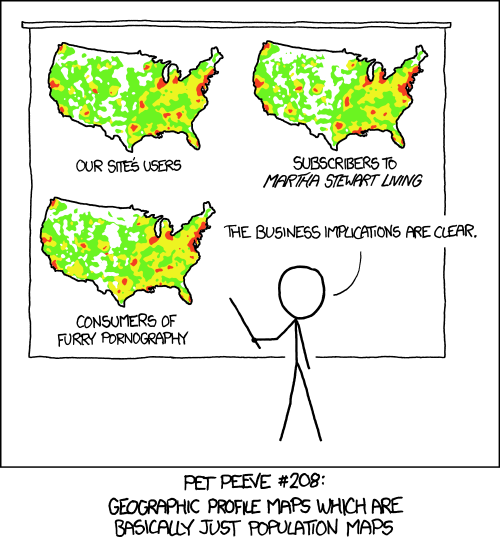
There are also a lot of global versions of this map showing traffic to English-language websites which are indistinguishable from maps of the location of internet users who are native English speakers.
 austere swift
atomic tide
https://xkcd.com/1138/
austere swift
atomic tide
https://xkcd.com/1138/
from this information i believe that our site is causing users to watch furry porn
grave frost
atomic tide
https://xkcd.com/1138/
statistics disprove the amount of people watching furry - especially someone from every area
atomic tide
Ok maybe I should have thought twice before linking to that xkcd 😄
misty flint
atomic tide
Although with heat-maps you always have to be careful that you don't end up just...
i can already tell you that that one guys highest value in his data is most likely united states so idk how helpful that dataset actually is.

cedar sun
misty flint
tableau is your friend for this
is tableau a module of py?
exotic maple
tableu is a standaloe program
 dapper canopy
Tableau isn't free either
Is this the best channel regarding python pandas and data analytics? Anyone taking the udacity Data Analytics nanodegree ?
cedar sun
cedar sun
why tho? i dont understand
^
exotic maple
dapper canopy
Is this the best channel regarding python pandas and data analytics? Anyone taki...
yes to the first
dull turtle
serene scaffold
what do you mean to test with a user input?
i mean to say that how can user pass some inputs and check what prediction it gets ?
dull turtle
serene scaffold
`logmodel.predict`
i tried python X_test = (0, 1011, 30) predictions2 = logmodel.predict(X_test) print("predictions2:", predictions2) this way
i get python ValueError: Expected 2D array, got 1D array instead: array=[ 0 1011 30]. Reshape your data either using array.reshape(-1, 1) if your data has a single feature or array.reshape(1, -1) if it contains a single sample.
 fervent zenith
cant clear this value in excel
 austere swift
that doesn't have to do with python

 native bay
is there a physical limit of neurons which can be assigned to a model layer?
like can i declare 225 neurons as my last layer and the previous layers being bigger than 225
dull turtle
native bay
is there a physical limit of neurons which can be assigned to a model layer?
lik...
you have to try every time
there is no fixed rule of layers
native bay
i mean it is safe for my hardware right?
i am trying to make a meme generator but if i consider the whole database it has over 6000 words so my last layer has to have 6000 neurons
dull turtle
if you are using more layers your hardware should capable of processing it
native bay
dull turtle
if you are using more layers your hardware should capable of processing it
i am not talking about layers i am worried about amount of neurons
dull turtle
sorry bro, no idea
dull turtle
native bay
ohk
is any meme generator labrary in python?
native bay
no there is no library i am training a model with LSTM to do so
austere swift
technically you can put as many neurons as you want
its just the issue of can your hardware process it and store all the data in memory
theres no hard limit
dull turtle
austere swift
its just the issue of can your hardware process it and store all the data in mem...
exactly
austere swift
and if it does its not like you're gonna light your pc on fire, just lower the number of neurons and try again
austere swift
depends on what your definition of average hardware
native bay
i have i5 GTX 1650 4gigs vram 8gig ram
austere swift
and theres also a lot of other considerations
like how many layers, the size of the dataset, the way you're structuring your training loop, and other parameters
its mostly just educated trial and error
native bay
ohk
and is it a hard and fast rule to have more neurons in the previous layer than the current layer?
dull turtle
native bay
and is it a hard and fast rule to have more neurons in the previous layer than t...
its mostly just educated trial and error
native bay
like mostly if its binary crossentropy and lets say 4 layers most people go with
128,64,32,2
austere swift
theres not really any rules on how many neurons in each layer
dull turtle
also read docs for same
native bay
ohk thanks @austere swift @dull turtle
austere swift
some structures work well on some applications, some work well on others
like i said earlier, its just educated trial and error
native bay
yes
austere swift
the educated part is knowing not to make complete stupid moves aka 1024, 1, 512
austere swift
np :)
serene scaffold
dull turtle
i get ```python
ValueError: Expected 2D array, got 1D array instead:
array=[ 0...
Do you understand the error message?
dull turtle
serene scaffold
Do you understand the error message?
i fixed it thanks
 opaque estuary
I have 2 columns A and B, column B has some missing values.
for eg:
colulmnA columnB
A1 B1
A1 B1
A1 B2
A2 B2
A2 B2
A1
When i use a simple imputer(most_frequent) , what i want for the missing cell is
the result to be dependent on what's inside columnA
I want the result:
colulmnA columnB
A1 B1
A1 B1
A1 B2
A2 B2
A2 B2
A1 B1
like instead of taking the most frequent value in columnB which is B2
It takes the most frequent value in columnB where ColumnA = A1
serene scaffold
opaque estuary
I have 2 columns A and B, column B has some missing values.
for eg:
colulmnA ...
Do you know about groupby?
opaque estuary
i am unable to use it though
i am basically lost on how to use groupby in the imputer
where it replaces the whole row with the the mostfrequent value in each column whenever it finds a NaN value in any cell of that row instead of just filling that particular cell
serene scaffold
opaque estuary
i am unable to use it though
i am basically lost on how to use groupby in the im...
You can join #799641437645701151 in a few minutes, but you'd still have to copy and paste code into the chat any time I need you to
serene scaffold
opaque estuary
i am unable to use it though
i am basically lost on how to use groupby in the im...
it sounds like you need to be using fillna though
I'll be back in a few
opaque estuary
ok
lapis sequoia
Anyone familiar with photo processing?
I need help in creating a project my is to enter the exposure time and amount of photons and see the changes in the picture
?
Anyone knows how can I access these variables in the picture?
Pls
cedar sun
I have tried with Inception/resnet50 and... 10 epochs? 15? val_acc stucked at 0.0011
why tho? i dont understand
grave frost
Is there anyone here who have subjected themselves to the hell of Huggingface🤗 ?
if so, would you know any idea how we can use a custom tokenizer with this?
acoustic forge
I am writing a research project on American news channels opinions on different vaccines. Does anybody know of a sentiment analysis framework that could be used to extract the sentiment of different vaccines from articles? So for example, the article could contain multiple vaccine types, and the sentiment framework would tell me the sentiment score of each of them
serene scaffold
I can't seem to come up with a good recipe for conditional mode imputation in pandas. groupby.DataFrameGroupBy.transform supports mean but not mode.
grave frost
acoustic forge
I am writing a research project on American news channels opinions on different ...
you can fine-tune a pre-trained BERT
 umbral zodiac
Hi, anyone knows how to build Pytorch from source? I'm trying for a couple of months and it doesnt work for me.
"C:/Program Files (x86)/Microsoft Visual Studio/2019/Enterprise/VC/Tools/MSVC/14.29.30037/bin/Hostx64/x64/cl.exe"
is not able to compile a simple test program.
That seems to be the first problem
 native patrol
serene scaffold
I can't seem to come up with a good recipe for conditional mode imputation in pa...
native patrol
serene scaffold
I can't seem to come up with a good recipe for conditional mode imputation in pa...
you probably need a lambda function here
something like df.groupby(...)[col].transform(lambda x: x.mode().iloc[0])
and then use that with df.fillna
acoustic forge
grave frost
you can fine-tune a pre-trained BERT
Do you have any resources on BERT that could be useful? I haven't worked with BERT before
serene scaffold
native patrol
you probably need a lambda function here
something like `df.groupby(...)[col].t...
Strikes me as inelegant that there's no vectorized solution. Thanks!
native patrol
it's partially vectorized
x.mode() is really just pd.Series.mode which I would hope/expect to be vectorized
it will be vectorized within the groups, just not across groups probably
serene scaffold
native patrol
it's partially vectorized
`x.mode()` is really just `pd.Series.mode` which I wou...
What's interesting is that you can do fillna on a groupby series, but it won't be reflected in the original dataframe
grave frost
acoustic forge
Do you have any resources on BERT that could be useful? I haven't worked with BE...
check out huggingface library - it has plenty of stuff there
acoustic forge
@grave frost thanks! I will check that out 🙂
 gusty flame
Hello everyone! I am working on transfer learning. I am using resnet50. When I am trying to fit the model, i get this error. ValueError: Input 0 of layer conv2_block1_3_conv is incompatible with the layer: expected axis -1 of input shape to have value 64 but received input with shape (128, 30, 30, 256).
My input shape for resnet50 is (120,120,3) and then I added a classification layer at the end. Does anyone have any idea about that problem and how to solve it? Can you help me?
 umbral zodiac
Hi, anyone knows how to build Pytorch from source? I'm trying for a couple of mo...
umbral zodiac
umbral zodiac
Hi, anyone knows how to build Pytorch from source? I'm trying for a couple of mo...
.
uncut monolith
I have a value, and want to see after a multiplication where does this value plots on my graph. Im using dash and plotly this is possible?
i dont know if i explain well but i dont have a dataframe
just one value and a function tha depending of the time (argument of the function) returns diferrent values
so i want to se in my graph during time this variation
hope someone can help
if i didnt maked clear let me know
this is what i came with

fig = go.Figure(data=px.line(y = [1000,0], x = [0.100,0])) # or any Plotly Express function e.g. px.bar(...)
fig = go.Figure(data=fig.update_xaxes(title_text='Tempo'))
whti this code
 mint palm
so should i place bin, library, include of cdnn with the bin, compute sanitizer etc of cuda?
umbral zodiac
Are you trying to build PyTorch too ?
umbral zodiac
ok
mint palm
had some cdnn issues(missing)
umbral zodiac
mint palm
just starting with tensorflow
I don't understand anything of that :/
mint palm
umbral zodiac
I don't understand anything of that :/
easier then pytorch i guess
umbral zodiac
Idk, I'm trying to build it for over 3 months or so
mint palm
wow thats some dedication
mint palm
i hope same for you
 distant sand
hello guys,im noy sure if its the right place but i wanted to know if any of you knows what its the tech behind a volumetric scanner?.I didnt find any particular info in this regard but i think its bassed on a AI,still im not quite sure.
mint palm
distant sand
hello guys,im noy sure if its the right place but i wanted to know if any of you...
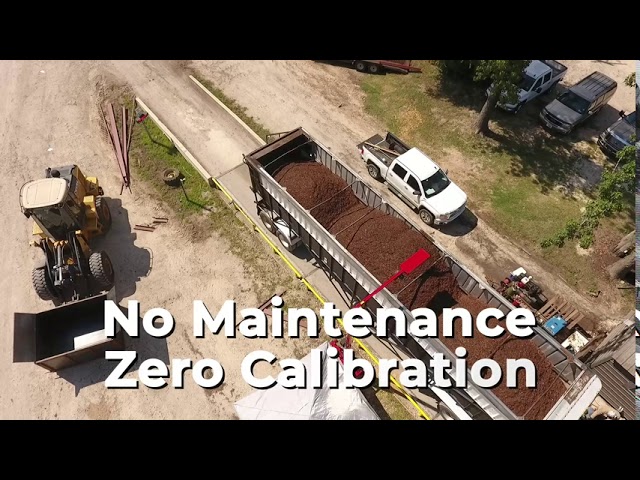
like a Lidar scanner?
 iron basalt
distant sand
yeah,kind of,but its mostly used for calculating volumes
iron basalt
distant sand
yeah,kind of,but its mostly used for calculating volumes
It looks like 2 Lidars to me with a bit of software to estimate the full volume.
mint palm
distant sand
yeah,kind of,but its mostly used for calculating volumes
i think seeing how iphone lidar compile a big surrounding area from small pieces of scans(by performing ceertain calculation obviously) would give you an idea of how to measure dimensions of object from similar input and then you may work on volume estimations
acoustic forge
Any BERT experts here?
distant sand
mint palm
i think seeing how iphone lidar compile a big surrounding area from small pieces...
thx for the commend
austere swift
mint palm
so should i place bin, library, include of cdnn with the bin, compute sanitizer ...
There’s some stuff that goes into bin, include, and lib/x64
The cudnn zip is structured just like the CUDA folder
So everything corresponds
mint palm
i just try to place bin etc(of cdnn) in folder where bin etc (of cuda) are ther
but it gave rename error
so i tried placing it(cdnn) just beside cuda
heres what i have.....i think cdnn not opening is sorted....

but the error is as it is

@austere swift
austere swift
You move the files in the bin folder from cudnn into the bin folder of CUDA
And the files from the include folder into the include folder
Etc
mint palm
i mean the main error was that.....we just assumed cdnn may be causing it
.
i just did this
 austere swift
mint palm
i just did this
austere swift
mint palm
i just did this
That’s wrong
Take the files that are in the bin folder in cudnn
And move it into the bin folder in CUDA
mint palm
austere swift
Etc
for include and bin it says "already there"
austere swift
Ok so you installed cudnn already
mint palm
for x64 i cant find corresponding folder
austere swift
It’s in lib
mint palm
austere swift
It’s in lib
ya that wasnt there i had to paste it
and what to do for folder "NVIDIA_sla_ cdnn_support"
uncut monolith
uncut monolith
this is what i came with
I found out that dash accept px.line as
and t and v1 are both arrays that were fullfulied with my function, now works well
acoustic forge
Does anybody have any idea on how they would programatically determine whether these two sentences are connected? Essentially, I want only sentences which are related to Pfizer. So one could argue, that due to Pfizer and vaccination being in the first sentence, the 2nd one is also related to the first one
(Below is a snippet of an article)
Walgreens is shifting its Pfizer COVID-19 vaccination scheduling after federal health officials noted the pharmacy chain quietly decided to space doses apart over a longer-than-recommended period, according to a report. Federal guidelines call for the two-dose series to be administered at least 21 days apart, but Walgreens pushed the spacing to four weeks for easier logistics, the New York Times reports.
You could however, have sentences in an article that are not related to Pfizer directly. Therefore, I only want to extract the related sentences
 ebon geyser
Has anyone here tried using GPT 2 with Python or something?
austere swift
i've worked with gpt3 a bit
ebon geyser
Oh. And what about aitextgen?
umbral zodiac
I think the build is working but it stops at
[1/1088] Linking C shared library bin\torch_global_deps.dll
With
LINK : fatal error LNK1102: out of memory
ninja: build stopped: subcommand failed.
serene scaffold
umbral zodiac
LINK : fatal error LNK1102: out of memory
ninja: build stopped: subcommand faile...
well, how much memory do you have?
umbral zodiac
12gb
serene scaffold
do you know how to see how much memory a process is using?
serene scaffold
then you will probably have to use a different computer
serene scaffold
GitHub
how large the capacity of memory is needed when compiling pytorch from source ? I've got about 5GB available when compiling in ubuntu 18.04. Each time I compile with python setup.py install...
this person gives a similar suggestion: https://discuss.pytorch.org/t/high-memory-usage-while-building-pytorch-from-source/64129

PyTorch Forums
How can I reduce the RAM usage of compilation from source via python setup.py install command? It automatically spawns many threads and I don’t want that!
umbral zodiac
set MAX_JOBS=1 ?
serene scaffold
yes
arctic wedgeBOT
Hey @umbral zodiac!
Uh-oh! It looks like your message got zapped by our spam filter. We currently don't allow .txt attachments, so here are some tips to help you travel safely:
• If you attempted to send a message longer than 2000 characters, try shortening your message to fit within the character limit or use a pasting service (see below)
• If you tried to show someone your code, you can use codeblocks
(run !code-blocks in #bot-commands for more information) or use a pasting service like:
umbral zodiac
misty flint
lapis sequoia
what is the best chart to display this type of data?
oh i forgot to ask. do you have the csv file for this. i want to try something in tableau
 boreal flower
hey I want to learn AI where to start
serene scaffold
boreal flower
hey I want to learn AI where to start
what do you know about probability, statistics, and matrix algebra?
boreal flower
I am in 12th class I am studing for JEE so I know till that. that is studied in Indian Schools before Entering universities
serene scaffold
boreal flower
I am in 12th class I am studing for JEE so I know till that. that is studied in ...
I'm not sure what JEE is
 sonic coral
boreal flower
hey I want to learn AI where to start
sonic coral
boreal flower
hey I want to learn AI where to start
First you learn what's is data, data environment, what is data analysis, how to mining data, how to visualise data in better manner. In sort you have to fit in role for data analyst then after learn mathematics fundamental, then comes AI algorithms

 boreal flower
sonic coral
First you learn what's is data, data environment, what is data analysis, how to ...
boreal flower
sonic coral
First you learn what's is data, data environment, what is data analysis, how to ...
seems like 🧰 too much
sonic coral
boreal flower
seems like 🧰 too much
It is, so Start with data analyst or I can say start with excel first, the most useful and beginners tools for data analyst good luck. ;)
sonic coral
No, for AI you must have. Knowledge about data analytics, and for data analytics you must have knowledge about excel
boreal flower
so I have to learn things of a data scientist
sonic coral
Start with base, don't be a full 🌝
sonic coral
boreal flower
so I have to learn things of a data scientist
Yes, first comes data analyst then data scientist then after machine learning and then comes AI
For AI you must have good knowledge and experience about this stream also 🥱😉
mint palm
austere swift
That’s not a cudnn error
the prblm was i had swapped x and w......

 chilly geyser
might be better to define the function with better function parameter names
That way confusion happens less
mint palm
i was just trying to imitate my instructor ......ended up wasting 4 days setting up cuda cdnn etc
ebon geyser
Anyone here willing to answer this question? https://stackoverflow.com/questions/67866596/training-an-ai-by-chatting-with-aitextgen
lapis sequoia
misty flint
oh i forgot to ask. do you have the csv file for this. i want to try something i...
i only have pre-process json file which some data doesn't have place value
mint palm
nto able to reshape my tensor......even after reshape function its still (4,) instead of (4,1)

output:
 austere swift
Tf.reshape is not an in place operation
It returns the new tensor
So you need to do one_hot = tf.reshape …
 brittle fossil
any resources for learning data science?
narrow dagger
I recommend DataCamp if you don't know anything about Data Science or Machine Learning
lapis sequoia
can you guys recommend me some good video series to start learning ML frameworks, deep learning and stuff?
 timid ginkgo
Hi! What platform do you guys use to code python for data analysis? I usually use Jupyter but am wondering if there's a more suitable platforma
austere swift
timid ginkgo
Hi! What platform do you guys use to code python for data analysis? I usually us...
i code in vscode
austere swift
lapis sequoia
can you guys recommend me some good video series to start learning ML frameworks...
do you already have the math background and at least a basic understanding of how it works?
if so, you can start by looking through the tensorflow guide, that gives some basic keras examples and walks you through the usage of it

TensorFlow
Complete, end-to-end examples to learn how to use TensorFlow for ML beginners and experts. Try tutorials in Google Colab - no setup required.
 cold mantle
timid ginkgo
Hi! What platform do you guys use to code python for data analysis? I usually us...
cold mantle
timid ginkgo
Hi! What platform do you guys use to code python for data analysis? I usually us...
Jupyter notebook is the best option in my choice
 upper spade
why
 austere swift
try reinstalling numpy
 royal crest
Have you studied the documentation linked above for further help?
lapis sequoia
austere swift
do you already have the math background and at least a basic understanding of ho...
yup! I'll check it out
and btw could you guys please give me an oversimplified version of what is an optimizer and activation function?
austere swift
an activation function is basically just a function that modifies the output of a layer
theres different ones that are used for different things, most common are relu and sigmoid
relu will basically make any negative value 0, and keep positive values unchanged
sigmoid puts everything between 0 and 1, so like +inf would be 1, -inf would be 0, 0 would be 0.5
and then optimizer functions basically take the computed gradient and perform the gradient descent
lapis sequoia
Thank you @austere swift
ebon geyser
So am new to all this, and wanted to know. How can I make a chatbot AI and train it by chatting with it?
lapis sequoia
hello guys, I have written this short article on how to start learning Data science. Do share it with others if u find it helpful. Thanks https://www.kdnuggets.com/2021/05/guide-become-data-scientist.html
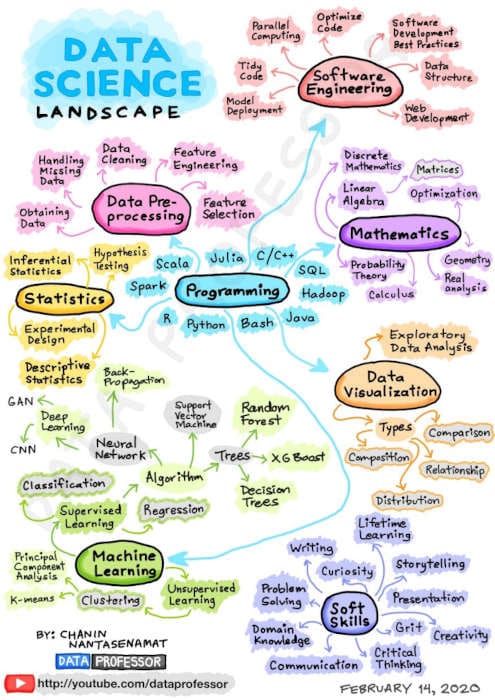
KDnuggets
Becoming a Data Scientists is an exciting path, but you cannot learn data science within one year or six months—instead, it’s a lifetime process that you have to follow with proper dedication and hard work. To guide your journey, the skills outlined here are the first you must acquire to…
cedar sun
how can i see what type or preprocessing do some pretrained models need?
misty flint
lapis sequoia
i only have pre-process json file which some data doesn't have place value
rip. json is not my favorite
 azure condor
lapis sequoia
can you guys recommend me some good video series to start learning ML frameworks...
azure condor
lapis sequoia
can you guys recommend me some good video series to start learning ML frameworks...
I haven’t watched many but abhishek thakur on YouTube has some good videos
uncut barn
import re
text = 'hello I am happy . Are you ?'
tokens = re.split(r"\s+", text) # splits string on space
print(f'step : {tokens}')
what does \s+ do?
is it just splitting the string based on 1 or more whitepaces?
after each word
/ punctuation
the left of it
 south gull
think so?
desert oar
uncut barn
is it just splitting the string based on 1 or more whitepaces?
yes, \s is whitespace and + means "one or more"
note that in most cases this is equivalent to text.split(), although i think in python the regex \s handles various non-ascii whitespace characters while str.split only handles spaces, tabs, and newlines
note that you can use https://regex101.com to test and debug regular expressions (make sure to use "python" mode on the left side)

regex101
Regular expression tester with syntax highlighting, explanation, cheat sheet for PHP/PCRE, Python, GO, JavaScript, Java. Features a regex quiz & library.
uncut barn
@desert oar thanks
however I'm confused on this reg exp
text = re.sub(r"(\S)\1\1+", r"\1\1\1", text)
as it looks for non white spaces but it says to the first group which doesnt make any sense to me
desert oar
@uncut barn \S is a single non-whitespace character
in the pattern, \1 means "whatever was matched by the first group
basically this pattern means "3 or more of the same non-whitespace character"
regex101
Regular expression tester with syntax highlighting, explanation, cheat sheet for PHP/PCRE, Python, GO, JavaScript, Java. Features a regex quiz & library.
ebon geyser
How can I make an AI with brainshop/aitextgen, which I can train by chatting with with?
grave frost
ebon geyser
Anyone here willing to answer this question? https://stackoverflow.com/questions...
why don't you train your own
ebon geyser
grave frost
how they did it originally lol
I wish I knew haha
mint palm
anybody with some experience in c in vscode?
grave frost
ebon geyser
I wish I knew haha
look it up ¯_(ツ)_/¯
ebon geyser
grave frost
look it up ¯\_(ツ)_/¯
I did haha
grave frost
ebon geyser
I did haha
just use some repo
 arctic ice
@teal wadi
ebon geyser
grave frost
just use some repo
like?
grave frost
ebon geyser
like?
chose your model, then look it up 🤷
ebon geyser
grave frost
chose your model, then look it up 🤷
oof ok
grave frost
ebon geyser
oof ok
you can use Huggingface - they have got every single NLP model there
but I absolutely HATE that piece-of-shit lib, but ig its good for beginners
ebon geyser
oh ok
serene scaffold
I'm a bit confused as to why DataFrame.join and DataFrame.merge are two different things. .join appears to be a wrapper around .merge, but all of the functionality of .merge seems like joining operations to me. Maybe it's just the way I was taught database stuff.
 granite arch
grave frost
you can use Huggingface - they have got every single NLP model there
granite arch
grave frost
you can use Huggingface - they have got every single NLP model there
I couldent figure out how to fine tune the hugging face models
I wanted to fine tune them to my emails and have an email writer with gpt-2 or another model
Wish they had better documentation and examples
granite arch
I spent a fair amount of time 😭😭😭trying to figure it out
grave frost
yeah, if your model has a sperate PT repo (which I think it does) then that's easy sailing
for people trying to use custom stuff, not so much
granite arch
Yea I wanted something a little more complex than a onehot vector chat bot
Which maybe could do email writing decently well idk
Probably not
granite arch
What framework do you reccomend I am working on something with keras / tf now but its kinda convoluted the way the old keras stuff and tensor flow stuff come together seems more complicated than it needs to be
@grave frost
desert oar
use pytorch tbh
granite arch
Thanks @desert oar
exotic maple
desert oar
use pytorch tbh
Any good place to learn PyTorch? i've found dozens of excellent TF tutorials and guides, but not a single PyTorch one 😦
austere swift
exotic maple
Any good place to learn PyTorch? i've found dozens of excellent TF tutorials and...
check out the one from the official pytorch site
grave frost
exotic maple
Any good place to learn PyTorch? i've found dozens of excellent TF tutorials and...
you honestly don't need any tutorials
because you can just google like, how to make an input pipeline in pytorch and just see their intro page
much of abstraction in TF is similar in PT - so its a smooth ride 👍
people talk a lot about using pytorch lightning 🤔 but I just find it pretty meh. its just feels like TF, but you import torch
umbral zodiac
How do I know if the build was sucsessful ?
austere swift
umbral zodiac
How do I know if the build was sucsessful ?
what build?
umbral zodiac
pytorch
It ended like this
reading manifest file 'torch.egg-info\SOURCES.txt'
reading manifest template 'MANIFEST.in'
warning: no previously-included files matching '.o' found anywhere in distribution
warning: no previously-included files matching '.so' found anywhere in distribution
warning: no previously-included files matching '.dylib' found anywhere in distribution
warning: no previously-included files matching '.a' found anywhere in distribution
warning: no previously-included files matching '*.swp' found anywhere in distribution
writing manifest file 'torch.egg-info\SOURCES.txt'
Copying torch.egg-info to C:\Users\Maximo.conda\envs\pytorch\Lib\site-packages\torch-1.10.0a0+gitc51abf8-py3.8.egg-info
running install_scripts
Installing convert-caffe2-to-onnx-script.py script to C:\Users\Maximo.conda\envs\pytorch\Scripts
Installing convert-caffe2-to-onnx.exe script to C:\Users\Maximo.conda\envs\pytorch\Scripts
Installing convert-onnx-to-caffe2-script.py script to C:\Users\Maximo.conda\envs\pytorch\Scripts
Installing convert-onnx-to-caffe2.exe script to C:\Users\Maximo.conda\envs\pytorch\Scripts
so..
how do I add it ?
royal crest
are u intentionally using the rc version of pytorch
royal crest
from source
royal crest
why don't you just use conda?
umbral zodiac
Im building it with conda
royal crest
so you entered
conda install pytorch torchvision torchaudio cudatoolkit=11.1 -c pytorch -c conda-forge
in the terminal?
one way to check is to go to your IDE then import torch
royal crest
 umbral zodiac
I have a old gpu
umbral zodiac
umbral zodiac
3.0 gpu
.
austere swift
umbral zodiac
reading manifest file 'torch.egg-info\SOURCES.txt'
reading manifest template 'MA...
this was the output from python setup.py install?
austere swift
so try importing torch then
umbral zodiac
k
austere swift
just try in the repl and see if that works
if it does then test torch.cuda.is_available()
to see if it detects gpu
umbral zodiac
Type "help", "copyright", "credits" or "license" for more information.
import torch
Traceback (most recent call last):
File "<stdin>", line 1, in <module>
File "C:\Users\Maximo\building\pytorch\torch_init_.py", line 135, in <module>
raise err
OSError: [WinError 126] Não foi possível encontrar o módulo especificado. Error loading "C:\Users\Maximo\building\pytorch\torch\lib\backend_with_compiler.dll" or one of its dependencies.
:/
royal crest
pretty sure they cut support for CUDA 3.0 a long time ago
austere swift
royal crest
pretty sure they cut support for CUDA 3.0 a long time ago
3.0 is the compute capability of the gpu
not the cuda version
royal crest
ah mb misunderstood
umbral zodiac
umbral zodiac
Type "help", "copyright", "credits" or "license" for more information.
> import ...
this is what happens after importing torch
austere swift
umbral zodiac
this is what happens after importing torch
https://stackoverflow.com/questions/63187161/error-while-import-pytorch-module-the-specified-module-could-not-be-found simple copy-paste error into google and i found this

Stack Overflow
I just newly install python 3.8 via anaconda installer and install pytorch using command
conda install pytorch torchvision cpuonly -c pytorch
when i try to import torch, I got this error message.
it says to try downloading the visual c++ redistributable
umbral zodiac
I tried
umbral zodiac
austere swift
https://stackoverflow.com/questions/63187161/error-while-import-pytorch-module-t...
so I will have to build it again for it to work o only installing and restarting?
austere swift
umbral zodiac
so I will have to build it again for it to work o only installing and restarting...
not sure, try only installing first and see if that works
if it doesnt, rebuild
umbral zodiac
Im felling hopeful 🙂
just so I know
after doing **python **
how can I go back to the environment
austere swift
exit() or ctrl z
austere swift
yeah but if you read the error it also says "or one of its dependencies"
so it could depend on something else that is missing
umbral zodiac
😭 It will take till tomorrow
austere swift
it shouldn't take a day to install the redistributable
umbral zodiac
no, I mean I already installed it. same thing
here
(pytorch) C:\Users\Maximo>python
Python 3.8.10 (default, May 19 2021, 13:12:57) [MSC v.1916 64 bit (AMD64)] :: Anaconda, Inc. on win32
Type "help", "copyright", "credits" or "license" for more information.
import torch
Traceback (most recent call last):
File "<stdin>", line 1, in <module>
File "C:\Users\Maximo.conda\envs\pytorch\lib\site-packages\torch_init_.py", line 135, in <module>
raise err
OSError: [WinError 126] Não foi possível encontrar o módulo especificado. Error loading "C:\Users\Maximo.conda\envs\pytorch\lib\site-packages\torch\lib\backend_with_compiler.dll" or one of its dependencies.
both the .dll and .lib are there
I don't know if I should build it again :(,
royal crest
i've had nothing but headaches on windows
austere swift
linux is nice
pytorch works fine on windows, it's just building from source isn't the best
umbral zodiac
May '20
Well, I reproduced it locally. Looks like it could not find our internal DLLs because it relies on AddDllDirectory which is not built-in in Python 3.7. There are two workable solutions:
Update to Python 3.8.
Apply https://github.com/pytorch/pytorch/pull/37763 340 manually. Replace your local copy with https://gist.github.com/peterjc123/bcbf4418ff63d88e11313d308cf1b427 227 (e.g. C:\Users\Grace Wu\torchenv\lib\site-packages\torch_init_.py)

GitHub
…n Windows
Without this PR, the OS try to find the DLL in the following directories.
The directory from which the application loaded.
The system directory. Use the GetSystemDirectory function to g...
Gist
Modified init.py for PyTorch 1.5.0. GitHub Gist: instantly share code, notes, and snippets.
Im trying that
grave frost
desert oar
maybe tf works better there
the running joke is that the windows build never works lol
grave frost
windows bad lmao
I did it a few years before, and after a couple of weeks I switched to linux
grave frost
umbral zodiac
May '20
Well, I reproduced it locally. Looks like it could not find our internal...
but why are you building from source?
austere swift
grave frost
but why are you building from source?
old gpu, compute capability 3.0
i mean imo just use colab at that point
grave frost
austere swift
old gpu, compute capability 3.0
wait, what has that got to do with TF?
it just works as long as there is CUDA
austere swift
grave frost
wait, what has that got to do with TF?
it doesn't, theyre building pytorch from source
austere swift
grave frost
it just works as long as there is CUDA
technically no, even TF requires a minimum compute capability of 3.5

 austere swift
tbh i'm not sure that building from source would fix that
grave frost
I mean, ... i dunno really
austere swift
yeah i've never used a gpu that old
grave frost
but building from source is not the way to fix incompatible software, is it?
austere swift
grave frost
but building from source is not the way to fix incompatible software, is it?
it could just be that they havent built wheels for anything lower
but i'm not sure
grave frost
🥴
if the TF require CC >= 3.5, I don't see how you can get it to work properly
not that people haven't tried
cuz I beleive that GT 1030 falls in that
austere swift
TensorFlow
grave frost
but its usually a shitshow that has bugs in almost every method
austere swift
under the part where it says supported compute capabilities it also says:
For GPUs with unsupported CUDA® architectures, or to avoid JIT compilation from PTX, or to use different versions of the NVIDIA® libraries, see the Linux build from source guide.
which implies that if the gpu has an unsupported architecture you should be able to build from source to fix it
couldnt find anything on pytorch that explicitly states that
grave frost
well, what's the technical reason for that then?
austere swift
it could be that they don't want to make prebuilt packages for anything lower since it would be rare for someone to use something that old anyways
3.0 is like gtx 600 series
grave frost
Take the GT 610 for example. It has 48 CUDA cores. But you just can’t install CUDA Toolkit
. No amount of messing around will help. Believe me I tried on a friend’s desktop.
some rando on quora
austere swift
gtx 600s, not gt
grave frost
austere swift
it could be that they don't want to make prebuilt packages for anything lower si...
I doubt it works
more than the issue being pre-built packages
austere swift
the highest gpu i can see with 3.0 capability is the gtx 770
grave frost
getting CUDA to work is the most problematic part
expecting TF to work on that too
🥴
austere swift
cuda 10.1 goes down to compute capability 3.0 iirc
cedar sun
when using a pre trained model, should u call the preprocess_input function from that model?
umbral zodiac
nah I'm using cupscale
grave frost
austere swift
cuda 10.1 goes down to compute capability 3.0 iirc
dunno really, murky waters for hardware here. getting stuff on normal hardware is already pain - on old and deprecated?
it doesn't seem worth the effort tbh
cedar sun
austere swift
which was what i was saying about just using something like google colab
do u know more somethings?
grave frost
yeah, that and kaggle kernels are waaay more superioir than smthing CC 3.0
like any model's even gonna fit in there
umbral zodiac
grave frost
it doesn't seem worth the effort tbh
well, id be willing to have a new one
grave frost
umbral zodiac
~~well, id be willing to have a new one~~
I don't even have a working laptop lol
colab and kaggle are equivalent to a million of your GPUs
and I am not even joking how powerful and useful they are
austere swift
that and you can rent really good gpus for very cheap as well if you need long term training jobs
since colab and kaggle will time out eventually
grave frost
most models can be trained in the 24 hours limit, if you buy Pro
austere swift
https://gpu.land rents V100s for $0.99/gpu/hour
grave frost
and you can always checkpoint and come back tomorrow
umbral zodiac
It already was hard to get this old thing as before I didnt had anything
Surely I wont complain
grave frost
umbral zodiac
It already was hard to get this old thing as before I didnt had anything
sell it again
umbral zodiac
😂 .
grave frost
use OLX if you are in India lol
umbral zodiac
it won't sell for the same price as a new one lol
native patrol
serene scaffold
I'm a bit confused as to why `DataFrame.join` and `DataFrame.merge` are two diff...
it's extremely similar, the only difference is that .join joins the index of the first df with either columns or indexes of the other df. whereas with .merge you're joining columns together for both dataframes
serene scaffold
native patrol
it's extremely similar, the only difference is that `.join` joins the index of ...
Yeah, it looks like join is just a simplified way of calling merge when you plan to merge/join on the index.
Looks like they call it merge because of R.
 slate hollow
so
they say keras.layers.TimeDistributed "wraps any layer and applies it at every time step of its input sequence"
what
what does this even mean
velvet thorn
slate hollow
what does this even mean
have you worked with RNNs?
slate hollow
i'm actually reading about the rnns rn
velvet thorn
okay
so basically
say you represent your data as 2D
each row is a sample
each column a feature
right?
velvet thorn
now imagine that each sample is taken over n timesteps
say, 60 seconds of tracking a stock’s price
slate hollow
what now
velvet thorn
that would give you 3D data
slate hollow
a sample is an instance in time...?