Cell In[90], line 9
      7 model.train()
      8 y_pred = model(X_train)
----> 9 loss_score = loss_fn(y_pred, y)
     10 optimizer.grad_zero()
     11 loss_score.backward()

File , in Module._wrapped_call_impl(self, *args, **kwargs)
   1551     return self._compiled_call_impl(*args, **kwargs)  # type: ignore[misc]
   1552 else:
-> 1553     return self._call_impl(*args, **kwargs)
#data-science-and-ml
1 messages · Page 150 of 1

 wooden sail
hmmm weird
wooden sail
oof
 wispy wolf
Is there a way to use matplotlib without all the global state?
 lofty thorn
@wooden sail
 wispy leaf
Is there any any simple implementation of maximal marginal relevance ? I am trying to fetch similar texts with diversity
 modest flint
 opaque merlin
LF pytorch expert, welling to contribute in a Computer vision project idea
wispy leaf
I am clustering a dataset of tweet like post which contains million of text but each text is less than 300 character . I am trying to cluster it but i don't know how many cluster should i use . How do i find out how many groups should i cluster . elbow ? silhouette ?
 quartz lotus
anyone know a good resource on open cv? I'm trying to get a model to identify the word killed on screen but for some reason and getting anything but that so I would like to learn more about making custom models in open cv

 cunning pond
quartz lotus
anyone know a good resource on open cv? I'm trying to get a model to identify th...
cunning pond
quartz lotus
anyone know a good resource on open cv? I'm trying to get a model to identify th...
applying data science on valorant is crazy
 glossy gorge
I'm trying to make a sentiment analysis model for a project and i was wondering if a 60% accuracy rate is a reasonable goal. I have no prior experience with machine learning and want to use this as a way to learn plus get an extra qualification.
I want to train my own model to be able to take a piece of text (like a review on a product) and be able to tell if its a positive or negative review.
 quaint mulch
wispy leaf
I am clustering a dataset of tweet like post which contains million of text but ...
quaint mulch
wispy leaf
I am clustering a dataset of tweet like post which contains million of text but ...
I mean, it is more like an art right? Just try it out?
quaint mulch
glossy gorge
I'm trying to make a sentiment analysis model for a project and i was wondering ...
hard code some dumb baseline, and then beat it http://karpathy.github.io/2019/04/25/recipe/
Musings of a Computer Scientist.
glossy gorge
quaint mulch
hard code some dumb baseline, and then beat it http://karpathy.github.io/2019/04...
alright thanks
 peak ridge
How to be, one of the greats.
peak ridge
cunning pond
applying data science on valorant is crazy
good project i believe
 tawdry ore
import tensorflow as tf
from tensorflow.keras.preprocessing.text import Tokenizer
from tensorflow.keras.preprocessing.sequence import pad_sequences
from sklearn.preprocessing import OneHotEncoder
Guys, I have tenserflow installed but line 2 and 3 have a missing module error. Anyone knows what to do?
 lucid birch
Idk if this is the right channel, but I’m learning data science in python, specifically data structures and algorithms, and I’m having trouble implementing the concepts into python for projects and stuff
It’s stressing me out and I just want some general advice on how to better problem solve and to implement concepts into python
 iron basalt
lucid birch
It’s stressing me out and I just want some general advice on how to better probl...
iron basalt
lucid birch
It’s stressing me out and I just want some general advice on how to better probl...
Can you give a simple example that you had trouble with?
lucid birch
iron basalt
Can you give a simple example that you had trouble with?
In one project, I had to build a binary search tree. Then, I had to build two functions for that binary search tree. One for inserting a value and the other for deleting a value
I understood the concept of both
 flat token
lucid birch
In one project, I had to build a binary search tree. Then, I had to build two fu...
flat token
lucid birch
In one project, I had to build a binary search tree. Then, I had to build two fu...
Which way was confusing you because problems like this have 100 approaches. Did you have specific rules you had to follow?
 hardy spade
anyone know anything about creating simple AIs for games
specifically in a fighting game like street fighter
flat token
hardy spade
anyone know anything about creating simple AIs for games
Reinforcement learning is perfect for this but the environment is very hard to interact with
hardy spade
flat token
Reinforcement learning is perfect for this but the environment is very hard to i...
whats that?
flat token
I don't think unless you intense experience that you will be able to do this
hardy spade
but like a very very simple one
flat token
Google it it's an agent that interacts with your environment
 desert plinth
hardy spade
but like a very very simple one
desert plinth
hardy spade
but like a very very simple one
There sadly are no very simple ones that are effective
hardy spade
i was thinking using random
flat token
Google reinforcement learning the descriptions will be very good for you and you will realize it's really the only way of solving this problem
flat token
I mean there are PLENTY of simple?-ish? RL algorithms but you need to work your way up
hardy spade
can i send you guys the code ive done so far
desert plinth
at the rate python is getting module updates, one of these days it'll be
import learn
game.learn()
flat token
No simple ways for solving your desired problem tho because interaction with the environment (street fighter) is extremely complicated
desert plinth
hardy spade
can i send you guys the code ive done so far
sure but use the pastebin
hardy spade
its super super simple and just uses random
desert plinth
ahhh ok
flat token
I wouldn't say that just using some sort of package that learns? an environment will be anything close to what you need
But once again there are lvls to this and I'm not so sure what you are trying to achieve
hardy spade
flat token
I took what you said quite literally
hardy spade
hardy spade
https://paste.pythondiscord.com/BDTQ
just using random , and like when the characters are in distance the ai will randomly some times throw attacks
thats the thought anyway
iron basalt
lucid birch
In one project, I had to build a binary search tree. Then, I had to build two fu...
Try writing out the process of inserting a value for that BST in plain English (writing things is important, don't try to do it all in your mind).
flat token
Oooooo ok I misinterpreted and thought you wanted something much more complex
hardy spade
flat token
Oooooo ok I misinterpreted and thought you wanted something much more complex
nooo no something simple
flat token
Yeh that's not what I would call "a.i." (which has turned into a throw around word nowadays)
Which is why I was slightly confused
hardy spade
flat token
Yeh that's not what I would call "a.i." (which has turned into a throw around wo...
oh haha
sorry
flat token
No yeh what you want is completely achievable with no huge effort
desert plinth
Definitely
hardy spade
ok perfect
flat token
No no problem at all I was thinking you wanted to build an agent that plays the ENTIRE game for you
desert plinth
me too lol
hardy spade
not at that level yet haha
flat token
And I was like this is a very difficult problem -> achievable for sure but extremely difficult
lucid birch
flat token
Which way was confusing you because problems like this have 100 approaches. Did ...
The python syntax for making the Binary search tree functions are very confusing to me.
flat token
lucid birch
The python syntax for making the Binary search tree functions are very confusing...
Who says you need to use a module
hardy spade
trying to make it as complex as possible but within a range that i can understand it , cause its for a coursework project
desert plinth
Just define the conditions under which you want the "ai" to take an action and set the chances for each possible action. The reason it's not an ai is because it doesn't learn from better or worse actions, but just has a lower chance of performing rarer actions.
flat token
You don't need to do that at all, for example, all trees can be topologically mapped to arrays where you are instead constructing an N long integer that implicitly holds your tree construction
hardy spade
to get an A i need to implement some sort of complex algorithms and i was kind of depending on this 'ai' for this
iron basalt
lucid birch
The python syntax for making the Binary search tree functions are very confusing...
Lets go to #algos-and-data-structs . Try writing the process of inserting into a binary search tree there in plain English.
flat token
Actually I do research into discrete structures so to me these may be more obvious but I understand why they may not be. My suggestion is you try and do things WITHOUT some package first
hardy spade
desert plinth
Just define the conditions under which you want the "ai" to take an action and s...
ah ok
 willow sequoia
Chat, i am just downloading articles from wikipedia to train my GPT on it, is it cool ?
hardy spade
desert plinth
Just define the conditions under which you want the "ai" to take an action and s...
do you think this would count as a complex enough algorithm
hardy spade
hardy spade
to get an A i need to implement some sort of complex algorithms and i was kind o...
.
flat token
willow sequoia
Chat, i am just downloading articles from wikipedia to train my GPT on it, is it...
Interesting but you need to account for a lot of things like text parsing for example is difficult because the text behind a Wikipedia document is quite loaded
As long as you have done this and don't really care about the details/correctness? of your responses then sure it's totally fine
willow sequoia
flat token
Interesting but you need to account for a lot of things like text parsing for ex...
Dont worry i got that covered, its being copied nice and clear and ready for my purposes 👍
flat token
Welp as long as your preprocessed correctly then sounds good to me
Tasks like text analysis and stuff tend to be more difficult because of preprocessing not actually the underlying structure of a learning agent
willow sequoia
I am using the model_name = "gpt2-medium" model as pretrained cs it would take a lot to just learn grammar i am just training it on info from wiki and i am interested in what happens you know.
Even tho it takes forever i love it.
(While listening to music of course)
 fresh bay
Does anyone know I can compare two different objective functions in an optimization problem? In particular the value being returned from cvxpy? I am looking at quad vs sum of squares so it should be a very similar problem - not sure if I can treat it like MSE in a model
willow sequoia
flat token
Gl!
thanks.... In your bio is written ask me about my research. so i ask, what is your research or what you up to rn in python ?
willow sequoia
fresh bay
Does anyone know I can compare two different objective functions in an optimizat...
Sorry king dont expect anything from teen like me, i hope someone has the strengt to help you. 👍
desert plinth
hardy spade
do you think this would count as a complex enough algorithm
depends on what the task is asking for
flat token
I do research in multi agent reinforcement learning problems and I am developing a massive software package right now for optimally traversing tree structures in constant time
hardy spade
https://paste.pythondiscord.com/BDTQ can anyone tell me how i can fix this? once the 'ai' attacks it doesnt stop and starts spamming them forever, seems very simple but i have no idea what to do
desert plinth
desert plinth
depends on what the task is asking for
But if you're in school I would say definitely
willow sequoia
flat token
I do research in multi agent reinforcement learning problems and I am developing...
Thats cool! Do you enjoy it ?
flat token
It includes applications in RL trainings, neural network construction, scheduling and transportation problems, option pricing, discrete state space control system problems etc
I like it, it's fine it's part of my PhD
willow sequoia
flat token
It includes applications in RL trainings, neural network construction, schedulin...
OOoh maan, how are here so many smart people on this python server ?
willow sequoia
flat token
I like it, it's fine it's part of my PhD
I am happy for you.
flat token
🤷
Thanks dawg
PhD is a tough 5 years if u don't like what you do
Or at least dont hate it
desert plinth
flat token
PhD is a tough 5 years if u don't like what you do
I am so fascinated by computer science idk how anyone can not enjoy it
hardy spade
hardy spade
https://paste.pythondiscord.com/BDTQ can anyone tell me how i can fix this? once...
🙏 😭
desert plinth
I've looked but honestly can't tell what's wrong
willow sequoia
flat token
Or at least dont hate it
9 more minutes and 1000 articles from wiki will be downloaded right into my txt file... i mean it should finish.
hardy spade
desert plinth
I've looked but honestly can't tell what's wrong
oo ok thank you
would you like to see the whole code?
maybe that will explain a lot more
flat token
desert plinth
I am so fascinated by computer science idk how anyone can not enjoy it
My PhD is in applied math actually not CS
hardy spade
flat token
I just do a lot of CS stuff by nature ig
hardy spade
willow sequoia
I sure dont know how to help but i will try!
🙏
desert plinth
desert plinth
I've looked but honestly can't tell what's wrong
But one thing, you said distance = self.x-character_select.x
but distance only = self.x-character_select.x if the self.x > character_select.x
otherwise you get negatives
willow sequoia
hardy spade
https://paste.pythondiscord.com/MF4A
I mean.... when i open the link it says 404 err
desert plinth
same
hardy spade
oh wait
willow sequoia
it happens
willow sequoia
hardy spade
there
Surely impressive
hardy spade
taking way too long
and got my deadline in like 3 weeks😭
still need a whole user interphase made like a menu and stuff
willow sequoia
🥶
hardy spade
willow sequoia
🥶
am i cooked😭
willow sequoia
Sorry man i am too dumb and cooked to help.😭
hardy spade
willow sequoia
Sorry man i am too dumb and cooked to help.😭
no worries😭
hardy spade
desert plinth
But one thing, you said distance = self.x-character_select.x
but distance only =...
this is always the case though cause the left character cant pass the right character in my game
willow sequoia
Man, why did you requested a game here ? I thought there is another topical channel for that.. i mean i dont care but... i just wonder....
I mean they could help you there, no ?
hardy spade
willow sequoia
Man, why did you requested a game here ? I thought there is another topical chan...
someone told me to go here haha
i did say it was an ai so thats probably why
willow sequoia
I am so dumb for programming but using AI always helped me, bro everything i programmed {almost} is by chatgpt
i mean i programed the easy stuff by myself
but if yk yk
willow sequoia
Thats unlucky
willow sequoia
And what does even your function do ? like loop or sum ?
hardy spade
the function calls the movements
so like when it calls left the character moves left innit
ive called it in the main loop so its constantly being run
idk if that might be the problem
but feel like it should be ok
willow sequoia
Oh... i mean if you can do something better... i am just asking couse i want to sound important i dont actully know how to help you, so sorry if waste your time
hardy spade
its cool😭
willow sequoia
hardy spade
but feel like it should be ok
Woah you have done it, no ?
hardy spade
done it !!!!!!
willow sequoia
Woah
hardy spade
oh no
willow sequoia
I am the mental support
willow sequoia
hardy spade
but bugged out
Damn
hardy spade
no like itll work smoothly
for like 5 seconds
and then start bugging out again and spamming the attacks
willow sequoia
dont you have some variable that goes up super exponentialy fast or sum ? that likes multiplies ?
I would check what could trigger the function in the code
and look into that part a bit maybe places some print("ok") functions to see if its going there, yk and show some data maybe could help you ?
hardy spade
willow sequoia
and look into that part a bit maybe places some print("ok") functions to see if ...
yeah ill do that now
willow sequoia
I mean you can give it a shot
 dire horizon
hello guys
willow sequoia
dire horizon
hello guys
Hello ?
hardy spade
dire horizon
hello guys
are you smart
willow sequoia
hardy spade
are you smart
Oh he looks smart as heel
dire horizon
yes ofc
hardy spade
vamos
dire horizon
vamoos
willow sequoia
vamos a la playa ?
dire horizon
i love python language
hardy spade
hardy spade
https://paste.pythondiscord.com/ZHVQ
you know how to fix this?
willow sequoia
dire horizon
i love python language
I mean i think everyone loves python who are on this server...
hardy spade
making an 'ai' for a street fighter game
dire horizon
willow sequoia
vamos a la playa ?
no Vamos Real Madrid
hardy spade
and doing simple like mechanics for it but its bugs out and spams the attacks
dire horizon
willow sequoia
I mean i think everyone loves python who are on this server...
yes ofc man but I'm a web developer i use Laravel
dire horizon
hardy spade
and doing simple like mechanics for it but its bugs out and spams the attacks
have you ever worked with python Selenium?
hardy spade
dire horizon
have you ever worked with python Selenium?
nope whats that
dire horizon
it's an automation tool in python
willow sequoia
Google says its for web development... do you think it will help with pygame ?
how..
dire horizon
dire horizon
it's an automation tool in python
it's very powerful
willow sequoia
dire horizon
it's very powerful
How much on scale from -100/100 ?
dire horizon
willow sequoia
Google says its for web development... do you think it will help with pygame ?
what is pygame?
dire horizon
willow sequoia
How much on scale from -100/100 ?
i think 70/100
willow sequoia
dire horizon
what is pygame?
Thats a library in python used to develop games in python. i think its most used ? and too cmplex for me
dire horizon
willow sequoia
Thats a library in python used to develop games in python. i think its most used...
aah like Pyglet
hardy spade
dire horizon
it's an automation tool in python
have you looked at my code?
dire horizon
dire horizon
aah like Pyglet
it is a library for develop games
dire horizon
hardy spade
have you looked at my code?
no
willow sequoia
nice
hardy spade
dire horizon
no
do you think you might have time to have a look😭 🙏
been stuck on this fir way too long
problems in the mechanics method in the ai class
dire horizon
hardy spade
problems in the mechanics method in the ai class
okey i will look up
hardy spade
dire horizon
okey i will look up
thank you !!!
hardy spade
dire horizon
okey i will look up
any ideas?
dire horizon
hardy spade
any ideas?
I'm in progress can you explain more the problem?
hardy spade
dire horizon
I'm in progress can you explain more the problem?
ill attach a video that will definitely explain it😭
dire horizon
hardy spade
ill attach a video that will definitely explain it😭
okey
hardy spade
hardy spade
dire horizon
okey
the right one is the ai
hardy spade
😭
 narrow yew
Alright, I’m kind of losing my mind rn with langchain. Can someone help me conceptually understand how the heck I’m supposed to use RunnableWithMessageHistory to have a conversation that I can extract structured data from? Like, I am just trying to have it ask a few questions and at the end of it all I want to have access to the extracted data. ie:
ai: hey, what’s your favorite color?
human: it’s blue.
{ favorite_color: “blue” }
ai: what’s your favorite animal?
human: purple
{ favorite_color: “blue”, favorite_animal: null }
ai: That’s not an animal, can you try again?
human: it’s a dog
{ favorite_color: “blue”, favorite_animal: “dog” }
As soon as I try to extract structured data from the responses, I lose the ability to persist my messages in my message_store table. I don’t get why 😭.
 grand minnow
 indigo wing
Can you share your code?
 serene scaffold
@indigo wing looks like this is a #user-interfaces or #web-development question.
it's easier for everyone to help you if you post your code in the server. not DMs.
 scarlet anchor
Hi I need some help in Lstm Univariate exogenous time series prediction. If anyone has expertise in this, please DM me. or we can make a private thread here
serene scaffold
scarlet anchor
Hi I need some help in Lstm Univariate exogenous time series prediction. If anyo...
Hello, We do not have private threads on this server. it's easier for everyone to help you if you post your code in the server. not DMs.
 odd stratus
class neuralnet (object):
    def __init__(self, layer_sizes):
        self.sizes = layer_sizes
        self.weights = [np.random.uniform(-0.5, 0.5, (layer_sizes[i], layer_sizes[i+1])) for i in range(len(layer_sizes) - 1)]
        self.biases = [np.random.uniform(-0.5, 0, (layer_sizes[i+1])) for i in range(len(layer_sizes) - 1)]
        self.learning_rate = 0.01
        self.loss = 0

    def fprop(self, inputs):
        self.activations = [inputs]
        for w, b in zip(self.weights, self.biases):
            inputs = activationfunction(np.dot(inputs, w) + b)
            self.activations.append(inputs)
        return self.activations

    def backprop(self, target):
        deltas = []
        output = self.activations[-1]
        delta = (output - target) * activation_derivative(output)
        deltas.append(delta)

        for i in reversed(range(len(self.weights) - 1)):
            delta = np.dot(deltas[-1], self.weights[i+1].T) * activation_derivative(self.activations[i+1])
            deltas.append(delta)

        deltas.reverse()
        return deltas

    def update_parameters(self, deltas):
        for i in range(len(self.weights)):
            self.weights[i] -= self.learning_rate * np.dot(self.activations[i].T, deltas[i])
            self.biases[i] -= self.learning_rate * np.sum(deltas[i], axis=0)

    def train(self, inputs, target, epochs=1,epoch=0):
        inputs = np.array(inputs)
        target = np.array(target)
        for i in range(epochs):
            self.fprop(inputs)
            deltas = self.backprop(target)
            self.update_parameters(deltas)
            self.loss = np.mean((target - self.activations[-1]) ** 2)

    def predict(self, inputs):
        self.fprop(inputs)
        return self.activations[-1]
i hand coded a neural network in python using numpy
willow sequoia
hardy spade
oH MY GYAT that looks nice
scarlet anchor
wats an ideal Cloud storage solution to store extremely large datasets exceeding 400 GB?
 hybrid hull
Following up on the einsum performance discussion, I did a detailed investigation on the topic as a follow-up post: https://dev.to/kylepena/investigating-the-performance-of-npeinsum-22ho
DEV Community
A reader of my last blog post pointed out to me that np.einsum is considerably slower than slicewise...
wooden sail
nice
also keep in mind this is like a degenerate scenario, since there are operations you can do with einsum that at least off the top of my head are not possible with vanilla numpy operations without using for loops and/or nesting several calls/operations
you might see different behaviors there
hybrid hull
Agreed. I first learned einsum when I was implementing Grad-CAM and I couldn't wrap my head around what sequence of tensorflow operations would actually be required to implement the math. That one didn't boil down to any kind of numpy op known to man
I'm thinking the post might have been better off with that as an example, but I couldn't find my notes from like 8 years ago and LLMs are way more topical
There's really two reasons why optimize is faster. The first (and original) reason is it tries to find an optimal contraction path. The second (and newer) reason is that the code path that uses the contraction path is also the only codepath that calls tensordot, which uses BLAS
Therefore, even in the two operand case, where optimize really shouldn't matter, the trivial contraction path calls out to tensordot instead of c_einsum, and therefore you get a siginficant (20x) speedup
 unkempt wigeon
I'm following a tutorial what's the number for being able to see in color and not just black and white sorry I'm just wondering so I can write it down so when I think I might be ready after falling a few tutorials and learning how it's supposed to work
serene scaffold
unkempt wigeon
I'm following a tutorial what's the number for being able to see in color and no...
Did you type this message manually, or did you use speech recognition?
If you represent an image with a 2d array, then the two dimensions represent height and width, and the values are the intensity of that pixel. that can only encode greyscale images.
If you represent an image with a 3d array, then each dimension can be height, width, and color channel. there are three color channels: red, green, and blue.
unkempt wigeon
serene scaffold
Did you type this message manually, or did you use speech recognition?
If you r...
Yes
serene scaffold
unkempt wigeon
Yes
did I answer your question?
unkempt wigeon
Yes
unkempt wigeon
#===[imports]===#
from torch  import nn, save,load
from torch.optim import Adam
from torch.utils.data import dataloader
from torchvision import Datasets
from torchvision.transforms import ToTensor
#===============#

train = Datasets.MNIST(root="data", download=True, train=True, transform=ToTensor())
dataset = dataloader(train, 32)

# image clasifire
class Image_clasifier(nn.Module):
    def __init__(self):
        self.modle = nn.Sequential(
            nn.Conv3d(3, 23, (3,3)),
            nn.ReLU(),
            nn.Conv3d(32, 64, (3,3)),
            nn.ReLU(),
            nn.Conv3d(64, 64, (3,3)),
            nn.ReLU(),
            nn.Flatten(),
            nn.Linear(64*(28-6)*(28-6), 10)

        )
    def forward(self, x):
        return self.modle(x)

clf = Image_clasifier().to('cuda')
opt = Adam(clf.parameters(), lr=1e-3)
loss_fn = nn.CrossEntropyLoss()

#training flow
if __name__ =="__main__":
    for epoch in range(10):
        for batch in dataset:
            x,y = batch
            x,y = x.to('cuda'), y.to('cuda')
            yhat = clf(x)
            loss =loss_fn(yhat, y)

            #apply backprop
            opt.zero_grad()
            loss.backward()
            opt.step()

        print(f"epoch:{epoch} loss is {loss.item()}")

    with open('modle_state.pt', 'wb') as f:
        save(clf.state_dict(), f)
 unkempt wigeon
```py
#===[imports]===#
from torch import nn, save,load
from torch.optim import...
unkempt wigeon
unkempt wigeon
```py
#===[imports]===#
from torch import nn, save,load
from torch.optim import...
I haven't been able to get a message that shows me that it's trained I made sure to get all the imports working but it's still giving me an error that I didn't import them correctly
serene scaffold
unkempt wigeon
what do you think the solution is?
unkempt wigeon
I went to my terminal downloaded everything maybe I have to uppercase the t an v because I made sure it was installed
serene scaffold
unkempt wigeon
I went to my terminal downloaded everything maybe I have to uppercase the t an v...
take a look at some examples.
unkempt wigeon
https://youtu.be/mozBidd58VQ?feature=shared
Here's the video that was i following.

What's happening guys, welcome to the third episode of CodeThat!
In this ep I try to build my first neural network in PyTorch...seriously the first time I even dug into their documentation was yesterday! Anyway you know the rules I have to get it done in 15 minutes, no doco or stack overflow and a gift card to you guys if I fail.
Will I make ...
iron basalt
unkempt wigeon
https://youtu.be/mozBidd58VQ?feature=shared
Here's the video that was i followi...
hybrid hull
DEV Community
The Rise (Return?) Of Specialized Computing Environments Isn't it interesting that the key...
unkempt wigeon
How can I create a database for my neural network ?
serene scaffold
unkempt wigeon
How can I create a database for my neural network ?
what is the database intended to do?
databases aren't a thing that neural networks are intrinsically required to have.
unkempt wigeon
serene scaffold
what is the database intended to do?
An animal detector
serene scaffold
unkempt wigeon
An animal detector
how is a database part of that?
unkempt wigeon
I mean a library like the MNIST sorry got them mixed up


This for example would be the difference from bluefin tuna and a fox I want to make a convolution that can say with a print statement fish or mammal
serene scaffold
@unkempt wigeon can you explain the difference between a database and a dataset?
unkempt wigeon
Databases are for large scales of data such as criminal and crime
While a dataset is a small collection of data or numbers pertaining to a subject
 young bloom
dataset is a set of data, database is a service to maintain data.
a dataset can be stored in a database, a dataset can also be stored in a csv file or something else
Creating a database for a neural network depends heavily on how you intend to use the database. There's no single "best" approach; the optimal solution depends on your specific needs and the size and complexity of your neural network.
how to use the data
how to maintain the data
what is the data
how to assess the data
how to evaluate the data
what is the criteria
 rich moth
Anyone know how a Trump win might benefit the Python community?
serene scaffold
rich moth
Anyone know how a Trump win might benefit the Python community?
We're not even going to discuss this.
unkempt wigeon
Is this how I would label images for my data set?

 calm thicket
no
serene scaffold
unkempt wigeon
Is this how I would label images for my data set?
No. you need to have it in like a CSV or something which images have which labels.
I can understand why you thought this is what is meant by "labeled data", since that is what a labeled image is in the colloquial sense
but the fact that you thought to ask this indicates that you're not comprehending the material that you're trying to learn from.
 past meteor
unkempt wigeon
Is this how I would label images for my data set?
past meteor
unkempt wigeon
Is this how I would label images for my data set?
Have you considered following a tutorial? There’s great ones on the PyTorch website and they cover things like this
 fallow coyote
Could you say as a simplified way that labelled data is classified data and unlabelled data is unclassified?
serene scaffold
fallow coyote
Could you say as a simplified way that labelled data is classified data and unla...
that's not really simplified. that's just using synonyms.
but I've never heard anyone refer to labeled data as "classified data".
unkempt wigeon
past meteor
Have you considered following a tutorial? There’s great ones on the PyTorch webs...
I have Chinese open CV or something else using py torch?
past meteor
unkempt wigeon
I have Chinese open CV or something else using py torch?
I’d put your project on hold and just try and follow along with google Colab on this project
https://pytorch.org/tutorials/beginner/basics/data_tutorial.html
 jaunty helm
what is it called when I have a times series only ranging from say 10am - 2pm for each day, and I want to predict data for 2pm-3pm? (mainly looking for terms I can search)
and, any cool techniques on dealing with these? I assume fitting an autoregressive model won't very well (cause there'd be sudden jumps of time, like from day1 2pm to day2 10am)
odd stratus
 faint cobalt
Does anyone here have experience with Autoencoders (not LLM related)?
 random sapphire
I've got a doubt in flask inorder to render template the html file it should be inside teh template folder right? what about css file how to get it
 unkempt apex
random sapphire
I've got a doubt in flask inorder to render template the html file it should be ...
unkempt apex
random sapphire
I've got a doubt in flask inorder to render template the html file it should be ...
don't worry about css file as the path is included in html file itself
although you can also keep css files in template/ if your project is small
but if you want good example then this is it
            /static/
                /main.css
            /templates/
/base.html```thanks very much
unkempt wigeon
past meteor
I’d put your project on hold and just try and follow along with google Colab on ...
Thank you and what is Google collab?
willow sequoia
unkempt wigeon
Thank you and what is Google collab?
Google collab is google platform app, like google docs or sum. its used to run python or other code that is a bit computative expensive, the google gives you some free space and you can test some things that your computer may not handle well. Its super useful.
unkempt wigeon
willow sequoia
Google collab is google platform app, like google docs or sum. its used to run p...
I can't open a new notebook in the site so I just use regular python
willow sequoia
unkempt wigeon
I can't open a new notebook in the site so I just use regular python
Yes
unkempt wigeon
how can I make my own dataset?
serene scaffold
unkempt wigeon
how can I make my own dataset?
For image classification? You don't want to do that. It would take weeks.
unkempt wigeon
do i need png for data to be lerned?
 nimble acorn
hello, trying to parse some text files with pyspark in windows environment. when the files are local, all is well, but then the files are on a server and I need to access them with //server/path/type/file.dff it errors out. any hints on why that is the case? thanks
serene scaffold
unkempt wigeon
do i need png for data to be lerned?
Format doesn't matter
@unkempt wigeon are you following a tutorial? You seem lost again
scarlet anchor
for a univariate time series prediction / forecasting using transformers, does it expect the date / timestamp to indicies to not repeat (be unique)?
unkempt wigeon
color image file am I doing this correctly I just need somebody to point me into the right area I'm going to label them I just need to be pointed in the right direction sorry
 unkempt wigeon
is this right
 fervent canopy
I’m looking for collaborators to make this repo better! If you find it useful, please consider ⭐ starring the repo and contributing.
This project showcases real-time object detection using the YOLOv5n6 model, balancing speed and quality by running inference on low-resolution frames while displaying results in high resolution.
https://github.com/SanshruthR/CCTV_YOLO

GitHub
Fast Real-time Object Detection with High-Res Output https://x.com/_akhaliq/status/1840213012818329826 - SanshruthR/CCTV_YOLO
 final cobalt
Hey smart people
I have some questions about skip connections
Specifically in an autoencoder/unet
This might seem a bit dense, but if the goal is for the encoder to learn an accurate representation of an image in a lower dimensional space, wouldn't skip connections essentially be "cheating," and giving the network an easy way out instead of actually learning a representation?
flat token
im dead going nuts this stupid agent just never choosing the correct actions
final cobalt
I want to make a style transfer unit which doesn't just try to replicate line style and color palette and such. I want to be able to actually redraw an image in another style, modifying the shapes of the eyes or giving a character noodle arms or whatever
The only tool I know of that can do this is a diffusion model, by the way. My original idea was to train two encoders - a style encoder trained to align the latents of images in the same style (screenshots from TV shows/cartoons/anime/etc), and a content encoder trained using mutual information loss against the style encoder as well as orthogonalization and consistency loss.
A big problem with this is image quality though. Especially but not exclusively because of my computational constraints, training a model with enough power to autoencode 512x512 images with any decent level of detail is tough. As the latent becomes more abstract (and the resolution drops), more layers and features are required to adequately reconstruct the image. Getting pixel perfect quality or even close to it would require a much strong machine then I have even after a single downscaling.
So I thought, skip connections! But as someone I spoke to said, U-Net architectures seem to be more suitable for situations where the encoding produced is used to essentially "color" the finer details that are provided by the skip connections. The latent is an augment, not a true representation. I might be able to work around this though.
My latest thought is this: diffusion models can produce high quality images with much less power. What if I were to use a U-Net to train encoders for style and content, and then used those encodings in place of text prompts to train a diffusion model. Assuming the latents were appropriate, one describing style and the other describing content (both at a high level, like a text prompt), the attention layers in the diffuser should be sufficient to enable high level transfer
Any thoughts? XD
 misty rose
does anybody here tried or knows how to train in SSD (object detection)?
misty rose
not necessarily have to actually know how, i just have some questions about the code from this https://github.com/pierluigiferrari/ssd_keras

GitHub
A Keras port of Single Shot MultiBox Detector. Contribute to pierluigiferrari/ssd_keras development by creating an account on GitHub.
quaint mulch
jaunty helm
what is it called when I have a times series only ranging from say 10am - 2pm fo...
forecasting, but imputation might also return some technique you can use.
Auto regressive model would work, but if you do it naively, it won't work for reasons you mentioned.
You can use positional encoding so that the model know that there is a gap. You can only input contigous inputs.
jaunty helm
quaint mulch
forecasting, but imputation might also return some technique you can use.
Auto r...
positional encoding
I'll look into that, ty
forecasting
ig I worded it poorly; I more meant that is there a special name for this type of time series forecasts where it's... discontinuous (see I don't know the term)? as opposed to say I have data for every day, and I want to forecast also in days
quaint mulch
final cobalt
The only tool I know of that can do this is a diffusion model, by the way. My or...
Maybe you can show us examples of the results?
quaint mulch
jaunty helm
> positional encoding
I'll look into that, ty
> forecasting
ig I worded it poor...
What I mean is, I think most techniques that would work for regular forecasting, would also work in your discontious setup as well.
jaunty helm
quaint mulch
What I mean is, I think most techniques that would work for regular forecasting,...
alright, thanks for your input
 tawdry sundial
fervent canopy
I’m looking for collaborators to make this repo better! If you find it useful, p...
tawdry sundial
fervent canopy
I’m looking for collaborators to make this repo better! If you find it useful, p...
would you mind sharing how you train this model?
its quiet interesting
also how long did it take to train the model? on which gpu?
serene scaffold
@visual sage your message was removed for containing advertising.
 visual sage
serene scaffold
<@1229420575009800244> your message was removed for containing advertising.
visual sage
serene scaffold
<@1229420575009800244> your message was removed for containing advertising.
Ah that's a shame - I'm not really advertising anything. I thought it would be interesting for ai enthusiasts here. Where should I post this sort of project?
serene scaffold
visual sage
Ah that's a shame - I'm not really advertising anything. I thought it would be i...
I'm not sure. Not on this server.
visual sage
serene scaffold
I'm not sure. Not on this server.
Thanks for your help... 👍
fervent canopy
tawdry sundial
would you mind sharing how you train this model?
Hi, I'm using the pretrained weights and looking to expand its functionalities. Please DM me and let's work on that together
I was actually thinking about adding point tracking to it tbh
 eager horizon
can you tell me some important things to learn i learned the basics the kotlin basics jetpack compose etc but for things like databases auth, integration of fe to be what should i learn graphQL, firebase, dependancy injection?
serene scaffold
eager horizon
can you tell me some important things to learn i learned the basics the kotlin b...
this is the data science channel. It sounds like you're asking about something else.
eager horizon
ok
fervent canopy
eager horizon
can you tell me some important things to learn i learned the basics the kotlin b...
Firebase and OAuth work the best.
eager horizon
nice
unkempt apex
final cobalt
The only tool I know of that can do this is a diffusion model, by the way. My or...
ahhh, interesting
have you tried the encoder way ?
I think first go with very basic level understading such as -> GAN with U-Net
so will train model on style images and then maybe apply it on output image
@rich moth can understand this better
 valid void
Hello, anyone know what version of blis & thinc library is compatible with numpy 1.26.4? because currently gensim is not compatible with numpy 2.0
 hollow carbon
need some advice rq
finished a data analysis course and dont know what to do now, i wanna just practice but have no idea where to start and what projects to start on. Any ideas ??
If some1 can recommend some projects or what they did to imrpove that'll be great
 deft tree
hey everyone, i want to learn nlp, can someone provide me best free resources?
serene scaffold
deft tree
hey everyone, i want to learn nlp, can someone provide me best free resources?
what kind of nlp do you want to learn
deft tree
fundamentals
serene scaffold
deft tree
fundamentals

For more information about Stanford's Artificial Intelligence professional and graduate programs visit: https://stanford.io/3w46jar
This lecture covers:
- The course (10min)
- Human language and word meaning (15 min)
- Word2vec algorithm introduction (15 min)
- Word2vec objective function gradients (25 min)
- Optimization basics (5min)
- ...
deft tree
wow, thanks
unkempt wigeon
Do I use cv2 for labeling?
serene scaffold
unkempt wigeon
Do I use cv2 for labeling?
What tutorial are you following?
unkempt wigeon
I found a couple of videos if I want to know if there's a specific in pytorch for labeling
serene scaffold
unkempt wigeon
I found a couple of videos if I want to know if there's a specific in pytorch f...
You should pick a specific tutorial and follow it exactly. Don't try to follow more than one at the same time.
You should use a dataset that's already labeled.
scarlet anchor
Does Microsoft LightBGM support repeating indicies - dataset (for time series prediction)?
 left vale
why does openai api keep saying Expected either ('model' and 'prompt') or ('model', 'prompt' and 'stream') arguments to be given
storeFile = request.files["file-upload"]
file_name = storeFile.filename
first_file = client.files.create(
file = storeFile.read(),
purpose = "assistants"
)
print(first_file)
print(f"file name is {file_name}")
print(f"file id is {first_file.id}")
    myprompt = f"Please read the contents of the file with ID {first_file.id} and summarize them into clear, concise study notes. Focus on the key concepts, important details, and any relevant information that will help in studying."

    completions = client.completions.create(
        model="gpt-4",
        messages=[
                {"role": "system", "content": "You are a helpful assistant."},
                {"role": "user", "content": myprompt}
        ],
        max_tokens=150
     )

    print(completions.choices[0].message.content)
 warm copper
serene scaffold
You should pick a specific tutorial and follow it exactly. Don't try to follow m...
warm copper
serene scaffold
You should pick a specific tutorial and follow it exactly. Don't try to follow m...
Hey Stelercus! I know you work in NLP domain and I have a question for you. What would you recommend doing when you have imbalanced dataset when you do sentiment analysis
Sentiment
neutral 3130
positive 1852
negative 860
Name: count, dtype: int64
This is my dataset
serene scaffold
warm copper
Hey Stelercus! I know you work in NLP domain and I have a question for you. What...
just continue as normal and wait to find out if the imbalance appears to be an issue.
serene scaffold
warm copper
I get horrible recall on my negative sentiment
make a confusion matrix and see what you can infer from it.
you could try training on a set that's more balanced, but make sure your test set reflects the true distribution.
warm copper
precision recall f1-score support
       0       0.48      0.28      0.35       175
       1       0.59      0.51      0.55       372
       2       0.68      0.81      0.74       622

accuracy                           0.64      1169
macro avg 0.58 0.53 0.55 1169
weighted avg 0.62 0.64 0.62 1169
what I get with logistic regression
so I did text preprocessing, lemmatization and stop words
and used Glove as word embeddings
warm copper
serene scaffold
make a confusion matrix and see what you can infer from it.
you could try train...
you mean undersampling the majority?
serene scaffold
warm copper
precision recall f1-score support
0 0.48 0.28 ...
is this the confusion matrix?
warm copper
nah the classification report
serene scaffold
warm copper
you mean undersampling the majority?
sure, you could put it that way.
warm copper
okay
class_0 = data[data['Sentiment'] == 0]
class_1 = data[data['Sentiment'] == 1]
class_2 = data[data['Sentiment'] == 2]

min_size = min(len(class_0), len(class_1), len(class_2))

class_0_downsampled = resample(class_0, replace=False, n_samples=min_size, random_state=42)
class_1_downsampled = resample(class_1, replace=False, n_samples=min_size, random_state=42)
class_2_downsampled = resample(class_2, replace=False, n_samples=min_size, random_state=42)
something like this I assume
serene scaffold
unkempt wigeon
serene scaffold
You should pick a specific tutorial and follow it exactly. Don't try to follow m...
https://youtu.be/9b5g-smg5Mo?feature=shared
Is this good for making bounding boxes for the neural network sorry

This video titled "Annotate Videos for Machine Learning Model | Label Videos for Object Detection Model | YOLOv4" explains the steps to annotate or label videos in order to make it as dataset for machine learning model training. Models such as Classification, Object Detection, etc. If someone wants to build your own custom YOLO V4 object detecti...
serene scaffold
unkempt wigeon
https://youtu.be/9b5g-smg5Mo?feature=shared
Is this good for making bounding bo...
you were trying to do image classification. why the sudden change?
unkempt wigeon
serene scaffold
you were trying to do image classification. why the sudden change?
I thought this was used for labeling?
serene scaffold
unkempt wigeon
I thought this was used for labeling?
No.
unkempt wigeon
What do I need for training and labeling because I have all the images to train it on colors I just need to know if I didn't the labeling right which I have provided earlier
serene scaffold
unkempt wigeon
What do I need for training and labeling because I have all the images to train ...
weren't you trying to train it to classify animals? what's this about colors?
unkempt wigeon
I'm starting colors because it seems easier to do colors to identify an animal within the image because some animals might have a toxic counterpart very hard to tell apart but for a computer it needs data and if you crunch all that data for color you can give it a way of seeing between all the different types and if one's a little too Orange then it can be poisonous etc
serene scaffold
unkempt wigeon
I'm starting colors because it seems easier to do colors to identify an animal w...
you don't need to train neural networks to recognize colors. the color of a pixel is self-evident by its RGB values.
warm copper
serene scaffold
you don't need to train neural networks to recognize colors. the color of a pixe...
omg much better now
Accuracy: 0.5872093023255814
precision recall f1-score support
       0       0.58      0.62      0.60       172
       1       0.62      0.51      0.56       182
       2       0.57      0.64      0.60       162

accuracy                           0.59       516
macro avg 0.59 0.59 0.59 516
weighted avg 0.59 0.59 0.59 516'
serene scaffold
warm copper
omg much better now
did you keep the class distribution in the test data "real"?
warm copper
df['Sentiment'] = df['Sentiment'].map({'positive': 1, 'negative': 0, 'neutral': 2})
data = df.dropna(subset=['Sentiment'])

min_size = data['Sentiment'].value_counts().min()
balanced_data = data.groupby('Sentiment').sample(n=min_size, random_state=42)

X_balanced = balanced_data['Sentence']
y_balanced = balanced_data['Sentiment']
this is what I did
how do i keep it real in test data?
X_train, X_test, y_train, y_test = train_test_split(X_balanced_vectors, y_balanced, test_size=0.2, random_state=42)
what I use
serene scaffold
warm copper
how do i keep it real in test data?
if the distribution of the three classes in the whole data is (for example) .6/.3/.1, then it needs to be .6/.3/.1.
how you achieve that is up to you.
do you understand why that needs to be?
warm copper
yeah so this is what I did 😄
X_balanced_vectors = np.array([sentence_to_vector(sentence, glove_embedding, embedding_dim) for sentence in X_balanced])

X = np.array([sentence_to_vector(sentence, glove_embedding, embedding_dim) for sentence in df['Sentence']])
y = df['Sentiment']

X_train_orig, X_test, y_train_orig, y_test = train_test_split(X, y, test_size=0.2, random_state=42, stratify=y)

X_train_balanced, y_train_balanced = X_balanced_vectors, y_balanced
I got a little bit more improvement actually
!paste
 arctic wedgeBOT
Pasting large amounts of code
If your code is too long to fit in a codeblock in Discord, you can paste your code here:
https://paste.pythondiscord.com/
After pasting your code, save it by clicking the Paste! button in the bottom left, or by pressing CTRL + S. After doing that, you will be navigated to the new paste's page. Copy the URL and post it here so others can see it.
warm copper
warm copper
serene scaffold
do you understand why that needs to be?
Heres what I did
unkempt wigeon
serene scaffold
you don't need to train neural networks to recognize colors. the color of a pixe...
So how Cheyenne go ahead and make a data set for my network?
serene scaffold
unkempt wigeon
So how Cheyenne go ahead and make a data set for my network?
don't make a dataset. use one that already exists.
unkempt wigeon
#===[imports]===#
import torch
from torch import nn, save, load
from torch.optim import Adam
from torch.utils.data import DataLoader
from torchvision import datasets
from torchvision.transforms import ToTensor
#===============#

train = datasets.MNIST(root="data", download=True, train=True, transform=ToTensor())
dataset = DataLoader(train, 32)

# image clasifire
class Image_clasifier(nn.Module):
    def __init__(self):
        super().__init__()
        self.modle = nn.Sequential(
            nn.Conv2d(1, 23, (3,3)),
            nn.ReLU(),
            nn.Conv2d(32, 64, (3,3)),
            nn.ReLU(),
            nn.Conv2d(64, 64, (3,3)),
            nn.ReLU(),
            nn.Flatten(),
            nn.Linear(64*(28-6)*(28-6), 10)

        )
    def forward(self, x):
        return self.modle(x)

clf = Image_clasifier().to('cpu')
opt = Adam(clf.parameters(), lr=1e-3)
loss_fn = nn.CrossEntropyLoss()

#training flow
if __name__ =="__main__":
    for epoch in range(10):
        for batch in dataset:
            x,y = batch
            x,y = x.to('cpu'), y.to('cpu')
            yhat = clf(x)
            loss =loss_fn(yhat, y)

            #apply backprop
            opt.zero_grad()
            loss.backward()
            opt.step()

        print(f"epoch:{epoch} loss is {loss.item()}")

    with open('modle_state.pt', 'wb') as f:
        save(clf.state_dict(), f)
like this?
warm copper
serene scaffold
if the distribution of the three classes in the whole data is (for example) .6/....
Not too shabby
 unkempt wigeon
warm copper
image classifiers
unkempt wigeon
warm copper
image classifiers
I tried I'm having a problem though
quaint mulch
deft tree
hey everyone, i want to learn nlp, can someone provide me best free resources?
GitHub
Deep learning for dummies. All the practical details and useful utilities that go into working with real models. - EleutherAI/cookbook
misty rose
if the dependencies needed for the ssd model are:
Dependencies
Python 3.x
Numpy
TensorFlow 1.x
Keras 2.x
OpenCV
Beautiful Soup 4.x
what versions should i install in my anaconda environment?
 small vapor
Anyone can suggest me how I make a model for detecting spam emails using SVM model with both types linear and multiple. Any YouTube or any blog that I can learn from it.
I'm a beginner in it
Any reference also can be helpful to my project
Please suggest
 earnest widget
misty rose
if the dependencies needed for the ssd model are:
Dependencies
Python 3.x
Numpy...
earnest widget
misty rose
if the dependencies needed for the ssd model are:
Dependencies
Python 3.x
Numpy...
Depends on what it’s been tested on. Either stated in a paper or GitHub repo.
final cobalt
Hey smart people! Question for you
How would you all approach distilling an image into a vector?
Here's the gist: I'm building an encoder and adversarial classifier to take batches of images in the same style and distill them into vectors. The goal is to generate a unique and consistent vector encoding for each unique style.
One option is to execute a convolution, downscale, execute another, downscale, and so on until the image has been reduced to 1x1. The second option is run convolutions on the image without ever downscaling, and then use a global max pool to convert the final feature maps into a vector. Or, maybe a combination of both.
Thoughts?
I'm leaning towards the second option because (a) you lose a lot of detail when you downscale, (b) you can capture larger and larger features simply by expanding the kernal size, and (c) most of what defines a style is exists on the small scale
wooden sail
the first approach is the standard. you never go down to 1x1 though, that's ofc not invertible and you lose all info
the second is computationally inefficient when used on large images. natural images are expected to be smooth and structured, so you don't lose (much) info as long as you downsample reasonably
final cobalt
Excellent! Thank you
final cobalt
wooden sail
the first approach is the standard. you never go down to 1x1 though, that's ofc ...
I'm not trying to create an autoencoder though
wooden sail
doesn't matter
final cobalt
I'm trying to build vectors (in a smooth embedding space) which represent a style, and I'll be using these vectors as control signals in a later entity
wooden sail
if you plan on using the vectors for anything, you better hope they represent the original image in some way
final cobalt
What, in your mind, is "reasonable" downsampling?
wooden sail
that depends on the processing that comes after, you'll have to try and see
1 sample is not reasonable though
final cobalt
As an aside
Does anyone know how to make it so that every item in a batch comes from the same subdirectory?
final cobalt
class DataFinder(datatools.Sampler):

    def __init__(self) -> None:

        root = pathlib.Path('/Users/lucasyoung/Desktop/MELD')

        self.styles = []
        self.styles.extend(filter(pathlib.Path.is_dir, (root / 'Public Domain').iterdir()))
        self.styles.extend(filter(pathlib.Path.is_dir, (root / 'Cartoon').iterdir()))
        self.styles.extend(filter(pathlib.Path.is_dir, (root / 'Anime').iterdir()))
        self.styles.extend(filter(pathlib.Path.is_dir, (root / 'CGI').iterdir()))
        self.styles.extend(filter(pathlib.Path.is_dir, (root / 'Other').iterdir()))

    def __iter__(self) -> typing.Iterator[typing.Any]:
        return iter(self.styles)
I'm not really sure what I'm supposed to be doing here
The sampler is supposed to be giving indices back, right? Through the iter function?
So, what, if I have x styles, then the length of my dataset is x * batch_size?
So, what, should I make a range of digits of x * batch_size, break them into batch_size chunks, and return chunks of indices
final cobalt
How do I compute the cosine similarity (or similar) of all embeddings in a single batch?
More saliently, how do I compute how different two embeddings are from each other in terms of both magnitude and direction?
 desert oar
final cobalt
More saliently, how do I compute how different two embeddings are from each othe...
desert oar
final cobalt
More saliently, how do I compute how different two embeddings are from each othe...
Cosine similarity is direction only. The difference in magnitude is just the difference in magnitudes i.e. the difference in the vectors' norms
Re: construction of vectors, you could use something old school like PCA if for whatever reason you don't want to use an autoencoder
final cobalt
I'll look into this!
From the name, a quick glance seems like it's appropriate to the task
I'm doing something wrong
My encoder is producing tensors of shape torch.Size([8, 128, 1, 1]). It's supposed to be a batch of vectors, one for each image in the batch, and each vector with entries. I'm calling torch.cdist(embeddings, embeddings).mean() to compute the average distance between pairs of vectors in the batch. I'm doing something wrong though because I'm getting 0.0 as the mean distance
Am I supposed to transpose the embedding or something?
final cobalt
I forgot to flatten the tensor into vectors XD
tawdry sundial
fervent canopy
Hi, I'm using the pretrained weights and looking to expand its functionalities. ...
so you copied the model and added tracking functionality? I dont know enough to work on this project yet, was just curious how it was trained.
unkempt wigeon
 fervent canopy
tawdry sundial
so you copied the model and added tracking functionality? I dont know enough to ...
fervent canopy
tawdry sundial
so you copied the model and added tracking functionality? I dont know enough to ...
So, the majority of models and frameworks use pre-trained models since training from scratch is quite costly. ViTs are generally used nowadays for real-time tracking and analytics, but they are very computationally expensive to run. However, YOLO models can infer things quite quickly and work with cpus
Like there’s some loss in accuracy but it still works
fervent canopy
tawdry sundial
so you copied the model and added tracking functionality? I dont know enough to ...
No, worries mate 😊
 hollow basin
Hey guys i am new here
 trail otter
import numpy as np
sorts = np.array([[3,4,2], [1,3,2], [2,3,4]])
bigs = np.array([[5,4,2], [1,4,2], [8,9,0]])

max_values = np.argsort(sorts)[:, -1]
sorts[[:], max_values] ```
Can someone please explain to me, why it does not work to use the column (:) when trying to slice in numpy? It is so weird, beacuse it works in other type of slicing or indexing to use (:). So my last line with sorts[[:], max_values] is fucking my code up because of the column sign.But I have been working on a ai project for a year now but I do not a the divece that can run applications to test it ro see if it actually works or not I will appreciate if someone tested it out for me and give me feedback
Here it is: https://paste.pythondiscord.com/XAVQ
hollow basin
trail otter
```
import numpy as np
sorts = np.array([[3,4,2], [1,3,2], [2,3,4]])
bigs = np....
See if this works https://paste.pythondiscord.com/CBXQ
trail otter
hollow basin
See if this works https://paste.pythondiscord.com/CBXQ
Yea, thx alot mate! Very nice code ( :
hollow basin
trail otter
Yea, thx alot mate! Very nice code ( :
No problem brother
unkempt wigeon
unkempt wigeon
Does hi Wednesday how come I'm getting a shape error too
serene scaffold
unkempt wigeon
Does hi Wednesday how come I'm getting a shape error too
what does hi Wednesday mean?
serene scaffold
 strange oriole
anyone can help me please?
strange oriole
anyone can help me please?
Hello, be sure to ask your actual question. don't ask if anyone will answer a question you haven't asked.
this is the data science channel, so your question needs to be about that.
strange oriole
Okay
I've done make this code last mounth, and don't work this time
this code use for image clasification with roboflow platform, if a new file (video or image) have been add in some directory "C:\ALARM" then its will process "a new file" to roboflow platform and turn to image clasification
sample


 molten topaz
hey im new to this topic , where would you suggest me to start ? my goal is to make my own food recognizer
unkempt wigeon
Sorry darn auto correct
unkempt wigeon
serene scaffold
what does hi Wednesday mean?
Autocorrect
 tame agate
Is there a way to return bounding box coordinates using sklearn?
I'm training a person detector model and I want to draw bounding boxes around the person
Here is the code I have right now
import cv2
import os
import numpy as np
from sklearn.svm import SVC
from sklearn.preprocessing import StandardScaler
from sklearn.metrics import accuracy_score
from sklearn.model_selection import train_test_split
import pickle


winSize = (64, 128)
blockSize = (16, 16)
blockStride = (8, 8)
cellSize = (8, 8)
nbins = 9

hog = cv2.HOGDescriptor(winSize, blockSize, blockStride, cellSize, nbins)

def load_data(data_dir):
    data = []
    labels = []

    for label in ["0", "1"]:
        folder_path = os.path.join(data_dir, label)
        for filename in os.listdir(folder_path):
            img_path = os.path.join(folder_path, filename)
            img = cv2.imread(img_path, cv2.IMREAD_GRAYSCALE)
            if img is not None:
                img = cv2.resize(img, winSize)
                features = hog.compute(img)
                data.append(features.flatten())
                labels.append(int(label))
    return np.array(data), np.array(labels)


data_dir = "data"


X, y = load_data(data_dir)


X_train, X_test, y_train, y_test = train_test_split(X, y, test_size=0.2, random_state=42)


scaler = StandardScaler()
X_train = scaler.fit_transform(X_train)
X_test = scaler.transform(X_test)


svm = SVC(kernel='linear', probability=True)
svm.fit(X_train, y_train)


y_pred = svm.predict(X_test)
print("Accuracy:", accuracy_score(y_test, y_pred))

with open('svm_people_recognizer.pkl', 'wb') as f:
    pickle.dump(svm, f)
with open('scaler.pkl', 'wb') as f:
    pickle.dump(scaler, f)
 gentle storm
Hi how do i create a learning system from scratch with no imports but numpy
serene scaffold
gentle storm
Hi how do i create a learning system from scratch with no imports but numpy
That would be pretty challenging--you'd need to implement differentiation and gradient descent
I assume you're talking about a neural network
gentle storm
serene scaffold
I assume you're talking about a neural network
Yep
iron basalt
gentle storm
Yep
A machine learning craftsmanship blog.
 snow frigate
Hey data science peeps - I could really use help making a Gaussian Mixture Model if anyone is available! I have a csv with my data and don't really know how to code, I had a friend helping but he gave up.
serene scaffold
snow frigate
Hey data science peeps - I could really use help making a Gaussian Mixture Model...
I recommend spending a few days/weeks getting used to the basic functionality of Python.
 strange vigil
How does one get better at sentiment classification with Bert and PyTorch?
quaint mulch
strange vigil
How does one get better at sentiment classification with Bert and PyTorch?
Get insipiration from the latest research? https://paperswithcode.com/task/sentiment-classification
 strange vigil
quaint mulch
Get insipiration from the latest research? https://paperswithcode.com/task/senti...
strange vigil
quaint mulch
Get insipiration from the latest research? https://paperswithcode.com/task/senti...
Thank you
strange vigil
quaint mulch
Get insipiration from the latest research? https://paperswithcode.com/task/senti...
Are transformers through torch advanced and harder than GANS?
quaint mulch
snow frigate
Hey data science peeps - I could really use help making a Gaussian Mixture Model...
You can start by learning how to code.
Maybe you are not aware, but this like asking doctor to do a surgery on you, or a lawyer to represent you, or an accountant to fill in your taxes. This is not something that people do in 5 mins. This will take few weeks (to do it properly, making sure GMM is the right model for your data in the first place) and people do this professionally for a good amount of money.
I'm not saying you won't get such help here, you might, but I won't be counting on it.
Maybe if you do have money and you are willing to pay. I suggest that you contact consulting firms such as:
- accenture
- IBM
- BCG
- Deloitte
- Bain
You can also dm me with your offer, I might be cheaper than them lol.
quaint mulch
molten topaz
hey im new to this topic , where would you suggest me to start ? my goal is to m...
quaint mulch
strange vigil
Are transformers through torch advanced and harder than GANS?
I don't think so
strange vigil
Are transformers all the final frontier? And I just bugged my pc like crazy from scrapping a bunch of news article for trying to make a game, like a game theory game with players through text corpus. I need articles to scrape what are some hot topics with a winner and a loser or two people competing? Go!
 small wedge
The final frontier of what? Machine learning? No shot
random sapphire
if a column has over 1000 unique categorical values how can i encode it?
 merry oak
quaint mulch
You can start by learning how to code.
Maybe you are not aware, but this like a...
merry oak
quaint mulch
You can start by learning how to code.
Maybe you are not aware, but this like a...
!rule paid
 trim saddle
gentle storm
Hi how do i create a learning system from scratch with no imports but numpy
trim saddle
gentle storm
Hi how do i create a learning system from scratch with no imports but numpy
Check Karpathies yt tutorial
He has a from scratch video series, where you build the whole autograd engine yourself
 ruby maple
hey guys,
https://github.com/ArnavTamrakar/Ufc-Data-Scraping-and-Cleaning
this is my first pandas project. can u have a look and give me feedback?
GitHub
Contribute to ArnavTamrakar/Ufc-Data-Scraping-and-Cleaning development by creating an account on GitHub.
serene scaffold
@ruby maple
- It's annoying to scroll past the output of
print(soup.prettify()). Notebooks are for human consumption, so don't display more than you need. # ## Initialize an empty DataFrame for Ilia Topuria's fight statistics-- When you use pandas idiomatically, you'd almost never initialize an empty dataframe.illia_topuria = pd.concat([illia_topuria, pd.DataFrame({this is incredibly inefficient, because it repeatedly copies all ofillia_topuriainto a new object. So it's O(n^2). It could quickly start to take up minutes of wall-clock time.- Your string-cleaning stuff is fine, though you can do all of
# Drop original columns that are no longer neededwith one call todrop, ieillia_topuria.drop(columns=['Knockdown', 'Strikes', ...])
ruby maple
serene scaffold
<@716526609338990593>
- It's annoying to scroll past the output of `print(soup.p...
## Initialize an empty DataFrame for Ilia Topuria's fight statistics -- When you use pandas idiomatically, you'd almost never initialize an empty dataframe.
can u elaborate on this?
serene scaffold
ruby maple
# ## Initialize an empty DataFrame for Ilia Topuria's fight statistics -- When y...
usually you pass a list of dicts where each dict represents a row, or a dict of lists where each index of the lists represents a row, and it creates the whole dataframe all at once.
ruby maple
okayy thanks for the feedback. Will implement them on my future projects.
serene scaffold
ruby maple
okayy thanks for the feedback. Will implement them on my future projects.
you can also update your currrent project
ruby maple
serene scaffold
you can also update your currrent project
okayy
 night kernel
https://discord.com/channels/267624335836053506/1304768366866599998
anyone know to successfully convert a model to coreml or tflite without mismatching?
basically im tryingn to make it small to put into mobile
i quantized it successfully but havent been able to compress it properly to coreml
this is the repo if you want to take a look: https://github.com/Prakhar998/Food-Classification
 full furnace
i need help with the classic unet
quaint mulch
merry oak
!rule paid
I was just a joke, I thought it is clear from context.
 dry raft
Hey guys, I am trying to add Gaussian noise to a tensor in Pytorch, but when I do, I always get an error about the input and noisy tensor being on different devices, and that being an issue.
class AddGaussianNoise(object):
    def __init__(self, mean=0., std=.3):
        self.std = std
        self.mean = mean

    def __call__(self, tensor):
        tensor=tensor.to(device)
        return (tensor + torch.randn(tensor.size()) * self.std + self.mean).to(device)

    def __repr__(self):
        return self.__class__.__name__ + '(mean={0}, std={1})'.format(self.mean, self.std)

ex=AddGaussianNoise().__call__(path_mnist_train[0][0])
Here is the code so far
serene scaffold
@dry raft Do you know what they mean by devices
 harsh shadow
Hi guys, I am looking for someone who could help me learn simple data analysis using python - it is basically using Pandas to extract data from a txt file, and do some calculations on them. I am happy to discuss details in DM if anyone would be interested. I have got detailed instructions of what needs to be done for my example problem (Uni course) but I need to learn how to do all of it.
dry raft
serene scaffold
<@891364024401399898> Do you know what they mean by devices
Like the GPU and cpu
I moved my pytorch model to the GPU, aka cuda
And I am having trouble moving the images and noisy images to cuda, whenever I try, the same error keeps popping up 😭
serene scaffold
harsh shadow
Hi guys, I am looking for someone who could help me learn simple data analysis u...
See what you can do and come here when you have specific questions
serene scaffold
dry raft
```
class AddGaussianNoise(object):
def __init__(self, mean=0., std=.3):
...
I think the problem is that the randn tensor is on the wrong device. Not the input tensor.
You can use this to figure out what device the input tensor is on and go from there.
dry raft
serene scaffold
I think the problem is that the randn tensor is on the wrong device. Not the inp...
So I am supposed to move the randn tensor to cuda before I return a noisy image?
serene scaffold
dry raft
So I am supposed to move the randn tensor to cuda before I return a noisy image?
Right. Because your input tensor is presumably on the GPU
dry raft
serene scaffold
Right. Because your input tensor is presumably on the GPU
Yup, colab is a bit buggy though 😭
serene scaffold
dry raft
Yup, colab is a bit buggy though 😭
Idk what you mean by that.
When people say "I get errors" or "there are bugs" that doesn't communicate anything about what the problem is
dry raft
serene scaffold
Idk what you mean by that.
No, I meant that my computer has a bit of trouble connecting to the Internet, yk just running slow after a bit of use. I usually get this so don't worry about it too much
molten topaz
how hard would it be to make a food, weight recognition based on image im new to machine learning and that would be the goal for me to make.
 agile cobalt
food should be possible, and relatively simple, albeit you would need of a lot of images of each food you want to identify... but weight recognition?
Estimate the weight of an arbitrary thing from an image?
Just don't. It will be extremely inaccurate no matter what you do.
for food, you could either train a classifier, or just create a database with embeddings then search for similar images later
molten topaz
well im doing an app in react with calories track and i saw the app called CalAI and they have this feature. i wanted to add aswell
but i dont think it would be a problem to just recognize the object and make the user input the ~ weight
agile cobalt
I highly doubt that it'll be accurate
idk how trustworthy this is, but sounds like some apps use LiDAR which might be able to get slightly more accurate results than just normal images, but you would need of millions of lidar+image & weight pairs for training that
molten topaz
yeahh bcs of the density and volume makes it almost impossible, also i wanted to ask any reliable sources for the images of food? maybe kaggle or i should make my training materials from google or something?
agile cobalt
Kaggle and HuggingFace are good places to start
if you need to scrape data, you could try looking for some recipes website or even just places in social media where people post images of food they've cooked, but make sure the platform allows it before you try to scrape anything
molten topaz
alright thank you very much etrotta i hope you have a nice day ;)
agile cobalt
molten topaz
alright thank you very much etrotta i hope you have a nice day ;)
this might be useful https://github.com/qdrant/demo-food-discovery/

GitHub
Source code of the food discovery demo built on top of Qdrant - qdrant/demo-food-discovery
for example, instead of a recommendation api, you could just upload an image then retrieve the most similar embeddings to use it for classification
(well, training an actual classification model should be way more accurate though)
molten topaz
agile cobalt
for example, instead of a recommendation api, you could just upload an image the...
to be completely honest i dont understand the most similar embeddings method but i want to try making my own model to have it on my portfolio i would say thats required these days..
 buoyant vine
😔 Guys, does anyone have any good links for understanding how array strides can be derived from array shape... And how to use those to broadcast arrays to new shapes without the mem copy
it is messing my brain up trying to scrap it out with python scripts
wooden sail
buoyant vine
😔 Guys, does anyone have any good links for understanding how array strides can...
you mean like by chaining divmods?
buoyant vine
I've managed to gas light myself into now having absolutely zero clue how to go about it
wooden sail
fully working out a few examples in 2-way and 3-way arrays should help
imagine we have a matrix of size m x n stored in memory in row major order, so that elements of a row are contiguous in memory
buoyant vine
[[[0. 1.]
  [2. 3.]
  [4. 5.]]]
shape: (1, 3, 2) strides:  (24, 8, 4)
😅 Well you see, that is how I've ended up gaslighting myself into being completely dumb
Now I understand all the byte sizes and memory ordering
I just cannot work out how (1, 3, 2) becomes (24, 8, 4) or if we just work in terms of elements rather than bytes (6, 2, 1)
wooden sail
let's see. the first dimension is of size 1, so that means that in memory you have all 6 elements of the matrix adjacent to each other
you need to jump 6 items to reach the next matrix
then inside a matrix, you have 3 rows
i'm not sure what exactly is being show there tbh, dunno where the 8 and 4 come from
wooden sail
ok
right, ok, this makes sense
so we established dim 1 contains matrices of six elements, so the 24 makes sense
the second index goes inside a matrix and indexes the rows
because your rows have 2 elements, you need to jump 2 elements to move from one row to the next, hence the two
then rows are inherently memory adjacent cuz numpy is row major
so the last dimension should be 1 by default unless you specify a different memory layout
the outermost level holds 3 x 2 matrices. the next level holds vectors of size 2. the final level is the scalar elements of the vectors
at each level you multiply by the number of objects, from the inside out
1 for scalars. 2 scalars per row. 3 rows per matrix
3 * 2 * 1 elements at the outermost level
you compute the indices in the same way by divmodding
buoyant vine
Question about the inner most then, the outermost makes sense
but do we end up just hard coding that the inner most is always 1 ?
(assuming row major)
wooden sail
numpy probably has an if-else tree based on the order parameter
since you can e.g. specify fortran (column major) order
that'd make the second to last stride always 1
buoyant vine
yeah, for simplicity sake should probably just pretend column major doesnt exist
😅 At least, that I am pretending it doesn't exist
wooden sail
then you can set the last stride to 1 if you stick to row major memory layout and build n-way arrays inside out, like we did just now
so at each level you go out, you multiply by the number of elements in that dim. the innermost level is always 1. (everything multiplied by the dtype size in the end)
buoyant vine
Okay, so let me try and digest this:
input_shape: (1, 3, 2)

to_get_strides:
  strides = [0, 0, 0]
  strides[0] = fold(input_shape[1:], |a, b| a * b) % input_shape[0]
  strides[1] = fold(input_shape[2:], |a, b| a * b) % input_shape[1]
  strides[2] = fold(input_shape[3:], |a, b| a * b) % input_shape[2]
  return strides
I haven't actually tested this, but this is what my monkey brain is current thinking
wooden sail
idk what fold and |a, b| do
buoyant vine
Nvm 😅 I realise I am wrong
wooden sail
i would again look at 2-way and 3-way cases, because the order of vectorizing immediately translates into the stride
so let's go back to our m x n matrix. say the memory layour is row major and we want to vectorize the matrix
buoyant vine
where does the divmod come into play, that is the bit I am cofused at
wooden sail
it comes right now 😛
we want a vector v made out of the elements of a matrix M. we need to assign the elements M[r, c] to v[k], so k and r and c are somehow related. but how?
well, we need the following. i want to increase k so that it goes along the rows of M. but once i reach the end of the row, k somehow needs to roll back the value of the column to 0, but move to the next row
this means that c = k mod n, and r = floor(k, n)
or alternatively, that k = c + r*n
i had done that backwards, i meant n instead of m, sorry. it's fixed now
 wooden sail
!e
m = 3
n = 2
for k in range(m*n):
  row = k // n
  col = k % n
  print(f"{row=}, {col=}")
``` something like this:white_check_mark: Your 3.12 eval job has completed with return code 0.
001 | row=0, col=0
002 | row=0, col=1
003 | row=1, col=0
004 | row=1, col=1
005 | row=2, col=0
006 | row=2, col=1
this would be what numpy does for the example you gave above
buoyant vine
OH
wooden sail
minus the extra nesting level cuz you put it inside another bracket
buoyant vine
So this is how it does the broadcasting behaviour when it needs to loop back to the start
wooden sail
so we said k = c + r*n, yeah? and what if we now add the new nesting level you described? let's call this the slice number s. then we would have k = c + rn + snm
and each extra level gets multiplied by the size (number of elements) of the previous level. the bigger the multiplier, the "slower" the index
i think what might help you is what is normally referred to as "tensor unfolding" or "tensor unrolling", since that's how one translates indices of an arbitrarily shaped, arbitrarily big array into a different shape... on paper, at least
ok, wikipedia's article is not gonna be very helpful unless you eat kronecker products for breakfast. one sec
i would normally call these "n-way arrays" instead of tensors, and "n-mode unfolding" for a particular reshaping
kinda like this
 buoyant vine
Hmm
wooden sail
idk if that helps you
buoyant vine
😅 I'll confess it is kind of blurring into one, but let me do a couple tests to see if I actually am understanding
wooden sail
try the matrix example again, but this time if the memory layout were column-major
and then try a 3-way array. grab a pen and paper and take it easy. the first time is difficult, but it's really like riding a bike. it clicks once and then you're enlightened for life
(i actually forgot how to ride a bike after like 15 years)
buoyant vine
wooden sail
!e
```py
m = 3
n = 2
for k in range(m*n):
row = k // n
col = k % n
print(f...
Okay, so, effectively we apply this, and the number of 'steps' becomes our strides right?
wooden sail
wdym by steps here?
buoyant vine
So shape (1, 3, 2)
Our inputs m: 3, n: 2 ends up with 6 'steps'/elements
then we get m: 2, n: 1 ends up with 2
then we get m: 1, n: 1 ends up with 1
Yes? no?
wooden sail
i actually wouldn't modify the m and n at all
the product just excludes them
the outermost level is 1 * 3 * 2
one level in, the 1 disappears because we're now looking at 1 specific matrix. that leaves 3 * 2
if you go inside the matrix, you now have rows. each row is of size 2
and if you go inside the row, you have scalars, which have a stride of 1
.latex it's more like \prod_{i = 1}^{\text{chosen level}} \text{number of elements at level} i
 strange elbow
wooden sail
strange elbow
wooden sail
ugh
buoyant vine
So we effectively calculate (1*3*2, 3*2, 2*1, 1) and drop the outer most?
buoyant vine
Right, and 1*3*2*1 represents the whole thing
Ok, that makes sense
Just to check, then with these strides, if we want to broadcast say a array of shape (1, 3, 1) to (3, 3, 3) we work from the inner most dimension out, and can repeat effectively the elements defined by the stride for that dimension
Probably not wording that right, but if our strides are (3, 1, 1) we can see we just need to repeat the 1 elements 3 times for the inner most dimension
wooden sail
yeah, right
i would kinda look at it as saying that, wherever a dimension is 1, you can replace the index with the index mod 1
buoyant vine
okay, I think I get it now 😅
Thank you for the help, I've been bashing my head into this issue for ages
wooden sail
you caught me when i've just written a cursed amount of reindexing for toeplitz matrices, so my memory was fresh
buoyant vine
I think at some point I just started over thinking it when trying to visualise it across arrays with more than 2 dimensions
wooden sail
oh yeah past 3 dims you can only do it algebraically unless you come up with some intricate pictorial representation
which is possible, but past like 5 dims you'll get tired of grouping cubes together
convince yourself you have it right in one 3-way example and then trust the heart of the cards
buoyant vine
Yeah, I have been making a matrix lib for a while now and this was one of the main blockers I had left to do
Now I just need to write it in a way that doesn't confuse the compiler
 magic sorrel
I've done small ETLs before and it was rather simple. But this time around, I'm having trouble designing a smart way to aggregate 9 data sources, APIs, spreadsheets, sql etc, into 1 or more target systems. anyone know of a book or course that can tell me the best etl/data engineering practices or etl model design ? I feel like my code it so random and has no structure. and a pain to update if anyone whims a column change
 dense star
can somebody tell me why i get only 2 values with this: for *xyxy, conf, cls in result.boxes.xyxyn: and when i remove * from xyxy and remove also conf and cls i get 4?
past meteor
magic sorrel
I've done small ETLs before and it was rather simple. But this time around, I'm ...
What are you struggling with specifically? Schema changes? The codebase? Scalability?
What stack are you using as well? Maybe I can find something tailored to your stack 🙂
magic sorrel
past meteor
What are you struggling with specifically? Schema changes? The codebase? Scalabi...
my code just looks like a rat's nest. but I don't know how to make it more manageable. or flexible when people chang eteh source data
no particular stack. just python, pandas, sqlalchemy, odbc connections etc
magic sorrel
nothing like s3 or cloud storage, and the data size isn't very large. it's just lots of operations to clean update and do quality checks on it
I'm solo
my plan is to convert it to apache airflow, as soon as I get teh base code working
past meteor
Disclaimer, I'll use some buzz words here and there, just so you can Google them afterwards. I'll try and explain them along the way but ask away if I'm not clear
magic sorrel
sure thing - go ahead
past meteor
The current "best practice" way to do data transformations is called the medallion architecture. It's a fancy way to say you store the data 3 different times:
- Bronze: You store the raw data as-is on s3. This means jsons from your APIs, and exports from DBs in a format like Parquet or even better: Delta
- Silver: You do minimal cleaning but NO business logic yet
- Gold: you model and do all the business logic, cleaning, validation that is necessary
Why? This kind of solves an issue you have. If your source changes your copy to bronze is untouched, what you must change is silver -> gold
That's the first part explained, all clear so far?
magic sorrel
easy peasy - got it
past meteor
You can even organize your codebase like this, you can have a "ingestion" folder that manages source -> S3, another one that does bronze -> silver and another that does silver -> gold
You should carry this division over to S3 and organize your data that way
In terms of compute, things like dbt (data build tool) can make things very easy. In ETL setups you typically have three parts, one where you define the schema and another one where you define your transforms and finally actually moving the data (you can do this in a number of ways, like truncating and inserting, merging, ...)
All that you have to do if you use these tools is the transforms, the rest is more or less handled for you
If you're using Pandas and have low volume (as you mentioned) consider just truncating silver and gold at each new run. Saves a lot of time having to think through merging logic. You also need to write your ETL once, to do a full load. Each load you do afterwards is de facto a full load because you're deleting silver and gold. This is called "truncate/insert"
magic sorrel
I get bronze, and I might consider minio for storage. I will have to do silver because the source data is horrible., and gold because well, we're basically inventing a new process
past meteor
Oh you're not on the cloud. What are you using storage-wise?
I misread you
It's not a requirement btw 😄
magic sorrel
data sources are spreadsheet, cloud ERP, on-prem MES and WMS, and sql dbs in various places. it's also part of a busines mergers and acquisitions, where both sets of primary keys overlap each other
past meteor
And where will you store the things you're using for your data engineeirng stuff
magic sorrel
the merging is complicated, because it's dealing with duplicate primary keys like part codes, and also, merging of part thats are identical in real life, but have different part codes
past meteor
So this stuff is going to happen between silver and gold
That's where you should position this
magic sorrel
storage, it's up to me - I'm doing this because nobody else can, and I dont' have a budget. I'm on the fence about minio or even using postgres
past meteor
At my previous job I used minio and postgres
past meteor
good question, I forgot 😓

Data Engineering Wiki
A medallion architecture is a data design pattern, coined by Databricks, used to logically organize data in a lakehouse, with the goal of incrementally improving the quality of data as it flows throu…
magic sorrel
welI was just curious if you keep up with it in youtube or books or podcasts
I looked up etl through youtube and this is the first I've heard about medallion.
past meteor
I go to meetups and stuff to see what other people are doing in industry 🤓
magic sorrel
any well known industry groups ?
past meteor
You'll have to check wherever you're living
magic sorrel
ok, I thought there was something lik eieee ir siam etc
past meteor
Reddit is also OK but it can be an echo chamber
magic sorrel
thanks for the big tip. imma go read up
past meteor
Lemme think, is there anything else I should mention
when you add airflow don't mix orchestration and compute
Your airflow should just be this:
- For all tasks, ingest
- For all tasks, run bronze
- For all tasks, run silver
- For all gold tables, run silver to gold
tame agate
Is there a way to return bounding box coordinates using sklearn?
I'm training a person detector model and I want to draw bounding boxes around the person
Here is the code I have right now
https://paste.pythondiscord.com/D3LA
past meteor
Why? It's good software engineering practices to compartmentalize stuff. The reason to do all this ceremony is that 1 real world change means you need to change 1 specific thing in your code, not that you need to change a little bit of everything everywhere
magic sorrel
zestar75 - exactly my issue currently
past meteor
Then start with the approach I detailed. It might be overkill for what you need
But by trying it and gaining experience you'll learn to think for yourself and you can trim it down where necessary in following projects
magic sorrel
true, and the project it's for will be 3 years minimum and I'll need to reuse parts of this data organization for different purposes, instead of remaking it from stratch
past meteor
What is the end goal? What will be done with your data?
magic sorrel
my company and another company merged. and at the same time, we're replacing both of our ERP systems from on-prem to cloud.
several hundred interfaces are being rewritten to accomodate, and we'll roll out, in phases for a few dozen locations over a year or so
all never stopping production (manufacturing)
past meteor
So you're not using it for analysis/reporting/ML, you're using it for operational tasks?
magic sorrel
for now. it'll transform into analysis and ML later, after this project is over
past meteor
Like, is the end product of your use case a dashboard or a database people are using it on the shop floor to see where the parts are
magic sorrel
the first use case is to load the systems MES systems will the brand new data from the new ERP system.
past meteor
So is this running in real-time?
magic sorrel
no, we're building the system now, so it's batch only. real time is for later if I can convince people that the supply chain needs to be smarter, then it's analytics and ML
past meteor
So MES needs input from ERP1 and ERP2 so you convert and match the data and supply it it in a format it understands
Correct?
magic sorrel
well, ERP1 and ERP2 is being restructured to go into ERP3. my data load is taking ERP1 and 2, MES 1 and 2, WMS 1, 2, 3, and a few spreadsheets, and loading into MES 3. MES3 will also report productionback to ERP3
and it's pulling master data from ERP3
past meteor
And this happens once per day?
magic sorrel
right now, it's once per 4-6 months
but after we start teh first phase of go live, all sets of systems will need to talk to each other, in the way that you hop from a sinking ship to the new ship.
past meteor
Alright, interesting use case. I understand what you're doing a bit better now
magic sorrel
along the way, there will be changes to the source data of all 3 sets, and so need to include that in the next phase of go-live
past meteor
Bronze - silver - gold should work. Gold is just whatever MES 3 takes as input
Once you're ready to do ML and analytics you can use exactly the same silver as a starting point
magic sorrel
🙂 I'm counting on it. at that point, we'll have visibility from earth to store shelf, definitely need analytics and ml
past meteor
I was in manufacturing for a bit in the past, I like the idea of it
Our data was terrible and to get things done it had needed EU, US and India
magic sorrel
then you understand how horrible the source data can be. lol
past meteor
A lot of the data came from manual input
It was a pointless exercise in my case imho
The brother of the previous CEO made the ERP a decade ago 🤦
magic sorrel
lol yeah...
past meteor
The ERP's "database" was a network drive with xlsx files
With some screens that mapped directly to fields in the xlsx file
magic sorrel
that's horrible ...
past meteor
I hope yours is better 👍
magic sorrel
I'm still trying to squash a system that uses a cascading set of excel sheets in power query
they power query each other! lol
past meteor
magic sorrel
I'm still trying to squash a system that uses a cascading set of excel sheets in...
A healthy way to look at things like this is: "it's bad, I want to change it. What's in it for the person that owns it and authorizes the change."
Often times I find things that are objectively bad and I can't formulate an answer to the question and I just let it rest then
A lot of this is just dealing with people 😄
magic sorrel
true - just curious, is there any money in this kind of work ?
cleaning and moving data around etc. and is it lucrative ?
past meteor
Are you doing this as a volunteer? It's not your job?
magic sorrel
it's my job, I took it on as a challenge and opportunity to learn. but if I switch to this data stuff completely, is it worth it..
past meteor
Either way, I think all sexy data initiatives only work if the "data engineering" side of things is in place
So it's important at the very least
Is there money in it? Sure
Where I live it's a pretty easy subdomain to get a job in
strange vigil
Do you guys like C? 😃
magic sorrel
I haven't used C since I was doing hardware development. long time. but there's a news story about it that might make people move away from C

InfoWorld
Biden administration calls for developers to embrace memory-safe programing languages and move away from those that cause buffer overflows and other memory access vulnerabilities.
I don't know what exactly it means
strange vigil
C/ C++ will always be bae
Nasty C++ code dominates Python code. Not hating on Python
night kernel
night kernel
https://discord.com/channels/267624335836053506/1304768366866599998
anyone know...
anyone know
night kernel
magic sorrel
https://www.infoworld.com/article/2336216/white-house-urges-developers-to-dump-c...
isnt rust good with memory
magic sorrel
ok I just played with duckdb and parquet and I'm loving it. pandas and sqlite seems outdated now
and the speed... woohoo!
strange vigil
Sqlite is literally perfect
serene scaffold
magic sorrel
ok I just played with duckdb and parquet and I'm loving it. pandas and sqlite se...
@left tartan you will like
past meteor
magic sorrel
ok I just played with duckdb and parquet and I'm loving it. pandas and sqlite se...
now just add dbt
magic sorrel
almost there!
strange vigil
serene scaffold
<@738234281146712084> you will like
Hey, Bert advice and torch advice dood.
past meteor
When you add it, try to remember what problem it solves
magic sorrel
I read somewhere that I need dbt.core, not dbt.cloud
serene scaffold
strange vigil
Hey, Bert advice and torch advice dood.
I don't have generic BERT and torch advice that is broadly applicable to all possible scenarios.
strange vigil
serene scaffold
I don't have generic BERT and torch advice that is broadly applicable to all pos...
Oh
past meteor
Your select statements turn into (materialised) views
magic sorrel
the medallion architecture I was reading that it's more of a guideline and that I can split each medallion into multiple steps if required
past meteor
Meaning, you just write transforms and it does everything else
strange vigil
It’s hard
magic sorrel
I'm rewriting the bronze/ingestion stage at the moment. I think I can use the duckdb instead of minio
strange vigil
For NoSQL?
past meteor
magic sorrel
I'm rewriting the bronze/ingestion stage at the moment. I think I can use the d...
You’ll need both
You should look at DuckDB as compute
magic sorrel
wiat, you're right. I also need to ingest jsons from api
past meteor
You still need to store the data somewhere
strange vigil
No. sorry. NoSQL is just so bad
past meteor
Yes, it’s compute you use to move or transform stuff but you land the files in minio
Or similar
magic sorrel
I forget, can I create buckets in buckets with minio ?
past meteor
Yes
past meteor
Maybe the name duckDB isn’t intuitive
Because it should be a 1 to 1 replacement for Pandas
And Pandas isn’t a database, look at it from that perspective. Both are compute
magic sorrel
I'm focusing on the csv imports at the moment - way easier with duckdb, and errors handling and error reporting - failed lines etc
 left tartan
magic sorrel
I'm focusing on the csv imports at the moment - way easier with duckdb, and erro...
left tartan
magic sorrel
I'm focusing on the csv imports at the moment - way easier with duckdb, and erro...
FYI, their discord is pretty active if you get stuck
magic sorrel
thanks for the tip!
left tartan
past meteor
Your select statements turn into (materialised) views
I like dbt-DuckDB.... gives me externalized parquet files as a materialization option
magic sorrel
woohoo, minio deployed on k3s cluster.
buoyant vine
magic sorrel
ok I just played with duckdb and parquet and I'm loving it. pandas and sqlite se...
Sqlite is for a very different application
jaunty helm
magic sorrel
ok I just played with duckdb and parquet and I'm loving it. pandas and sqlite se...
reject pandas embrace polars
magic sorrel
I think I'm doing this wrong. for each step, like landing, verified schema, cleaned, etc steps, I'm uploading and downloading files from the minio storage. I know this is wrong and inefficient, but how am I supposed to save and read files from minio without having to upload and download the files for each step ?
rich moth
!paste
arctic wedgeBOT
Pasting large amounts of code
If your code is too long to fit in a codeblock in Discord, you can paste your code here:
https://paste.pythondiscord.com/
After pasting your code, save it by clicking the Paste! button in the bottom left, or by pressing CTRL + S. After doing that, you will be navigated to the new paste's page. Copy the URL and post it here so others can see it.
rich moth
I use something similar to this for my intergrating datasets into my DB. https://paste.pythondiscord.com/IGEQ
strange vigil
To anyone who joins that discord for vermin money and not to stand on the shoulders of giants, are thy looked at in vain if one proceeds to the gates with vermin thoughts in their minds and souls?
rich moth
magic sorrel
I think I'm doing this wrong. for each step, like landing, verified schema, cle...
Maybe caching can help ?
strange vigil
Should Bert take an unreasonable amount of time to run?
magic sorrel
well, I download the entire csv file, which is a few GBs. then I uploade it to minio. then I download csv from minio, then do one simple transform, then upload entire csv to a new file to save the transformations. if the file or data set was in the TBs, this workflow doen'st make sense so I'm doing something wrong...
rich moth
No, not for hardware you're using at least meets the requirments, but it depends on how tokens are being generated and your input. Theres a lot of factors to that question.
strange vigil
rich moth
No, not for hardware you're using at least meets the requirments, but it depends...
Thanks
rich moth
strange vigil
Thanks
Anytime. If I see what you're working with maybe I can help more.
But it sounds like you got it figured out
strange vigil
rich moth
Anytime. If I see what you're working with maybe I can help more.
Yeah, I will get it down. Thank you very much.
final cobalt
Hastebin is a free web-based pastebin service for storing and sharing text and code snippets with anyone. Get started now.
Wondering if I can get a critique on the architecture. I've only run it a little bit - I'm taking a little sidetrack to expand the dataset
The goal is this: every batch of images comes from the same artist. The encoder's job is to learn to build a vector encoding for every style. The classifier's job is to consume the encoding to try to predict which style it encodes - mainly just to "keep the encoder on it's toes," hopefully to produce better encodings and encourage convergence
I'll be using these encodings in a couple of ways - I'll be feeding them as control signals to a U-Net to try to implement style transfer, and as control signals for a small diffusion model in place of a text prompt also as part of a style transfer experiment
Anyway, it's just the encoder and classifier right now. I'm pretty new to machine learning, so any insight y'all might have is welcome
I've got a weird coding style, I know XD But I'm happy with it
past meteor
magic sorrel
I think I'm doing this wrong. for each step, like landing, verified schema, cle...
It sounds stupid but this is genuinely what people do in this medallion architecture
They call it the separation of compute and storage. Minio and s3 are “dumb” storage, unlike traditional DB servers they don’t have tightly coupled compute.
To move data means to bring it to your compute and then to bring it back to storage. Downloading and uploading.
magic sorrel
past meteor
They call it the separation of compute and storage. Minio and s3 are “dumb” stor...
what is the benefit of doubling your I/O processing time for everyone using the data set ? I guess there is no other way really.
past meteor
magic sorrel
what is the benefit of doubling your I/O processing time for everyone using the ...
Being able to scale storage and compute independently
magic sorrel
ok, I guess I haven't worked on huge datasets yet, gotcha
past meteor
I despise (cloud) tools that couple them
Want more storage? Move into a tier that also provides expensive compute you don't need at all so you overpay
magic sorrel
does the medallion arch break down when the data is larger than waht the computer can store retain in memory. like where chunking isn't helpful either
past meteor
At that point you can use spark or so
magic sorrel
installing spark over kubernetes looks intense...
past meteor
For your dataset size polars or dbt is perfect
magic sorrel
what is your preferred file format when sending to s3 ? I think I made a mistake sending the duckdb over. I'm considering parquet
 lapis sequoia
can anyone recommend a good local model for text summarization of terms and conditions? i have tried bart large cnn and pegasus but i mainly get a short phrase of the original text instead of a more relevant breakdown of the main ideas
tame agate
Is there a way to return bounding box coordinates using sklearn?
I'm training a person detector model and I want to draw bounding boxes around the person
Here is the code I have right now
https://paste.pythondiscord.com/D3LA
 hybrid spoke
`import numpy as np
from sklearn.cluster import KMeans
import matplotlib.pyplot as plt
data = ([[58,236,13.2,21.2],
[48,263,10.0,44.5],
[80,294,8.1,31.0],
[50,190,8.8,19.5],
[91,276,9.0,40.6],
[78,204,7.9,38.7],
[77,110,3.3,11.1],
[72,238,5.9,15.8],
[80,335,15.4,31.9],
[60,211,17.4,25.8],
[83,48,5.3,20.2],
[54,120,2.6,14.2],
[83,249,10.4,24.0],
[65,113,7.2,21.0],
[57,56,2.2,11.3]])
es = []
for i in range(1,15):
model = KMeans(n_clusters=i,max_iter=300)
model.fit(data)
es.append(model.inertia_)
plt.plot(range(1,15),es)
plt.xlabel("n_clusters")
plt.ylabel("elbow")
plt.show()
#with elbow the best numer of cluster is 3
from sklearn.metrics import silhouette_score
sc = []
for i in range (2,15):
model = KMeans(n_clusters=i)
model.fit(data)
sc.append(silhouette_score(data,model.labels_))
plt.plot(range(2,15),sc)
plt.xlabel("n_clusters")
plt.ylabel("silhouette")
plt.show()
#with silhouette the best numer of cluster is 2
why the in silhouette and in elbow , cluster's are not same ?
unkempt wigeon
For neural network do I have to normalize it And denoises and s sharpen the image?
final cobalt
If I have a classifier in an adversrial setup
And I'm using BCE to compute how close it's guess is to the truth
How do I compute the complement/negation/inverse to be used by it's adversary?
 zealous brook
Any deep learning champions wanna help a newbie with improving his embedding model?
serene scaffold
!starify @zealous brook "one day"
arctic wedgeBOT
:incoming_envelope: :ok_hand: applied superstar to @zealous brook until <t:1731281818:f> (1 hour).
Superstarified!
Your previous nickname, Small penis, big heart ❤, was so bad that we have decided to change it. Your new nickname will be Darude.
You will be unable to change your nickname until <t:1731281818:f>. If you're confused by this, please read our official nickname policy.
past meteor
magic sorrel
what is your preferred file format when sending to s3 ? I think I made a mista...
delta
it's a file format that builds over Parquet. The main issue with parquet is that in order to delete a single row you must delete the entire file and create a new one without that row. Delta ... stores the delta(s). Also gives you tons of cool features like schema evolution, time traveling, rollbacks and so on
buoyant vine
Meanwhile I am stuck with HIVE and parquet only 😔
past meteor
Which can also be fine 😄
I've spoken with a lot of people recently that use delta in a way where it buys 0 over just regular parquet
buoyant vine
True, for our application Delta isn't actually that useful
Iceberg would be though with the compaction features etc...
However, we use Athena a lot and that seems to just hate Iceberg
past meteor
Like, at my previous job we put it in a SQL DB. Say it was parquet, each time I ran my data pipeline I did truncate -> insert
My delta log would be 2 entries: truncate and then insert all 🥴
magic sorrel
past meteor
it's a file format that builds over Parquet. The main issue with parquet is that...
whoa... delta what's the pip install ? delta-spark ?
 vestal spruce
Q: I have a continuous variables for binary classification, what do you guys think would be a better analysis tool to analyze feature importance relative to the target feature? I've tried correlation matrix, but it doesn't seem intuitive enough to make an analysis out of it.
final cobalt
I'm having a total brain fart
My brain isn't cooperating. I've got a classifier designed to consume an encoding of an image and predict from which (mutually exclusive) class the encoded image belongs to.
What loss function do I use? Then, how do I "invert" or "negate" that loss for use in the encoder? I'm aiming for an adversarial setup.
I'm trying to understand the readings, but it's all explanations of the math when all I really need is to see the code required for the loss functions XD
vestal spruce
final cobalt
My brain isn't cooperating. I've got a classifier designed to consume an encodin...
what is the dataset you're working with? have you made initial analysis of the dataset? And 2ndly have you deduce what preprocessing steps should you take?
and what is the problem You're facing currently? I'm not fully aware
Well when you want to decide what "functions" to use for any machine learning model, usually you should do initial analysis of the data, but for the case of image classification, it really depend on the model, you might just want to look around for answer, even if the answer is depends. you'll just have to take it with a grain of salt and make a list of functions that you'll then input into a pipeline for training and testing, after that you'll rely on the comparative result to determine which function work best for your scenario.
I think one analysis that is still imperative to any SOP of building a ML model is class-label distribution, since you want to see if the dataset is imbalanced, since imbalance dataset does affect the accuracy, think of it like that one question you thought wouldn't be in the test, but in reality it's in the test.
final cobalt
vestal spruce
what is the dataset you're working with? have you made initial analysis of the d...
😛 Well, the problem isn't exactly complicated, and I understand the theory. There's a broader context, but in a nutshell I'm training an encoder on batches of images where each batch (of 8) all come from the same artistic style. The encoder's job to build consistent and distinct encodings for each style, and the adversary's job to push the encoder to work harder to do this - and also to prevent the encoder from trending towards the zero vector for all styles
So yeah, a pretty simple setup. The classifier just consumes the embedding from the encoder, passes it through a bunch of connected layers, and spits out a vector.
And I know I can use binary cross entry, or some variation thereof, to measure the classifier's predictions against the ground truth - what I can't figure out is how to invert/negate this loss to train the encoder to better fool the classifier
In a nutshell, as the classifier's loss goes down, the encoder's loss should go up
And vice versa
As for the dataset, I think that's immaterial
vestal spruce
And the problem you're facing is?
final cobalt
"what I can't figure out is how to invert/negate this loss to train the encoder to better fool the classifier"
How do I compute the inverse/negation/complement of binary cross entropy? ChatGTP is no help, and neither has been google
But I'll reiterate, my brain is kinda filled with fog today
final cobalt
final cobalt
How do I compute the inverse/negation/complement of binary cross entropy? ChatGT...
Put a bit more correctly - what is the standard/appropriate way to compute the losses for both the generator and the adversary based on the adversaries predictions
Do I just negate the classifier's loss? Or do I somehow compute it's complement?
vestal spruce
Hmm still looking into it hold on
final cobalt
vestal spruce
Hmm still looking into it hold on
Whenever I google it, I'm only ever met with the theory and the math. I just need to know which functions to invoke XD
vestal spruce
final cobalt
Whenever I google it, I'm only ever met with the theory and the math. I just nee...
Wait have you not seen this?
vestal spruce
There's also this article
https://link.springer.com/article/10.1007/s10462-024-10897-x
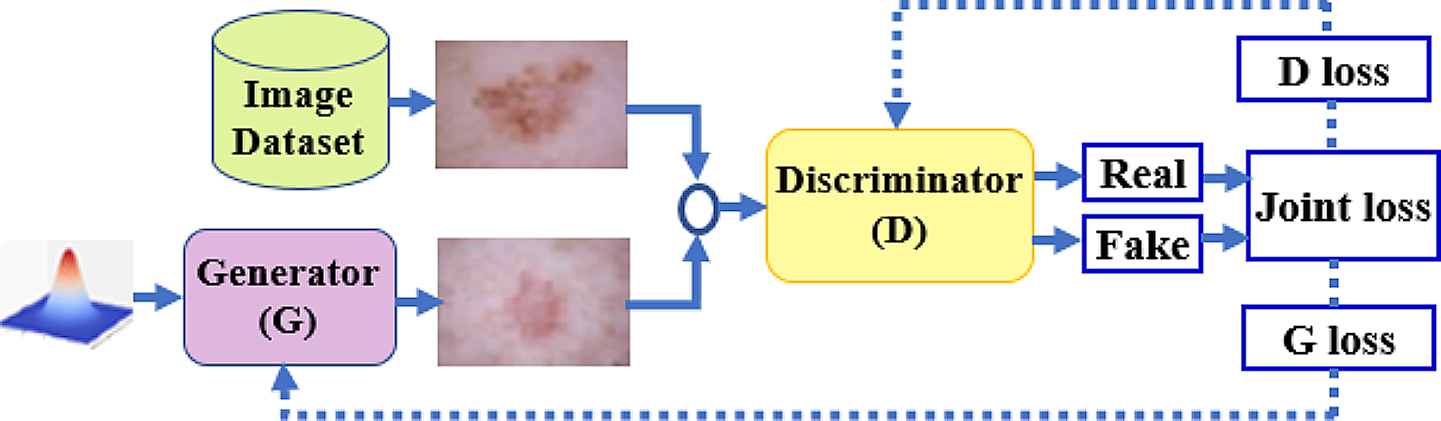
SpringerLink
Artificial Intelligence Review - Dermatology is the most appropriate field to utilize pattern recognition-based automated techniques for objective, accurate, and rapid diagnosis because diagnosis...
I think that is not the right one, I just search up "adversarial", which might be confused with GAN
past meteor
magic sorrel
whoa... delta what's the pip install ? delta-spark ?
Polars and duckdb can read and write to delta. On top of that you can use this as well if you want:
 spiral plume
well anyone can teach me how to create an Ai
vestal spruce
spiral plume
well anyone can teach me how to create an Ai
as Data Scientist or Machine Learning Engineer?
spiral plume
vestal spruce
as Data Scientist or Machine Learning Engineer?
Hmm student?
vestal spruce
spiral plume
Hmm student?
Computer Science Student?
spiral plume
Nope
vestal spruce
If so then it's Data Science, but if you're self-taught for industry related job then ML Engineer
spiral plume
Well
vestal spruce
let me ask it like this, What motivation do you have to learn AI? @spiral plume
spiral plume
Im just a beginner u can say
spiral plume
vestal spruce
let me ask it like this, What motivation do you have to learn AI? <@118435640227...
Well so it can help me a lot of things
vestal spruce
If you want to land a job in "hot-topic"/"all-the-buzz" of the current century, go for ML Engineer. but If you want to be a part of scientific community then Data Science.
spiral plume
No no i want it for myself not as job
vestal spruce
Ahh ok
spiral plume
well sorry for wasting ur time
vestal spruce
Regardless, I think it's best to start learning through experience, you might want to get involved with the community on Kaggle, there's a lot like-minded people
I'm also part of it
spiral plume
Ohh i see
Well i think i will start by creating simple one
I can create simple chatbot
But that's not ai
vestal spruce
Ohh I see
spiral plume
well thanks for the help
vestal spruce
spiral plume
well thanks for the help
Since you're specific on the type of AI you want to learn, then the magic keyword for you is Natural Language Processing, Large Language Model, Text Pre/processing.
Hmm did miss anything else?
spiral plume
yea ik about then
vestal spruce
Oh yeah also if you want to jump in asap you might also want to look into HuggingFace community
spiral plume
vestal spruce
Oh yeah also if you want to jump in asap you might also want to look into Huggin...
Ohh yea still tensorflow and pytorch too
spiral plume
vestal spruce
Oh yeah also if you want to jump in asap you might also want to look into Huggin...
I think i need to learn a lot
 alpine birch
what road map should i follow to be a good data science enthusiast? ve seen on a lot of places as well as its confusing.
 shadow viper
i know i shouldnt ask to ask for help but are images allowed in here? i want to send a screenshot from scikit-learn website followed by my question
serene scaffold
shadow viper
i know i shouldnt ask to ask for help but are images allowed in here? i want to ...
images are allowed in this channel, but if the image is of text, it's easier for people if you copy and paste the actual text directly.
shadow viper
serene scaffold
images are allowed in this channel, but if the image is of text, it's easier for...
alright thank you.
i want to learn scikit-learn by reading the docs, following YouTube is ok but sometimes it just doesn't come with the right juice.
so this is the pattern i saw at the scikit learn website
Release Highlights
Biclustering
Calibration
Classification
Clustering
Covariance estimation
Cross decomposition
Dataset examples
Decision Trees
Decomposition
Developing Estimators
Ensemble methods
Examples based on real world datasets
Feature Selection
Gaussian Mixture Models
Gaussian Process for Machine Learning
Generalized Linear Models
Inspection
Kernel Approximation
Manifold learning
Miscellaneous
Missing Value Imputation
Model Selection
Multiclass methods
Multioutput methods
Nearest Neighbors
Neural Networks
Pipelines and composite estimators
Preprocessing
Semi Supervised Classification
Support Vector Machines
Tutorial exercises
Working with text documents
is the a proper start to intermediate or advance way?
serene scaffold
shadow viper
i want to learn scikit-learn by reading the docs, following YouTube is ok but so...
Don't try to "learn scikit-learn".
Focus on learning data science concepts, and use whatever tools from whichever libraries you need to apply that concept.
shadow viper
serene scaffold
Don't try to "learn scikit-learn".
Focus on learning data science concepts, and ...
Your replies are always on point. Thank you.
serene scaffold
shadow viper
Your replies are always on point. Thank you.
I recommend downloading a tabular dataset and doing some basic manipulations with it (this will involve a small subset of pandas), and then training a classifier on that dataset (this will involve a small subset of sklearn).
 sharp hornet
how do i start with this?
serene scaffold
sharp hornet
how do i start with this?
with what?
 cold estuary
Can anyone help me in a 2d floor plan generator project
I am going through this github repo https://github.com/LengSicong/Tell2Design?tab=readme-ov-file

GitHub
[ACL2023 Area Chair Award] Official repo for the paper "Tell2Design: A Dataset for Language-Guided Floor Plan Generation". - LengSicong/Tell2Design
flat token
shadow viper
i want to learn scikit-learn by reading the docs, following YouTube is ok but so...
All of these require a graduate lvl understanding of mathematics. If you are at that lvl, then yes
calm thicket
not even close? an undergrad statistics course would cover most of the stat you need, and up to calc 3 will cover almost everything else
serene scaffold
to use sklearn, I think it's less about knowing the math and more about knowing the data science concepts (which includes math). sklearn has tools to help you do k-fold CV, but it doesn't do anything to help you learn why you should want to do that.
okay, I guess it sort of does https://scikit-learn.org/dev/modules/cross_validation.html
scikit-learn
Learning the parameters of a prediction function and testing it on the same data is a methodological mistake: a model that would just repeat the labels of the samples that it has just seen would ha...
but the arrangement of the user guide is still by feature set, not anything that's pedagogically intentional.
calm thicket
right. it's designed for people that already know what they want to use. they have explainers, but the docs for each model are telling you the syntax, not how they work
sharp hornet
how do i start with data science and ai
sharp hornet
serene scaffold
https://discord.com/channels/267624335836053506/366673247892275221/1305561735872...
whats the starter pack i need for ai
serene scaffold
sharp hornet
whats the starter pack i need for ai
pip install numpy and pandas.
past meteor
calm thicket
right. it's designed for people that already know what they want to use. they ha...
The docs actually tell you how the models work. You can learn a lot of (tabular) data science by reading them and the papers they link to
That's how I did it at least 🙂
calm thicket
i mean like this page: https://scikit-learn.org/1.5/modules/generated/sklearn.svm.SVC.html. you won't be able to understand what they're talking about without reading more into it. though they do link to a lot of explainers, which is nice
past meteor
It's the user guide
scikit-learn
Support vector machines (SVMs) are a set of supervised learning methods used for classification, regression and outliers detection. The advantages of support vector machines are: Effective in high ...
That's where it's at 😄
calm thicket
yeah
past meteor
E.g., here they go over the math briefly https://scikit-learn.org/1.5/modules/svm.html#mathematical-formulation
 toxic stream
Hi, I'm a sixth form (high school) student who needs some help with starting a facial recognition programme
lapis sequoia
i recommend checking docs reading them
past meteor
So, reading the user guide front-to-back for those that have (too much) time is actually great
lapis sequoia
you can get a basic from of how to do it
toxic stream
toxic stream
Hi, I'm a sixth form (high school) student who needs some help with starting a f...
The plan is to basically use tensorflow, keras and opencv to make a simple log in system
 warm flint
ⓘ This user is suspended for being a part of an terroristic organization. Report any illegal activity to https://support.discord/
ⓘ This user is suspended for being a part of an terroristic organization. Report any illegal activity to https://support.discord/
left tartan
!ban 1283907958597619765 Persistent spam.
arctic wedgeBOT
:incoming_envelope: :ok_hand: applied ban to @warm flint permanently.
rich moth
Geez, thats not something you see everyday. Terroristic organization?
final cobalt
I could use some input on this. Not a code review, except maybe the PyTorch specific parts since I'm still learning, but rather a review of the architecture
Hastebin is a free web-based pastebin service for storing and sharing text and code snippets with anyone. Get started now.
The goal is this: Feed the encoder batches of images all from the same style, and attempt to force it to generate the same encoding for each image. Feed those to the classifier which will try to predict which style is being encoded - this is to force the encoder to work harder, and to keep it from generating the same vector for every style
Specifically, I'm not sure if I've done the cloning and detaching correctly
Beyond that, I was thinking of adding a variational component to the loss, for the encoder at least, since a smooth embedding space seem natural to me for encoding style
flat token
calm thicket
not even close? an undergrad statistics course would cover most of the stat you ...
Sure if you don't care how they work then you can write the same spaghetti code that every other comp sci kid writes. If you want to know how to write stuff correctly the you need to learn the math. Half those topics are not "just linear algebra" and more importantly the ones that are linear algebra are far beyond what is covered in an undergrad linear course
calm thicket
flat token
Sure if you don't care how they work then you can write the same spaghetti code ...
i didn't mention linear algebra. what graduate level math is required for, say, decision trees?
flat token
calm thicket
i didn't mention linear algebra. what graduate level math is required for, say, ...
MDP's? this would include stochastic processes, discrete control system theory, etc
once again that list of topics was very good, just needs a graduate lvl understanding of mathematics if you actually want to learn and write code that isnt just a copy and paste of some openAI environment or filling in parameters on scikitlearn function calls
which si not writing machine learning
 barren veldt
I want to progress/ make a LLM Inferencer, does anyone have any resources that I could use to make an LLM inference. Or any guides that could teach me about how LLMs work behind the scene.
fervent canopy
A powerful and user-friendly AutoML application built with Streamlit and H2O.ai. It allows users to easily upload datasets, train machine learning models, and make predictions, all through an intuitive web interface.https://github.com/SanshruthR/AquaLearn

GitHub
Upload CSV data, get predictions and save models. Contribute to SanshruthR/AquaLearn development by creating an account on GitHub.
shadow viper
serene scaffold
I recommend downloading a tabular dataset and doing some basic manipulations wit...
thank you, will do
shadow viper
flat token
All of these require a graduate lvl understanding of mathematics. If you are at ...
will steady youtube help?
 toxic mortar
Hi guys, how can I tell my shareholders that the POC and MVP stages are relatively close in scope? I’m pitching some DL solution that will realistically need about 4-6 months for development, plus an additional 1-4 weeks to encapsulate it in a basic UI. Thanks
shadow viper
toxic mortar
Hi guys, how can I tell my shareholders that the POC and MVP stages are relative...
hey, will this do?
"
good day everyone, the proof of concept and minimum viable product stages for this project are actually similar in scope. the poc will illustrate the core functionality of the solution and the mvp will acually build on that and add a simple user interface. these stages focus on confirming the key features and the timeline for this project development will be within 4-6 month and also an additional 1-4 weeks to finish it up in a simple ui. there will be lots of testing, feedback getting all while we stay on track.
"
toxic mortar
shadow viper
hey, will this do?
"
good day everyone, the proof of concept and minimum viable...
Hey, thanks for the reply and effort for putting it! Might have caused a bit of confusion in my question. Rather than just focusing on phrasing, I want to know from ML standpoint how to help them to get into perspective—that the POC phase typically requires much mroe workload than other phases in SE
shadow viper
toxic mortar
Hey, thanks for the reply and effort for putting it! Might have caused a bit of ...
Ah, lol, I see. Well, sorry, I’m still picking up the pieces of ML/DL. I hope you find what you’re looking for.🙂
toxic mortar
shadow viper
Ah, lol, I see. Well, sorry, I’m still picking up the pieces of ML/DL. I hope yo...
No worries, good luck!
 hearty isle
hi people
desert oar
toxic mortar
Hey, thanks for the reply and effort for putting it! Might have caused a bit of ...
Getting to the point of a working proof-of-concept is more of a research project than a software development project. That's why it takes so long.
Machine learning isn't just a matter of writing down code. It tends to be hard to tell if something will work until you try it, even if it seems like it should work based on literature, prior experience, and domain knowledge. This is even more true in deep learning specifically, where the models can take a long time to train, so there is a relatively long feedback loop, and there is a large number of small design decisions that might or might not be consequential depending on the task.
Moreover, gathering and cleaning input data tends to be a slow, tedious, labor-intensive process. And sometimes even the way that we put the input data together can affect the deep learning model itself. So the R&D iteration loop potentially covers a large portion of the pipeline.
TLDR: ML/DL is heavy on the "R" in "R&D", and that means each attempt has some uncertainty in it. Moreover, each attempt can also take a while to see if it works. The result is that a working PoC can take a long time to put together, but from there it's relatively easy to build a simple product around it.
past meteor
desert oar
Getting to the point of a working proof-of-concept is more of a research project...
For my current employer this is actually quite different. We only do a handful of things and we’ve done them so many times it shifts closer to the D of R&D than the R
It’s less sexy but there’s a lot of merit in that approach
unkempt wigeon
How do I organize a data set?
toxic mortar
desert oar
Getting to the point of a working proof-of-concept is more of a research project...
Very well said. You just made my life way easier. Thank you so much for this
desert oar
past meteor
For my current employer this is actually quite different. We only do a handful o...
Yeah, I think that's true for a lot of established data teams, within a particular business domain, but it sounds like this is a greenfield deep learning project
toxic stream
Would anyone mind helping me write some code for a neural network for facial recognition using tensorflow and opencv?
It's for a school project which contributes to my final grade and I basically don't know how to set one up
My plan was to use a mobilenetv2 model which has been pre-trained to detect faces and I basically have to train it correctly extract features and recognise individuals
toxic stream
Any help at all would be greatly appreciated
serene scaffold
toxic stream
It's for a school project which contributes to my final grade and I basically do...
Hello, what have you done so far?
toxic stream
serene scaffold
Hello, what have you done so far?
Not much tbh, I've struggled to understand how to piece things together
For now though I have managed to code this:
 serene scaffold
toxic stream
For now though I have managed to code this:
serene scaffold
toxic stream
For now though I have managed to code this:
Please only show code as text
!code
toxic stream
serene scaffold
that's the link for the whole paste bin. not your paste.
toxic stream
serene scaffold
~~that's the link for the whole paste bin. not your paste.~~
Yh, sorry, I fixed it now
I've sorted all of my images into a test and validation folder using a script I found online
toxic stream
serene scaffold
Hello, what have you done so far?
Lmk if you have any suggestions
hearty isle
 serene scaffold
hearty isle
serene scaffold
hearty isle
do you have a question?
flat token
shadow viper
will steady youtube help?
i mean math is hard to learn like this and i obviously dont recommend it but if this is your only avenue, and you are willing to be super critical of where u r as you learn, then yes it is possible