#data-science-and-ml
1 messages · Page 143 of 1


 pine escarp
it it me or that image is black
 wet canyon
pine escarp
it it me or that image is black
wet canyon
pine escarp
it it me or that image is black
it is black yes
 unreal condor
It has integrated terminal
pine escarp
do you get any error
pine escarp
unreal condor
It has integrated terminal
oh jus like pycharm
wet canyon
i'm not entirely sure where it's going wrong, but i assume it has to do with the way it's getting resized again. or maybe it's an issue with cv2?
wet canyon
pine escarp
do you get any error
not when i try saving it with cv2. if i use matplotlib, it throws an error saying it's not the right data format or something like that, which led to me writing this line of code
clustered = np.clip(clustered / 255.0, 0, 1).astype(np.uint8)
Have you tried display the output before saving it
wet canyon
unreal condor
Have you tried display the output before saving it
i have, yes. it displays it properly. it just isn't saving it properly
unreal condor
I think cv2.COLOR_RGB2BGR caused the problem, try different format ?
pine escarp
so it displays properly
but when you save it
its all black
totally unrelated but your pfp is scary man

pine escarp
pine escarp
totally unrelated but your pfp is scary man
i mean moto
@unreal condor have you tried any other IDEs that support notebooks
unreal condor
pine escarp
<@1255532611644952613> have you tried any other IDEs that support notebooks
Too lazy to try
 fallow coyote
pine escarp
<@1255532611644952613> have you tried any other IDEs that support notebooks
fallow coyote
pine escarp
<@1255532611644952613> have you tried any other IDEs that support notebooks
You can just install the modules/libraries for jupyter notebooks on pycharm community edition. Thats what I did
pine escarp
fallow coyote
You can just install the modules/libraries for jupyter notebooks on pycharm comm...
one guy said that only pro version supports that
 wet canyon
unreal condor
I think cv2.COLOR_RGB2BGR caused the problem, try different format ?
wet canyon
unreal condor
I think cv2.COLOR_RGB2BGR caused the problem, try different format ?
i've tried saving it without modifying clustered, i've tried it by dividing it by 255 and converting to int to get into the 1 to 255 threshold, i've also tried across cv2 and plt, nothing seems to be working so far 😵💫
wet canyon
pine escarp
totally unrelated but your pfp is scary man
i get that a lot lmao
pine escarp
wet canyon
i get that a lot lmao
well jus kidding
fallow coyote
pine escarp
one guy said that only pro version supports that
I think thats for built in support. You can still install the modules for jupyter via pip (or for me, conda) and still access jupyter notebooks but you wont have any built in support from pycharm
pine escarp
wet canyon
i've tried saving it without modifying `clustered`, i've tried it by dividing it...
do you mind if i try it on my notebook
pine escarp
fallow coyote
I think thats for built in support. You can still install the modules for jupyte...
ohh fair
do you have a pic of how it looks
fallow coyote
pine escarp
do you have a pic of how it looks
Even better, look up Pythan for Data Analysis by Wes Kinney and follow the instructions there
Gonna have to look online a bit to install conda on pycharms though
unreal condor
wet canyon
i've tried saving it without modifying `clustered`, i've tried it by dividing it...
Then i probably don't know the problem behind it then
pine escarp
fallow coyote
Even better, look up Pythan for Data Analysis by Wes Kinney and follow the instr...
alright mate, thanks
pine escarp
fallow coyote
Gonna have to look online a bit to install conda on pycharms though
it still works on conda?
@serene scaffold what shall we do
 serene scaffold
pine escarp
<@253696366952316929> what shall we do
serene scaffold
pine escarp
<@253696366952316929> what shall we do
I was on the train when we were talking and now I'm doing stuff
(I like trains)
fallow coyote
pine escarp
it still works on conda?
Yeah. Gonna have install conda from the website though. Pycharm professional, to my knowledge, provides it in built for you
unreal condor
serene scaffold
(I like trains)
Counter arguement: I hate train
pine escarp
serene scaffold
(I like trains)
same, im always blown away by how powerful their engines are
pine escarp
fallow coyote
Yeah. Gonna have install conda from the website though. Pycharm professional, to...
alright
pine escarp
serene scaffold
I was on the train when we were talking and now I'm doing stuff
no worrues
worries
what notebook do you use though
you said that you work ai company
pine escarp
unreal condor
Counter arguement: I hate train
whyyy
unreal condor
pine escarp
whyyy
I have carsick
pine escarp
unreal condor
I have carsick
sucks
pine escarp
unreal condor
I have carsick

i want black theme
but with my current theme, i cant see the boxes where we write the code
 warm mortar
Hello everybody,
Anyone an ESRGAN expert here
 spring field
it isn't??? /s
 left tartan
warm mortar
Hello everybody,
Anyone an ESRGAN expert here
left tartan
warm mortar
Hello everybody,
Anyone an ESRGAN expert here
Just ask the question.
 toxic mortar
from langchain_community.document_loaders import PyPDFLoader

loader = PyPDFLoader(
    file_path = "./example_data/layout-parser-paper.pdf",
    password = "my-pasword",
    extract_images = True,
    # headers = None
    # extraction_mode = "plain",
    # extraction_kwargs = None,
)
What does :
extract_images = True,
Even do?
fallow coyote
Wait Anaconda is malware/unsafe? Ive been using conda for all my jupyter notebooks. Should I just switch to pip or another package managed?
left tartan
There's also the scientific argument about reproducibility: that a conda forge recipe is reproducible (built from source) vs a pypi wheel that isn't necessarily
unreal condor
pine escarp
Change your theme then
 devout sail
Hello guys , I'm new to data science and I've started with learning Python by Kaggle .
Any tips from you to follow will be appreciated ❤️
serene scaffold
left tartan
There's also the scientific argument about reproducibility: that a conda forge r...
> implying there's a paper where the reference code reproduces the findings
unreal condor
devout sail
Hello guys , I'm new to data science and I've started with learning Python by Ka...
Learn basic ML concepts first like linear regression, logistic regression, loss function, gradient descent and maybe some traditional Algos like Naive Bayes, SVM, Decision Tree,... to know more about ML in general. After that you can start learning Neural Network/Deep Learning then maybe opt for a specialized field like computer vision or natural language processing and learn more about specialized NN structures like RNN, CNN, transformer, etc
devout sail
unreal condor
Learn basic ML concepts first like linear regression, logistic regression, loss ...
thank you so much ✨
pine escarp
unreal condor
Change your theme then
I want pure black theme
Like that
But I can't see the box outline
 quaint rivet
thanks
pine escarp
serene scaffold
\> implying there's a paper where the reference code reproduces the findings
Bro
What do you use instead of anaconda
 past meteor
pine escarp
What do you use instead of anaconda
past meteor
pine escarp
What do you use instead of anaconda
Just virtual environments from the standard library can do the trick
unreal condor
pine escarp
I want pure black theme
How about less black theme ?
 lapis sequoia
Deep learning and artificial neural networks are approaches used in machine learning to build computational models which learn from training examples.
lapis sequoia
beautiful vis of GPs imho https://en.wikipedia.org/wiki/File:Infinitely_wide_neural_network.webm
 pine escarp
unreal condor
How about less black theme ?
pine escarp
unreal condor
How about less black theme ?
That works, I tried it
But you know
I like the dark black theme
It looks kinda good to my eyes.
If only there was a way that I can edit the themes
pine escarp
lapis sequoia
beautiful vis of GPs imho https://en.wikipedia.org/wiki/File:Infinitely_wide_neu...
Does python has a library that visualizes a neural network?
lapis sequoia
you can use tensorboard, netron, ..
 spare forum
Torchviz too
lapis sequoia
^ probably that one is better
i wonder if the fact the NNs tend to a gaussian process over theta (params) maps to large neural networks optimising to different minima of the same quality
lapis sequoia
are those magnets? just curious
 dry field
this?
 lapis sequoia
yeah
dry field
its an un-preprocessed synthetic image
I had a good result with YOLO OBB before
now i have nothing
lapis sequoia
if you have nothing it mustn't be the nn
pine escarp
Guys what kernel do I use for my jupyter notebook
dry field
pine escarp
Guys what kernel do I use for my jupyter notebook
ipykernel
lapis sequoia
what does 'nothing' mean tho?
dry field
ooo nothing means that the model is unable to learn
pine escarp
dry field
select an interpreter and that'll do
I did but it still asks me for a kernel, I used the ipykernel
lapis sequoia
i dont think you are describing the problem well with due respect
lapis sequoia
alr
doesnt vscode suggest you what install in the notifications? the bell icon bottom right
dry field
what's the architecture you can think of? @lapis sequoia
pine escarp
lapis sequoia
doesnt vscode suggest you what install in the notifications? the bell icon botto...
Lemme check, I didn't notice
lapis sequoia
yolo is fine for many tasks
dry field
😦 it doesn't work - the same issue
lapis sequoia
my point is that you should describe the problem with more detail in the help channel
dry field
you can specify the things u need
lapis sequoia
show the output, add an image with the current bboxes, link the model,...
lapis sequoia
not that, just an image with the bounding boxes drawn
we don't know what is failing currently, nor how bad is failing.
dry field
lapis sequoia
not that, just an image with the bounding boxes drawn
sure gimme a moment
lapis sequoia
i assume you fine tuned it as well, with the classes you need, and your own dataset.
 lapis sequoia
that's pretty good
pine escarp
lapis sequoia
doesnt vscode suggest you what install in the notifications? the bell icon botto...

 lapis sequoia
you need to tweak so it discards the boxes that overlap
pine escarp
 lapis sequoia
yolo is so neat
pine escarp
what should i select
dry field
lapis sequoia
you need to tweak so it discards the boxes that overlap
that's why YOLO OBB worked
i dont think i can do that- many rods are inclined at sm angle
lapis sequoia
uhmm i dont remember off the top of my head, but try click on python envs, then try the other one XD
dry field
do you think if I implement RTDeTR with oIoU loss
lapis sequoia
dry field
i dont think i can do that- many rods are inclined at sm angle
i think this is about just the right type of parameters
for filtering, not for training
yolo should do fine
lapis sequoia
does this help @pine escarp https://code.visualstudio.com/docs/datascience/jupyter-kernel-management
what do you expect though? @dry field that's pretty good result imho
but you may expect smth else
dry field
lapis sequoia
what do you expect though? <@935787557113970709> that's pretty good result imho
what you saw was the ground truth
they were just the bboxes
lapis sequoia
i meant u should show the prediction
dry field
there u go
 lapis sequoia
i don't think that's the architecture
dry field
that's not YOLO but it behaved the same
lapis sequoia
my advice is try to train it for a very simple task, and check you are doing the process correctly
that's pretty good image to upload to sam
just for fun though
dry field
this is with mask R cnn
 pine escarp
lapis sequoia
does this help <@369156256897826826> <https://code.visualstudio.com/docs/datasc...
pine escarp
lapis sequoia
does this help <@369156256897826826> <https://code.visualstudio.com/docs/datasc...
Yeah, does help, I'll jus use the python environments, cause for a existing jupyter server, i need to open a server and paste it's link in vscode which is a hassle
dry field
pine escarp
Yeah, does help, I'll jus use the python environments, cause for a existing jupy...
just select the python interpreter and vsc will do that for you
lapis sequoia
pine escarp
Yeah, does help, I'll jus use the python environments, cause for a existing jupy...
sounds good
lapis sequoia
dry field
this is with mask R cnn
that's great, right?
dry field
its fine, I just want to get the job done 😢
lapis sequoia
imho you are doing great, just leave yolo if mask r cnn works
lapis sequoia
d be nice if you can show the result afterwards
dry field
sure
lapis sequoia
ur welcome
dry field
the task is to detect rods in SEM images
and my approach is to create a synthetic dataset
process it and use it on real time data
lapis sequoia
oh, it did look familiar to me
dry field
dry field
this is with mask R cnn
so this is an unpreprocessed image
lapis sequoia
those are crystals from some synthetic chemistry
lapis sequoia
nice, zinc forms neat structures
lapis sequoia
it forms cute hexagons as well,
dry field
lapis sequoia
it forms cute hexagons as well,
true but our SEM produces very bad images smtimes
and im required to make a general purpose model
lapis sequoia
im not at research level to tell you, imho comparing different NNs performance for estimating and separating crystals is a valuable work
sp if you also estimate the size either with the diagonal or smth
lapis sequoia
(or even the distribution of sizes)
lapis sequoia
i do know of people doing similar stuff wo NNs though, but still, i think is great stuff
yeah nice, u using,,,what was it
ONNX ?
dry field
it is running detectron on the backend
lapis sequoia
oh runs serverside
dry field
https://zno-explorer.vercel.app/ yep tunneled to ~my~ lab
sry its not my lab, its the uni's lab
lapis sequoia
nice, oh yeah i forgot this is 3d for a second
dry field
im only 19 to have one xD
lapis sequoia
so wait the height and width need to consider perspective somehow
dry field
yea there's a txt file has sm params - from the SEM
that has to be uploaded to wbsite too
lapis sequoia
i see
dry field
real height is actually hard to measure and i have abs no idea
lapis sequoia
u learning react for the plots?
lapis sequoia
oh it's plotly and js
lapis sequoia
there are good react libraries for it, but if you dont need it thats fine
dry field
im focusing on training the detection
dry field
lapis sequoia
there are good react libraries for it, but if you dont need it thats fine
tru but yea will get back to it later
dry field
thanks!
 dry field
pine escarp
https://cdn.discordapp.com/attachments/366673247892275221/1277225487365570590/UC...
dry field
pine escarp
https://cdn.discordapp.com/attachments/366673247892275221/1277225487365570590/UC...
thats a synthetic image
lapis sequoia
dry field
thanks!
imho to make it for a paper it needs this minimum:
- be reasonably accurate or measure some error (you do include confidence, maybe other metrics as well.)
- let user select different nets
- has a comparison of NN results for a specific set of images
- have some parts open source.
jic it helps.
dry field
doesn't mean anything
dry field
lapis sequoia
imho to make it for a paper it needs this minimum:
1. be reasonably accurate or...
- there are people to measure
- let's see if the task can be done with 1
- alr tried YOLO OBB, detectron, SAM
- sure the frontend can be opensource xD
pine escarp
dry field
doesn't mean anything
doubt, what are you trying to achieve with that image
dry field
the focus is on the dataset- so it can be closed and be open for a few people with consent
pine escarp
dry field
the focus is on the dataset- so it can be closed and be open for a few people wi...
ohhh
so the image doesnt mean anything?
dry field
pine escarp
so the image doesnt mean anything?
yep
also the simulator can be opensource- which creates the whole scene
 buoyant vine
🤨
 errant bison
Where can i find events related to ai?
Like seminars or workshops for what is ai, etc
 proper crag
is 4.6 GHz clock speed good for training locally?
also gonna deploy the model to a docker
then feed it a livestream data from my VM
ML model
 analog marsh
guys is there tool or something to use so i can customize ai for my website
i want to ask user question based on them im gonna suggest stuff but i want to it using AI if that make sense
lapis sequoia
reading this if smone wants to join https://en.wikipedia.org/wiki/Bayesian_inference
pretty neat article
unreal condor
proper crag
is 4.6 GHz clock speed good for training locally?
umm no
 jaunty helm
proper crag
is 4.6 GHz clock speed good for training locally?
jaunty helm
proper crag
is 4.6 GHz clock speed good for training locally?
like a cpu? if by model you mean a LLM, hell no
if you don't want it to train for your entire lifetime, you need a gpu to train a LLM
proper crag
jaunty helm
like a cpu? if by model you mean a LLM, hell no
if you don't want it to train fo...
ML model
SVR
bruh i didn do LLM
jaunty helm
proper crag
SVR
depends on how much data do you have
iirc the time complexity for a SVM is like O(n^2 * d) or O(n^3 * d) where d is how many features you have
lapis sequoia
from google
Linear SVM has a complexity of O(n d), making it suitable for large datasets with a moderate number of features. Non-linear SVM with kernel tricks can have complexities of O(n^2 d) or O(n^3), which can be computationally expensive for large datasets.
but it's doing regression in his case, ie SVR
jaunty helm
lapis sequoia
but it's doing regression in his case, ie SVR
don't think the time complexity differs between the classifier and regressor
anyways, if you have >= like a million data points then SVR won't run very well
in fact 100k probably already runs pretty slow
pine escarp
jaunty helm
like a cpu? if by model you mean a LLM, hell no
if you don't want it to train fo...
Most deep learning stuffs require GPU
I did CNN with my potato laptop
Took around 9 hours
😂
AND GUESS WHAT? I DIDN'T SAVE THE PERFORMANCE HISTORY ☠️
Now I have to train it again jus to get that training history
This time ill save it with pickle
But man
I don't wanna wait 9 hours
Is there like cloud or online thing
Where I can run it
jaunty helm
colab / kaggle gives you free gpu per week
lapis sequoia
why dont you do it by hand
pine escarp
jaunty helm
colab / kaggle gives you free gpu per week
Yeah noticed that
Are they fast
jaunty helm
pine escarp
Are they fast
faster than your cpu, that's for sure
lapis sequoia
you can save checkpoints to gdrive as well, jic it breaks/run out, and continue next day
unreal condor
pine escarp
Are they fast
much much faster
lapis sequoia
not a low goal this one:
"Divine Benevolence", or an Attempt to Prove That the Principal End of the Divine Providence and Government is the Happiness of His Creatures (1731)
not a minor fact id say that a lot of people these days are bayesian (and atheists), and this was one of his motivations (apparently)
Others speculate he was motivated to rebut David Hume's argument against believing in miracles on the evidence of testimony in An Enquiry Concerning Human Understanding.
pine escarp
jaunty helm
faster than your cpu, that's for sure
I'll try it for sure then!
pine escarp
lapis sequoia
not a minor fact id say that a lot of people these days are bayesian (*and* athe...
Enlighten me.
lapis sequoia
Bayes doesn't help if you take the wrong evidence, which ig is pretty obvious
In other words, bayesian thinkers may be too certain of being selecting the right evidence (especially in complex environments.)
lapis sequoia
.h5 in keras saves the weights onl, and .pb isnt really encouraged anymore from keras.
Use .keras format, if you need it for the web, convert to .onnx.
There are caveats, that's a short opinion.
Guide: https://www.tensorflow.org/guide/keras/serialization_and_saving @woven sundial
 woven sundial
i want to make ai photo denoiser and idk which format should i use
lapis sequoia
.keras
woven sundial
alright thanks
 midnight orchid
It’s doing everything but eat the food grr 

 past bramble
day 1 kaggle report:
started out with a deep learning course although i know it cuz it's been a long time i used those concepts
lapis sequoia
past bramble
day 1 kaggle report:
started out with a deep learning course although i know it ...
gl :-)
 sterile heath
midnight orchid
It’s doing everything but eat the food grr <:ducky_skull:1121451613224173689>
sterile heath
midnight orchid
It’s doing everything but eat the food grr <:ducky_skull:1121451613224173689>
Have you considered the possibility of it not being hungry?
 odd meteor
errant bison
Like seminars or workshops for what is ai, etc
odd meteor
errant bison
Like seminars or workshops for what is ai, etc
- Social media
- Eventbrite app
- Joining AI communities
woven sundial
lapis sequoia
`.h5` in keras saves the weights onl, and `.pb` isnt really encouraged anymore f...
so i can use model.load_weights('.h5') and load_model at once?
 umbral surge
Are there any convenient models that can output sequences of varying length? Like if you have trajectories where there is a varying amount of missing points at some place in the trajectory, can this be done? And in a way that makes use of the information available after the missing segment, i.e., not just taking the preceding points and making predictions without using the context of the points following the missing segment
lapis sequoia
woven sundial
so i can use model.load_weights('.h5') and load_model at once?
I assume you are using tf>2.16 and keras 3.X
Load weights requires a definition of the architecture in the code; load model doesn't, it loads architecture + weights (model.)
If it's a more complex problem I'd add in in #1035199133436354600, with a detailed description of usage, versions, etc. I don't mind to help further (if i can.)

 pine escarp
 real furnace
Very complex stuff here man but its slowly coming together
real furnace
Very complex stuff here man but its slowly coming together
What does it do?
real furnace
pine escarp
What does it do?
Well it plays roblox and since roblox isnt just one set game it is a community of millions of games I made it capable to determine the objective of the game based on anything presented on the screen and im planning to add even more
Eventually want to get a universal game player ai software and just have different models based on the games
I plan for this to be open-source and people can pick it apart and make it even better and maybe I should just make models for each independent game
@pine escarp
pine escarp
real furnace
Well it plays roblox and since roblox isnt just one set game it is a community o...
That's nice man.
Good luck with it.
real furnace
real furnace
I plan for this to be open-source and people can pick it apart and make it even ...
would help for space as its near 1GB already 😭
 real furnace
pine escarp
Good luck with it.
real furnace
pine escarp
Good luck with it.
Thanks I will definitely try my best
The idea is to just have my own army of ai gamers
pine escarp
real furnace
Thanks I will definitely try my best
Keep us updated man.
 real furnace
Alot of money spent on just cloud stuff if I were to but.
I think the only thing is just doing ai with 3d games is just a hassle because it needs to percieve everything as if it was a human which isnt that hard but it can be
and im sorts making it so it can interperet anything and everything to learn
maybe I just test out some simple games for it to play first but
ionk im striving for gold here
atm it is capturing gameplay but playing the game is where its getting tripped up with
pine escarp
real furnace
atm it is capturing gameplay but playing the game is where its getting tripped u...
dw, you can fix it
real furnace
and I could make life easier and just have it inject into the game but its something I dont want to rely on
as that would mean having to bypass anticheats and stuff
 small wedge
there have been models with relative success on a variety of games (including 3d) that just take the screen display as input and shove it through a cnn, which doesn't require you to hook in but those are a lot more difficult to get good results from and require a lot more resources to train properly.
I always just make my own little games in unity then it's easy to hook in, you could make a tiny clone of whatever game you want it to play and not worry about fucking around with cheatengine or whatever you're using to monitor memory on existing games
real furnace
small wedge
I always just make my own little games in unity then it's easy to hook in, you c...
The thing is I’m trying to train it to be able to play ALL Roblox games the only factor being that they are Roblox games but they vary as normal games at this point with the quality they are at
Which makes the project a whole lot harder with the because it’s supposed to interpret multiple genres
But I have a idea that will make it possible
Creating different models for each genre/ game would make it be able to understand what’s happening it the game much easier
lapis sequoia
nice ai vibe to have in the background :-) https://www.youtube.com/watch?v=hTrIHjJRYVg
unreal condor
real furnace
Very complex stuff here man but its slowly coming together
This is such an ambituos project, good luck lad.
 fiery bane
errant bison
Where can i find events related to ai?
fiery bane
errant bison
Where can i find events related to ai?
Here are some events in no particular order
https://neurips.cc/
https://iclr.cc/
https://icml.cc/
https://cvpr.thecvf.com/
https://aaai.org/
https://iccv2023.thecvf.com/
https://2024.aclweb.org/

AAAI is an artificial intelligence organization dedicated to advancing the scientific understanding of AI.
fiery bane
midnight orchid
It’s doing everything but eat the food grr <:ducky_skull:1121451613224173689>
what are you doing?
lapis sequoia
introduction to DL without heavy maths https://developer.nvidia.com/blog/deep-learning-nutshell-history-training/
 whole pendant
What's DL
midnight orchid
fiery bane
what are you doing?
Training ai or smth if it hit itself it will punishment if it food it good but I think he thinks if he survives longer his points are gonna be higher (which is)
lapis sequoia
le cun's YT channel https://www.youtube.com/@YannLeCunPhD/videos
pine escarp
whole pendant
What's DL
Deep Learning.
fiery bane
midnight orchid
Training ai or smth if it hit itself it will punishment if it food it good but I...
like RL?
DL RL?
lapis sequoia
would NNs learn to think trained with brain patterns
small wedge
there are like 50 pages of discussion that could happen on that question lol
lapis sequoia
nope
small wedge
who are they
lapis sequoia
Minsky also built, in 1951, the first randomly wired neural network learning machine, SNARC.
also invented the confocal microscope etc, but thats unrelated
he apparently attacker perceptrons (considered part of cause for AI winter.), i suspect why:
Minsky's book Perceptrons (written with Seymour Papert) attacked the work of Frank Rosenblatt, and became the foundational work in the analysis of artificial neural networks. The book is the center of a controversy in the history of AI, as some claim it to have had great importance in discouraging research of neural networks in the 1970s, and contributing to the so-called "AI winter".[27] He also founded several other AI models. His paper A framework for representing knowledge[28] created a new paradigm in knowledge representation. While his Perceptrons is now more a historical than practical book, the theory of frames is in wide use.[29] Minsky also wrote of the possibility that extraterrestrial life may think like humans, permitting communication
he may believed that NNs were only learning statistical patterns, but not deeper concepts.
small wedge
Interesting, I think that's sort of a distinction without a difference
statistical patterns can represent "deeper concepts"
lapis sequoia
(he is frozen now)
small wedge
LOL
small wedge
but to clarify when you say "if you train an nn on thoughts could it learn to think" what kind of model exactly are you talking about (like a seq-2-seq thing?)
and what does it mean to think in this context, does that imply it's sentient? or just that it can predict a sequence of thoughts as represented in brain scan data?
lapis sequoia
i meant if the signal to learn would be the appropriate to learn to learn, in a way
i think surface statistics is what they describe here https://arxiv.org/pdf/2012.05208
lapis sequoia
give it an input => predict a neural pattern (parts of it)
the input is the same that was given to the human that produced the neural pattern.)
small wedge
but it does doesn't it, isn't that why when you transfer learn or fine tune an LLM you always train the last few layers, because the early layers contain the "syntactic understanding" or the first order statistucs and the deeper layers contain the "semantic" or more complex/meta understandings, training the first layers creates instability and causes massive changes in the later layers leading to catastrophic forgetting
lapis sequoia
or give the neural pattern => produce the output, or both ways
im unsure that an LLM wouldn't learn deep thinking though, if that were the case
they confuse really simple things
small wedge
I would agree with the notion of the paper you sent
lapis sequoia
there are hundreds of those examples
small wedge
modern ML architectures are nowhere near as complex as brains
thinking at the level we do may require a more complex approach
lapis sequoia
yeah, ig, just rambling anyways, for fun
small wedge
ofc ofc, it's all conjecture but it's fun to talk about
lapis sequoia
:-)
small wedge
last I looked into this I was reading about spatiotemporal architectures like liquid state machines and spiking nn's
lapis sequoia
nice, just know the latter
small wedge
that account for the change of time in their threshold functions more like biological neurons
 warped arrow
I tried to do "import openai" and I put in the terminal "pip install openai" but in my code it is put that openai its not defined
small wedge
they are very similar, I think LSM is a type of spiking nn
or the other way around one, been a while since I read on them
lapis sequoia
i see. hinton mentions this
that account for the change of time in their threshold functions more like biological neurons
i think
small wedge
warped arrow
I tried to do "import openai" and I put in the terminal "pip install openai" but...
!dashm
 arctic wedgeBOT
Install packages with `python -m pip`
When trying to install a package via pip, it's recommended to invoke pip as a module: python -m pip install your_package.
Why would we use python -m pip instead of pip?
Invoking pip as a module ensures you know which pip you're using. This is helpful if you have multiple Python versions. You always know which Python version you're installing packages to.
Note
The exact python command you invoke can vary. It may be python3 or py, ensure it's correct for your system.
small wedge
lapis sequoia
i see. hinton mentions this
> that account for the change of time in their thr...
oh yeah I see the paper you sent mentions spiking nn by name lol
didn't even realize
but it's an interesting question about surface statistics, like even with humans it seems our "meta thoughts" i.e. language that describes situations and experiences has a huge impact on our ability to learn and conceptualize things
warped arrow
Traceback (most recent call last):
  File "c:\Users\ihab\Downloads\chatgpt1.py", line 17, in <module>
    réponse = interroger_chatgpt(question)
              ^^^^^^^^^^^^^^^^^^^^^^^^^^^^
  File "c:\Users\ihab\Downloads\chatgpt1.py", line 7, in interroger_chatgpt
    response = openai.ChatCompletion.create(
               ^^^^^^^^^^^^^^^^^^^^^^^^^^^^^
  File "C:\Users\ihab\AppData\Local\Programs\Python\Python312\Lib\site-packages\openai\lib\_old_api.py", line 39, in __call__
    raise APIRemovedInV1(symbol=self._symbol)
openai.lib._old_api.APIRemovedInV1:

You tried to access openai.ChatCompletion, but this is no longer supported in openai>=1.0.0 - see the README at https://github.com/openai/openai-python for the API.

You can run `openai migrate` to automatically upgrade your codebase to use the 1.0.0 interface.

Alternatively, you can pin your installation to the old version, e.g. `pip install openai==0.28`

A detailed migration guide is available here: https://github.com/openai/openai-python/discussions/742
Why this error ?
small wedge
it tells you
warped arrow
 small wedge
read it
warped arrow
small wedge
read it
Okay i'm going to test "pip install openai==0.28"
small wedge
remember to use -m if you fixed it like that last time
warm mortar
Hey everyone,
Does anyone use ESRGAN on google collab???
warped arrow
Traceback (most recent call last): File "c:\Users\ihab\Downloads\chatgpt1.py", line 17, in <module> réponse = interroger_chatgpt(question) ^^^^^^^^^^^^^^^^^^^^^^^^^^^^ File "c:\Users\ihab\Downloads\chatgpt1.py", line 7, in interroger_chatgpt response = openai.ChatCompletion.create( ^^^^^^^^^^^^^^^^^^^^^^^^^^^^^ File "C:\Users\ihab\AppData\Local\Programs\Python\Python312\Lib\site-packages\openai\api_resources\chat_completion.py", line 25, in create return super().create(*args, **kwargs) ^^^^^^^^^^^^^^^^^^^^^^^^^^^^^^^ File "C:\Users\ihab\AppData\Local\Programs\Python\Python312\Lib\site-packages\openai\api_resources\abstract\engine_api_resource.py", line 153, in create response, _, api_key = requestor.request( ^^^^^^^^^^^^^^^^^^ File "C:\Users\ihab\AppData\Local\Programs\Python\Python312\Lib\site-packages\openai\api_requestor.py", line 298, in request resp, got_stream = self._interpret_response(result, stream) ^^^^^^^^^^^^^^^^^^^^^^^^^^^^^^^^^^^^^^^^ File "C:\Users\ihab\AppData\Local\Programs\Python\Python312\Lib\site-packages\openai\api_requestor.py", line 700, in _interpret_response self._interpret_response_line( File "C:\Users\ihab\AppData\Local\Programs\Python\Python312\Lib\site-packages\openai\api_requestor.py", line 765, in _interpret_response_line raise self.handle_error_response( openai.error.InvalidRequestError: The model `gpt-4` does not exist or you do not have access to it.
I can't read even with google translate
small wedge
The model gpt-4 does not exist or you do not have access to it.
are you sure you have access to gpt-4? are you paying a subscription?
left tartan
warm mortar
Hey everyone,
Does anyone use ESRGAN on google collab???
We've already explained that your code is incomplete, it has nothing to do with colab or Esrgan
left tartan
warped arrow
`` Traceback (most recent call last):
File "c:\Users\ihab\Downloads\chatgpt1.p...
Do any other models work? Like 4o turbo? https://platform.openai.com/docs/models/gpt-4-turbo-and-gpt-4
fiery bane
lapis sequoia
have you read minsky, kurtzweil and those people?
I reccomend reading about free energy principle
warm mortar
left tartan
We've already explained that your code is incomplete, it has nothing to do with ...
So could you compelete it for me??
left tartan
warm mortar
So could you compelete it for me??
No, we're here to help you learn. Not to write code for people.
warm mortar
left tartan
No, we're here to help you learn. Not to write code for people.
Do you know someone??
left tartan
You could try to hire someone on fiverr
 tight wave
I want to build an end to end ml project in python, my ml skills are intemediate, but want to expand my skill, what are some fun projects i can try?
lapis sequoia
fiery bane
I reccomend reading about free energy principle
thank you ! :]
do you think there is enough evidence to support the existence of a god @fiery bane ?
do you know about 'ideasthesia'? it's related
do you know francisco varela?
warm mortar
left tartan
You could try to hire someone on fiverr
I don't use
 verbal oar
I offer help in upwork, but this is more of mentoring than freelance jobs
where should I promote on social media like linkedin this is not effective
maybe also career discussion related I mean as channel not my offer
I can help with building project but not code for you
fiery bane
tight wave
I want to build an end to end ml project in python, my ml skills are intemediate...
kaggle? AICrowd?
fiery bane
lapis sequoia
do you know about 'ideasthesia'? it's related
do you know francisco varela?
Like, depending on purpose, we demand different level of rigor.
With that being said, I'm a theist, so I guess that's a yes for all practical purposes.
fiery bane
lapis sequoia
do you know about 'ideasthesia'? it's related
do you know francisco varela?
I heard about ideasthesia, idk how it is related to free energy principle
lapis sequoia
does consciousness count within what the representations that minimise surprise are? (ideasthesia is one interesting way of those representations.)
fiery bane
lapis sequoia
do you know about 'ideasthesia'? it's related
do you know francisco varela?
francisco varela
not personally. I saw his wiki before. I still prefer Karl Friston's approach
lapis sequoia
(i think donald hoffman proposes smth like that.)
i see. he is dead though, died quite young
it seems he was studying the same problem
fiery bane
lapis sequoia
does consciousness count within what the representations that minimise surprise ...
I think these are two different things. Like, I don't see why consciousness is necessarily related to self-organisation. I mean. It might be so, but I haven't seen a convincing argument as to why
lapis sequoia
btw i asked cuz your name seemed chilean, smhow
fiery bane
lapis sequoia
btw i asked cuz your name seemed chilean, smhow
lol my name is Italian
but I am not
the name is literally from a manga lol
lapis sequoia
oh, not too close, though many italian moved to arg at least in the 1900s
fiery bane

Gunslinger Girl Wiki
Beatrice is an unemotional and apathetic girl, posing as a sharp contrast to her handler Bernardo. She has a unique Cyborg ability, allowing her to smell explosives in an area or on an indivdual...

Gunslinger Girl Wiki
Bernardo is Beatrice's Handler. Unlike his Cyborg, Bernardo is both outgoing and friendly.
lapis sequoia
is that you writing?
fiery bane
No lol, it is just one of my favourite manga
lapis sequoia
u do sound like a cyborg but not completely unemotional
k, never heard that before
fiery bane
lapis sequoia
u do sound like a cyborg but not completely unemotional
I hang out in #VC quite a bit, so you can literally listen to me
lapis sequoia
I don't stand voice chats, so wont hear it ig.
The name probably mutates to Beatriz in South America
btw, there exists Bernarda
I don't think Beatrice is the opposite
Beatriz is a Spanish, Galician and Portuguese female first name. It corresponds to the Latin name Beatrix and the English and Italian name Beatrice.
I meant from this part:
was originally introduced by Karl Friston as an explanation for embodied perception-action loops in neuroscience.
That consciousness could be what the brain creates as an approximation to a reality that we can't know by experience
My interp. is that this is what Donald Hoffman says, i may be wrong
Apparently Bayes wanted to develop a theory of why god exists, counting miracles as evidence, when he developed the rule.
He should count suffering as well, though.
fiery bane
lapis sequoia
I meant from this part:
> was originally introduced by Karl Friston as an expla...
I think there are many interpretation haha.
Not sure what exactly Donald said, not familiar with him, but I won't be surprised if lots of people pointed to it and say "consciousness".
I personally don't really like that approach, I still think that preception-action loops can exist without conscionsess.
I think Karl himself only hinted at that, and not go as far as making that claim.
I think the biggest issue with consciouness is that we haven't properly defined it. How can we properly talk about something and investigate its causes, if we don't have a good definition of it.
lapis sequoia
fair !
past bramble
day 2 kaggle report: completed deep learning course
lapis sequoia
nice
past bramble
it suggested that i could try building image generation model
that's possible only through neural network?
 agile cobalt
past bramble
that's possible only through neural network?
agile cobalt
past bramble
that's possible only through neural network?
just to make sure: can you clarify what exactly are you asking?
(... is only possible via ... || as opposed to ...)
 ocean pawn
Currently trying to implement MLP without using framework, but it can't even fit a straight line and the loss is somehow increasing
 lapis sequoia
u wanna share the code?
ocean pawn
lapis sequoia
u wanna share the code?
I would love to, but it might be a lot. Thanks!
I'll see
lapis sequoia
looks like a relu
ocean pawn
lapis sequoia
looks like a relu
Yes, a single relu layer
spring field
ocean pawn
Yes, a single relu layer
your entire network is just a relu?
ocean pawn
spring field
your entire network is just a relu?
Sorry, I mean a single relu hidden layer
with 10 neuron
!paste
arctic wedgeBOT
Pasting large amounts of code
If your code is too long to fit in a codeblock in Discord, you can paste your code here:
https://paste.pythondiscord.com/
After pasting your code, save it by clicking the Paste! button in the bottom left, or by pressing CTRL + S. After doing that, you will be navigated to the new paste's page. Copy the URL and post it here so others can see it.
lapis sequoia
yeah, so i'd bet most weights are 0, or you are facing the dead neurons (i.e the a(x) has negative x for most inputs.)
can you remove the relu, and leave the weights only?
(that's basically a linear regression.)
ocean pawn
spring field
did you normalize the inputs?
ocean pawn
ocean pawn
spring field
did you normalize the inputs?
I did not, but I tried, it didn't make a difference
lapis sequoia
you've improved quite fast
spring field
ocean pawn
I did not, but I tried, it didn't make a difference
you need to normalize the inputs anyway
ocean pawn
lapis sequoia
you've improved quite fast
Honestly, I got bored for a while and watched cartoon instead for the last week, just got back to it recently
ocean pawn
spring field
you need to normalize the inputs anyway
Ok!
lapis sequoia
ocean pawn
Honestly, I got bored for a while and watched cartoon instead for the last week,...
which cartoon
ocean pawn
lapis sequoia
which cartoon
A lot, actually
- spy x family seasson 2
- Yona of the dawn
- Apothecary Diaries
- Digimon
yeahhhh, I took a long break
Anyway, I am back
lapis sequoia
nice
i wonder whether one could debug without reading the code first, doesn't look bad imho, at least the call method
ocean pawn
a single layer with a single neuron is still acting weird
lapis sequoia
if you comment out the layers, and use 1 dense the 5->1 does it improve?
ocean pawn
 lapis sequoia
k, then we can simplify the problem
ocean pawn
lapis sequoia
if you comment out the layers, and use 1 dense the 5->1 does it improve?
Same
ocean pawn
ocean pawn
 self.layers = [
            Dense(1, 1, key=key3),
        ]
yeah, that's good
ocean pawn
Loss/Cost is going mad tho
 lapis sequoia
are you normalising like it was suggested?
that's an important step
what is your LR?
all the parameters for the optimiser, and which optimiser?
spring field
is your learning rate 10?
ocean pawn
lapis sequoia
all the parameters for the optimiser, and which optimiser?
I tried Gradient Descent and Adam
ocean pawn
spring field
is your learning rate `10`?
Yes, acutally might change that, but I tried 0.1 before and it still broke
lapis sequoia
yeah, that's likely it
spring field
ocean pawn
Yes, acutally might change that, but I tried 0.1 before and it still broke
try with 0.001
lapis sequoia
note that the update is getting crazy, because your are jumping from one side to the other of the parabola
(so the sign changes, and it oscillates)
past bramble
agile cobalt
just to make sure: can you clarify what exactly are you asking?
(... is only pos...
i thought image generation uses other algorithms or concepts, not neural network
lapis sequoia
can you show the loss plot?
ocean pawn
But the prediction seemes to be the same
ocean pawn
lapis sequoia
can you show the loss plot?
Wait
ocean pawn
lapis sequoia
can you show the loss plot?


I will try and normalize it
My old normalization code is broken for nn so might have to take a while
lapis sequoia
yeah, you've -3000 to 3000 right?
spring field
past bramble
i thought image generation uses other algorithms or concepts, not neural networ...
you can procedurally generate images, there are tons of approaches, you can also use neural networks, yeah, a simple one might be VQ-VAE or some other VAE architectures, then there are also GAN architectures
lapis sequoia
that can blow up the squared error, if that's the loss
spring field
did you normalize the inputs?
spring field
I mean, they could've scaled the values back to the originals
ocean pawn
spring field
did you normalize the inputs?
I did that, but it's weird

This looks better
 ocean pawn
ocean pawn
ocean pawn
Might be a plotting issue
verbal oar
try grid search or random search
lapis sequoia
are you training with the normalised values? the loss is too large
spring field
if you could share the code...
ocean pawn
spring field
if you could share the code...
Sorry, I'll try
But I've seperated the code quite a lot
spring field
no need to apologize 😅
ocean pawn
!paste
arctic wedgeBOT
Pasting large amounts of code
If your code is too long to fit in a codeblock in Discord, you can paste your code here:
https://paste.pythondiscord.com/
After pasting your code, save it by clicking the Paste! button in the bottom left, or by pressing CTRL + S. After doing that, you will be navigated to the new paste's page. Copy the URL and post it here so others can see it.
ocean pawn
# @jaxtyped(typechecker=typechecked)
@jit
def __normalizer(
    x: Float[ArrayLike, "..."],
    argnums: Optional[Iterable[int]] = None,
    *,
    x_train_mean,
    divisor,
) -> Float[Array, "..."]:
    if argnums is not None:
        argnums = jnp.array(argnums)
        divisor = jnp.take(divisor, argnums, axis=0)
        x_train_mean = jnp.take(x_train_mean, argnums, axis=0)
    return (x - x_train_mean) / divisor


# @jaxtyped(typechecker=typechecked)
def get_z_score_normalizer(
    training_data: Float[Array, "data_count feature_size"]
) -> tuple[NormalizerFunction, NormalizerFunction]:
    x_train_mean = jnp.mean(training_data, axis=0)
    x_train_std = jnp.std(training_data, axis=0)
    jax.debug.print("{} {}", x_train_mean, x_train_std)
    return jit(
        partial(__normalizer, x_train_mean=x_train_mean, divisor=x_train_std)
    ), jit(partial(__invert_normalizer, x_train_mean=x_train_mean, divisor=x_train_std))
why not to just generate between -1 and 1 for now?
key, x, y = generate_data(
    key,
    (1000,),
    -1000.0,
    1000.0,
    lambda x: 3 * x + 1.0,
    -20.0,
    20.0,
)
you need to normalize y as well
ocean pawn
spring field
you need to normalize y as well
Huh, for regression, I've only normalized x but never y, I'll see
ocean pawn
lapis sequoia
why not to just generate between -1 and 1 for now?
```py
key, x, y = generate_d...
I have no idea what's going on


My only theory is that I might've implemented the vectorization incorrectly (the matmul) but I have tried a few arbitrary data and it seemed to be correct
The gradient calculation should be done by JAX and it is probably working as expected
The weirdest part about this is that I've implemented the same thing with Equinox before and it worked, it only break if I tried to make it from scratch, so I definitely did something wrong
self.layers = [
            Dense(1, 5, key=key3, activation=jax.nn.relu),
            Dense(5, 1, key=key4),
        ]
I am very much confused
 spring field
ocean pawn
I have no idea what's going on
spring field
ocean pawn
I have no idea what's going on
the y doesn't appear to be normalized here?
ocean pawn
spring field
the y doesn't appear to be normalized here?
Yeah, still haven't done that, will do now
lapis sequoia
if you multiply by -1 it's not too bad XD
ocean pawn
spring field
the y doesn't appear to be normalized here?
Normalized y (then inversed it for plotting)

I also did this in Equinox and it worked without normalization with the same architecture
spring field
do you have sigmoid as the last activation function btw?
ocean pawn
spring field
do you have sigmoid as the last activation function btw?
No, it should be linear
lapis sequoia
this isnt that important, but i'd use mean squared error for loss
ocean pawn
lapis sequoia
this isnt that important, but i'd use mean squared error for loss
OH I tried both
Both of them is broken
lapis sequoia
you tried now?
ocean pawn
Originally it's MSE, I changed it to MAE but it's broken either way
With mean squared error

The loss curve looks better with MSE tho
spring field
ocean pawn
No, it should be linear
it should be a sigmoid, your output needs to be normalized as well
although maybe it doesn't actually matter 
lapis sequoia
you dont need a sigmoid for 1 layer and linear data
ocean pawn
spring field
it should be a sigmoid, your output needs to be normalized as well
Huh, I though sigmoid is only for binary classiflication?
lapis sequoia
not even for multiple layers, but it collapses to a linear prediction
in the exit layer, yes, in the middle layers, no
ocean pawn
You're better off using ReLu in hidden layer right?
lapis sequoia
u could share a full colab right
spring field
LeakyReLU might be better than ReLU too
lapis sequoia
that we can test
ocean pawn
lapis sequoia
u could share a full colab right
I can give you the github link
But I forgot to commit for a week (oops)
I'll update it now
lapis sequoia
i'd not share ever a personal link here, but it's your choice
ocean pawn
lapis sequoia
i'd not share ever a personal link here, but it's your choice
Why not? Just curious, isn't github account public, anyway?
lapis sequoia
yeah, but linked information scares me
but it could be a random account, or yours if you are fine w it
ocean pawn
Oh fair enough
lapis sequoia
if the matmuls are correct, and the input data is fine, then assuming that the initialisation of weight is correct, one place to look at is the gradient
alr, i might open a codespace
ocean pawn
lapis sequoia
alr, i might open a codespace
Thanks!
There's quite a lot of irrelevant regression code, so you can ignore at least half of the code
ocean pawn
lapis sequoia
oh, i ran out of codespaces data
Try google IDX I suppose
No gpu is a bit sad
lapis sequoia
never heard abt that
ocean pawn
lapis sequoia
never heard abt that
Preety much codespace but google and Gemini
It's still vscode
verbal oar
how's your experimenting with kernel method in svm, this is very interesting topics hmm related with operator theory
lapis sequoia
in the code you showed us, did you write gradient descent, or is a jax built in?
verbal oar
I assume this creates hilbert space?
ocean pawn
lapis sequoia
in the code you showed us, did you write gradient descent, or is a jax built in?
So I've tried gradient descent
But I am using optax.Adam currently
lapis sequoia
verbal oar
I assume this creates hilbert space?
seems similar, idk enough though
verbal oar
you also said about muddy waters like inner product spaces
lapis sequoia
like the space <phi(x), phi(x')> is means its equipped with inner product right
lapis sequoia
ocean pawn
So I've tried gradient descent
But I am using optax.Adam currently
right, so i got lost with many files in the repo
ocean pawn
lapis sequoia
right, so i got lost with many files in the repo
Sorry, just look at example/nn.py
verbal oar
yeah with this <> notation
ocean pawn
ocean pawn
Sorry, just look at example/nn.py
And ml/nn.py
verbal oar
ah these things related with norm
lapis sequoia
idx looks neat
ocean pawn
lapis sequoia
idx looks neat
It is neat, they promised android studio too
(I hope PyCharm get added after android studio)
verbal oar
interesting but also I suppose challenging topic
generalization of vector space hmm so does it module in abstract algebraic sense?
devout sail
can't really understand what should I do here , any help please ?
 spring field
what are you supposed to do here?
devout sail
spring field
what are you supposed to do here?
the same question that I'm asking lol
it's supposed to do logging there based on using Booleans and conditionals statements,
spring field
it looks like the code is already written for you?
devout sail
spring field
it looks like the code is already written for you? <:pithink:652247559909277706>
oh really lol , how dumb am I 😭
serene scaffold
devout sail
can't really understand what should I do here , any help please ?
hello, this question is for data science questions. questions like this would be better suited to a thread in #1035199133436354600
devout sail
serene scaffold
hello, this question is for data science questions. questions like this would be...
isn't this #data-science-and-ml ? and the whole category is called Topical chat/ Help . so why even there is a python-help thread rather than this category was only for chat ?
I mean no offense just I'm confused now.
serene scaffold
devout sail
isn't this <#366673247892275221> ? and the whole category is called Topical cha...
your question about finding the remainder after integer division is not about scientific programming or machine learning.
devout sail
serene scaffold
your question about finding the remainder after integer division is not about sc...
but still it's about python's usage in data science overall , isn't it ?
serene scaffold
devout sail
but still it's about python's usage in data science overall , isn't it ?
it is not.
devout sail
serene scaffold
it is not.
ok then.
serene scaffold
devout sail
ok then.
is there a reason you thought it was? are you taking a data science course?
devout sail
serene scaffold
is there a reason you thought it was? are you taking a data science course?
I'm walking through the python course on Kaggle so I can learn data science. but still I'm just a beginner
serene scaffold
devout sail
I'm walking through the python course on Kaggle so I can learn data science. but...
sounds good. sounds like you're still in the "absolute basics of python" section of the course. you're always welcome to come back to this channel when you start using things like numpy or pandas.
devout sail
serene scaffold
sounds good. sounds like you're still in the "absolute basics of python" section...
thank you.
lapis sequoia

@ocean pawn
idk jax so asked chat gpt to make sure new weight is used. rest are silly mods by me to find the error.
(to be clear ur code was correct just didnt use the new weights)
https://paste.pythondiscord.com/H5IA
ocean pawn
HUHHHHH
What changed
I AM STUPID
I FORGOT TO COMBINE THE NEW PARAMETER
THANKS!
model = combine(params, static)
this single line addded to 106 fixed it
I am annoyed at how simple this fix is

At least it work now
Imagine training new parameter and forgot to use them, definitely not me!
@lapis sequoia Thanks for your help, without you, I doubt I'll realise this
I guess the solution to a problem is always the easiest one
Thanks, anyway!
 violet gull
why does ML use cuda instead of a compute shader?
lapis sequoia
ocean pawn
<@456226577798135808> Thanks for your help, without you, I doubt I'll realise th...
my pleasure
ocean pawn
lapis sequoia
my pleasure
Thanks again!
Guess now's the time to implement Adam myself train MNIST dataset
 chrome ermine
I was told that this question didn't fit in #algos-and-data-structs and to post here instead.
So, the question. I'm trying to get alpaca dataframes to play with backtesting.py. I've tried to trim and match the dataframes as best as I could get but I'm now stuck.
Link to the paste.
https://paste.pythondiscord.com/U4FA
serene scaffold
@chrome ermine can you do print(df.head().to_dict()) and put the resulting text in the paste bin, for each dataframe that pertains to this question? and make sure there's a comment to say which is which.
@chrome ermine ignore my previous message
you have data = get_stock_data. what type is get_stock_data? please ping me when you reply.
chrome ermine
serene scaffold
<@92130770541359104> ignore my previous message
you have `data = get_stock_data...
It's the 2nd file. Alpaca api stock bar data.
serene scaffold
chrome ermine
It's the 2nd file. Alpaca api stock bar data.
an object that represents a python file is a module.
    bt = Backtest(data, RsiOscillator, cash=10000)
         ^^^^^^^^^^^^^^^^^^^^^^^^^^^^^^^^^^^^^^^^^
  File "C:\Users\Me\AppData\Roaming\Python\Python312\site-packages\backtesting\backtesting.py", line 1043, in __init__
    raise TypeError("`data` must be a pandas.DataFrame with columns")
TypeError: `data` must be a pandas.DataFrame with columns
A module is not a dataframe.
chrome ermine
The ouput from the module is a dataframe. I did use an variable to make it usable. I'm assuming I did it wrong?
serene scaffold
chrome ermine
The ouput from the module is a dataframe. I did use an variable to make it usabl...
modules don't have outputs. modules are just containers for all the variables (including classes and functions) that are defined in the module when it finishes running.
chrome ermine
Should I have used a 'return' or a file ouput?
serene scaffold
chrome ermine
Should I have used a 'return' or a file ouput?
you can't return from a module.
what variable in get_stock_data is the one that you think of as the "output"?
chrome ermine
huh. you got a point. I should have used a function call at the end then. That way the modual call pass a the function instead of trying to use it as a variable...
serene scaffold
chrome ermine
huh. you got a point. I should have used a function call at the end then. That w...
what is your answer to my question?
chrome ermine
def get_stock_data(params):
serene scaffold
to avoid confusion, I recommend that you not use the same name for a module and something in the module.
if you had a module named foo.py that contained a variable (which includes classes and functions) named bar, you would do import foo in another file, and then get that function as foo.bar
# foo.py
a = 5
b = 3

def bar(x):
    return x * 2

# baz.py -- THIS IS A DIFFERENT FILE
import foo
print(foo.bar(foo.a))
print(foo.b + 1)
@chrome ermine what do you think the output of this program is?
chrome ermine
10
4
serene scaffold
correct.
think of how you can correctly import and use variables that you defined in get_stock_data.py to fix the problem that data is not a DataFrame.
chrome ermine
yea, this is where I get lost... I guess it's jus back to to python course I guess.
serene scaffold
chrome ermine
yea, this is where I get lost... I guess it's jus back to to python course I gue...
is stock_data not the dataframe that you want?
chrome ermine
stock_data was the attempt to match case. I know I went wildy wrong somewhere. I just didn't know where.
serene scaffold
chrome ermine
stock_data was the attempt to match case. I know I went wildy wrong somewhere. I...
how do you know you went wildly wrong? because of "TypeError: data must be a pandas.DataFrame with columns", or because of something else?
chrome ermine
It started with the error. And then little by little, I tried to match case but kept getting the same error. Then after everything lookeed almost exact, minus the hours, I got stumped and looked for outside guidence.
serene scaffold
chrome ermine
It started with the error. And then little by little, I tried to match case but ...
the reason you're getting "TypeError: data must be a pandas.DataFrame with columns" has nothing to do with whether or not stock_data is correct.
the code that causes that type error never even looks at stock_data.
chrome ermine
I know that now. I called everything before stock_data cause stock_data was never called. You showed me that
serene scaffold
you don't call stock_data. stock data is not a function. it is a dataframe.
chrome ermine
It's a variable I know. but it was never "referenced"? Would that be the correct jaragpn? I'm still new
serene scaffold
"referenced" is right
import get_stock_data

data = get_stock_data
all this does is make data a variable that refers to the get_stock_data module. and modules don't have output. so data is just a container of variables, like foo in my earlier example.
chrome ermine
I get that now. Which I why when i run get_stock_data by it'self I get the correct data frame but not when i run back_test
serene scaffold
chrome ermine
I get that now. Which I why when i run get_stock_data by it'self I get the corre...
if you have get_stock_data, the module, how do you get the dataframe that you want to pass to Backtest?
chrome ermine
put stock_data into a function with the dataframe ecorrections and call the function in back_test
serene scaffold
chrome ermine
put stock_data into a function with the dataframe ecorrections and call the func...
that would work, but it's unnecessary extra steps
for one thing, delete the data = get_stock_data line.
then do this
print(get_stock_data.stock_data)
chrome ermine
It ptinted correctly
chrome ermine
ok. So I just call the variable. data = get_stock_data.stock_data
serene scaffold
you do not "call variables". the word "call" has a specific meaning in programming.
data = get_stock_data.stock_data would cause data to be another reference to the stock_data dataframe that is defined in get_stock_data.py.
@chrome ermine do you understand?
chrome ermine
nop
*nope
I get a suite of new errors now
but the issue I had is working
so... yes?
serene scaffold
getting a new error is always cause for celebration
(ie, a new error following a previous error; the first error isn't fun)
(because usually, a new error means that you solved the original error. but it occasionally means that you've descended to an even lower level of inoperable depravity.)
chrome ermine
Progress is progress
serene scaffold
and inoperable depravity is depraved.
chrome ermine
But a cart with a broken wheel can still be moved with the right weight distribution
serene scaffold
I would just pick up the whole thing and carry it to prove what a man I am.
chrome ermine
lol
The original issua has been solved. i now have to get to bed. I have work in the morning. I'll deal with new issues after wrk. thanks for your enlightenment
serene scaffold
chrome ermine
The original issua has been solved. i now have to get to bed. I have work in the...
I changed my pfp to reflect my role as an enlightener
fiery bane
past bramble
that's possible only through neural network?
Not really... https://en.wikipedia.org/wiki/Procedural_generation
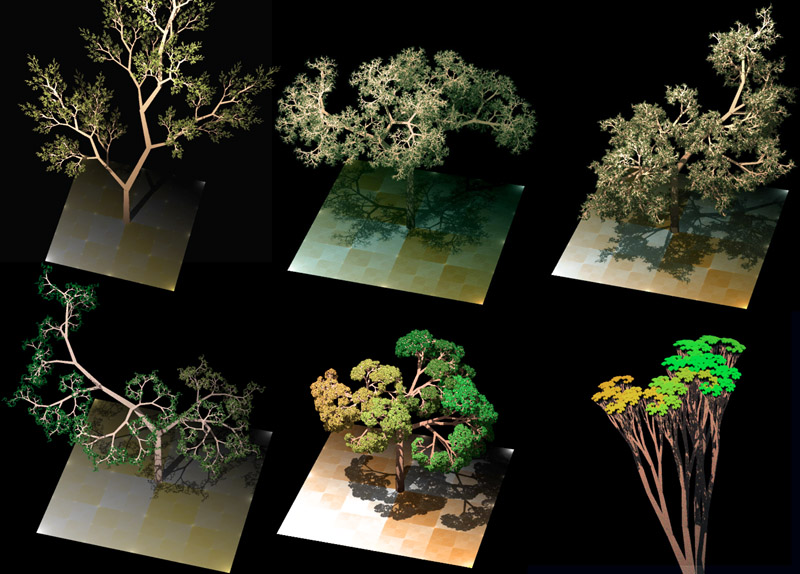
In computing, procedural generation (sometimes shortened as proc-gen) is a method of creating data algorithmically as opposed to manually, typically through a combination of human-generated content and algorithms coupled with computer-generated randomness and processing power. In computer graphics, it is commonly used to create textures and 3D m...
fiery bane
ocean pawn
A lot, actually
1. spy x family seasson 2
2. Yona of the dawn
3. Apothecary Diar...
digimon 1?
past bramble
What type of layers would I use for image GAN? The list is long so it'll be helpful to have it shortened. I'll be using TensorFlow
small wedge
past bramble
What type of layers would I use for image GAN? The list is long so it'll be help...
https://www.tensorflow.org/tutorials/generative/dcgan there's an official tutorial on it
you don't necessarily even need convolution, it just helps to introduce translational invariance and gets GAN's a bit closer to VAE's like stable diffusion
 raw pasture
Short Answer: Provide one reason why logistic regression is better than linear regression for modeling a binary target/outcome.
 eager sundial
guys do you know any nn plotter such as alexlenail's that has better quality?
 remote stream
can anyone help me
whenever i try to load a pretrained model from hugging face i am facing this error
OSError: Can't load tokenizer for 'superb/wav2vec2-base-superb-ks'. If you were trying to load it from 'https://huggingface.co/models', make sure you don't have a local directory with the same name. Otherwise, make sure 'superb/wav2vec2-base-superb-ks' is the correct path to a directory containing all relevant files for a Wav2Vec2CTCTokenizer tokenizer.
lapis sequoia
raw pasture
Short Answer: Provide one reason why logistic regression is better than linear r...
it makes the output interpretable as a probability; a linear regression is unbounded
remote stream
@lapis sequoia
lapis sequoia
but you could get similar results if you train, and use some cutoff value.
remote stream
can you help me with the problem
lapis sequoia
i happily would, but that looks hard, and ive never used hugging face
remote stream
lapis sequoia
i happily would, but that looks hard, and ive never used hugging face
😢
lapis sequoia
can only wish you luck at this time, sorry :-(
 tawdry gyro
Can someone help with this:
https://stackoverflow.com/questions/78918404/how-to-fix-artists-getting-cut-out-when-saving-a-figure-in-matplotlib

Stack Overflow
I want to make a plot with legend and some text with info on the side. This figure is supposed to be in a pdf with other similar figures. (This will be done using matplotlib.backends.backend_pdf.Pd...
lapis sequoia
pretty neat highlighter https://web-highlights.com/ (add on)
pine escarp
lapis sequoia
pretty neat highlighter <https://web-highlights.com/> (add on)
Gonna try it then.
past bramble
small wedge
<https://www.tensorflow.org/tutorials/generative/dcgan> there's an official tuto...
thanks a lot
lapis sequoia
How Bayesian Statistics finds degree of belief for a parameter of model
https://en.wikipedia.org/wiki/Bayesian_inference#Making_a_prediction
pine escarp
lapis sequoia
How Bayesian Statistics finds degree of belief for a parameter of model
<https:...
do you understand the math in it
lapis sequoia
pine escarp
do you understand the math in it
just conceptually
pine escarp
lapis sequoia
just conceptually
the math seems easy but i dont understand it
lapis sequoia
the way i see it is first simplifying it:
- remove all the formulas but the first one
- remove the second multiplicatory term and the letter D
then, you have the equation of a line where y=P, x=c
in this example, c stands for the century, it's a continuous variable from 11 to 16 iirc
pine escarp
does the python bot support latex?
serene scaffold
pine escarp
does the python bot support latex?
.help latex
 strange elbowBOT
 Command Help
**```
.latex <query>
*Renders the text in latex and sends the image.*sir lancebot rather than python, but yes
pine escarp
serene scaffold
sir lancebot rather than python, but yes
noted
serene scaffold
.latex
$$ \frac{\alpha}{\beta} $$
strange elbowBOT
 serene scaffold
idkwhat nanim is
serene scaffold
I see
lapis sequoia
used by 3b1b
pine escarp
serene scaffold
idkwhat nanim is
have you watched 3blue 1brown videos in youtube
lapis sequoia
uve got a flashy profile pic
serene scaffold
pine escarp
have you watched 3blue 1brown videos in youtube
🔵 🔵 🔵 🟤
yes
lapis sequoia
i bet stelercus means magician or smth?
serene scaffold
no. "stelercus" has no meaning outside being my name.
lapis sequoia
is that greek? never heard a similar word
serene scaffold
my current pfp represents my persona as the homosexuality pope (green).
serene scaffold
lapis sequoia
is that greek? never heard a similar word
it's latin-inspired.
greek would be "stelerkos"
lapis sequoia
cool name
serene scaffold
ty bb
pine escarp
is my name cool too
serene scaffold
sure
lapis sequoia
yeah seems from dragon ballz
pine escarp

pine escarp
lapis sequoia
yeah seems from dragon ballz
its a japanese name so its common that you can find that name in japanese animes
do you guys want to see the projects i have to do within 6 weeks
for my training course

idk if i can do it
but lets hope i do it
lapis sequoia
start by iris
pine escarp
lapis sequoia
start by iris
iris as in iris in our eye?
lapis sequoia
i think it's a wines dataset, i may be very wrong
lapis sequoia
anyways, i said cuz it seems the simplest task, maybe 1 too
u gonna be a blown up rich man by the end? \s
 main fox
Iris is a flowers dataset
pine escarp
main fox
Iris is a flowers dataset
ohh
i chose advanced projects
cause i wanna get job offers
they told me they would offer me placements if i perform well]
main fox
Good luck!
 hollow lake
Does anybody have suggestions on how i can learn the math behind machine learning?
So my goal is try to learn the math behind ANNs, CNNs, so that when i build models, I can learn how to optimize them better.
Any resources would be great
pine escarp
pine escarp
they told me they would offer me placements if i perform well]
idk if its true, but im learning a lot in the process so i dont really mind if i dont get an offer
i know i have asked this before
but for data science
is poetry good
or venv is enough?
agile cobalt
venv is enough for most things
if it isn't somehow, forget poetry and go straight way to miniconda/anaconda
main fox
Docker images? Containers?
Nonsense, just pip install requirements.txt
pine escarp
agile cobalt
venv is enough for most things
if it isn't somehow, forget poetry and go straig...
fairrr
ocean pawn
fiery bane
digimon 1?
Nope the app one, I am definitely younger than you, so Digimon App is what I watched when I was a child. In all fairness Digomon App Generation or whatever it's called is really good too
 vapid storm
My friend's media organization is hosting a pioneering event on AI agents. is anyone interested?
woven sundial
is there any way to gpu accelerate my ai on windows?
violet gull
Yes
 timber trail
woven sundial
is there any way to gpu accelerate my ai on windows?
timber trail
woven sundial
is there any way to gpu accelerate my ai on windows?
Yeah just ask gpt or your card provider
lapis sequoia
There isn't for Keras + Tensorflow backend (or TF only.) unless you use WSL2. @woven sundial
 tidal bough
well, technically you can also downgrade to a tensorflow version that supported windows
but yeah, mostly you're meant to use WSL.
 abstract wasp
Hi can anyone explain to me or link some info on how to deploy models?
agile cobalt
abstract wasp
Hi can anyone explain to me or link some info on how to deploy models?
which kind of models? deploy to where?
abstract wasp
agile cobalt
which kind of models? deploy to where?
Deep learning models, and where, Idk lol. Idk much about this so if you could give me general insight it would be great.
agile cobalt
you can deploy nearly anything to pretty much any hosting major provider, it can get expensive if you don't plan properly though
abstract wasp
agile cobalt
you can deploy nearly anything to pretty much any hosting major provider, it can...
Is it easy to deploy? Or is it a complicated process?
agile cobalt
abstract wasp
Is it easy to deploy? Or is it a complicated process?
for most models it should be nearly trivial, assuming you're willing to pay the cost for convenience
if your model depends on custom low-level code, non-python dependencies or other unusual things it could be a little harder, but if you can get it working in Linux it'll probably work
lapis sequoia
side note: for small models you can normally run them on the client
agile cobalt
lapis sequoia
side note: for small models you can normally run them on the client
side note: in some cases you might want not to (even if you could) in order to keep the weights secret
but yeah, running in the device (aka inference at the edge) is also an option for some applications
lapis sequoia
that's true
past bramble
day 3 kaggle report:
created handwritten digit recognition from mnist and made a pygame to play around with it
 unkempt apex
share that game video if possible
spring field
past bramble
day 3 kaggle report:
created handwritten digit recognition from mnist and made a...
Good job
P.S. you used pygame-ce, right?
past bramble
spring field
Good job
P.S. you used `pygame-ce`, right?
nope, just pygame, is that different?
past bramble
unkempt apex
share that game video if possible
I'm not a pygame expert, it's just a grid with a button to check number
unkempt apex
its community edition
past bramble
are the features different
unkempt apex

It is important to note that most of the information I was able to obtain for this article comes from community members on the side of Pygame CE.
woven sundial
lapis sequoia
There isn't for Keras + Tensorflow backend (or TF only.) unless you use WSL2. <@...
how about exporting app to exe? its still imposible?
 magic bane
hollow lake
Does anybody have suggestions on how i can learn the math behind machine learnin...
magic bane
hollow lake
Does anybody have suggestions on how i can learn the math behind machine learnin...
https://hastie.su.domains/Papers/ESLII.pdf
Ensure you know multivariate calculus and statistics at a decent level first. Also consider learning some matrix theory.
lapis sequoia
woven sundial
how about exporting app to exe? its still imposible?
i don't know that
 drowsy ice
RL Course by David Silver do you guys think its revelant
Like what direction should I go to learn reinforcement learning?
 ebon torrent
woven sundial
how about exporting app to exe? its still imposible?
ebon torrent
woven sundial
how about exporting app to exe? its still imposible?
yes, you're absolutely right. I tried all the methods that exist in this universe
ebon torrent
drowsy ice
Like what direction should I go to learn reinforcement learning?
Firstly, could you tell me what you think about the course? I believe it's relevant because it could be beneficial.
woven sundial
ebon torrent
yes, you're absolutely right. I tried all the methods that exist in this univers...
in pixinsight, photo proccessing software is .dll with tensorflow which allows to use gpu. so maybe could i use it to accelerate instead of pip library?
past bramble
wait so those context length limits on text models, they're the size of first input layer? 128k context length meaning 128k input neurons?
small wedge
past bramble
wait so those context length limits on text models, they're the size of first i...
Yes
past bramble
took me long enough to figure out
 serene grail
small wedge
Yes
serene grail
small wedge
Yes
Cool, I had no idea

 small wedge
Indeed, that is why models lose context once they output enough information
past bramble
how do they limit output tokens, is there a feature in nn to limit how many output nodes we need?
small wedge
Say you have 5 input neurons and you give the model ['how','far','is','the',''] as an input (just imagine it's encoded into a vector). The model will output 'drive' as the next token. To continue getting input we will now feed the original vector + the models output so the input becomes ['how','far','is','the','drive']. The model outputs 'to', and your next input becomes ['far','is','the','drive','to']. And you can see context on the original message is lost since there aren't enough inputs to represent the whole output and original input together
small wedge
past bramble
how do they limit output tokens, is there a feature in nn to limit how many out...
Models output 1 token at a time
You run this process iteratively until you have all the tokens you want
serene grail
small wedge
Say you have 5 input neurons and you give the model ['how','far','is','the',''] ...
That makes so much sense
past bramble
small wedge
Models output 1 token at a time
is that possible in neural network to output one node at a time, or make a similar system?
small wedge
Sure it's possible but we don't do that, we output a vector representing the probability of each token in the vocabulary being the next output, using the softmax activation function
Then the one with the highest value is the choice. There is also a temperature variable that is often introduced that effects how distant the probabilities can be from each other, to introduce ambiguity in the output. These ambiguous output choices let us use a random decision to make the models output "more creative" and less deterministic while still being more coherent than an equally distributed random choice.
past bramble
interesting how it's so simple and I'm learning it now
small wedge
Yeah, and the fact that there is such simplicity leaves it open for a ton of innovation in these techniques. With the mind blowing results we've had so far on decades old techniques it'll be fun to watch where research goes over our lifetimes.
lapis sequoia
i wonder whether llms understand fallacies wo training say like this one https://www.fallacyfiles.org/amphibol.html
small wedge
They don't understand anything, they are likely word guessers
lapis sequoia
One evening I killed a kangaroo in my suit. I dont know how he got into my suit.
That's quite a whimsical and surreal statement! It sounds like you're playing with language and humor. The idea of a kangaroo somehow being in your suit and then being killed by you (inadvertently, perhaps) is both absurd and amusing.
If you want, I could help you develop this into a short story or a joke. What direction would you like to take it in?
i meant if the reply would be coherent
small wedge
Would just depend on how much of that was in its dataset I would think
And with how much of the internet and rlhf modern models have gone through I'd expect it to be fairly common
serene grail
There's a YouTube channel "AI explained" and the guy has made his own personal questions to test and benchmark LLMs (so there's no leakage), humans score 96% and the best models score 6-12% or something like that
past bramble
What are filters in Conv2D layers? I have used them without much of an idea how they work
lapis sequoia
prisms of numbers
serene grail
lapis sequoia
> One evening I killed a kangaroo in my suit. I dont know how he got into my sui...
One example of a question he gave is somewhat similar to this but a bit more complex and phrased as a math question (but it's not actually about math)
So most LLMs he tested just treat it as a math question
lapis sequoia
wouldnt it be nice to see how much a human that never experienced a fallacy would take to understand, vs an LLM
read understand as 'model'
sutskever says something loosely related, to train an ai without references to consciousness, then describe it and see the reply
small wedge
past bramble
What are filters in Conv2D layers? I have used them without much of an idea how ...
A filter is the part of the convolutional layer that contains the weights
The number of filters you use is a hyperparameter, like the number of neurons on a Dense layer
lapis sequoia
lapis sequoia
wouldnt it be nice to see how much a human that never experienced a fallacy woul...
actually, grown up humans cant understand language at all if they werent exposed in childhood
small wedge
lapis sequoia
wouldnt it be nice to see how much a human that never experienced a fallacy woul...
The issue is we can't test that, the model just has to have a convincing output, not a logical understanding of the content we feed it
Which is exactly what it's done
serene grail
It was something like "John wants to buy this many chicken nuggets and he has this much money. Which size of whole chicken nugget boxes can he buy, given that he currently is in a coma and cannot purchase anything? Choose an answer: A) 4 B) 8 C) 24 D) 0"
and the models tend to just ignore that John is in a coma (presumably because the "math question" structure of the prompt means that the likely answer is just going to be math-related)
past bramble
small wedge
A filter is the part of the convolutional layer that contains the weights
can I consider it as number of neurons?
lapis sequoia
Given that John is in a coma and therefore unable to make any purchases, the correct answer is:
D) 0
small wedge
Ehhh depends on for what purpose but you can treat them similarly
woven sundial
can i use already built dll tensorflow library in python?
past bramble
what's the difference in Dense and Convolutation layers? Conv uses kernal operations on the input?
lapis sequoia
the answer i like the most is that LLMs do program fetching, but not program synthesis.
so they fail at novel tasks
past bramble
I know they're used for images, I'm curious on their differences
serene grail
lapis sequoia
the answer i like the most is that LLMs do program fetching, but not program syn...
That also makes sense to me
lapis sequoia
they populate templates (that's how abstract interpolation feels like), but cant make new templates
imagine overcoming that limitation
small wedge
past bramble
what's the difference in Dense and Convolutation layers? Conv uses kernal operat...
Yes, each of your models filters are applied as a dot product in the convolution. The filters learn weights to extract important data out of the image, and also introduce translational invariance (i.e. a cat in the top left is still a cat in the bottom right.)
jaunty helm
lapis sequoia
the answer i like the most is that LLMs do program fetching, but not program syn...
they're still bad at generalizing / finding underlying principles honestly
asking them to do math on bigger numbers is more likely to fail
maybe grokking that supposedly takes 10x more training compute will fix it
lapis sequoia
agree on 2), not on 1)
imho 1) is what they are best at, but might depend on many variables
small wedge
The intuition behind convolution is that it has an "anchor datum" in this case a pixel in the center of the kernel, and it gives you lots of information about the neighbors of that pixel, and each new one as it strides across the image
Which is useful to learn patterns from and often reduces the dimensionality of the input
lapis sequoia
like: can they summarise? find intentionality on a text? (replying to purplys)
imho there are also enough samples for generalising in multiple contexts
now, can they solve the transposition (caesar) cipher, i think there is consensus they didnt in general
so im saying, it's a fragmented answer; and may depend on who knows what. (idk if it's an instrinsic or data limitation)
jaunty helm
lapis sequoia
like: can they summarise? find intentionality on a text? (replying to purplys)
I don't think I'm disagreeing with they can summarize / find intentionality?
I guess was more thinking stuff like yes, caesar cipher as you mentioned, or conway's, etc
lapis sequoia
imho 2 pieces we are coming to are @jaunty helm :
1) are they sample inefficient and why? (generalise from small dataset + compress information in general way), and
2) can they become good at novelty (do program synthesis.) ?
past bramble
small wedge
Yes, each of your models filters are applied as a dot product in the convolution...
Are Conv2dTranspose quite different in how they work from this? Do they just rotate the image?
small wedge
The need for transposed convolutions generally arise from the desire to use a transformation going in the opposite direction of a normal convolution, i.e., from something that has the shape of the output of some convolution to something that has the shape of its input while maintaining a connectivity pattern that is compatible with said convolution.
From the keras docs
past bramble
Im reading that page and still confused, I would need an example of application to understand
serene grail
t is transpose here?
small wedge
So seems like it could be used for taking data out of a bottleneck for example if you were using convolution to reduce the dimensionality, you could use a transpose convolution to increase the dimensionality back in the same way, which maintaining the invariance and signal data that you get from convolution
lapis sequoia
serene grail
t is transpose here?
yes
small wedge
In a tranposed convolution, instead of the input being larger than the output, the output is larger. An easy way to think of it is to picture the input being padded until the corner kernel can just barely reach the corner of the input.
The visual under that line is helpful in intuiting it
serene grail

past bramble
small wedge
<https://medium.com/@marsxiang/convolutions-transposed-and-deconvolution-6430c35...
thanks a lot those graphics helped to understand
small wedge
Np
past bramble
dumb question, if we normalize the dataset, don't we need to use same normalization on any data we'll use the model to predict on?
jaunty helm
past bramble
dumb question, if we normalize the dataset, don't we need to use same normaliza...
yes
past bramble
so is it better to use batch norm inside the nn to avoid that
small wedge
There are some methods of normalization that don't effect the data and some that do
Dropout for example we don't use during inference
Batch norm we do
Batch norm is generally preferred, combining them can cause issues but can be useful with special types of dropout
jaunty helm
past bramble
so is it better to use batch norm inside the nn to avoid that
sure, you can put a batchnorm layer right after the input layer
though do remember that batchnorm isn't free, and calculating std/mean once is probably faster
lapis sequoia
lapis sequoia
imho 2 pieces we are coming to are <@208918673178492929> :
`1)` are they sample...
chat gpt answer to this ^ prompt is quite interesting (hopefully the most frequent one.)
past bramble
what are channels in input shape?
small wedge
An extra dimension of the input
Like r g b color channels
You get a separate 28x28 matrix (channel) for each color on a 28x28 rgb image
pine escarp
small wedge
An extra dimension of the input
Can be grayscale too right?
small wedge
Greyscale uses 1 channel
lapis sequoia
answer 1
 pine escarp
Oh yea.
lapis sequoia
answer 2

last part was excluded, it says:
Reinforcement Learning and Evolutionary Methods: In some approaches to program synthesis, reinforcement learning and evolutionary algorithms are used to explore the search space more effectively. These methods can adapt and become good at handling novel situations by continuously improving their strategies based on feedback.
small wedge
Based gpt
Non gradient based evolution strategies are goated
No worries of local minima or saddle points
past bramble
small wedge
Like r g b color channels
for rgba, it would be 4 channels?
how are they helpful if the inputs are 1d numbers for each pixel?
I might be taking it wrong, i made mnist model yesterday where each pixel was a number b/w 0-255
lapis sequoia
yeah, but have their own set of complex issues as well...
ppl suggest combining those
small wedge
past bramble
for rgba, it would be 4 channels?
how are they helpful if the inputs are 1d numb...
The represent the intensity of each color at each pixel. It's just a way to store more information easily.
Say pixel x,y has a red of 240, a green of 220 and a blue or 250 with an alpha of 255, it will be an off white color
You divided by 255 to normalize the data so instead of 0-255 it will range from 0-1. This prevents the model from making bad assumptions about the data, like thinking a value of 255 is worth 255x more than a value of 1 for example.
past bramble
small wedge
The represent the intensity of each color at each pixel. It's just a way to stor...
so they define array size of each color pixel? for grayscale [...], rgb [..., ..., ...]
small wedge
past bramble
so they define array size of each color pixel? for grayscale [...], rgb [..., .....
Yes
past bramble
For a image generator trained on dataset of specific images, I wouldn't need any input. Is it possible to create a model without inputs?
I have seen ones that create noise for inputs, I want to make one without noise
agile cobalt
past bramble
I have seen ones that create noise for inputs, I want to make one without noise
the output would be always the same if it had no inputs, which is typically not very interesting?
woven sundial
WARNING:absl:Compiled the loaded model, but the compiled metrics have yet to be built. model.compile_metrics will be empty until you train or evaluate the model.??
what that means
small wedge
agile cobalt
the output would be always the same if it had no inputs, which is typically not ...
And also not possible to train at all
 slate raven
I need the code that does the following (chatGPT cannot really do it):
- I have a mapping (126 data points) from 2d pixel coordiantes to 3d world coordinate
- I need code to find the extrinsic matrix transformation (I have already the intrinsic)
fiery bane
hollow lake
Does anybody have suggestions on how i can learn the math behind machine learnin...
https://kidger.site/thoughts/just-know-stuff/ here is the list of things to learn. There is a section for maths

Personal Website. Math, SciML, scuba diving!
fiery bane
small wedge
And also not possible to train at all
It is possible to trian
fiery bane
slate raven
I need the code that does the following (chatGPT cannot really do it):
- I have ...
so, each datapoint is a 2x3 matrix?
drowsy ice
ebon torrent
Firstly, could you tell me what you think about the course? I believe it's relev...
Lot like other courses seems overtly complicated
slate raven
fiery bane
so, each datapoint is a 2x3 matrix?
it's a dictionnary where the key is a tuple (x and y coord) and the value is a tuple (x, y and z coord)
past bramble
For the image generator model I'm creating,
I feed random noise as inputs, and the real images as labels, is that all?
is the concept of separate discriminator and generator models needed for this? Or is my approach appropriate?
verbal oar
and now you make distribution close and close to given distribution
 eager plume
Hi,
To understand DS and ML practically, which tools or libs should I learn/use.
serene scaffold
eager plume
Hi,
To understand DS and ML practically, which tools or libs should I learn/use.
do not try to learn DS and ML in terms of libraries
do not try to learn DS and ML in terms of libraries
do not try to learn DS and ML in terms of libraries
fiery bane
eager plume
Hi,
To understand DS and ML practically, which tools or libs should I learn/use.
numpy, pandas, matplotlib, altair, sk-learn
keras
tf, tf2++
pytorch, pytorch lightning
jax
serene scaffold
do not try to learn DS and ML in terms of libraries
fiery bane
serene scaffold
do not try to learn DS and ML in terms of libraries
do not try to learn DS and M...
everyone learns differently. If someone wants to start from libraries, and somehow managed to get all the math and concepts by reading the pure code and docs alone, all power to them.
Let them try, until they are get what they can get out of library alone, and then let math and CS fill in the rest afterwards. I don't think it realy matters where people start.
eager plume
serene scaffold
do not try to learn DS and ML in terms of libraries
College Curriculum has DS and ML subjects, Theory stuff.
Also they are using R language, But I am Python Geek
serene scaffold
fiery bane
everyone learns differently. If someone wants to start from libraries, and someh...
this channel sees a lot of people who go off and try to "learn pandas", and then they come back and say that they've "learned (all of?) pandas", and someone tells them to "learn sklearn", and they never actually get anywhere.
fiery bane
serene scaffold
this channel sees a lot of people who go off and try to "learn pandas", and then...
well, if they want to get somewhere, they can always come back and we can point all the other apsect they are missing.
eager plume
serene scaffold
this channel sees a lot of people who go off and try to "learn pandas", and then...
@fiery bane
Can u both tell me how much Maths(like Linear Algebra, Statistics, such broader fileds) need to master to learn
- DS
- ML (Basic DL too)
fiery bane
eager plume
<@311739984094953472>
Can u both tell me how much Maths(like Linear Algebra, S...
depends on your definition of "master"
my witty answer is: this much math https://micromasters.mit.edu/ds/ is a good approximation of a master degree

Master the skills needed to solve complex challenges with data, from probability and statistics to data analysis and machine learning. This program consists of three core courses, plus one of two electives developed by faculty at MIT’s Institute for Data, Systems, and Society (IDSS). Credential earners may apply and fast-track their Master’s deg...
In another sense, IDK? No one on earth has "mastered" ML, especially DL, that's why it is an ongoing topic of research
serene scaffold
eager plume
<@311739984094953472>
Can u both tell me how much Maths(like Linear Algebra, S...
for data science and several kinds of machine learning, the most important things are probability and statistics.
when you get into things like neural networks, linear algebra and calculus (especially derivative calculus) become important.
it's also helpful to understand graph theory, as that's used to model a lot of problems.
fiery bane
In another sense, this list is good enough for a PhD, so if you consider a PhD freshgrad a master, then there you go https://kidger.site/thoughts/just-know-stuff/
Personal Website. Math, SciML, scuba diving!
 uneven stirrup
https://gamengen.github.io/ entire game (doom) conjured by Ai
Diffusion Models Are Real-Time Game Engines
theres no game engine here, nothing managing internal logic or variables, just input, linear algebra, and frames on the screen
 gilded belfry
Can anyone suggest an algorithm that will separate the parts of different colors in this picture with straight lines? 4 pieces, none of the pieces have a completely certain intensity value.
 fiery bane
gilded belfry
Can anyone suggest an algorithm that will separate the parts of different colors...
fiery bane
gilded belfry
Can anyone suggest an algorithm that will separate the parts of different colors...
k means?
verbal oar
which llm book do you recommend?
first can be theoretical, second can be practical
i know about deep learning and NLP but not llm
 mild dirge
gilded belfry
Can anyone suggest an algorithm that will separate the parts of different colors...
mild dirge
gilded belfry
Can anyone suggest an algorithm that will separate the parts of different colors...
See the image as a large number of 3d (RGB) points. Cluster these (with kmeans if you know there will be 4 colors, otherwise check other clustering algos). Then every pixel is assigned to a cluster. @gilded belfry
past bramble
day 4 kaggle report: unsuccess trying to create image generating model
I'll try tomorrow with something simpler like mnist
unkempt apex
Keep Grinding!
verbal oar
hmm maybe start at first with VAE then GAN
gilded belfry
mild dirge
See the image as a large number of 3d (RGB) points. Cluster these (with kmeans i...
yes i thought the same and k means works well
my problem solved
abstract wasp
Do you guys think a masters in AI/ML is worth it? I just graduated w a bachelor’s in ML and I have 2yrs of research experience. I just started my job search some days ago. I feel like I still need to learn a lot in ML, I really don’t feel prepared to get the ML job so I’ve been applying to data analyst/science jobs rn.
serene scaffold
abstract wasp
Do you guys think a masters in AI/ML is worth it? I just graduated w a bachelor’...
I feel like I still need to learn a lot in ML
there's so much to learn that this feeling never goes away.
you probably should have started your job search a few months ago. but give it a few months and see what your callback rate is per application. track what positions you're applying for in a spreadsheet.
do you mind telling me what university you got the degree from?
abstract wasp
serene scaffold
do you mind telling me what university you got the degree from?
i graduated from ucsd (cog sci - ml and neural computation), tbh they taught us the basics. w my job search i noticed they ask for aws and they didnt teach us that, we didnt get to learn in a lot depth as i wish they wouldve. im grinding through a gen ai book rn cuz we honestly missed out on a lot
left tartan
abstract wasp
i graduated from ucsd (cog sci - ml and neural computation), tbh they taught us ...
The good thing about having to learn AWS is: you can't possibly learn all of it, and neither will anyone who ever interviews you. So, you just need to know enough to be useful.
pine escarp
abstract wasp
i graduated from ucsd (cog sci - ml and neural computation), tbh they taught us ...
I'm doing B.Tech Computer Science & Engineering (Data Science). In my place (maybe in your place too ) they don't teach you the skills we need, for example pandas tabluea power bi etc. We have to study it on our own. Get certifications.
They jus teach theory part related to computer science.
Maybe some programming too!
I'm not sure how is the syllabus in foreign countries.
But I'm planning to do my M.Tech in America or UK.
abstract wasp
pine escarp
I'm doing B.Tech Computer Science & Engineering (Data Science). In my place (may...
yeah they didnt teach us tableau either so i learned it by myself ;-;
pine escarp
abstract wasp
yeah they didnt teach us tableau either so i learned it by myself ;-;
Tableau is actually easy to learn.
abstract wasp
left tartan
The good thing about having to learn AWS is: you can't possibly learn all of it,...
im going to start the aws cloud practitioner program soon too, im using the free course on the aws website and hopefully get the certificate soon, i was thinking of doing the the ml engineering path:
https://d1.awsstatic.com/training-and-certification/docs/AWS_certification_paths.pdf
abstract wasp
pine escarp
Tableau is actually easy to learn.
yeah thankfully
abstract wasp
pine escarp
They jus teach theory part related to computer science.
yeah ik ;-;
left tartan
abstract wasp
im going to start the aws cloud practitioner program soon too, im using the free...
For many jobs, certs just don't matter. If it's what motivates you to learn something, great, but you can prob pickup what you need much more easily
The other part: can you truly learn it without having a project/job/something that reinforces it.