#databases
1 messages · Page 165 of 1
 arctic badger
 brave bridge
Python is dynamically typed -- there's no real guarantee that ctx.author.id is an integer. If there is ever a bug in that part of discord.py, you'll be in trouble
It's not very likely in this case, just be consistent in using a single way of substituting parameters.
Otherwise you'll need to evaluate whether it's safe on every occasion. And once in a while you'll get it wrong.
I bet it's also (slightly) faster because it uses prepared statements, but I don't know if pymysql does
 stuck shell
It is simply good practice to write is as a parameter always.... you will start another project and forget about that and you will be f*cked 🙂
brave bridge
yeah, in this case it's not really sorry, more like "better safe than fucked"
stuck shell
@brave bridge parameter with %s will not make a prepared statement.... question mark style will do
afaik
stuck shell
i used mysql years back for the last time....
 lean walrus
what's the correct encoding for the .db file?
 brave bridge
@lean walrus You can't read SQLite databases in a text editor.
PyCharm has a built-in database viewer: https://www.jetbrains.com/help/pycharm/database-tool-window.html
 austere portal
you can also use this https://sqlitebrowser.org/
brave bridge
or that, yes
austere portal
View -> Tool Windows -> Database


 austere portal
you can also use this https://sqlitebrowser.org/
austere portal
austere portal
you can also use this https://sqlitebrowser.org/
this is free
lean walrus
austere portal
this is free
https://download.sqlitebrowser.org/DB_Browser_for_SQLite-v3.12.2-x86_64.AppImage this one?
wait no
austere portal
what os are you using?
lean walrus
windows
austere portal
64 bit or 32 bit?
lean walrus
64
lean walrus
thanks
 real timber
i have a table in bigquery which I'm appending data to - each dataset has a data_id which is unique to that particular data (but there are duplicates of it within the particular dataset).
Sometimes I want to be able to update the dataset which is in the table, so i might have data locally with several id's - and want to replace each of these in the bigquery table.
I was thinking about just iterating over the data-id's, dropping the rows from the table that contain those id's, then uploading the data to replace them.
I'm just wondering if there's anything standard approach wise here, or if that sounds off at all
ping me if you respond please.
stuck shell
@real timber how it come that you have duplicate id's? I know bigdata is not a sql but there is not a pk constrain? Or why it happening?
real timber
stuck shell
<@!238206088623816704> how it come that you have duplicate id's? I know bigdata ...
because the data-id is an id for the dataset, not the row within the dataset
🤔 I could make it so that the row from the dataset was appended to the data-id, and that way it would be a unique id to that row rather than the dataset
stuck shell
Maybe generate artificial id's just for purpose of identity of the rows? Sequence or UUIDv4 maybe?
I am quite a fan of uuid's because it is possible to generate them on multiple influx nodes.
real timber
I could generate ID's for the row id's sure - tho i'm not following how this helps with the original problem
i have the data_id and the original row number (as this is melted from wide -> long, and i want to be able to obtain the original form)
so if you use [data_id, row_num] you'd have a unique key for each row of the original data
stuck shell
Ahh sorry i am idiot... i though you want something else 😄
real timber
all good - my issue is just about replacing data in the big table really
kinda scared i'll have cases when i delete, then network drops, and it's never uploaded 🤔
 torn sphinx
Hi, Does anyone know how to insert an image into qsql table using psycopg2, python3? This is my code so far:
        cursor.execute("""INSERT INTO public.shark_images (species, photo) VALUES (%s, %s);""",
("white", byte('/Users/elenaperez/Desktop/sharks/nurse1.jpg')))
the schema is called public and the table is called shark_images. byte() is coming up as an undefined variable. Any help would be appreciated 😀
real timber
maybe that's overthinking a bit for now tho
stuck shell
torn sphinx
Hi, Does anyone know how to insert an image into qsql table using psycopg2, pyth...
What byte() function do?
torn sphinx
stuck shell
What byte() function do?
it is not actually a function that I have else where in my code. I looked online and someone said that is how you insert an image by putting the location of it inside byte()
so it is wrong that I use byte() but I am not sure how to go about it
stuck shell
I can't found any reference of that function in build-ins soooo first test what that function returns really. I think you basically trying to insert nothing.
@torn sphinx basically you have 2 options afaik:
- make column TEXT and encode image as base64
- make column BLOB and insert it as binary (https://www.postgresqltutorial.com/postgresql-python/blob/)
HINT: you can ommit public statement inside into. If ommited psql will assume that you using public 🙂
In this tutorial, you will learn how to handle BLOB data in PostgreSQL database using the psycopg database adapter.
 prime kelp
aiosqlite how can i rename a field of a db
torn sphinx
stuck shell
<@456226577798135808> basically you have 2 options afaik:
1) make column TEXT an...
ok cool, thank you so much. I will try out these options. I thought bytea was used instead of blob these days. Newbie here! Hopefully I can now insert an image!
stuck shell
@torn sphinx np, and first figure out what option will be better for you. base64 is a bit wasteful but good directly for web app. blob is better when you use those images later with PIL for example 🙂
torn sphinx
stuck shell
<@456226577798135808> np, and first figure out what option will be better for yo...
ok thanks again, I will see which option is better
prime kelp
aiosqlite how can i rename a field of a db
austere portal
prime kelp
`aiosqlite` how can i rename a field of a db
You can use a ALTER TABLE statement
ALTER TABLE table_name
RENAME COLUMN current_name TO new_name;```in the cursor.execute?
prime kelp
austere portal
<@!298043305927639041>
ah okay cheers
 next sun
2021-08-20 09:14:31:db_connetconnect_db:ERROR:Error while connecting to PostgreSQL => server closed the connection unexpectedly
    This probably means the server terminated abnormally
    before or while processing the request.
Traceback (most recent call last):
  File "/home/connect_db.py", line 21, in db_conn_ssh
    conn = psycopg2.connect(**config.db_settings, port=ssh_server.local_bind_port)
  File "/usr/local/lib/python3.8/dist-packages/psycopg2/__init__.py", line 122, in connect
    conn = _connect(dsn, connection_factory=connection_factory, **kwasync)
psycopg2.OperationalError: server closed the connection unexpectedly
    This probably means the server terminated abnormally
    before or while processing the request.
I am continuing to get this error everyday (there's a cron job to run the script at 4am)
this is what it logs out from the Error on the psycopg2 module
but when I run the script manually around the same time it actually prints a slightly different message on the console
2021-08-20 09:14:31,878| ERROR | Could not establish connection from ('127.0.0.1', 46699) to remote side of the tunnel
I feel like I am closer to get the error fixed but there's not much out there when googling
any help?
Many thanksssss in advance
 loud rain
what is the best way to store data i wanne store Named Entity Recognition data and juse it when its needet
 quartz stump
[MongoDB] Maybe that's a wrong place to ask - but I really will appreciate any responses.
i searched in the documentation and found https://docs.mongodb.com/manual/reference/operator/aggregation/mergeObjects/#-mergeobjects, but it generates left-join embedding, which I try to avoid.
How to merge data from different collections flat?
Sample data:
db.firstcollection.insertOne({name: "Cheddar", origin: "United Kingdom", region:"Somerset"})
db.secondcollection.insertOne({name:"Cheddar", texture:"very hard", pasteurised: "sometimes"})
and desirable output:
{name: "Cheddar", origin: "United Kingdom", region:"Somerset", texture:"very hard", pasteurised: "sometimes"}
or -
specified fields to return -
{name: "Cheddar", region:"Somerset", texture:"very hard"}.
I hope you like my examples 😄

 smoky radish
@next sun to me that postgres connection error looks like something is blocking or pausing the script for a long enough time that postgres times out your session because it was inactive for a long time, essentially disconnecting you. could you check whether that could be the cause?
torn sphinx
Anyone know the issue?
Code: ```py
DEFAULT_LOGCHANNEL = 'mod-logs'
async def on_ready(bot, message):
if not message.guild:
return DEFAULT_LOGCHANNEL(bot,message)
logchannel = await bot.db.fetch('SELECT logchannel FROM guilds WHERE guild_id = $1', message.guild.id)
if len(logchannel) == 0:
    await bot.db.execute('INSERT INTO guilds(guild_id, logchannel) VALUES ($1, $2)', message.guild.id, DEFAULT_LOGCHANNEL)
    logchannel = DEFAULT_LOGCHANNEL
else:
    logchannel = logchannel[0].get("logchannel")
return logchannel(bot,message)
async def create_db_pool():
bot.db = await asyncpg.create_pool(database = "tutorial2", user = "postgres", password= "20266137" )
print("Connected to the DataBase.")
@bot.command()
@commands.has_permissions(administrator=True)
async def setlogchannel(ctx, logchannel):
await bot.db.execute('UPDATE guilds SET logchannel = $1 WHERE guild_id = $2', logchannel, ctx.guild.id)
await ctx.send(f"The logchannel has been updated! New logchannel: {logchannel}")```
Error: Traceback (most recent call last): File "/Library/Frameworks/Python.framework/Versions/3.9/lib/python3.9/site-packages/discord/ext/commands/bot.py", line 939, in invoke await ctx.command.invoke(ctx) File "/Library/Frameworks/Python.framework/Versions/3.9/lib/python3.9/site-packages/discord/ext/commands/core.py", line 863, in invoke await injected(*ctx.args, **ctx.kwargs) File "/Library/Frameworks/Python.framework/Versions/3.9/lib/python3.9/site-packages/discord/ext/commands/core.py", line 94, in wrapped raise CommandInvokeError(exc) from exc discord.ext.commands.errors.CommandInvokeError: Command raised an exception: UndefinedTableError: relation "guilds" does not exist
quartz stump
Relation "guilds" does exist?
quartz stump
torn sphinx
Like is the error saying that it doesn't exist in the db?
exactly
torn sphinx
ohhh
And also
does the code look right? I just tested it and everything works but I want to make sure it's right and that it really updated the data
quartz stump
Write unit/functional test(s) 😉
torn sphinx
Oh ok
So now I'm getting an error when I'm trying to send a message to the log channel
Code for it:
@bot.command()
@commands.has_permissions(administrator=True)
async def setlogchannel(ctx, logchannel):
    await bot.db.execute('UPDATE guilds SET logchannel = $1 WHERE guild_id = $2', logchannel, ctx.guild.id)
    await ctx.send(f"The logchannel has been updated! New logchannel: `{logchannel}`")
    await logchannel.send("hello")```


Error: ```    await logchannel.send("hello")
AttributeError: 'str' object has no attribute 'send'

The above exception was the direct cause of the following exception:

Traceback (most recent call last):
  File "/Library/Frameworks/Python.framework/Versions/3.9/lib/python3.9/site-packages/discord/ext/commands/bot.py", line 939, in invoke
    await ctx.command.invoke(ctx)
  File "/Library/Frameworks/Python.framework/Versions/3.9/lib/python3.9/site-packages/discord/ext/commands/core.py", line 863, in invoke
    await injected(*ctx.args, **ctx.kwargs)
  File "/Library/Frameworks/Python.framework/Versions/3.9/lib/python3.9/site-packages/discord/ext/commands/core.py", line 94, in wrapped
    raise CommandInvokeError(exc) from exc
discord.ext.commands.errors.CommandInvokeError: Command raised an exception: AttributeError: 'str' object has no attribute 'send'```Do you know the issue @quartz stump ?
Like how can I send a message to the new channel
On events, commands and other stuff
quartz stump
torn sphinx
Do you know the issue <@!665307283093454869> ?
your logchannel is a str type (instead of something with send method), nothing more nothing less
 unkempt nest
i need some advices with my mysql.
Should i use varchar to put a hard limit of 2000 on the text length or just use text?
I'm using this for commands and i'm just getting advice on whether varchar is easier to process or should i just skip text and let discord's character limit do the job
 pure sleet
unkempt nest
i need some advices with my mysql.
Should i use varchar to put a hard limit of 2...
pure sleet
unkempt nest
i need some advices with my mysql.
Should i use varchar to put a hard limit of 2...
varchar is limited to 255
unkempt nest
wait really?
pure sleet
yes. look it up
unkempt nest
phpmyadmin says it's a variable from 0 to 65535
pure sleet
varchar? nah that's text

 pure sleet
well that's weird. but what db are you using?
unkempt nest
it's mysql with innodb as engine
unkempt nest
yeah varchar is kinda like that
takes 1 + c bytes (for M ≤ 255) or 2 + c (for 256 ≤ M ≤ 65535) bytes of disk space where c is the length of the stored string
i saw this from stackoverflow
varchar basically acts as tiny text when it's smaller than 255 chars
pure sleet
i see
torn sphinx
Anyone know the error?
Code: ```py
@bot.command()
@commands.has_permissions(administrator=True)
async def test(ctx):
logchannel = await bot.db.fetch('SELECT logchannel.id FROM guilds WHERE guild_id = $1', ctx.guild.id)
await logchannel.send(f"Test complete")```
Error: Traceback (most recent call last): File "/Library/Frameworks/Python.framework/Versions/3.9/lib/python3.9/site-packages/discord/ext/commands/bot.py", line 939, in invoke await ctx.command.invoke(ctx) File "/Library/Frameworks/Python.framework/Versions/3.9/lib/python3.9/site-packages/discord/ext/commands/core.py", line 863, in invoke await injected(*ctx.args, **ctx.kwargs) File "/Library/Frameworks/Python.framework/Versions/3.9/lib/python3.9/site-packages/discord/ext/commands/core.py", line 94, in wrapped raise CommandInvokeError(exc) from exc discord.ext.commands.errors.CommandInvokeError: Command raised an exception: UndefinedTableError: missing FROM-clause entry for table "logchannel"
 grim vault
logchannel.id means column id from the table logchannel but you only select from a table named guilds, so which table to you want to select from or where does this logchannel came from?
 obtuse oasis
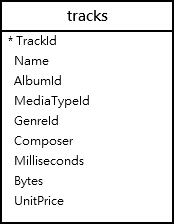
someone knows a good website to make a visual table connections like this.
 torn sphinx
Anyone know how I can fix this error?
Error: Traceback (most recent call last): File "/Library/Frameworks/Python.framework/Versions/3.9/lib/python3.9/site-packages/discord/ext/commands/bot.py", line 939, in invoke await ctx.command.invoke(ctx) File "/Library/Frameworks/Python.framework/Versions/3.9/lib/python3.9/site-packages/discord/ext/commands/core.py", line 863, in invoke await injected(*ctx.args, **ctx.kwargs) File "/Library/Frameworks/Python.framework/Versions/3.9/lib/python3.9/site-packages/discord/ext/commands/core.py", line 94, in wrapped raise CommandInvokeError(exc) from exc discord.ext.commands.errors.CommandInvokeError: Command raised an exception: AttributeError: 'list' object has no attribute 'send'
Code: ```py
@bot.command()
@commands.has_permissions(administrator=True)
async def test(ctx):
logchannel = await bot.db.fetch('SELECT logchannel FROM guilds WHERE guild_id = $1', ctx.guild.id)
await logchannel.send("Test complete")
I'm going to post in #discord-bots as well since this is a question related to both channels
torn sphinx
torn sphinx
Anyone know how I can fix this error?
Error: ```Traceback (most recent call las...
Anyone know how to fix the error?
quartz stump
obtuse oasis
someone knows a good website to make a visual table connections like this.
That's UML[https://en.wikipedia.org/wiki/Unified_Modeling_Language] with pretty theme/appearance, isn't it?
https://www.youtube.com/watch?v=EM-cvRubP4g - have a nice show 😄

Today we talk about models in Software Development. And we talk UML in PlantUML. With this nifty tool you can achieve much more in shorter time - keep your documentation diagrams pretty, and easily edited. Smok explains why and how programmers can use UML to convey their idea of class diagrams to their collegues.
#uml #plantuml #classdiagrams #...
 harsh pulsar
obtuse oasis
someone knows a good website to make a visual table connections like this.
harsh pulsar
obtuse oasis
someone knows a good website to make a visual table connections like this.
i've used this before https://editor.ponyorm.com/
obtuse oasis
quartz stump
That's UML[https://en.wikipedia.org/wiki/Unified_Modeling_Language] with pretty ...
thanks
loud rain
hi everyone i have this code```py
ner_results = nlp(example)
some_variable_entity_0 = ner_results[0]['entity']
some_variable_entity_1 = ner_results[1]['entity']
some_variable_index_0 = ner_results[0]['index']
some_variable_index_1 = ner_results[1]['index']
some_variable_word_0 = ner_results[0]['word']
some_variable_word_1 = ner_results[1]['word']
some_variable_start_0 = ner_results[0]['start']
some_variable_start_1 = ner_results[1]['start']
some_variable_end_0 = ner_results[0]['end']
some_variable_end_1 = ner_results[1]['end']
print(ner_results)
data = {
"spoken_sentence": [(example), (example)],
"entity": [(some_variable_entity_0), (some_variable_entity_1)],
"index": [(some_variable_index_0), (some_variable_index_1)],
"word": [(some_variable_word_0), (some_variable_word_1)],
"start": [(some_variable_start_0), (some_variable_start_1)],
"finish": [(some_variable_end_0), (some_variable_end_0)],
"time": [(I_time), (I_time)],
}
#load data into a DataFrame object:
df = pd.DataFrame(data)
print(df)
what do i need to add that the next inportet text the next 2 rows being filled in
this is what i get now py spoken_sentence entity index word start finish time 0 My name is Wolfgang and I live in Berlin B-PER 4 Wolfgang 11 19 20/08/2021 23:57:02 1 My name is Wolfgang and I live in Berlin B-LOC 9 Berlin 34 19 20/08/2021 23:57:02
and i wanne have the next inportet text at row 3 &4
torn sphinx
so, like. how do I add has_work: False to an already existing document using motor?\
 harsh pulsar
torn sphinx
so, like. how do I add `has_work: False` to an already existing document using m...
harsh pulsar
torn sphinx
so, like. how do I add `has_work: False` to an already existing document using m...
use update with {'$set': {'work': False}}
torn sphinx
harsh pulsar
use `update` with `{'$set': {'work': False}}`
I tried that. turns out it wasn't even that.
it was my if-statement. I wasn't able to check if the variable existed because it would throw a key value error.
harsh pulsar
i see. this is why it helps to post your code
 unkempt prism
loud rain
this is what i get now ```py
spoken_sentence entity ...
unkempt prism
loud rain
this is what i get now ```py
spoken_sentence entity ...
My guess is that you are only getting the first 2 rows because as you have only got the 0th and 1st items off your list here:
some_variable_entity_0 = ner_results[0]['entity']
some_variable_entity_1 = ner_results[1]['entity']
List comprehension will let you get all the data.
ner_results = nlp(example)
some_variable_entitys = [nr['entity'] for nr in ner_results]
some_variable_indexs = [nr['index'] for nr in ner_results]
some_variable_words = [nr['word'] for nr in ner_results]
some_variable_starts = [nr['start'] for nr in ner_results]
some_variable_ends = [nr['end'] for nr in ner_results]

print(ner_results)

data = {
  "spoken_sentence": [example] * len(ner_results),
  "entity": some_variable_entitys,
  "index": some_variable_indexs,
  "word": some_variable_words,
  "start": some_variable_starts,
  "finish": some_variable_ends,
  "time": [I_time] * len(ner_results),
}
If you really only want the 3rd and 4th you could split the list
some_variable_entitys = [nr['entity'] for nr in ner_results[2:4]] # get the 3rd and 4th elements only
PS: I love pandas though its not a database 🙂
 sturdy belfry
Does anyone know if SQLalchemy allows changing databases in runtime?
quartz stump
sturdy belfry
Does anyone know if SQLalchemy allows changing databases in runtime?
simply overwrite connection string (and create a new object) 😄
sturdy belfry
quartz stump
simply overwrite connection string (and create a new object) 😄
Well, i figured the overwriting the string name 😅
But my partner has put together the database code and I'm just learning database stuff in general.
They set it up so that the engine and base object are created in _init_.py and I can't figure out how to put it somewhere where I can change it during runtime so that the base is updated
I just figured that's how it was supposed to be
quartz stump
Put the connection string in a file like config.py
sturdy belfry
Does changing the string name automatically change the base properties?
Is the ~~engine ~~ base"bind" passed by reference or value?
quartz stump
And in the __init__.py you have to import class (like Config :D) and then use connection string.
In another file you can overwrite connection string and recreate object
quartz stump
sturdy belfry
Does changing the string name automatically change the base properties?
Is the ~...
sturdy belfry
Ok, so just creating a new object after updating will adhere to the new database. Which leads me to believe it's passed by reference to the base, then by value to the inheriting object.
I appreciate the info!
 upper basin
i need some help connecting pgsql to a bot
bot has clusters, so the TooManyConnections error pops up
so I made it so that every bot instance creates a pool but only acquires a single connection
but will it lag or be very slow if i do this?
is there any alternate way
 faint blade
upper basin
but will it lag or be very slow if i do this?
faint blade
upper basin
but will it lag or be very slow if i do this?
It will be slow because you only have one connection, meaning that if people do two commands at once only command can use the database at once
It won't be slow, it will just be a lot of waiting and appear slower
How many bot instances are you running?
upper basin
faint blade
How many bot instances are you running?
there are 25 bot instances
faint blade
How much load do they get? Like what kind of bot is this?
faint blade
On 25 bot instances you should be able to use 4 connections each
Because by default PostgreSQL allows 100 connections

Stack Overflow
I am using Postgres DB for my product. While doing the batch insert using slick 3, I am getting an error message:
org.postgresql.util.PSQLException: FATAL: sorry, too many clients already.
My...
You should definitely implement some form of caching
upper basin
can i have multiple transactions open in a single connection/
upper basin
faint blade
On 25 bot instances you should be able to use 4 connections each
if I make a connection pool in every bot instance, it runs out of connections so I tried having it make a single connection. then it raises an error because there are a lot of things tryna happen at once on that single connection so I made a single connection pool in the launcher to feed connections to every bot instance. Then it gave me an error because the pool and the connection have to be on the same asyncio event loop
and every bot has it's own event loop
faint blade
upper basin
can i have multiple transactions open in a single connection/
Pretty sure the answer is no
upper basin
yep, cannot use Connection.transaction() in a manually started transaction
faint blade
Me and @brave bridge discussed a similar issue with Aiosqlite, though at a much smaller scale.
Why not have one connection for when you do one-off SELECT x FROM y; so that they stay fast, because I think you can do that concurrently on one connection.
Then you have another important connection for each bot when you want to use transactions that need to run 1 on 1.
faint blade
upper basin
if I make a connection pool in every bot instance, it runs out of connections so...
This is kind of the same as what you said here ^
The difference being that we have another connection that will allow simple things to stay concurrent and fast
brave bridge
or have read replicas
faint blade
This only moves the problem though and you should probably look into scaling PostgreSQL more seriously
faint blade
brave bridge
or have read replicas
Yeah
brave bridge
hey I said something smart by accident
faint blade
What kind of work does your database do @upper basin?
upper basin
read a user's inventory, write to it when a command is run
most transactions are inserts
faint blade
Oh you have very heavy usage of the database?
Inventories, are they server-specific?
faint blade
Hmm, that makes it tougher. Because I was thinking you could have each bot instance get its own redis database, since each shards take care of its own set guilds. You will know that a specific shard will get all events for a specific guild.
But since a user may be spread across several guilds
How do you host the bots?
upper basin
vps on hetzner
faint blade
Ah okay, I was just thinking if you were using some service to host your bots and databases. Surely they would have good support for scaling
I am sorry I don't know how to help you, as this is nothing I've had to do myself. Like I said, you'll have to look into scaling PostgreSQL for more connections
upper basin
F
 proven arrow
upper basin
F
proven arrow
upper basin
F
What is your schema/queries like. If it can be optimised you would get better performance and connections would be released quicker for others to use.
 primal trail
Has anyone encountered a slightly esoteric bug where a long running flask + sqlalchemy app will throw a connection error after a long time ?
and if so, should i maybe force a reconnect to the dB?
upper basin
<@&831776746206265384>
 lone island
what error is raised if a sql DELETE FROM query is failed ? asyncpg
if it doesnt find the value to delete
 jaunty galleon
Don't think it raises an error
 formal coral
yea it doesn't delete anything if not found
 burnt cloak
can i ask about class here??
faint blade
If it has to do with databases, yes
 dense oar
What's the correct sort structure for pymongo? Let's say the query is documents = [i for i in collection.find().sort(query_sort)]
I've tried the following but none worked:
query_sort = "_id", -1
query_sort = ("_id", -1)
query_sort = ["_id", -1]
query_sort = {"_id": -1}
 burnt turret
when you call .sort on the cursor (like you've done), pymongo just expects you to pass them as positional arguments
[i for i in collection.find().sort("_id", -1)] @dense oar
so doing .sort(*query_sort) for any of the first three options you've provided should work
!d pymongo.cursor.Cursor.sort
 delicate fieldBOT
sort(key_or_list, direction=None)```
Sorts this cursor’s results.

Pass a field name and a direction, either [`ASCENDING`](https://pymongo.readthedocs.io/en/stable/api/pymongo/collection.html#pymongo.ASCENDING "pymongo.ASCENDING") or [`DESCENDING`](https://pymongo.readthedocs.io/en/stable/api/pymongo/collection.html#pymongo.DESCENDING "pymongo.DESCENDING"):

```py
for doc in collection.find().sort('field', pymongo.ASCENDING):
    print(doc)
``` To sort by multiple fields, pass a list of (key, direction) pairs...(pymongo.ASCENDING / DESCENDING are just constants with values 1/-1)
 golden kernel
hi
 dense barn
how do i connect my asyncpg postgres database to vultr?
torn sphinx
help? where i can make a discord command to read the query or something like that?
SELECT * FROM table;
SELECT * FROM table1, table2;
SELECT field1, field2 FROM table1, table2;
SELECT ... FROM ... WHERE condition
SELECT ... FROM ... WHERE condition GROUPBY field;
SELECT ... FROM ... WHERE condition GROUPBY field HAVING condition2;
SELECT ... FROM ... WHERE condition ORDER BY field1, field2;
SELECT ... FROM ... WHERE condition ORDER BY field1, field2 DESC;
SELECT ... FROM ... WHERE condition LIMIT 10;
SELECT DISTINCT field1 FROM ...
SELECT DISTINCT field1, field2 FROM ...
austere portal
What do you mean by "read the query"?, execute it?
torn sphinx
yes
austere portal
What database driver are you using?
torn sphinx
mysql?
austere portal
no not the database i mean the python driver
torn sphinx
version or?
i dont know what is that driver..
i connected to database i only need to read something from that database
and thats all
austere portal
torn sphinx
i connected to database i only need to read something from that database
what is the library you are using to connect to the database?
torn sphinx
so?..
next sun
I am using sshtunnelforwarder and when it fails to create the ssh tunnel, the connection never times out; it hangs
even adding the following:
sshtunnel.SSH_TIMEOUT = 5.0
        sshtunnel.TUNNEL_TIMEOUT = 5.0
it still doesn't work
torn sphinx
i have a problem with the database, i succeded in conecting it and to read from table but i need it to read the ID of the player and the message everytime he writes something in chat
 long dome
I'm using asyncPG with python, I'm writing a program where multiple people will use it at the same time and get data based on a database and they all can interact with said data.
Think of a marketplace.
There's a listing for 1 baseball hat for 10$ and 3 people see it and press buy at the same time.
How can I make sure that only 1 of it goes through and once it does the other 2 will fail? (Essentially avoid allowing all 3 calls to buy go through)
 brazen charm
long dome
I'm using asyncPG with python, I'm writing a program where multiple people will ...
brazen charm
long dome
I'm using asyncPG with python, I'm writing a program where multiple people will ...
this is something that postgresql handles rather than you as a user
It will acquire a lock essentially on that row, so only one thing can happen at a time
 earnest pond
Hi! I have a dataframe with three columns (df1):
column1: unique Identifier, column 2: 0 or 1, column 3: 0 or 1. I have a second dataframe (df2) with the same three columns, but with 1s and 0s in different rows. I want to join the two, so that if df1 has a 0 for a unique ID in the relevant column where df2 has a 1, df1 gets updated to be a 1. But if df2 has a 0, df1 stays as 1 for that ID, and nothing is done to df1 at all.
Importantly, the lengths of the two dataframes are not the same, and the IDs are not in the same rows, though df2 will always be a subset of IDs in df1.
In reality, my actual databases are around 30 columns as opposed to the 3 in the above example though.
brazen charm
e.g. if you have 3 users go to buy it and you issue that postgres, it will make sure that once it's been removed, the next two operations will see that and wont see ghost values
long dome
brazen charm
e.g. if you have 3 users go to buy it and you issue that postgres, it will make ...
ohhh gotcha, so if one "buys" it will remove the data from the table thus when the other 2 attempt to "buy" and remove from the table it will raise an exception
ty
if i do like result = "DELETE FROM xxxx" what value will result have if it successfully deletes? 1?
brazen charm
err no, when you delete it will do it if it exists, otherwise it'll ignore it
generally if you want to be really safe so that users cant do a payment if someone else is already paying / processing a payment
a redis lock comes to mind or similar so that you can lock the resource across workers while its happening
 green cove
long dome
if i do like result = "DELETE FROM xxxx" what value will result have if it succe...
green cove
long dome
if i do like result = "DELETE FROM xxxx" what value will result have if it succe...
There’s no result as such, a buch of rows, but the DB driver should give you an object with properties like “rowcount”, number if affected rows.
In general, if you issue 3 DELETE commsnds, only one of them should get back to you with rowcount == 1. For the other two, there was nothing left to remove.
Look for DB “cursor” class docs. Works also with UPDATE, if you’d rather mark the market item as “sold”, for example, rather then removing it completely. Anyway, rowcount & co. could help you realize whether the query actually changed anything.
 copper wyvern
DBMS is sqlite3
dense barn
is there a way i can connect to my postgrsql database which i host on my machine from my vultr machine?
harsh pulsar
@copper wyvern what is the current schema for your table? can you upload an example to https://www.db-fiddle.com/
An online SQL database playground for testing, debugging and sharing SQL snippets.
grim vault
Also BETWEEN is inclusive, eg BETWEEN 10 AND 20 equals 10 <= value <= 20 which will include 10 and 20.
torn sphinx
Anyone here can teach me SQL
 storm mauve
torn sphinx
Anyone here can teach me SQL
storm mauve
torn sphinx
Anyone here can teach me SQL
the pinned resources do a better job than anyone would do for generically teaching stuff
torn sphinx
select ID , username, password from users
where username = 'testing'
where password = 'testing';
hm i wanna figure it out
grim vault
Only one WHERE allowed, after that use AND or OR for additional conditions.
torn sphinx
grim vault
Only one `WHERE` allowed, after that use `AND` or `OR` for additional conditions...
    def login(self):
        result = mycursor.fetchall()
        for i in result:
            if i[0]== self.username:
                a = mycursor.execute('''select ID , username, password from users
where username = '%s' and password = '%s' ''', (self.username , self.password))

  ``` would this be good enough to check the password and the username ?
can i check if its NULL and return something maybe a would be None if there isnt that username and password so maybe u could do
if a is None:
print("your username isnt there")I have a problem with update a db in sql, i already have created table with columns but that code no update that, any idea?

 woeful ice
hi
anyone familiar with redis ?
log = logging.getLogger(name)
db = PostgresqlExtDatabase('ns2pug', user="b1n", password="b1n", threadlocals=True, port=5433)
redis = redis.Redis()
steam = SteamAPI.new()
whats wrong ont his lines ?
copper wyvern
harsh pulsar
<@!377543612810133504> what is the current schema for your table? can you upload...
Here is a basic example:
https://www.db-fiddle.com/f/uGZqtdWyHKMzNWnj5QZaVA/0
An online SQL database playground for testing, debugging and sharing SQL snippets.
 remote plinth
can i have multiple statements in await conn.execute in asyncpg?
like having SELECT statement then separate with a ; and another DELETE statement
faint blade
remote plinth
like having SELECT statement then separate with a ; and another DELETE statement
Yes, but what would it return?
remote plinth
i have a query that doesn't return anything
just makes tables
what does it mean 

oh wait
lemme try something cuz i never awaited create_pool
oops yeah worked
remote plinth
how do people host a database like what do i need to host a postgresql db in a server
faint blade
What type of server? Like a VPS where you have a file-system and everything?
Or pterodactyl-style with Docker containers?
 dim quartz
Has anyone setup an audit log table for update/insert/delete events in flask/sqlalchemy? Looking @event.listens_for() but its tough to know where to set that up on a larger application.
remote plinth
faint blade
What type of server? Like a VPS where you have a file-system and everything?
i have pterodactyl server
 tired prairie
Hi,
Looking for some help with asyncpg and postgress in #☕help-coffee
Getting the error
asyncpg.exceptions.ConnectionDoesNotExistError: connection was closed in the middle of operation```
Looking for a solution from the past 6 days and any help will be greatly appreciated.Then you will need to set up a docker container for it, and expose the ports so that they can talk so-to-speak
Or just use a 3rd party database system like ElephantSQL
 steel rover
so im making a discord bot, and i want it to store data in a database including info per server. which will be better, that is, easier to learn and manage, while having more space. MongoDB, or MySQL?
im very new to databases
harsh pulsar
copper wyvern
Here is a basic example:
https://www.db-fiddle.com/f/uGZqtdWyHKMzNWnj5QZaVA/0
thanks. it looks like part of your question was deleted, can you remind me what you were asking?
harsh pulsar
steel rover
so im making a discord bot, and i want it to store data in a database including ...
i would just use sqlite and keep the database file on the same machine as the bot
i personally think sql is more useful to know and it forces you to be somewhat intelligent about your data
it's so easy to make a mess out of mongodb
 rare vale
I have made this design of a logical database, but I don't know how to save the attribute 'dose'. 1 haplotype can have multiple dose, so in order not to save the same haplotype multiple times I could save dose in a seperate entity. But if I do that I don't know how I could know which dose a haplotype of a genotype has. Could someone help me with this?

 sullen pine
How to do this in mysql
https://www.kodyaz.com/t-sql/repeat-rows-according-to-column-value.aspx
To repeat table rows in different number of times SQL developers can use given T-SQL codes in this SQL Server development tutorial
harsh pulsar
sullen pine
How to do this in mysql
https://www.kodyaz.com/t-sql/repeat-rows-according-to-co...
there's probably a way to do it, but this is the kind of thing i would just do in python code after querying
harsh pulsar
rare vale
I have made this design of a logical database, but I don't know how to save the ...
store dose on the genotype table as well maybe?
it sounds like each genotype is related to a haplotype,dose pair, not just a haplotype on its own
if that's the case then you want foreign keys to both of those
sullen pine
harsh pulsar
there's probably a way to do it, but this is the kind of thing i would just do i...
but what if the query results is to be queried with limits? It will create problems. Am i wrong?
harsh pulsar
sullen pine
but what if the query results is to be queried with limits? It will create probl...
yeah, that could create problems. you would have to "lift" the limit to python code as well. again, there is probably a way to do it in mysql. maybe worth asking on stackoverflow if you don't get an answer here
here's how i would do it in python:
from itertools import islice

def do_weird_query(conn):
    cursor = conn.cursor()
    cursor.execute('select name, num from weird_data')
    for name, num in cursor:
        for _ in range(num):
            yield name

results = list(islice(do_weird_query(conn), 10))
Do you mean I could put dose in a different entity and then give genotype a foreign key for haplotype and dose? But doesn’t that look like there can be a dose without a haplotype then? Cuz there shouldn’t be a dose without a haplotype
harsh pulsar
yeah, possibly
the other option is to have a composite primary key on the haplotype-dose entity, a haplotype id and a dose
i think most databases support composite foreign keys
rare vale
I don’t know what a composite primary key is
harsh pulsar
when more than one column is the primary key
so the columns individually are not primary keys, but the combination uniquely identifies a row
rare vale
Wow I didn’t know that existed
Aah
Thanks for the new knowledge I think I’ll have to go with a composite primary key then
harsh pulsar
you might also need/want a surrogate key, which is a non-composite primary key that stands in for a composite primary key
messing around in postgres for example i am struggling to define a foreign key that references a composite primary key
 silk storm
hey guys im trying to use docker compose to run a postgres db with django
but im constantly gettin gthis error:
django | django.db.utils.OperationalError: could not connect to server: Connection refused
django |        Is the server running on host "127.0.0.1" and accepting
django |        TCP/IP connections on port 8080?
Hello guys since 3 days i stuck here i am trying run my codes but cant connect to postgresql i think this is error codes= https://pastebin.pl/view/4c6e388a this my database.py =https://pastebin.pl/view/bc3c5297 and this my worker.py for run =https://pastebin.pl/view/f930fd37
Pastebin.pl is a website where you can store code/text online for a set period of time and share to anybody on earth
Pastebin.pl is a website where you can store code/text online for a set period of time and share to anybody on earth
Pastebin.pl is a website where you can store code/text online for a set period of time and share to anybody on earth
remote plinth
can i use time.time() in a 'timestamp without time zone' datatype? postgres
 pliant marsh
Traceback (most recent call last):
File "main.py", line 1048, in <module>
client.loop.run_until_complete(create_db_pool())
File "/usr/lib/python3.8/asyncio/base_events.py", line 616, in run_until_complete
return future.result()
File "main.py", line 25, in create_db_pool
client.db = await asyncpg.create_pool(database="test bot", user="postgres", password="fdjeejfd")
File "/opt/virtualenvs/python3/lib/python3.8/site-packages/asyncpg/pool.py", line 407, in _async__init__
await self._initialize()
File "/opt/virtualenvs/python3/lib/python3.8/site-packages/asyncpg/pool.py", line 435, in _initialize
await first_ch.connect()
File "/opt/virtualenvs/python3/lib/python3.8/site-packages/asyncpg/pool.py", line 127, in connect
self._con = await self._pool._get_new_connection()
File "/opt/virtualenvs/python3/lib/python3.8/site-packages/asyncpg/pool.py", line 477, in _get_new_connection
con = await connection.connect(
File "/opt/virtualenvs/python3/lib/python3.8/site-packages/asyncpg/connection.py", line 2045, in connect
return await connect_utils._connect(
File "/opt/virtualenvs/python3/lib/python3.8/site-packages/asyncpg/connect_utils.py", line 790, in _connect
raise last_error
File "/opt/virtualenvs/python3/lib/python3.8/site-packages/asyncpg/connect_utils.py", line 776, in _connect
return await _connect_addr(
File "/opt/virtualenvs/python3/lib/python3.8/site-packages/asyncpg/connect_utils.py", line 676, in _connect_addr
return await __connect_addr(params, timeout, True, *args)
File "/opt/virtualenvs/python3/lib/python3.8/site-packages/asyncpg/connect_utils.py", line 720, in __connect_addr
tr, pr = await compat.wait_for(connector, timeout=timeout)
File "/opt/virtualenvs/python3/lib/python3.8/site-packages/asyncpg/compat.py", line 66, in wait_for
return await asyncio.wait_for(fut, timeout)
File "/usr/lib/python3.8/asyncio/tasks.py", line 494, in wait_for
return fut.result()
File "/opt/virtualenvs/python3/lib/python3.8/site-packages/asyncpg/connect_utils.py", line 586, in _create_ssl_connection
tr, pr = await loop.create_connection(
File "/usr/lib/python3.8/asyncio/base_events.py", line 1033, in create_connection
raise OSError('Multiple exceptions: {}'.format(
OSError: Multiple exceptions: [Errno 111] Connect call failed ('127.0.0.1', 5432), [Errno 99] Cannot assign requested address
what is the problem?
harsh pulsar
remote plinth
can i use time.time() in a 'timestamp without time zone' datatype? postgres
time.time just returns a number of seconds since epoch. so use the to_timestamp() function in postgresql https://www.postgresql.org/docs/current/functions-datetime.html#FUNCTIONS-DATETIME-TABLE

PostgreSQL Documentation
9.9. Date/Time Functions and Operators 9.9.1. EXTRACT, date_part 9.9.2. date_trunc 9.9.3. AT TIME ZONE 9.9.4. Current Date/Time 9.9.5. Delaying Execution Table 9.32 …
remote plinth
ok
harsh pulsar
!d time.time
delicate fieldBOT
time.time() → float```
Return the time in seconds since the [epoch](https://docs.python.org/3.10/library/time.html#epoch) as a floating point number. The specific date of the epoch and the handling of [leap seconds](https://en.wikipedia.org/wiki/Leap_second) is platform dependent. On Windows and most Unix systems, the epoch is January 1, 1970, 00:00:00 (UTC) and leap seconds are not counted towards the time in seconds since the epoch. This is commonly referred to as [Unix time](https://en.wikipedia.org/wiki/Unix_time). To find out what the epoch is on a given platform, look at `gmtime(0)`.

Note that even though the time is always returned as a floating point number, not all systems provide time with a better precision than 1 second. While this function normally returns non-decreasing values, it can return a lower value than a previous call if the system clock has been set back between the two calls.you might have to be careful about differences between platforms, e.g. with leap seconds (as in the docs)
yeah, you would write to_timestamp($1) or whatever
remote plinth
alright
to_timestamp(1284352323) → 2010-09-13 04:32:03+00
how do i change 2010-09-13 04:32:03+00 to 1284352323
faint blade
!d datetime.datetime.timestamp
delicate fieldBOT
datetime.timestamp()```
Return POSIX timestamp corresponding to the [`datetime`](https://docs.python.org/3.10/library/datetime.html#datetime.datetime "datetime.datetime") instance. The return value is a [`float`](https://docs.python.org/3.10/library/functions.html#float "float") similar to that returned by [`time.time()`](https://docs.python.org/3.10/library/time.html#time.time "time.time").

Naive [`datetime`](https://docs.python.org/3.10/library/datetime.html#datetime.datetime "datetime.datetime") instances are assumed to represent local time and this method relies on the platform C `mktime()` function to perform the conversion. Since [`datetime`](https://docs.python.org/3.10/library/datetime.html#datetime.datetime "datetime.datetime") supports wider range of values than `mktime()` on many platforms, this method may raise [`OverflowError`](https://docs.python.org/3.10/library/exceptions.html#OverflowError "OverflowError") for times far in the past or far in the future.

For aware [`datetime`](https://docs.python.org/3.10/library/datetime.html#datetime.datetime "datetime.datetime") instances, the return value is computed as:

```py
(dt - datetime(1970, 1, 1, tzinfo=timezone.utc)).total_seconds()
```   New in version 3.3.

Changed in version 3.6: The [`timestamp()`](https://docs.python.org/3.10/library/datetime.html#datetime.datetime.timestamp "datetime.datetime.timestamp") method uses the [`fold`](https://docs.python.org/3.10/library/datetime.html#datetime.datetime.fold "datetime.datetime.fold") attribute to disambiguate the times during a repeated interval.What's the difference 🤔
harsh pulsar
@faint blade that's an instance method on datetime objects
stupid lower case class name
from datetime import datetime as DateTime
now = DateTime.now()
print(now.timestamp())
Oh yeah I am aware. But like, what's the difference between: time.time() and datetime.datetime.now().timestamp()
remote plinth
remote plinth
`to_timestamp(1284352323)` → `2010-09-13 04:32:03+00`
how do i change `2010-09-1...
^^
faint blade
remote plinth
`to_timestamp(1284352323)` → `2010-09-13 04:32:03+00`
how do i change `2010-09-1...
Huh, is this what it returns. What do you mean?
remote plinth
i found in docs here
 faint blade
I still am not following, when you do want to change 2010-09-13 04:32:03+00 to 1284352323?
Because PostgreSQL stores the latter in the database
remote plinth
i just found what i want, thanks for help 
 median wave
is MySql or postgre better for a large discord js bot
harsh pulsar
use whichever one you prefer. apparently mysql has some advantages for really really big databases, but i think postgres has much nicer features
 sage scaffold
what is a easy database i can use
not sqlite3 because thats some weird mutant english i have to learn
 civic swift
Hi everyone
I am very new to databases, I recently installed mySQL and currently working with mysql workbench to learn. can anyone explain to me what are connections used for, when I should create one? may I just create one to a multiple projects and inside have multiple schemas? and what is the hierarchy in general?
sorry if it's a lot, I am struggling with understanding the meaning of the setup actions, less with the programming
 ionic pecan
civic swift
Hi everyone
I am very new to databases, I recently installed mySQL and currently...
ionic pecan
civic swift
Hi everyone
I am very new to databases, I recently installed mySQL and currently...
a connection is generally something that you establish to the database in order to run queries for it. for instance, if you use python's mysqlclient, MySQLdb.connect(host='mydbhost', user='www-data') would return a connection. the server (mysql) then keeps track of what you're doing per connection, and one connection can only do one thing at a time
civic swift
so the connection I create in mysql workbench is the same as the server would to store and retrieve data? and it allows me to work on the database
 chrome birch
can anyone help customize the SQLite3 tables?
civic swift
doesn't that mean I could have multiple connections to the same database in mySQL workbench?
long dome
I'm making a test game and there are 56 different types of materials. How would you guys store which & how many materials a player has in a database? Just do like:
await conn2.execute("CREATE TABLE playermats (playername VARCHAR(255),mat1 INTEGER,mat2 INTEGER,mat3 INTEGER)")
56 times....?
Surely there has to be a better way right...?
ionic pecan
civic swift
doesn't that mean I could have multiple connections to the same database in mySQ...
in workbench you probably don't want it as it's probably only ever to do one thing at a time, right? it's a GUI, as far as I remember
ionic pecan
long dome
I'm making a test game and there are 56 different types of materials. How would ...
create a second table storing a reference to the player, the material name, and the material quantity
then when you need the materials for a player, JOIN them together: https://www.w3schools.com/sql/sql_join.asp
harsh pulsar
long dome
I'm making a test game and there are 56 different types of materials. How would ...
create table player_materials (
  playername varchar(255),
  materialname varchar(255),
  quantity integer
)
Do you know how to create a table in POSTGRESQL where it references 2 other tables
ionic pecan
yes, same way that you do it for referencing a single table, just that you have REFERENCES on multiple columns
dense barn
ok so, im trying to connect pgadmin4 to my vultr vps, but its sending me this error:
Unable to connect to server:

could not connect to server: Connection refused (0x0000274D/10061)
Is the server running on host "" and accepting
TCP/IP connections on port 5432?
``` i have everything it says in the error, but no idea why its sending that, any idea why?Why is host ""?
dense barn
faint blade
Why is host `""`?
i just removed it cuz it shows my ip
faint blade
So the bot is running on your VPS, but the database on your computer?
 sacred tartan
dense barn
ok so, im trying to connect pgadmin4 to my vultr vps, but its sending me this er...
sacred tartan
dense barn
ok so, im trying to connect pgadmin4 to my vultr vps, but its sending me this er...
Often the first thing is that postgresql is not running. Did you check the status?
dense barn
sacred tartan
Often the first thing is that postgresql is not running. Did you check the statu...
yea
dense barn
faint blade
So the bot is running on your VPS, but the database on your computer?
yea you could say that
sacred tartan
Um ok.
dense barn
would it be bad if i host db and bot on it?
faint blade
dense barn
yea you could say that
Then you need to port forward the PostgreSQL port to the whole wide world through your router
faint blade
dense barn
would it be bad if i host db and bot on it?
I recommend this
dense barn
faint blade
I recommend this
alright, so how would i migrate my current db to there
cuz i already have data in it
faint blade
What kind of data?
dense barn
user ids, pokemon stuff
faint blade
You can generate an SQL file dump and then run it on the server, this is pretty common practice
dense barn
pg_dump?
faint blade
So you generate a file with queries of all the data, and then run it there. That should setup all tables and data
faint blade
dense barn
pg_dump?
I am not exactly sure if that's the one, probably yeah. This is not something I've done and your Google search is as good as mine
harsh pulsar
i do think pg_dump is generally recommended for this kind of thing. i think they also recommend if if you e.g. upgrade database versions
dense barn
faint blade
I am not exactly sure if that's the one, probably yeah. This is not something I'...
yea i heard someone said to do that, they had the same issue as mine and they used it and worked
im currently looking at this doc, https://www.vultr.com/docs/install-pgadmin-4-for-postgresql-database-server-on-ubuntu-linux but im stuck on the last part of step 3
it just wont load
 astral siren
Hey how would I go about adding a list into an sql database?
 jolly urchin
Hello members, I am creating a chat app in flask python which will generate random ids to chat with someone. This part is done!. Now I want that there should be a login logout system. I am using MongoDB as Database. Can anyone give me an idea?
 finite perch
jolly urchin
Hello members, I am creating a chat app in flask python which will generate rand...
finite perch
jolly urchin
Hello members, I am creating a chat app in flask python which will generate rand...
With mongo each document would come with a unique id, this might be useful to you
jolly urchin
finite perch
With mongo each document would come with a unique id, this might be useful to yo...
yeah so should a i make a list of ids and iterate it?
That would be efficient?
finite perch
For filling up chat from the saved messages?
you could filter it by time to avoid fetching everything (might need to be saved as a key)
jolly urchin
how?
finite perch
First of all, look into mongo and libraries that support it
their documentation should have a corresponding method for this
austere portal
Hello, I have seen people use STR as the column constraint in sqlite.
What is it?, is it similar to TEXT?
storm mauve
As far as I understand it, they just convert it all to the same type automatically
https://www.sqlite.org/datatype3.html
(more specifically, look at 3.1.1. Affinity Name Examples)
austere portal
Oh thanks
storm mauve
...wait, STR? are you sure that it is STR and not something else, and that it is sqlite?
austere portal
hmm
 grim zephyr
@austere portal is it due to the f string
austere portal
wait
grim zephyr
ok waiting
austere portal
storm mauve
...wait, `STR`? are you sure that it is `STR` and not something else, and that i...
Yes
grim zephyr
i got the issue
austere portal
grim zephyr
ok waiting
why are you setting the convo column to convo\n + ?
grim zephyr
austere portal
why are you setting the convo column to `convo\n + ?`
i want to add the next msg into it and thats where it is causing the error
but i want to add not to update the whole
but how
it making its value 0
if i try to add it
austere portal
inset the new message without having 2 messages in a single row
grim zephyr
austere portal
inset the new message without having 2 messages in a single row
wdym ??
austere portal
insert it instead of adding it to an existing column
grim zephyr
austere portal
insert it instead of adding it to an existing column
but then how will i order it later
can u give me a example
of what u r saying
austere portal
grim zephyr
can u give me a example
INSERT INTO ... instead of UPDATE ...
grim zephyr
wait a se
sec
@austere portal
i want to add the next line to it but how

@austere portal
austere portal
insert it instead of updating
grim zephyr
austere portal
insert it instead of updating
so how will i get it later
austere portal
having multiple values in the same row makes no sense
austere portal
grim zephyr
so how will i get it later
SELECT ...
grim zephyr
austere portal
`SELECT ...`
i mean i dont know how much the users will talk and even that is not a problem but how willl i order it later
austere portal
grim zephyr
i mean i dont know how much the users will talk and even that is not a problem b...
Sqlite has order by
https://www.sqlitetutorial.net/sqlite-order-by/
SQLite Tutorial
This tutorial shows you how to use SQLite ORDER BY clause to sort the result set using a single column, multiple columns in ascending and descending order.
grim zephyr
austere portal
Sqlite has order by
https://www.sqlitetutorial.net/sqlite-order-by/
so u mean there is no way to make a update in it
 grim zephyr
so how
grim zephyr
austere portal
But why? <a:ButWhy:401219199713935372>
i need to store it in a single row
austere portal
Why are you passing the channel name for the user_id column?
grim zephyr
austere portal
Why are you passing the channel name for the user_id column?
its a mod mail
the channel name has been setup like that
grim zephyr
austere portal
wait a bit
this
austere portal
oh, you can rename it to channel_name
grim zephyr
austere portal
oh, you can rename it to `channel_name`
well no need
i just want to save the values in a single row
but how
?
@austere portal
austere portal
Try doing py await cursor.execute("UPDATE transcript SET convo = convo + ? WHERE user_id = ?", (f"\n{str(message.author)}: {message.content}", message.channel.name))
grim zephyr
austere portal
Try doing ```py
await cursor.execute("UPDATE transcript SET convo = convo + ? WH...
i tried this already but no
grim zephyr
@austere portal any other way?
grim zephyr
austere portal
there is something wrong with the update statement
well i got another way
austere portal
ok
grim vault
grim zephyr
i tried this already but no
The operator for string-concatenation in SQL is ||
UPDATE transcript SET convo = convo || ? WHERE user_id = ?```I already fixed that
 placid oracle
is this a good place to get help with pandas?
 placid rune
here or #data-science-and-ml
placid oracle
i have a question in #help-corn if someone can please help
torn sphinx
Hi, may anyone explain something about database transactions, like when and why they're used, and when should I? 
I'm using asyncpg to execute and fetch some data (particularly for a discord bot), so when and why should I use transactions or it's just not that important to be used?
storm mauve
as far as I understand, they're more useful when you care about ACID principles or have to execute multiple queries in the same "block", in a way so that if any of them fails, everything fails
In computer science, ACID (atomicity, consistency, isolation, durability) is a set of properties of database transactions intended to guarantee data validity despite errors, power failures, and other mishaps.
brave bridge
torn sphinx
Hi, may anyone explain something about database transactions, like when and why ...
Consider this:
async def transfer_real_world_money(account1, account2, amount):
    await change_balance(account1, +amount)
    await change_balance(account2, -amount)
what happens if the second call fails, or if your application crashes between the first and the second call?
That's the "atomicity" parts -- transactions allow you to ensure that some action either happens in full or doesn't happen at all
torn sphinx
Oh basically for like safe transactions and preventing incomplete and improper data. And if I'm right, for just executing a single statement, this is not too useful.
Thanks this explained a lot. Thank you and etrotta 😄
brave bridge
torn sphinx
Oh basically for like safe transactions and preventing incomplete and improper d...
AFAIK, in Postgres you cannot execute something outside of a transaction, asyncpg just opens one if you don't have one already.
torn sphinx
Oh I see, that saves me from opening new transactions again and again. Thanks a lot :)
 snow niche
sqlite: is there any way to connect to that file and then create the table?
grim vault
A transaction is also needed for multi-user support because it locks the record so nobody else can change it while you do.
grim zephyr
@snow niche I can try to help u
snow niche
thanks
snow niche
snow niche
sqlite: is there any way to connect to that file and then create the table?
this is my question
and this is what i have rn
grim zephyr
snow niche
and this is what i have rn
U r using sqlite right?
grim zephyr
snow niche
my friend said its faster on discord bots
Yea maybe, but it's better cause it is a async version so it is much more compatible with the bot from my opinion
grim zephyr
snow niche
im using a separate file to make tables is that fine?
U r using dpy right
snow niche
yes
grim zephyr
Make the file and everything for once in the on_ready event that will do all the work at once
snow niche
example?
grim zephyr
Make the db and connect to it from on_ready event and create everything
snow niche
i have this much in build.sql
CREATE TABLE "mod_logs" (
    "guild_id"    INTEGER,
    "channel_id"    INTEGER
);

CREATE TABLE "warns_data" (
    "admin_id"    INTEGER,
    "user_id"    INTEGER,
    "guild_id"    INTEGER,
    "reason"    TEXT
);

CREATE TABLE "bl_users" (
    "user_id"    INTEGER
);
Why using SQL
snow niche
to build table
snow niche
hmm
grim zephyr
So why sql
grim zephyr
snow niche
i saw in a video
Well u can do all this from python only
Only python is enough
snow niche
i used to do this
# ========== DATABASE ============
# warn db
async def dbinit():
    await client.wait_until_ready()
    warndb = await aiosqlite.connect("db's/warnData.db")
    await warndb.execute("CREATE TABLE IF NOT EXISTS warningsData (guild_id int, admin_id int, user_id int, reason text)")
    await warndb.commit()
# blacklist db
    bldb = await aiosqlite.connect("db's/blacklist.db")
    await bldb.execute("CREATE TABLE IF NOT EXISTS userBL (user_id int)")
    await bldb.commit()
# mod-logs db
    mldb = await aiosqlite.connect("db's/modlogs.db")
    await mldb.execute("CREATE TABLE IF NOT EXISTS modlogs (guild_id int, channel_id int)")
    await mldb.commit()


client.loop.create_task(dbinit())
client.run(os.getenv('TOKEN'))
dbinit()
asyncio.run(dbinit.close())
then i tried to do same as Carl
https://github.com/CarlGroth/Carl-Bot
executing in cogs... self.conn = connection, self.c = self.conn.cursor()
but it said we need to await in cursor and putting await doesnt work and it says we should put in async func
 lime lily
  File "/home/gg/connect.py", line 22, in <module>
    cur.execute(ins_pass, 'name')
  File "/home/gg/.local/lib/python3.9/site-packages/mysql/connector/cursor_cext.py", line 257, in execute
    prepared = self._cnx.prepare_for_mysql(params)
  File "/home/gg/.local/lib/python3.9/site-packages/mysql/connector/connection_cext.py", line 659, in prepare_for_mysql
    raise ValueError("Could not process parameters")
ValueError: Could not process parameters
why am i getting this error?
brave bridge
lime lily
```Traceback (most recent call last):
File "/home/gg/connect.py", line 22, in ...
Show the code
rather, the query
snow niche
snow niche
executing in cogs... self.conn = connection, self.c = self.conn.cursor()
but it...
@grim zephyr so what should i do?
brave bridge
@lime lily Try cur.execute(ins_pass, ('name',)) -- I think the parameters should be a tuple
lime lily
import hashlib
cnct = mysql.connector.connect(
        host = "localhost",
        user="hospital",
        password="password",
        database="hospital",
        )

cur = cnct.cursor()
uid = input()
pas = input()

id_hash = hashlib.md5(uid.encode()).hexdigest()
pas_hash = hashlib.md5(pas.encode()).hexdigest()

ins_uid = 'INSERT INTO username(uid) VALUES (%s)'
ins_pass = 'INSERT INTO passwords(hashed) VALUES (%s)'
cur.execute(ins_uid,id_hash)
cur.execute(ins_uid)
cnct.commit()
tried that still wont work
brave bridge
lime lily
```import mysql.connector
import hashlib
cnct = mysql.connector.connect(
...
as I said, the parameters should be tuples, not strings
also, don't use md5, use blake2
faint blade
MD5 should NEVER be used for passwords! That is extremely dangerous
MD5 is meant to be a fast algorithm allowing you to verify content, for example you'll see a MD5 hash when downloading. If a single bit has changed that will drastically change the resulting hash.
It's not meant for storing hashes of passwords, as it's pretty easy to calculate and not secure for that purpose.
Bcrypt and Argon2 are both two other good algorithms
 fierce sand

 pine flax
Why i cant delete items in tables, its giving me an error Error Code: 1175. You are using safe update mode and you tried to update a table without a WHERE that uses a KEY column.
brave bridge
pine flax
Why i cant delete items in tables, its giving me an error `Error Code: 1175. You...
Can you show your query?
pine flax
I just did delete from _mytable;
torn sphinx
Does anybody have at least a primer resource on how to optimize offsite/cloud dbs calls?
pine flax
the primary key is varchar(255), is that the reason?
torn sphinx
Or when is cheaper to use a server?
Im trying to build a thing that rests on doing multiple queries to find an optimal result
Some of this data changes by the day, but other is relatively fixed
brave bridge
pine flax
I just did `delete from _mytable;`
If you want to delete all items, https://stackoverflow.com/questions/11448068/mysql-error-code-1175-during-update-in-mysql-workbench
torn sphinx
So im already thinking in decoupling it so i can let the client have the fixed data, and only query the daily data
But i don't know enough about how dbs work to know at what point is cheaper to let the client call the db multiple times and compute itself, and when its cheaper to pay for server space and have the data there and work the computation in the server itself
pine flax
ty
torn sphinx
I suppose it obviously depends on the amount of users, but i cant fully grasp the optimal division between a full api solution and a more traditional backend
 zealous pelican
I need some advice about a project I am thinking about starting. I want to move from logging my trading & finances in Excel to something else and I want to learn python while I'm at it. I thought this would be a good way to combine both. I currently have an excel workbook with one sheet to log my money transfers (between 3 currencies), one sheet to log my trades, which uses another sheet with details of commissions & fees to calculate trade costs & taxes, and finally a "front end" interactive dashboard implemented with Power Pivot and Slicers that shows me my P/L, etc.
I posted about this to the cupcake channel (#help-cupcake message) and based on responses there, my first step is to figure out what kind of a database solution I want to implement. I know next to nothing about properly implementing databases. I know what they are and I have worked with some very light stuff when setting up WordPress websites, but I have never done anything like this before. Where can I start orienting myself about this? How do I choose a database to tackle this project? What all should I be thinking about?
If needed, I can share a link to the Excel Workbook in question.
torn sphinx
@zealous pelican check the book Test Driven Development
its kinda tangential to your needs but the whole book uses an example that is exactly what you need
specifically because of "between 3 currencies"
zealous pelican
I see
torn sphinx
in terms of db
zealous pelican
in terms of db, I currently have three distinct ones
torn sphinx
three tables you mean
zealous pelican
Yes. Might be easier if I just share the sheet, tbh: https://cdn.discordapp.com/attachments/696505521410146326/870262979277508618/Options_Tracker.xlsx
One sheet logs trades, one sheet logs money transfers, one sheet serves as a reference for commissions, fees, tax rates, names, etc. That one doesn't get updated very often
torn sphinx
the thing is the way computers work now
you dont really need to use a real database to do what you need
zealous pelican
I don't understand
torn sphinx
ive given a look to the excel you sent, looks fairly plain
in terms of deciding a databse solution whats most important is the realtionships between tables
zealous pelican
Right
torn sphinx
zealous pelican
I don't understand
Because of how fast computers work, databases are kind of overkill unless you have at least a couple hundred k entries in a couple tables
You could very well make what you want work using csv or xls files
without any noticeable drag in time
zealous pelican
torn sphinx
You could very well make what you want work using csv or xls files
Yes, that's what I am doing right now
torn sphinx
(in terms of read-write)
Thats why i initially recommended the test driven development book, because it seems to me your main issue would be creating a currency convertion flow
zealous pelican
What I don't know is whether this approach is scale-able. What I mean is - will using an excel or csv be viable in say, 5 years? If I add over 500 rows of data per year, I don't know if excel will be able to cope.
Plus, right now, I can't view this excel file on mobile at all.
torn sphinx
Ive used JSON files of up to a couple hundred k data points and it reads in seconds
zealous pelican
I don't want this project to be restricted to being useable only from my desktop haha
zealous pelican
torn sphinx
Ive used JSON files of up to a couple hundred k data points and it reads in seco...
Oh okay!
torn sphinx
The problem is the following
You could convert your data to say, SQL
that would make it more scalable, but also more cumbersome
zealous pelican
(a second aspect to all this is learning new things that may bring me better employment opportunities)
torn sphinx
Well it depends in what kind of skill you want to show off
If you want to learn databases, then give a reading to the differences between relational, non relation, and graph databases
And try implement models for your data in the three of them
torn sphinx
A good programming exercise would be setting a frontend that can switch between the three
That you could "plug" any of those different database formats to it
and work the same way
Thats a kind of project that shows off abstract architectural notions
zealous pelican
Is automation a factor when making these decisions? Whenever it is my trading platform releases their API, I would like to automate the data entry.
zealous pelican
torn sphinx
A good programming exercise would be setting a frontend that can switch between ...
I'm having trouble imagining what this means or looks like
torn sphinx
You could make transformation functions for the API data into whatever database model you have
zealous pelican
torn sphinx
Thats a kind of project that shows off abstract architectural notions
And I straight up don't understand what this means
torn sphinx
Look up DAO patterns
zealous pelican
torn sphinx
You could make transformation functions for the API data into whatever database ...
Okay
torn sphinx
basically you create a sort of bridge class that is then inherited by actual implementations that turn the base methods into whatever each database needs
i can make a simple analogy if that goes a bit over your head, i dunno how much you know about programming
torn sphinx
you know about classes and inheritance?
zealous pelican
I know some amount of HTML, CSS and mild PHP - enough to tinker in WordPress, but it ends there.
zealous pelican
torn sphinx
you know about classes and inheritance?
Sort of. From the perspective of CSS I do
torn sphinx
its less about language and more about the meta
lets say you have a class "Translate" that has methods "hello" "goodbye" , etc
These methods in the Translate class do nothing, they just exist to explicit what is expected from a Translate inheritor class
so you know how in python you don't need to know the type of a variable
you just get an object and assume its a Translate and call obj.hello
the idea is you then do child classes Chinese, French, etc
zealous pelican
Oh, uhm, I've never used Python before. I want to get started with it
torn sphinx
and each of them do hello() in Chinese, in French, in German, etc
so in essence, your main program DOES NOT CARE what kind of language its saying hello in
it only cares about what Translate says it can do "in general"
it can say hello
That allows you to "plug" any language into your main program in a dynamic way
Thats what i mean when i say "A good programming exercise would be setting a frontend that can switch between the three"
You get what i mean? You completely divide the frontend code from the database code
So the frontend does not know what database is behind
It only knows to call the general methods that all multiple versions of database code inherits from
zealous pelican
I see
I see the logic
But I have no clue how to even begin thinking about this from a programming perspective
torn sphinx
That way, if an year from now you decide database X is a bad idea
you can change it for Y
and don't have to change all code
zealous pelican
Right
zealous pelican
This... Is def something I want to consider
zealous pelican
One of the reasons I want to move away from excel is related to this. If I add a new financial product that I am trading, updating all the fee calculation formulas is a nightmare. This is also what I mean by scalability
torn sphinx
Well yeah
thats kind of a derivation of this idea
Thats what i meant earlier when i said abstract architectural notions
next sun
I am currently building an api based on users, fields and permissions. It happens that I have a table fields with each field represented in geometry points and another table fields_groups with each field group represented in geometry points too. So, basically, I want to reference the geom in fields on the geom in fields_groups. That will enable me to query for examples all the fields that exist in a particular group. Has anyone ever worked with a similar scenario? How could I achieve that? Many thanks in advance
ah! I am working with postgresql
torn sphinx
The same is true for currencies
You would ultimately want to make the base of your program be a set of very abstract logic
When anyone learns to program you are taught to do very explicit imperative logic
Do X, then Y, then loop Z times and do W
When you are programming with the idea of a project that grows in functionality you should look into the meta of what you are doing
Say im doing a calculator, i define a sum function
Then i have to do a multiply function
The right way, under this line of thinking, would be to implement multiplication in terms of a looped sum
zealous pelican
torn sphinx
Do X, then Y, then loop Z times and do W
yes, this is how I think when I think about programming. I never formally learned anything, but I just ended up picking this up
torn sphinx
Yeah, the problem is that doesn't work when you are changing program definitions
That works when you have a defined goal for the program
When you KNOW your program will inevitably lead somewhere else, you need to start thinking about the meta rules of your domain
Basically your excel is programming too
What you are seeing when you need to change everything when you add something
is what i mean
zealous pelican
torn sphinx
Yeah, the problem is that doesn't work when you are changing program definitions
Precisely. This is where I am running into issues with my sheet as well. I never though I would use it for logging anything other than options. Then suddenly, when I bought shares of stock, the sheet blue-screened, figuratively speaking.
zealous pelican
torn sphinx
What you are seeing when you need to change everything when you add something
Yes. All of my formulas (if you look at AI2 or AJ2) are huge IF loops
zealous pelican
Yes, and there's no telling if there will be more instance like this in the future
torn sphinx
a stock means numerative conversion, right?
zealous pelican
Or rather, how many instance there will be like this
torn sphinx
Like you need to know how much 20 stocks of X are worth in Y currency today?
zealous pelican
torn sphinx
a stock means numerative conversion, right?
Not really, no.
torn sphinx
And then you are doing math between stocks and currency
zealous pelican
The multi-currency thing matters mostly because I earn in Euros, have some life savings in Rupees, and trade in Dollars
So overall, I need to figure out what my net worth is in Euros, as that's the currency I live on
torn sphinx
zealous pelican
Yes. All of my formulas (if you look at AI2 or AJ2) are huge IF loops
I closed the xls, what do those do?
zealous pelican
The issue with stocks is a bit different - that was more a FIFO issue. See with options trades, I open one contract, and close that one contract. But with stocks, you can buy 20 shares today, sell 5 of those next week, 3 of those next month, and remaining ones 3 years later. All the while, you've probably bought more shares along the way. And my excel sheet cannot cope with that. If I buy 20 shares, the only closing transaction I can record is selling 20 shares
torn sphinx
You should treat stocks as a currency too
zealous pelican
torn sphinx
I closed the xls, what do those do?
They calculate opening and closing fees.
 torn sphinx
Thats time information, right?
zealous pelican
What I just posted?
torn sphinx
Opening and closing fees
zealous pelican
No.
The fees depend on what type of product I am trading (i.e. whether it is a stock, crypto, or an options strategy)
torn sphinx
Yeah
zealous pelican
And if it is an options strategy, the fees further depend on how many options contracts are involved
torn sphinx
Exactly
zealous pelican
How's that time information though?
torn sphinx
Because ultimately you have to define one measurement standard
zealous pelican
Honestly, in an ideal world, I wouldn't want to have to run that computation to begin with. I would like to pull this information from the trading platform directly.
torn sphinx
What all of that complexity is measuring is value in value out
Id chose dollars cause they are the least inflationary imo
but you could go for euros
zealous pelican
Right. So the ultimate goal is to calculate
- profitability and
- win rate
Fees will cut into profitability
As will taxes
zealous pelican
I'm using USD right now because that is what I am trading in
torn sphinx
Once you got an unit everything else is a matter of functions
The problem with financial matters is a bunch of measurements
zealous pelican
Right, EUR USD keeps changing
torn sphinx
yep
zealous pelican
Okay so something I probably should have clarified earlier - I don't need the program to give me any real time information of my positions
torn sphinx
Ultimately what you care about is purchase value
Thats the ultimate unit
But thats kinda hard to measure, so chose a currency to use as base
and derive all from that
zealous pelican
Right.
torn sphinx
By purchase value, i dunno if its the correct english term
zealous pelican
Let's just call it "opening cost"
torn sphinx
it means "what it costs to buy this"
I use that term cause my coin is inflationary as fuck
zealous pelican
It could be negative if you buy to open or positive if you sell to open (if you are short selling for example)
torn sphinx
so for example my own economy is not dependent on numbers but on how many goods i can buy relative to my salary
torn sphinx
zealous pelican
It could be negative if you buy to open or positive if you sell to open (if you ...
Mmm
In that sense then the unit you are using is not USD
but a sort of relative displacement?
zealous pelican
For example, in the first row, I "bought" tesla shares as my opening transaction so I paid 384 USD. When I close this transaction, I will sell those shares (hopefully for more than what I bought them for) and receive USD
However, in row 2, I sold an options strategy as my opening transaction, so I received 3.91 USD. When I close this transaction, I will have to buy those contracts back (hopefully for less than what I sold them for) and pay USD.
 zealous pelican
Okay perhaps I should have posted the entire table.
 zealous pelican
torn sphinx
Whats missing there?
zealous pelican
torn sphinx
Whats missing there?
Nothing is missing in this case. I was just trying to illustrate what I was saying 🙂
torn sphinx
Theres a state difference, lower row is a closed transaction
upper one is still open
zealous pelican
That an opening transaction need not necessarily be "pay money to open" - it can also be "receive money to open"
zealous pelican
torn sphinx
upper one is still open
Yes, precisely.
torn sphinx
Yeah, its just a 1 or 0
zealous pelican
And there in lies a potential issue,.
torn sphinx
It brings in some architectural complexity yeah
But its literally
just a 1 - 0
You could separate both states into two different tables, or you could just have on table with all the fields of the closed one
and check for NULL in the closing fields to delimit between them
zealous pelican
So say I went out and bought 1 share of TSLA every few weeks. Then, a few months later, I sold all of them. That's pretty easy to update - each of those first few rows can be flipped to "closed" and the closing price can be entered.
But then I bought 100 shares of RIOT. Now, if I want to sell only 20 of those, I can't update the row anymore. I would need to split the opening row into 20+80 and then close the row with 20 shares. However, this now creates a problem with the way fees are calculated. The program now calculates fees for 2 opening transactions and one closing transaction, but in reality, there was just one of each.
 zealous pelican
mhm
torn sphinx
So you can do math with riot shares
You can also have the notion of "wallets"
Each wallet relates to a currency
so you can fill a wallet with 100 riots and then convert 20 of them into rupees
zealous pelican
Right
torn sphinx
and 100 rupees into tsla
The Test Driven Development book uses exactly this example
they explain another thing (test driven development)
but the example is a sort of multi-currency budget database
The examples slowly evolve a way to do math and hold different type of values and convert between them
zealous pelican
I'll get that book
torn sphinx
Its not the only way of course, but might give you some ideas, i can't think of a clear example for your needs
Mostly your issue is architectural
I mean, if you are strong in maths
go for SICP
If you go through that youll end up making your excel fly
But its not gentle and its too abstract if you come from just html and css
but if you feel secure dealing with numbers and that kind of math abstraction go for it
zealous pelican
torn sphinx
I mean, if you are strong in maths
I couldn't get into programming school because I almost failed math 😄
zealous pelican
Though when I say math, I mean things like calculus and the like. Stats is a whole different ball game. THAT I know my way around quite all right
torn sphinx
Its not stats
its logic
stats, calculus, etc, are domain problems
working with computers is just list shuffling
the thing is that the clever ways to do stuff are quite abstract
Like, you could 100% transform your excel to very straightforward programming
Just translate your formulas to python code, and keep adding to them
But i guess what you want and why you are here is to approach it from another level
zealous pelican
torn sphinx
Just translate your formulas to python code, and keep adding to them
This is honestly the end goal
To make this sheet into a stand-alone program of sorts
Something that is not limited to just being useable on a desktop
woeful ice
hey guys anyone can tell me how to create this tables ?
Error: ERROR: object "user" does not exist LINE 1: ... "t1"."impulse", "t1"."stats", "t1"."badges" FROM "user" AS ... ^
for postresql
zealous pelican
torn sphinx
but will ultimately be your demise
So you're saying that a better approach is to make logic that isn't restricted to just working with financial products.
But that financial products just happen to be the variable that the logic is working with in this instance
torn sphinx
Nono
zealous pelican
Okay then I don't think I've understood perfectly
torn sphinx
First you need to come up with a way to work with financial products
This is called domain logic, or business rules
But then you need to learn to abstract and reuse
There is an example in SICP called an "accumulator"
Lets say you want a function that does +1
Thats pretty straightfoward, right? Give it 7 it returns 8, give it 22 it returns 23, etc
zealous pelican
right
torn sphinx
The idea though, is you go meta and realize
What if i want a function that does -1? Is that all that different?
Do i need two functions? One that does +1 and one that does -1?
zealous pelican
No, you just add -1
torn sphinx
Or can i have only one function that do botsh
yeah and then, what if i want to *2
or what i want to square the number?
or finds its square root?
its cube?
etc
zealous pelican
Okay yeah, by my current logic, I would need to code all of those functions
That's how I think
torn sphinx
You end up realizing its all a single function called an "accumulator"
that takes in, a number, a modifier symbol, and an operator
zealous pelican
Perhaps not the square and cube, because those I could define as combinations of the multiply function
zealous pelican
Right
torn sphinx
and do (x, +, y) (x, -, y) (x, to the, 2) (x, to the, 3)
the idea is that you define an abstract function that suddenly handles all kind of accumulating functions
It might not seem like it on a first sight, but this idea can also be applied to your problems
The idea being, understand what the logic of your program is
and then derivate meta-laws
The more you understand the "domain" of your program, the more you understand its meta
In your case, you should strive to understand financial operations the more you can, so that you can abstract these operations into a small amount of functions that is what will allow you to scale
Like grab your excel and look at how many of the formulas are fairly similar, have repeating operations
zealous pelican
Got it
torn sphinx
Thats programming
zealous pelican
So you think that it's a better idea to start with this instead of looking for a database solution first?
torn sphinx
is how some people get to sth better faster
zealous pelican
Because that's also something I am struggling with - this is clearly way more than I am qualified for. Where should I start?
torn sphinx
zealous pelican
So you think that it's a better idea to start with this instead of looking for a...
My answer is this: 1- By how fast computers are today, unless you are manipulating several hundred thousand entries, you wont see a performance increase by switching from csv/xls to a real database 2- A database solution does not solve scale issues, proper architecture does
Learning how to use databases is learning a syntax, a logic model, and doing busy work to connect all things together
But learning how to properly confront a computational problem and how to simplify and abstract its operations, is where programming is at
zealous pelican
Right
torn sphinx
By all means though, transform your excel to a proper db
will teach you a lot
but just keep in mind that wont solve your issues, it will create more
databases are just a fast excel
the actual way to simplify is to understand and rework the data structures
zealous pelican
Yes, so then before I even start thinking about transforming the excel to a db, I should think about how to extract the logic from my formulas, think about any other logic I might want in the future, and how to condense all this logic
torn sphinx
Thats my viewpoint but its also ideal
In all actuality, if you have time you should do both
Because they will reinforce each other
You transform your excel to a db, and that will get you thinking about the meaning behind your structure
Cause youll meet implementation walls
So, ultimately, all this talk was useless lol
zealous pelican
For me, not in the slightest
torn sphinx
Transform your excel to a db of your chosing, (read on them before doing so doe)
zealous pelican
This is stuff that I hadn't thought on at all
torn sphinx
And while you do that you will start having to think really hard about what your data implies
zealous pelican
I'm at a stage where I don't know how much I don't know
torn sphinx
Thats good
zealous pelican
Our entire talk about logic- this isn't something I knew I should think about
torn sphinx
The linux guy says that good programming is not about algorithms, is about understanding a problem enough to realize what data structures are better suited to represent it
Oh
 north vale
any python fast api developer here
zealous pelican
I'm FAR from being a programmer. But it's something I want to learn
torn sphinx
well if you get anything out of this talk, take that, programming is not knowing a technology, is knowing how to represent a problem in firm logical terms
once you can do that on paper, you can translate it to any computational technology
cause they all work the same way
its just list shuffling
thats all a computer is, a calculator and a list
its the way they are feedbacked into each other what makes the magic
zealous pelican
So now going back to the database solutions - how do I figure out what I want?
What questions do I ask to make that decision?
torn sphinx
how much relation do you have between your tables?
you basically need a choice between relational and non-relational databases
Sorry, bad link, i just linked the first on google
give a read to those sites, after a couple you will kinda get the differentiation
zealous pelican
There are three dbs here - Log, Transfers, Data.
Log uses information from Data for calculating fees and taxes
Log and Transfers isn't connected
Data and Transfers isn't connected at the moment but will be in the future.
Dashboard pulls data from all three
ER (also a dashboard) pulls data from Log & Data
 torn sphinx
then maybe sql and have four tables
log, transfers, data and logtodata
unless you can connect log to data with a foreign key
It depends on how you connect stuff, let me give you an example of a program i use
I got Categories, Media and Tags
zealous pelican
I use "data" to keep a record of what the strategy names are, what my tax rate is, what my platform's fees are, etc.
IDK if there's a more elegant way to do this
torn sphinx
Every Media and Tag belong to 1 category
But, every Tag can be connected to several Media, and Media can be connected to several Tags
Therefore, i have 4 tables, Category, Media, Tags, and TagsToMedia
(this is in sql, a relational db)
So, each media and each tag have a field called "category_id" that is related to the "id" of categories
And TagsToMedia is a table that has "tag_id" and "media_id"
they relate to the ids in the tag table and the media table
You get the difference?
many-to-one vs one-to-many
?
zealous pelican
torn sphinx
You get the difference?
Going to have to read this a couple of times. Gonna do that as soon as I am done with this work call
lime lily
whats the most secure hash to use to hash passwords?
 bright dune
don't know about "most secure", but sha3 is good
lime lily
can blake2 work for passwords?
 prisma girder
lime lily
whats the most secure hash to use to hash passwords?
prisma girder
lime lily
whats the most secure hash to use to hash passwords?
You can use Argon2 for example
This kind of questions is more suitable for #cybersecurity channel
You can also use bcrypt
lime lily
prisma girder
This kind of questions is more suitable for <#366674035876167691> channel
my bad. ill move there
prisma girder
bright dune
don't know about "most secure", but sha3 is good
SHA-3 family is highly effective on ASIC/FPGA devices so...
I don't think that storing passwords is a good approach
woeful ice
Error: ERROR: object "user" does not exist HAT 1: ... "t1"."impulse", "t1".stats", "t1"."badges" "user" FROM AS ...
cant create user named table
keyword..
prisma girder
woeful ice
Error: ERROR: object "user" does not exist HAT 1: ... "t1"."impulse", "t1".stats...
Can you paste whole query?
faint blade
prisma girder
SHA-3 family is highly effective on ASIC/FPGA devices so...
Ooh, is that one good for passwords? Or what do you mean?
brave bridge
faint blade
Ooh, is that one good for passwords? Or what do you mean?
No, if a hash works really fast on some device, it's bad, not good
a hash should be slow
prisma girder

faint blade
Oh yeah I was confused by the usage of "effective"
prisma girder
faint blade
Oh yeah I was confused by the usage of "effective"
I should say it more clearly like @brave bridge did
 hard crown
Hey, got exact same question as this https://stackoverflow.com/questions/51659259/add-sqlalchemy-foreign-key-id-to-another-table-based-on-the-value
The solution im looking for is a one liner similar to this
VALUES('val_1', (SELECT val_2 FROM table_2 WHERE val_2 = something))```
Stack Overflow
I have two tables:
class User(db.Model):
    __tablename__ = 'user'

    id = db.Column(INT, primary_key=True)
    name = db.Column(db.String(16), nullable=False)
    uid = db....
 sharp tundra
wat is numeric in sqlite?
 rigid yacht
good mrning guys
long dome
how can I do a fetch with asyncpg (python/POSTGRESQL) to get the lowest value of a column in a table?
For example, I have a table about the listings in a marketplace, how can I grab the lowest price of all the listings?
ofc I can just iterate over each result and find the smallest but isn't there a more efficient way?
storm mauve
you can either order by and limit to 1, or use the MIN PostgreSQL function
harsh pulsar
long dome
how can I do a fetch with asyncpg (python/POSTGRESQL) to get the lowest value of...
PostgreSQL Documentation
9.21. Aggregate Functions Aggregate functions compute a single result from a set of input values. The built-in general-purpose aggregate functions are …
 harsh dew
anyon know how to work with mysql/mariadb in python
because i tried sql_connector
but it failed
i made this constuctQuery function
def constructQuery(bookName,bookAuthor,pagesRead,currentPage):
    return (
    'INSERT INTO main ',
    '(name, author, pagesRead, currentPage, timestamp)',
    f'VALUES ({bookName}, {bookAuthor}, {pagesRead}, {currentPage}, {datetime.date.today().strftime("%s")})'
)```
which takes the values and makes a tuplenvm just switched to using the query command directly
now it works
brave bridge
@harsh dew Never use f-strings to construct queries. First, it's just not going to work: strings in SQL must be quotes, specifically in single quotes. Even if you add those, you'll be vulnerable to SQL injection.
Instead, you should use built-in query formatting.
harsh dew
i changed to a single line
def constructQuery(bookName,bookAuthor,pagesRead,currentPage):
    return f"INSERT INTO main (name, author, pagesRead, currentPage, timestamp) VALUES ('{bookName}', '{bookAuthor}', '{pagesRead}', '{currentPage}', '{datetime.date.today().strftime('%s')}')"
still sql injection
but also this is not a wabapp and a command line tool i made to track my book reports
so i am the only one with acess to this
brave bridge
Either way, it will break if your book title contains an '
harsh dew
'
brave bridge
Like "Hitchhiker's guide to Python"
brave bridge
@harsh dew
You should just use built-in query formatting. ```py
conn.execute(
"INSERT INTO main (name, author, pagesRead, currentPage, timestamp) VALUES (%s, %s, %s, %s, %s)",
(bookName, bookuthor, pagesRead, currentPage, datetime.date.today().strftime('%s'))
)
(the exact syntax will depend on the library, you'll find it in the documentation)mysql_connector is the lib i am using
brave bridge
You can find examples here https://dev.mysql.com/doc/connector-python/en/connector-python-example-cursor-transaction.html
grim zephyr
Ignoring exception in command enableinvite:
Traceback (most recent call last):
  File "C:\Users\USER\AppData\Local\Programs\Python\Python39\lib\site-packages\discord\ext\commands\core.py", line 85, in wrapped
    ret = await coro(*args, **kwargs)
  File "C:\Users\USER\Desktop\ZENESIS DEVELOPEMENT\ZENESIS\INVITE LOGGER\cogs\invite.py", line 18, in enableinvite
    stats = invite.find_one({"guild_id": ctx.guild.id})
AttributeError: type object 'invite' has no attribute 'find_one'
@brave bridge sry for the ping again but can u help me a bit
grim zephyr
Channel id: {'_id': ObjectId('6125e2099ef89451486c0308'), 'guild_id': 853197674899046431, 'channel_id': 868132863017619496}
i want the channel id only but how
 desert sandal
Anyone know how do i put the filename while importing data into a MongoDB.. like what syntax should the filename be in ?
 zealous flare
I have an eternal problem with sqlite3
how to make a separate balance for each guild
faint blade
grim zephyr
```Channel id: {'_id': ObjectId('6125e2099ef89451486c0308'), 'guild_id': 8531976...
This looks to be Mongo?
Either its .channel_id or (more commonly) ['channel_i'].
grim zephyr
faint blade
This looks to be Mongo?
Either its `.channel_id` or (more commonly) `['channel_...
it is mongo
and i fixed it too
desert sandal
desert sandal
Anyone know how do i put the filename while importing data into a MongoDB.. like...
..
woeful ice
prisma girder
Can you paste whole query?
i can see just this line..
Error: ERROR: object "user" does not exist HAT 1: ... "t1"."impulse", "t1".stats", "t1"."badges" "user" FROM AS ...
i tryin create user table on postgres but its dont let me create named user table reserved..
prisma girder
woeful ice
i can see just this line..
So... Can you paste a code then?
woeful ice
Pastebin.pl is a website where you can store code/text online for a set period of time and share to anybody on earth
this my database.py
i am trying run this repo https://github.com/b1naryth1ef/GoPlayNao
GitHub
A web-based matchmaking system for CS:GO. Contribute to b1naryth1ef/GoPlayNao development by creating an account on GitHub.
i convert to python3 but cant connect postgres
in my local machine i can connect but in ubuntu vds cant connect
this is giving in local machine
desert sandal
desert sandal
Anyone know how do i put the filename while importing data into a MongoDB.. like...
help pls
 jade osprey
Hi i just started using SQLlite for my bot and I am getting an error
here is the error
Ignoring exception in command warn:
Traceback (most recent call last):
  File "/opt/virtualenvs/python3/lib/python3.8/site-packages/discord/ext/commands/core.py", line 85, in wrapped
    ret = await coro(*args, **kwargs)
  File "main.py", line 82, in warn
    cursor = await bot.db.execute("INSERT OR IGNORE INTO guildData (guild_id, user_id,warn_reason) VALUES (?,?,?)", (member.guild.id, member.id, reason))
  File "/opt/virtualenvs/python3/lib/python3.8/site-packages/aiosqlite/core.py", line 184, in execute
    cursor = await self._execute(self._conn.execute, sql, parameters)
  File "/opt/virtualenvs/python3/lib/python3.8/site-packages/aiosqlite/core.py", line 129, in _execute
    return await future
  File "/opt/virtualenvs/python3/lib/python3.8/site-packages/aiosqlite/core.py", line 102, in run
    result = function()
sqlite3.OperationalError: table guildData has no column named warn_reason

The above exception was the direct cause of the following exception:

Traceback (most recent call last):
  File "/opt/virtualenvs/python3/lib/python3.8/site-packages/discord/ext/commands/bot.py", line 939, in invoke
    await ctx.command.invoke(ctx)
  File "/opt/virtualenvs/python3/lib/python3.8/site-packages/discord/ext/commands/core.py", line 863, in invoke
    await injected(*ctx.args, **ctx.kwargs)
  File "/opt/virtualenvs/python3/lib/python3.8/site-packages/discord/ext/commands/core.py", line 94, in wrapped
    raise CommandInvokeError(exc) from exc
discord.ext.commands.errors.CommandInvokeError: Command raised an exception: OperationalError: table guildData has no column named warn_reason
here is my code:
async def initialize():
    await bot.wait_until_ready()
    bot.db = await aiosqlite.connect("expData.db")
    await bot.db.execute("CREATE TABLE IF NOT EXISTS guildData (guild_id int, user_id int, exp int, warn_reason, PRIMARY KEY (guild_id, user_id))")
@bot.command(aliases=['wr'])
async def warn(ctx,member: discord.Member=None, reason=None):
  if not reason:
    await ctx.send('please provide a person to warn')
  cursor = await bot.db.execute("INSERT OR IGNORE INTO guildData (guild_id, user_id,warn_reason) VALUES (?,?,?)", (member.guild.id, member.id, reason))
  if cursor.rowcount == 0:
    await bot.db.execute("UPDATE warnData SET warn_reason = ? WHERE guild_id = ? AND user_id= ?", (reason,member.guild.id,member.id))
    cur = await bot.db.execute("SELECT warn_reason FROM guildData WHERE guild_id = ? AND user_id = ?",(member.guild.id, member.id))

    data = await cur.fetchone()
    reason = data[0]
    await ctx.send(f'{member.mention} has been warned for {reason}')
    await bot.db.commit()
I just picked up databases so please dum your answers down
the leveling system works fine
austere portal
jade osprey
Hi i just started using SQLlite for my bot and I am getting an error
here is the...
In the create table query you havent given the warn_reason column a constraint
CREATE TABLE IF NOT EXISTS guildData (guild_id int, user_id int, exp int, warn_reason, PRIMARY KEY (guild_id, user_id))```
jade osprey
austere portal
> ```sql
> CREATE TABLE IF NOT EXISTS guildData (guild_id int, user_id int, exp ...
sorry but what is constraint
torn sphinx
Hi, if I execute statements using asyncpg like conn.execute('INSERT INTO abc VALUES ('a', 'b', 'c'), ('d', 'e', 'f');'), will it automatically convert the quotes in VALUES ('a', 'b', 'c') stuff to the valid quotes accepted by postgres?
jade osprey
if you don't mind
austere portal
jade osprey
sorry but what is constraint
You have not given the data type of that column
jade osprey
austere portal
> ```sql
> CREATE TABLE IF NOT EXISTS guildData (guild_id int, user_id int, exp ...
is the code providing a constraint
austere portal
Yes
jade osprey
austere portal
Yes
i changed it
    await bot.wait_until_ready()
    bot.db = await aiosqlite.connect("expData.db")
    await bot.db.execute("CREATE TABLE IF NOT EXISTS guildData (guild_id int, user_id int, exp int, warn_reason TEXT, PRIMARY KEY (guild_id, user_id))")
but i am still getting the same error
austere portal
because you have already created the table
jade osprey
austere portal
because you have already created the table
should I delete make a new collum or uhh
austere portal
you can delete it and create a new one
sqlite doesnt support changing column constrains iirc
jade osprey
so I should remake the table right?
austere portal
Stack Overflow
How do I alter column in sqlite?
This is in Postgresql
ALTER TABLE books_book ALTER COLUMN publication_date DROP NOT NULL;
I believe there is no ALTER COLUMN in sqlite at all, only ALTER TABLE is
jade osprey
austere portal
https://stackoverflow.com/a/4007086
Thanks a lot for the help
austere portal
👍
jade osprey
😄
lime lily
  File "/home/gg/.local/lib/python3.9/site-packages/mysql/connector/connection_cext.py", line 513, in cmd_query
    self._cmysql.query(query,
_mysql_connector.MySQLInterfaceError: You have an error in your SQL syntax; check the manual that corresponds to your MySQL server version for the right syntax to use near '$2b$12$GSbEpKQh1aEKyaVRxp9ix..FGaWzYfvHNz2rMuiJOl47v7g8dOncG'', '12')' at line 1

During handling of the above exception, another exception occurred:

Traceback (most recent call last):
  File "/home/gg/pj/main.py", line 28, in <module>
    register()
  File "/home/gg/pj/main.py", line 17, in register
    curse.execute("INSERT INTO users(hash,uid) VALUES ('{}', '{}')".format(pas_hash,uid))
  File "/home/gg/.local/lib/python3.9/site-packages/mysql/connector/cursor_cext.py", line 269, in execute
    result = self._cnx.cmd_query(stmt, raw=self._raw,
  File "/home/gg/.local/lib/python3.9/site-packages/mysql/connector/connection_cext.py", line 518, in cmd_query
    raise errors.get_mysql_exception(exc.errno, msg=exc.msg,
mysql.connector.errors.ProgrammingError: 1064 (42000): You have an error in your SQL syntax; check the manual that corresponds to your MySQL server version for the right syntax to use near '$2b$12$GSbEpKQh1aEKyaVRxp9ix..FGaWzYfvHNz2rMuiJOl47v7g8dOncG'', '12')' at line 1
i just switched to bcrypt and im getting this error? could it be the columns in the database since i set them as binary they cant store the hash or?
 14     pas = input().encode("utf-8")
 15     uid = input()
 16     pas_hash = bcrypt.hashpw(pas, salt)
 17     curse.execute("INSERT INTO users(hash,uid) VALUES ('{}', '{}')".format(pas_hash,uid))
 18     connection.commit()
this is the code
unkempt prism
lime lily
```def register():
14 pas = input().encode("utf-8")
15 uid = input()
...
which mysql library are you using. Instead of treating them like strings using the string format it would be better to bind the values. This way its protects you from sql injection.
lime lily
unkempt prism
which mysql library are you using. Instead of treating them like strings using t...
mysql.connector one, and what should i bind the values to?
unkempt prism
lime lily
mysql.connector one, and what should i bind the values to?
There is an example here https://dev.mysql.com/doc/connector-python/en/connector-python-example-cursor-transaction.html
see that the data is in a separate param
cursor.execute(add_employee, data_employee)
yeah i tried it before it i cant seem to get it to work
i had it before and it was pretty buggy
thats not the problem here,im wondering on how i can store the bcrypt hash in mysql
unkempt prism
my bet is that pas_hash contains a ' at the end of the hash. And thats why there is duplicates quotes before the 12. Better variable binding should fix it though you can take out or escape any ' and any other chars that will cause you problems.
'$2b$12$GSbEpKQh1aEKyaVRxp9ix..FGaWzYfvHNz2rMuiJOl47v7g8dOncG'', '12')'
ill try that thanks for the suggestions
 orchid plover
    async def add_money(self, userid: int, amount: int):
        await self.bot.conn.execute("INSERT INTO Money(userid, balance) VALUES ($1, $2) ON CONFLICT(userid) DO UPDATE SET balance = balance + $2", userid, amount)
        return

    async def remove_money(self, userid: int, amount: int):
        await self.bot.conn.execute("INSERT INTO Money VALUES ($1, $2) ON CONFLICT(userid) DO UPDATE SET balance = balance - $2", userid, amount)
        return

    async def get_current_money(self, userid: int):
        result = await self.bot.conn.fetchrow("SELECT balance FROM Money WHERE userid = $1", userid)
        return result[0]

    @commands.command()
    async def test(self, ctx, arg, amount):
        if arg == "add":
            await self.add_money(ctx.author.id, amount)
        elif arg == "remove":
            await self.remove_money(ctx.author.id, amount)
        else:
            await ctx.send(self.get_current_money(ctx.author.id))
If i try m!test add 10 i get:
column reference "balance" is ambiguous
But i only have this table:
    await bot.conn.execute("""CREATE TABLE IF NOT EXISTS Money (
                                        userid bigint PRIMARY KEY,
                                        balance bigint
                                        )""")
It's probably complaining about the second balance. Where you do balance + $1
Actually no hmm
Does removing work?
desert sandal
What's the MongoDb equivalent of MySQL's select from table where name like %s
grim vault
orchid plover
```py
async def add_money(self, userid: int, amount: int):
await sel...
I thiink you need to reference the table:
await self.bot.conn.execute("INSERT INTO Money(userid, balance) VALUES ($1, $2) ON CONFLICT(userid) DO UPDATE SET balance = Money.balance + EXCLUDED.balance", userid, amount)```And you can use the same function for add/remove if you just use -amount as parameter for remove.
 shrewd frigate
Can someone help.
TypeError: replace_one() missing 1 required positional argument: 'replacement'
I have no idea what that means. MongoDB by the way.
grim zephyr
faint blade
This looks to be Mongo?
Either its `.channel_id` or (more commonly) `['channel_...
Ignoring exception in on_member_join
Traceback (most recent call last):
  File "C:\Users\USER\AppData\Local\Programs\Python\Python39\lib\site-packages\discord\client.py", line 343, in _run_event
    await coro(*args, **kwargs)
  File "C:\Users\USER\Desktop\ZENESIS DEVELOPEMENT\ZENESIS\INVITE LOGGER\cogs\invite.py", line 38, in on_member_join
    log_channel = c_id["channel_id"]
TypeError: '_asyncio.Future' object is not subscriptable
Are you not awaiting c_id?
 copper dragon
grim zephyr
```py
Ignoring exception in on_member_join
Traceback (most recent call last):
...
copper dragon
grim zephyr
```py
Ignoring exception in on_member_join
Traceback (most recent call last):
...
What's c_id? Is it a cluster, collection or document? You only need to await collections
desert sandal
desert sandal
What's the MongoDb equivalent of MySQL's `select from table where name like %s`
pls
 pallid shard
curosor.execute("DELETE FROM tempban WHERE guild_id = ? AND member_id = ? ",(guild, member,)) sqlite3.InterfaceError: Error binding parameter 1 - probably unsupported type.
                    await guild1.unban(member1)
                    curosor.execute("DELETE FROM tempban WHERE guild_id = ? AND member_id = ? ",(guild, member,))
                    db.commit()```
whats wrong if time_now >= time:
guild1 = self.client.get_guild(guild)
member1 = await self.client.fetch_user(member)
print(member1)
banned_users = await guild1.bans()
print(banned_users)
if not banned_users:
curosor.execute("DELETE FROM tempban WHERE guild_id = ? AND member_id = ? ",(guild, member))
db.commit()
return
for member in banned_users:
print(member.user.name)
if not member1.name and member1.discriminator in member.user:
curosor.execute("DELETE FROM tempban WHERE guild_id = ? AND member_id = ? ",(guild, member))
db.commit()
return
await guild1.unban(member1)
curosor.execute("DELETE FROM tempban WHERE guild_id = ? AND member_id = ? ",(guild, member,))
db.commit()```
The full partWait a sec I need to await collection?
copper dragon
when you are getting a document from collection
not to get the collection itself from the cluster
 tranquil zinc
Using postgresql
why is this wrong
#!/usr/bin/python
import psycopg2


def create_tables():
    """ create tables in the PostgreSQL database"""
    commands = (
        """
        CREATE TABLE friends (
                friendName VARCHAR(255) NOT NULL,
                Age INTEGER NOT NULL,
                FriendID INTEGER NOT NULL,
                PRIMARY KEY (FriendID)

        )
        """)
    conn = None
    try:
        # read the connection parameters

        # connect to the PostgreSQL server
        conn = psycopg2.connect(
        host="localhost",
        database="friends",
        user="postgres")
        cur = conn.cursor()
        # create table one by one
        for command in commands:
            cur.execute(command)
        # close communication with the PostgreSQL database server
        cur.close()
        # commit the changes
        conn.commit()
    except (Exception, psycopg2.DatabaseError) as error:
        print(error)
    finally:
        if conn is not None:
            conn.close()


if __name__ == '__main__':
create_tables()```Error : can't execute an empty query
@copper dragon
copper dragon
huh sorry, i just mongodb lol
tranquil zinc
man postgresql confuses me!
copper dragon
same
pallid shard
pallid shard
` curosor.execute("DELETE FROM tempban WHERE guild_id = ? AND member_id = ? "...
??
torn sphinx
tranquil zinc
```py
#!/usr/bin/python
import psycopg2
def create_tables():
""" create ta...
>>> commands = ("""DROP TABLE x;""")
>>> for command in commands:
...     print(command)
...
D
R
O
P

T
A
B
L
E

x
;
>>>
the brackets are just evaluated to a string i think, if you add a comma at the end and make it a tuple its probably what you want
>>> commands = ("""DROP TABLE x;""",)
>>> for command in commands:
...     print(command)
...
DROP TABLE x;
I created server logs and I collected the Channel ID. When someone does another command I want it to update the channel ID that’s in the database and replace it with the new one. I have no idea how.
MongoDB by the way.
austere portal
tranquil zinc
```py
#!/usr/bin/python
import psycopg2
def create_tables():
""" create ta...
Commands is not a tuple, it is a string
!e py x = (""" Test """) for i in x: print(i) print(type(x))