( @rich trout I got it working (not optimized for now but it works), indeed you hinted me in the right direction. All I needed to do actually was replace the line trivia["category"] = { "category": raw_category } in the controller with del trivia["category"] . That way Marshmallow does not try to immediately create the object for category, and later I can attach it normally)
#databases
1 messages · Page 83 of 1
 pearl heath
@maiden sonnet wait until you have to access dict of dicts of dicts lol
 maiden sonnet
ahaha, I hope by then I will handle it more robustly 😉
pearl heath
lots of [0][0][0]
maiden sonnet
I'd love to write more functional code in Python
I have worked more with JS lately where that seems a tad easier
 valid turtle
Hi, is there a kinda local DB. I know I clould start a MYSQL DB or something but is there a way to use a DB which start with my py script and quits with it and saves itself on exit
 gleaming quest
Try SQLite (sqlite3) or XAMPP program with local MySQL database
XAMPP is an easy to install Apache distribution containing MariaDB, PHP and Perl.
Did I help? 😃
 coarse coral
Hello! I am working on my first database, and I have a question. You add a product on the back-end panel. You input product name, price, description and digital codes you wish to wish to sell. This should then send this information to the database. When a user purchases a product from you, it should take digital code from the database, and update the record.
My question: Do I create 1 table with all this information ? and for the digital codes set the format as JSON so I could have multiple digital codes in the one row ? Here is an example of what I am thinking:
Tables Products:
p_name | p_desc | p_price | p_payment_method | d_codes
Fifa 12  etc       4.55     paypal            ['232', '34344', '343434']
So my thinking was when the user purchases on the front-end, it queries the database, takes the first code '232' and delivers that to the buyer, removes from database, so the codes left would be the last two ?
or am I thinking about this wrong ?
or should I do something like this:
Table Products
p_name | p_desc | p_payment | foreign_key
Table Codes
foreign_key | codes
 charred fractal
something like this:
Table Products
p_name | p_desc | p_payment | foreign_keyTable Codes
foreign_key | codes
Something like that @coarse coral
coarse coral
Yeah I was leaning more to that approach. I have one last question - am I right in thinking I should only assign one code per row right ? would my db not fill up pretty quickly if I have hundreds of rows ?
charred fractal
I can't answer that, but it could possibly.
coarse coral
okay thanks, I will wait and see if anyone else has any other advise before proceeding
charred fractal
Alright.
 quick geyser
hey so im making a username check for a database,
and no matter what, even if the username is stored in the database its immeditaly going to else statement
print("Please enter your username.")
    USERN = input("USERNAME: ")
    cur.execute(f"""SELECT USERNAME from users where USERNAME='{USERN}'""")
    myresult = cur.fetchone()
    print(myresult)
    wildcard = myresult
    if USERN == wildcard:
        print("yes")
    else:
        print("That username is not in the system.")
any ideas? please tag me when you respond, ill be away from the pc for a while
yes it logs into the database at the first part of the code
the codes output with my iunput
Do you already have an account? yes
Please enter your username.
USERNAME: bob
('bob',)
That username is not in the system.
it literally finds the username but still says no haha
im sure im doing something so simple wrong haha
 stark ferry
@quick geyser have you called type() on both USERN and wildcard?
if they are both strings, they should be identical
could it be that the database returns 'bob' instead of bob?
stark ferry
you can strip the variable
im sorry, i meant do replace
wildcard=wildcard.replace('"'",'')
though stripping whitespace is not a bad idea
quick geyser
Hmmm lemme try that
quick geyser
Tuple?
quick geyser
Oh gotcha
stark ferry
so you gotta get the fist element since you used fetchone
quick geyser
Should i str the result
stark ferry
wildcard=myresult[0]
quick geyser
that just did it
your a beautiful person
xD
    USERN = input("USERNAME: ")
    cur.execute(f"""SELECT USERNAME from users where USE
    myresult = cur.fetchone()
    print(myresult)
    if USERN in myresult:
        print("yes")
    else:
        print("That username is not in the system.")
works now
  print("Please enter your username.")
  USERN = input("USERNAME: ")
  cur.execute(f"""SELECT USERNAME from users where USERN
  myresult = cur.fetchone()
  print(myresult)
  wildcard = myresult[0]
  wildcard = wildcard.replace("''", '')
  if USERN == wildcard:
      print("yes")
  else:
      print("That username is not in the system.")
``` also worksdont even need the wildcard.replace
yea i got an error of tuple earlier haha
sweet thanks, i appricate ya
this is the error now if i purposly miss type a username
argument of type 'NoneType' is not iterable
    print("Please enter your username.")
    USERN = input("USERNAME: ")
    cur.execute(f"""SELECT USERNAME from users where USE
    myresult = cur.fetchone()
    print(myresult)
    if USERN in myresult:
        print("yes")
    else:
        print("That username is not in the system.")
``` ysing this codeim guessing if the SELECT USERNAME from users where USERN comes back nonetype, its htorwing an error. any idea?
charred fractal
What SQL are you using?
quick geyser
mysql workbench
im just wondering if theres a check to see if it returns Null then it would reask for usernae
charred fractal
I would suggest doing if(len(myresult)) == 0: print("no") else: print("yes")
quick geyser
object of type 'NoneType' has no len()
 rich trout
.fetchone() either returns a single result, or None
quick geyser
i got it to work i think
rich trout
👍
quick geyser
    USERN = input("USERNAME: ")
    PASSW = input("PASSWORD: ")
    cur.execute(f"""SELECT USERNAME from users where USERNAME='{USERN}'""")
    myresult = cur.fetchone()
    print(myresult)
    cur.execute(f"""SELECT PASSWORD from users where PASSWORD='{PASSW}'""")
    myresult2 = cur.fetchone()
    print(myresult2)
#    myresult = myresult[0]
#    wildcard = wildcard.replace("''", '')
    if myresult is None:
        print("That username and/or password is not in the system.")
        login()
    elif myresult2 is None:
        print("That username and/or password is not in the system.")
        login()
    myresult = myresult[0]
    myresult2 = myresult2[0]
    if myresult in USERN and myresult2 in PASSW:
        print("pass")
    else:
        print("That username and/or password is not in the system.")
        print("Make sure")
        login()
i know i can make it smaller in teh future, but just getting it to work is one thing for me
rich trout
yeah, that's how you use it 👍
I would suggest looking into parameterization as well though
quick geyser
will do! this is gonna be an app here soon once i figure out a few more things xd
got a long way to go
looooooolk
rich trout
It's this bit "Instead, use the DB-API’s parameter substitution." at the top of the sqlite3 library: https://docs.python.org/3/library/sqlite3.html
good luck!
 north niche
What is best async ORM for Python (PostgreSQL)?
 fringe tiger
That's a hard question ping me if you find answer @north niche
 echo beacon
Hello guys, I am trying to use the same model in two different models... the model is s Link and stores additional data about a link/web URL and I am trying to use it in multiple models (using Flask and SQLAlchemy). The problem is I don't know how to do it because the Link model binds the relationship with a hardcoded name in the code: links = db.relationship('Link', backref='project', lazy=True) and project_id = db.Column(db.Integer, db.ForeignKey('project.id'), nullable=False). First of all, is my approach reasonable or is there a better way to do it? If not, what should I do to make it work?
Thank you in advance 🙂
fringe tiger
@north niche so from a bit of googling these 3 stand out
https://github.com/python-gino/gino
https://github.com/encode/orm
https://github.com/tortoise/tortoise-orm
Problem with Gino is that for now it supports only asyncpg dialect.
Problem with encode/orm is that it seems it's the youngest and not developed a lot in terms of releases/commits/contributors (all 3 suffer from that but I think it's most prevalent here).
Not sure about Tortoise, can't see any problem that stands out right away from readme.
So my guess is that tortoise-orm would be the best overall, if someone can double check those 3 repos and give opinon that would be great
north niche
@fringe tiger I like too Tortoise, but only one problem: I wanna use pg arrays. Do you know how to use this?
fringe tiger
all I could find is this Per-DB overrides: https://tortoise-orm.readthedocs.io/en/latest/fields.html#tortoise.fields.base.Field.GENERATED_SQL
I didn't use it so I don't know
fringe tiger
I tried using it , looks good ... but can't figure out how to do checks/constraints with tortoise-orm model
I'm thinking of overwritting init, doing function checks, and then super() the model
hm ye seems to work
altho not sure if I should use this and how https://tortoise-orm.readthedocs.io/en/latest/models.html#tortoise.models.Model.check
quick geyser
is a WHERE type allowed in f"""INSERT INTO users(LIKES) VALUES (%s), WHERE USERNAME (%s)"""?
if so, how would that properly be written
fringe tiger
no, logically it doesn't make sense. Use update then.
quick geyser
i just changed it over
didnt fully understand insert haha
okay so if it updates the number to 3, is there a way i can make it just add onto 3 seperated by a comma instead of replacing 3 to the new number?
basically cell has 3,4,5,6,7
instead of cell = 3
then cell =4...
likes = F"""UPDATE users SET LIKES = {test} WHERE USERNAME = '{USERN}'"""
cnx.commit()
maybe join would work?
fringe tiger
I'm not sure what you're asking but yes that query seems valid, just don't hardcode the string use the placeholders %s
echo beacon
Anybody here knows SQLAlchemy?
How can I create one to many relationship without mentioning the binding model in both models
I mean I have 3, lets say page, book and magazine. I want to use pageModel in bookModel and MagazineModel, but I don't know hot to achieve that, documentation and tutorials use properties like backref to "bind" the related model back to the originating model... if that makes any sense
 wicked fog
@echo beacon me
Let's say your setup is books and pages
With the relationship being many pages to one book
You have a column in the pages table which foreign keys out to the id column of the books table
Your sqlalchemy python objects are Book() and Page() respectively
In the definition of Book you have
pages = relationship("Page", primaryjoin="Page.book_id==Book.id", backref="book")
So then in python book_object.pages gets you an iterable of associated Page objects
And page_object.book gets you the single Book object
@echo beacon ^
echo beacon
@wicked fog thank you for the answer, but it isn't exactly what I'm looking for
Imagine the scenario you've described but with one more model, lets say a Magazine (similar to Book, but not the same so I would like to have it separately and also it would be best to use Page model in both Book and Magazine)
 cerulean pendant
@echo beacon you can just omit the backref and it works fine
in sqlalchemy you can declare the relationship on any direction -- many -> one or one -> many -- and with or without the backref
echo beacon
So pages = db.relationship('Page') should work, right?
cerulean pendant
if you have the foreignkeys in place, yes
echo beacon
The code ran without errors... but I cannot find a column named books in the table
Is that how it shall work?
cerulean pendant
that depends on "the code"
echo beacon
All it does so far is initialise the db with the declared models
And the model has declared its row like mentioned above
wicked fog
you'd need your column declared as well
wicked fog
probably something like book_id = Column(Integer, ForeignKey("books.id"))
or something along those lines
then you can have book = relationship(....)
echo beacon
So I am not actually having books and pages, but rather Project model which contains a collection of links (URLs):class Project(db.Model): id = db.Column(db.Integer, primary_key=True) ... many entities links = db.relationship('Link')
Where Link is also a model declared in other file
And then there is Profile model which should also contain collection of links (URLs), so I want to reuse the Link model
Does that make sense to you guys?
cerulean pendant
@echo beacon it seems you want a many to many relationship then
echo beacon
@cerulean pendant isn't many to many relationship a relationship between 2 models (1. with 2. and 2. with 1. with variable count)? I am trying to have 3 models... 2 models in relationship with the 3rd.
wicked fog
ok, three objects, Projects, Links, and Profiles
let's cover all the bases
@echo beacon
- Can a single Project be associated with one Link, or multiple Links (multiple I think)?
- Can a single Project be associated with just one Profile, or multiple Profiles?
- can a single Link be associated with just one Project, or multiple projects?
- can a single Link be associated with just one Profile, or multiple profiles?
- can a single Profile be associated with just one Project, or multiple projects?
- can a single Profile be associated with just one Link, or multiple Links?
@echo beacon answer me those ^ questions and that will tell us what kind of relationships we are working with
echo beacon
@wicked fog sorry for late response and thank you for patience ... so there are Profiles, each contains Projects and Links, and each Project contains its own Links
wicked fog
- A Project contains multiple Links
- A Project can be associated with multiple profiles
- A Link is associated with no more than one project
- A Link is associated with no more than one profile
- A profile can contain multiple links
- a profile can contain multiple projects
@echo beacon that accurate then?
echo beacon
I would say point n. 2 shall be A project can be part of multiple profiles (many-to-many)
But other points fit my needs
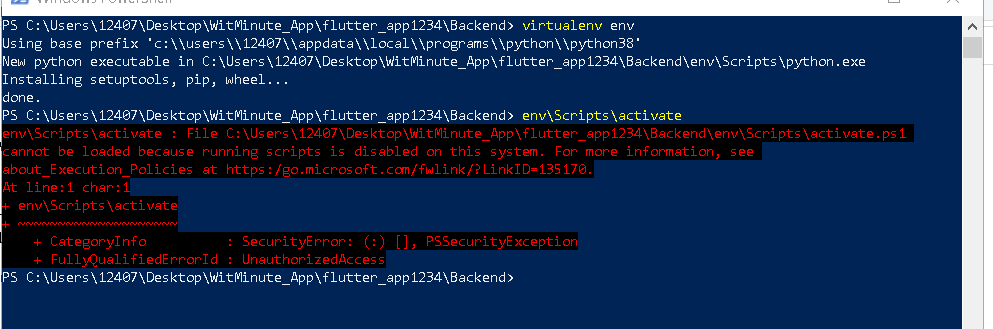
 pure cypress
Did you go to the URL in the error?
It should explain it
Wrong channel by the way. If you have further questions about that ask in #tools-and-devops
echo beacon
@wicked fog are you able to help given that info?
wicked fog
@echo beacon yes
ok
here we go
let's start with an easy one
a project can contain many links; a link is only part of one project
in the links table you have a project_id column which foreign keys out to the primary id of your project table
then in sqlalchemy as part of the Link object definition you have
class Link():
    __tablename__="links"
    project_id = Column(Integer, ForeignKey("projects.id")
    project = relationship("Project", backref="links")
we can do something similar with Profiles, I'm guessing a Link is associated with the person who added it
you'll have a user_id column in your links table as well
class Link():
    __tablename__="links"

    project_id = Column(Integer, ForeignKey("projects.id"))
    project = relationship("Project", backref="links")

    user_id = Column(Integer, ForeignKey("users.id"))
    user = relationship("User", backref="links")
that's two of your three relationships taken care of
now for the tricky one
profiles and projects are many to many
that means you need another table
let's call this table ProfileProjectRels ("profile project relationships")
and it would be set up in sqlalchemy like so:
class ProfileProjectRel():
    __tablename__="profileprojectrelationships"

    user_id=Column(Integer, ForeignKey("users.id"))
    user = relationship("User", backref="projectrels")

    project_id=Column(Integer, ForeignKey("projects.id"))
    project = relationship("Project", backref="userrels")
basically, this table is a listing of user/project ID pairs
now, in Users
class User():

    __tablename__="users"

    @property
    def projects(self):
        return [x.project for x in self.projectrels]
Similarly, your projects class
class Project():

    __tablename__="projects"

    @property
    def users(self):
        return [x.user for x in self.userrels]
@echo beacon ^ there you go
also I just realized I sort of turned Profile into User somwhere along the line
echo beacon
@wicked fog I get this error: sqlalchemy.exc.NoReferencedTableError: Foreign key associated with column 'link.project_id' could not find table 'projects' with which to generate a foreign key to target column 'id'
Maybe there is a small mistake but I just blindly rewrote the code
I changed some stuff and it executed
Changed plurals like ForeignKey("projects.id") to ForeignKey("project.id")
wicked fog
@echo beacon you'll have to rename stuff to match your own table/column names of cours
note that in ForeignKey("tablename.columname") you're using the name of the table in the db
whereas for relationship("Thing") you're using the name of the Python class
echo beacon
Makes sense!
Thank you a LOT @wicked fog, you saved me hours days of searching, I wouldn't be able to do this kind of DB setup myself. You're a real lifesaver, I really appreciate your help ❤️.
wicked fog
@echo beacon yeah sqlalchemy is a lifesaver but it has a steep learning curve
echo beacon
One more question @wicked fog when I want to populate the tables, how to go about that? Do I need to instantiate profileProjectRels object and add Profile and Project to it?
wicked fog
@echo beacon so at the very beginning of your program you'll have a SQLalchemy session object created
so to do an insert
let's say a new user signs up
you would do something like this
new_user = User(username="captainmeta4", hashed_password="apoehfaaerq")
session.add(new_user)
session.commit()
again, adapt to your own table/column names
wicked fog
@echo beacon you'd create a new ProfileProjectRel object
wait
now
no
you'd add a project as a project
echo beacon
profile = Profile()
profile.displayName = "petak5"

project = Project()
project.title = 'Hello, World!'

link = Link()
link.title = 'Google'

project.links.append(link)
profile.projects.append(project)

db.session.add(profile)
db.session.commit()
I did this but no data is added to db
But when I add only the project object, it gets into the DB
But when I add only the project object, it gets into the DB
profile = Profile()
profile.displayName = "petak5"

project = Project()
project.title = 'Hello, World!'

link = Link()
link.title = 'Google'

project.links.append(link)
profile.projects.append(project)

db.session.add(profile)
db.session.commit()
@echo beacon do you have a project_id column in your links table?
to add the link to the project, you'd set link_object.project_id=x
echo beacon
But the id is not calculated yet
When I run this code, only profiles table gets populated
 hasty hinge
Hello, I'm actually using MySQL (with the AioMySQL module in Python) for my Discord bot, I have a file with all functions defined, so I just have to execute them when I need them, but right now I think I could improve the file, because I see I'm creating a new connection for every time I execute a function, for example, if I execute 3 functions on 1 second, 3 connections would be created, how could I improve this code?
https://paste.pythondiscord.com/luwemubuzu.py
I'm relatively new with AioMySQL, so sorry if this is a dumb question.
 slim shard
Hey! You can create a pool of connections. In connection pooling, after a connection is created, it is placed in the pool and it is used again.
pool = yield from aiomysql.create_pool(host='127.0.0.1', port=3306,
                                           user='root', password='',
                                           db='mysql', loop=loop, autocommit=False)
def my_query():
    with (yield from pool) as conn:
            cur = yield from conn.cursor()
            yield from cur.execute("SELECT ...")
            ...
In your file you used connections pool wrongly, because in each function you are creating new pool and connections.
hasty hinge
Okay, thanks!
slim shard
You're welcome
quick geyser
when i update a value with a list it inputs a number
3 for example
then when i select the value and append another number it adds quotes around the orginal and adds the second
'3', 23 for example,
["'3', 23", 42]
``` it gets bad, how can i remove those quotes from the valueIts pulled from a database so I figured right channel
 steady epoch
  File "C:\Users\hp\AppData\Local\Programs\Python\Python38-32\lib\site-packages\discord\ext\commands\bot.py", line 863, in invoke
    await ctx.command.invoke(ctx)
  File "C:\Users\hp\AppData\Local\Programs\Python\Python38-32\lib\site-packages\discord\ext\commands\core.py", line 728, in invoke
    await injected(*ctx.args, **ctx.kwargs)
  File "C:\Users\hp\AppData\Local\Programs\Python\Python38-32\lib\site-packages\discord\ext\commands\core.py", line 88, in wrapped
    raise CommandInvokeError(exc) from exc
discord.ext.commands.errors.CommandInvokeError: Command raised an exception: OperationalError: near "IF": syntax error``` async def add_clan(self, ctx,user:discord.User, clan_tag):
"""Command is used to register a user to the database"""
fixed_tag = utils.correct_tag(clan_tag)
clan = await self.coc_client.get_clan(fixed_tag)
db = sqlite3.connect("bot_db.sqlite")
db.execute("INSERT IF NOT EXISTS INTO register (clan_tag,discord_id) VALUES(?,?)",(clan,user))
db.commit()
await ctx.send(f"{clan.name} linked to {user.mention} ")```getting error
rich trout
sqlite doesn't support INSERT IF NOT EXISTS
You'll need to reword it like INSERT OR REPLACE, or like this:
INSERT INTO memos(id,text) WHERE NOT EXISTS(SELECT 1 FROM memos WHERE id = 5);
steady epoch
@rich trout i want to tell user too if user is not registered
rich trout
does your current one do that?
You could also do INSERT OR IGNORE, which should return either a new rowid or nothing, but let me check
steady epoch
and i wnt to notify user if he/she is not registered already
rich trout
There
!e ```py
import sqlite3
db = sqlite3.connect(":memory:")
c = db.cursor()
c.execute("CREATE TABLE users (id INTEGER PRIMARY KEY, name TEXT)")
print(c.execute("INSERT OR IGNORE INTO users VALUES (1, 'bob')").lastrowid)
print(c.execute("INSERT OR IGNORE INTO users VALUES (1, 'bob')").lastrowid)
 delicate fieldBOT
@rich trout :white_check_mark: Your eval job has completed with return code 0.
001 | 1
002 | 1
bleh
steady epoch
will it send to the same table which i wnt
rich trout
!e ```py
import sqlite3
db = sqlite3.connect(":memory:")
c = db.cursor()
c.execute("CREATE TABLE users (id INTEGER PRIMARY KEY, name TEXT)")
print(c.execute("INSERT INTO users VALUES (1, 'bob')"))
print(c.execute("INSERT INTO users VALUES (1, 'bob')"))
@rich trout :x: Your eval job has completed with return code 1.
001 | <sqlite3.Cursor object at 0x7f80571512d0>
002 | Traceback (most recent call last):
003 |   File "<string>", line 6, in <module>
004 | sqlite3.IntegrityError: UNIQUE constraint failed: users.id
Use a try and just INSERT normally
If you have a UNIQUE column--like discord id might be in your case--then it will throw an error you can catch
Or you could just SELECT to check first, which might be faster if you anticipate it failing lots of the time
steady epoch
hmmmm u meant except right?
rich trout
yeah
steady epoch
what is the better option in your opinion
rich trout
If it's a command you expect users to run manually, just try and catch the exception
rich trout
try:
  c.execute("INSERT...")
except sqlite3.IntegrityError:
  # already exists
hmmm
rich trout
You'll want to do CREATE TABLE clan_tags_etc (discord_id INTEGER UNIQUE, etc...)
steady epoch
i have table already
rich trout
since this is clearly a discord bot, you can just do a SELECT from to check if it exists before inserting, so long as you don't await anything in between the two
steady epoch
i am awaiting
oops
@rich trout
discord.ext.commands.errors.CommandInvokeError: Command raised an exception: InterfaceError: Error binding parameter 0 - probably unsupported type
got this error
rich trout
Did you mix up the order of the id and tag? that could cause that
rich trout
What's your insert/select statement look like?
steady epoch
    async def add_clan(self, ctx,user:discord.User, clan_tag):
        """Command is used to register a user to the database"""
        fixed_tag = utils.correct_tag(clan_tag)
        clan = await self.coc_client.get_clan(fixed_tag)
        db  = sqlite3.connect("bot_db.sqlite")
        try:
            db.execute("INSERT  INTO register (discord_id,clan_tag) VALUES(?,?)",(user,clan))
            db.commit()
            await ctx.send(f"{clan.name} linked to {user.mention} ")
        except sqlite3.IntegrityError:
await ctx.send(f"{user} is already registered")```You're passing in a user object, probably want to be passing in the id from it
steady epoch
what should i write @rich trout
rich trout
in your (user, clan) you're passing in a discord Member and a string
it needs an integer (the user's id) and a string
steady epoch
    db = sqlite3.connect("bot_db.sqlite")
    cursor = db.cursor()
    cursor.execute('''
         CREATE TABLE IF NOT EXISTS register(
         clan_tag text NOT NULL,
         player_tag text NOT NULL,
         discord_id integer NOT NULL,
         guild_id integer NOT NULL,
         PRIMARY KEY(discord_id)
         )
''')```i have made this table
rich trout
hm
You'll need an SQLIte unique clause
UNQIUE(discord, guild)
at the end, so that sqlite throws an error if the same user on the same server tries to set another tag
and then you catch it and tell them it's already set
steady epoch
actually i am new to db
where should i put unique
i have made primary key discord id to keep it differentiated
rich trout
at the bottom, like primary key is
youll need a comma like the rest of the columns too
Here's an example:
steady epoch
ooo
rich trout
CREATE TABLE shapes(
    shape_id INTEGER PRIMARY KEY,
    background_color TEXT,
    foreground_color TEXT,
    UNIQUE(background_color,foreground_color)
);
yeah
rich trout
Is your insert statement still db.execute("INSERT INTO register (discord_id,clan_tag) VALUES(?,?)",(user,clan))?
Shouldn't be (user, clan)--that'll turn into something like ("Bob#122", "clan_test"), which doesn't work cause you can't turn "Bob#122" into a number
try user.id instead
rich trout
Hm
rich trout
So you'll notice that the table is this:
         clan_tag text NOT NULL,
         player_tag text NOT NULL,
         discord_id integer NOT NULL,
         guild_id integer NOT NULL,
But you're only passing in two things
probably need to pass all of them, and in order
steady epoch
but in query 2 things are mentioned only
rich trout
true
steady epoch
then y this erro
rich trout
What's your insert look like now?
steady epoch
    @commands.command(name="add_clan")
    async def add_clan(self, ctx,user:discord.User, clan_tag):
        """Command is used to register a user to the database"""
        fixed_tag = utils.correct_tag(clan_tag)
        clan = await self.coc_client.get_clan(fixed_tag)
        db  = sqlite3.connect("bot_db.sqlite")
        try:
            db.execute("INSERT  INTO register (discord_id,clan_tag) VALUES(?,?)",(user.id,clan))
            db.commit()
            await ctx.send(f"{clan.name} linked to {user.mention} ")
        except sqlite3.IntegrityError:
await ctx.send(f"{user} is already registered")```Well, here you're passing in clan, not clan_tag. Does clan have an id?
steady epoch
yep
rich trout
Then you should probably pass the id, not the clan itself
steady epoch
i am checking through get_clan method
rich trout
In your db.execute() line you're passing in the clan object from your coc client
you should pass in a tag or an id there
depending on how you did it originally
rich trout
Well, the error you got and the code you shared above indicates you're passing the clan object--not the clan tag
yes, which you store the clan object in clan, and then pass clan, instead of clan_tag to the insert command
steady epoch
hmm means i need to do clan.tag?
@rich trout my bot executed but its giving i am registered already
rich trout
Hm. Try printing the error message. IntegrityError might be used for if you're short values on an insert. But otherwise it should be working
steady epoch
ok
rich trout
--and by printing the error message I mean just adding a raise to the end of that except block so it prints again
steady epoch
discord.ext.commands.errors.CommandInvokeError: Command raised an exception: IntegrityError: NOT NULL constraint failed: register.player_tag
@rich trout
rich trout
Yep, as I thought
your CREATE TABLE tells sqlite that you have to provide a player tag, and a clan tag, and a discord_id, and a guild_id
but you're only giving it two of the four
steady epoch
i think i need to remove not null
rich trout
that would work too
steady epoch
i want to add player id nxt to their discord id
when player uses !add_player command
@rich trout
steady epoch
but for this command how can i pass player_tag
rich trout
Same way as you pass clan_tag I assume?
steady epoch
if i will dont give player id will it throw error @rich trout
rich trout
For each item there, either the command needs to require it and you need to provide it to sqlite in the insert statement, or it needs to be nullable (without NOT NULL)
I've also noticed you've got guild_id as NOT NULL, but aren't passing it in
steady epoch
i think i need to remove not null from every thing except discord id @rich trout
rich trout
Probably a good idea
 torn sphinx
Guys could someone help me with manipulating a database
steady epoch
    async def th(self,ctx , clan_tag):
        db = sqlite3.connect("bot_db.sqlite")
        if clan_tag is None:
            stmt = db.Cursor()
            stmt.execute(f"SELECT clan_tag from register WHERE discord_id = {ctx.author.id}")
            clan = stmt.fetchone()
        else:
            fixed_tag= utils.correct_tag(clan_tag)
            clan = await self.coc_client.get_clan(fixed_tag)
            await ctx.trigger_typing()
        th = {13: [], 12: [],11: [], 10: [], 9: [], 8: [], 7: [], 6: [],5: [] ,4: [],3:[],2:[],1:[]}
        emoji=''


        async for player in clan.get_detailed_members():
            th[player.town_hall].append(player.name)
        for i,j in th.items():
            if not j:
                pass
            else:
                emoji += f'{(os.getenv(str(i)))} {len(j)}\n'
                embed = discord.Embed(colour=discord.Colour.blue(),title=f'{clan.name} {clan.tag}',description=f'**TOWNHALL COMPOSITION**\n{emoji} \n TOTAL MEMBERS : {clan.member_count}/50')
                embed.set_thumbnail(url=clan.badge.url)
                embed.timestamp = datetime.datetime.utcnow()
await ctx.send(embed=embed)```@rich trout its not fetching one data which i inserted
rich trout
did you forget a commit()?
steady epoch
nopw
nope
my register command worked
but this clan tag has not been fetched
@rich trout
rich trout
I don't see anything wrong with it. Are you sure it's showing up in the database properly?
I bet you didn't insert a guild_id and it's back to throwing an integrityerror
steady epoch
@rich trout check this
rich trout
ok
Oh, I see it
clan = stmt.fetchone()
Are you missing a await self.coc_client.get_clan(fixed_tag)?
steady epoch
i dont need to check that again as it register clan after checking only
rich trout
Right, but right now clan is a string, returned from sqlite
and then you immediately go after clan.get_detailed_members, as if it was a Clan Object
steady epoch
so what i correct
@urban goblet
discord.ext.commands.errors.MissingRequiredArgument: clan_tag is a required argument that is missing.
this error is coming
actually bot is not selecting anything
rich trout
Ah, you want clan_tag=None then, if you want it to be optional on your def line
otherwise it defaults to required
steady epoch
ooo
@rich trout
discord.ext.commands.errors.CommandInvokeError: Command raised an exception: AttributeError: 'sqlite3.Connection' object has no attribute 'Cursor'
rich trout
Cursor -> cursor
steady epoch
ok
 fluid frigate
alright I'm about to pull my hair out with how clumsy SQLAlchemy is. Maybe someone here can help me.
Effectively, I have two tables, a "Users" table, which contains one row for every user in the system, and a "Warnings" table, which has a one-to-many relationship with the Users table, where each user could have any number of warnings related to them. It's fairly straightforward, but here's the data model:
class UserTable(_Base):
    __tablename__ = 'Users'

    User_Id = Column('User_Id', Integer, primary_key=True, nullable=False)
    Discord_Id = Column('Discord_Id', Integer, unique=True, nullable=False)


class WarningTable(_Base):
    __tablename__ = 'Warnings'

    Warning_Id = Column('Warning_Id', Integer, primary_key=True, nullable=False)
    User_Id = Column('User_Id', Integer, ForeignKey('Users'), nullable=False)
    Warning_Stamp = Column('Warning_Stamp', DateTime, nullable=False)
What I want to do, is query for the Discord_Id, and get all the warnings associated to that user. Here's the SQL statement I want to achieve.
SELECT Warnings.*
FROM Users
LEFT OUTER JOIN Warnings ON Users.User_Id == Warnings.User_Id
WHERE Users.Discord_Id = <provided id>
I've been wracking my head for over a day on this and trying different things, and the best I've gotten seems to be this statement:
warning_rows = session.query(WarningTable). \
               select_from(UserTable). \
               outerjoin(UserTable.User_Id). \
               filter(UserTable.Discord_Id == discord_id)
But when I try to execute this, I just get an error back saying AttributeError: entity.
For context, among other things, I'm referencing the SQLAlchemy's documentation example, shown here: https://docs.sqlalchemy.org/en/13/orm/query.html?highlight=query#sqlalchemy.orm.query.Query.select_from
Any help would be greatly appreciated at this point, as I'm about this close to just saying fuck it and trying to manually shove text() sql down alchemy's throat.
steady epoch
@rich trout
Traceback (most recent call last):
File "C:\Users\hp\AppData\Local\Programs\Python\Python38-32\lib\site-packages\discord\ext\commands\bot.py", line 863, in invoke
await ctx.command.invoke(ctx)
File "C:\Users\hp\AppData\Local\Programs\Python\Python38-32\lib\site-packages\discord\ext\commands\core.py", line 728, in invoke
await injected(*ctx.args, **ctx.kwargs)
File "C:\Users\hp\AppData\Local\Programs\Python\Python38-32\lib\site-packages\discord\ext\commands\core.py", line 88, in wrapped
raise CommandInvokeError(exc) from exc
discord.ext.commands.errors.CommandInvokeError: Command raised an exception: AttributeError: 'tuple' object has no attribute 'upper'
    async def th(self,ctx , clan_tag=None):
        db = sqlite3.connect("bot_db.sqlite")
        if clan_tag is None:
            stmt = db.cursor()
            stmt.execute(f"SELECT clan_tag from register WHERE discord_id = {ctx.author.id}")
            clan_tag= stmt.fetchone()
            fixed_tag= utils.correct_tag(clan_tag)
            clan = await self.coc_client.get_clan(fixed_tag)
        else:
            fixed_tag= utils.correct_tag(clan_tag)
            clan = await self.coc_client.get_clan(fixed_tag)
            await ctx.trigger_typing()
        th = {13: [], 12: [],11: [], 10: [], 9: [], 8: [], 7: [], 6: [],5: [] ,4: [],3:[],2:[],1:[]}
        emoji=''


        async for player in clan.get_detailed_members():
            th[player.town_hall].append(player.name)
        for i,j in th.items():
            if not j:
                pass
            else:
                emoji += f'{(os.getenv(str(i)))} {len(j)}\n'
                embed = discord.Embed(colour=discord.Colour.blue(),title=f'{clan.name} {clan.tag}',description=f'**TOWNHALL COMPOSITION**\n{emoji} \n TOTAL MEMBERS : {clan.member_count}/50')
                embed.set_thumbnail(url=clan.badge.url)
                embed.timestamp = datetime.datetime.utcnow()
await ctx.send(embed=embed)```gross discord.py ate the error message
fluid frigate
it does that a lot .-.
rich trout
I would venture a guess that clan_tag= stmt.fetchone() is giving you (clan_tag,), and you need to use [0] to get it out
steady epoch
what should i write clan_tag,[0] where
rich trout
fetchone()[0]
rich trout
Scytail, what sql is it emitting right now?
fluid frigate
i don't know, i can't get it to run. whenever I try to get that statement to execute, it just throws an error about attributes
i think it's blowing up when it's trying to build the SQL to begin with
I've even tried sticking relationship references in my tables to see if I could somehow impact the statement that way:
steady epoch
@rich trout if i register different clan with same discord id and i do fetchall will it show all?
fluid frigate
class UserTable(_Base):
    __tablename__ = 'Users'

    User_Id = Column('User_Id', Integer, primary_key=True, nullable=False)
    Discord_Id = Column('Discord_Id', Integer, unique=True, nullable=False)
    Warnings = relationship("WarningTable", back_populates="User")


class WarningTable(_Base):
    __tablename__ = 'Warnings'

    Warning_Id = Column('Warning_Id', Integer, primary_key=True, nullable=False)
    User_Id = Column('User_Id', Integer, ForeignKey('Users.User_Id'), nullable=False)
    Warning_Stamp = Column('Warning_Stamp', DateTime, nullable=False)
    User = relationship("UserTable", back_populates="Warnings")
It should, provided you're on a different guild, because you made them unique
fluid frigate
^
rich trout
Ah, those relationships are important
fluid frigate
yeah, but i still have the same problem
rich trout
What's the full traceback?
fluid frigate
it's a mess, but hold on
rich trout
👍 I read messes for a living
fluid frigate
Traceback (most recent call last):
  File "C:\Users\Ben\Documents\Git\Manageable\venv\lib\site-packages\discord\ext\commands\core.py", line 79, in wrapped
    ret = await coro(*args, **kwargs)
  File "C:\Users\Ben\Documents\Git\Manageable\Code\Cogs\ModToolsCog.py", line 39, in warn
    self._remove_outdated_warnings(target_member)
  File "C:\Users\Ben\Documents\Git\Manageable\Code\Cogs\ModToolsCog.py", line 63, in _remove_outdated_warnings
    user_warnings = DataAccess.lookup_warnings_by_discord_id(target_member.id)
  File "C:\Users\Ben\Documents\Git\Manageable\Code\Base\Decorator.py", line 83, in __call__
    return self.run(*args, **kwargs)
  File "C:\Users\Ben\Documents\Git\Manageable\Code\Data\DataAccess.py", line 23, in run
    return_data = super(DatabaseMethod, self).run(*args, **kwargs)  # Execute the method
  File "C:\Users\Ben\Documents\Git\Manageable\Code\Base\Decorator.py", line 93, in run
    return self.decorated(*args, **kwargs)
  File "C:\Users\Ben\Documents\Git\Manageable\Code\Data\DataAccess.py", line 46, in lookup_warnings_by_discord_id
    warning_rows = session.query(WarningTable). \
  File "C:\Users\Ben\Documents\Git\Manageable\venv\lib\site-packages\sqlalchemy\orm\query.py", line 2312, in outerjoin
    return self._join(
  File "<string>", line 2, in _join
  File "C:\Users\Ben\Documents\Git\Manageable\venv\lib\site-packages\sqlalchemy\orm\base.py", line 220, in generate
    fn(self, *args[1:], **kw)
  File "C:\Users\Ben\Documents\Git\Manageable\venv\lib\site-packages\sqlalchemy\orm\query.py", line 2426, in _join
    right = onclause.property.entity
  File "C:\Users\Ben\Documents\Git\Manageable\venv\lib\site-packages\sqlalchemy\util\langhelpers.py", line 977, in __getattr__
    return self._fallback_getattr(key)
  File "C:\Users\Ben\Documents\Git\Manageable\venv\lib\site-packages\sqlalchemy\util\langhelpers.py", line 951, in _fallback_getattr
    raise AttributeError(key)
AttributeError: entity
The above exception was the direct cause of the following exception:

Traceback (most recent call last):
  File "C:\Users\Ben\Documents\Git\Manageable\venv\lib\site-packages\discord\ext\commands\bot.py", line 863, in invoke
    await ctx.command.invoke(ctx)
  File "C:\Users\Ben\Documents\Git\Manageable\venv\lib\site-packages\discord\ext\commands\core.py", line 728, in invoke
    await injected(*ctx.args, **ctx.kwargs)
  File "C:\Users\Ben\Documents\Git\Manageable\venv\lib\site-packages\discord\ext\commands\core.py", line 88, in wrapped
    raise CommandInvokeError(exc) from exc
discord.ext.commands.errors.CommandInvokeError: Command raised an exception: AttributeError: entity
enjoy hahaha
in case it matters, the "decorator" stuff basically just wraps my sql methods in some simple code to handle sql sessions, doesn't impact the queries or anything
fluid frigate
don't hate it actually works p well
rich trout
I see, I was right
fluid frigate
completely abstracts away session management, and my discord bot doesn't have to care about databases at all now, which cleans up the data layer from the business layer
rich trout
Something's not being passed to the join properly
fluid frigate
yeah that's what i thought
but i cannot for the life of me figure out what's going on
especially since I'm mirroring sqlalchemy's code example so closely
fluid frigate
did we miss something obvious
fluid frigate
hooray for broken documentation \o/
rich trout
found it
it's a tiny irritating impossibly easy to miss detail that reminds me of exactly why I don't like sqlalchemy's docs
It also seriously needs a better error message
let me get my phone I'm reporting a bug
Ok, the detail: you must join on the relationship not the column
fluid frigate
yeah "AttributeError: entity" means literally nothing lol
oh what
w h a t
how was i supposed to know that lmao
rich trout
IKR
q = session.query(Owner).select_from(Dog).\
    join(Dog.owner).\
    filter(Dog.name == 'Spark')
works
q = session.query(Owner).select_from(Dog).\
    join(Dog.owner_id).\
    filter(Dog.name == 'Spark')
AttributeError: Entity
fluid frigate
;-;
rich trout
Hm. Well, at least there's attention to it
glances at a particular, related error message from ponyorm that happens when you screw up capitalization during a query
anyway
glad it's identified, and I'll keep that in the back of my mind if someone else runs into it
fluid frigate
yeah i'll have to remember that too, thank you so much
so many of my code pieces just clicked into place with that bug gone you have no idea lol

 thorn gale
Hello, is this the right place to ask a question about a sqlalchemy query?
rich trout
yep
thorn gale
So I have this query :
db.session.query(UserCatalogs).filter(UserCatalogs.id == catalog_id).first().child_cat
Which gives me :
gChild('14', '786','1'), CatalogChild('15', '786','1'), CatalogChild('16', '785','1'), CatalogChild('17', '784','1')]```

But I would like to somehow recover the numbers(761, 786 etc) inside the CatalogChild but I do not know how to and I guess I'm googling it wrong too. I mean I would basically like to do :

 ```db.session.query(UserCatalogs).filter(UserCatalogs.id == catalog_id).first().child_cat.item_id```

But ofc, it doesn't workWell, it's giving you a list of results
So you'd have to use a for loop, for example, to get them out
for child_cat in db.session.query(UserCatalogs).filter(UserCatalogs.id == catalog_id).first().child_cat:
  print(child_cat, child_cat.item_id)
Alright, thanks you so much ❤️
 sonic mural
Using SQLAlchemy, what is the best practice for checking if an entry exists with a specific value. Would it just be a query.one() enclosed in a try-except block or is there a specific method for checking if an entry exists?
cerulean pendant
you can also use first() and check for None
 cyan yew
getquery = "SELECT * FROM requests"
requests = cursor.execute(getquery)
cerulean pendant
or you can use exists() in a subquery
cyan yew
does that store all the rows in my table requests into a variable named requests
cerulean pendant
no.
cerulean pendant
you still have to call one or more of cursor.fetchone/cursor.fetchall/cursor.fetchmany to actually get the data
cyan yew
I did requests = cursor.execute(getquery).fetchall() and I got this error;
AttributeError: 'NoneType' object has no attribute 'fetchall'
cyan yew
ok
cerulean pendant
cursor.execute(getquery)
data = cursor.fetchall()
ok thx
sonic mural
or you can use exists() in a subquery
@cerulean pendant
ty
Ok question numero dos
I'm storing an entry which could either be a a BigInteger or a unicode emoji.
My thoughts are to convert the unicode emoji to some integer value
However, I'm not too sure on how to do that
(In sqlalchemy on a postgres server)
cyan yew
('d', 'd', 'd', 'd', datetime.datetime(2020, 3, 17, 17, 2, 30), 1) if my cursor has this as a return, how do I access the first d, second d, so on
getquery = "SELECT * FROM requests"
cursor.execute(getquery)
rows = cursor.fetchall()
print(rows)
printing returned the d d dd stuff
I submited d d d d as a test
 knotty parcel
With PostgreSQL how to store a list that is made up of all strings?
Currently got: cursor.execute("CREATE TABLE applications(guildid BIGINT, app VARCHAR(255), appid BIGINT, questions TEXT[], roleid BIGINT") but it throws an error ```syntax error at end of input
LINE 1: ... VARCHAR(255), appid BIGINT, questions TEXT[], roleid BIGINT
So store a list of strings
@cerulean pendant Pinged you as you seem online and who what you are doing
cerulean pendant
@knotty parcel you are missing a )
knotty parcel
Thanks
 calm charm
does anyone know how to make it so that the each user has a different inventory, with a variety of things being inside the inventory.
with sqlite?
 fresh zephyr
cerulean pendant
fresh zephyr
cerulean pendant
I mean, sqlite is pretty good
 frail hearth
@calm charm for PostgreSQL, i used this:
CREATE TABLE items (
    itemid bigserial NOT NULL,
    title text NULL,
    description text NULL,
    rarity int2 NULL,
    emoji text NULL,
    CONSTRAINT "items-primarykey" PRIMARY KEY (itemid)
);

CREATE TABLE useritems (
    userid int8 NOT NULL,
    gildid int8 NOT NULL,
    itemid int8 NOT NULL,
    CONSTRAINT useritems_unique UNIQUE (userid, gildid),
    CONSTRAINT useritems_fk FOREIGN KEY (itemid) REFERENCES items(itemid)
);
items is a table that holds all items.
useritems holds the items in peoples inventories
example data for items would be
 itemid |   title   |            description             | rarity | emoji
--------+-----------+------------------------------------+--------+-------
   0    | Test Item | This item Should Not Be Obtainable |      0 |   ⚠️
data for useritems would be
       userid       |       gildid       | itemid
--------------------+--------------------+--------
 477034228366966785 | 647850202430046238 |      0
hope this helps!
calm charm
@frail hearth do I have to manually insert an item with the details into the items table
and what is gildid?
like guiild id?
frail hearth
guildid is the I'd of the guild
Items have to be inserted, however you could probably make a command
calm charm
how would I retrieve what's in the inventory for let's say the ctx.author.id
how wuld I select from inventory where userid is userid in useritems
frail hearth
Unsure tbh, try looking up usage info for primary keys and foreign keys
charred fractal
user_item.
frail hearth
Gtg, apologies
charred fractal
Example?
 alpine patio
a table with
id , name , email
.....
and let's say someone changed his name
I'm getting my data table as a json and then I want to check " does id = 11231 changed his name or not"
cerulean pendant
if you really want to check, you have to fetch the data from the database and compare
but usually what we do is just send a UPDATE command - if nothing changed then it will update to the same value and nothing happens
alpine patio
aaah I see
thank you
cursor = connection.cursor()
         sql_update_query = """Update students set type = %s where id = %s"""
         inputData = (type, id)
         cursor.execute(sql_update_query, inputData)
         connection.commit()
         print("Record Updated successfully ")
so i did something like that for 'type'
do i need to make another function for 'name' and 'mail' or is there an easier way
cerulean pendant
you can update all fields with a single query
cerulean pendant
🍀
 torn sphinx
can someone help me with sql database pls?
delicate fieldBOT
Asking good questions will yield a much higher chance of a quick response:
• Don't ask to ask your question, just go ahead and tell us your problem.
• Don't ask if anyone is knowledgeable in some area, filtering serves no purpose.
• Try to solve the problem on your own first, we're not going to write code for you.
• Show us the code you've tried and any errors or unexpected results it's giving.
• Be patient while we're helping you.
You can find a much more detailed explanation on our website.
wicked fog
!rule 5
delicate fieldBOT
5. Do not provide or request help on projects that may break laws, breach terms of services, be considered malicious/inappropriate or be for graded coursework/exams.
calm charm
why does this sql CREATE_TABLE_SQL = """CREATE TABLE Inventories ( user_id INTEGER PRIMARY KEY item_id INTEGER PRIMARY KEY FOREIGN KEY(user_id) REFERENCES Users(user_id) FOREIGN KEY(item_id) REFERENCES Items(item_id) );""" get me sqlite3.OperationalError: near "item_id": syntax error
 shell ocean
comma?
calm charm
Nope
commas dont make a difference
wait nvm got it
ok so I got it working
Now how do I enter an item with has an id of 0 and name of test and desc of test to the ctx.author.id
Like if command run, add 1 of the test item to the ctx.author.id
also how are we measuring how much of each item they have
calm charm
Ok now how do I get lets say an item description, item name, itemid that associates with the userid
Also how do I put each of those into an individual variabpe
frail hearth
You'd have a variable for the items
calm charm
Let's take this to dms
frail hearth
Sure, I probably wont be able to help for the next 9 hours, as I have school. After I can try to make a mockup idea
calm charm
jfc. 9 hours?
that's too long
it's fine
ping me when you need to talk
cuz imma probably be asleep
or just dm me
 gentle sparrow
Very Cliché question. I’m trying to make a social media like Twitter/Instagram and I want to use python/Django for some backend stuff. I don’t know anything about backend. Does anyone have any advice on where I should start ? I do know about frameworks and things like AWS but I don’t know how to use any of them.
If possible can anyone go into detail on what Instagram would specifically use Django for
 solemn ridge
@gentle sparrow go on #web-development
 finite lynx
In SQLAlchemy if I would like to return all columns that contain a string I should do:
Something.query.filter_by(name='string').contains()?
 azure drift
hi foizal
torn sphinx
hi doniyal
azure drift
Wald
azure drift
@calm charm sqlite3 to make data base doesnt work something is wrong its a problem many people have so use tkinter instead and os here is a video link

(How to create a graphical register and login system in python using Tkinter) - This video is a basic tutorial which uses tkinter to build a program which will allow users to register an account on the software which they can later log in to. The second part of this tutorial w...

(How to create a graphical register and login system in python using Tkinter Part 2) - This tutorial is the follow up video based on part one of this series where I will be showing how to create basic register and login system using python.
Link to part 1 : https://youtu.be/...

How to create a graphical system using python part 3 - This is the last video based on the Tkinter system creation series and explains how to allow a user to login into a system and gain a session. The video shows how to implement basic features into a software using modules s...
wicked fog
@finite lynx session.query(Object).filter(Object.variablename.contains("string")).all()
calm charm
But I don't have a register login db
hasty hinge
Hello, I'm having an error in my MySQL DB when I try to add a unicode emoji as text, could you help me?
I already set the encoding as utf8mb4 but the error keeps happening
 shell geode
as far as I know, \xERe\as123\12312 is bytes, so you need to decode them to str
I might be wrong
 serene pawn
SO im trying to write a script that reads SQL tables
 upbeat lily
If you're looking to get started with SQL, w3schools is pretty decent for an intro https://www.w3schools.com/sql/
gentle sparrow
@solemn ridge Thx for the redirection
solemn ridge
np
finite lynx
@wicked fog Ty
the variable name would be for example a column in a table and the Object is the table?
Also why sometimes querying would be done like with session.query etc and other times with Sometable.query.filter_by etc?
wicked fog
@finite lynx yes Object is a python object which you've got mapped to a db table, and variablename is an object property which you've got mapped to a column in that table
query() is the general interface for selecting from a table
hasty hinge
I am trying to do a file of functions with sql calls but I don't know how to create one pool for all functions, this is what my file looks like:
https://paste.pythondiscord.com/luwemubuzu.py
All of this goes with a discord.py bot.
 silk ember
you can attach the pool to your bots instance
there's an example for it i think
ah here's one example https://gist.github.com/jegfish/cfc7b22e72426f5ced6f87caa6920fd6

Gist
Example code for connecting to and using a postgres database using discord.py and asyncpg. - example_db.py
i'd probably just do something like this though ```python
class Bot(commands.Bot):
def init(self):
super().init(command_prefix=prefix, description=description)
self.loop.create_task(self.initialize_database())
async def initialize_database(self):
    self.db = await aiomysql.create_pool(**credentials)
then you have access to your pool wherever you have access to your bot instance
 strong compass
guys i have been stuck on this for 3 hours dont know wat to do
import discord
from discord.ext import commands, tasks
from itertools import cycle
import random
import os
import asyncio
from discord.utils import get
import datetime
import sqlite3


class Wallet(commands.Cog):

    def __init__(self, client):
        self.client = client

    @commands.command(pass_context=True)
    async def wallet(self, ctx):
        db = sqlite3.connect('Main.db')
        cursor = db.cursor()
        cursor.execute("SELECT user_id FROM wallet")
        result = cursor.fetchall()
        if result is None:
            cursor.execute((f"INSERT INTO wallet (user_id) VALUES ({ctx.message.author.id})"))
            db.commit()
            cursor.close()
            db.close()
        elif result is not None:
            cursor.execute((f"UPDATE wallet SET (user_id) = ({ctx.message.author.id})"))
            db.commit()
            cursor.close()
            db.close()

        member = ctx.author
        embed = discord.Embed(title=f'- Customer - {member.name} - Wallet -', description=None, colour=discord.Color.
                              blue())
        embed.add_field(name="Platinum Tokens", value="0")
        embed.add_field(name="Held Platinum Tokens", value="0")
        embed.set_thumbnail(url=f"{member.avatar_url}")
        embed.timestamp = datetime.datetime.utcnow()
        embed.set_footer(text='MafiosOS Management Team', icon_url="https://cdn.discordapp.com/attachments"
                                                                   "/658963133125230602/664277505858994201"
                                                                   "/Mafioso_Discord.gif")
        await ctx.send(embed=embed)


def setup(client):
    client.add_cog(Wallet(client))
everything works properly but it wont insert or update user_id on the database
slim shard
When you call fetchall() method, an empty list is returned when no rows are available.
Maybe if result: ... and elif not result: ... will work.
strong compass
still doesnt work
slim shard
\o/
strong compass
@slim shard
it works
but
if another user do that command again it will take same row
and change id
slim shard
what does this function need to do?
strong compass
i just want it to add user id of users who use that command into a user_id
and keep storing them
calm charm
If I have a column in sqlite, how do I assign a variable to it
example I have a column named item_id how do I assign a variable so that i can do if item_id == 1:
also let's say I have like 15 rows, can I make it so that each there are going to be 5 rows per result, and the user has to type .list 2 to see the next 5. and .llist 3 to see the last 5.
steady epoch
db.execute("INSERT IF NOT EXIST INTO register (discord_id,clan_tag) VALUES(?,?)",(user.id,clan.tag))
i am using sqlite
error is coming it says its incorrect
if
finite lynx
Whem setting up Flask-Migrate, should I better do it in the database config file or my models file?
torn sphinx
I want to save the amount of messages users send monthly. Saving each individual message is overkill, so how should I go about creating a table with monthly entries? Thought about setting all dates to the 1st day of the month
cerulean pendant
I usually have a yearmonth field: 202002 202003 202004
torn sphinx
As a string/integer field?
cerulean pendant
yes - and it is sortable so makes it easy for my use case
I figured I don't need the day as I won't be using it anyway
solemn ridge
You can also use epochs
torn sphinx
I was gonna use the date field but I guess a string or int should work too. But which one is faster to process?
calm charm
solemn ridge
This is the epoch for rn
1584617552000
In my country
@calm charm I take it you have set up a model
?
calm charm
wat
solemn ridge
How are you connecting to your dtabase?
calm charm
through a connection?
solemn ridge
how then?
calm charm
._.?
solemn ridge
Send me the connection block
calm charm
connection = await aiosqlite.connect('currency.db')
        cur = await connection.cursor()
Why are you using aiosqlite tbw?
calm charm
it's asynchronous
solemn ridge
so?
calm charm
stops blocking
calm charm
aiosqlite is very similar to sqlite3
it doesnt matter
u just add await to almost all commands
so
solemn ridge
I know how aiosqlite works
calm charm
Like i have the column item_id
solemn ridge
Anyways you need to setup a model for your table
calm charm
what is a model?
cerulean pendant
I was gonna use the date field but I guess a string or int should work too. But which one is faster to process?
@torn sphinx which kind of processing you plan on doing?
cerulean pendant
then you won't process
calm charm
Name of table is Items columns are: item_id item_name item_description item_icon_emoji and name
cerulean pendant
you just run UPDATE tb SET msgcount = msgcount + 1 WHERE yearmonth = ?
solemn ridge
Basically. A table is like a class
Its attributes are its columns. Every row is a different instance, an object in other words, of class. If you want to create a new row, you can just create a new object and then commit that object to the database. If you want to update an object, you query all the rows using a filter of yourchoice, the thing you get is your object, you update the attributes of the object, you commit and it is updated
cerulean pendant
if the yearmonth column is indexed it doesn't matter which type you use, it will be the same speed @torn sphinx
torn sphinx
Alright, thanks
solemn ridge
So how are you currently adding values to your table
calm charm
but how do I create a python var for it?
through update or insert commands?
or manually through the editor
if it's a one time thing
solemn ridge
Please stop using the ? it is kinda irritating, I am not sure if you don't mean it like that
So
A model looks like that
torn sphinx
@calm charm you can use raw SQL like I did with my crappy bot I'm remaking. Here's an example
GET_POSTCOUNT_THREE_MONTHS = """SELECT COUNT(*) FROM messages
WHERE guild_id = 107900245270110208 AND author = ?
AND datetime(timestamp) > datetime('now', '-3 months')"""
async def get_postcount_three_months(connection, member):
    try:
        cursor = await connection.cursor()
        pctm = await cursor.execute(GET_POSTCOUNT_THREE_MONTHS, (member,))
        postcount = pctm.fetchone()[0]
        await cursor.close()
        return postcount
    except OperationalError as e:
        print(f"DB error when getting topping eligibles:\n{e}")
        await sleep(1)
await get_postcount_three_months(connection, member)```dont.
calm charm
._.
torn sphinx
Better don't, yeah. ORMs are handy
calm charm
i dont think that's what i need
solemn ridge
Either way, using a Model is 100% times better practice
torn sphinx
Notice the try/except - aiosqlite tends to error a lot
solemn ridge
than insert, update
calm charm
I just wanna turn a column into a variable
torn sphinx
You need to fetch that column from the database first
solemn ridge
Using insert, update
Is very unreliable
I take it you have one of these:
async with aiosqlite.connect(...) as db:
  ### stuff
db = await aiosqlite.connect(...)
like i have a column named item_id. and I wanna run: ```py
if item_id == 1:
name = 'pill'
ye
2nd 1
calm charm
the fr3ak is a model
solemn ridge
class Item(db.Model):
  __tablename__ = 'Items'
  item_id = db.Column(db.Integer, primary_key=True)
  item_name = db.Column(db.String)
  item_description = db.Column(db.String)
  item_icon_emoji = db.Column(db.String)
  name = db.Column(db.String)
  def __init__(self, item_id: int, item_name: str, item_description: str, item_icon_emoji: str, name: str):
    self.item_id = item_id
    self.item_name = item_name
    self.item_description = item_description
    self.item_icon_emoji = item_icon_emoji
    self.name = name
This is your model.
If you want to append a new row to your database you can just do:
new_Item = Item(item_id='...', item_name='...', item_description='...', item_icon_emoji='...', name='...'
db.session.add(new_Item)
db.session.commit()
If you want to query the object, filter by say item_id and update something you can do:
  #Saying we have a variable called given_id which is the id of the item you want to update
  items = Item.query.all()
  for item in items:
    if item.item_id == given_id:
      item_you_want = item
  item = ('update the attributes you want here')
  db.session.add(item)
  db.session.commit()
This a complete base for what you want to do
solemn ridge
?
calm charm
I see
 uneven elbow
Hello everyone! I'm new to this stuff and having problems hosting my django web app on pythonanywhere.com for the past 2 days. I keep getting Error running WSGI application. sqlalchemy.exc.DatabaseError: (sqlite3.DatabaseError) file is encrypted or is not a database. If someone could help me out, I would give sum that I can afford to you as thanks.
cerulean pendant
@uneven elbow It seems the sqlite file you're using is corrupted somehow
did you try reuploading it?
uneven elbow
I pulled from git, I will try to upload it manually again. Maybe my path is wrong?
cerulean pendant
no, the error is not related to path, but to a file that is not a database
when you get that error, it means sqlite found the file you're pointing it to
but just couldn't use it because it is not a database
@uneven elbow send the code
!paste
delicate fieldBOT
Pasting large amounts of code
If your code is too long to fit in a codeblock in discord, you can paste your code here:
https://paste.pydis.com/
After pasting your code, save it by clicking the floppy disk icon in the top right, or by typing ctrl + S. After doing that, the URL should change. Copy the URL and post it here so others can see it.
cerulean pendant
we can take a look if there is something wrong in it
maybe a screenshot of your files in the file explorer will help pinpoint the issue
uneven elbow
you want the settings.py file?
cerulean pendant
is it a django site?
uneven elbow
yes
cerulean pendant
ok, then that could help too - the file that defines the database
cerulean pendant
ok, now the screenshot of your files in the file explorer - I'm looking for the db.sqlite3 file
uneven elbow
 cerulean pendant
ok, try renaming the db.sqlite3 file to something else, say db.sqlite3.backup
django should regenerate the file
cerulean pendant
@uneven elbow no errors?
uneven elbow
same error log
2020-01-19 14:27:27,855: File "/home/MaxxelZ/mysite/main.py", line 32, in <module>
2020-01-19 14:27:27,856: db.create_all()
but why is this showing in error log. my django site doesn't have main.py
and the path is wrong aswell
# To use your own django app use code like this:
import os
import sys
#
## assuming your django settings file is at '/home/MaxxelZ/mysite/mysite/settings.py'
## and your manage.py is is at '/home/MaxxelZ/mysite/manage.py'
path = '/home/MaxxelZ/django_site'
if path not in sys.path:
    sys.path.append(path)

os.environ['DJANGO_SETTINGS_MODULE'] = 'django_site.settings'
#
## then:
from django.core.wsgi import get_wsgi_application
application = get_wsgi_application()
this is the wsgi.py file
cerulean pendant
the error log should change if you rename the file
if it didn't change, then you are not running the same code as you are modifying
because if the file is not there anymore, it should give a different error
uneven elbow
I will try to upload everything again
cerulean pendant
@uneven elbow I still think your db.sqlite3 file is somehow corrupted
renaming it should change the error log
it has to change
if it doesn't, we can't proceed because the log is not being updated or something
and that makes it very hard to troubleshoot
uneven elbow
it didn't change, so I will try to upload everything from begginging
cerulean pendant
there's no way that renaming the file won't change the log
it must give a different error
finite lynx
When filtering in sqlalchemy is it possible to have a or statement?
For example
.filter(username='string' or id='string')
Oh wait, I guess I found it
 lusty igloo
Is it bad if to make my code shorter overall I use f-strings in fetchrow method? To be exact I use it in place "SELECT {variable} FROM..." or is it a thing that won't really matter?
lusty igloo
Its more about
I have same function in 5 files but only 1 thing changes, that is that variable so I though
make 6th file containing Class which takes name of variable and has that function and just import it within those files
But thanks
upbeat lily
I'm pretty sure you shouldn't be using fstrings with databases at all. You should use paramaterisation, not manual interpolation
You should be doing this @lusty igloo
 query = 'SELECT * FROM foo WHERE bar = ? AND baz = ?'
 params = (a, b)
 cursor.execute(query, params)
I don't intend to fetch all columns but single column from single row
so I have
(f"SELECT {variable} FROM foo WHERE bar = $1",other_var)
``` as the `variable` is the only thing that changes between those filesI think as long as variable isn't anywhere close to the user or other I/O, it should be safe
lusty igloo
It is not
upbeat lily
I'd still look to avoid using them with SQL though, paramaterisation isn't too difficult
lusty igloo
its in other class so it looks like
def __init__(self):
self.func = DBFetch("variable").func``` more a thing_bot.players.aggregate([{"$match":{"rating":"95"}}])
``` Im attempting to aggregate using pymongo but this returns an objecthow would i obtain the data
sorry i have this disease called dumb fuck
i got it
finite lynx
If I would make a new non nullable column for my table with a default value, would all the objects in the table have the default value or would there be a error
uneven elbow
@cerulean pendant I somehow fixed it by uploading everything from beggining
cerulean pendant
@uneven elbow good!!
I knew there was something wrong with the file - it was corrupted!
@uneven elbow What I find strange is that the error message didn't change from "File corrupted" to "File not found" when you renamed it
but whatever
uneven elbow
But guess what
theres a new error when I try to make post request. CSRF verification failed. Request aborted. Posted about this problem on django discord and they couldn't see whats wrong
 cerulean harbor
hey
 languid flame
hello
I am a beginner
want a simple easy database that is online
Easy to acess
with low latency
calm charm
sqlite3
torn sphinx
I have this MT Dataset, what can be done with such dataset, as a Data scientist, what questions can be asked regarding this dataset, what can be the yields, what to analyze, etc.
So far I thought to make a classification on age, gender.
To find the reasons why patients undergo, surgery, allergy tests, etc. what else can be done with it, any suggestions, please?
Any suggestion is appreciated.
 mild haven
should I use sqlite3 or pymysql
charred fractal
https://pastebin.com/Vxg1RJNY
I need help on making it send to each user that is in quiz to send to the user's dm
Updated: Error: ```Ignoring exception in command quiz:
Traceback (most recent call last):
File "C:\Users\User\AppData\Local\Programs\Python\Python36\lib\site-packages\discord\ext\commands\core.py", line 83, in wrapped
ret = await coro(*args, **kwargs)
File "c:\Users\User\Desktop\FlippingFlamingo\cogs\quiz.py", line 93, in quiz
await message.author.send(f"{Question}")
AttributeError: 'int' object has no attribute 'send'
The above exception was the direct cause of the following exception:
Traceback (most recent call last):
File "C:\Users\User\AppData\Local\Programs\Python\Python36\lib\site-packages\discord\ext\commands\bot.py", line 892, in invoke
await ctx.command.invoke(ctx)
File "C:\Users\User\AppData\Local\Programs\Python\Python36\lib\site-packages\discord\ext\commands\core.py", line 797, in invoke
await injected(*ctx.args, **ctx.kwargs)
File "C:\Users\User\AppData\Local\Programs\Python\Python36\lib\site-packages\discord\ext\commands\core.py", line 92, in wrapped
raise CommandInvokeError(exc) from exc
discord.ext.commands.errors.CommandInvokeError: Command raised an exception: AttributeError: 'int' object has no attribute 'send'

 rain wagon
@charred fractal maybe you should use bound statements instead of concencation
just saying
charred fractal
What do you mean @rain wagon ?
torn sphinx
So I am approaching on migrating to a new db lib
Motor for MongoDB
What do I do to start?
I'm reading the docs right now
languid flame
Hi
I need a database for a discord bot
I will use AWS DB
SHould I use postreg or MYSQL
i will actually ise postreg
I have databse exp
None with python
torn sphinx
So I need a basic intro to using databases with discord.py. If you can, please redirect me to a video or a document that explains everything, thank you!
PS, I've already downloaded SQLite if that's any help.
nvm
torn sphinx
Does anyone know what this error means
pymongo.errors.OperationFailure: not authorized on feudalmod to execute command { find: "modlog", filter: { guild_id: 674386972898361354 }, limit: 1, singleBatch: true, lsid: { id: UUID("91aa7d43-8403-4463-b494-e97fce4e37aa") }, $clusterTime: { clusterTime: Timestamp(1584814269, 1), signature: { hash: BinData(0, B26D7DF11DC80B5F34CD42A2EA0E95361F9A5C87), keyId: 6762369017630949377 } }, $db: "feudalmod", $readPreference: { mode: "primaryPreferred" } }```I looked it up and it basically means that you are missing permissions
But I have a url that i connect to but it allowed me to use it for a while then it started giving me this error
 warped sequoia
i don't understand why my database is sorting the bottom 3 zeros after like it's a string, but when i copy paste the other 0 on top of them, they still do it
 bold light
How can I have a team and a player reference eachother, ie. I want to have a teamlist for the player that has a list of teams they are a part of and I also want to have a list of all the players that are on a team as part of the team class. I am trying to do this in Mongo. Ty in advance.
pure cypress
@finite lynx Which dialect are you using?
E.g. SQLite, Postgres, MySQL, etc
I am honestly not familiar with SQLAlchemy. Maybe it abstracts it away so the behaviour is consistent across all of them.
But there are dialects, if not all of them, that will update existing rows with the default value.
finite lynx
Ok, it is SQLite
finite lynx
Ty
 copper echo
        query = "INSERT INTO guilds (guild_id, register_message, register_emoji, register_role) VALUES ($1, $2, $3, $4) " \
                "ON CONFLICT (guilds.guild_id) " \
                "DO UPDATE SET register_message = $2, register_emoji = $3, register_role = $4 WHERE guild_id = $1"
``` so this give me errorCommand raised an exception: PostgresSyntaxError: syntax error at or near ")"
i i use ON CONFLICT (guild_id) instead of following i get Command raised an exception: AmbiguousColumnError: column reference "guild_id" is ambiguous
if you know how to help me please ping, because im out of ideas
finite lynx
Are primary_keys always be the same counting upwards or can you change that?
 half gyro
@finite lynx primary keys don't have to be numbers at all
pure cypress
@copper echo I believe ON CONFLICT (guild_id) is the only way and you'd have to prepend the fields with the table name in the SET clause to avoid the ambiguity error.
And, for what it's worth, in the SET clause you can access values being inserted with excluded.field_name but I guess using $1 etc is fine.
pure cypress
For example, either guilds.guild_id = $1 or guilds.guild_id = excluded.guild_id
copper echo
oooh, so you think problem is in WHERE clause?
pure cypress
Yeah probably
pure cypress
It doesn't know if you want to be checking the old guild id or the new one
So it says it's ambiguous
copper echo
ye makes sense
pure cypress
Yeah you can ping me for that though if that doesn't work I'm out of ideas honestly 😅
finite lynx
Woild that be a good idea for making the if for example for users a random arrangement of letters and numbers and just saving the primary key to a different named column?
pure cypress
Sounds like you're thinking of a UUID
But why wouldn't a plain autoincremented integer suffice for a user ID?
 celest zodiac
@pure cypress One scenario where you wouldn't use an autoincremented integer is if you have, for instance, a horizontally sharded database with a very high rate of inserts
If you use an ID column, you need to have one node as a source of truth for the value of that column universally
A UUID can be keyed to, say, the shard ID, and so is guaranteed to be unique
If you need that one node as a source of truth for anything, that means any insert operations are going to block until you get that ID from that node
With a UUID you don't need that, since the right kind of UUID can guarantee uniqueness across all the nodes
But if you just have one node, then an ID column is fine.
pure cypress
Neat. Makes sense. Wouldn't have considered that since I haven't ever operated on such a scale.
celest zodiac
I found out about this the other day when doing research about ID columns. I'm working on a project that's basically a personal wiki, and I considered exactly the same question myself. For what I'm doing, an autoincremented integer is fine because it isn't meant to scale.
finite lynx
@pure cypress Yeah UUID I guess, and so generating that for each user so there wouldn't be a possibility for a user to loop through all users
Can I for example generate it using the UUID model and them save it to a string field in my database?
But maybe I should find something less hardcore for this use case, because I don't think I need a 128bit id for my user
uuid.uuid4().hex[:8]
I could do this, when generating uuids like this should I better still make sure that there isn't a equal uuid that exists already?
 reef hawk
are database an o1 lookup? E.g. search through a column for a certain ID with a lookup instead of scrolling through the entire column for that column
if not, is it possible to make it an o1 lookup
torn sphinx
heya, how do I make a list dataset in an SQL database?
languid flame
hello
with asuncpg
i used fetch
this is the response
[<Record name='dydy' age=10>]
how do I manipulate this to get the data in name
and the age
like is there x['name']
or something
rich trout
results[0].name
if use use .fetchone() it will give you the result rather than a list of results
@finite lynx The reason uuid4 is so many bits is precisely so you don't have to worry about checking for an equal uuid
Your database should have a uuid field--MYSQL and POSTGRES both support them, which will help you avoid the severe penalty of string keys.
For more reading on the reasons and details behind uuid's (and the various types), see https://stackoverflow.com/questions/703035/when-are-you-truly-forced-to-use-uuid-as-part-of-the-design/786541#786541

Stack Overflow
I don't really see the point of UUID. I know the probability of a collision is effectively nil, but effectively nil is not even close to impossible.
Can somebody give an example where you have no
To put these numbers into perspective, one's annual risk of being hit by a meteorite is estimated to be one chance in 17 billion, equivalent to the odds of creating a few tens of trillions of UUIDs in a year and having one duplicate. In other words, only after generating 1 billion UUIDs every second for the next 100 years, the probability of creating just one duplicate would be about 50%.
Really the impact of using a uuid in your design is not that significant, so you really shouldn't worry about it if you've decided to use it. If you're going to have problems with it, you were already going to have problems and need to look at your problem domain much more closely.
@reef hawk This depends on what you mean by O(1). Realistically, an INTEGER PRIMARY KEY lookup is the absolute fastest you can expect from a database and most other software in general
This is because the rows of a particular table are of a fixed size, and thus if you know you want item, say, 52, then it will be at rowsize*52, and you can immediately grab and send it.
For other columns/types, once you or the db determines there should be something called an INDEX, you get O(logn) or better performance due to it having a preconstructed decision tree of what values go to what rows. It's only for unindex, unsorted columns that databases will do a scan, or for some kinds of comparisons. For example, it's easy to tell whether, say, the primary key is less than 10. That's rows 1-9, which are all contiguous and immediately found. Finding all rows that have a "type" of 6 (like in the case of a foreign key) can be fast with an index. All the values for 6 are together, so it knows it needs to give you rows, 1, 2, 6, 9, etc. If there is no index, though, it has to check every row by definition. But it's also very fast at this.
There are a few exceptions, one of which is STRING/VARCHAR columns. Because these kinds of columns have variable length and LOTS of data assigned, they can be very unwieldy to work with. You should avoid using them for querying. As an example, grouping a database's list of records based on first name is expensive. It needs to keep track of every (Variable length chunk of data) visited, and sort them, and then collate them into a result. It's faster than python doing the sorting because its got lots of internal optimizations, but if you're not trying to get a sorted-by-name listing then there are much better options.
languid flame
thanks
What should I use to host a PostregSQL database\
For a discord bot that will very frequently acess the database with asyncpg
I was planning on using AWS RDS
is there a better alternative?
 grim lily
I have a Project class, User class and AssociationUserToProjectClass
class AssociationUserToProject(SqlAlchemyBase):
    __tablename__ = 'user_to_project'
    num = sqlalchemy.Column(sqlalchemy.Integer, primary_key=True)
    member_id = sqlalchemy.Column(sqlalchemy.Integer, sqlalchemy.ForeignKey('users.id'))
    project_id = sqlalchemy.Column(sqlalchemy.Integer, sqlalchemy.ForeignKey('projects.id'))
    project_role = sqlalchemy.Column(sqlalchemy.String)
I want to project_role be accessible from User, but it's not, and i don't know to do it.
Can anyone help me,please?
 brisk oar
in aiosqlite3 con.row_factory = aiosqlite3.Row, raise ```py
Traceback (most recent call last):
File "C:\Users\PC\AppData\Local\Programs\Python\Python38-32\lib\site-packages\discord\ext\commands\core.py", line 83, in wrapped
ret = await coro(*args, **kwargs)
File "C:/Python/smth/test.py", line 25, in db
self.bot.db = await data_base.Data(self.bot.state['js'], self.bot.state['db'])
File "C:\Python\smth\cogs\utils\data_base.py", line 9, in call
fn = obb.init(*args, **kwargs)
File "C:\Python\smth\cogs\utils\data_base.py", line 20, in init
self.con.row_factory = db.Row
ValueError: no active connection
The above exception was the direct cause of the following exception:
Traceback (most recent call last):
File "C:\Users\PC\AppData\Local\Programs\Python\Python38-32\lib\site-packages\discord\ext\commands\bot.py", line 892, in invoke
await ctx.command.invoke(ctx)
File "C:\Users\PC\AppData\Local\Programs\Python\Python38-32\lib\site-packages\discord\ext\commands\core.py", line 797, in invoke
await injected(*ctx.args, **ctx.kwargs)
File "C:\Users\PC\AppData\Local\Programs\Python\Python38-32\lib\site-packages\discord\ext\commands\core.py", line 92, in wrapped
raise CommandInvokeError(exc) from exc
discord.ext.commands.errors.CommandInvokeError: Command raised an exception: ValueError: no active connection```
class AsyncMeta(type):
    async def __call__(cls, *args, **kwargs):
        obb = object.__new__(cls)
        fn = obb.__init__(*args, **kwargs)
        if inspect.isawaitable(fn):
            await fn
        return obb


class Data(metaclass=AsyncMeta):
    def __init__(self, js, file):
        self.file = file
        self.js = js
        self.con = db.connect(self.file, check_samethread=False)
self.con.row_factory = db.Row```@rich trout Would that still hold if I make it 10 characters long though? As for a users Id I don't that complex of an Id
rich trout
Less so, but there is a uuid type you should be using in the database
 waxen iron
How relevant is motorengine right now? The library has not been updated for a very long time. Will it be compatible with the latest version of pymongo? https://motorengine.readthedocs.io/en/latest/
Or maybe someone knows another good async orm for mongo?
torn sphinx
How would one convert
    @welcome.command()
    async def channel(self, ctx, *, channel : discord.TextChannel):
        if ctx.message.author.guild_permissions.view_audit_log:
            db = sqlite3.connect('welcome.sqlite')
            cur = welcome.cursor()
            cur.execute(f"SELECT channel_id FROM welcome WHERE guild_id = {ctx.guild.id}")
            result = cur.fetchone()
            if result is None:
                sql = ("INSERT INTO welcome(guild_id, channel_id) VALUES (?, ?)")
                val = (ctx.guild.id, channel.id)
                await ctx.send(f"Channel has been set to {channel.mention}")
            elif result is not None:
                sql = ("UPDATE welcome SET channel_id = ? WHERE guild_id = ?")
                val = (channel.id, ctx.guild.id)
                await ctx.send(f"Channel has been updated to {channel.mention}")
            cur.execute(sql, val)
            db.commit()
            cur.close()
            db.close()
to aiosqlite3?
 random sandal
Hi, currently im learning ER Diagram, so i am a beginner and I need help.
- A Virus has a name, an ID, and a date of discovery.
- A Viral Disease has a name, an ID, and a date of discovery as well.
- A Viral Disease is caused by a Virus and you can assume that a Virus causes one Viral Disease.
- Viral Diseases are distinguished between being fatal and nonfatal.
- Viruses infect. Each citizen in this database has been infected. They, therefore, have at least one Viral Disease.
- A citizen has a name, a BSN, and an age.
Can someone say if i am doing right or wrong and how should i do point 4?
- Unfortunately, fatal Viruses have killed and are killing people. When that occurs, a time-of-death is noted.
anyone tips how i should do step 7 ?
random sandal
@pure cypress or @rich trout any tips for this new guy
rich trout
I’m out on the water ATM, but a time of death is related to a given person, and perhaps a cause of death
If that cannot be inferred by the tables you already have
Does your model handle multiple infections?
As described, it does not
If not, then you can probably assume that the disease the person had at their time of death was the disease that killed them
Therefore, TOD is only logically keyed to person
@random sandal if you can follow that logic the answer shouldn’t be too far away
reef hawk
@rich trout I'm usually using bigint primary key as my lookup
I guess that'd be the fastest way to retrieve it? for ex
SELECT col_1, col_2 FROM datatable WHERE p_key = $1 (value)
Okay
Is AWS good for postrge hosting
I want cheap but fast hosting
what would ypu recommend
north niche
@languid flame DigitalOcean
languid flame
Thanks➡️
@north niche I am using windows
Is digital ocean also good for bots
I want to use only one platform
north niche
DigitalOcean offer VPS and Kubernetes for hosting @languid flame
languid flame
But its 20$ per month
any cheaper alternatives?
15$ for the database and 5$ for the droplet
north niche
You can host DB in droplet too @languid flame
random sandal
@rich trout How do I point 4 making a distinguish being fatal and non fatal?
 rain abyss
Hi, so I made a database with sqlite but now I need something for production. I was planning on using mySQL, but I don't really understand how I would be able to interact with it externally. Do I need php? Can I use python? I've only just learned how to work with databases so if someone could help me with this I would greatly appreciate it
rain abyss
I'm taking a look ay my-sql connector and it seems like a good choice for accessing the database on my local machine, but if I wanted to connect to it from outside of my network what would I do?
Would it be inefficient to create something like a flask server that then runs mysql connector commands? @rich trout
rich trout
You can in fact connect to a database on a remote machine. It's not usually the best of ideas because exposed databases are often targets (you'll see services like amazon have an "internal network" and an "external network" for these kinds of reasons)
rain abyss
Sorry I should clarify more. I have made an application that interacts with the database since the users aren't really code savvy, so at this point it would be discord bot > sql server. Say I decide to host it with a droplet, should I do discord bot > flask server on droplet > run sql commands?
rich trout
No need
Either you've got the msyql server on the same machine as the bot--at which point it's identical to local, even when accessing it as it is in fact on localhost for connections, or it's on a different machine in the same cloud, where you should look for the "private address" to set up a direct server connection for
I would suggest having them on the same machine--you're unlikely to need more and it's usually cheaper
rain abyss
So say I decide to have both on the same machine, if someone runs a command, I can just use mysql.connector to get that data? That would be incredibly simple
Because that's what I'm doing in testing right now with sqlite, I don't know why this didn't even cross my mind
I don't know why I thought I would have to over complicate things. Thanks for your help bast, really appreciate it
rich trout
👍
rain abyss
Hey @rich trout, another quick question. So I'm reading that it can take some time to open and close connections to the mysql database, so do you think I should open the connection when I start the discord bot, and then pass the connection object to my specific functions when I call them?
rich trout
That is one way to do it, but I would suggest something called a connection pool if there's a nice one provided
https://github.com/aio-libs/aiomysql may be worth looking into

GitHub
aiomysql is a library for accessing a MySQL database from the asyncio - aio-libs/aiomysql
rain abyss
Great, I'll check that out
random sandal
@rich trout at point 4 do i need to make a new entity with fatal and non fatal as properties? is this the good way to slove that?
rich trout
is there some reason you can't just.. add a new property to the entity on the map?
 vast parrot
Hello, i use pyrebase to store and push data to firebase.
But how can store only the value of the key?
Example in json:
{
  "name": "Morty",
  "age": 33,
  "hobby": "Skating",
  "wife": false
}
I want to store the hobby value how can i do it?
 lofty summit
 void otter
migrations aren't really what they say they are
you would say it is used for migrating data?
it's used for preserving data when you change table definition
let's say you have some certain table which holds some data
and you edit, add or remove a column
it would pretty much break the db if data stays the same
migration is a way of fiddling with table without losing data
vast parrot
lol i solve that problem
gentle sparrow
I see
Thanks
So
Let's use a real life example
Usernames and passwords
Say you wanted to permanently ban a user
What you would do is delete their column right
@void otter How would that look like in a migrations and models file
What would i need to edit to delete that user
torn sphinx
So how would I make it so that there’s one big chunk (a guild) and inside that chunk, there are users. Each user would usually have a None for the amount of warns they have, but when they’re warned, it would give them a warn. How would I make this? Would this end up with me making a new table for each guild or something?
{ [“guild_id”]{ [“user_id”]{ [“warn”]{ [“mod (who warned”]{ [“date”]{ [“reason”]{ } } } } } }
Somewhat this?
But that looks like JSON to me :/
 fallow ingot
How can i use a local mysql database? I am using right now an external online database, but these hosts rejects the connection if i start my flask project from like pythonanywhere. Is there a module for a local database or something like that?
calm charm
is there a command or like a system that automaticall backups your guys db Is there a way to automatically backup a database through discord.py or any python script
languid flame
hello
asyncpg.exceptions.TooManyConnectionsError: remaining connection slots are reserved for non-replication superuser connections
what is this error
Is it because my bot connects and disconnects a lot
 toxic rune
I might be completely wrong here but, are you gracefully shutting down your bot? I had to deal with a similar problem where I was forcing it to shut down and it wouldn't release the connections so I had to restart the PostgreSQL service.