#databases
1 messages · Page 42 of 1
 manic tide
js is my go to and py for backend, i just wanted to bring some more support for obscure language for niche projects
stuff people don't use
commonly
actually working on my own spaghetti syntax for html to basically make .py run like a .html document with a transpiler custom written but thats beyond me atm lol just another concept
 tardy latch
got it, you might want to take a look at dbzero, we've just released it couple of days ago: https://github.com/dbzero-software/dbzero
GitHub
DISTIC (Durable, Infinite, Shared, Transactional, Isolated, Composable) memory system for Python 3.x - dbzero-software/dbzero
manic tide
ok cool i just forked it
tardy latch
it's embedded and based on very similar principles as MUMPS, but built on a modern stack
manic tide
ive had this obscure angle the past year at developing software, all front end html based. I realized that AI can scale any html front end page into backend files easy, but getting that perfect spot on UI with all the buttons/links/spacing done perfectly that's more of an art form. back end is not really my specialty but I have built a few MCP servers for fun (until they started hitting my rate limits with automation on my free netlify lol) i had to take them down. basically mypoint is, for me by myself its just easier to focus on front end for now.
thats a cool project though I like the idea
i was running docker with yaml and pytorch trying to do quantum simulations but my laptop is not good enough to do anything cool, it was just a binary server trying to act like it was working in qubits
qiskit for quantum logic
i wanted to make a sort of "quantum model context protocol" it might work but im going to need at least a proper GPU x4 to test my theory
I like your snapshots idea in dbzero I need to add more stuff like that to my mumps idea
it was made to run in skulpt which renders py in html,,(webxos.netlify.app/injector made an app for that) which might not support "person" but i could make a work around
looks like i can i need to add that for user profiles etc snapshots
 coral wasp
tardy latch
got it, you might want to take a look at dbzero, we've just released it couple o...
coral wasp
tardy latch
got it, you might want to take a look at dbzero, we've just released it couple o...
I'm still getting my head around dbzero... I'd imagine you run into nesting problems, what if A->B->C, and A is memo-ized? Is it transitive?
 keen minnow
looks like a memory grid?
 compact fulcrum
coral wasp
I'm still getting my head around dbzero... I'd imagine you run into nesting prob...
compact fulcrum
coral wasp
I'm still getting my head around dbzero... I'd imagine you run into nesting prob...
As for python classes in dbzero objects you can store only other memo objects. We got support for python colections, and types. If you want to store A->B->C all of A, B and C needs to be memo classes
 brisk narwhal
does a unique index in sql databases prevent multiple identical insertions even for race conditions?
 thorny anchor
yes
tardy latch
coral wasp
I'm still getting my head around dbzero... I'd imagine you run into nesting prob...
In dbzero you just work as with a regular Python with the difference that you need to add the @memo decorator to classes you want persistence for. This is it. For memo classes you get a ton of additional features not regularly available in Python such as: permanent UUIDs, tagging, composable search queries, aggregation queries, transactions, atomic updates and more - all the features you'd expect of a database but natively in Python and with 10x - 100x better performance. And it's not just in-memory, you can work with many TBs of data with limited RAM (NVME disks is recommended though). (see https://docs.dbzero.io)
tardy latch
keen minnow
looks like a memory grid?
It's not a memory grid. It emulates infinite memory by swapping to disk / network storage but with all transactional guarantees and intelligent caching.
keen minnow
tardy latch
It's not a memory grid. It emulates infinite memory by swapping to disk / networ...
memory grids do that too?
tardy latch
keen minnow
memory grids do that too?
Well, maybe we can call it memory grid then - but it also extends Python with features for application development so it's more comprehsive.
keen minnow
tardy latch
It's not a memory grid. It emulates infinite memory by swapping to disk / networ...
any memory grid like infinispan or apache ignite can do that. And if it is just about caching memory to disk, then most caching library can do that (ex: caffeine/ehcache/etc.)
keen minnow
tardy latch
Well, maybe we can call it memory grid then - but it also extends Python with fe...
so the difference is the python annotation then?
(not saying it's bad or good, just trying to understand how it differs)
tardy latch
Right, it has very similar propreties but natively for Python (it's embedded)
tardy latch
keen minnow
so the difference is the python annotation then?
memory grids, while powerful in my opinion offer poor developer experience. When implementing dbzero we started from developer experience first - we say that as a developer you should mostly focus on the logic and proper problem modeling (in terms of abstractions and data structures) - allowing scalability and availability to be addressed later (most of the projects may never even reach the scale to even bother about it). The core philosophy is - since most of the time when dealing with data we need to fetch them into memory (from database), why not let the data just stay in the memory forever ? dbzero allows you to build programs which never run out of memory.
keen minnow
tardy latch
memory grids, while powerful in my opinion offer poor developer experience. When...
Sure, nice!
How do you deal with data migration? Let's say I change the type of a field or add or remove a field?
And what happens if I haven't updated all my clients yet?
tardy latch
this can be addressed in multiple ways: 1) just adding a field to a dataclass definition or constructor acts similarly as adding a nullable column to a database (so when accessing old objects you will not get an error but None value which of course can be updated), 2) migrate decorators - if #1 (None as default) is not sufficient you can add "migration" methods to your objects, executed when an object is accessed with a new codebase (it does not migrate everthing, just the objects that you access), 3) instead of migrations oftentimes better approach is inheritance - just implement a derived class, 4) If a "heavy" migration is really needed (last resort) then you can start a separate process - which performs your custom migrate logic on live data but writing to a separate prefix, when done you can swap to new version in sub-second (depending of the data size). In situations 1 - 3 clients (other processes running old codebase) are not affectected (since your old code is still compatible with the object layout, unless there are some fundamental changes to the logic in which case the redeployment will be necessary)
keen minnow
tardy latch
this can be addressed in multiple ways: 1) just adding a field to a dataclass de...
Thanks for the reply!
Interesting!
I did hit you with tough questions, so I do appreciate the thoughtful answer
tardy latch
thanks :-). Your tough questions are appreciated
keen minnow
last question: do you provide any testing facility?
For instance, let's say I have a specific schema in use right now, and want to add some tests for a future change in schema and want to make it safe. What options would I have?
Goal being that I can add/change/remove a field and feel safe about it before it does hit the datastore
tardy latch
So, first of all - testing (unit, integration) should be done on dbzero right away (no database layer mocking), it's lightweight and does not affect performance of tests. While we don't offer any special framework for your particular use case I think it can be quite easily achieved in test suite by executing python process with multiple code-bases (currently in the project tests we just added scripts which simulate this). It's interesting problem though and I hope that when technology matures the community will implement such additional tools and frameworks.
keen minnow
Thanks! Worth a look
tardy latch
keen minnow
Sure, nice!
How do you deal with data migration? Let's say I change the type of ...
One more thing. In dbzero oftentimes migrations can be avoided by avoiding tight coupling. The tagging functionality allows you to use objects (or enums and even types) as tags which is an equivalent of a "relationship" in database. But in dbzero the mechanism allows you to relate instances which know nothing about each other and share no code (loose coupling). This might be a foundadion for truly composable architectures
 ripe scroll
Is anyone aware of a good database schema builder application online?
 cedar tiger
ripe scroll
Is anyone aware of a good database schema builder application online?
cedar tiger
ripe scroll
Is anyone aware of a good database schema builder application online?
I really like https://dbdiagram.io/home

Quick and simple free tool to help you draw your database relationship diagrams and flow quickly using just keyboard
ripe scroll
cedar tiger
I really like https://dbdiagram.io/home
Thank you I found it! I was looking for this site everywhere and just didnt remember the name 😄
tardy latch
Hi Guys, sharing another dbzero example. Time-travel your Python's memory with the db0.snaphsot function:
 cedar tiger
<@&831776746206265384> scam
 brave bluff
I'm having some trouble with SQLAlchemy
class PM(MappedAsDataclass, AsyncAttrs, LegacyBase):
    __tablename__ = "pms"
    __allow_unmapped__ = True

    history_ids: Mapped[List[int]] = mapped_column(
        "history", JSON(), default_factory=list
    )

    _history: list["PM"] = field(init=False, default_factory=list)

    async def get_history(self):
        if not self._history:
            session = object_session(self)
            if not session:
                raise Exception("No session")
            self._history = list(
                session.scalars(
                    select(PM)
                    .where(PM.id.in_(self.history_ids))
                    .order_by(PM.datestamp.asc())
                    .options(joinedload(PM.recipient), joinedload(PM.sender))
                )
            )

        return self._history
With this code, I'm getting AttributeError: 'PM' object has no attribute '_history'. Did you mean: 'get_history'? and I don't know why. I tried adding __allow_unmapped__ = True and also adding repr=False to the field.
 topaz iris
Hello guy I need expert Python developer for Capcut APK device register
I'm willing to pay a reasonable payment after you complete my work
 oak swallow
topaz iris
Hello guy I need expert Python developer for Capcut APK device register
I'm wil...
oak swallow
topaz iris
Hello guy I need expert Python developer for Capcut APK device register
I'm wil...
Okay
Nice to meet you!
I can help you.
I am a senior AI and full-stack developer.
Please explain about your idea in more detail.
topaz iris
oak swallow
Please explain about your idea in more detail.
Inbox me bro
oak swallow
topaz iris
Inbox me bro
I have sent you request
 crisp gorge
brave bluff
I'm having some trouble with SQLAlchemy
```
class PM(MappedAsDataclass, AsyncAtt...
crisp gorge
brave bluff
I'm having some trouble with SQLAlchemy
```
class PM(MappedAsDataclass, AsyncAtt...
SQLAlchemy skips dataclass initialization on DB load, so _history doesn’t exist; initialize it manually or via @reconstructor.
 grim vault
!rule 9
 delicate egret
is this project legit?
crisp gorge
 hollow abyss
<@989234681729933392>
hollow abyss
<@989234681729933392>
Ask
coral wasp
delicate egret
is this project legit?
https://pypi.org/project/synadb/
Its first release is a month ago. I wouldn't use it for anything other than curiosity.
 west bloom
im planning on creating a small database around 15 items, would sqlite be suitable or are there better options.
 dawn shard
SQLite is fine
 hollow garnet
hollow abyss
Help man.
hollow garnet
hollow abyss
Help man.
All you have said is "Help". No one here is a mind reader that somehow magically knows what your issue is. You have not told us what you are having an issue with specifically. You haven't given us any context to help whatsoever.
 river belfry
not related to database , please go id:customize to see what suites this text for you
 earnest glen
What is the overlap between Polars, Pandas, Apache Spark, and SQL? I keep seeing both Polars and Pandas talking about joins, aggregates, and other big data (I'd guess) terms and gesturing at SQL (for example, you can issue SQL statements in Polars to do the same thing, I saw a lot of overlap in the terminology used in Apache Spark (which is used for SQL data analysis) and Polars/Pandas, and they (Polars/Pandas) can export to SQL for some reason. I am trying to figure out how to get a list of every unique row in this CSV I have (which is currently my standin for a DB until I get an actual one setup) and am having trouble figuring out how I should put together the miriad functions in either Polars or Pandas to do it
Also, not entirely sure if this is a DB specific question or a Data Science one, though technically I am doing a little bit of both right now so I suppose both make sense
earnest glen
I did some research, it seems people genuinely use SQL for data analysis, and that the exact thing I wanted to do was a big part of the SELECT and JOIN snytaxes that I hadn't really learned anything about yet
 slate sinew
earnest glen
What is the overlap between Polars, Pandas, Apache Spark, and SQL? I keep seeing...
slate sinew
earnest glen
What is the overlap between Polars, Pandas, Apache Spark, and SQL? I keep seeing...
Hi, yessfan. I see you're having a hard time in grasping some data/computing ideas and vocabulary, let me try to help you.
Short answer:
- SQL is a language to "talk" to databases (DBMS) or some data processing libraries (like pandas or polars). But there are other ways to "talk" to those software/libraries, like using their API through method calls.
- To identify unique rows in a csv file, you can use a data processing library like pandas or a DBMS, but pandas is more suitable for your case.
- The overlap between concepts will exist because they are about the same domain (data processing). Its like learning different human languages to talk about the same subject, you'll find similar words and expressions, and there will be a lot of overlap.
Long answer:
First things first, the main idea when it comes to use computers and software is that it works like this:
- you provide some data as input
- the computer/software will process it
- it will return the result to you
That said, in your case, you have a data source and want to identify the unique rows (or records). The first thing that you will need is some engine/software to process it and there are several. Here are a couple of them:
-
A DBMS (Database Management System) like postgres, mysql, mongodb, etc. Pointing out some things about these pieces of software:
- Those are usually used for more complex contexts to store, manipulate and visualize data. But I assume your scenario is not that complex since you have just one csv file. So using this solution would be overkill.
- To "tell" the DBMS how to process and present the data you want, we use some language, SQL for instance. SQL is usually used for structured data (on postgres and mysql). So SQL is just a language to describe what you want, but you need a software to interpret it and process the data based on your SQL sentence. The software to interpret it could be a DBMS as mentioned or, leading to our next example, a lib like pandas or polars.
-
Using a lib (pandas/polars):
- This is a more suitable solution in your case.
- The way we "tell" those libs to process the data, we want could be using SQL since some of them provide the feature of interpret that language, but the most usual way to do this is through method calls provided as the lib's API.
Now let me give you an example of how you could identify unique rows on your csv file.
First of all, you need to define what makes a row unique among your data. Let's suppose your rows are cars and you have the following information about them: license plate, model, color and manufacturer. Lots of cars will share model, color and manufacturer, so those can't be used to identify unique cars, but license plate is a unique information per car (or row) in this example. And the code would be something like:
import pandas as pd

# Load the csv file into a DataFrame
df = pd.read_csv('cars.csv')

# Identify unique rows based on the 'license_plate' column
# the `subset` arg here will receive the list of columns that define uniqueness
unique_cars = df.drop_duplicates(subset=['license_plate'])

# Save the unique rows to a new csv file
unique_cars.to_csv('unique_cars.csv', index=False)
P.S.: Apache Spark is another data processing engine that could be used for this task, but it is more suitable for big data scenarios and distributed computing. For a single csv file, pandas or polars would be more efficient and easier to use.
P.P.S.: The exportation to sql from pandas or polars is just a way to save your dataframe into a database. It is not necessary for your case, but if you want to do it, you can use the to_sql method from pandas or polars.
earnest glen
I figured it out already im good
 strange stratus
is an ORM always preferred over raw sql or query builders?
 storm mauve
not necessarily
sometimes ORMs will lack support for features you need (specially new or non-standard things), and in some cases raw sql can be more performant than using an ORM (whenever or not that matters depends on your use case)
you should almost always prefer using a query builder than raw sql when it's viable though
strange stratus
Ok, I'm just starting out with databases and python and I'm trying to learn SQLAlchemy but I have also heard others recommend Tortoise and other ORMs though I'm just wondering if it's really a big difference and matters, I'm guessing the only difference here would be how to interact with the libraries and its features I guess?
dawn shard
For the vast majority of projects (especially generic CRUD stuff), you should probably use an ORM, and the specific ORM won't make a difference
strange stratus
Ok, thanks!
 frail ember
hi
 thin lotus
should I go with asyncpg or psycopg 3?
asyncpg seems better in a smaller scale from benchmarks

Personal website of Fernando Arteaga. Portfolio, blog, and more.
 empty nebula
@rough hearth ban someone promoting
 rough hearth
!warn @steady shard your message was removed for advertising or soliciting survey participants, which are not allowed.
 delicate fieldBOT
:incoming_envelope: :ok_hand: applied warning to @steady shard.
empty nebula
rough hearth
!warn <@687337606811353109> your message was removed for advertising or soliciti...
Gud
rough hearth
empty nebula
Gud
it's not "good". I'm just letting people know what the rules are so that they can engage with our server properly.
empty nebula
rough hearth
it's not "good". I'm just letting people know what the rules are so that they ca...
Nah you arr doing good
 split rapids
Hi
 sinful otter
I just finished my crud operation using fastapi and I want to learn databases.can anyone give advice where to start or are there any tutorial available for free on YouTube
 rugged zephyr
I was wondering if any of you fine people could offer some advice to an amateur developer about database hosting for a small-scale POS application. The app includes a real-time search bar that queries the database as the user types, so I’m trying to find a solution where those queries don’t lag to the point of affecting usability.
 versed shore
Are you asking about a database host that would be fast enough to do that, or are you asking about how to build the application so the search bar doesn't lag?
rugged zephyr
database hosting
rugged zephyr
ideally I would prefer to build it better but thats a later problem
 latent yarrow
rugged zephyr
I was wondering if any of you fine people could offer some advice to an amateur ...
latent yarrow
rugged zephyr
I was wondering if any of you fine people could offer some advice to an amateur ...
honestly, any db with an API can do this with an easy javascript function
 rapid horizon
rugged zephyr
I was wondering if any of you fine people could offer some advice to an amateur ...
rapid horizon
rugged zephyr
I was wondering if any of you fine people could offer some advice to an amateur ...
I would assume your best bet here would to find a good VPS/VDS to host your database? OVH, Aruba Cloud, Digital Ocean, Vultr, Bitlaunch, etc.. You can setup MySQL (or whatever engine you prefer) and perform your operations there. Are you speaking in terms of as you're building this, or do you have a different solution currently in place?
rapid horizon
sinful otter
I just finished my crud operation using fastapi and I want to learn databases.ca...
Google any MySQL tutorials, it will get you familiarized with databases, queries, stored procedures, transactions, etc, CRUD operations can actually be intensive if you're enforcing strict scrutiny
cedar tiger
rugged zephyr
I was wondering if any of you fine people could offer some advice to an amateur ...
Could look at sqlite, so that the POS can work offline and the read and write abilities are on the local database first, then push changes to the cloud at an interval.
versed shore
I'm quite sure that this type of UX design is usually also implemented using a worker that doesn't block/lag the UI to query the database. And preferably also a fast database, of course.
 severe mesa
anyone wants to clean their data or wants to find insight of your data or want to apply machine learning i will be you data analyst
 barren abyss
Is current pipeline ETL/ET in py fast enough?
 quiet nebula
Is there any async sqlite3 database that suppports zstandard compression?
There is aiosqlite without compress, and there is a lib that uses rust for database compression
 gaunt meteor
 analog rose
does any one can teach me API?
 cloud cape
 ionic pecan
rrdtool
 mint canopy
Can sqlite hold up to 100 entries a day or maybe more?
thorny anchor
sqlite can probably get to tens of billions a day
brave bluff
I have a question in the ever eternal debate of ORM vs raw queries. A recent thought has been about how one advantage to any decent ORM is when you do an insert/update, it should only be writing the query to include the fields that are set/updated, meaning a more efficient query, in contrast to writing a query that contains every field, even if the field isn't used/has a default/isn't updated. The question I'm trying to determine is if that efficiency is worth using an ORM. I could create models via dataclasses (which is what SQL Alchemy does anyway, the ORM I'm currently using), but then if I want to save an updated object, I'd need to loop through every field and save them all, or write some logic that on setting/updating a field, it saves an internal tracker of those fields, which are then used to update, thus increasing the logic and taking steps towards an ORM anyway.
I'd love if anyone has any thoughts to this.
 limpid owl
hi
 icy glacier
brave bluff
I have a question in the ever eternal debate of ORM vs raw queries. A recent tho...
icy glacier
brave bluff
I have a question in the ever eternal debate of ORM vs raw queries. A recent tho...
If you do raw queries you're going to be updating every single field on every update of your models, or implementing change tracking yourself, and you'll probably be doing it for every model or finding a pattern and making a library to do it for you, as you've pointed out. I think that it is worth it to just use an ORM, I personally don't want to spend my time managing that logic in any capacity and would find it less productive and quick to get something operational.
I think the side of reading from the database using your orm for presenting information is a more interesting question, such as how much data is being fetched in that isn't needed for it? Or how much data to you need to fetch each time because of eager loading stuff you have in place for when you're writing, or the opposite, how many round trips do you need to make because of lazy loading for writes?.
brave bluff
icy glacier
If you do raw queries you're going to be updating every single field on every up...
Thanks for the feedback. I'm using SQLA, and I try to be explicit about fields when I can, and only eager load when I NEED the data. So I guess it does come around, as you said, to just not wanting to write the insert/update logic, which the ORM handles. I often end up writing custom queries anyway, and just using the returned dicts, but when I do need the full model, the built in logic of SQLA is often useful.
 tidal raven
Hey guys, hope you all are doing great.
I'm a Business Analyst and I'm looking for some public API related to Financial, Predictive Analysis. I already did something using the PokeAPI and the RaMAPI.
If someone know any good API please, let me know, also if there's a better channel to talk about it.
 leaden marlin
Hey guys, im a professional data systems engineer and im just looking for some friends in the field, add me!
cedar tiger
leaden marlin
Hey guys, im a professional data systems engineer and im just looking for some f...
what is a data systems engineer?
leaden marlin
Essentially just a data engineer except I work on multiple different systems new and old
 uncut void
Hi folks,
Using Flask+sqlalchemy (MySql) with celery
How to setup the database connection for celery tasks ?
 analog ravine
hey i m using sqlalchemy
how can i alert/modify tables to include relationship and some other columns without deleting tables ....
 torpid cosmos
Hi I need to use python for mathematical graphs and I have never used python before as well I have no programming idea for graphs what should I do next
versed shore
analog ravine
hey i m using sqlalchemy
how can i alert/modify tables to include relationship ...
You should probably look into Alembic. It's a tool made by the same organization as SQLAlchemy. It's used to generate scripts to migrate your database when you make changes to your schema via SQLAlchemy.
versed shore
torpid cosmos
Hi I need to use python for mathematical graphs and I have never used python bef...
I think you're in the wrong channel. Might have more success in #data-science-and-ml . To get you started, look into the matplotlib and numpy libraries, they're the industry standard for everything with math and plotting graphs
 fair cloud
dbt-core / Trino: "Access Denied" for catalog not used by selected models
I’m running dbt with some selected models by tag. However this fails with a TrinoError saying I don’t have access to certain catalogs not used by the models I’m trying to run.
It looks like dbt trying to access the gold catalog when I’m only running bronze models that have no refs to gold? Does dbt validate/check access to all configured catalogs during parsing or compilation, even for models outside the selection?
For reference, we have a setup similar to this:
snapshots:
  my_project:
    +database: "{{ 'sandbox' if 'local_dev' in target.name else 'silver' }}"
models:
  my_project:
    bronze:
      +database: “{{ ‘sandbox’ if ‘local_dev’ in target.name else ‘bronze’ }}”
    silver:
      +database: “{{ ‘sandbox’ if ‘local_dev’ in target.name else ‘silver’ }}”
    gold:
      +database: “{{ ‘sandbox’ if ‘local_dev’ in target.name else ‘gold’ }}”
Here is what I’ve tried:
dbt run -s tag:my_tag
``` which results in
TrinoUserError(type=USER_ERROR, name=PERMISSION_DENIED, message="Access Denied: Cannot access catalog silver", query_id=...)
I then tried excluding the snapshot
dbt run -s tag:my_tag ––exclude resource_type:snapshot
TrinoUserError(type=USER_ERROR, name=PERMISSION_DENIED, message="Access Denied: Cannot access catalog gold", query_id=...)
 mild agate
im looking at a explaination to MongoDB for python and have a question, how would i use a variable as the input? (eg "name": "[variable]")
dawn shard
Would "name": variable work? Assuming variable is a string.
Well, you shouldn't assume that, but instead check to prevent injections.
 sick ginkgo
Hello , does anyone need a backend developer?
 minor venture
I am making a project and the team wants to use an ORM. I would likely use SQLAlchemy as I have heard it works well with FastAPI. The main thing I am looking for is the ability to treat returned rows as objects for type checking/name validation purposes. I am not super keen on creating the schema from the code. In the past I have just used raw sql with asyncpg. After taking a quick look at SQLAlchemy it seems to add a lot of complexity as you are required to essentially define the entire schema in the code. Would I have better luck making my own partial ORM with Pydantic (dont have much experience with this either) where I convert the returned SQL into objects specific to function? IE User object from get_user function.
versed shore
If you want very barebones: sqlite supports the row factory pattern. You can pass a callable to a cursor, which will get called for each row. This function could then construct an instance of your domain object class each time you fetch a row from the cursor
minor venture
do you know if asnycpg supports that
Looks like this might be what I want
https://magicstack.github.io/asyncpg/current/faq.html#can-i-use-dot-notation-with-asyncpg-record-it-looks-cleaner
Would you say that not create the schema in the code is a good enough reason to not use an ORM
Part of the problem is the schema already exists, so I dont want to have to copy over its entire structure
minor venture
Well, I did find a way to generate SQLAlchemy code via sqlacodegen made by a name I recognize from here
 craggy arrow
Hey, if I wrote a database related library, and wanted some feed back on it, would here be an okay place to link it? Or somewhere else, I don't want to be rude / spam the wrong channel. Edit: I'm also aware that space is crowded 😅
versed shore
minor venture
Looks like this might be what I want
<https://magicstack.github.io/asyncpg/curre...
Looks like it yeah. I'm sure it will work for type checking, at least. I'm looking at their implementation of Record but it's a C extension so I'm out of my depth there. I can't find the constructor signature, but if you can subclass Record and transform the k/v form (as it is in Record) into an object with attributes, you basically have the same functionality of the row factory from SQLite I mentioned before. Worst case, you just iterate over self.items() and dump it into attributes via setattr on the fly in __init__ and blanket the signature via *args **kwargs.
craggy arrow
versed shore
Looks like it yeah. I'm sure it will work for type checking, at least. I'm looki...
Does my library maybe smooth out what your recommending here? I haven't added asyncpg yet, but plan to:
https://github.com/jimcarreer/dinao
Basically you can decorate functions, and then it uses the type hints to figure out automatic mapping to templated SQL as well as automatic mapping to result sets. I specifically started this library back in 2020, because I actually don't like ORMs much.
I just release 2.1 btw, which added the asyc support. What I will say Ice: you probably will hit bugs, but there's an example of fastapi + async with this using postgres.
minor venture
Your library actually looks really interesting. I might actually use it in my personal projects once you add asyncpg support. However the project I am currently working on needs to have a more mature and widely used library.
craggy arrow
Yeah no hard feelings over that, I wouldn't even push it on my coworkers even thouogh we bypss the ORM in SQLA all the time and just write plain sql
I'll priortize asdding support for asyncpg; I think the only tricky bit is the templating symbol is dynamic, but that shouldn't be a big deal honestly.
minor venture
Just a question, will the execute and query decorators always be over a function with no body? Or would you sometimes add something to the body?
craggy arrow
Think Ice was talking about my specific library
craggy arrow
minor venture
Just a question, will the execute and query decorators always be over a function...
Yeah generally the body's empty, its basically "this function maps to this query" But you can run multiple "bound" functions within a single transation if you need it, to do more complex things:
@binder.transaction()
async def populate(cnx: AsyncConnection = None):
    await make_table()
    await cnx.commit()
    await upsert(MyModel("testing", 52))
    await upsert(MyModel("test", 39))
    await upsert(MyModel("other_thing", 20))
It also gives you access to the connection object.
For commits, etc ...
minor venture
So each execute/query function is intended to be a 1-1 mapping of a SQL statement
craggy arrow
Yeah basically
I want to MAYBE implement for / if / etc in the templating engine
but Im not sure its a good idea.
minor venture
Yeah, I will check this out next time I am working on my discord bot project because currently my database operations are just through
```py
async def execute(self, sql: str, *args) -> None:
conn = await self._acquire()
await conn.execute(sql, *args)
await self._recycle(conn)
async def fetch(self, sql: str, *args) -> list[asyncpg.Record]:
conn = await self._acquire()
rows: list[asyncpg.Record] = await conn.fetch(sql, *args)
await self._recycle(conn)
return rows or []
Right! exactly, its basically just to reduce boiler plate, Ill try and get asyncpng in next weekend.
minor venture
No need to rush just because of me btw  that project has been on hold for a while so a couple extra weeks wont matter
craggy arrow
ha, well I mean full disclosure, I only have time for this now because I use claude heavily. Work started paying for it and is ... uh ... suggesting heavily we use it but before I risk a damn work incident I've been trying to use it on a personal account / projects to get a better idea of where the sharp edges are. So far Im pleased, though I really needed to add a MD specifically for it to get good results from this repo. I rejected like 3 implimentations it did for async before I got to one I liked.
versed shore
craggy arrow
Does my library maybe smooth out what your recommending here? I haven't added as...
I just checked it out, nice work! Do you have support for rows affected? I find myself using that feature of cursors quite a lot
craggy arrow
versed shore
I just checked it out, nice work! Do you have support for rows affected? I find ...
Ah no, that is probably a good idea, would it be for something doing like updates/inserts generally? I've thought about mapping that on @execute(...) right now
Actually maybe I did do that already .... let me check
Sorry I wrote the core library like ... 4 years ago :D so some things may be out of my memory now
versed shore
mostly sanity checking. if my update statement affected more rows than it should, something is wrong and we need to roll back!
the upsert in your example does return an int
maybe that's it?
craggy arrow
Yeah I just want to be sure that's what it is but pretty sure that's correct.
Yup:
    async def execute(self, sql: str, params: tuple = None, commit: bool = None) -> int:
        """Execute the given SQL as a statement with the given parameters and return the affected row count.

        :param sql: the SQL statement(s) to execute
        :param params: the values to bind to the execution of the given SQL
        :param commit: commit the changes to the database after execution, defaults to value given in constructor
        """
        commit = commit if commit is not None else self._auto_commit
        cursor = self._cnx.cursor()
        await self._execute(cursor, sql, params)
        affected = cursor.rowcount
        if commit:
            await self.commit()
        await cursor.close()
        return affected
cool
craggy arrow
Anyway, like I said, its not been battle tested anywhere, but I did write code to smack the crap out of a very basic example in flask and fast api, using multiple threads:
https://github.com/jimcarreer/dinao/tree/main/examples/fastapi
The templates are compiled / parsed once upfront, but aren't during when queries are run; so you wont take a hit from pyparsing there.
I've got a show case thread if y'all have more thoughts and questions:
#1470165258004860948 message
So I don't fill up this room talking about it.
craggy arrow
minor venture
No need to rush just because of me btw <:lemon_sweat:754441881718620281> that pr...
@minor venture couldnt help myself: https://github.com/jimcarreer/dinao/tree/feature/asyncpg-backend it'll be in the preview build for 2.2 here in a bit. I changed the fast API example to use it instead of psycopg v3
https://github.com/jimcarreer/dinao/pull/91/changes#diff-37626ac95f86fc0fc736f627634f32da35aa87a031c1d7013bc74808b46effe6
 fossil talon
Hey guys,
How do you like an idea to make 1 general code for turning excel file into database?
Probably thats not something original lol
I guess I might need to implement the whole system of restrictions and recommendations, while choosing datatypes (and so on)
 blissful dove
Hello, is there a database for user drawn numbers and letters? handwritten
craggy arrow
blissful dove
Hello, is there a database for user drawn numbers and letters? handwritten
Do you mean like, a data set or a database that is specialized to store handwritten text?
 stoic apex
versed shore
fossil talon
Hey guys,
How do you like an idea to make 1 general code for turning excel file...
stoic apex
versed shore
fossil talon
Hey guys,
How do you like an idea to make 1 general code for turning excel file...
Do you need this for yourself? Or is it just a general idea for a project? Because I can imagine this would be rather easy to implement for a given excel file, but very complicated to generalize to 'all' excel files
 wanton hemlock
Okay
fair cloud
Sorry, reposting this here in hopes that someone could help
dbt-core / Trino: "Access Denied" for catalog not used by selected models
I’m running dbt with some selected models by tag. However this fails with a TrinoError saying I don’t have access to certain catalogs not used by the models I’m trying to run.
It looks like dbt trying to access the gold catalog when I’m only running bronze models that have no refs to gold? Does dbt validate/check access to all configured catalogs during parsing or compilation, even for models outside the selection?
For reference, we have a setup similar to this:
snapshots:
  my_project:
    +database: "{{ 'sandbox' if 'local_dev' in target.name else 'silver' }}"
models:
  my_project:
    bronze:
      +database: “{{ ‘sandbox’ if ‘local_dev’ in target.name else ‘bronze’ }}”
    silver:
      +database: “{{ ‘sandbox’ if ‘local_dev’ in target.name else ‘silver’ }}”
    gold:
      +database: “{{ ‘sandbox’ if ‘local_dev’ in target.name else ‘gold’ }}”
Here is what I’ve tried:
dbt run -s tag:my_tag
``` which results in
TrinoUserError(type=USER_ERROR, name=PERMISSION_DENIED, message="Access Denied: Cannot access catalog silver", query_id=...)
I then tried excluding the snapshot
dbt run -s tag:my_tag ––exclude resource_type:snapshot
TrinoUserError(type=USER_ERROR, name=PERMISSION_DENIED, message="Access Denied: Cannot access catalog gold", query_id=...)
The key of my idea is to generalize😁And yes, thats for myself😊
fossil talon
versed shore
Do you need this for yourself? Or is it just a general idea for a project? Becau...
The general idea is to put a set of constraints first, and removing them step by step while further updatings, as that usually works in agile models
I mean thats my own project😁anyone, who wish to join me for project, please, contact through dm
versed shore
fossil talon
The general idea is to put a set of constraints first, and removing them step by...
not a bad approach. i'm currently swamped with my own project, good luck though, and i'd be interested to see your results!
fossil talon
versed shore
not a bad approach. i'm currently swamped with my own project, good luck though,...
Thanks man
mild agate
im trying to make a discord bot that saves stuff to a database and want to know how i would get a entry split into different variables
i currently have
idget = currency.find({"id": id})
("id" being the discord ID searched)
if what i want is the second index would it just be
amount = idget[X] (with X being the index)
mild agate
also would
if currency.find({"id": id}) == True:
work to see if that id exists?
 hexed estuary
That's too little info to answer - what database are you using, and what python library to communicate with it?
 weak lantern
Hey
hexed estuary
mild agate
also would
`if currency.find({"id": id}) == True:`
work to see if that id exists...
.find is the most generic method - it returns a Cursor, and it's never None. If you are searching by a unique key like an id (so you can never get more than one result) it's more convenient to use .find_one, in which case if currency.find_one({"id":id}): is valid (if there's no match find_one returns None, which is falsy).
mild agate
thanks
mild agate
oh also, can mongodb databases be defined like this :
db = client.[database name]
users = db.users``` balmy parrot
Hi everyone, I have more experience with PostgreSQL, and I was wanting to start exploring other databases, like MongoDB. If anyone could recommend videos or articles that might help, I'd appreciate it.
 peak fox
Hi folks,
I have many experience with PostgreSQL, MongoDB, mySQL etc
I am looking for a new opportunity for now
 mild agate
just reinstalled ubuntu
ionic pecan
mild agate
there is nothing in this log that suggests it encountered an error. "s": "i", in this insanity of a "logging format", probably means "severity": "info", so we would need to look for anything with E or above
if mongodb has confusing behaviour, it might be a good sign to use a proper database like postgresql instead....
mild agate
was something with the linux installation, it stopped bugging out when i reinstalled the os
 idle cedar
how to check if row exists while having an efficient query with SQLAlchemy/SQLModel
so far the best query was select(True).where(clause).limit(1)
but if you do session.scalar on this statement it returns None instead of False
i guess this is good enough
 sleek yacht
mild agate
mongodb doesnt want to start
sleek yacht
mild agate
mongodb doesnt want to start
Get an - on the sp
 unique sigil
yo
I have built a database of JoJo's Bizarre Adventure stands by scraping the data from wiki but i don't know what to do with it can somebody help?
craggy arrow
https://github.com/jimcarreer/dinao
Dunno if anyone would be interested in this toy library.
coral wasp
craggy arrow
https://github.com/jimcarreer/dinao
Dunno if anyone would be interested in this ...
 last junco
hello im trying to learn python so i can attempt to make a chess engine. how much recursion do i need to do?
unique sigil
last junco
hello im trying to learn python so i can attempt to make a chess engine. how muc...
Alot
unique sigil
last junco
hello im trying to learn python so i can attempt to make a chess engine. how muc...
A chess engine is really hard to make.
Although if you keep on learning, you will make it pretty soon.
versed shore
last junco
hello im trying to learn python so i can attempt to make a chess engine. how muc...
Start by implementing the rules before you worry about recursion 😅 there are some very tricky rules to implement, like castling through check (forbidden!), pinned pieces, etc
Also, this channel is not the right place. I think #algos-and-data-structs is better
weak lantern
Hey
 exotic bobcat
yurrrr
 cunning plover
guys, where can I install mysql database I see mysql AI heatWave .....
god, too complicated, postgresql website better downloaded their database system with sql
 harsh cipher
are there any good local databases similar to sqlite that work well with NetworkX? something lightweight and local that doesn't require a server-client relationship that can basically store networkx diffs. im designing a game and the only ones i found in the python ecosystem are KuzuDB which AFAIK is no longer maintained actively, and an SQLite extension that's still in alpha development
versed shore
Is the networkx diff structure pickleable?
If so, you can just pickle it and store it with sqlite, and retrieve it from sqlite and unpickle
harsh cipher
versed shore
If so, you can just pickle it and store it with sqlite, and retrieve it from sql...
good idea i'll try that out ty
versed shore
yw!
harsh cipher
i couldn't query a pickled json though could i? cuz part [of the reason of having graph diffs in SQLite is for in-game for the AI to be able to query about not only the overall game state but also like, to query how things have changed over the course of teh game
i could always just go for postgres but that's a PITA to use in Steam from my research
unless I host my own cloud postgres which runs into a whole other slew of issues
cuz the game itself is going to be open source and if you wanna set it all up yourself you're welcome to do that, but i was hoping to follow the redhat busines model of "open source for anone to use but you're paying me for conveince of setting everything up for you through steam as a binary connected to all the services"
harsh cipher
i think im just gonna suck it up and roll w/ postgres
 narrow rose
i need help ! how can i connect my datbase usin python
 visual wadi
which database are you using? you can search for python libraries that works with that particular database first
 lucid orchid
narrow rose
i need help ! how can i connect my datbase usin python
lucid orchid
narrow rose
i need help ! how can i connect my datbase usin python
It depends on the type if it's SQLite or MySQL or what
 bitter iron
A new package I'm working on, https://github.com/fruch/coodie, if someone is working with Scylladb or Cassandra, it might be interesting.
 tired talon
bitter iron
A new package I'm working on, https://github.com/fruch/coodie, if someone is wor...
tired talon
bitter iron
A new package I'm working on, https://github.com/fruch/coodie, if someone is wor...
Wow cool

GitHub
cool database and Api library , try it! All options into a library! - Cielecon/DBcake
Try my DB too
I stared your project
Please star my project too
@bitter iron
bitter iron
@tired talon it doing much more then I thought
 tender flax
Maybe interesting to this crowd: tomorrow we are hosting a user group on durable queues https://luma.com/5dhntvem?tk=ct8TA2
This is for our Python durable workflow lib: https://github.com/dbos-inc/dbos-transact-py, backend by Postgres
lmk if that's not a good place to post =)
 subtle pike
want to create a welcome bot for my Instagram group chat please help me out!
 timid brook
hmm I am having a very confusing issue here with pandas. I am resuming work on a program that basically parses transaction tables from pdfs to store. Now something about the pdf format has changed which results in this breaking but the actual behavior is not making any sense to me at all.
I have tables that I parsed just fine from the pdf still. and I know this because if I just print out the raw dataframe I see the table data (somewhat jumbled of course but that is normal)
Now in order to unify the various tables for merging and cleanup I run the following
            if len(df.columns) != 5:
                df = pd.DataFrame(columns=["Col1", "Col2", "Col3", "Col4", "Col5"])
                print("column count redone")
                print(f"Col fix DF is {df}")
            else:
                df.columns = ["Col1", "Col2", "Col3", "Col4", "Col5"]
But after this runs that 'print the dataframe' command now returns
Empty DataFrame
Columns: [Col1, Col2, Col3, Col4, Col5]
Index: []
And I do not see why or how the dataframe is now completely empty. That command is only supposed to rename the columns not just purge the whole thing. 🙁
And it is even more confusing that if I use an older PDF it works as it used to. But even then the parsing is still actually working for the pdf side its the pandas part that is throwing a fit for some reason.
 winter dragon
I have a program that cleans datasets and I need some testers? (still in beta tho) who can I ask to help??
Github: https://github.com/Mohammed-Musab/Lazy-Data-Cleaner/
 solid mulch
Hi. I'm doing an assignment on sqlite3. Im I want to create a database and populate it with records. I commited the command but the database(ebookstore.db) isn't showing up in the folder. I even tried adding the folder's absolute location but still nothing. Maybe you can recommend a more suitable channel for my request. Please help. Thanks in advance, Here's my code:
import sqlite3
user_option = input('''Welcome to the menu!
                        Choose an option by typing a number:
                     1) Enter book
                     2) Update book
                     3) Delete book
                     4) Search books
                     0) Exit''' )


connection = sqlite3.connect("ebookstore.db")
cursor = connection.cursor()

cursor.execute('''
CREATE TABLE book(
               id INTEGER PRIMARY KEY
               tltle TEXT
               authorID INTEGER
               qty INTEGER)
''')

connection.commit()

books = [(3001, 'A Tale of Two Cities', 1290, 30),
         (3002, 'Harry Potter and the Philosophers Stone', 8937, 30),
         (3003, 'The Lion, the Witch and the Wadrobe', 2356, 25),
         (3004, 'The Lord of the Rings', 6380, 37),
         (3005, 'Alices Adventures in Wonderland', 6380, 37)]


cursor.executemany('''
INSERT INTO book (id, title, authorID, qty)
VALUES
    (?, ?, ?, ?)
''', books)
print("books added")
connection.commit()
Are you getting an error?
From a quick glance, you need commas between your columns in the create table statement
Also, if your create table statement works once, the next time it won't, because the table already exists. You can add "if not exists" after the word "table" to make it work consistently (unless you decide to add or remove columns at some point)
 half cloud
Im currently working on a project for school, and I have to encrypt some data that are being stored in my database (PostgreSQL), I'm using FastAPI, SQLAlchemy for ORM, and some other stuff for my backend. Does anybody know how I could do that? Because the data I will be storing is health data I am required to encrypt them in my database.
solid mulch
versed shore
From a quick glance, you need commas between your columns in the create table st...
Thanks for getting back to me. I didn't get an error. There were some typos but the main issue was that input statement at the beginning. That user input statement blocked the rest of the code from running. Rookie mistake. But thanks for your input 👍
timid brook
timid brook
hmm I am having a very confusing issue here with pandas. I am resuming work on ...
Well for some reason it seems that in this new case the pd.DataFrame(columns=) method is actually overwriting the dataframe completely. Which I frankly dont know why I didn't encounter this before because I swore it was here for a corner case in the first place. What is happening is due to some other tiny change in the pdfs the detected column count is consistenty 4 instaed of 5. so instead of the df.column method getting run and renaming the columns the other one runs and just overwrites the dataframe. I didnt think that was doing that before but.. huh.
versed shore
timid brook
Well for some reason it seems that in this new case the pd.DataFrame(columns=) m...
doesn't pd.DataFrame create a new instance? I see from your snippet that you read df.columns first, so presumably df is at that point already a DataFrame object. Inside the if statement, you then overwrite df by a new DataFrame
timid brook
versed shore
doesn't pd.DataFrame create a new instance? I see from your snippet that you rea...
Yea it is and that certainly where the blunder is and I think the biggest confusion was basically why I did it that way in the first place and how I never ran into that issue before. I suppose the point was to infact purge dataframes that did not have the data I needed because in the testing a lot of extra junk is captured but only the 'valid' data had 5 columns. Now the valid data can be 4 OR 5 columns and it was getting hit by the len() != 5 and getting overwritten.
I have created new if catches for 4 columns and 5 columns so for now I will just add a better note as to why I overwite the dataframe in some cases so I can be better aware of the corner cases. I have row data validation done later so I don't currently have issues even some junk comes through but this bug was very odd. And visually inspecting the pdf I cant at all see a difference in the tables so I just need better error handling and tracking I guess.
versed shore
I have some experience with parsing pdf in python and hooo boy that's an experience I don't want to repeat. Though I did learn some regex in the process so that's something. So good luck 😄
timid brook
versed shore
I have some experience with parsing pdf in python and hooo boy that's an experie...
Yea the pdf part was a nightmare but I understood it well enough to make it though it requires a lot of customer work for each type of PDF (different financial institutions) but I at least documented that part well enough it is reproducable and adaptable. I thought at first that is what was broken but it turned out to be this column naming shenanigans lol. But now its a perfect learning opportunity to use match instead so Im good with that. All the rest of the program still works how it is supposed to at least 😄
edit for fun this was one of my favorite nonsense hacks needed due to pdf issues
        for row in all_imports.itertuples():
            if row[3][-1] == "-":
                print(f"Minus sign found in charge_name at index {row[0]}")
                all_imports.loc[row[0], "transaction_name"] = row[3][:-1].strip()
                all_imports.loc[row[0], "transaction_amount"] = "- " + row[4]
            else:
                pass
 sharp temple
Is anyone working as a data engineer here?
narrow rose
lucid orchid
It depends on the type if it's SQLite or MySQL or what
i use DuckDB or SQL server , postgresql
narrow rose
sharp temple
Is anyone working as a data engineer here?
yes i'm data engineer
cedar tiger
narrow rose
yes i'm data engineer
Are you currently working as one or just "aspire to be" one?
narrow rose
cedar tiger
Are you currently working as one or just "aspire to be" one?
both bro
 cold tinsel
can you help me ..i accidently pushed senstive key into github now i wnt to fix this
how could i do that ?
storm mauve
cold tinsel
can you help me ..i accidently pushed senstive key into github now i wnt to fix ...
delete or recreate the key in whichever website you generated it
preferably also reset your password in that site
versed shore
yeah, it's easier and faster to change the key than it is to scrub it out of git history.
storm mauve
versed shore
yeah, it's easier and faster to change the key than it is to scrub it out of git...
even if you try and scrub it out, there is a non negligible chance that it has been automatically copied by someone else, be it for archiving purposes, be it for malicious purposes
once a key has been leaked by any means, you should assume it is now in the hands of hackers and rotate it asap (delete/recreate)
cold tinsel
how to do this
could you please help me
cold tinsel
is this where i can put my secret keys?
 versed shore
I think it's under "secrets and variables" in the left hand menu bar
Not sure, I use gitlab
cold tinsel
i got it someone told -> secret and variable
 rich trout
!cleanban 1415410498161344532 porn bot
delicate fieldBOT
:incoming_envelope: :ok_hand: applied ban to @stable basalt permanently.
 bitter bramble
Anyone around these parts working with FastAPI, Next JS ? Ive been working on a project and i just dont have anyone working with that stack to talk to lol. Im fairly new to development as a whole and have been working on learning python and a few other languages and am in school for Cybersecurity Minoring in Software Development and focusing on Data Science so i can build Secure AI integrated Infrastructure for SaaS (Security as a Service). please help
 lapis kite
Should I use sqlite for a data in a project?
bitter bramble
it depends on your use case, you can always ask claude to help you research about the topic
versed shore
lapis kite
Should I use sqlite for a data in a project?
If it's single user, no concurrency, sqlite is a good solution. My suggestion would be to start with sqlite, and if at some point you discover that you need an instanced database, it's fairly easy to replace
narrow rose
lapis kite
Should I use sqlite for a data in a project?
you use sqlite it's rearly use in big project ,
which approch are best
delicate fieldBOT
narrow rose
which approch are best
Please react with ✅ to upload your file(s) to our paste bin, which is more accessible for some users.
 regal agate
narrow rose
which approch are best
regal agate
narrow rose
which approch are best
????
cold tinsel
9.0%4
Out[22]: 1.0
-9.0%4
Out[23]: 3.0
how ?
 fierce grail
Nunca participei dessa comunidade. Sou estudante de ciências de dados.
fierce grail
Como posso tirar uma dúvida de um projeto
grim vault
cold tinsel
9.0%4
Out[22]: 1.0
-9.0%4
Out[23]: 3.0
how ?
Because for an integer division the result is round down (floor()), so floor(-9 / 4) = -3
!e
print(f"{9 // 4 = }")
print(f"{-9 // 4 = }")
:white_check_mark: Your 3.14 eval job has completed with return code 0.
001 | 9 // 4 = 2
002 | -9 // 4 = -3
 umbral jasper
Hey, I've got a question about a database.
I was brought in late on a project that uses python and sqlalchemy to set up an SQL Server database that is hosted on Azure.
I need to change the database schema to add a column and an 'on_delete'.
Is it safe to do this or would doing this delete my data? I'm fairly sure it's safe because I'm only adding new things and changing how future interactions go, but you can't be too sure with these things.
cedar tiger
umbral jasper
Hey, I've got a question about a database.
I was brought in late on a project th...
Replicate the database on your local machine and then make changes to it as you go. See what happens. I would think sqlalchemy have some sort of migrations scripts to ensure reproducing the same result but I'm not sure.
Oh and of course, have db backups before you deploy
versed shore
you can do SQLAlchemy migrations using Alembic. I don't think that SQLAlchemy concerns itself with on_delete triggers, but if you're adding a column and you want to use it in the python application, you'll have to generate a migration or do the necessary code changes yourself
 sly tiger
hello guys, is anyone familiar with graph based databases here, to be specific neo4j and or semantic (Jena/RDF)
keen minnow
sly tiger
hello guys, is anyone familiar with graph based databases here, to be specific n...
what would you ask these people if they were to exist and be here with us?
sly tiger
keen minnow
what would you ask these people if they were to exist and be here with us?
It's for a research project we are working on in our lab - we were trying to model using relational db but found it to be unsuitable, so we need someone who is good with graph based ones to help us experiment and model the data. The data is complex and not a direct syntax question, so didn't ask here since it would an essay instead of a message lol
keen minnow
sly tiger
It's for a research project we are working on in our lab - we were trying to mod...
I mean, regardless, you would have to write down that essay at some point.
So you could start writing it so you could point people at it and save time for everyone
sly tiger
keen minnow
I mean, regardless, you would have to write down that essay at some point.
So yo...
wait that does make sense, let me flush it out and send over the issue link here then - tq for helping btw
keen minnow
I may or may not be online by that time. But that's the risk of waiting for someone to be there.
Though I might check tomorrow morning
sly tiger
keen minnow
I may or may not be online by that time. But that's the risk of waiting for some...
here we go, https://github.com/isrl-research/sandbox-research/discussions/8 thank you for pushing me to flush it out

GitHub
ID: iSRL-26-04-D-Modelling Background IFID is building a coordination layer for Indian food ingredient data. The core problem it addresses is this: the same ingredient appears under dozens of diffe...
I will update with the necessary datasets / data we have in few minutes
keen minnow
sly tiger
here we go, https://github.com/isrl-research/sandbox-research/discussions/8 than...
you were not joking 😅
 lucid warren
Generate SQLAlchemy query optimization options (selectinload + load_only) from simplified field selection syntax. 😁 https://github.com/allmonday/sqlalchemy-load

GitHub
Declare what you need, we optimize the rest. Contribute to allmonday/sqlalchemy-load development by creating an account on GitHub.
 austere gulch

um
Hello?
I am koriean
I want make an automatic equity investment program but, I'm new to Python
Can anyone tell me in Korean?
umbral jasper
austere gulch
um
Hello?
I am koriean
I want make an automatic equity investment program but,...
That seems super advanced and way too difficult for a first program.
 weak maple
austere gulch
um
Hello?
I am koriean
I want make an automatic equity investment program but,...
weak maple
austere gulch
um
Hello?
I am koriean
I want make an automatic equity investment program but,...
Idk korean but ill say this learn the basics of python
Ans then whatever your project is
Idk
 steady gate
austere gulch
um
Hello?
I am koriean
I want make an automatic equity investment program but,...
steady gate
austere gulch
um
Hello?
I am koriean
I want make an automatic equity investment program but,...
twin i'm korean
형
자동투자 만드는거에요?
아님
어떤거 만드시는 거임요?
저 태크좀요 타임존이 한국이 아니라서
steady gate
@austere gulch
keen minnow
steady gate
<@1441366771981488214>
!rule 4
delicate fieldBOT
4. Use English to the best of your ability. Be polite if someone speaks English imperfectly.
steady gate
delicate field
Mb comrade
steady gate
keen minnow
!rule 4
I will try to use english as much as possible
keen minnow
steady gate
I will try to use english as much as possible
nice!
There are plenty of non native english speakers! So don't worry about your english and do your best!
steady gate
keen minnow
nice!
There are plenty of non native english speakers! So don't worry about your...
thank you sir
 inland sinew
I have a dataframe, and a pivot table, I'm trying to merge them based off of week_num the issue if I'm correct is that week_num is the index for the pivot table, and a column for the dataframe.
Note: I Only want VWAP and ATR Columns to be merged, not the rest of it


Realized I only need close prices (that's what the pivot point uses)

So here's the new dataframe
Here's what I was originally trying to do:
** - Make a new column called ATR_4, which gets the ATR for Thursday, and only has the values on Thursday**
- Use ATR_4 As my merge, instead of ATR and VWAP as a whole, this way I can get the ATR Data I want (only for thursdays) then do the same for VWAP after
 inland sinew
Nvm I was able to fix it myself
 long garden
Hey can I ask why I can't curl in cPanel? I've installed curl when executed in a python script it doesn't work, but if its manual it can like it
curl https://site.com but its only can put it manually, i can't put the in python script anyone can help me?

Salesforce
Salesforce is the #1 AI CRM, helping companies become Agentic Enterprises where humans and agents drive success together through a unified AI, data, and Customer 360 platform.
versed shore
curl is not a python builtin. if you want to perform an HTTP request in python, I would suggest using urllib.request.urlopen() from the standard library, or the 3rd party Requests library
also, you're in the channel for questions about databases. if you want to follow up the conversation, continue in #networks
 stray sleet
what are the scope of dbms
 pseudo plank
Is there a way to make a leaderboard on an offline code like on VS code?
 nocturne glen
yes
long garden
versed shore
also, you're in the channel for questions about databases. if you want to follow...
Oh mb, sorry idk too, i was in a hurry yesterday and I was confused
 lofty moon
Can you help me write the code for this?

 scarlet shell
lofty moon
Can you help me write the code for this?
scarlet shell
lofty moon
Can you help me write the code for this?
I dont know if im answering this the right way given this is a databases chat, and also I'm very new to python (and programming in general), but my initial thoughts would be to turn the ticket into a string since strings are iterable. Then for letter in string (each digit in the ticket), if digit == "5", fives += 1
Something like that
Sorry for digit in ticket** (represented as letter/character in string)
 somber ember
hey guys how's the interview process for data engineers these days? is it still code and knowledge heavy like 3 years ago, or is it shifting to "use AI and prove your efficiency and ability to create pipeline" ? also, what'll interview process be like for mid level data engineer
 empty trout
Is there any way one could connect their python backend to postgres db without the use of an external library? Are there any built in modules that let you connect the two?
cedar tiger
empty trout
Is there any way one could connect their python backend to postgres db without t...
unfortunately you would at least need pyscopg2-binary installed to communicate to postgres db from python. If you wanted a database to connect to, without installing an external library, you can look at sqlite instead
!d sqlite3
delicate fieldBOT
Source code: Lib/sqlite3/
SQLite is a C library that provides a lightweight disk-based database that doesn’t require a separate server process and allows accessing the database using a nonstandard variant of the SQL query language. Some applications can use SQLite for internal data storage. It’s also possible to prototype an application using SQLite and then port the code to a larger database such as PostgreSQL or Oracle.
The sqlite3 module was written by Gerhard Häring. It provides an SQL interface compliant with the DB-API 2.0 specification described by PEP 249, and requires the third-party SQLite library.
empty trout
cedar tiger
unfortunately you would at least need pyscopg2-binary installed to communicate t...
thanks, ill check out psycopg2
empty trout
ok so i ran into a problem with psycopg2, so I am developing a simple CRUD FastAPI app and I tried to connect it with postgres with the below code:
@app.get("/")
async def root():
    return {"Hello": "World"}

@app.post("/book", response_model=Book)
async def add_book(book: Book):
    cur.execute("""INSERT INTO books VALUES ($1, $2, $3, $4);""",[book.id, book.title, book.author, book.description])
    return book

connection.commit()
cur.close()
connection.close()
The problem is that the connection closes even though the api is still running, I assumed I would run into this problem but wanted to try it out anyways, is there a workaround for this? Is there a way to keep the connection open until the server shuts down?
 blissful wharf
guys i just discovered an open-source project called GFS The idea is to treat your database like code every run happens on its own branch, and if something goes wrong you just delete the branch while production stays safe. curious if anyone here has tried something like this
cedar tiger
blissful wharf
https://github.com/Guepard-Corp/gf
This leads to a 404. 🤷♂️
cedar tiger
blissful wharf
guys i just discovered an open-source project called GFS The idea is to treat yo...
git worktree does the same thing
blissful wharf
GitHub
Git For database Systems. Contribute to Guepard-Corp/gfs development by creating an account on GitHub.
blissful wharf
cedar tiger
This leads to a 404. 🤷♂️
check it out now
cedar tiger
blissful wharf
check it out now
is it any different from git worktree?
lofty moon
scarlet shell
I dont know if im answering this the right way given this is a databases chat, a...
Thanks
 winter tide
hello, I have a question about relational databases
let's say I'm desigining the amazon web store
and I'm designing a table for the shopping card
cart
and I need an ID and items

each user can only have 1 cart
so in the items table we have the products
so ID name, description and price
those are our columns
let's say that the carts table is a table where every row is a cart having an ID and items
how do you do the items though
cause if you have multiple items
I don't think you can put a list there in a SQL database
if for example cart with ID 1 has
a tv, a computer and a toilet
how do I put those 3 items in one entry for one row
either we have a table where the same cart appears more than once an each time only one item shows up
cedar tiger
winter tide
each user can only have 1 cart
so in the items table we have the products
so ID ...
You could put each item as 1 row together with 1 cart id
Where:
10 = TV
11 = iphone
12 = charger
Each unique cart is handled by its own specific ID tied to 1 user. So if user ID is 1, then their cart ID is 1. If User ID is 2, then their cart ID is 2.
cart_id | item_id
1       |  10
1       |  11
1       |  12
2       |  10
2       |  12
that's what I was thinking
would that be bad practice?
I'm not sure if it'd be better to use an extra table called cart_items
cedar tiger
I mean if you want, you could look at existing ecommerce site framework and research how they handle or design handling cart data
like woocommerce
winter tide
nonono, what I meant is that I agree with your approach but I am inexperienced so I don't know if it's bad to have it designed like that because my brain goes like "well..maybe it's wrong to have multiple rows with the same cart"
cedar tiger
I don't think its a bad idea. I mean that's what databases are for. Structure it in such a way that its easy for you to look up, insert, update, and delete data whenever.
so its just a matter of your design, if it makes sense to you at all or not
mild agate
what would the code be to get a full SQLite index?
 acoustic folio
How can I get a Python developer room/group?
 upbeat marsh
acoustic folio
How can I get a Python developer room/group?
upbeat marsh
acoustic folio
How can I get a Python developer room/group?
you need a room/group first
acoustic folio
upbeat marsh
you need a room/group first
did u mean I should create a room/group?
upbeat marsh
acoustic folio
did u mean I should create a room/group?
Yes
acoustic folio
Oh, thanks, brother
 untold olive
Hello all
 lapis iris
Has happened to take the clf foundations exam
winter dragon
hey can you try my program??
I am trying to find bugs - like date flipping bug that still fixing
latest feature is the log system accessed by `
though it need bit of update, more messages/details.
 hard dragon
Anyone on here every try building there own database and memory management system from scratch for a program instead of outsourcing or likning a project to an extention of sorts?
 iron fable
winter tide
iron fable
winter tide
Still need help?
winter dragon
iron fable
Still need help?
i need help
 hard mica
winter dragon
i need help
hard mica
winter dragon
i need help
With what
hard mica
winter dragon
i need help
SQL DB?
 spice furnace
Hi everyone, my name is Adnan. I’m currently learning Python, HTML, and CSS on my own. I’m still a beginner, but I’m making steady progress. Glad to be here.
winter dragon
hard mica
SQL DB?
program that clean datasets, there are presets and custom one but i need help debugging
iron fable
winter dragon
program that clean datasets, there are presets and custom one but i need help de...
Like to start one? Or one you already have?
@winter dragon
winter dragon
iron fable
Like to start one? Or one you already have?
I already made one though still in alpha for beginners, here link
iron fable
Is it a script or a program?
winter dragon
iron fable
Is it a script or a program?
program with fully working GUI
hard dragon
spice furnace
Hi everyone, my name is Adnan. I’m currently learning Python, HTML, and CSS on m...
Welcome to the club pal.
winter dragon
winter dragon
hey can you try my program??
I am trying to find bugs - like date flipping bug ...
i still need help
 bleak marten
spice furnace
Hi everyone, my name is Adnan. I’m currently learning Python, HTML, and CSS on m...
bleak marten
spice furnace
Hi everyone, my name is Adnan. I’m currently learning Python, HTML, and CSS on m...
Learn one at a time
 vocal crypt
 frank grail
I love writing code for my exam on an rdp connection that doesnt have xampp so i cant even test it
Atp im just praying it works 😭
 halcyon mason
spice furnace
Hi everyone, my name is Adnan. I’m currently learning Python, HTML, and CSS on m...
halcyon mason
spice furnace
Hi everyone, my name is Adnan. I’m currently learning Python, HTML, and CSS on m...
are you by chance türk?
 stark cloud
Hello there, I have made a rough database schema for a gym management system, I am not very sure on what would be best to do here.
The schema is designed to esnure that one user can enroll in one class, has one exercise plan and has one diet plan. Similarly a single diet plan, exerciseplan and class can be assigned to multiple users.
One trainer can manage multiple exerciseplan, dietplan and class.
Is this schema suitable for this situation? what would you change here?

This is a previous schema I made, isn't this wrong ?

 lime orchid
hello guys
is this code good
import random
import string

user_info = []

pool = string.ascii_letters + string.digits
random_code = ''.join(random.choice(pool) for i in range(30))

user_name = input("Enter name: ")
user_password = int(input('Enter Password: '))
print('made an account Succefully!')

user_info.append("User_ID: " + random_code +   'Name:' + user_name)

for login_attamps in range (3):
    guess = input('Enter your name: ')
    if guess == user_name:
        guess1 = input("Enter your password: ")
        if guess1 == user_password:
            print('Login was succecfull')
        break
    print(f'You have' {2 - login_attamps}  )
else:
    print('Login got denied. Please try again!')


print(user_info)
Each class will have exactly one user?
stark cloud
coral wasp
Each class will have exactly one user?
Each user has one class
 gilded sinew
stark cloud
gilded sinew
stark cloud
Where will you implement it
stark cloud
stark cloud
Hello there, I have made a rough database schema for a gym management system, I ...
Mysql this isn't the final one, looking to implement this one
gilded sinew
I am interested in seeing your implementation of code. Because i am actually practicing sqlite.
stark cloud
gilded sinew
I am interested in seeing your implementation of code. Because i am actually pra...
Oh okay I'd be happy to do that, i will share the database when I finalise the schema
gilded sinew
stark cloud
Oh okay I'd be happy to do that, i will share the database when I finalise the s...
Thanks, notify me on completion
coral wasp
stark cloud
Each user has one class
Each user has exactly one class? THey can't register for multiple classes or take multiple classes over time?
But anyway, your class table has a "user_id", which means it can only have 1 user. You also have a class_id in the user table, so the user can only have 1 table. Modelling wise, this is not really how you want to design a 1-1 relationship, because you can end up with a logical inconsistency (where each direction gets out of sync).
stark cloud
coral wasp
Each user has exactly one class? THey can't register for multiple classes or tak...
Assumption is that one user can only join one class at a time since we are modeling a gym sysyem
stark cloud
coral wasp
But anyway, your class table has a "user_id", which means it can only have 1 use...
Oh thanks for pointing it out, the user_id in class table isn't going to be used. I forgot to make that edit in this schema
And the relationship between class and user is that one user can join one class but one class can have multiple users
coral wasp
stark cloud
And the relationship between class and user is that one user can join one class ...
Ok. This seems fragile to me (the idea that a user can't be in multiple classes), but whatever, you'll probably want a history table to track this.
 manic plover
Hi everyone! any feedback on pip install omna · https://omna.dev/ · https://github.com/gaurjin/Omna
will appreciate if you guys can use and let me know if it helps! thanks!
Semantic search and PII masking for Polars DataFrames.
GitHub
Semantic search, PII masking and schema understanding for Polars DataFrames - gaurjin/Omna
stark cloud
coral wasp
Ok. This seems fragile to me (the idea that a user can't be in multiple classes)...
Ohh, would It be better implement a many to many relationship with a seperate table?
coral wasp
stark cloud
Ohh, would It be better implement a many to many relationship with a seperate ta...
If that's your goal, sure. It seems reasonable that at a gym a student may take multiple classes, either at same time or at different times of the year.
 hybrid spindle
Any one know which would be better for an website:- Supabase, Firebase, Cloudflare, AWS. ??
 analog moth
hybrid spindle
Any one know which would be better for an website:- Supabase, Firebase, Cloudfla...
analog moth
hybrid spindle
Any one know which would be better for an website:- Supabase, Firebase, Cloudfla...
I personally use AWS for hosting in general, i dont know if id trust their db's but they do offer a very neat free plan raging from 3 months to up to even a year, i think cloudflare has some free permanent plans tho. About quality i think they are mostly the same but i personally think firebase has a more tight ecosystem than any of those other options.
 elder cipher
hybrid spindle
Any one know which would be better for an website:- Supabase, Firebase, Cloudfla...
elder cipher
hybrid spindle
Any one know which would be better for an website:- Supabase, Firebase, Cloudfla...
MongoDB
 visual ginkgo
Hello guys, does anyone know base url for api as I have to practice requests library
 true stratus
hybrid spindle
Any one know which would be better for an website:- Supabase, Firebase, Cloudfla...
true stratus
hybrid spindle
Any one know which would be better for an website:- Supabase, Firebase, Cloudfla...
Supabase if you want the fastest start. AWS if you need full control. What are you actually building?
hybrid spindle
true stratus
Supabase if you want the fastest start. AWS if you need full control. What are y...
a complete system like instagram + Amazon
Supabase is very slow for api calling
cedar tiger
visual ginkgo
Hello guys, does anyone know base url for api as I have to practice requests lib...
There are a lot of public APIs that you can practice with. https://github.com/public-apis/public-apis
GitHub
A collective list of free APIs. Contribute to public-apis/public-apis development by creating an account on GitHub.
 olive beacon
cedar tiger
There are a lot of public APIs that you can practice with. https://github.com/pu...
olive beacon
cedar tiger
There are a lot of public APIs that you can practice with. https://github.com/pu...
based
nocturne glen
hybrid spindle
a complete system like instagram + Amazon
Supabase is very slow for api calling
supabase is slow?
hybrid spindle
nocturne glen
supabase is slow?
yes it is also low customizeable
nocturne glen
hybrid spindle
yes it is also low customizeable
what customization option do you miss
hybrid spindle
nocturne glen
what customization option do you miss
have you used Firebase
nocturne glen
a little bit
 polar swan
hybrid spindle
have you used Firebase
polar swan
hybrid spindle
have you used Firebase
Firebase is the best according to me due to its generous free tier with high speeds
 digital yew
polar swan
Firebase is the best according to me due to its generous free tier with high spe...
digital yew
polar swan
Firebase is the best according to me due to its generous free tier with high spe...
it's free for general users
later the pricing goes very high with scale
 torn eagle
Helloo
I made a fun site to try out your sql skills
It's a mystry solve game
can i share the link?
 prime palm
hey ,guys! what is your opinion about using raw SQL's vs ORM inside an app?
what pros/cons have you encountered while using both approaches?
when one approach is superior over another?
would be glad to hear all your opinion/experience, hope y'all are doing well!
prime palm
torn eagle
can i share the link?
you may share it in #1468524576479641744 thread
minor venture
I am using asyncpg. I need to run multiple select statements within a transaction and compile the data. As they are only select statements I dont need to send and receive each individual statement. In theory I could just send all the statements at once then receive all the responses at once. This in theory should cut down on latency between the database and my code. Is this a worthwhile optimization, does anyone know if asyncpg is setup to handle this I cannot find anything like that.
This is a rough example of what I am doing currently
mylist = []
db.start_transaction()
mylist.extend([A(x) for x in db.fetch("SELECT ...")])
mylist.extend([B(x) for x in db.fetch("SELECT ...")])
mylist.extend([C(x) for x in db.fetch("SELECT ...")])
the database itself may optimize these selects if they don't depend on each other, but there is no mechanism to do parallelism within a transaction. if you want parallelism, you need multiple connections
minor venture
Thanks
 burnt vapor
Need multiple connections i think 😉
 quasi gazelle
Good day everyone I’m an undergraduate student and I’m looking for a new job, a referral will be much appreciated

 cunning badger
thorny anchor
the database itself may optimize these selects if they don't depend on each othe...
cunning badger
thorny anchor
the database itself may optimize these selects if they don't depend on each othe...
In case of multiple connections your app can read inconsistent data since they are reading from potentially different db snapshots
 glad plume
Who has any good email scraping tool please dm
cedar tiger
glad plume
Who has any good email scraping tool please dm
!rule illegal to help as this could lead to email spams everywhere
delicate fieldBOT
5. Do not provide or request help on projects that may violate terms of service, or that may be deemed inappropriate, malicious, or illegal.
thorny anchor
cunning badger
In case of multiple connections your app can read inconsistent data since they a...
it depends on the database and on the isolation level
cunning badger
thorny anchor
it depends on the database and on the isolation level
But isolation level applies only to the data within a single transaction. It doesn't guarantee you the consistency of the data between multiple transaction.
So even if you set it to SERIALIZABLE there might be a transaction between two of the reads that changes the data you read.
thorny anchor
cunning badger
But isolation level applies only to the data within a single transaction. It doe...
yes, you're right. it is always possible
 meager marsh
thorny anchor
yes, you're right. it is always possible
meager marsh
thorny anchor
yes, you're right. it is always possible
r u developer? if it's true, can u teach me plz
nocturne glen
meager marsh
r u developer? if it's true, can u teach me plz
you open vs code, you type, you hit debug button
meager marsh
nocturne glen
you open vs code, you type, you hit debug button
for what?
nocturne glen
to develop code?
meager marsh
nocturne glen
to develop code?
I alreay know it. How can I learn pytion?
nocturne glen
by reading a book, reading the docs, pick libs you wanna use to build something blowing the mind
draft out a flow diagram to solve a specific problem and turn it into python code
meager marsh
nocturne glen
by reading a book, reading the docs, pick libs you wanna use to build something ...
perfect!. thanks
nocturne glen
meager marsh
perfect!. thanks
and when you struggled for a day and you wanna throw the computer out of the window because ai joked on you the whole day, then you always can get help here
meager marsh
nocturne glen
and when you struggled for a day and you wanna throw the computer out of the win...
yeah. AI is really difficult me. thanks ur helping. can i send to u friend request?
nocturne glen
if you wanna 👌
meager marsh
nocturne glen
if you wanna 👌
I sent
prime palm
hi guys!
when dealing with postgres timestamps , should i explicitly convert each timestamp timezone from app to UTC on app side or i can simply carry on postgres doing it for me?
fair cloud
As long as the timestamps carry timezone information then you could just store them as is. Any queries that filter on that column will be properly handled by postgres. I know some people like to have things homogenous (all same timezone), but I personally don't really care.
Often the representation layer will often convert to user local time anyways and the only reason to have it all in UTC is just because it looks nice.
With that being said, where will the majority of entries even originate from?
prime palm
fair cloud
As long as the timestamps carry timezone information then you could just store t...
I sometimes can get "Unix epoch" timestamp , user may input some timestamps and the question was (assume i have validated user's input to be a valid datetime obj) so do i need to manually pass like this:
def unix_to_utc(unix_time: Union[str, int]) -> datetime: # kind of bad example Unix timestamp is already in UTC

    return datetime.fromtimestamp(int(unix_time), tz=timezone.utc)

def str_to_datetime(raw_dttm: str) -> datetime:
    return datetime.fromisoformat(raw_dttm)
or i can be sure postgres will do it correctly for me?
prime palm
fair cloud
As long as the timestamps carry timezone information then you could just store t...
as i got you the recommended way is to store every timestamp with tz in UTC (it would be done automatically by postgres) and to display timestamp in user's timezone? Btw, i must put server's timezone to UTC?
fair cloud
If I understand correctly, are you asking if you can just write the unix epoch directly or convert it to a datetime object before?
prime palm
fair cloud
If I understand correctly, are you asking if you can just write the unix epoch d...
no, i mean should i put tz explicitly to a datetime in app before inserting this timestamp to db or i can do nothing and delegate it to postgres
fair cloud
I guess that depends on the ORM you are using (if you are using one). I guess you could just try both ways and see if there 's a difference.
However, regarding server timezone: As you mentioned, Postgres will always store the timestamp interally as UTC. "If you dont provide a timezone in the input string, then it's assumed to be in the time zone indicated by the system's TimeZoneparemeter. " (docs)
So the server's timezone only matters if you dont provide an explicit timezone, but this can cause problems with double offsets, so just ensure that timezone is always present and you should be good
prime palm
fair cloud
I guess that depends on the ORM you are using (if you are using one). I guess yo...
got it, thanks for note about server's timezone.
when i will be dealing with timestamps output to user I must set session's timezone appropriate to user's? I am using SQLalchemy ORM for my web app , does it support this manipulations or I can do it another way?
 opal dawn
i'm trying to optimize back-end code to faster serialize some nested response data and considered using orjson. but fastapi docs seem to discourage it as unnecessary, and wondering what, if there are any exceptions for using it: https://fastapi.tiangolo.com/advanced/custom-response/?h=orjson#custom-response-class
FastAPI framework, high performance, easy to learn, fast to code, ready for production
 grim jackal
Hey everyone. I’ve been practicing strict data cleaning and just finished a project matching exact crypto news publication times to 1-minute market data (Kaggle link: https://www.kaggle.com/datasets/yevheniipylypchuk/bitcoin-news-vs-1m-btc-price-action-2025-26).
The hardest part was standardizing the UTC timestamps and handling the exact T0/T+15m delta calculation. If anyone here has experience building backtesting pipelines or scraping financial news, I’d love a quick roast of the methodology in my notebook. Did I miss any obvious edge cases?
 torn sphinx
Db topic isnt active ? :(
 light summit
Redis is pretty lit ¯_(ツ)_/¯
 prime torrent
 deft badge
Agreed @prime torrent
 open gull
Ok
 rancid rampart
Yes?
rancid rampart
Well, it's nothing bad ^^
open gull
ill try to not tell you everything, like ill teach you some SQL and how to use python to get stuff from databases and you can integrate that into your thing in your own way
rancid rampart
Okay ^^ I'll have some issues here and there, but i guess it'll work out, somehow.
open gull
oke so get your console up
rancid rampart
Give me a second, just finishing to upload everything
open gull
oke
rancid rampart
And i guess installing discord.py on the site too
Oukay, that didn't work out so well
Ready @open gull, so i'll go in the MySQL cmd, rite?
open gull
yup
rancid rampart
I'm in
open gull
oke
the syntax to create a table is:
CREATE TABLE(name datatype, name datatype, etc.)
datatype for string isnt string tho
its text
so
CREATE TABLE(name text, password test)
open gull
and people mostly put the CREATE TABLE and other commands written capitalised
they dont matter
rancid rampart
okay
open gull
you can put create table(name datatype)
rancid rampart
But is it string or text?
rancid rampart
Well, now you can teach me how to delete them!
open gull
:P
rancid rampart
😄
open gull
im kinda confused why that worked tho
rancid rampart
REMOVE TABLE(name datatype) ?
open gull
no
rancid rampart
You never now :p
open gull
CREATE TABLE tableName(columnname datatype, columnname datatype)
what did it say when you put that first command in
 rancid rampart
.-.
open gull
yeah :P
rancid rampart
So CREATE TABLE statsDb(copper number, silver number)
I figured since it was text instead of string, it might be number..
open gull
so you can do something like
CREATE TABLE playerStats(playerID int, copper int, silver int, gold int, etc)
rancid rampart
Darn now i gotta look up all the things i need
So, level, exp, max level, max exp, mana, max mana, etc. too ?
rancid rampart
CREATE TABLE playerStats(playerID int, level int, copper int, silver int, gold int, exp int, maxexp int, mana int, maxmana int, stamina int, maxstamina int, hunger int, maxhunger int, fatigue int, maxfatigue int)
I think i got everything 😄
Done
open gull
good good
now i will tell you how to add a row, or entry, or item
call it whatever i guess
rancid rampart
Okay
By the way, thank you for teaching and helping me so much, even tough you probably have better things to do.
open gull
INSERT INTO tableName VALUES (value1, value2, value3, value4) you have to put a value for every column
rancid rampart
Urgh
open gull
so thats 15 values i think
rancid rampart
Well, what do i put in for playerID?
rancid rampart
Oh, okay, that gonna be a lot of 0 in that table then
open gull
you can have another table which correlates things like playerID and discordID
and ofc more information i guess if you need to
rancid rampart
INSERT INTO playerStats VALUES (0, 1, 0, 0, 0, 0, 125, 100, 100, 100, 100, 100, 100, 0, 100);
Done
open gull
at you could do another 1 or two with playerID 1 and 2 just for testing purposes
rancid rampart
done
open gull
and now i will tell you how to get values, which you will use in python later on
rancid rampart
Okay?
open gull
SELECT columnname, columnname, etc FROM tableName WHERE condition
the column name can be one or multiple
or it can be *
which means all of them
and WHERE and beyond is optional
without it it will just give you everything
open gull
well that would only return a playerID
rancid rampart
Yeah
open gull
most of the time people would use *
rancid rampart
And how would i get an entire row then?
rancid rampart
No it works
open gull
yup
rancid rampart
I guess in python it'll be returned in an "array" ? So like [0,0] = 1 since the first row and colums are the playerID 1
Or not?
Well, that isn't even relevant i think
rancid rampart
Haha ^^
open gull
but you can do
sqlthing = sql.getsomethingidk
for i in sqlthing:
    print(i)
Well i is a number that increases from 0 to null i think
null beeing the end of the list
open gull
ok so you will want a python module called MySQLdb
but it cant be downloaded using PyPi, aka pip
wait hangon hm
i just realised you need root access to install this and you dont have root access
rancid rampart
Well, if there is a mysql database, there is most likely something like it already installed, is it not?
rancid rampart
See? 😄
open gull
so you should be able to do import MySQLdb in your code and it should work
rancid rampart
I'll just delete the data structure on my inventory file, and reupload it
open gull
import MySQLdb

db = MySQLdb.connect(host="localhost",    # your host, usually localhost
                     user="john",         # your username
                     passwd="megajonhy",  # your password
                     db="jonhydb")        # name of the data base

# you must create a Cursor object. It will let
#  you execute all the queries you need
cur = db.cursor()

# Use all the SQL you like
cur.execute("SELECT * FROM YOUR_TABLE_NAME")

# print all the first cell of all the rows
for row in cur.fetchall():
    print row[0]

db.close()
here is the example i found
host and user are found on your database page
password is what you set
and db is default i believe
open gull
or i think name$default
well if thats what is shown on the database page then yeah
it is my username for me
rancid rampart
Okay done
And uploaded
I just don't remember how to start a python script in the console .-.
rancid rampart
Traceback (most recent call last):
  File "main.py", line 11, in <module>
    from commands import cmd_ping, cmd_inventory, cmd_dsix, cmd_dhundred, cmd_stats
  File "/home/Blade67/commands/cmd_inventory.py", line 12, in <module>
    db="RpgDb")        # name of the data base
  File "/usr/local/lib/python3.5/dist-packages/MySQLdb/__init__.py", line 81, in Connect
    return Connection(*args, **kwargs)
  File "/usr/local/lib/python3.5/dist-packages/MySQLdb/connections.py", line 204, in __init__
    super(Connection, self).__init__(*args, **kwargs2)
_mysql_exceptions.OperationalError: (2002, "Can't connect to local MySQL server through socket '/var/run/mysqld/mysqld.sock' (2)")```hm
open gull
hangon a sec
i think
you have to put username and $ and then name
as the name
so like
rancid rampart
I might have tiped the password wrong too
open gull
username$database
rancid rampart
Nope
open gull
send me your code without the password
rancid rampart
``import discord
import random
from discord import Embed
import MySQLdb
em = discord.Embed(title='Inventory', description="", colour=discord.Color.gold())
db = MySQLdb.connect(host="localhost", # your host, usually localhost
user="Blade67", # your username
passwd="password123", # your password
db="Blade67$RpgDb") # name of the data base
cur = db.cursor()
cur.execute("SELECT * playerStats")
for row in cur.fetchall():
print(row[0])
db.close()
async def ex(args, message, client, invoke, sender):
await client.send_message(message.author, embed=em)
``
open gull
change the host to the one on the database page
rancid rampart
python3 main.py
Traceback (most recent call last):
  File "main.py", line 11, in <module>
    from commands import cmd_ping, cmd_inventory, cmd_dsix, cmd_dhundred, cmd_stats
  File "/home/Blade67/commands/cmd_inventory.py", line 12, in <module>
    db="RpgDb")        # name of the data base
  File "/usr/local/lib/python3.5/dist-packages/MySQLdb/__init__.py", line 81, in Connect
    return Connection(*args, **kwargs)
  File "/usr/local/lib/python3.5/dist-packages/MySQLdb/connections.py", line 204, in __init__
    super(Connection, self).__init__(*args, **kwargs2)
_mysql_exceptions.OperationalError: (1044, "Access denied for user 'Blade67'@'%' to database 'RpgDb'")```try changing the database name back to username$database
rancid rampart
python3 main.py
Traceback (most recent call last):
  File "main.py", line 11, in <module>
    from commands import cmd_ping, cmd_inventory, cmd_dsix, cmd_dhundred, cmd_stats
  File "/home/Blade67/commands/cmd_inventory.py", line 15, in <module>
    cur.execute("SELECT * playerStats")
  File "/usr/local/lib/python3.5/dist-packages/MySQLdb/cursors.py", line 226, in execute
    self.errorhandler(self, exc, value)
  File "/usr/local/lib/python3.5/dist-packages/MySQLdb/connections.py", line 36, in defaulterrorhandler
    raise errorvalue
  File "/usr/local/lib/python3.5/dist-packages/MySQLdb/cursors.py", line 217, in execute
    res = self._query(query)
  File "/usr/local/lib/python3.5/dist-packages/MySQLdb/cursors.py", line 378, in _query
    rowcount = self._do_query(q)
  File "/usr/local/lib/python3.5/dist-packages/MySQLdb/cursors.py", line 341, in _do_query
    db.query(q)
  File "/usr/local/lib/python3.5/dist-packages/MySQLdb/connections.py", line 280, in query
    _mysql.connection.query(self, query)
_mysql_exceptions.ProgrammingError: (1064, "You have an error in your SQL syntax; check the manual that corresponds to your MySQL server version for the right syntax to use n
ear 'playerStats' at line 1")```ah you are connected, but just you formatted the execute statement wrong
rancid rampart
oh
rancid rampart
Traceback (most recent call last):
  File "/home/Blade67/.local/lib/python3.5/site-packages/aiohttp/connector.py", line 601, in _create_direct_connection
    local_addr=self._local_addr)
  File "/usr/lib/python3.5/asyncio/base_events.py", line 695, in create_connection
    raise exceptions[0]
  File "/usr/lib/python3.5/asyncio/base_events.py", line 682, in create_connection
    yield from self.sock_connect(sock, address)
  File "/usr/lib/python3.5/asyncio/futures.py", line 361, in __iter__
    yield self  # This tells Task to wait for completion.
  File "/usr/lib/python3.5/asyncio/tasks.py", line 296, in _wakeup
    future.result()
  File "/usr/lib/python3.5/asyncio/futures.py", line 274, in result
    raise self._exception
  File "/usr/lib/python3.5/asyncio/selector_events.py", line 439, in _sock_connect_cb
    raise OSError(err, 'Connect call failed %s' % (address,))
ConnectionRefusedError: [Errno 111] Connect call failed ('104.16.59.5', 443)
The above exception was the direct cause of the following exception:
Traceback (most recent call last):
  File "/home/Blade67/.local/lib/python3.5/site-packages/aiohttp/connector.py", line 304, in connect
    yield from self._create_connection(req)
  File "/home/Blade67/.local/lib/python3.5/site-packages/aiohttp/connector.py", line 578, in _create_connection
    transport, proto = yield from self._create_direct_connection(req)
  File "/home/Blade67/.local/lib/python3.5/site-packages/aiohttp/connector.py", line 624, in _create_direct_connection
    (req.host, req.port, exc.strerror)) from exc
aiohttp.errors.ClientOSError: [Errno 111] Can not connect to discordapp.com:443 [Connect call failed ('104.16.59.5', 443)]```woah that is a big traceback
rancid rampart
The above exception was the direct cause of the following exception:
Traceback (most recent call last):
  File "main.py", line 41, in <module>
    client.run(DATA.TOKEN)
  File "/home/Blade67/.local/lib/python3.5/site-packages/discord/client.py", line 519, in run
    self.loop.run_until_complete(self.start(*args, **kwargs))
  File "/usr/lib/python3.5/asyncio/base_events.py", line 387, in run_until_complete
    return future.result()
  File "/usr/lib/python3.5/asyncio/futures.py", line 274, in result
    raise self._exception
  File "/usr/lib/python3.5/asyncio/tasks.py", line 241, in _step
    result = coro.throw(exc)
  File "/home/Blade67/.local/lib/python3.5/site-packages/discord/client.py", line 490, in start
    yield from self.login(*args, **kwargs)
  File "/home/Blade67/.local/lib/python3.5/site-packages/discord/client.py", line 416, in login
    yield from getattr(self, '_login_' + str(n))(*args, **kwargs)
  File "/home/Blade67/.local/lib/python3.5/site-packages/discord/client.py", line 346, in _login_1
    data = yield from self.http.static_login(token, bot=is_bot)
  File "/home/Blade67/.local/lib/python3.5/site-packages/discord/http.py", line 258, in static_login
    data = yield from self.request(Route('GET', '/users/@me'))
  File "/home/Blade67/.local/lib/python3.5/site-packages/discord/http.py", line 137, in request
    r = yield from self.session.request(method, url, **kwargs)
  File "/home/Blade67/.local/lib/python3.5/site-packages/aiohttp/client.py", line 555, in __iter__
    resp = yield from self._coro
  File "/home/Blade67/.local/lib/python3.5/site-packages/aiohttp/client.py", line 198, in _request
    conn = yield from self._connector.connect(req)
  File "/home/Blade67/.local/lib/python3.5/site-packages/aiohttp/connector.py", line 314, in connect
    .format(key, exc.strerror)) from exc
aiohttp.errors.ClientOSError: [Errno 111] Cannot connect to host discordapp.com:443 ssl:True [Can not connect to discordapp.com:443 [Connect call failed ('104.16.59.5', 443)]
]
Unclosed client session
client_session: <aiohttp.client.ClientSession object at 0x7fe80eefaf98>```Thats the whole thing
rancid rampart
Duh
open gull
does the site allow that?
rancid rampart
Idk
 glacial fractalBOT
 SESTREN Help Manual
Command not found.
Syntax: $help [cmds...]
__Shows help documentation.__
$help: Shows the help manual.
$help command: Show help for a command
$help Category: Show commands and description for a category
Type $help <command> for more info on a command.
You can also type $help <category> for more info on a category.
rancid rampart
5$ a month
open gull
oh whoops
rancid rampart
But i'm broke, i wouldn't use a free provider if i wasn't
open gull
which means full access to a computer that runs all the time, so more than just python
root access :)
rancid rampart
Infact i'm in negative
rancid rampart
Yup
Well
I guess i can get a vps....
Let me check.
Its good to have people indepted to you.
rancid rampart
I'm French ^^
open gull
youre pretty good at english you had me fooled :P
rancid rampart
Well, i did learn it for roughly 4 years
But believe me, France's english level is extremely low
open gull
ive been learning german for over 4 years and im not that fluent :P
rancid rampart
Like "Hello, how are you" is godlike here
Oh, i am
Fluent in German i mean
small talk while waiting for my vps space to be set up for me
open gull
:P
rancid rampart
Gotta love the good old minecraft times, where you hosted servers for others on a 600€/month dedicated server 😄
I was such a nerd.
Welp, still am
open gull
:P
rancid rampart
I just told him that i'd need some space on his server for the bot with full access, he just says "k" ...
Oh please tell me his server runs debian D:
Well, he mostly does it for me because he wants me to join his administration team z.z
open gull
id offer you hosting on my server but i sometimes stop running it
rancid rampart
Okay
 viral crag
I feel like someone should do a database overview post
Maybe I'll get around to it in a bit
 polar willow
what database would you guys reccomend for a discord bot (that potentially will have a lot of writes)
light summit
I've been using Redis and it's done pretty well for me. In memory NoSQL. A lot of people have recommended Mongo, but I've yet to check it out.
polar willow
i find it weird that most of them are servers. why would i need that when only the bot will be retrieving from it?
viral crag
@polar willow that's kind of how almost all databases work
You cannot do asynchronous filesystem reads and writes
The GIL prevents that
Most filesystems prevent that
You need a server
I would recommend MongoDB using the Motor library
viral crag
I'd recommend it because there are no asyncio ORMs yet and Motor has a very easy and nice API
polar willow
thx i'll give it a go
 split raven
When would sychronous sqllite with sharding be a bad idea ?
I'm a noob with databases and haven't figured out much yet with asynchronous calls
Currently using the sychrnous SQLite for my bot( hosted on one server)
viral crag
@split raven it would always be a bad idea
Actually that's an incredibly craptastic idea
You shouldn't have more than one process ever accessing an sqlite database at once
polar willow
But how can we get more craptastic?
split raven
Ohh ok
If you don't mind me asking, how would you use shaeding then with SQLite?
I know nadeko has sharding with their database
viral crag
You wouldn't
Don't use SQLite
lol
You need to be using some database server
eg, mongodb, postgresql, etc
deft badge
rethinkdb
viral crag
Haven't seen a single project that uses that
split raven
@viral crag https://github.com/Kwoth/NadekoBot

the database is sqlite 🤔
and there's sharding in the code 🤔
but maybe the sharding is for their global bot? and the local sqlite database is for self hosters
split raven
that doesn't answer how nadeko is doing it though - they are an established bot with like thousands of users
i'm just trying to understand how it works for their bot
from what you said, my guess is that the sharding is for their global bot that anyone can invite to their server
viral crag
they're probably using an sqlite daemon
split raven
and the sqlite database is for self hosters
i seee - how does that resolve the issue of sqlite and concurrency though?
viral crag
Well the daemon would load the entire database into memory
and then everything else would ask the daemon to retrieve and write data
so you never have more than one process writing to the file
it's still a shit way of doing it though, don't get me wrong
I tend to recommend this to people not too familiar with SQL: http://motor.readthedocs.io/en/stable/tutorial-asyncio.html
but if you're OK with writing SQL, there's https://github.com/aio-libs/aiopg

or, god forbid, https://github.com/aio-libs/aiomysql
there is no asyncio for sqlite
the entire format is just useless for concurrency
torn sphinx
hihi yes first could i have a code snippet to see how you handle the connections
cause that side note screenshot is getting me worried ill have to fuck around with multithreading
deft badge
I don't and it works fine
deft badge
import rethinkdb as r
conn = r.connect()

r.db("dbname").table("hihi").insert({"Dank":"memes"}).run(conn)
 hollow kite
hello guys here i can ask about problems in the sql installation error?
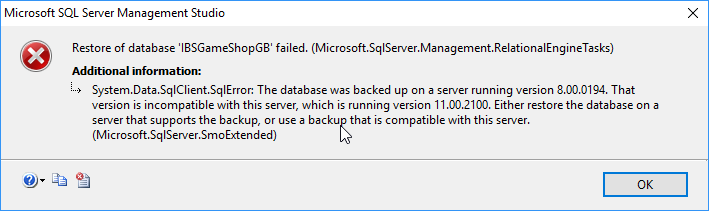 viral crag
The error message explains what the problem is and how to solve it
hollow kite
dont work i try different microsoft sql and dosnt work
viral crag
then you're using the wrong one
this is the wrong place to ask tbh, this channel is about Python database drivers
 umbral sapphire
Sql is a database right?
viral crag
SQL is Structured Query Language
 near cradle
the topic should be updated if you can't actually ask about databases in this channel.
torn sphinx
why?
near cradle
because the topic states "you may ask questions or talk about databases in this channel"
torn sphinx
and the content of channel?
near cradle
sorry?
I was refering to what @viral crag about this being a channel about Python database drivers. that's fine but the topic says otherwise, so that's pretty confusing for users then.
viral crag
I dunno, I thought that's what it was about


 gusty fossil
What SQL library for python would you guys recommend? It's my first time doing this so I have no clue what to use
@ me if you can
Thanks
viral crag
@gusty fossil SQLAlchemy
But it doesn't support asyncio
If you need that then currently your best option is MongoDB with Motor
gusty fossil
Anyone here got a good resource to learn SQLite from?
viral crag
SQLite is not something you use in production
that said
you usually use it via python's standard dbapi
and the SQL is very similar to MySQL
gusty fossil
Yeah I figured, I just found the documentation for it so its all good. Im using this since I cba to install a whole new library
I just need to store some data for a discord bot, so i think it should be fine?
viral crag
absolutely not
use a database server of some kind
sqlite will lock up your bot, it has no concurrency
gusty fossil
Oh well shit
 hot crest
Do we have someone familiar with Lets Encrypt & MongoDB combination? I need help as it keeps screwing me over 😄 Help would be really appreciated
viral crag
I have experience with both, but not together
I'm assuming you're getting some SSL error?
hot crest
yup 😄 SSL: error:14094416:SSL routines:ssl3_read_bytes:sslv3 alert certificate unknown Been trying different ways and all of them seems to lead into same spot no matter what :S
hot crest
well trying to secure connection to database and using server certs on authentication
viral crag
You could secure the actual connection with an SSH tunnel if you wanted, but I digress
Have you worked with Mongo auth before? It's finnicky at best
hot crest
well what comes to basic --auth parameter setupping, permissions and so on I have worked with them
viral crag
It honestly just seems like your certs aren't stored correctly on the server
Just from the error
viral crag
The file itself might be fine, but..
Actually, how does Mongo store certs again? Surely you should have an actual cert store
hot crest
yes I'm giving it parameters for CA & PEM file
hot crest
mongo actually wants the files
viral crag
Are you specifying the host option?
And have you checked that your config matches your parameters or at least isn't overriding?
hot crest
yup
viral crag
Are you just using this to secure the connection? I forget whether mongodb can also auth with a cert
Since if you don't need to validate a client cert then you don't need to specify a CA
You just provide a valid cert for encryption and the client will use it when the ssl option is specified - like https
@hot crest
hot crest
sry currently on phone so lacking behind
viral crag
I actually need to go shortly, but consider whether you need to be validating client certs, and if so, ensure the client certs were signed with the same CA you're using for the server
If not, don't use a CA file
hot crest
Okay, thank you
torn sphinx
I have user.execute("UPDATE USER set bought = " + bought + " where ID = " + str(id_) + ' ') sqlite3.OperationalError: near "1": syntax error when I use user.execute("UPDATE USER set bought = " + bought + " where ID = " + str(id_) + ' ')
any suggestions on how to solve it?
<@&267630620367257601>
deft badge
yes
torn sphinx
why?
viral crag
do you know what SQL injection is?
deft badge
please please please escaoe your sqilite
torn sphinx
there is no 1
torn sphinx
it is a private database
viral crag
doesn't matter
viral crag
here, I'll fix it for you
one second
user.execute("UPDATE USER set bought = ? where ID = ?", (bought, _id))
wait, didn't see the other one
there
viral crag
Do you understand what that does?
viral crag
well, you get the idea
torn sphinx
yea
 blissful tapir
Use pickle
blissful tapir
e.e
 silent coral
does someone know a good guide for basic in sqlite3 and python and discord.py combined or so?
atleast some good sqlite3 stuff
like the data types, syntax and so on
because i want to combine my bot with sqlite3 and damn im a noob in this
 high gust
sqlite3 doesn't work with discord.py -> It's not asynchous
 timber stratus
ahah
high gust

GitHub
awesome-asyncio - A curated list of awesome Python asyncio frameworks, libraries, software and resources
viral crag
that's not entirely true
you can use it with d.py
but it'll slow your bot to a crawl most likely
I believe there are async drivers for it but they don't come with python
silent coral
tbh: does it really need to be something with asyncio? I imported asyncio since the beginning of developing my bot and it is still unused
(marked in grey)
viral crag
ideally, yes
silent coral
damn i just wanted to save data so my bot doesnt have to scrape the website every time and now im getting confused with asyncio and stuff
viral crag
think of it like poor mans' threads
it gives you the illusion of multiple things happening at the same time
timber stratus
poor mans?
timber stratus
yes pls
timber stratus
k
viral crag
you can define async functions - with async def - these functions return Coroutines
timber stratus
yup
viral crag
when you await a coroutine, you're essentially putting a task onto the event loop
timber stratus
ahah
viral crag
and then the event loop has time to go and do something else
and then come back to your task
it's pretty fast when done right so you usually don't notice
viral crag
so essentially, all you're doing is pushing tasks onto the event loop
they're executed one at a time
timber stratus
i made a discord bot once but i dont really understand async
viral crag
it's just very fast
timber stratus
wats the event loop?
timber stratus
oh
viral crag
it's constantly running and executing the tasks you pushed onto it
but it can only do one task at a time
timber stratus
ooooooooooooookkkkkkaaaayyyyyy
viral crag
when you push a task onto it, you're returning control to the event loop so it can go and do something else
timber stratus
wait so if i do ```python
async def func():
print("Hello")
No
timber stratus
wat
viral crag
Well it wouldn't be much use if it repeatedly executed each task would it