#databases
1 messages · Page 26 of 1
 paper flower
class _AsyncSessionContextManager(Generic[_AS]):
    __slots__ = ("async_session", "trans")

    async_session: _AS
    trans: AsyncSessionTransaction

    def __init__(self, async_session: _AS):
        self.async_session = async_session

    async def __aenter__(self) -> _AS:
        self.trans = self.async_session.begin()
        await self.trans.__aenter__()
        return self.async_session

    async def __aexit__(self, type_: Any, value: Any, traceback: Any) -> None:
        async def go() -> None:
            await self.trans.__aexit__(type_, value, traceback)
            await self.async_session.__aexit__(type_, value, traceback)

        task = asyncio.create_task(go())
        await asyncio.shield(task)
 narrow prawn
yeah i got that function from someone else i talked to in this server and then without thinking i tried to adopt it to sqlalchemy
@paper flower so im a bit confused what youre suggesting. its kinda late and i should go soon tho but this channel is quiet so i guess i can continue tomorrow
with the logic i have is concurrency going to be an issue?
paper flower
narrow prawn
with the logic i have is concurrency going to be an issue?
It may be an issue, depending on how likely it is to run into concurrent requests with your bot
But single session can't handle concurrent requests, since most dbs don't support running concurrent queries on a single connection
(Including postgres)
narrow prawn
thats what i was thinking a connection pool would solve
and cant a pool have many sessions open at once?
with each message itll make a new session so with that in mind it a session cant have concurrency issues, right?
like even if i run a command that uses the get() method while a MessageCreate event is updating a member's message count, at the same exact time. cause the command logic will still open with:
async with self.pool.connect() as query:
updated connect()
@classmethod
@asynccontextmanager
async def connect(cls) -> AsyncGenerator["QueryManager", None]:
    async with AsyncSession(cls._engine, expire_on_commit=False) as session:
        try:
            yield QueryManager(session)
            await session.commit()
        except:
            await session.rollback()
Just use session maker instead
paper flower
narrow prawn
and cant a pool have many sessions open at once?
It can, but you assign session to the class
So multiple queries/tasks may use the same session
narrow prawn
paper flower
So multiple queries/tasks may use the same session
but how if each query creates a new class instance?
i mean like thats how its planned to be integrated
narrow prawn
yield QueryManager(session)
paper flower
    @classmethod
    def set_session(cls, session: AsyncSession):
        cls.session = session
cls is class
narrow prawn
so yield QueryManager(session) doesnt init a new session?
paper flower
It doesn't make sense to use a QueryManager like you want to
It does, but
Globally
You essentially have a global variable here
This could be distilled to
global_session = None

    @classmethod
    @asynccontextmanager
    async def connect(
        cls,
        *,
        transaction: bool = True,
    ) -> AsyncGenerator["QueryManager", None]:
        global global_session
        async with AsyncSession(cls._engine, expire_on_commit=False) as session:
            ...
            global_session = session


class MessageCount:
    @classmethod
    async def get(cls, member_id: int) -> int:
        query = await global_session.execute(
            select(cls).where(cls.member_id == member_id)
        )
        result = query.scalar_one_or_none()
        return result.count if result else 0
so youre saying asyncsession makes it a singleton basically?
paper flower
narrow prawn
so youre saying asyncsession makes it a singleton basically?
No
I'm just saying that you made a global variable
narrow prawn
im so confused how
paper flower
narrow prawn
im so confused how
cls.session 
 flat pelican
is anyone familiar with flameprof??
https://pypi.org/project/flameprof/#description
here is it's link to flameprof
I am trying to just get a normal graph working nothing special
I am giving it .prof files that look good to me and I see know issue
but the svg files do not work no matter the browser
 paper flower
Class is in a global namespace, you just assign your session to it's field, like Class.session = something
It's the same as having a global variable
narrow prawn
oh
yeah i didnt give that much thought
the main purpose of everything is to just achieve the design of using the table name as an attr
inside the context managers like that
i need to go to bed before i stop making sense and stop comprehending anything
paper flower
I didn't use any discord wrapper for a while but what I'd do:
class SomeCog:
    def __init__(self, bot: Bot, session_factory: async_sessionmaker[AsyncSession]) -> None:
      self._bot = bot
      self._session_factory = session_factory


    async def some_command(self, user: User) -> None:
        async with self._session_factory() as session:
            repository = MessageRepository(session)
            count = await repository.count(member_id=user.id)
        await self._bot.send_message(user, str(count))
You can use session_factory.begin if you need to commit transaction too
paper flower
narrow prawn
the main purpose of everything is to just achieve the design of using the table ...
Don't try to make sqlalchemy look like django, it's a bad idea
You can use a different orm like Tortoise 🤔
narrow prawn
i spend way too much time designing code lol. but it pays off sometimes cause it increases readability (for me) a lot more than if i did stuff more standard
tbf i never used django
paper flower
sqlalchemy is just not designed to be used the way you want to use it, imo
You probably could make it work, but it's not worth it
narrow prawn
sounds right. someone mentioned ORM to me and that was the first thing i found that was up to date
 worthy coral
I'm trying to use flask_sqlalchemy and I'm just utterly failing. I have this code
app = Flask(__name__)
app.config["SQLALCHEMY_DATABASE_URI"] = "sqlite:///book-collection.db"
db = SQLAlchemy()
db.init_app(app)

class Book(db.Model):
    id = db.Column(db.Integer, primary_key=True)
    title = db.Column(db.String(250), unique=True, nullable=False)
    author = db.Column(db.String(250), nullable=False)
    rating = db.Column(db.Float, nullable=False)

with app.app_context():
    db.create_all()

@app.route('/')
def home():
    books = db.session.execute(db.select(Book).order_by(Book.title))
    print(books)
    print(books.scalars())
    print(books.scalars().all()
    for book in books.scalars():
        print(book.title, book.author, book.rating, "ok")
    return render_template("index.html", books=books)

@app.route("/add", methods=["GET", "POST"])
def add():
     if request.method == 'POST':
         with app.app_context():
            book = Book()
            book.title = request.form['name']
            book.author = request.form['author']
            book.rating = request.form['rating']
            db.session.add(book)
            db.session.commit()
     return render_template("add.html")

if __name__ == "__main__":
    app.run(debug=True)```
and I can't get the objects to look like the tutorial I'm following in home. The query looks exactly the same, and according to this the `books.scalers()` should give me a list of usable objects that I can just iterate through and pull values, but it doesn't. I put the "ok" at the end of the `for` print for identification, but it apparently doesn't output anything. Here's the entire output for all those print statements when I go to `/`
```<sqlalchemy.engine.result.ChunkedIteratorResult object at 0x000001B2236CF600>
<sqlalchemy.engine.result.ScalarResult object at 0x000001B2236D2980>
[<Book 1>]
127.0.0.1 - - [21/Dec/2023 10:07:33] "GET / HTTP/1.1" 200 -```this is driving me up a wall, but if anyone has any idea how I can just get my list of books out of the table, I'd be super thankful
(Also I've put books.scalars().all() in the for loop as well, and it still doesn't do anything btw)
 torn sphinx
if anyone can help just ping me
torn sphinx
how do i find the host name? the localhost aint working so i assume its somthing else
 delicate fieldBOT
:incoming_envelope: :ok_hand: applied timeout to @torn sphinx until <t:1703182404:f> (10 minutes) (reason: burst spam - sent 8 messages).
The <@&831776746206265384> have been alerted for review.
 next shadow
For spamming messages? Yeah
 fading patrol
torn sphinx
how do i find the host name? the localhost aint working so i assume its somthing...
fading patrol
torn sphinx
how do i find the host name? the localhost aint working so i assume its somthing...
We don't know the hostname of your DB or if you even have one set up yet. Do you?
 left siren
can someone help me with this please

 waxen finch
sqlite3 is preinstalled with python so you don't need to pip install it
also a bit off-topic but you probably want to run py -m pip ... instead, assuming you installed python from python.org
!windows-path
delicate fieldBOT
PATH on Windows
If you have installed Python but forgot to check the Add Python to PATH option during the installation, you may still be able to access your installation with ease.
If you did not uncheck the option to install the py launcher, then you'll instead have a py command which can be used in the same way. If you want to be able to access your Python installation via the python command, then your best option is to re-install Python (remembering to tick the Add Python to PATH checkbox).
You can pass any options to the Python interpreter, e.g. to install the numpy module from PyPI you can run py -3 -m pip install numpy or python -m pip install numpy.
You can also access different versions of Python using the version flag of the py command, like so:
C:\Users\Username> py -3.7
... Python 3.7 starts ...
C:\Users\Username> py -3.6
... Python 3.6 starts ...
C:\Users\Username> py -2
... Python 2 (any version installed) starts ...
ohh, okayy, thank you so much
torn sphinx
fading patrol
We don't know the hostname of your DB or if you even have one set up yet. Do you...
I do, just gotta connect it. heres what i have
db = mysql.connector.connect(
host= ,
user= ,
password= ,
database= ,
)
this works? right?
torn sphinx
for connecting the db right?
fading patrol
torn sphinx
for connecting the db right?
Right, you need to fill the details for those four fields. If you set up the database then you should know what they are.
torn sphinx
i got the rest, but what is the host? as in what is it represnted by? ip? url?
fading patrol
torn sphinx
i got the rest, but what is the host? as in what is it represnted by? ip? url?
The docs say either the hostname or the IP should work.
fading patrol
torn sphinx
i got the rest, but what is the host? as in what is it represnted by? ip? url?
The host field is optional if you're running the DB locally it will default to localhost
torn sphinx
i tried that, the localhost didn't seem to connect for some reason
any other advice?
fading patrol
torn sphinx
any other advice?
What is the error message?
Can you manually connect to the database?
torn sphinx
fading patrol
What is the error message?
Can you manually connect to the database?
_mysql_connector.MySQLInterfaceError: Can't connect to MySQL server on 'localhost:3306' (61)
I dont think so
its a 61 error so there might be somthing wrong with the database itself
im using a mysql provided by serv00
the host should be %.devil but that dosen't seem to work
torn sphinx
would the code change depending on the site you use?
 dapper vigil
I am available to help 

torn sphinx
ah thank ya
torn sphinx
dapper vigil
I am available to help <:incident_actioned:714221559279255583> <:ActiveDeveloper...
so heres the thing, me and a bunch of guys are working on a bot to add likes to posts to replace an older bot thats being shut down, its my job to connect the bot to a database and transfer the leaderboard data. im using a site called serv00, it supports a mysql database thats already been set up my another of our group, i have the host, the password user, ect. (at least i hope its the right one) but im still encountering these errors (see image) im not experienced with databases and im not really sure how to proceed. any advice?

and heres the code im working with
dapper vigil
torn sphinx
so heres the thing, me and a bunch of guys are working on a bot to add likes to ...
An image does not open. Did you send me a text written in the image?
torn sphinx
dapper vigil
An image does not open. Did you send me a text written in the image?
yea lemme get the text
dapper vigil
torn sphinx
yea lemme get the text
ok
torn sphinx
dapper vigil
ok
Exception has occurred: DatabaseError X 2005 (HY000): Unknown MySQL server host '%.devil' (8)
_mysql_connector.MySQLInterfaceError: Unknown MySQL server host '%.devil' (8)
dapper vigil
torn sphinx
Exception has occurred: DatabaseError X 2005 (HY000): Unknown MySQL server host ...
He tells you that he cannot recognize a database on the confirmation server from Hostname
dapper vigil
torn sphinx
Exception has occurred: DatabaseError X 2005 (HY000): Unknown MySQL server host ...
This issue indicates that a connection to the MySQL database was configured using an incorrect hostname. In the error you provided, it appears that a wrong hostname '%.devil' was used which appears to be incorrect.
torn sphinx
so its just the hostname thats wrong? alright
 torn sphinx
dapper vigil
**What is your project** <:postgreSQL:813910634756309022>
torn sphinx
dapper vigil
**What is your project** <:postgreSQL:813910634756309022>
meaning?
dapper vigil
Try adding a localhost for something in my life that needs a connection to a server, but it must be on the same server.
torn sphinx
localhost failed for some reason
dapper vigil
Can I log you into your computer?
torn sphinx
im already logged in
dapper vigil
install anydesk
torn sphinx
oh you mean like that
uuuuh sorry but no thanks
im not exactly a trusting person
i can share you photos and such
dapper vigil
ok Bro
torn sphinx
we cool?
 hidden creek
                # if medicine is new, create a new one
                    cur.execute(
                        "INSERT INTO records_medicine(medicine) VALUES (%s)",
                        (sec_form.cleaned_data["medicine"],),
                    )
                    cur.execute(
                        "SELECT id FROM records_medicine WHERE medicine = %s",
                        (sec_form.cleaned_data["medicine"],),
                    )
                    medicine_id = cur.fetchone()
                    cur.execute(
                        "INSERT INTO records_condition_medicine(condition_id, medicine_id) VALUES (%s, %s)",
                        (condition.id, medicine_id[0]),
                    )
@coral wasp i hope the query is readable
 coral wasp
hidden creek
<@738234281146712084> i hope the query is readable
coral wasp
hidden creek
<@738234281146712084> i hope the query is readable
What's your question about this tho?
hidden creek
That if i should keep the queries like this or combine them into one big query
I have a couple more like this btw
coral wasp
FYI, in postgres, you can return the new record's id using "returning id" at the end of the first statement.
Which eliminates the second query
If I were inserting a single medicine and single record, I'd probably write it like this (as two inserts).
hidden creek
Well that solves a lot 🙂
Interesting thing
I hope Django's postgres thing supports this
coral wasp
using that "returning", you could do something a bit more clever. Not my favorite syntax but:
hidden creek
coral wasp
If I were inserting a single medicine and single record, I'd probably write it l...
and if i insert multiple med in one record?
coral wasp
with q1 as (INSERT INTO records_medicine(medicine) VALUES (%s) returning id)
insert into records_condition_medicine(condition_id, medicine_id) select %s, medicine_id from q1
Not a big fan of this syntax, just showing that it's possible.
coral wasp
hidden creek
and if i insert multiple med in one record?
In that case, yah, if I'm bulk inserting, it's important to batch them together.
You can use executemany for this: https://www.psycopg.org/docs/cursor.html#cursor.executemany
hidden creek
coral wasp
```sql
with q1 as (INSERT INTO records_medicine(medicine) VALUES (%s) returning ...
What Is the with q1 as part?
coral wasp
That's called a "CTE". It's a way of putting multiple statements together.
In this case, i think I'd: insert the new medicines, and then insert the records, as batches
hidden creek
it's just one record each time
And the orm handles that
Thank you a lot🙌
I definitely have to use that many times
dapper vigil
**I am available to work for you on your projects at a very cheap price **
 storm mauve
!rule 9
 fallen vault
Are any free database managers online? Like vultr or digital ocean but stripped down like heroku use to be before they became paid?
storm mauve
There is a reason why Heroku became paid, to say the least
fallen vault
I'm not entirely sure why, I can only assume people only used to free version and never used the higher levels. But like I also don't want to pay 15/month to learn and play with an online database in my current situation.
fading patrol
fallen vault
I'm not entirely sure why, I can only assume people only used to free version an...
AWS Free Tier is an option for one year per account.
If you're really new, maybe just focus on SQLite until you've really exhausted you can do with it. If you're not building successful projects with lots of concurrent users it's probably enough
fallen vault
I’m currently waiting on one project but the database is being funded by my job. This is a personal project and I wanted to play with a managed database because that seems easier than creating an update for software that doesn’t wipe the SQLite database if needed.
paper flower
fallen vault
I’m currently waiting on one project but the database is being funded by my job....
Managed db would be idential to whatever you can host locally
Just spin a postgres or something else that you want
fallen vault
paper flower
Managed db would be idential to whatever you can host locally
Thank you. Only issue is I’m not typically programming from my PC with how much time I’m at work 😅
paper flower
Just install it at whatever pc you're using
fading patrol
fallen vault
Thank you. Only issue is I’m not typically programming from my PC with how much ...
You might want to self-host at home and access remotely though there is a little more to it.
fallen vault
Alright. Thanks.
 idle zodiac
Do any of you guys know how to setup a local dbpedia triple store? (not trying to spam btw, also asked this in data-science, but it seemed relevant here as well)
fading patrol
idle zodiac
Do any of you guys know how to setup a local dbpedia triple store? (not trying t...
I've never done it but I think this is what you're asking for? https://github.com/dbpedia/virtuoso-sparql-endpoint-quickstart
GitHub
creates a docker image with Virtuoso preloaded with the latest DBpedia dataset - GitHub - dbpedia/virtuoso-sparql-endpoint-quickstart: creates a docker image with Virtuoso preloaded with the latest...
idle zodiac
I found that one as well
But it was lacking
but I figured it out just now between me and my team
I think
but thank you so much for answering :3
torn sphinx
I keep getting this error, "Can't connect to MySQL server on 'localhost:3306' (61)" any fixes?
fading patrol
torn sphinx
I keep getting this error, "Can't connect to MySQL server on 'localhost:3306' (6...
Is your server running on localhost? Is that the right port?
delicate fieldBOT
:incoming_envelope: :ok_hand: applied timeout to @native zinc until <t:1703271200:f> (10 minutes) (reason: newlines spam - sent 107 newlines).
The <@&831776746206265384> have been alerted for review.
 opal basin
these lines of code are also executed when i say import a function from this file is there a way to stop that
ps i need db for execution in my fuctions

 tacit acorn
Hello, I'm wondering if I can get some guidance on why a query isn't returning what I expect. I'm using sqlalchemy.
My query is:
lowtags = len((await db.exec(select(Img.id).group_by(Img.id).having(func.count(Img.tags.any()) <= 3))).all())
its returning every item in the db, when i know there is some that is more then 3. Not sure why its doing what its doing and how to fix it to what I want.
 hexed estuary
hmm, i'm a bit confused what func.count(Img.tags.any()) does - shouldn't it just be func.count(Img.tags) <= 3?
tacit acorn
hexed estuary
hmm, i'm a bit confused what `func.count(Img.tags.any())` does - shouldn't it ju...
i get an error if i remove the any()
im just trying to have it return every img whos count of tags are less then or equal to 3, where tags are a many to many
hexed estuary
ah, interesting. it seems to me like it shouldn't need a groupby if it's a many-to-many; maybe db.exec(select(Img.id).where(Img.tags.count() <= 3))?
tacit acorn
hexed estuary
ah, interesting. it seems to me like it shouldn't need a groupby if it's a many-...
got
AttributeError: 'Comparator' object has no attribute 'count'
 sweet escarp
Hey i am new dev and working fastapi with databases but to much relationship are making my code slow how can i tackle this to make my code more optimized
hexed estuary
tacit acorn
got
AttributeError: 'Comparator' object has no attribute 'count'
hmm, experimenting locally and having trouble with this too. one can write a query like this on the association table itself, association_table.select().group_by("image_id").having(func.count("tag_id") <= 3), but that's ugly (uses literal column names, etc).
tacit acorn
hexed estuary
hmm, experimenting locally and having trouble with this too. one can write a que...
bit of redo. but ya this works
lowtags = (await db.exec(select(ImgTag.img_id).group_by(ImgTag.img_id).having(func.count(dbmap.ImgTag.tag_id) <= 3)).all())
thank you so much
fading patrol
sweet escarp
Hey i am new dev and working fastapi with databases but to much relationship are...
Link to the code
 harsh pulsar
opal basin
these lines of code are also executed when i say import a function from this fil...
harsh pulsar
opal basin
these lines of code are also executed when i say import a function from this fil...
of course, just put it all inside the main function
left siren
Hey guyss, is it better to use MySQL or SQLite for db for discord.py bot?
 ionic pecan
sqlite is simpler. can't go wrong with either
 whole roost
what's the verdict on dagster vs mage AI these days
harsh pulsar
whole roost
what's the verdict on dagster vs mage AI these days
completely different products, no?
whole roost
harsh pulsar
completely different products, no?
both orchestrators, def competitors
left siren
ionic pecan
sqlite is simpler. can't go wrong with either
Thank you so much for your advice <3
 radiant elbow
!cban 957661229076344905 advertising spam
delicate fieldBOT
:incoming_envelope: :ok_hand: applied ban to @dapper vigil permanently.
 zealous marsh
Anybody use SQL Alchemy 2.0 ?
 wooden crystal
what labs do yall use?
paper flower
zealous marsh
Anybody use SQL Alchemy 2.0 ?
What's the problem?
 near sphinx
Is this where I can ask about pandas?
What is the difference betwwen difference between df.loc['column'] and df.loc[df['column']]
 inland dust
df.loc['column']: This syntax is used to select a specific row or rows based on the index label. If 'column' is an index label, it will return the corresponding row(s) for that label.
df.loc[df['column']]: This syntax is used to filter rows based on a condition applied to a specific column. It returns all rows where the condition (df['column']) is True. If 'column' contains values or a condition that evaluates to , this expression will filter the rows where the condition is True.
near sphinx
inland dust
df.loc['column']: This syntax is used to select a specific row or rows based on ...
I have a question. Why is the logic behind working like that?
narrow prawn
need some help with concurrency issues related to sqlalchemy+asyncpg
this is the output of test.py
[Task 123] Using session ID: 1544886485392
[Task 456] Using session ID: 1544885909072
[Task 456] Initial message count: 34
[Task 456] Final message count: 35
so one task is getting locked i think
torn sphinx
can any of you tell me how to set up sqlite?
torn sphinx
anything helps, ping if answering
coral wasp
torn sphinx
can any of you tell me how to set up sqlite?
To get started? There’s no setup: https://docs.python.org/3/library/sqlite3.html#sqlite3-tutorial
torn sphinx
coral wasp
To get started? There’s no setup: <https://docs.python.org/3/library/sqlite3.htm...
thanks, when connecting it to a bot do i just run it with the token?
coral wasp
I’m not sure what you mean. Any Python code can connect to a SQLite db using the example code in that link. Don’t know what a token would have to do with that.
torn sphinx
Im just asking if i use sqlite for my discord bot to track messages and such how would i do that if possible
coral wasp
torn sphinx
Im just asking if i use sqlite for my discord bot to track messages and such how...
Yah, so you’d open the database (see example) and make any changes. No different than any code that opens a db.
narrow prawn
torn sphinx
anything helps, ping if answering
you should use aiosqlite since the bot is async https://pypi.org/project/aiosqlite/
 iron oriole
Does anyone know if SQlite would work for a telegram bot. i want my bots services to be a keyauth system with single user use, and subscription expiries.
@coral wasp ? sorry if it i wasen't supposed to ping you
but you seem capable
narrow prawn
narrow prawn
need some help with concurrency issues related to sqlalchemy+asyncpg
@paper flower do you have any ideas. i guess i was wrong about the logic. did use your repo idea tho
what the heck it works properly now. i didnt do anything
narrow prawn
like i ramped up the test and it handles flawlessly. i wonder if restarting tailscale fixed something with the connection
either way still down for more critique
fading patrol
iron oriole
Does anyone know if SQlite would work for a telegram bot. i want my bots service...
If you're not expecting massive traffic that's generally fine
 ancient delta
Why is this:
SELECT DISTINCT F2CaseNumber AS CaseNum,
        CONCAT('f2t://case/', InternalCaseid) AS Link
FROM [F2_PROD].[dbo].[caseinfo]
WHERE F2CaseNumber NOT IN (SELECT CaseNum FROM [F2_PROD].[Dim].[Tinyurls])
So much slower than this:
SELECT DISTINCT F2CaseNumber AS CaseNum,
        CONCAT('f2t://case/', InternalCaseid) AS Link
FROM [F2_PROD].[dbo].[caseinfo] AS CaseInfo
LEFT JOIN [F2_PROD].[Dim].[Tinyurls] AS Tinyurls
ON CaseInfo.F2CaseNumber = Tinyurls.CaseNum
WHERE Tinyurls.CaseNum IS NOT NULL
For reference the first one has now been running for 4+ minutes on a table with 5,7k rows (wtf?) while the second is instantenous. Why?
It's like the first one gets stuck

Wait
It's the other way around
hexed estuary
so it's the second that's faster?
ancient delta
The second one is the one that is slower, sorry
No it's the first one that is faster, I mixed them up
accidentally pasted in the wrong order
There we go
The left join is faster
The first one that uses NOT IN is still running
It finally finished after 6 minutes
hexed estuary
i'd try an EXPLAIN QUERY PLAN and stare at it and pretend I know what all of this means see if one of them uses an index or someting
ancient delta
Oh right like execution plan on SQL Server, right?
I forgot that existed
Isn't that only for stored procedures?
Ohhh "explain query plan" is a command
I've never heard about it before
hexed estuary
EXPLAIN QUERY PLAN is how you make sqlite tell you the details of the strategy it'll use to execute this query; i don't know the equivalent for other databases but there should be one
ancient delta
I'll see if I can find a T-SQL equivalent
This is apparently the closest thing: https://learn.microsoft.com/en-us/sql/t-sql/statements/set-showplan-all-transact-sql?view=sql-server-ver16&redirectedfrom=MSDN
I'll give it a shot
Oh cool
I don't have perms 🤦♂️

Any other ideas?
It's weird because this SO answers suggests the IN type query should be faster https://stackoverflow.com/a/1200337
hexed estuary
ancient delta
Why is this:
```sql
SELECT DISTINCT F2CaseNumber AS CaseNum,
CONCAT('f2t...
hmm, dumb question, but aren't these two doing opposite things?
it looks to me like the first does NOT IN whereas second finds rows which do have a match
ancient delta
As far as I understand they should be doing the same thing. The second query is an excluding left join. It's not the most intuitive query, but apparently this is what actually happens:

Which as far as I can tell is the same as "case number that is in A but not in B" just like the NOT IN in the first query
I just followed the template on this image
 hexed estuary
I am still confused; shouldn't it be WHERE Tinyurls.CaseNum IS NULL to make it an excluding one?
ancient delta
Oh damn
You're right
Wait
Yeah you're right. Nice catch.
It produces the same result though which... Makes me question whether it's the same as the first query at all.
It seems odd that NOT NULL and NULL would produce the same result?
Also replacing NOT IN () with IN () makes gives a result instantenously
Not the correct result obviously, but still it executes instantenously, which is also a little odd
I mean surely in either case NOT IN vs IN it checks whether something is or isn't in a table?
So the execution time should be similar if not exactly the same?
hexed estuary
hmm, the number of rows returned can affect the execution time
ancient delta
True
IN returns 5.7k rows (all of them) while NOT IN returns 0 🤔
Really a bummer I don't have perms for showing the execution plan
hexed estuary
anyway, you're saying that in the second query, changing IS NOT NULL to IS NULL changes nothing?
ancient delta
Yes
Both return an empty table, which is what I expected (people on holiday, new cases not being created, so no tinyurls need to be generated)
Uhh...
I just tested it again
hexed estuary
huh, that's weird, because the results of these two queries together should always combine to the entire [F2_PROD].[dbo].[caseinfo] I think - it's like IN vs NOT IN.
ancient delta
I don't understand why it's giving me a different result now. There is a difference between NULL and NOT NULL now. I honestly don't know why, I literally ran the exact same query a few minutes ago. 🤷♂️
It's as expected now. Using NULL gives us an empty table, NOT NULL gives us the full table.
One 'mystery' solved I guess
I proabably ran the wrong version of the query without realizing
This answer (https://stackoverflow.com/a/57425433) says that the IN operator maps each row in table A to the entirety of table B. Is this true?

Stack Overflow
I have a problem with my query. I have a simple example here that illustrates the code I have.
SELECT distinct ID
FROM Table
WHERE IteamNumber in (132,434,675) AND Year(DateCreated) = 2019
...
hexed estuary
as said in comments to that question,
A well designed database should be able to handle an in statement though. Like for any database performance, we need to know the bigger picture to provide useful advice.
- databases can and should optimize queries, and this one is pretty common and really should get optimized.
ancient delta
I'm not a database designer, I wouldn't know if this database is well designed or not unfortunately
Not sure what constitutes a well designed database anyway
I think I'll probably just use the join for now and then when people come back to work I'll ask for execution plan perms
To see what happens in each query
hexed estuary
looks like it's indeed commonly restricted for data security reasons: https://dba.stackexchange.com/questions/10406/are-there-any-risks-to-granting-users-sql-server-showplan-permission
but if you have query access that's quite silly
ancient delta
agreed
hexed estuary
also I stumbled upon this nice thread that may help you: https://stackoverflow.com/questions/49058299/how-can-i-optimize-a-sql-query-without-access-to-a-showplan
Stack Overflow
I'm writing complex ad-hoc queries to extract data from a client's SQL Server. Some of the queries take a half-hour or more to run and I need them to execute in 5 minutes or less. Unfortunately, I...
ancient delta
I'll have a look. Thanks! 😄
hexed estuary
(you could also try, like, adding an index on [F2_PROD].[Dim].[Tinyurls].CaseNum and seeing if that makes the query go faster, if you can modify tables and aren't afraid to do so)
 steady saffron
SQL joins visual. (source: https://www.codeproject.com/articles/33052/visual-representation-of-sql-joins)


CodeProject
This article describes SQL Joins in a visual manner, and also the most efficient way to write the visualized Joins.
steady saffron
steady saffron
[SQL joins visual](https://www.codeproject.com/KB/database/Visual_SQL_Joins/Visu...
thanks @ancient delta for the image!
 grim vault
steady saffron
[SQL joins visual](https://www.codeproject.com/KB/database/Visual_SQL_Joins/Visu...
grim vault
steady saffron
[SQL joins visual](https://www.codeproject.com/KB/database/Visual_SQL_Joins/Visu...
Here is the original: https://www.codeproject.com/KB/database/Visual_SQL_Joins/Visual_SQL_JOINS_orig.jpg
It's from this article: https://www.codeproject.com/articles/33052/visual-representation-of-sql-joins
steady saffron
Added the links 👍
left siren
hey guyss, can someone please tell me whats wrong with my code


 harsh pulsar
left siren
hey guyss, can someone please tell me whats wrong with my code
harsh pulsar
left siren
hey guyss, can someone please tell me whats wrong with my code
look in the traceback, it says which line of code caused the error. and the "context manager protocol" refers to with syntax
left siren
harsh pulsar
look in the traceback, it says which line of code caused the error. and the "con...
 ancient delta
steady saffron
thanks <@162641048051515393> for the image!
ancient delta
steady saffron
thanks <@162641048051515393> for the image!
You're welcome!
Glad I could help the server that has helped me so many times 😄
 versed needle
hi, I have an algorithm that detects trendlines the "low" and "high" levels of a signal in a dataframe, for a time window that I can set.
After I have the trendlines' slopes saved into the dataframe, I try to find which trendline pairs are parallel and: ascending, descending or horizontal.
Can anyone hop on a call with me to look through a screen share of the code? It's a bit long to explain
coral wasp
versed needle
hi, I have an algorithm that detects trendlines the "low" and "high" levels of a...
Best bet is to open a help thread: #❓|how-to-get-help
torn sphinx
confused again, how do i set up my sqlite database to work with discord?
and how can i transfer a csv file on it?
I got a browser and everything setup
to put it simply i have the clay now how do i make bricks?
ping with answer, anything helps
waxen finch
torn sphinx
confused again, how do i set up my sqlite database to work with discord?
well its like you have the bricks (sqlite + discord.py), the work is in making them do what you want - in other words, what do you want your bot to do? in context of our previous discussion #databases message , you might have your bot listen for reactions and when it receives one, it opens a connection to your database and inserts/updates the total # of reactions from that user
After you think of that, you might ask yourself "how do i listen for reactions?" or "how do i connect to my database?", and those questions are easier for other people to give concrete answers for
waxen finch
torn sphinx
and how can i transfer a csv file on it?
as for this, you can use the built-in csv module to read your file, and then work with whatever data it has to insert the corresponding values into some table in your sqlite database
torn sphinx
i think i get it, i just hope what im doing is right
fading patrol
torn sphinx
i think i get it, i just hope what im doing is right
Doesn't matter if you don't the first time, that's how learning works 😉 You can link to code if you have specific doubts
torn sphinx
fading patrol
Doesn't matter if you don't the first time, that's how learning works 😉 You can...
truth
 glacial canyon
Hi guys… I was just hoping to get basic help on databases as I am creating an app for my school and I need it for the login and sign up page. If anyone thinks they can help me with this please do ;-;
 civic rock
glacial canyon
Hi guys… I was just hoping to get basic help on databases as I am creating an ap...
civic rock
glacial canyon
Hi guys… I was just hoping to get basic help on databases as I am creating an ap...
may i
civic rock
say how can i
glacial canyon
Not locally
civic rock
oh
glacial canyon
I can do that but
civic rock
but
glacial canyon
Everyone in my school
When they sign up their username and password should get added to a cloud database and when they login their account should be validated by the same
Get what I’m saying?
glacial canyon
Nop
civic rock
ic
glacial canyon
That is why I need help
civic rock
what cloud database you have
civic rock
oh
first you need to choose your cloud service
once your choose and signup you will get some access credentials
and based on that you need to connect
glacial canyon
civic rock
first you need to choose your cloud service
Can you please suggest?
civic rock
glacial canyon
Can you please suggest?
umm i never used any cloud databases before but i can check and suggest if you want
or if you making a paid database then you can say
ionic pecan
why not just use sqlite?
harsh pulsar
glacial canyon
When they sign up their username and password should get added to a cloud databa...
did your school provide a cloud database? you say "everyone", but need to provide additional context
glacial canyon
harsh pulsar
did your school provide a cloud database? you say "everyone", but need to provid...
I requested for it
Waiting on it
This way the login details could be automatically set to their school emails and passwords
glacial canyon
harsh pulsar
did your school provide a cloud database? you say "everyone", but need to provid...
Students and teachers
harsh pulsar
in general you need two things:
-
a database, which is just a program that manages data, and sits around waiting to respond to your queries. a program that runs forever waiting for input is often called a "server". this program can run on your own machine, or on a cloud machine.
-
some way to send requests to the database server. this usually means a library that you install, and can use from inside your python code. a program that makes requests to a server is often called a "client".
it sounds like you don't have item 1 yet, and are waiting for that from your school
do you know what kind of database you will get access to? mysql? postgresql? something else?
usually 2 is easy, you just connect with a username and password. however the details will vary depending on the client library you use, and the client library you use will depend on the type of database you have access to
however you can start practicing now with a database called sqlite, which does not run in a separate program, and the data itself is just stored in a file. sqlite is already included in python, so you can get started learning SQL and practice working with the related python code, without needing a separate database server
!d sqlite3
delicate fieldBOT
Source code: Lib/sqlite3/
SQLite is a C library that provides a lightweight disk-based database that doesn’t require a separate server process and allows accessing the database using a nonstandard variant of the SQL query language. Some applications can use SQLite for internal data storage. It’s also possible to prototype an application using SQLite and then port the code to a larger database such as PostgreSQL or Oracle.
The sqlite3 module was written by Gerhard Häring. It provides an SQL interface compliant with the DB-API 2.0 specification described by PEP 249, and requires SQLite 3.7.15 or newer.
This document includes four main sections:
harsh pulsar
just import sqlite3 and follow the instructions above, no need to install anything other than python and no need for a server or a username/password
specifically, start with the tutorial https://docs.python.org/3/library/sqlite3.html#sqlite3-tutorial

Python documentation
Source code: Lib/sqlite3/ SQLite is a C library that provides a lightweight disk-based database that doesn’t require a separate server process and allows accessing the database using a nonstandard ...
glacial canyon
harsh pulsar
just `import sqlite3` and follow the instructions above, no need to install anyt...
Yes Ik how to use SQLite
Just
Not cloud databases
glacial canyon
harsh pulsar
do you know what *kind* of database you will get access to? mysql? postgresql? s...
No 😢
fading patrol
glacial canyon
Not cloud databases
They're not hugely different. The libraries for Postgres, MySQL etc. work similar to those for SQLite, you just point them at a DB server instead of at a file
glacial canyon
Oh
harsh pulsar
glacial canyon
No 😢
you'll need to know in order to get the correct python library
other than that, it's going to be very similar to sqlite
torn sphinx
lol what can i do if i forgot mysql user password but i have the root password?
fading patrol
torn sphinx
lol what can i do if i forgot mysql user password but i have the root password?
I googled it for you: https://www.cyberciti.biz/faq/mysql-change-user-password/
torn sphinx
fading patrol
I googled it for you: https://www.cyberciti.biz/faq/mysql-change-user-password/
o tysmm
glacial canyon
fading patrol
I googled it for you: https://www.cyberciti.biz/faq/mysql-change-user-password/
Pro
Wish I could google like that ;-;
narrow prawn
narrow prawn
like i ramped up the test and it handles flawlessly. i wonder if restarting tail...
blah this was a bad test. was so confident i was done but i shouldve tested the same number on both tasks. it doesnt do what i wanted it to do
-[Task 2] Initial message count: 0
-[Task 2] Final message count: 0
+[Task 1] Initial message count: 0
+[Task 1] Final message count: 1
-[Task 2] Initial message count: 1
-[Task 2] Final message count: 2
+[Task 1] Initial message count: 1
+[Task 1] Final message count: 2
-[Task 2] Initial message count: 2
-[Task 2] Final message count: 3
+[Task 1] Initial message count: 2
+[Task 1] Final message count: 3
any pointers?
torn sphinx
Alright here’s the rundown. I have MySQL db/PHPadmin using this
I need to get the bot connect to the database, then have it create tables for the servers it is in OR if it already has a table simply connect to it.
Then Have the bot store the required variables for every user separately for every server they are in. In the database import the table/data for 2 different servers. And also pointers on how the bot will retrieve data for commands, these are commands that have variables that need to be separate for each server. Like previous the bot will retrieve and store these variables for every server separately, such commands and variables need to be stored separately for every user for separate servers
Anything helps, ping with answers
torn sphinx
glacial canyon
Wish I could google like that ;-;
fr
glacial canyon
torn sphinx
fr
real
 harsh rover
This is my table created with flask-sql alchemy
class Ebook(db.Model):
id = db.Column(db.Integer, primary_key=True)
title = db.Column(db.String(255))
link = db.Column(db.String(255))
category_id = db.column(db.Integer, db.ForeignKey('category.id'), nullable=False)
How I can retrieve category_id and linked title and link to category_id(title and link in one variable) ?
Can anyone help with it
 tough bough
Does anyone knows how to not lose connection with mysql when sending 1M rows from one database to another using sqlalchemy? The biggest table is the only one I'm having problem. I'm using chunk_sizes, pool_timeout and pool_recycle but it does not work
 patent quarry
tough bough
Does anyone knows how to not lose connection with mysql when sending 1M rows fro...
patent quarry
tough bough
Does anyone knows how to not lose connection with mysql when sending 1M rows fro...
Where is the timeout happening? Is the sender unable to contact the receiver or is the sender just slowing down and dying?
You may be maxing out the connections on the receiving DB side.
 lament parcel
tough bough
Does anyone knows how to not lose connection with mysql when sending 1M rows fro...
lament parcel
tough bough
Does anyone knows how to not lose connection with mysql when sending 1M rows fro...
Hey, can you show your code and the exception you're getting ?
torn sphinx
torn sphinx
Alright here’s the rundown. I have MySQL db/PHPadmin using this
I need to get ...
anybody got anything?
fading patrol
torn sphinx
anybody got anything?
I doubt anyone can understand what you're even asking without seeing the code. Can you link to a repo maybe? Might make sense to use a help channel #❓|how-to-get-help
torn sphinx
fading patrol
I doubt anyone can understand what you're even asking without seeing the code. C...
yea i think that would work for both of us
fading patrol
torn sphinx
yea i think that would work for both of us
Both of us? You may have misunderstood me.
torn sphinx
fading patrol
Both of us? You may have misunderstood me.
us as a community
Idk english
torn sphinx
 rain kettle
I am trying to get data into my mariadb database which is hosted on a raspberry pi, so far most of it works I have made tables through a .py file but I cant get any data in there.
 try:
    con = mariadb.connect(
        user="xxx",
        password="xxxx",
        host="xxxx",
        port=3306,
        database="testDB",
    )

    cur = con.cursor()

    # Disable auto-commit
    con.autocommit = False

    cur.execute(
        "CREATE TABLE IF NOT EXISTS codes(Plattform TEXT, Codes TEXT, `Gueltig bis` INT)"
    )
    cur.execute(
        "CREATE TABLE IF NOT EXISTS CodeRedeemLogs(`User` TEXT, Code TEXT, `Redeemed at` INT)"
    )
    cur.execute(
        "CREATE TABLE IF NOT EXISTS RoleReceiveLogs(`User` TEXT, Role TEXT, `Received at` INT)"
    )

    con.commit()
    print("Test 1 passed")
    con.close()

except mariadb.Error as e:
    print(f"Error connecting to MariaDB Platform: {e}")
    sys.exit(1)
This is a db code
@bot.tree.command(name="make", description="Make a code. Only for Admins")
@app_commands.default_permissions(administrator=True)
async def code(
    interaction: discord.Interaction,
    arg: str,
):
    Codes = open("src/dotxml/Codes.xml", "a")
    await interaction.response.send_message(
        f"Ok, **{interaction.user.name}** der Code ist: `{arg}`", ephemeral=True
    )

    # Input von user (arg) wird in Liste DATA temporär gespeichert (bis bot neu gestartet wird).
    print("Code: " + arg)

    """
    Input von user (arg) wird in .txt file ./Codes.txt gespeichert. Sodass code genutzt werden kann auch wenn der Bot neugestartet wird.
    """

    Codes.writelines(f"User Code: {arg}\n")
    Codes.close()

    con()
    print(DATA)
    print("test 1 passed")
    cur.execute("INSERT INTO codes VALUES (?, ?, ?)", (DATA[0], DATA[1], DATA[2]))
    con.commit()
The code gets until line 22 and doesnt print line 23 or 24
It worked just fine with a local sqlite3 database.
 glacial current
rain kettle
It worked just fine with a local sqlite3 database.
glacial current
rain kettle
It worked just fine with a local sqlite3 database.
where is print(DATA) coming from, and what is that con() doing all by itself above it?
rain kettle
glacial current
where is `print(DATA)` coming from, and what is that `con()` doing all by itself...
The DATA is a list the input the appended to. Should be on there isn’t the con() needed to connect to the database and write ?
rain kettle
glacial current
where is `print(DATA)` coming from, and what is that `con()` doing all by itself...
I copied the wrong code, I cant believe it.
@bot.tree.command(name="make", description="Make code. Only for Admins")
@app_commands.default_permissions(administrator=True)
async def code(
    interaction: discord.Interaction,
    arg: str,
):
    Codes = open(CODES_FILE_PATH, "a")
    await interaction.response.send_message(
        f"Ok, **{interaction.user.name}** Code für die Rolle: `{arg}`",
        ephemeral=True,
    )

    DATA = []
    # Input von user (arg) wird in Liste DATA temporär gespeichert (bis bot neu gestartet wird).
    DATA.append("Code")
    DATA.append(arg)

    one_month_from_now = datetime.now() + relativedelta(months=1)
    DATA.append(one_month_from_now.strftime("%H:%M:%S %d/%m/%Y"))

    print("Code: " + arg)

    """
    Input von user (arg) wird in .txt file ./Codes.xml gespeichert. Sodass code genutzt werden kann auch wenn der Bot neugestartet wird.
    """

    Codes.writelines(f"Code: {arg}\n")
    Codes.close()

   # print(DATA)
    #con()
    print(DATA)
    cur.execute("INSERT INTO codes (Plattform, Codes, `Guiltig bis`) VALUES ( ?, ?, ?)", (DATA))
    print('test 1')
    con.commit()
    print('test 2')
    con.close()
    print('code passed to database')
this is the correct all the data needed is appended to the DATA List
Something must be wrong with the connection
 quiet fox
Hello! I am implementing an app in which the user has a profile picture,
What is the best way to store the image? also is there a way to normalize the image between different devices?
grim vault
rain kettle
this is the correct all the data needed is appended to the DATA List
In your create table you named it Gueltig bis not Guiltig bis
fading patrol
quiet fox
Hello! I am implementing an app in which the user has a profile picture,
What is...
What's best for you I can't say, but my default option would be object storage, like an S3 bucket or equivalent. But if you want to store it in your database (or maybe even on the local disk) that's fine.
Your front end should probably take care of the display issue
quiet fox
I dont think the frontend should take care of the issue since it can be bypassed by using the api directly
storing the image on the disk tho is very interesting, i forogt its even an option
rain kettle
grim vault
In your create table you named it `Gueltig bis` not `Guiltig bis`
Thanks, how could I oversee this. Sadly this still doesnt fix the problem.
grim vault
rain kettle
Thanks, how could I oversee this. Sadly this still doesnt fix the problem.
Another problem is that it's defined as INT but your last DATA.append() is using strftime() which will be a string.
SQLite doesn't care about the datatype but MySQL/MariaDB will.
rain kettle
grim vault
Another problem is that it's defined as `INT` but your last `DATA.append()` is u...
that fixed it thanks
glacial current
If you want to store it in db you can use the BLOB type in the create table. Then use insert and select as normal. "Insert into avatar (name,image) values (%s, %s)" % (name, img)
glacial current
quiet fox
I dont think the frontend should take care of the issue since it can be bypassed...
Reply to you
quiet fox
glacial current
If you want to store it in db you can use the BLOB type in the create table. The...
Oh I know how to insert it to the DB as a blob but i was thinking if there is a better format for it, like you might tell me base64 is better than binary or something like that
 full shuttle
how do i save simple user input? im using streamlit as my website.
glacial current
quiet fox
Oh I know how to insert it to the DB as a blob but i was thinking if there is a ...
Depending on what want to improve/optimize, I think you can do some simple tests to find this out. Better speed or better size. For size I know that binary is better than uuencode for size, but not sure if the db stores it in binary ir not. But you can approximate how good it does though. Do a du -s /var/lib/mysql to find size of db. Then do a bunch if inserts with the binary form and check size after. You can calculate if dbdriver is encoding the binary or storing raw binary data if raw then you cant get better unless you compress it. For speed do same test but time it.
torn sphinx
trying to brainstorm a database structure for a side project that will involve scraping YouTube video titles. what platforms or dbms should i look into?
 low fable
Is there any way to get datasets that are paid like ths one https://www.statista.com/statistics/937094/average-annual-consumer-expenditure-on-footwear-by-age-us/ but without paying for them

Statista
This statistic shows the average annual expenditure on footwear by consumers in the United States in 2022, by age.
harsh pulsar
low fable
Is there any way to get datasets that are paid like ths one https://www.statista...
possibly through a university subscription
 slender atlas
torn sphinx
trying to brainstorm a database structure for a side project that will involve s...
slender atlas
torn sphinx
trying to brainstorm a database structure for a side project that will involve s...
YouTube might not like it
 opal dawn
low fable
Is there any way to get datasets that are paid like ths one https://www.statista...
opal dawn
low fable
Is there any way to get datasets that are paid like ths one https://www.statista...
Have you checkout out kaggle?
torn sphinx
hey as you may know i have a mysql database that im using for my bot and i want it in other servers, so how do i get a discord bot connect to the database, check for the already existing tables, check the servers the bot is part of, then make tables for the servers there are no tables for?
ping with answers, anything helps
rain kettle
I am sorry, but I am about to lose my shit. I had to setup my DB again. And now I cant create Tables with STRING or STR.
These are my Tables but I cant make them with STR, STRING, DATETIME or what not. What am I missing ? It worked just fine yesterday
I need to pass in 2 Text and this
    one_month_from_now = datetime.now() + relativedelta(months=1)
    DATA.append(one_month_from_now.strftime("%H:%M:%S %d/%m/%Y"))
what's the error you get when creating the table?
torn sphinx
Hey, I am new to databases, I use python and I want to try and create a login:password system. The only issue is I want to connec to my server using an IP:Port
rain kettle
like this ? host="192.168.10.183",
torn sphinx
something like that yeah
rain kettle
con = mariadb.connect(
user="xx",
password="xxx",
host="your ip",
port=3306,
database="your db",
)
 rain kettle
torn sphinx
Any idea on what I should do here?
rain kettle
torn sphinx
Any idea on what I should do here?
what kinda db is this ?
torn sphinx
That's the server I want to connect to. I don't know much about databases and all of that but it's my friends server, it's ran by Pterodactyl.
rain kettle
As it says there you will create a Database
rain kettle
rain kettle
con = mariadb.connect(
user="xx",
password="xxx",
host="...
this is for connecting to the db in your code
torn sphinx
I go to select the database host and nothing appears to be there.
rain kettle
because you need to enter the ip of your server where your database will be hosted
like a raspberry pi or ubuntu server
torn sphinx
It's a selection, not a input.
rain kettle
can you show me
 rain kettle
what even is this programm you are using ?
torn sphinx
Pterodactyl is an open-source game server management panel built with PHP, React, and Go. Designed with security in mind, Pterodactyl runs all game servers in isolated Docker containers while exposing a beautiful and intuitive UI to end users.
A buddy of mine bought a server from it and I am trying to see if databases can be connected and hosted from there.
rain kettle
Pterodactyl® is a free, open-source game server management panel
torn sphinx
Oh, it's a game panel?
rain kettle
I mean I guess you can host a Database maybe. But I dont think its the best solution
If you/he has access to a rasperry pi id say its the way to go.
torn sphinx
rain kettle
I mean I guess you can host a Database maybe. But I dont think its the best solu...
It's my best option, as of right now I am low on funds and can't buy a real server.
torn sphinx
rain kettle
If you/he has access to a rasperry pi id say its the way to go.
I'm an admin on it.
rain kettle
torn sphinx
It's my best option, as of right now I am low on funds and can't buy a real serv...
tbh for a small maybe medium Database a raspberry pi should do the trick
torn sphinx
Alright, thanks!
 fossil sequoia
Thanks!
torn sphinx
it keeps telling me its undefined, what should i define it with?
 ionic pecan
what have you tried already?
 mild spindle
rain kettle
tbh for a small maybe medium Database a raspberry pi should do the trick
mild spindle
rain kettle
tbh for a small maybe medium Database a raspberry pi should do the trick
For host, you just put the host name of your account, in mysql it's set to 'localhost' by default.
mild spindle
rain kettle
tbh for a small maybe medium Database a raspberry pi should do the trick
Trust me, I had problems with it when I first started using it as well lmao.😂😂😂😂😂
coral wasp
torn sphinx
how would i get my database to update automatically?
Explain?
torn sphinx
coral wasp
Explain?
so i get my bot connected to mysql, do the tables update automatically or do i have to write and update code
im not really good at wording things
sorry
coral wasp
torn sphinx
so i get my bot connected to mysql, do the tables update automatically or do i h...
Something (some code) has to write to the database, so it depends on what the existing bot code does.
torn sphinx
my bot adds reactions and I already got the table to track them per user, how would the code update the reaction number for that user.
do you get what i mean?
coral wasp
torn sphinx
my bot adds reactions and I already got the table to track them per user, how wo...
In database terms, you’d do an ‘insert’ or an ‘update’. Here’s a few examples: https://www.sqlitetutorial.net/sqlite-python/insert/
torn sphinx
coral wasp
In database terms, you’d do an ‘insert’ or an ‘update’. Here’s a few examples: <...
ty so much
 rustic stone
Can someone help me out with this code, if u want to help me pls dm me
I really am stuck
fading patrol
rustic stone
Can someone help me out with this code, if u want to help me pls dm me
Why not use a help channel? #❓|how-to-get-help
delicate fieldBOT
:incoming_envelope: :ok_hand: applied timeout to @marsh orbit until <t:1704109902:f> (10 minutes) (reason: duplicates spam - sent 4 duplicate messages).
The <@&831776746206265384> have been alerted for review.
 mystic plover
Trying to have a standalone GUI made with python, idividual users that are made in mysql database and then have different ip addresses assigned by wireguard
i currently have a script that makes new wireguard client configurations and a script for creating new users to login on the GUI for.
any of you have an idea of how i can make this work?
mystic plover
torn sphinx
It's my best option, as of right now I am low on funds and can't buy a real serv...
Just look for pterodactyl eggs there are mariadb and other database eggs to choose from.

GitHub
Service eggs for the pterodactyl panel. Contribute to parkervcp/eggs development by creating an account on GitHub.
 harsh minnow
anyone know what this mean and how can i set up a database with this terminal?
 ionic pecan
with psql you can't setup a database, it's a client and it's asking you for the server hostname to connect to
if you just keep pressing enter until you get a query prompt it's installed properly
otherwise maybe something like https://www.postgresqltutorial.com/postgresql-getting-started/install-postgresql/ could help?
In this tutorial, we will show you how to install PostgreSQL in your local system for learning and practicing PostgreSQL.
harsh minnow
ionic pecan
otherwise maybe something like https://www.postgresqltutorial.com/postgresql-get...
i don't get it
harsh minnow
my api wont run
from flask import Flask

app = Flask(__name__)

@app.route("/")
def home():
    return "Home"

@app.route("/RumbleTD/Add",methods=["GET"])
def Add(val1,val2):
    return val1 + val2

if __name__ == "__main__":
    app.run(debug=True)
 wise wind
harsh minnow
my api wont run
```python
from flask import Flask
app = Flask(__name__)
@app.r...
wise wind
harsh minnow
my api wont run
```python
from flask import Flask
app = Flask(__name__)
@app.r...
error message?
torn sphinx
im trying to pull data from youtube API for analysis, what's the best way to store this data? i'm considering google cloud platform
mystic plover
Use aws
ionic pecan
that's like saying use a house for eating lunch
what do you want to store? is it structured data? is it hierarchical data?
depending on your data volume, storing it on the filesystem (e.g. one file per video, or one file per X videos) or in sqlite (one row per video) might be a good start
 fair shale
I'm currently wording with MariaDB as database. When i try running my webpage on localhost i see my page clear an i can do everything. When i run it in a python:3.8-slim docker i recieve this error when i try to add something to the database i recieve this error.

        cur = mysql.connection.cursor()
        cur.execute("INSERT INTO sensor_types (type) VALUES (%s)", [value])
        mysql.connection.commit()
        cur.close()
 nova hawk
The part where you make the connection is missing from your example
con = mysql.connector.connect(your credentials go here)
cur = con.cursor()```Yes I do it in this way. Or is this not the right way?
app.config['MYSQL_HOST'] = 'host'
app.config['MYSQL_USER'] = 'username'
app.config['MYSQL_PASSWORD'] = 'password'
app.config['MYSQL_DB'] = 'sensoren'
app.config['MYSQL_PORT'] = 7170

mysql = MySQL(app)
Perhaps you are using a different connector from the one I know?\
fair shale
I'm using this plugin: flask_mysqldb
nova hawk
Ah, my code was for the mysql's connector.
fair shale
but when i do it localhost it works. On my raspberry pi it don't works
fair shale
i will check it
fair shale
nova hawk
can you check what `mysql` is?
after long waiting i recieve this
 glacial current
fair shale
after long waiting i recieve this
glacial current
fair shale
after long waiting i recieve this
Either the hostname of the db can't be resolved, or you have not set permission to the user to allow from host. select * from mysql.user. should show 'user'@'%' to allow auth from any host.
fair shale
The database is not on my pc or pi. But with my pc i can access it and with my pi i can't
glacial current
fair shale
The database is not on my pc or pi. But with my pc i can access it and with my p...
When you ping the host is the ip the same on PC and pi
fair shale
i need to check on it when I'm home. But normally they are the same. Bu it is also long before i see result of my prints in the console
glacial current
fair shale
i need to check on it when I'm home. But normally they are the same. Bu it is al...
2 minutes long?
mystic plover
I am working on a standalone GUI application using Python. This application involves individual users that are stored in a MySQL database. Each of these users is assigned a unique IP address via WireGuard.
Currently, I have one script for generating new WireGuard client configurations, and user logins for the GUI.
I am looking for ideas on how to integrate these components and make the system work seamlessly. Any suggestions or guidance would be greatly appreciated
Really need help with making the GUI connect in the first place with the vpn at all...
glacial current
fair shale
on my pi more then that i think
It sounds like a connect timeout which lasts for 2 minutes and that usually means the ip is dead
fair shale
when i ping from my pi it has a ping time from 44ms
now it print it in the console when i restart the webserver
glacial current
fair shale
now it print it in the console when i restart the webserver
You should install the mysql client and do a simple check if the connection can be made. The stack trace is saying it has not got a connection. You need to also check user permission and grant perms accordingly
fair shale
is that a package that i need to install or something extra on my webserver?
requirements ```txt
Flask==2.0.1
Flask-MySQLdb==2.0.0
Werkzeug==2.0.1
linux webserver installed
Image (from docker hub) python:3.8-slim
extra packages```
pkg-config
default-libmysqlclient-devgcc
python3-dev
Yeh its the command client mysql. if it's Debian. Run apt-file search mysql if rpm based dnf whatprovides mysql to find the package of any exe.
fair shale
glacial current
Yeh its the command client mysql. if it's Debian. Run `apt-file search mysql` i...
apt-file: command not found
glacial current
fair shale
apt-file: command not found

nixCraft
Explains how to use a tool to query the dpkg/apt database to search for a filename from installed packages under Debian / Ubuntu Linux.
fair shale
glacial current
https://www.google.com/url?q=https://www.cyberciti.biz/faq/equivalent-of-rpm-qf-...
https://paste.pythondiscord.com/D32Q
This is what i get now
glacial current
It looks like mysql-common is the package
fair shale
I also searched a lot online and asked ai but at this moment without any results
rain kettle
So I have been on this quite some time now and I can't figure why it wont delete anything.
@bot.tree.command(name="delete")
@app_commands.default_permissions(administrator=True)
@app_commands.describe(input="Delete a code")
async def delete_code(interaction: discord.Interaction, input: str):
    cur.execute("SELECT CODES FROM Codes")
    all_codes = cur.fetchall()

    sanitized_list = [str(x[0]) for x in all_codes]
    print(sanitized_list)


    if input in sanitized_list:
        cur.execute("DELETE FROM Codes WHERE CODES = ?", (input,))
        con.commit

        print(cur.rowcount)

        print("commited to database")
        print(sanitized_list)
I can write to the db, and stuff I just cant delete for some reason
mystic plover
- Ensure that the input code is correct and present in the database.
- Ensure that you have established a proper connection to the database.
- Ensure that the SQL query is correct and is deleting the code from the table.
rain kettle
mystic plover
1. Ensure that the input code is correct and present in the database.
2. Ensure ...
Asked Bard, and it was actually helpfull However, the code is not successfully deleting the code. This is likely due to the cur.execute() statement not being updated to reflect the updated code list after the deletion. apparently it was this
but thanks
I am not gonna question it just pray it works
xd
glacial current
fair shale
I also searched a lot online and asked ai but at this moment without any results
Have you set permission to allow connect from all host. select * from mysql.user. And find the username you are using and make sure you have % in the list
fair shale
yes
mystic plover
Anyone got an idea of how i can have my python GUI establish a connection with my wireguard vpn server via a button?
coral wasp
mystic plover
Anyone got an idea of how i can have my python GUI establish a connection with m...
Not a database question, maybe ask in #python-discussion
mystic plover
coral wasp
Not a database question, maybe ask in <#267624335836053506>
It has to do with databases
SQL
altho the question i had asked didnt mention anything about it
glacial current
fair shale
yes
When you ping the db machine from pi box, did you do that from inside the container or just on the pi?
fair shale
from the cotainer
glacial current
apt install any and all things relating to mysql and mariadb client packages because you need to test this out with the mysql client. Or with a direct mariadb connection from python. You can have firewall or selinux preventing the comm to the mysql default port. You need to find out if that is blocked or not
glacial current
fair shale
from the cotainer
@grote suggested this. Which is a good suggestion did you get that working?
con = mysql.connector.connect(your credentials go here)
cur = con.cursor()```i will try it. But how do i need to add the credentioals there?
glacial current
It's in the documentation
https://dev.mysql.com/doc/connector-python/en/connector-python-example-connecting.html
fair shale
i will try that
 tranquil nexus
I have a normalization question:
-
CarModels come with a set of possible colors -
Each such color has an RGB color value and a color name
-
The
CarModelID and the RGB color value uniquely determines the color name -
The
CarModelID and the color name uniquely determines the RGB color value -
Caris an entity that is someCarModel, and has some color
How to model this relationally, using the highest normalization form possible?
paper flower
tranquil nexus
I have a normalization question:
- `CarModel`s come with a set of possible colo...
Why would you want the highest form?
IIRC they're not very practical
tranquil nexus
paper flower
Why would you want the highest form?
Alright, then what would be a good way to model this?
paper flower
Maybe we could start from your schema if you tried to model that?
I think in order to not have any data anomalies you'd have to use composite FKeys here:
create table car_model (
    id int primary key,
    name varchar not null
);

create table car_model_color(
    id int,
    car_model_id int not null references car_model(id),
    color varchar not null, -- Whatever type(s) you want
    primary key (id, car_model_id)
);

create table car(
    id int primary key,
    model_id int not null references car_model(id),
    color_id int not null,
    foreign key (color_id, model_id) references car_model_color(id, car_model_id)
);
Otherwise we would be able to reference colors from different models
@tranquil nexus ?
fair shale
glacial current
It's in the documentation
https://dev.mysql.com/doc/connector-python/en/connec...
import mysql.connector
from mysql.connector import errorcode

try:
  cnx = mysql.connector.connect(user='user', password='password', host='host', database='sensoren')
except mysql.connector.Error as err:
  if err.errno == errorcode.ER_ACCESS_DENIED_ERROR:
    print("Something is wrong with your user name or password")
  elif err.errno == errorcode.ER_BAD_DB_ERROR:
    print("Database does not exist")
  else:
    print(err)
else:
  cnx.close()
Traceback (most recent call last):
  File "/app/app.py", line 164, in connect_2
    cnx = mysql.connector.connect(user='user', password='password', host='host', database='sensoren')
AttributeError: 'MySQL' object has no attribute 'connector'

During handling of the above exception, another exception occurred:

Traceback (most recent call last):
  File "/usr/local/lib/python3.8/site-packages/flask/app.py", line 2088, in __call__
    return self.wsgi_app(environ, start_response)
  File "/usr/local/lib/python3.8/site-packages/flask/app.py", line 2073, in wsgi_app
    response = self.handle_exception(e)
  File "/usr/local/lib/python3.8/site-packages/flask/app.py", line 2070, in wsgi_app
    response = self.full_dispatch_request()
  File "/usr/local/lib/python3.8/site-packages/flask/app.py", line 1515, in full_dispatch_request
    rv = self.handle_user_exception(e)
  File "/usr/local/lib/python3.8/site-packages/flask/app.py", line 1513, in full_dispatch_request
    rv = self.dispatch_request()
  File "/usr/local/lib/python3.8/site-packages/flask/app.py", line 1499, in dispatch_request
    return self.ensure_sync(self.view_functions[rule.endpoint])(**req.view_args)
  File "/app/app.py", line 177, in main
    connect_2()
  File "/app/app.py", line 165, in connect_2
    except mysql.connector.Error as err:
AttributeError: 'MySQL' object has no attribute 'connector'
 fair shale
it finally works now with chatgpt's help
tough bough
How can I use relationship in SQLALchemy 2.0 without having problems with circular import if the models are in different files?
paper flower
tough bough
How can I use relationship in SQLALchemy 2.0 without having problems with circul...
Use place your imports in if TYPE_CHECKING 🤔
tough bough
paper flower
Use place your imports in `if TYPE_CHECKING` 🤔
Sorry, but I did not understand
fading patrol
tough bough
Sorry, but I did not understand
I googled it for you, it's in the docs: https://docs.sqlalchemy.org/en/20/orm/basic_relationships.html
 lament zenith
it can be a little tough connect our DB to real server using mysql i think
 undone spire
who wants to practice matplotlib with me?
fair shale
thanks everyone for helping me with my database problem
lament zenith
🙂
 manic gyro
What would be the best beginner friendly database I can use for storing a medium-large amount of data?
 worn panther
My dms
 neat tulip
Hello Everyone, Hope you are doing well.
i am trying to run a simple find query on my MongoDB database,
shop_data = shop_collection.find_one(filter={'shopName': shop})
which works fine in my localhost but when i try to run this on server management system like cPanel i get error saying
No replica set members found yet, Timeout: 30s, Topology Description: <TopologyDescription id: 65977b0fd18e0425b0b6121, topology_type: ReplicaSetNoPrimary, servers: [<ServerDescription ('ac-z20zvcf-shard-00-00.h1qt8hb.mongodb.net', 27017) server_type: Unknown, rtt: None>, <ServerDescription ('ac-z20zvcf-shard-00-01.h1qt8hb.mongodb.net', 27017) server_type: Unknown, rtt: None>, <ServerDescription ('ac-z20zvcf-shard-00-02.h1qt8hb.mongodb.net', 27017) server_type: Unknown, rtt: None>]>
Correct me if i am wrong, i think we have to whitelist my cPanel's ip address in MongoDB Atlas which i have done in Atlas UI and the other part is there is firewall protection in cPanel as well which prevents connection from third party until made them authorized.
so my question is if i am correct about whitelisting my MongoDB ip address in cPanel firewall then where can i find my MongoDB cluster's ip address or do i need to find my Replica set's ip address and make them whitelist in cPanel OR i am encountering completely other error here?
fading patrol
manic gyro
What would be the best beginner friendly database I can use for storing a medium...
SQLite is the easiest SQL DB for anything that doesn't need to handle massive traffic
If you don't want to bother with a schema you can just dump your data in Mongo or Redis which is also very easy (but generally a bad idea)
rain kettle
Does anyone have an idea on why I cant connect to my mariadb no more ? I can access it via phpmyadmin, but I cant access it with dbeaver. And It apears my Bot times out when I start the code with my connect stuff
import discord
from discord.ext import commands
from discord import app_commands
import logging
from datetime import datetime
from dateutil.relativedelta import relativedelta
from dotenv import load_dotenv
import os
import mariadb
import sys
from colorama import Fore
from helpcommand import MyHelp


load_dotenv()
token = str(os.getenv("TOKEN"))

logs_dir = "./Logs"
if not os.path.exists(logs_dir):
    print("Made Logs Folder and file!")
    os.makedirs(logs_dir)
# Logging Handler to log info
handler = logging.FileHandler(
    filename="./discord.log", encoding="utf-8", mode="w"
)

bot = commands.Bot(command_prefix="&", intents=discord.Intents.all())


async def load_cogs():
    print('loading cogs')
    for file in os.listdir("./src/cogs"): # lists all the cog files inside the cog folder.
        if file.endswith(".py"): # It gets all the cogs that ends with a ".py".
            try:
                name = file[:-3] # It gets the name of the file removing the ".py"
                await bot.load_extension(f"cogs.{name}") # This loads the cog.
            except Exception as e:
                print(f'error: {e}')


print("@ ready event now ")

@bot.event
async def on_ready():
    print(f"{bot.user.name} is ready to rumble!")
    print("Published by Moritz Reiswaffel")
    try:
        synced = await bot.tree.sync()
        print(f"Synced {len(synced)} commands!")
    except Exception as e:
        print(e)
    # print(f'{discord.__version__}')
    print("------------------------------")
    # await bot.change_presence(
    #     activity=discord.Activity(
    #         type=discord.ActivityType.watching, name=f"{bot.command_prefix}help"
    #     )
    # )


try:
    con = mariadb.connect(
        user="x",
        password="x",
        host="x",
        port=3306,
        database="x",
    )

except mariadb.Error as mariaErr:
    print(f"Error connecting to MariaDB Platform: {mariaErr}")
    sys.exit(1)
 lyric reef
rain kettle
```py
import discord
from discord.ext import commands
from discord import app_co...
lyric reef
rain kettle
```py
import discord
from discord.ext import commands
from discord import app_co...
throw that try except statement there away, show us the error if one occurs. If no error occurs, your actually connected to db without knowing it
rain kettle
lyric reef
throw that try except statement there away, show us the error if one occurs. If ...
made things better, but the ready event takes ages to print to the console
lyric reef
rain kettle
made things better, but the ready event takes ages to print to the console
wanna go in #751592231726481530
rain kettle
lyric reef
wanna go in <#751592231726481530>
lets give it a shot
lyric reef
can't connect to the call
rain kettle
rip gg
lyric reef
better i can't speak
rain kettle
no talking right
lyric reef
rain kettle
no talking right
call me
 merry lotus
Anyone experienced with SQLAlchemy?
I got these kinds of errors sys:1: SAWarning: Object of type <Rule> not in session, add operation along 'Author.rules' won't proceed (This warning originated from the Session 'autoflush' process, which was invoked automatically in response to a user-initiated operation.)
I think I understand the issue, but I can't find a solution that won't break something.
I am creating a ORM database model with deeply nested relationships.
A has list of Bs, B has list of Cs, Cs has list of Ds, (Here Rule is C and Author is D)
There are constraints, name of a rule and name of an author has to be unique. When creating rules and authors I have to add them to the session and its gets auto flushed - I guess due to the nature of the unique name constraint, which it has to validate. However, because their parent objects are not created yet, they are not in the session before flushing and this results in the warning.
If I disable autoflush, I get violation of the unique constraint, a real error. I actually need the flush before I fully create the object, so should I just accept the warning or is there another workaround?
fading patrol
 thin tundra
hey does anyond know abt flask
thin tundra
hey does anyond know abt flask
You should just ask your actual question
 fossil dust
Hello?
 west hill
just use guild id to as primary key and create a table
west hill
CREATE TABLE IF NOT EXISTS prefixes (
    guild_id BIGINT PRIMARY KEY,
    prefix VARCHAR(10) DEFAULT '?'
);
then use ur guild id to access the current prefix
SELECT prefix FROM prefixes WHERE guild_id = <id_here>;
ok ill try it
how would I implement per server prefix's? thats what I am trying to do, like changing the prefix, removing the data of the server if the bot leaves, etc. @west hill
west hill
u would use sql queries and discord.py events
fossil dust
west hill
u would use sql queries and discord.py events
ngl
im an sql nub, need help with that as well
west hill
good time to read up on sql then
fossil dust
right 😐
 cosmic trout
is there a library that will take all of SQLite functionality such as PRAGMA commands and create tables from given set of classes dynamically? Then given object of those classes populate the rows?
fading patrol
cosmic trout
is there a library that will take all of SQLite functionality such as PRAGMA com...
Not sure I follow. DBeaver can generate DDL to recreate a table, and also INSERT statements to recreate the data.
Is that what you need? Do you specifically need to do the same in Python?
cosmic trout
fading patrol
Not sure I follow. DBeaver can generate DDL to recreate a table, and also INSERT...
im not in a position to send you the src right now but if you see what I am trying to do It may already exist
Later I will
fossil dust
is there a forum or something for mysql and discord.py? Like prefixes and stuff?
fossil dust
??
fossil dust
im stuck in tutorial hell
 gentle mural
Anyone good with Firestore
coral wasp
fossil dust
is there a forum or something for mysql and discord.py? Like prefixes and stuff?
I’m not sure what you’re looking for. Can you clarify?
fossil dust
coral wasp
I’m not sure what you’re looking for. Can you clarify?
I want to use a database to store and use prefixes per guild using mysql
coral wasp
fossil dust
I want to use a database to store and use prefixes per guild using mysql
Ok, what’s the question though? What are you unsure about?
fossil dust
coral wasp
Ok, what’s the question though? What are you unsure about?
how to do it 😐
coral wasp
Gotta be more specific than that. Otherwise I’d say; learn Python? Then learn discord.py. Then learn sql.
fossil dust
well Ive tried it multiple times with bad results, the prefixes get stored but arent used for example. I just need the code on how to do it from an exististing bot at this point
waxen finch
fossil dust
well Ive tried it multiple times with bad results, the prefixes get stored but a...
other than looking for reference code, i would think through what the bot needs to do in order to manage and use its prefixes, and then go over the code and make sure it does what it should be doing, e.g.
is discord.py calling my get_prefix function correctly?
does my get_prefix function return the desired value?
is it making the correct SELECT query to retrieve the prefix for the appropriate guild?
if you're not sure, add some print statements to see what's going on and what your variables are being assigned to, and double check the documentation
fossil dust
waxen finch
other than looking for reference code, i would think through what the bot needs ...
ok
thank you
delicate fieldBOT
:incoming_envelope: :ok_hand: applied timeout to @uncut lynx until <t:1704630135:f> (10 minutes) (reason: duplicates spam - sent 4 duplicate messages).
The <@&831776746206265384> have been alerted for review.
 edgy onyx
guys i am working on a bank managment system with python with mysql but i cant verify the password using the account number .the account number is in string format .
Transfer_From = str(input("Enter the Account Number: "))
Verification = str(input("Enter the Password: "))
type_of_transaction = str(input("enter the type of Transaction: "))
Amount = float(input("Enter the Amount: "))
Transfer_To = str(input("Enter the Destination Account Number: "))
Success1 = "Success"
Success2 = "Failed"
sqlSearchCmd = f"SELECT ClientPass FROM bankclientpass WHERE AccountNumber = {Transfer_From} "
myCursor.execute(sqlSearchCmd)
result = myCursor.fetchone()
if result:
cell_data = result[0]
print(cell_data)
if cell_data == Verification:
sqlMoneyTransferCMD = "INSERT INTO TransactionLog (Acct_Sent_From,Acct_Sent_To,TransactionType,Amount,TransactionSuccess) VALUES (%s,%s,%s,%s,%s)"
Transaction_data = (Transfer_From,Transfer_To,type_of_transaction,Amount,Success1)
myCursor.execute(sqlMoneyTransferCMD,Transaction_data)
mydb.commit()
elif cell_data != Verification:
sqlMoneyTransferCMD = "INSERT INTO TransactionLog (Acct_Sent_From,Acct_Sent_To,TransactionType,Amount,TransactionSuccess) VALUES (%s,%s,%s,%s,%s)"
Transaction_data = (Transfer_From,Transfer_To,type_of_transaction,Amount,Success2)
myCursor.execute(sqlMoneyTransferCMD,Transaction_data)
mydb.commit()
else:
print("Account not Found")
 true tendon
cursor.execute(f"SELECT * FROM RecipeFilter WHERE RecipeID IN {IDlist}") # change later
Anyone understand why this doesn't work? IDlist is a list of ids and RecipeID is a valid column in RecipeFilter however I get the error
sqlite3.OperationalError: no such column: '2'
Print that string and look at it
Also, you should use parameters and not string formatting, but first look at it
true tendon
coral wasp
The entire query that you’re running
"SELECT * FROM RecipeFilter WHERE RecipeID IN [1, 2]"?
coral wasp
And is that valid sql? (Its not)
coral wasp
Yes. And, you shouldn’t use formatted strings like that, use sql parameters
true tendon
what do you mean
coral wasp
!sql
delicate fieldBOT
SQL & f-strings
Don't use f-strings (f"") or other forms of "string interpolation" (%, +, .format) to inject data into a SQL query. It is an endless source of bugs and syntax errors. Additionally, in user-facing applications, it presents a major security risk via SQL injection.
Your database library should support "query parameters". A query parameter is a placeholder that you put in the SQL query. When the query is executed, you provide data to the database library, and the library inserts the data into the query for you, safely.
For example, the sqlite3 package supports using ? as a placeholder:
query = "SELECT * FROM stocks WHERE symbol = ?;"
params = ("RHAT",)
db.execute(query, params)
Note: Different database libraries support different placeholder styles, e.g. %s and $1. Consult your library's documentation for details.
See Also
- Python sqlite3 docs - How to use placeholders to bind values in SQL queries
- PEP-249 - A specification of how database libraries in Python should work
true tendon
thanks i will try this.
 sturdy lily
command keys * in Redis will give us all the keys but if we want to exclude some keys then how can we do that?
sturdy lily
sturdy lily
command `keys *` in Redis will give us all the keys but if we want to exclude so...
nevermind this command worked keys [^prefix1:|prefix2:]*
 strong adder
hello guys, im trying to connect my postgres database to dbeaver but everytime i try, it just says "Connection attempt timed out." i double-checked the info to make sure it was correct so idk what else could be the problem
fading patrol
strong adder
hello guys, im trying to connect my postgres database to dbeaver but everytime i...
If the details are correct then this is probably some sort of network issue. Is there a firewall between you and the DB? Is it hosted on a cloud platform, your local machine, or what?
west hill
what would be a cool dbms project i dont wanna do stuff like x management system feels too repetitive I was thinking like a db provider and visualizer like maybe create a postgresdb and a web app which creates users when they login and a db for them giving them api creds visualise tables models relations in gui etc what do u guys think? rn in ideation phase i am open to all ideas something novel would be cool
strong adder
fading patrol
If the details are correct then this is probably some sort of network issue. Is ...
its hosted on a vps
 hardy blaze
hi
can someone give me a roadmap on how to study database
and stuff
related to it
torn sphinx
hardy blaze
can someone give me a roadmap on how to study database
DBA career?
torn sphinx
hardy blaze
just for the knowledge
browse oracle blogs and youtube videos
 serene tinsel
hey guys
can anyone recommend a good database for twitter automation?
like idk which database would work perfectly for automating a bunch of twitter accounts
fading patrol
strong adder
its hosted on a vps
And you're trying to connect from outside? Then you probably need to open a firewall would be my first guess
fading patrol
serene tinsel
like idk which database would work perfectly for automating a bunch of twitter a...
Impossible to say based on that I fo alone. If you have to ask, maybe SQLite would be easiest
serene tinsel
hmm k
 swift chasm
Hey, idk where to ask this as it might be very specific but :
I'd like to make an aggregation per window, like a rolling average, but with the added constraints of the aggregation being calculated in two ways depending on a condition
So for instance, if each rolling window had a window id i'd do that :
SELECT CASE WHEN aggregated_condition THEN agg(stuff) WHEN other_condition THEN agg2(stuff) ELSE default_value END AS computed_rolling_average
FROM table
GROUP BY window_id
I can't group by window though because I only have a continuous value to order by and to do my window on (a timestamp column)
So i'd like to use over (partition by group order by timestamp between x preceding and x following).
Problem is that this excepts a single aggregation function, i can't have several ones like in my group by example, even if they're on the same level. (syntax is : function(args) OVER(partition_by_clause order_by_clause [window_clause]))
Do you have any idea on how to solve that ?
(engine is mariaDB, database is apache doris, but this is standard sql so it shouldn't matter much)
Oh, little precision : the condition itself is applied for each window, so i can't just do my partitionning inside the then clause
rain kettle
I have been fighting with Chatgpt for like 10 min now after I had ran out of ideas. Everytime I try to insert into the database I get an error: ↓↓↓
#MAIN.PY DATABASE CONNECTION

try:
    con = mariadb.connect(
        user="ole",
        password="QrsoL82",
        host="192.168.10.101",
        port=3306,
        database="BunnyDB",
    )

except mariadb.Error as mariaErr:
    print(f"Error connecting to MariaDB Platform: {mariaErr}")
    sys.exit(1)


# # con.autocommit = False

cur = con.cursor()


        # cur.execute(
        #     "INSERT INTO Codes (`USE_CASE`, CODES, `GUELTIG_BIS`) VALUES ( ?, ?, ?)",
        #     (DATA_TWO),
        # )
cur.execute(
    "CREATE TABLE IF NOT EXISTS warns(WARN_AUSGESTELLT_VON TEXT, ID_ONE BIGINT, WARN_AUSGESTELLT_AN TEXT, ID_TWO BIGINT,WARN_GRUND TEXT, AUSGESTELLT_AM DATETIME)"
)
con.commit()
con.close
#WARN.PY FILE DATABASE CON

            print(f'this is reason: {reason}')
            print('----------------------------')
            #print(f'this is user: {user}')
            print(f'this is true_id: {type(true_id)} »» {true_id}')
            print('----------------------------')
            print(f'this is interaction name: {interaction.user.name}')
            print('----------------------------')
            print(f'this is interaction id: {type(interaction.user.id)} »» {interaction.user.id}' )
            print('----------------------------')
            print(f'this is warn: {type(warn)} »» {warn}')
            print('----------------------------')
            print(f'this is warn id: {type(warn.id)} »» {warn.id}')
            print('----------------------------')
            now = datetime.now()# ausgestellt am
            print(f'this is now: {type(now)} »» {now.strftime("%Y-%m-%d %H:%M:%S")}')
            #print(true_id_list)

            #if int(warnee) in true_id_list:
            DATA = []
            DATA.append(interaction.user.name) # warn ausgestellt von
            DATA.append(interaction.user.id) # id
            DATA.append(str(warn)) # warn ausgestellt an
            DATA.append(warn.id) # id
            if reason == None:
                await interaction.response.send_message(f'**{interaction.user.name}** warned user {warn} with no reason given')
                DATA.append('N/A') # warn grund
            else:
                DATA.append(reason)
            now = datetime.now()
            DATA.append(now.strftime("%Y-%m-%d %H:%M:%S")) # ausgestellt am

            print('↓↓↓↓↓↓↓↓↓↓↓↓ DATA ↓↓↓↓↓↓↓↓↓↓↓↓')
            print(DATA)
            print(' ____________________________________')

            guild = interaction.guild
            warn_one = discord.utils.get(guild.roles, name="warn 1")
            # warn_two = discord.utils.get(guild.roles, name="warn 2")
            # warn_three = discord.utils.get(guild.roles, name="warn 3")

            cur.execute(
            "INSERT INTO warns(WARN_AUSGESTELLT_VON TEXT, ID_ONE BIGINT, WARN_AUSGESTELLT_AN TEXT, ID_TWO BIGINT,WARN_GRUND TEXT, AUSGESTELLT_AM DATETIME) VALUES ( ?, ?, ?,  ?, ?, ?)",
            (DATA),
            )

            con.commit()
# ERROR
[2024-01-09 15:17:30] [INFO    ] discord.client: logging in using static token
[2024-01-09 15:17:32] [INFO    ] discord.gateway: Shard ID None has connected to Gateway (Session ID: 91e983a151aff626b196d0f054fb471c).
[2024-01-09 15:17:56] [ERROR   ] discord.app_commands.tree: Ignoring exception in command 'warn'
Traceback (most recent call last):
  File "/home/ole/.local/lib/python3.11/site-packages/discord/app_commands/commands.py", line 827, in _do_call
    return await self._callback(self.binding, interaction, **params)  # type: ignore
           ^^^^^^^^^^^^^^^^^^^^^^^^^^^^^^^^^^^^^^^^^^^^^^^^^^^^^^^^^
  File "/home/ole/Dokumente/VscProjekte/DiscordBot/WarnBot/src/cogs/warn.py", line 101, in warn_user
    cur.execute(
  File "/home/ole/.local/lib/python3.11/site-packages/mariadb/cursors.py", line 314, in execute
    self._execute_binary()
mariadb.ProgrammingError: You have an error in your SQL syntax; check the manual that corresponds to your MariaDB server version for the right syntax to use near 'TEXT, ID_ONE BIGINT, WARN_AUSGESTELLT_AN TEXT, ID_TWO BIGINT,WARN_GRUND TEXT,...' at line 1

The above exception was the direct cause of the following exception:

Traceback (most recent call last):
  File "/home/ole/.local/lib/python3.11/site-packages/discord/app_commands/tree.py", line 1248, in _call
    await command._invoke_with_namespace(interaction, namespace)
  File "/home/ole/.local/lib/python3.11/site-packages/discord/app_commands/commands.py", line 853, in _invoke_with_namespace
    return await self._do_call(interaction, transformed_values)
           ^^^^^^^^^^^^^^^^^^^^^^^^^^^^^^^^^^^^^^^^^^^^^^^^^^^^
  File "/home/ole/.local/lib/python3.11/site-packages/discord/app_commands/commands.py", line 846, in _do_call
    raise CommandInvokeError(self, e) from e
discord.app_commands.errors.CommandInvokeError: Command 'warn' raised an exception: ProgrammingError: You have an error in your SQL syntax; check the manual that corresponds to your MariaDB server version for the right syntax to use near 'TEXT, ID_ONE BIGINT, WARN_AUSGESTELLT_AN TEXT, ID_TWO BIGINT,WARN_GRUND TEXT,...' at line 1
I am at my last straw.
 hollow oar
i wouldn't bother with using chatgpt unless you have some idea roughly what is happening and would like to skim out on some typing yourself.
in this case you have
INSERT INTO warns(WARN_AUSGESTELLT_VON TEXT, ID_ONE BIGINT, WARN_AUSGESTELLT_AN TEXT, ID_TWO BIGINT,WARN_GRUND TEXT, AUSGESTELLT_AM DATETIME) VALUES ( ?, ?, ?, ?, ?, ?)
as the error indicated there is a syntax error near TEXT, ID_ONE BIGINT, WARN_AUSGESTELLT_AN TEXT, ID_TWO BIGINT,WARN_GRUND TEXT
more specifically is that you do not need to specify the type of the column when you are inserting a row. i.e. you don't need the TEXT, BIGINT, etc.
have a read in the official doc page here https://dev.mysql.com/doc/refman/8.0/en/insert.html if you want to know more about the insert statement and all the things you can do with it.
rain kettle
I had the exact same statement with my other bot, and I worked.
rain kettle
hollow oar
i wouldn't bother with using chatgpt unless you have some idea roughly what is h...
works like a charm
 obtuse magnet
Chatgipitty
rain kettle
ja
swift chasm
swift chasm
Hey, idk where to ask this as it might be very specific but :
I'd like to make ...
ye i also tried asking chatgpt about this but he took in account only half of the constraints at all time
finally i found a solution by mixing both methods, and by using over for each and every aggregation function i have
it works great, and by adding filters and grouping, it is pretty efficient,
but it is very heavy to read (a single query of 50 lines with over 3k characters, 3 layers of subqueries, and a total of 7 uses of partitionning, i can't even paste the full query as text on discord)
I'll try indenting it and adding understandable names to each computed column so that it's more maintainable
coral wasp
swift chasm
Hey, idk where to ask this as it might be very specific but :
I'd like to make ...
What db are you using
swift chasm
it's said at the very bottom
coral wasp
You good now then?
swift chasm
well i have something that works, but if you have a better idea than just duplicating the over clause for every aggregation function, i'd take it
coral wasp
I don’t think Mariadb supports window clauses (reusing a window), some databases do.
swift chasm
i searched in doris docs and it doesn't, even if it has specific syntax on top of mariadb for specific things.
I can't even store statements in variables :/
i feel like the only way of making it better would be to have an aggregated table (or view) of windows i guess
coral wasp
What kinds of windowed aggregates are you using? You can sometimes rewrite using simple aggregation instead of windows, but if you’re doing a rolling calculation, window is preferred
swift chasm
im using maxs and mins inside the windows
coral wasp
And what window are you using? What’s the frame
swift chasm
rows between 3 preceding and 3 following
coral wasp
Yah, so you -could- join the table with itself where row_number between the range (-3 and +3) and do a simple aggregate. Thats how we’d do it before windows existed
swift chasm
oh ye i guess i could do it like that, it seems quite a bit more expensive tho, doesn't it ?
i'll give it a try
coral wasp
swift chasm
oh ye i guess i could do it like that, it seems quite a bit more expensive tho, ...
Yah, with db’s it’s often hard to predict what’s cheaper or expensive
swift chasm
oof, the row_number operation itself is already taking quite a long time
the table i'm working on has several billions records
coral wasp
Oh. Mariadb isn’t my first choice for data crunching
paper flower
coral wasp
Oh. Mariadb isn’t my first choice for data crunching
What's your go-to db?
swift chasm
coral wasp
Yah, so you -could- join the table with itself where row_number between the rang...
wait i can't use row_number in a join clause anyway 🤔
coral wasp
paper flower
What's your go-to db? <:pithink:652247559909277706>
DuckDB.
paper flower
I see
swift chasm
coral wasp
Oh. Mariadb isn’t my first choice for data crunching
ye i'd use spark, the problem is that i have to use a BI tool that only has RDBMS connectors
(jaspersoft, idk if you know about it)
coral wasp
paper flower
I see
The ability to seamlessly alternate between pandas, DuckDB, pyarrow and polars is a real superpower
coral wasp
swift chasm
ye i'd use spark, the problem is that i have to use a BI tool that only has RDBM...
Is it a one off or needs to be live?
swift chasm
it needs to be live, unfortunately
but it's okay, i'll manage
apache doris is within the spark ecosystem tho so maybe i'll be able to convince my hierarchy to use another tool
strong adder
fading patrol
And you're trying to connect from outside? Then you probably need to open a fire...
i did but its still saying connection attempt timed out
 forest coyote
what is the general use of triggers in database ?
fading patrol
forest coyote
what is the general use of triggers in database ?
I googled it for you: https://www.ibm.com/docs/en/informix-servers/14.10?topic=triggers-when-use
torn sphinx
Hello, its been a while since I used SQLite, I've been mainning Potsgres as my main DB for around 2 years now. I've heard that SQLite got rid of their locking mechanism that occurred due to concurrent database writes & instead replaced it with a queue, is that true?
waxen finch
torn sphinx
Hello, its been a while since I used SQLite, I've been mainning Potsgres as my m...
they what? i'm looking in the release history and fossil VCS, but i don't see any mention of the locks being replaced by a queue
perhaps you are referring to their now-deprecated asynchronous I/O extension:
https://sqlite.org/src/doc/trunk/ext/async/README.txt
With asynchronous I/O, write requests are handled by a separate thread running in the background. This means that the thread that initiates a database write does not have to wait for (sometimes slow) disk I/O to occur ... Asynchronous I/O works by creating a special SQLite "vfs" structure and registering it with sqlite3_vfs_register(). When files opened via this vfs are written to (using the vfs xWrite() method), the data is not written directly to disk, but is placed in the "write-queue" to be handled by the background thread.
but as noted at the top of the readme:
The functionality implemented by this extension has been superseded by WAL-mode.
the write-ahead log has a different way of managing locks so only writers block other writers and readers can work concurrently with writers, in contrast to the rollback journal which has to interrupt readers before writing
torn sphinx
waxen finch
they what? i'm looking in the [release history](<https://sqlite.org/changes.html...
It wasn't that async related ext, from what I heard. However I was pretty intoxicated while having said convo, perhaps saving dev talk for clearer days is a better idea.
Regardless, ty.
 fringe sundial
Guys any recommended resources to learn postgres SQL? Similar to rust book?
The postgres docs are really dirty looking, I can barely read
 prisma oriole
Hey I am trying to develop an online multi-restaurant food delivery project. In my SQL database, I have business table (for restaurants, cafes etc.) which has 'name', 'address', 'logo' ... I also have products table with columns 'name', 'description', 'price' ... My question is how i am supposed to associate products and business. Should I store products inside of business table or add a new column named belongs_to which one represents for business id in products table? Or may I create a new table named business_products_relationships and add row like Business1, Product1, Business1, Product2 ... ?
waxen finch
prisma oriole
Hey I am trying to develop an online multi-restaurant food delivery project. In ...
as i understand it, usually you have three kinds of relationships which have different ways of being modelled in a relational database:
- one-to-one: one X is referenced only by one Y, and is normally represented by making Y have the same primary key as X
CREATE TABLE user (id INTEGER PRIMARY KEY, name TEXT);
CREATE TABLE user_currency (
    user_id INTEGER PRIMARY KEY REFERENCES user (id),
    wallet INTEGER,
    bank INTEGER
);
-- Triggers would be useful for keeping the user_currency table in sync with users
- one-to-many: one X can be referenced by many Ys, and is normally represented by a foreign key on Y
CREATE TABLE item (
    id INTEGER PRIMARY KEY,
    creator_id INTEGER REFERENCES user (id),
    -- One user can be the creator of many items
    name TEXT,
    description TEXT
);
- many-to-many: one X can be referenced by many Ys and one Y can be referenced by many Xs, and is normally represented with an association table
CREATE TABLE user_inventory (
    user_id INTEGER REFERENCES user (id),
    item_id INTEGER REFERENCES item (id),
    PRIMARY KEY (user_id, item_id)
    -- One user can have many items, and one item can be given to many users
    -- (assuming that these items don't have to be unique to a user)
);```
so in your case, you should first decide which relationship is best suited for your business products, and then apply the appropriate structure to model that relationshipThanks!
coral wasp
Python includes a very good free database: https://docs.python.org/3/library/sqlite3.html
And there are many free databases out there, including postgresql & mysql.
Databases speak SQL. You'll want to learn SQL too. The link above has a few examples.
fading patrol
GitHub isn't a database but suit yourself 😉
 nova owl
i think barti_0110 meant some sort of cloud storage service
torn sphinx
noob question: if this pipeline uses snowflake to connect to to powerBI for visualization, what are some (free) alternatives that i should consider, if any??
 fading patrol
torn sphinx
noob question: if this pipeline uses snowflake to connect to to powerBI for visu...
fading patrol
torn sphinx
noob question: if this pipeline uses snowflake to connect to to powerBI for visu...
You could do something similar with any DB (like Postgres, maybe even SQLite) but if you're following a tutorial for Snowflake it's going to be tough
torn sphinx
fading patrol
You could do something similar with any DB (like Postgres, maybe even SQLite) bu...
if you're following a tutorial for Snowflake it's going to be tough
what makes you say that ? (relative snowflake beginner here)
fading patrol
torn sphinx
> if you're following a tutorial for Snowflake it's going to be tough
what makes...
I'm not that familiar with Snowflake but it seems pretty different. It has a web interface. You're going to need to figure out how to do things in a different way
torn sphinx
indeed, i am following a tutorial hehe
torn sphinx
fading patrol
You could do something similar with any DB (like Postgres, maybe even SQLite) bu...
for example, why use Postgres over snowflake? just so i understand main principles
im aware it depends based on the project at hand but still
torn sphinx
ok so i am learning that as an alternative, i can host my postgresql databse on amazon redshift and then from there connect my PowerBI to it for visualization stage 
fading patrol
torn sphinx
for example, why use Postgres over snowflake? just so i understand main principl...
You asked for a free alternative to Snowflake. Postgres can be free.
fading patrol
torn sphinx
ok so i am learning that as an alternative, i can host my postgresql databse on ...
Redshift might not be a must, depends on exactly what you need
 wise goblet
torn sphinx
for example, why use Postgres over snowflake? just so i understand main principl...
wise goblet
torn sphinx
for example, why use Postgres over snowflake? just so i understand main principl...
Postgresql is free and open source at its core engine.
U can still receive easier to use and maintain and scale solution as cloud databases like AWS RDS if u want (you aren't obligated to go full self hosted)
but your attachement to the cloud object in terms of code will remain... mm easily replaceable.
U will still have remained capability to migrate your solution to any cloud provider or even local infra.
Also due to popularity of postgres, there are a lot of mature solutions to interact with it easily
as open source most popular solution, community grew around it to support it as much as possible
in entire ecosystem of interconnected solutions
thus u will be able faster to write ready to use product
P.S. never heard about support for Snowflake in common frameworks. I suspect it is vendor only supported
 errant sinew
yes as you said, Snowflake support connectors and drivers (JDBC,ODBC, Spark, Go
if need to go with a fully managed cloud platform and easy of use, can consider Snowflake
on other hand Postgresql we gain more control, customisation and also manage db infra
 strong pumice
paper flower
What's your go-to db? <:pithink:652247559909277706>
strong pumice
paper flower
What's your go-to db? <:pithink:652247559909277706>
sqlite
json files 😂
torn sphinx
bruh 💀
 blissful narwhal
Hellooo, this has been bothering me all day:
If I have a definition like this using sqlalchemy (this is from version 1.4, very sad)
class User(Base):
  __tablename__ = "users"
  id = Column(BigInteger, primary_key=True)

class Article(Base):
  __tablename__ = "articles"
  id = Column(BigInteger, primary_key=True)

  user_id = Column(BigInteger, ForeignKey(User.id))
  user = relationship(User, primaryjoin=user_id == User.id, lazy="joined")
Is there a convenient way to reference the articles that belong to a user without adding anything else to the models? i.e with syntax like user.articles? I know I can add a relationship with back_populates, but I am wondering if that is not necessary?
paper flower
blissful narwhal
Hellooo, this has been bothering me all day:
If I have a definition like this us...
I think you could use backref, but that's less obvious
Also sqlalchemy introduced a new syntax in 2.0 which you probably should use
class User(Base):
  __tablename__ = "users"

  id: Mapped[int] = mapped_column(BigInteger, primary_key=True)
Yeah, I saw backref as well. Someone was claiming that they believed the explicit relationship/backref/back_populates was not required for this, but they could not provide a reference and I couldnt find an alternative.
And yeah, ty. Sadly I am on an old version of sqlalchemy 😔 Though I will look at using the more modern syntax wherever possible
paper flower
blissful narwhal
Yeah, I saw backref as well. Someone was claiming that they believed the explici...
Upgrade 🤨
difference between backref and back_populates is that backref creates property on linked model automatically, hence it's less explicit
blissful narwhal
paper flower
Upgrade 🤨
I wish I could 😔 Sadly not always an option.
blissful narwhal
paper flower
difference between backref and back_populates is that backref creates property o...
This is good to know, thank you!
 shut tiger
I don't think you know what any of those words mean. Try to instead explain why you are asking the question, and we can see where we can help you understand.
 formal lintel
does python support sqlite's WAL mode yet? i might be blind but i haven't found a sort of definitive answer yet
ionic pecan
formal lintel
does python support sqlite's WAL mode yet? i might be blind but i haven't found ...
wasn't that set through a pragma? if you run the pragma statement it should just do it?
formal lintel
ionic pecan
wasn't that set through a pragma? if you run the pragma statement it should just...
yes it's set to a pragma, but afaik python vendors sqlite3 right? so i don't know if the version it comes with even supports it depending on the version
oh wait nvm, i see the wal file on this test run
 uncut glade
hii
this q
In a table in MySQL database, an attribute A of datatype varchar(20) has the value "Karishma Mathur". The attribute B of datatype char(20) has the value "Meena Nigam". How many characters are occupied by attribute A and attribute B?
a) 14,10
b) 20,20
c) 15,20
d) None of the above
shouldn't it be none of the above
and uh there's 2 spaces b/w the two words of attribute B
shut tiger
uncut glade
In a table in MySQL database, an attribute A of datatype varchar(20) has the val...
The question is a bit weird. It sounds like it wants to ask about SQL, but then the question is "how long are these strings?" which has nothing to do with SQL
And if they're really asking about how much data is stored on disk? Well that's implementation dependent...
uncut glade
shut tiger
The question is a bit weird. It sounds like it wants to ask about SQL, but then ...
which tests a person's knowledge abt varchar and char right?
uncut glade
shut tiger
And if they're really asking about how much data is stored on disk? Well that's ...
noo
shut tiger
uncut glade
which tests a person's knowledge abt varchar and char right?
no, it doesn't
uncut glade
shut tiger
And if they're really asking about how much data is stored on disk? Well that's ...
huh
this is a 12th grade question
shut tiger
uncut glade
this is a 12th grade question
that means nothing to me
lament parcel
uncut glade
In a table in MySQL database, an attribute A of datatype varchar(20) has the val...
Think answer C is the correct answer, reason being of how much space in disk both data types occupy, (check the table here for more info https://dev.mysql.com/doc/refman/8.0/en/char.html)
shut tiger
lament parcel
Think answer C is the correct answer, reason being of how much space in disk bot...
c? how?
uncut glade
according to my book it says varchar takes 1 byte per character and +2 to hold variable length
b will be 20 agreed
how is a 15
shouldnt it be 17
lament parcel
shut tiger
c? how?
you can check the link ive sent, it's in the table
lament parcel
uncut glade
shouldnt it be 17
https://stackoverflow.com/questions/5782126/mysql-fields-length-does-it-really-matter here it says it can sometimes take 1 byte for variable length, so that is just a best guess
Stack Overflow
I'm working with some database abstraction layers and most of them are using attributes like "String" which is VARCHAR 250 or INTEGER which has length of 11 digits. But for example I have something...
ionic pecan
the question asks "how many characters are occupied" though, does character = byte?
otherwise I would just say it's the amount of chars in the strings
shut tiger
lament parcel
you can check the link ive sent, it's in the table
c says "15, 20". The question says "varchar(20)" twice
uncut glade
ionic pecan
the question asks "how many _characters_ are occupied" though, does character = ...
yes
lament parcel
shut tiger
c says "15, 20". The question says "varchar(20)" twice
isn't second one char(20) ?
shut tiger
lament parcel
isn't second one char(20) ?
"an attribute A of datatype varchar(20) has the value "Karishma Mathur". The attribute B of datatype char(20) has the value"
how do you get 15 from that?
None of the strings are 15 long, and none are 20 long
lament parcel
shut tiger
"an attribute A of datatype varchar(20) has the value "Karishma Mathur". The att...
Again, the question is unclear as others mentioned, so as i mentioned before i assume they mean the space taken by that string when stored. If that is the case, varchar would only allocate the string length space which is 15, but char would allocate the whole 20.
uncut glade
A is "Karishma Mathur"
B is "Meena Nigam"
shut tiger
>>> len('Karishma Mathur')
15
>>> len('Meena  Nigam')
12
>>>
how do you get 15, 20? not 15, 12 mind
lament parcel
because it's different data types, the sql engine allocates space differently
shut tiger
ahh, it's me that's confused. I read both as varchar 🤣 My bad. Carry on.
lament parcel
Hahah no prob, so @uncut glade if the question means space allocated then C is the closest
shut tiger
yea, I'd guess C, but I could strongly argue for none of the above.
uncut glade
lament parcel
Hahah no prob, so <@775715330186018846> if the question means space allocated th...
i was taught to add +2 for varchar
💀
shut tiger
uncut glade
i was taught to add +2 for varchar
Assuming 2 bytes for string length? That's just 16 bits. Seems not super intuitive on modern machines to me...
uncut glade
two bytes for variable length information
lament parcel
uncut glade
i was taught to add +2 for varchar
In contrast to CHAR, VARCHAR values are stored as a 1-byte or 2-byte length prefix plus data.
This is from https://dev.mysql.com/doc/refman/8.0/en/char.html
uncut glade
lament parcel
> In contrast to CHAR, VARCHAR values are stored as a 1-byte or 2-byte length pr...
so how do i know if i add 1 or 2
lament parcel
uncut glade
so how do i know if i add 1 or 2
I would say logically speaking, you can represent numbers from 0 to 255 with 1 byte. so anything in that range should only occupy that
shut tiger
0 to 254 more like it. But less, because part of that data needs to be reserved to know if the code must read the next byte for length. So I'd guess 0 to 127, in a naive implementation at least.
In any case: implementation dependent FOR SURE
uncut glade
oki
lament parcel
shut tiger
0 to 254 more like it. But less, because part of that data needs to be reserved ...
Indeed youre right about the first part, this was mentioned next to it in the docs
A column uses one length byte if values require no more than 255 bytes, two length bytes if values may require more than 255 bytes.
shut tiger
As I remember, recent postgres versions made varchar potentially unbounded too
 misty token
Hi! I have an assignment for a course, I have to do a small data analysis in Python and I need 2 databases but I don't know where to find them easily, could you help me?
errant sinew
misty token
Hi! I have an assignment for a course, I have to do a small data analysis in Pyt...
kaggle , datahub
for datasets
misty token
thanks : )
 rocky spruce
what isthe async sqlite that is commonly used on discord that formats like
async with (SOMESQLITE3MODULE).connect("PATHE") as Database
async with Database.cursor() as cur
ty
rocky spruce
waxen finch
either [aiosqlite](<https://aiosqlite.omnilib.dev/en/stable/index.html>) or [asq...
i havent used it in a while but how do i close it
waxen finch
the connection? when it exits the async with statement it gets closed
rocky spruce
I thought there were some await (something) you need to do to close it off
waxen finch
only if you open the connection by awaiting it instead of using the context manager, i.e. py conn = await asqlite.connect(...) ... await conn.close() i recommend using async with though, it's easier to avoid accidentally leaving them open (including if an error occurs)
rocky spruce
is it await.commit
rocky spruce
waxen finch
only if you open the connection by awaiting it instead of using the context mana...
oh ok
thank you
waxen finch
rocky spruce
is it `await.commit`
if you want to commit a transaction then sure, await conn.commit()
https://aiosqlite.omnilib.dev/en/stable/api.html#aiosqlite.Connection.commit
https://github.com/Rapptz/asqlite/blob/master/asqlite/__init__.py#L383-L385
 paper notch
hello guys, when using pyqt and qt threads for serial data collection and processing..
what is the best way to also store the data locally? -- data of the serial device ~1KHz
any inputs are appreciated:) thanks
wise goblet
paper notch
hello guys, when using pyqt and qt threads for serial data collection and proces...
https://docs.pydantic.dev/latest/
Pydantic comes as data structs with optional easy serialization to json.
I think by default as easiest way to store the data locally i will offer using Pydantic with serialization to json i guess
it supports nested serialization in one command
Data validation using Python type hints
There are some alternatives.. going pickle with any arbitary data structures, or going sqlite3
but within python capabilities i think Pydantic into json is best default way may be.
for some usage cases sqlite3 can be more preferable
harsh pulsar
pydantic for 1k req/sec? no thanks
sqlite would be great if it can keep up
otherwise you can do something like just append lines to a file and rotate files occasionally
paper notch
harsh pulsar
otherwise you can do something like just append lines to a file and rotate files...
yeah that seems effecient
thanks a ton for answering guys
paper notch
harsh pulsar
sqlite would be great if it can keep up
currently im just writing the sampels into a CSV file. but i could write them into a text and have a sub process to dump themm into a db. or buffer the data and store them into csv in chunks. need an efficient and loss less way of doing it.
deciding to find the safest approach considering a threaded env
wise goblet
paper notch
deciding to find the safest approach considering a threaded env
Oh. If 1k req/s in threaded... Pydantic is going to make a lot of memory and CPU noise.
Well... Sqlite3 if doing creating in bulk could keep up probably
Alternatively bufferization is good idea as well to write in chunks... Problem will be only that u will be somewhat limited in how efficiently allocate this buffer of memory in python (due to lack of python control for it)
Actually there is memory allocation in bulk in python. If u will use Numpy as far as I remember it is offered then
Alternatively pydantic could be still used, u will just need to make sure... Reusing existing objects probably (same for any other data structures)
Zeroing present values instead of creating new ones (🙈)
This way u can escape extra memory allocations and highly likely keeping up with necessary performance
At this point in order to escape extra dependencies, makes sense to use regular class though
List of regular classes
Allocated in advance to the size of a buffer
Write to them and keep track of index (index to keep track which part of array is already used)
Flush (write to disk)
continue with reusing same already present classes
This choice is cool I think because u can use power of Mypy/pyright for this code properly
And having zero extra deps
Optionally replace custom classes to Numpy for ability to allocate memory in bulk
harsh pulsar
paper notch
deciding to find the safest approach considering a threaded env
you could do something like buffer a few thousand records at a time in a queue, and write them to sqlite in a separate thread
(this might also be a good opportunity to try asyncio instead of threads)
paper notch
wise goblet
Zeroing present values instead of creating new ones (🙈)
makes sense i could chunk the data and push them into a queue and the thread that runs the data storage could safely wrte chunk by chunk i e indexes
making the buffer a circular so i can re-use the indexes , if im understanding correctly.
still unsure what is the ideal format of writing tho. json, csv, hdf5, any thoughts?
paper notch
harsh pulsar
you could do something like buffer a few thousand records at a time in a queue, ...
i did try that it caused data loss for some reason.
asyncio has also been tried but at the moment, real time analysis can not escape the threaded env, might aswell use it lol
wise goblet
paper notch
makes sense i could chunk the data and push them into a queue and the thread tha...
there is option to use binary format of pickle too 😊
paper notch
yeah that too!
need to play around with these things a bit to see the bets format to store data in real time
wise goblet
paper notch
makes sense i could chunk the data and push them into a queue and the thread tha...
json requires extra serializing effort, but nice due to removing from your hustle regarding serialization/deserialization completely.
pickle... removes hustle for serializing deserializing too... but not sure if u will manage to use it in a memory efficient way since it abstracts those actions
csv is certainly fastest method, often used by data scientists to write down megabytes of data, but u are going to have a lot of manual stuff
not familiar with hdf5.
I will add to this equation option to go besides sqlite3, to go duckdb https://duckdb.org/ too
as person with "The Duck" in my name i am obligated to mention it 😅
Sqlite3 with extra features pretty much, including imports and exports to different formats

DuckDB
DuckDB is an in-process SQL OLAP database management system. Simple, feature-rich, fast & open source.
paper notch
while we are at it,
is there anything inherently wrong with writing 1Khz readings samples by sample into a CSV file kept open? sounds silly saying out loud but would like to know the details
paper notch
wise goblet
json requires extra serializing effort, but nice due to removing from your hustl...
i would believe if you said it is your org xD
but thats very useful info thanks for that, i will look into it
wise goblet
paper notch
while we are at it,
is there anything inherently wrong with writing 1Khz readin...
CSV file kept open?
i am linux user, probably could easy find answer for it...
..but i have a feeling your end users aren't going to be linux users 😅
it looks like very OS depended final answer
Since every OS manages file accesses in their own fashion
paper notch
wise goblet
> CSV file kept open?
i am linux user, probably could easy find answer for it......
makes sense, as per the end users that is not the primary concern now, the 1khz that im reading in real time is supposed to be un/least interrupted and stored into the machine as this data flow is time-dependent for real-time analysis application as that is the primary task
paper notch
wise goblet
> CSV file kept open?
i am linux user, probably could easy find answer for it......
ah agreed, windows timer is shit aswell. will try a couple of these. especially the chunk by storage in a separate thread with binary pickling or json.
havent heard about mypy/ pyright, i will have a look about them aswell
wise goblet
paper notch
ah agreed, windows timer is shit aswell. will try a couple of these. especially ...
strict mypy or strict pyright are cool in enforcing static types across your code in the way similar to C#/Java/Golang code.
You can just easier... match your code to be correct one since... it is within one second validated to match correctly functions/classes/variables inputs outputs between code parts.
makes data... transformations at entirely different level.
wise goblet
paper notch
ah agreed, windows timer is shit aswell. will try a couple of these. especially ...
https://docs.python.org/3/library/typing.html
As extra features it allows u to go Domain Driven Design at a full capacity, since your variables could be having very descriptive type across all your code
from typing import NewType
AWSDatabaseARN = AWSDatabaseARN("AWSDatabaseARN", str)

arn: AWSDatabaseARN = AWSDatabaseARN("database arn")
that increases self documentation to your code, since every function/class variable types will have this new custom type defined on top of simple type
Also... mypy enforces abstract clases and interfaces... and just allows u to write C#/Java/Golang styled code in general if desired, because safe net of typing works.
harsh pulsar
paper notch
while we are at it,
is there anything inherently wrong with writing 1Khz readin...
nothing wrong with this. in fact i think it's probably the best option
but yeah, that's a linux-specific assumption as duck said above
 gentle zinc
could someone explain the cartesian product of two tables for me? I dont quite understand the concept
 untold stump
hi
any one know how to send/resv data between devices with socket like one computer in a city and second computer is in another city not in the same wi fi
 coral wasp
gentle zinc
could someone explain the cartesian product of two tables for me? I dont quite u...
coral wasp
gentle zinc
could someone explain the cartesian product of two tables for me? I dont quite u...
If you have 5 shirt and 5 pants, how many combinations can you make?
coral wasp
gentle zinc
5
Nope. I said how many combinations can you make, not how many you can make at the same time.
gentle zinc
coral wasp
Nope. I said how many combinations can you make, not how many you can make at th...
25
coral wasp
Right. 25 is a Cartesian product.
gentle zinc
mhm
erm but if i do recall we have to do something with the degree and cardinality of the two tables
I believe you helped me last time as well haha i recognize your name
i took that exam a year ago though
so i unfortunately forgot :/
coral wasp
Hah, cool
coral wasp
5 vs 25 is important: sometimes 5 is what you want, and sometimes 25
Not exactly but that makes me happy!
gentle zinc
coral wasp
5 vs 25 is important: sometimes 5 is what you want, and sometimes 25
erm so what do i write if it does appear on my exam tomorrow
coral wasp
Depends on the question. A Cartesian product is simply everything in set 1 connected to everything in set 2
So if both sets have 1000 members, then the result is a million combinations
gentle zinc
ah alright
oh also
"____e%" does this return statements where the 5th letter is e or the 4th letter? do we include the e?
coral wasp
That you should test on your own, that’s easy to test: select ‘abcdef’ like ‘____e%’
gentle zinc
here's the problem btw ! also i hope im not being a pest but could you give me the answer to c?
 gentle zinc
coral wasp
That you should test on your own, that’s easy to test: select ‘abcdef’ like ‘__...
gentle zinc
coral wasp
That you should test on your own, that’s easy to test: select ‘abcdef’ like ‘__...
dont have any databases in hand rn + mysql server somehow broke :p
ill fix it though!
coral wasp
a free online environment to experiment with SQL and Node.js
coral wasp
Yup, it’s hard to learn anything without trying it hands on

 fervent lotus
Hi is anyone good at implementing sqlite db in python flask🥲 ?
formal lintel
fervent lotus
Hi is anyone good at implementing sqlite db in python flask🥲 ?
ask your question directly.
fervent lotus
formal lintel
ask your question directly.
okok
so how do i start using sqlite for my flask project?
like how do i create a table and then store information from a form?
fading patrol
fervent lotus
like how do i create a table and then store information from a form?
There are different ways.
The docs mention that you can use a schema.sql file: https://flask.palletsprojects.com/en/3.0.x/patterns/sqlite3/
Another approach is with an ORM like SQL Alchemy: https://geekpython.in/connect-sqlite-database-with-flask-app

Flask-SQLAlchemy can work with a variety of databases, but by default, if you don't specify a database URI in your Flask app configuration, it will use SQLite.
fervent lotus
fading patrol
There are different ways.
The docs mention that you can use a schema.sql file:...
omg thanks so muc
appreciate the helppppp
harsh pulsar
torn sphinx
Error message is very clear. Whatever file you selected for the database, that file doesn't exist
harsh pulsar
fervent lotus
like how do i create a table and then store information from a form?
At the very simplest level, you create a table by running an SQL command. then you can insert data into that table, and query for data out of the table, using other SQL commands.
usually people create tables in a separate script, and then they can insert or query as needed from inside their application
Often scripts to set up or modify the database are called "migration" scripts, because they help you "migrate" the data from one version of the database to another
torn sphinx
harsh pulsar
Error message is very clear. Whatever file you selected for the database, that f...
there is a file
but its it 0bytes
fading patrol
torn sphinx
there is a file
File/folder permissions issue?
torn sphinx
fading patrol
File/folder permissions issue?
i dont think so
i'll acces via administrator
harsh pulsar
torn sphinx
but its it 0bytes
it's possible that you accidentally overwrote it
if you write open("myapp.db", "w") it will truncate the file. maybe you did that?
rocky spruce
how to download aiosqlite
torn sphinx
harsh pulsar
if you write `open("myapp.db", "w")` it will truncate the file. maybe you did th...
im using instagram reels scraper and poster from github
everyone's code works fine but mine is gives this error
 north yew
does anyone know why access keeps telling me I am entering an invalid value for a field name, even though I am entering correct values?
 dense sage
Does anyone want to practice data analysis?
 round stag
Hello, I am trying to install Hadoop 3.3.6 on Windows 11, its my first time isntalling it, can someone recommend any issues I should take care of and where can I get the Hadoop native io libraries needed for Hadoop?
rocky spruce
Traceback (most recent call last):
  File "C:\Users\Naseer\AppData\Local\Programs\Python\Python312\Lib\site-packages\discord\client.py", line 441, in _run_event
    await coro(*args, **kwargs)
  File "c:\Users\Naseer\Desktop\That one server\GameLoop.py", line 35, in on_message
    await c.execute("SELECT * FROM status WHERE id = ? ", (message.author.id))
  File "C:\Users\Naseer\AppData\Local\Programs\Python\Python312\Lib\site-packages\aiosqlite\cursor.py", line 48, in execute
    await self._execute(self._cursor.execute, sql, parameters)
  File "C:\Users\Naseer\AppData\Local\Programs\Python\Python312\Lib\site-packages\aiosqlite\cursor.py", line 40, in _execute
    return await self._conn._execute(fn, *args, **kwargs)
           ^^^^^^^^^^^^^^^^^^^^^^^^^^^^^^^^^^^^^^^^^^^^^^
  File "C:\Users\Naseer\AppData\Local\Programs\Python\Python312\Lib\site-packages\aiosqlite\core.py", line 133, in _execute
    return await future
           ^^^^^^^^^^^^
  File "C:\Users\Naseer\AppData\Local\Programs\Python\Python312\Lib\site-packages\aiosqlite\core.py", line 106, in run
    result = function()
             ^^^^^^^^^^
sqlite3.ProgrammingError: parameters are of unsupported type
The second parameter of execute must be an iterable (list, tuple). You're missing a , to make it a tuple:
  await c.execute("SELECT * FROM status WHERE id = ? ", (message.author.id,))
                                                                          ^


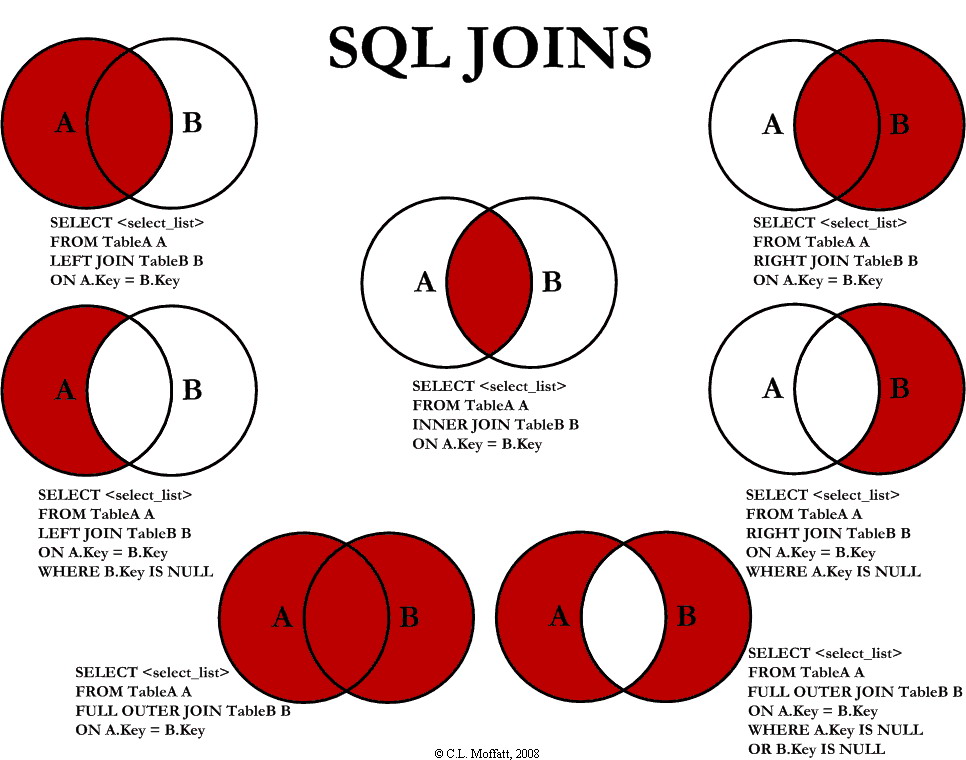
 deep jetty
 normal dove
can anyone help me? what am I doing wrong here?
normal dove
can anyone help me? what am I doing wrong here?
You're already connected
psql is how you connect to what you're already connected to
deep jetty
The name of the database is your prompt
normal dove
is psql present ?
deep jetty
What?
normal dove
what should I write to connnect to the "test" database
deep jetty
\l to list your databases, and \c <database-name> to change which one you're connected to
normal dove
ohh ok ok thankyou
dense sage
anyone want ot practice data analysis on python (pandas, numpy, matplotlib, seaborn)?
 ripe viper
hey does anyone here have a statista account ? pls help me download a dataset
swift chasm
hey ! i'd have a little query performance question :
I need to compare each column value with an aggregate of the whole column, to do that i do
column > agg(column) over (order by column rows between unbounded preceding and unbounded following)
it works like a charm but i was wondering if the aggregation is calculated for each row or only once for the whole query (since it'll always return the same thing) ?
I know that when we do a rolling window using similar syntax, it'll calculate the window for each row, but here since i use unbounded both ways, i wonder if the SQL engines optimize it or no ?
(my use-case is outlier detection, so i use standard deviations and averages as my aggregation functions)
 gray whale
Hey guys, I'm having problems with accessing an sql database using the mysql-connector-library and a nice gui with tkinter. If anyone is willing to help me I'd gladly appreciate it. Preferably in a VC
 sinful swan
hey guys, iam having a problem to integrate a GUI with a db, this is the application code:
from gui import *
import backend as core
app = None
def view_command():
rows = core.view()
app.listClientes.delete(0,END)
for r in rows:
app.listClientes.insert(END,r)
def search_command():
app.listClientes.delete(0,END)
rows = core.search(app.txtNome.get(), app.txtSobrenome.get(),app.txtEmail.get(),app.txtCPF.get())
for r in rows:
app.listClientes.insert(END,r)
def insert_command():
core.insert(app.txtNome.get(),app.txtSobrenome.get(),app.txtEmail.get(),app.txtCPF.get())
view_command()
def update_command():
core.update(selected[0],app.txtNome.get(),app.txtSobrenome.get(),app.txtEmail.get(),app.txtCPF.get())
view_command()
def del_command():
global selected
id = selected[0]
core.delete(id)
view_command()
def getSelectedRow(event):
global selected
index = app.listClientes.curselection()[0]
selected = app.listClientes.get(index)
app.entNome.delete(0,END)
app.entNome.insert(END, selected[1])
app.entSobrenome.delete(0,END)
app.entSobrenome.insert(END,selected[2])
app.entEmail.delete(0,END)
app.entEmail.insert(END,selected[3])
app.entCPF.delete(0,END)
app.entCPF.insert(END,selected[4])
return selected
if name == "main":
app = Gui()
app.listClientes.bind('<<ListBoxSelect>>',getSelectedRow)
app.btnViewAll.configure(command=view_command)
app.btnBuscar.configure(command=search_command)
app.btnInserir.configure(command=insert_command)
app.btnUpdate.configure(command=update_command)
app.btnDel.configure(command=del_command)
app.btnClose.configure(command=app.window.destroy)
app.run()
iam getting this message: NameError: name 'selected' is not defined
can someone please help me
iam using tkinter for the GUI
coral wasp
sinful swan
hey guys, iam having a problem to integrate a GUI with a db, this is the applica...
It’s a good question but not really a db question. Could you open a #❓|how-to-get-help help thread with this code?
torn sphinx
i need some data pipeline consulting help: whats a relatively straightforward pipeline to ingest data (database) and then put it out on a dashboard? if you need more clarification. please ask
- (relatively cheap, bonus if free)
storm mauve
there are literally hundreds of ways to do that, depending on the volume of data, the type of database, which sort of interactions you need in the dashboard, and which level of control you need
torn sphinx
storm mauve
there are literally hundreds of ways to do that, depending on the volume of data...
for reference, the volume of data is youtube uploads from a channel (i.e. text data)
torn sphinx
what tools would you approach each major step from this pipeline?
 fading patrol
torn sphinx
what tools would you approach each major step from this pipeline?
fading patrol
torn sphinx
what tools would you approach each major step from this pipeline?
There are still endless ways to do this. Quick and dirty I would do everything right on my local machine with local files instead of object storage, and sqlite for the DB. For the dashboard at the end I would probably use Django. If you need more scale and complexity you could involve a DAG like Airflow, container orchestration like Kubernetes and who knows what else.
wise goblet
torn sphinx
what tools would you approach each major step from this pipeline?
if i am restricted to Python only?
Then probably:
- Celery task: from API to bucket (Celery Task Delay or Celery Beat depending on need)
First step as last thing could be scheduling task 2 - Celery task: From bucket to Postgres/Sqlite3
P.S. step 1 and 2 can be merged into together stuff if desired - Viewing? 🤔 Ergh... I hate Django but i guess it will be Django if in python 😅
P.S i am mostly not happy with Django Templating / Jinja Templating for this in Django. It would be nice using something better for templating
https://wiki.python.org/moin/Templating stuff to search
Probably easiest to go with Django Templating 🙈 https://docs.djangoproject.com/en/5.0/topics/templates/
In order to be not adding too much dependencies
 wise goblet
if i am restricted to Python only?
Then probably:
1) Celery task: from API to bu...
wise goblet
wise goblet
if i am restricted to Python only?
Then probably:
1) Celery task: from API to bu...
Optionally this stuff could be made serveless.
But i am more fan of approach writing application launchable locally
easier to debug and develop 🤔
shut tiger
torn sphinx
what tools would you approach each major step from this pipeline?
just a little db, and Urd for scheduling
Honestly the entire graph looks like it should just be one function call?
 craggy swallow
what's a good app/site for drawing schemas/er diagrams?
fading patrol
craggy swallow
what's a good app/site for drawing schemas/er diagrams?
Endless options, use what you like. https://chartio.com/learn/databases/7-free-database-diagramming-tools-for-busy-data-folks/

Chartio
Figuring out your database architecture doesn’t have to cost you money along with your sanity. There are many database diagramming tools that are not only in…
craggy swallow
fading patrol
Endless options, use what you like. https://chartio.com/learn/databases/7-free-d...
yeah, I stumbled upon that link myself before asking. That's the thing, I don't know what I like because I haven't used any. That's kinda the point of asking.. up until now I've been using Database Designer on android, but want smth I could use on PC. Everything on that site looks pretty meh. Currently I'm looking at drawsql and dbdiagram, but.. One would assume, considering how long dbs exist, there would be a convenient, entirely free, app/site that allows exporting the schema to sql (for postgres, mysql, etc) and back.. No way there isn't smth more popular and commonly used (by geeky forum db experts, for example) than what I'm getting with ads filled google searches
fading patrol
craggy swallow
yeah, I stumbled upon that link myself before asking. That's the thing, I don't ...
I've never seen such a bidirectional tool. The diagrams generated by DBeaver are ok I guess
shut tiger
craggy swallow
yeah, I stumbled upon that link myself before asking. That's the thing, I don't ...
For Django I'd recommend not. Just write your models and use the migration tool as intended (commit the migrations!!). Pretend it's all python.
craggy swallow
shut tiger
For Django I'd recommend not. Just write your models and use the migration tool ...
did u respond to the correct message? Cus i was just asking for a tool to draw schemas 🤔😂
shut tiger
craggy swallow
did u respond to the correct message? Cus i was just asking for a tool to draw s...
Yea. And I was answering that. Especially about exporting and importing. That's not a good idea in the Django context. You want Django to manage the state of the schema 100%.
craggy swallow
shut tiger
Yea. And I was answering that. Especially about exporting and importing. That's ...
Oh, I see. I don't really use Django. I usually design my db schema myself. Currently working on a discord bot
shut tiger
craggy swallow
Oh, I see. I don't really use Django. I usually design my db schema myself. Curr...
What's the stack you are targeting?
craggy swallow
shut tiger
What's the stack you are targeting?
I'm still deciding actually. Can't even make my mind up on whether I should use relational (postgres) or nosql (mongo)
shut tiger
craggy swallow
I'm still deciding actually. Can't even make my mind up on whether I should use ...
Well.. if it's mongo then the tool question is answered: there is no structure, it's all chaos, and you will suffer 🤣
craggy swallow
shut tiger
Well.. if it's mongo then the tool question is answered: there is no structure, ...
Yeah, ik lol. I wanted to first try making a schema, to then be able to think about the possible performance advantages/disadvantages of using such a schema vs nosql
shut tiger
craggy swallow
Yeah, ik lol. I wanted to first try making a schema, to then be able to think ab...
Performance is imo something people worry a lot about and then it's mostly irrelevant. Having consistent data is something people don't worry about and it hurts them an enormous amount even IF they worry about it if there is any deviation.
I see people in here thinking about "what if I get a billion users?! I need microservices!!" and in actual fact they have zero users. Like... worry about the entire project failing first!
craggy swallow
shut tiger
Performance is imo something people worry a lot about and then it's mostly irrel...
I'm actually more comfortable with postgres myself. The reason I'm thinking about this, is cus I'll be storing a number of variables for each user, and the number of variables is not fixed (it's unknown, can change, and may differ between users). This means that if I go with relational, I will most definitely have a decent number of joins. And yeah, I may be overthinking the performance issue, but I'd still like to do it the "right way", or at least be relatively confident in my decision
craggy swallow
shut tiger
I see people in here thinking about "what if I get a billion users?! I need micr...
Yeah, I get that, lol. But if this project does make it into production, it's guaranteed to have at least several hundred thousand users, as it's meant to be a one-in-all replacement for an existing number of bots in some relatively large servers
shut tiger
craggy swallow
Yeah, I get that, lol. But if this project does make it into production, it's gu...
Bots that you don't have the code for?
craggy swallow
shut tiger
Bots that you don't have the code for?
Yup, exactly correct 🥲
shut tiger
craggy swallow
Yup, exactly correct 🥲
Have you successfully deployed a bot into production before?
craggy swallow
shut tiger
Have you successfully deployed a bot into production before?
Smaller projects yes, like a bot that scrapes a site and uploads the contents regularly (for a different platform, not discord). Nothing at this scale
shut tiger
craggy swallow
Smaller projects yes, like a bot that scrapes a site and uploads the contents re...
I'd recommend just starting and focusing on replacing one bot. You should be able to tell if you should throw away that and start over. And it's much faster and you learn more by doing than by planning ahead. And since this is programming and not architecture, that's also cheap, fast and non-dangerous.
craggy swallow
will think about it, come back later with some questions, and then get to it
shut tiger
Don't think, do :P
craggy swallow
shut tiger
Don't think, do :P
The difficulty in that is intertwined with my personality. I'm aware of the drawbacks, but despite that, I prefer waterfall over agile methodology 🙃
shut tiger
craggy swallow
The difficulty in that is intertwined with my personality. I'm aware of the draw...
Well that just doesn't work :P Like people who are visual learners who need to learn to ride a bike: it's irrelevant. They need to actually do it. Watching others ride bikes will help exactly zero.
craggy swallow
shut tiger
Well that just doesn't work :P Like people who are visual learners who need to l...
How tho does one explain to their boss that they've been doing smth in a suboptimal way and now needs to spend an entire week (or more) switching things around?
shut tiger
craggy swallow
How tho does one explain to their boss that they've been doing smth in a subopti...
If the boss doesn't listen then you are totally screwed no matter what.
But the REAL answer is: "We are 4 months earlier to market because I started directly, and now you complain about one week? Please" :P
Another real answer is: "I am not a time traveller"
 karmic hearth
hey people I am confused - I am reading about the active record pattern, and finding it to be identical to the data wrapper pattern. The crux of my confusion is easily exemplified by a simple update operation: everything I read seems to indicate that operations on the in-memory representation of active records update those records synchronously, instead of waiting until the in-memory construct has done with all it's mutations and is turned into another database transaction with an insert. However, after the operations are done on an in-memory active record, save is called, which to me seems identical to calling insert on a data wrapper object.
in all the examples I can find, they end with calling freaking save after a bunch of nonsense about how it's an active record. I don't fully get it. Are any of the mutations to the object applied to the database before save? and if not, what is the essential distinction between data mapper-pattern frameworks (like Ecto) and those like Django ORM (which is apparently active record)?
 wary plover
karmic hearth
hey people I am confused - I am reading about the active record pattern, and fin...
wary plover
karmic hearth
hey people I am confused - I am reading about the active record pattern, and fin...
does it come down to them being differences in approaches and what is responsible for consistency?
and their differences probably lend more to different use cases
 exotic drift
hello!! i'm very new to programming so please be understanding if i made a silly mistake. I was following Corey Schafer's tutorial on using the Flask framework in python to create an app. I've had no issues that I couldn't resolve by myself until I reached the video talking ab databases....when i try to run the program using flask run it comes up with this error ``` Flask_Blog % flask run
Usage: flask run [OPTIONS]
Try 'flask run --help' for help.
Error: While importing 'Flask_Blog.flaskblog', an ImportError was raised:
Traceback (most recent call last):
File "/Library/Frameworks/Python.framework/Versions/3.11/lib/python3.11/site-packages/flask/cli.py", line 219, in locate_app
import(module_name)
File "/Users/fiwoe/Flask_Blog/flaskblog.py", line 4, in <module>
from forms import RegistrationForm, LoginForm
ModuleNotFoundError: No module named 'forms'```
but the thing is that i have a module named forms. this code was working like a week back and i got busy with other things and then i returned to this error..?
if you need other info to help me, i'll try to provide it ^^
shut tiger
exotic drift
hello!! i'm very new to programming so please be understanding if i made a silly...
What is your current working directory?
 wind grove
Which of these would you say is better to use?
# Option 1
conn = sqlite3.connect(database)
cursor = conn.cursor()
cursor.execute(query)
cursor.close()
conn.close()

# Option 2
from contextlib import closing
with closing(sqlite3.connect(database)) as conn:
    with closing(conn.cursor()) as cursor:
cursor.execute(query)```I only recently learn that the sqlite3 context manager with sqlite3.connect(database) doesn't handle closing like I would have thought... is that common among sql libraries to provide context managers that only handles commit and not close?
paper flower
wind grove
Which of these would you say is better to use?
```py
# Option 1
conn = sqlite3.c...
Obviously using a context manager is better for this 🤔
storm mauve
in the case of sqlite3 in particular, it probably doesn't matters that much whenever you actually close or not, as long as you commit?
the entire database process is running inside of the python process, so once python exists, there is nothing left to clean up, and I assume it only modifies the file when you actually commit
edit; looks like technically there can be a pending transaction to clean up? the default context manager takes care of that much though
I'd still rather using a context manager, but closing() should be unnecessary
paper flower
storm mauve
I'd still rather using a context manager, but `closing()` should be unnecessary
I personally meant using a context manager in general here, closing is one
Since default __exit__ doesn't behave as they want it to
wind grove
storm mauve
I'd still rather using a context manager, but `closing()` should be unnecessary
Even if I opening/closing the database elsewhere in the program? I'm not sure I'd want to open it as a global. Combining what I had before with the committing context manager, it should then look like this:
with closing(sqlite3.connect(database)) as conn:
with conn:
with closing(conn.cursor()) as cursor:```
That is a lot of additional indentation towering. neat moat
SQL Question:
If you are presented with a 2 to Many relation ship, what primary/foreign keys do you need and how would you implement that. (Question from a school exam, we are working in Microsoft Access, so please don't get too deep into SQL. My teacher told me its the same way you would implement a 1 to Many Relation -> Foreign key on the Many Side of the relation
storm mauve
wind grove
Even if I opening/closing the database elsewhere in the program? I'm not sure I'...
usually I would prefer to only create the connection once, and just pass it around to the others. Depending on what you are doing, that could be done via dependency injection
but I guess that it could make sense to explicitly close if you want to open multiple times, even if just for peace of mind
fading patrol
neat moat
SQL Question:
If you are presented with a 2 to Many relation ship, what primary/...
No, I don't see how that would work... If it's more than one to many, that's many to many.
neat moat
fading patrol
No, I don't see how that would work... If it's more than one to many, that's man...
I thought the same thing. I guess I will have to argue with my teacher now...
grim vault
Maybe the teacher means two one to many to the same parent table?
parent       child
------       -----
id (PK) <-+- parent_id1 (FK parent.id)
          +- parent_id2 (FK parent.id)