#TheGoat 🐟
1 messages · Page 1 of 1 (latest)
 clever rootBOT
Please be patient
Our volunteers look into many questions every day; sometimes it takes them a little while to answer.
Pro tip: you can rename the thread title with `.tr <thread name>`
Make it descriptive, including relevant context, but also to the point. This way you improve your chances of getting a more relevant and specific answer.
 floral elk
thats so misleading and unhelpful
is it duolingo
basically qui for subjects and que for objects
 raven grove
Qui functions as the subject marker of the relative claise while que functions as its direct object marker.
 granite moat
Yes it’s highly unhelpful but duo isnt the only resource I use lol for good reason
floral elk
la personne qui m'aide => la personne is the subject of the verb aide
la personne que j'aide => la personne is the object, the subject is je
raven grove
Ce qui and ce que work the same way except you can replace a noun with "ce" to make it unclear, undefined.
raven grove
J'ai lu le message que tu as posté
=> J'ai lu ce que tu as posté
 scarlet girder


 cloud panther
What duo is trying to get at is that we have the same distinction - who (qui) vs whom (que), but english has largely replaced "whom" with "who". If you don't know how "whom" works, though, the explanation certainly isn't very helpful
 south wagon
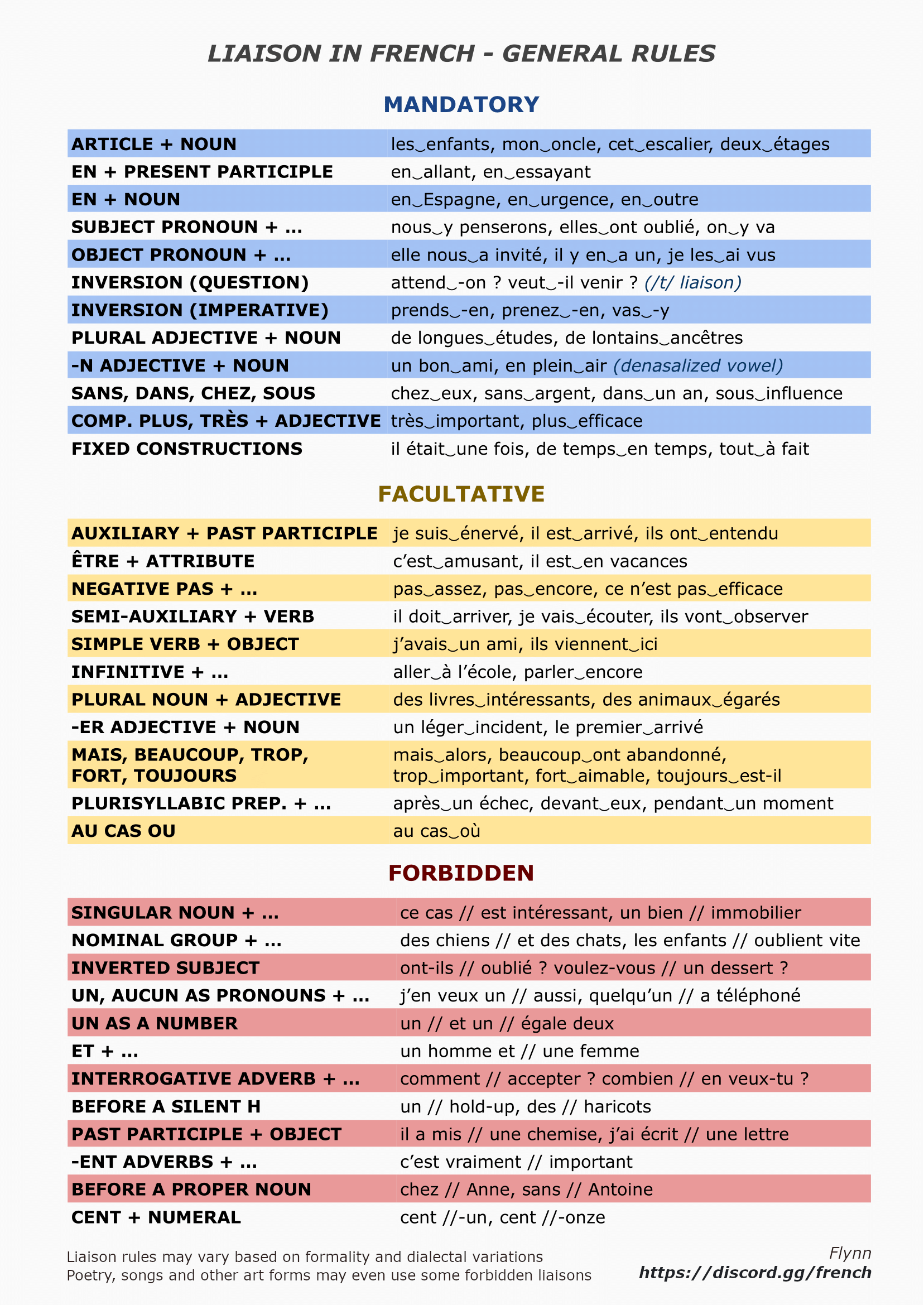
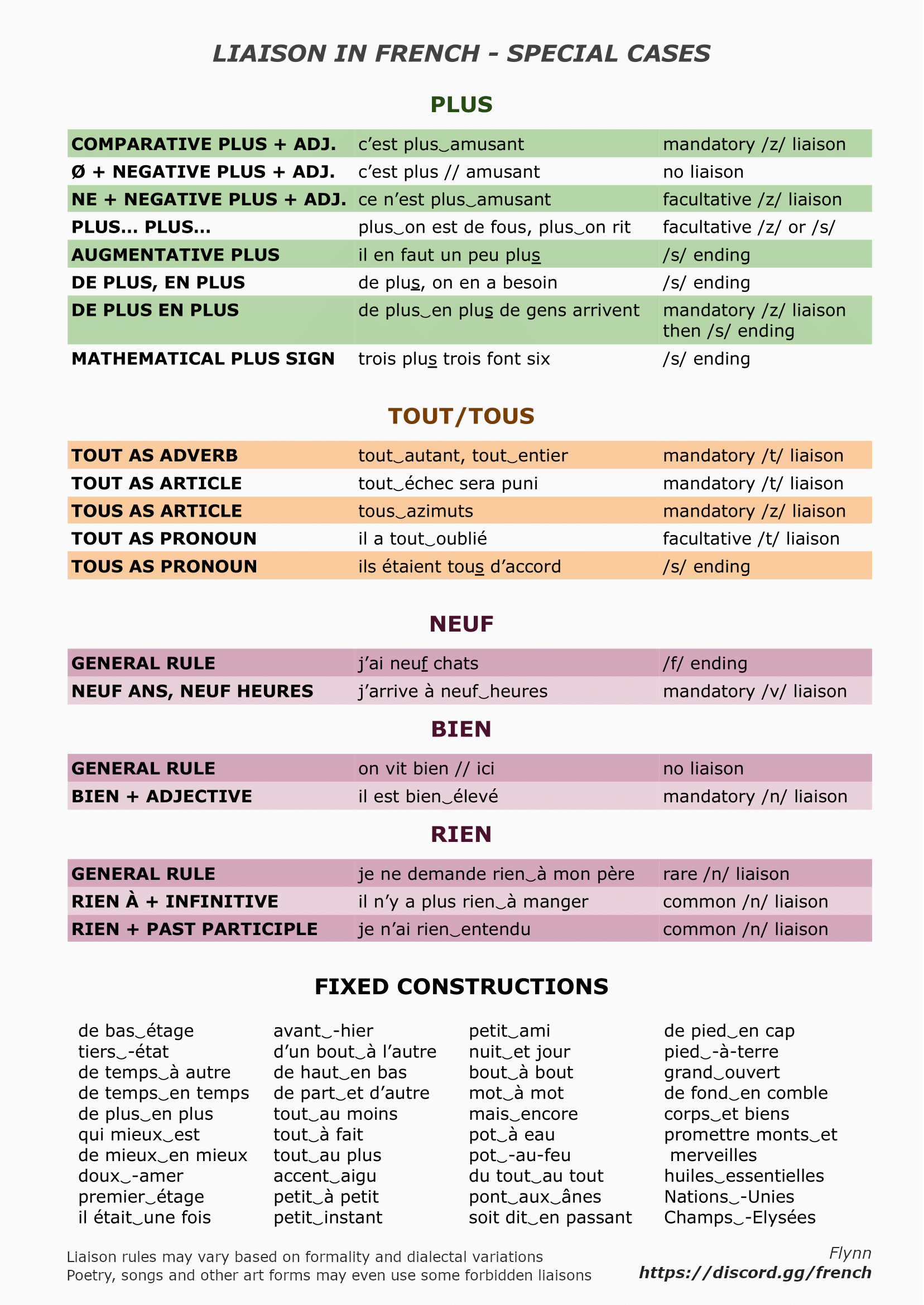
is the S pronounced (as a liaison i know !) in qui a__s__ appelé
cloud panther
;liaisons
clever rootBOT
 cloud panther
First one in the facultative list! With "as" it's rarely done though, very formal imo
floral elk
optional liaisons are like all formal sounding
except those first 3 ones, they're common
cloud panther
Some are more or less formal depending on the specific combination
But generally speaking you can ignore all the optional ones without any issue. Most people only use a few if any
 lunar pilot
Also, Spanish’s relative pronouns are primarily living/non-living like English, not subject/object like in French. French is I think the only Romance language that still maintains this distinction, at least the only major one
 thorny pewter
Romanian does too!
thorny pewter
floral elk
la personne qui m'aide => la personne is the subject of the verb aide
la personn...
Persoana care mă ajută
Persoana pe care o ajut
If the subject remains the same in the subsentence, you use care (qui in French)
If the subject changes in the subsentence, you use pe care + accusative pronoun (que in French)
And if the subject is masculine: (Omul = L'homme)
Omul care mă ajută
Omul pe care îl ajut
lunar pilot
thorny pewter
Romanian does too!
Oh interesting, I thought Romanian doesn’t distinguish subject and object (it has a merged nom-acc case)
thorny pewter
Romanian is full of surprises 😁
thorny pewter
Does french also have a dative version of que/qui? Or would que be used still?
lunar pilot
thorny pewter
Does french also have a dative version of que/qui? Or would que be used still?
lequel and dont
thorny pewter
Do you have an example?
lunar pilot
Les matières auxquelles je m’intéresse
La personne à qui je parle
La responsabilité à laquelle il a renoncé
Le match auquel je participe
Les problèmes dont je parle
thorny pewter
Interesting that lequel behaves like a normal adjective
lunar pilot
It comes from two elements ‘glued’ together: the definite article (le/la/les) and the determiner adjective quel (quel, quelle, quels, quelles) which gives us lequel, laquelle, lesquels, lesquelles
thorny pewter
Makes sense
I'm thinking of the Romanian translations but a lot of them use an accusative or something else entirely
lunar pilot
thorny pewter
I'm thinking of the Romanian translations but a lot of them use an accusative or...
Interesting, no indirect pronouns?
thorny pewter
They do have them
lunar pilot
But?
thorny pewter
They only one I can think of is "Persoana căreia îi vorbesc" for the second example
lunar pilot
Oh, the examples I gave are not indirect in Romanian?
thorny pewter
Yep
lunar pilot
J’ai donné la lettre à Émile
La lettre que j’ai donnée à Émile
Émile à qui/auquel j’ai donné la lettre
Though the general structure is the preposition plus lequel, we can use qui in place of lequel if the indirect object is living
thorny pewter
I-am dat scrisoarea lui Émile
Scrisoarea pe care i-am dat-o lui Émile
Émile căruia i-am dat scrisoarea
🤷♂️
lunar pilot
I don’t know enough Romanian to tell unfortunately
thorny pewter
These are just the translations
And the animate/inanimate distinction doesn't exist in Ro
Interesting
thorny pewter
lunar pilot
I don’t know enough Romanian to tell unfortunately
And how does it work with possessions?
Something like "À quoi est cette voiture?" ?
Romanian has cui
A cui e mașina asta?
lunar pilot
thorny pewter
And how does it work with possessions?
Something like "À quoi est cette voitur...
Cette voiture est à qui ?
thorny pewter
Ooh
lunar pilot
It’s a bit awkward with être for inversion and est-ce que so I’ll use appartenir instead
À qui appartient-elle cette voiture ?
À qui est-ce que cette voiture appartient ?
Cette voiture appartient à qui ?
lunar pilot
(: