#pet adjectives
1 messages · Page 1 of 1 (latest)
 digital sundialBOT
Please be patient
Our volunteers look into many questions every day; sometimes it takes them a little while to answer.
Pro tip: you can rename the thread title with `.tr <thread name>`
Make it descriptive, including relevant context, but also to the point. This way you improve your chances of getting a more relevant and specific answer.
pet adjectives
 mossy sinew
"Les chats mangent les pizzas. Ils habitent ici avec moi. Les animaux sont très heureux."
"habitent ici" he is doing what is called a "liaison"
Liaison is when a sound that is usually not pronounced attaches itself to the following sound, when it is a vowel. So, here the "mute e" is unmuted, so that the "t" can link with the following word, which starts with a vowel.
There are three different kinds of liaisons:
-mandatory
-optional
-forbidden
This one is optional. When optional liaisons are realized, it sounds a bit more formal most of the time. In everyday informal speech, optional liaisons tend not to be made.
Does this make sense?
Sorry I'm a bit sleep deprived so I may be a bit rambly.
 terse coral
Merci, still trying to parse it but don't let me hold you off from your sleep!
I see, so the « habitent à ici » I was hearing was just « habitent ici », just that the « -ent » is said out loud.
So given that lessons tend to be more formal / by-the-books, -ent is said out loud.
 mighty hawk
Yes, though of course it's not pronounced like a regular "ent" ending you'd hear in a word like "vraiment".
"habitent ici" with a liaison is pronounced as if it were spelled "habite tici"
Btw that voice isn't very natural at all.
https://translate.google.fr/?sl=auto&tl=fr&text=les chats mangent les pizzas. Ils habitent ici avec moi.&op=translate
Google's pronunciation is much more natural.
Le service sans frais de Google traduit instantanément des mots, des expressions et des pages Web entre le français et plus de 100 autres langues.
terse coral
I suppose the mute "-e" is also going to vary by word? Do liasons being mandatory/optional/forbidden follow a rule or are they more like genders where anything goes?
terse coral
Like… I don’t know… « Ils étudient ici » would be said « étudiente ici »? Just trying to think up of verbs ending with « t »
mighty hawk
hmm, I thought ";liaison" was the trigger for Nostradamus's neat liaison sheet
mighty hawk
terse coral
Like… I don’t know… « Ils étudient ici » would be said « étudiente ici »? Just t...
the -ent ending of 3rd person plural verb is never pronounced as a nasal vowel.
"ils étudient ici" with a liaison sounds like "ils étudi tici"
terse coral
Oh yeah forgot
digital sundialBOT
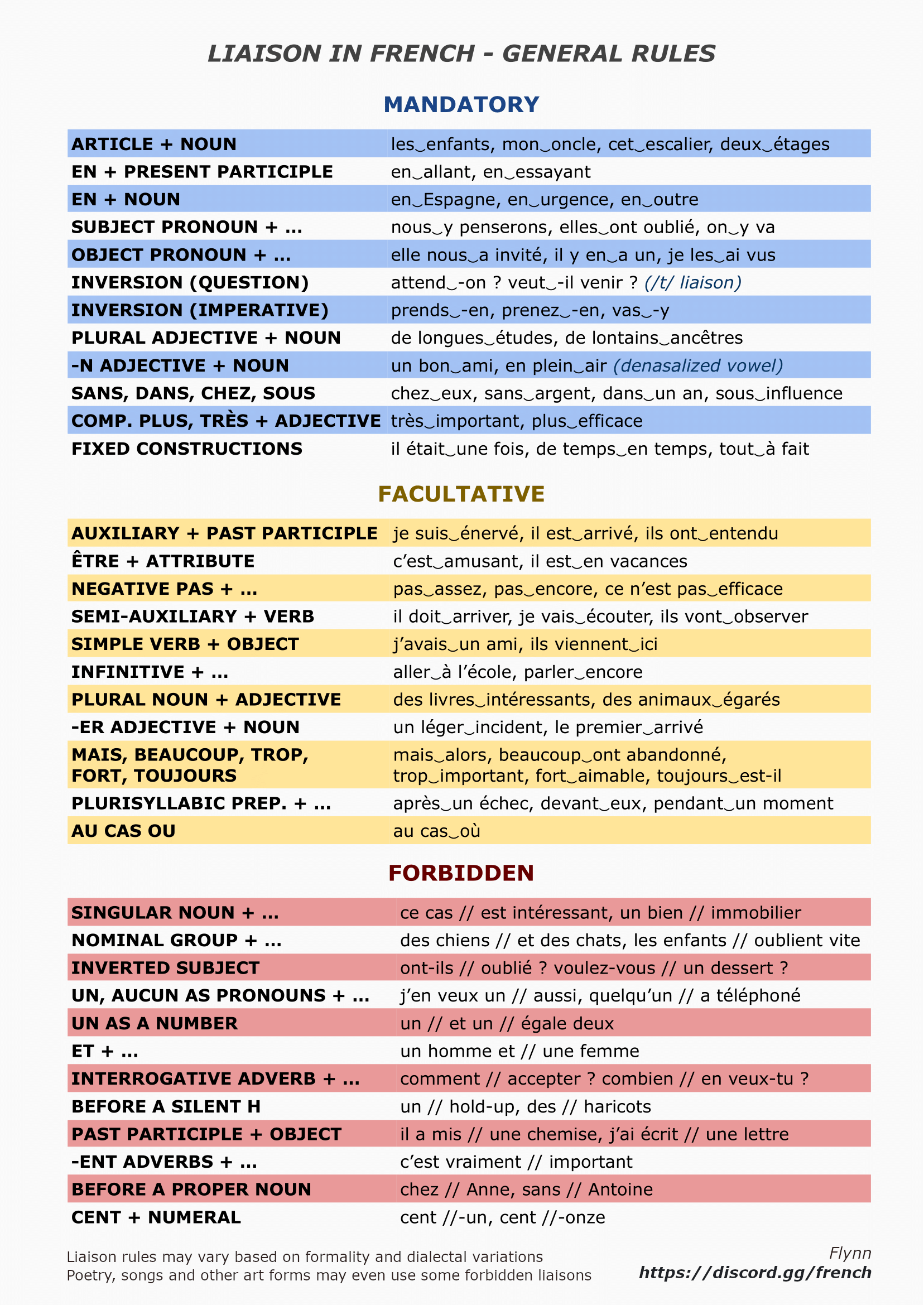
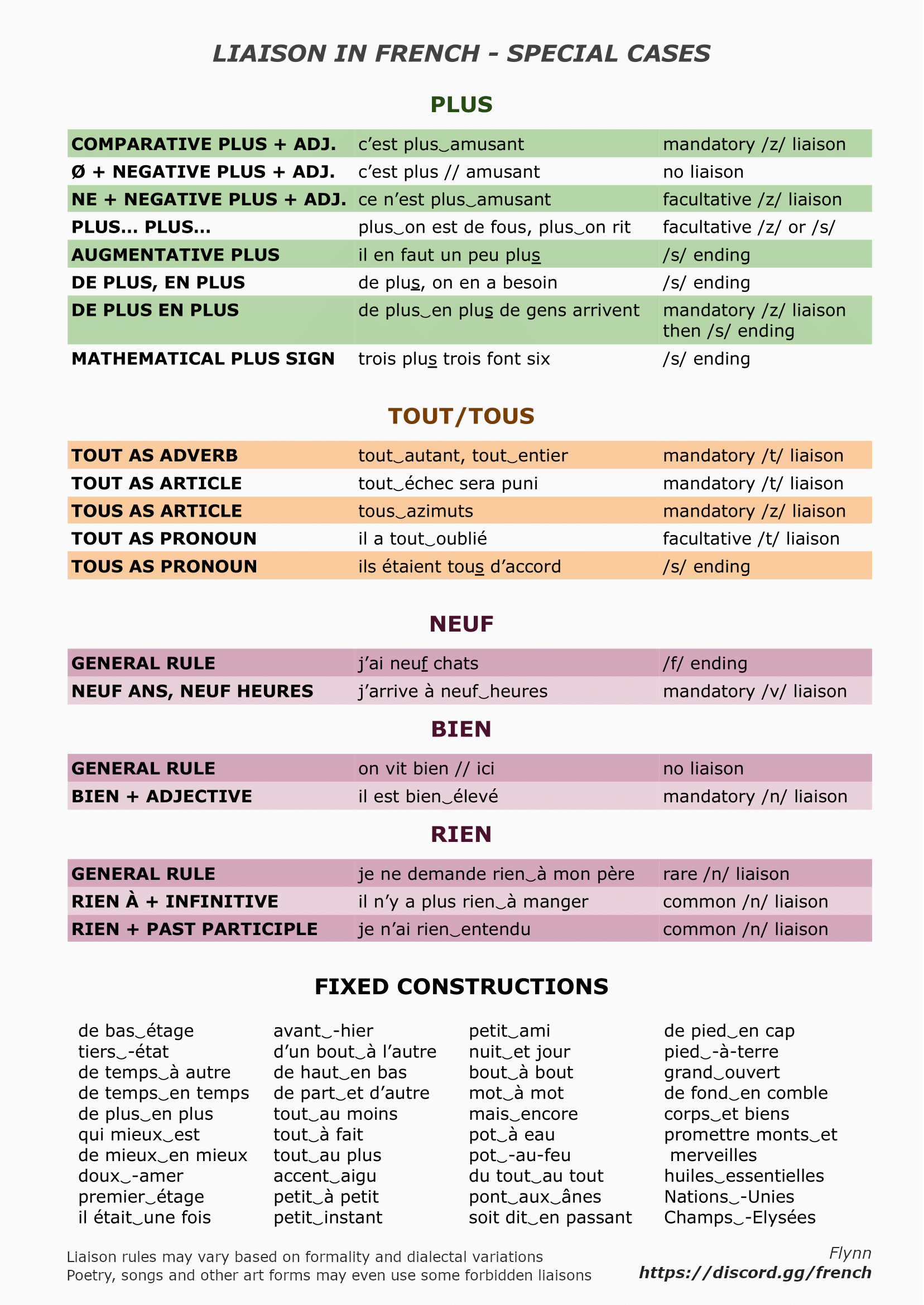 terse coral
Merci beaucoup, saving this
mossy sinew
Je pense pas, j'ai pas analysé le spectrogramme des voyelles mais je suis presque sûr que c'est des /œ/ et pas des /ɛ/
mighty hawk
 restive terrace
C'est pas à l'imparfait ?
restive terrace
C'est pas à l'imparfait ?
ah ben si