#mk6j
1 messages · Page 1 of 1 (latest)
 sullen fjordBOT
Please be patient
Our volunteers look into many questions every day; sometimes it takes them a little while to answer.
Pro tip: you can rename the thread title with `.tr <thread name>`
Make it descriptive, including relevant context, but also to the point. This way you improve your chances of getting a more relevant and specific answer.
 kindred mango
Yes though that's a colloquial thing. It's something you do when talking to people on the streets or to a friend, but not to your boss or in a letter.
 warm jasper
oh i see, so rarely in written french but more so in spoken?
kindred mango
Yes exactly
warm jasper
ahh i see, i was listening to a song and the singer says "t'as ma parole" and i was able to decipher i think he's saying "tu as ma parole" but wasnt 100%
kindred mango
Also, minor nitpick: That isn't hyphenation, that's contraction
warm jasper
kindred mango
Also, *minor* nitpick: That isn't hyphenation, that's contraction
mb!! of course!
thank you very much
 covert crown
kindred mango
Yes though that's a colloquial thing. It's something you do when talking to peop...
covert crown
kindred mango
Yes though that's a colloquial thing. It's something you do when talking to peop...
eh ?
I mean in that context you would use vous anyway
the only times I don't contract it are, i would say, when reading a text or when repeating something slowly for more clarity
warm jasper
covert crown
I mean in that context you would use vous anyway
vous avez ma parole?
but wouldn't that be to more than one person?
sullen fjordBOT
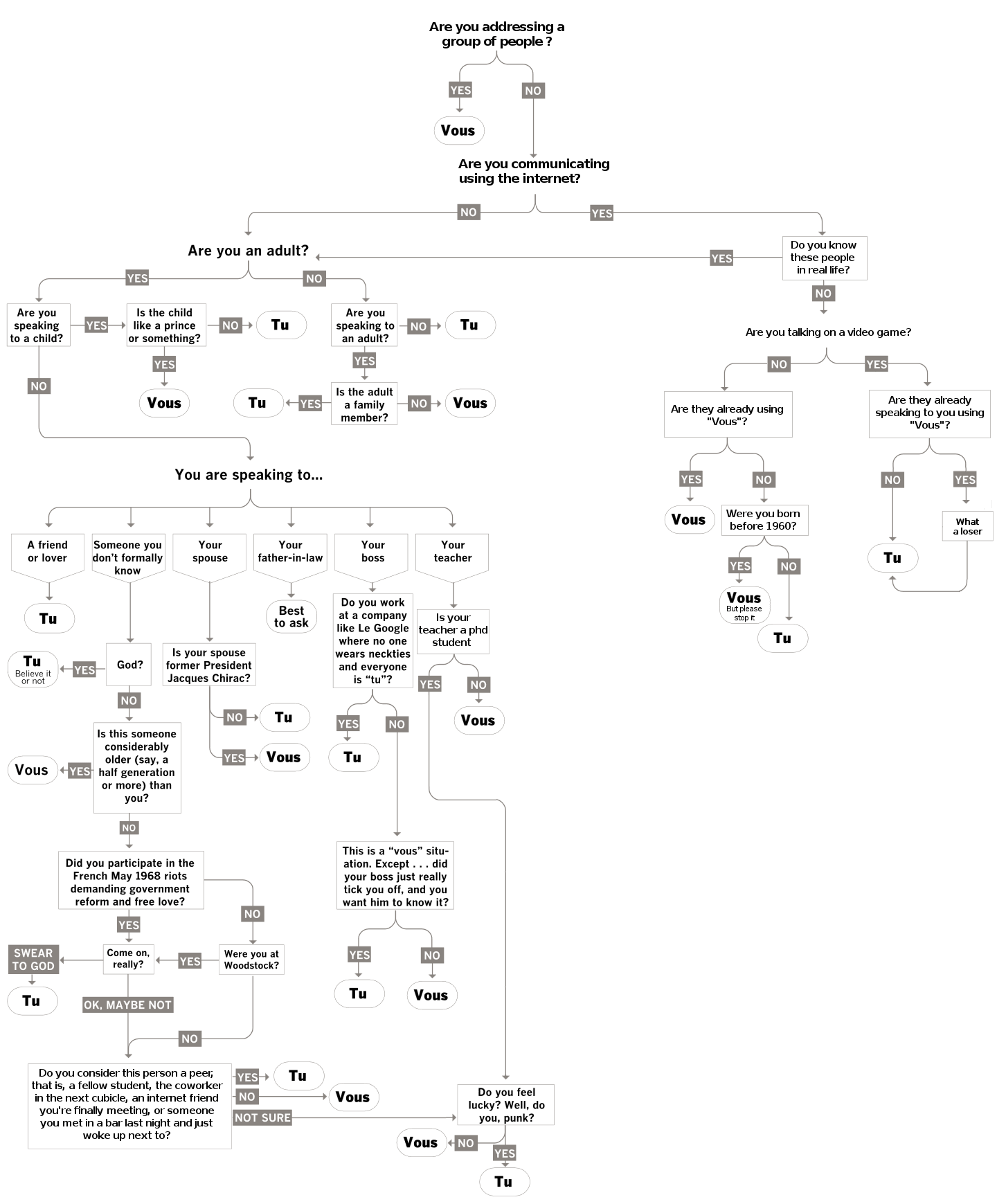

 solemn nimbus
Orally you will pretty much always hear « tu as » pronounced as « t’as », however in written form « t’as » is non-standard and is not recommended in more formal situations like a work email. It’s akin to “gonna” or “wanna” in English
kindred mango
covert crown
I mean in that context you would use vous anyway
Why
Oh wait
Did you understand me saying ‘speaking to people’ as speaking to multiple persons
warm jasper
i think they might be referring to the formal situations
warm jasper
solemn nimbus
Orally you will pretty much always hear « tu as » pronounced as « t’as », howeve...
i see, so in written form its either "tu as" for inf and "vous avez" for form
warm jasper
exactly
makes sense, just making sure t'as ma parole isn't like a fixed "saying" in french
 azure parcel
It's sort of on the same level as « I'm », you're not really going to hear/see « I am » outside of formal writing (unlikely to apply due to "tu" unless maybe like a teacher writing to their student or something, it's a bit complicated) or emphasis (french usually uses repetition over this kind of emphasis, but could be used to speak "clearly" or while reading a text)
But the tl;dr is that it will almost always be « t'as », but for school/exam/etc purposes you should be using « tu as » (unless you're sure they'd be fine with t'as)