
#Here is a pic of a very detailed note i took on subjonctif mood, is anything wrong or lacking?
1 messages · Page 1 of 1 (latest)
 floral musk
 chilly marsh
Hey, looks great to me!
Just a few things to comment (from left to right):
(1) While the imperfect and pluperfect subjunctives exist, they're literary so for the most part they won't be used. They relate to the subjunctive sequence of tenses which I'll explain later on.
(2) For the irregulars, there's a bit more verbs that change stems in the plural first and second where they resemble more like imperfect stems. The verbs that come to my head are « venir, recevoir ». These two have the plural third person present conjugations of « ils viennent, ils reçoivent » and their singulars + plural third do follow that pattern: « que je vienne/reçoive, que tu viennes/reçoives, qu'il vienne/reçoive … qu'ils viennet/reçoivent ». However, their plural first and second don't. We would've expected « *que nous viennions/reçoivions, *que vous vienniez/reçoiviez » but instead we got « que nous venions/recevions, que vous veniez/receviez ». Just a bit of detail there.
(3) Subjunctive triggers are usually « que » with some with « qui », so if you see « si », that's not going to trigger the subjunctive.
(4) « C'est le meilleur livre que je connaisse », you're missing an extra S.
(5) I don't think « le but » is a conjunction. Usually, conjunctions start a new clause and they almost always begin with « que ». That's why many conjunctions add a « que » to differentiate between one that introduces a clause and one that doesn't. Ex:
« Après avoir pris la clé, il a ouvert la porte. »
« Après qu'il avait pris la clé, il a ouvert la porte. »
Sequence of tenses for the subjunctives
Unlike the sequence of tenses for the other tenses, the subjunctive tenses' sequence depends on the temporality of the subjunctive clause in relation to the main clause. The present tense describes something that is happening or will happen after the main clause while the past/perfect tense describe something that has happened or was happening before the main clause. You can also think of it in terms of completion: the present tense describes something that is on-going/hasn't happened while the past/perfect tense describes something that has already happened.
Say I'm attending a party held by a friend, and I know that this friend has another friend called Pierre. Pierre is a known party-wrecker so I say to my friend:
« J'ai peur que Pierre vienne (I'm scared that Pierre comes). »
Here, I'm implying that Pierre has not come and that I'm scared that he would come sooner or later.
« J'ai peur que Pierre soit venu (I'm scared that Pierre has come). »
Here, I'm implying that Pierre has already come and that I'm scared that he was just lurking somewhere, waiting to make an appearance.
In Modern French, the subjunctive tense changes depending on whether it was before or during/after the main clause but if the main clause was in the past, they wouldn't change. Remember, it's relative. Let's say it's the next day and I'm telling this to another friend. I can say to them:
« J'avais peur que Pierre vienne (I was scared that Pierre would come). »
I'm implying that, at the time, Pierre had not come and that I was scared about him coming.
« J'avais peur que Pierre soit venu (I was scared that Pierre had come). »
I'm implying that, at the time, Pierre had already come and that I was scared about him making a scene later in the night.
What about the imperfect and pluperfect subjunctives, where do they come into play? Well, in older French and now literary French, this present/past difference is only made if the main clause is in the present. If it's in the past, the imperfect/pluperfect difference is the one made. That's it. The same stuff about temporality applies, it's just that now the on-going is described by the imperfect and the completed is described by the pluperfect. Going back to the examples above, the present main clause sentences would still work:
« J'ai peur que Pierre vienne / J'ai peur que Pierre soit venu ».
They change when it's in the past. Instead of saying, « J'avais peur que Pierre vienne / J'avais peur que Pierre soit venu », literary French would instead say:
« J'avais peur que Pierre vînt / J'avais peur que Pierre fût venu ».
floral musk
@chilly marsh first of all, thank you. I really appreciate you taking your time to read everything I wrote and correcting me. I put so much effort in it so this has given me a lot of motivation to continue, plus your answers are much more clear than the answers the tutor I got from italki gave me. I also wanna show you this video (https://youtu.be/SrFmzqc1HLk?si=hFqDLs7xb6MvFZCO&t=380) (its timecoded btw) about the 5th point you made. I studied it from here, what do you think about this?
also, if thats okay with you, I'd like to ask you three more questions about subjunction (I'll ask after/if you say thats okay)
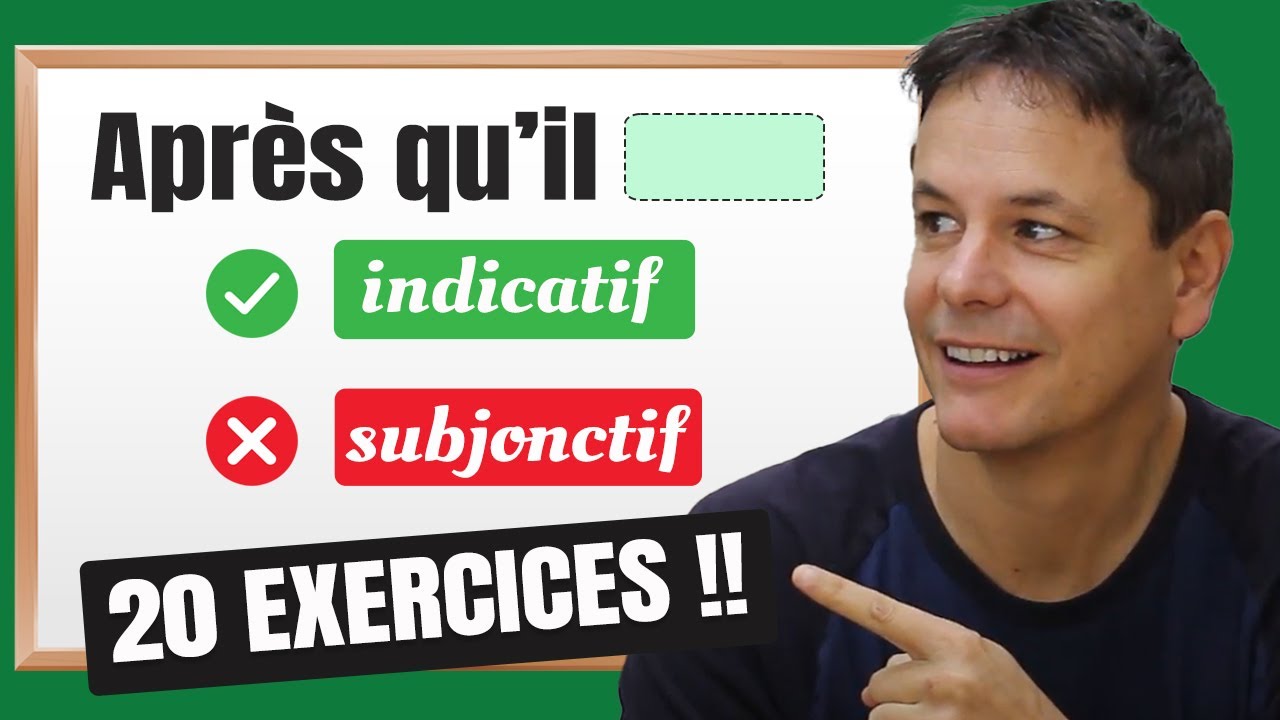
Subjonctif ou indicatif? Comment faire le bon choix? Retrouve dans cette vidéo des exercices et des explications pour comprendre ce point de grammaire important!
📌 L'ARTICLE DE CETTE VIDÉO :
https://www.francaisavecpierre.com/subjonctif-ou-indicatif/
👨🎓 NOTRE ACADÉMIE AVEC NOS PROFESSEURS NATIFS:
https://www.francaisavecpierre.com/lacademie
👨...
btw im gonna study the sequence of tenses for subjunctives after i get a general idea of the other three moods, I've read it still and its a good point to start from. I'll come back to this when I'm writing my notes on that topic. (what im saying is thank you for the valuable info :3)
chilly marsh
floral musk
<@695647039362433086> first of all, **thank you**. I really appreciate you takin...
I can’t watch it rn so if you’re still there maybe you can tell me? And yes, do ask your question
floral musk
chilly marsh
I can’t watch it rn so if you’re still there maybe you can tell me? And yes, do ...
I can tell you, no worries. In the video, there is a question asked that goes like 'within this sentence do we use subjunctive or indicative: Il travaille dur pour que ses enfants peuvent/puissent faire des études.'
the answer he gives is the 'puissent' and the reasoning is that if a sentence has a goal (le but) so we use subjunctive. But while writing this I have realized that here le but means goal, not indicate a goal within a sentence like pour que and afin que does. So got that covered I guess XD
chilly marsh
Yes, « le but » is a noun whereas « pour que/afin que » are conjunctions
floral musk
my other questions are;
- We use subjunctive for superlatives, except when they are talking about a universal truth -like: 'mercury is the smallest planet' would use indicative even though it uses subjunctive since its a universally known fact. (I learnt that from lawlessfrench website so I dont know how true that is but anyways).
and then here this guy (français avec pierre) says we use restrictions with subjunctive mood. Then, what happens if the restriction sentence was a universal truth? Do we use indicative or subjunctive then? Because on superlative sentences, this matters.

- Again, we use superlatives with subjunctive mood. But what happens if we use a comparative instead of a superlative? Do we still use subjunctive? Instead of saying 'this book is the best book I know', if we said 'this book is better than the other books', do we use subjunctive?
(i asked an italki tutor both questions but he couldnt really give me an answer, also i checked online for answers but i couldnt find much about it)
chilly marsh
floral musk
my other questions are;
1) We use subjunctive for superlatives, except when they...
That's because there's a lot more statements with superlatives that don't involve concrete facts
'Mercury is the smallest planet' is a subjective opinion because you didn't provide further details by the way. Smallest planet in what way?
Because I certainly know of other planets smaller than Mercury outside of the Solar System
so if we take that into account…
floral musk
what if we said within our system then? basically, if superlative is factual truth, then its indicative right?
chilly marsh
« La Mercure est la planète la plus petite que je connaisse »
« La Mercure est la planète la plus petite dans le Système Solaire que je connais »
floral musk
so yes, it is indicative
and now how do we apply that to restrictions? like- does the same subjunctive unless factual truth apply to them or not?
chilly marsh
floral musk
2) Again, we use superlatives with subjunctive mood. But what happens if we use ...
It doesn't trigger it
floral musk
chilly marsh
It doesn't trigger it
so comparatives are with indicative, noted !
chilly marsh
floral musk
and now how do we apply that to restrictions? like- does the same subjunctive un...
Yeah, unless it's 100% true, subjunctive
floral musk
you are a saviour istg, thank youuu
this was so complicated for no reasooon, i have been searching for a long time and finally i have answers
im not exaggerating, i'll sleep easy tonight XD
one last question if thats okay?
chilly marsh
Sure
floral musk
- I already I asked this to the tutor and he gave an answer but given how the other two answers he gave was very confusing, I just wanna confirm it. Bien que and quoique both mean although and they are used with subjunctive, même si also translates to although and its used with indicative. Why? He said même si is more like 'what if', it is used when we are talking about something that has not happened yet while the others are used for things that are happening or things that already has happened
is that true?
chilly marsh
floral musk
3) I already I asked this to the tutor and he gave an answer but given how the o...
Kinda? The real reason IMO as to why « même si » doesn’t take the subjunctive is because « si » doesn’t trigger the subjunctive
The subjunctive talks about doubt, subjectivity, emotion, and all that, but needs a trigger to do it
That trigger is mostly que with some with qui
Si isn’t a subjunctive trigger
floral musk
a sentence has to have two pieces that is tied together with a que or qui, right? did i understand correctly?
chilly marsh
Yeah
That’s why subjunctive conjugations start with que
Because they normally don’t stand independently, they stand based on other clauses
floral musk
can a sentence have que/qui but not be a subjunctive?
floral musk
but espérer is always indicative anyways, no? can you give another example so i can note it down?
chilly marsh
floral musk
but espérer is always indicative anyways, no? can you give another example so i ...
No, it’s subjunctive in the negative and inverted question forms
J’espère qu’il part
Espère-je qu’il parte ?
Je n’espère pas qu’il parte
floral musk
I'll make a new note page including all the new info and correting the old ones. I feel like I have a very good understanding of subjunctive now also partly thanks to you.
floral musk
chilly marsh
No, it’s subjunctive in the negative and inverted question forms

Is this why?