#womp0000
1 messages · Page 1 of 1 (latest)
 manic sonnetBOT
Please be patient
Our volunteers look into many questions every day; sometimes it takes them a little while to answer.
Pro tip: you can rename the thread title with `.tr <thread name>`
Make it descriptive, including relevant context, but also to the point. This way you improve your chances of getting a more relevant and specific answer.
 hoary girder
Why wouldnt it be etiez and then pourriez?
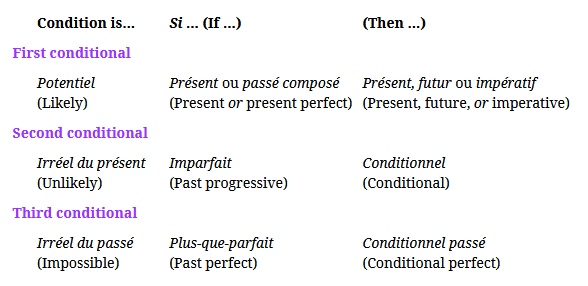
 sweet remnant
https://i.hep.gg/PmtUeqyXB
sweet remnant
sweet remnant
https://i.hep.gg/PmtUeqyXB
click on the purple in the link for more info on each one
hoary girder
Oh so using ‘if’ can be present as wel
 ionic latch
ofc
hoary girder
sweet remnant
click on the purple in the link for more info on each one
Okok
ionic latch
 hoary girder
ionic latch
hoary girder
ionic latch
If i used to be rich i would buy a car?
ionic latch
hoary girder
If i used to be rich i would buy a car?
if i WERE rich, i would buy a car
hoary girder
Ohhh
Can i say dans l’avenir, j’essaierai être une personne qui a respecte et gratitude.
hoary girder
After i talk abt someones opinion can i say je suis d’accord avec l’avis? - im usinf direct object pronoun? Or am i not allowed to do that
sweet remnant
there's no object pronoun in your sentence
hoary girder
So i say son avis?
sweet remnant
ya
sweet remnant
I like it
Je l'aime
hoary girder
Like j’adore les réseaux sociax. Je les utilise pour communiquer avec mes amies et mes parents
sweet remnant
yeah
sweet remnant
👍
 fading edge