#prepositions and stuff
15 messages · Page 1 of 1 (latest)
 jade gulch
 strong cloakBOT
Two-way prepositions
Two-way prepositions (or dual prepositions) are prepositions that govern the accusative or dative case. Ten prepositions have this property, namely:
an     auf      entlang    hinter    in
neben  über     unter      vor       zwischen
Generally, these prepositions are used with the accusative if they express a direction or change of position. They are used with the dative if they express location.
For example, the verb etw. an etw. hängen can be used to express both meanings depending on the intention:
Ich hänge das Bild an die Wand. (I am hanging the picture on the wall.)
Das Bild hängt an der Wand. (The picture is hanging on the wall.)
Expressing direction vs. location
It is important to note that the accusative should only be used if something has moved from one position to another. If movement has been indicated, but the location has not changed, then the dative should be used. For example,
Der Hund läuft in den Park. (The dog ran (from somewhere) into the park.)
Der Hund läuft im Park (herum). (The dog is running in the park.)
The dative is usually used with verbs of arriving, appearing and disappearing
Even though these verbs indicate direction, they are still used with dative rather than accusative.
Sie kamen am Bahnhof an.
Sie landeten auf dem Mond.
Das Pferd verschwand hinter dem Berg.
 clever stream
Aus is for things like countries and places whereas von is for people and stores
"Woher kommst du?" - "Ich komme aus Deutschland"
"Ich habe diesen Apfel von Aldi gekauft"
 rocky gazelle
clever stream
"Woher kommst du?" - "Ich komme aus Deutschland"
"Ich habe diesen Apfel von Ald...
rocky gazelle
clever stream
"Woher kommst du?" - "Ich komme aus Deutschland"
"Ich habe diesen Apfel von Ald...
I think there's a small misunderstanding there? Ich komme von Aldi vs. Ich habe den Apfel bei Aldi gekauft - ?
clever stream
You're right, I don't think it's even correct in English if you reverse translate it
But I'm pretty sure you can say "Dieser Apfel ist von Aldi"
rocky gazelle
clever stream
But I'm pretty sure you can say "Dieser Apfel ist von Aldi"
Yes. 💐
rocky gazelle
jade gulch
Can somone explain the difference between aus v von
In im in dem in der (is in d...
One of the problems is: prepositions and cases and gender go hand in hand. As to the difference between "im" and "in dem", I'll show you below. As to the different translations of "too" - those depend on context. Have a look at https://de.pons.com/übersetzung/englisch-deutsch/too - Unfortunately, there is rarely a 1:1 translation for prepositions. Prepositions have to be learnt/memorized in context, step by step, bit by bit.
You usually start with sth like this:
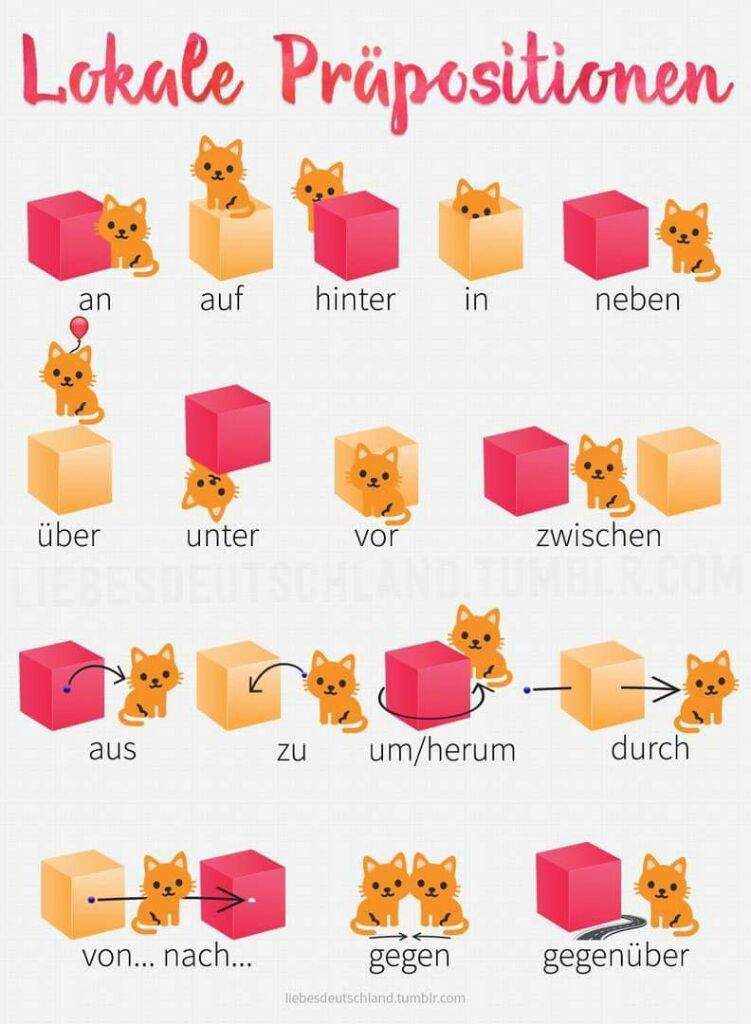

And here's the explanation for "im" vs. "in dem":
faq contractions