#botchannel
1 messages · Page 152 of 1
 tender trellis
 lean flickerBOT
:x: Input is ambiguous. Possible roles are: Level A, Level B, Level C.
 hybrid willow
 small sigil
help lk
lean flickerBOT
lookup <target> <phrase>
**Aliases: **lk, dictcc, dcc, translate
Translates the given phrase into the specified target language using dict.cc. Specify either en or de as targets.
Module: German
 ruby gale
faq all
lean flickerBOT
See a listed FAQ with >faq [name]
:small_blue_diamond: German letters
Aliases: german keyboard, keyboard
:small_blue_diamond: Grammar terms
Aliases: Glossary, Grammatical terms
:small_blue_diamond: Grammatical gender
Aliases: genders, der-die-das, gender
:small_blue_diamond: How to ask a question
Aliases: Translation, Homework
:small_blue_diamond: How to get started
Aliases: Starting out, beginner
:small_blue_diamond: IPA
Aliases: Pronunciation, Sound transcription, International Phonetic Alphabet
:small_blue_diamond: Negation
Aliases: kein, nicht
:small_blue_diamond: Nominative
Aliases: Nominativ
:small_blue_diamond: Omission of movement verbs
:small_blue_diamond: Passive
Aliases: Passiv
:small_blue_diamond: Past Tense
:small_blue_diamond: Prepositions of Place Part 1
Aliases: Nach-In-Auf-Zu
:small_blue_diamond: Resources
Aliases: resource list
:small_blue_diamond: Stative Passive
Aliases: Zustandspassiv, statal passive
:small_blue_diamond: Structure of Konjunktiv II
Aliases: KII 2
Page 2/4 (52 entries)
ruby gale
faq genders
lean flickerBOT
Grammatical gender
German nouns are sorted in three different genders: masculine, neuter and feminine. These have nothing to do with sex or social gender.
The first thing genders will influence are articles like der, das, die. Each word has its own and you better get it right: some words that look identical can have different meanings depending on the gender they're used with. For example:
die Band = the (musical) band,
der Band = the (book) volume,
das Band = the tape.
Some words, mainly trademarks and loanwords, have multiple acceptable genders while having no change in meaning:
der Jogurt = das Jogurt
das Virus = der Virus
These may vary by region or colloquiality.
💢 But WHY, German, WHY ⁉
Gender is actually quite useful! Since sentence structure is less rigid than in English, grammatical case helps you tell the various elements apart (with some practice), and that works through genders: each gender has its own forms, which makes everything a little less ambiguous. Besides, as you've seen with Band above, it allows us to make up words with different meanings that look the same but are not ambiguous, and if that's not magic, I don't know what is. ✨
🙀 But how am I supposed to tell them apart? 🙀
Check out >explain gender patterns. 😉
tender trellis
explain gender patterns
lean flickerBOT
**Feminine words (die)**
- many words ending in
-e(die Nase, die Kiste) - words ending in:
---in(feminine professions/roles): die Verkäuferin, die Lehrerin
---eidie Fischerei, die Bäckerei
---schaftdie Mannschaft, die Gemeinschaft
---heit/-keitdie Freiheit, die Gerechtigkeit
---ungdie Bedeutung, die Achtung
---iondie Aktion, die Religion
---ikdie Logistik, die Logik
---anzwords of classical origin: die Allianz, die Toleranz
---urdie Natur, die Kultur
---tätdie Professionalität, die Kriminalität
Page 4/4
 shrewd forge
sub Reading
 pale beacon
sub Reading
tender trellis
faq most efficient way to learn
lean flickerBOT
Best way to learn German
There isn’t only one “best” way to learn German, especially since different methods work better for different people. However, this FAQ will outline the main aspects of learning efficiently, which you can cater to your needs.
If you’re a beginner, type >faq beginner in #botchannel to see our beginner guide.
Cover all skills
There are many combinations of activities you can use to study and practice a language. How do you know which combinations are suitable? The key is to make sure you cover each of the main skills with at least one activity. Some activities only train one skills, while some train multiple – either is fine, as long as all the 6 skills are covered somewhere in your studies.
The skills
• Reading
• Writing
• Listening
• Speaking
• Grammar
• Vocabulary
Which resources should I use?
It doesn’t really matter which resources you use, as long as you can follow along, and the information is correct and reliable. If you have any doubts about whether a resource is correct, feel free to ask. You do not need to find just one resource and stick to it – in fact, to learn best, it’s recommended that you use a large variety of resources and switch between them when needed.
Type >faq resources in #botchannel to see our list of resources.
On the next page
• Should I study all these skills every day?
• How much time should I dedicate to studying?
Page 1/2
 toxic urchin
faq beginner
lean flickerBOT
How to get started
The simplest way to learn German is to find topics you don’t understand yet and search for explanations of them. This list provides you with a guide for which topics to learn if you are completely new to German. Type the topic into Google (or YouTube) and start learning!
Introduction
1: Alphabet (especially ä, ü, ö and ß)
2: Basic greetings (hello, goodbye, etc.)
Part 1 - Simple Sentence
1: Noun gender & plurals
2: Nominative case (What are cases?)
3: Nominative pronouns (I, you, he, she, etc.)
4: Verbs in present tense
5: Definite/indefinite articles
6: Accusative case (for nouns)
7: Accusative pronouns
8: Word order of simple sentences
9: How to ask questions
See Part 2 on the next page.
Tips
- Always learn the gender of a noun when you learn a new noun
- Learn to use a translation dictionary (e.g. dict.cc, leo.org)
- Use
>faq resourcesto see our list of German learning resources - For listening and pronunciation practice, try watching movies or videos (incl. YouTube)
- You can listen to pronunciation for words on websites like dict.cc, forvo.com, and others
- Practice writing sentences every day (and asking people to correct them)
- Ask as many questions as possible
- Don’t be scared to make mistakes!!!! If you don’t let yourself make mistakes, you will never be able to learn German
Page 1/2
 muted shoal
faq all
lean flickerBOT
See a listed FAQ with >faq [name]
:small_blue_diamond: Accusative
Aliases: Akkusativ
:small_blue_diamond: Adjective Declension
Aliases: adjective endings, Adjektivdeklination
:small_blue_diamond: Anki
Aliases: flashcards
:small_blue_diamond: Beide vs. Beides
Aliases: Beides vs. Beide, Beides, Beide
:small_blue_diamond: Best way to learn German
Aliases: learn fast, learn German fast, learn efficiently, best way to learn, fastest way to learn, most efficient way to learn
:small_blue_diamond: CEFR levels
Aliases: lvl, CEFR
:small_blue_diamond: Cases
Aliases: case, grammatical case
:small_blue_diamond: DACH
:small_blue_diamond: Dative
Aliases: Dativ
:small_blue_diamond: Duolingo
Aliases: duo
:small_blue_diamond: Eszett
Aliases: Scharfes S, ẞ, ß
:small_blue_diamond: FAQ
:small_blue_diamond: Formal and informal speech
Aliases: duzen vs. siezen, Sie, Du vs. Sie
:small_blue_diamond: Gender patterns
:small_blue_diamond: Genitive
Aliases: Genitiv
Page 1/4 (52 entries)
tender trellis
faq pronunciation
lean flickerBOT
IPA
The International Phonetic Alphabet is a system for writing sounds regardless of the language: one sound will have only one letter for it, so it's really helpful for learning pronunciation in any language without relying on approximations.
IPA has a lot of symbols, but you don't need to learn them all.
🔸 What are those // and [] I see around?
Symbols in slashes (like /r/) represent so-called phonemes, units of sound. Each phoneme can be pronounced in different ways depending on where it is in the word. For example, the phoneme /r/ is pronounced [ʁ] in most situations, but [ɐ] after vowels. As you can see, square brackets (like [ʁ]) represent actual sounds. Finally, pointy brackets like ⟨r⟩ represent how a sound is written, which can vary from language to language.
Example: ⟨sprechen⟩ /sprεçən/ [ʃpʁε.çn̩]
🔸 So how to learn it?
All you need to learn is the few symbols used by the language you're interested in. For German, you can look up the relevant letters on Wikipedia: https://en.wikipedia.org/wiki/Help:IPA/Standard_German. Notice the Help:IPA/Language_Name pattern in the URL.
There, you will find a table of symbols with an approximation, but you can also click on each specific symbol to learn exactly how to pronounce it studying the Features section, for example: https://en.wikipedia.org/wiki/Voiceless_palatal_fricative#Features
🔸 Which IPA letters are important for German?
Sounds you are likely to have trouble with are ⟨x⟩, ⟨ç⟩, ⟨ʁ⟩, ⟨ɐ⟩ and several vowels. These are all described in the Wiki link above.
You can use this website to transcribe German words if your dictionary doesn't give an IPA transcription:
http://tom.brondsted.dk/text2phoneme/
 slender rover
public static void main(String[] args){
int x = 0;
1 + 1 = x;

System.out.println(x);
}
compile
public static void main(String[] args){
int x = 0;
1 + 1 = x;

System.out.println(x);
}
 Drakonir
Evaluation failed
1596384609/source.java:1: error: class, interface, or enum expected
public static void main(String[] args){
              ^
1596384609/source.java:3: error: class, interface, or enum expected
1 + 1 = x;
^
1596384609/source.java:5: error: class, interface, or enum expected
System.out.println(x);
^
1596384609/source.java:6: error: class, interface, or enum expected
}
^
4 errors
oh forgot the class
 torn oxide
cefr level a
slender rover
help compile
lean flickerBOT
eval <code>
**Aliases: **compile, evalin
Evaluate the given code using an external compilation service. Any attempt to abuse this command will lead to a permanent blacklist.
Supported languages are: csharp (cs), java, python (py), c, c++ (cpp), haskell (hs), perl, nasm, javascript (js), lisp, kotlin (kt), brainfuck (bf) and rust (rs).
To use the command, specify a code block with your language of choice and provide any desired input after the code block.
Example invocation with input:
```py
print('Hello,', input())
```
Barnabus Sandlers```
*Note: write out the command yourself, the example won't work if you copy it, due to Discord's formatting.*
:small_blue_diamond: Language specific notes:
- C# - the namespace and class must be called `Rextester` and `Program` respectively.
- Java - the class must be called `Rextester`
Module: Eval
torn oxide
faq beginner
lean flickerBOT
How to get started
The simplest way to learn German is to find topics you don’t understand yet and search for explanations of them. This list provides you with a guide for which topics to learn if you are completely new to German. Type the topic into Google (or YouTube) and start learning!
Introduction
1: Alphabet (especially ä, ü, ö and ß)
2: Basic greetings (hello, goodbye, etc.)
Part 1 - Simple Sentence
1: Noun gender & plurals
2: Nominative case (What are cases?)
3: Nominative pronouns (I, you, he, she, etc.)
4: Verbs in present tense
5: Definite/indefinite articles
6: Accusative case (for nouns)
7: Accusative pronouns
8: Word order of simple sentences
9: How to ask questions
See Part 2 on the next page.
Tips
- Always learn the gender of a noun when you learn a new noun
- Learn to use a translation dictionary (e.g. dict.cc, leo.org)
- Use
>faq resourcesto see our list of German learning resources - For listening and pronunciation practice, try watching movies or videos (incl. YouTube)
- You can listen to pronunciation for words on websites like dict.cc, forvo.com, and others
- Practice writing sentences every day (and asking people to correct them)
- Ask as many questions as possible
- Don’t be scared to make mistakes!!!! If you don’t let yourself make mistakes, you will never be able to learn German
Page 1/2
slender rover
class Rextester{

public static void main(String[] args){
int x = 0;
1 + 1 = x;

System.out.println(x);
}
}
compile
class Rextester{

public static void main(String[] args){
int x = 0;
1 + 1 = x;

System.out.println(x);
}
}
Evaluation failed
1472970979/source.java:5: error: unexpected type
1 + 1 = x;
  ^
  required: variable
  found:    value
1 error
sub all
lean flickerBOT
:x: Use the >group joinall command to join all available groups.
torn oxide
group joinall
lean flickerBOT
:white_check_mark: Added you to 16 available groups: Coding, AdvancedReading, Science, Gaming, Ouija, Pronunciation, Food, Activities, Dialects, Grammar, Writing, Translation, Reading, Art, News, AdvancedGrammar.
slender rover
compile
class Rextester{
int x;
public static void main(String[] args){
1 + 1 = x;

System.out.println(x);
}
}
Evaluation failed
180827396/source.java:4: error: unexpected type
1 + 1 = x;
  ^
  required: variable
  found:    value
180827396/source.java:4: error: non-static variable x cannot be referenced from a static context
1 + 1 = x;
        ^
180827396/source.java:6: error: non-static variable x cannot be referenced from a static context
System.out.println(x);
                   ^
3 errors
compile
class Rextester{
public static void main(String[] args){

int x;
1+1 = x;

System.out.println(x);
}
}
Evaluation failed
70869300/source.java:5: error: unexpected type
1+1 = x;
 ^
  required: variable
  found:    value
1 error
why >:(
oh wrong way around
compile
class Rextester{
public static void main(String[] args){

int x;
x = 1 + 1;

System.out.println(x);
}
}
Evaluated code
2
Compilation time: 0.92 sec, absolute running time: 0.24 sec, cpu time: 0.16 sec, memory peak: 34 Mb, absolute service time: 1,31 sec
slender rover
There we go
slender rover
help compile
lean flickerBOT
eval <code>
**Aliases: **compile, evalin
Evaluate the given code using an external compilation service. Any attempt to abuse this command will lead to a permanent blacklist.
Supported languages are: csharp (cs), java, python (py), c, c++ (cpp), haskell (hs), perl, nasm, javascript (js), lisp, kotlin (kt), brainfuck (bf) and rust (rs).
To use the command, specify a code block with your language of choice and provide any desired input after the code block.
Example invocation with input:
```py
print('Hello,', input())
```
Barnabus Sandlers```
*Note: write out the command yourself, the example won't work if you copy it, due to Discord's formatting.*
:small_blue_diamond: Language specific notes:
- C# - the namespace and class must be called `Rextester` and `Program` respectively.
- Java - the class must be called `Rextester`
Module: Eval
 polar drum
help
lean flickerBOT
Generic 1/2 commands
:small_blue_diamond: **getrole** <role name>
Assigns you a role with the given name, removing any previous assignable roles.
Note: Use >sub to subscribe to groups and ping a moderator for the native speaker role.
:small_blue_diamond: **info** [user]
Displays information about the given user. If no user is specified, information about you will be displayed.
:small_blue_diamond: **ping**
Displays how long it takes for a message that the bot sends to arrive.
:small_blue_diamond: **quote** <channel> <message id>
Quotes a message in the channel you are in. Specify the channel that the message was originally posted in and the message id of the message (accessible if you turn on developer mode in your Discord settings).
:small_blue_diamond: **removerole** <role name>
Removes the CEFR role with the given name from you.
Note: Use >unsub for group roles.
Page 1/16 (16 entries)
polar drum
help getrole
lean flickerBOT
getrole <role name>
**Aliases: **gr, cefr
Assigns you a role with the given name, removing any previous assignable roles.
Note: Use >sub to subscribe to groups and ping a moderator for the native speaker role.
Module: Generic
lean flickerBOT
:x: Use the >group joinall command to join all available groups.
 daring hedge
group joinall
lean flickerBOT
:white_check_mark: Added you to 16 available groups: Coding, AdvancedReading, Science, Gaming, Ouija, Pronunciation, Food, Activities, Dialects, Grammar, Writing, Translation, Reading, Art, News, AdvancedGrammar.
 hollow fog
faq
lean flickerBOT
:x: The required argument name is missing.
hollow fog
faq cases
lean flickerBOT
Cases
Cases
German has four grammatical cases (der Fall or der Kasus in German): nominative, accusative, dative, and genitive. A case alters a noun, pronoun, adjective, etc., in some way to mark its grammatical function in a phrase, clause, or sentence. For example, the main function of the nominative (der Nominativ) case is to mark the subject in a sentence:
Ich liebe die deutsche Sprache!
In this sentence, the pronoun ich represents the first person subject and is in the nominative case. Every noun, pronoun, adjective, etc. has form in every case and it is very important to learn all of them. For example, the accusative form of ich is mich:
Die deutsche Sprache liebt mich!
See >explain adjective declension to get started on that. Don't get discouraged by how much there is, it takes some time master.
To see an explanation of the usages of every case, see their individual articles:
>explain nominative
>explain accusative
>explain dative
>explain genitive
lean flickerBOT
Grammatical gender
German nouns are sorted in three different genders: masculine, neuter and feminine. These have nothing to do with sex or social gender.
The first thing genders will influence are articles like der, das, die. Each word has its own and you better get it right: some words that look identical can have different meanings depending on the gender they're used with. For example:
die Band = the (musical) band,
der Band = the (book) volume,
das Band = the tape.
Some words, mainly trademarks and loanwords, have multiple acceptable genders while having no change in meaning:
der Jogurt = das Jogurt
das Virus = der Virus
These may vary by region or colloquiality.
💢 But WHY, German, WHY ⁉
Gender is actually quite useful! Since sentence structure is less rigid than in English, grammatical case helps you tell the various elements apart (with some practice), and that works through genders: each gender has its own forms, which makes everything a little less ambiguous. Besides, as you've seen with Band above, it allows us to make up words with different meanings that look the same but are not ambiguous, and if that's not magic, I don't know what is. ✨
🙀 But how am I supposed to tell them apart? 🙀
Check out >explain gender patterns. 😉
 open grotto
explain gender patterns
lean flickerBOT
**Feminine words (die)**
- many words ending in
-e(die Nase, die Kiste) - words ending in:
---in(feminine professions/roles): die Verkäuferin, die Lehrerin
---eidie Fischerei, die Bäckerei
---schaftdie Mannschaft, die Gemeinschaft
---heit/-keitdie Freiheit, die Gerechtigkeit
---ungdie Bedeutung, die Achtung
---iondie Aktion, die Religion
---ikdie Logistik, die Logik
---anzwords of classical origin: die Allianz, die Toleranz
---urdie Natur, die Kultur
---tätdie Professionalität, die Kriminalität
Page 4/4
open grotto
explain gender patterns
lean flickerBOT
**Feminine words (die)**
- many words ending in
-e(die Nase, die Kiste) - words ending in:
---in(feminine professions/roles): die Verkäuferin, die Lehrerin
---eidie Fischerei, die Bäckerei
---schaftdie Mannschaft, die Gemeinschaft
---heit/-keitdie Freiheit, die Gerechtigkeit
---ungdie Bedeutung, die Achtung
---iondie Aktion, die Religion
---ikdie Logistik, die Logik
---anzwords of classical origin: die Allianz, die Toleranz
---urdie Natur, die Kultur
---tätdie Professionalität, die Kriminalität
Page 4/4
 upper grail
explain accusative
lean flickerBOT
When do I use the accusative case?
The accusative case is mainly used:
- to mark the direct object of many transitive verbs
Ich lese einen Roman.
Er hat die schöne Frau ermordet.
Sie besitzen kein Auto.
- after some prepositions
Danke für deine Hilfe!
Ohne dich kann ich nicht leben.
Sie hatten keine Einwände gegen den Plan.
The following prepositions are always followed by the accusative case:
bis, durch, für, gegen, ohne, um
- to indicate movement in a particular direction in two-way prepositions
Er steigt auf den Gipfel.
Sie hängt das Bild an die Wand.
Ich gehe gleich ins Bett. (ins = in das)
- by adverbials of time and measurement
A definite length or point in time:
Ich habe den ganzen Tag geschlafen.
Sie kommt nächste Woche zurück.
A measurement:
Das Kind ist vier Jahre alt.
Das Tier ist einen Meter groß.
Expressing distance with verbs of motion:
Ich ging die Treppe hinauf.
Ich lief den ganzen Weg zu Fuß.
- in common greetings and wishes
Guten Morgen/Tag/Abend!
Gute Besserung!
Herzlichen Glückwunsch!
Here there is an implicit verb such as 'wünschen', where the greeting/wish is the direct object.
Page 2/2
 manic star
help
lean flickerBOT
Generic 1/2 commands
:small_blue_diamond: **getrole** <role name>
Assigns you a role with the given name, removing any previous assignable roles.
Note: Use >sub to subscribe to groups and ping a moderator for the native speaker role.
:small_blue_diamond: **info** [user]
Displays information about the given user. If no user is specified, information about you will be displayed.
:small_blue_diamond: **ping**
Displays how long it takes for a message that the bot sends to arrive.
:small_blue_diamond: **quote** <channel> <message id>
Quotes a message in the channel you are in. Specify the channel that the message was originally posted in and the message id of the message (accessible if you turn on developer mode in your Discord settings).
:small_blue_diamond: **removerole** <role name>
Removes the CEFR role with the given name from you.
Note: Use >unsub for group roles.
Page 1/16 (16 entries)
manic star
sub
lean flickerBOT
:x: The required argument groupName is missing.
 brisk wagon
faq beginner
lean flickerBOT
How to get started
The simplest way to learn German is to find topics you don’t understand yet and search for explanations of them. This list provides you with a guide for which topics to learn if you are completely new to German. Type the topic into Google (or YouTube) and start learning!
Introduction
1: Alphabet (especially ä, ü, ö and ß)
2: Basic greetings (hello, goodbye, etc.)
Part 1 - Simple Sentence
1: Noun gender & plurals
2: Nominative case (What are cases?)
3: Nominative pronouns (I, you, he, she, etc.)
4: Verbs in present tense
5: Definite/indefinite articles
6: Accusative case (for nouns)
7: Accusative pronouns
8: Word order of simple sentences
9: How to ask questions
See Part 2 on the next page.
Tips
- Always learn the gender of a noun when you learn a new noun
- Learn to use a translation dictionary (e.g. dict.cc, leo.org)
- Use
>faq resourcesto see our list of German learning resources - For listening and pronunciation practice, try watching movies or videos (incl. YouTube)
- You can listen to pronunciation for words on websites like dict.cc, forvo.com, and others
- Practice writing sentences every day (and asking people to correct them)
- Ask as many questions as possible
- Don’t be scared to make mistakes!!!! If you don’t let yourself make mistakes, you will never be able to learn German
Page 1/2
 desert mural
faq best way to learn
lean flickerBOT
Best way to learn German
Should I study all these skills every day?
If you want to study them all every day, you can, but some people may find it easier to focus on particular skills on particular days. For example, on Monday you might choose to do a lot of writing practice, and then on Tuesday you might plan some conversation practice with some speaking partners.
If you try to cover too many different things in one day, then you might be jumping around all over the place and not able to focus on each individual task. It’s also a really good idea to have a different schedule or set of tasks each day to keep things from getting boring. So setting a special schedule or set of tasks for each day of the week - like the Monday writing day, or every Friday you do some grammar exercises followed by watching TV shows, or any other combination you like – is a really good way to go.
How much time should I dedicate to studying?
Everyone has a different schedule and everyone learns at a different pace. It is recommended to study every day, preferably for 30 minutes or more, but taking 1-2 days off is okay. More important is how many hours you study in a week.
A casual pace will be roughly around 5-8 hours a week, a steady pace would be around 10-14 hours a week, and a fast pace (around the same pace as a university subject) will be 15-20 hours a week.
Anything less than 5 hours and you may find it hard to keep improving steadily (but feel free to try it and see how it works for you), while studying one subject for over 25 hours a week may quickly lead to burnout.
How you choose to spread those hours out over the week is not that important; for example, if you have a lot of time on the weekend but not during the week, it’s fine to do short study sessions on weekdays and then dedicate a bunch of time on Saturday and Sunday.
Page 2/2
lean flickerBOT
FAQ not found. Try >explain all.
slender rover
compile ```java
public class Rextester{
public static void main(String[] args){
int[] arr;
arr = new int[] { 5, 3, 9, 2, 8, 1, 7, 6, 4 };
for(int i=1;i<arr.length;i++){
int temp = arr[i];
int hilf = i;
while(hilf>0 && arr[hilf-1]>temp){
arr[hilf] = arr[hilf-1];
hilf = hilf-1;
}
arr[hilf] = temp;
}
   for(int k = 0; k<arr.length - 1;k++){
     System.out.println(arr[k]);
   }
}
}
Evaluation failed
1182278003/source.java:1: error: class Rextester is public, should be declared in a file named Rextester.java
public class Rextester{
       ^
1 error
oh lol
compile
class Rextester{

   public static void main(String[] args){
       int[] arr;
       arr = new int[] { 5, 3, 9, 2, 8, 1, 7, 6, 4 };
       for(int i=1;i<arr.length;i++){
          int temp = arr[i];
          int hilf = i;
          while(hilf>0 && arr[hilf-1]>temp){
             arr[hilf] = arr[hilf-1];
             hilf = hilf-1;
          }
          arr[hilf] = temp;
       }

       for(int k = 0; k<arr.length - 1;k++){
         System.out.println(arr[k]);
       }
  }
}
Evaluated code
1
2
3
4
5
6
7
8
Compilation time: 1.62 sec, absolute running time: 0.22 sec, cpu time: 0.15 sec, memory peak: 34 Mb, absolute service time: 1,97 sec
lean flickerBOT
session list
**Short aliases: **sessions, lessons
**Aliases: **session all, session show
Shows a list of all upcoming sessions.
Module: Session Schedule
 obtuse mist
help session
lean flickerBOT
session 1/2
**Alias: **lesson
Commands for the bot's session scheduling system.
Group moderators can edit and delete existing sessions for their group.
:small_blue_diamond: **session cancel** <id>
**Aliases: **session delete, session remove
Cancels the session with the given id. Use >session list to get the IDs of all sessions.
:small_blue_diamond: **session create** <group name> <time> <description>
**Alias: **session new
Create a new session for the group with the specified group name. Specify a group name, a time in a short time format (e.g., 1y, 7w 2mo, 1h30m) or a long format (e.g, 2020-12-31 23:59), and a brief description of your session.
:small_blue_diamond: **session edit** <id> <description>
**Alias: **session description
Replaces the description of the session with the given id.
:small_blue_diamond: **session info** <id>
Shows all posts for the session with the given id.
:small_blue_diamond: **session list**
**Short aliases: **sessions, lessons
**Aliases: **session all, session show
Shows a list of all upcoming sessions.
Module: Session Schedule
obtuse mist
session info 37
lean flickerBOT
1 month, 2 weeks and 23 hours ago - (Grammar) held by Bluwuleinchen
Session Description
lesson of n-declination, also known as weak masculine verbs. A2-B2 target level
Posted 1 month, 3 weeks and 1 day ago
Hello everyone!
Ill be running a lesson on n-declination/weak nouns on the 27th at 11.00 UTC.
Get keen!
This topic is about A2-B2 level and the only prerequisite knowledge you need is an understanding (can be shaky) of cases in German, as this topic relies upon them quite a bit. But as per usual all are welcome to attend!
Posted 1 month, 2 weeks and 23 hours ago
Hey everyone!
Lesson on n-declension in 25 minutes. :D)
Type `>session list` to see a list of all sessions.
lean flickerBOT
This session does not yet have any further details.
obtuse mist
session info 38
lean flickerBOT
3 weeks, 3 days and 5 minutes ago - (Advancedreading) held by Bluwuleinchen
Session Description
Momo Vorlesen: von 4. Kapitel an
Posted 4 weeks, 12 hours and 52 minutes ago
Hallo allerseits!
Wir lesen dieses Wochenende Momo vor!
Whoo! Schon so lange her
Das ziel unserer Lesestunde ist es; auf Deutsch vorzulesen, dann mit anderen Wörtern auf Deutsch zu erklären, was passiert ist.
Wir lesen von Anfang des 4. Kapitels an vor, da wir da beim letzen mal aufgehört haben.
Zeitpunkt: Sonntag, 10 UTC
Treffpunkt: im Lessons-Kanal
Ich hoffe ihr macht auch mit ❤️
Posted 3 weeks, 3 days and 30 minutes ago
Wir fangen in etwa 25 Minuten an im lessons-Kanal
Type `>session list` to see a list of all sessions.
obtuse mist
session create Advancedreading 3d23h53m Momo Vorlesen: Kapitel 5
lean flickerBOT
Okay @obtuse mist. Your session has been scheduled for in 3 days, 23 hours and 53 minutes.
obtuse mist
sessions
lean flickerBOT
Upcoming Sessions
In 3 days, 23 hours and 52 minutes (2020-11-15 at 10:00 UTC) held by Bluwuleinchen
[ID: 40] (Advancedreading) Momo Vorlesen: Kapitel 5
Type `>session info [ID#]` e.g. `>session info 3` for more detail about a specific session.
 dreamy sphinx
session list
lean flickerBOT
Upcoming Sessions
In 3 days, 23 hours and 45 minutes (2020-11-15 at 10:00 UTC) held by Bluwuleinchen
[ID: 40] (Advancedreading) Momo Vorlesen: Kapitel 5
Type `>session info [ID#]` e.g. `>session info 3` for more detail about a specific session.
 undone tusk
cefr C
lean flickerBOT
:white_check_mark: Your current CEFR role has been replaced with Level C.
undone tusk
🎉
 glad eagle
 mossy peak
faq resources
lean flickerBOT
Resources
 crisp portal
faq resources
lean flickerBOT
Resources
crisp portal
faq beginner
lean flickerBOT
How to get started
The simplest way to learn German is to find topics you don’t understand yet and search for explanations of them. This list provides you with a guide for which topics to learn if you are completely new to German. Type the topic into Google (or YouTube) and start learning!
Introduction
1: Alphabet (especially ä, ü, ö and ß)
2: Basic greetings (hello, goodbye, etc.)
Part 1 - Simple Sentence
1: Noun gender & plurals
2: Nominative case (What are cases?)
3: Nominative pronouns (I, you, he, she, etc.)
4: Verbs in present tense
5: Definite/indefinite articles
6: Accusative case (for nouns)
7: Accusative pronouns
8: Word order of simple sentences
9: How to ask questions
See Part 2 on the next page.
Tips
- Always learn the gender of a noun when you learn a new noun
- Learn to use a translation dictionary (e.g. dict.cc, leo.org)
- Use
>faq resourcesto see our list of German learning resources - For listening and pronunciation practice, try watching movies or videos (incl. YouTube)
- You can listen to pronunciation for words on websites like dict.cc, forvo.com, and others
- Practice writing sentences every day (and asking people to correct them)
- Ask as many questions as possible
- Don’t be scared to make mistakes!!!! If you don’t let yourself make mistakes, you will never be able to learn German
Page 1/2
crisp portal
faq resources
lean flickerBOT
Resources
 sullen pelican
sub translation
 green beacon
sub arts&crafts
lean flickerBOT
:x: Group arts&crafts not found.
Try >groups to see a list of all groups or >group joinall to join all available groups.
green beacon
group joinall
lean flickerBOT
:white_check_mark: Added you to 11 available groups: Coding, AdvancedReading, Ouija, Pronunciation, Food, Activities, Dialects, Translation, Art, News, AdvancedGrammar.
undone tusk
sub coding
 uneven tendon
play
lean flickerBOT
:x: The required argument prompt is missing.
 sour panther

All credit goes to cosmoAl 123 for making the video
https://www.youtube.com/channel/UC6t6O8Yna3r3QxO1iSkF_xg/
uneven tendon
All credit goes to cosmoAl 123 for making the video
https://www.youtube.com/channel/UC6t6O8Yna3r3QxO1iSkF_xg/
lean flickerBOT
:x: The requested track is longer than 12 minutes and cannot be played.
uneven tendon
play polish cow
lean flickerBOT
Polish Cow (Full Version) [00:04:03] added to the queue.
sour panther
help>
 smoky canyon
stop
lean flickerBOT
:x: This command can only be used by a moderator.
lean flickerBOT
:x: The requested track is longer than 12 minutes and cannot be played.
uneven tendon
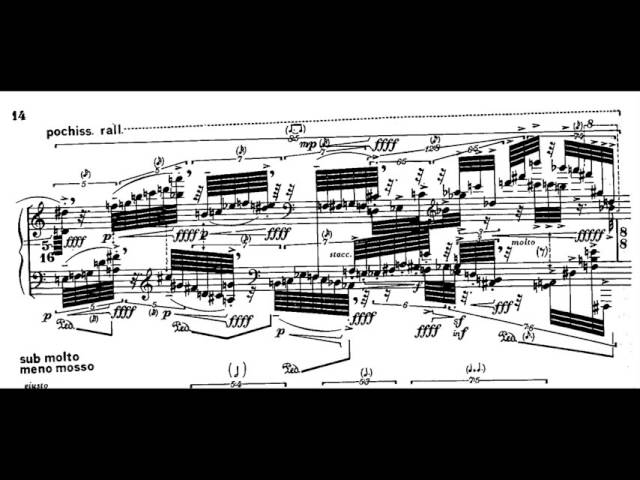
Marino Formenti (piano)
there are most likely some editing mistakes ... sorry for these...
Just for promotion.
Please write me a direct message if you have complains about this upload concerning copyright issues. In that case, I will delete the video immediately.
lean flickerBOT
Brian Ferneyhough - Lemma-Icon-Epigram (w/ score) (for piano solo) (1981) [00:11:33] added to the queue.
uneven tendon
play Dillinger Escape Plan
lean flickerBOT
THE DILLINGER ESCAPE PLAN - "Milk Lizard" (Official Music Video) [00:03:57] added to the queue.
lean flickerBOT
Norma Jean - Wrongdoers [00:04:49] added to the queue.
uneven tendon
skip
lean flickerBOT
:x: The requested track is longer than 12 minutes and cannot be played.
uneven tendon
play anton webern pieces for orchestra
lean flickerBOT
Anton Webern - Five Pieces for Orchestra Op. 10 (1913) [00:04:20] added to the queue.
uneven tendon
skip
smoky canyon

【CLOVER】 Still Dancing (Music Video)
Brenda is a charismatic tap dancer that was struck with a disease that would soon paralyze her whole body. She teaches kel that even if it seems like your dreams are out of reach you can still keep your hopes high and keep trying.
【CLOVER】 Still Dancing (Music Video) [00:03:53] added to the queue.
smoky canyon

Caravan Palace plays Rock It For Me @ Le Trianon in Paris
Catch us LIVE : http://www.caravanpalace.com/tour
-------------------------------------------------
Follow us:
http://www.facebook.com/CaravanPalace
http://www.caravanpalace.com/
https://twitter.com/caravanpalace...
lean flickerBOT
Caravan Palace - Rock It For Me (live at Le Trianon, Paris) [00:04:28] added to the queue.
smoky canyon
skip
uneven tendon
play airmail special
lean flickerBOT
Ella Fitzgerald-Air Mail Special [00:04:17] added to the queue.
 scenic lintel
tex \begin{align*} & x + y \ & z + x \end{align*}
lean flickerBOT
:x: Latex rendering failed. Error: pdflatex exited with non-zero return code
smoky canyon

Provided to YouTube by Universal Music Group
Jumpin' Jack · Big Bad Voodoo Daddy
Big Bad Voodoo Daddy
℗ 1998 Coolsville Records
Released on: 1998-01-01
Producer, Studio Personnel, Engineer, Mixer: Michael Frondelli
Producer: Brad Benedict
Producer: Scotty Morris
Composer...
lean flickerBOT
Jumpin' Jack [00:04:48] added to the queue.
lean flickerBOT
Darkseid Vs Thanos - Cartoon Beatbox Battles [00:08:20] added to the queue.
smoky canyon

K-PoM vs KOTCHA at Grand Beatbox TAG TEAM Battle 2018 in the Semi Final. Thanks K-PoM beatbox & Kotcha beatbox for this amazing beatbox battle. It stands out for sure! Thanks NaPoM, Kenny Urban, D-Low & Frosty.
Check out the full Grand Beatbox Tag Team Battle 2018 Playlist he...
lean flickerBOT
K-PoM vs KOTCHA | Grand Beatbox TAG TEAM Battle 2018 | SEMI FINAL [00:07:52] added to the queue.
scenic lintel
tex \begin{align*}
&line\
&secondline\
\end{align*}
 lean flickerBOT
Nahko - Tus Pies (Cover by Sunny Ray) [00:05:51] added to the queue.
lean flickerBOT
Sunny Ray [00:02:38] added to the queue.
uneven tendon

Provided to YouTube by The Orchard Enterprises
Choral: Nun seid ihr wohl gerochen · The King's Singers / The WDR Big Band
J.S. Bach: Christmas Oratorio
℗ 2010 Signum Records
Released on: 2010-10-15
Auto-generated by YouTube.
lean flickerBOT
Choral: Nun seid ihr wohl gerochen [00:05:26] added to the queue.
uneven tendon
queue
lean flickerBOT
:notes: 5 songs currently in the queue.
:small_blue_diamond: **1.** `Darkseid Vs Thanos - Cartoon Beatbox Battles`
Duration: 00:08:20, requested by: @uneven tendon
:small_blue_diamond: **2.** `K-PoM vs KOTCHA | Grand Beatbox TAG TEAM Battle 2018 | SEMI FINAL`
Duration: 00:07:52, requested by: @smoky canyon
:small_blue_diamond: **3.** `Nahko - Tus Pies (Cover by Sunny Ray)`
Duration: 00:05:51, requested by: @uneven tendon
:small_blue_diamond: **4.** `Sunny Ray`
Duration: 00:02:38, requested by: @uneven tendon
:small_blue_diamond: **5.** `Choral: Nun seid ihr wohl gerochen`
Duration: 00:05:26, requested by: @uneven tendon
Total duration: 00:30:07
uneven tendon
skip
smoky canyon

The 2012 single "Voodoo Mon Amour" from the upcoming Diablo Swing Orchestra album "Pandora's Piñata", released May 22nd on Candlelight Records (UK/EU) and The Laser's Edge/Sensory Records (USA/Can).
Music & lyrics by Diablo Swing Orchestra
℗+© Diablo Swing Orchestra 2012
...
lean flickerBOT
Diablo Swing Orchestra — Voodoo Mon Amour [00:04:32] added to the queue.
uneven tendon
§
smoky canyon

Provided to YouTube by Universal Music Group
Karma Bonfire · Diablo Swing Orchestra
Pacifisticuffs
℗ 2017 Tanglade Ltd t/a Candlelight Records
Released on: 2017-12-12
Producer, Recording Producer: Roberto Laghi
Producer, Recording Producer, Associated Performer, Guitar...
lean flickerBOT
Karma Bonfire [00:04:15] added to the queue.
smoky canyon
skip
uneven tendon
skip
uneven tendon
skip
lean flickerBOT
:x: Group a not found.
Try >groups to see a list of all groups or >group joinall to join all available groups.
 mystic ore
sub a level
lean flickerBOT
:x: Group a level not found.
Try >groups to see a list of all groups or >group joinall to join all available groups.
mystic ore
cefr level a
smoky canyon
 lean flickerBOT
FAKE TYPE. - Devil's Wedding [00:04:39] added to the queue.
uneven tendon

Provided to YouTube by CDBaby
The Most Wanted Song · Dave Soldier, Komar & Melamid
The People's Choice Music
℗ 2001 Mulatta Records
Released on: 2001-01-01
Auto-generated by YouTube.
lean flickerBOT
The Most Wanted Song [00:05:09] added to the queue.
 full sierra
this song gave ma headache -.- xDD
uneven tendon
play cooking by the book
lean flickerBOT
Lazy Town-Cooking by the book remix ft. Lil Jon [00:01:19] added to the queue.
uneven tendon
skip
 grand sapphire
faq cefr
lean flickerBOT
CEFR levels
If you see something like A1, B2 or C1, these represent the proficiency of a speaker in a language they're not native in, and are called CEFR levels. They are valid for any language, not only German!
Roughly speaking, A levels are beginners and C levels are experts. Remember that CEFR level are self-assessed and indicative!
You can see more specific names and descriptions on the Wikipedia page:
https://en.wikipedia.org/wiki/Common_European_Framework_of_Reference_for_Languages
🗨 How do I know what level I am?
If the table on Wikipedia is too generic for you, you can try using this one here:
https://rm.coe.int/168045bb52
Just check each column one at a time: if you can do all it describes, move to the next column. Your level is the highest where you can do the most things.
Alternatively, you can use this questionnaire to estimate your level more accurately:
https://www.laits.utexas.edu/fi/sites/laits.utexas.edu.fi/files/Self Assessment Checklist European.pdf
grand sapphire
nativ speaker
sour panther

Provided to YouTube by Believe SAS
Song for Denise · Piano Fantasia · Mike Serbee · Tidi · Mike Serbee · Tidi
Best of Collector: Piano Fantasia
℗ C.r.c. Editions / Musiques & Solutions
Released on: 2012-01-01
Auto-generated by YouTube.
lean flickerBOT
:x: The bot is already active in a different channel.
sour panther
Provided to YouTube by Believe SAS
Song for Denise · Piano Fantasia · Mike Serbee · Tidi · Mike Serbee · Tidi
Best of Collector: Piano Fantasia
℗ C.r.c. Editions / Musiques & Solutions
Released on: 2012-01-01
Auto-generated by YouTube.
lean flickerBOT
:x: The bot is already active in a different channel.
lean flickerBOT
Generic 1/2 commands
:small_blue_diamond: **getrole** <role name>
Assigns you a role with the given name, removing any previous assignable roles.
Note: Use >sub to subscribe to groups and ping a moderator for the native speaker role.
:small_blue_diamond: **info** [user]
Displays information about the given user. If no user is specified, information about you will be displayed.
:small_blue_diamond: **ping**
Displays how long it takes for a message that the bot sends to arrive.
:small_blue_diamond: **quote** <channel> <message id>
Quotes a message in the channel you are in. Specify the channel that the message was originally posted in and the message id of the message (accessible if you turn on developer mode in your Discord settings).
:small_blue_diamond: **removerole** <role name>
Removes the CEFR role with the given name from you.
Note: Use >unsub for group roles.
Page 1/16 (16 entries)
open grotto
explain gender patterns
lean flickerBOT
**Feminine words (die)**
- many words ending in
-e(die Nase, die Kiste) - words ending in:
---in(feminine professions/roles): die Verkäuferin, die Lehrerin
---eidie Fischerei, die Bäckerei
---schaftdie Mannschaft, die Gemeinschaft
---heit/-keitdie Freiheit, die Gerechtigkeit
---ungdie Bedeutung, die Achtung
---iondie Aktion, die Religion
---ikdie Logistik, die Logik
---anzwords of classical origin: die Allianz, die Toleranz
---urdie Natur, die Kultur
---tätdie Professionalität, die Kriminalität
Page 4/4
open grotto
explain all
lean flickerBOT
See a listed FAQ with >faq [name]
:small_blue_diamond: Study Vocabulary
Aliases: unterrichten, lernen, beibringen
:small_blue_diamond: Swiss German
Aliases: gsw
:small_blue_diamond: Switzerland
Aliases: Schweiz, CH
:small_blue_diamond: Umlauts
Aliases: Umlaute, Umlaut, ä, ö, ü
:small_blue_diamond: Usage of Konjunktiv II
Aliases: KII 1
:small_blue_diamond: Usage of zu
Aliases: um zu
:small_blue_diamond: Vorgangspassiv
:small_blue_diamond: Weak Nouns
Aliases: N-Declension, N-Deklination
:small_blue_diamond: Word Order for Nouns & Pronouns
:small_blue_diamond: Word Order for Verbs
Aliases: word order verbs, word order of verbs
:small_blue_diamond: absentive
Aliases: absentiv
:small_blue_diamond: beginner 2
:small_blue_diamond: birthdays
:small_blue_diamond: conjugation
Aliases: praesens, präsens, present tense, verbs, verb conjugation, Konjugation
:small_blue_diamond: doch
Page 3/4 (52 entries)
open grotto
explain grammatical gender
lean flickerBOT
Grammatical gender
German nouns are sorted in three different genders: masculine, neuter and feminine. These have nothing to do with sex or social gender.
The first thing genders will influence are articles like der, das, die. Each word has its own and you better get it right: some words that look identical can have different meanings depending on the gender they're used with. For example:
die Band = the (musical) band,
der Band = the (book) volume,
das Band = the tape.
Some words, mainly trademarks and loanwords, have multiple acceptable genders while having no change in meaning:
der Jogurt = das Jogurt
das Virus = der Virus
These may vary by region or colloquiality.
💢 But WHY, German, WHY ⁉
Gender is actually quite useful! Since sentence structure is less rigid than in English, grammatical case helps you tell the various elements apart (with some practice), and that works through genders: each gender has its own forms, which makes everything a little less ambiguous. Besides, as you've seen with Band above, it allows us to make up words with different meanings that look the same but are not ambiguous, and if that's not magic, I don't know what is. ✨
🙀 But how am I supposed to tell them apart? 🙀
Check out >explain gender patterns. 😉
lean flickerBOT
:x: This command can only be used by a moderator.
uneven tendon
skip
lean flickerBOT
The bot is not playing any songs.
sour panther
Provided to YouTube by Believe SAS
Song for Denise · Piano Fantasia · Mike Serbee · Tidi · Mike Serbee · Tidi
Best of Collector: Piano Fantasia
℗ C.r.c. Editions / Musiques & Solutions
Released on: 2012-01-01
Auto-generated by YouTube.
lean flickerBOT
Song for Denise [00:03:13] added to the queue.
uneven tendon
 lean flickerBOT
putinwave 翁可縁 [00:10:53] added to the queue.
uneven tendon
skip

Vaporwave remix of Mr. Probz - Waves (Robin Schulz Remix Radio Edit) (https://www.youtube.com/watch?v=pUjE9H8QlA4).
lean flickerBOT
Vaporwaves 波 [00:05:09] added to the queue.
uneven tendon
skip
sour panther
Provided to YouTube by Believe SAS
Song for Denise · Piano Fantasia · Mike Serbee · Tidi · Mike Serbee · Tidi
Best of Collector: Piano Fantasia
℗ C.r.c. Editions / Musiques & Solutions
Released on: 2012-01-01
Auto-generated by YouTube.
lean flickerBOT
Song for Denise [00:03:13] added to the queue.
sour panther
stop
lean flickerBOT
:x: This command can only be used by a moderator.
sour panther
skip
lean flickerBOT
Not enough members to play songs. Bye.
sour panther
Provided to YouTube by Believe SAS
Song for Denise · Piano Fantasia · Mike Serbee · Tidi · Mike Serbee · Tidi
Best of Collector: Piano Fantasia
℗ C.r.c. Editions / Musiques & Solutions
Released on: 2012-01-01
Auto-generated by YouTube.
lean flickerBOT
:x: There must be at least two users in a voice channel before the bot can start playing songs.
 sullen sail
faq beginner
lean flickerBOT
How to get started
The simplest way to learn German is to find topics you don’t understand yet and search for explanations of them. This list provides you with a guide for which topics to learn if you are completely new to German. Type the topic into Google (or YouTube) and start learning!
Introduction
1: Alphabet (especially ä, ü, ö and ß)
2: Basic greetings (hello, goodbye, etc.)
Part 1 - Simple Sentence
1: Noun gender & plurals
2: Nominative case (What are cases?)
3: Nominative pronouns (I, you, he, she, etc.)
4: Verbs in present tense
5: Definite/indefinite articles
6: Accusative case (for nouns)
7: Accusative pronouns
8: Word order of simple sentences
9: How to ask questions
See Part 2 on the next page.
Tips
- Always learn the gender of a noun when you learn a new noun
- Learn to use a translation dictionary (e.g. dict.cc, leo.org)
- Use
>faq resourcesto see our list of German learning resources - For listening and pronunciation practice, try watching movies or videos (incl. YouTube)
- You can listen to pronunciation for words on websites like dict.cc, forvo.com, and others
- Practice writing sentences every day (and asking people to correct them)
- Ask as many questions as possible
- Don’t be scared to make mistakes!!!! If you don’t let yourself make mistakes, you will never be able to learn German
Page 1/2
sullen sail
cefr A
tender trellis
sub all
lean flickerBOT
:x: Use the >group joinall command to join all available groups.
tender trellis
group joinall
lean flickerBOT
:white_check_mark: Added you to 15 available groups: Coding, AdvancedReading, Gaming, Ouija, Pronunciation, Food, Activities, Dialects, Grammar, Writing, Translation, Reading, Art, News, AdvancedGrammar.
obtuse mist
faq Sie
lean flickerBOT
Formal and informal speech
You may have heard of du vs. Sie. What's the difference?
Du is informal speech, and you use it when talking to friends, family, children, young people, and on the internet. The verb meaning to be on du-basis with someone is duzen, and you can use it to ask whether it's ok to switch from Sie to du. While talking to multiple people on informal basis, the plural pronoun is ihr.
- Hast du Hunger?
- Du bist ein Idiot.
- Ich komme mit dir.
- Was macht ihr?
Sie (note that the capitalisation is important here) is formal speech, and it's used with strangers, older people, on the workplace (unless you've agreed to use du instead), and in other formal situations. The counterpart to duzen is siezen. This pronoun can be used both for singular and plural, so, when you're addressing multiple people formally, you use Sie. Grammatically, Sie declines like the 3rd person plural pronoun sie, even when talking to just one person.
- Haben Sie Hunger?
- Sie sind ein Idiot.
- Ich komme mit Ihnen.
- Was machen Sie?
 digital cipher
hello
obtuse mist
help session
lean flickerBOT
session 1/2
**Alias: **lesson
Commands for the bot's session scheduling system.
Group moderators can edit and delete existing sessions for their group.
:small_blue_diamond: **session cancel** <id>
**Aliases: **session delete, session remove
Cancels the session with the given id. Use >session list to get the IDs of all sessions.
:small_blue_diamond: **session create** <group name> <time> <description>
**Alias: **session new
Create a new session for the group with the specified group name. Specify a group name, a time in a short time format (e.g., 1y, 7w 2mo, 1h30m) or a long format (e.g, 2020-12-31 23:59), and a brief description of your session.
:small_blue_diamond: **session edit** <id> <description>
**Alias: **session description
Replaces the description of the session with the given id.
:small_blue_diamond: **session info** <id>
Shows all posts for the session with the given id.
:small_blue_diamond: **session list**
**Short aliases: **sessions, lessons
**Aliases: **session all, session show
Shows a list of all upcoming sessions.
Module: Session Schedule
digital cipher
i think ive set up a session once
obtuse mist
The most important ones there are the create and ping commands
Uhh then you probs dont need a tut haha
obtuse mist
Yeah pretty much, with the short little description
Then you use the ping command in #lessons to attacht a bigger description and notify participants
digital cipher
yup
still kinda apprehensive abt hosting big reading one tho, cuz like... aaaa people
obtuse mist
session ping <id> <fat description>
lean flickerBOT
:x: The argument id (<id> ) is malformed.
digital cipher
oh it has a big description option too?
 old slate
I'd be happy to assist, Doodle.
digital cipher
i didn't know that
hmmm im about to finish der kleine prinz so idk what we would read
obtuse mist
Yeah the general process is to create a session here with a short description. Then go to lessons and issue the ping with the bigger more detailed info section
Using the session ping command will attach it to your lesson automatically
Das Dschungelbuch
If that’s available
tender trellis
faq homework
lean flickerBOT
How to ask a question
If you want something corrected, you can put it in a Google Doc and share a link with permission level »can suggest« in #writing .
Don't ask us to translate something for you outright: that takes professional time and effort and we're not here for that. You can try your luck with deepl.com.
For single words, use dict.cc or another dictionary, it'll be quicker.
If you want to know if/how a word can be used, provide some context to help us understand the situation.
Don't ask us to do your homework or exams for you! Show us your best attempt at something and try to pinpoint what exactly you don't understand.
 torpid night
On that topic, I just found two german kid's books around my house
 wispy jackal
faq beginner
lean flickerBOT
How to get started
The simplest way to learn German is to find topics you don’t understand yet and search for explanations of them. This list provides you with a guide for which topics to learn if you are completely new to German. Type the topic into Google (or YouTube) and start learning!
Introduction
1: Alphabet (especially ä, ü, ö and ß)
2: Basic greetings (hello, goodbye, etc.)
Part 1 - Simple Sentence
1: Noun gender & plurals
2: Nominative case (What are cases?)
3: Nominative pronouns (I, you, he, she, etc.)
4: Verbs in present tense
5: Definite/indefinite articles
6: Accusative case (for nouns)
7: Accusative pronouns
8: Word order of simple sentences
9: How to ask questions
See Part 2 on the next page.
Tips
- Always learn the gender of a noun when you learn a new noun
- Learn to use a translation dictionary (e.g. dict.cc, leo.org)
- Use
>faq resourcesto see our list of German learning resources - For listening and pronunciation practice, try watching movies or videos (incl. YouTube)
- You can listen to pronunciation for words on websites like dict.cc, forvo.com, and others
- Practice writing sentences every day (and asking people to correct them)
- Ask as many questions as possible
- Don’t be scared to make mistakes!!!! If you don’t let yourself make mistakes, you will never be able to learn German
Page 1/2
 worn spruce
faq cefr
lean flickerBOT
CEFR levels
If you see something like A1, B2 or C1, these represent the proficiency of a speaker in a language they're not native in, and are called CEFR levels. They are valid for any language, not only German!
Roughly speaking, A levels are beginners and C levels are experts. Remember that CEFR level are self-assessed and indicative!
You can see more specific names and descriptions on the Wikipedia page:
https://en.wikipedia.org/wiki/Common_European_Framework_of_Reference_for_Languages
🗨 How do I know what level I am?
If the table on Wikipedia is too generic for you, you can try using this one here:
https://rm.coe.int/168045bb52
Just check each column one at a time: if you can do all it describes, move to the next column. Your level is the highest where you can do the most things.
Alternatively, you can use this questionnaire to estimate your level more accurately:
https://www.laits.utexas.edu/fi/sites/laits.utexas.edu.fi/files/Self Assessment Checklist European.pdf
tender trellis
cefr
lean flickerBOT
:x: The required argument roleName is missing.
tender trellis
cefr level b
lean flickerBOT
:white_check_mark: Your current CEFR role has been replaced with Level B.
 normal void
faq cefr
lean flickerBOT
CEFR levels
If you see something like A1, B2 or C1, these represent the proficiency of a speaker in a language they're not native in, and are called CEFR levels. They are valid for any language, not only German!
Roughly speaking, A levels are beginners and C levels are experts. Remember that CEFR level are self-assessed and indicative!
You can see more specific names and descriptions on the Wikipedia page:
https://en.wikipedia.org/wiki/Common_European_Framework_of_Reference_for_Languages
🗨 How do I know what level I am?
If the table on Wikipedia is too generic for you, you can try using this one here:
https://rm.coe.int/168045bb52
Just check each column one at a time: if you can do all it describes, move to the next column. Your level is the highest where you can do the most things.
Alternatively, you can use this questionnaire to estimate your level more accurately:
https://www.laits.utexas.edu/fi/sites/laits.utexas.edu.fi/files/Self Assessment Checklist European.pdf
normal void
cefr A2
crisp portal
faq cefr
lean flickerBOT
CEFR levels
If you see something like A1, B2 or C1, these represent the proficiency of a speaker in a language they're not native in, and are called CEFR levels. They are valid for any language, not only German!
Roughly speaking, A levels are beginners and C levels are experts. Remember that CEFR level are self-assessed and indicative!
You can see more specific names and descriptions on the Wikipedia page:
https://en.wikipedia.org/wiki/Common_European_Framework_of_Reference_for_Languages
🗨 How do I know what level I am?
If the table on Wikipedia is too generic for you, you can try using this one here:
https://rm.coe.int/168045bb52
Just check each column one at a time: if you can do all it describes, move to the next column. Your level is the highest where you can do the most things.
Alternatively, you can use this questionnaire to estimate your level more accurately:
https://www.laits.utexas.edu/fi/sites/laits.utexas.edu.fi/files/Self Assessment Checklist European.pdf
lean flickerBOT
:x: Group computer not found.
Try >groups to see a list of all groups or >group joinall to join all available groups.
lean flickerBOT
These groups are currently accessible
News
Announcements! Subscribe for pings!
Grammar
Lessons! Subscribe for pings!
AdvancedReading
Like Reading but only B2+ level content.
AdvancedGrammar
Like Grammar but only B2+ level content.
Activities
Lessons! Subscribe for pings!
Reading
Lessons! Subscribe for pings!
Translation
Offers weekly sentences to translate.
Writing
Join to get weekly and monthly prompts!
Pronunciation
Offers weekly texts to practise pronunciation.
Dialects
A group to discuss German dialects.
Science
STEM-related topics.
Gaming
All gaming-related topics.
Ouija
A Ouija-style game just for fun.
Food
A group for food talks.
Coding
For all the coding nerds.
Type >sub to join a group or >group joinall to join all available groups .
lean flickerBOT
These groups are currently accessible
Art
A group for sharing self-made art.
Type >sub to join a group or >group joinall to join all available groups .
scenic lintel
eval
for i in range(10):
  print(i)
else:
  print("else")
 Arc676
Evaluated code
0
1
2
3
4
5
6
7
8
9
else
Absolute running time: 0.19 sec, cpu time: 0.03 sec, memory peak: 8 Mb, absolute service time: 0,33 sec
lean flickerBOT
:white_check_mark: Your current CEFR role has been replaced with Level A.
tender trellis
cefr K
lean flickerBOT
:x: No such role exists. Possible roles are: Level A, Level B, Level C.
 cyan idol
help
lean flickerBOT
Generic 1/2 commands
:small_blue_diamond: **getrole** <role name>
Assigns you a role with the given name, removing any previous assignable roles.
Note: Use >sub to subscribe to groups and ping a moderator for the native speaker role.
:small_blue_diamond: **info** [user]
Displays information about the given user. If no user is specified, information about you will be displayed.
:small_blue_diamond: **ping**
Displays how long it takes for a message that the bot sends to arrive.
:small_blue_diamond: **quote** <channel> <message id>
Quotes a message in the channel you are in. Specify the channel that the message was originally posted in and the message id of the message (accessible if you turn on developer mode in your Discord settings).
:small_blue_diamond: **removerole** <role name>
Removes the CEFR role with the given name from you.
Note: Use >unsub for group roles.
Page 1/16 (16 entries)
cyan idol
ping
lean flickerBOT
:ping_pong: Pong! | 151ms
cyan idol
getrole native speaker
lean flickerBOT
:x: You cannot assign yourself the Native Speaker role. You must ask a moderator.
cyan idol
sub
lean flickerBOT
:x: The required argument groupName is missing.
cyan idol
info
lean flickerBOT

Information about FurkanYu#2611
Name
@cyan idol
ID
356219220356235278
Joined
21/10/2020 22:47 (3 weeks, 12 hours and 54 minutes ago)
Account created
09/09/2017 23:28 (3 years, 2 months and 2 days ago)
 frosty sail
info
lean flickerBOT

Information about Lenorii#0804
Name
@frosty sail
ID
424941106178949121
Joined
28/10/2020 21:37 (2 weeks, 15 hours and 47 minutes ago)
Account created
18/03/2018 14:44 (2 years, 7 months and 3 weeks ago)
 tight heath
help
lean flickerBOT
Generic 1/2 commands
:small_blue_diamond: **getrole** <role name>
Assigns you a role with the given name, removing any previous assignable roles.
Note: Use >sub to subscribe to groups and ping a moderator for the native speaker role.
:small_blue_diamond: **info** [user]
Displays information about the given user. If no user is specified, information about you will be displayed.
:small_blue_diamond: **ping**
Displays how long it takes for a message that the bot sends to arrive.
:small_blue_diamond: **quote** <channel> <message id>
Quotes a message in the channel you are in. Specify the channel that the message was originally posted in and the message id of the message (accessible if you turn on developer mode in your Discord settings).
:small_blue_diamond: **removerole** <role name>
Removes the CEFR role with the given name from you.
Note: Use >unsub for group roles.
Page 1/16 (16 entries)
tight heath
help
lean flickerBOT
Session Schedule commands
:small_blue_diamond: **📒 session**
Commands for the bot's session scheduling system.
Group moderators can edit and delete existing sessions for their group.
Page 16/16 (16 entries)
 quick spire
sessions
lean flickerBOT
Upcoming Sessions
In 2 days, 17 hours and 51 minutes (2020-11-15 at 10:00 UTC) held by Bluwuleinchen
[ID: 40] (Advancedreading) Momo Vorlesen: Kapitel 5
Type `>session info [ID#]` e.g. `>session info 3` for more detail about a specific session.
tender trellis
faq als
lean flickerBOT
FAQ not found. Try >explain all.
tender trellis
explain all
lean flickerBOT
See a listed FAQ with >faq [name]
:small_blue_diamond: lessons
Aliases: sessions, activities
:small_blue_diamond: nicos
Aliases: nicos weg
:small_blue_diamond: roles
:small_blue_diamond: seeing verbs
Aliases: schauen, sehen
:small_blue_diamond: so und also
:small_blue_diamond: weil, denn, da
:small_blue_diamond: wissen und kennen
Aliases: wissen vs. kennen, kennen vs. wissen
Page 4/4 (52 entries)
torpid night
faq resources
lean flickerBOT
Resources
uneven tendon

Panjabi MC - Mundian To Bach Ke from the album Beware
Translation:
(AS YOU ARE GROWING UP PEOPLE ARE BECOMING AWARE OF YOUR GOOD LOOKS
EVERYONE IS LOOKING AT YOUR THIN WAIST)x2
THERES NO ONE LIKE YOUx2
(THE BOYS ARE TALKING ABOUT YOU EVERYDAY
THE STREETS ARE FULL O...
lean flickerBOT
Panjabi MC - Mundian To Bach Ke (The Dictator Soundtrack) [00:03:58] added to the queue.
 shy snow
play mr.kitty after dark
lean flickerBOT
Mr.Kitty - After Dark [00:04:17] added to the queue.
shy snow
 lean flickerBOT
In the beninging [00:00:35] added to the queue.
shy snow
play Till Lindemann Ich weiß es nicht
lean flickerBOT
LINDEMANN - Ich weiß es nicht (Official AI-Video) [00:04:56] added to the queue.
shy snow
play I just died in your arms cutting crew
lean flickerBOT
Cutting Crew - (I Just) Died In Your Arms (Official Music Video) [00:04:31] added to the queue.
lean flickerBOT
Rammstein - "Ohne Dich" Bercy Paris 6/3-2012 HD [00:07:11] added to the queue.
shy snow
play carles whisper
lean flickerBOT
George Michael - Careless Whisper (Official Video) [00:05:02] added to the queue.
 glass pike
faq cefr
lean flickerBOT
CEFR levels
If you see something like A1, B2 or C1, these represent the proficiency of a speaker in a language they're not native in, and are called CEFR levels. They are valid for any language, not only German!
Roughly speaking, A levels are beginners and C levels are experts. Remember that CEFR level are self-assessed and indicative!
You can see more specific names and descriptions on the Wikipedia page:
https://en.wikipedia.org/wiki/Common_European_Framework_of_Reference_for_Languages
🗨 How do I know what level I am?
If the table on Wikipedia is too generic for you, you can try using this one here:
https://rm.coe.int/168045bb52
Just check each column one at a time: if you can do all it describes, move to the next column. Your level is the highest where you can do the most things.
Alternatively, you can use this questionnaire to estimate your level more accurately:
https://www.laits.utexas.edu/fi/sites/laits.utexas.edu.fi/files/Self Assessment Checklist European.pdf
glass pike
faq beginner
lean flickerBOT
How to get started - Part 2
Please make sure to read Part 1 before starting Part 2!
Part 2 – Beyond a Simple Sentence
1: Conjunctions (coordinating and subordinating)
2: Subordinate clause word order
3: Dative case
4: Dative verbs
5: Verbs with two objects (e.g. geben)
6: Prepositions (accusative, dative, and two-way)
7: Spoken past tense (Perfekt)
8: Written past tense (Präteritum)
9: Genitive case
10: Relative clauses
11: Adjective declension
Tips
- Make sure to practice writing and reading simple texts
- Some of these concepts are confusing to start with, so it’s a good idea to ask for help in #questions when you’re unsure
- You should use a declension chart to help with declension to start with, because you won’t be able to memorize it straight away
- After you feel confident with creating sentences, you can start learning the adjective declension properly by using the command >faq adjective declension and reading the guide provided
Page 2/2
tender trellis
faq Nebensatz
lean flickerBOT
FAQ not found. Try >explain all.
tender trellis
explain all
lean flickerBOT
See a listed FAQ with >faq [name]
:small_blue_diamond: lessons
Aliases: sessions, activities
:small_blue_diamond: nicos
Aliases: nicos weg
:small_blue_diamond: roles
:small_blue_diamond: seeing verbs
Aliases: schauen, sehen
:small_blue_diamond: so und also
:small_blue_diamond: weil, denn, da
:small_blue_diamond: wissen und kennen
Aliases: wissen vs. kennen, kennen vs. wissen
Page 4/4 (52 entries)
tender trellis
faq Weil, denn, da
lean flickerBOT
weil, denn, da
weil vs denn vs da
These are the three common causal conjunctions in German: weil, denn, and da. They are all used to introduce a cause or reason to something and are analagous to 'because' or 'since' in English.
So what are the differences between them?
The main difference is the placement of the verb. denn is a coordinating conjunction, so it introduces a main clause and the verb is the second element:
Ich habe einen Apfel gegessen, denn ich hatte Hunger.
weil and da are subordinating conjunctions, so introduce subordinate clauses, where the verb is (usually) the last element:
Ich habe einen Apfel gegessen, weil/da ich Hunger hatte.
Subordinating conjunctions can introduce a sentence:
Weil/da ich Hunger hatte, habe ich einen Apfel gegessen.
But this does not work with a coordinating conjunction like denn:
❌ Denn ich hatte Hunger, habe ich einen Apfel gegessen.
What are the other differences?
There are many subtle differences in usage between them that you can only really learn by immersion. However, there are a few of note:
da is similar to English 'as' or 'since', in that it often precedes a main clause and introduces a reason that is already known.
weil can have qualifiers like nur, but this does not work (or sounds pecuilar) with the other conjunctions:
Ich habe ihn festgenommen, nur weil ich sein Grinsen nicht mochte.
It can also have a 'placeholder' adverb, like darum, deshalb, or deswegen, in a main clause, where it points to the subordinate clause:
Er konnte deswegen nicht kommen, weil er krank war.
When should I use which?
You can use whichever one you like and you will be understood. However, weil is widely favoured in spoken language, followed by da. denn is not common in spoken language, but still fairly common in written language.
lean flickerBOT
Generic 1/2 commands
:small_blue_diamond: **getrole** <role name>
Assigns you a role with the given name, removing any previous assignable roles.
Note: Use >sub to subscribe to groups and ping a moderator for the native speaker role.
:small_blue_diamond: **info** [user]
Displays information about the given user. If no user is specified, information about you will be displayed.
:small_blue_diamond: **ping**
Displays how long it takes for a message that the bot sends to arrive.
:small_blue_diamond: **quote** <channel> <message id>
Quotes a message in the channel you are in. Specify the channel that the message was originally posted in and the message id of the message (accessible if you turn on developer mode in your Discord settings).
:small_blue_diamond: **removerole** <role name>
Removes the CEFR role with the given name from you.
Note: Use >unsub for group roles.
Page 1/16 (16 entries)
 ancient cypress
sub
lean flickerBOT
:x: The required argument groupName is missing.
ancient cypress
groups
lean flickerBOT
These groups are currently accessible
News
Announcements! Subscribe for pings!
Grammar
Lessons! Subscribe for pings!
AdvancedReading
Like Reading but only B2+ level content.
AdvancedGrammar
Like Grammar but only B2+ level content.
Activities
Lessons! Subscribe for pings!
Reading
Lessons! Subscribe for pings!
Translation
Offers weekly sentences to translate.
Writing
Join to get weekly and monthly prompts!
Pronunciation
Offers weekly texts to practise pronunciation.
Dialects
A group to discuss German dialects.
Science
STEM-related topics.
Gaming
All gaming-related topics.
Ouija
A Ouija-style game just for fun.
Food
A group for food talks.
Coding
For all the coding nerds.
Type >sub to join a group or >group joinall to join all available groups .
 faint zephyr
ex adjective declension
lean flickerBOT
Adjective Declension
A Brief Guide to Memorizing German Noun and Adjective Declension by Basementality
https://docs.google.com/document/d/1jWl5-kkqF3FQLDzrz8XLBJj7hvPFQK7MT5SYEDGK65E/edit
 snow compass
lessons
lean flickerBOT
Upcoming Sessions
In 2 days, 6 hours and 5 minutes (2020-11-15 at 10:00 UTC) held by Bluwuleinchen
[ID: 40] (Advancedreading) Momo Vorlesen: Kapitel 5
Type `>session info [ID#]` e.g. `>session info 3` for more detail about a specific session.
tender trellis
faq sentence
lean flickerBOT
FAQ not found. Try >explain all.
tender trellis
explain all
lean flickerBOT
See a listed FAQ with >faq [name]
:small_blue_diamond: Study Vocabulary
Aliases: unterrichten, lernen, beibringen
:small_blue_diamond: Swiss German
Aliases: gsw
:small_blue_diamond: Switzerland
Aliases: Schweiz, CH
:small_blue_diamond: Umlauts
Aliases: Umlaute, Umlaut, ä, ö, ü
:small_blue_diamond: Usage of Konjunktiv II
Aliases: KII 1
:small_blue_diamond: Usage of zu
Aliases: um zu
:small_blue_diamond: Vorgangspassiv
:small_blue_diamond: Weak Nouns
Aliases: N-Declension, N-Deklination
:small_blue_diamond: Word Order for Nouns & Pronouns
:small_blue_diamond: Word Order for Verbs
Aliases: word order verbs, word order of verbs
:small_blue_diamond: absentive
Aliases: absentiv
:small_blue_diamond: beginner 2
:small_blue_diamond: birthdays
:small_blue_diamond: conjugation
Aliases: praesens, präsens, present tense, verbs, verb conjugation, Konjugation
:small_blue_diamond: doch
Page 3/4 (52 entries)
tender trellis
faq word order
lean flickerBOT
FAQ not found. I found the following similar entries: word order verbs, Word Order for Verbs, Word Order for Nouns & Pronouns, word order of verbs.
tender trellis
faq word order of verbs
lean flickerBOT
Word Order for Verbs
Word Order - Verbs
The placement of the finite verb (or conjugated verb) is very important to the structure of a German sentence. While most other elements in a sentence can be moved, the position of the finite verb is fixed.
🔸 Main clause
A main clause is an independent clause that makes sense by itself. Here the finite verb is always the second element.
Der Mann gibt der Frau das Buch.
An auxiliary/modal verb (e.g. müssen) replaces the original verb (called the main verb) as the finite verb and results in the main verb being placed at the end of the clause. Additionally, the main verb is returned to its infinitive or past participle form, depending on the tense.
Der Mann muss der Frau das Buch geben.
🔸 Questions & Statements
The finite verb is always the first element.
Siehst du den Ausgang?
Interrogative words (or w-words) are considered to be in the zeroth position.
Worauf wartet ihr?
Auxiliary/modal verbs have the same effect as before:
Kannst du den Ausgang sehen?
Worauf habt ihr gewartet?
🔸 Subordinate clause
A subordinate clause depends on a main clause to make sense. It is often introduced by a conjunction as the first element and the finite verb is usually the last element.
Ich bin nicht zur Arbeit gefahren, weil ich krank war.
Du könntest ihm helfen, statt dich nur zu beschweren!
When a single auxiliary modal verb is introduced, it becomes the finite verb and the main verb is placed before it::
Er ist sich immer noch nicht sicher, ob er ihr alles erzählen soll.
If a double infintive is present, it is placed at the end and the finite verb comes before it.
Das ist das Haus, das ich hätte verkaufen sollen.
tender trellis
lessons
lean flickerBOT
Upcoming Sessions
In 2 days, 1 hour and 15 minutes (2020-11-15 at 10:00 UTC) held by Bluwuleinchen
[ID: 40] (Advancedreading) Momo Vorlesen: Kapitel 5
Type `>session info [ID#]` e.g. `>session info 3` for more detail about a specific session.
 proven dagger
sub coding
tender trellis
faq prepositions
lean flickerBOT
FAQ not found. I found the following similar entry: Prepositions of Place Part 1.
tender trellis
faq Prepositions of Place Part 1
lean flickerBOT
Prepositions of Place Part 1
Generally you use the preposition nach when talking about going to countries, cities or directions, for example:
(1) Ich fahre nach Berlin. (I’m going to Berlin.)
(2) Ich gehe nach Westen. (I’m going west.)
(3) Ich fahre nach Deutschland. (I'm going to Germany.)
‼ Note that nach does not work with countries or regions that take an article. In this case you need to replace it with in, for example: Ich fahre in die Schweiz. (I’m going to Switzerland.)
In addition to that you will need to use auf for specific islands, for example: Ich fliege auf die Balearen. (I fly to the Balearic Islands.)
Here you can find a map with countries that take an article: http://i.imgur.com/QRFA2WI.png
🌟 nach is also idiomatically used in nach Hause gehen (to go home)
The preposition zu is used when talking about going to people, or places with a proper name, for example:
(4) Ich gehe zu ihm. (I go to him.)
(5) Ich gehe zum [zu dem] Arzt. (I go to the doctor.)
(6) Ich gehe zu Aldi. (I go to Aldi.)
You use in if you will end up inside a place or location, for example:
(7) Ich gehe in die Kirche. (I go to church.)
(8) Ich gehe ins [in das] Kino. (I go to the cinema.)
You use auf if you will end up on something, or for going to formal events, for example:
(9) Ich klettere auf den Berg. (I climb up the mountain.)
(10) Ich gehe auf die Toilette. (I go to the toilet.)
(11) Ich gehe auf eine Party. (I go to a party.)
🌟 When in doubt, use zu, since you can often replace in and auf with zu, for example:
(12) Ich gehe zur Kirche. (I go to the church.) [but not necessarily inside]
(13) Ich gehe zu einer Party. (I go to a party.)
‼ However, note that you cannot replace zu with in if it would be absurd to speak of going inside:
(14) Ich fahre in die Kirche. (I drive into the church.)
tender trellis
faq Prepositions of Place Part 2
lean flickerBOT
FAQ not found. I found the following similar entry: Prepositions of Place Part 1.
 humble ice
faq beginner
lean flickerBOT
How to get started
The simplest way to learn German is to find topics you don’t understand yet and search for explanations of them. This list provides you with a guide for which topics to learn if you are completely new to German. Type the topic into Google (or YouTube) and start learning!
Introduction
1: Alphabet (especially ä, ü, ö and ß)
2: Basic greetings (hello, goodbye, etc.)
Part 1 - Simple Sentence
1: Noun gender & plurals
2: Nominative case (What are cases?)
3: Nominative pronouns (I, you, he, she, etc.)
4: Verbs in present tense
5: Definite/indefinite articles
6: Accusative case (for nouns)
7: Accusative pronouns
8: Word order of simple sentences
9: How to ask questions
See Part 2 on the next page.
Tips
- Always learn the gender of a noun when you learn a new noun
- Learn to use a translation dictionary (e.g. dict.cc, leo.org)
- Use
>faq resourcesto see our list of German learning resources - For listening and pronunciation practice, try watching movies or videos (incl. YouTube)
- You can listen to pronunciation for words on websites like dict.cc, forvo.com, and others
- Practice writing sentences every day (and asking people to correct them)
- Ask as many questions as possible
- Don’t be scared to make mistakes!!!! If you don’t let yourself make mistakes, you will never be able to learn German
Page 1/2
humble ice
Thanks Bottfried W. Leibniz
cyan idol
help
lean flickerBOT
Generic 1/2 commands
:small_blue_diamond: **getrole** <role name>
Assigns you a role with the given name, removing any previous assignable roles.
Note: Use >sub to subscribe to groups and ping a moderator for the native speaker role.
:small_blue_diamond: **info** [user]
Displays information about the given user. If no user is specified, information about you will be displayed.
:small_blue_diamond: **ping**
Displays how long it takes for a message that the bot sends to arrive.
:small_blue_diamond: **quote** <channel> <message id>
Quotes a message in the channel you are in. Specify the channel that the message was originally posted in and the message id of the message (accessible if you turn on developer mode in your Discord settings).
:small_blue_diamond: **removerole** <role name>
Removes the CEFR role with the given name from you.
Note: Use >unsub for group roles.
Page 1/16 (16 entries)
cyan idol
sub native speaker
lean flickerBOT
:x: Group native speaker not found.
Try >groups to see a list of all groups or >group joinall to join all available groups.
cyan idol
groups
lean flickerBOT
These groups are currently accessible
News
Announcements! Subscribe for pings!
Grammar
Lessons! Subscribe for pings!
AdvancedReading
Like Reading but only B2+ level content.
AdvancedGrammar
Like Grammar but only B2+ level content.
Activities
Lessons! Subscribe for pings!
Reading
Lessons! Subscribe for pings!
Translation
Offers weekly sentences to translate.
Writing
Join to get weekly and monthly prompts!
Pronunciation
Offers weekly texts to practise pronunciation.
Dialects
A group to discuss German dialects.
Science
STEM-related topics.
Gaming
All gaming-related topics.
Ouija
A Ouija-style game just for fun.
Food
A group for food talks.
Coding
For all the coding nerds.
Type >sub to join a group or >group joinall to join all available groups .
cyan idol
getrole native speaker
lean flickerBOT
:x: You cannot assign yourself the Native Speaker role. You must ask a moderator.
cyan idol
<@&305455824174710787> ist ein mod online ?
 peak hearth
faq beginner
lean flickerBOT
How to get started
The simplest way to learn German is to find topics you don’t understand yet and search for explanations of them. This list provides you with a guide for which topics to learn if you are completely new to German. Type the topic into Google (or YouTube) and start learning!
Introduction
1: Alphabet (especially ä, ü, ö and ß)
2: Basic greetings (hello, goodbye, etc.)
Part 1 - Simple Sentence
1: Noun gender & plurals
2: Nominative case (What are cases?)
3: Nominative pronouns (I, you, he, she, etc.)
4: Verbs in present tense
5: Definite/indefinite articles
6: Accusative case (for nouns)
7: Accusative pronouns
8: Word order of simple sentences
9: How to ask questions
See Part 2 on the next page.
Tips
- Always learn the gender of a noun when you learn a new noun
- Learn to use a translation dictionary (e.g. dict.cc, leo.org)
- Use
>faq resourcesto see our list of German learning resources - For listening and pronunciation practice, try watching movies or videos (incl. YouTube)
- You can listen to pronunciation for words on websites like dict.cc, forvo.com, and others
- Practice writing sentences every day (and asking people to correct them)
- Ask as many questions as possible
- Don’t be scared to make mistakes!!!! If you don’t let yourself make mistakes, you will never be able to learn German
Page 1/2
ruby gale
@cyan idol du hast sie jetzt
lean flickerBOT
FAQ not found. I found the following similar entry: Resources.
lean flickerBOT
Resources
peak hearth
cefr A
 thorn garden
cefr B
faint zephyr
faq roles
faint zephyr
faq cefr
lean flickerBOT
CEFR levels
If you see something like A1, B2 or C1, these represent the proficiency of a speaker in a language they're not native in, and are called CEFR levels. They are valid for any language, not only German!
Roughly speaking, A levels are beginners and C levels are experts. Remember that CEFR level are self-assessed and indicative!
You can see more specific names and descriptions on the Wikipedia page:
https://en.wikipedia.org/wiki/Common_European_Framework_of_Reference_for_Languages
🗨 How do I know what level I am?
If the table on Wikipedia is too generic for you, you can try using this one here:
https://rm.coe.int/168045bb52
Just check each column one at a time: if you can do all it describes, move to the next column. Your level is the highest where you can do the most things.
Alternatively, you can use this questionnaire to estimate your level more accurately:
https://www.laits.utexas.edu/fi/sites/laits.utexas.edu.fi/files/Self Assessment Checklist European.pdf
 icy egret

Söz/Müzik: Arda Kemirgent
onu bir görseniz sanırsınız,
o bir deniz yanılırsınız,
o benim,
güneş sistemim,
alacalı bikinisinde saklı,
deniz yıldızları,
uzay taşları-arkadaşları,
ölü denizciler,
kayıp galaksiler,
buldum gözlerindeler,
senden tek istediğim geçmişin g...
lean flickerBOT
:x: The bot is already active in a different channel.
 jagged blade
Omg hengie ily @icy egret
 ember wedge
help
lean flickerBOT
Generic 1/2 commands
:small_blue_diamond: **getrole** <role name>
Assigns you a role with the given name, removing any previous assignable roles.
Note: Use >sub to subscribe to groups and ping a moderator for the native speaker role.
:small_blue_diamond: **info** [user]
Displays information about the given user. If no user is specified, information about you will be displayed.
:small_blue_diamond: **ping**
Displays how long it takes for a message that the bot sends to arrive.
:small_blue_diamond: **quote** <channel> <message id>
Quotes a message in the channel you are in. Specify the channel that the message was originally posted in and the message id of the message (accessible if you turn on developer mode in your Discord settings).
:small_blue_diamond: **removerole** <role name>
Removes the CEFR role with the given name from you.
Note: Use >unsub for group roles.
Page 1/16 (16 entries)
ember wedge
removerole level B
 sacred pendant
getrole level A
tender trellis
help
lean flickerBOT
Help
Welcome to the interactive paginator!
This interactively allows you to see pages of text by navigating with reactions. They are as follows:
:track_previous: Goes to the first page.
:arrow_backward: Goes to the previous page.
:arrow_forward: Goes to the next page.
:track_next: Goes to the last page.
:stop_button: Stops the interactive pagination session.
:information_source: Shows this message.
React with ℹ again to hide this message.
lean flickerBOT
Eval commands
:small_blue_diamond: **eval** <code>
Evaluate the given code using an external compilation service. Any attempt to abuse this command will lead to a permanent blacklist.
Supported languages are: csharp (cs), java, python (py), c, c++ (cpp), haskell (hs), perl, nasm, javascript (js), lisp, kotlin (kt), brainfuck (bf) and rust (rs).
To use the command, specify a code block with your language of choice and provide any desired input after the code block.
Example invocation with input:
```py
print('Hello,', input())
```
Barnabus Sandlers```
*Note: write out the command yourself, the example won't work if you copy it, due to Discord's formatting.*
:small_blue_diamond: Language specific notes:
- C# - the namespace and class must be called `Rextester` and `Program` respectively.
- Java - the class must be called `Rextester`
Page 3/16 (16 entries)
sacred pendant
sub coding
cyan idol
@ruby gale Dankeschön 🙂
 cursive geode
sub food
 daring night
help
lean flickerBOT
Generic 1/2 commands
:small_blue_diamond: **getrole** <role name>
Assigns you a role with the given name, removing any previous assignable roles.
Note: Use >sub to subscribe to groups and ping a moderator for the native speaker role.
:small_blue_diamond: **info** [user]
Displays information about the given user. If no user is specified, information about you will be displayed.
:small_blue_diamond: **ping**
Displays how long it takes for a message that the bot sends to arrive.
:small_blue_diamond: **quote** <channel> <message id>
Quotes a message in the channel you are in. Specify the channel that the message was originally posted in and the message id of the message (accessible if you turn on developer mode in your Discord settings).
:small_blue_diamond: **removerole** <role name>
Removes the CEFR role with the given name from you.
Note: Use >unsub for group roles.
Page 1/16 (16 entries)
lean flickerBOT
No command or module called roles found.
daring night
help
lean flickerBOT
Help commands
:small_blue_diamond: **help** [term]
Displays help information for modules and individual commands. The optional argument term is the search term to use. If no value is provided, the bot will display a list of all available modules. Otherwise, it will attempt to find information about the given term.
Page 9/16 (16 entries)
daring night
help role
lean flickerBOT
No command or module called role found.
daring night
help roles
lean flickerBOT
No command or module called roles found.
lean flickerBOT
:x: No such role exists. Possible roles are: Level A, Level B, Level C.
daring night
getrole Level A
 obtuse quiver
cefr c
 warm wyvern
tender trellis
warm wyvern
tender trellis
cefr A
 summer jay
cefr A
 abstract meadow
unsub dialects
 frozen viper
faq beginner
lean flickerBOT
How to get started
The simplest way to learn German is to find topics you don’t understand yet and search for explanations of them. This list provides you with a guide for which topics to learn if you are completely new to German. Type the topic into Google (or YouTube) and start learning!
Introduction
1: Alphabet (especially ä, ü, ö and ß)
2: Basic greetings (hello, goodbye, etc.)
Part 1 - Simple Sentence
1: Noun gender & plurals
2: Nominative case (What are cases?)
3: Nominative pronouns (I, you, he, she, etc.)
4: Verbs in present tense
5: Definite/indefinite articles
6: Accusative case (for nouns)
7: Accusative pronouns
8: Word order of simple sentences
9: How to ask questions
See Part 2 on the next page.
Tips
- Always learn the gender of a noun when you learn a new noun
- Learn to use a translation dictionary (e.g. dict.cc, leo.org)
- Use
>faq resourcesto see our list of German learning resources - For listening and pronunciation practice, try watching movies or videos (incl. YouTube)
- You can listen to pronunciation for words on websites like dict.cc, forvo.com, and others
- Practice writing sentences every day (and asking people to correct them)
- Ask as many questions as possible
- Don’t be scared to make mistakes!!!! If you don’t let yourself make mistakes, you will never be able to learn German
Page 1/2
 limber jay
help conjunctions
lean flickerBOT
No command or module called conjunctions found.
lean flickerBOT
No command or module called conjunction found.
lean flickerBOT
No command or module called word order found.
 proper ibex
@limber jay the helpcommand shows you the available commands of the bot, I think you're looking for the faq command, e.g. try >faq all
lean flickerBOT
FAQ not found. Try >explain all.
limber jay
faq all
lean flickerBOT
See a listed FAQ with >faq [name]
:small_blue_diamond: lessons
Aliases: sessions, activities
:small_blue_diamond: nicos
Aliases: nicos weg
:small_blue_diamond: roles
:small_blue_diamond: seeing verbs
Aliases: schauen, sehen
:small_blue_diamond: so und also
:small_blue_diamond: weil, denn, da
:small_blue_diamond: wissen und kennen
Aliases: wissen vs. kennen, kennen vs. wissen
Page 4/4 (52 entries)
lean flickerBOT
weil, denn, da
weil vs denn vs da
These are the three common causal conjunctions in German: weil, denn, and da. They are all used to introduce a cause or reason to something and are analagous to 'because' or 'since' in English.
So what are the differences between them?
The main difference is the placement of the verb. denn is a coordinating conjunction, so it introduces a main clause and the verb is the second element:
Ich habe einen Apfel gegessen, denn ich hatte Hunger.
weil and da are subordinating conjunctions, so introduce subordinate clauses, where the verb is (usually) the last element:
Ich habe einen Apfel gegessen, weil/da ich Hunger hatte.
Subordinating conjunctions can introduce a sentence:
Weil/da ich Hunger hatte, habe ich einen Apfel gegessen.
But this does not work with a coordinating conjunction like denn:
❌ Denn ich hatte Hunger, habe ich einen Apfel gegessen.
What are the other differences?
There are many subtle differences in usage between them that you can only really learn by immersion. However, there are a few of note:
da is similar to English 'as' or 'since', in that it often precedes a main clause and introduces a reason that is already known.
weil can have qualifiers like nur, but this does not work (or sounds pecuilar) with the other conjunctions:
Ich habe ihn festgenommen, nur weil ich sein Grinsen nicht mochte.
It can also have a 'placeholder' adverb, like darum, deshalb, or deswegen, in a main clause, where it points to the subordinate clause:
Er konnte deswegen nicht kommen, weil er krank war.
When should I use which?
You can use whichever one you like and you will be understood. However, weil is widely favoured in spoken language, followed by da. denn is not common in spoken language, but still fairly common in written language.
 steady arch
cefr A
tender trellis
sessions
lean flickerBOT
Upcoming Sessions
In 18 hours, 31 minutes and 24 seconds (2020-11-15 at 10:00 UTC) held by Bluwuleinchen
[ID: 40] (Advancedreading) Momo Vorlesen: Kapitel 5
Type `>session info [ID#]` e.g. `>session info 3` for more detail about a specific session.
tender trellis
faq nicos
lean flickerBOT
nicos
Nicos Weg is a free online program aimed at helping people learn German. It includes video, audio, text, grammar explanations, notes, vocabulary, and exercises. It also includes very useful cultural and bureaucratic information, such as how to open a bank account, while teaching you the relevant grammar and vocabulary.
It’s fairly popular and well-recommended, but keep in mind that you can’t learn a language with only one resource, even if it’s a good one!
You can find the courses here: https://learngerman.dw.com/en/overview/
You can also see various other courses for learners by dw.com here: https://www.dw.com/en/learn-german/s-2469/
tender trellis
faq duolingo
lean flickerBOT
Duolingo
Duolingo is a decent resource to start with if you're a complete beginner, but it's neither efficient nor comprehensive!
What Duolingo will teach you about grammar is very limited, and none of the systems they use will help you practise much of it.
You can learn some vocabulary with it, but their method (based on the concept of spaced repetition) doesn't work for everybody, and the way Duolingo teaches is not very effective compared to the amount of time it requires from you.
So, if you find it useful, by all means keep using it, but remember not to fall for its gamification of language learning, and move past it when it stops being beneficial. Ignore the streaks.
In any case, keep in mind that Duolingo is not enough to learn a language, ever.
If you're looking for guidance or alternatives, check out >faq beginner in our #botchannel .
tender trellis
faq busuu
lean flickerBOT
FAQ not found. Try >explain all.
tender trellis
faq faq
lean flickerBOT
FAQ
Q: What does FAQ mean?
A: Frequently Asked Questions.
Q: How does it relate to this server?
A: You can invoke answers to FAQs regarding grammar, geography and culture of DACH or other topics related to GLaD.
Q: What does GLaD mean?
A: German Language and Discussion (a.k.a. this server).
Q: How do I invoke these answers?
A: Type >explain [faq name] (additionally >ex or >faq instead of >explain)
Q: Where do I invoke the answers?
A: Please use #botchannel for the FAQs.
Q: I can’t find an answer to my question.
A: Use >explain [topic name] and the results will either show you related searches, or add your questions to our suggestion list.
Q: I want to write an FAQ entry, how do I do it?
A: Try writing something in the same style as other FAQs and ping Pferd to ask for proofreading.
Q: I found some mistakes/typos in an FAQ entry.
A: Ping Pferd to correct it.
Q: I don’t understand some parts of an FAQ entry.
A: Ask in #questions or ping Pferd for help.
tender trellis
lessons
lean flickerBOT
Upcoming Sessions
In 15 hours, 4 minutes and 41 seconds (2020-11-15 at 10:00 UTC) held by Bluwuleinchen
[ID: 40] (Advancedreading) Momo Vorlesen: Kapitel 5
Type `>session info [ID#]` e.g. `>session info 3` for more detail about a specific session.
 weary dew
faq beginner
lean flickerBOT
How to get started - Part 2
Please make sure to read Part 1 before starting Part 2!
Part 2 – Beyond a Simple Sentence
1: Conjunctions (coordinating and subordinating)
2: Subordinate clause word order
3: Dative case
4: Dative verbs
5: Verbs with two objects (e.g. geben)
6: Prepositions (accusative, dative, and two-way)
7: Spoken past tense (Perfekt)
8: Written past tense (Präteritum)
9: Genitive case
10: Relative clauses
11: Adjective declension
Tips
- Make sure to practice writing and reading simple texts
- Some of these concepts are confusing to start with, so it’s a good idea to ask for help in #questions when you’re unsure
- You should use a declension chart to help with declension to start with, because you won’t be able to memorize it straight away
- After you feel confident with creating sentences, you can start learning the adjective declension properly by using the command >faq adjective declension and reading the guide provided
Page 2/2
summer jay
help
lean flickerBOT
German commands
:small_blue_diamond: **lookup** <target> <phrase>
Translates the given phrase into the specified target language using dict.cc. Specify either en or de as targets.
:small_blue_diamond: **verb** <infinitive>
Provides a link to the conjugation of the given infinitive.
:small_blue_diamond: **words**
A command that helps you train vocabulary using dict.cc.
Page 6/16 (16 entries)
obtuse mist
info 263197343178817538
lean flickerBOT

Information about adenark#2540
Name
@untold wind
ID
263197343178817538
Joined
08/07/2020 07:12 (4 months, 6 days and 21 hours ago)
Account created
27/12/2016 06:52 (3 years, 10 months and 2 weeks ago)
lean flickerBOT
:x: You must be connected to a voice channel to use the play command.
tender trellis
sub advancedreading
 steep hull
cefr B
lean flickerBOT
Stargazing commands
:small_blue_diamond: **📒 star**
Provides stargazing functionality for the server. The stargazing system highlights memorable moments from the server. The starboard can be configured dynamically, temporarily locked and posts from it can be displayed.
Page 8/16 (16 entries)
lean flickerBOT
These groups are currently accessible
News
Announcements! Subscribe for pings!
Grammar
Lessons! Subscribe for pings!
AdvancedReading
Like Reading but only B2+ level content.
AdvancedGrammar
Like Grammar but only B2+ level content.
Activities
Lessons! Subscribe for pings!
Reading
Lessons! Subscribe for pings!
Translation
Offers weekly sentences to translate.
Writing
Join to get weekly and monthly prompts!
Pronunciation
Offers weekly texts to practise pronunciation.
Dialects
A group to discuss German dialects.
Science
STEM-related topics.
Gaming
All gaming-related topics.
Ouija
A Ouija-style game just for fun.
Food
A group for food talks.
Coding
For all the coding nerds.
Type >sub to join a group or >group joinall to join all available groups .
 finite kelp
sub writing
unsub advancedreading
unsub advancedgrammar
sub news
sub activities
sub reading
sub pronunciation
unsub dialects
sub sience
lean flickerBOT
:x: Group sience not found.
Try >groups to see a list of all groups or >group joinall to join all available groups.
lean flickerBOT
:x: The required argument name is missing.
lean flickerBOT
Resources
 shut sleet
fag beginner
finite kelp
profile
sacred pendant
sub gaming
 noble kite
help
lean flickerBOT
Generic 1/2 commands
:small_blue_diamond: **getrole** <role name>
Assigns you a role with the given name, removing any previous assignable roles.
Note: Use >sub to subscribe to groups and ping a moderator for the native speaker role.
:small_blue_diamond: **info** [user]
Displays information about the given user. If no user is specified, information about you will be displayed.
:small_blue_diamond: **ping**
Displays how long it takes for a message that the bot sends to arrive.
:small_blue_diamond: **quote** <channel> <message id>
Quotes a message in the channel you are in. Specify the channel that the message was originally posted in and the message id of the message (accessible if you turn on developer mode in your Discord settings).
:small_blue_diamond: **removerole** <role name>
Removes the CEFR role with the given name from you.
Note: Use >unsub for group roles.
Page 1/16 (16 entries)
lean flickerBOT
:x: Group grammer not found.
Try >groups to see a list of all groups or >group joinall to join all available groups.
lean flickerBOT
:x: Group ouja not found.
Try >groups to see a list of all groups or >group joinall to join all available groups.
 merry pewter
unsub Ouija
unsub Translation
unsub science
unsub dialects
unsub advancedreading
sub news
 short flume
 flat plank
faq beginner
lean flickerBOT
How to get started
The simplest way to learn German is to find topics you don’t understand yet and search for explanations of them. This list provides you with a guide for which topics to learn if you are completely new to German. Type the topic into Google (or YouTube) and start learning!
Introduction
1: Alphabet (especially ä, ü, ö and ß)
2: Basic greetings (hello, goodbye, etc.)
Part 1 - Simple Sentence
1: Noun gender & plurals
2: Nominative case (What are cases?)
3: Nominative pronouns (I, you, he, she, etc.)
4: Verbs in present tense
5: Definite/indefinite articles
6: Accusative case (for nouns)
7: Accusative pronouns
8: Word order of simple sentences
9: How to ask questions
See Part 2 on the next page.
Tips
- Always learn the gender of a noun when you learn a new noun
- Learn to use a translation dictionary (e.g. dict.cc, leo.org)
- Use
>faq resourcesto see our list of German learning resources - For listening and pronunciation practice, try watching movies or videos (incl. YouTube)
- You can listen to pronunciation for words on websites like dict.cc, forvo.com, and others
- Practice writing sentences every day (and asking people to correct them)
- Ask as many questions as possible
- Don’t be scared to make mistakes!!!! If you don’t let yourself make mistakes, you will never be able to learn German
Page 1/2
flat plank
faq resources
lean flickerBOT
Resources
 steady oasis
 lean flickerBOT
Stereo Total - Tanzen im Viereck [00:02:27] added to the queue.
manic star
.
steady oasis

Provided to YouTube by RealWorldRecords
Prickly Pear · Portico Quartet
Knee-Deep in the North Sea
℗ 2010 Real World Productions Ltd
Released on: 2018-09-12
Auto-generated by YouTube.
lean flickerBOT
:x: Playlists are currently disallowed to avoid hogging the bot.
steady oasis
"Haben wir noch Pepps?"
Eine Videodokumentation in 26 Episoden
http://www.habenwirnochpepps.de
http://www.facebook.com/habenwirnochpeppps
2013
Alle Rechte vorbehalten
lean flickerBOT
24 SMILEY - HABEN WIR NOCH PEPPS? [00:01:33] added to the queue.
steady oasis
Provided to YouTube by RealWorldRecords
Prickly Pear · Portico Quartet
Knee-Deep in the North Sea
℗ 2010 Real World Productions Ltd
Released on: 2018-09-12
Auto-generated by YouTube.
lean flickerBOT
Prickly Pear [00:05:42] added to the queue.
uneven tendon
sub gaming
tender trellis
sub gaming
uneven tendon
unsub gaming
 signal silo
sub all
lean flickerBOT
:x: Use the >group joinall command to join all available groups.
lean flickerBOT
:white_check_mark: Added you to 16 available groups: Coding, AdvancedReading, Science, Gaming, Ouija, Pronunciation, Food, Activities, Dialects, Grammar, Writing, Translation, Reading, Art, News, AdvancedGrammar.
 dreamy harness
sub translation
lean flickerBOT
:white_check_mark: Added you to 16 available groups: Coding, AdvancedReading, Science, Gaming, Ouija, Pronunciation, Food, Activities, Dialects, Grammar, Writing, Translation, Reading, Art, News, AdvancedGrammar.
lean flickerBOT
FAQ not found. I found the following similar entries: beginner, beginner 2.
How to get started
The simplest way to learn German is to find topics you don’t understand yet and search for explanations of them. This list provides you with a guide for which topics to learn if you are completely new to German. Type the topic into Google (or YouTube) and start learning!
Introduction
1: Alphabet (especially ä, ü, ö and ß)
2: Basic greetings (hello, goodbye, etc.)
Part 1 - Simple Sentence
1: Noun gender & plurals
2: Nominative case (What are cases?)
3: Nominative pronouns (I, you, he, she, etc.)
4: Verbs in present tense
5: Definite/indefinite articles
6: Accusative case (for nouns)
7: Accusative pronouns
8: Word order of simple sentences
9: How to ask questions
See Part 2 on the next page.
Tips
- Always learn the gender of a noun when you learn a new noun
- Learn to use a translation dictionary (e.g. dict.cc, leo.org)
- Use
>faq resourcesto see our list of German learning resources - For listening and pronunciation practice, try watching movies or videos (incl. YouTube)
- You can listen to pronunciation for words on websites like dict.cc, forvo.com, and others
- Practice writing sentences every day (and asking people to correct them)
- Ask as many questions as possible
- Don’t be scared to make mistakes!!!! If you don’t let yourself make mistakes, you will never be able to learn German
Page 1/2
lean flickerBOT
Generic 1/2 commands
:small_blue_diamond: **getrole** <role name>
Assigns you a role with the given name, removing any previous assignable roles.
Note: Use >sub to subscribe to groups and ping a moderator for the native speaker role.
:small_blue_diamond: **info** [user]
Displays information about the given user. If no user is specified, information about you will be displayed.
:small_blue_diamond: **ping**
Displays how long it takes for a message that the bot sends to arrive.
:small_blue_diamond: **quote** <channel> <message id>
Quotes a message in the channel you are in. Specify the channel that the message was originally posted in and the message id of the message (accessible if you turn on developer mode in your Discord settings).
:small_blue_diamond: **removerole** <role name>
Removes the CEFR role with the given name from you.
Note: Use >unsub for group roles.
Page 1/16 (16 entries)
 orchid cape
sub
lean flickerBOT
:x: The required argument groupName is missing.
orchid cape
sub Coding
tender trellis
sub science
sub gaming
sub coding
sub reading
sub grammar
sub pronunciation
sub writing
 glad phoenix
sub advancedgrammar
 rough thunder
faq cefr
lean flickerBOT
CEFR levels
If you see something like A1, B2 or C1, these represent the proficiency of a speaker in a language they're not native in, and are called CEFR levels. They are valid for any language, not only German!
Roughly speaking, A levels are beginners and C levels are experts. Remember that CEFR level are self-assessed and indicative!
You can see more specific names and descriptions on the Wikipedia page:
https://en.wikipedia.org/wiki/Common_European_Framework_of_Reference_for_Languages
🗨 How do I know what level I am?
If the table on Wikipedia is too generic for you, you can try using this one here:
https://rm.coe.int/168045bb52
Just check each column one at a time: if you can do all it describes, move to the next column. Your level is the highest where you can do the most things.
Alternatively, you can use this questionnaire to estimate your level more accurately:
https://www.laits.utexas.edu/fi/sites/laits.utexas.edu.fi/files/Self Assessment Checklist European.pdf
lean flickerBOT
:x: Group geg-essen not found.
Try >groups to see a list of all groups or >group joinall to join all available groups.
lean flickerBOT
There are no sessions currently scheduled.
 sterile gust
faq cefr
lean flickerBOT
CEFR levels
If you see something like A1, B2 or C1, these represent the proficiency of a speaker in a language they're not native in, and are called CEFR levels. They are valid for any language, not only German!
Roughly speaking, A levels are beginners and C levels are experts. Remember that CEFR level are self-assessed and indicative!
You can see more specific names and descriptions on the Wikipedia page:
https://en.wikipedia.org/wiki/Common_European_Framework_of_Reference_for_Languages
🗨 How do I know what level I am?
If the table on Wikipedia is too generic for you, you can try using this one here:
https://rm.coe.int/168045bb52
Just check each column one at a time: if you can do all it describes, move to the next column. Your level is the highest where you can do the most things.
Alternatively, you can use this questionnaire to estimate your level more accurately:
https://www.laits.utexas.edu/fi/sites/laits.utexas.edu.fi/files/Self Assessment Checklist European.pdf
sterile gust
groups
lean flickerBOT
These groups are currently accessible
News
Announcements! Subscribe for pings!
Grammar
Lessons! Subscribe for pings!
AdvancedReading
Like Reading but only B2+ level content.
AdvancedGrammar
Like Grammar but only B2+ level content.
Activities
Lessons! Subscribe for pings!
Reading
Lessons! Subscribe for pings!
Translation
Offers weekly sentences to translate.
Writing
Join to get weekly and monthly prompts!
Pronunciation
Offers weekly texts to practise pronunciation.
Dialects
A group to discuss German dialects.
Science
STEM-related topics.
Gaming
All gaming-related topics.
Ouija
A Ouija-style game just for fun.
Food
A group for food talks.
Coding
For all the coding nerds.
Type >sub to join a group or >group joinall to join all available groups .
sterile gust
sub reading
sub grammar
sub pronunciation
sub writing
sub translation
cefr A
cefr B
lean flickerBOT
:white_check_mark: Your current CEFR role has been replaced with Level B.
sterile gust
faq lessons
lean flickerBOT
lessons
Lessons
The lessons held on the server don’t have a consistent schedule, because we allow lesson hosts to choose their own times and days. Lessons are held in the Lessons voice channel along with the #lessons text channel. Everyone is welcome to listen to the lessons even if they don’t wish to participate.
You can subscribe to a specific group to get pings whenever a session is announced. The current lesson groups are:
- Reading: Read and translate German texts together.
- AdvancedReading: Like Reading but aimed at B2+ speakers.
- Grammar: Lesson about a specific grammar topic.
- Activities: Speaking practice, learning games, or things that don’t fit in the other categories.
Subscribe by typing >sub Reading (for example) in #botchannel.
Lesson Hosting
Lesson hosting is a voluntary role and we welcome any members who are interested to host their own sessions. If you’re interested in running a session, feel free to DM one of the moderators to discuss the process.
Even if you feel inexperienced or have no idea what to run a session about, we’re always happy to provide guidance and teach people how they can hold learning sessions.
jagged blade
cat
lean flickerBOT

 mint helm
ex noch
lean flickerBOT
FAQ not found. Try >explain all.
mint helm
explain all
lean flickerBOT
See a listed FAQ with >faq [name]
:small_blue_diamond: lessons
Aliases: sessions, activities
:small_blue_diamond: nicos
Aliases: nicos weg
:small_blue_diamond: roles
:small_blue_diamond: seeing verbs
Aliases: schauen, sehen
:small_blue_diamond: so und also
:small_blue_diamond: weil, denn, da
:small_blue_diamond: wissen und kennen
Aliases: wissen vs. kennen, kennen vs. wissen
Page 4/4 (52 entries)
 gray oriole
help
lean flickerBOT
Generic 1/2 commands
:small_blue_diamond: **getrole** <role name>
Assigns you a role with the given name, removing any previous assignable roles.
Note: Use >sub to subscribe to groups and ping a moderator for the native speaker role.
:small_blue_diamond: **info** [user]
Displays information about the given user. If no user is specified, information about you will be displayed.
:small_blue_diamond: **ping**
Displays how long it takes for a message that the bot sends to arrive.
:small_blue_diamond: **quote** <channel> <message id>
Quotes a message in the channel you are in. Specify the channel that the message was originally posted in and the message id of the message (accessible if you turn on developer mode in your Discord settings).
:small_blue_diamond: **removerole** <role name>
Removes the CEFR role with the given name from you.
Note: Use >unsub for group roles.
Page 1/16 (16 entries)
gray oriole
sub Pronunciation
lean flickerBOT
Generic 1/2 commands
:small_blue_diamond: **getrole** <role name>
Assigns you a role with the given name, removing any previous assignable roles.
Note: Use >sub to subscribe to groups and ping a moderator for the native speaker role.
:small_blue_diamond: **info** [user]
Displays information about the given user. If no user is specified, information about you will be displayed.
:small_blue_diamond: **ping**
Displays how long it takes for a message that the bot sends to arrive.
:small_blue_diamond: **quote** <channel> <message id>
Quotes a message in the channel you are in. Specify the channel that the message was originally posted in and the message id of the message (accessible if you turn on developer mode in your Discord settings).
:small_blue_diamond: **removerole** <role name>
Removes the CEFR role with the given name from you.
Note: Use >unsub for group roles.
Page 1/16 (16 entries)
 upbeat dew
getrole b1
lean flickerBOT
:white_check_mark: Your current CEFR role has been replaced with Level B.
upbeat dew
getrole level a
lean flickerBOT
:white_check_mark: Your current CEFR role has been replaced with Level A.
 glacial scarab
faq cefr
lean flickerBOT
CEFR levels
If you see something like A1, B2 or C1, these represent the proficiency of a speaker in a language they're not native in, and are called CEFR levels. They are valid for any language, not only German!
Roughly speaking, A levels are beginners and C levels are experts. Remember that CEFR level are self-assessed and indicative!
You can see more specific names and descriptions on the Wikipedia page:
https://en.wikipedia.org/wiki/Common_European_Framework_of_Reference_for_Languages
🗨 How do I know what level I am?
If the table on Wikipedia is too generic for you, you can try using this one here:
https://rm.coe.int/168045bb52
Just check each column one at a time: if you can do all it describes, move to the next column. Your level is the highest where you can do the most things.
Alternatively, you can use this questionnaire to estimate your level more accurately:
https://www.laits.utexas.edu/fi/sites/laits.utexas.edu.fi/files/Self Assessment Checklist European.pdf
glacial scarab
faq beginner
lean flickerBOT
How to get started - Part 2
Please make sure to read Part 1 before starting Part 2!
Part 2 – Beyond a Simple Sentence
1: Conjunctions (coordinating and subordinating)
2: Subordinate clause word order
3: Dative case
4: Dative verbs
5: Verbs with two objects (e.g. geben)
6: Prepositions (accusative, dative, and two-way)
7: Spoken past tense (Perfekt)
8: Written past tense (Präteritum)
9: Genitive case
10: Relative clauses
11: Adjective declension
Tips
- Make sure to practice writing and reading simple texts
- Some of these concepts are confusing to start with, so it’s a good idea to ask for help in #questions when you’re unsure
- You should use a declension chart to help with declension to start with, because you won’t be able to memorize it straight away
- After you feel confident with creating sentences, you can start learning the adjective declension properly by using the command >faq adjective declension and reading the guide provided
Page 2/2
glacial scarab
faq resources
lean flickerBOT
Resources
 rustic linden
session
lean flickerBOT
There are no sessions currently scheduled.
glacial scarab
cefr A
 hardy shard
ex um zu
lean flickerBOT
Usage of zu
Usage of ZU
Zu is a word that has a lot of uses.
As a preposition it means “to/towards”. (see >ex Dative and >ex Prepositions of Place Part 1)
But it can also be used to indicate an infinitive/gerund in a sentence, for example:
(1) Es ist schwierig, Deutsch zu lernen. = “Learning German is hard.” or ”It’s hard to learn German.”
As you can see, the zu is placed before the infinitive verb that has no prefix or a non-separable prefix. For verbs with a separable prefix, the zu goes between the prefix and the verb with no space in between:
(2) Ich habe heute bloß vor, Essen einzukaufen. = I only plan to buy food today.
You can also see it in the um...zu structure, where it means ”in order to”.
The um goes to the beginning of the phrase and zu works the same way as explained above.
(3) Wir sind zum Supermarkt gegangen, um etwas Brot zu kaufen. = We went to the shop (in order) to buy some bread.
(4) Ich lerne Deutsch, um mit Deutschen reden zu können. = I am learning German (in order) to be able to speak to Germans.
‼you can use um...zu only if the people doing both actions are the same. So in the examples above:
• in (3) we go and we buy bread
• in (4) I learn and I speak
❌ *ich gebe ihm ein Geschenk, um er glücklich zu sein - This and other weird stuffs are WRONG!
🌟 Bonus: When you want to say in order to, but the subjects are different, you use the subordinate conjunction damit.
 clear gulch
faq beginner
lean flickerBOT
How to get started - Part 2
Please make sure to read Part 1 before starting Part 2!
Part 2 – Beyond a Simple Sentence
1: Conjunctions (coordinating and subordinating)
2: Subordinate clause word order
3: Dative case
4: Dative verbs
5: Verbs with two objects (e.g. geben)
6: Prepositions (accusative, dative, and two-way)
7: Spoken past tense (Perfekt)
8: Written past tense (Präteritum)
9: Genitive case
10: Relative clauses
11: Adjective declension
Tips
- Make sure to practice writing and reading simple texts
- Some of these concepts are confusing to start with, so it’s a good idea to ask for help in #questions when you’re unsure
- You should use a declension chart to help with declension to start with, because you won’t be able to memorize it straight away
- After you feel confident with creating sentences, you can start learning the adjective declension properly by using the command >faq adjective declension and reading the guide provided
Page 2/2
glacial scarab
explain all
lean flickerBOT
See a listed FAQ with >faq [name]
:small_blue_diamond: Accusative
Aliases: Akkusativ
:small_blue_diamond: Adjective Declension
Aliases: adjective endings, Adjektivdeklination
:small_blue_diamond: Anki
Aliases: flashcards
:small_blue_diamond: Beide vs. Beides
Aliases: Beides vs. Beide, Beides, Beide
:small_blue_diamond: Best way to learn German
Aliases: learn fast, learn German fast, learn efficiently, best way to learn, fastest way to learn, most efficient way to learn
:small_blue_diamond: CEFR levels
Aliases: lvl, CEFR
:small_blue_diamond: Cases
Aliases: case, grammatical case
:small_blue_diamond: DACH
:small_blue_diamond: Dative
Aliases: Dativ
:small_blue_diamond: Duolingo
Aliases: duo
:small_blue_diamond: Eszett
Aliases: Scharfes S, ẞ, ß
:small_blue_diamond: FAQ
:small_blue_diamond: Formal and informal speech
Aliases: duzen vs. siezen, Sie, Du vs. Sie
:small_blue_diamond: Gender patterns
:small_blue_diamond: Genitive
Aliases: Genitiv
Page 1/4 (52 entries)
tender trellis
faq cefr
lean flickerBOT
CEFR levels
If you see something like A1, B2 or C1, these represent the proficiency of a speaker in a language they're not native in, and are called CEFR levels. They are valid for any language, not only German!
Roughly speaking, A levels are beginners and C levels are experts. Remember that CEFR level are self-assessed and indicative!
You can see more specific names and descriptions on the Wikipedia page:
https://en.wikipedia.org/wiki/Common_European_Framework_of_Reference_for_Languages
🗨 How do I know what level I am?
If the table on Wikipedia is too generic for you, you can try using this one here:
https://rm.coe.int/168045bb52
Just check each column one at a time: if you can do all it describes, move to the next column. Your level is the highest where you can do the most things.
Alternatively, you can use this questionnaire to estimate your level more accurately:
https://www.laits.utexas.edu/fi/sites/laits.utexas.edu.fi/files/Self Assessment Checklist European.pdf
tender trellis
cefr A
lean flickerBOT
FAQ not found. Try >explain all.
tender trellis
explain all
lean flickerBOT
See a listed FAQ with >faq [name]
:small_blue_diamond: Study Vocabulary
Aliases: unterrichten, lernen, beibringen
:small_blue_diamond: Swiss German
Aliases: gsw
:small_blue_diamond: Switzerland
Aliases: Schweiz, CH
:small_blue_diamond: Umlauts
Aliases: Umlaute, Umlaut, ä, ö, ü
:small_blue_diamond: Usage of Konjunktiv II
Aliases: KII 1
:small_blue_diamond: Usage of zu
Aliases: um zu
:small_blue_diamond: Vorgangspassiv
:small_blue_diamond: Weak Nouns
Aliases: N-Declension, N-Deklination
:small_blue_diamond: Word Order for Nouns & Pronouns
:small_blue_diamond: Word Order for Verbs
Aliases: word order verbs, word order of verbs
:small_blue_diamond: absentive
Aliases: absentiv
:small_blue_diamond: beginner 2
:small_blue_diamond: birthdays
:small_blue_diamond: conjugation
Aliases: praesens, präsens, present tense, verbs, verb conjugation, Konjugation
:small_blue_diamond: doch
Page 3/4 (52 entries)
tender trellis
faq beginner 2
lean flickerBOT
beginner 2
Make sure to check Part 1 if you’re a beginner - >faq beginner
The simplest way to learn German is to find topics you don’t understand yet and search for explanations of them. This list provides you with a guide for which topics to learn if you are completely new to German. Type the topic into Google (or YouTube) and start learning!
Part 2 – Beyond a Simple Sentence
1: Conjunctions (coordinating and subordinating)
2: Subordinate clause word order
3: Dative case
4: Dative verbs
5: Verbs with two objects (e.g. geben)
6: Prepositions (accusative, dative, and two-way)
7: Spoken past tense (Perfekt)
8: Written past tense (Präteritum)
9: Genitive case
10: Relative clauses
11: Adjective declension
Tips
- Make sure to practice writing and reading simple texts
- Some of these concepts are confusing to start with, so it’s a good idea to ask for help in #questions when you’re unsure
- You should use a declension chart to help with declension to start with, because you won’t be able to memorize it straight away
- After you feel confident with creating sentences, you can start learning the adjective declension properly by using the command
>faq adjective declensionand reading the guide provided
shy snow

Unsere neue Single "Cabriolet" - jetzt erhältlich!
SPOTIFY: https://spoti.fi/2YBj65f
STREAM & DOWNLOAD: https://distrokid.com/hyperfollow/hbzxthovi/cabriolet
Folge HBz:
► Instagram: https://www.instagram.com/hbzmusic/
► Spotify: https://spoti.fi/38NDJOi
► Webseite & Booking: ...
lean flickerBOT
HBz x THOVI - Cabriolet (Official Audio) [00:03:00] added to the queue.
shy snow

[Special] 화사(HWASA) - TALK
Recorded by Park woo sang (RBW)
Filming by Park woo sang (RBW)
@pws_logos(youtube.com/c/PWSLOGOS)
MAMAMOO
https://twitter.com/RBW_MAMAMOO
https://www.facebook.com/RBW.MAMAMOO
https://www.instagram.com/mamamoo_official/
https://www.youtube.com/us...
lean flickerBOT
[Special] 화사(HWASA) - TALK [00:01:59] added to the queue.
shy snow

로꼬 (Loco), 화사 (마마무) - 주지마 (Above Live)
*Settings - Please choose subtitles
https://www.aomgofficial.com/loco
If you would like to participate in other language subtitles, please check the link below!
로꼬 (Loco), 화사 (마마무) - ‘주지마'
http://www.youtube.com/timedtext_video?v=IB...
lean flickerBOT
로꼬 (Loco), 화사 (마마무) - 주지마 (Above Live) (ENG/CHN) [00:03:55] added to the queue.
shy snow

Farin Urlaub - Am Strand
ch sah dich voruebergehen
und bevor ich etwas sagen konnte,
wurdest du vor meinen Augen
vom Lastwagen ueberfahrn
das hat bestimmt sehr weh getan
ich schick dir einen blumenstrauss,
du liegst im krankenhaus
ich lieg am strand
mit einem ei...
lean flickerBOT
Farin Urlaub - 8.Am Strand [00:02:46] added to the queue.
shy snow
skip
 steady sleet
play
lean flickerBOT
:x: The required argument prompt is missing.
steady sleet
uff

comment if you want to voice this piece of trash
you can definitely be better than me
lean flickerBOT
:x: You must be connected to a voice channel to use the play command.
shy snow
I know that ^-^
comment if you want to voice this piece of trash
you can definitely be better than me
lean flickerBOT
:x: There must be at least two users in a voice channel before the bot can start playing songs.
shy snow
sub reading
tender trellis
faq beginner
lean flickerBOT
How to get started
The simplest way to learn German is to find topics you don’t understand yet and search for explanations of them. This list provides you with a guide for which topics to learn if you are completely new to German. Type the topic into Google (or YouTube) and start learning!
Introduction
1: Alphabet (especially ä, ü, ö and ß)
2: Basic greetings (hello, goodbye, etc.)
Part 1 - Simple Sentence
1: Noun gender & plurals
2: Nominative case (What are cases?)
3: Nominative pronouns (I, you, he, she, etc.)
4: Verbs in present tense
5: Definite/indefinite articles
6: Accusative case (for nouns)
7: Accusative pronouns
8: Word order of simple sentences
9: How to ask questions
See Part 2 on the next page.
Tips
- Always learn the gender of a noun when you learn a new noun
- Learn to use a translation dictionary (e.g. dict.cc, leo.org)
- Use
>faq resourcesto see our list of German learning resources - For listening and pronunciation practice, try watching movies or videos (incl. YouTube)
- You can listen to pronunciation for words on websites like dict.cc, forvo.com, and others
- Practice writing sentences every day (and asking people to correct them)
- Ask as many questions as possible
- Don’t be scared to make mistakes!!!! If you don’t let yourself make mistakes, you will never be able to learn German
Page 1/2
tender trellis
cefr a
 red hare
faq beginner
lean flickerBOT
How to get started - Part 2
Please make sure to read Part 1 before starting Part 2!
Part 2 – Beyond a Simple Sentence
1: Conjunctions (coordinating and subordinating)
2: Subordinate clause word order
3: Dative case
4: Dative verbs
5: Verbs with two objects (e.g. geben)
6: Prepositions (accusative, dative, and two-way)
7: Spoken past tense (Perfekt)
8: Written past tense (Präteritum)
9: Genitive case
10: Relative clauses
11: Adjective declension
Tips
- Make sure to practice writing and reading simple texts
- Some of these concepts are confusing to start with, so it’s a good idea to ask for help in #questions when you’re unsure
- You should use a declension chart to help with declension to start with, because you won’t be able to memorize it straight away
- After you feel confident with creating sentences, you can start learning the adjective declension properly by using the command >faq adjective declension and reading the guide provided
Page 2/2
red hare
faq resources
lean flickerBOT
Resources
red hare
faq adjective
lean flickerBOT
FAQ not found. I found the following similar entries: Adjective Declension, adjective endings.
red hare
faq adjective declension and reading the guide provided
lean flickerBOT
FAQ not found. I found the following similar entry: Adjective Declension.
red hare
faq adjective declension
lean flickerBOT
Adjective Declension
A Brief Guide to Memorizing German Noun and Adjective Declension by Basementality
https://docs.google.com/document/d/1jWl5-kkqF3FQLDzrz8XLBJj7hvPFQK7MT5SYEDGK65E/edit
lean flickerBOT
:x: No such role exists. Possible roles are: Level A, Level B, Level C.
shy snow
unsub reading
 woeful imp
how do I set my role as level a?
 lucid elbow
faq beginner
lean flickerBOT
How to get started
The simplest way to learn German is to find topics you don’t understand yet and search for explanations of them. This list provides you with a guide for which topics to learn if you are completely new to German. Type the topic into Google (or YouTube) and start learning!
Introduction
1: Alphabet (especially ä, ü, ö and ß)
2: Basic greetings (hello, goodbye, etc.)
Part 1 - Simple Sentence
1: Noun gender & plurals
2: Nominative case (What are cases?)
3: Nominative pronouns (I, you, he, she, etc.)
4: Verbs in present tense
5: Definite/indefinite articles
6: Accusative case (for nouns)
7: Accusative pronouns
8: Word order of simple sentences
9: How to ask questions
See Part 2 on the next page.
Tips
- Always learn the gender of a noun when you learn a new noun
- Learn to use a translation dictionary (e.g. dict.cc, leo.org)
- Use
>faq resourcesto see our list of German learning resources - For listening and pronunciation practice, try watching movies or videos (incl. YouTube)
- You can listen to pronunciation for words on websites like dict.cc, forvo.com, and others
- Practice writing sentences every day (and asking people to correct them)
- Ask as many questions as possible
- Don’t be scared to make mistakes!!!! If you don’t let yourself make mistakes, you will never be able to learn German
Page 1/2
lucid elbow
sub all
lean flickerBOT
:x: Use the >group joinall command to join all available groups.
lucid elbow
sub joinall
lean flickerBOT
:x: Group joinall not found.
Try >groups to see a list of all groups or >group joinall to join all available groups.
 short pond
ex beginner
lean flickerBOT
How to get started
The simplest way to learn German is to find topics you don’t understand yet and search for explanations of them. This list provides you with a guide for which topics to learn if you are completely new to German. Type the topic into Google (or YouTube) and start learning!
Introduction
1: Alphabet (especially ä, ü, ö and ß)
2: Basic greetings (hello, goodbye, etc.)
Part 1 - Simple Sentence
1: Noun gender & plurals
2: Nominative case (What are cases?)
3: Nominative pronouns (I, you, he, she, etc.)
4: Verbs in present tense
5: Definite/indefinite articles
6: Accusative case (for nouns)
7: Accusative pronouns
8: Word order of simple sentences
9: How to ask questions
See Part 2 on the next page.
Tips
- Always learn the gender of a noun when you learn a new noun
- Learn to use a translation dictionary (e.g. dict.cc, leo.org)
- Use
>faq resourcesto see our list of German learning resources - For listening and pronunciation practice, try watching movies or videos (incl. YouTube)
- You can listen to pronunciation for words on websites like dict.cc, forvo.com, and others
- Practice writing sentences every day (and asking people to correct them)
- Ask as many questions as possible
- Don’t be scared to make mistakes!!!! If you don’t let yourself make mistakes, you will never be able to learn German
Page 1/2
lean flickerBOT
CEFR levels
If you see something like A1, B2 or C1, these represent the proficiency of a speaker in a language they're not native in, and are called CEFR levels. They are valid for any language, not only German!
Roughly speaking, A levels are beginners and C levels are experts. Remember that CEFR level are self-assessed and indicative!
You can see more specific names and descriptions on the Wikipedia page:
https://en.wikipedia.org/wiki/Common_European_Framework_of_Reference_for_Languages
🗨 How do I know what level I am?
If the table on Wikipedia is too generic for you, you can try using this one here:
https://rm.coe.int/168045bb52
Just check each column one at a time: if you can do all it describes, move to the next column. Your level is the highest where you can do the most things.
Alternatively, you can use this questionnaire to estimate your level more accurately:
https://www.laits.utexas.edu/fi/sites/laits.utexas.edu.fi/files/Self Assessment Checklist European.pdf
lucid elbow
cefr A
faint zephyr
server info
lean flickerBOT

German Learning and Discussion <a:partner:736180501668298783>
Created
2016-09-03 19:12 (4 years, 2 months and 1 week ago)
Channels
 Text: 45 (17 locked)
 Voice: 15 (4 locked)
Members
 28068
28068
Boosts
 Level 1 (5 boosts)
mint helm
ex doch
lean flickerBOT
doch
⭐ doch for beginners ⭐
Germans tend to use the word doch in lots of different situations. But what does it mean, and when do you use it? ⁉
🔆 Using doch to contradict negative statements 🔆
You can use doch to contradict a negative statement/question in the same manner as you would use nein to contradict a positive statement.
(1) Laura hat keinen Fernseher, oder? - Doch, sie hat einen Fernseher!
Laura doesn't have a TV, does she? - Yes, she does!
(2) Du kannst kein Schach spielen! - Doch, das kann ich!
You can't play chess! - Yes, I can!
💡 With doch, correctly answering negative questions (with positive tags) has never been easier. Isn't that awesome? Doch, it is! 😏
🔅 Using doch as an adversative conjunction 🔅
You can also use doch as an adversative conjunction (yet, however, ...).
(3) Du hattest genug Zeit, doch du hast nicht für die Prüfung gelernt.
You had enough time, yet you didn't study for the exam.
(4) Es ist noch nicht Sommer, doch es ist fast genauso heiß.
It is not yet summer, it is, however, almost as hot.
‼ Keep in mind that doch as an adversative conjunction doesn't change the word order. ‼
🔅 Using doch as a subjunctive 🔅
Furthermore, you can use doch in concessive clauses.
(5) Auch wenn wir erwarteten, zu verlieren, so haben wir das Spiel doch gewonnen.
Though we expected to lose, we still won the game.
(6) Obwohl sie sehr nett ist, findet sie doch keine neuen Freunde.
Although she's very kind, she doesn't make new friends.
tender trellis
faq modal
lean flickerBOT
FAQ not found. Try >explain all.
tender trellis
explain all
lean flickerBOT
See a listed FAQ with >faq [name]
:small_blue_diamond: German letters
Aliases: german keyboard, keyboard
:small_blue_diamond: Grammar terms
Aliases: Glossary, Grammatical terms
:small_blue_diamond: Grammatical gender
Aliases: genders, der-die-das, gender
:small_blue_diamond: How to ask a question
Aliases: Translation, Homework
:small_blue_diamond: How to get started
Aliases: Starting out, beginner
:small_blue_diamond: IPA
Aliases: Pronunciation, Sound transcription, International Phonetic Alphabet
:small_blue_diamond: Negation
Aliases: kein, nicht
:small_blue_diamond: Nominative
Aliases: Nominativ
:small_blue_diamond: Omission of movement verbs
:small_blue_diamond: Passive
Aliases: Passiv
:small_blue_diamond: Past Tense
:small_blue_diamond: Prepositions of Place Part 1
Aliases: Nach-In-Auf-Zu
:small_blue_diamond: Resources
Aliases: resource list
:small_blue_diamond: Stative Passive
Aliases: Zustandspassiv, statal passive
:small_blue_diamond: Structure of Konjunktiv II
Aliases: KII 2
Page 2/4 (52 entries)
tender trellis
faq doch
lean flickerBOT
doch
⭐ doch for beginners ⭐
Germans tend to use the word doch in lots of different situations. But what does it mean, and when do you use it? ⁉
🔆 Using doch to contradict negative statements 🔆
You can use doch to contradict a negative statement/question in the same manner as you would use nein to contradict a positive statement.
(1) Laura hat keinen Fernseher, oder? - Doch, sie hat einen Fernseher!
Laura doesn't have a TV, does she? - Yes, she does!
(2) Du kannst kein Schach spielen! - Doch, das kann ich!
You can't play chess! - Yes, I can!
💡 With doch, correctly answering negative questions (with positive tags) has never been easier. Isn't that awesome? Doch, it is! 😏
🔅 Using doch as an adversative conjunction 🔅
You can also use doch as an adversative conjunction (yet, however, ...).
(3) Du hattest genug Zeit, doch du hast nicht für die Prüfung gelernt.
You had enough time, yet you didn't study for the exam.
(4) Es ist noch nicht Sommer, doch es ist fast genauso heiß.
It is not yet summer, it is, however, almost as hot.
‼ Keep in mind that doch as an adversative conjunction doesn't change the word order. ‼
🔅 Using doch as a subjunctive 🔅
Furthermore, you can use doch in concessive clauses.
(5) Auch wenn wir erwarteten, zu verlieren, so haben wir das Spiel doch gewonnen.
Though we expected to lose, we still won the game.
(6) Obwohl sie sehr nett ist, findet sie doch keine neuen Freunde.
Although she's very kind, she doesn't make new friends.
tender trellis
help
lean flickerBOT
Generic 1/2 commands
:small_blue_diamond: **getrole** <role name>
Assigns you a role with the given name, removing any previous assignable roles.
Note: Use >sub to subscribe to groups and ping a moderator for the native speaker role.
:small_blue_diamond: **info** [user]
Displays information about the given user. If no user is specified, information about you will be displayed.
:small_blue_diamond: **ping**
Displays how long it takes for a message that the bot sends to arrive.
:small_blue_diamond: **quote** <channel> <message id>
Quotes a message in the channel you are in. Specify the channel that the message was originally posted in and the message id of the message (accessible if you turn on developer mode in your Discord settings).
:small_blue_diamond: **removerole** <role name>
Removes the CEFR role with the given name from you.
Note: Use >unsub for group roles.
Page 1/16 (16 entries)
tender trellis
help 2
lean flickerBOT
No command or module called 2 found.
lean flickerBOT
No command or module called hidden group found.
 normal siren
sub translation
 tribal veldt
ex beginner
lean flickerBOT
How to get started - Part 2
Please make sure to read Part 1 before starting Part 2!
Part 2 – Beyond a Simple Sentence
1: Conjunctions (coordinating and subordinating)
2: Subordinate clause word order
3: Dative case
4: Dative verbs
5: Verbs with two objects (e.g. geben)
6: Prepositions (accusative, dative, and two-way)
7: Spoken past tense (Perfekt)
8: Written past tense (Präteritum)
9: Genitive case
10: Relative clauses
11: Adjective declension
Tips
- Make sure to practice writing and reading simple texts
- Some of these concepts are confusing to start with, so it’s a good idea to ask for help in #questions when you’re unsure
- You should use a declension chart to help with declension to start with, because you won’t be able to memorize it straight away
- After you feel confident with creating sentences, you can start learning the adjective declension properly by using the command >faq adjective declension and reading the guide provided
Page 2/2
tribal veldt
ex part 2
lean flickerBOT
FAQ not found. Try >explain all.
tribal veldt
ex all
lean flickerBOT
See a listed FAQ with >faq [name]
:small_blue_diamond: Study Vocabulary
Aliases: unterrichten, lernen, beibringen
:small_blue_diamond: Swiss German
Aliases: gsw
:small_blue_diamond: Switzerland
Aliases: Schweiz, CH
:small_blue_diamond: Umlauts
Aliases: Umlaute, Umlaut, ä, ö, ü
:small_blue_diamond: Usage of Konjunktiv II
Aliases: KII 1
:small_blue_diamond: Usage of zu
Aliases: um zu
:small_blue_diamond: Vorgangspassiv
:small_blue_diamond: Weak Nouns
Aliases: N-Declension, N-Deklination
:small_blue_diamond: Word Order for Nouns & Pronouns
:small_blue_diamond: Word Order for Verbs
Aliases: word order verbs, word order of verbs
:small_blue_diamond: absentive
Aliases: absentiv
:small_blue_diamond: beginner 2
:small_blue_diamond: birthdays
:small_blue_diamond: conjugation
Aliases: praesens, präsens, present tense, verbs, verb conjugation, Konjugation
:small_blue_diamond: doch
Page 3/4 (52 entries)
tribal veldt
ex beginner 2
lean flickerBOT
beginner 2
Make sure to check Part 1 if you’re a beginner - >faq beginner
The simplest way to learn German is to find topics you don’t understand yet and search for explanations of them. This list provides you with a guide for which topics to learn if you are completely new to German. Type the topic into Google (or YouTube) and start learning!
Part 2 – Beyond a Simple Sentence
1: Conjunctions (coordinating and subordinating)
2: Subordinate clause word order
3: Dative case
4: Dative verbs
5: Verbs with two objects (e.g. geben)
6: Prepositions (accusative, dative, and two-way)
7: Spoken past tense (Perfekt)
8: Written past tense (Präteritum)
9: Genitive case
10: Relative clauses
11: Adjective declension
Tips
- Make sure to practice writing and reading simple texts
- Some of these concepts are confusing to start with, so it’s a good idea to ask for help in #questions when you’re unsure
- You should use a declension chart to help with declension to start with, because you won’t be able to memorize it straight away
- After you feel confident with creating sentences, you can start learning the adjective declension properly by using the command
>faq adjective declensionand reading the guide provided
 sharp finch
faq beginner
lean flickerBOT
How to get started
The simplest way to learn German is to find topics you don’t understand yet and search for explanations of them. This list provides you with a guide for which topics to learn if you are completely new to German. Type the topic into Google (or YouTube) and start learning!
Introduction
1: Alphabet (especially ä, ü, ö and ß)
2: Basic greetings (hello, goodbye, etc.)
Part 1 - Simple Sentence
1: Noun gender & plurals
2: Nominative case (What are cases?)
3: Nominative pronouns (I, you, he, she, etc.)
4: Verbs in present tense
5: Definite/indefinite articles
6: Accusative case (for nouns)
7: Accusative pronouns
8: Word order of simple sentences
9: How to ask questions
See Part 2 on the next page.
Tips
- Always learn the gender of a noun when you learn a new noun
- Learn to use a translation dictionary (e.g. dict.cc, leo.org)
- Use
>faq resourcesto see our list of German learning resources - For listening and pronunciation practice, try watching movies or videos (incl. YouTube)
- You can listen to pronunciation for words on websites like dict.cc, forvo.com, and others
- Practice writing sentences every day (and asking people to correct them)
- Ask as many questions as possible
- Don’t be scared to make mistakes!!!! If you don’t let yourself make mistakes, you will never be able to learn German
Page 1/2
 potent skiff
faq cefr
lean flickerBOT
CEFR levels
If you see something like A1, B2 or C1, these represent the proficiency of a speaker in a language they're not native in, and are called CEFR levels. They are valid for any language, not only German!
Roughly speaking, A levels are beginners and C levels are experts. Remember that CEFR level are self-assessed and indicative!
You can see more specific names and descriptions on the Wikipedia page:
https://en.wikipedia.org/wiki/Common_European_Framework_of_Reference_for_Languages
🗨 How do I know what level I am?
If the table on Wikipedia is too generic for you, you can try using this one here:
https://rm.coe.int/168045bb52
Just check each column one at a time: if you can do all it describes, move to the next column. Your level is the highest where you can do the most things.
Alternatively, you can use this questionnaire to estimate your level more accurately:
https://www.laits.utexas.edu/fi/sites/laits.utexas.edu.fi/files/Self Assessment Checklist European.pdf
potent skiff
cefr A
lean flickerBOT
:x: The required argument name is missing.
tender trellis
help
lean flickerBOT
Generic 1/2 commands
:small_blue_diamond: **getrole** <role name>
Assigns you a role with the given name, removing any previous assignable roles.
Note: Use >sub to subscribe to groups and ping a moderator for the native speaker role.
:small_blue_diamond: **info** [user]
Displays information about the given user. If no user is specified, information about you will be displayed.
:small_blue_diamond: **ping**
Displays how long it takes for a message that the bot sends to arrive.
:small_blue_diamond: **quote** <channel> <message id>
Quotes a message in the channel you are in. Specify the channel that the message was originally posted in and the message id of the message (accessible if you turn on developer mode in your Discord settings).
:small_blue_diamond: **removerole** <role name>
Removes the CEFR role with the given name from you.
Note: Use >unsub for group roles.
Page 1/16 (16 entries)
tender trellis
removerole
lean flickerBOT
:x: The required argument roleName is missing.
lean flickerBOT
:x: You cannot assign yourself the Native Speaker role. You must ask a moderator.
tender trellis
wwwwwww
 worn schooner
cefr Level B
tender trellis
sub
lean flickerBOT
:x: The required argument groupName is missing.
tender trellis
help
lean flickerBOT
Meme 2/2 commands
:small_blue_diamond: **shootdog** <member>
Shoot the given member's dog, like the monster you are.
Page 13/16 (16 entries)
tender trellis
group
 calm kite
faq beginner
lean flickerBOT
How to get started - Part 2
Please make sure to read Part 1 before starting Part 2!
Part 2 – Beyond a Simple Sentence
1: Conjunctions (coordinating and subordinating)
2: Subordinate clause word order
3: Dative case
4: Dative verbs
5: Verbs with two objects (e.g. geben)
6: Prepositions (accusative, dative, and two-way)
7: Spoken past tense (Perfekt)
8: Written past tense (Präteritum)
9: Genitive case
10: Relative clauses
11: Adjective declension
Tips
- Make sure to practice writing and reading simple texts
- Some of these concepts are confusing to start with, so it’s a good idea to ask for help in #questions when you’re unsure
- You should use a declension chart to help with declension to start with, because you won’t be able to memorize it straight away
- After you feel confident with creating sentences, you can start learning the adjective declension properly by using the command >faq adjective declension and reading the guide provided
Page 2/2
calm kite
1
tender trellis
faq group
lean flickerBOT
FAQ not found. Try >explain all.
lean flickerBOT
Generic 2/2 commands
:small_blue_diamond: **serverinfo**
Shows information about the current guild.
:small_blue_diamond: **showcolor** <hex code>
Shows an image of the given color hex code.
Page 4/16 (16 entries)
tender trellis
sub
lean flickerBOT
:x: The required argument groupName is missing.
 abstract shard
getrole all
 frigid wren
faq cefr
lean flickerBOT
CEFR levels
If you see something like A1, B2 or C1, these represent the proficiency of a speaker in a language they're not native in, and are called CEFR levels. They are valid for any language, not only German!
Roughly speaking, A levels are beginners and C levels are experts. Remember that CEFR level are self-assessed and indicative!
You can see more specific names and descriptions on the Wikipedia page:
https://en.wikipedia.org/wiki/Common_European_Framework_of_Reference_for_Languages
🗨 How do I know what level I am?
If the table on Wikipedia is too generic for you, you can try using this one here:
https://rm.coe.int/168045bb52
Just check each column one at a time: if you can do all it describes, move to the next column. Your level is the highest where you can do the most things.
Alternatively, you can use this questionnaire to estimate your level more accurately:
https://www.laits.utexas.edu/fi/sites/laits.utexas.edu.fi/files/Self Assessment Checklist European.pdf
lean flickerBOT
:x: Use the >group joinall command to join all available groups.
frigid wren
group joinall
lean flickerBOT
:white_check_mark: Added you to 16 available groups: Coding, AdvancedReading, Science, Gaming, Ouija, Pronunciation, Food, Activities, Dialects, Grammar, Writing, Translation, Reading, Art, News, AdvancedGrammar.
frigid wren
sub activities
tender trellis
faq dative
lean flickerBOT
Dative
The dative case (der Dativ) is one of the four cases of the German language. A case affects how a noun or noun phrase is inflected, and indicates the role of the noun or noun phrase in a clause.
How do I decline in the dative case?
Nouns, pronouns, and adjective declension is completely different compared to the nominative case. See >explain adjective declension for a full explanation.
Page 1/2
tender trellis
explain adjective declension
lean flickerBOT
Adjective Declension
A Brief Guide to Memorizing German Noun and Adjective Declension by Basementality
https://docs.google.com/document/d/1jWl5-kkqF3FQLDzrz8XLBJj7hvPFQK7MT5SYEDGK65E/edit
lean flickerBOT
When do I use the dative case?
The dative case has a great number of usages, many of which are idiomatic, but is mainly used:
- to mark the indirect object of many transitive verbs (the indirect objectis that which receives the result of an action)
Ich habe dir ein Bier gekauft.
Sie gibt dem Mann das Buch.
Er zeigte ihm seinen Führerschein.
- to mark the object of some transitive verbs:
Dir fehlen die richtigen Materialien.
Es fällt mir bestimmt gleich wieder ein.
Das gefällt ihr gar nicht.
- after some prepositions:
Ich komme aus den USA.
Komm mit mir.
Ich lerne seit vielen Jahren Deutsch.
The following prepositions are always followed by the dative case:
aus, außer, bei, gegenüber, mit, nach, seit, von, zu
- after two-way prepositions when they do not indicate movement:
Das Bild hängt jetzt an der Wand.
Er joggt im Wald. (he is jogging in the woods)
Sie steht vor mir.
- to show possession, mainly of clothing or body parts:
Ich habe mir in die Finger geschnitten.
Er hat ihr die Nase gebrochen.
Die Mütze fiel mir vom Kopf.
- with many adjectives:
Ich war mir nicht sicher.
Ist dir kalt?
Er ist seinem Bruder sehr ähnlich.
Page 2/2
tender trellis
who tf did that?
worn schooner
faq a
lean flickerBOT
FAQ not found. Try >explain all.
worn schooner
cefr A
lean flickerBOT
:white_check_mark: Your current CEFR role has been replaced with Level A.
lean flickerBOT
:white_check_mark: Your current CEFR role has been replaced with Level A.
worn schooner
cefr A
lean flickerBOT
:x: You already have the Level A role. Use >rr <role> to remove the role.
 weary scroll
cefr A
 odd stirrup
cefr A
 spare blaze
cefr A
abstract shard
group joinall
lean flickerBOT
:white_check_mark: Added you to 16 available groups: Coding, AdvancedReading, Science, Gaming, Ouija, Pronunciation, Food, Activities, Dialects, Grammar, Writing, Translation, Reading, Art, News, AdvancedGrammar.
abstract shard
removerole art
removerole coding
removerole news
removerole science
removerole gaming
help
lean flickerBOT
Generic 1/2 commands
:small_blue_diamond: **getrole** <role name>
Assigns you a role with the given name, removing any previous assignable roles.
Note: Use >sub to subscribe to groups and ping a moderator for the native speaker role.
:small_blue_diamond: **info** [user]
Displays information about the given user. If no user is specified, information about you will be displayed.
:small_blue_diamond: **ping**
Displays how long it takes for a message that the bot sends to arrive.
:small_blue_diamond: **quote** <channel> <message id>
Quotes a message in the channel you are in. Specify the channel that the message was originally posted in and the message id of the message (accessible if you turn on developer mode in your Discord settings).
:small_blue_diamond: **removerole** <role name>
Removes the CEFR role with the given name from you.
Note: Use >unsub for group roles.
Page 3/16 (16 entries)
tender trellis
faq learn german fast
lean flickerBOT
Best way to learn German
Should I study all these skills every day?
If you want to study them all every day, you can, but some people may find it easier to focus on particular skills on particular days. For example, on Monday you might choose to do a lot of writing practice, and then on Tuesday you might plan some conversation practice with some speaking partners.
If you try to cover too many different things in one day, then you might be jumping around all over the place and not able to focus on each individual task. It’s also a really good idea to have a different schedule or set of tasks each day to keep things from getting boring. So setting a special schedule or set of tasks for each day of the week - like the Monday writing day, or every Friday you do some grammar exercises followed by watching TV shows, or any other combination you like – is a really good way to go.
How much time should I dedicate to studying?
Everyone has a different schedule and everyone learns at a different pace. It is recommended to study every day, preferably for 30 minutes or more, but taking 1-2 days off is okay. More important is how many hours you study in a week.
A casual pace will be roughly around 5-8 hours a week, a steady pace would be around 10-14 hours a week, and a fast pace (around the same pace as a university subject) will be 15-20 hours a week.
Anything less than 5 hours and you may find it hard to keep improving steadily (but feel free to try it and see how it works for you), while studying one subject for over 25 hours a week may quickly lead to burnout.
How you choose to spread those hours out over the week is not that important; for example, if you have a lot of time on the weekend but not during the week, it’s fine to do short study sessions on weekdays and then dedicate a bunch of time on Saturday and Sunday.
Page 2/2
abstract shard
faq learn german fast
lean flickerBOT
Best way to learn German
There isn’t only one “best” way to learn German, especially since different methods work better for different people. However, this FAQ will outline the main aspects of learning efficiently, which you can cater to your needs.
If you’re a beginner, type >faq beginner in #botchannel to see our beginner guide.
Cover all skills
There are many combinations of activities you can use to study and practice a language. How do you know which combinations are suitable? The key is to make sure you cover each of the main skills with at least one activity. Some activities only train one skills, while some train multiple – either is fine, as long as all the 6 skills are covered somewhere in your studies.
The skills
• Reading
• Writing
• Listening
• Speaking
• Grammar
• Vocabulary
Which resources should I use?
It doesn’t really matter which resources you use, as long as you can follow along, and the information is correct and reliable. If you have any doubts about whether a resource is correct, feel free to ask. You do not need to find just one resource and stick to it – in fact, to learn best, it’s recommended that you use a large variety of resources and switch between them when needed.
Type >faq resources in #botchannel to see our list of resources.
On the next page
• Should I study all these skills every day?
• How much time should I dedicate to studying?
Page 1/2
abstract shard
faq learn german fast
lean flickerBOT
Best way to learn German
There isn’t only one “best” way to learn German, especially since different methods work better for different people. However, this FAQ will outline the main aspects of learning efficiently, which you can cater to your needs.
If you’re a beginner, type >faq beginner in #botchannel to see our beginner guide.
Cover all skills
There are many combinations of activities you can use to study and practice a language. How do you know which combinations are suitable? The key is to make sure you cover each of the main skills with at least one activity. Some activities only train one skills, while some train multiple – either is fine, as long as all the 6 skills are covered somewhere in your studies.
The skills
• Reading
• Writing
• Listening
• Speaking
• Grammar
• Vocabulary
Which resources should I use?
It doesn’t really matter which resources you use, as long as you can follow along, and the information is correct and reliable. If you have any doubts about whether a resource is correct, feel free to ask. You do not need to find just one resource and stick to it – in fact, to learn best, it’s recommended that you use a large variety of resources and switch between them when needed.
Type >faq resources in #botchannel to see our list of resources.
On the next page
• Should I study all these skills every day?
• How much time should I dedicate to studying?
Page 1/2
abstract shard
faq resources
lean flickerBOT
Resources
abstract shard
thenks bot
 royal nexus
faq beginner
lean flickerBOT
How to get started
The simplest way to learn German is to find topics you don’t understand yet and search for explanations of them. This list provides you with a guide for which topics to learn if you are completely new to German. Type the topic into Google (or YouTube) and start learning!
Introduction
1: Alphabet (especially ä, ü, ö and ß)
2: Basic greetings (hello, goodbye, etc.)
Part 1 - Simple Sentence
1: Noun gender & plurals
2: Nominative case (What are cases?)
3: Nominative pronouns (I, you, he, she, etc.)
4: Verbs in present tense
5: Definite/indefinite articles
6: Accusative case (for nouns)
7: Accusative pronouns
8: Word order of simple sentences
9: How to ask questions
See Part 2 on the next page.
Tips
- Always learn the gender of a noun when you learn a new noun
- Learn to use a translation dictionary (e.g. dict.cc, leo.org)
- Use
>faq resourcesto see our list of German learning resources - For listening and pronunciation practice, try watching movies or videos (incl. YouTube)
- You can listen to pronunciation for words on websites like dict.cc, forvo.com, and others
- Practice writing sentences every day (and asking people to correct them)
- Ask as many questions as possible
- Don’t be scared to make mistakes!!!! If you don’t let yourself make mistakes, you will never be able to learn German
Page 1/2
royal nexus
faq cefr
lean flickerBOT
CEFR levels
If you see something like A1, B2 or C1, these represent the proficiency of a speaker in a language they're not native in, and are called CEFR levels. They are valid for any language, not only German!
Roughly speaking, A levels are beginners and C levels are experts. Remember that CEFR level are self-assessed and indicative!
You can see more specific names and descriptions on the Wikipedia page:
https://en.wikipedia.org/wiki/Common_European_Framework_of_Reference_for_Languages
🗨 How do I know what level I am?
If the table on Wikipedia is too generic for you, you can try using this one here:
https://rm.coe.int/168045bb52
Just check each column one at a time: if you can do all it describes, move to the next column. Your level is the highest where you can do the most things.
Alternatively, you can use this questionnaire to estimate your level more accurately:
https://www.laits.utexas.edu/fi/sites/laits.utexas.edu.fi/files/Self Assessment Checklist European.pdf
royal nexus
cefr A1
 elder cedar
help
lean flickerBOT
Meme 2/2 commands
:small_blue_diamond: **shootdog** <member>
Shoot the given member's dog, like the monster you are.
Page 10/16 (16 entries)
 quick mural
sessions
lean flickerBOT
There are no sessions currently scheduled.
 hallow brook
lean flickerBOT
hallow brook
lean flickerBOT
lessons
Lessons
The lessons held on the server don’t have a consistent schedule, because we allow lesson hosts to choose their own times and days. Lessons are held in the Lessons voice channel along with the #lessons text channel. Everyone is welcome to listen to the lessons even if they don’t wish to participate.
You can subscribe to a specific group to get pings whenever a session is announced. The current lesson groups are:
- Reading: Read and translate German texts together.
- AdvancedReading: Like Reading but aimed at B2+ speakers.
- Grammar: Lesson about a specific grammar topic.
- Activities: Speaking practice, learning games, or things that don’t fit in the other categories.
Subscribe by typing >sub Reading (for example) in #botchannel.
Lesson Hosting
Lesson hosting is a voluntary role and we welcome any members who are interested to host their own sessions. If you’re interested in running a session, feel free to DM one of the moderators to discuss the process.
Even if you feel inexperienced or have no idea what to run a session about, we’re always happy to provide guidance and teach people how they can hold learning sessions.
tender trellis
faq Dative
lean flickerBOT
When do I use the dative case?
The dative case has a great number of usages, many of which are idiomatic, but is mainly used:
- to mark the indirect object of many transitive verbs (the indirect objectis that which receives the result of an action)
Ich habe dir ein Bier gekauft.
Sie gibt dem Mann das Buch.
Er zeigte ihm seinen Führerschein.
- to mark the object of some transitive verbs:
Dir fehlen die richtigen Materialien.
Es fällt mir bestimmt gleich wieder ein.
Das gefällt ihr gar nicht.
- after some prepositions:
Ich komme aus den USA.
Komm mit mir.
Ich lerne seit vielen Jahren Deutsch.
The following prepositions are always followed by the dative case:
aus, außer, bei, gegenüber, mit, nach, seit, von, zu
- after two-way prepositions when they do not indicate movement:
Das Bild hängt jetzt an der Wand.
Er joggt im Wald. (he is jogging in the woods)
Sie steht vor mir.
- to show possession, mainly of clothing or body parts:
Ich habe mir in die Finger geschnitten.
Er hat ihr die Nase gebrochen.
Die Mütze fiel mir vom Kopf.
- with many adjectives:
Ich war mir nicht sicher.
Ist dir kalt? (See >ex impersonal verbs for why there is no subject here.)
Er ist seinem Bruder sehr ähnlich.
Page 2/2
tender trellis
faq accusative
lean flickerBOT
When do I use the accusative case?
The accusative case is mainly used:
- to mark the direct object of many transitive verbs
Ich lese einen Roman.
Er hat die schöne Frau ermordet.
Sie besitzen kein Auto.
- after some prepositions
Danke für deine Hilfe!
Ohne dich kann ich nicht leben.
Sie hatten keine Einwände gegen den Plan.
The following prepositions are always followed by the accusative case:
bis, durch, für, gegen, ohne, um
- to indicate movement in a particular direction in two-way prepositions
Er steigt auf den Gipfel.
Sie hängt das Bild an die Wand.
Ich gehe gleich ins Bett. (ins = in das)
- by adverbials of time and measurement
A definite length or point in time:
Ich habe den ganzen Tag geschlafen.
Sie kommt nächste Woche zurück.
A measurement:
Das Kind ist vier Jahre alt.
Das Tier ist einen Meter groß.
Expressing distance with verbs of motion:
Ich ging die Treppe hinauf.
Ich lief den ganzen Weg zu Fuß.
- in common greetings and wishes
Guten Morgen/Tag/Abend!
Gute Besserung!
Herzlichen Glückwunsch!
Here there is an implicit verb such as 'wünschen', where the greeting/wish is the direct object.
Page 2/2
proper ibex
ex all
lean flickerBOT
See a listed FAQ with >faq [name]
:small_blue_diamond: doch
:small_blue_diamond: lessons
Aliases: sessions, activities
:small_blue_diamond: nicos
Aliases: nicos weg
:small_blue_diamond: roles
:small_blue_diamond: seeing verbs
Aliases: schauen, sehen
:small_blue_diamond: so und also
:small_blue_diamond: weil, denn, da
:small_blue_diamond: wissen und kennen
Aliases: wissen vs. kennen, kennen vs. wissen
Page 4/4 (53 entries)
tender trellis
ex all
lean flickerBOT
See a listed FAQ with >faq [name]
:small_blue_diamond: Structure of Konjunktiv II
Aliases: KII 2
:small_blue_diamond: Study Vocabulary
Aliases: unterrichten, lernen, beibringen
:small_blue_diamond: Swiss German
Aliases: gsw
:small_blue_diamond: Switzerland
Aliases: Schweiz, CH
:small_blue_diamond: Umlauts
Aliases: Umlaute, Umlaut, ä, ö, ü
:small_blue_diamond: Usage of Konjunktiv II
Aliases: KII 1
:small_blue_diamond: Usage of zu
Aliases: um zu
:small_blue_diamond: Vorgangspassiv
:small_blue_diamond: Weak Nouns
Aliases: N-Declension, N-Deklination
:small_blue_diamond: Word Order for Nouns & Pronouns
:small_blue_diamond: Word Order for Verbs
Aliases: word order verbs, word order of verbs
:small_blue_diamond: absentive
Aliases: absentiv
:small_blue_diamond: beginner 2
:small_blue_diamond: birthdays
:small_blue_diamond: conjugation
Aliases: praesens, präsens, present tense, verbs, verb conjugation, Konjugation
Page 3/4 (53 entries)
tender trellis
lessons
lean flickerBOT
There are no sessions currently scheduled.
 dull tendon
cefr A
jagged blade
patcat @native shale
lean flickerBOT
You have administered 169 pats to @native shale's feline companion.
 native shale
patcat @jagged blade
lean flickerBOT
You have administered 263 pats to @jagged blade's feline companion.
jagged blade
patcat @native shale
lean flickerBOT
You have administered 257 pats to @native shale's feline companion.
jagged blade
patcat @native shale
lean flickerBOT
You have administered 98 pats to @native shale's feline companion.
jagged blade
Yaaaa
native shale
patcat @diș küçük kanatlı kadın
lean flickerBOT
:x: Member '@diș' not found.
jagged blade
petdog @native shale
lean flickerBOT
You spent 248 hours petting @native shale's pretty pupper.
native shale
patcat @jagged blade
lean flickerBOT
You have administered 109 pats to @jagged blade's feline companion.
jagged blade
cat
lean flickerBOT
 native shale
patcat @jagged blade
lean flickerBOT
You have administered 222 pats to @jagged blade's feline companion.
jagged blade
patcat @native shale
lean flickerBOT
You have administered 129 pats to @native shale's feline companion.
native shale
patcat @jagged blade
lean flickerBOT
You have administered 152 pats to @jagged blade's feline companion.
jagged blade
Nope
native shale
patcat Alya
lean flickerBOT
You have administered 277 pats to @jagged blade's feline companion.
jagged blade
patcat snovia
lean flickerBOT
:x: Member 'snovia' not found.
lean flickerBOT
You have administered 450 pats to @native shale's feline companion.
native shale
patcat alya
lean flickerBOT
:x: Member 'alya' not found.
native shale
patcat Alya
lean flickerBOT
You have administered 49 pats to @jagged blade's feline companion.
jagged blade
hakaret
lean flickerBOT
You have administered 288 pats to @jagged blade's feline companion.
You have administered 363 pats to @jagged blade's feline companion.
You have administered 437 pats to @jagged blade's feline companion.
You have administered 372 pats to @jagged blade's feline companion.
native shale
patcat Alya
lean flickerBOT
You have administered 72 pats to @jagged blade's feline companion.
 proud obsidian
Yalright 
native shale
Danke schön
ruby gale
shootdog @jagged blade
lean flickerBOT
You have shot @jagged blade's dog.
native shale
patcat Pferd
lean flickerBOT
You have administered 53 pats to @ruby gale's feline companion.
proud obsidian
@jagged blade selam diş küçük kanatli kadin, i want some para for my diş please.
native shale

jagged blade
@proud obsidian ismimi güzel bir şey yaparsan 20 cent verebilirim
ruby gale
patcat @lean flicker
lean flickerBOT
You have administered 363 pats to @lean flicker's feline companion.
ruby gale
@jagged blade @proud obsidian #other-languages
native shale
patcat Pferd
lean flickerBOT
You have administered 369 pats to @ruby gale's feline companion.
native shale
help
lean flickerBOT
FAQ commands
:small_blue_diamond: **📒 faq** <name>
Provides commands for looking up explanations about popular learning-related topics. Use >faq <name> to see the entry with the given name.
Page 2/16 (16 entries)
native shale
no
proud obsidian
Oh I thought you liked your name Alya. If you don't, I'm happy to give you the old one back.
proud obsidian
Why not?
native shale
patcat @proud obsidian
lean flickerBOT
You have administered 172 pats to @proud obsidian's feline companion.

 proud obsidian
Imamin abdest milki?
jagged blade
Ne?
proud obsidian
Well since you don't want rabbit blood.
proud obsidian
Milk in water.
jagged blade

lean flickerBOT
:x: The required argument name is missing.
 hearty meadow
explain all
lean flickerBOT
See a listed FAQ with >faq [name]
:small_blue_diamond: doch
:small_blue_diamond: lessons
Aliases: sessions, activities
:small_blue_diamond: nicos
Aliases: nicos weg
:small_blue_diamond: roles
:small_blue_diamond: seeing verbs
Aliases: schauen, sehen
:small_blue_diamond: so und also
:small_blue_diamond: weil, denn, da
:small_blue_diamond: wissen und kennen
Aliases: wissen vs. kennen, kennen vs. wissen
Page 4/4 (53 entries)
hearty meadow
faq doch
lean flickerBOT
doch
⭐ doch for beginners ⭐
Germans tend to use the word doch in lots of different situations. But what does it mean, and when do you use it? ⁉
🔆 Using doch to contradict negative statements 🔆
You can use doch to contradict a negative statement/question in the same manner as you would use nein to contradict a positive statement.
(1) Laura hat keinen Fernseher, oder? - Doch, sie hat einen Fernseher!
Laura doesn't have a TV, does she? - Yes, she does!
(2) Du kannst kein Schach spielen! - Doch, das kann ich!
You can't play chess! - Yes, I can!
💡 With doch, correctly answering negative questions (with positive tags) has never been easier. Isn't that awesome? Doch, it is! 😏
🔅 Using doch as an adversative conjunction 🔅
You can also use doch as an adversative conjunction (yet, however, ...).
(3) Du hattest genug Zeit, doch du hast nicht für die Prüfung gelernt.
You had enough time, yet you didn't study for the exam.
(4) Es ist noch nicht Sommer, doch es ist fast genauso heiß.
It is not yet summer, it is, however, almost as hot.
‼ Keep in mind that doch as an adversative conjunction doesn't change the word order. ‼
🔅 Using doch as a subjunctive 🔅
Furthermore, you can use doch in concessive clauses.
(5) Auch wenn wir erwarteten, zu verlieren, so haben wir das Spiel doch gewonnen.
Though we expected to lose, we still won the game.
(6) Obwohl sie sehr nett ist, findet sie doch keine neuen Freunde.
Although she's very kind, she doesn't make new friends.
hearty meadow
explain all
lean flickerBOT
See a listed FAQ with >faq [name]
:small_blue_diamond: Accusative
Aliases: Akkusativ
:small_blue_diamond: Adjective Declension
Aliases: adjective endings, Adjektivdeklination
:small_blue_diamond: Anki
Aliases: flashcards
:small_blue_diamond: Beide vs. Beides
Aliases: Beides vs. Beide, Beides, Beide
:small_blue_diamond: Best way to learn German
Aliases: learn fast, learn German fast, learn efficiently, best way to learn, fastest way to learn, most efficient way to learn
:small_blue_diamond: CEFR levels
Aliases: lvl, CEFR
:small_blue_diamond: Cases
Aliases: case, grammatical case
:small_blue_diamond: DACH
:small_blue_diamond: Dative
Aliases: Dativ
:small_blue_diamond: Duolingo
Aliases: duo
:small_blue_diamond: Eszett
Aliases: Scharfes S, ẞ, ß
:small_blue_diamond: FAQ
:small_blue_diamond: Formal and informal speech
Aliases: duzen vs. siezen, Sie, Du vs. Sie
:small_blue_diamond: Gender patterns
:small_blue_diamond: Genitive
Aliases: Genitiv
Page 1/4 (53 entries)
hearty meadow
faq learn fast
lean flickerBOT
Best way to learn German
There isn’t only one “best” way to learn German, especially since different methods work better for different people. However, this FAQ will outline the main aspects of learning efficiently, which you can cater to your needs.
If you’re a beginner, type >faq beginner in #botchannel to see our beginner guide.
Cover all skills
There are many combinations of activities you can use to study and practice a language. How do you know which combinations are suitable? The key is to make sure you cover each of the main skills with at least one activity. Some activities only train one skills, while some train multiple – either is fine, as long as all the 6 skills are covered somewhere in your studies.
The skills
• Reading
• Writing
• Listening
• Speaking
• Grammar
• Vocabulary
Which resources should I use?
It doesn’t really matter which resources you use, as long as you can follow along, and the information is correct and reliable. If you have any doubts about whether a resource is correct, feel free to ask. You do not need to find just one resource and stick to it – in fact, to learn best, it’s recommended that you use a large variety of resources and switch between them when needed.
Type >faq resources in #botchannel to see our list of resources.
On the next page
• Should I study all these skills every day?
• How much time should I dedicate to studying?
Page 1/2
hearty meadow
faq beginner
lean flickerBOT
How to get started
The simplest way to learn German is to find topics you don’t understand yet and search for explanations of them. This list provides you with a guide for which topics to learn if you are completely new to German. Type the topic into Google (or YouTube) and start learning!
Introduction
1: Alphabet (especially ä, ü, ö and ß)
2: Basic greetings (hello, goodbye, etc.)
Part 1 - Simple Sentence
1: Noun gender & plurals
2: Nominative case (What are cases?)
3: Nominative pronouns (I, you, he, she, etc.)
4: Verbs in present tense
5: Definite/indefinite articles
6: Accusative case (for nouns)
7: Accusative pronouns
8: Word order of simple sentences
9: How to ask questions
See Part 2 on the next page.
Tips
- Always learn the gender of a noun when you learn a new noun
- Learn to use a translation dictionary (e.g. dict.cc, leo.org)
- Use
>faq resourcesto see our list of German learning resources - For listening and pronunciation practice, try watching movies or videos (incl. YouTube)
- You can listen to pronunciation for words on websites like dict.cc, forvo.com, and others
- Practice writing sentences every day (and asking people to correct them)
- Ask as many questions as possible
- Don’t be scared to make mistakes!!!! If you don’t let yourself make mistakes, you will never be able to learn German
Page 1/2
jagged blade
shootdog @native shale
lean flickerBOT
You have shot @native shale's dog.
native shale
WHAT
I have no dog
I had one when I was 8 
I wish I would spend longer time with her
lean flickerBOT
You spent 121 hours petting @native shale's pretty pupper.
native shale
petdog @native shale
@jagged blade
Did you pet my dead dog for 121 hours*
jagged blade
Yes
tender trellis
faq dative
lean flickerBOT
Dative
The dative case (der Dativ) is one of the four cases of the German language. A case affects how a noun or noun phrase is inflected, and indicates the role of the noun or noun phrase in a clause.
How do I decline in the dative case?
Nouns, pronouns, and adjective declension is completely different compared to the nominative case. See >explain adjective declension for a full explanation.
Page 1/2
 vast mango
faq cefr
lean flickerBOT
:x: The required argument name is missing.
vast mango
faq cefr
lean flickerBOT
CEFR levels
If you see something like A1, B2 or C1, these represent the proficiency of a speaker in a language they're not native in, and are called CEFR levels. They are valid for any language, not only German!
Roughly speaking, A levels are beginners and C levels are experts. Remember that CEFR level are self-assessed and indicative!
You can see more specific names and descriptions on the Wikipedia page:
https://en.wikipedia.org/wiki/Common_European_Framework_of_Reference_for_Languages
🗨 How do I know what level I am?
If the table on Wikipedia is too generic for you, you can try using this one here:
https://rm.coe.int/168045bb52
Just check each column one at a time: if you can do all it describes, move to the next column. Your level is the highest where you can do the most things.
Alternatively, you can use this questionnaire to estimate your level more accurately:
https://www.laits.utexas.edu/fi/sites/laits.utexas.edu.fi/files/Self Assessment Checklist European.pdf
CEFR levels
If you see something like A1, B2 or C1, these represent the proficiency of a speaker in a language they're not native in, and are called CEFR levels. They are valid for any language, not only German!
Roughly speaking, A levels are beginners and C levels are experts. Remember that CEFR level are self-assessed and indicative!
You can see more specific names and descriptions on the Wikipedia page:
https://en.wikipedia.org/wiki/Common_European_Framework_of_Reference_for_Languages
🗨 How do I know what level I am?
If the table on Wikipedia is too generic for you, you can try using this one here:
https://rm.coe.int/168045bb52
Just check each column one at a time: if you can do all it describes, move to the next column. Your level is the highest where you can do the most things.
Alternatively, you can use this questionnaire to estimate your level more accurately:
https://www.laits.utexas.edu/fi/sites/laits.utexas.edu.fi/files/Self Assessment Checklist European.pdf
vast mango
cefr A
 shell vine
cefr A