#botchannel
1 messages · Page 131 of 1
 novel ibex
 lean flickerBOT
unterrichten
Study Vocabulary
Let’s take a look at differences in meanings between studieren, lernen, unterrichten, lehren and beibringen.
So what does studieren mean? Pfff, to study ofc, duh. Well, NO! Studieren is used only in the sense of studying at a university (or college).
(1) Ich studiere Mathematik. = “I study math as a uni student.”
To study as in to learn, to practice etc. translates to lernen.
(2) Ich lerne Mathematik. = “I’m learning/practicing math (for school).”
Now let’s compare the rest of the verbs - unterrichten, lehren and beibringen. They all mean to teach but are used in different contexts.
Unterrichten means to teach at an institute (school, language school) or some other formal way of teaching (private tutoring).
(3) Meine Schwester unterrichtet Deutsch am Goethe Institut = “My sister teaches German at the Goethe Institute.”
Lehren means to teach but as a tutor at a university.
(4) Herr Arrem lehrt die Kunst der Memes an der Nationalmemeuniversität Wien. = “Mister Arrem teaches the Art of Memes at the National Meme University of Vienna.”
Beibringen is more general, usually used with skills that you learn outside of an institute.
(5) Mein Vater hat mir beigebracht, wie man Fahrrad fährt. = “My father taught me how to ride a bike.”
🌟 Bonus verb üben: to practice is üben in German, not praktizieren.
 frozen coyote
faq beginner
lean flickerBOT
How to get started
The simplest way to learn German is to find topics you don’t understand yet and search for explanations of them. This list provides you with a guide for which topics to learn if you are completely new to German. Type the topic into Google (or YouTube) and start learning!
Introduction
1: Alphabet (especially ä, ü, ö and ß)
2: Basic greetings (hello, goodbye, etc.)
Part 1 - Simple Sentence
1: Noun gender & plurals
2: Nominative case (What are cases?)
3: Nominative pronouns (I, you, he, she, etc.)
4: Verbs in present tense
5: Definite/indefinite articles
6: Accusative case (for nouns)
7: Accusative pronouns
8: Word order of simple sentences
9: How to ask questions
See Part 2 on the next page.
Tips
- Always learn the gender of a noun when you learn a new noun
- Learn to use a translation dictionary (e.g. dict.cc, leo.org)
- Use
>faq resourcesto see our list of German learning resources - For listening and pronunciation practice, try watching movies or videos (incl. YouTube)
- You can listen to pronunciation for words on websites like dict.cc, forvo.com, and others
- Practice writing sentences every day (and asking people to correct them)
- Ask as many questions as possible
- Don’t be scared to make mistakes!!!! If you don’t let yourself make mistakes, you will never be able to learn German
Page 1/2
 brazen reef
cefr B
 tender trellis
help
 livid scarabBOT
Page 9/9 (28 commands)
Stats Commands
about
Display information about the bot.
oldinfo [user]
Shows info about a user.
serverinfo
Shows info about the current server.
stats [member]
Tells you command usage stats for the server or a member.
uptime
Tells you how long the bot has been up for.
Use ">help command" for more info on a command.
tender trellis
cefr
livid scarabBOT
Roles you can give yourself
- Level A
- Level B
- Level C
Use >groups for a list of group roles.
❌ Bad argument: Role "help" not found.
tender trellis
cefr A
 pseudo arch
faq beginner
lean flickerBOT
How to get started
The simplest way to learn German is to find topics you don’t understand yet and search for explanations of them. This list provides you with a guide for which topics to learn if you are completely new to German. Type the topic into Google (or YouTube) and start learning!
Introduction
1: Alphabet (especially ä, ü, ö and ß)
2: Basic greetings (hello, goodbye, etc.)
Part 1 - Simple Sentence
1: Noun gender & plurals
2: Nominative case (What are cases?)
3: Nominative pronouns (I, you, he, she, etc.)
4: Verbs in present tense
5: Definite/indefinite articles
6: Accusative case (for nouns)
7: Accusative pronouns
8: Word order of simple sentences
9: How to ask questions
See Part 2 on the next page.
Tips
- Always learn the gender of a noun when you learn a new noun
- Learn to use a translation dictionary (e.g. dict.cc, leo.org)
- Use
>faq resourcesto see our list of German learning resources - For listening and pronunciation practice, try watching movies or videos (incl. YouTube)
- You can listen to pronunciation for words on websites like dict.cc, forvo.com, and others
- Practice writing sentences every day (and asking people to correct them)
- Ask as many questions as possible
- Don’t be scared to make mistakes!!!! If you don’t let yourself make mistakes, you will never be able to learn German
Page 1/2
livid scarabBOT
❌ Bad argument: code is a required argument that is missing.
tender trellis
compile help
livid scarabBOT
❌ Bad argument: Missing code block. Please use the following markdown
```language
code here
```
tender trellis
cefr A2
livid scarabBOT
❌ Bad argument: Role "A2" not found.
 modest portal
cefr B
livid scarabBOT
❌ Bad argument: code is a required argument that is missing.
tender trellis
compile test
livid scarabBOT
❌ Bad argument: Missing code block. Please use the following markdown
```language
code here
```
tender trellis
compile '''script'''
livid scarabBOT
❌ Bad argument: Missing code block. Please use the following markdown
```language
code here
```
tender trellis
compile help
livid scarabBOT
❌ Bad argument: Missing code block. Please use the following markdown
```language
code here
```
modest portal
sub Grammar
tender trellis
sub Hidden Group
lean flickerBOT
:x: Group Hidden Group not found.
 jagged blade
Nts
livid scarabBOT
Sick beats Alyer. 😎
jagged blade
Nts
livid scarabBOT
Sick beats Alyer. 😎
 desert nest
faq cefr
lean flickerBOT
cefr
If you see something like A1, B2 or C1, these represent the proficiency of a speaker in a language they're not native in, and are called CEFR levels. They are valid for any language, not only German!
Roughly speaking, A levels are beginners and C levels are experts. Remember that CEFR level are self-assessed and indicative!
You can see more specific names and descriptions on the Wikipedia page:
https://en.wikipedia.org/wiki/Common_European_Framework_of_Reference_for_Languages
🗨 How do I know what level I am?
If the table on Wikipedia is too generic for you, you can try using this one here:
https://rm.coe.int/168045bb52
Just check each column one at a time: if you can do all it describes, move to the next column. Your level is the highest where you can do the most things.
Alternatively, you can use this questionnaire to estimate your level more accurately:
https://www.laits.utexas.edu/fi/sites/laits.utexas.edu.fi/files/Self Assessment Checklist European.pdf
desert nest
cefr Native German
livid scarabBOT
❌ Bad argument: Role "Native German" not found.
desert nest
cefr Native Speaker
livid scarabBOT
:x: Sorry, this role is not assignable.
Roles you can give yourself
- Level A
- Level B
- Level C
Use >groups for a list of group roles.
lean flickerBOT
How to get started - Part 2
Please make sure to read Part 1 before starting Part 2!
Part 2 – Beyond a Simple Sentence
1: Conjunctions (coordinating and subordinating)
2: Subordinate clause word order
3: Dative case
4: Dative verbs
5: Verbs with two objects (e.g. geben)
6: Prepositions (accusative, dative, and two-way)
7: Spoken past tense (Perfekt)
8: Written past tense (Präteritum)
9: Genitive case
10: Relative clauses
11: Adjective declension
Tips
- Make sure to practice writing and reading simple texts
- Some of these concepts are confusing to start with, so it’s a good idea to ask for help in #questions when you’re unsure
- You should use a declension chart to help with declension to start with, because you won’t be able to memorize it straight away
- After you feel confident with creating sentences, you can start learning the adjective declension properly by using the command >faq adjective declension and reading the guide provided
Page 2/2
desert nest
cefr Level C
 floral knot
cefr Level B
 white kite
cefr Level B
desert nest
cefr Level A
livid scarabBOT
:heavy_check_mark: I replaced your old CEFR role with Level A.
jagged blade
Nts
livid scarabBOT
Sick beats Alyer. 😎
livid scarabBOT
:x: You already have this role.
 teal creek
thanks
 charred blade
sub all
lean flickerBOT
:x: Use the >group joinall command to join all available groups.
charred blade
groups
lean flickerBOT
These groups are currently accessible
Activities
Lessons! Subscribe for pings!
Grammar
Lessons! Subscribe for pings!
Advancedreading
Like Reading but only B2+ level content.
Reading
Lessons! Subscribe for pings!
Writing
Join to get weekly and monthly prompts!
Translation
Offers weekly sentences to translate.
Pronunciation
Offers weekly texts to practise pronunciation.
Food
A group for food talks.
Science
STEM-related topics.
Ouija
A Ouija-style game just for fun.
Gaming
All gaming-related topics.
Coding
For all the coding nerds.
Art
A group for sharing self-made art.
Type >sub to join a group or >group joinall to join all available groups .
novel ibex
explain all
lean flickerBOT
See a listed FAQ with >faq [name]
- birthdays
- conjugation [praesens, präsens, present tense, verbs, verb conjugation, Konjugation]
- doch
- lessons [sessions]
- nicos [nicos weg]
- seeing verbs [schauen, sehen]
- so und also
- weil, denn, da
- wissen und kennen [wissen vs. kennen]
Page 3/3 (49 entries)
novel ibex
faq wissen vs. kennen
lean flickerBOT
wissen vs. kennen
The verbs wissen and kennen both translate to know. However, in most cases they are not interchangeably.
You should use wissen with information or facts, for example:
(1) Ich weiß, dass er Peter heißt. (I know his name is Peter.)
(2) Ich weiß nicht, wie alt er ist. (I don't know how old he is.)
(3) Ich weiß, wo er wohnt. (I know where he lives.)
(4) Ich weiß es. (I know it.)
🌟Note that wissen almost always requires a subordinate clause which starts with either dass, wie, wann, wo, wer, or warum.
The verb kennen is used to express that you are familiar with a person, place or simply a thing, for example:
(5) Ich kenne Maria. (I know Maria.)
(6) Ich kenne diesen Fluss. (I know that river.)
(7) Ich kenne das Buch. (I know the book.)
(8) Ich kenne ihn. (I know him.)
🌟 Note that kennen almost always refers to a noun or pronoun.
‼ As with every rule, there are certain exceptions, in which you can use either, for example:
(9) Ich weiß/kenne den Weg. (I know the way.)
(10) Ich weiß/kenne deinen Namen (I know your name.)
Although they are often used interchangeably in this context, the general rules explained above still apply to them.
The wissen sentence is purely about knowing the way/name, while the kennen sentence also means that you already went that way a few times or have heard that name somewhere before.
novel ibex
help
livid scarabBOT
Page 5/9 (28 commands)
German Commands
Commands used by the German learning server.
cefr [role]
Assigns a role to you from a list of available roles.
removecefr <role>
Removes a previously assigned role.
verb <verb>
Get the conjugation for a verb you provided.
Use ">help command" for more info on a command.
novel ibex
verb erinnern
livid scarabBOT

Konjugation Verb erinnern ➤ Präteritum, Konjunktiv, Imperativ, Perfekt ... ➤ Beispiele, Übersetzungen, Sprachausgabe, Bedeutungen, Grammatik, Regeln, Übungen, Downloads ...
pseudo arch
faq resources
lean flickerBOT
resources
 gleaming badge
lean flickerBOT
gleaming badge
lean flickerBOT
How to get started
The simplest way to learn German is to find topics you don’t understand yet and search for explanations of them. This list provides you with a guide for which topics to learn if you are completely new to German. Type the topic into Google (or YouTube) and start learning!
Introduction
1: Alphabet (especially ä, ü, ö and ß)
2: Basic greetings (hello, goodbye, etc.)
Part 1 - Simple Sentence
1: Noun gender & plurals
2: Nominative case (What are cases?)
3: Nominative pronouns (I, you, he, she, etc.)
4: Verbs in present tense
5: Definite/indefinite articles
6: Accusative case (for nouns)
7: Accusative pronouns
8: Word order of simple sentences
9: How to ask questions
See Part 2 on the next page.
Tips
- Always learn the gender of a noun when you learn a new noun
- Learn to use a translation dictionary (e.g. dict.cc, leo.org)
- Use
>faq resourcesto see our list of German learning resources - For listening and pronunciation practice, try watching movies or videos (incl. YouTube)
- You can listen to pronunciation for words on websites like dict.cc, forvo.com, and others
- Practice writing sentences every day (and asking people to correct them)
- Ask as many questions as possible
- Don’t be scared to make mistakes!!!! If you don’t let yourself make mistakes, you will never be able to learn German
Page 1/2
 gentle cedar
cefr B
lean flickerBOT
:x: Use the >group joinall command to join all available groups.
 rough stirrup
group joinall
lean flickerBOT
:white_check_mark: Added you to 13 available groups: Coding, Food, Science, Gaming, Ouija, Pronunciation, Grammar, Writing, Translation, Advancedreading, Reading, Art, Activities.
 signal heron
faq birthdays
lean flickerBOT
signal heron
ohh
 fleet lintel
faq beginner
lean flickerBOT
How to get started
The simplest way to learn German is to find topics you don’t understand yet and search for explanations of them. This list provides you with a guide for which topics to learn if you are completely new to German. Type the topic into Google (or YouTube) and start learning!
Introduction
1: Alphabet (especially ä, ü, ö and ß)
2: Basic greetings (hello, goodbye, etc.)
Part 1 - Simple Sentence
1: Noun gender & plurals
2: Nominative case (What are cases?)
3: Nominative pronouns (I, you, he, she, etc.)
4: Verbs in present tense
5: Definite/indefinite articles
6: Accusative case (for nouns)
7: Accusative pronouns
8: Word order of simple sentences
9: How to ask questions
See Part 2 on the next page.
Tips
- Always learn the gender of a noun when you learn a new noun
- Learn to use a translation dictionary (e.g. dict.cc, leo.org)
- Use
>faq resourcesto see our list of German learning resources - For listening and pronunciation practice, try watching movies or videos (incl. YouTube)
- You can listen to pronunciation for words on websites like dict.cc, forvo.com, and others
- Practice writing sentences every day (and asking people to correct them)
- Ask as many questions as possible
- Don’t be scared to make mistakes!!!! If you don’t let yourself make mistakes, you will never be able to learn German
Page 1/2
 flint terrace
faq resources
lean flickerBOT
resources
 limpid garden
sub coding
 bright swallow
 upbeat compass
faq keyboard
lean flickerBOT
keyboard
Being able to type German letters is quite important!
- Schon = already. Schön = beautiful.
- Mutter = mother. Mütter = mothers.
How to? There are several options.
🔸 US International layout: if you're using a US keyboard or a keyboard based on it, the transition is very easy! Everything stays as you know it, except for some symbol keys like ~, ` or ", which can be pressed to add accents. For example " + a = ä. You can also do RightAlt + s = ß.
To use US International on Windows, look for the Region & Language options and switch your selected keyboard layout to US International.
🔸 Use a program like AutoHotkey to automatically type the symbols you need when you type certain shortcuts: https://www.autohotkey.com/
🔸 Alternatively, you can memorise the altcodes for German characters. Learning them is easier than you might think! Simply hold Alt and type the numbers on your numpad:
ä = 132; Ä = 142
ö = 148; Ö = 153
ü = 129; Ü = 154
ß = 225
🔸 If all else fails, you can use ASCII conventions for the characters: add an e to other vowels, and write ss or sz for ß. For example:
ae = ä
oe = ö
ue = ü
ss = ß
But this is discouraged since it's harder to read and... looks ugly. It is only done in situations where alternatives are impossible (fonts with no unicode etc).
tender trellis
Thanks
 ancient warren
sub Advancedreading
ancient warren
sub writing
 short bear
lean flickerBOT
short bear
lean flickerBOT
:x: Group **reading
sub grammar
sub coding
sub gaming
sub translation** not found.
 proud sphinx
 pulsar field
lean flickerBOT
pulsar field
lean flickerBOT
How to get started
The simplest way to learn German is to find topics you don’t understand yet and search for explanations of them. This list provides you with a guide for which topics to learn if you are completely new to German. Type the topic into Google (or YouTube) and start learning!
Introduction
1: Alphabet (especially ä, ü, ö and ß)
2: Basic greetings (hello, goodbye, etc.)
Part 1 - Simple Sentence
1: Noun gender & plurals
2: Nominative case (What are cases?)
3: Nominative pronouns (I, you, he, she, etc.)
4: Verbs in present tense
5: Definite/indefinite articles
6: Accusative case (for nouns)
7: Accusative pronouns
8: Word order of simple sentences
9: How to ask questions
See Part 2 on the next page.
Tips
- Always learn the gender of a noun when you learn a new noun
- Learn to use a translation dictionary (e.g. dict.cc, leo.org)
- Use
>faq resourcesto see our list of German learning resources - For listening and pronunciation practice, try watching movies or videos (incl. YouTube)
- You can listen to pronunciation for words on websites like dict.cc, forvo.com, and others
- Practice writing sentences every day (and asking people to correct them)
- Ask as many questions as possible
- Don’t be scared to make mistakes!!!! If you don’t let yourself make mistakes, you will never be able to learn German
Page 1/2
 rotund wren
cefr A
livid scarabBOT
:heavy_check_mark: I replaced your old CEFR role with Level A.
 high obsidian
cefr A
lean flickerBOT
:x: The required argument groupName is missing.
 fickle shoal
sub reading
 winged ravine
group joinall
lean flickerBOT
:white_check_mark: Added you to 13 available groups: Coding, Food, Science, Gaming, Ouija, Pronunciation, Grammar, Writing, Translation, Advancedreading, Reading, Art, Activities.
winged ravine
help
livid scarabBOT
Page 1/9 (28 commands)
Banning Commands
isbanned <user>
Returns whether a user is banned or not.
Use ">help command" for more info on a command.
 pearl kite
faq beginner
lean flickerBOT
How to get started - Part 2
Please make sure to read Part 1 before starting Part 2!
Part 2 – Beyond a Simple Sentence
1: Conjunctions (coordinating and subordinating)
2: Subordinate clause word order
3: Dative case
4: Dative verbs
5: Verbs with two objects (e.g. geben)
6: Prepositions (accusative, dative, and two-way)
7: Spoken past tense (Perfekt)
8: Written past tense (Präteritum)
9: Genitive case
10: Relative clauses
11: Adjective declension
Tips
- Make sure to practice writing and reading simple texts
- Some of these concepts are confusing to start with, so it’s a good idea to ask for help in #questions when you’re unsure
- You should use a declension chart to help with declension to start with, because you won’t be able to memorize it straight away
- After you feel confident with creating sentences, you can start learning the adjective declension properly by using the command >faq adjective declension and reading the guide provided
Page 2/2
tender trellis
cefr A
 winter shuttle
faq beginner
lean flickerBOT
How to get started - Part 2
Please make sure to read Part 1 before starting Part 2!
Part 2 – Beyond a Simple Sentence
1: Conjunctions (coordinating and subordinating)
2: Subordinate clause word order
3: Dative case
4: Dative verbs
5: Verbs with two objects (e.g. geben)
6: Prepositions (accusative, dative, and two-way)
7: Spoken past tense (Perfekt)
8: Written past tense (Präteritum)
9: Genitive case
10: Relative clauses
11: Adjective declension
Tips
- Make sure to practice writing and reading simple texts
- Some of these concepts are confusing to start with, so it’s a good idea to ask for help in #questions when you’re unsure
- You should use a declension chart to help with declension to start with, because you won’t be able to memorize it straight away
- After you feel confident with creating sentences, you can start learning the adjective declension properly by using the command >faq adjective declension and reading the guide provided
Page 2/2
winter shuttle
cefr A
pseudo arch
faq source
lean flickerBOT
FAQ not found. Try >explain all.
Note: This entry has been added to our FAQ idea pool.
pseudo arch
faq sources
lean flickerBOT
FAQ not found. I found the following similar entry: Resources.
pseudo arch
faq Resources
lean flickerBOT
Resources
lean flickerBOT
How to get started - Part 2
Please make sure to read Part 1 before starting Part 2!
Part 2 – Beyond a Simple Sentence
1: Conjunctions (coordinating and subordinating)
2: Subordinate clause word order
3: Dative case
4: Dative verbs
5: Verbs with two objects (e.g. geben)
6: Prepositions (accusative, dative, and two-way)
7: Spoken past tense (Perfekt)
8: Written past tense (Präteritum)
9: Genitive case
10: Relative clauses
11: Adjective declension
Tips
- Make sure to practice writing and reading simple texts
- Some of these concepts are confusing to start with, so it’s a good idea to ask for help in #questions when you’re unsure
- You should use a declension chart to help with declension to start with, because you won’t be able to memorize it straight away
- After you feel confident with creating sentences, you can start learning the adjective declension properly by using the command >faq adjective declension and reading the guide provided
Page 2/2
 frigid fiber
faq lessons
lean flickerBOT
lessons
Lessons
The lessons held on the server don’t have a consistent schedule, because we allow lesson hosts to choose their own times and days. Lessons are held in the Lessons voice channel along with the #lessons text channel. Everyone is welcome to listen to the lessons even if they don’t wish to participate.
You can subscribe to a specific group to get pings whenever a session is announced. The current lesson groups are:
- Reading: Read and translate German texts together.
- AdvancedReading: Like Reading but aimed at B2+ speakers.
- Grammar: Lesson about a specific grammar topic.
- Activities: Speaking practice, learning games, or things that don’t fit in the other categories.
Subscribe by typing >sub Reading (for example) in #botchannel.
Lesson Hosting
Lesson hosting is a voluntary role and we welcome any members who are interested to host their own sessions. If you’re interested in running a session, feel free to DM one of the moderators to discuss the process.
Even if you feel inexperienced or have no idea what to run a session about, we’re always happy to provide guidance and teach people how they can hold learning sessions.
frigid fiber
faq beginner
lean flickerBOT
How to get started - Part 2
Please make sure to read Part 1 before starting Part 2!
Part 2 – Beyond a Simple Sentence
1: Conjunctions (coordinating and subordinating)
2: Subordinate clause word order
3: Dative case
4: Dative verbs
5: Verbs with two objects (e.g. geben)
6: Prepositions (accusative, dative, and two-way)
7: Spoken past tense (Perfekt)
8: Written past tense (Präteritum)
9: Genitive case
10: Relative clauses
11: Adjective declension
Tips
- Make sure to practice writing and reading simple texts
- Some of these concepts are confusing to start with, so it’s a good idea to ask for help in #questions when you’re unsure
- You should use a declension chart to help with declension to start with, because you won’t be able to memorize it straight away
- After you feel confident with creating sentences, you can start learning the adjective declension properly by using the command >faq adjective declension and reading the guide provided
Page 2/2
tender trellis
cefr A
 cyan lodge
faq best way to learn German
lean flickerBOT
Best way to learn German
Should I study all these skills every day?
If you want to study them all every day, you can, but some people may find it easier to focus on particular skills on particular days. For example, on Monday you might choose to do a lot of writing practice, and then on Tuesday you might plan some conversation practice with some speaking partners.
If you try to cover too many different things in one day, then you might be jumping around all over the place and not able to focus on each individual task. It’s also a really good idea to have a different schedule or set of tasks each day to keep things from getting boring. So setting a special schedule or set of tasks for each day of the week - like the Monday writing day, or every Friday you do some grammar exercises followed by watching TV shows, or any other combination you like – is a really good way to go.
How much time should I dedicate to studying?
Everyone has a different schedule and everyone learns at a different pace. It is recommended to study every day, preferably for 30 minutes or more, but taking 1-2 days off is okay. More important is how many hours you study in a week.
A casual pace will be roughly around 5-8 hours a week, a steady pace would be around 10-14 hours a week, and a fast pace (around the same pace as a university subject) will be 15-20 hours a week.
Anything less than 5 hours and you may find it hard to keep improving steadily (but feel free to try it and see how it works for you), while studying one subject for over 25 hours a week may quickly lead to burnout.
How you choose to spread those hours out over the week is not that important; for example, if you have a lot of time on the weekend but not during the week, it’s fine to do short study sessions on weekdays and then dedicate a bunch of time on Saturday and Sunday.
Page 2/2
cyan lodge
faq beginner
lean flickerBOT
How to get started
The simplest way to learn German is to find topics you don’t understand yet and search for explanations of them. This list provides you with a guide for which topics to learn if you are completely new to German. Type the topic into Google (or YouTube) and start learning!
Introduction
1: Alphabet (especially ä, ü, ö and ß)
2: Basic greetings (hello, goodbye, etc.)
Part 1 - Simple Sentence
1: Noun gender & plurals
2: Nominative case (What are cases?)
3: Nominative pronouns (I, you, he, she, etc.)
4: Verbs in present tense
5: Definite/indefinite articles
6: Accusative case (for nouns)
7: Accusative pronouns
8: Word order of simple sentences
9: How to ask questions
See Part 2 on the next page.
Tips
- Always learn the gender of a noun when you learn a new noun
- Learn to use a translation dictionary (e.g. dict.cc, leo.org)
- Use
>faq resourcesto see our list of German learning resources - For listening and pronunciation practice, try watching movies or videos (incl. YouTube)
- You can listen to pronunciation for words on websites like dict.cc, forvo.com, and others
- Practice writing sentences every day (and asking people to correct them)
- Ask as many questions as possible
- Don’t be scared to make mistakes!!!! If you don’t let yourself make mistakes, you will never be able to learn German
Page 1/2
 sick urchin
faq beginner
lean flickerBOT
How to get started
The simplest way to learn German is to find topics you don’t understand yet and search for explanations of them. This list provides you with a guide for which topics to learn if you are completely new to German. Type the topic into Google (or YouTube) and start learning!
Introduction
1: Alphabet (especially ä, ü, ö and ß)
2: Basic greetings (hello, goodbye, etc.)
Part 1 - Simple Sentence
1: Noun gender & plurals
2: Nominative case (What are cases?)
3: Nominative pronouns (I, you, he, she, etc.)
4: Verbs in present tense
5: Definite/indefinite articles
6: Accusative case (for nouns)
7: Accusative pronouns
8: Word order of simple sentences
9: How to ask questions
See Part 2 on the next page.
Tips
- Always learn the gender of a noun when you learn a new noun
- Learn to use a translation dictionary (e.g. dict.cc, leo.org)
- Use
>faq resourcesto see our list of German learning resources - For listening and pronunciation practice, try watching movies or videos (incl. YouTube)
- You can listen to pronunciation for words on websites like dict.cc, forvo.com, and others
- Practice writing sentences every day (and asking people to correct them)
- Ask as many questions as possible
- Don’t be scared to make mistakes!!!! If you don’t let yourself make mistakes, you will never be able to learn German
Page 1/2
 undone yoke
lean flickerBOT
undone yoke
lean flickerBOT
These groups are currently accessible
Activities
Lessons! Subscribe for pings!
Grammar
Lessons! Subscribe for pings!
Advancedreading
Like Reading but only B2+ level content.
Reading
Lessons! Subscribe for pings!
Writing
Join to get weekly and monthly prompts!
Translation
Offers weekly sentences to translate.
Pronunciation
Offers weekly texts to practise pronunciation.
Food
A group for food talks.
Science
STEM-related topics.
Ouija
A Ouija-style game just for fun.
Gaming
All gaming-related topics.
Coding
For all the coding nerds.
Art
A group for sharing self-made art.
Type >sub to join a group or >group joinall to join all available groups .
lean flickerBOT
:x: Group Essen not found.
 simple junco
cefr A
 forest loom
sub gramar
lean flickerBOT
:x: Group gramar not found.
forest loom
sub grammar
 sturdy pond
 upbeat delta
 radiant sonnet
group joinall
lean flickerBOT
:white_check_mark: Added you to 8 available groups: Coding, Food, Science, Ouija, Pronunciation, Advancedreading, Art, Activities.
tender trellis
faq
lean flickerBOT
:x: The required argument name is missing.
jagged blade
faq beginner
lean flickerBOT
How to get started
The simplest way to learn German is to find topics you don’t understand yet and search for explanations of them. This list provides you with a guide for which topics to learn if you are completely new to German. Type the topic into Google (or YouTube) and start learning!
Introduction
1: Alphabet (especially ä, ü, ö and ß)
2: Basic greetings (hello, goodbye, etc.)
Part 1 - Simple Sentence
1: Noun gender & plurals
2: Nominative case (What are cases?)
3: Nominative pronouns (I, you, he, she, etc.)
4: Verbs in present tense
5: Definite/indefinite articles
6: Accusative case (for nouns)
7: Accusative pronouns
8: Word order of simple sentences
9: How to ask questions
See Part 2 on the next page.
Tips
- Always learn the gender of a noun when you learn a new noun
- Learn to use a translation dictionary (e.g. dict.cc, leo.org)
- Use
>faq resourcesto see our list of German learning resources - For listening and pronunciation practice, try watching movies or videos (incl. YouTube)
- You can listen to pronunciation for words on websites like dict.cc, forvo.com, and others
- Practice writing sentences every day (and asking people to correct them)
- Ask as many questions as possible
- Don’t be scared to make mistakes!!!! If you don’t let yourself make mistakes, you will never be able to learn German
Page 1/2
jagged blade
Like this
tender trellis
Ty
jagged blade
U r welcome
 wet locust
gaming
 uncut igloo
med mellomrom
wet locust
sub gaming
 tall tartan
sub gaming
jagged blade
cat
tender trellis
cefr B
wet locust
rr gaming
livid scarabBOT
:x: Cannot remove this role. Are you sure this isn't a group role?
wet locust
unsub gaming
jagged blade
Nts nts nts havuç
livid scarabBOT
Sick beats Alyer. 😎
 lilac harbor
sub food
 surreal fable
help
livid scarabBOT
Page 6/9 (28 commands)
Latex Commands
Provides the latex rendering command.
latex <latex>
Renders the specified LaTeX text.
Use ">help command" for more info on a command.
wet locust
Hallo Alya 👋, aber du hast auch nicht die Rolle 😔
wet locust
Hm? Also du kannst es ja haben, wenn du willst Alya 👀
jagged blade
Wieso hast du keine Rollen
wet locust
Will keine Rollen haben
jagged blade
Nope, bin keine gamerin
wet locust
Du kannst ja schon einige League Champions 😔
wet locust
Mehr als meine Eltern 
jagged blade
xD
 swift whale
sub coding
 frail cape
high obsidian
frail cape
high obsidian
sub reading
 quaint lark
 fallen kelp
sub coding
 frank lichen
 rugged abyss
sub coding
tender trellis
faq cefr
lean flickerBOT
cefr
If you see something like A1, B2 or C1, these represent the proficiency of a speaker in a language they're not native in, and are called CEFR levels. They are valid for any language, not only German!
Roughly speaking, A levels are beginners and C levels are experts. Remember that CEFR level are self-assessed and indicative!
You can see more specific names and descriptions on the Wikipedia page:
https://en.wikipedia.org/wiki/Common_European_Framework_of_Reference_for_Languages
🗨 How do I know what level I am?
If the table on Wikipedia is too generic for you, you can try using this one here:
https://rm.coe.int/168045bb52
Just check each column one at a time: if you can do all it describes, move to the next column. Your level is the highest where you can do the most things.
Alternatively, you can use this questionnaire to estimate your level more accurately:
https://www.laits.utexas.edu/fi/sites/laits.utexas.edu.fi/files/Self Assessment Checklist European.pdf
lean flickerBOT
:x: Group advanced reading not found.
 hollow cape
faq cases
lean flickerBOT
cases
Cases
German has four grammatical cases (der Fall or der Kasus in German): nominative, accusative, dative, and genitive. A case alters a noun, pronoun, adjective, etc., in some way to mark its grammatical function in a phrase, clause, or sentence. For example, the main function of the nominative (der Nominativ) case is to mark the subject in a sentence:
Ich liebe die deutsche Sprache!
In this sentence, the pronoun ich represents the first person subject and is in the nominative case. Every noun, pronoun, adjective, etc. has form in every case and it is very important to learn all of them. For example, the accusative form of ich is mich:
Die deutsche Sprache liebt mich!
See >explain adjective declension to get started on that. Don't get discouraged by how much there is, it takes some time master.
To see an explanation of the usages of every case, see their individual articles:
>explain nominative
>explain accusative
>explain dative
>explain genitive
 steep bough
tks ^^
tender trellis
sub
lean flickerBOT
:x: The required argument groupName is missing.
tender trellis
groups
lean flickerBOT
These groups are currently accessible
Activities
Lessons! Subscribe for pings!
Grammar
Lessons! Subscribe for pings!
Advancedreading
Like Reading but only B2+ level content.
Reading
Lessons! Subscribe for pings!
Writing
Join to get weekly and monthly prompts!
Translation
Offers weekly sentences to translate.
Pronunciation
Offers weekly texts to practise pronunciation.
Food
A group for food talks.
Science
STEM-related topics.
Ouija
A Ouija-style game just for fun.
Gaming
All gaming-related topics.
Coding
For all the coding nerds.
Art
A group for sharing self-made art.
Type >sub to join a group or >group joinall to join all available groups .
 errant spoke
ex resources
lean flickerBOT
resources
tender trellis
cefr B
sub science
sub coding
sub science
lies
unsub science
sub science
 worthy pond
faq beginners
lean flickerBOT
FAQ not found. I found the following similar entries: beginner, beginner 2.
lean flickerBOT
How to get started
The simplest way to learn German is to find topics you don’t understand yet and search for explanations of them. This list provides you with a guide for which topics to learn if you are completely new to German. Type the topic into Google (or YouTube) and start learning!
Introduction
1: Alphabet (especially ä, ü, ö and ß)
2: Basic greetings (hello, goodbye, etc.)
Part 1 - Simple Sentence
1: Noun gender & plurals
2: Nominative case (What are cases?)
3: Nominative pronouns (I, you, he, she, etc.)
4: Verbs in present tense
5: Definite/indefinite articles
6: Accusative case (for nouns)
7: Accusative pronouns
8: Word order of simple sentences
9: How to ask questions
See Part 2 on the next page.
Tips
- Always learn the gender of a noun when you learn a new noun
- Learn to use a translation dictionary (e.g. dict.cc, leo.org)
- Use
>faq resourcesto see our list of German learning resources - For listening and pronunciation practice, try watching movies or videos (incl. YouTube)
- You can listen to pronunciation for words on websites like dict.cc, forvo.com, and others
- Practice writing sentences every day (and asking people to correct them)
- Ask as many questions as possible
- Don’t be scared to make mistakes!!!! If you don’t let yourself make mistakes, you will never be able to learn German
Page 1/2
worthy pond
faq resources
lean flickerBOT
resources
 terse thunder
 steel oracle
faq writing
lean flickerBOT
FAQ not found. Try >explain all.
Note: This entry has been added to our FAQ idea pool.
tender trellis
sub Art
cefr A
sub Art
sub art
unsub art
sub art
unsub art
unsub art
sub art
group joinall
 amber ocean
welcome
lean flickerBOT
:white_check_mark: Added you to 11 available groups: Coding, Food, Science, Ouija, Pronunciation, Grammar, Writing, Translation, Advancedreading, Reading, Activities.
tender trellis
unsub all
lean flickerBOT
:x: Use the >group joinall command to join all available groups.
livid scarabBOT
Page 9/9 (28 commands)
Stats Commands
about
Display information about the bot.
oldinfo [user]
Shows info about a user.
serverinfo
Shows info about the current server.
stats [member]
Tells you command usage stats for the server or a member.
uptime
Tells you how long the bot has been up for.
Use ">help command" for more info on a command.
tender trellis
help command
livid scarabBOT
No command called "command" found.
lean flickerBOT
:x: Group Advancedwriting not found.
tender trellis
faq sefr
lean flickerBOT
FAQ not found. Try >explain all.
Note: This entry has been added to our FAQ idea pool.
tender trellis
faq cefr
lean flickerBOT
cefr
If you see something like A1, B2 or C1, these represent the proficiency of a speaker in a language they're not native in, and are called CEFR levels. They are valid for any language, not only German!
Roughly speaking, A levels are beginners and C levels are experts. Remember that CEFR level are self-assessed and indicative!
You can see more specific names and descriptions on the Wikipedia page:
https://en.wikipedia.org/wiki/Common_European_Framework_of_Reference_for_Languages
🗨 How do I know what level I am?
If the table on Wikipedia is too generic for you, you can try using this one here:
https://rm.coe.int/168045bb52
Just check each column one at a time: if you can do all it describes, move to the next column. Your level is the highest where you can do the most things.
Alternatively, you can use this questionnaire to estimate your level more accurately:
https://www.laits.utexas.edu/fi/sites/laits.utexas.edu.fi/files/Self Assessment Checklist European.pdf
tender trellis
cefr C
 violet finch
faq beginner
lean flickerBOT
How to get started
The simplest way to learn German is to find topics you don’t understand yet and search for explanations of them. This list provides you with a guide for which topics to learn if you are completely new to German. Type the topic into Google (or YouTube) and start learning!
Introduction
1: Alphabet (especially ä, ü, ö and ß)
2: Basic greetings (hello, goodbye, etc.)
Part 1 - Simple Sentence
1: Noun gender & plurals
2: Nominative case (What are cases?)
3: Nominative pronouns (I, you, he, she, etc.)
4: Verbs in present tense
5: Definite/indefinite articles
6: Accusative case (for nouns)
7: Accusative pronouns
8: Word order of simple sentences
9: How to ask questions
See Part 2 on the next page.
Tips
- Always learn the gender of a noun when you learn a new noun
- Learn to use a translation dictionary (e.g. dict.cc, leo.org)
- Use
>faq resourcesto see our list of German learning resources - For listening and pronunciation practice, try watching movies or videos (incl. YouTube)
- You can listen to pronunciation for words on websites like dict.cc, forvo.com, and others
- Practice writing sentences every day (and asking people to correct them)
- Ask as many questions as possible
- Don’t be scared to make mistakes!!!! If you don’t let yourself make mistakes, you will never be able to learn German
Page 1/2
 bold haven
lean flickerBOT
bold haven
lean flickerBOT
cefr
If you see something like A1, B2 or C1, these represent the proficiency of a speaker in a language they're not native in, and are called CEFR levels. They are valid for any language, not only German!
Roughly speaking, A levels are beginners and C levels are experts. Remember that CEFR level are self-assessed and indicative!
You can see more specific names and descriptions on the Wikipedia page:
https://en.wikipedia.org/wiki/Common_European_Framework_of_Reference_for_Languages
🗨 How do I know what level I am?
If the table on Wikipedia is too generic for you, you can try using this one here:
https://rm.coe.int/168045bb52
Just check each column one at a time: if you can do all it describes, move to the next column. Your level is the highest where you can do the most things.
Alternatively, you can use this questionnaire to estimate your level more accurately:
https://www.laits.utexas.edu/fi/sites/laits.utexas.edu.fi/files/Self Assessment Checklist European.pdf
violet finch
faq resources
lean flickerBOT
resources
livid scarabBOT
❌ Bad argument: Role "B2" not found.
 stable imp
sub geg-essen
lean flickerBOT
:x: Group geg-essen not found.
 silver vector
faq cefr
lean flickerBOT
cefr
If you see something like A1, B2 or C1, these represent the proficiency of a speaker in a language they're not native in, and are called CEFR levels. They are valid for any language, not only German!
Roughly speaking, A levels are beginners and C levels are experts. Remember that CEFR level are self-assessed and indicative!
You can see more specific names and descriptions on the Wikipedia page:
https://en.wikipedia.org/wiki/Common_European_Framework_of_Reference_for_Languages
🗨 How do I know what level I am?
If the table on Wikipedia is too generic for you, you can try using this one here:
https://rm.coe.int/168045bb52
Just check each column one at a time: if you can do all it describes, move to the next column. Your level is the highest where you can do the most things.
Alternatively, you can use this questionnaire to estimate your level more accurately:
https://www.laits.utexas.edu/fi/sites/laits.utexas.edu.fi/files/Self Assessment Checklist European.pdf
silver vector
cefr A1
livid scarabBOT
❌ Bad argument: Role "A1" not found.
silver vector
cefr A
 wise heart
faq cefr
lean flickerBOT
cefr
If you see something like A1, B2 or C1, these represent the proficiency of a speaker in a language they're not native in, and are called CEFR levels. They are valid for any language, not only German!
Roughly speaking, A levels are beginners and C levels are experts. Remember that CEFR level are self-assessed and indicative!
You can see more specific names and descriptions on the Wikipedia page:
https://en.wikipedia.org/wiki/Common_European_Framework_of_Reference_for_Languages
🗨 How do I know what level I am?
If the table on Wikipedia is too generic for you, you can try using this one here:
https://rm.coe.int/168045bb52
Just check each column one at a time: if you can do all it describes, move to the next column. Your level is the highest where you can do the most things.
Alternatively, you can use this questionnaire to estimate your level more accurately:
https://www.laits.utexas.edu/fi/sites/laits.utexas.edu.fi/files/Self Assessment Checklist European.pdf
 wintry depot
cefr A
 onyx talon
cefr X
livid scarabBOT
❌ Bad argument: Role "X" not found.
onyx talon
o rite
 kindred wyvern
rr a
 shrewd bluff
lean flickerBOT
shrewd bluff
lean flickerBOT
These groups are currently accessible
Activities
Lessons! Subscribe for pings!
Grammar
Lessons! Subscribe for pings!
Advancedreading
Like Reading but only B2+ level content.
Reading
Lessons! Subscribe for pings!
Writing
Join to get weekly and monthly prompts!
Translation
Offers weekly sentences to translate.
Pronunciation
Offers weekly texts to practise pronunciation.
Food
A group for food talks.
Science
STEM-related topics.
Ouija
A Ouija-style game just for fun.
Gaming
All gaming-related topics.
Coding
For all the coding nerds.
Art
A group for sharing self-made art.
Type >sub to join a group or >group joinall to join all available groups .
 spiral mango
sub translation
sub gaming
sub art
sub food
sub activities
sub advancedreading
 valid finch
faq beginner
lean flickerBOT
How to get started
The simplest way to learn German is to find topics you don’t understand yet and search for explanations of them. This list provides you with a guide for which topics to learn if you are completely new to German. Type the topic into Google (or YouTube) and start learning!
Introduction
1: Alphabet (especially ä, ü, ö and ß)
2: Basic greetings (hello, goodbye, etc.)
Part 1 - Simple Sentence
1: Noun gender & plurals
2: Nominative case (What are cases?)
3: Nominative pronouns (I, you, he, she, etc.)
4: Verbs in present tense
5: Definite/indefinite articles
6: Accusative case (for nouns)
7: Accusative pronouns
8: Word order of simple sentences
9: How to ask questions
See Part 2 on the next page.
Tips
- Always learn the gender of a noun when you learn a new noun
- Learn to use a translation dictionary (e.g. dict.cc, leo.org)
- Use
>faq resourcesto see our list of German learning resources - For listening and pronunciation practice, try watching movies or videos (incl. YouTube)
- You can listen to pronunciation for words on websites like dict.cc, forvo.com, and others
- Practice writing sentences every day (and asking people to correct them)
- Ask as many questions as possible
- Don’t be scared to make mistakes!!!! If you don’t let yourself make mistakes, you will never be able to learn German
Page 1/2
valid finch
groups
lean flickerBOT
These groups are currently accessible
Activities
Lessons! Subscribe for pings!
Grammar
Lessons! Subscribe for pings!
Advancedreading
Like Reading but only B2+ level content.
Reading
Lessons! Subscribe for pings!
Writing
Join to get weekly and monthly prompts!
Translation
Offers weekly sentences to translate.
Pronunciation
Offers weekly texts to practise pronunciation.
Food
A group for food talks.
Science
STEM-related topics.
Ouija
A Ouija-style game just for fun.
Gaming
All gaming-related topics.
Coding
For all the coding nerds.
Art
A group for sharing self-made art.
Type >sub to join a group or >group joinall to join all available groups .
valid finch
faq beginner
lean flickerBOT
How to get started
The simplest way to learn German is to find topics you don’t understand yet and search for explanations of them. This list provides you with a guide for which topics to learn if you are completely new to German. Type the topic into Google (or YouTube) and start learning!
Introduction
1: Alphabet (especially ä, ü, ö and ß)
2: Basic greetings (hello, goodbye, etc.)
Part 1 - Simple Sentence
1: Noun gender & plurals
2: Nominative case (What are cases?)
3: Nominative pronouns (I, you, he, she, etc.)
4: Verbs in present tense
5: Definite/indefinite articles
6: Accusative case (for nouns)
7: Accusative pronouns
8: Word order of simple sentences
9: How to ask questions
See Part 2 on the next page.
Tips
- Always learn the gender of a noun when you learn a new noun
- Learn to use a translation dictionary (e.g. dict.cc, leo.org)
- Use
>faq resourcesto see our list of German learning resources - For listening and pronunciation practice, try watching movies or videos (incl. YouTube)
- You can listen to pronunciation for words on websites like dict.cc, forvo.com, and others
- Practice writing sentences every day (and asking people to correct them)
- Ask as many questions as possible
- Don’t be scared to make mistakes!!!! If you don’t let yourself make mistakes, you will never be able to learn German
Page 1/2
valid finch
faq beginner
lean flickerBOT
How to get started - Part 2
Please make sure to read Part 1 before starting Part 2!
Part 2 – Beyond a Simple Sentence
1: Conjunctions (coordinating and subordinating)
2: Subordinate clause word order
3: Dative case
4: Dative verbs
5: Verbs with two objects (e.g. geben)
6: Prepositions (accusative, dative, and two-way)
7: Spoken past tense (Perfekt)
8: Written past tense (Präteritum)
9: Genitive case
10: Relative clauses
11: Adjective declension
Tips
- Make sure to practice writing and reading simple texts
- Some of these concepts are confusing to start with, so it’s a good idea to ask for help in #questions when you’re unsure
- You should use a declension chart to help with declension to start with, because you won’t be able to memorize it straight away
- After you feel confident with creating sentences, you can start learning the adjective declension properly by using the command >faq adjective declension and reading the guide provided
Page 2/2
 tawny onyx
cefr B
 robust grotto
faq beginner
lean flickerBOT
How to get started
The simplest way to learn German is to find topics you don’t understand yet and search for explanations of them. This list provides you with a guide for which topics to learn if you are completely new to German. Type the topic into Google (or YouTube) and start learning!
Introduction
1: Alphabet (especially ä, ü, ö and ß)
2: Basic greetings (hello, goodbye, etc.)
Part 1 - Simple Sentence
1: Noun gender & plurals
2: Nominative case (What are cases?)
3: Nominative pronouns (I, you, he, she, etc.)
4: Verbs in present tense
5: Definite/indefinite articles
6: Accusative case (for nouns)
7: Accusative pronouns
8: Word order of simple sentences
9: How to ask questions
See Part 2 on the next page.
Tips
- Always learn the gender of a noun when you learn a new noun
- Learn to use a translation dictionary (e.g. dict.cc, leo.org)
- Use
>faq resourcesto see our list of German learning resources - For listening and pronunciation practice, try watching movies or videos (incl. YouTube)
- You can listen to pronunciation for words on websites like dict.cc, forvo.com, and others
- Practice writing sentences every day (and asking people to correct them)
- Ask as many questions as possible
- Don’t be scared to make mistakes!!!! If you don’t let yourself make mistakes, you will never be able to learn German
Page 1/2
errant spoke
ex resources
lean flickerBOT
resources
 small sigil
ex list
lean flickerBOT
FAQ not found. Try >explain all.
Note: This entry has been added to our FAQ idea pool.
small sigil
explain all
lean flickerBOT
See a listed FAQ with >faq [name]
- Accusative [Akkusativ]
- Adjective Declension [adjective endings, Adjektivdeklination]
- Beide vs. Beides [Beides vs. Beide, Beides, Beide]
- Best way to learn German [learn fast, learn German fast, learn efficiently, best way to learn, fastest way to learn, most efficient way to learn]
- CEFR levels [lvl, CEFR]
- Cases [case, grammatical case]
- DACH
- Dative [Dativ]
- Duolingo [duo]
- Eszett [Scharfes S, ẞ, ß]
- FAQ
- Formal and informal speech [duzen vs. siezen, Sie, Du vs. Sie]
- Gender patterns
- Genitive [Genitiv]
- German letters [german keyboard, keyboard]
- Grammar terms [Glossary, Grammatical terms]
- Grammatical gender [genders, der-die-das, gender]
- How to ask a question [Translation, Homework]
- How to get started [Starting out, beginner]
- IPA [Pronunciation, Sound transcription, International Phonetic Alphabet]
Page 1/3 (49 entries)
 vernal gulch
faq indirect speech
lean flickerBOT
FAQ not found. Try >explain all.
Note: This entry has been added to our FAQ idea pool.
vernal gulch
faq >explain all
lean flickerBOT
FAQ not found. Try >explain all.
Note: This entry has been added to our FAQ idea pool.
vernal gulch
explain all
lean flickerBOT
See a listed FAQ with >faq [name]
- Negation [kein, nicht]
- Nominative [Nominativ]
- Omission of movement verbs
- Passive [Passiv]
- Past Tense
- Prepositions of Place Part 1 [Nach-In-Auf-Zu]
- Proposals [suggestions]
- Resources [resource list]
- Stative Passive [Zustandspassiv]
- Structure of Konjunktiv II [KII 2]
- Study Vocabulary [unterrichten, lernen, beibringen]
- Swiss German [gsw]
- Switzerland [Schweiz, CH]
- Usage of Konjunktiv II [KII 1]
- Usage of zu [um zu]
- Vorgangspassiv
- Weak Nouns [N-Declension, N-Deklination]
- Word Order for Nouns & Pronouns
- Word Order for Verbs
- beginner 2
Page 2/3 (49 entries)
vernal gulch
explain all
lean flickerBOT
See a listed FAQ with >faq [name]
- Accusative [Akkusativ]
- Adjective Declension [adjective endings, Adjektivdeklination]
- Beide vs. Beides [Beides vs. Beide, Beides, Beide]
- Best way to learn German [learn fast, learn German fast, learn efficiently, best way to learn, fastest way to learn, most efficient way to learn]
- CEFR levels [lvl, CEFR]
- Cases [case, grammatical case]
- DACH
- Dative [Dativ]
- Duolingo [duo]
- Eszett [Scharfes S, ẞ, ß]
- FAQ
- Formal and informal speech [duzen vs. siezen, Sie, Du vs. Sie]
- Gender patterns
- Genitive [Genitiv]
- German letters [german keyboard, keyboard]
- Grammar terms [Glossary, Grammatical terms]
- Grammatical gender [genders, der-die-das, gender]
- How to ask a question [Translation, Homework]
- How to get started [Starting out, beginner]
- IPA [Pronunciation, Sound transcription, International Phonetic Alphabet]
Page 1/3 (49 entries)
vernal gulch
faq Grammar terms
lean flickerBOT
Grammar terms
When learning languages, it's useful to know some grammatical terms.
Note that these are very simplified definitions aimed at giving you a general idea: do your own research if you need details.
- Adjective: a word that describes a name: the dog is old or the smart kid.
- Adverb: something that aids the verb or other part of the sentence, or words that don't fall into other categories: yes, I've done it swiftly or he's very good.
- Affix: a small word piece attached to another word to change its meaning. If it comes before the word it's a prefix: __in__credible, after it it's a suffix: time__ly__.
- Article: a word that tells you if a name is specific or generic: the apple, an apple.
- Case: the form of a word depending on its role: he and him refer to the same person, but he gives an apple to him.
- Clause: each unit that has one conjugated verb. Those before and after the comma are each a clause: Berzi said something, but I didn't understand.
- Conjugation: the form a verb takes depending on when it happens and who does it: I go, he goes, he went are all conjugations of the same verb.
- Conjunction: a word that connects two clauses together: he went there but I didn't.
- Declension: the form a word takes depending on its case: der Mann is a subject, den Mann is an object.
- Noun: the name of a thing, such as table or dog.
- Object: the one at the receiving end of the verb, or being affected by it directly: he touched me, she gave her an apple.
- Pronoun: a word that stands in for a name: he gave me a ring. I like it.
- Subject: the one that enacts the verb in first person: I saw a dog or a dog saw me.
- Tense: the form of a verb depending on when it happens: I see: present, I will see: future.
- Verb: a word describing an action: I go running every day.
vernal gulch
explain all
lean flickerBOT
See a listed FAQ with >faq [name]
- birthdays
- conjugation [praesens, präsens, present tense, verbs, verb conjugation, Konjugation]
- doch
- lessons [sessions]
- nicos [nicos weg]
- seeing verbs [schauen, sehen]
- so und also
- weil, denn, da
- wissen und kennen [wissen vs. kennen]
Page 3/3 (49 entries)
 lunar plaza
groups
lean flickerBOT
These groups are currently accessible
Activities
Lessons! Subscribe for pings!
Grammar
Lessons! Subscribe for pings!
Advancedreading
Like Reading but only B2+ level content.
Reading
Lessons! Subscribe for pings!
Writing
Join to get weekly and monthly prompts!
Translation
Offers weekly sentences to translate.
Pronunciation
Offers weekly texts to practise pronunciation.
Food
A group for food talks.
Science
STEM-related topics.
Ouija
A Ouija-style game just for fun.
Gaming
All gaming-related topics.
Coding
For all the coding nerds.
Art
A group for sharing self-made art.
Type >sub to join a group or >group joinall to join all available groups .
violet finch
faq beginner
lean flickerBOT
How to get started - Part 2
Please make sure to read Part 1 before starting Part 2!
Part 2 – Beyond a Simple Sentence
1: Conjunctions (coordinating and subordinating)
2: Subordinate clause word order
3: Dative case
4: Dative verbs
5: Verbs with two objects (e.g. geben)
6: Prepositions (accusative, dative, and two-way)
7: Spoken past tense (Perfekt)
8: Written past tense (Präteritum)
9: Genitive case
10: Relative clauses
11: Adjective declension
Tips
- Make sure to practice writing and reading simple texts
- Some of these concepts are confusing to start with, so it’s a good idea to ask for help in #questions when you’re unsure
- You should use a declension chart to help with declension to start with, because you won’t be able to memorize it straight away
- After you feel confident with creating sentences, you can start learning the adjective declension properly by using the command >faq adjective declension and reading the guide provided
Page 2/2
lunar plaza
faq duolingo
lean flickerBOT
duolingo
Duolingo is a decent resource to start with if you're a complete beginner, but it's neither efficient nor comprehensive!
What Duolingo will teach you about grammar is very limited, and none of the systems they use will help you practise much of it.
You can learn some vocabulary with it, but their method (based on the concept of spaced repetition) doesn't work for everybody, and the way Duolingo teaches is not very effective compared to the amount of time it requires from you.
So, if you find it useful, by all means keep using it, but remember not to fall for its gamification of language learning, and move past it when it stops being beneficial. Ignore the streaks.
In any case, keep in mind that Duolingo is not enough to learn a language, ever.
If you're looking for guidance or alternatives, check out >faq beginner in our #botchannel .
lunar plaza
faq beginner
 fluid rivet
cefr A
tender trellis
cefr C
livid scarabBOT
:heavy_check_mark: I replaced your old CEFR role with Level C.
 floral snow
sub all
lean flickerBOT
:x: Use the >group joinall command to join all available groups.
floral snow
group joinall
lean flickerBOT
:white_check_mark: Added you to 8 available groups: Food, Gaming, Ouija, Pronunciation, Writing, Advancedreading, Art, Activities.
 chrome fractal
cefr A
 ivory crypt
cefr A
 strange glen
cefr A
rough stirrup
sub AdvancedReading
 gusty cobalt
group joinall
lean flickerBOT
:white_check_mark: Added you to 13 available groups: Coding, Food, Science, Gaming, Ouija, Pronunciation, Grammar, Writing, Translation, Advancedreading, Reading, Art, Activities.
 shrewd storm
sub AdvancedReading
 twilit thunder
group joinall
lean flickerBOT
:white_check_mark: Added you to 13 available groups: Coding, Food, Science, Gaming, Ouija, Pronunciation, Grammar, Writing, Translation, Advancedreading, Reading, Art, Activities.
lean flickerBOT
cefr
If you see something like A1, B2 or C1, these represent the proficiency of a speaker in a language they're not native in, and are called CEFR levels. They are valid for any language, not only German!
Roughly speaking, A levels are beginners and C levels are experts. Remember that CEFR level are self-assessed and indicative!
You can see more specific names and descriptions on the Wikipedia page:
https://en.wikipedia.org/wiki/Common_European_Framework_of_Reference_for_Languages
🗨 How do I know what level I am?
If the table on Wikipedia is too generic for you, you can try using this one here:
https://rm.coe.int/168045bb52
Just check each column one at a time: if you can do all it describes, move to the next column. Your level is the highest where you can do the most things.
Alternatively, you can use this questionnaire to estimate your level more accurately:
https://www.laits.utexas.edu/fi/sites/laits.utexas.edu.fi/files/Self Assessment Checklist European.pdf
 lyric sierra
sub gaming
 lucid creek
 civic wind
 waxen portal
rr Level A
livid scarabBOT
:x: You do not have this role.
waxen portal
cefr A
tender trellis
group joinall
lean flickerBOT
:white_check_mark: Added you to 13 available groups: Coding, Food, Science, Gaming, Ouija, Pronunciation, Grammar, Writing, Translation, Advancedreading, Reading, Art, Activities.
 north orchid
sub translation
@tall anchor lol i didn't expect you here XD
or maybe i did.....
idk
 tall anchor
hEY how did you even spot me
you're not active here@north orchid
btw i only came to see the events XD
like, what they're about
north orchid
well, you know i have skills about stalking lol
btw i only came to see the events XD
i know
tall anchor
but, but
you don't read this server, do you
north orchid
nope
north orchid
xD
tall anchor
or maybe i did.....
you did
north orchid
yeah ><
 tall anchor
a good survival game
underwater, in the future, on a foreign planet where ur ship crashed
ebic
tall anchor

vernal gulch
faq Vorgangspassiv
lean flickerBOT
Vorgangspassiv
Vorgangspassiv
The Vorgangspassiv is formed with werden as the finite/conjugated verb and the past participle of the main verb (or action verb) in the active voice sentence.
For example, when we translate The man eats the apple., we get:
Der Mann isst den Apfel.
When this sentence is converted into its passive voice equivalent, several things happen:
- The finite verb becomes the equivalent conjugation for werden.
isst-->wird - The main verb is then converted into its past participle and placed at the end of the clause, when possible.
isst-->gegessen - The accusative object becomes the (nominative) subject.
den Apfel-->Der Apfel - The subject is indicated with the preposition
vonor simply left out altogether.Der Mann-->(vom Mann)
Putting this together, we create the passive voice sentence:
Der Apfel wird (vom Mann) gegessen.
‼ Only the accusative object of a verb can become the subject in a passive sentence. This means verbs that govern a dative, genitive, or prepositional object can never become the subject. Instead, the object remains as it was.
For example, the verb helfen governs a dative object. An example with it in an active sentence would be:
Der Mann hat dem Kollegen geholfen.
When converted to the passive voice, dem Kollegen does not change case:
Dem Kollegen wurde (vom Mann) geholfen.
This applies equally to verbs that govern genitive and prepositonal objects:
Der Toten wurde gedacht.
Über das Thema wird kaum gesprochen.
Tenses & Moods
Present: Der Apfel wird gegessen.
Simple Past: Der Apfel wurde gegessen.
Future: Der Apfel wird gegessen werden.
Present Perfect: Der Apfel ist gegessen worden.
Past Perfect: Der Apfel war gegessen worden.
Future Perfect: Der Apfel wird gegessen worden sein.
See Also:
https://bit.ly/2Quvo8q (Pferd's blog)
lean flickerBOT
FAQ not found. Try >explain all.
Note: This entry has been added to our FAQ idea pool.
 narrow crypt
faq cefr
lean flickerBOT
cefr
If you see something like A1, B2 or C1, these represent the proficiency of a speaker in a language they're not native in, and are called CEFR levels. They are valid for any language, not only German!
Roughly speaking, A levels are beginners and C levels are experts. Remember that CEFR level are self-assessed and indicative!
You can see more specific names and descriptions on the Wikipedia page:
https://en.wikipedia.org/wiki/Common_European_Framework_of_Reference_for_Languages
🗨 How do I know what level I am?
If the table on Wikipedia is too generic for you, you can try using this one here:
https://rm.coe.int/168045bb52
Just check each column one at a time: if you can do all it describes, move to the next column. Your level is the highest where you can do the most things.
Alternatively, you can use this questionnaire to estimate your level more accurately:
https://www.laits.utexas.edu/fi/sites/laits.utexas.edu.fi/files/Self Assessment Checklist European.pdf
hollow cape
faq all
lean flickerBOT
See a listed FAQ with >faq [name]
- birthdays
- conjugation [praesens, präsens, present tense, verbs, verb conjugation, Konjugation]
- doch
- lessons [sessions]
- nicos [nicos weg]
- seeing verbs [schauen, sehen]
- so und also
- weil, denn, da
- wissen und kennen [wissen vs. kennen]
Page 3/3 (49 entries)
hollow cape
faq swiss german
lean flickerBOT
swiss german
What is Swiss German?
Swiss German is the common name for the group of dialects native to Switzerland. It is closely related to the dialects of south-western Germany (e.g. Swabian), and to a lesser extent to the dialects of Austria and Bavaria.
What do you mean, group of dialects?
Because Swiss German is not standardized in any way, there is a lot of variety in how people speak. The differences aren’t large enough to impede understanding, but they are definitely noticable and range from vocabulary over different sounds being used to even differences in grammar!
If I speak German to a Swiss person, will I be understood?
Yes.
All Swiss German speakers have gone through several years of schooling held in Standard German and will definitely understand you without any problems. However, not all Swiss German speakers are very comfortable speaking it themselves, so keep that in mind.
If I want to move to Switzerland, do I have to learn Swiss German?
First of all, make sure to actually learn Standard German. You’ll need it more urgently. But if that’s out of the way, I would advise you to at least learn to understand it. Swiss people really appreciate it when they don’t have to speak Standard German. You don’t have to learn to speak it yourself to integrate. But feel free to try!
Where can I learn Swiss German?
Good question. There’s a collection of resources here: https://www.reddit.com/r/German/comments/abswl2/i_made_a_collection_of_resources_for_learning/
If you find something, let us know. If you have questions, you can always ask in #dialects.
What does it sound like?
It’s been variously described as everything from melodious to throat cancer. Best you just listen yourself:
https://youtu.be/h5-If3WKqfg (Dialect of Graubünden)
https://youtu.be/Gz2S9iggdzM (Slightly over the top comparison)
https://youtu.be/PkGatIgXERI (Classic Bern German song)
See also: >faq Switzerland, >faq Dialects
lean flickerBOT
tall anchor
bruh wha
 final ibex
cefr B
 fathom crown
faq cefr
lean flickerBOT
cefr
If you see something like A1, B2 or C1, these represent the proficiency of a speaker in a language they're not native in, and are called CEFR levels. They are valid for any language, not only German!
Roughly speaking, A levels are beginners and C levels are experts. Remember that CEFR level are self-assessed and indicative!
You can see more specific names and descriptions on the Wikipedia page:
https://en.wikipedia.org/wiki/Common_European_Framework_of_Reference_for_Languages
🗨 How do I know what level I am?
If the table on Wikipedia is too generic for you, you can try using this one here:
https://rm.coe.int/168045bb52
Just check each column one at a time: if you can do all it describes, move to the next column. Your level is the highest where you can do the most things.
Alternatively, you can use this questionnaire to estimate your level more accurately:
https://www.laits.utexas.edu/fi/sites/laits.utexas.edu.fi/files/Self Assessment Checklist European.pdf
 snow compass
cat
lean flickerBOT

 coarse iron
cefr
livid scarabBOT
Roles you can give yourself
- Level A
- Level B
- Level C
Use >groups for a list of group roles.
coarse iron
faq cefr
lean flickerBOT
cefr
If you see something like A1, B2 or C1, these represent the proficiency of a speaker in a language they're not native in, and are called CEFR levels. They are valid for any language, not only German!
Roughly speaking, A levels are beginners and C levels are experts. Remember that CEFR level are self-assessed and indicative!
You can see more specific names and descriptions on the Wikipedia page:
https://en.wikipedia.org/wiki/Common_European_Framework_of_Reference_for_Languages
🗨 How do I know what level I am?
If the table on Wikipedia is too generic for you, you can try using this one here:
https://rm.coe.int/168045bb52
Just check each column one at a time: if you can do all it describes, move to the next column. Your level is the highest where you can do the most things.
Alternatively, you can use this questionnaire to estimate your level more accurately:
https://www.laits.utexas.edu/fi/sites/laits.utexas.edu.fi/files/Self Assessment Checklist European.pdf
coarse iron
cefr A2
livid scarabBOT
❌ Bad argument: Role "A2" not found.
coarse iron
cefr a2
livid scarabBOT
❌ Bad argument: Role "a2" not found.
coarse iron
cefr a
 sick frost
explain akkusative
lean flickerBOT
FAQ not found. I found the following similar entries: Akkusativ, Accusative.
sick frost
explain akkusativ
lean flickerBOT
akkusativ
Accusative
The accusative case (der Akkusativ) is one of the four cases of the German language. A case affects how a noun or noun phrase is inflected, and indicates the role of the noun or noun phrase in a clause.
🗨 How do I decline in the accusative case?
Feminine and neuter nouns and adjectives are the same as nominative. Masculine nouns, adjectives (and weak nouns) gain an -en ending:
Ich esse den/einen/keinen kleinen Apfel.
Personal pronouns differ for:
ich --> mich
du --> dich
er --> ihn
wir --> uns
ihr --> euch
For a full explanation see >explain adjective declension
🗨 When do I use the accusative case?
The accusative case is mainly used:
- to mark the direct object of many transitive verbs
Ich lese einen Roman.
Er hat die schöne Frau ermordet.
Sie besitzen kein Auto.
- after some prepositions
Danke für deine Hilfe!
Ohne dich kann ich nicht leben.
Sie hatten keine Einwände gegen den Plan.
The following prepositions are always followed by the accusative case:
bis, durch, für, gegen, ohne, um
- to indicate movement in a particular direction in two-way prepositions
Er steigt auf den Gipfel.
Sie hängt das Bild an die Wand.
Ich gehe gleich ins Bett. (ins = in das)
- by adverbials of time and measurement
A definite length or point in time:
Ich habe den ganzen Tag geschlafen.
Sie kommt nächste Woche zurück.
A measurement:
Das Kind ist vier Jahre alt.
Das Tier ist einen Meter groß.
Expressing distance with verbs of motion:
Ich ging die Treppe hinauf.
Ich lief den ganzen Weg zu Fuß.
- in common greetings and wishes
Guten Morgen/Tag/Abend!
Gute Besserung!
Herzlichen Glückwunsch!
Here there is an implicit verb such as 'wünschen', where the greeting/wish is the direct object.
lunar plaza
faq
lean flickerBOT
:x: The required argument name is missing.
lunar plaza
faq anki
lean flickerBOT
FAQ not found. Try >explain all.
Note: This entry has been added to our FAQ idea pool.
lunar plaza
explain all
lean flickerBOT
See a listed FAQ with >faq [name]
- birthdays
- conjugation [praesens, präsens, present tense, verbs, verb conjugation, Konjugation]
- doch
- lessons [sessions]
- nicos [nicos weg]
- seeing verbs [schauen, sehen]
- so und also
- weil, denn, da
- wissen und kennen [wissen vs. kennen]
Page 3/3 (49 entries)
lean flickerBOT
beginner 2
Make sure to check Part 1 if you’re a beginner - >faq beginner
The simplest way to learn German is to find topics you don’t understand yet and search for explanations of them. This list provides you with a guide for which topics to learn if you are completely new to German. Type the topic into Google (or YouTube) and start learning!
Part 2 – Beyond a Simple Sentence
1: Conjunctions (coordinating and subordinating)
2: Subordinate clause word order
3: Dative case
4: Dative verbs
5: Verbs with two objects (e.g. geben)
6: Prepositions (accusative, dative, and two-way)
7: Spoken past tense (Perfekt)
8: Written past tense (Präteritum)
9: Genitive case
10: Relative clauses
11: Adjective declension
Tips
- Make sure to practice writing and reading simple texts
- Some of these concepts are confusing to start with, so it’s a good idea to ask for help in #questions when you’re unsure
- You should use a declension chart to help with declension to start with, because you won’t be able to memorize it straight away
- After you feel confident with creating sentences, you can start learning the adjective declension properly by using the command
>faq adjective declensionand reading the guide provided
lunar plaza
faq beginner
 indigo spindle
lean flickerBOT
indigo spindle
lean flickerBOT
cefr
If you see something like A1, B2 or C1, these represent the proficiency of a speaker in a language they're not native in, and are called CEFR levels. They are valid for any language, not only German!
Roughly speaking, A levels are beginners and C levels are experts. Remember that CEFR level are self-assessed and indicative!
You can see more specific names and descriptions on the Wikipedia page:
https://en.wikipedia.org/wiki/Common_European_Framework_of_Reference_for_Languages
🗨 How do I know what level I am?
If the table on Wikipedia is too generic for you, you can try using this one here:
https://rm.coe.int/168045bb52
Just check each column one at a time: if you can do all it describes, move to the next column. Your level is the highest where you can do the most things.
Alternatively, you can use this questionnaire to estimate your level more accurately:
https://www.laits.utexas.edu/fi/sites/laits.utexas.edu.fi/files/Self Assessment Checklist European.pdf
kindred wyvern
sub essen
lean flickerBOT
:x: Group essen not found.
kindred wyvern
sub
lean flickerBOT
:x: The required argument groupName is missing.
kindred wyvern
sub list
lean flickerBOT
:x: Group list not found.
kindred wyvern
sub food
tender trellis
sub Speaking
lean flickerBOT
:x: Group Speaking not found.
tender trellis
sub Reading
lean flickerBOT
:x: Group joinall not found.
:white_check_mark: Added you to 13 available groups: Coding, Food, Science, Gaming, Ouija, Pronunciation, Grammar, Writing, Translation, Advancedreading, Reading, Art, Activities.
 raven fractal
help
livid scarabBOT
Page 9/9 (28 commands)
Stats Commands
about
Display information about the bot.
oldinfo [user]
Shows info about a user.
serverinfo
Shows info about the current server.
stats [member]
Tells you command usage stats for the server or a member.
uptime
Tells you how long the bot has been up for.
Use ">help command" for more info on a command.
raven fractal
verb kennen
livid scarabBOT
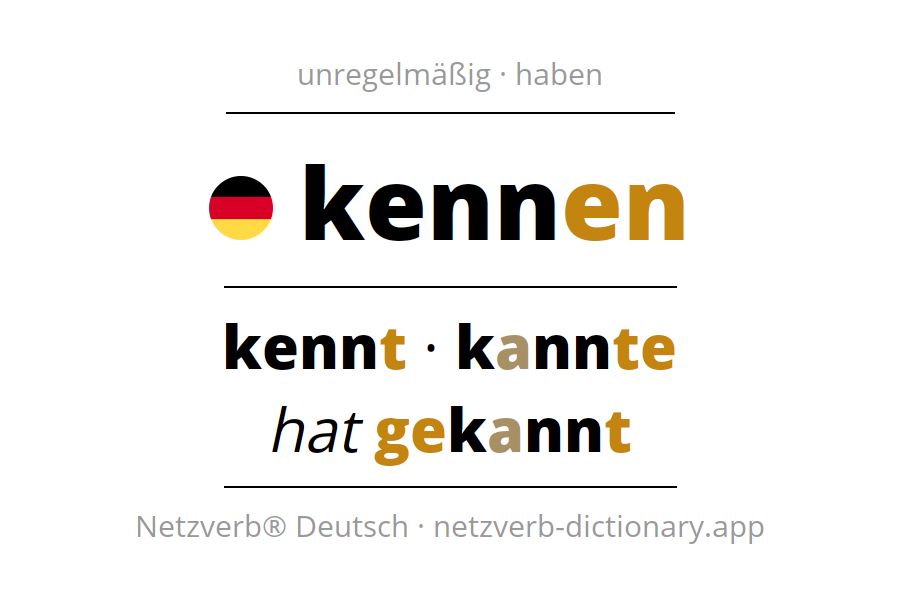
Konjugation Verb kennen ➤ Präteritum, Konjunktiv, Imperativ, Perfekt ... ➤ Beispiele, Übersetzungen, Sprachausgabe, Bedeutungen, Grammatik, Regeln, Übungen, Downloads ...
raven fractal
oldinfo
livid scarabBOT
Information about RunFree#9499
ID
270929088259031040
Joined
17/01/2017 14:57 (3 years, 3 months and 2 weeks ago)
Created
17/01/2017 14:55 (3 years, 3 months and 2 weeks ago)
Roles
@everyone, Pronunciation, Activities, Writing, Translation, Reading, Grammar, GLaD Member, Level B
 raven fractal
serverinfo
livid scarabBOT

German Learning and Discussion
ID
221708975698083841
Owner
Arrem#4798
Created
03/09/2016 19:12 (3 years, 8 months and 4 hours ago)
Features
:greenTick:: Partnered
:greenTick:: Server Discovery
:greenTick:: Invite Splash
:greenTick:: VIP Voice Servers
:greenTick:: Vanity Invite
:greenTick:: News Channels
:greenTick:: Animated Icon
Channels
:text_channel: 44 (19 locked)
:voice_channel: 14 (5 locked)
Boosts
Level 1
4 boosts
Last Boost: Arrem#4798 (4 months and 1 week ago)
Members
:online: 1731 :idle: 782 :dnd: 647 :offline: 16677
Total: 19837
Roles
35 roles (12 belong to groups)
 oblique ginkgo
faq cefr
lean flickerBOT
cefr
If you see something like A1, B2 or C1, these represent the proficiency of a speaker in a language they're not native in, and are called CEFR levels. They are valid for any language, not only German!
Roughly speaking, A levels are beginners and C levels are experts. Remember that CEFR level are self-assessed and indicative!
You can see more specific names and descriptions on the Wikipedia page:
https://en.wikipedia.org/wiki/Common_European_Framework_of_Reference_for_Languages
🗨 How do I know what level I am?
If the table on Wikipedia is too generic for you, you can try using this one here:
https://rm.coe.int/168045bb52
Just check each column one at a time: if you can do all it describes, move to the next column. Your level is the highest where you can do the most things.
Alternatively, you can use this questionnaire to estimate your level more accurately:
https://www.laits.utexas.edu/fi/sites/laits.utexas.edu.fi/files/Self Assessment Checklist European.pdf
oblique ginkgo
cefr B
 molten aurora
lean flickerBOT
molten aurora
lean flickerBOT
:x: Group arts and crafts not found.
livid scarabBOT
Page 9/9 (28 commands)
Stats Commands
about
Display information about the bot.
oldinfo [user]
Shows info about a user.
serverinfo
Shows info about the current server.
stats [member]
Tells you command usage stats for the server or a member.
uptime
Tells you how long the bot has been up for.
Use ">help command" for more info on a command.
lean flickerBOT
FAQ not found. I found the following similar entries: beginner, beginner 2.
 pale bear
faq beginner
lean flickerBOT
How to get started
The simplest way to learn German is to find topics you don’t understand yet and search for explanations of them. This list provides you with a guide for which topics to learn if you are completely new to German. Type the topic into Google (or YouTube) and start learning!
Introduction
1: Alphabet (especially ä, ü, ö and ß)
2: Basic greetings (hello, goodbye, etc.)
Part 1 - Simple Sentence
1: Noun gender & plurals
2: Nominative case (What are cases?)
3: Nominative pronouns (I, you, he, she, etc.)
4: Verbs in present tense
5: Definite/indefinite articles
6: Accusative case (for nouns)
7: Accusative pronouns
8: Word order of simple sentences
9: How to ask questions
See Part 2 on the next page.
Tips
- Always learn the gender of a noun when you learn a new noun
- Learn to use a translation dictionary (e.g. dict.cc, leo.org)
- Use
>faq resourcesto see our list of German learning resources - For listening and pronunciation practice, try watching movies or videos (incl. YouTube)
- You can listen to pronunciation for words on websites like dict.cc, forvo.com, and others
- Practice writing sentences every day (and asking people to correct them)
- Ask as many questions as possible
- Don’t be scared to make mistakes!!!! If you don’t let yourself make mistakes, you will never be able to learn German
Page 1/2
 thorny crater
 obsidian junco
sub translation
 wraith pivot
faq
lean flickerBOT
:x: The required argument name is missing.
wraith pivot
faq Reading
lean flickerBOT
FAQ not found. Try >explain all.
Note: This entry has been added to our FAQ idea pool.
 torn elbow
explain all.
lean flickerBOT
FAQ not found. Try >explain all.
Note: This entry has been added to our FAQ idea pool.
torn elbow
explain all
lean flickerBOT
See a listed FAQ with >faq [name]
- Accusative [Akkusativ]
- Adjective Declension [adjective endings, Adjektivdeklination]
- Beide vs. Beides [Beides vs. Beide, Beides, Beide]
- Best way to learn German [learn fast, learn German fast, learn efficiently, best way to learn, fastest way to learn, most efficient way to learn]
- CEFR levels [lvl, CEFR]
- Cases [case, grammatical case]
- DACH
- Dative [Dativ]
- Duolingo [duo]
- Eszett [Scharfes S, ẞ, ß]
- FAQ
- Formal and informal speech [duzen vs. siezen, Sie, Du vs. Sie]
- Gender patterns
- Genitive [Genitiv]
- German letters [german keyboard, keyboard]
- Grammar terms [Glossary, Grammatical terms]
- Grammatical gender [genders, der-die-das, gender]
- How to ask a question [Translation, Homework]
- How to get started [Starting out, beginner]
- IPA [Pronunciation, Sound transcription, International Phonetic Alphabet]
Page 1/3 (49 entries)
wraith pivot
cefr Level A
sub gaming
sub food
sub coding
sub reading
sub grammar
sub activities
 midnight temple
faq cefr
lean flickerBOT
cefr
If you see something like A1, B2 or C1, these represent the proficiency of a speaker in a language they're not native in, and are called CEFR levels. They are valid for any language, not only German!
Roughly speaking, A levels are beginners and C levels are experts. Remember that CEFR level are self-assessed and indicative!
You can see more specific names and descriptions on the Wikipedia page:
https://en.wikipedia.org/wiki/Common_European_Framework_of_Reference_for_Languages
🗨 How do I know what level I am?
If the table on Wikipedia is too generic for you, you can try using this one here:
https://rm.coe.int/168045bb52
Just check each column one at a time: if you can do all it describes, move to the next column. Your level is the highest where you can do the most things.
Alternatively, you can use this questionnaire to estimate your level more accurately:
https://www.laits.utexas.edu/fi/sites/laits.utexas.edu.fi/files/Self Assessment Checklist European.pdf
midnight temple
cefr Level B
lean flickerBOT
You're already a member of all the accessible groups.
tender trellis
sub gaming
 covert terrace
sub pronunciation
 raven oracle
 vast plinth
sub reading
tender trellis
cefr A
livid scarabBOT
:heavy_check_mark: I replaced your old CEFR role with Level A.
kindred wyvern
unsub fod
lean flickerBOT
:x: Group fod not found.
kindred wyvern
unsub food
lean flickerBOT
:x: Group learning not found.
 tame sedge
help
livid scarabBOT
Page 9/9 (28 commands)
Stats Commands
about
Display information about the bot.
oldinfo [user]
Shows info about a user.
serverinfo
Shows info about the current server.
stats [member]
Tells you command usage stats for the server or a member.
uptime
Tells you how long the bot has been up for.
Use ">help command" for more info on a command.
tame sedge
verb auseinandernehmen
livid scarabBOT

Konjugation Verb auseinandernehmen ➤ Präteritum, Konjunktiv, Imperativ, Perfekt ... ➤ Beispiele, Übersetzungen, Sprachausgabe, Bedeutungen, Grammatik, Regeln, Übungen, Downloads ...
tame sedge
cefr
livid scarabBOT
Roles you can give yourself
- Level A
- Level B
- Level C
Use >groups for a list of group roles.
tame sedge
groups
lean flickerBOT
These groups are currently accessible
Activities
Lessons! Subscribe for pings!
Grammar
Lessons! Subscribe for pings!
Advancedreading
Like Reading but only B2+ level content.
Reading
Lessons! Subscribe for pings!
Writing
Join to get weekly and monthly prompts!
Translation
Offers weekly sentences to translate.
Pronunciation
Offers weekly texts to practise pronunciation.
Food
A group for food talks.
Science
STEM-related topics.
Ouija
A Ouija-style game just for fun.
Gaming
All gaming-related topics.
Coding
For all the coding nerds.
Art
A group for sharing self-made art.
Type >sub to join a group or >group joinall to join all available groups .
lean flickerBOT
:x: Group advancedrrading not found.
tame sedge
sub advancedreading
jagged blade
sub art
 wicked lotus
unsub all
lean flickerBOT
:x: Use the >group joinall command to join all available groups.
wicked lotus
unsub Translation
unsub Grammar
unsub Reading
unsub Writing
unsub Advancedreading
lean flickerBOT
:x: Group Sicence not found.
 flat badge
sub Science
livid scarabBOT
Roles you can give yourself
- Level A
- Level B
- Level C
Use >groups for a list of group roles.
flat badge
cefr B
livid scarabBOT
Page 9/9 (28 commands)
Stats Commands
about
Display information about the bot.
oldinfo [user]
Shows info about a user.
serverinfo
Shows info about the current server.
stats [member]
Tells you command usage stats for the server or a member.
uptime
Tells you how long the bot has been up for.
Use ">help command" for more info on a command.
 floral fox
tender trellis
floral fox
tender trellis
explain all
lean flickerBOT
See a listed FAQ with >faq [name]
- Accusative [Akkusativ]
- Adjective Declension [adjective endings, Adjektivdeklination]
- Beide vs. Beides [Beides vs. Beide, Beides, Beide]
- Best way to learn German [learn fast, learn German fast, learn efficiently, best way to learn, fastest way to learn, most efficient way to learn]
- CEFR levels [lvl, CEFR]
- Cases [case, grammatical case]
- DACH
- Dative [Dativ]
- Duolingo [duo]
- Eszett [Scharfes S, ẞ, ß]
- FAQ
- Formal and informal speech [duzen vs. siezen, Sie, Du vs. Sie]
- Gender patterns
- Genitive [Genitiv]
- German letters [german keyboard, keyboard]
- Grammar terms [Glossary, Grammatical terms]
- Grammatical gender [genders, der-die-das, gender]
- How to ask a question [Translation, Homework]
- How to get started [Starting out, beginner]
- IPA [Pronunciation, Sound transcription, International Phonetic Alphabet]
Page 1/3 (49 entries)
lean flickerBOT
how to ask a question
If you want something corrected, you can put it in a Google Docs and share a link with suggestions permissions in #writing.
Don't ask us to translate something for you outright: that takes professional time and effort and we're not here for that. You can try your luck with deepl.com.
For single words, use dict.cc or another dictionary, it'll be quicker.
If you want to know if/how a word can be used, provide some context to help us understand the situation.
Don't ask us to do your homework for you! Show us your best attempt at something and try to pinpoint what exactly you don't understand.
snow compass
cat
lean flickerBOT
 snow compass
ooh, this is a good one
livid scarabBOT
Page 3/9 (28 commands)
Generic Commands
Generic commands used by basically every bot.
charinfo <characters>
Show information about a number of characters.
danke
Gerne.
dog
Responds with a random dog image.
freedisappointment <member> <message>
Bully your fellow users with this wonderful meme command.
friendshipendedwith <old_friend> <new_friend>
Bully your fellow users even more with this wonderful meme command.
help [command]
Shows help about the bot, a command, or a category
memename
Shuffles the consonants in the given member's nickname.
oldcat
Responds with a random cat image.
ping
Pong.
Use ">help command" for more info on a command.
livid scarabBOT
Immer gerne, Kenspectacle.
 glass spindle
help resource
livid scarabBOT
No command called "resource" found.
 light pollen
sub gaming
tender trellis
rr B
 pine maple
faq beginner
lean flickerBOT
How to get started - Part 2
Please make sure to read Part 1 before starting Part 2!
Part 2 – Beyond a Simple Sentence
1: Conjunctions (coordinating and subordinating)
2: Subordinate clause word order
3: Dative case
4: Dative verbs
5: Verbs with two objects (e.g. geben)
6: Prepositions (accusative, dative, and two-way)
7: Spoken past tense (Perfekt)
8: Written past tense (Präteritum)
9: Genitive case
10: Relative clauses
11: Adjective declension
Tips
- Make sure to practice writing and reading simple texts
- Some of these concepts are confusing to start with, so it’s a good idea to ask for help in #questions when you’re unsure
- You should use a declension chart to help with declension to start with, because you won’t be able to memorize it straight away
- After you feel confident with creating sentences, you can start learning the adjective declension properly by using the command >faq adjective declension and reading the guide provided
Page 2/2
pine maple
cefr A
vast plinth
cefr B
tender trellis
sub all
lean flickerBOT
:x: Use the >group joinall command to join all available groups.
lean flickerBOT
:white_check_mark: Added you to 13 available groups: Coding, Food, Science, Gaming, Ouija, Pronunciation, Grammar, Writing, Translation, Advancedreading, Reading, Art, Activities.
tender trellis
group joinall
lean flickerBOT
:white_check_mark: Added you to 13 available groups: Coding, Food, Science, Gaming, Ouija, Pronunciation, Grammar, Writing, Translation, Advancedreading, Reading, Art, Activities.
 barren idol
sub pronunciation
 heady bloom
freedisappointment @grim path I was the one who stole your beer that night
livid scarabBOT
⛔ An error happened. This has been logged and reported.
heady bloom
great
 grim path
@heady bloom ?
 upbeat yarrow
ex Prepositions
lean flickerBOT
FAQ not found. I found the following similar entry: Prepositions of Place Part 1.
upbeat yarrow
ex Prepositions of place
lean flickerBOT
FAQ not found. I found the following similar entry: Prepositions of Place Part 1.
upbeat yarrow
ex Prepositions of Place Part 1
lean flickerBOT
Prepositions of Place Part 1
Generally you use the preposition nach when talking about going to countries, cities or directions, for example:
(1) Ich fahre nach Berlin. (I’m going to Berlin.)
(2) Ich gehe nach Westen. (I’m going west.)
(3) Ich fahre nach Deutschland. (I'm going to Germany.)
‼ Note that nach does not work with countries or regions that take an article. In this case you need to replace it with in, for example: Ich fahre in die Schweiz. (I’m going to Switzerland.)
In addition to that you will need to use auf for specific islands, for example: Ich fliege auf die Balearen. (I fly to the Balearic Islands.)
Here you can find a map with countries that take an article: http://i.imgur.com/QRFA2WI.png
🌟 nach is also idiomatically used in nach Hause gehen (to go home)
The preposition zu is used when talking about going to people, or places with a proper name, for example:
(4) Ich gehe zu ihm. (I go to him.)
(5) Ich gehe zum [zu dem] Arzt. (I go to the doctor.)
(6) Ich gehe zu Aldi. (I go to Aldi.)
You use in if you will end up inside a place or location, for example:
(7) Ich gehe in die Kirche. (I go to church.)
(8) Ich gehe ins [in das] Kino. (I go to the cinema.)
You use auf if you will end up on something, or for going to formal events, for example:
(9) Ich klettere auf den Berg. (I climb up the mountain.)
(10) Ich gehe auf die Toilette. (I go to the toilet.)
(11) Ich gehe auf eine Party. (I go to a party.)
🌟 When in doubt, use zu, since you can often replace in and auf with zu, for example:
(12) Ich gehe zur Kirche. (I go to the church.) [but not necessarily inside]
(13) Ich gehe zu einer Party. (I go to a party.)
‼ However, note that you cannot replace zu with in if it would be absurd to speak of going inside:
(14) Ich fahre in die Kirche. (I drive into the church.)
upbeat yarrow
help
livid scarabBOT
Page 8/9 (28 commands)
Stars Commands
A starboard to upvote posts obviously.
There are two ways to make use of this feature, the first is
via reactions, react to a message with ⭐ and
the bot will automatically add (or remove) it to the starboard.
The second way is via Developer Mode. Enable it under Settings >
Appearance > Developer Mode and then you get access to Copy ID
and using the star/unstar commands.
star <message>
Stars a message via message ID.
unstar <message>
Unstars a message via message ID.
Use ">help command" for more info on a command.
upbeat yarrow
help command
livid scarabBOT
No command called "command" found.
upbeat yarrow
help ex command
livid scarabBOT
No command called "ex" found.
upbeat yarrow
help >ex command
livid scarabBOT
No command called ">ex" found.
upbeat yarrow
verb <schlafen>
livid scarabBOT
Are you sure this is a proper verb infinitive?
livid scarabBOT

Konjugation Verb schlafen ➤ Präteritum, Konjunktiv, Imperativ, Perfekt ... ➤ Beispiele, Übersetzungen, Sprachausgabe, Bedeutungen, Grammatik, Regeln, Übungen, Downloads ...
upbeat yarrow
faq verbs
lean flickerBOT
verbs
Präsens (Present Tense)
When you use a verb in a sentence (or clause), you have to conjugate it (change the form) to match the subject of the sentence (or clause).
For example, in English, we write I eat but he/she eats. The verb has a different ending! The concept is the same in German, except German has more endings.
The first thing you need to know in order to conjugate verbs is: which ending fits which subject? Here is a simple verb “trinken” (to drink) as an example:
trinken
ich trinke
du trinkst
er/sie/es trinkt
wir trinken
ihr trinkt
sie trinken / Sie trinken
(Note: the conjugation for sie (they) and Sie (formal you) is always the same)
Vowel/Stem Changes
There are a few variations and exceptions, but the most important is vowel changes (also called stem changes). Some verbs get a vowel change, which only affects the du and er/sie/es forms of the verb. (However, modal verbs and wissen have their own special pattern, which also has a vowel change in the ich form.)
Example: ich schlafe, du schläfst
Other Changes
There are various other differences but I can’t describe them all here, so please read these websites or use Google to find more information: https://www.vistawide.com/german/grammar/german_verbs_present_tense.htm
https://www.thoughtco.com/german-present-tense-verbs-4074838
http://www.dartmouth.edu/~deutsch/Grammatik/PresentTense/Present.html
upbeat yarrow
faq prepositions
lean flickerBOT
FAQ not found. I found the following similar entry: Prepositions of Place Part 1.
lean flickerBOT
accusative
Accusative
The accusative case (der Akkusativ) is one of the four cases of the German language. A case affects how a noun or noun phrase is inflected, and indicates the role of the noun or noun phrase in a clause.
🗨 How do I decline in the accusative case?
Feminine and neuter nouns and adjectives are the same as nominative. Masculine nouns, adjectives (and weak nouns) gain an -en ending:
Ich esse den/einen/keinen kleinen Apfel.
Personal pronouns differ for:
ich --> mich
du --> dich
er --> ihn
wir --> uns
ihr --> euch
For a full explanation see >explain adjective declension
🗨 When do I use the accusative case?
The accusative case is mainly used:
- to mark the direct object of many transitive verbs
Ich lese einen Roman.
Er hat die schöne Frau ermordet.
Sie besitzen kein Auto.
- after some prepositions
Danke für deine Hilfe!
Ohne dich kann ich nicht leben.
Sie hatten keine Einwände gegen den Plan.
The following prepositions are always followed by the accusative case:
bis, durch, für, gegen, ohne, um
- to indicate movement in a particular direction in two-way prepositions
Er steigt auf den Gipfel.
Sie hängt das Bild an die Wand.
Ich gehe gleich ins Bett. (ins = in das)
- by adverbials of time and measurement
A definite length or point in time:
Ich habe den ganzen Tag geschlafen.
Sie kommt nächste Woche zurück.
A measurement:
Das Kind ist vier Jahre alt.
Das Tier ist einen Meter groß.
Expressing distance with verbs of motion:
Ich ging die Treppe hinauf.
Ich lief den ganzen Weg zu Fuß.
- in common greetings and wishes
Guten Morgen/Tag/Abend!
Gute Besserung!
Herzlichen Glückwunsch!
Here there is an implicit verb such as 'wünschen', where the greeting/wish is the direct object.
 plain hazel
cefr A
strange glen
group joinall
lean flickerBOT
:white_check_mark: Added you to 8 available groups: Food, Gaming, Ouija, Pronunciation, Writing, Translation, Advancedreading, Activities.
strange glen
faq dativ
lean flickerBOT
dativ
The dative case (der Dativ) is one of the four cases of the German language. A case affects how a noun or noun phrase is inflected, and indicates the role of the noun or noun phrase in a clause.
🗨 How do I decline in the dative case?
Nouns, pronouns, and adjective declension is completely different compared to the nominative case. See >explain adjective declension for a full explanation.
🗨 When do I use the dative case?
The dative case has a great number of usages, many of which are idiomatic, but is mainly used:
- to mark the indirect object of many transitive verbs (the indirect object is that which receives the result of an action):
Ich habe dir ein Bier gekauft.
Sie gibt dem Mann das Buch.
Er zeigte ihm seinen Führerschein.
- to mark the object of some transitive verbs:
Dir fehlen die richtigen Materialien.
Es fällt mir gleich bestimmt wieder ein.
Das gefällt ihr gar nicht.
- after some prepositions:
Ich komme aus den USA.
Komm mit mir.
Ich lerne seit vielen Jahren Deutsch.
The following prepositions are always followed by the dative case:
aus, außer, bei, gegenüber, mit, nach, seit, von, zu
- after two-way prepositions when they do not indicate movement:
Das Bild hängt jetzt an der Wand.
Er geht im Wald. (he is roaming in the woods)
Sie steht vor mir.
- to show possession, mainly of clothing or body parts:
Ich habe mir in die Finger geschnitten.
Er hat ihr die Nase gebrochen.
Die Mütze fiel mir vom Kopf.
- with many adjectives:
Ich war mir nicht sicher.
Ist dir kalt?
Er ist seinem Bruder sehr ähnlich.
kindred wyvern
sub coding
 zealous elk
faq beginner
lean flickerBOT
How to get started
The simplest way to learn German is to find topics you don’t understand yet and search for explanations of them. This list provides you with a guide for which topics to learn if you are completely new to German. Type the topic into Google (or YouTube) and start learning!
Introduction
1: Alphabet (especially ä, ü, ö and ß)
2: Basic greetings (hello, goodbye, etc.)
Part 1 - Simple Sentence
1: Noun gender & plurals
2: Nominative case (What are cases?)
3: Nominative pronouns (I, you, he, she, etc.)
4: Verbs in present tense
5: Definite/indefinite articles
6: Accusative case (for nouns)
7: Accusative pronouns
8: Word order of simple sentences
9: How to ask questions
See Part 2 on the next page.
Tips
- Always learn the gender of a noun when you learn a new noun
- Learn to use a translation dictionary (e.g. dict.cc, leo.org)
- Use
>faq resourcesto see our list of German learning resources - For listening and pronunciation practice, try watching movies or videos (incl. YouTube)
- You can listen to pronunciation for words on websites like dict.cc, forvo.com, and others
- Practice writing sentences every day (and asking people to correct them)
- Ask as many questions as possible
- Don’t be scared to make mistakes!!!! If you don’t let yourself make mistakes, you will never be able to learn German
Page 1/2
lean flickerBOT
resources
lyric sierra
cefr A
 surreal sail
cefr A
 hoary belfry
faq cefr
lean flickerBOT
cefr
If you see something like A1, B2 or C1, these represent the proficiency of a speaker in a language they're not native in, and are called CEFR levels. They are valid for any language, not only German!
Roughly speaking, A levels are beginners and C levels are experts. Remember that CEFR level are self-assessed and indicative!
You can see more specific names and descriptions on the Wikipedia page:
https://en.wikipedia.org/wiki/Common_European_Framework_of_Reference_for_Languages
🗨 How do I know what level I am?
If the table on Wikipedia is too generic for you, you can try using this one here:
https://rm.coe.int/168045bb52
Just check each column one at a time: if you can do all it describes, move to the next column. Your level is the highest where you can do the most things.
Alternatively, you can use this questionnaire to estimate your level more accurately:
https://www.laits.utexas.edu/fi/sites/laits.utexas.edu.fi/files/Self Assessment Checklist European.pdf
hoary belfry
cefr A2
livid scarabBOT
❌ Bad argument: Role "A2" not found.
pearl kite
faq beginner
lean flickerBOT
How to get started - Part 2
Please make sure to read Part 1 before starting Part 2!
Part 2 – Beyond a Simple Sentence
1: Conjunctions (coordinating and subordinating)
2: Subordinate clause word order
3: Dative case
4: Dative verbs
5: Verbs with two objects (e.g. geben)
6: Prepositions (accusative, dative, and two-way)
7: Spoken past tense (Perfekt)
8: Written past tense (Präteritum)
9: Genitive case
10: Relative clauses
11: Adjective declension
Tips
- Make sure to practice writing and reading simple texts
- Some of these concepts are confusing to start with, so it’s a good idea to ask for help in #questions when you’re unsure
- You should use a declension chart to help with declension to start with, because you won’t be able to memorize it straight away
- After you feel confident with creating sentences, you can start learning the adjective declension properly by using the command >faq adjective declension and reading the guide provided
Page 2/2
pearl kite
help
livid scarabBOT
Page 9/9 (28 commands)
Stats Commands
about
Display information about the bot.
oldinfo [user]
Shows info about a user.
serverinfo
Shows info about the current server.
stats [member]
Tells you command usage stats for the server or a member.
uptime
Tells you how long the bot has been up for.
Use ">help command" for more info on a command.
 timid girder
faq beginner
lean flickerBOT
How to get started
The simplest way to learn German is to find topics you don’t understand yet and search for explanations of them. This list provides you with a guide for which topics to learn if you are completely new to German. Type the topic into Google (or YouTube) and start learning!
Introduction
1: Alphabet (especially ä, ü, ö and ß)
2: Basic greetings (hello, goodbye, etc.)
Part 1 - Simple Sentence
1: Noun gender & plurals
2: Nominative case (What are cases?)
3: Nominative pronouns (I, you, he, she, etc.)
4: Verbs in present tense
5: Definite/indefinite articles
6: Accusative case (for nouns)
7: Accusative pronouns
8: Word order of simple sentences
9: How to ask questions
See Part 2 on the next page.
Tips
- Always learn the gender of a noun when you learn a new noun
- Learn to use a translation dictionary (e.g. dict.cc, leo.org)
- Use
>faq resourcesto see our list of German learning resources - For listening and pronunciation practice, try watching movies or videos (incl. YouTube)
- You can listen to pronunciation for words on websites like dict.cc, forvo.com, and others
- Practice writing sentences every day (and asking people to correct them)
- Ask as many questions as possible
- Don’t be scared to make mistakes!!!! If you don’t let yourself make mistakes, you will never be able to learn German
Page 1/2
lean flickerBOT
How to get started
The simplest way to learn German is to find topics you don’t understand yet and search for explanations of them. This list provides you with a guide for which topics to learn if you are completely new to German. Type the topic into Google (or YouTube) and start learning!
Introduction
1: Alphabet (especially ä, ü, ö and ß)
2: Basic greetings (hello, goodbye, etc.)
Part 1 - Simple Sentence
1: Noun gender & plurals
2: Nominative case (What are cases?)
3: Nominative pronouns (I, you, he, she, etc.)
4: Verbs in present tense
5: Definite/indefinite articles
6: Accusative case (for nouns)
7: Accusative pronouns
8: Word order of simple sentences
9: How to ask questions
See Part 2 on the next page.
Tips
- Always learn the gender of a noun when you learn a new noun
- Learn to use a translation dictionary (e.g. dict.cc, leo.org)
- Use
>faq resourcesto see our list of German learning resources - For listening and pronunciation practice, try watching movies or videos (incl. YouTube)
- You can listen to pronunciation for words on websites like dict.cc, forvo.com, and others
- Practice writing sentences every day (and asking people to correct them)
- Ask as many questions as possible
- Don’t be scared to make mistakes!!!! If you don’t let yourself make mistakes, you will never be able to learn German
Page 1/2
small sigil
faq best way to learn german
lean flickerBOT
Best way to learn German
There isn’t only one “best” way to learn German, especially since different methods work better for different people. However, this FAQ will outline the main aspects of learning efficiently, which you can cater to your needs.
If you’re a beginner, type >faq beginner in #botchannel to see our beginner guide.
Cover all skills
There are many combinations of activities you can use to study and practice a language. How do you know which combinations are suitable? The key is to make sure you cover each of the main skills with at least one activity. Some activities only train one skills, while some train multiple – either is fine, as long as all the 6 skills are covered somewhere in your studies.
The skills
• Reading
• Writing
• Listening
• Speaking
• Grammar
• Vocabulary
Which resources should I use?
It doesn’t really matter which resources you use, as long as you can follow along, and the information is correct and reliable. If you have any doubts about whether a resource is correct, feel free to ask. You do not need to find just one resource and stick to it – in fact, to learn best, it’s recommended that you use a large variety of resources and switch between them when needed.
Type >faq resources in #botchannel to see our list of resources.
On the next page
• Should I study all these skills every day?
• How much time should I dedicate to studying?
Page 1/2
small sigil
You can run the commands yourself to be able to flip the pages
just type what i typed
plain hazel
faq best way to learn german
lean flickerBOT
Best way to learn German
There isn’t only one “best” way to learn German, especially since different methods work better for different people. However, this FAQ will outline the main aspects of learning efficiently, which you can cater to your needs.
If you’re a beginner, type >faq beginner in #botchannel to see our beginner guide.
Cover all skills
There are many combinations of activities you can use to study and practice a language. How do you know which combinations are suitable? The key is to make sure you cover each of the main skills with at least one activity. Some activities only train one skills, while some train multiple – either is fine, as long as all the 6 skills are covered somewhere in your studies.
The skills
• Reading
• Writing
• Listening
• Speaking
• Grammar
• Vocabulary
Which resources should I use?
It doesn’t really matter which resources you use, as long as you can follow along, and the information is correct and reliable. If you have any doubts about whether a resource is correct, feel free to ask. You do not need to find just one resource and stick to it – in fact, to learn best, it’s recommended that you use a large variety of resources and switch between them when needed.
Type >faq resources in #botchannel to see our list of resources.
On the next page
• Should I study all these skills every day?
• How much time should I dedicate to studying?
Page 1/2
plain hazel
faq resources
lean flickerBOT
resources
plain hazel
faq sprach chat
lean flickerBOT
FAQ not found. Try >explain all.
Note: This entry has been added to our FAQ idea pool.
plain hazel
explain all
lean flickerBOT
See a listed FAQ with >faq [name]
- birthdays
- conjugation [praesens, präsens, present tense, verbs, verb conjugation, Konjugation]
- doch
- lessons [sessions]
- nicos [nicos weg]
- seeing verbs [schauen, sehen]
- so und also
- weil, denn, da
- wissen und kennen [wissen vs. kennen]
Page 3/3 (49 entries)
 vagrant kindle
cefr B
lean flickerBOT
See a listed FAQ with >faq [name]
- Accusative [Akkusativ]
- Adjective Declension [adjective endings, Adjektivdeklination]
- Beide vs. Beides [Beides vs. Beide, Beides, Beide]
- Best way to learn German [learn fast, learn German fast, learn efficiently, best way to learn, fastest way to learn, most efficient way to learn]
- CEFR levels [lvl, CEFR]
- Cases [case, grammatical case]
- DACH
- Dative [Dativ]
- Duolingo [duo]
- Eszett [Scharfes S, ẞ, ß]
- FAQ
- Formal and informal speech [duzen vs. siezen, Sie, Du vs. Sie]
- Gender patterns
- Genitive [Genitiv]
- German letters [german keyboard, keyboard]
- Grammar terms [Glossary, Grammatical terms]
- Grammatical gender [genders, der-die-das, gender]
- How to ask a question [Translation, Homework]
- How to get started [Starting out, beginner]
- IPA [Pronunciation, Sound transcription, International Phonetic Alphabet]
Page 1/3 (49 entries)
tender trellis
cefr b2
livid scarabBOT
❌ Bad argument: Role "b2" not found.
tender trellis
cefr b
 nova cloak
faq beginner
lean flickerBOT
How to get started
The simplest way to learn German is to find topics you don’t understand yet and search for explanations of them. This list provides you with a guide for which topics to learn if you are completely new to German. Type the topic into Google (or YouTube) and start learning!
Introduction
1: Alphabet (especially ä, ü, ö and ß)
2: Basic greetings (hello, goodbye, etc.)
Part 1 - Simple Sentence
1: Noun gender & plurals
2: Nominative case (What are cases?)
3: Nominative pronouns (I, you, he, she, etc.)
4: Verbs in present tense
5: Definite/indefinite articles
6: Accusative case (for nouns)
7: Accusative pronouns
8: Word order of simple sentences
9: How to ask questions
See Part 2 on the next page.
Tips
- Always learn the gender of a noun when you learn a new noun
- Learn to use a translation dictionary (e.g. dict.cc, leo.org)
- Use
>faq resourcesto see our list of German learning resources - For listening and pronunciation practice, try watching movies or videos (incl. YouTube)
- You can listen to pronunciation for words on websites like dict.cc, forvo.com, and others
- Practice writing sentences every day (and asking people to correct them)
- Ask as many questions as possible
- Don’t be scared to make mistakes!!!! If you don’t let yourself make mistakes, you will never be able to learn German
Page 1/2
tender trellis
sub gaming
 obtuse mist
info Genitiv
lean flickerBOT
:x: User 'Genitiv' not found.
obtuse mist
info Genitive
lean flickerBOT
:x: User 'Genitive' not found.
obtuse mist
faq Genitiv
lean flickerBOT
Genitiv
Genitive
The genitive case (der Genitiv) is one of the four cases of the German language. A case affects how a noun or noun phrase is inflected, and indicates the role of the noun or noun phrase in a clause.
🗨 How do I decline in the genitive case?
Nouns and adjective declension is completely different compared to the nominative case. Pronoun declension does exist but it is virtually never used. See >explain adjective declension for a full explanation.
🗨 When do I use the genitive case?
The genitive case is mainly used:
- to link nouns, especially when showing possession
Dies ist der größte Bahnhof der Welt.
Die Hälfte des Kuchens gehört mir.
Es gibt noch einen Strahl der Hoffnung.
For proper names, the order is reversed and an 's' is attached to the proper name as long as it does not end with an 's' sound.
Deutschlands längster Fluss ist der Rhein.
- to mark the object of very few transitive verbs
Empfindliche Haut bedarf besonderer Pflege.
Heute gedenkt die Nation des Jahrestages der Verfassung.
Wir harren einer Antwort.
- after some prepositions
The following prepositions are commonly followed by the genitive case in written German, but usually with the dative case in spoken German:
(an)statt, trotz, während, wegen
Prepositions denoting position are usually followed by the genitive case:
außerhalb, innerhalb, oberhalb, unterhalb, jenseits
A great number of prepositions that are only used in formal German, such as:
angesichts, bezüglich, einschließlich, fernab, infolge, namens, seitens, zugunsten
- by adverbials of indefinite time
Eines Tages werde ich Deutsch beherrschen.
Sonntags sind wir meist unterwegs.
Eines Nachts hörte ihr Vater sie weinen.
Note the declension in the last sentence. Although it is die Nacht, it assumes a similar form as the rest.
tender trellis
group joinall
lean flickerBOT
:white_check_mark: Added you to 13 available groups: Coding, Food, Science, Gaming, Ouija, Pronunciation, Grammar, Writing, Translation, Advancedreading, Reading, Art, Activities.
tender trellis
faq beginner
lean flickerBOT
How to get started - Part 2
Please make sure to read Part 1 before starting Part 2!
Part 2 – Beyond a Simple Sentence
1: Conjunctions (coordinating and subordinating)
2: Subordinate clause word order
3: Dative case
4: Dative verbs
5: Verbs with two objects (e.g. geben)
6: Prepositions (accusative, dative, and two-way)
7: Spoken past tense (Perfekt)
8: Written past tense (Präteritum)
9: Genitive case
10: Relative clauses
11: Adjective declension
Tips
- Make sure to practice writing and reading simple texts
- Some of these concepts are confusing to start with, so it’s a good idea to ask for help in #questions when you’re unsure
- You should use a declension chart to help with declension to start with, because you won’t be able to memorize it straight away
- After you feel confident with creating sentences, you can start learning the adjective declension properly by using the command >faq adjective declension and reading the guide provided
Page 2/2
tender trellis
explain all
lean flickerBOT
See a listed FAQ with >faq [name]
- Accusative [Akkusativ]
- Adjective Declension [adjective endings, Adjektivdeklination]
- Beide vs. Beides [Beides vs. Beide, Beides, Beide]
- Best way to learn German [learn fast, learn German fast, learn efficiently, best way to learn, fastest way to learn, most efficient way to learn]
- CEFR levels [lvl, CEFR]
- Cases [case, grammatical case]
- DACH
- Dative [Dativ]
- Duolingo [duo]
- Eszett [Scharfes S, ẞ, ß]
- FAQ
- Formal and informal speech [duzen vs. siezen, Sie, Du vs. Sie]
- Gender patterns
- Genitive [Genitiv]
- German letters [german keyboard, keyboard]
- Grammar terms [Glossary, Grammatical terms]
- Grammatical gender [genders, der-die-das, gender]
- How to ask a question [Translation, Homework]
- How to get started [Starting out, beginner]
- IPA [Pronunciation, Sound transcription, International Phonetic Alphabet]
Page 1/3 (49 entries)
tender trellis
faq duo
lean flickerBOT
duo
Duolingo is a decent resource to start with if you're a complete beginner, but it's neither efficient nor comprehensive!
What Duolingo will teach you about grammar is very limited, and none of the systems they use will help you practise much of it.
You can learn some vocabulary with it, but their method (based on the concept of spaced repetition) doesn't work for everybody, and the way Duolingo teaches is not very effective compared to the amount of time it requires from you.
So, if you find it useful, by all means keep using it, but remember not to fall for its gamification of language learning, and move past it when it stops being beneficial. Ignore the streaks.
In any case, keep in mind that Duolingo is not enough to learn a language, ever.
If you're looking for guidance or alternatives, check out >faq beginner in our #botchannel .
tender trellis
explain all
lean flickerBOT
See a listed FAQ with >faq [name]
- birthdays
- conjugation [praesens, präsens, present tense, verbs, verb conjugation, Konjugation]
- doch
- lessons [sessions]
- nicos [nicos weg]
- seeing verbs [schauen, sehen]
- so und also
- weil, denn, da
- wissen und kennen [wissen vs. kennen]
Page 3/3 (49 entries)
tender trellis
explain best way to learn
lean flickerBOT
Best way to learn German
Should I study all these skills every day?
If you want to study them all every day, you can, but some people may find it easier to focus on particular skills on particular days. For example, on Monday you might choose to do a lot of writing practice, and then on Tuesday you might plan some conversation practice with some speaking partners.
If you try to cover too many different things in one day, then you might be jumping around all over the place and not able to focus on each individual task. It’s also a really good idea to have a different schedule or set of tasks each day to keep things from getting boring. So setting a special schedule or set of tasks for each day of the week - like the Monday writing day, or every Friday you do some grammar exercises followed by watching TV shows, or any other combination you like – is a really good way to go.
How much time should I dedicate to studying?
Everyone has a different schedule and everyone learns at a different pace. It is recommended to study every day, preferably for 30 minutes or more, but taking 1-2 days off is okay. More important is how many hours you study in a week.
A casual pace will be roughly around 5-8 hours a week, a steady pace would be around 10-14 hours a week, and a fast pace (around the same pace as a university subject) will be 15-20 hours a week.
Anything less than 5 hours and you may find it hard to keep improving steadily (but feel free to try it and see how it works for you), while studying one subject for over 25 hours a week may quickly lead to burnout.
How you choose to spread those hours out over the week is not that important; for example, if you have a lot of time on the weekend but not during the week, it’s fine to do short study sessions on weekdays and then dedicate a bunch of time on Saturday and Sunday.
Page 2/2
tender trellis
faq resources
lean flickerBOT
resources
 thick barn
 weary river
faq cefr
lean flickerBOT
cefr
If you see something like A1, B2 or C1, these represent the proficiency of a speaker in a language they're not native in, and are called CEFR levels. They are valid for any language, not only German!
Roughly speaking, A levels are beginners and C levels are experts. Remember that CEFR level are self-assessed and indicative!
You can see more specific names and descriptions on the Wikipedia page:
https://en.wikipedia.org/wiki/Common_European_Framework_of_Reference_for_Languages
🗨 How do I know what level I am?
If the table on Wikipedia is too generic for you, you can try using this one here:
https://rm.coe.int/168045bb52
Just check each column one at a time: if you can do all it describes, move to the next column. Your level is the highest where you can do the most things.
Alternatively, you can use this questionnaire to estimate your level more accurately:
https://www.laits.utexas.edu/fi/sites/laits.utexas.edu.fi/files/Self Assessment Checklist European.pdf
lean flickerBOT
resources
weary river
faq adjective declension
lean flickerBOT
adjective declension
A Brief Guide to Memorizing German Noun and Adjective Declension by Basementality
https://docs.google.com/document/d/1jWl5-kkqF3FQLDzrz8XLBJj7hvPFQK7MT5SYEDGK65E/edit
lean flickerBOT
How to get started
The simplest way to learn German is to find topics you don’t understand yet and search for explanations of them. This list provides you with a guide for which topics to learn if you are completely new to German. Type the topic into Google (or YouTube) and start learning!
Introduction
1: Alphabet (especially ä, ü, ö and ß)
2: Basic greetings (hello, goodbye, etc.)
Part 1 - Simple Sentence
1: Noun gender & plurals
2: Nominative case (What are cases?)
3: Nominative pronouns (I, you, he, she, etc.)
4: Verbs in present tense
5: Definite/indefinite articles
6: Accusative case (for nouns)
7: Accusative pronouns
8: Word order of simple sentences
9: How to ask questions
See Part 2 on the next page.
Tips
- Always learn the gender of a noun when you learn a new noun
- Learn to use a translation dictionary (e.g. dict.cc, leo.org)
- Use
>faq resourcesto see our list of German learning resources - For listening and pronunciation practice, try watching movies or videos (incl. YouTube)
- You can listen to pronunciation for words on websites like dict.cc, forvo.com, and others
- Practice writing sentences every day (and asking people to correct them)
- Ask as many questions as possible
- Don’t be scared to make mistakes!!!! If you don’t let yourself make mistakes, you will never be able to learn German
Page 1/2
 tender nest
 wary hill
faq beginner
lean flickerBOT
How to get started
The simplest way to learn German is to find topics you don’t understand yet and search for explanations of them. This list provides you with a guide for which topics to learn if you are completely new to German. Type the topic into Google (or YouTube) and start learning!
Introduction
1: Alphabet (especially ä, ü, ö and ß)
2: Basic greetings (hello, goodbye, etc.)
Part 1 - Simple Sentence
1: Noun gender & plurals
2: Nominative case (What are cases?)
3: Nominative pronouns (I, you, he, she, etc.)
4: Verbs in present tense
5: Definite/indefinite articles
6: Accusative case (for nouns)
7: Accusative pronouns
8: Word order of simple sentences
9: How to ask questions
See Part 2 on the next page.
Tips
- Always learn the gender of a noun when you learn a new noun
- Learn to use a translation dictionary (e.g. dict.cc, leo.org)
- Use
>faq resourcesto see our list of German learning resources - For listening and pronunciation practice, try watching movies or videos (incl. YouTube)
- You can listen to pronunciation for words on websites like dict.cc, forvo.com, and others
- Practice writing sentences every day (and asking people to correct them)
- Ask as many questions as possible
- Don’t be scared to make mistakes!!!! If you don’t let yourself make mistakes, you will never be able to learn German
Page 1/2
kindred wyvern
help remin
livid scarabBOT
No command called "remin" found.
kindred wyvern
help remind
livid scarabBOT
No command called "remind" found.
kindred wyvern
help remind
lean flickerBOT
remind
Has the bot remind you about things. Specify a message which must contain a time in a human readable format anywhere within the message.
Examples: next week, next Tuesday, tomorrow at 3 AM, in 2 days, 1y, 3h 20m or 2020/12/31
:small_blue_diamond: **remind cancel** <id>
**Aliases: **remind delete, remind remove
Cancels the reminder with the given id. Use >remind all to get the IDs of your reminders.
:small_blue_diamond: **remind list**
**Aliases: **remind all, remind show, remind mine
Shows a list of all your long-term reminders and their IDs.
:small_blue_diamond: **remind** <message>
Has the bot remind you about things. Specify a message which must contain a time in a human readable format anywhere within the message.
Examples: next week, next Tuesday, tomorrow at 3 AM, in 2 days, 1y, 3h 20m or 2020/12/31
Module: Reminders
weary river
sub all
lean flickerBOT
:x: Use the >group joinall command to join all available groups.
lean flickerBOT
:x: Group listening not found.
weary river
sub speaking
lean flickerBOT
:x: Group speaking not found.
lean flickerBOT
FAQ not found. Try >explain all.
Note: This entry has been added to our FAQ idea pool.
weary river
explain all
lean flickerBOT
See a listed FAQ with >faq [name]
- birthdays
- conjugation [praesens, präsens, present tense, verbs, verb conjugation, Konjugation]
- doch
- lessons [sessions]
- nicos [nicos weg]
- seeing verbs [schauen, sehen]
- so und also
- weil, denn, da
- wissen und kennen [wissen vs. kennen]
Page 3/3 (49 entries)
weary river
faq vorgangpassiv
lean flickerBOT
FAQ not found. I found the following similar entry: Vorgangspassiv.
weary river
faq Vorgangspassiv
lean flickerBOT
Vorgangspassiv
Vorgangspassiv
The Vorgangspassiv is formed with werden as the finite/conjugated verb and the past participle of the main verb (or action verb) in the active voice sentence.
For example, when we translate The man eats the apple., we get:
Der Mann isst den Apfel.
When this sentence is converted into its passive voice equivalent, several things happen:
- The finite verb becomes the equivalent conjugation for werden.
isst-->wird - The main verb is then converted into its past participle and placed at the end of the clause, when possible.
isst-->gegessen - The accusative object becomes the (nominative) subject.
den Apfel-->Der Apfel - The subject is indicated with the preposition
vonor simply left out altogether.Der Mann-->(vom Mann)
Putting this together, we create the passive voice sentence:
Der Apfel wird (vom Mann) gegessen.
‼ Only the accusative object of a verb can become the subject in a passive sentence. This means verbs that govern a dative, genitive, or prepositional object can never become the subject. Instead, the object remains as it was.
For example, the verb helfen governs a dative object. An example with it in an active sentence would be:
Der Mann hat dem Kollegen geholfen.
When converted to the passive voice, dem Kollegen does not change case:
Dem Kollegen wurde (vom Mann) geholfen.
This applies equally to verbs that govern genitive and prepositonal objects:
Der Toten wurde gedacht.
Über das Thema wird kaum gesprochen.
Tenses & Moods
Present: Der Apfel wird gegessen.
Simple Past: Der Apfel wurde gegessen.
Future: Der Apfel wird gegessen werden.
Present Perfect: Der Apfel ist gegessen worden.
Past Perfect: Der Apfel war gegessen worden.
Future Perfect: Der Apfel wird gegessen worden sein.
See Also:
https://bit.ly/2Quvo8q (Pferd's blog)
hoary belfry
groups
lean flickerBOT
These groups are currently accessible
Activities
Lessons! Subscribe for pings!
Grammar
Lessons! Subscribe for pings!
Advancedreading
Like Reading but only B2+ level content.
Reading
Lessons! Subscribe for pings!
Writing
Join to get weekly and monthly prompts!
Translation
Offers weekly sentences to translate.
Pronunciation
Offers weekly texts to practise pronunciation.
Food
A group for food talks.
Science
STEM-related topics.
Ouija
A Ouija-style game just for fun.
Gaming
All gaming-related topics.
Coding
For all the coding nerds.
Art
A group for sharing self-made art.
Type >sub to join a group or >group joinall to join all available groups .
hoary belfry
group joinall
lean flickerBOT
:white_check_mark: Added you to 11 available groups: Food, Gaming, Ouija, Pronunciation, Grammar, Writing, Translation, Advancedreading, Reading, Art, Activities.
 strong oracle
faq beginner
lean flickerBOT
How to get started
The simplest way to learn German is to find topics you don’t understand yet and search for explanations of them. This list provides you with a guide for which topics to learn if you are completely new to German. Type the topic into Google (or YouTube) and start learning!
Introduction
1: Alphabet (especially ä, ü, ö and ß)
2: Basic greetings (hello, goodbye, etc.)
Part 1 - Simple Sentence
1: Noun gender & plurals
2: Nominative case (What are cases?)
3: Nominative pronouns (I, you, he, she, etc.)
4: Verbs in present tense
5: Definite/indefinite articles
6: Accusative case (for nouns)
7: Accusative pronouns
8: Word order of simple sentences
9: How to ask questions
See Part 2 on the next page.
Tips
- Always learn the gender of a noun when you learn a new noun
- Learn to use a translation dictionary (e.g. dict.cc, leo.org)
- Use
>faq resourcesto see our list of German learning resources - For listening and pronunciation practice, try watching movies or videos (incl. YouTube)
- You can listen to pronunciation for words on websites like dict.cc, forvo.com, and others
- Practice writing sentences every day (and asking people to correct them)
- Ask as many questions as possible
- Don’t be scared to make mistakes!!!! If you don’t let yourself make mistakes, you will never be able to learn German
Page 1/2
 brittle eagle
faq time
lean flickerBOT
FAQ not found. Try >explain all.
Note: This entry has been added to our FAQ idea pool.
brittle eagle
explain all
lean flickerBOT
See a listed FAQ with >faq [name]
- Accusative [Akkusativ]
- Adjective Declension [adjective endings, Adjektivdeklination]
- Beide vs. Beides [Beides vs. Beide, Beides, Beide]
- Best way to learn German [learn fast, learn German fast, learn efficiently, best way to learn, fastest way to learn, most efficient way to learn]
- CEFR levels [lvl, CEFR]
- Cases [case, grammatical case]
- DACH
- Dative [Dativ]
- Duolingo [duo]
- Eszett [Scharfes S, ẞ, ß]
- FAQ
- Formal and informal speech [duzen vs. siezen, Sie, Du vs. Sie]
- Gender patterns
- Genitive [Genitiv]
- German letters [german keyboard, keyboard]
- Grammar terms [Glossary, Grammatical terms]
- Grammatical gender [genders, der-die-das, gender]
- How to ask a question [Translation, Homework]
- How to get started [Starting out, beginner]
- IPA [Pronunciation, Sound transcription, International Phonetic Alphabet]
Page 1/3 (49 entries)
lean flickerBOT
:x: The required argument name is missing.
brittle eagle
faq time
lean flickerBOT
FAQ not found. Try >explain all.
Note: This entry has been added to our FAQ idea pool.
 grand wedge
lean flickerBOT
grand wedge
lean flickerBOT
cefr
If you see something like A1, B2 or C1, these represent the proficiency of a speaker in a language they're not native in, and are called CEFR levels. They are valid for any language, not only German!
Roughly speaking, A levels are beginners and C levels are experts. Remember that CEFR level are self-assessed and indicative!
You can see more specific names and descriptions on the Wikipedia page:
https://en.wikipedia.org/wiki/Common_European_Framework_of_Reference_for_Languages
🗨 How do I know what level I am?
If the table on Wikipedia is too generic for you, you can try using this one here:
https://rm.coe.int/168045bb52
Just check each column one at a time: if you can do all it describes, move to the next column. Your level is the highest where you can do the most things.
Alternatively, you can use this questionnaire to estimate your level more accurately:
https://www.laits.utexas.edu/fi/sites/laits.utexas.edu.fi/files/Self Assessment Checklist European.pdf
 proud obsidian
ping
upbeat compass
but doesn't seem to work eh
proud obsidian
ping
livid scarabBOT
:ping_pong: Pong! | 187.54ms
proud obsidian
ping
lean flickerBOT
:ping_pong: Pong! | 496ms
proud obsidian
faq keyboard
lean flickerBOT
keyboard
Being able to type German letters is quite important!
- Schon = already. Schön = beautiful.
- Mutter = mother. Mütter = mothers.
How to? There are several options.
🔸 US International layout: if you're using a US keyboard or a keyboard based on it, the transition is very easy! Everything stays as you know it, except for some symbol keys like ~, ` or ", which can be pressed to add accents. For example " + a = ä. You can also do RightAlt + s = ß.
To use US International on Windows, look for the Region & Language options and switch your selected keyboard layout to US International.
🔸 Use a program like AutoHotkey to automatically type the symbols you need when you type certain shortcuts: https://www.autohotkey.com/
🔸 Alternatively, you can memorise the altcodes for German characters. Learning them is easier than you might think! Simply hold Alt and type the numbers on your numpad:
ä = 132; Ä = 142
ö = 148; Ö = 153
ü = 129; Ü = 154
ß = 225
🔸 If all else fails, you can use ASCII conventions for the characters: add an e to other vowels, and write ss or sz for ß. For example:
ae = ä
oe = ö
ue = ü
ss = ß
But this is discouraged since it's harder to read and... looks ugly. It is only done in situations where alternatives are impossible (fonts with no unicode etc).
 proper ibex
emojistats
livid scarabBOT
Emoji Leaderboard
- : 9534 uses (18.2%), 11.9 uses/day.
 : 2636 uses (5.0%), 16.9 uses/day.
 : 1548 uses (3.0%), 3.1 uses/day.
 : 1547 uses (2.9%), 2.5 uses/day.
 : 1258 uses (2.4%), 1.9 uses/day.
 : 925 uses (1.8%), 14.4 uses/day.
 : 776 uses (1.5%), 5.6 uses/day.
 : 736 uses (1.4%), 0.9 uses/day.
 : 662 uses (1.3%), 0.8 uses/day.
 : 645 uses (1.2%), 4.1 uses/day.
52443 uses over 4176 emoji for 65.20 uses per day.
small sigil
info
lean flickerBOT

Information about sunset#2020
Name
@small sigil
ID
119637453244989442
Joined
23/02/2020 08:06 (2 months, 2 weeks and 1 hour ago)
Account created
27/11/2015 03:16 (4 years, 5 months and 1 week ago)
small sigil
oh, right
 novel cloud
info
lean flickerBOT

Information about grogmeister#9956
Name
@novel cloud
ID
229341755345076226
Joined
23/02/2019 03:38 (1 year, 2 months and 2 weeks ago)
Account created
24/09/2016 20:42 (3 years, 7 months and 1 week ago)
novel cloud
what
lean flickerBOT

Information about zoop#7245
Name
@pearl heath
ID
221167310986149888
Joined
03/10/2017 10:21 (2 years, 7 months and 3 days ago)
Account created
02/09/2016 07:19 (3 years, 8 months and 5 days ago)
 dapper beacon
info
lean flickerBOT

Information about Mike#6201
Name
@dapper beacon
ID
202053500518137856
Joined
19/02/2020 12:27 (2 months, 2 weeks and 3 days ago)
Account created
11/07/2016 13:28 (3 years, 9 months and 3 weeks ago)
lean flickerBOT
FAQ not found. Try >explain all.
Note: This entry has been added to our FAQ idea pool.
 pearl igloo
iki just forgot it
proper ibex
ex search verb order
lean flickerBOT
Search results for verb order
• Word Order for Verbs
lean flickerBOT
FAQ not found. I found the following similar entry: Word Order for Verbs.
proper ibex
ex Word Order for Verbs
lean flickerBOT
Word Order for Verbs
Word Order - Verbs
The placement of the finite verb (or conjugated verb) is very important to the structure of a German sentence. While most other elements in a sentence can be moved, the position of the finite verb is fixed.
🔸 Main clause
A main clause is an independent clause that makes sense by itself. Here the finite verb is always the second element.
Der Mann gibt der Frau das Buch.
An auxiliary/modal verb (e.g. müssen) replaces the original verb (called the main verb) as the finite verb and results in the main verb being placed at the end of the clause. Additionally, the main verb is returned to its infinitive or past participle form, depending on the tense.
Der Mann muss der Frau das Buch geben.
🔸 Questions & Statements
The finite verb is always the first element.
Siehst du den Ausgang?
Interrogative words (or w-words) are considered to be in the zeroth position.
Worauf wartet ihr?
Auxiliary/modal verbs have the same effect as before:
Kannst du den Ausgang sehen?
Worauf habt ihr gewartet?
🔸 Subordinate clause
A subordinate clause depends on a main clause to make sense. It is often introduced by a conjunction as the first element and the finite verb is usually the last element.
Ich bin nicht zur Arbeit gefahren, weil ich krank war.
Du könntest ihm helfen, statt dich nur zu beschweren!
When a single auxiliary modal verb is introduced, it becomes the finite verb and the main verb is placed before it::
Er ist sich immer noch nicht sicher, ob er ihr alles erzählen soll.
If a double infintive is present, it is placed at the end and the finite verb comes before it.
Das ist das Haus, das ich hätte verkaufen sollen.
proper ibex
like this ^^
pearl igloo
mhm ok thanksss
proper ibex
with >ex all you can see a list of all faqs
pearl igloo
ex all
lean flickerBOT
See a listed FAQ with >faq [name]
- Negation [kein, nicht]
- Nominative [Nominativ]
- Omission of movement verbs
- Passive [Passiv]
- Past Tense
- Prepositions of Place Part 1 [Nach-In-Auf-Zu]
- Proposals [suggestions]
- Resources [resource list]
- Stative Passive [Zustandspassiv]
- Structure of Konjunktiv II [KII 2]
- Study Vocabulary [unterrichten, lernen, beibringen]
- Swiss German [gsw]
- Switzerland [Schweiz, CH]
- Usage of Konjunktiv II [KII 1]
- Usage of zu [um zu]
- Vorgangspassiv
- Weak Nouns [N-Declension, N-Deklination]
- Word Order for Nouns & Pronouns
- Word Order for Verbs
- beginner 2
Page 2/3 (49 entries)
pearl igloo
ex Word Order for Nouns & Pronouns
lean flickerBOT
Word Order for Nouns & Pronouns
Word Order - Nouns & Pronouns
The placement of nouns and pronouns in a German sentence is dependent on their case and is flexible, but still tends to come in a particular order. When placed outside this neutral word order, the noun/pronoun is often emphasised.
🔸 Nouns Only
Sentence with only nouns: Nominativ -> Dativ -> Akkusativ
Der Mann gibt der Frau das Buch.
Heute muss der Mann der Frau das Buch geben.
🔸 Pronouns Only
Sentence with only personal pronouns: Nominativ -> Akkusativ -> Dativ
Er gibt es ihr.
Heute gibt er es ihr.
🔸 Nouns & Pronouns
Pronouns tend to go before nouns. If a noun is the topic (the focus of the sentence), then it's always the first element in a main clause and the pronoun does not go before it.
Er gibt der Frau das Buch.
Der Mann gibt ihr das Buch.
Der Mann gibt es der Frau.
If something else is the topic, then pronouns tend to precede nouns:
Heute gibt er der Frau das Buch.
Heute gibt ihr der Mann das Buch.
Heute gibt es der Mann der Frau.
‼ However, a pronoun object (i.e. Akkusativ/Dativ) can also go after the noun subject (and only the noun subject) when confusion is possible. Compare these two sentences:
Heute ruft die Journalistin sie an.
Heute ruft sie die Journalistin an.
They will not be interpreted to mean the same thing, so you need to be careful.
🔸 Other Pronouns
Demonstrantive pronouns (das, der, dies, etc.) always go after personal pronouns, irrespective of case.
Heute gibt er mir das.
Reflexive pronouns follow the same order as personal pronouns (Akk -> Dat) and tend to also precede nouns. Sometimes it can be very important to stick to this rule, as seen here:
Gestern hat er sich mir vorgestellt. (He introduced himself to me yesterday.)
Gestern hat er es sich vorgestellt. (He imagined it yesterday.)
tender trellis
faq
lean flickerBOT
:x: The required argument name is missing.
tender trellis
help
livid scarabBOT
Page 9/9 (28 commands)
Stats Commands
about
Display information about the bot.
oldinfo [user]
Shows info about a user.
serverinfo
Shows info about the current server.
stats [member]
Tells you command usage stats for the server or a member.
uptime
Tells you how long the bot has been up for.
Use ">help command" for more info on a command.
tender trellis
verb gehen
livid scarabBOT

Konjugation Verb gehen ➤ Präteritum, Konjunktiv, Imperativ, Perfekt ... ➤ Beispiele, Übersetzungen, Sprachausgabe, Bedeutungen, Grammatik, Regeln, Übungen, Downloads ...
 ornate tartan
cefr b
 white mulch
cefr b
 surreal shale
lean flickerBOT
surreal shale
lean flickerBOT
resources
strong oracle
faq beginner
lean flickerBOT
How to get started
The simplest way to learn German is to find topics you don’t understand yet and search for explanations of them. This list provides you with a guide for which topics to learn if you are completely new to German. Type the topic into Google (or YouTube) and start learning!
Introduction
1: Alphabet (especially ä, ü, ö and ß)
2: Basic greetings (hello, goodbye, etc.)
Part 1 - Simple Sentence
1: Noun gender & plurals
2: Nominative case (What are cases?)
3: Nominative pronouns (I, you, he, she, etc.)
4: Verbs in present tense
5: Definite/indefinite articles
6: Accusative case (for nouns)
7: Accusative pronouns
8: Word order of simple sentences
9: How to ask questions
See Part 2 on the next page.
Tips
- Always learn the gender of a noun when you learn a new noun
- Learn to use a translation dictionary (e.g. dict.cc, leo.org)
- Use
>faq resourcesto see our list of German learning resources - For listening and pronunciation practice, try watching movies or videos (incl. YouTube)
- You can listen to pronunciation for words on websites like dict.cc, forvo.com, and others
- Practice writing sentences every day (and asking people to correct them)
- Ask as many questions as possible
- Don’t be scared to make mistakes!!!! If you don’t let yourself make mistakes, you will never be able to learn German
Page 1/2
strong oracle
faq resources
lean flickerBOT
resources
 cunning spire
faq beginner
lean flickerBOT
How to get started - Part 2
Please make sure to read Part 1 before starting Part 2!
Part 2 – Beyond a Simple Sentence
1: Conjunctions (coordinating and subordinating)
2: Subordinate clause word order
3: Dative case
4: Dative verbs
5: Verbs with two objects (e.g. geben)
6: Prepositions (accusative, dative, and two-way)
7: Spoken past tense (Perfekt)
8: Written past tense (Präteritum)
9: Genitive case
10: Relative clauses
11: Adjective declension
Tips
- Make sure to practice writing and reading simple texts
- Some of these concepts are confusing to start with, so it’s a good idea to ask for help in #questions when you’re unsure
- You should use a declension chart to help with declension to start with, because you won’t be able to memorize it straight away
- After you feel confident with creating sentences, you can start learning the adjective declension properly by using the command >faq adjective declension and reading the guide provided
Page 2/2
 tulip oxide
sub gaming
weary river
info
lean flickerBOT

Information about ABetelgeusian#4982
Name
@weary river
ID
609044215669850121
Joined
06/05/2020 18:06 (1 day, 1 hour and 47 minutes ago)
Account created
08/08/2019 15:24 (8 months, 4 weeks and 1 day ago)
 fluid tide
livid scarabBOT
fluid tide
livid scarabBOT
:x: You already have this role.
 winter patrol
livid scarabBOT
winter patrol
livid scarabBOT
Page 5/9 (28 commands)
German Commands
Commands used by the German learning server.
cefr [role]
Assigns a role to you from a list of available roles.
removecefr <role>
Removes a previously assigned role.
verb <verb>
Get the conjugation for a verb you provided.
Use ">help command" for more info on a command.
 flat pawn
faq
lean flickerBOT
:x: The required argument name is missing.
tender trellis
cefr A
livid scarabBOT
:heavy_check_mark: I replaced your old CEFR role with Level A.
 hidden rose
sub all
lean flickerBOT
:x: Use the >group joinall command to join all available groups.
hidden rose
group joinall
lean flickerBOT
:white_check_mark: Added you to 9 available groups: Food, Science, Ouija, Pronunciation, Grammar, Writing, Translation, Advancedreading, Activities.
 hollow obsidian
cefr A
 wanton coral
cefr A
 worn scarab
faq
lean flickerBOT
:x: The required argument name is missing.
worn scarab
groups
lean flickerBOT
These groups are currently accessible
Activities
Lessons! Subscribe for pings!
Grammar
Lessons! Subscribe for pings!
Advancedreading
Like Reading but only B2+ level content.
Reading
Lessons! Subscribe for pings!
Writing
Join to get weekly and monthly prompts!
Translation
Offers weekly sentences to translate.
Pronunciation
Offers weekly texts to practise pronunciation.
Food
A group for food talks.
Science
STEM-related topics.
Ouija
A Ouija-style game just for fun.
Gaming
All gaming-related topics.
Coding
For all the coding nerds.
Art
A group for sharing self-made art.
Type >sub to join a group or >group joinall to join all available groups .
worn scarab
group joinall
lean flickerBOT
:white_check_mark: Added you to 13 available groups: Coding, Food, Science, Gaming, Ouija, Pronunciation, Grammar, Writing, Translation, Advancedreading, Reading, Art, Activities.
 bold knot
group joinall
lean flickerBOT
:white_check_mark: Added you to 13 available groups: Coding, Food, Science, Gaming, Ouija, Pronunciation, Grammar, Writing, Translation, Advancedreading, Reading, Art, Activities.
bold knot
remove ouija
lean flickerBOT
:white_check_mark: Added you to 13 available groups: Coding, Food, Science, Gaming, Ouija, Pronunciation, Grammar, Writing, Translation, Advancedreading, Reading, Art, Activities.
 hushed stone
help
livid scarabBOT
Page 3/9 (28 commands)
Generic Commands
Generic commands used by basically every bot.
charinfo <characters>
Show information about a number of characters.
danke
Gerne.
dog
Responds with a random dog image.
freedisappointment <member> <message>
Bully your fellow users with this wonderful meme command.
friendshipendedwith <old_friend> <new_friend>
Bully your fellow users even more with this wonderful meme command.
help [command]
Shows help about the bot, a command, or a category
memename
Shuffles the consonants in the given member's nickname.
oldcat
Responds with a random cat image.
ping
Pong.
Use ">help command" for more info on a command.
pearl igloo
help
livid scarabBOT
Page 3/9 (28 commands)
Generic Commands
Generic commands used by basically every bot.
charinfo <characters>
Show information about a number of characters.
danke
Gerne.
dog
Responds with a random dog image.
freedisappointment <member> <message>
Bully your fellow users with this wonderful meme command.
friendshipendedwith <old_friend> <new_friend>
Bully your fellow users even more with this wonderful meme command.
help [command]
Shows help about the bot, a command, or a category
memename
Shuffles the consonants in the given member's nickname.
oldcat
Responds with a random cat image.
ping
Pong.
Use ">help command" for more info on a command.
pearl igloo
faq
lean flickerBOT
:x: The required argument name is missing.
pearl igloo
ex faq
lean flickerBOT
faq
Q: What does FAQ mean?
A: Frequently Asked Questions.
Q: How does it relate to this server?
A: You can invoke answers to FAQs regarding grammar, geography and culture of DACH or other topics related to GLaD.
Q: What does GLaD mean?
A: German Language and Discussion (a.k.a. this server).
Q: How do I invoke these answers?
A: Type >explain [faq name] (additionally >ex or >faq instead of >explain)
Q: Where do I invoke the answers?
A: Please use #botchannel for the FAQs.
Q: I can’t find an answer to my question.
A: Use >explain [topic name] and the results will either show you related searches, or add your questions to our suggestion list.
Q: I want to write an FAQ entry, how do I do it?
A: Try writing something in the same style as other FAQs and ping Pferd to ask for proofreading.
Q: I found some mistakes/typos in an FAQ entry.
A: Ping Pferd to correct it.
Q: I don’t understand some parts of an FAQ entry.
A: Ask in #questions or ping Pferd for help.
 misty meteor
group joinall
lean flickerBOT
:white_check_mark: Added you to 12 available groups: Coding, Food, Science, Ouija, Pronunciation, Grammar, Writing, Translation, Advancedreading, Reading, Art, Activities.
 worn temple
faq CFER
lean flickerBOT
FAQ not found. Try >explain all.
Note: This entry has been added to our FAQ idea pool.
worn temple
faq cefr
lean flickerBOT
cefr
If you see something like A1, B2 or C1, these represent the proficiency of a speaker in a language they're not native in, and are called CEFR levels. They are valid for any language, not only German!
Roughly speaking, A levels are beginners and C levels are experts. Remember that CEFR level are self-assessed and indicative!
You can see more specific names and descriptions on the Wikipedia page:
https://en.wikipedia.org/wiki/Common_European_Framework_of_Reference_for_Languages
🗨 How do I know what level I am?
If the table on Wikipedia is too generic for you, you can try using this one here:
https://rm.coe.int/168045bb52
Just check each column one at a time: if you can do all it describes, move to the next column. Your level is the highest where you can do the most things.
Alternatively, you can use this questionnaire to estimate your level more accurately:
https://www.laits.utexas.edu/fi/sites/laits.utexas.edu.fi/files/Self Assessment Checklist European.pdf
worn temple
cefr A
 young ice
sub Reading
 icy belfry
faq switzerland
lean flickerBOT
switzerland
Languages of Switzerland
Officially, Switzerland has four languages: German, French, Italian and Romansh. These languages are however not all spoken in the same region and most Swiss people are not properly multilingual (with the exception of English, which is of course widely spoken throughout Western Europe as a second language). On top of these, there are more minority languages like Lombard and Franco-Provençal, which most people have not even heard of. Here’s a map of the official languages: https://i.imgur.com/MtCDzXZ.png>
German in Switzerland
In Switzerland, most German speakers natively speak a dialect called Swiss German. This dialect is generally spoken in everyday conversation, regardless of the level of formality, and there is no stigma associated with it. Meanwhile, school is held in Standard German from year one onwards, so German speaking Swiss are generally proficient in speaking Standard German. However, many feel that they cannot express themselves as well and try to avoid it if possible. Outside of school, Standard German is used in Switzerland primarily for writing and more generally in media. However, even there Swiss German is commonly encountered. For more information on Swiss German, check out >faq Swiss German
icy belfry
cefr a
tender trellis
faq cefr
lean flickerBOT
cefr
If you see something like A1, B2 or C1, these represent the proficiency of a speaker in a language they're not native in, and are called CEFR levels. They are valid for any language, not only German!
Roughly speaking, A levels are beginners and C levels are experts. Remember that CEFR level are self-assessed and indicative!
You can see more specific names and descriptions on the Wikipedia page:
https://en.wikipedia.org/wiki/Common_European_Framework_of_Reference_for_Languages
🗨 How do I know what level I am?
If the table on Wikipedia is too generic for you, you can try using this one here:
https://rm.coe.int/168045bb52
Just check each column one at a time: if you can do all it describes, move to the next column. Your level is the highest where you can do the most things.
Alternatively, you can use this questionnaire to estimate your level more accurately:
https://www.laits.utexas.edu/fi/sites/laits.utexas.edu.fi/files/Self Assessment Checklist European.pdf
livid scarabBOT
:heavy_check_mark: I replaced your old CEFR role with Level B.
 grand blaze

 livid scarabBOT
Page 4/9 (28 commands)
Generic Commands
Generic commands used by basically every bot.
quote <channel> <message>
Quote a message from a <channel>.
shootdog <member>
Shoot someone's dog.
showcolour <colour>
Shows an image for the specified colour.
thanks
You're welcome.
urban <word>
Searches urban dictionary.
Use ">help command" for more info on a command.
pseudo arch
faq begginer
lean flickerBOT
FAQ not found. I found the following similar entries: beginner, beginner 2.
pseudo arch
faq beginner 2
lean flickerBOT
beginner 2
Make sure to check Part 1 if you’re a beginner - >faq beginner
The simplest way to learn German is to find topics you don’t understand yet and search for explanations of them. This list provides you with a guide for which topics to learn if you are completely new to German. Type the topic into Google (or YouTube) and start learning!
Part 2 – Beyond a Simple Sentence
1: Conjunctions (coordinating and subordinating)
2: Subordinate clause word order
3: Dative case
4: Dative verbs
5: Verbs with two objects (e.g. geben)
6: Prepositions (accusative, dative, and two-way)
7: Spoken past tense (Perfekt)
8: Written past tense (Präteritum)
9: Genitive case
10: Relative clauses
11: Adjective declension
Tips
- Make sure to practice writing and reading simple texts
- Some of these concepts are confusing to start with, so it’s a good idea to ask for help in #questions when you’re unsure
- You should use a declension chart to help with declension to start with, because you won’t be able to memorize it straight away
- After you feel confident with creating sentences, you can start learning the adjective declension properly by using the command
>faq adjective declensionand reading the guide provided
pseudo arch
faq beginner
lean flickerBOT
How to get started
The simplest way to learn German is to find topics you don’t understand yet and search for explanations of them. This list provides you with a guide for which topics to learn if you are completely new to German. Type the topic into Google (or YouTube) and start learning!
Introduction
1: Alphabet (especially ä, ü, ö and ß)
2: Basic greetings (hello, goodbye, etc.)
Part 1 - Simple Sentence
1: Noun gender & plurals
2: Nominative case (What are cases?)
3: Nominative pronouns (I, you, he, she, etc.)
4: Verbs in present tense
5: Definite/indefinite articles
6: Accusative case (for nouns)
7: Accusative pronouns
8: Word order of simple sentences
9: How to ask questions
See Part 2 on the next page.
Tips
- Always learn the gender of a noun when you learn a new noun
- Learn to use a translation dictionary (e.g. dict.cc, leo.org)
- Use
>faq resourcesto see our list of German learning resources - For listening and pronunciation practice, try watching movies or videos (incl. YouTube)
- You can listen to pronunciation for words on websites like dict.cc, forvo.com, and others
- Practice writing sentences every day (and asking people to correct them)
- Ask as many questions as possible
- Don’t be scared to make mistakes!!!! If you don’t let yourself make mistakes, you will never be able to learn German
Page 1/2
pseudo arch
faq resources
lean flickerBOT
resources
vernal gulch
faq relative clause
lean flickerBOT
FAQ not found. Try >explain all.
Note: This entry has been added to our FAQ idea pool.
vernal gulch
explain all
lean flickerBOT
See a listed FAQ with >faq [name]
- Accusative [Akkusativ]
- Adjective Declension [adjective endings, Adjektivdeklination]
- Beide vs. Beides [Beides vs. Beide, Beides, Beide]
- Best way to learn German [learn fast, learn German fast, learn efficiently, best way to learn, fastest way to learn, most efficient way to learn]
- CEFR levels [lvl, CEFR]
- Cases [case, grammatical case]
- DACH
- Dative [Dativ]
- Duolingo [duo]
- Eszett [Scharfes S, ẞ, ß]
- FAQ
- Formal and informal speech [duzen vs. siezen, Sie, Du vs. Sie]
- Gender patterns
- Genitive [Genitiv]
- German letters [german keyboard, keyboard]
- Grammar terms [Glossary, Grammatical terms]
- Grammatical gender [genders, der-die-das, gender]
- How to ask a question [Translation, Homework]
- How to get started [Starting out, beginner]
- IPA [Pronunciation, Sound transcription, International Phonetic Alphabet]
Page 1/3 (49 entries)
tender trellis
faq beginners
lean flickerBOT
FAQ not found. I found the following similar entries: beginner, beginner 2.
tender trellis
faq beginner
lean flickerBOT
How to get started - Part 2
Please make sure to read Part 1 before starting Part 2!
Part 2 – Beyond a Simple Sentence
1: Conjunctions (coordinating and subordinating)
2: Subordinate clause word order
3: Dative case
4: Dative verbs
5: Verbs with two objects (e.g. geben)
6: Prepositions (accusative, dative, and two-way)
7: Spoken past tense (Perfekt)
8: Written past tense (Präteritum)
9: Genitive case
10: Relative clauses
11: Adjective declension
Tips
- Make sure to practice writing and reading simple texts
- Some of these concepts are confusing to start with, so it’s a good idea to ask for help in #questions when you’re unsure
- You should use a declension chart to help with declension to start with, because you won’t be able to memorize it straight away
- After you feel confident with creating sentences, you can start learning the adjective declension properly by using the command >faq adjective declension and reading the guide provided
Page 2/2
tender trellis
faq cefr
lean flickerBOT
cefr
If you see something like A1, B2 or C1, these represent the proficiency of a speaker in a language they're not native in, and are called CEFR levels. They are valid for any language, not only German!
Roughly speaking, A levels are beginners and C levels are experts. Remember that CEFR level are self-assessed and indicative!
You can see more specific names and descriptions on the Wikipedia page:
https://en.wikipedia.org/wiki/Common_European_Framework_of_Reference_for_Languages
🗨 How do I know what level I am?
If the table on Wikipedia is too generic for you, you can try using this one here:
https://rm.coe.int/168045bb52
Just check each column one at a time: if you can do all it describes, move to the next column. Your level is the highest where you can do the most things.
Alternatively, you can use this questionnaire to estimate your level more accurately:
https://www.laits.utexas.edu/fi/sites/laits.utexas.edu.fi/files/Self Assessment Checklist European.pdf
lean flickerBOT
These groups are currently accessible
Activities
Lessons! Subscribe for pings!
Grammar
Lessons! Subscribe for pings!
Advancedreading
Like Reading but only B2+ level content.
Reading
Lessons! Subscribe for pings!
Writing
Join to get weekly and monthly prompts!
Translation
Offers weekly sentences to translate.
Pronunciation
Offers weekly texts to practise pronunciation.
Food
A group for food talks.
Science
STEM-related topics.
Ouija
A Ouija-style game just for fun.
Gaming
All gaming-related topics.
Coding
For all the coding nerds.
Art
A group for sharing self-made art.
Type >sub to join a group or >group joinall to join all available groups .