#multiplayer
1 messages · Page 678 of 1
 kindred widget
 silk pilot

 pearl fog
hey! i'm implementing a projectile prediction system where I spawn a client-side version of a server-side actor while the server actor is not replicated, do you know if there's a way to know when a actor is replicated properly? i'm thinking of using a shared ID between the client/server and I use a subsystem to let know the client-side actor that the server-side version is there but I wonder if unreal implement a thing like this by default
ok, I checked UT's source code they do it using position checking it seems and not a shared ID or something like that
 dark edge
pearl fog
ok, I checked UT's source code they do it using position checking it seems and n...
dark edge
pearl fog
ok, I checked UT's source code they do it using position checking it seems and n...
Wait what? I woulda thought GUID or something.
They just replace closest projectile?
pearl fog
dark edge
Wait what? I woulda thought GUID or something.
it seems yup

this part is called in BeginPlay when role is not authority
 vivid seal
Lol what
 swift hamlet
Has UE4 4.27 changed how the ?listen command works? I can't seem to open and host listen servers anymore?
 urban mason
are you testing that by running a packaged build or running instances in editor? if packaged, what are your package options, if in editor, how are you running each instance (standalone?)
also are you using an online subsystem?
(?listen is working for me in UE5 and was working in UE4.26 so i doubt 4.27 changed the way it works)
swift hamlet
I'm testing in a packaged development build. I did manage to get a friend to join in, so I find it must be an issue with my other tester.
I would assume their firewall is having a fit with it or something
 twin juniper
pearl fog
ok, I checked UT's source code they do it using position checking it seems and n...
twin juniper
pearl fog
ok, I checked UT's source code they do it using position checking it seems and n...
What's the point of that tho? Won't the projectile pop backwards after replication? Which in my opinion looks worse than appear after a small time.
 thin stratus
Iirc they interpolate the location
So it doesn't pop. But this is really only useful for slow projectiles
There is no build in predictive spawning of actors yet
It's also questionable how much you can predict. Once you have your projectile spawned and synced, you might find yourself seeing it disappear early cause it already exploded or hit on the server and destroyed.
twin juniper
Interpolating backwards? Thats even worse xd As the client's projectile is a bit ahead than the server's.
So I launch a fireball then after a sec it starts moving towards me a bit to match the server's position?
thin stratus
Don't remember the specifics. Feel free to read UTs code :P
The movement you are talking about is barely if at all visible on normal ping
And trying to fix high pings is a lost cause anyway
I would personally not bother even predicting projectiles
twin juniper
I mean that might work on lower pings but yeah then what's the point of even using it then..
thin stratus
If at all something that overwatch does
Which is having some fake mesh tied to the animation
E.g. the cowboy trows a mesh in the flash bang animation
With the real one spawning in from the center of the screen, as you otherwise can't aim it properly
And the mesh one just vanishing
Basically invisible to the player
But like a rocket launcher, idk, you can pre spawn the rocket but once synced you run into the same issue on the hit end
Server will hit the rocket first
So at that point you could just not replicate the rocket at all
And have two versions
And since damage is auth you would also need to predict the damage
Otherwise the health bar is gonna be delayed or too early etc
Which means the only thing one could do to make this proper is only use the server to correct the client if the diff is really bad, taking ping into account
And otherwise have the two do their own thing, where client does only visuals and some fake healthbar change
And then we run into problems with simulated clients being elsewhere on your end than on the server
And you probably start flipping the table
Hence why I wouldn't bother
twin juniper
Like in WoW if the target moves a bit then the damage land time and the visual will get out of sync xd
thin stratus
Yeah it's really not straightforward or even solvable. There will always be some problems. The best thing would probably be checking what games like overwatch do and then see how they handle manually introduced lag
twin juniper
Yep
thin stratus
E.g. fire a rocket with pharah in a private match at a friend and make sure you have a 200ms ping for worst case
Would be interesting, I don't know what they do :P
twin juniper
Btw does every multiplayer shooter has a lag compensation system like CS:GO has?
Where the server calculates where an actor was X time ago for each client then decide the hit based on that
That only works for instant line traced shoots tho not projectiles

0:00 Lag compensation
2:00 Interpolation
 chrome bay
most competitive games will use lag compensation yes, and it does work for projectiles, but makes the problem harder
 near swift
where can i find tutorials on client side prediction
 meager spade
Fortnite does not use lag compensation
it uses client authority, with some server side checks.
projectiles on the other hand, they can miss :/
 tranquil eagle
If you use struct inheriting FFastArraySerializerItem and it has UPROPERTY pointer to a replicated UObject, is it possible that client receives replicated struct item before the UObject is replicated? I create said UObject on server and immediately after create struct entry with pointer to that UObject, but afaik the order of replicating stuff on clients is not guaranteed, right?
 bitter oriole
Yeah I would make no assumption about it
tranquil eagle
Aw, that's a bummer. :/ But structs have no OnRep, so I suppose when the UObject gets finally replicated, PostReplicatedChange would be called and pointer would have the object then?
My UI needs data from that UObject so I have to make sure it's usable client-side
 winged badger
@tranquil eagle the PostReplicatedChange will fire if/when the Object item is pointing to is resolved
and in most cases, the object pointer will be resolved after you get the instances of Item struct replicated
near swift
is client side prediction absolutely neccesary?
winged badger
if you like it the other way (assuming actor carrying the fast serializer is also replicating objects), change the position of Super call in ReplicateSubobjects override
 lusty sky
winged badger
<@!244215606067331072> the PostReplicatedChange will fire if/when the Object ite...
lusty sky
winged badger
<@!244215606067331072> the PostReplicatedChange will fire if/when the Object ite...
does that mean it wont fire if its a nullptr and you call markitemdirty()?
winged badger
in case its a first replicatiion, it will call PostReplicatedAdd with poitner to object being null, followed soon after by PostReplicatedChange with good pointer
Add can have a valid pointer, but depends on what you're replicating
if you are using a FastArray to replicate changes on Actors loaded from level that you really don't want to let replicate on their own for example, those NetGUIDs will be resolved usually long before first replicated changes happen
tranquil eagle
The way I have it now is like this, in the actor with the serialized array:
bool URPGUIMappingContainer::ReplicateSubobjects(UActorChannel* Channel, FOutBunch* Bunch, FReplicationFlags* RepFlags)
{
    bool bWroteSomething = Super::ReplicateSubobjects(Channel, Bunch, RepFlags);

    for (const FRPGUIMappingEntry& Entry : UIMappingArray.UIMappingEntries)
    {
        if (IsValid(Entry.UIMapping))
        {
            bWroteSomething |= Entry.UIMapping->ReplicateSubobjects(Channel, Bunch, RepFlags);        // Lets the component add subobjects before replicating its own properties.
            bWroteSomething |= Channel->ReplicateSubobject(Entry.UIMapping, *Bunch, *RepFlags);    // (this makes those subobjects 'supported', and from here on those objects may have reference replicated)
        }
    }
    return bWroteSomething;
}
you can init it to false, bWroteSomething and |= the Super in the end
it will change the order in which subobjects replicate
depending on your setup, it might not change anything
but this would force the Actor replicated UObjects to replicate before the ActorComponents, for one
tranquil eagle
but it still does not give me 100% confidence that uobject is created on client before the array entry? Even if I change the order on server?
meager spade
it wont
winged badger
almost all my fastarrays have change implemented and add calling change
winged badger
fastarrays replication callbacks are also in no way tied to OnReps
all item callbacks will happen before the fastarrays own OnRep does
 modern cipher
shouldn't it be replicated after instantiating the uobject ?
winged badger
there are a few specific setups
that can guarantee order
Actor is replicating an Array of UObjects and has an ActorComponent that has a FastArray with FastArrayItems having pointers to those UObjects
then if the Super call is at the end of ReplicateSubobject function
Objects will be there before the FastArray starts replicating its Items
modern cipher
you can get them in order if you pre fill the array
winged badger
but that is the only way to guarantee order i would trust
modern cipher
then assign uobjects to specific indexes on your array
winged badger
anything else and you have to rely on PostReplicatedChange to fire when the NetGUID to Object is resolved
lusty sky
tranquil eagle
but it still does not give me 100% confidence that uobject is created on client ...
so you getting an invalid uobject or what is the problem exactly xD
tranquil eagle
Well that didn't happen yet in play in editor but I just want to write it in the correct way so that I don't get weird crashes
winged badger
we use more fastarrays then tarrays
haven't had any problems, except for weird serialization bugs when FastArray itself needs a reference to owner injected into it
lusty sky
i honestly think fastarray is effective for replicating large arrays
otherwise a normal array should be fine for small things
idk
winged badger
its effective for replicating large arrays yes
tranquil eagle
And for per-item changes, right?
winged badger
but its most effective when you require a per item callback to happen
as doing void OnRep_MyArray(const TArray<UMyObject*>& OldArray) then doing diff is just something you need to take a shower right after
modern cipher
oh that is nasty too much effort for nothing xD
winged badger
its also more limited, as the FastArrayItems can keep per-client local states in it, by adding some non UPROPERTY or UPROPERTY(NotReplicated) members
which are easily managed from replication callbacks in FastArrayItems
tranquil eagle
Right now I just notify my UI that new item is added in PostReplicatedAdd. If I wanted to be 100% sure that my UObject is resolved I probably should check if it IsValid, if not do nothing in PostReplicatedAdd and in PostReplicatedChange check again and then fire a delegate that an item was added? Would this be 100% correct?
winged badger
yes, you can also keep a non UPROP boolean in the Item to make sure you don't fire the delegate twice
if that matters
tranquil eagle
Nice! Thank you guys a lot. Multiplayer is really hard
winged badger
only thing you need to be really careful about is when you do
void FReplicatedModule::PostReplicatedAdd(const struct FModuleContainer& InArraySerializer)
{
    if (InArraySerializer.Owner.IsValid())
    {
        InArraySerializer.Owner->AddEquippedModule(*this);
    }
}```stuff like this, where the InArraySerializer.Owner is a pointer to the Actor that has the FastArray as a member
as unreal can suddenly decide that the Owner you set in say, constructor, is suddently a CDO of the class that declared the FastArray as a member
even if its a non UPROP TWeakObjectPtr
 ornate hearth
My multiplayer game at one point desync (This is normal because I use ragdolls and their position gets out of sync a little bit), the problem is that when the player get up I would like to force send the client player's position coordinates to be sent from the client to the server. How can I do this?
 unkempt tiger
ornate hearth
My multiplayer game at one point desync (This is normal because I use ragdolls a...
unkempt tiger
ornate hearth
My multiplayer game at one point desync (This is normal because I use ragdolls a...
probably a reliable RPC to the server sending a getup from position request
if the server accepts it, it'd set the serverside position to the client's requested position (or meet it halfway should it be too far away or something)
ornate hearth
I do a server call and then multicast to all clients but doesnt work
 modern cipher
ornate hearth
I do a server call and then multicast to all clients but doesnt work
modern cipher
ornate hearth
I do a server call and then multicast to all clients but doesnt work
You should set the entire actor location not the capsule and mesh
get the player pawn/character and set location in the server
and i dont think you need a multicast since pawn is replicated to other clients they should receive the changes right away
 obsidian cargo
winged badger
only thing you need to be really careful about is when you do
```cpp
void FRepl...
obsidian cargo
winged badger
only thing you need to be really careful about is when you do
```cpp
void FRepl...
Have you seen this happen if owner is set anywhere outside the owner's constructor?
winged badger
initializing it after Blueprint init is done doesnt' break
haven't nailed down exactly what causes it though
one of my fastarrays is fine, if you derive a BP its fine, if you derive a BP from that BP, it breaks
one broke during 4.25 to 4.27 migration, inspite of us being unable to track down any code changes that might had caused it
obsidian cargo
That's crazy
 dawn shore
Hi all. Does anyone know the difference between PlayerId and UniqueId of PlayerState?
My game instance on server needs to identify each connected player in multiplayer. My game has level transitions so the identification should work over multiplayer transition. I am wondering which one works for this scenario.
winged badger
players using the same service to connect will have the same uniqueid whenever they connect
steam id number for steam, for example
GI doesn't need to know anything about connected players
or even be aware its a multiplayer game, its just not its responsibility
for level transitions in MP games you generally use seamless travel and you preserve the PlayerStates along the way
dawn shore
I already have a level transition functionality. What I want is to store a variable for each player on server before a level transition, and then use that variable for each player after that transition.
That is why I use my game instance to store those variable
like TMap<StructForUniqueId, MyVariable> in my game instance.
About UniqueId, that makes sense. but how about PlayerId?

 limber gyro
If i leave a backend secret key in a BP method that gets called throug c++ inside a "if ue_server", is that safe, does that info get compiled into the client .exe? the class in question is game mode which suposedly only exists in the server
thin stratus
I don't recall it being possible to cut out BP code
If you only wrap the call it will especially not cut it out
limber gyro
so its not safe then
if i get the secret key from a file it might work tho
since i will only ship the file with the server
 rugged sandal
hey fellas. I'm looking for an advice. What do you think is a best way to implement a force field wall that allows passage only for players of one team?
I have a few ways in mind:
- on overlap with player, check his team, and if it is a wrong one, apply force to push him out
- create 2 collision profiles, team 1 & team 2, and have 2 separate player character classes, with different collision profiles, so player from team 1 will have "block" response for objects with profile "team 2"
- spawn an impenetrable invisible wall locally on client, depending on his team, so for each player on team 1, there will be a local impassable wall on each team 2's forcefield (tho i'm not sure how it will work out in terms of replication of character movement)
may be someone could give another idea?
IgnoreWhenMoving is a vanilla engine function? like on pawn or movement component?
meager spade
@limber gyro you could store it defined in a cpp file with #if WITH_SERVER_CODE
and empty if not
rugged sandal
so it is vanilla engine feature. great. thank you.
limber gyro
meager spade
<@!131571237154586624> you could store it defined in a cpp file with #if WITH_SE...
sounds like a good idea, never tried that with uproperties tho, do u think it would cause any issue?
meager spade
@rugged sandal the pawns you want to walk through, need to call IgnoreActorWhenMoving and pass in the wall
i wouldn't make it a UPROP
why would the secret key be UPROP?
rugged sandal
@steep abyss @meager spade thank you guys, it really helped!
limber gyro
im trying to figure out the best way to make some server calls work in BP, i would probably need to call it in BP
meager spade
its how i would do it, but i am paranoid..
limber gyro
hahah
limber gyro
meager spade
its how i would do it, but i am paranoid..
do u have any piece of code i can check how to implement a BPpure function? google is not helping and im a bit lost
nvm im just an idiot
limber gyro
why do i always find the solution when i write stuff here
 verbal tendon
Yes it's for custom serialization, it's usually not needed except if you're doing something very specific
NetSerialize is called once on client when the struct is serialized to be sent to the server. And once on the server for each client that is connected to it when the struct is sent to a client
 eternal canyon
Symmetric property of pawn owners
 pseudo merlin
can netmulticast functions be declared in an interface?
i tried but clients dont seem to be recieving
meager spade
no
 versed ocean
So out of curiosity what becomes the bottleneck in terms of multiplayer over 50? 100?
 fading cape
Hello i have a question about unreal multiplayer,I'm a backend developer(Node.js) so i know some stuff about servers and how it works.
But i don't quite understand how UE4 deals with multiplayer, i've managed to build a server for linux and host it, after i open the level from the client i could successfully join the game from multiple clients.
But that was only for one level and one game instance, do i have to make another server for another level and a game instance?
For eample lets say my game has 2 different maps so for each map i have to make a new server?
And lets say i want 10 concurrent matches for each level/map so i need to run 20 servers in total?
Also is it a good practice to host multiple servers on the same VM but with different ports?do i run into bottlenecks?
meager spade
@versed ocean GameTime (CMC, Replication, Actors Ticking, etc),
SkeletalMeshes, AnimationBP's, etc
if you want 50+ players, you need Dedicated Server, Repgraph and PushModel enabled. Then you need to optimize everything to make it performant, limit BP ticks, event drive things, etc.
SignificanceManager is another key thing, aswell as AnimationSharing if you have lots of AI the same, that kinda thing
 hardy valve
Anyone else that cant create a session with Advanced steam sessions in 4.27?
meager spade
@fading cape you need to run one server instance per world
@hardy valve i don't use Advanced Sessions, but sessions work fine for me in 4.27
fading cape
what you mean one server instance per world
meager spade
exactly what i said
you need to run a server instance, per world (world is map/level)
fading cape
So back to my example i need to run 20 server instances right?
hardy valve
meager spade
<@!521789871761784853> i don't use Advanced Sessions, but sessions work fine for...
Ah would love to use that but i need PWs
meager spade
10 matches would be 10 server instances
fading cape
Got it, what about ending a match i should just kick the current players when the match ends?
meager spade
and yes you typically run many instances per physical machine on different ports
yes you kick them out and kill the instance, (or however you handle it)
fading cape
alright thank you so much for the info
hardy valve
@meager spade Sorry for the tag, but how do you solve people joining a "private" session for example? Since you cant have PWs? 😄
meager spade
we do have passwords
we send them via session data encrypted
not super secure, but keeps the honest people out, just like any security
hardy valve
meager spade
we send them via session data encrypted
Is that also in Blueprints?
Or do you use C++?
hardy valve
meager spade
but you can do the same with Advanced Sessions in BP
Ah, well yeah i did but that seems broken in 4.27
 dapper spoke
Hello, I'm implementing a multiplayer character, and I've just noticed that it's impossible to customize the correction sent by the server to the client.
I've a character that has a stamina. On the server I'm able to detect that the client and server stamina is different, but differently from the client to server communication, it seems impossible to customize the server adjustment (There is no Archive / Serialization method). Is it possible to send custom data from server to client??
Do I've to override SendClientAdjustment completely?
dapper spoke
🤔 I can't find anywhere in the code a way to customize the client adjustment part, though it seems so wrong that the only way to send that additional data, is overriding SendClientAdjustment and send a different RPC.
dapper spoke
Oh cool, I was just looking at legacy code. Basically what I was looking for is implemented by:
            if (ShouldUsePackedMovementRPCs())
            {
                ServerSendMoveResponse(ServerData->PendingAdjustment);
🍻 🤘
 devout shadow
Can anyone help me out? I'm trying to spawn a point light for a character in BeginPlay. I want it to be spawned locally only. However in begin play everything gets replicated. I've tried:
- Switch Authority
- Is player local
- Running code using Owning Client only
But none of these three seem to work
 wheat magnet
devout shadow
Can anyone help me out? I'm trying to spawn a point light for a character in Beg...
wheat magnet
devout shadow
Can anyone help me out? I'm trying to spawn a point light for a character in Beg...
Is Locally Controlled
devout shadow
wheat magnet
https://docs.unrealengine.com/4.26/en-US/BlueprintAPI/Pawn/IsLocallyControlled/
Already tried that

When doing True, nothing spawns
With false, it spawns for everyone
kindred widget
@devout shadow Why is the owner of this character also a character?
devout shadow
it is a variant of the base character
you have the basic mechan9cs character and this is the character with special abilities, diff mesh etc
kindred widget
devout shadow
What I more mean is that if this is the character that is possessed, this thing's owner would be a controller. IsLocallyControlled should be called on self.
dapper spoke
Since ServerMoveHandleClientError is still a legacy function, there is no way to customize the character status check and verify that both the client and the server are in sync.
I added this PR to fix this issue https://github.com/EpicGames/UnrealEngine/pull/8672 what do you think about it?
devout shadow
kindred widget
What I more mean is that if this is the character that is possessed, this thing'...
This works for everyone except listen server! So really close
@kindred widget managed to make it work by adding a delay...
 rocky stag
I want to override a couple of numeric variables stored in data assets (weapon damage - weapon range, etc.) using my web service(has cPanel for overriding) at the beginning of the game. How can I override my data asset with my web service variables?
 small onyx
Does any know how to take the Open XR vr template teleportation system and move it towards multiplayer, currently the clients position and body is being replicated but when i try to begin the teleportation nothing appears.
 fossil spoke
Is there a stat command for displaying RPC call counts?
Or at least is there a way to visualize if the RPC send buffer is being saturated?
 untold spade
Usually I take a network packet capture and take a peek, there is some stuff kicking around in... one file. can't recall if its NetDriver or World.cpp that has some cvars around limits
 grave warren
Hi.. I am building a dynamic tile based world where there are
- A persistent level
- multiple levels each packaged in a separate pak file
- A Map Variable Which maps each Tile location to pak file and level in Pak File
Since this is a mobile based game, we are planning that
- The Server when it starts, will download all the pak files and create the world on the server.
- the users can download the pak files on mobiles that are near to them at a certain distance. If the player moves to any direction, the relevent new pak files can be downloaded in runtime.
So now the issues I faced:
- I tried Level Streaming: It seems I can not use level Streaming, as for level Streaming, the world needs to be aware of the different levels while packaging and here that is not the case.
- I tried Load Level Instance, But it creates a duplicate level instance on client as well as server. In that case any BP that is present seems to be not connected to server and hence not replicated.
Can anyone suggest what is the solution. ?
thin stratus
fossil spoke
Is there a stat command for displaying RPC call counts?
I don't know myself, but any of this maybe?

net.RPC.debug?
Not sure how much info that really gives
Profiler for Network or Unreal Insights might be the better choice?
thin stratus
You can create this yourself
One sec

:P I even made a custom one for The Ascent, where it created the same file but only for our own variables and commands. Quite handy
fossil spoke
Yeah nice thanks.
 verbal gust
Does anyone know if repnotify and skip owner condition works together? (I need a way to notify others and skip the caller)
I am using BPs
dark edge
Have you tried it?
 vernal hamlet
Anyone here have good experience with Collab viewer?
verbal gust
dark edge
Have you tried it?
yes I have and it does not appear to skip owner and was wondering if others were successful
dark edge
verbal gust
yes I have and it does not appear to skip owner and was wondering if others were...
What class is this on and who's the owner?
verbal gust
In the controller class I have a "reference" to a replicated actor. When I want to update it's pose, I want am using an RPC on Server to set Owner (controller as parameter and the copy of the actor in level), then directly update the RepNotify variable w SkipOwner

like this
this is in the controller class
verbal gust
Yes I am, whenever the local user (controller via pawn) teleports
dark edge
That sounds super fucky. Owner might not be replicating before the pose is.
verbal gust
dark edge
Are you constantly changing this actors owner?
The simplest way I can explain why I need to skip is because
this actor (which has its owner set every time someone teleports) contains "data" from a remote user
So whenever you teleport, you only want to update your "data" on others' pc
 rain coral
Hey, I'm seeing an unexpected result, where I'm using UMotionControllerComponent, and it replicates the location and rotation from server->client as soon as the component is set to be replicated. I'm not using "Replicate movement" on the actor that spawns and attaches the component or anything.
Yet I can't see anything in UMotionControllerComponent that has to do with replication of movement
Expected result: Component is replicated, but the location and rotation is not
Has anyone experienced this?
rain coral
Alternatively, is there a way to conditionally replicate a component? Like, not the reference to the component, but the component itself.
I want the server to spawn it, and only the pawn that is possessed by a client should have that component spawn on their end
 proud gust
I would like to learn how to set up a login / registration system for a multiplayer game (dedicated server) and how to save data for each player (login data, experience, level, etc.)
Can someone recommend a tutorial to me or at least tell me what I have to learn for it. I would prefer C ++ tutorials. Thanks 🙂
bitter oriole
Get your own data server up somewhere with PHP or Node.js running, have a database attached to that
Then have dedicated server talk to that server with something like json data over HTTPS
Unreal side is essentially string formatting + the http module
 steady root
Does PlayerController->PlayerState exist in AGameMode::PostLogin? It looks like it's nullptr at this point.
winged badger
its not
PlayerState is instantiated in APlayerController::PostInitializeComponents
also, HandleStartingNewPlayer is generally better for player init
as it works for seamless ttravel as well
 pale kernel
.
dark edge
pale kernel
.
What is the actor and how is it getting spawned?
 empty axle
Why are you spawning player controller
You should set it inside your game mode and set this game mode inside your world settings
Then it will auto spawn for you without any issues
dark edge
A PlayerController with no player to control it... You're either too advanced for my understanding or too naive, dunno which.
twin juniper
Hi, I am using a listen server for multiplayer and when I join with the client and try to sprint (SetMaxWalkSpeed) the server is able to but the client is not.
Is there any way for me to get the client to have working sprint? I think it is because the server does not know that the client is sprinting.
im new at this multiplayer thing so...
dark edge
Do you wanna do it the correct way or the hacky way that will break with any amount of ping?
Correct way involves c++
twin juniper
:/
i asked the forums before this and they said:
The issue is the speed change hasn’t taken place on the server. Server is correcting, thus jitter.

Client responsiveness approach…

Input → CMC: set Max Walk Speed → Event: Server Set Speed (Run on Server)
Event: Server Set Speed → CMC: set Max Walk Speed
Simple server auth approach

Input → Event: Server Set Speed (Run on Server)
Event: Server Set Speed → CMC: set Max Walk Speed
Downside to the pure server auth approach is latency of the player will delay the action.
i just really dont know how to do multiplayer
so idk
i just started
dark edge
The 2nd half of that post will work. It'll still rubberband a bit for the slight time difference due to ping but it'll work.
twin juniper
okay
dark edge
Or you can try this totally cheatable but maybe smooth approach, limit input while walking and only allow Max input while sprinting. It's totally client trusting but should work.
twin juniper
dark edge
The 2nd half of that post will work. It'll still rubberband a bit for the slight...
i wanna try and do it like that but i really dont know how
like how do you get it to do it only on the servers authority
 twin juniper
🙏
 sinful tree
But as Adriel said, you'll still get some slight rubberbanding if there's lag.
twin juniper
ok
dark edge
Start with just replicating a single number. Learn to crawl before you sprint
meager spade
i dont actually get any rubber banding with changing the walk speed
dark edge
meager spade
i dont actually get any rubber banding with changing the walk speed
With lag and jitter?
meager spade
i always test with 90 ping and 1% packet loss
dark edge
Are you talking about just the naive approach of setting locally then rpcing it?
meager spade
i mean i do it via GameplayEffects
dark edge
Ye that's prolly doing it for you
meager spade
but its the same thing, its set locally and then server sets it
still the same as a RPC tho
(if client is the one applying the effect)
dark edge
Hmm ya I wonder how it's not jittering. You tried with extreme speed differences? Like 5x?
vivid seal
i have a kind of related question: for server-applied effects, do you immediately apply a movement speed change on the server, then on the clients? this causes a bit of lag. I've found i can reduce/remove the lag by RPCing the client to apply the effect, waiting the client's ping, then applying it on server/other clients, but obviously this makes things like slows applied later for clients on higher ping. is there another common approach for server-initiated movement effects on clients?
my current approach is almost like... forcing the client to "predict" the effect to prevent jitter
for client-initiated stuff i've got CMC all set up for that. this also applies for something like knockback, which im using root motion sources for. if i just play the source on the server and replicate it down, i get jitter. if i RPC the client to play the source first, then apply it on server later, i dont.
meager spade
@dark edge no cause my game does not require such huge speed changes
 inland bone
Hi all
I got big fps drop when I set split screen for local multiplayer
do you know why and how can I improve performance please ? any advice ^^
dark edge
inland bone
do you know why and how can I improve performance please ? any advice ^^
Have your profiled it?
inland bone
How can I do please ?
My scene has only 300k triangles and a landscape of 1017x1017 but with 4 players it has 30fps maximum..
steady root
What's the best way to do local workstation testing of multiplayer gameplay features? For example, if you have a game which requires 2+ players and you want to test that killing a player works. What's the best way to be able to test this without having to spin up a server, open ports...etc? Engineers work at their computer, so spinning up another server, docker containter, building, packaging...etc is just not a very fast workflow for getting work done quickly. What do you guys do? Currently, we have batch scripts which we run that open a server application and a client application. Also, the PIE mode is not the best tool because the final output of the game (in its packaged state) does not always properly replicate what's seen in the editor itself.
dark edge
inland bone
My scene has only 300k triangles and a landscape of 1017x1017 but with 4 players...
dark edge
steady root
What's the best way to do local workstation testing of multiplayer gameplay feat...
Why not just launch project as server and then launch project as client?
You can launch as dedicated server without cooking or building
inland bone
The important thing to remember for rendering thread cost is that the cost is doubled in split screen!
omg
anyone has an idea of how to improve performance of cameras ?
dark edge
inland bone
anyone has an idea of how to improve performance of cameras ?
lmao
i was just about to ask if this is gross or ok

Just camera as pos + rot on PlayerController
steady root
dark edge
Why not just launch project as server and then launch project as client?
Yes but what I want is a setup where people do not have to go through all the added bandwidth that that adds
twin juniper
Does OnRep_ functions (on c++) does execute on server in dedicated server mode ?
i heard they were only executed on clients
steady root
For example, one major problem right now is our gameplay state:
- Players enter the main menu, and are allowed to login with either a RRG account, or with a Steam account (and a few other platform providers)
- Players are able to click 'Find Match' and upon doing so it will check for open lobbies
- Joining a lobby = connecting to an OnlineBeacon
- OnlineBeacon tells users to disconnect from the beacon and connect to the game server once everyone has selected characters they will play (imagine dota, league of legends).
- Game mode in the background spawns characters that the players selected and assigns them a unique id
- When players connect, the postlogin method fires and they possess their pawn based on their unique id
- Game begins
Do I just have to develop a new tool, outside of unreal or something to be able to simulate this?
The PIE system seems to struggle with online beacons, and once it disconnects in editor it is incapable of doing anything else.
 hollow eagle
If you've determined PIE doesn't work, just launch a couple of standalone clients
either from the editor itself, or make a batch script to do so.
Running a couple of batch scripts is hardly a lot of added bandwidth. Unless you're complaining about having to go through all those steps manually once the game has already launched in which case... yes, you need to develop something to automate that yourself. You don't need an external tool, you could just write some code (in C++ or blueprint) to automate all those actions if you want.
Make a console command to do it or something, and only enable it in development builds.
steady root
As of right now, we have two batch scripts, one which runs the server and the other that runs the client. However, the actual editor will not run (because of the design of our game) a designer, engineer or otherwise cannot just open the map and click play. We would have to create duplicate files, one for 'EditorTesting' and one for the actual game. This also adds multiple problems not only because of the file duplication, but also because of the fact that the general flow of working in the editor is essentially broken when coupled with the design flow I listed above. Having multiple batch files running is fine for now, but if there is better ways to make beacons, and the rest all work that would be great. For example, the dedicated server option in PIE needs to be able to have the dedi server run on a specific map, with the beacon and the main game map, while the player is on the main menu (all within PIE).
Is this possible?
hollow eagle
PIE will launch everything on the currently loaded map in the editor. If you want the server to launch the current map but have clients end up in the main menu... you could add something that checks if you're in PIE and auto load back to the main menu when the instance starts.
Shouldn't be hard... check if you're a client and if you're running in PIE. If both are true, load back into the main menu.
If you don't always want that behavior on, you could add a convar or some other global variable to toggle the behavior and then add some editor ui (blueprint utility widget would be an easy way) to turn it on/off.
Hell, could just stuff everything into some editor UI that automates setting up PIE instances as necessary - start the PIE instances, force them to load into the correct maps, etc. Probably a better way to do it than hacking on PIE startup behaviors - especially if you still need the normal behavior at times.
 crystal umbra
Anyone know why after unpossessing my AI does not work on Clientside but works on listen server
I have the AI taking damage and the UI healthbar is working properly along with the animations, but when the death animation plays the AI should unpossess but it is now
steady root
hollow eagle
Shouldn't be hard... check if you're a client and if you're running in PIE. If b...
Won't this cause the dedicated server part to simply turn off?
hollow eagle
No? PIE dedicated server, assuming you've enabled running a separate server, should continue running in the background afaik.
If it doesn't, you could always just have an editor utility (like my last suggestion) start up a standalone server based on the currently loaded level.
just launch a separate standalone process, pass the path to the currently loaded level in the editor in the command line arguments.
steady root
hollow eagle
No? PIE dedicated server, assuming you've enabled running a separate server, sho...
Oh yeah, I'm not using that option
hollow eagle
Then you're not running a dedicated server...
like, at all
you're running a listen server
which inherently is tied to a client's state
Start by enabling the dedicated server option in PIE settings (might be under advanced options... can't remember). Then try whatever manual workflow you have to load back to the main menu on your PIE clients and see if things work.
steady root
This won't work if you're using the Steam subsystem, because Epic disabled Steam in the editor.
hollow eagle
Then have the editor launch standalone clients like I've mentioned. But it doesn't really matter - last time I checked steam doesn't allow for multiple instances of the game on the same machine. Local testing needs to be done with a different (probably null) OSS.
Testing steam multiplayer features shouldn't be something you're doing all the time - running with the null OSS should work fine for most development except when working on steam-specific features.
steady root
How can an engineer test multiplayer features with two clients, using steam. I guess it's not possible? Engineers work at their desk, on their workstation. They need to be able to play and test, at their desk (no remoting, no spinning up a server, docker container, ec2 instance...etc)
hollow eagle
You need at least two PCs (or a VM).
 foggy idol
how do I get the NetworkGuid for an actor ?
hollow eagle
Testing steam-specific functionality should be the only time an engineer needs to actually do so. Testing general multiplayer and session functionality should not require steam at all - the null OSS can do all of that.
 strange breach
Hey how to make my Single player Third Person Template game too Multiplayer?
hollow eagle
With blood, sweat, and tears. Mostly tears.
In all seriousness, start reading through the pins in this channel. There is no simple answer.
eternal canyon
hollow eagle
With blood, sweat, and tears. Mostly tears.
i would hope very little blood
eternal canyon
lol
twin juniper
OnRep_ functions are not supposed to be triggered also on server ?
vivid seal
in blueprints they will, in cpp they will not, but you can manually call them if needed
winged badger
vivid seal
in blueprints they will, in cpp they will not, but you can manually call them if...
ugh
calling them manually makes server side breakpoints hit in OnRep functions 🤢
vivid seal
speaking of that, is there a way to tell what machine you hit a breakpoint on in PIE?
winged badger
generally yes
callstack can tell you some of the time
or you can get a role and remote role of some actor relative to the scope in which the breakpoint is and put them into watch window for quick ref
thin stratus
For vs breakpoints there was a watch you can add to get which instance breakpointed
But I can never remember that
BPs usually show you anyway
 meager fable
I have some replicated actors in my lobby that can get destroyed, the problem is that if they are destroyed and a new player joins they still call their begin play before client gets informed that they already got destroyed. Is there anything that can block that from happening?
sinful tree
That doesn't seem like it makes a lot of sense. Replicated actors wouldn't replicate if they were destroyed on the server, so they wouldn't exist on the client, therefore their begin play wouldn't fire.
Are these actors something that exist within the level itself rather than being spawned by the server?
meager fable
yup
 rapid pike
Hi, I need some help with setting up audio tests with a listen server and a client in editor. How do you guys test audio replication in editor? I can only play sound from one window at the time, however I want both the client and the listen server to be active and play audio independent of which window is focused. Is this possible?
Okay so I solved it by using the setting Route Gamepad to Second Window and performed my "client" actions with a gamepad instead, while focusing on the server window. There as to be a more robust method though?
kindred widget
meager fable
I have some replicated actors in my lobby that can get destroyed, the problem is...
Make a bool or something variable. Set it to Initial Only. Default false, make an OnRep for it. Use this for the callback binding when it replicates to clients.
Server should probably set it true in it's beginplay. Clients won't. Then your server can have any connecting client run the callback. If it's destroyed on server, it shouldn't replicate so no callback.
meager fable
I guess that might work, thanks
kindred widget
Your only other option is simply not spawning it with the level, but spawning it specifically through code on server.
 urban zephyr
i am trying to create a dedicated server build in UE5 for a game i made for testing UE5's new features i went over the steps Here https://docs.unrealengine.com/4.27/en-US/InteractiveExperiences/Networking/HowTo/DedicatedServers but got stuck when it came to packing the project, in UE5 from what i have seen there is no Build target option when packaging the game, im not sure if they moved this option somewhere or if there is a new way of doing it but any information is useful!
I downloaded and built UE5 early access 2 from source
thin stratus
@meager fable @kindred widget Set NetLoadOnClient to false?
That will cause them to be spawned through replication
No need to manually spawn them
kindred widget
Learn something new every day. 😄
meager fable
thin stratus
<@557583928324522008> <@143471961723371520> Set NetLoadOnClient to false?
looks way better, thanks
 supple vapor
I'm testing out replication distance culling and it seems like anything with 'net load on client = true' does not get distance culled
players get culled but if the character is placed in the level manually then it does not
setting 'net load on client=false' makes any character placed manually in the level do distance culling as expected though
is there anything that makes manually placed characters behave differently with culling?
supple vapor
further testing shows, the manually placed actor doesn't get destroyed on client when out of relevancy range but it does stop replicating (with net load on client=true)
winged badger
whats manually placed?
net static actors don't get destroyed
ones spawned at runtime do
net static actors will stop replicating out of relevancy range, and will send a full replicated property package when they become relevant again
engine differentiates them by the last bit in their NetGUIDs
 harsh dock
hollow eagle
You need at least two PCs (or a VM).
harsh dock
hollow eagle
You need at least two PCs (or a VM).
With VM, for me,doesn't work.
supple vapor
winged badger
net static actors don't get destroyed
the character that the other player controllers were controlling is manually dragged into the level
makes sense as it is a static actor
never knew about the net static actors - cheers for that info 😄
 blazing spruce
Hi, i have character selection set up which works for both server and client when I run the game through the editor with the settings in the image which still technically runs through steam, but when me and a friend have the game files and connect through steam the character selection only works for the server.. any ideas on why this might be working one way but not the other?

 harsh lintel
I have the net cull distance of player characters set to default, and they are always relevant, but for some reason I'm not seeing players at relatively short distances
I can see the weapons of the player though
But not the player character meshes
any help is appreciated
harsh lintel
thin stratus
Or only on specific distances?
specific distances
thin stratus
Hm maybe a bounds issue for rendering?
Otherwise I would have said maybe it's the OwnerOnly see stuff
 peak sentinel
RPCs called in same frame packed into single packet right?
winged badger
no
well
they can go in same packet
but they can not merge their payloads
that you need to do manually
 patent solar
Can anyone help me figure out how to resolve this lol?
'ERROR: Failed to copy H:\Source_4.26\Engine\Extras\Redist\en-us\UE4PrereqSetup_x64.exe'
rocky stag
Does anybody know how can I override the Data Asset Values from a web service ?
peak sentinel
winged badger
that you need to do manually
You are not talking about a solution that can be done easily without editing the source right 😄
In any case, it's not worth it. I was just asking to know if I can sync local/client ammo variable on weapon and servers one during reload
modern cipher
peak sentinel
In any case, it's not worth it. I was just asking to know if I can sync local/cl...
You can probably try the RPC batching technique epic used in the gameplay ability plugin if you need to send multiple RPCs in a short time
peak sentinel
modern cipher
You can probably try the RPC batching technique epic used in the gameplay abilit...
Thanks for the input
 tranquil fractal
Hi mates, I'm new here and I have a question.
For a multiplayer character how should I do variable communication between character actor and anim BP?
Should I do it using Anim bp tick event which gets replicated variables from character and set to AnimBP variables or should I use interface messages to change variable in anim BP? They do same but I'm asking this for distance players who become a problem for relavency
peak sentinel
iirc if an actor becomes relevant again its spawned again
You dont need interface in any case, why dont just get the anim instance from mesh and set your variables there
I'd use OnReps instead, they are fully client side (unless you call it manually from server) and called when replicated variable changed/initiliazed
lusty sky
tranquil fractal
Hi mates, I'm new here and I have a question.
For a multiplayer character how s...
use delegates/event dispatchers man
tranquil fractal
peak sentinel
I'd use OnReps instead, they are fully client side (unless you call it manually ...
yeah I'm using onReps for my some variables but I'm doing something unusual to have a better client gameplay fluency in real world lag cases. For example to aim, I do a check and set locally and then call Server RPC. Server alsa do the same check and if valid it sets my onrep variable.
In my onrep function I eliminate the local player to prevent aim twice
like this
 peak sentinel
That's not unusual, it's pretty common. You're predicting the action then calling server RPC to apply it. What you can do is gate the logic in OnRep by comparing the network roles
tranquil fractal
is my ss correct usage?
peak sentinel
tranquil fractal
like this
If it's already done this way, server and clients will update variable anyway. Owner client does not involve in networking process
peak sentinel
tranquil fractal
is my ss correct usage?
Yeah
peak sentinel
peak sentinel
If it's already done this way, server and clients will update variable anyway. O...
Why do you care about relevancy? If an actor becomes relevant again onrep will be called immediately and that logic will run
tranquil fractal
Oh I didn't know that
Thank you for information
So I dont have to check my variables in anim bp tick?
peak sentinel
No
On tick, engine checks replicated variables for you anyway
And OnRep detects the changes locally
It will apply it for you whenever a replicated variable changed
winged badger
anim BP is a bit of an exception
as it should update all variables on Tick during (Blueprint)UpdateAnimation
so that the rest of it (animation graph) can run off game thread
it should also prepare all data for anim graph and store it into variables during UpdateAnimation
as any use of blueprint logic, even to AND two booleans, is enough to force the anim graph onto the GT
peak sentinel
winged badger
as it should update all variables on Tick during (Blueprint)UpdateAnimation
But isnt anim instance tick and other actors in the same thread? What could happen if you dont update simple state variables in tick and instead update them on external actors?
winged badger
it is
but
generally its not worth creating an extra dependency to update BP anim graph from external source
the update on UpdateAnimation with anim graph being aware of its Pawn and nothing writing directly into anim instance
provides a nice clean separation for multithreading
and whatever you do to avoid updating the anim instance on Tick just isn't worth it
peak sentinel
I see, thanks for the clarification
winged badger
any gains would be in nanosecond range
potential cost is multithreading fail
no thanks 😄
winged badger
OnRep is good if you need callbacks
but specifically (and just for) animation blueprint, no
tranquil fractal
I got it thanks
The other thing I'm wondering is how many shoul I have replicated variables in my caharcter?
I have around 70-80 replicated variables right now
winged badger
as few and as many as you need to have the game working
70-80 seems like way too much though
makes me think you made a godclass
tranquil fractal
Yeah my character is kind of complex and most of the replicates are neccesary but I will try to reduce them
thank you
winged badger
your character likely has too many responsibilities
like having weapons integrated into the character
winged badger
ours has 14 replicated variables total
and game has over 50 months in development (released) with a full team
tranquil fractal
wow that's a huge efford
winged badger
inventory is it own class, so are weapons, interactions are handled by the controller
tranquil fractal
I'm the only dev in my small team
winged badger
playerstate is responsible for customizing the character/loadout
skills are also separate
it makes it manageable, maintanable
tranquil fractal
Actually I'm doing inventory and weapon works in separete components too
as you said managability is so important
 rancid flame
I have a game where I'm using UWidgetComponents to show stuff in-world. But I want to control their visibility per-player. For example when a player is near an item, I want to show the item's item only to them. I'm still new to multiplayer, what's the right way of going about this?
tranquil fractal
rancid flame
I have a game where I'm using `UWidgetComponent`s to show stuff in-world. But I ...
There are several ways to do that, the most basic method is using proxy collisions which triggers on overlap. The other way is doing overlap checks locally in character via timer. The point is whatever method you choice, doing that checks locally in your client.
rancid flame
tranquil fractal
There are several ways to do that, the most basic method is using proxy collisio...
I was more curious about how to change the visibility to be per-client
tranquil fractal
You can do checks in items too but in this case you have many actors that are ticking even if you use timers instead of tick event
tranquil fractal
rancid flame
I was more curious about how to change the visibility to be per-client
If you set the visibility locally so the result is will be per-client
twin juniper
Hi, I am new to multiplayer and was hoping you could help me with this problem. I have a "Teleporter" blueprint, and I want it to teleport whichever of the 2 players on my listen server back to a certain location. Is there any way to to this?
 tranquil fractal
Hi, as I understand you want to teleport player who overlap the collison right?
twin juniper
Update: I tested it again, it only teleports the server client
twin juniper
tranquil fractal
Hi, as I understand you want to teleport player who overlap the collison right?
yeah
tranquil fractal
twin juniper
Update: I tested it again, it only teleports the server client
It is because you are getting the player controller 0 in server event.
 twin juniper
when you say "Character", which of these do you mean?

When I use "First person character" which is my player, it is incompatible with the actorbeginoverlap
 ocean geyser
any idea why setting the input mode to UI only on the server player (listen server) doesnt work however its just fine when i run it locally on clients? its running locally for the server, i just cant seem to set the hosts input mode for some odd reason
dark edge
@twin juniper When in doubt, go through your code step by step and really think about what it's doing and if that's exactly what you want it to be doing. In your first draft of this, you were teleporting the first player's pawn, when you wanted to teleport the lawn that stepped on the trigger. You need to be VERY specific and logical when programming.
In software engineering, rubber duck debugging is a method of debugging code by articulating a problem in spoken or written natural language. The name is a reference to a story in the book The Pragmatic Programmer in which a programmer would carry around a rubber duck and debug their code by forcing themselves to explain it, line-by-line, to the...
kindred widget
ocean geyser
any idea why setting the input mode to UI only on the server player (listen serv...
On what event are you running it on, behind which logic?
ocean geyser
kindred widget
On what event are you running it on, behind which logic?
the servers calling a function on its own character and the log is firing so it is running and setting
void AGreatShotCharacter::SetStageMode(ECurrentStageMode NewStageMode, const FRotator& StageControlRotation)
{
    UE_LOG(LogTemp, Warning, TEXT("SetStageMode"));
    if (IsLocallyControlled())
    {
        if (APlayerController* PC = GetController<APlayerController>())
        {
            switch(NewStageMode)
            {
            case ECurrentStageMode::None: PC->SetInputMode(FInputModeGameOnly()); break;
            case ECurrentStageMode::Staged: PC->SetInputMode(FInputModeUIOnly()); UE_LOG(LogTemp, Warning, TEXT("SetStageMode Staged")); break;
            case ECurrentStageMode::Active: PC->SetInputMode(FInputModeGameOnly()); break;
            default: PC->SetInputMode(FInputModeGameOnly());
            }
            if (!StageControlRotation.Equals(FRotator(-1.0f, -1.0f, -1.0f)))
            {
                PC->SetControlRotation(StageControlRotation);
            }
        }
    }
}
 viscid monolith
Hi, very noob question, but how would i make character to use item or some object on the map for multiplayer rpg game? I can't get all this idea with RPC and not RPC without examples
ocean geyser
viscid monolith
Hi, very noob question, but how would i make character to use item or some objec...
this should help make sense of what to do when
https://www.youtube.com/watch?v=ssKWex1-_io&list=PLnHeglBaPYu-wPX2jeWEpICr1X_a6K0_L&ab_channel=SneakyKittyGameDev

Patreon: https://www.patreon.com/SneakyKittyGaming
Discord: https://discord.gg/W5g6pZXfjh
In this video we start off a new little mini series that is aimed towards beginners with unreal engine C++ and Multiplayer!
kindred widget
ocean geyser
the servers calling a function on its own character and the log is firing so it ...
This looks fine. It should definitely still run on listenserver just fine. Are you certain nothing else might be running it again after on a different switch or something else somewhere else in code could be setting the controls to something else?
ocean geyser
kindred widget
This looks fine. It should definitely still run on listenserver just fine. Are y...
ill have to check again but nothing should be overring that
steady root
hollow eagle
just launch a separate standalone process, pass the path to the currently loaded...
Is there a setup where you can have it not load the server map? For example, I have these settings (image). The problem here is that the editor is loading the server map name override that I set, so for a player to automatically connect they need to type 'open MainMenu' or something. Even though I pressed play on the main menu it's taking me to the server map https://i.imgur.com/bEmUxAk.png

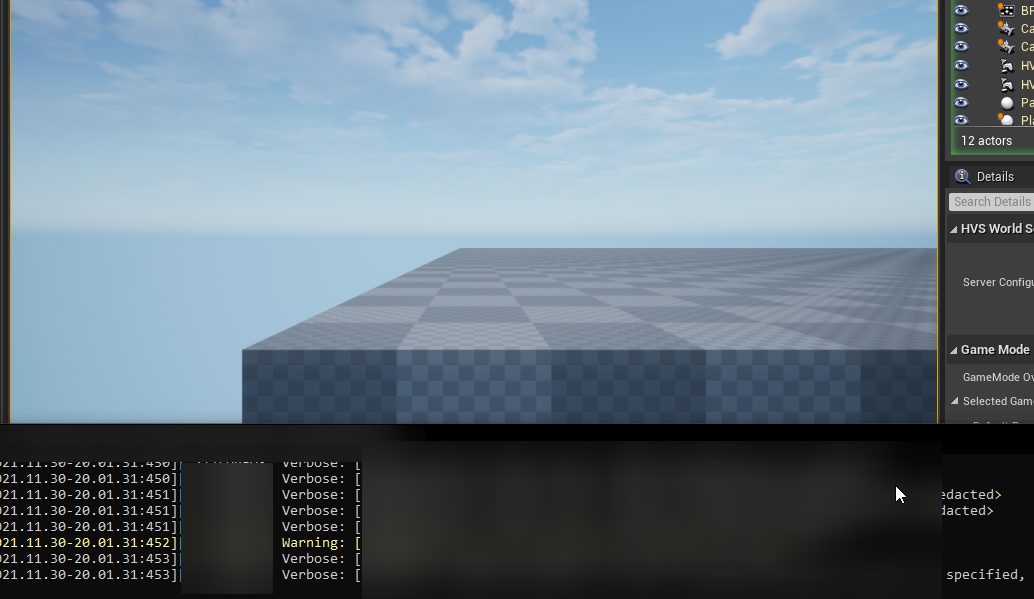
It's not a problem for engineers, but for designers it's an added step they need to learn. What actually seems to be happening is the client is automatically being logged into the server, its as if PIE is running open 127.0.0.1 when play is clicked.
rancid flame
Does anyone know why PlayerController::OnPossess(APawn*) is server-only? I want to notify the UI when the player possesses a pawn and it's kind of confusing why it's server-only.
Should I be using something else?
kindred widget
There is nothing BP for that. But there are client side virtual functions you can hook into in both pawn and controller in C++
rancid flame
kindred widget
There is nothing BP for that. But there are client side virtual functions you ca...
Are you replying to me? I'm not talking about BP
 maiden ermine
Hello! Can anyone confirm if PlayerController gets destroyed when a client disconnects (in my case, dedicated server)? Or do I have to check if their connection is active somehow?
kindred widget
rancid flame
Are you replying to me? I'm not talking about BP
Yeah. Wasn't sure, usually that question is for BP, so bad assumption on my part. 😄 But no uh.. I believe the restart events are what you're after. The Restart event in controller is not virtual but it does call SetPawn which is. And it also calls PawnClientRestart inside of the pawn, which is also a virtual. What you're mostly looking for to start your chain though is ClientRestart in PlayerController. That'll run on client during possession. Also runs on Listenserver as host during possession.
rancid flame
kindred widget
Yeah. Wasn't sure, usually that question is for BP, so bad assumption on my part...
Oooh, SetPawn in clients sounds perfect, thank you so much!
 potent token
what happen to the actor in the client if it is not relevant ?
is it destroyed ? then spawn again if it is relevant?
dark edge
Depends on if it was on the map at load or spawned at runtime
lusty sky
rancid flame
Does anyone know why `PlayerController::OnPossess(APawn*)` is server-only? I wan...
Because Possess() runs only on the server which means OnPossess() still have authority
so in client side you will need to override this instead AcknowledgePossession(APawn*)
potent token
dark edge
Depends on if it was on the map at load or spawned at runtime
its spawn at runtime
im trying to create object pooling
if its get destroyed then object pooling is useless right? (on the client)
dark edge
What are you doing where you need object pooling bit are also replicating all objects?
Typically pooling is used for high perf stuff implying lots of objects
dark edge
I'd either pool clientside or just spawn them.
But if perf is a priority you might not want the full ACharacter
potent token
maybe i will try profiling it later
potent token
potent token
what happen to the actor in the client if it is not relevant ?
by the way, what about this
is it get destroyed?
potent token
ok, thanks
rancid flame
SetVisibility is client-specific, and SetHiddenInGame is replicated?
kindred widget
rancid flame
SetVisibility is client-specific, and SetHiddenInGame is replicated?
Other way around. HiddenInGame isn't replicated. Visiblity is.
 molten matrix
Can I have a property marked as replicated on my UINTERFACE and have it replicate for any UCLASS that implements the interface? I'm guessing I'll have to add it to the GetLifetimeReplicatedProps method in all classes that implement the interface?
fossil spoke
Pretty sure you cant have UPROPs inside an interface.
 pine sage
Hey there !
So ... I got a question.
I have an ASC on my playerstate. I want to use this ASC on my controller.
When I start the game with 2 clients (from UE5 / Play / As Client), Controller C0 is OK, event though OnPossess it called twice (first time no State, second Time OK, but Controller C1 (the second one) never gets the correct reference using method PlayerState = Cast<ABasePlayerState>(InPawn->GetPlayerState());
I also used a if(IsLocalPlayerController()) before to see what could happen, and actually the Controller C1 is ... not local.
but I should have 2 characters, with 2 states and 2 controllers on my computer right ? And C0 and C1 should be local at some point=
that's my understanding, which is kinda false seeing how it behaves
if you have any idea, feel free to let me know ...
 still cypress
I've got a door opening/closing that isn't replicating. Both server and client can open it, but it's not propagating to the other. I've got replicating enabled on the actor, and component replicating on the static mesh component which is moving, plus multicase on the Open/Close custom events.
pine sage
Btw I followed Tranek's GAS Documentation for that, and almost did the same thing in my controler, but somehow, it doesn't work correctly
eternal canyon
fossil spoke
Pretty sure you cant have UPROPs inside an interface.
now that i think about it, that could actually be useful haha🤔
😂
but ig that would be more a components job rather than an interface
fossil spoke
pine sage
Btw I followed Tranek's GAS Documentation for that, and almost did the same thin...
Try asking in #gameplay-ability-system ??
pine sage
well the ASC is fine actually. It's just the PlayerState access in the controller that gets messy
fossil spoke
Make sure you havent forgot to call Super somewhere.
 fossil spoke
Ehhh
You shouldnt be setting the PlayerState to your cast
If your using it locally, create a local variable.
If your cast ends up nullptr, your basically nuking the PCs PlayerState
fossil spoke
PlayerState is a variable on AController you should not be setting its value directly, ever.
ABasePlayerState* BasePlayerState = Cast<ABasePlayerState>(InPawn->GetPlayerState());
Use a local variable instead.
pine sage
Alriiiight
I learned something valuable
what, so I basically nuked an already existing variable ...
lol
fossil spoke
Yes, potentially with a PlayerState that doesnt belong to you.
pine sage
the strange thing is the compiler let me define this

(don't mind the forward declaration in front)
pine sage
oh yeah
fossil spoke
The Controller already knows about its own PlayerState
pine sage
just tested and it work fine !
thanks a lot man 🙂
just made my day
@fossil spokeagain, thank you a lot 🙂
fossil spoke
👍
pine sage
have a good day/evening y'all !
dark edge
still cypress
I've got a **door opening/closing that isn't replicating**. Both server and clie...
You got replicate movement checked? Also either replicate state or events. Not both.
still cypress
dark edge
You got replicate movement checked? Also either replicate state or events. Not b...
When i checked that on the actor it gave an error that i needed to set it to Moveable. Though i have the actor as Static for baked lighting, its just the single component which moves relative.
still cypress
still cypress
When i checked that on the actor it gave an error that i needed to set it to Mov...
Actually i have an idea what might be my problem
 rocky topaz
when a function is used with ReplicatedUsing and the function has one parameter, it will have the property's old value as the argument right?
I wanna test it but I'm deep in code it might be a little while before I can
dark edge
still cypress
When i checked that on the actor it gave an error that i needed to set it to Mov...
How you gonna move a static door? Either it can move or not.
Is the component movable?
still cypress
dark edge
How you gonna move a static door? Either it can move or not.
Doorframe is static. Door itself is movable.
But i realized something talking through it. Ill continue to mess with it. Thank you for responding.
dark edge
I'd just repnotify a float
molten matrix
@fossil spoke , you're right. No UPROPERTY's allowed in interfaces. Maybe I'm stuck using a component then. I just want to have a uint "Team index" available for several different pawns. I can't put it in a parent class because UE4 doesn't support multiple inheritance (and some of my classes inherit from pawns and some from character). I can't put it in an interface because it doesn't support replication.
I was thinking a component for a single property is overkill, but I guess it works.
fossil spoke
molten matrix
<@!223322728424407042> , you're right. No UPROPERTY's allowed in interfaces. May...
Or just have the interface expose a function GetTeamIndex which must be overridden by the implementing class to provide its value...
molten matrix
... yeah, that would work.
pseudo merlin
hi all, if I spawn a replicated actor on server, then send a client RPC after in same frame, is the RPC guaranteed to arrive to client after replicated actor spawns on client?
rancid flame
I've been using a replicated variable and OnRep so clients can tell when a variable changes and it works great in Client and ListenServer. But when I test the game in Standalone, the OnRep isn't called (I guess because the player is now the authority). Is there a standard way to deal with this or am I going to have to test for standalone and try to manually call my OnRep function?
fossil spoke
rancid flame
I've been using a replicated variable and OnRep so clients can tell when a varia...
You must call OnRep manually for Server in C++
Blueprint its done for you.
 frail silo
what is the minimum requirements for running a basic unreal dedicated server? Like what is the cheapest ec2 instance that can handle it?
fossil spoke
frail silo
what is the minimum requirements for running a basic unreal dedicated server? Li...
You arent going to find a concrete answer to that question.
Hardware requirements depend on the resource requirements of your specific game.
No one but you will know what the requirements of your game are.
Start with the cheapest EC2 you can find and simply try running a Server on it. Profile its performance and decide if its sufficient or not???
 pine cipher
anyone know if advanced steam sessions plug in is available for ue5
or if its possible to use an old version of it
when i put the 4.27 version in the plugins folder it fails to build
dark edge
frail silo
what is the minimum requirements for running a basic unreal dedicated server? Li...
Depends, are you making Chess or Fortnite?
twin juniper
Is there a reason for this piece of code to not be executed on server ?
UE_LOG(LogTemp, Log, TEXT("%.2f"), FocusedInteractable->RequiredTime)
GetWorld()->GetTimerManager().SetTimer(TimerHandle_Interact, this, &UZircoInteractorComponent::Interact, FocusedInteractable->RequiredTime, false);
I'm running this code in a function that is executed on server and client, the UE_LOG does print on server and client but the timer only runs on client ? (UZircoInteractorComponent::Interact only print log)
 lost inlet
Show more code than just this
lost inlet
Also speaking to people like that who are trying to help you is a bit counter productive
So there’s no RPC to call it on the server?
That’ll be why
twin juniper
wait a min
i'll show u
void UZircoInteractorComponent::BeginInteraction()
{
    if (bIsInteracting)
    {
        return;
    }

    if (GetNetMode() == NM_Client)
    {
        ServerBeginInteraction();
    }

    if (FocusedInteractable)
    {
        FocusedInteractable->BeginInteract(ZircoPlayerController);

        UE_LOG(LogTemp, Log, TEXT("%.2f"), FocusedInteractable->RequiredTime)
        GetWorld()->GetTimerManager().SetTimer(TimerHandle_Interact, this, &UZircoInteractorComponent::Interact, FocusedInteractable->RequiredTime, false);
    }
}
Again it does work, required time is print on server and client, but for some reason the timer is executed only on client
void UZircoInteractorComponent::Interact()
{
    UE_LOG(LogTemp, Log, TEXT("UZircoInteractorComponent::Interact"))
}
comparing GetLocalRole() != ROLE_Authority is a bit better than GetNetMode() == NM_Client
but what does ServerBeginInteraction look like?
does it just call BeginInteraction?
twin juniper
lost inlet
comparing GetLocalRole() != ROLE_Authority is a bit better than GetNetMode() == ...
good luck to have GetLocalRole in a component
lost inlet
?
twin juniper
GetLocalRole is only for actor
twin juniper
lost inlet
yes, and the owner of a component is..
yeah but anyway that's not rly the issue there 😄
lost inlet
timers don't really have a networking component associated, so is there anything else manipulating that timer handle, did you add a breakpoint to ::Interact, how did you verify the server output
twin juniper
lost inlet
timers don't really have a networking component associated, so is there anything...
so is there anything else manipulating that timer handle
it's only set there
in the function i showed
Oh wait
nvm
void UZircoInteractorComponent::EndInteraction()
{
    if (!bIsInteracting)
    {
        return;
    }

    if (GetNetMode() == NM_Client)
    {
        ServerEndInteraction();
    }

    if (GetWorld()->GetTimerManager().IsTimerActive(TimerHandle_Interact))
    {
        GetWorld()->GetTimerManager().ClearTimer(TimerHandle_Interact);
    }

    if (FocusedInteractable)
    {
        FocusedInteractable->EndInteract(ZircoPlayerController);
    }

    SetIsInteracting(false);
}
It's cleared there
i just tried to comment the ClearTimer and it does work on server now
sooooo
Should i just put the timer on client ?
lost inlet
if it's appropriate
but something is causing EndInteraction to be called prematurely by the looks of it
that's where debugging would be handy
twin juniper
void UZircoInteractorComponent::Interact()
{
    if (FocusedInteractable)
    {
        FocusedInteractable->Interact(ZircoPlayerController);

        if (GetNetMode() == NM_Client)
        {
            EndInteraction();
        }
    }
}
Tbh it's designed like cr*p, soooooo
How u guys handling client/server interaction ?
i don't rly like the fact that client is doing interaction things before the server does
I mean for tracing, focus etc it's ok but not for interaction
lost inlet
not much better actually, except it's a bit worse because it's a part of our monolithic pawn class rather than a component
twin juniper
Argh
lost inlet
it works, technically
hollow eagle
Well first of all... check authority rather than NetMode as was already mentioned - otherwise if any of these methods are called on an actor you don't have authority over you're going to attempt to run server RPCs from them (which won't cause issues... but it'll complain in the log and in other situations could be the source of bugs in your code).
Next, why is only the client ending the interaction? In fact, why does the client need to RPC that it ends the interaction at all? The server should know the timer, and should be what always decides the true time for it to end. Any action the client takes is either input (starting the interaction) or just predicting what the server will end up doing (ending the interaction).
twin juniper
Next, why is only the client ending the interaction?
It's not the case ?
EndInteraction also calls ServerEndInteraction
hollow eagle
Yes, and that makes no sense
Interact only calls EndInteraction when on the client.
lost inlet
also i looked, components do have the GetOwnerRole() accessor
hollow eagle
Why does the server need to be told by the client when the interaction ends? Isn't there a timer that the server already knows about?
lost inlet
if you can't be bothered getting the owner and then calling GetLocalRole
twin juniper
hollow eagle
Interact only calls EndInteraction when on the client.
    if (FocusedInteractable)
    {
        FocusedInteractable->EndInteract(ZircoPlayerController);
    }

    SetIsInteracting(false);
This has to be done on server, SetIsInteracting is modifying a replicated var, and EndInteract does manage interactors array on FocusedInteractable
hollow eagle
Yes, but the server shouldn't be told when to do that by the client
twin juniper
so you would do the opposite ?
hollow eagle
From what you've posted, the client initiates this whole thing in BeginInteraction which RPCs to tell the server that it wants to begin interacting
a timer is started on both, but the client's timer should be treated purely as a prediction of what the server is doing
So the server has a timer running to run Interact (and therefore EndInteraction), it doesn't and shouldn't be told to run EndInteraction by the client when it already knows when it should happen.
The way you posted would only make sense if Interact() was triggered by a second input on the client rather than a timer started on both.
twin juniper
yeah true
so how would you manage it ?
timer calling a server event and make the server manage all of the interaction ?
hollow eagle
BeginInteract on the client runs ServerBeginInteract, which calls BeginInteract on the server. Both start a timer (assuming you want the client to predict the outcome), both run Interact and both run EndInteraction. No further server RPC necessary.
If you don't need the client to predict the outcome and can deal with the bit of latency of having the server send results back, don't even bother setting a timer on the client.
lost inlet
well you would have one if there's cancelling functionality
twin juniper
hollow eagle
BeginInteract on the client runs ServerBeginInteract, which calls BeginInteract ...
Well i'm okay with you but, for example i have some cancelling things
i'll show u
hollow eagle
Ok, so you have an extra server rpc called for cancelling.
twin juniper
void AZircoPlayerController::OnTagsCancelled(const FGameplayTagContainer& CancelledTags)
{
    if (GetNetMode() == NM_Client)
    {
        if (CancelledTags.HasTag(FZircoGlobalTags::Get().Interacting))
        {
            EndInteraction();
        }
    }
}
mmmh k
hollow eagle
Well, assuming the cancellation is triggered by a client input.
Otherwise the server can just handle all of that too.
twin juniper
hollow eagle
Well, assuming the cancellation is triggered by a client input.
it's cancelled by tags, so it's called on client and server
so endinteraction is happening on server first ?
it's an event
i don't rly like that tbh
hollow eagle
If this is an event happening on both the client and server then there's no further RPC necessary.
It'll get called on both.
meager spade
think you are trying to over complicate things
twin juniper
the way i did it with client, the client was checking if interacting if not then dont call rpc
with the way u telling me to do it will just spam RPC
if someone want to spam them
twin juniper
meager spade
think you are trying to over complicate things
ikr, that's why i asked if someone has a better and much simplified design
hollow eagle
the way you currently have it someone could just never send EndInteraction. Or send it earlier than allowed.
because you're having the client trigger all of this stuff.
meager spade
Client initiates the interaction -> Tells server -> Server actually does the interacting logic -> Tells client interaction is finished either completed or failed.
that is all that needs to happen
twin juniper
meager spade
Client initiates the interaction -> Tells server -> Server actually does the int...
what if client does need interaction logic ?
server does send an event too ?
rancid flame
If AGameModeBase has GetNetMode() and can return stuff like NM_Client, how would you ever get that when the client can't get the game mode?
meager spade
you predict your interacting (play a local montage, etc)
hollow eagle
rancid flame
If `AGameModeBase` has `GetNetMode()` and can return stuff like `NM_Client`, how...
GetNetMode shouldn't ever return NM_Client for a gamemode.
it has GetNetMode because everything does.
meager spade
yeah UObject holds that function, and actor holds GetLocalRole. GameMode will just inherit these
twin juniper
meager spade
you predict your interacting (play a local montage, etc)
how you want to predict that with a timer
meager spade
but GameMode is never created on client and its not replicated, so you don't need to do any role/server checks.
twin juniper
since client and server logic need to happen in same time
meager spade
i dont predict with a timer per say
client knows the interaction time of said item
shows a interact status for X time, but it can hold it there till server returns back
twin juniper
how u handling that ?
meager spade
now i also handle movement, this calls and RPC to server to tell it to abort the interaction
that is all the client does
twin juniper
meager spade
now i also handle movement, this calls and RPC to server to tell it to abort the...
same, that's what i showed above
meager spade
so if i interact with a chest, then move as client, this sends an RPC to the server to abort the interaction
twin juniper
but calling an rpc each time ur moving and interacting
that's not much for nothing ??
meager spade
my whole interaction system is 4 functions on the PlayerController. ServerStartInteraction, ServerAbortInteraction, CanInteract, ClientFinishedInteraction that is it
meager spade
i mean for the server <> client stuff
twin juniper
oh
meager spade
the interface goes on the interactable actors
twin juniper
🙄
meager spade
ServerInteract in an interface 😛
twin juniper
 twin juniper
meager spade
ServerInteract in an interface 😛
twin juniper
meager spade
ServerInteract in an interface 😛
in fact it's not a good name since it's runned on client and server
it was supposed to only be runned on server when i created it
meager spade
yes its a bad name
twin juniper
that's why
i also added CanFocusInteract
anyways
gonna try what u told me, thx for ur help guys 👍
twin juniper
meager spade
yes its a bad name
Do you tracing on server to check if the interaction client trace was correct ?
twin juniper
ok ok
meager spade
but not a "you hit this" trace
twin juniper
u do not have timed interaction ?
meager spade
i do
meager spade
clients predict it
twin juniper
so before ServerStartInteraction
meager spade
but server also runs the time
meager spade
i just call StartInteraction(Actor), this determines the type on client, then i tell server i am interacting
server basially runs the same logic without visuals
if its a timed interact, it starts a timer
just like the client
twin juniper
So ServerStartInteraction -> StartInteraction
meager spade
well depends on your function names..
twin juniper
meager spade
i just call StartInteraction(Actor), this determines the type on client, then i ...
how are u handling interaction on actors
i mean
for example my interactable does have a interaction component
meager spade
interface to get what stuff it needs
twin juniper
a UWidgetComponent
meager spade
via the interface
twin juniper
wut
twin juniper
so each of your interactable have a interactionTime var
but its dependant from then, not a component or so
meager spade
well i have about 5 different interactable actor base classes
so its not much work..
twin juniper
😐
twin juniper
so for example pickups are inheriting from it
meager spade
then i have a few very unique things (like interactable AI)
pickups are seperate
due to cost
(spawning cost)
twin juniper
spawning cost ?
meager spade
KaosGameplayActor also has an ASC
and tons of other things
which pickup does not need
twin juniper
meager spade
KaosGameplayActor also has an ASC
building ?
twin juniper
meager spade
i just call StartInteraction(Actor), this determines the type on client, then i ...
That's what i did above
everyone told me it was not that good ?
or am i wrong
meager spade
?
twin juniper
twin juniper
```cpp
void UZircoInteractorComponent::BeginInteraction()
{
if (bIsInteracti...
.
that
that's what u descripting
twin juniper
meager spade
i mean mine is more advanced, but that is the gist
Youre not storing interactors ?
meager spade
no
twin juniper
how ??
meager spade
it knows who finished first
twin juniper
how u handle that
twin juniper
ikr but how can the server know who finished first
meager spade
when interaction finishes, it checks if the interactable is still available
twin juniper
u do a check to only do it one time ?
meager spade
before giving to player
twin juniper
oh k.
meager spade
only server controls this value
you would never get interaction the same frame
or the same time on a server
its nigh on impossible
twin juniper
meager spade
when interaction finishes, it checks if the interactable is still available
so you basically have a variable on the interactable to say if its available or not
meager spade
correct
 ivory palm
hello, I am trying to play an animation of an actor with my character. But the animation works only locally. So the server cannot see the client's animation, and the client cannot see the server one
 meager spade
dont ever use GetPlayerCharacter
when dealing with replication
also you need to make sure the NewSpell is replicated else multicasts wont fire
viscid monolith
My Inventory Component is set to be replicated, but when i call an equip function from client to server, it doesn't seem to have an item object i need. What is wrong?


 viscid monolith
Tho i don't think it's being created on server. And how can i replicate an UObject? Just by creating it on server?
meager spade
bit more to it than that
twin juniper
void UZircoInteractorComponent::Interact()
{
    if (FocusedInteractable)
    {
        if (FocusedInteractable->bInteractionBlocked)
        {
            UE_LOG(LogTemp, Log, TEXT("Interaction is blocked"))
            return;
        }

        IZircoInteractionInterface::Execute_Interact(FocusedInteractable->GetOwner(), ZircoPlayerController);

        if (FocusedInteractable->bOneTimeInteraction)
        {
            FocusedInteractable->bInteractionBlocked = true;
            UE_LOG(LogTemp, Log, TEXT("Blocked Interaction"))
        }
    }

    if (GetOwnerRole() == ROLE_Authority)
    {
        EndInteraction();
    }
}
I got a problem with my Interact function, bInteractionBlocked is set AFTER the interaction, but sometimes if i'm spamming the Interaction input it does skip the interface execution ? is there a reason ?
viscid monolith
meager spade
bit more to it than that
I add item to my inventory when i edit defaults
 ivory palm
meager spade
dont ever use GetPlayerCharacter
ivory palm
meager spade
dont ever use GetPlayerCharacter
Is it fine with get controlled pawn ? It is still not working, and NewSpell is replicated
viscid monolith
Yep, i thought about it, but idk how should i do it else
twin juniper
twin juniper
```cpp
void UZircoInteractorComponent::Interact()
{
if (FocusedInteractable)...
if i'm spamming slowly it's all good, if i'm spamming quickly it does skip the interface execution and so just block the interaction for next time ?
 meager spade
and you need something to replicate the subobjects (owning actor/inventory)
viscid monolith
What should i override then?
twin juniper
ReplicateSubobjects
meager spade
virtual bool IsSupportedForNetworking() const override;
to return true
the in your actor/component
viscid monolith
My player is replicated, inventory is replicated by player. Array of Item Stacks is replicated by Inventory
twin juniper
viscid monolith
My player is replicated, inventory is replicated by player. Array of Item Stacks...
yeah but not ur item
and since uobject are not replicatable by default u need to override some things
meager spade
{
    bool WroteSomething = Super::ReplicateSubobjects(Channel, Bunch, RepFlags);

    for (UMyItemBase* Item : ItemInstances)
    {
        if (IsValid(Item))
        {
            WroteSomething |= Channel->ReplicateSubobject(Item, *Bunch, *RepFlags);
        }
    }
    return WroteSomething;
}```for example
viscid monolith
Oh damn, thank you very much, tho!!! I would never find out about this by myself
meager spade
and you need to ensure netname stable actually
override virtual bool IsNameStableForNetworking() const override; to also return true
twin juniper
twin juniper
```cpp
void UZircoInteractorComponent::Interact()
{
if (FocusedInteractable)...
So nobody knows ?
nvm fixed it
😐
verbal tendon
twin juniper
nvm fixed it
What was it?
twin juniper
verbal tendon
What was it?
me being dumb as always
i forgot to remove bCanPickup from my Pickup Actor
viscid monolith
Im crying right now, guys, you are awesome, thanks for help!!!! I was trying to figure out about this for like 4-5 days, without any progress, except i understood RPCs finally
twin juniper
since i implemented smth better to detect if smth can get interected
twin juniper
viscid monolith
Im crying right now, guys, you are awesome, thanks for help!!!! I was trying to ...
gg 😄
meager spade
@viscid monolith good 
ivory palm
so do you have other idea. I am starting with ue, and I don't understand how something can run on the server but not be visible by the client
chrome bay
If you are just starting out with UE, don't start with multiplayer
ivory palm
I mean it has been like two months
bitter oriole
ivory palm
so do you have other idea. I am starting with ue, and I don't understand how som...
This really is the default state of any object - to exist on the server first and only there. Getting it on the client is the hard part.
Multiplayer is 5x more work than single player, imho
ivory palm
yeah but the problem here is that it is also working on the client
but it is not visible by server
verbal tendon
ivory palm
but it is not visible by server
Your statements are contradicting one another, which one is it?
ivory palm
both actually
verbal tendon
Also you are shooting yourself in the foot trying to learn too many things at once. If you are just dabbling in UE you need time to absorb and learn the different concepts. Starting right away with a Multiplayer game is a bad idea
Your earlier problem statement was that it runs on the server but is not visible on the client, now you say it's not visible on the server but is also working on the client ?
bitter oriole
ivory palm
but it is not visible by server
Both are those are essentially the same class of problems. Make sure the object is created on the server, not on the client, that it replicates, that any data on it that needs to be replicate is also marked as such
verbal tendon
bitter oriole
Both are those are essentially the same class of problems. Make sure the object ...
And the way that is accomplished is that the function you are currently calling that creates the actor, needs to be gated behind an RPC that executes on the Server
dark edge
@ivory palm An actor that is spawned on the server and set to replicate will also be spawned on the client. If not set to replicate, it'll exist on server only. An actor spawned clientside will only exist there.
dark edge
ivory palm
yes it is
Show your code


 dark edge
ivory palm
Anyw
dark edge
ivory palm
Anyw
Whoah yeah don't do that. First problem is calling multiple run on server event
Just do 1
ivory palm
You mean the actor I spawn must be a pawn? Because I replace the GetPlayerCharacter by GetPlayerPawn
dark edge
This is all sorts of spaghet and fucked up. Start small, just do
Input -> Run on server event
Server event -> spawn actor -> set ref/attach/whatever
You've got race conditions all over the place as-is
Get that working before adding the interface calls and whatever else you're doing.
devout shadow
Anyone has an idea on how to approach this complex problem?
I'm making a VR multiplayer game where the player has 2 hands and a full body. The full body can't be seen by the owning player, but can be seen by other plays. The hands can only be seen by the owning player and not by other players.
I want the hands to be able to collide with other player's full body IK, but not the player's OWN full body IK. I can't seem to find a way to make this happen + also make it replicate properly.
Some people recommended making a seperate collision channel, but I don't see how that would solve this problem?
TLDR: I need to find a way to not collide with own body, but be able to collide with other player's body with my physics based hands
dark edge
Set own body hidden
devout shadow
dark edge
Set own body hidden
The visual aspect is done. It's completely working
However, because the hands collide with its own body, it's super buggy
dark edge
Doesn't hidden also hide collision?
devout shadow
It doesn't
Which is a good thing, otherwise my hidden hands wouldn't be able to do their job
- the problem with that situation is a discrepancy of how other players see you interact with physics
Ideally I'd have some function saying: Hands ignore own actor
And have that replicate over all characters
So every pair of hands will ignore their own full body
dark edge
Move this to #legacy-physics
devout shadow
Alright will do!
twin juniper
Is there any ID for each actor that I can use to send a datas for multiple replicated actors from the server? I want to request player names from a client and assign them to the corresponding actor. I could do this by making each actors to send their names to the client one by one but that wouldn't be effective, so if there would be an ID I could send a map that would include IDs for each name, but I am not sure if there are even something like that already for them that I can use in BP.
chrome bay
There isn't, network GUID's are unique per-connection
The only actors you can "stably" refer to by name, are ones which are stably named, i.e. loaded from the map.
dynamically spawned actors are inherently not stably named, unless you have some bespoke deterministic spawning code for them.
Not really sure I understand the question though, tbf. If it's a replicated and is relevant to a given client, you just use a pointer to refer to it - the engine will resolve it to their instance of that actor.
twin juniper
What if I make a multicast function that has the actor references? Will the client know which one is that?
lol u just answered
chrome bay
So long as they are replicated actors spawned by the server and relevant at the time they receive the RPC, they will resolve yes
twin juniper
thanks
chrome bay
To avoid race conditions, support join-in-progress and relevancy etc. and the like, any stateful changes should be replicated properties
RPC's are for events rather than something that permanently alters the state of the game
dark edge
twin juniper
Is there any ID for each actor that I can use to send a datas for multiple repli...
What do you mean by player names, like the actual player name as in their steam name or Avatar name?
That should already be replicated
twin juniper
chrome bay
To avoid race conditions, support join-in-progress and relevancy etc. and the li...
True, I can just make name variable to be replicated, so I don't have to deal with it manually.
dark edge
What exactly are you trying to do, add names to a players units or something?
twin juniper
dark edge
What do you mean by player names, like the actual player name as in their steam ...
I don't use steam
My issue is already solved thanks
 random nymph
Can I get the unique net id of other than local player from somewhere or do I need to make a replicated variable for that?
 rapid bronze
Isn't the ID stored in the PlayerState, so it's already available
random nymph
Indeed looks like it is, thanks
verbal tendon
twin juniper
thanks
Very important caveat on this that is not obvious, the actors will need to have replicated before this will resolve properly, or by default the engine will resolve it to a nullptr. There is a config that changes the default behaviour to have the RPC be delayed until everything is replicated properly.
This can for example happen if you spawn an actor on the server, and have it instantly run AI code that does things before the actor is fully replicated to all clients
viscid monolith
One more question. How would i add item to inventory? Currently i tried different ways of doing it, but im not sure if inventory gets replicated to clients. Maybe i should do something with ReplicateUsing metamodifier? I currently call Server RPC to add items to character, but on server it actually works, tho, it's not being replicated to client i guess. In PIE details i can see item being here, debugger shows the same, but when i open UI from client, my Inventory has no items at all, and inventory UI is empty. Component is set to replicate and if i add items though Edit Defaults Details page it actually replicate to all clients and server.


(If i do the same for the server player, it actually works right)

Ofc, i set component to replicate.

 twin juniper
verbal tendon
Very important caveat on this that is not obvious, the actors will need to have ...
twin juniper
verbal tendon
Very important caveat on this that is not obvious, the actors will need to have ...
thank you for the clarification
blazing spruce
Can anyone tell me if there is a particular reason that something would work inside the editor for both client and server but when ran through steam on two separate devices it only works for the server?
viscid monolith
viscid monolith
One more question. How would i add item to inventory? Currently i tried differen...
Question is still open, i have absolutely no idea why this happens, i tried everything i could even think of.
meager spade
@viscid monolith keep your item stack upto date with the servers copy
via the OnRep
viscid monolith
ReplicatedUsing=OnRep_ItemStacks or something?
meager spade
this is why i don't use Instanced for repicated stuff
and it smells really bad what your doing
chrome bay
instanced indeed sucks with rep
viscid monolith
Okay, then im removing Instanced
chrome bay
might not be the problem but ye 😄
viscid monolith
And what exactly should i set for OnRep? Inventory component or Stacks in it?
chrome bay
I'm going to plug this while at the same time recommending against it, because for the vast majority of inventory systems you don't need discrete object instances.
https://jambax.co.uk/replicating-uobjects/
meager spade
^
viscid monolith
Okay, thanks, gonna look at it
meager spade
server creates the new item right?
problem is you overrode NetNameStable
you need to handle that to return false
if server spawned the item
and thats.. tricky
viscid monolith
Yes, server spawns item
meager spade
i would keep this stuff seperate
Instanced for Pregiven stuff
then again urgh i hate that also
chrome bay
same 😄