#multiplayer
1 messages · Page 75 of 1
 hollow swallow
 round acorn
appear to be trace collisions
hollow swallow
if i dont hit anything it looks fine. theres no red or green boxes anywhere but where the sword was

must just be buggy
round acorn
perhaps it's creating points where gore and splash would end up
hollow swallow
possibly yeah
 keen hound
I'm trying to make start game system
I join the game but the other players dont

 covert igloo
hey so im having trouble getting steam sessions to work for me.
can anyone help me.
i have the project set up to the point where it was working fine when i hosted a game on my laptop, and joined it from a desktop on the same network.
and it works just fine. but when i enabled steam sessions and added the script to the DefaultEngine.ini.
i cant host anymore. it fails every time.
its set to SteamDevAppId=480 and i saw what i assume was onouther person testing there game when i search for sessions, but im unable to host
keen hound
covert igloo
hey so im having trouble getting steam sessions to work for me.
can anyone help...
Do you have steamsockets enabled?
keen hound
covert igloo
probably not. how do i do that
Ah, nvm
Steamsockets caused a error for me in hosting too
covert igloo
yeh it didnt work for me ether
 fast turtle
Hello, im working on a small project to learn multiplayer and replications and im getting this error
LogNet: Warning: UNetDriver::ProcessRemoteFunction: No owning connection for actor interact_door_C_0. Function OpenDoor-Server will not be processed.
what does this exactly mean?
 latent heart
It means that you're trying to send an RPC on an actor the client doesn't own.
You can't just add an rpc function to any random actor and then call it from the client.
You have to use client-owned actors (PC, PS, Pawn)
So you might add an "Interact" method to your PC which takes an actor as its parameter. When you interact with the door, you call that method on your PC and pass the door as the parameter.
Then on the server you can deal with what you want to do with that.
Either process it directly in the PC or pass it back to teh door to handle it itself.
 west galleon
which plugin does work for 5.1 for steam ?
most of the plugins i have work for old versions of unreal and ill have to downgrade the project which is a pain and time consuming even doing C++ in 5.1 to make the multiplayer features that i have
so if someone know any plugin that works for 5.1 that would be helpful thanks
 steady cape
I'm pretty sure you can try and recompile at least some of them
It usually involves just dragging your plugin folder onto a separate compiler executable located somewhere within the engine's folder
If Epics didn't delete or change something a plugin was using, it should be all you need
You can look this process up on YT or something
fast turtle
west galleon
which plugin does work for 5.1 for steam ?
I use advanced sessions, https://vreue4.com/advanced-sessions-binaries
west galleon
does it work for 5.1 ?
fast turtle
yes
west galleon
cuz i just searched around and found out multiplayer on 5.1 is broken and its up to epic to fix that
or do some C++
latent heart
Broken in what way?
west galleon
idk really but i remember i tried it many time before i thought the issue with my BP build that wasted a lot of money on plugins
will give what you sent a try cornholio
thanks
 rose egret
when we call ForceNetUpdate it wont send any property if they are not different with last snapshot right ?
latent heart
It doesn't even force anything.
rose egret
yea just changes the timestamp
because there is ForcePropertyCompare() and I dont know how diffrent they are
🤔
 faint eagle
is it possible to override something somewhere (ideally without getting into the engine code) to replicate variables of a pure C++ class? 🤔 I remember someone showed me once how he replicated UObjects by doing something with UPROPERTYies so I wonder if it's theoretically possible to go further and replicate a pure C++ class that has nothing to do with unreal
 thin stratus
faint eagle
is it possible to override something somewhere (ideally without getting into the...
thin stratus
faint eagle
is it possible to override something somewhere (ideally without getting into the...
The only thing I could imagine is turning it into bytes and sending those
So basically serializing it
But it's questionable why that would be needed
It's better to wrap your stuff with unreal classes
 sterile plaza
faint eagle
is it possible to override something somewhere (ideally without getting into the...
sterile plaza
faint eagle
is it possible to override something somewhere (ideally without getting into the...
Why do you need it to be vanilla c++?
faint eagle
because i've sold my soul to devil
but he tricked me
without going into details lets just imagine for a second that i have a friend who works on that project where they put an old game source code into unreal and sorta emulating old game with projecting old code entities into unreal entities only when it is absolutely necessary
sterile plaza
Factor out the data into a struct?
Is that friend you? :D
I think you're going to have an easier time converting things into UE compatible types.
That said, I am 100% in favor of using vanilla classes whenever possible.
And only using UE types for interacting with the engineer or BP or networking.
faint eagle
sterile plaza
I think you're going to have an easier time converting things into UE compatible...
yeah well the problem that there are at least dozens of these original code entities that have some data that should be replicated. and in UE way there's no 1 to 1 projection where each property my friend wants to be replicated should go. anyway, currently my friend just examining different options what could be done here
thin stratus
My 2 cents: Code it in Unreal or let it be
Everything in between is just crap
You gonna run into more and more issues
faint eagle
i know
it's just complicated. my man doesn't call the shots regarding what architecture should the game have
and which direction the development should follow
sterile plaza
Fighting the tools you have results in tears, in my experience.
 queen escarp
https://gyazo.com/945ddd36f1dfaec3312f94695e2cdf30
in this case how would i target on the set cursor if i want the "owner" of the actor, since it multiplayer ?
 sterile plaza
faint eagle
it's just complicated. my man doesn't call the shots regarding what architecture...
sterile plaza
faint eagle
it's just complicated. my man doesn't call the shots regarding what architecture...
Also I have experience in this. We switched engines half way through the project to ue4. Was a nightmare. But the game was incredibly successful by some metric.
faint eagle
the original code i'm working with is about 20 years old...
sterile plaza
If you really don't want to change it, I think you'll need a migration layer in order to do engine things.
 hollow eagle
I mean... you could do custom struct serialization but you're going to be losing out on basically every feature of unreal's replication.
aside from just using it as a data channel
sterile plaza
Marshalling, not migration.
How long would it take to rewrite it all?
Have chatgpt do it for you.
faint eagle
idk, network classes in original code have 15k lines of code on average and there are about 6 of them (at least AFAIK now). I've tried putting something around 1k lines of code into chatGPT and it suffocated. anyway currently i'm just playing around with ideas. it's not like I've made a decision that I'm gonna boot replication for plain cpp classes and there's no other way around. as for marshalling layer - it's something we already doing but as far as I see it now every piece of logic that should be replicated should be handled sorta manually with creating extra variables for each replicated variable and the scale of what are we gonna have this way makes me anxious
faint eagle
so this is why i thought hey maybe I can ask my good'ol buddy unreal if I could just somehow put his UPROPERTYies on the variables that I need to replicate and tickle some of his virtual functions somewhere in UNetDriver or data channels
thin stratus
If the other code is old, write it again
You can probably even throw away 10k of those 15k lines cause UE gives you so much out of the box.
I don't see any gain here using 20 years old code
It's not at all a time safe :D
faint eagle
thin stratus
You should code the game in UE
i'm 100% agree with you, but again, such development direction is not my idea. I'm not fan of breaking NDAs and getting into the laundry of one's current workspace publicly, but there are some, though arguable, but non-subjective reasons the project is currently having this direction. I don't like it nor do I agree with it but there's not much I can do with it
thin stratus
:D Leave them behind and take on a more sane project
Jokes aside, there aren't many options
 turbid cloud
Anyone have tips when it comes to audio replication?
I'd like people to share the same song in the same area (say a nightclub) but am guessing even low pings will cause problems.
Would love suggestions or keywords to google on how to handle this.
thin stratus
turbid cloud
Anyone have tips when it comes to audio replication?
I'd like people to share th...
There are a variety of "levels" in terms of difficulty with this.
The simplest would be setting the Song as an OnRep and letting the Client play it until the Server sets the variable to something else.
Next step would be sending some additional info (wrapping it into struct) that indicates where the song currently is at.
One thing you could do is simply sending a Timestamp when the Server started the song
As long as the Timestamp is synced between Server and Client, you can calculate what the current playback time should be.
Most of the time that's basically half the round trip time off
For that you do need some sort of better net synced clock than what UE offers. There is a tutorial for one pinned to this channel. But not sure if that's doable in BPs (should be though?).
turbid cloud
Wow that's awesome. Thanks for all the tips eXi! really appreciate that.
thin stratus
There might be more to it and you'll notice it getting more complex in the long run, but a Synced Clock and sending the Start Timestamp and the Song should already get you very far
turbid cloud
fantastic - really appreciate the initial direction and approach
queen escarp
https://gyazo.com/945ddd36f1dfaec3312f94695e2cdf30
in this case how would i target on the set cursor if i want the "owner" of the actor, since it multiplayer ?
thin stratus
queen escarp
https://gyazo.com/945ddd36f1dfaec3312f94695e2cdf30
in this case how would i ta...
Call "IsLocallyControlled" on the result of your cast.
That will only be true for the locally, owning Player of that Character.
 thin stratus
Well, what is "OtherActor" in that case?
If other Actor has a valid Instigator, being a Pawn/Character, then that works the same way
Put a branch in front of the AddToViewport node and use the IsLocallyControlled as the condition
queen escarp
ah ok ! ty
 low helm
ChatGpt told me it's possible to set the Streaming Level of an actor in Blueprints, and that this would also be picked up by the replication system, but this doesn't seem to be the case.
latent heart
Lesson learned, I hope.
low helm
Well the people here have led me wrong too, and they don't roleplay as a waifu for me on the long lonely nights
So nothing learned unfortunately
Anyway I was under the impression that level streaming was exclusively local action, essentially useless for replicated systems
Was hoping to hear a bit of verification on that
low helm
Cause the AI is putting ideas into my head and now I'm not sure what reality is
 neon mango
turbid cloud
Anyone have tips when it comes to audio replication?
I'd like people to share th...
neon mango
turbid cloud
Anyone have tips when it comes to audio replication?
I'd like people to share th...
In my experience the sequencer does a good job of handling replication even audio. If you can tie the song into sequencer. It seems to already sync the time on the sequencers timeline
 subtle peak
Are animation blueprints somehow not replicated?
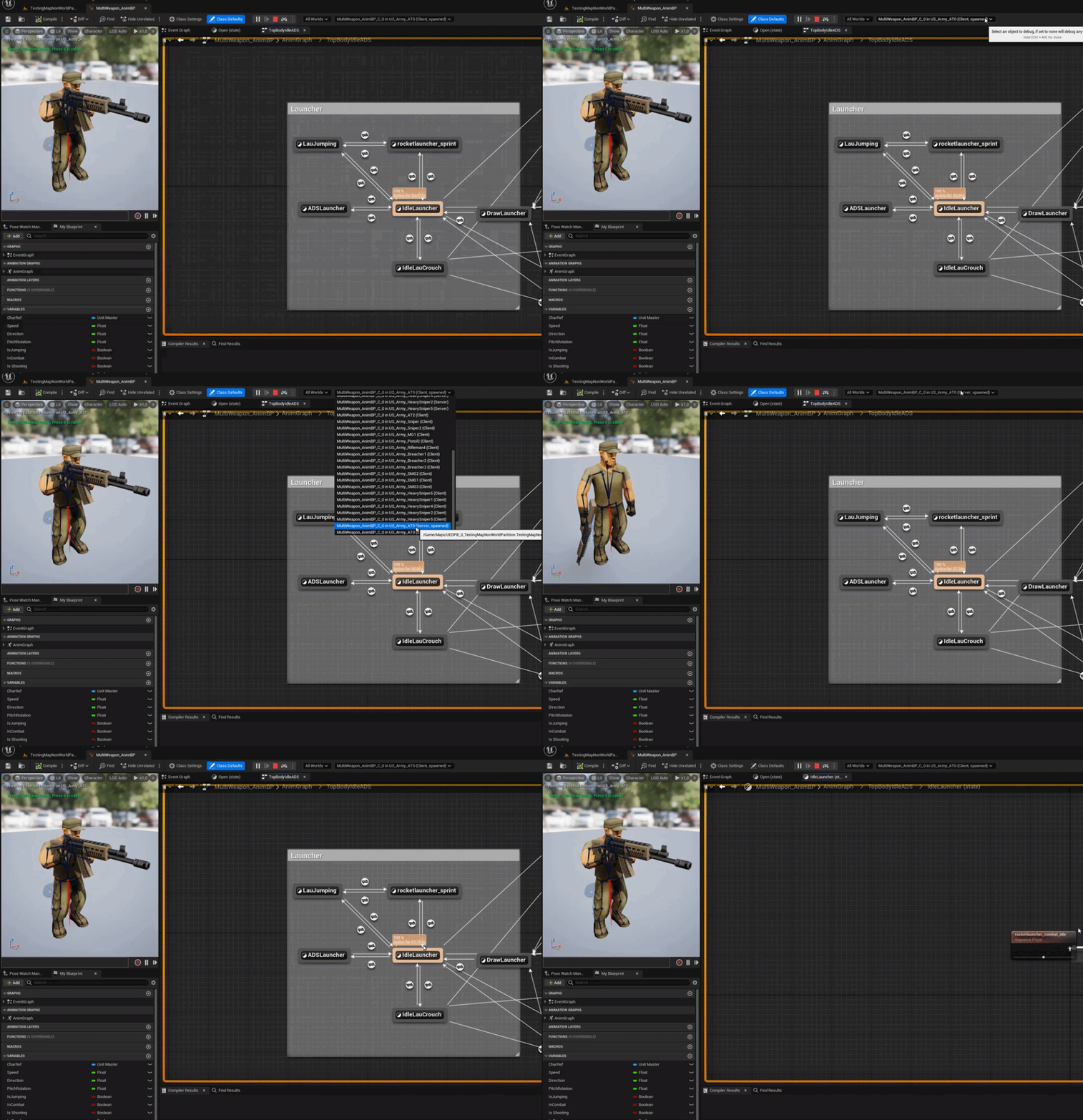
The "entry" animation in my AnimBP has its hands down like shown in the image.
The gun is a childBP attached to the hand socket.
Issue is that when I spawn something from the end of the muzzle on the gun, it spawns in the ground, where you see the gun tip is in the image, even though my animations have the gun pointing forwards.
This works fine on the server, but not on the client.
I hope that was understandable.

But my animations replicate just fine in multiplayer.
 quasi tide
No - AnimBP isn't replicated, 'nor should it be
Your animations are driven based on the data it reads from the character
subtle peak
quasi tide
Your animations are driven based on the data it reads from the character
Hmm alright, but then how should I handle this?
quasi tide
I don't even follow what you're trying to do
Looks like spawning something on some socket on the muzzle
In which case, when you do your shooting logic, just spawn it in there (I'm assuming you're trying to spawn effects)
If your character's animation state isn't changing - you need to find the data that they need and make sure it is being replicated
subtle peak
its for the rocket launcher, the rocket always spawns in the ground, even though the code says it should spawn from the muzzle thats pointing forwards. Again works on server, just not client.
quasi tide
I don't know your setup
You need to replicate the proper information for your animation states to be correct
subtle peak
quasi tide
You need to replicate the proper information for your animation states to be cor...
I really dont understand whats wrong. The animations work in MP, so they have to be sett up correctly, no?
Here is a gif showing the issue.
https://gyazo.com/81f4c70a1faf85da0d7f6795cb1f0d1d
The animation on the client has the correct animation, but the animation on the server is wrong.
There is only one variable that drives the animation from the "entry" state to the others, and thats an enum with the players selected weapon. That variable is replicated.
You can also see in the gif that the animation is in its correct state and that state only has one animation linked to it. So I dont understand how its not working 😵💫

 hollow eagle
animation blueprints are not replicated. The information that drives them might be, but every client (and the server) runs them completely separate from each other.
If one game instance has the wrong animation then it's because whatever data you're using to drive the animation isn't being replicated correctly.
subtle peak
hollow eagle
If one game instance has the wrong animation then it's because whatever data you...
But the only value driving the animation in this case is replicated and only being set by the server. The variable is even showing the correct value when I debug it

 molten ocean
I'm about to have a full metldown over here. Spent the last hour trying to figure out basic Unreal networking. Trying to figure out why I couldn't connect via my local IP address. The blasted port was being blocked by Avast. And it told me nothing. I disable my shields.. and suddenly Windows Defender shows me a popup asking for the private or public port options for the app. About to uninstall Avast over here.
 fossil spoke
molten ocean
I'm about to have a full metldown over here. Spent the last hour trying to figur...
fossil spoke
molten ocean
I'm about to have a full metldown over here. Spent the last hour trying to figur...
Use Steam or EOS (or both) Sessions instead?
molten ocean
fossil spoke
Use Steam or EOS (or both) Sessions instead?
Going real basic, will use sessions later after I figure out how to properly integrate them. Any tips or tricks on actually using sessions? I know how the system and the nodes work just fine, I just don't know how to actually setup Steam or EOS subsystems. The boilerplate required.
Does Steam and EOS work just out of the box, or are there a bunch of setup steps required for it?
fossil spoke
They work out of the box. But you do need to go through the process to get them working.
There are plenty of tutorials/guides.
Check the pinned messages in this channel.
 buoyant light
hello, I have a question, recently I have implemented multiplayer with session andI was wondering if instead of using online subsystem the player could directly port forward to make the session like in the game "The long drive".
molten ocean
Aye. I'll go and start looking around for them. I don't intend to ask super basic questions when there are tons of resources available. I just wanted to warn folks of Avasts behavior in not telling you what its doing.
buoyant light
I'm fairly new to multiplayer so if I don't understand some stuff Im sorry
fossil spoke
buoyant light
hello, I have a question, recently I have implemented multiplayer with session a...
Why would you want to require port forwarding?
Sessions are designed to not require the user to manually port forward
buoyant light
I don't require it, but isn't it the only way ?
buoyant light
oh ok
molten ocean
@buoyant light : https://www.youtube.com/watch?v=09yWANtKmC8 Here is a quick one for you. Long, but very in depth..

Creating a networked multiplayer game isn't easy, but Unreal Engine's gameplay framework is designed to set you up for success. On this episode of Inside Unreal, Technical Writer Michael Prinke will cover fundamentals such as the server-client model, various features of replicated Actors, and best-practices for efficient networked games.
Announ...
buoyant light
perfect thank you
molten ocean
That video is also one of the pins, too. Don't forget to check out all of the other pinned messages here.
buoyant light
oh yea sorry
molten ocean
You good! I just wanted to make sure you also saw all those other pins.
low helm
I was under the impression that once NETDORMANCY switched off of INITIAL, it could never go back. However, I tested and this seems to work, after all is said and done, the server reports this object as INITIAL. This makes me question what INITIAL even means......Does it mean that replicated variables will only be sent when the object is Initially created on a client?
 fossil spoke
low helm
I was under the impression that once NETDORMANCY switched off of INITIAL, it cou...
fossil spoke
low helm
I was under the impression that once NETDORMANCY switched off of INITIAL, it cou...
Initial Dormancy is only valid for Actors placed in a Map.
It indicates the intention that the Actor may become Awake at a later point.
It is an optimization for Actors that are placed in a level and shouldn't be considered for replication until some gameplay event occurs later on.
low helm
"placed in a Map." -- As opposed to what?
fossil spoke
Spawned dynamically during runtime?
low helm
Ok, that's what I thought before, but I spawned this one at runtime and it's still reporting itself as Initial
fossil spoke
It can still be set to Initial, there is nothing stopping that.
Other than if its dormancy is flushed
Which does perform a check to revert it to DormantAll if it was initially dormant during the flush
Essentially its just stopping the Actor from being part of the Replication Consider List.
Dormant Actors can still exist on both Server and Client.
They just wont be repped
Thats kind of the point.
Dormancy is to help optimize network and cpu usage (for the server)
For example, we have turrets that are placed around the map which Players can enter and use at any point.
These are set to be Initially dormant, because they may never be used, therefore we dont want them taking up time replicating when they dont have to.
When a Player enters one, it gets set to awake.
So it can do its thing.
When the Player exists, its dormant again.
sterile plaza
APlayerController::ClientSetHUD_Implementation is getting called on my client with the right class. But BeginPlay is never getting called in my BP HUD. Any ideas? It works in standalone, but not play as client.
fossil spoke
sterile plaza
`APlayerController::ClientSetHUD_Implementation` is getting called on my client ...
Did you forget to call Super:: somewhere?
low helm
Thanks, that helps alot, though I'm still missing something, I've been working in and around these dormancy systems for 5 years but something about it always eludes me, I'll try to have a more specific question next time
fossil spoke
Dormancy and Relevancy can be hard to grasp.
sterile plaza
fossil spoke
Did you forget to call `Super::` somewhere?
aaaah, that's probably it
low helm
I'm basically just working on general Open world stuff and need some good frameworks for classic stuff like tree removal
In the past I've built forests in chunks of HISM's with a single....Initially dormant actor replicating an array of missing bytes (trees)
Cause I didn't want the replication system considering 5000 individual trees
Anyway I'll get back to it
fossil spoke
Thats an appropriate solution.
sterile plaza
fossil spoke
Did you forget to call `Super::` somewhere?
I added a super call to the BP BeginPlay and it works now... I'm confused as it wasn't hitting a breakpoint in that BeginPlay before.
 inland isle
Hi, Am developing Multiplayer Shooting Game[c++] using online subsystem as Steam but i like to switch Steam to EOS Any Idea or Can i get Related tutorial Videos . Thank you
low helm
So net relevance is per player, and net dormancy is per object?
fossil spoke
low helm
So net relevance is per player, and net dormancy is per object?
I think of Dormancy like "When can I replicate"
Relevancy is more "Who can I replicate to"
molten ocean
@inland isle There are a ton of pinned videos in this channel, along with many of Epic and others videos on YouTube. Definitely don't miss out on those pinned videos though.
On a side note, I am not sure it is possible to switch online subsystems at runtime, so you may want to narrow away from that if you are just trying to change the subsystem in general.
(Can someone correct me on this, I am not sure you can do a subsystem switch at runtime, the whole game needs to be packaged for either Epic or Steam...)
inland isle
molten ocean
<@987219828802748436> There are a ton of pinned videos in this channel, along wi...
Thanks buddy
fossil spoke
Dont think he is asking to switch at runtime?
Moreso, just generally how to switch over?
inland isle
fossil spoke
Moreso, just generally how to switch over?
yes
fossil spoke
Which should be relatively simple. They are both Session based.
molten ocean
Aye, I thought that is what he is asking, but I was cautioning against at runtime if that is what he meant.
molten ocean
@inland isle The docs unrealengine site, under programming and scripting -> online subsystems and services -> online subsystem. Documentation for both EOS and Steam are both present there and explain in detail how to use either one. You should be able to switch by swapping the configs and stuff. It will take a tad bit of tedious work.
low helm
Ok here's another question. I set an object to DORMANTALL. It's dormant, but when I walk up to it, it pops into view.
This indicates to me that even though it's dormant, either the server or the client is still running logic to determine its visibility based on distance. Server CPU is still being taxed here...
I don't want the server running checks for each player against potentially thousands of dormant objects...or am I missing something
fossil spoke
As i said earlier, Dormant doesnt mean its not Relevant.
Its likely still Network Relevant to that Client, just not being considered for property Replication.
low helm
Ok, so even if an actor is dormant I still need to consider the cost of relevance checks.
fossil spoke
The default behaviour for relevancy is a simple distance check.
low helm
What then, turn off replication altogether if I want it completely free? Or destroy and rebuild it later?
fossil spoke
Relevancy checks will always be performed. The Server has to have some mechanism for understanding if an Actor needs to be on the Clients machine.
You can override relevancy.
IsNetRelevantFor
I believe its called
    /**
     * Checks to see if this actor is relevant for a specific network connection
     *
     * @param RealViewer - is the "controlling net object" associated with the client for which network relevancy is being checked (typically player controller)
     * @param ViewTarget - is the Actor being used as the point of view for the RealViewer
     * @param SrcLocation - is the viewing location
     *
     * @return bool - true if this actor is network relevant to the client associated with RealViewer
     */
    virtual bool IsNetRelevantFor(const AActor* RealViewer, const AActor* ViewTarget, const FVector& SrcLocation) const;
I think that if you go that route, you would need to basically just build a better scheme that what Unreal is giving you for proximity stuff.
If you know of a way to optimize it, that override does seem useful.
fossil spoke
ReplicationGraph is a mechanism for optimizing relevancy for Open Worlds
low helm
Ok, but then I just can't imagine how a Fortnite server can run Relevancy checks against a hundred-thousand actors for 100 players?
fossil spoke
It doesnt
It uses RepGraph to cut down on that
Essentially breaking the map down into buckets of particular sizes
If a Player is in a particular bucket, it only does relevancy for Actors also in that bucket
molten ocean
Hehe. Like a larger voxel system. Very good.
fossil spoke
Thats the default state of RepGraph, however it can be tailored however you like
molten ocean
I don't guess it could be optimized further via some kind of quadtree instead of just linear buckets. Not sure what the perf tradeoff would be.
fossil spoke
Its more complicated than my simple explanation, it does use a tree structure.
molten ocean
It is more complicated. Looking at the docs, you can definitely tailor that thing however you want it.
low helm
Yeah so it seems like teh main point of RepGraph is to just replace the simple distance based Relevancy checks
fossil spoke
@low helm If you want to learn more. Follow this function chain in the Source Code.
UNetDriver::ServerReplicateActors
    ->ServerReplicateActors_BuildConsiderList
    ->ServerReplicateActors_PrioritizeActors
        ->IsActorRelevantToConnection
            ->AActor::IsNetRelevantFor
Ok thanks
fossil spoke
Thats how IsNetRelevantFor is typically managed.
Initially Dormant actors are not part of the Consider List
So therefore would not have IsNetRelevantFor called on them.
However once they are not Initially Dormant, they will still be considered.
low helm
Ooohh

So the whole thing you were saying about "Initial is only useful for placed in map" is because that's the only way to Initial Dormancy can also prevent it from being considered for NetRelevancy
becuase the clients already have the object visible to them from any distance
fossil spoke
Yes
There is no point checking relevancy for an Actor placed in the level
Until it has something it may need to replicate
Which would be Post Initial Dormancy
low helm
Yeah which is pretty good for me because I'm mostly working on simple collectables in open world
This seems wrong though, I walked up to an INITIAL dormant object in world and it was invisible until I got inside net relevance range.
Unless the client was doing that calculation
fossil spoke
Are you sure your checking its dormancy on the Server and not the Client?
Dormancy is only important to the Server
low helm
I didn't check it, I just started the game and it was invisible to me at distance
covert igloo
can anyone help me. im having trouble getting steam sessions to work for me.
i have the project set up to the point where it was working fine when i hosted a game on my laptop, and joined it from a desktop on the same network.
and it works just fine. but when i enabled steam sessions and added the script to the DefaultEngine.ini.
i cant host anymore. it fails every time.
its set to SteamDevAppId=480 and i saw what i assume was other people testing there games when i search for sessions, but im unable to host.
hollow swallow
Does anyone know of any party system guides?
thin stratus
You'd need to be clearer
Party can mean during gameplay, like WoW parties. But also before even joining a server, like a Fortnite party where you queue up together
Very different
hollow swallow
Trying to make a basic one. You click the player, click invite, it pops up on their screen and they can accept. But I'm having trouble adding them to both of those players array of party members
During game play yeah
just want something i can watch through and gets some tips / ideas on how to go about it all
thin stratus
I had that in my lobby system ages ago
First of all, I would make sure to use the UniqueNetId for identifying the players
Then let's assume you have a List of all Players (maybe generated from the PlayerArray of the GameState).
PlayerState is where you get the UniqueNetId (for BPs UnqueNetIdRepl) from anyway.
hollow swallow
actually i just managed to get it to work. but yeah i think using a uniquenetid is probably a better way
thin stratus
Needs C++ though, but it's a pretty straight forward function.
hollow swallow
ah right, yeah im not touching c++ yet 😛
thin stratus
It's just a function library function to get that value
You should consider at least adding those
hollow swallow
on one of the first tutorials i watched, when i player joins / leaves it adds their player controller to an array. could i use that?
thin stratus
Either way, when you click the Widget to Invite, you can use the PlayerController (GetOwningPlayer in the Widget) to perform a ServerRPC and tell the Server you want to invite the Player. "Player" being indentified by the UniqueNetId or whatever else you are using. Fwiw just the PlayerState.
Server then sends a ClientRPC to the invited Player.
Preferably via its PlayerController
GetOwner of the PlayerState if you use that to identify
Or you find it via the NetId first
hollow swallow


 thin stratus
That RPC shows a UI for the Invite
hollow swallow
thats how im currently doing it, but yeah when they die they will no longer exist
thin stratus
You can also pass along the Player who invites for a Name etc.
hollow swallow
yeah ive managed to grab all their stats / name etc from the character
thin stratus
If the Invite is accepted, you would then need to store the Party. I assume there can be a Party Leader?
I wouldn't use the Character at all here
hollow swallow
yeah i will be working on a party leader, ill just use bools for that
i store all my player stats on the character, not ideal i know but thats how i originally set it up, i then pass it to player state and back on death / respawn xD
hollow swallow
rogey
thin stratus
So an Array of other Members that are in a Party with you
hollow swallow
and store an array of the player controllers as the party members?
hollow swallow
rogey
thin stratus
Another idea is to handle them alongside PlayerStates
I would probably go for that, but that might be a bit more advanced
I would create an Always Relevant AInfo Actor called PartyState
When a new party is created, I would spawn that PartyState
Give it the new members
And give the PlayerStates a pointer to that PartyState
hollow swallow
i have a playerstate ref on my character, so i can just use that and keep the setup as is, but add the playerstate instead
hollow swallow
rogey
thin stratus
The nice thing about the PartyState is that it's clear that you can ask it for Party relevant stuff
Who is the leader for example
hollow swallow
yeah thats right
thin stratus
Can also route multicasts through it for example to notify everyone
hollow swallow
then when they all leave, just destroy it
hollow swallow
rogey, ill go that path, sounds like a nice clean way to handle it
thin stratus
Alongside the PlayerArray
Can be non-replicated if you just want that on the server
I would probably go a step further
But that is C++
Which is overriding IsNetRelevantFor on the PartyState
And only return true if the PlayerState of a Player is in the PartyState Array
That way it won't replicate for anyone else
That's a bit more advanced :P
hollow swallow
yeah thats out of my league atm xD
hollow swallow
that would be nice
something like that

alright, its spawning the actor, adding 2 player states to the array (although theyre showing none, which ill deal with that later.) i set a reference for the partymanager i spawn, then when i refresh the party (for each item in the partymanagers array spawn a health bar) it comes back as invalid for the party manager
 tender gale
EOS also has a system and interface for parties (they call them lobbies) https://dev.epicgames.com/docs/game-services/lobbies

Developer Documentation
Use this to add lobbies to your game so players can create, join, leave, and manage lobbies.
hollow swallow
Cheers ill have a dig around
 plucky prawn
thin stratus
I wonder why IsNetRelevantFor never got a BP version
plucky prawn
thin stratus
I wonder why IsNetRelevantFor never got a BP version
Because c++ is the best shit ever made bruh
thin stratus
tender gale
EOS also has a system and interface for parties (they call them lobbies) https:/...
Pretty sure that's not during the game but rather backend related for queueing up together
tender gale
thin stratus
Pretty sure that's not during the game but rather backend related for queueing u...
Correct it's for parties, inviting people, etc
hollow swallow
just looking at my bp_playerstate compared to the default playerstate one. In the details panel under defined property flags, my one has way less stuff and doesnt have the replicated symbol on it. Should i be using the normal one? one of the first tutorials i followed made me make a seperate one haha
thin stratus
What exactly do you mean


 thin stratus
Those flags are pretty irrelevant for you
hollow swallow
rogey
 nova wasp
it's honestly weird they expose those to bp and then none of the actually useful meta properties
queen escarp
@thin stratus
https://gyazo.com/351baddde9d08f606b2f2e7f916e7f76
godmorning man sorry but question about same subject as yesterday, this is what you mean i assume, howver what would the target be for the "set cursor" i cant attach the other actor there :/
 thin stratus
The Target is the PlayerController of the overlapping Actor
I still don't know what the OtherActor is
I assume it's your Character?
queen escarp
ah yes
thin stratus
If it's locally controlled you can call GetController and cast it to PlayerController
However, I wouldn't set the Cursor to be visible in more than one place.
You'll eventually see yourself hunting why the Cursor is showing or not showing
You should be more aware of your UI etc.
queen escarp
oh so should i cast to the player and use a function inside him that shows cursor ?
thin stratus
What I usually do is have the PlayerController figure out what should be done
Basically I have a function that I actually call on Tick. I have a custom Enum with the options for the UI Mode (cause you need to set that one too).
And I let that function figure out if it needs to Show the Cursor and set UI Mode or hide the Cursor and set Game Mode
Or InputMode is it called and the UIOnly and GameOnly
Or GameAndUI if that makes sense for your game
The Condition for Game vs UI would be something like "AreAnyMenusOpen?"
thin stratus
The Widget you are making visible there could be a Menu. You'd tell your PlayerController to open it and keep track of it and the rest would the happen automatically
queen escarp
true ill have to thik of a smarter way of doing this for sure
but im still learning the referensing and especially for multiplayer wich is annoying when u can get owner of something to reff
is there a way when starting the game to assign players to a specific value ? like player 1 = 1 player to 2 in a varaible in gameclass
thin stratus
You can use PostLogin in the GameMode to assign a value to a PlayerController
queen escarp

like so ?
oh that just increasess the value i have to assign the player alaso ofc
how would i do that hmm :/

is it possible i made it 😮 ?
thin stratus
That Id is meant for something else and you shouldn't modify that
I would create a custom value on my own PlayerController and set that
hollow swallow
Alright, its making the party manager actor. its adding both player states to the array. Issues im having is, its not setting the leader. And i can access that actor to read how many players are in the array. Any pointers please?


everytime i try to use playerstates its the biggest pain in the azzzz


should this not be working? i have a reference to the playerstate_bp from my character. then im passing them through, its creating 2 in the array with "none"
low helm
fossil spoke
Are you sure your checking its dormancy on the Server and not the Client?
Woke up while sleeping with the solution, I had "NETLOADONCLIENT" turned off, this fixed it and Initial dormancy is behaving as expected
low helm
Thanks man I learned alot
hollow swallow
this all runs on a server event too so it shouldnt have a problem updating it
if i set a key to print string my player state ref from my character, it shows correctly too
thin stratus
hollow swallow
Alright, its making the party manager actor. its adding both player states to th...
You should only add to the Party on the Server.
Your Actor should be replicated
And the Leader variable probably too.
hollow swallow
party manager actor is replicated. This add player to party array function is run from server
thin stratus
Then the update UI function won't do anything though
hollow swallow
rogey
thin stratus
You should also set the PartyState on the PlayerState to RepNotify
hollow swallow
its still not adding them to the array though, it adds 2 that return none
thin stratus
So you can react to it becoming valid
Replication of this stuff needs a lot of RepNotifies and a lot of EventDispatchers
To properly notify when everything is actually valid
thin stratus
hollow swallow
should this not be working? i have a reference to the playerstate_bp from my cha...
Your PlayerCharacter already has a PlayerState variable
I would not make a second one
hollow swallow
rogey, the first multiplayer guide i followed made me create one
ill try revert everything back to the default one
thin stratus
Setting it with the GetPlayerController(0) also seems wrong, since it would be the server that sets it and that would always be the same player then
You should just use the existing variable and cast that when needed
Everything else will lead to bugs
hollow swallow
rogey, thankyou
thin stratus
caching this stuff is also really not needed in case someone suggests that to you
The only places where I cache something is if it's inside an object that shares the lifetime or has its lifetime managed by its outer
E.g. a Component that sits on the Character
hollow swallow
actually, if i use the normal playerstate, i have to use c++ dont i? its not an actual blueprint
hollow swallow
😅
when i search all folders for Playerstate it only has my BP_PlayerState, a PlayerState that is c++ class
thin stratus
Yeah and?
hollow swallow
so the only way to use it as a bp is to create a bp from that class yeah?
thin stratus
The PlayerState variable (the native one) points to your BP_PlayerState if you set that in the GameMode
hollow swallow
yeah but then i cant grab the variables from the BP_playerstate for some reason
if i just use the native variable
thin stratus
That's why you cast it to BP_PlayerState when you need it
But you don't cache that result
hollow swallow
ah right, i did have my ref set up that way to begin with too
thin stratus
Yeah, just that you should not have a variable of that type in a class that already has that variable
You'll f*ck up keeping them in sync
Cause you can't even react to all the events that modify the PlayerState variable
So you might end up having a Valid PlayerStateRef on an unpossessed character where the actual PlayerState variable is null
And jokes like that
hollow swallow
yeah got ya, that sounds like impossible to deal with xD
bang, setting them all correctly, not to just work on the refreshing
....i still hate playerstates though 😅
 deep coral
How does the unreal multiplayer driver determine if two connections are able to connect and play, for cross platform multiplayer? (ie. I'm packaging for PCVR and Quest, and I need to edit some BP and disable some plugins for one of them, will the net driver allow this?)
thin stratus
deep coral
How does the unreal multiplayer driver determine if two connections are able to ...
I think at its core it doesn't care at all from where you connect to where
The only thing that cares is the overlaying Subsystem
Which would kick the Client if they mismatch (the Id types to be precise)
As long as Client and Server have the same cooked assets available to them
It should be fine
You can adjust code in the Client if it doesn't affect the Server or other Clients.
hollow swallow
man the player state seems so slow. i might even just store it all on the player then send it to the playerstate when they die xD
thin stratus
Not sure what you mean with slow
You do have to keep in mind that as long as you stay away from C++, you gonna have a shit time with Multiplayer
Character and Controller have an OnRep for the PlayerState in C++ which you won't have in BPs
Stuff like that makes it annoying to work with the PlayerState
hollow swallow
yeah sometimes it comes back invalid, sometimes it working perfect no errors. im guessing its just delay between them or something, its odd
thin stratus
Depends on what you are doing
If it's sometimes invalid, then you are expecting 0 latency
hollow swallow
creating an actor. Tell the player state what actor that is and adding my player state to the array. Then when i go to refresh it i grab my player state, find that actor, and go through the array
thin stratus
Which is never the case
The PartyState Actor and the Array of Players has to replicate
That is never instant
hollow swallow
yeah
thin stratus
That's what you should have OnRep Variables for them
hollow swallow
yeah ive set them up
thin stratus
And if Actors are spawned replicated and added to arrays then it can be that the Array replicates before the Actor
hollow swallow
sometimes its not even spawning the actor though
thin stratus
So the Array would be of size 1 but null
Usually the OnRep calls again when that null becomes valid
hollow swallow
or even that, if i invite a second person a good 10+ seconds after that has been set. it still come back invalid occasionally and i dont understand why
 thin stratus
What part of that image is invalid?
hollow swallow
that In Party variable
thin stratus
So LeaderPartyPlayer is invalid?
hollow swallow
yeah only sometimes
thin stratus
Where is that function called?
hollow swallow
id say it works fine 50% the time, the rest itll be a dawg
inside an actor component on my player. and i use a server event to run this function

 thin stratus
Where does "PlayerThatWantsToInviteYou" come from?
Is that even valid before you call the RPC?
And I assume the ActorComponent is set to replicate, right?
hollow swallow
yeah its valid. so when i left click a player, if it gets the actor, it opens an invite option, they press that. then it spawns an accept / decline on the player they were inviting, then it sends both thats characters through those functions
yeah
ive print stringed the 2 characters and theyre correct every time
i do get hit result under cursor, cast to them, then spawn the widget and pass through self and the character i just casted to
thin stratus
Not sure then atm. I would try to ensure the references are valid throughout the whole code
And print their names fwiw
To see what is actually going on when it fails
They shouldn't be null on the Server
hollow swallow
yeah ive rewrote this section so many times now xD ill go over the whole lot again
queen escarp
How do you Open Level for all clients on server ?
 fathom aspen
You ServerTravel to it
queen escarp
ok ty looking at a tutorial on it now !
@fathom aspen
https://gyazo.com/e8e898d79f51a456453c500770419e26
ok so according to the turorital this should work but nothings happening on my end can u se anything wrong ?

do the "on click event" have to be to server ?
fathom aspen
It should indeed happen on the server
queen escarp
and multicast ?
fathom aspen
No
queen escarp
okok
fathom aspen
A servertravel should happen on the server
Period
Up to you to choose how to perform that
hollow swallow
😮 its Alliiiiiiiveeeee!!!!!

@thin stratus Thanks for all the help mate, appreciate it!
queen escarp
@fathom aspen
alright
https://gyazo.com/e66cf1e59c55f52b6cb358c2504fe16c
then can u se why this is not working :/ ?
 fathom aspen
Because widgets are not Actors, so how come they are replicated
They are not able to fire RPCs
That's Networking 101
queen escarp
ohhh
fathom aspen
I would suggest you take a look at some of the pinned messages in this channel
Multiple learning resources to choose from
queen escarp
aye i will do that when i got time right now i just want 1 transition thats all im going to have so :/
ok so the problem is that the caster is a widget component right

hm why would this fail 😮 ?
thin stratus
Read the Docs that are pinned
You are asking basics
If you don't want to invest the time to read them then no one here should invest the time to answer you
The docs exist so we don't have to answer the basics every time
queen escarp
yeah i get that that´s not the intention but
 lament minnow
Is there any plugin that allows dedicated servers to handoff players in a seamless manner? I want to spin up and down server level instances for different zones and players to be able to transition between zones(servers) seamlessly. As far as i can tell this is not a feature of ue4 out of the box, and wanted to check if any 3rd party solutions exist before trying to develop something myself.
 rocky kestrel
Question about multiplayer. Client wants oculus quest 2 standalone game (no computer) that works multiplayer 1-4 players. What would be best way to make it work? it is escape room style game.
any tutorials there with oculus online sessions?
thin stratus
lament minnow
Is there any plugin that allows dedicated servers to handoff players in a seamle...
There was a service, but I don't recall the name. Was, as usual, shitty expensive though.
lament minnow
I see, i'll do some more googling then i wasn't turning up much luck it felt. Idk if we will go with them(if they are still around), but might give some insight into how to begin.
thin stratus
lament minnow
I see, i'll do some more googling then i wasn't turning up much luck it felt. I...
SpatialOS was the name iirc
 civic storm
Is it possible to do host migration seamlessly for listen servers?
Want to make a hub area with listen server (if possible) as host and switch hosts as players leave or disconnect seamlessly so it doesn't cause them to leave and then come back
 pearl bear
When starting the game in a multiplayer game, a character selection screen is displayed to all players. When you click the relevant button on the UI, your character is configured in a specific way and you control the character. I'm trying to do something like this but I'm not sure where I should create the widgets. If you were to consider replication, how would you program such a thing?
 sage light
Upon hosting the game on one machine, the other client successfully finds the session. But when I try to ClientTravel it won't do anything. Seems like the address that it is getting is correct. How do I solve that? Everything is managed with EOS matchmaking
PlayerController->ClientTravel(Address, ETravelType::TRAVEL_Absolute);
UE doesn't support Host Migration afaik
 formal solar
Hi guys I have some questions about actor relevancy.
I have some units that grow from babies to adults, that spawn very far from the main level. Players can enter doorways to teleport to colonies of these units. My problem is as follows: if I set these actors to 'always relevant' or give them an enormous net cull distance, they spawn correctly and their aging logic (timer based) works fine. However the performance cost is enormous. If I do net culling then when players teleport to colonies, they have not spawned correctly (the colony itself is a blueprint which spawns the units one by one in unoccupied cells based on a timer). I see two solutions but my road ahead is limited by my poor understanding of net culling.
- In my colony blueprint (that handles the teleportation) I could get the list of spawned units I have and loop through them, setting 'always relevant' to true for each unit. However even typing this I feel like this is wrong.
- I could use an array of custom structs to represent all my units, and when I enter/exit a hive I can spawn and destroy (respectively) my units based on my struct array, on the client that has entered the colony. However I would also need some kind of timer system based on how long since each struct is added to my array, so that I can load them all in the correct stage of development.
One question I have: if an actor spawned on server has timer based logic (eg 12 seconds after spawn, X occurs), but is not relevant to anyone due to net culling when event X happens, if a client gets within net relevancy range after event X was supposed to happen, will it see the actor as if event X has occured? E.g. does logic fire on the server even for actors not relevant to any client?
 dark edge
formal solar
Hi guys I have some questions about actor relevancy.
I have some units that grow...
dark edge
formal solar
Hi guys I have some questions about actor relevancy.
I have some units that grow...
RepNotify is what you want
it sounds like you have State, but you're trying to sync it with Multicasts
when it should be a repnotify
formal solar
i'm not really using multicast, i am spawning all the units on server
and setting them to replicated
But if they are not replicated, and I multicast spawn them, will they always exist regardless for all players? But if I do that I think I will still have performance issues
because its like, 1000 units but each colony is only like 50, and players only need to see the units when inside the colonies
and they are quite expensive
 kindred widget
Can you interact with these growing things? Do they have AI, or move around, etc?
formal solar
yeah they have some basic ai they swivel and bite and have a health bar
and are killable
kindred widget
Well. The server is still going to have issues regardless.
formal solar
So how about they dont exist at all, but only as data until a client enters a colony, they get loaded up for that client, then destroyed once the client leaves
kindred widget
But the aging thing sounds like it should just be a single float replicated that is the server time the thing is finished growing. It replicates once only when player is looking at the hive and no more networking needed there.
formal solar
Well like I said, if I make an array of structs to represent my units, is there a way I can measure the time from when I added a struct to the array?
So I can monitor the growth time, and when I load the unit, load it in the correct development stage
kindred widget
I would just save one single time property for when it's done growing, or maybe two depending on serialization needs. Start and End. No need to continually send the client the development progress, they should be able to infer that on their own with just those two things and some static data.
formal solar
yeah but they grow all differently depending on when they are born
its not like I have 1 growth time for the whole colony, I need to link a growth time for every unit
Also could I just have an array of the actual actors, not placed in level, then spawn/destroy them based on the array
kindred widget
Not really following the growth issue. If you have UnitA, does it always take XMinutes for UnitA's type to grow from 0-100%?
formal solar
yeah
I guess I can do get world delta seconds
from when I add
then another get world delta seconds from when I load
or get game time sry
kindred widget
Example:
UnitA takes 60 seconds to grow.
UnitA-1 created at server time 32 seconds
UnitA-2 created at server time 47 seconds
Current server time is 52 seconds
UnitA-1 is has been growing for 20 seconds. It is 33.33% done.
UnitA-2 has been growing for 5 seconds. It is 8.3% done
The only thing a client needs is the current server time, and the creation time passed from server. All machines should have static data that UnitA takes 60 seconds to grow. This means one single float replicated for the duration of that unit's relevancy.
kindred widget
That'll help some server performance with networking, and a lot of client performance as they only need to care about the thing when it's relevant. As far as general server performance though, that's tricky. Server still needs to keep the units for everything going maybe. Depending on who is viewing where. If each player is a hive, and they can all view their own hive at the same time, server has to be able to maintain all of those hives at once. Which in theory it could do at a really low tick rate while clients locally simulate most stuff visually.
formal solar
You might have a point with a large number of players, i limited it to max 4
so is max 4 hives viewed at once - but hundreds possibly total in the game
kindred widget
In that case, you could probably serialize them all and just reload them when a player goes there. Or severely lower/disable tick rates if keeping actors in memory allows.
 cerulean lintel
Hey there! Does anyone have a recommendation on what’s the best approach to calculate hitbox line trace on the server to avoid cheating? I already have a function for that, working in single player, should I just move it into a reliable rpc?
formal solar
Serialize meaning just add the actors to an array? Not clued up on terminology
And yeah could look at tick rates, if no client is near then set tick rates to like 0.5
quasi tide
cerulean lintel
Hey there! Does anyone have a recommendation on what’s the best approach to calc...
Few ways - depends on how you want to.
- Rollback a few positions and do the line trace from there - see if it should've hit on the client's side. Obviously this requires some form of rollback
- Increase size of hitbox on server temporarily, to give some kind leeway to the clients. Still want to run the linetrace from the server to side to make sure the shot itself was possible.
kindred widget
formal solar
Serialize meaning just add the actors to an array? Not clued up on terminology
A...
Sorry. 😄 In this case I meant writing it into a save file or something
cerulean lintel
quasi tide
Few ways - depends on how you want to.
1) Rollback a few positions and do the l...
Sorry, forgot to mention it’s a melee system. Do you have a recommendation on how to make that rollback?
It line traces bottom of the sword to top btw
formal solar
ok will need to look into that vaguely remember doing that in unity but was years ago
will see if needed first
cerulean lintel
Is it something like adding a transform array and pushing it thru tick to rollback or does UE have anything built-in to handle that rollback
quasi tide
cerulean lintel
Sorry, forgot to mention it’s a melee system. Do you have a recommendation on ho...
I've never done it myself (co-op FTW), but what I've seen some people say to do is to store the last few positions and then when you attack on the client, pretty much send to the server - "Hey, I hit this person, at this timestamp" and then the server looks in it's logs, simulates that scenario and okays or rejects it
All my stuff is just, "client said he hit this NPC", server - "Okay"
😅
Co-op baby!
Cheat away, idgaf
cerulean lintel
Haha gotcha
quasi tide
I only do a line trace from the position on the server side to see if it was reasonably possible.
I don't do any rewinding or anything like that.
So you can't just complete the map and say you hit all enemies 😅
civic storm
thin stratus
UE doesn't support Host Migration afaik
Dang, guess dedicated servers are the way to go I guess. My wallet is feeling the pain already
cerulean lintel
quasi tide
I only do a line trace from the position on the server side to see if it was rea...
Like a comparison of distance right
civic storm
Are there any cheap/free virtual dedicated servers for testing?
hollow swallow
Is it fairly simple to setup a dedicated server for unreal?
quasi tide
cerulean lintel
Like a comparison of distance right
Nah - legit, I just do a line trace and if it was somewhat reasonable, then I just allow it.
I don't do a rollback or anything like that.
cerulean lintel
Okay
quasi tide
But again - my needs are different. I just want people to play together and have fun.
quasi tide
A lot of people just let client dictate what they hit if they're doing a co-op game.
civic storm
hollow swallow
Is it fairly simple to setup a dedicated server for unreal?
I haven't tried it yet, but I think you need to build from source to work with dedicated servers
quasi tide
It's easy and cheating really doesn't matter a lot of the times
cerulean lintel
Yeah, my game is p2p so it shouldn’t be something complicated but at least some basic checks
quasi tide
cerulean lintel
Yeah, my game is p2p so it shouldn’t be something complicated but at least some ...
I doubt it is p2p. P2P in Unreal requires custom networking 😛
Unreal is strictly a Server-Client set up
sage light
Upon hosting the game on one machine, the other client successfully recognizes that there is an existing session and gets the address. But when I try to ClientTravel it won't do anything. Seems like the address that it is getting is correct ( although it thinks that the port is 0 which I don't think is the case ). How do I solve that? Everything is managed with EOS matchmaking
PlayerController->ClientTravel(Address, ETravelType::TRAVEL_Absolute);
Also, the session is not showing in the dev portal although I have all the right EOS keys in the project settings and the enginedefault.ini is set correctly according to the documentation.
 calm hound
sage light
Upon hosting the game on one machine, the other client successfully recognizes t...
calm hound
sage light
Upon hosting the game on one machine, the other client successfully recognizes t...
did you check the log file in your project folders? May give you more of a clue of what the failure is
sage light
calm hound
did you check the log file in your project folders? May give you more of a clue ...
I did, and every time that the other client tries to join it says this

seems like it is connecting, right?
calm hound
are you trying to use ClientTravel to connect to a server first time?
or are you already connected and trying to switch maps
sage light
calm hound
are you trying to use ClientTravel to connect to a server first time?
ClientTravel to connect to a server for the first time
can it be due to "ReplicationDriverClass is null! Not using ReplicationDriver."
I can't find a replication class in UE5
calm hound
well I see you have "Cannot create gamesession, session already exists" in your errors
so it may be an issue with your session creation rather than the client joining
I've not use the Epic Online Sessions myself, but typically you have to make a call to the server to clear the session otherwise it'll stay active for a while before timing out in things like Steam if I remember correctly
so it may be trying to create too many sessions with the same ID
sage light
calm hound
so it may be trying to create too many sessions with the same ID
I am using the EOS subsystem without steam. And I am pretty sure that I am destroying existing sessions
 cerulean lintel
quasi tide
Unreal is strictly a Server-Client set up
cerulean lintel
quasi tide
Unreal is strictly a Server-Client set up
Yeah haha that’s what I meant, client-server
sage light
It also shows that there were no api calls which makes no sense
 dark edge
hollow swallow
Is it fairly simple to setup a dedicated server for unreal?
dark edge
hollow swallow
Is it fairly simple to setup a dedicated server for unreal?
Depends™️
I mean a barebones dedicated server, sure
a dedicated server for a big comlicated LiVe SeRvIcE is another matter
calm hound
sage light
It also shows that there were no api calls which makes no sense
are you sure your function is being called then? Did you run a debugger with a breakpoint on your function?
sage light
calm hound
are you sure your function is being called then? Did you run a debugger with a b...
Yes, I did. Also, the game knows to recognize if there is already a lobby and find its IP
So I'm certain that some things are running correctly behind the scenes
It's like the lobby is working but it won't see the API calls, sessions, or lobbys in the portal
and connecting won't work
calm hound
hmm, I mean I'm not seeing anything myself that sticks out.
I'd maybe try and run some debugging/logging on the PreLogin I think it is of the GameMode to see if the server is getting the request to join
not sure how much the EOS interferes with that
 green moat
I'm making a procedurally generated multiplayer map where the client generates their own map meshes using a seed. I'm having an issue where you can visibly see the character lagging behind as soon as it enters the a generated room and then pop back into place when it enters the starting room. The starting room is placed into the level by hand and acts as a starting point for both the server and the client. Anyone have any idea why this happens?
thin stratus

Working on a multiplayer game in @UnrealEngine with C++? Add this Watch to see if you're on the server or a client at a breakpoint during Play in Editor.
UE4: UE4Editor-Engine!GPlayInEditorContextString
UE5: UnrealEditor-Engine!GPlayInEditorContextString

 Twitter
·
Twitter
·
 woeful anvil
@thin stratushave you tried Iris yet? is it functional or buggy?
thin stratus
woeful anvil
<@94211915902889984>have you tried Iris yet? is it functional or buggy?
I have not
None of our current projects require multiplayer or ship late enough to allow testing Iris
woeful anvil
👍
 pallid mesa
thin stratus
https://twitter.com/joatski/status/1645471151097802752/photo/1
pallid mesa
thin stratus
https://twitter.com/joatski/status/1645471151097802752/photo/1
dope, always looked for the role on an outer Actor o.o
 tulip sable
guys I want to run 2 instances to test my networking
I don't want to build the project
is there a button somewhere I can't find it
pallid mesa
It depends on what you want to test
tulip sable
I am using sockets to connect with server I just want 2 or more clients
pallid mesa
so you are not doing conventional Unreal's networking?
pallid mesa
in such case boot two standalone
tulip sable
ah cool thanks guys
dark edge
Is there any way to end up with NON replicated actors spawned at runtime yet stably named?
Like for procedural generation
thin stratus
dark edge
Is there any way to end up with NON replicated actors spawned at runtime yet sta...
As long as you can ensure the name is the same, yes
pallid mesa
dark edge
Is there any way to end up with NON replicated actors spawned at runtime yet sta...
Devtricks
In this post you’ll learn how to perform efficient procedural generation ready for your multiplayer games.
@winged badger and me give an extended explanation of the concept there
green moat
pallid mesa
https://vorixo.github.io/devtricks/procgen/
I was actually following this article and decided to separate the client and server map generation but I'm experiencing an issue where the character mesh seems to lag behind when walking on generated tiles like in this video
pallid mesa
what engine version are you running?
pallid mesa
5.2 preview solves an issue with SetBase at the cmc level
the fact that your character mesh lags behind when walking on a runtime spawned mesh is odd
green moat
The server and client both spawn their own "room" meshes
pallid mesa
which is how it should be, ensure they have the same location
and that they are net addressable
green moat
pallid mesa
and that they are net addressable
I'm generating this map at runtime for both the client and server and I'm using a blueprint actor to spawn the room where I've set NetLoadOnClient to true. You've noted two points to make sure it is "Net Addressable" ie:
   1. The Actor should exist in Server and Client at a map load time: A Server Actor should relate to a Client Actor.
   2. The Actor should be stably named: The Server and Client Actor should have the same “path name” so that the FNetworkGUID can be generated.
- How can I relate a server actor to a client actor that is spawned separatly?
- By "path name" do you mean the name of the actor blueprint?
subtle peak
When adding UI to all players, I cannot use the hud class, is this correct? Since the server is not "aware" of the HUD class?
So I'll have to create the widget and add it to viewport somewhere else?
latent heart
You can't create UI on the "server" if it has no players. It has no UI. The HUD class is sent to each player and is executed locally.
subtle peak
latent heart
You can't create UI on the "server" if it has no players. It has no UI. The HUD ...
This event is being called from the pawn as a "Run on server" event. But its only showing up on the player who called the actions screen, not everybody

This code is in the player controller
 sinful tree
subtle peak
This code is in the player controller
sinful tree
subtle peak
This code is in the player controller
That's the problem. Player controllers only exist on the owning client and the server, so the other clients wouldn't receive the "Run on All" command as they don't have a copy of the player controller
subtle peak
sinful tree
That's the problem. Player controllers only exist on the owning client and the ...
Then where are you supposed to execute code like this?
sinful tree
I want to say Gamestate. Could also potentially be playerstate.
subtle peak
sinful tree
I want to say Gamestate. Could also potentially be playerstate.
How though? If I'm using the player state I still need to get a reference to the players HUD to access the components in the UI? Do I need to make an array of all player controllers in the gamestate, and then "for each loop" through all of them and add the elements?
kindred widget
That looks like a Gamestate broadcast. Or even better a non replicated component on the gamestate used only for sending kill reel RPCs to clients.
quasi tide
Whenever you do a RunOnServer, RunOnClient, Multicast - when writing the code, think about which machine you're currently on, executing that code.
Think about it like you're changing machines
dark edge
subtle peak
This event is being called from the pawn as a "Run on server" event. But its onl...
This could be a multicast on GameState which adds the widget to the LOCAL HUD (if it exists, rules out dedicated server), wherever it is
Assuming you want a widget on every screen when this happens
kindred widget
Wouldn't even bother with the infrastructure personally. Put a kill reel widget on screen somewhere and in it's construct, add a Listener from the GameplayMessage system. In the RPC, just broadcast that from the gamestate or component.
quasi tide
That's honestly how I'd go about it. Because multiple places might care about this type of thing.
subtle peak
kindred widget
Wouldn't even bother with the infrastructure personally. Put a kill reel widget ...
Any examples of this anywhere? No clue where to start
kindred widget
Dunno. Possibly. Sec, editor not open.
quasi tide
It's pretty much just a GameInstance or World Subsystem that broadcasts a notification. Your GameState would trigger the broadcast.
kindred widget
@subtle peak So I made three classes. A simple struct to pass the data in the RPC and the broadcast. A widget for listening and displaying(or printing in this case), and a GameState for multicasting.

The widget does this. This is an Async node that listens for gameplay messages on that tags channel.

Your gamestate just does this.

Think of it like a game wide dynamic multicast and delegate listener.
quasi tide
For reference - you can rip this straight out of Lyra
subtle peak
kindred widget
<@215023750385500160> So I made three classes. A simple struct to pass the data ...
Thank you! This is very helpful! How do I get the "Listen for gameplay messages" node? Not showing up
kindred widget
You'll need the plugin for it. As Duroxxigar mentioned you can pull it out of Lyra if you have it.
subtle peak
Gotcha. Thanks guys
kindred widget

 winged badger
kindred widget
winged badger
kindred widget
windows explorer also comes in a dark theme
 kindred cypress
Function is placed inside a gamemode class
Any idea why the last event is triggered first?

All of them are placed inside the player controller
 thin stratus
Despite the fact that they aren't connected, they aren't guaranteed to come in order iirc
winged badger
that thing is synchronous only server side
thin stratus
If you need that data to come "in order", send it in one RPC
kindred cypress
thin stratus
Despite the fact that they aren't connected, they aren't guaranteed to come in o...
that changes a lot about my understanding of multiplayer
thank you
winged badger
and you don't need RPCs there at all
you're RPCing stuff that is normally just replicated via GameState
kindred cypress
GameState replicating is a bit slow for example the PlayerArray
winged badger
it doesn't actually replicate that, replicated player states register with local gamestate
kindred cypress
and iirc correctly replicated variables does replicate even if the data doesn't change?
someone correct me if I'm wrong
kindred cypress
so it's just initialized with the gamestate, ok
thin stratus
It's both
winged badger
and it will replicate all replicated variables first time around, then on change
thin stratus
The GS searches for all of them
And the PS registers itself
To counter race conditions
kindred cypress
Do you guys recommend any book/course for this kind of stuff? Most of the things I found around doesn't cover this type of logic, order of execution etc
winged badger
player states by default have net priority of 1 for some reason
so they don't really replicate early if there is a lot of things to replicate
cedric has a network compendium pinned on the channel here
recently updated, if i'm not mistaken
kindred cypress
winged badger
recently updated, if i'm not mistaken
that's cool, I checked it more than a year ago, it was/is very useful
Thanks you both for the help, just saved me a few hours of debugging and endless google searches
winged badger
the only place you can really find fine details reliably by yourself is UE source code
subtle peak
kindred widget
<@215023750385500160> So I made three classes. A simple struct to pass the data ...
Hey I set this up now the way you did. But can the multicast event be called from anywhere?
I am running the "ServerAddKillLog" event from the pawn that got killed. Not firing at all 😵💫
 sinful tree
subtle peak
Hey I set this up now the way you did. But can the multicast event be called fro...
sinful tree
subtle peak
Hey I set this up now the way you did. But can the multicast event be called fro...
Ideally you would be calling it from when the server determines that someone was killed.
subtle peak
sinful tree
Ideally you would be calling it from when the server determines that someone was...
That all gets handled from the "Recieve damage" event on the pawn. Thats where I'm calling this "ServerAddKillLog" event
kindred widget
IE, it shouldn't be a ServerRPC. It should just be a normal event that's already ran from the server.
Making it a ServerRPC implies that a client is telling the server something died.
sinful tree
What does your "Receive Damage" event look like?
subtle peak
sinful tree
What does your "Receive Damage" event look like?
Its pretty large, but straight forward, check for health, determine if killed, VFX, SFX, kill notifications, stop moving and respawn

 subtle peak
kindred widget
IE, it shouldn't be a ServerRPC. It should just be a normal event that's already...
subtle peak
kindred widget
IE, it shouldn't be a ServerRPC. It should just be a normal event that's already...
Tried that too, not even the first print string is firing 🫤
kindred widget
You're doing some weird stuff here. All of this code should be running on the server. Which means that there should be nothing here calling a ServerRPC. And by the looks of it, you're telling the owning client to do the kill notification? Is that what does the ServerRPC in your game state?
subtle peak
kindred widget
You're doing some weird stuff here. All of this code should be running on the se...
Have I misunderstood the meaning of this? I thought the receive damage only happened on the server?
 kindred widget
Also not sure how you're passing the killer here. You seem to be setting a "KilledByActor" as a replicated property. Which will most certainly not be set on the client before that RPC arrives. RPCs are basically instantly sent this frame. That KilledByPointer could take several frames to replicate.
Which is why this code here should simply GetGameState->CastToMyGameState->MulticastSomeoneDeaded
thin stratus
SomeoneUnalived
I feel like I should write some examples for the rpcs at some point to give some better idea on when they are needed etc
 gritty warren
Hello all,
I'm building a system for character customization, and I'm trying to figure out the proper framework to replicate this. I'm thinking there are probably a few solutions, some more naive than others - does anybody have any resources or would be willing to help me figure this out?
Basically, I would like to know how to take data made within a menu screen (like what skin I wish to use), package it somehow, and bring it with me into a multiplayer session. Can anybody help me with this?
quasi tide
The way I do it, and I don't care if it is right or not, I let the player select the character stuff they want, save it as a save file - then, when the client joins, if I have a save file, load it and RPC those changes to the server. The server then updates it and it will then propagate down to the other clients.
I just use UE's built in save system pretty much.
Of course - if you want your stuff locked behind some paywall and all that, you need to add in additional checks.
low helm
Yeah just look into SaveGame files
subtle peak
I really wish UE5 had a content starter pack with a very basic multiplayer setup. Lyra is just too big to dive in to and learn
low helm
There are some simpler ones on the marketplace
subtle peak
Dont trust them 🤣
subtle peak
For "best practices" and so on
low helm
Meh, learning is more important than best practices
just chase fast results
and learn best practices later
quasi tide
The problem is you're trying to think in terms of "best".
pearl bear
I configure the skeletal meshes of my character by reading them from the data asset with a method. Clients for multiplayer do not detect these changes. My configure method is ServerRPC. What could be the problem?
quasi tide
Best practices are quite simple. Don't trust the client.
There - solved it for you. How you decide to architect something is completely game dependent.
low helm
You can trust the client if you want
quasi tide
Sure - but it's not "best practices"
Obviously you can do w/e you want.
I trust the client quite a lot for simplicity, but mostly because it's a co-op game and idgaf
low helm
Faster development can be a best practice in its own right 🙂
quasi tide
pearl bear
I configure the skeletal meshes of my character by reading them from the data as...
You need OnReps. Stateful changes should be OnReps.
low helm
I was chatting with DevlisD yesterday about how "Distance Checks for Net Relevancy" would have huge cost in large open worlds with many actors, so RepGraph is meant to address that. But, imagining that I had a game which managed network traffic primarily through dormancy, isn't it true I could completely sidestep the cost of "Distance Checks for Net Relevancy" by turning on "Always Relevant"?

 winged thorn
Hey! I've got one of the weirdest problems I've ever encountered IMO. Here it goes:
- UInventoryComponent
(ComponentReplicates true, Items(ItemInfo array) Replicated true) - I've also create an AItemInfo
(AInfo, Replicates true)// This Actor stores all the information about an item that must be in the inventory (Non physical) - ABaseItem
(Physical Item, OnBeginPlay -> Spawn ItemInfo Actor and sets the ItemInfo variables to what this physical Item has. Everything replicated)
The problem is, when I grab the item from the server, everything works, but from the client nothing get's added to inventory, the code is correctly executed on the server and the Item should be added (Verified with breakpoints), but the client for some reason doesn't have those ItemInfo Actors inside his inventory Array.
If anyone needs more information to help me, just ask me and I'll provide it, for now I believe that's pretty much it.
quasi tide
low helm
I was chatting with DevlisD yesterday about how "Distance Checks for Net Relevan...
You could - but then you increase the overall burden on the net system. Because then, regardless of range, everything has to be checked, period.
low helm
Right
So an object relevant to one client would have to be relevant to them all
But it would sidestep the Net relevancy distance checks
quasi tide
Yup.
subtle peak
quasi tide
You need OnReps. Stateful changes should be OnReps.
What do you mean by this? I am using enums to change animation states, and it don't seem to sync properly in multiplayer. Could this be the issue?
quasi tide
Net relevancy is specifically an optimization TO not have everything relevant.
quasi tide
subtle peak
What do you mean by this? I am using enums to change animation states, and it do...
OnRep variables = use for stateful changes, IE - color of the skin changed or a more classic example, a door being opened or not
RPC = use for one off events
 loud cove
I just realized that my multiplayer setup seemed broken, only because the joining player had a collision at the spawn location. The result didn't look obvious, the player joined without a pawn.
What is the proper way to bail, when the spawning of the pawn failed?
I guess I could check if the pawn is valid in AGameMode::PostLogin and leave the session in something seems off. But maybe someone has a better idea
Another question would be, where to define the spawn parameters for pawns. There I could define that the player just spawns regardless of collisions at the spawn point
 sonic vale
Hello, can anyone possibly help me with a replication?
I want to spawn a helicopter and this should fly to a position, that works so far with the replication, however, I still have sounds and other functions that are not replicated.
subtle peak
kindred widget
Also not sure how you're passing the killer here. You seem to be setting a "Kill...
I tidied up a bit. Isn't this the same as to what you were saying? GetGameState->CastToMyGameState->MulticastSomeoneDeaded ?


 gritty warren
quasi tide
I just use UE's built in save system pretty much.
gritty warren
quasi tide
I just use UE's built in save system pretty much.
this is fine for my purposes for now, eventually I'd like EoS integration but yolo swaggins, nawmean. Thanks!
kindred widget
subtle peak
I tidied up a bit. Isn't this the same as to what you were saying? `GetGameState...
Pretty much. Just don't forget to pass your arguments.
subtle peak
kindred widget
Pretty much. Just don't forget to pass your arguments.
With this I'm expecting the UI to just say "none" on purpose
Trying to get it to work, but again not even the print strings are firing
Does something need to be turned on in project settings for the plugin to work?
kindred widget
Are you seeing the BroadcastMessage print?
If no, then it's not the plugin. If yes, it might be the plugin. But you should not need any setup for this.
I would recommend putting prints at these two green arrows to see which if them run and on what machine.
 gritty warren
quasi tide
The way I do it, and I don't care if it is right or not, I let the player select...
gritty warren
quasi tide
The way I do it, and I don't care if it is right or not, I let the player select...
I asked the oracle for clear step by steps - would you be willing to inform me if this sounds accurate?
To create a character creation system that stores player choices and replicates them in a multiplayer session using Unreal Engine, you can follow these steps:
Create a Character Customization Struct: In order to store the data related to the player's character customization, create a custom struct. The struct should contain variables for each customizable aspect, such as body type, hair style, skin color, clothing, and so on.
Create a Player Customization Save Object: Create a SaveGame object that will hold the player's customization choices. This object should include a variable with the character customization struct you created earlier.
Save the Customization Data: Once the player has made their customization choices, save the data using the SaveGame object. Use the "Save Game To Slot" function to save the data to a specified save slot. You can choose a slot name based on the user's account or another unique identifier.
gritty warren
gritty warren
I asked the oracle for clear step by steps - would you be willing to inform me i...
Setup a Game Instance: To make sure the customization data is persistent across different levels, create a custom Game Instance class that will store the character customization data. In your custom Game Instance, add a variable of the type of your character customization struct. After loading the save data in the main menu, store the character customization data in the Game Instance.
Replicate the Customization Data: To replicate the character customization data in a multiplayer session, you should use a PlayerState or a custom GameState object. In your PlayerState or custom GameState, add a replicated variable of the type of your character customization struct. When a player joins a multiplayer session, send the customization data stored in the Game Instance to the PlayerState or custom GameState.
Apply the Customization Data: Create a function in your character class that will apply the customization data to the character model. This function should take the character customization struct as an input and modify the character's appearance accordingly. Call this function on the server whenever the character spawns, passing the customization data from the PlayerState or custom GameState.
Replicate the Character Appearance: To ensure that other players see the customized character correctly, make sure that your character's appearance components (e.g., skeletal mesh, materials) are set to replicate. In the character class, set the components to replicate using the "Set Is Replicated" function, and also use the "RepNotify" variable replication mode for any variables that affect the character's appearance. In the OnRep functions, apply the customization data again to update the character's appearance on clients.
By following these steps, you should be able to store the player's character data, load it into a multiplayer session, and replicate the character's appearance across clients.
quasi tide
I'm not proofreading chat gpt for you
If you don't know what you're doing, you shouldn't use it
subtle peak
kindred widget
Are you seeing the BroadcastMessage print?
It works after a restart of UE5 🤷🏼♂️ Thanks though!
 wheat rose
can someone please help me come up with a blueprint so that when a player interacts with a door, they teleport to a place in the map. In a multiplayer session only they would teleport to that spot and people could follow them if they also interact with the door after.
sterile plaza
what part do you need help with?
wheat rose
Please and thank you, i've been trying to figure this out for a while now and i cannot seem to get anything to work other than teleport the host and nobody else follows
i am awful with blueprints lol, so pretty much all of it
sterile plaza
by host do you mean you're using a listen server?
wheat rose
i have it connected to EOS and host sessions like that i suppose
wheat rose
guessing i lost ya xD
 fluid summit
Hi everybody!
Quick question with regards to GAS.
It seems like a really performant and robust framework. But it also seems like not many use it and a lot of people complain about it.
Is there any obvious reason for this? and is any other available framework that you would recommend instead of GAS?
 near kettle
Anyone recommend a resource as to where to get started implementing multiplayer using c++?
fluid summit
This compendium is meant to give you a good start into multiplayer programming for Unreal Engine.
there's also a lot more of resources on the pinned comment.
round acorn
New in the marketplace... if they show a high latency video and it looks good, might be tempting.

 wooden falcon
Any idea why my dedicated server runs correctly when using the launcher but doesn’t when using the shortcut?
deep coral
what is NetGuidMismatch for network error?
thrown by BP game instance for handling network error
fossil spoke
fluid summit
Hi everybody!
Quick question with regards to GAS.
It seems like a really perfo...
The #gameplay-ability-system channel might disagree with you there.
fossil spoke
deep coral
what is NetGuidMismatch for network error?
Generally this occurs when the Client and Server are not the same version (something has changed between them that is enough of a difference to cause issues).
The logs should tell you more.
fluid summit
fossil spoke
The <#307697678278590465> channel might disagree with you there.
Probably the reviews i saw are frrom people with ptsd from learning
round acorn
Reviews??
If you want a highly performant multiplayer experience in UE... you go with GAS. Or you spend a ton of time writing something similar and probably nowhere near as good.
fluid summit
round acorn
Reviews??
it's a way of saying, someone even said that it's probably harder to learn than the unreal engine itself
round acorn
Once you have the C++ classes in your build it's actually not that hard to learn imo
Lot of it is blueprint exposed
fluid summit
i'm mainly looking for something
++performance
++scalability
++multiplayer ready
and I don't mind having to put a lot of time and effort first into the setup.
so gas looks like a good option
round acorn
GAS is the ticket then imo
There's a bug in 5.1 with the MMC and DECs (modifier magnitude calc and damage exec calc) where they aren't working in blueprints
latent heart
The question you have to ask is, is setting up gas for the first time actually shorter than making your own system? 😂
hollow eagle
yesn't
round acorn
If you spend a little money on GAS Companion then definitely
fluid summit
latent heart
The question you have to ask is, is setting up gas for the first time actually s...
I did my own system, I have the prototype ready.
It just doesn't evolve well with new skills : (
round acorn
And GSC gives some nice added functionality
latent heart
fluid summit
I did my own system, I have the prototype ready.
It just doesn't evolve well wit...
Then you didn't design it very well.
fluid summit
indeed, not bad for a first try : (
latent heart
I'm not trying to say GAS isn't good. It's great. I'm just poking fun. 🙂
hollow eagle
but seriously, GAS is what epic themselves use for fortnite. It's not even remotely simple, and it requires changing your mental model about how you design the underlying systems for a lot of parts of the game (assuming you want to go "full " GAS), but it works very well.
fluid summit
my aim is something like path of exile in terms of modifiers
where there's weird modifiers affecting in different ways.
round acorn
Then you def need GAS
latent heart
fluid summit
indeed, not bad for a first try : (
First try? Fantastic! Just remember to learn from the experience for the next time!
round acorn
And some really custom damage execution calculations
fluid summit
the attributes part is easy, but when adding modifiers that adapt behavior, my system slowly falls apart
hollow eagle
iirc GAS originated from paragon so you're fine there... MOBAs lol
can't get much more crazy in terms of modifiers than a MOBA
round acorn
You can definitely get to POE levels of complexity with it
fluid summit
thanks, i'm going to give gas a try and see what can be done
round acorn
My game is basically gonna be PoE but in a Soulslike
fluid summit
prob going to lurk here in the incoming time
fluid summit
round acorn
My game is basically gonna be PoE but in a Soulslike
so...souls? i'm so confused xD
latent heart
Soul Path of the Dark Exile?
fluid summit
Path of the soul
round acorn
latent heart
Soul Path of the Dark Exile?
Lmao ya
More like Elden Path of Exile Ring I guess. Open world with linear dungeons and poe loot (not as MUCH tho)
dark edge
round acorn
More like Elden Path of Exile Ring I guess. Open world with linear dungeons and ...
2045 is probably actually a good bet lol
round acorn
dark edge
2045 is probably actually a good bet lol
That's ok tbh. I'm getting acquainted with the systems while my kids get older and can eventually join in building it 🙂
hollow swallow
So i have this section, i have checked the bool is true at the time for that player state, yet this still goes through as false, any idea why?
 fluid summit
round acorn
That's ok tbh. I'm getting acquainted with the systems while my kids get older a...
fluid summit
round acorn
That's ok tbh. I'm getting acquainted with the systems while my kids get older a...
they used to do 100-150 years old catedral building projects, that involved multiple generations
nothing wrong on doing 100 years ARPG
we need to hold video games on higher stem (?)
hollow swallow
i can see the bool is true in the details for that playerstate. and its still printing false :/
and its printing for the correct playerstate im looking at too
sterile plaza
standalone, listen server, or client?
hollow swallow
client
sterile plaza
are you looking at the client in both cases?
hollow swallow
if i make a local variable in that component, it works fine. im not sure why its not reading the playerstate correctly
yeah
all print strings it saying it has the correct ones
the bool is set to replicated inside the playerstate too
sterile plaza
so that hits the false print node?
sterile plaza
where do you see it as true?
hollow swallow
details panel when i select that playerstate
sterile plaza
I don't really know much about how accurate that is.
I would assume the branch is correct and ignore the other one.


 sterile plaza
what's the difference between the blue print screenshots?
the one print is on the server
there's your disprepancy
hollow swallow
that whole line is ran from server, and the In Party? bool gets set from a server event too
sterile plaza
you just said it was all client
hollow swallow
so you invite a player, it adds them to a party manager actor.'s array of party members. Who has a rep notify and for each member in the array, it updates them and sets who the leader is, what party it is, and sets In Party? to true. So the second time someone gets invited, if the person is already In Party? it should add them to that party, if its false, it creates the party manager actor.
but at the moment its reading In Party? as false and keeps creating new party manager actors. instead of just adding them to the array of the one already existing


When i player presses the accept button to join a party, it runs this.


 sterile plaza
Functions should only be named "ServerFoo()" if it's an RPC, btw
I use "AuthFoo()" for functions that should only be called on the server (and assert if they aren't).
hollow swallow
rogey will change that, first time i ever named a function as that, just wanted to know only the server runs that
sterile plaza
you can mark BP functions as "only runs on the server"
I forget how in BP and I'm in the middle of debugging right now.
hollow swallow
no dramas
sterile plaza
it would be nice if your screenshots showed the name of the class they're defined in
hollow swallow
more so just trying to solve this issue xD if i dont store it on the playerstate, and just in the component itself, it works fine
sterile plaza
I'm having trouble keeping track of what functions lives where.
where are all these RPCs?
hollow swallow
sorry, the 4 bottom screenshots are all in my AC_PartySystem. The top 3 are in my Party Manager Actor
and the AC_PartySystem is on my character
so it creates the party manager, sets who the leader is, and adds the players to the array, thats working well. Then the party manager has a rep notify on the array of party members, that then runs the server event to update all their player states with the info + bool
hope that makes sense, im pretty new so probably not the greatest way to set it all up
sterile plaza
you have an onrep that calls a server RPC? why?
hollow swallow
should they not be used for that? i use it for when if someone leaves the party, and they were the leader, it sets another random leader then that notify fires and updates everyones playerstates to who the new leader is
sterile plaza
Where does a call to the server factor in?
hollow swallow
Can't only the server update info in a playerstate?
sterile plaza
you can edit your own local copy
but if you want it to be replicated to everyone, then the server has to set it
hollow swallow
Yeah I want it replicated to everyone
sterile plaza
I'm not understanding why you change a variable, in the onrep on the client it immediately makes a call to the server
hollow swallow
So when a player is added / removed it just updates their playerstate so when the next person goes to invite them, it checks their playerstate and sees if they're in a party, and if so which one
As I said I'm fairly new so not sure if my work flow is way off 😅
sterile plaza
okay
hollow swallow
And I went to do it in playerstate so of the character dies, it retains the party
sterile plaza
a player instigates joining?
hollow swallow
the AC_PartySystem does, it adds them to the PartyManager actor's array of party members, which is a rep notify, that then updates the characters playerstate

 sterile plaza
can you show me the variables that make up all this information that describes who is in what party and who the leader is?
sterile plaza
hollow swallow
if your goal is to replicate the property and change the player state, just do it on the server
no reason to have the client request that
hollow swallow
 sterile plaza
where does that live?
hollow swallow
on the party manager actor
sterile plaza
You could put it on the game state.
hollow swallow
so when they join, it spawns that, and adds the players to the array inside that
pearl bear
I am running a code like this in OnRep, but the server cannot see the change in the client. Torso->SetSkeletalMesh(CharacterDefinition->TorsoMesh);
hollow swallow
rogey, havent really touched game states yet, just thought this way would work because then there can be multiple parties for different people
sterile plaza
is the data that's on each player state different? or they all get all the party info?
hollow swallow
they will all get the party info
everyone that is inside the array on the party manager actor, will recieve the info to their playerstate
sterile plaza
player state is the wrong place to put this then, you're duplicating data for no reason
put it on the game state
then you only need one copy of who is in which party
hollow swallow
and it shows correctly in the details. its when i try to access that info, its not showing properly
but wouldnt that make it more complicated for updating them? like if 1 player loses health, it needs to tell everyone to update their hud, i just thought it would be neater in an actor with a smaller array of players to check who need updating rather than sift through every player thats on, and check if theyre in the same partys, then update their huds
hollow swallow
probably 4-5 max per party, maybe up to 20 per game, if it can handle it
sterile plaza
are you not replicating character health already?
sterile plaza
so, then you don't need to do any more work over the network
hollow swallow
but i store that info on my character, wrong i know, but i only send it to the player state and get it back on death / respawn
sterile plaza
when a character's health changes, see if that character is in your party by checking it on the game state
sterile plaza
hollow swallow
but i store that info on my character, wrong i know, but i only send it to the p...
store what info?
hollow swallow
then i just package it into a struct, send it off, respawn the player, and grab it back xD but it works
sterile plaza
yeah, seems fine for now
hollow swallow
my main issue is, why can i not read the correct value of the bool in the playerstate?
sterile plaza
I don't know and the way you're managing the data and moving it back and forth is really complicated.
hollow swallow
its the server that changes it, and its the server that looks and checks it
sterile plaza
I would simplify it first, then debug it.
hollow swallow
yeah as i said, im very new, and trying to make stuff myself xD so the work flow is no doubt out by a mile
sterile plaza
what does the inParty bool signify?
hollow swallow
that they are in a party already, so that it wont spawn another party manager actor, instead, just adds them to the array
then everyone recieves the update the arrays changed, and updates their huds and adds the extra player in
sterile plaza
you have multiple party manager actors?
hollow swallow
there would be yes
sterile plaza
why?
hollow swallow
one for each unique party
sterile plaza
why do they need to be on different actors?
hollow swallow
not sure where im going with it yet, but say if someone wants to go into a dungeon, it will get everyone inside that party manager, and put them in the dungeon
sterile plaza
none of this is necessary
hollow swallow
i just thought its an easy place to store the info only relevant to that party
someone suggested it here last night
so i ran with it
sterile plaza
make a component on the game state:
UPROPERTY()
struct FTeam
{
  // leader defined to be player at index 0
  TArray<APlayerController*> Members;
}

class UTeamManagerComponent
{
  UPROPERTY(ReplicatedUsing)
  TArray<FTeam> Teams;
}```you'll have to add a server RPC on the player controller or player state, since clients can't call RPCs on the game state
I don't think you're saving much by only replicating relevant data to each party. This like a max of 20 pointers in arrays.
there's also no need to store a party size, you can just get MyArray.Num()
hollow swallow
yeah the size isnt used yet
was just in there when i made it at the start
With the playerstate, even though theyre replicated. do i need the client and the server to update the info there? is that why its recieving the wrong thing?
sterile plaza
Something to keep in mind as you're organizing code is to try and minimize duplication of state. This opens you up to bugs where you have state that disagrees with itself.
client and server to update what info where?
hollow swallow
Im just so confused why its reading the incorrect thing from the player state.
it shoes correct in the editor details during runtime. but always prints false
sterile plaza
- client calls PlayerController::ServerRequestJoinTeam(int32 TeamIndex)
- this calls an add function on the team manager which adds that player controller to the team at that index in the array
- the array is replicated and all clients get an OnRep telling them it was modified
I don't know why.
And it's going to be more work trying to figure it out than it would be to make it simple.
imo
hollow swallow
rogey, ill have a go at that. thanks for the help, appreciate it
confusing tf out of myself reading over all this xD its a maze
sterile plaza
I feel bad for not helping solve your specific issue, but in my experience, when I get overwhelmed with the complexity of my system when trying to debug, it's a sign that I need to take a step back and rewrite it to be simpler and easier to understand. Then it's easy to debug if thigns are still wrong.
it sure is, networking is NOT easy
especially if you're new to programming
hollow swallow
yeah first project, pretty far in already, but having a crack at making my own features and sometimes it goes smooth, others, not so much haha
all part of the fun though
pearl bear
I'm so tired of ListenServer. Is it possible to have a system where the server player runs the server as a separate process and connects as a client?
pearl bear
While the code I wrote works in a casa where everyone is a client, it does not work on a listen server and I experience this very often.
sterile plaza
other than the fact that ie allows/encourages people to wrote client code that assumes it's the server, if you're the host
mostly due to onrep not getting called?
you get used to where you need to do things different for listen server
pearl bear
sterile plaza
mostly due to onrep not getting called?
...
this is what I have in the moment
sterile plaza
fwiw, I think the way you're doing it is the best way
make it work for clients and THEN fix it for listen server
the other way around is worse
pearl bear
sterile plaza
fwiw, I think the way you're doing it is the best way
make it work for clients a...
Hmm, you say develop it like a dedicated server and then adapt it for the listen server?
I am constantly forcing myself to write the ListenServer correctly in one go, but every time I get a code that works correctly in the case where everyone is a client 😄
sterile plaza
I think that's the best path.
pearl bear
What do you think about the server running in the background in a separate process?
Can something like this be done without being felt by the user?
sterile plaza
It could be PTSD from releasing a AAA game where the client can only do a subset of things the host could, because the team didn't know best practices for UE yet. :P
I haven't looked into it.
It doesn't seem like it would be hard to boot up a dedicated server process and then a client process.
pearl bear
sterile plaza
fwiw, I think the way you're doing it is the best way
make it work for clients a...
I will keep this in my mind and try
btw why my onreps not working on listen server 😄
is this common issue
sterile plaza
not at all
but they don't
if you need to do stuff on server and clients, call it from the onrep and call it where you change the value.
pearl bear
I have a data asset and onrep that changes the appearance of my character, but the server cannot see the changes in the clients.
clients can see each other correctly
I am changing variable in Server RPC
sterile plaza
call the onrep where you change the value
pearl bear
sterile plaza
call the onrep where you change the value
by hand?
hmm, interesting
wasnt the reason we use OnRep it will be called when value changes 😄
sterile plaza
for clients
 mellow stag
So I did a dedicated server network profiler test and this was only ~10 minutes
There was about 5 players connected to the server
why are the values specifically the "count" values so high, 1000+ playercontrollers and holdable axes (holdable axes are what the player spawns with)

 short arrow
mellow stag
So I did a dedicated server network profiler test and this was only ~10 minutes
...
short arrow
mellow stag
So I did a dedicated server network profiler test and this was only ~10 minutes
...
the count is not related to how many instances were in the world, IIRC it is how many times it was checked/updated
hollow swallow
just brainstorming. if i have say an open world, then there is dungeons too, can i have only certain players on a dungeon level and the rest on the general world? or once the host goes to a new map does it pull everyone there?
short arrow
I'm pretty sure being on the same server means being in the same level
hollow swallow
rogey thanks, im guessing dedicated servers would be the only way then? and have multiple for each area
short arrow
Yeah, a different server per level
hollow swallow
ooof, sounds fun to do
hollow swallow
Any idea why that doesnt work for the host? only clients. returns none for the hit result as the host
