#3D printer A-Z
1 messages · Page 1 of 1 (latest)
 bleak tangle
 teal helm
bleak tangle
Hello, I'm currently working on a project to create a 3D printer. I'd like to kn...
I would suggest looking at something like Voron or VCore and checking their GitHubs for partslists etc to get a better grasp of what you are trying to to.
Why don't you share what you came up with so people can specifically help you.
And also why the private Message thing?
bleak tangle
teal helm
I would suggest looking at something like Voron or VCore and checking their GitH...
Thank you.
I'm sending you what I've already recovered from an old printer.
I wanted to use private messaging to have a record, but I was told to post in this forum, so there's no need to send me a private message.


And I'm going to retrieve those two things and take them apart.


 teal helm
Almost none of these are parts that you could use for a 3D printer
bleak tangle
teal helm
Almost none of these are parts that you could use for a 3D printer
Why ???
In both turns I am convinced that if the metal rod, the belt, the pulleys???
teal helm
"Almost"
bleak tangle
teal helm
"Almost"
You not help me 😂
If a person have the answer of my question pls donate
teal helm
I mean what do you expect? That I tell you how to furnish a working 3D printer from half a HP paper printer and a bunch of PC parts? Good luck
Whats your experience with 3D printers?
bleak tangle
Just tell me what parts I can use and all the parts needed to build a 3D printer.
 silent gyroBOT
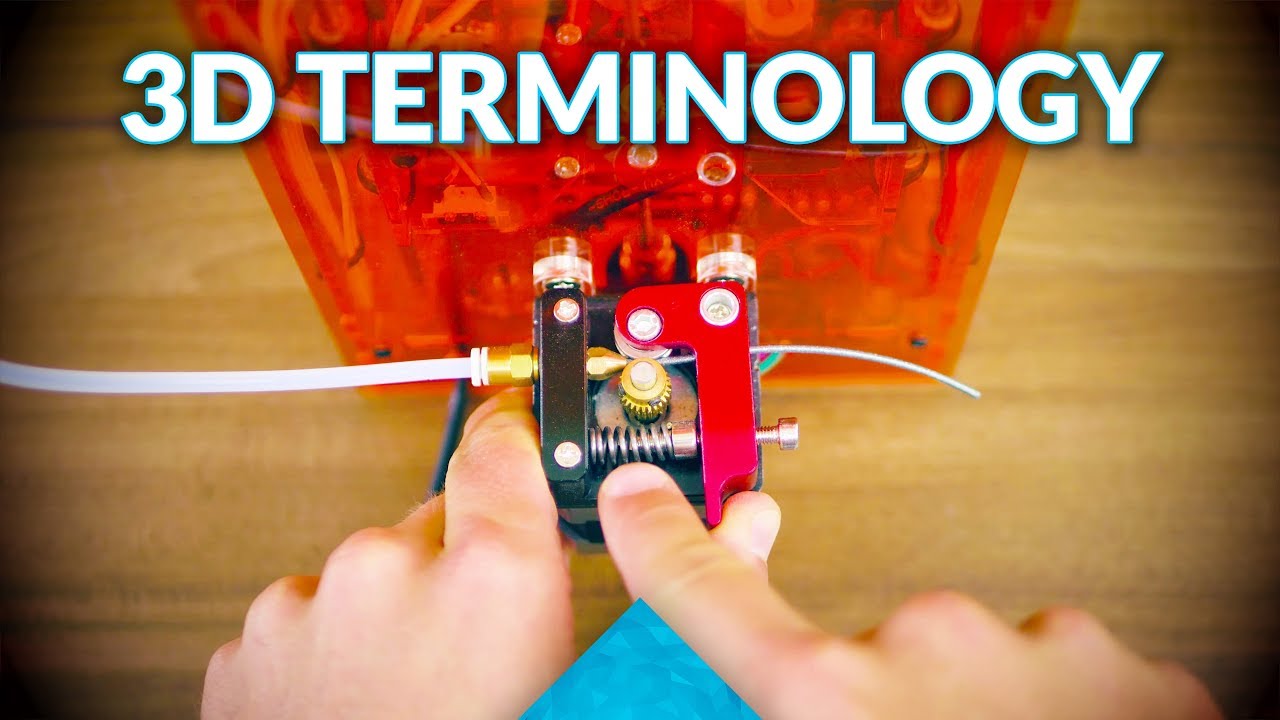
Want to start discussing 3D printers on Facebook or on https://discuss.toms3d.org ? These are the terms and parts you'll need to know!
Products shown in this video:
Original Prusa i3 MK3 by Josef Prusa https://shop.prusa3d.com/en/3d-printers/180-original-prusa-i3-mk3-kit.html#a_aid=toms3DP&a_bid=11110002
Ultimaker 3 http://geni.us/Ultimaker3
Mi...
bleak tangle
silent gyro
https://youtu.be/KZi3esvQ02w
For What ???
Hi! I think I may have explained my project poorly in my first message, so I’d like to clarify exactly what I’m trying to build.
I want to design and build my own FDM 3D printer from scratch, mainly as a learning project. I don’t want to simply buy a printer kit and assemble it — I want to understand how the mechanical system, electronics, motion system, firmware, etc. actually work.
My maximum budget is around €300, but if I build a smaller printer, I would obviously like the cost to be significantly lower.
I’m currently considering a build volume somewhere around 180×180 mm, 200×200 mm, or possibly 220×220 mm. I haven’t decided yet because I’m trying to find the best compromise between compact size, cost and usefulness.
I mainly want to use it for product prototyping, such as electronic enclosures, parts for smart glasses, controllers/remotes and other future projects. So I don’t need a huge printer, but I also don’t want the build plate to become too limiting.
A few things are particularly important to me:
• Low noise — I would like to be able to stay in my bedroom while the printer is running.
• Compact size — I don’t want a huge machine taking up the whole room.
• Good print quality and reasonable precision for prototypes.
• Low cost, especially if I choose a ~180–200 mm build area.
• Ideally 24 V electronics and quiet stepper drivers such as TMC2209.
• I would like to add a small nozzle wiping/purge system, where purge filament can fall through a chute into a small waste container.
• I would like to print from an SD card without needing a computer connected during printing.
I’m also trying to reuse components from old hardware where it actually makes sense. I have already dismantled an old HP printer and recovered some mechanical parts, motors, belts, shafts, screws, electronics, a card reader, a small color LCD and another LCD/control panel with physical buttons.
I’m also going to recover two old desktop PCs, including CD/DVD/floppy drives, and I want to inspect those before deciding which mechanical parts I need to buy.
I understand that not every recycled component will be suitable, and I don’t want to sacrifice accuracy, reliability or safety just to reuse something.
So my main question is:
If you were designing this printer yourself, what complete parts list would you recommend?
I’d especially like advice on the motherboard, stepper motors, linear motion system, belts/pulleys, Z-axis system, hotend, extruder, heated bed, PSU, fans, sensors/endstops and frame.
Also, between 180×180, 200×200 and 220×220 mm, which size would you personally choose for this kind of compact prototyping printer?
Any advice is appreciated. I’m still learning, so I’d also really appreciate explanations of why you would choose certain components rather than just a list of parts.
Thanks! 🙂
teal helm
Your list:
-Building a smaller printer isn't as cost effective as it might appear as you still need all of the same (expensive) components that a larger printer needs
-300$ is not a huge amount for any self sourced printer
-Good Print quality: That is entirely dependant on you ability to design, construct and tune the machine well
-nozzle wiping area: Good Idea, but make the machine run first before adding non essential stuff
-24V system, Stepperdrivers: Easy bit, theres a lot of printer Mainboards available with all kinds of features, drivers etc. Bigtreetech sells affordable ones
-Print from SD card: Not really a problem, just needs to be configured.
not listed:
You need firmware, theres three "big ones" : Marlin, Klipper and RepRapFirmware (RRF).
Marlin: You configure it once (or a few times at the beginning) but then it just runs
Klipper: You like to tinker and change things on the fly. Needs an additional computing unit such as an Raspberry Pi (or similar)
RRF: You want absolute and full control over the printer at all times and you know what you are doing. Not all Mainboards are compatible with RRF.
Reusing parts: Possible, ideally from broken 3D printers. While you can build a 3d printer from for example an old CD/DVD Drive, its hardly a useful printer
Complete parts list: Look at other DIY printers, check their lists, design your printer and then compile your own parts list.
Motherboard: I personally like the Bigtreetech Octopus (Pro), has lots of stepper driver slots and IO but might be overkill for what you want to do
Steppermotors: For a basic machine without trying to push insane speeds/accelerations you can choose some basic ones from for example "Stepperonline"
Linear Motion System: Again, your choice: Linear Rails, Linear rods etc
Hotend: A full basic but capable hotend costs ~10$ on Aliexpress
Extruder: A capable Extruder can be had for again under 10$ if you are willing to go to a cloned product on Aliexpress.
Heated Bed: Easiest way to get a heated bed is to buy a replacement part for an existing printer. You could go all in and buy a cast aluminium tooling plate, Silicone heater etc and make your own if you want though.
PSU: Almost any 24V PSU would do an okay job, MeanWell PSUs are recommended if you want to buy a good one
Fans: Almost anything works, recommended are Sunon and a few others I can't remember right now
Sensors/Endstops: Microswitches (like in a mouse) make fine endstops for X and Y and are the standard if you don't want to configure sensorless homing. What you choose for Z axis homing depends on if you want "auto bed leveling" or not: If not, another endstop. If yes: You need a bedprobe such as an inductive probe or a deployable probe (or a whole lot of other options you can explore when its time)
Frame: Actually thats the first step: What do you want? A "bedslinger" where the bed moves back and forth and the toolhead from side to side and up? CoreXY where the bed drops down from a moving toolhead? Or a "flying gantry" corexy where the bed is stationary and the whole assembly with the toolhead and the XY movement moves up?
bleak tangle
Thanks! That's actually the main decision I'm trying to make right now.
My priorities are:
Compact size
Low noise (I want to use it in my bedroom)
Around 200×200 mm build volume
Good print quality for prototypes
Budget around €300
I also want to understand the mechanics and design everything myself.
At the moment I'm hesitating between a bedslinger and a CoreXY.
If you were building your first DIY printer with these requirements, which architecture would you choose, and why?
teal helm
I for my part wont answer any more AI written responses
 devout rune

 topaz tartan
teal helm
"Almost"
Wdym you could host klipper on the pc
devout rune
It looks like talking to a brick AI wall
bleak tangle
teal helm
I for my part wont answer any more AI written responses
Well, I do use AI because I don't know much about it, but I don't see the problem. AI is just another tool.
teal helm
Its disrespectful as fuck. Good luck on your journey.
bleak tangle
teal helm
Its disrespectful as fuck. Good luck on your journey.
Sorry ???
I am not disrespectful
topaz tartan
bleak tangle
Well, I do use AI because I don't know much about it, but I don't see the proble...
AI is a tool, sure. The problem isn’t that you used it. The problem is that you’re asking a group of experienced builders for help while having an AI answer them instead of engaging yourself.
People here are volunteering their time because they enjoy discussing printer design with other humans. When every reply is AI-generated, it turns into us debating a chatbot instead of helping you understand the problem. We can’t tell what you know, what you’ve actually tried, or whether you even understand the advice being given.
Using AI to summarize documentation or explain concepts is one thing. Using it to generate your side of a technical discussion is another. If you want good help from a community full of 3D printer nerds, your own thoughts, questions, and observations are far more valuable than whatever an LLM stitched together in 30 seconds.
-ChatGPT
bleak tangle
Okay, well now I'm going to create a new discussion and I'm not going to use the AI anymore.