


1 messages · Page 1 of 1 (latest)
 vocal knot
Hey guys! So I'm currently working on my biggest project yet. A 3D printed guitar. And I'm having a really hard time deciding on what kind of filament would be the best choice for what I'm going for. I use a Bambu Lab P1S printer, so hopefully I'll be able to handle a pretty tough filament.
Picture #1 is a pic of the guitar I'm going to be printing.
Picture #2 is an image of how it will all be split up on the printer.
The piece in the top middle (Picture #4) is going to be the most paramount piece of this entire print. It's responsibility is bearing the load of at least ~130 pounds of lateral force. This force comes from the tension of the strings that span from the bridge of the body to the nut of the guitar.
Picture #3 is a diagram explaining what I'm talking about.
I'm really keen on making this piece as durable as possible. I'm going to be printing this with 8 walls and 40% infill.
So yeah, any suggestions on what type of filament would be best suited for this would be awesome! Thanks guys!
 bold thicketBOT
vocal knot
Hey guys! So I'm currently working on my biggest project yet. A 3D printed guita...
For the critical part of your 3D printed guitar that needs to bear a high lateral force, I would recommend using a high-strength filament such as carbon fiber reinforced PLA or PETG. These filaments provide excellent stiffness and impact resistance, which would be beneficial for withstanding the load from the guitar strings. Given your printer's capabilities, it should be able to handle these filaments well. Additionally, since you plan on using 8 walls and 40% infill, the part should already be quite robust. Good luck with your project!
bold thicketBOT
This post has been inactive for over 1 hour and so has been closed. To reopen this post simply send another message.
 tawny pelican
I don't have experience with this but there's a video explaining how transparent prints are stronger,
you could do the same thing with non transparent filaments, overextrude and run a bit hotter, and it should be stronger
https://www.cnckitchen.com/blog/transparent-fdm-3d-prints-are-clearly-stronger
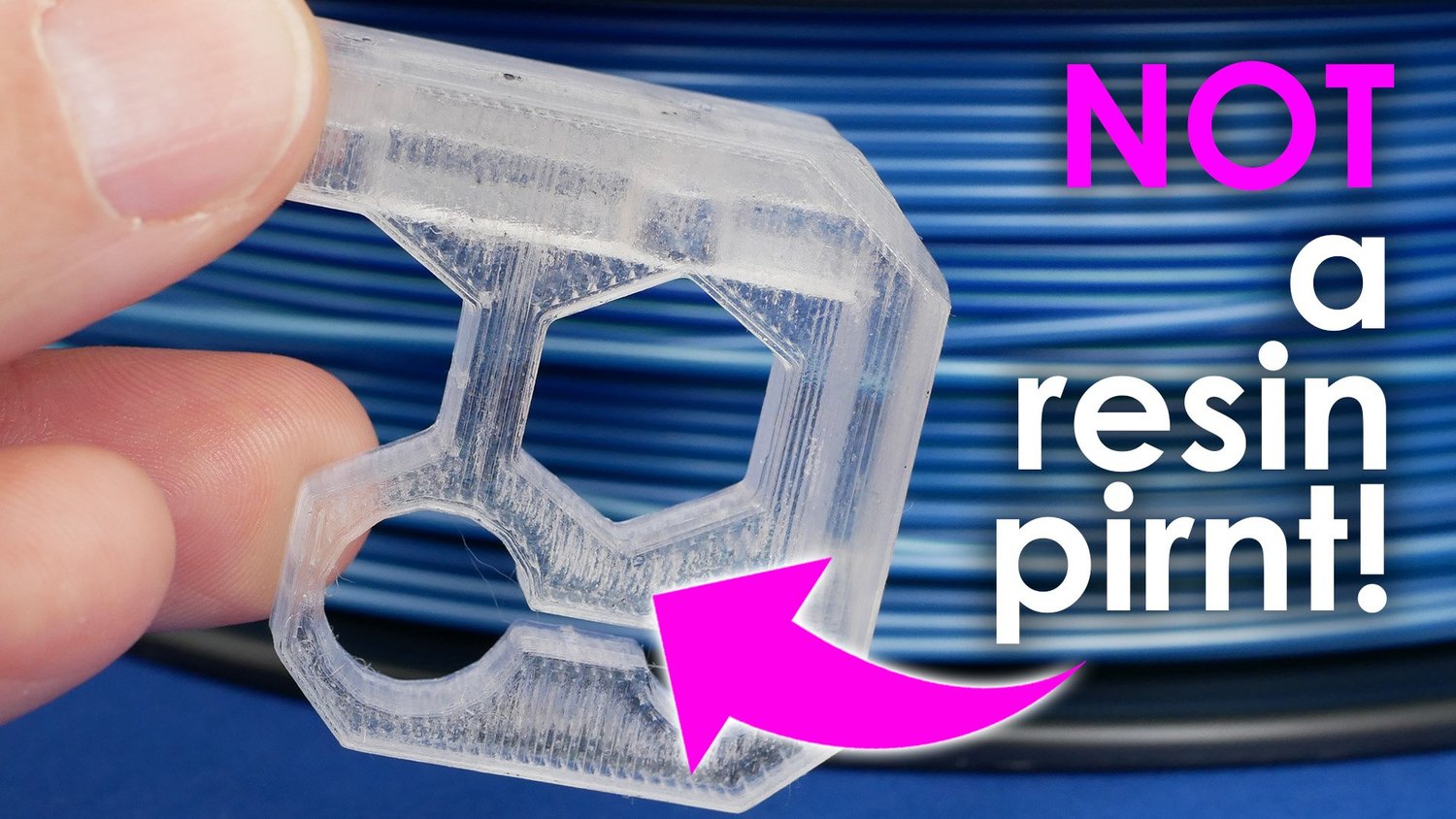
If you ever bought yourself a roll of clear 3D printing filament, you might have been quite disappointed that the parts you printed didn’t come out transparent and rather just looked more like a transparent whitish color. Though I recently stumbled over an article on printables.com where a user name