#Can't properly follow the targets of tracking scenarios unless I tense up

1 messages · Page 1 of 1 (latest)

tranquil radish
#

Hi. From what I know during tracking scenarios your fingers/wrist/arm should be relaxed as much as possible, but when I do that I am completely incapable of following the target. On the contrary, if I relax when I play static/target switch I have a way easier time than if I would be tensed up. What's up with that?
For context I am a static/TS one-trick, 95-98% percentile type one-trick, while on tracking scenarios its 10-40%.

My problems are:
Snake track/Smoothbot - galloping, which makes me unable to smoothly follow the target, while if I force the smooth following, I "can't catch up to the target".
Whisphere/Controlsphere - my cursor sometimes just gets thrown around and I get confused as to where should I am due to overly erratic target movements + snake track/smoothbot problems apply.
Struggling with smooth movements at a consistent speed while also defaulting to galloping when they change direction during target switch scenarios with high TTK (like tamTarget switch) or high movement speed (psalmTS) .

I watched my own vods a lot, but I have no idea what to make of this. I stopped grinding static and TS because I reached a plateau, so I thought that becoming better at tracking could help me elevate the lacking skills, but I just ended up hitting a plateau in a different place.

If vods are needed, then tell me a scenario and I'll send it shortly.

boreal ridge
# tranquil radish Hi. From what I know during tracking scenarios your fingers/wrist/arm should be ...

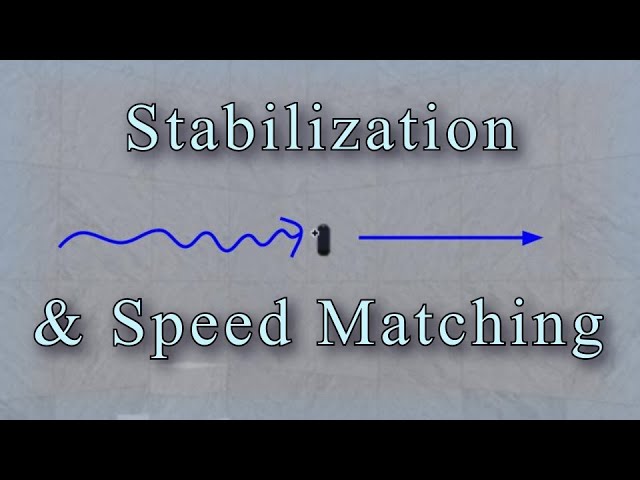
How do you speed match properly? How do you actually maximize the smoothness of your tracking motion during long strafes across wide angles? This video provides an explanation of problems that I see very often in the smooth tracking space in VOD reviews from newer aim trainer players. Take note how important tension management is in controlling ...

▶ Play video
twin sequoia
#

Preface: I am not super good but looked into the mechanics of this a lot. A lot of this is still stuff I'm actively working on. Wall of text incoming.

I've seen a lot of progression in my tracking through the following concepts (in my opinion order of progression):

  1. Learning how to truly fully relax my arm, wrist, and hand. Practice just making smooth straight lines back and forth at a constant speed while relaxed, you don't even need to practice on a target. There are some smoothness practice scenarios for this, for example in the vdim smoothness routines. Your galloping issues are a symptom of spikes in your muscle tension as you try to flick back to a target instead of being smooth.

  2. Practice following the target with your eyes very closely. Follow the target with your eyes at all times. On top of this, work on reading. Is it slowing down? Speeding up? I almost treat the direction changes as a reaction time test.

  3. Since you're someone who is good at static, learn to STOP flicking back to target if you start missing. It should be one smooth movement, just with higher acceleration. If you can't do this, practice smoothness until you can. It's okay to score lower as this will pay off later. This helps with galloping issues. It also really helps with reading. It is sososo much harder in my experiences to track something when you're jittery at all. A lot of difficulty is added to the reading when you don't use smooth motions, thus making it harder to react to changes.

#
  1. Once you get a bit better and can make smooth movements fairly naturally, then you can start adding tension back in. To do really precise tracking, some level of tension is needed, but it should be horizontally, not downwards. The tension should be the minimum amount to stabilize your fingers/wrist/arm as needed at the speed you need to go/on target. It may increase or decrease as you accelerate etc. Similar to static, tension management is key as you get better.

  2. Once you're more comfortable once again, really start to focus on the different parts of your arm/hand/fingers. Use the fingers first, then wrist, then arm as a target adjusts and moves. Think of it as an order of precision (finger most precise, then wrist, then arm). This should eventually just become one smooth transition. Tension management again is key with all these movements, especially in fingers and wrist during these transitions. For example, if a target switches direction, first follow with your fingers, then wrist, then arm as it moves out of range. This is especially emphasized in precision tracking scenarios.

I would try to just focus on one of these aspects at a time until you have them down otherwise it can overwhelming. As you work through each of these, you'll start to have a better feeling of where your weaknesses are and where you need to focus. OK MY RANT IS DONE

#

@tranquil radish

tranquil radish