#general
1 messages · Page 1 of 1 (latest)
 pliant oar
 small gazelle
 tawny crescent
pliant oar
tawny crescent
pliant oar
This is cool! Part of me wants to write up the long list of things that kind-of worked but didn’t move the needle on the contest 🔥
I had this odd architecture that was inspired by fast weights PKM, but with more of a hash/ngram prior
I’m curious if anyone else has some favorite failures 😅
I’ll do a write up a bit later on and post it to git. A lot of the stuff I worked on improved BPC early on, but didn’t necessarily gel with the more optimized baselines. I really liked watching all the leaderboard approaches stream in 🔥
 golden basalt
 whole slate
 inland sundial
inland sundial
pliant oar
tawny crescent
inland sundial
inland sundial
inland sundial
pliant oar
tawny crescent
 civic kernel
civic kernel
civic kernel
civic kernel
civic kernel
 hallow shell
 fervent cobalt
hallow shell
fervent cobalt
fervent cobalt
hallow shell
fervent cobalt
 blissful quest
 brittle robin
blissful quest
brittle robin
blissful quest
 rancid pasture
 warm stump
 stable kindle
pliant oar
stable kindle
pliant oar
Tiny readme on one of the failing approaches that I liked working on: fast weight hash memory. I took Instant NGP + fast weight PKM as priors, built something out with Claude. I hoped fast weights with a multiscale ngram prior would augment context + provide better local language modeling. Early results showed modest BPB improvement, but nothing on par with stronger ngram approaches or later optimized contest submissions. I think the n-gram approach might have limited the benefits of adaptive/online memory — could be cool to re-explore the design sometime.
GitHub
experimental hash-addressed memory for language models - cloud-777-boy/fwhash
curious what other approaches got tried and left out of submission, it was a lot of fun doing this
 novel topaz
inland sundial
novel topaz
inland sundial
https://youtube.com/shorts/LEEucshktFg?si=Wm_M3FaULDDB42jU
this reminds me of what some of these approaches like PP and deed and gram we’re trying to do use a cheaper model where the next token is more likely easier to predict

Speculative decoding makes LLM inference 2-3× faster with identical output — the trick has been public since 2022, and Google just baked it into Gemma 4 as architecture (MTP drafter). Here is how two language models running side by side beat one running alone.
🚀 Want to learn agentic coding with live daily events and workshops?
Check...
inland sundial
Maybe N gram is useful after all
Can llama.cpp do speculative decoding?
Yes. llama.cpp supports speculative decoding, including a small draft model that predicts ahead of the main model, plus no-extra-model n-gram speculative methods. Its docs explicitly describe llama-server speculative decoding and note that n-gram pattern matching can be useful for code rewriting because repeated patterns often appear in generated text.
For your use case, llama.cpp is good for:
- local GGUF models
- quantized models
- simple OpenAI-compatible serving
- speculative decoding with a smaller draft model
- coding-agent clients like Cline, Roo, Continue, VS Code chat, etc.
It is weaker for:
- high-throughput multi-user serving
- advanced tool-calling fidelity
- long-context scheduling
- MTP/EAGLE research workflows
- diffusion-model integration
inland sundial
Now byte level models are in the News , using speculative decoding
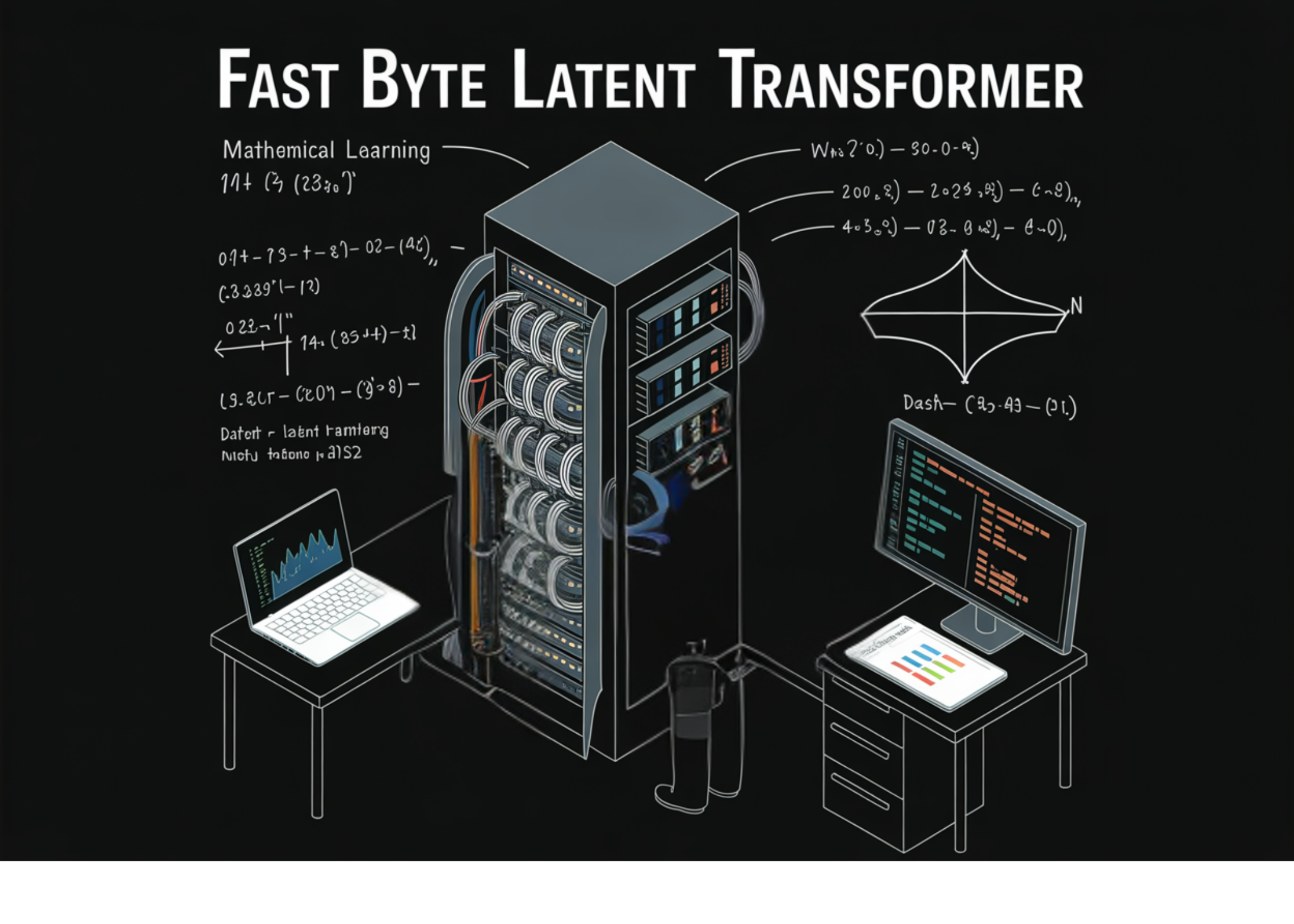
Meta and Stanford introduce BLT Diffusion, BLT-S, and BLT-DV to cut byte-level inference memory bandwidth by over 50%.