#cmi-detect-behavior-with-sensor-data
1 messages · Page 1 of 1 (latest)
 amber apex
 hushed compass
cross-posting fomr the discussions tab, anyone found a use for the non-BFRB samples?
 smoky wyvern
I dont get the sequence counter column what is it for since the imus data are themselves sequential ?
 shadow root
smoky wyvern
I dont get the sequence counter column what is it for since the imus data are th...
shadow root
smoky wyvern
I dont get the sequence counter column what is it for since the imus data are th...
Wdym? Sequence counter is for which time step in one unique sequence it is
 icy roost
Hey everyone! I’m just starting out in machine learning and would love to collaborate with others. If you're also learning or willing to help a beginner grow, feel free to DM me. Thankssssss
 last heron
why is tof data given in the form of image?
 tacit loom
Hi u may check this useful data analysis on kaggle: https://www.kaggle.com/code/tarundirector/sensor-pulse-viz-eda-for-bfrb-detection
- Time-of-Flight (ToF) Sensors (tof_1_v0 … tof_5_v63)
⏩ What They Are
Five 8×8 pixel Time-of-Flight (VL53L7CX) arrays integrated on the watch.
Measure distance (0–254 units, with –1 meaning “no echo”) from each pixel to the nearest object.
⏩ Data Columns
For each sensor i (1–5), 64 columns: • tof_1_v0, tof_1_v1, …, tof_1_v63 (and similarly for tof_2_…, etc.) • Each v0–v63 represents one pixel’s raw distance reading.
⏩ How to Interpret
Value ≈ 0–50 → object (e.g., skin) is very close (few centimeters).
Value ≈ 100–200 → object is farther away (10–20 cm).
–1 → no reflection detected (empty space).
Spatial pattern: An 8×8 grid of low values forms an “image” of a curved surface (e.g., cheek).
Temporal change: A cluster of pixels transitioning from –1 → low distance marks the instant of contact.
Use Case: • Gesture signature: “Cheek-pinch” produces a localized 8×8 hot spot near the face; “drink from cup” shows a different shape. • Phase detection: Before contact, most pixels read –1; on contact, a contiguous block of low values appears.

Explore and run machine learning code with Kaggle Notebooks | Using data from CMI - Detect Behavior with Sensor Data
Hi all! 👋
I’ve got a PhD in ontology and logic, with basic Python and ML/DL skills.
This is my first Kaggle competition, so I’m here to learn, but very motivated to work. I find the topic really fascinating...
If anyone’s looking for teammates, I’d love to join!
 weary trail
tacit loom
Hi all! 👋
I’ve got a PhD in ontology and logic, with basic Python and ML/DL ski...
weary trail
tacit loom
Hi all! 👋
I’ve got a PhD in ontology and logic, with basic Python and ML/DL ski...
could you please analyze my paper? I recently got onto Ontology from Pure math and physics.. it's the basis of my framework ... in addition to Epistemic Physics
I'm doing another kaggle competition rn, but I love the field... if you find a team and need my skillset hmu 🙂
 exotic shard
Anyone know if the TOF sensors are transposed to the same orientation as some sort of preprocessing done on the data? I can see from the device they are in two orientations but the data page lists reading off the values in rows of 0-7, 8-15, etc for the 8x8 grid. Wondering if they were already adjusted so that the tof data corresponds with 0 being in the top left orientation across each sensor.
 cyan haven
Hi everyone, glad to see you all
 subtle dew
Hi, do we know what's the sampling rate for imu device used in the competition?
 steady talon
subtle dew
Hi, do we know what's the sampling rate for imu device used in the competition?
steady talon
subtle dew
Hi, do we know what's the sampling rate for imu device used in the competition?
Couple of discussions on this:
https://www.kaggle.com/competitions/cmi-detect-behavior-with-sensor-data/discussion/582475
https://www.kaggle.com/competitions/cmi-detect-behavior-with-sensor-data/discussion/583676
Consensus seems to be the supplied data is 10Hz, though the IMU itself samples at 1kHz
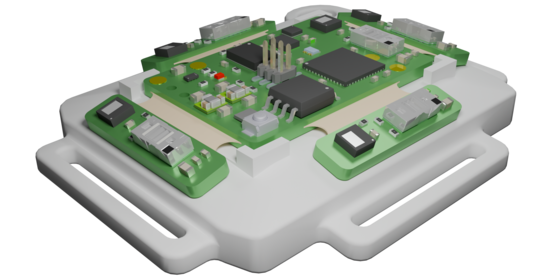
Predicting Body Focused Repetitive Behaviors from a Wrist-Worn Device
Predicting Body Focused Repetitive Behaviors from a Wrist-Worn Device
subtle dew
steady talon
Couple of discussions on this:
https://www.kaggle.com/competitions/cmi-detect-be...
Couldn't find the answer there, thought someone might know here
steady talon
That is the answer, though, no? As far as models in the competition are concerned, 10Hz
 somber nymph
hello guys this is stuck for a long time what could be the reason for this?
 tacit loom
steady talon
That is the answer, though, no? As far as models in the competition are concerne...
tacit loom
steady talon
That is the answer, though, no? As far as models in the competition are concerne...
Based on this user’s comment, I think 10 Hz is a good approximation. In this respect, the mean of the timesteps for each sequence is around 70. If you divide 70 by 6 seconds, you get about 11.67 Hz. So I think that 10 Hz is a good try.
"The videos of the gestures are about 5–6 seconds each, which would imply about 10 Hz sample frequency?"
https://www.kaggle.com/competitions/cmi-detect-behavior-with-sensor-data/discussion/582475#3218088
Other users also refer to the technical details of the IMU sensor, but then each sensor could have its own sampling rate.
https://fcon_1000.projects.nitrc.org/indi/cmi_healthy_brain_network/Competitions/Helios2025/IMU_Sensor.pdf
Predicting Body Focused Repetitive Behaviors from a Wrist-Worn Device
 real jackal
Looking for a teammate who is just getting started with this problem statement. Intersted ppl dm me.
 sick matrix
surprising that all the current gold medal spots on LB are solo
 glad light
this message is a scam
 rare idol
Hello everyone,
I’m new to Kaggle competitions and a bit confused about how to submit my notebook. Can anyone please share the correct submission code and explain the steps for submitting predictions? I’d really appreciate your guidance.
Thanks in advance! 🙏
 regal hollow
Hello everyone,
I'm experiencing "Notebook Inference Server Never Started" error when trying to submit my notebook.
My notebook runs successfully locally (completes in 6-8 minutes), but fails during submission with this error. I've tried:
- Reducing model complexity (n_estimators from 400 to 150)
- Simplifying feature extraction
- Using only basic libraries
The notebook completes successfully and generates submission.csv, but the server never starts during submission.
Any suggestions on how to resolve this issue? Thank you for your help!