#🪅-progaming
1 messages · Page 32 of 1
 ornate quiver
main webpack bundle is loaded through the main property of package.json in an asar package
 hoary sluice
bro homerow mods are annoying sometimes, i tried pasting the aoc answer but to do that i have to hold N and press V (since N is ctrl) and i did it too fast and submitted 'nv' as my answer
aoc needs to not put u on cooldown if u submit an answer with a letter in it when its supposed to be ints
ornate quiver
what I did is rename the asar bundle and made a small loader to run code before loading the actual asar
kinda like vencord used to do it
 royal nymph
still does it that way
can you send the whole file that is in
also why is it not minified lmao
gitkraken insane
is gitkraken foss
ornate quiver
royal nymph
also why is it not minified lmao
it was
I formatted
royal nymph
you also renamed __webpack_module_cache__?
 dense sand
Guys what do you think would be faster:
- parse javadoc data out of the html pages that are generated
- parse source java files and extract the javadoc comments
Faster in terms of actual speed
ornate quiver
royal nymph
can you send the whole file that is in
webpack loader at the end
ornate quiver
yeah
royal nymph
bro dropped entire gitkraken code
ornate quiver
no
 calm ruin
also is it gitkraken desktop
ornate quiver
yes
calm ruin
okay wait
ornate quiver
I couldn't find anything leaking to global
calm ruin
300mn 
calm ruin
can you open devtools
ornate quiver
not by default
calm ruin
how do I enbale
ornate quiver
ornate quiver
webpack loader at the end
i think I might've done it in this one here
royal nymph
you just need to register a global keybind with electron
and then call browserWindow.openDevTools()
or well you would want to use the toggle function
ornate quiver
im not sure what they're doing
but it doesn't matter anyways because main bundle is loaded in main process
renderer loads a different bundle so devtools are useless
i need to patch main bundle
calm ruin
why th do they have 3 app asar 😭
 ornate quiver
it's so cursed
hoary sluice
@calm ruin u would love 2017 aoc
calm ruin
nop not now
hoary sluice
 calm ruin
bfable
royal nymph
ornate quiver
im not sure what they're doing
but it doesn't matter anyways because main bundl...
you can still open devtools
The DevTools in an Electron browser window can only debug JavaScript that's executed in that window (i.e. the web pages). To debug JavaScript that's executed in the main process you will need to use an external debugger and launch Electron with the --inspect or --inspect-brk switch.
open chrome://inspect in a chromium browser
ornate quiver
o
royal nymph
and launch gitkraken with --inspect
then you can connect to it from the devtools in the browser
if you want to debug before the app starts, you can use --inspect-brk instead which will immediately break
ornate quiver
neat
I will try
calm ruin
yeah that worked

I was gonna unpack default_app.asar modify and repack
but this is easier
royal nymph
calm ruin
I was gonna unpack default_app.asar modify and repack
I mean that's also very easy
 calm ruin
oh
ornate quiver
calm ruin
I was gonna unpack default_app.asar modify and repack
default app is ignored
that's electron default
calm ruin
ornate quiver
default app is ignored
wth does it even use then
royal nymph
royal nymph
you just need to register a global keybind with electron
if you want to debug renderer / preload, you can just do this
calm ruin
its file structure so confusing
ornate quiver
calm ruin
wth does it even use then
app.asar
calm ruin
app.asar only had unpacked stuff
ornate quiver
there's a 7zip plugin for asar
it makes editing so much easier
ornate quiver
calm ruin
app.asar only had unpacked stuff
no it's packed
dense sand
ornate quiver
app.asar
That sounds like some arab name
calm ruin
ornate quiver
no it's packed
I mean it had the stuff thats already in app.asar.unpacked
ornate quiver
calm ruin
I mean it had the stuff thats already in app.asar.unpacked
correct
 ionic lake
do you still want
dense sand
ionic lake
do you still want
Sure
royal nymph
ornate quiver
there's a 7zip plugin for asar
it makes editing so much easier
eh
its so easy
ornate quiver
.unpacked is literally just for git
ionic lake
dense sand
That sounds like some arab name
lmao no
dense sand
I don't want plain black bg
royal nymph
pnpm add --global @electron/asar

# unpack
asar e app.asar app

# then edit files in app folder

# pack
asar p app app.asar
And i dont want to fuck with shaders
ionic lake
i guess you want something like this https://bg.ibelick.com
dense sand
ionic lake
i guess you want something like this <https://bg.ibelick.com>
Yeesss!!! Exactly!!!!!
royal nymph
ornate quiver
webpack loader at the end
this is incredibly easy to do
dense sand
Thankssss
royal nymph
you can pollute global prototypes to intercept this assignment


GitHub
A User script to grab and search webpack modules on any sites using webpack (Discord, Spotify, Twitch, Twitter...) - Vendicated/WebpackGrabber
this does exactly what u need
ionic lake
dense sand
Yeesss!!! Exactly!!!!!
you're welcome  lmk if you need anything
calm ruin
@ornate quiver I managed to get it

tho that amd0 might change
but you can probably do same thing with c
calm ruin
BAD
I WAS TRYING TO MAKE STUPID DEBUGGER WORK
export function waitForDeclaration(obj, prop, callback: (obj,prop)=>{}) {
    Object.defineProperty(obj, prop, {
        set(v) {
            Object.defineProperty(obj, prop, {
                value: v,
                writable: false,
                configurable: false,
                ...Object.getOwnPropertyDescriptors(v),
            });

            callback(obj, prop);
        },
        configurable: true,
    });
}
``` @royal nymph what do you think about my hlorious code pearl stagBOT
royal nymph
https://github.com/Vendicated/Vencord/blob/main/src/shared/onceDefined.ts#L30-L4...
pearl stagBOT
royal nymph
https://github.com/Vendicated/Vencord/blob/main/src/shared/onceDefined.ts#L30-L4...
onceDefined.ts: Lines 30-47
export function onceDefined<T extends object, P extends LiteralUnion<keyof T, PropertyKey>>(
    target: T, property: P, callback: (v: P extends keyof T ? T[P] : any) => void
): void {
    const propertyAsAny = property as any;

    if (property in target)
        return void callback(target[propertyAsAny]);

    Object.defineProperty(target, property, {
        set(v) {
            delete target[propertyAsAny];
            target[propertyAsAny] = v;
            callback(v);
        },
        configurable: true,
        enumerable: false
    });
}
STEALER
royal nymph
trol
hoary sluice
pearl stag
**onceDefined.ts:** Lines 30-47
```ts
export function onceDefined<T extends obje...
disgusting
hoary sluice
calm ruin
```js
export function waitForDeclaration(obj, prop, callback: (obj,prop)=>{}) {
...
this is not a real programming language
calm ruin
hoary sluice
this is not a real programming language
well it lets you do cursed stuff
 fleet cedar
Why does it take a callback rather than returning a promise
calm ruin
I at least like its that part
async bad
also cant promise also introduce some delay
this needs to call instantly
while blocking main thread
fleet cedar
Hm, that's a fair point
Resolving a promise only schedules the then to be run at the runtime's convenience
calm ruin
yeah thats bad
ornate quiver
royal nymph
https://github.com/Vendicated/WebpackGrabber
oh neat
alright i will try
pearl stagBOT
ornate quiver
https://github.com/Vendicated/WebpackGrabber/blob/bfefd7b907dc9c95c827279a048e73...
WebpackGrabber.user.js: Lines 15-33
function extractPrivateCache(wreq) {
    let cache = null;
    const sym = Symbol("wpgrabber.extract");

    Object.defineProperty(Object.prototype, sym, {
        get() {
            cache = this;
            return { exports: {} };
        },
        set() { },
        configurable: true,
    })

    wreq(sym);
    delete Object.prototype[sym];
    if (cache) delete cache[sym];

    return cache;
}
how does this work
fleet cedar
Just evil magic, nothing special
Define a magic symbol that does funky things when looked up, then trick webpack into running that lookup function
Thereby getting the object it's looked up on
ornate quiver
oh neat
royal nymph
ornate quiver
how does this work
you dont need that
you only need it for when the cache isnt exposed at all
it's usually available on wreq.c as is the case with gitkraken
but very rarely it isn't
ornate quiver
oh
royal nymph
it's to get a reference to the cache if it's only a local variable
ornate quiver
can i make webpack cache a proxy then or something
to intercept new modules being added
royal nymph
what exactly are u trying to do
same as vencord?
regex patches?
or do you want to monkey patch
ornate quiver
nop
i just need to monkeypatch the result of two functions from different modules
find by props
calm ruin
ornate quiver
nop
i just need to monkeypatch the result of two functions from different module...
GitHub
A javascript function patcher / monkeypatcher inspired by Xposed - Vendicated/JsPosed
royal nymph
WebpackGrabber has everything
royal nymph
calm ruin
https://github.com/Vendicated/JsPosed use
lmao u dont need anything like that even
if u just want to patch 2 functions
ornate quiver
royal nymph
WebpackGrabber has everything
i dont see anything that lets me intercept new modules as they are added
royal nymph
ornate quiver
i dont see anything that lets me intercept new modules as they are added
why would u need to do that
if u just wanna monkeypatch
calm ruin
waitForModule doesnt exist on webpackgrabber yes
ornate quiver
because if i do it too late then it doesnt matter
royal nymph
oh okay
ornate quiver
wont work
royal nymph
well
.c has the cache which is the finished exports
.m has the module source
BRO
fuck this bot lmao
calm ruin

royal nymph
anyway you need to patch .m
calm ruin
royal nymph
.c has the cache which is the finished exports
can you patch its .push method to capture new modules
 royal nymph
pearl stag
**WebpackGrabber.user.js:** Lines 15-33
```js
function extractPrivateCache(wreq)...
royal nymph
pearl stag
**WebpackGrabber.user.js:** Lines 15-33
```js
function extractPrivateCache(wreq)...
you do need this then 🥳
very slight variation tho
ornate quiver
calm ruin
can you patch its .push method to capture new modules
its not an array, but an object
calm ruin
then proxy 🙏
ornate quiver
pearl stag
**WebpackGrabber.user.js:** Lines 15-33
```js
function extractPrivateCache(wreq)...
this is so confusing
how
 calm ruin
its all because you confuse rusher with dumb symbol
if you put skibi-i instead of symbol he wouldnt get confused
royal nymph
whenever we require q, it
- obtains
cache[q]to look up the module in the cache - if we found cached exports it just returns that
- if not, it creates a new entry on
cache[q] - then it calls
modules[q]to initialise the module (require call) and puts the return value (the exports) in the cache
that function is meant to extract the private cache variable
so what it does is create a symbol (unique key)
then it declares a getter & setter for our symbol on the object prototype (so every object has this getter and setter)
then it calls require with our symbol
require looks up our symbol in the cache and thus invokes our getter
now our getter function has a reference to the cache
calm ruin
basically this lookup calls getter with "this" as cache

 royal nymph
but you don't want the cache (wreq.c), you need the modules (wreq.m - not actually exported in this scenario)
so you need to slightly alter that function to your needs
ornate quiver
oh i see
calm ruin
I will soon steal all the vencord utility functions
royal nymph
function extractPrivateModules(wreq) {
    let modules = null;
    let cache = null;
    const sym = Symbol("wpgrabber.extract");

    let isSecondPass = false;
    Object.defineProperty(Object.prototype, sym, {
        get() {
            if (!isSecondPass) { // this is cache[sym] get
                cache = this;
                isSecondPass = true;
                return undefined; // return undefined so it skips cache
            }

            // this is modules[sym] get
            modules = this;
            return () => {} // modules are functions that it calls to get the exports. just return a noop function
        },
        set() { },
        configurable: true,
    })

    wreq(sym);
    delete Object.prototype[sym];
    if (cache) delete cache[sym];

    return modules;
}
this should work
royal nymph
essentially
modules is an object that holds each module (file)
cache is an object that caches the module exports. because if you import a module twice, it reuses the same variables
Source Code:
export let counter = 0;
export function increment() {
  counter++;
}
Output:
let modules = {
  1234567: (module, exports, require) => {
    exports.counter = 0;
    exports.increment = function() {
        exports.counter++;
    }
  }
}
then the first time you require 1234567, it will call the function and then put the exports object that it assigned counter and increment on to the cache object. in the future it will obtain it from the cache so it keeps reusing the same counter variable
each member of the modules object corresponds to one source file and all have the same function signature and assign their exports to the exports
it is called exactly one the first time you require it, and then never again
so what you want to do is find the member of the modules object that is the module you want to patch (based on source code, you need to stringify the function)
then you want to override that member with your own function. your own function should then call the original function and can alter the exports accordingly
royal nymph
royal nymph
Source Code:
```js
export let counter = 0;
export function increment() {
count...
you can see modules right at the top of ur file

81984 is the module id aka filename of the first module
re(7914) means require module 7914
then K.default = ... means exports.default = ...
 royal nymph
so this module requires module 7914 and all those other modules and defines a default export that has properties activityLogLevel and so on
ornate quiver
although
ornate quiver
royal nymph
so what you want to do is find the member of the modules object that is the modu...
isn't this slower than just making the cache a proxy and checking props
i only need to check by props, not by code
royal nymph
const theModuleYouWantToPatch = Object.entries(webpackModules).find(([id, module]) => module.toString().includes(".DEFAULT_COMMIT_MESSAGE_GENERATION_USER_PROMPT"));

if (!theModuleYouWantToPatch) throw "done exploder";

const [id, originalModule] = theModuleYouWantToPatch;
webpackModules[id] = function (module, exports, require) {
  originalModule(module, exports, require);
  // exports / module.exports are now initialised to whatever that module exports. you can access or modify it
  module.exports.whatever = 42;
}
except you cant do that
because the require function accesses it via local variable which you cant change
royal nymph
the best you could do is find the module id from the modules object and then define a getter/setter on the cache with that
but at that point it makes more sense to just monkey patch the module
royal nymph
royal nymph
```js
const theModuleYouWantToPatch = Object.entries(webpackModules).find(([id, ...
exactly like this
i made a slight edit because i made a istake
ornate quiver
oki
royal nymph
sadly the part where you stringify the modules to find the right one seems to consume some memory permanently
because js caches the string
so if there is 10mb of code and you stringify everything
this is why vencord increases memory usage somewhat
ornate quiver
hm
royal nymph
anyway doesntr matter much
ornate quiver
what if i go through each module in __webpack_modules__ and monkeypatch it's call method
that way it doesnt use a ton of memory and i can also check by props immediately
royal nymph
you would just replace the function instead of patching call
anyway you can do that but its probably not worth it lol
its not like it will use hundreds of mb of ram
ornate quiver
royal nymph
you would just replace the function instead of patching call
the thing is i dont know which module it is until it's run
royal nymph
its not that much
royal nymph
ornate quiver
the thing is i dont know which module it is until it's run
yes i know
im saying
you wouldnt monkeypatch .call
that makes no sense
you'd just do
for (const [id, originalModule] in Object.entries(modules)) {
  modules[id] = function (module) {
    originalModule.apply(this, arguments);
    if (module.exports.whatever) // do thing;
  }
}
but its probably not worth it lol
you create so many new functions and closures
and its more cpu intensive probably
calm ruin
you know its bad when you see "310 remaining items load more" in a issue
 ornate quiver
insane
 placid cape
just don't use WSL
calm ruin
placid cape
just don't use WSL
I will
I was trying to figure out why it was using 40gb
I couldnt figure out
Probably half of it is cuda
 serene elk
royal nymph
because the require function accesses it via local variable which you cant chang...
serene elk
royal nymph
because the require function accesses it via local variable which you cant chang...
except you can place a Proxy in the prototype but the getter/setter approach is better
royal nymph
serene elk
~~except you can place a Proxy in the prototype~~ but the getter/setter approach...
horror
the performance of that is probably atrocious
royal nymph
yeah but inside the prototype
it's kinda different
the second u start messing with prototypes and do weird shit performance dips
all the prototype set methods have performance warnings xd
serene elk
lol
royal nymph
well it might be fine who knows
serene elk
either way it needs some tricks to get it to work fully
so not worth it
depending on how you do it, some traps are required to avoid a stack overflow
royal nymph
speaking of proxies it's kinda silly that proxies even have apply trap
I guess it's for completeness sake
but there's really no reason to ever need that
you can just wrap the function with ur own function instead to achieve the same without a proxy xd
serene elk
might be more peeformant somehow
 median root
yo how do i get jemalloc to use page size 16? im tryna build the nuclear music player for my asahi linux installation but jemalloc always stops it with unsupported page size.
the only solution ive been able to find online was to use:
JEMALLOC_SYS_WITH_LG_PAGE
but that doesent seem to work for me
 jade stone
is it just me, or is this a macro
 ornate quiver
yeah
 past osprey
should i leave this as a bug to fix later or call it a feature and never fix it?
one of the side effects of rewriting the entire collision code
jade stone
past osprey
should i leave this as a bug to fix later or call it a feature and never fix it?
windows 7
look inside
kde
 viscid grove
past osprey
should i leave this as a bug to fix later or call it a feature and never fix it?
viscid grove
past osprey
should i leave this as a bug to fix later or call it a feature and never fix it?
looks fine to me!
I love features!
dense sand
has anyone ever here worked with antlr4
ornate quiver
jade stone
>windows 7
>look inside
>kde
<:wires:1262562427422244874>
worst nightmare
pearl stagBOT
disable-copying.js: Lines 9-25
function disableSelect() {
  return false;
}

function reEnable() {
  return true;
}

// If IE4+
document.onselectstart = new Function ("return false");
document.oncontextmenu = new Function ("return false");

// If NS6
if (window.sidebar) {
  document.onmousedown = disableSelect();
  document.onclick = reEnable();
}
 void leaf

void leaf
placid cape
new Function("return false")
Me when code is 13 years old
placid cape
well heh


 still jolt
the fuck is blom
placid cape
still jolt
the fuck is blom
my lang
still jolt
oh okay fair enough
hoary sluice
@valid jetty @placid cape yall need to do https://adventofcode.com/2017/day/23
its awesome

i (and a lot of ppl in the solutions megathread) were really close to the answer but ||off by 1 because the loop does g = b - c, then b+=17 and then checks if g == c but thats before adding 17 so its an inclusive range and eric made the last number always prime 😭 ||
placid cape
52min delta time
hoary sluice
1 year left
 hoary sluice
placid cape
52min delta time
hoary sluice
placid cape
52min delta time
yep and about 30 mins on the spoiler
placid cape
ill do it after finishing 2015
hoary sluice
another issue i had was that my || is prime function was inverted|| but i fount that quickly

 hoary sluice
if u finish it then its not broken
 spark tiger
no way ffmpeg is hosting c & asm courses now
https://x.com/ffmpeg/status/1874474647988933010
Make your New Year's Resolution to learn C and Assembly: https://t.co/Q63dLuCgFb
We are making low level languages great again in 2025!
 Twitter
·
dense sand
Twitter
·
dense sand

fleet cedar
Ah, so they're running low on contributors
dense sand
fleet cedar
Ah, so they're running low on contributors
I doubt they would want some newbies to mess up their code
hoary sluice
why is 2017 so easy
spark tiger
dense sand
I doubt they would want some newbies to mess up their code
i mean code reviews exist
fleet cedar
dense sand
Does anyone know about any tool which can parse out javadocs?
Javadoc
 winged mantle
dense sand
Does anyone know about any tool which can parse out javadocs?
winged mantle
dense sand
Does anyone know about any tool which can parse out javadocs?
regex
dense sand
fleet cedar
Javadoc
No like into an actual json structure
winged mantle
why into a json structure
dense sand
Out of an existing source
dense sand
winged mantle
why into a json structure
Or any format basically
winged mantle
isn't it a flat structure
GitHub
Java library for parsing information from a structured Javadoc string. - chhorz/javadoc-parser
maybe this
dense sand
Something i can read in javascript
dense sand
Better javadocs
winged mantle
if accuracy doesn't matter that much you could just try to write your own parser
because it's unlikely there are any for js
fleet cedar
dense sand
Better javadocs
That's a good idea, javadoc frontend sucks
winged mantle
ah well ig if you're trying to replace that you'll need accuracy
dense sand
fleet cedar
That's a good idea, javadoc frontend sucks
Yea i have frontend rn which can fetch any of the maven central artifacts
dense sand
winged mantle
ah well ig if you're trying to replace that you'll need accuracy
Java-parser is good, but i have backend written in JS and idk how to use teavm to port java to js
dense sand
Ig if nothing else remains
winged mantle
or look at java parser's source code and work out what they do
but it's probably not the simplest thing to parse
dense sand
Its a really fucking abstracted clusterfuck
winged mantle
average java project
dense sand
Yea
winged mantle

dense sand
The JavadocNode is implemented by like 12 interfaces
winged mantle
they're probably all the different types of javadoc structures
hoary sluice
@valid jetty how to speed up general longest path
fleet cedar
Make graph smaller
hoary sluice
2017 d24 p2 takes 5s
fleet cedar
No idea, my repo only contains stuff from 19 onward
hoary sluice
i brought p1 from 5s to 300ms with a cache but p2 is uncacheable
 hoary sluice
fleet cedar
Make graph smaller
hoary sluice
fleet cedar
Make graph smaller
ok the rust guy did it in 275 microseconds so its clearly possible
 valid jetty
hoary sluice
<@581573474296791211> <@525316393768452098> yall need to do https://adventofcode...
valid jetty
hoary sluice
<@581573474296791211> <@525316393768452098> yall need to do https://adventofcode...
one day i will upsolve
one day
 hoary sluice
valid jetty
one day i will upsolve
hoary sluice
valid jetty
one day i will upsolve
u should do this one today
placid cape
hoary sluice
i brought p1 from 5s to 300ms with a cache but p2 is uncacheable
make your day 10 y2015 O(n)
hoary sluice
i solved the halting problem!!!
 fleet cedar
This seems to be my scores from long ago
 hoary sluice
i cant keep procrastinating intcode for much longer 😭
 fleet cedar
Yeah I hated intcode
placid cape
function overloading 🔥


 hoary sluice
this is the worst problem for me rn cause im doing these on my new keyboard
and on a new layout
so i dont have symbol muscle memory

49% consistency 
valid jetty
placid cape
function overloading 🔥
is this arity based only or also type based
valid jetty
hoary sluice
u should do this one today
if i wasn’t super busy with school work i didn’t bother doing and taking down my christmas decors i would lol
placid cape
valid jetty
is this arity based only or also type based
Also type based
fleet cedar
Hype based
placid cape
but if you have more than one overload then for example this:
fun a(a: i64) -> i32 {...}
fun a(a: i64, b: i64) -> {...}

fun @public main() {
    return a(5);
}
Will not compile because 5 is i32 by default
but if you have only one overload then it'll implicitly cast it
so this works:
fun a(a: i64) -> i32 {...}

fun @public main() {
    return a(5);
}
I'll try to improve this later but for now it's enough
hoary sluice
placid cape
but if you have more than one overload then for example this:
```kt
fun a(a: i6...
why the @ in @public?
placid cape
Because it's an annotation, I'll probably make it as a keyword
fleet cedar
Kinda makes more sense than putting it before
Making it so function declarations always start with the fun keyword is nice
spark tiger
hoary sluice
i cant keep procrastinating intcode for much longer 😭
why does it show AoC++ on EACH year
hoary sluice
spark tiger
why does it show AoC++ on EACH year <:husk:1026532993923293184>
cause i bought it on EACH year
fleet cedar
Simp
spark tiger
ah. i thought it’s like one-time purchase
hoary sluice
it is
placid cape
hoary sluice
that seems wrong
I think you can also do this in java but not sure
valid jetty
placid cape
but if you have more than one overload then for example this:
```kt
fun a(a: i6...
so monomorphization but for arity and type
placid cape
valid jetty
so monomorphization but for arity and type
yea
valid jetty
fun
hoary sluice
 hoary sluice
placid cape
I think you can also do this in java but not sure
hoary sluice
placid cape
I think you can also do this in java but not sure
u do @annotation void whatever, before the type
in kotlin its before the fun keyword
placid cape
you can do it also after the type if I'm not mistaken
valid jetty
idk in elle i have it after the param list but before the return type
fn foo(i32 a) @volatile @fmt -> string
placid cape
eventually i want to make it above like in rust/java (java allows it almost everywhere)
hoary sluice
placid cape
you can do it also after the type if I'm not mistaken
nope
hoary sluice
after the visibility mod but not after the type / fun
valid jetty
i made modifiers in any order because it’s easier to parse
pub external fn and external pub fn
hoary sluice
do u have annotations
placid cape
valid jetty
i made modifiers in any order because it’s easier to parse
you're just setting booleans, don't you?
valid jetty
i call them “attributes” tho
valid jetty
placid cape
you're just setting booleans, don't you?
yea
hoary sluice
valid jetty
@alias(“foo”), @volatile, @fmt, @manual
can u do pub @volatile external @manual fn
valid jetty
no
valid jetty
valid jetty
`fn foo(i32 a) @volatile @fmt -> string`
.
hoary sluice
oh
valid jetty
attributes come before the return type but after param list
hoary sluice
meh i think it makes more sense to put them first
 hoary sluice
thats not what volatile means is it
valid jetty
it’s not
lol
volatile in C says to the compiler it shouldn’t optimize, reorder, or remove the variable/function through dead code elimination
but it works fine here i guess
hoary sluice
i just know that if a variable is modified in an interrupt service routine it should be made volatile
valid jetty
yeah it mostly says to the compiler “don’t make any assumptions about how to treat this variable”
which means the compiler can’t do instruction reordering and optimization as a result
placid cape
hoary sluice
i just know that if a variable is modified in an interrupt service routine it sh...
In computer programming, a value is said to be volatile if it can be read or modified asynchronously by something other than the current thread of execution.
The value of a volatile variable may spontaneously change for reasons such as:
sharing values with other threads;
sharing values with asynchronous signal handlers;
accessing hardware devi...
hoary sluice
valid jetty
yeah it mostly says to the compiler “don’t make any assumptions about how to tre...
i thought it meant dont cache this anywhere
don't reorder volatile reads and writes
this is prob the important part
hoary sluice
@placid cape how do you parse >=
hoary sluice
is that GreaterEqual or [Greater, Equal]
placid cape
GreaterEqual
hoary sluice
idk maybe thats easier
dense sand
does anyone here know how to use teavm
dense sand
@ionic lake you have worked with shadcn i suppose
ionic lake
sup
ionic lake
dense sand
<@352837489125228546> you have worked with shadcn i suppose
shoot your question(s)
dense sand
well theres this thing called sidebar
ionic lake
oh yeah that's new
dense sand
the thing is that i dont really know how to make it show under the top menu bar

it overlaps it
dense sand
currently its like this, where Navbar is my component

this is kinda what i want if you get me
 hoary sluice
hop on hypixel disasters
dense sand
you mean hypixel skyblock?
i really didnt want to make my own sidebar but i guess ill have to
 dense sand
This is literally copy of a roblox game
hoary sluice
sad think is ik which one ur talking abt
ionic lake
dense sand
currently its like this, where Navbar is my component
ok what if you put your sidebar above nav
dense sand
ionic lake
ok what if you put your sidebar above nav
like the whole sidebarprovider or what
cause siderbar has to be inside siderbarprovider
ionic lake
yeah move that entire block above
valid jetty
i fucking HATE c#
valid jetty
instead of just letting me do this
[Serializable]
class GameState {
    public Grid playerFleet = new();
    public Grid computerFleet = new();
    public Grid targetTracker = new();

    public void Clear() {
        playerFleet.Clear();
        computerFleet.Clear();
        targetTracker.Clear();
    }
}

class SaveManager {
    private const string SaveFileName = "gamestate.dat";

    public void Save(GameState state) {
        using (FileStream fs = new FileStream(SaveFileName, FileMode.Create)) {
            BinaryFormatter formatter = new();
            formatter.Serialize(fs, state);
        }
    }

    public GameState Load() {
        using (FileStream fs = new FileStream(SaveFileName, FileMode.Open)) {
            BinaryFormatter formatter = new();
            return (GameState)formatter.Deserialize(fs);
        }
    }
}
``` to save and load datathey deprecated BinaryFormatter
because its "unsafe"
so i literally cant use it without installing an external package
my other options are all convoluted bloated things like converting to json or using a BinaryWriter/Reader with reflection
when it would just be this simple
ionic lake
dense sand
well ill try to tinker with the internal code
what if i show you some example code
dense sand
that would be cool
ionic lake
or, even if i hate to say, you can try shoving it to v0 and let it do it
look at the <aside> chunk in that code
hoary sluice
its intcode time
spark tiger
valid jetty
instead of just letting me do this
```cs
[Serializable]
class GameState {
pu...
var stream = new MemoryStream();
var writer = new BinaryWriter(stream);

writer.Write(Something1);
writer.Write(Something2);
writer.Write(Something3);
writer.Write(Something4);
writer.Write(Something5);
writer.Write(Something6);


also i recently was wondering if there's an easy way to serialize an object in rust into a binary file
fleet cedar
Serde+bincode?
spark tiger
oh yeah sounds like it
i kinda wish it was simpler to parse binary file in rust though
like in c# it's just
var reader = new BinaryReader(stream);
Size = reader.ReadInt32();
FormatSize = reader.ReadInt32();
while in rust it's something insane
hoary sluice
spark tiger
theo jumpscare
fleet cedar
But ReadInt32 is quite ambiguous - is it le or be?
ionic lake
that's not theo
spark tiger
fleet cedar
It can be exactly that in rust too
i swear to god i've browser hundreds of forum posts, crates, and i haven't found anythnig as easy as c#'s impl
ionic lake
theprimeagen
spark tiger
yeah this
fleet cedar
spark tiger
i swear to god i've browser hundreds of forum posts, crates, and i haven't found...
It doesn't have to be harder than this https://github.com/Aureole-Suite/Factoria/blob/main/src/dirdat.rs#L109-L129
hoary sluice
spark tiger
like in c# it's just
```cs
var reader = new BinaryReader(stream);
Size = reader....
val reader = DataInputStream(FileInputStream("file.bin"))
val size = reader.readInt()
val formatSize = reader.readInt()
are u64, u32 the built-in funcs?
fleet cedar
What do you mean built in
They're completely normal functions, defined on a completely normal struct
spark tiger
oh
hoary sluice
spark tiger
theo jumpscare
confusing theo and prime is crazy
fleet cedar
(Or rather, u32 is defined in the Le trait, and just calls u32le)
spark tiger
hoary sluice
confusing theo and prime is crazy
I'M SORRY 
hoary sluice
fleet cedar
It doesn't have to be harder than this <https://github.com/Aureole-Suite/Factori...
you are proving his point
spark tiger
hoary sluice
```kotlin
val reader = DataInputStream(FileInputStream("file.bin"))
val size = r...
what's the difference though besides different method names
hoary sluice
spark tiger
what's the difference though besides different method names
thats kotlin
fleet cedar
hoary sluice
you are proving his point
What point, that reading and writing bytes is easy in any language?
hoary sluice
spark tiger
oh
you can tell because function namer arent PascasCase (worst decision ever)
valid jetty
spark tiger
```cs
var stream = new MemoryStream();
var writer = new BinaryWriter(stream);
w...
i wrote this beauty
class SaveManager {
    public const string Name = "state.bin";

    public void Save(GameState state) {
        using (BinaryWriter writer = new(File.Open(Name, FileMode.Create))) {
            WriteObject(writer, state);
        }
    }

    public GameState Load() {
        using (BinaryReader reader = new(File.Open(Name, FileMode.Open))) {
            return (GameState)ReadObject(reader, typeof(GameState));
        }
    }

    private void WriteObject(BinaryWriter writer, object obj) {
        Type type = obj.GetType();

        foreach (var field in type.GetFields(BindingFlags.Public | BindingFlags.Instance)) {
            object value = field.GetValue(obj)!;
            if (value is Grid grid) WriteGrid(writer, grid);
        }
    }

    private object ReadObject(BinaryReader reader, Type type) {
        object obj = Activator.CreateInstance(type)!;

        foreach (var field in type.GetFields(BindingFlags.Public | BindingFlags.Instance)) {
            field.SetValue(obj, ReadGrid(reader));
        }

        return obj;
    }

    private void WriteGrid(BinaryWriter writer, Grid grid) {
        writer.Write((Byte)grid.kind);

        for (int row = 0; row < Config.GRID_SIZE; ++row)
            for (int col = 0; col < Config.GRID_SIZE; ++col)
                writer.Write(grid[row, col]);
    }

    private Grid ReadGrid(BinaryReader reader) {
        Grid grid = new((GridKind)reader.ReadByte());

        for (int row = 0; row < Config.GRID_SIZE; ++row)
            for (int col = 0; col < Config.GRID_SIZE; ++col)
                grid[row, col] = reader.ReadChar();

        return grid;
    }
}
its almost the binaryformatter
just a little extra bloat
hoary sluice
fleet cedar
What point, that reading and writing bytes is easy in any language?
ignore what i said
hoary sluice
valid jetty
i wrote this beauty
```cs
class SaveManager {
public const string Name = "st...
since when do u c#
valid jetty
hoary sluice
since when do u c#
since i can write in any language??
fleet cedar
hoary sluice
you can tell because function namer arent PascasCase (worst decision ever)
PascalCase function names is the worst decision ever yeah
valid jetty
and i need to for school

GitHub
A repository containing my code for a school assignment. - acquitelol/battle-boats
if i get in trouble for publishing the source code its whatever
 nimble bone
valid jetty
https://github.com/acquitelol/battle-boats
nimble bone
valid jetty
https://github.com/acquitelol/battle-boats
microsoft java
spark tiger
fleet cedar
It doesn't have to be harder than this <https://github.com/Aureole-Suite/Factori...
i just looked and this just uses a 3rd-party crate. my point was that without crates reading binary is too hard in rust, which it seems is true
fleet cedar
First party tho
And yes, if adding one line of toml counts as hard, you're gonna have trouble
 frosty obsidian
they didn't say including the library is hard
they said that it's hard without the library
fleet cedar
Yeah and driving a car is difficult without tires
valid jetty
fleet cedar
And yes, if adding one line of toml counts as hard, you're gonna have trouble
they said "without crates reading binary is too hard", adding that one line of toml breaks that invariant of "without crates"
royal nymph
valid jetty
https://github.com/acquitelol/battle-boats
virus
frosty obsidian
i think reading binary files should be a simple thing in any language
you shouldn't need a library to do it
fleet cedar
If you want to add nonsensical constraints to your language ratings you should state so upfront so I can disregard them
frosty obsidian
i don't think trying to avoid third party libraries is that nonsensical of a constraint
fleet cedar
It is
spark tiger
fleet cedar
And yes, if adding one line of toml counts as hard, you're gonna have trouble
i don't like the idea of having to use a crate for such a simple thing as just parsing simple types from a binary file
i expected messing with binary being easier in low-level languages but it seems like it's not
fleet cedar
Imo that is exactly the kind of thing that has no place in a stdlib since there's a billion different ways to do it
Choosing one of those ways to be Objectively Superior is exactly what a stdlib should avoid
spark tiger
fleet cedar
Imo that is exactly the kind of thing that has no place in a stdlib since there'...
Fair, but reader already exists in rust's stdlib, it shouldn't be that hard to implement a few helper methods to make parsing easier
not "hard" but uhhh
fleet cedar
Easy to add, hard to design
And zero (or imo negative) value in adding, since using a crate is more adaptive
Rust's stdlib is designed around the assumption that you will use external crates for more specialized things
And that is the correct design
spark tiger
you have a point i guess, but that's still quite confusing to me 😔
i guess i'll probably stick with doing my own small implementation of stuff like read_u32, read_u64, etc., but i'm still not quite sure about all these types of uh readers. like each solution i've found on forums suggest different ones: Cursor, BufReader, Vec, [u8], ...
arghhh why is rust so hard
fleet cedar
And that is exactly why such a thing has no place in a stdlib
placid cape
hoary sluice
its intcode time
Did you make it?
I want to do 2019 intcode so much tbh
fleet cedar
Who's stopping you
placid cape
fleet cedar
Who's stopping you
I feel like I have to solve all previous years before 2019
fleet cedar
Ah, superstition
hoary sluice
placid cape
Did you make it?
I redid day 7 with todd ginsbergs async approach
hoary sluice
placid cape
I want to do 2019 intcode so much tbh
It feels more like implementing some sort of enterprise sotware instead of aoc
if you do it properly
hoary sluice
valid jetty
<@525316393768452098> dont do it im warning you
dont listen to rosie
fleet cedar
Implement aoc in enterprise style https://github.com/EnterpriseQualityCoding/FizzBuzzEnterpriseEdition
hoary sluice
Ok its not that bad
Its a sealed class with 1 abstract method thats inherited by 10 other classes who implement it
and coroutines invoking the correct class' method according to the opcode
Channel for io
valid jetty
fleet cedar
Implement aoc in enterprise style <https://github.com/EnterpriseQualityCoding/Fi...
i fucking love this project
placid cape
sealed class 😍
ornate quiver
pearl stagBOT
ornate quiver
https://github.com/acquitelol/battle-boats/blob/44fb6aa60383e02c95a3ea2cf1631ade...
Utils.cs: Line 7
public static char[,] Fill(this char[,] array, char filler) {
Is that a 2d array
valid jetty
ornate quiver
https://github.com/acquitelol/battle-boats/blob/44fb6aa60383e02c95a3ea2cf1631ade...
why are you reading through it horror
ornate quiver
fun
placid cape
C#
ornate quiver
"hey i wrote my project in a language i made myself is that okay"
valid jetty
i mean im doing that for the bigger version of this project
im gonna write a compiler for a dummy language in elle
they say it can be any language so it should be fine i hope
placid cape
elle in elle 🔥
ornate quiver
lol
placid cape
tmrw ill probably start working on field access
valid jetty
good luck that took me a while to get right
valid jetty
elle calculator
use std/prelude;
use std/time;

fn calculate(string input) {
    let exec_path = "{}".format(time(nil));
    let src_path = "{}.le".format(exec_path);
    let src = "
        use std/io;

        fn main() {{
            io::println({});
        }
    ".format(input);

    if !io::write_to_file(src_path, src) {
        return false;
    }

    if !libc::system("ellec {} --hush".format(src_path)) {
        libc::system("./{}".format(exec_path));

        io::remove(src_path);
        io::remove(exec_path);
    }
}

fn main() {
    while true {
        calculate(io::input("-> "));
    }
}
or elle repl technically
depending on how you wanna look at it
it doesnt do line backhandling like the py one tho
but i can make it do that
nimble bone
valid jetty
elle calculator
```rs
use std/prelude;
use std/time;
fn calculate(string input)...
can it remove my system’s french language pack
valid jetty
yeah probably
valid jetty
backlog repl rewritten in elle
use std/prelude;
use std/time;

const string SHORT_EXTENSION = ".le";

fn main(string[] args) {
    let program = args.remove(0);
    string[] lines = [];

    while true {
        let line = io::input(".ೃ࿔* -> "));

        if line.ends_with(";") {
            line.pop();
        }

        let backlog = "{}{}".format(
            lines.join(";\n{}".format(" ".repeat(16))),
            lines.len() > 0 ? ";" : ""
        );

        let code = "
            use std/prelude;

            fn main() {{
                {}
                io::println({});
            }".format(backlog, line)
         .split("\n")
         .map<string>(fn(string x) x.replace(" ".repeat(12), ""))
         .join("\n");

        if line == "<!dbg>" {
            io::println(code);
            continue;
        }

        let src_path = ".repl-{}{}".format(time(nil), SHORT_EXTENSION);
        let exec_path = "./{}".format(src_path.replace(SHORT_EXTENSION, ""));

        if !io::write_to_file(src_path, code) {
            io::eprintf("Failed to write to file at path: {}", src_path);
            continue;
        }

        let src_code = libc::system(
            "ellec --hush {} {}".format(
                args.join(""),
                src_path
            )
        );

        io::remove(src_path);

        if !src_code {
            let exec_code = libc::system(exec_path);
            io::remove(exec_path);

            if !exec_code {
                lines.push(line);
            }
        }
    }
}
ive GOTTA make a file abstraction soon
 dawn ledge
valid jetty
elle calculator
```rs
use std/prelude;
use std/time;
fn calculate(string input)...
dawn ledge
valid jetty
elle calculator
```rs
use std/prelude;
use std/time;
fn calculate(string input)...
calculate when my input is a string 🔥
dense sand
Is Prisma bad?
Like i hear all these opinions to use drizzle or typeorm instead
But im pretty comfortable with prisma
 placid cape
dense sand
maybe i should stop watching theo <:fr:1024751426750132284>
placid cape
dense sand
maybe i should stop watching theo <:fr:1024751426750132284>
totally agree lol
hoary sluice
the only real database is a plaintext file and you use the kotlin stdlib to write queries
@valid jetty when is elle gonna compile to intcode
placid cape
hoary sluice
<@581573474296791211> when is elle gonna compile to intcode
real lol
intcode IR
hoary sluice
@placid cape i am the biggest 2019 day 7 procrastinator

i have had 2019 day 8 solved and gitignored for almost 2 years cause i wanted to push in order and didnt have a proper day 7 solution lol
i think 2019 d7 is my longest delta
 placid cape
hoary sluice
i think 2019 d7 is my longest delta
placid cape
hoary sluice
i think 2019 d7 is my longest delta
lol
i'll have big delta for 2019 d2
idk why i solved p1 before
hoary sluice
omg day 9 is so free now
dense sand
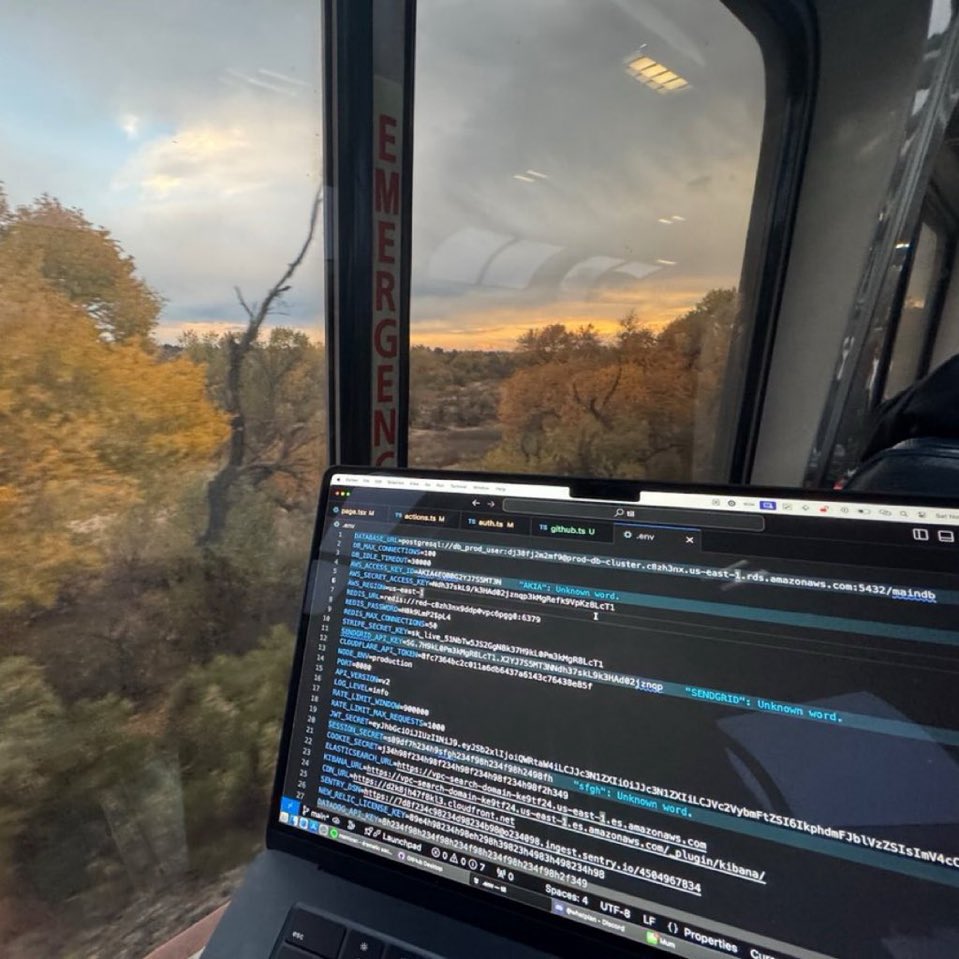
Started a cybersecurity firm. Landed my first six figures client project. Working on it now while traveling the world. 2025… we’re just getting started 🥂
@placid cape XDDDDDD
look at the file
hoary sluice
@placid cape i submitted nv as my answer again
so annoying
couldve had a new delta pb

17s
finally done with intcode
didnt even take that long
placid cape
dense sand
look at the file
XDDDDDDDDDD
placid cape
hoary sluice
finally done with intcode
nicee
I just solved d16 y2015
2015 is so easy tbh
viscid grove
dense sand
https://fxtwitter.com/jiratickets/status/1874902644906717600
am I correct in assuming they should've censored the secrets
dense sand
viscid grove
am I correct in assuming they should've censored the secrets
yes, but its a troll post i suppose lol
viscid grove
oh yeah looks like it
@jiratickets
made a bait post that blew up and now just feel bad about all of the nice people replying with kindness and encouragement. how does yacine live like this
hoary sluice
@valid jetty you are REQUIRED to do https://adventofcode.com/2019/day/10
i took an hour for p1 and 19 mins for p2, lb took 13min/42min
this is so cursed
hoary sluice
fleet cedar
Show code
GitHub
Solutions for adventofcode in kotlin. Contribute to eagely/adventofcode development by creating an account on GitHub.
part 1 is a hack
the number of things a node sees is also the number of unique minified (divided by gcd(dx, dy)) distance vectors
fleet cedar
I just used atan2 for that
hoary sluice
if 2 nodes are collinear they share the minified vector
hoary sluice
fleet cedar
I just used atan2 for that
yea im not that goot at math so i didnt immediately jump to angles
fleet cedar
I can then ||sort by that angle|| for p2
hoary sluice
i used it in part 2 cause there was a similar problem in aoc that required atan2
hoary sluice
fleet cedar
I can then ||sort by that angle|| for p2
thats what im doing
i think my p1 probably has a faster runtime
but p1+p2 is slower cause i compute the angle anyways
fleet cedar
Mine allocates a n^2 array which is kinda unnecessary
hoary sluice
i wrote a proper blocking detection system, but it wasnt giving me the correct answer for p1 so i rewrote it with the minified vector approach and then had to remake the blocking detection in p2 cause i deleted it
fleet cedar
Actually, looking at the numbers, much of my p2 is unnecessary
fleet cedar
I think something like this would be more up to modern standards||```py
import cmath;P=cmath.phase;E=enumerate
p={i-j*1j for i,l in E(open("10.in"))for j,c in E(l)if"#"==c}
print(max((len(x:=sorted({P(s-a)%9 for a in p})),(m:=s-min((s-a for a in p if P(s-a)%9==x[199]),key=abs)).real-m.imag100)for s in p))
disgusting
dense sand
this is becoming such a scuffed project
valid jetty
hoary sluice
<@581573474296791211> when is elle gonna compile to intcode
right now check your mailbox for the install key
 valid jetty
hoary sluice
<@581573474296791211> you are REQUIRED to do https://adventofcode.com/2019/day/1...
valid jetty
hoary sluice
<@581573474296791211> you are REQUIRED to do https://adventofcode.com/2019/day/1...
lol what is this
looks like an atan2 thing
i think my vector impl in elle would come in useful for that
dense sand
https://youtube.com/shorts/5cRztbMf0To
There is no way this is real
 hoary sluice
valid jetty
looks like an atan2 thing
hoary sluice
valid jetty
looks like an atan2 thing
i only realised that in p2
doing p2 without atan2 would be horror i think
dense sand
yall are good optimizers, is there any way to optimize this to run faster? For guava it took like 3 seconds which seems horrible(2k entries)
public Set<String> getAvailableClasses() {
    URI sourceFileUri = UriComponentsBuilder.fromUriString(getUri())
            .path("/")
            .path(getArtifactId() + "-" + getVersion() + ".jar")
            .build().toUri();

    try (var is = new ZipInputStream(sourceFileUri.toURL().openStream())) {
        Set<String> classes = new HashSet<>();
        ZipEntry entry;
        while ((entry = is.getNextEntry()) != null) {
            if (entry.getName().endsWith(".class")) {
                classes.add(entry.getName().replace(".class", "").replace("/", ".")
                        .replace("$", "."));
            }
        }
        return classes;
    } catch (IOException e) {
        throw new RuntimeException(e);
    }
}
Run a profiler to find what takes time
valid jetty
@placid cape
 placid cape
dense sand
apparently you can declare a class inside of a method?
 valid jetty
dense sand
apparently you can declare a class inside of a method?
valid jetty
dense sand
apparently you can declare a class inside of a method?
you can also have anonymous classes iirc
and they act as just objects
dense sand
valid jetty
you can also have anonymous classes iirc
you mean those that you pass in lambdas right?
like these, they do the same thing
 valid jetty
like you can do stuff like this
public class Main {
    public static void main(String[] args) {
        Object obj = new Object() {
            @Override
            public String toString() {
                return "foo";
            }
        };

        System.out.println(obj);
    }
}
yah
that
valid jetty
@hoary sluice [solution.le:30:13] Array<Tuple<i64, Triple<i32, Tuple<i64, i64>*, Array<Tuple<i64, i64>*>*>*>*>* queue = <[(12, (0, (0, 0), [(0, 0)]))] at 0x1400094f0> LMAO
the let is saving my life
let queue = [$(dist(start, t), $$(0, start, [start]))];
io::dbg(queue);
valid jetty
because arrays need to be pointers to be able to be pushed to
and idk why i made tuples and triples pointers
fleet cedar
An array needs to contain a pointer, sure
But why would that be part of the type? It's just the struct's internals isn't it
valid jetty
you could technically write Array<Tuple<i64, Triple<i32, Tuple<i64, i64>*, Array<Tuple<i64, i64>*>*>*>*>* as (i64, Triple<i32, (i64, i64), (i64, i64)[]> *)[] lol
valid jetty
fleet cedar
An array needs to contain a pointer, sure
thats not what i meant
it has that
struct Array<T> @nofmt {
    i32 size;
    i32 capacity;
    T *elements;
};
the pointer to Array<T> is so the structure can be modified in place
fleet cedar
So things not in pointers are immutable...?
valid jetty
no but theyre copied
fleet cedar
So you don't have anything like rust's &self
valid jetty
if you want to have Array::push and it takes Array<T> not Array<T> * you wont edit the array youll just edit a clone of the array
fleet cedar
Kinda like c++ but you chose the different choice?
valid jetty
fleet cedar
So you don't have anything like rust's &self
i do, but sometimes you may not be able to get the address of a stack variable to pass that into push
fleet cedar
Why not
valid jetty
so its easier if the array is just always a pointer
if the array is a param of a function
like
fn foo(Array<T> x) {
    x.push(1);
}
you dont explicitly allocate stack memory in the IR for this so you cant get its address
fleet cedar
So you're letting implementation details guide your design
valid jetty
sort of, i do have a workaround
if there is some value T and there is no address, it goes and allocates stack memory for it of size T and stores the value there, then returns that address
but again, that wont modify x
valid jetty
which is exactly why it’s always a pointer
you never deal with Array<T> itself you just have a T[] which is an alias for Array<T> *
and so it doesn’t copy all over the place and actually mutates the array when you expect it to
if you were to do
fn foo(i32[] x) {
    x.push(1);
}

fn main() {
    let x = [100, 39];
    foo(x);
}
``` you would expect `x` to be mutated surelyif x was a Array<T> and not Array<T> * it wouldnt be
and if you dont want it to mutate there is a .clone() method on Array
fleet cedar
And when is the array's memory freed?
valid jetty
currently at the end of the program's runtime, along with every other allocation
i still havent come up with a good solution for this
fleet cedar
So, leaked
valid jetty
no
all allocations are pooled into an arena allocator who's pointer is stored in static memory and the arenas are all freed at the end of the program
there are no leaks
fleet cedar
"Not freed until the program ends" is the exact definition of a memory leak
valid jetty
technically yes but the allocations are still tracked by the compiler so i want to eventually expand this into a gc lol
valid jetty
valid jetty
i still havent come up with a good solution for this
mostly this
dense sand
it takes 2 seconds to fetch this data 😭 im so cooked with my code
 valid jetty
day 18 done in elle
day 19 in elle
use util;

fn count_ways(HashMap<string, i64> *memo, string d, string[] ps) {
    if memo.contains_key(d) {
        return memo[d];
    }

    if d.is_empty() {
        return 1;
    }

    i64 ways = 0;
    for p in ps {
        if d.starts_with(p) {
            let remaining = d.slice(p.len(), d.len());
            ways += count_ways(memo, remaining, ps);
        }
    }

    memo[d] = ways;
    return ways;
}

fn main(string[] args) {
    let parts = io::read_to_string(args[1]).split("\n\n");
    let ps = parts[0].split(", ");
    let ds = parts[1].split("\n");
    let memo = HashMap::new<string, i64>();

    i64 c1 = i64 c2 = 0;

    for d in ds {
        let res = count_ways(memo, d, ps);
        c1 += res >= 1;
        c2 += res;
    }

    io::dbg(c1, c2);
}
why tf does python sort sets
maybe its just when printing
{(0, 0), (0, 1), (0, 2), (0, 3), (0, 4), (0, 5), (0, 6), (0, 7), (0, 8), (0, 9), (0, 10), (0, 11), (0, 12), (0, 13), (0, 14), (1, 0), (1, 4), (1, 14), (2, 0), (2, 2), (2, 4), (2, 6), (2, 8), (2, 10), (2, 11), (2, 12), (2, 14), (3, 0), (3, 2), (3, 6), (3, 8), (3, 10), (3, 14), (4, 0), (4, 1), (4, 2), (4, 3), (4, 4), (4, 5), (4, 6), (4, 8), (4, 10), (4, 12), (4, 13), (4, 14), (5, 0), (5, 1), (5, 2), (5, 3), (5, 4), (5, 5), (5, 6), (5, 8), (5, 10), (5, 14), (6, 0), (6, 1), (6, 2), (6, 3), (6, 4), (6, 5), (6, 6), (6, 8), (6, 10), (6, 11), (6, 12), (6, 14), (7, 0), (7, 1), (7, 2), (7, 6), (7, 10), (7, 14), (8, 0), (8, 1), (8, 2), (8, 4), (8, 5), (8, 6), (8, 7), (8, 8), (8, 9), (8, 10), (8, 12), (8, 13), (8, 14), (9, 0), (9, 4), (9, 5), (9, 6), (9, 10), (9, 14), (10, 0), (10, 2), (10, 3), (10, 4), (10, 5), (10, 6), (10, 8), (10, 10), (10, 11), (10, 12), (10, 14), (11, 0), (11, 2), (11, 6), (11, 8), (11, 10), (11, 14), (12, 0), (12, 2), (12, 4), (12, 6), (12, 8), (12, 10), (12, 12), (12, 13), (12, 14), (13, 0), (13, 4), (13, 8), (13, 12), (13, 13), (13, 14), (14, 0), (14, 1), (14, 2), (14, 3), (14, 4), (14, 5), (14, 6), (14, 7), (14, 8), (14, 9), (14, 10), (14, 11), (14, 12), (14, 13), (14, 14)}
hoary sluice
when 2019 day 10 in elle
valid jetty
thats what i thought but for some reason when i print a set its always in order
valid jetty
hoary sluice
when 2019 day 10 in elle
when i upsolve all the days in elle nyaboom~7

will take a while because im procrastinating so much i cant even finish this year in elle
placid cape
valid jetty
thats what i thought but for some reason when i print a set its always in order
what
no way
 valid jetty
whaaaaa
valid jetty
valid jetty
{(0, 0), (0, 1), (0, 2), (0, 3), (0, 4), (0, 5), (0, 6), (0, 7), (0, 8), (0, 9),...
why is this in order then idk
fleet cedar
valid jetty
{(0, 0), (0, 1), (0, 2), (0, 3), (0, 4), (0, 5), (0, 6), (0, 7), (0, 8), (0, 9),...
Sometimes, especially for small integers, the hashes just turn out that way
fleet cedar
Mine doesn't print them in order ```py
{(0, 0), (0, 1), (0, 2), (0, 3), (0, 4), (0, 5), (0, 6), (0, 7), (0, 8), (0, 9), (0, 10), (0, 11), (0, 12), (0, 13), ...
{(12, 4), (4, 0), (5, 1), (8, 0), (14, 13), (5, 10), (8, 9), (10, 6), (0, 5), (2, 2), (11, 14), (0, 14), (2, 11), (13, 8), ...
did i just get super lucky doing this then
c = set(list(c)[:b])
``` where `c` is a setand the order is preserved
fleet cedar
Which python is it?

 valid jetty
Python 3.10.14 (39dc8d3c85a7, Nov 09 2024, 22:52:48)
[PyPy 7.3.17 with GCC Apple LLVM 15.0.0 (clang-1500.1.0.2.5)]
fleet cedar
Weird to have pypy aliased as python though
placid cape
valid jetty
i wonder if my solution wouldve been wrong if i use cpy instead of pypy
send your sol
ill run it
but probably yeah?
valid jetty
yes it is 😭
fleet cedar
If you rely on set ordering then you're wrong
valid jetty
its wrong with python3
valid jetty
fleet cedar
If you rely on set ordering then you're wrong
i dont anymore
placid cape
i had to do this after bron kerbosch
 valid jetty
but that was a bug in my original solution
placid cape
because sets are unordered
valid jetty
def solve(c, s=71, b=1024):
    c = set(list(c)[:b])
    return find(c, s)

with open(sys.argv[1]) as f:
    c = set()

    for line in f:
        x, y = map(int, line.strip().split(','))
        c.add((x, y))

    print(solve(c))
    print(solve2(c))
``` i was doing this and it just shouldnt work but pypy orders sets in order of adding items so it does work lolshould be this instead
def solve(c, s=71, b=1024):
    c = set(c[:b])
    return find(c, s)

with open(sys.argv[1]) as f:
    c = []

    for line in f:
        x, y = map(int, line.strip().split(','))
        c.append((x, y))

    print(solve(c))
    print(solve2(c))
i wonder why pypy has ordered sets lol
valid jetty
idk if them being ordered is an invariant it may just be a random side effect
wtf did i do

why is it doing that
im doing like the most basic formatting thing ever

and the weirdest thing is it breaks for a second then returns back to workig fine
?????????????????????????/ what in the
maybe im incorrectly assuming the arena has enough space and then it doesnt
hoary sluice
@valid jetty https://ioinformatics.org/files/ioi2019problem2.pdf
pretty sure this is just jgrapht docs
find 2 subgraphs of size a, b such that there is at least one edge between them
last question of day 2 is literally just bfs?? https://ioinformatics.org/files/ioi2019problem6.pdf
valid jetty
she has decided she wants to visit a b and c attractions so she has decided she is gonna spill math words
 valid jetty
hoary sluice
last question of day 2 is literally just bfs?? https://ioinformatics.org/files/i...
valid jetty
hoary sluice
last question of day 2 is literally just bfs?? https://ioinformatics.org/files/i...
this looks slightly more annoying than just a bfs
hoary sluice
valid jetty
this looks slightly more annoying than just a bfs
parse it into a graph with each building that a skywalk touches being an edge and then its just textbook dijkstra
hoary sluice
valid jetty
my favourite textbook dijkstra
you can also make a graph with a bunch of degree 2 vertices instead of making it weighted
its the same algo
different sorting
valid jetty
how long do you have to solve this problem
hoary sluice
idk
5 hours per problem apparently
gn
In 5h i could make a 3d visualisation of this
valid jetty
lmao true
valid jetty
@hoary sluice @placid cape https://github.com/messcheg/advent-of-code/blob/main/AdventOfCode2015/Day07/Day07.rock
GitHub
advent of code solutions. Contribute to messcheg/advent-of-code development by creating an account on GitHub.
valid jetty
@royal nymph opinions on this
fn $scoped(fn *func) {
    let current = #env.allocator;
    #env.allocator = ArenaAllocator::new();
    func();
    #env.allocator.free_self();
    #env.allocator = current;
}

fn main() {
    let a = 5;
    $scoped(fn() {
        #env.allocator.alloc(1024 * 1024 * 1024);
    });
    // All freed after this function is called
}
insta husk holy shit
royal nymph
make it a macro instead so you dont have to use an inline func
and dont use $ its weird
valid jetty
"#" is reserved for compiler builtins
"@" is reserved for function and struct attributes
calling it just "scoped" is weird
and there are no macros yet
royal nymph
oh it's elle
why tf u using rust language block
i thought u meant in rust
anyway just add using/with blocks
fleet cedar
Probably because discord doesn't have elle highlighting yet
Someone should make a plugin for that
valid jetty
no because thats not the purpose of it
thats just an example of what you can do
the purposes is like
because the allocator doesnt clean up after itself
if you have to allocate memory during a loop like a game render loop
itll just keep piling
if you $scoped it, everything will be allocated and freed on every iteration
like a temp allocator
the purpose isnt to scope only a single allocation and free it afterwards its to allocate a bunch into an autofreed chunk
sort of like the way stack allocations work but for the heap
specifically like, here

.format allocates heap memory because the string has to grow in size so it cant be stack allocated
and if this is ran in a loop itll just keep allocating
with $scoped itll free itself after its done
 wooden walrus
helfo heres a pic of some python code i did
 valid jetty
oh right wait elle doesnt let you capture things
so actually itll be more like this
fn $scoped(fn *func, void *arg) {
    let current = #env.allocator;
    #env.allocator = ArenaAllocator::new();
    func(arg);
    #env.allocator.free_self();
    #env.allocator = current;
}

fn main() {
    let a = 5;

    $scoped(fn(i32 *x) {
        #env.allocator.alloc(x);
    }, &a);
    // All freed after this function is called
}
ARE YOU SERIOUS
 fleet cedar
Mangle your idents
valid jetty
so it has to be
fn mem::scoped(fn *func, void *arg) {
    let current = #env.allocator;
    #env.allocator = ArenaAllocator::new();
    func(arg);
    #env.allocator.free_self();
    #env.allocator = current;
}

external fn mem::scoped(fn *func, void *arg) @alias("$scoped");
what
pearl stagBOT
index.html: Lines 107-113
<script src="./Javascript/72b5c5874930d6222007ea7b99269673dad47bcb7355815024742ddf575ca55f.js"></script>

<script src="./Javascript/clipboardInterceptor.js"></script>

<script disable-devtool-auto src='./Javascript/bee50f64f68a2feb114d80f4a2f1337fc164bc5574f6689ce9464be7f5ccf1ed.js'></script>
<!--<script src="./Javascript/d178e32824befa1fe8305a075094c8b669b88e27b4dba91c55abca73b3f081f0.js"></script>-->
lol and this is a working legit solution lmao
placid cape
valid jetty
<@343383572805058560> opinions on this
```rs
fn $scoped(fn *func) {
let curr...
Why introducing $scoped? Why not just s regular block:
{...}
maybe because you don't allow inner variables in lambda 🤔
valid jetty
because scoped is performing a special task of providing a clean allocator which automatically frees everything it allocates after the function call
a regular block doesnt imply the allocator will free everything inside afterwards because the arena allocator isnt recreated
you also cant free a part of an arena only the whole arena
so you either free all or nothing
ornate quiver
valid jetty
<@415132870252822539> <@525316393768452098> https://github.com/messcheg/advent-o...
holy christ
pearl stagBOT
ornate quiver
<https://github.com/messcheg/advent-of-code/blob/main/AdventOfCode2015/Day07/Day...
Day07.rock: Lines 52-67
Robert wants control
Cut control into pieces
The code is attractive
Put pieces at the code into the box
A ray is very gleaming
Cast a ray
The room is large enough
Build the room up
Cast the room
while the box ain't misterious
if the box is smaller than a ray or the box is bigger than the room give back lies
build the code up
put pieces at the code into the box
baby
the truth is right
give it back

thats fizzbuzz
ok well
this isnt the prettiest thing ever
$scoped(fn(i32 bounces) {
    string bouncesString = "Bounces: {}".format(bounces);
    raylib::draw_text(bouncesString, (screenWidth - raylib::measure_text(bouncesString, fontSize)) / 2, 100, fontSize, YELLOW);
}, bounces);
but it doesnt segfault anymore
and i discovered a huge bug in my formatter code lol
let result = (string)#env.allocator.alloc(fmt.len());
the result used to be preallocated to at least the length of the formatter
but never memset
which is just UB
the length of that string is just whichever null byte it finds (there isnt any set)
its much better to make it like just an empty string
let result = "";
because the string.push and string.extend/concat are designed to make it grow
dense sand
what is a reasonable amount of props to have on a component
dense sand
cuz im using nextjs and i might be passing a lot of stuff from the server component into client subcomponent
placid cape
how many?
dense sand
its 5 now
placid cape
i think that's okay
hoary sluice
valid jetty
<@415132870252822539> <@525316393768452098> https://github.com/messcheg/advent-o...
omg i was looking for that language
ty
placid cape
dense sand
why is there 0 parsers support es6 modules
babel?
babel supports everything
dense sand
placid cape
babel?
Mb i meant xmlparsers
Most of them still use commonjs
But i found some fast-xml-parser whic works ig
dense sand
Do yall know of any optimized version of ZipInputStream
royal nymph
dense sand
Mb i meant xmlparsers
browsers have XML parsers built in

MDN Web Docs
The parseFromString() method of the DOMParser interface parses a string containing either HTML or XML, returning an HTMLDocument or an XMLDocument.
dense sand
royal nymph
https://developer.mozilla.org/en-US/docs/Web/API/DOMParser/parseFromString
Eh its on server
hoary sluice
i had to look up a hint in the subreddit cause i was completely lost after an hour

the solution is so simple 😭
royal nymph
dense sand
Eh its on server
can u parse it on client instead
dense sand
royal nymph
can u parse it on client instead
well i would get cors errors then
comedy 😭

i should probably extract it into layouts instead
viscid grove
Guava
dense sand
yea im making javadocs 2
 hasty vessel
sure do love pygame

 torn seal
lmao
 celest lodge
it is not good
torn seal
are you trying to make a coreutils replacement or what
valid jetty
@fleet cedar i finally fixed the struct double alloc thing
no more double alloc to dynalloc a struct

the issue was when i was doing autoderef on Foo*

it makes no sense to hold a Foo
so doing a load instruction on that ptr would give you a nullptr deref
dense sand
Is there any way I can pass something from layout to page in nextjs?
valid jetty
i just removed that part and it works for both Foo and Foo* field access
now i need to go and fix all of the places i did double alloc 🥲
placid cape
valid jetty
no more double alloc to dynalloc a struct
🔥
i need to work on field access and oeprator overloading
hoary sluice
@deep mulch HII
dense sand
we are finishing this one 🗣️

 deep mulch
hoary sluice
<@289556910426816513> HII
deep mulch
hoary sluice
<@289556910426816513> HII
hii
dense sand
placid cape
nice design
yea im just hoping that converting this hell lot of classes into package based tree wont slow this site down by a lot
valid jetty
vcotd
 elder yarrowBOT
valid jetty
vcotd
elder yarrowBOT
valid jetty
vcotd
The cozy of the day is mint green! (#98ff98)
 placid cape
dense sand
yea im just hoping that converting this hell lot of classes into package based t...
placid cape
dense sand
yea im just hoping that converting this hell lot of classes into package based t...
you can theoretically generate every html page at build time
e. g. https://mappings.xhyrom.dev/ this site has like 10GB if im not mistaken lol
dense sand
placid cape
you can theoretically generate every html page at build time
well i can scrape any maven repository for javadocs right now
so it cant really be done on build time
valid jetty
valid jetty
the issue was when i was doing autoderef on Foo*
its kinda weird how this works
to deref a structptr into a struct i kinda just do .. nothing
i just return the same value with a different type (Foo * and Foo are equivalent actually)
its weird that it works like that
in this
use std/prelude;

struct Foo {
    i32 a;
};

fn main() {
    Foo *foo = #env.allocator.alloc(#size(Foo) * 4);
    foo[0].a = 42;
    foo.a = 42;
}
``` those are the same thingokay i added class lists :D
 valid jetty
guaba
dense sand
yea i mean its kinda the best thing to see it on
placid cape
foo[0].a thats weird
valid jetty
how
you would do like
foo[0].a = 42; foo[1].a = 39; etc
the allocation is for 4 Foos
placid cape
ohh didnt see that
valid jetty
but yeah because of auto deref rules foo[0] and foo and *foo are actually the same thing
its really weird but the c compiler does the same thing for llvm so
winged mantle
got a mechanical keyboard and idk if it's better for programming tbh because it's really hard not to make typos
dense sand
winged mantle
got a mechanical keyboard and idk if it's better for programming tbh because it'...
you will get used to it
i cant type on membrane now lol
winged mantle
how do you type without knocking the arrow keys
winged mantle
no numpad
winged mantle
my palm presses them
dense sand
wth idk
dense sand
wtf lol
winged mantle
the tiniest bit of pressure registers on the connected device
it's also very easy to press ctrl by accident meaning if you try to type an R it reloads
also this is horrible lol
 placid cape
winged mantle
placid cape
winged mantle
lol

The most customizable typing test website with a minimal design and a ton of features. Test yourself in various modes, track your progress and improve your speed.
hoary sluice
@placid cape 2019 is really fun
placid cape
make 15s english
placid cape
interesting
placid cape
ill try to finish 2015 until end of next weekend
hoary sluice
winged mantle
how do you type without knocking the arrow keys
by not having arrow keys
 placid cape
rust????!
 hoary sluice
yes
the keyboard is called ferris sweep, its a fork of the ferris keyboard and ferris is the name of the rust crab
thats why hes holding a broom
cause sweep
get it haha
hoary sluice
winged mantle
are you touch typing properly
cause i think ur turning ur hands to not have to angle your wrists in a silly way and hence pressing arrow keys