#Sir, i asked same question gpt and it
1 messages · Page 1 of 1 (latest)
 dim trail
Their trained in this manner. The Model(Broad term for AI Model) Is given inputs then expected outputs. Attempting to align the model to output the same result when given the same input. With some variation of course. they do this over a ridiculously large amount of data. that's how it forms contextual understanding of words. It sees a word appear in multple patterns. So when you input. That car made me angy. It might associate other instances in where it was trained that said. "I got really angry when that person insulted me", "People drive like jerks and it makes me angry" So on and so forth. To where it starts to associate anger beyond just that direct instance. So you have to keep in mind, just like humans in essence, It only knows what its been taught. Secondly, (this isn't exactly a technically accurate depiction works for understanding in essence though) It can mix up thoughts with other thoughts how a human mind might. So it could incorrectly prioritize the date of something else in this instance.
Even among the human mind Specific numbers aren't easy to remember. Usually because numbers don't often times have strong direct connections in memory to attach themselves too. You remember your birthday strongly since it's celebrated. You remember the experience strongly, so the mind can stronly attach it to an emotion and an experience you yourself had. Whereas the date that the declared independence, no one alive was there for, or fought in a war over it. So it's much less likely to have a strong connection in the mind and thus much more likely to be considered less prioritized
Keep in mind this probably isn't anywhere close to the correct technical wordage or even way to explain it. For intents and purposes though it works. Just make sure to do your own research on legit sources before using it as reference
 twilit fog
Then you train your gemini😑if gemini tell us wrong answers then no one use it
dim trail
twilit fog
Then you train your gemini😑if gemini tell us wrong answers then no one use it
You're misunderstanding. It's not a simple If statement. It's not as simple as IF this EQUAL this then DO this. It's more like. IF this APPEARS to EQUAL this then I THINK DO this
The only reason LLM Models are able to provide such interactive and contextually complete responses are exactly due to this variation(Randomness, Margin of error.) If it was always a strict response. If would not be able to form connections beyond the exact input and output usage it had been trained on
dim trail
That's hard to determine. Right now the benchmarks for LLM models are kind of weird. And in my opinion honestly I think we're getting to a state where the Benchmarks we are using are primarily focused on Functionality and not enough on usability. I've noticed some of the older and smaller models tended to give responses that were more in line with what i desired them to respond with.
Also try something for me if you don't mind. Take the question you asked it and send it in another instance(Session) to the model. So that it's not given the entire conversation. Then give the response you got.
Start it with something like.
"I asked a friend this <Your question> and this is what they told me" <The incorrect response you were given>. Then say something along the lines of,
"Can you help verify the validity of this for me."
You could also say things like, "Please provide citations.",
"If You're confidence in the accuracy of your response is below %60. Always state that and then provide suggested sources where the information could be found",
"terms that could be searched to provide relevant information."
So prompting is incredibly important. Think along the lines of when in school they would teach short rhymes or songs to help remember things (Technically called Mnemonic Device https://en.wikipedia.org/wiki/Mnemonic) You kind of want to do the same thing when sending your prompts. Not that specifically but the fundamental purpose is the same. You're trying to say things that are going to make the model "Connect" the patterns in the input data and what it was trained on
Also, the reason doing it in a new session can sometimes be beneficial.
Most chat interfaces don't allow you to set something like ChatGPT's "System Message". So every time you send a message to gemini it's sending your entire conversation over again. The model doesn't save or store any information. It's stored in the chat application itself. This is why token limits are a thing. Basically think of a MadLib. (https://en.wikipedia.org/wiki/Mad_Libs) (https://en.wikipedia.org/wiki/Phrasal_template) In this instance though you're creating the MadLib progressively taking turns with the LLM Model. It's filling out a section, then you are. But for the LLM Model its discards the paper after every response it gives. You're having to keep the Paper the MadLib is on and "Bring" it with you every time you interact. That's why it's required to send the chat history. Think working on a group project, exceplt you're always in charge of keeping all the materials and work done for it with you. And all your friends also have short term memory loss.
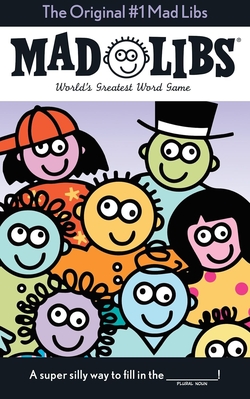
Mad Libs is a phrasal template word game created by Leonard Stern and Roger Price. It consists of one player prompting others for a list of words to substitute for blanks in a story before reading aloud. The game is frequently played as a party game or as a pastime.
The game was invented in the United States, and more than 110 million copies of ...
A phrasal template is a phrase-long collocation that contains one or several empty slots which may be filled by words to produce individual phrases.
That's why sending it like that works better. When you send the chat history as is required. The model behaves similar to this. It sees your messages and it's own messages. It's more like it sees it's own messages as an act it's performing on a stage. It still has it's own personality, but it knows that there's a specified way it should be behaving
So sometimes even asking if it can recognize it's own mistake is difficult in the same chat session. It's past messages aren't it's own messages in sense. It's the act it's supposed to be "performing" for this "show". So it doesn't see "My answer when compared with factual information I know about is most definitely incorrect." It sees, "Well the script said that's what i should be saying, it's most likely correct according to the script." Now it's not always a gurantee it's going to "Think" of things that way. But right now there's really not a good distinction among LLM models as what is provided as Example information that the user wants the AI to use for the way it should respond. And it's own previous messages.
dim trail
Yeah i'm working on refining this. Kinda got messy between my head and the messages I typed
 maiden viper
The thing to remember about these models is that they are pattern machines and not fact machines. GPT may get a specific question correct because, statistically, the pattern that gets setup happens to get to the correct answer. Both probably have that as a fact, possibly even in many places... but the pattern you setup may not have set it up for the expected answer.
If you're looking to build a chatbot that is a fact system - you need to provide your own facts. And you can incorporate this into the LLM in various ways. But all of those ways involve the LLM helping understand the question. Not, necessarily, in providing the better answer.
dim trail
Also, keep in mind even when providing factual data as reference material. It's still not a guarantee that it will use the reference material to respond with the factual information
And it never will be. I'm not saying this as a "Prediction" or 'What I believe". This is due to the technical workings of what we refer to as AI LLM Models. Think similar to peer pressure.
Someone might know something is Correct, beyond a doubt. Yet they might still choose to respond with an incorrect response for various reasons. With AI LLM Models it can be just as hard to predict or understand why this behavior is taking place.