#🔧|finetune
1 messages · Page 12 of 1
 floral pollen
 unique cloak
yep
I tried using SD and controlnet for "logo variation" though
using my old job's logo
no need for training on such things
controlnet is quite strong
floral pollen
Oh that is great. My brother did something similar with just text for an album cover of his
This technology in the right hands is insanely versatile
unique cloak
base logo (real estate)
 floral pollen
(I think he used depth maps for that though)


 floral pollen
Okay that is so cool
unique cloak
I was going for a "never stop dreaming" kind of vibe
with the logo of the real estate being a portal to a paradise house
I would use it as commercial material
 floral pollen
But still an interisting vibe, a bit uncanny valley
unique cloak
most things don't need training
for basic stuff like those at least
but a training on top, brings it to another level
floral pollen
Yeah absolutly
unique cloak
the funiest part is, I could make more good variations like those
and train on all those
floral pollen
I'm trying to get the embed to work to try it out in combination of an automated use of controlnet for video generation on top of existing one. I thought that might come in handy
unique cloak
it's better with an inhouse artist for making initial dataset though
floral pollen
unique cloak
and train on all those
Oh yeah right, thats insane. With motives like that you can automate a whole isntagram account or something xD
unique cloak
for research purpose I may have. it's scary what you can do
floral pollen
unique cloak
it's better with an inhouse artist for making initial dataset though
Yeah for sure. After I'm done with my research I'm going to ask my boss if I could get like 3 to 4 hours form our artist for him to grab some moods that I can feed into an embeding for a project we currently have
unique cloak
sorry misinterpreted the sentense
unique cloak
floral pollen
Yeah for sure. After I'm done with my research I'm going to ask my boss if I cou...
it's always better yeah, not to just feed AI output as AI training data
floral pollen
unique cloak
for research purpose I may have. it's scary what you can do
I did that actually with one of the earliest version of stable diffusion, I didnt get a single comment about it
You just needed to make sure that there are no hands in the pictures
unique cloak
I misunderstood you on that one. I meant I may have trained on a random insta I found, just to see if I could emulate another post. clearly, yes
unique cloak
floral pollen
You just needed to make sure that there are no hands in the pictures
or once again, use controlnet
 floral pollen
unique cloak
I misunderstood you on that one. I meant I may have trained on a random insta I ...
floral pollen
unique cloak
I misunderstood you on that one. I meant I may have trained on a random insta I ...
Oh hell yeah. I need to try that too once I have that down :D
floral pollen
unique cloak
or once again, use controlnet
What this enabled for stable diffusion is still crazy to me. I would have defenitly used it back then. These hands are insane god dam
floral pollen
I don't know but I'm sure it will give us more and more and more and more control over this tool we know so much about already
unique cloak
quite a wild ride for sure 🙂 I'm happy I caught that train
this took quite a hit on my videogame time lol
floral pollen
I'm so happy too, seing all the news now about it I would probably not have been so open about it since I would have had to learns so much. But yeah my playtime is down to a minimum too xD
I do actually have a question though, now that I'm setting up my local env. About the batch size and Gradient accumulation steps when training embeddings directly in the automatic111 ui (I think that is dreambooth). Do you know your way around those by any chance?
unique cloak
one of those yeah
the other one I have doubts
batch size is exactly like in picture making
but for training
you train on multiple pictures at once
floral pollen
Gradient accumulation steps is just a multiplier for batch sizes per step, so nothing too fancy
unique cloak
making you go through your dataset faster
but it has also a positive effect on quality
like I did some unitary test on that one
backgrounds were 100% better on batch size 6 than 1
for the same dataset and same training seed
gradient I wasn't sure
floral pollen
Oh that is very interisting.
Gradient is just a way to have a larger batch size per step, at least from what I've gathered. If youhave 50 images and your card can only have 25 of them in ram you set batch to 24 and gradient to 2 (Uneven number to shuffle it a bit). An then it will go through 48 images per step.
But that is also only what I've heard I haven'tbeen able to acutally test multiple things out
but in general without all that. That means I should set my batch size as high as possible without running out of vram right? Or is there like a good value that should be used in all cases?
Because the colab implementation uses a default batch size of 1 and gets some decent results too
unique cloak
basicaly yes; it's also faster per picture globaly
floral pollen
unique cloak
backgrounds were 100% better on batch size 6 than 1
I guess that would defently be worth the extra time though
unique cloak
if you can fit more, put more in batch size would be my tip
unique cloak
floral pollen
I guess that would defently be worth the extra time though
it's not even extra time
it's faster
like when making pictures
unique cloak
making 8 batch of 1 picture is about twice slower than 1 batch of 8
floral pollen
oooooh that is so good to know xD
unique cloak
there is only 1 downside that I know of
and it's only in some cases
it needs to batch pictures of the same size together
so if you have lots of ratios
it can be a pain and some pictures can be droped out of the dataset
not all tools support multi ratio anyway
floral pollen
All of my pictures are 512 so that is not a problem ^^
floral pollen
unique cloak
I have it every week when I train the model for the PoW
What do you mean?
unique cloak
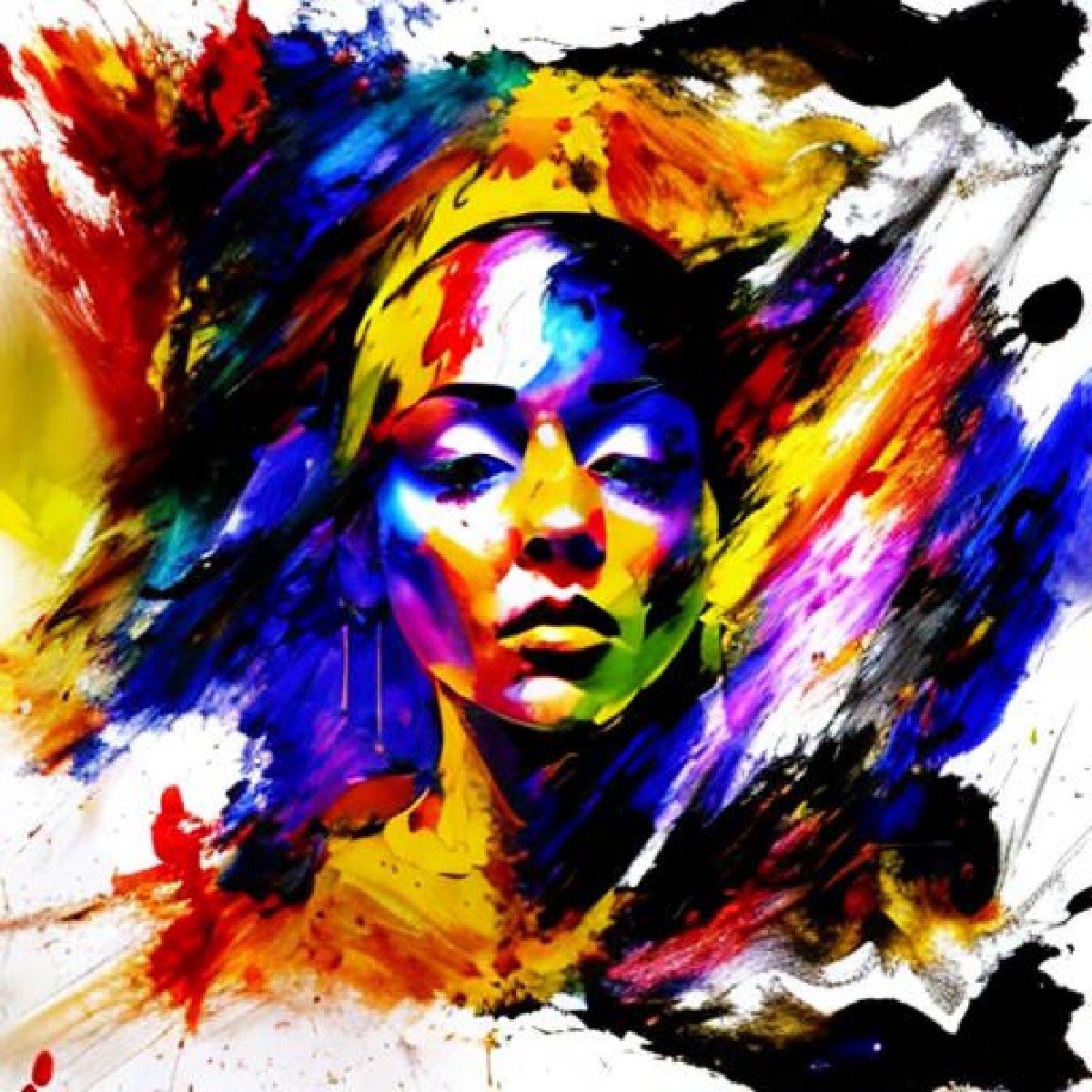
Model presentation This is a model related to the "Picture of the Week" contest on Stable Diffusion discord . This doesn't work like the classic mo...
those models, I make using the submission to the contest here
and every submission has a different size almost
so I train on batch size 1
the PoW is this : #⭐|pow-info
weekly constest on the server
floral pollen
unique cloak
yeah
In the video I watched to get started the person preproccessed the images, meaning an ai looked at the image placed a file next to it with a prompt that should be altered. He said: "Everything you describe in detail will NOT be part of your embedding" Meaning if the person wears a black shirt and I write that into there it does not get saved in the embedding since it is not defined as part of the character.
So I went through all of the pictures I wanted to train on and created descriptions.
Looking at the colab version you can not do that, or it is no necessary maybe? Do you have any experience with that kind of thing?
floral pollen
unique cloak
weekly constest on the server
Oh that is such a cool concept
unique cloak
floral pollen
Oh that is such a cool concept
I love it too, and people have started to ask for it now, so it's motivating 🙂
reading your message
floral pollen
unique cloak
I love it too, and people have started to ask for it now, so it's motivating 🙂
Yeah I bet. I need to try those out once I have the time again, putting it on my list ;D
unique cloak
floral pollen
In the video I watched to get started the person preproccessed the images, meani...
I have had experience with some colabs, but not all for sure. some have the caption option, some don't. that mainly depends on the tool.
What you heared is right but also very partial knowledge of the effect of adding "black shirt" to your caption. Check what I put regarding "Attention" specificaly
but the UI I was seeing for dreambooth in automatic earlier seemed to let the user use captions
floral pollen
Oh yes it does. I was just wondering if you use it if the colab version doesnt even mention it. Reading the attention text now
unique cloak
that collab has it if you need
TheLastBen
I can also find a Shivam one or everydream one I think
if needed
don't feel obligated to run every cell in that TheLastBen one. some are really optionnal if you don't need
floral pollen
Oh thank you so much! I'm going to take a look at it when I need to test something in colab the next time.
I am a bit confused about the tokens tbh. I currently have this prompt for example for one of the pictures
a man, wearing a green shirt, sitting on a bench in a garden, sunset, his hands folded, garden in the background
If I would want to take the weight away from the objects it sees I should probably remove the posing/position attributes, like "sitting" and "in the background" leaving only garden
a man, wearing a green shirt, garden, sunset, his hands folded
And I should remove extra words liek "a", "wearing a" and "his [...] folded". Leaving me with:
man, green shirt, garden, sunset, hands
Or is that too extreme? And should "man" even be in there then? Don't we want "manyl features" to be associated with the character and therefore dont want to reduce the weight form it?
floral pollen
unique cloak
don't feel obligated to run every cell in that TheLastBen one. some are really o...
Okay I will keep that in mind ^^
floral pollen
unique cloak
if needed
No worries, I'll do fine with this one. I haven't actually heard of the other two yet 😅
unique cloak
floral pollen
Oh thank you so much! I'm going to take a look at it when I need to test somethi...
it isn't extreme enough in my opinion, but this depends on your dataset.
If your dataset keeps changing the colour of the shirt and there is relative balance in the colour used, then you don't want to use "green" at all
Same goes if there is lots of tops, not only shirts. If you present diversity, then giving the token is not useful, unless you also want to train that token.
The tip about captioning other things is useful if you are stuck in that environment.
Like if all pics are in a garden, it would be essential to caption it, and even then, it would still be learned with your main token because it was in the whole dataset.
But what is your main token in that sentence ? what is the concept you are training ?
This feels like a caption intended for full fine tuning, that's great too, but requires a beast of a dataset, and I'm not sure it's what you were going for
basicaly, not captionning something, if that something keeps on changing in the dataset, makes the AI think that this is not an important part, that can be swapped out for similar parts
floral pollen
I actually do not present diversity, 95% are black I just grabbed pretty much the only one that was green as an example xD
I simply want to have a dataset, trained on myself. With images from myself.
I'm always infront of the same background, since I do not present diversity I should add it correct?
unique cloak
ok so you've made a dataset basically from a session of selfies
in that case some things will happen
floral pollen
How would I go about defining the maintoken in my caption then? I do actually just want my face and hair to be the embedding, at least as best as it can
unique cloak
and there is a very simple caption strategy
floral pollen
unique cloak
ok so you've made a dataset basically from a session of selfies
Yes I did 😅
unique cloak
you won't be able to have just your hair and not that wall
you have presented that wall in each pic
if you were training on the wall, you would have done that too
it will be learned
do another session in the street, or accept to have the wall as background
with or without caption
or play in photoshop first
and insert backgrounds
as for the captionning strategy, very simple
caption all your picture the same way : "nurni" or something
a single token
representing what should be static there : you
floral pollen
Ah okay. So there is literally no way around that okay. I do have another dataset of a friend of mine because I put her head on a d&d character for our campaign, maybe I should use that then for testing
unique cloak
if you want to test, yeah it's a possibility. or just open your google photo and crops headshot of a family member
floral pollen
unique cloak
caption all your picture the same way : "nurni" or something
Instead of "man" in the caption of each of the dataset images?
unique cloak
floral pollen
Instead of "man" in the caption of each of the dataset images?
you may want to train on "man", you can, and it will work. you can even train on the name of a celebrity that has some likeness to yourself, it will make training faster
the only thing that would change is that you "erase" what was in the token you choose
but you can also test on your face with that static background, or take your facebook for some background variety
depends on your goal here ^^
floral pollen
oh okay. Meaning when all of my dataset pictures have "nurni" inside of them and the only thing that is not being diversified is my face and hair it will learn to simply associate that with that word?
(I'm using me as an example but Im going to use the other dataset)
unique cloak
exactly
if only 1 token is present, every "static" part will be trained in the token
floral pollen
Which means I could literally go into the folder of my friend and dont need to add 44 captions for each image? 0.o
unique cloak
it's how I trained that insta I was talking about
literally dumped all pics in a folder, selected the 20 best ones, called them all with the same arbitrary token
floral pollen
Omg that would have safed me so much time back then 🥹 🥲
unique cloak
I just hunted for good pictures, that kept presenting variety
floral pollen
I sat there for 2 hours creatinmg fake prompts xD
unique cloak
like color of suit changing each time
floral pollen
Okay I can defenitly do that with this set then
unique cloak
I will or won't say that I had to do folder for each swimsuit
floral pollen
xD
unique cloak
to balance the dataset out
floral pollen
Okay took a look at the image set and she is always wearing a black shirt too. Does that mean I should add it as a token or not?
unique cloak
no, it just means it will be very hard to prompt her in another shirt
if you don't have variety on it, how would the AI make the difference between the shirt and the hair, even if you added it in caption ?
(you should ask for her consent maybe here, just saying)
floral pollen
Oh you're right, I never thought about it this way. But that also means that putting some effort in photoshop to turn her clothes into diffrent colors would make the embed better right?
floral pollen
unique cloak
(you should ask for her consent maybe here, just saying)
Oh yeah obviously
unique cloak
floral pollen
Oh you're right, I never thought about it this way. But that also means that put...
for sure yes
floral pollen
I did for the d&d thing but I guess I should ask her again
unique cloak
floral pollen
Oh yeah obviously
just wanted to still be clear on that, it's important given what we can do with models
photo realistic is another thing imo
just look at civitAI
I mean, you could merge her model with some dubious things technicaly
floral pollen
unique cloak
just wanted to still be clear on that, it's important given what we can do with ...
Oh yeah. She also know what she can do with it, she uses it to generate pics of feet. She had a stable diffusion course in her university xD
unique cloak
as long as everybody know what they agree to 👍
floral pollen
Okay that is a ton of information(, and making my life so much easier). But I have one more thing I am a bit worried about. Embedding learning rate: 0.005. Yes/No? A dynamic one? Calculated based on input images?
unique cloak
well, when in doubt I stay on default values on these but I can help a little
The learning rate is the speed at witch the model is trained, it represents how much the weights are able to change per step.
A higher value will result in a shorter training session. It has some dangerous sides effects though :
the training can go faster into the overtrained state.
the training can fail completely and diverge, meaning it manages less and less to draw pictures like you wanted.
floral pollen
meaning I should keep it at base until I find a good section and train on that further with a lower value?
unique cloak
dynamic learning rate makes the learning rate evolve in different ways. polynomial, constant, ... depends on the tool. I like polynomial the most, but couldn't argue why exactly
not sure about the last question there, "Calculated based on input images?"
floral pollen
Based on input image count. The guy in the video based on gradient multiplication divided or multiplied the default value
But I'm not going to use that now. I'm going to test how many pictures I can keep in my vram and use that as the highest, leaving gradient at 1
I'm going to make all the adjustments now and will let it run. I can post the result, the loss graph, not the pictures, I doubt she would be okay with that 😅 tomorrow evening. It takes around 14 hours for me to train for 3000 steps.
Again thank you so so much for all the help. I learned more in the last few hours than the whole week before that about the topic.
unique cloak
yeah, never forget to experiment
floral pollen
unique cloak
yeah, never forget to experiment
NEVER! (But only in colab xD)
unique cloak
floral pollen
I'm going to make all the adjustments now and will let it run. I can post the re...
that's the best reward I could have, really happy to have helped 🙂
floral pollen
unique cloak
that's the best reward I could have, really happy to have helped 🙂
And I'm sor really greatful, when we actually make it to the steps where we use it in our office for campaigns and such I'm sure to let you know, because I feel like, at least for us, at the company, that is going to be the next efficiency break through
And maybe I can even share some pipelines since everything is open source anyway
unique cloak
floral pollen
And maybe I can even share some pipelines since everything is open source anyway
yeah, please do come and share. i'm all about that !
and I hope that works for your company too, PMs are open if you need some tips and can't share all publicly
floral pollen
unique cloak
and I hope that works for your company too, PMs are open if you need some tips a...
Thank you so much. Will do that when it should come to that! Thank you again and have a great night!
unique cloak
floral pollen
Thank you so much. Will do that when it should come to that! Thank you again and...
good night to you too !
 charred sail
Hi everyone, I'm desperately trying to train an embedding of myself for a music video. Unfortunately, as soon as I try to switch my model to something other than SD1.5 (let's say RealisticVision), it just looks like an inbred 3rd cousin of mine.
Initialization text : *
Number of vectors per token : I've tried 3 and 8, 8 seemed better
I've trained with decreasing learning rate up to 24k steps (reaching 0.17 Vector Strength)
I'm running out of time for this project, so any help is welcome
PS, see my dataset attached below, picture descriptions are basically "a man looking up at something in the sky with a white wall in the background"

 river cypress
U should be training on the model u want to use
I would remove the man from ur captions
Replace with ur caption
A xx looking at etc etc
river cypress
charred sail
Hi everyone, I'm desperately trying to train an embedding of myself for a music ...
Also I would tag red shirt also unless you want every image of u to have this particular shirt
You should also tag emotion if u have so many different facial expression
charred sail
Ok thanks, will try this !
 sonic narwhal
Guizmus Keeps dropping gems in this chat 🔥
sonic narwhal
What are thoughts on using Loras on full strength? I've heard its preferable to use them on lower strengths and never go to full 1
unique cloak
it will depend a lot on how strongly the LoRA has been trained, and each can benefit from different values from what people say
but I use very few lora tbh
 oak void
Anyone have a nice way of managing their training image tags/descriptions? Having each one in a .txt is getting really painful. Especially when you start copying them around to different folders for resizing, flipping, etc.
 storm rock
@unique cloakFinally got some hours to start and I'm about to create the dataset as we talked about and I suddenly feel overwhelmed. 😂
unique cloak
storm rock
<@223150786929098755>Finally got some hours to start and I'm about to create the...
don't worry
spoiler
you are about to make a dataset and a first training
and the results are going to be bad
but you are about to learn a lot
that's about 95% of what has the most chance of happening the first time
storm rock
Mhm. 🙏
unique cloak
it's the natural process, don't worry
storm rock
Guess I'll start by creating folders containing the filter words and just start puling stuff into em.
and deleting bad ones
unique cloak
start by cloning your dataset. new directory, everything, and then organize, delete, ...
create for you the space to try without risk
storm rock
Yeah got a folder called Raw Eyes, which has the 3K+ files.
Trying to see if XnView can do a layout where I can have to folders viewing
storm rock
🥹 Aight getting there.

So it should be ok if the only real prompt I want viable is the shape of the pupils?
So you would be able to do like Eye, Slit Pupil, Orange
unique cloak
back sorry
floral pollen
@unique cloak Hey there! I hope you had a great day!
For the past 8 hours I've been unsuccessfully trying to setup a gui that I found through a website after finding out that the dreambooth training embedded in auto 1111 currently does not safe the loss values in the tensorboard 😮💨 Would you be so kind as to tell me what you are using for training currently or what is out there and can be used? So that I don't run around trying to get things to work that don't anymore like I did until now? 😅 Finding guis for training is so much harder than I expected. I'd have no problem with going back to using dreambooth from the bare repository but if there is a gui I would like to use it ^^
I'm on ubuntu now trying around, but windows 10 would not be a problem obviously.
unique cloak
storm rock
🥹 Aight getting there.
well... it seems like it should work at least.
but like, this is the first time I see multiple pictures of one of the folders at once. and just to say... this doesn't feel like diversity to me. this feels like a color swap in the 4 I see each time.
if all the folder is like that, then I would drasticaly reduce the size of each folder, to something like 2 to 5
unique cloak
floral pollen
<@223150786929098755> Hey there! I hope you had a great day!
For the past 8 hou...
for sure, I have some links of tools
ok so I use 2 different tools
the first one I use the most is EveryDream2Trainer : https://github.com/victorchall/EveryDream2trainer
quite easy to install
storm rock
Oh yeah the raw files has about 40+ in each. Next should cherry picking I believe for the actual training.
the main one I will focus on is the slit and round
the others are just extra from sortig.
unique cloak
floral pollen
<@223150786929098755> Hey there! I hope you had a great day!
For the past 8 hou...
the second one would be Shivam. harder to install, so I made myself an installer. it's confirmed to work on NVIDIA Windows, it's just some bats, it could maybe help you there : https://github.com/Guizmus/DreamboothSimpleUI
unique cloak
floral pollen
<@223150786929098755> Hey there! I hope you had a great day!
For the past 8 hou...
sorry I didn't read everything at first...
those don't have GUIs...
I do include, in my installer, example uses
floral pollen
unique cloak
those don't have GUIs...
That is not a problem at all as long as they work!
unique cloak
but I know very few with a GUI
they do work for sure, and here is the link to shivam if my installer wasn't working for you https://github.com/ShivamShrirao/diffusers/tree/main/examples/dreambooth
unique cloak
storm rock
the others are just extra from sortig.
perfect then, that sounds like it should work 🙂
I'm not sure on the "no pupils" token maybe
try "empty pupils" potentially
storm rock
oh true
floral pollen
unique cloak
the first one I use the most is EveryDream2Trainer : https://github.com/victorch...
I guess your graphics card does have more than 8gb of vram right? I cant find any section on here tlaking about deepspeed or "low end" graphicscards ruling this one out for me sadly
storm rock
those are the eyes who are simply just filled with texture, fibers etc.
unique cloak
floral pollen
I guess your graphics card does have more than 8gb of vram right? I cant find an...
sorry forgot about your GPU limit.
Yes, I have nothing for 8GB, but the tip to use google colab. it's free for some hours per day, works quite correctly like that
and for like 9€/months you have more to do what you need.
floral pollen
unique cloak
they do work for sure, and here is the link to shivam if my installer wasn't wor...
I did actually use Shivams repository right here earlier when I was just testing out stuff (feels like months ago). I guess I keep using that. Cloud is sadly not an option for anything other than experimenting since I dont have the drive space at the moment and if I actually want to use it for our company we can not share images with google due to our guidelines.
unique cloak
floral pollen
I did actually use Shivams repository right here earlier when I was just testing...
I'm not the best on those, but I know there are others than google that do this.
floral pollen
unique cloak
I'm not the best on those, but I know there are others than google that do this.
Its not just google. We have a specific certificate for working with car manufacturers, and that does not allow us to use any third party tool that is not locally hosted
The only thing I need to find out is if that repo safes the loss value, do you know if that is possible by any chance?
unique cloak
shivam does
the 2 I linked do
but I think it's mostly automatic that is the exception here
it's stupid not to log loss imo
floral pollen
Yeah I feel like it should be in automatic too but it is broken right now, because you can turn it on but nothing happens
But that is good to know with the other two repos, I will try those out on a company machine when I can grab one with enough vram. My company laptop has a 3080 in it but that does only have 8gb too
Oh and thank you again for the quick help I'll go and see if I can get my examples from back then running again!
floral pollen
@unique cloak I got it to work thank you so much for your help again! The repository that worked for me was the one from Shivam Shrirao with his dreambooth examples + deepspeed. And I even have the loss rate upating live now so I can finally work with it correctly 💪
 charred sail
Would you include expressions in your captioning? The dataset I have includes pictures of my subject frowning/smiling/open mouth/closing eyes. Should I mention it in my captioning, or would that prevent my embedding from generating those expressions?
 rigid mulch
 pure plume
Hi,
So i've been playing with TI training, and i see that on my 3090 i can't do more than 1 batch or CUDA will crush.
is there a setting i'm missing somewhere just for this?
I'm doing 1 batch and 4 gradient but not really sure if that's what i need to do.
I just wonder how to speed things up
 green basin
unique cloak
but I know very few with a GUI
green basin
unique cloak
but I know very few with a GUI
Yes, there is a link to a Colab notebook which worked perfectly for me. 👍
floral pollen
So the first one went through tonight. I guess this is a failed attempt right? Or should I continue training this to see if it will go up again?
 unique cloak
floral pollen
So the first one went through tonight. I guess this is a failed attempt right? O...
unique cloak
floral pollen
So the first one went through tonight. I guess this is a failed attempt right? O...
how many pictures in the dataset?
floral pollen
12 Pictures running with a training batch size of 4
unique cloak
well... that seems like already overtrained, since you'd be at 1000 repeats already
but the curve doesn't indicate that
it's strange, you compared the results ?
it should be overfitting hard at that point imo
if I was going only by the graph, I would say you are not trained enough yet lol
the descend into low values isn't fast enough like overtraining usually does
floral pollen
I have not tried generating pics with it, I dont know why but it did not generate any smapling images I think I'm missing a flag. I'm training a new one right now which is at 700 steps and doing fine, laos a batch size of 4 with 26 images total.
I'm currently doing a "normal" dreambooth training where I can convert it into a model file
floral pollen
unique cloak
the descend into low values isn't fast enough like overtraining usually does
Well I guess I'll give it another 8 hours tonight just to be sure
unique cloak
lol nah
really, this would be madness ^^
unless you put like 1e-12 Learning rate
I don't get how it could still need more training
floral pollen
Oh okay xD I guess I should just start fromt he top then? Simply restarting the process?
unique cloak
multiple things
first, find that flag for pictures
it's invaluable to see how it's doing, and it shows them in tensorboard too
second, what learning rate do you use ?
floral pollen
This how the current graph for the other one looks like
 floral pollen
unique cloak
first, find that flag for pictures
floral pollen
unique cloak
first, find that flag for pictures
Oh okay
unique cloak
floral pollen
This how the current graph for the other one looks like
a lot more like what I use to see
700 seems potentially good
floral pollen
unique cloak
second, what learning rate do you use ?
5e-6 that was the default setting
unique cloak
ok. that is a little fast in my personal book (I train really slow) but is quite in the mean of what I see going around
by the way
I found the answer to a question I think you asked recently
not sure if it was you though
Gradiant accumulation steps
floral pollen
unique cloak
ok. that is a little fast in my personal book (I train really slow) but is quite...
On which value do you train then?
floral pollen
unique cloak
Gradiant accumulation steps
Oh yes that was me
unique cloak
floral pollen
On which value do you train then?
1 or 2 e-6
floral pollen
unique cloak
1 or 2 e-6
Oh wow okay
unique cloak
floral pollen
Oh yes that was me
Gradient accumulation steps are basically higher batches but not parallel.
If you have a batch size of two, the script "looks at" two images and then "learns" them. It does this at the same time and therefore needs more VRAM since it's processing it at the same time on that step.
With gradient accumulation steps (gas for making it short now) does the same but the image is "looked at" one after another. But that means it basically needs two steps to look at the two images. It looks at the first one, holds the "learning", then looks at the second one and then "applies" the learned concepts.
It's basically the "parallel" and the "series" way of learning.
The parallel way is faster since it's not taking the extra step to learn the two images, but uses more VRAM. gas takes longer because it uses extra steps to learn the same amount but uses less resources.Since you can combine the two you can think of it multiplying. A batch site of 4 and gas of two looks at 4 images for two steps, adding it up to 8 images learned per step.
(thanks @upper prism !)
floral pollen
unique cloak
> Gradient accumulation steps are basically higher batches but not parallel.
> I...
Ah yes great, thats how I understood it too. Really good for low end graphics cards
unique cloak
yep
floral pollen
unique cloak
(thanks <@395537922520252419> !)
Yes thank you!
floral pollen
Okay thank you again, I'm going to dive into the files now to see how I can turn the image generation on ^^
unique cloak
in Shivam right ?
all options are in the parser at the start
or run "python train_dreambooth.py --help"
--save_sample_prompt
--save_sample_negative_prompt
--n_save_sample
--save_guidance_scale
--save_infer_steps
all those are for the sample parameters
ok
so it's always active on each time you save the model
it does pictures as long as you provide at least a "--save_sample_prompt"
and will make n_save_sample each time it saves the model
floral pollen
unique cloak
it does pictures as long as you provide at least a "--save_sample_prompt"
Yeah I saw that too and added it. It works now! Sorry for not responding faster. I didn't see your messages. Sorry for the trouble 🙏
unique cloak
floral pollen
Yeah I saw that too and added it. It works now! Sorry for not responding faster....
No problem 🙂
floral pollen
The training looks a lot more solid this time! And even though 3 out of the 4 sample images do not show the person at all. The one image that does looks absolutly incredible already. Only the eyes are a bit scuffed. I'm using 2e-6 as a learning rate now! Again 12 images, batch size 4 💪
 oak void
anyone know why (token:0) in a prompt would have an affect on the results? Intuitively, I'd think that token's impact should be zeroed out.
And the token is still actually having an impact. It's not just affecting padding or something else internally. So (dog:0) will add a dog.
Oh, and I'm using automatic1111. So it might be something to do with how it handles prompts.
unique cloak
It's possible 0 would be a considered a wrong value, and just be dropped, treating the :\0 as a token in the prompt, using the parenthesis as their default, so using it like ("a dog:0":1.1) (I added " for clarity
oak void
I threw a print() at the end of the parser and it's being included in the array with a weight of 0.
so not a parsing issue
still trying to follow it from there to see how zero weights are treated
oak void
Yeah, it's going all the way through. So I guess the difference is instead of padding tokens of weight 1.0, you're getting your tokens with weight 0. Not sure why those have different results. Interesting mystery for me. Guess I'd need to dig deeper to see what a zero weight token contributes vs a 1.0 weight padding.
 dapper prism
How many lora iterations would be ideal for 2000+ training images?
 true flint
any tips for training a lora on outfits? do i include the face or just outfit in the dataset? how many epochs for realistic outfit for 20 images? how many side view/back view images do i have to include?
 manic patio
When I'm training an embedding, should the images that it creates after so many epochs be really good representations of the input subject matter or person?
I'm not sure how close I should be looking for these epoch sample images to be to the desired result since there's nothing else driving these sample photos like a model
oak void
@manic patio not really. That'd be a bit on the overtrained side. If you've got a basic description, like "man with his dog", you wouldn't expect the sample image to closely resemble an input. If that happens, you've lost flexibility. Suddenly all dogs are the same breed, all backgrounds are that trail, etc etc.
@manic patio I like to use the "use text2img prompt" with a novel prompt using the embed when training. Set a fixed seed that helps you judge the progress of your embed.
Then you'll have a better idea if it's getting closer to what you want your results to be.
manic patio
So like this is pretty close to the likeness of the input person, but with some very exaggerated features like the chin and the skin texture
Is this actually a good result if the initialization text is just "woman with blue eyes"
oak void
Yeah, it looks a little overcooked to me. Maybe your learning rate is too high or you have too many vectors.
Another thing you can do is reduce the weight of the embedding
like "photo of (johnsmith:0.5)"
or maybe more like "photo of a man (johnsmith:0.5)
unique cloak
that feels quite burned, yeah, same feeling for me
manic patio
oak void
Yeah, it looks a little overcooked to me. Maybe your learning rate is too high o...
This one was 6 vectors I think
manic patio
Yeah
unique cloak
yeah a little more vectors,a little less steps
Also, prompting your TI token + still describing the person can help the final quality
you may have some savepoints that happened automatically at less steps though
manic patio
You think increasing the vectors would help here?
oak void
Maybe more, maybe less. Gotta experiment I think. For me going too high starts capturing way more than I want, like backgrounds.
But idk I'm still kinda new to this.
unique cloak
increasing the vectors will let the TI store more weights, so potentially better quality.
But overtraining can be fought a lots of ways
regularisation, more diverse dataset, less training steps, ...
manic patio
Are you all using the:

standard training tab for this?
or is there a better extension?
oak void
That's how I do TIs, yeah
unique cloak
it's one of the 2 main ways people do TI yeah
manic patio
Okay cool
oak void
Certainly other ways to train if you're doing LORAs or new models
manic patio
Thank you both for the guidance here
oak void
Good luck
unique cloak
TI is even availble in the code diffusers library now
no problem, good luck to you !
(I'll plug my guide, not specific to TI, but for all types of trainings)
manic patio
Oh and one last question.. I feel like it's going to be a stupid question, but I never see anyone state it in tutorials.
Is the model you have loaded in to WebUI at the time the model that it is training on?
unique cloak
quite sure it is yes
manic patio
cool
oak void
@manic patio also when you create an embedding, the * default text seems to have some meaning. It seems to slightly cook my results. If you delete that and leave it empty, you get a 'clean' zeroed embedding to start with. I'm not sure what the default * represents but it's not nothing.
manic patio
oak void
<@498650277860081684> also when you create an embedding, the * default text seem...
Noted! I keep putting small descriptors here
like "woman" or "woman with blue eyes" for this training session
Should I avoid that?
oak void
I think that's generally a good starting point. But I'm not sure how it works. Might depend on how many vectors you have, etc.
manic patio
oak void
<@498650277860081684> I like to use the "use text2img prompt" with a novel promp...
Thanks for this tip. I didn't realize this was a thing the first time I read over the menu.
It's honestly huge.. The thing that's been throwing me off the most with this process was not having any idea of what a "control" is supposed to be.. like what even is a baseline result.
Seeing it change something that I'm already familiar with helps track the progress in a pretty big way, IMO
oak void
It's honestly pretty badly positioned in the UI. And the description is poor. I have trouble finding it when I know what it is and where it is.
I also write a script yesterday to generate 11 images by adjusting the weight of a string by 0.1. So if your prompt is "a photo of mytoken riding a bike" then mytoken as the replacement string, you'll see it from "a photo of riding a bike" all the way to "a photo of (mytoken:1.0) riding a bike"
So I can visualize what some part of my prompt is contributing
manic patio
Oh that's super helpful
Are you releasing that as an extension or is there somewhere I can grab that script to test it?
manic patio
Sick, if you don't want to post it publicly, feel free to DM me at your convenience
oak void
Yeah just sent it.
nothing secret about it. It's just not something I'd consider shippable at this point.
Oh, and I like to use controlnet's openpose to further restrict samples. Cause otherwise you might see the poses snap to different positions, making it hard to compare progress.
Usually I just generate a baseline, then use that as the controlnet input.
unique cloak
You can do that using the "grid x/y/z" script feature too, using the "prompt S/R" to replace a part of your prompt with different values. It's quite a nice tool tbh, i almost use only that to stress test models and weights
manic patio
How many epochs on average would you say it takes you to train a face as a TI?
Does it take you 5k - 10k steps like some tutorials claim?
oak void
@unique cloak ah maybe that's what I was trying to find. I couldn't find something to do it so just threw my own together in a few minutes haha
@manic patio I think my best results have been in the 3000-5000 range. But I'll see obvious progress within a few hundred, especially if I'm using a learning rate that starts higher
But if you're using a larger batch size, it's going to be different too.
manic patio
0.03:100, 0.008:300, 0.005 This is the current learning rate I've got stuck in here
12 images with batch size at 6 and GA steps at 2
oak void
0.03 is very strong. You're going to see the effects very quickly.
I'd set GA to 1, no point in doing that.
manic patio
Yeah it was explained to me previous that I should start with an aggressive learning rate and then quickly pace it down to something near 0.005
oak void
I'll go down way under that, 0.0005 and 0.00001 if I want to run it overnight.
manic patio
But I also can't find where anyone on youtube is showing their intermediate pictures when the 'checkpoint' embeddings are created at whatever interval you choose
oak void
yeah. I've been creating an embedding, run for 100 steps, then evaluate it.
Find a good starting point.
Then run it to 300-500 with the next step
If it starts getting overcooked, I back those off.
manic patio
I think I'm going to take that approach.
oak void
Cause 100 steps is pretty quick. I don't mind repeating that a few times to avoid ruining the entire thing right at the start.
manic patio
It's so frustrating too, because everyone doing youtube tutorials thinks I need to know how to install WebUI and how to copy a path into a field.. then they conveniently don't show anything but the end result like that's somehow helpful.
The important info is quite literally what gets omitted 
 royal island
Can anyone help me understand the distinction, if any, between training a few dozen images of a specific person or style and what it means when these huge models on civitai say that they're trained on hundreds of thousands of images? Is that a completely different thing or are they actually just opening dreambooth and pointing it at a giant folder? Is this a feasible thing to do for one person with a top of the line GPU to just let happen while they sleep?
It just seems that every tutorial I can find on training is talking about little things like training a face with a dozen or so pictures, nothing about these massive datasets and how to make a unique custom model
oak void
The style and such options refer to prompt templates in the textual_inversion_templates folder
I made my own template for training people since none of the existing options seemed particularly good for that.
Texture Inversion is not creating a full model. It's creating a tiny model that sits on top of an existing model and tweaks a few things. So it's good for adding a person's likeness.
So yeah, those hundreds of thousands of images models are quite a bit different in training.
You have other options besides TIs. But TIs are a good place to start. figure them out, then look into LORAs.
And yeah, I think a midrange GPU should be able to train a basic TI. It's just a little slower and you need to be more careful about hitting vram limits.
If it's too frustrating, just pay a bit to rent some compute somewhere.
royal island
When you say quite a bit different do you mean they aren't done using say, the A1111 dreambooth tab? I'm sorta familiar with textual inversion and have done a few successfully already, and I did try a LORA once and got not so great results- but I'm really curious how these massive models are done, how people go about training whole checkpoints/safetensors with 100k+ images
and if that's a different process entirely than using any of the options available within A1111
oak void
They probably use command line scripts for larger scale jobs. I don't know what the process there is. I'm not sure if they split the workloads between machines, etc. Not sure how people are doing it specifically.
royal island
hmm ok, thank you. Yeah I see the openjourney devs offer a course on it but it's 200 bucks and I'm a bit skeptical because I get pretty mixed results using that model
oak void
It's probably great if you're a manager and want to get your team trained up on it.
pure plume
any reason for lora to give this muddy feeling? (first lora and all taht)
 floral pollen
I'm sorry for this probably stupid question but is this training failing? The samples look a bit fucked but looking at the progress of the sample pictures througout the training process it seems to be really hard for the training to actually change anything, seeming as if it needs more time. I'm using a batch size of 4, with a learning rate of 2e-6 and a polynomial scheduler. 144 class images.
 unique cloak
floral pollen
I'm sorry for this probably stupid question but is this training failing? The sa...
unique cloak
floral pollen
I'm sorry for this probably stupid question but is this training failing? The sa...
Given your numbers, i would say the good point was on the local low around 1750 steps.
1750 steps on batch size 4 = 7000 pictures learned, around 50 repeats per pictures on your dataset. Were the results still bad back then ?
This feel like a slow overtrain
If it has been hard for the sample picture to change for the last thousands steps it's overtrained yeah
floral pollen
unique cloak
Given your numbers, i would say the good point was on the local low around 1750 ...
Okay I guess I will defenitly stop it then. I have to test the 1700 checkpoint out by creating a model for it, since I simply put the name of the instance into the sample prompt... leading to cleaning products being show, because part of the name was "cleaned" 😅 So the sample images are really not helpful. I'm going to create some actual prompts for this before I start again to have that be more useful the next time.
I think your calculation is correct as it is but I'm using gradient accumulation steps at 7, since I'm currently training on 28 pictures meaning the trained should be at 7000 * 7 = 49000 pictures right?
At that point I mean
Okay I'll stop it then, and retry with actual sample prompts
unique cloak
It would depend if you used scale_lr but usually yeah it would explain it a lot
You should be able to stop imo
But yeah, taking the time to set up prompts for correct debugging is important
floral pollen
unique cloak
It would depend if you used scale_lr but usually yeah it would explain it a lot
I do not, what does that do?
Or how does it scale that..
And I guess going over 3000 training steps is even with a learning rate at 2e-6 overkill correct?
unique cloak
floral pollen
I do not, what does that do?
It should be on by default i think. It makes it so your learning rate scales with batch size. If it doesn't then having a batch size of 2 would mean training twice slower on each pic.
And i say batch size, i mean batch size multipled by GAS
floral pollen
unique cloak
It should be on by default i think. It makes it so your learning rate scales wit...
It is not actually, the default value in the script is "False" so i guess I should add that flag then?
If that makes it slower I mean, or do I want that?
unique cloak
You can try both. Both are interesting on their own but yes, if you have it on, and have a total batch of 10, you'll speed up quite a lot the training
From what I seem to get, but this is more speculation than not, i tend to catch up more the thin details on lower LR personally
floral pollen
unique cloak
You can try both. Both are interesting on their own but yes, if you have it on, ...
That sound awesome, I'll try that on the next run. It takes 8 hours for me trianing for 3000 steps, even an hour less would be great
unique cloak
Well it would mean 10 times shorter in that example
floral pollen
unique cloak
From what I seem to get, but this is more speculation than not, i tend to catch ...
I have read a ton about this topic too. There are really great examples on huggingface for it
unique cloak
It's a dangerous parameter when you use higher GAS and batch size
Because high learning rate can also make your training diverge completely
floral pollen
Ah okay, since you are using something around 2e-6 too if I remember correctly: Is 3000 a good point to end or should I raise the value of training steps since the default was 5e-6 and there the max training steps were 3000=
floral pollen
unique cloak
Because high learning rate can also make your training diverge completely
Oh that sounds problematic
unique cloak
floral pollen
Ah okay, since you are using something around 2e-6 too if I remember correctly: ...
Going to 1e5 is also still ok, but i never push higher.
3000 steps is a random value without considering the context, what dataset size they were recommending imo.
3000 on 5e-6 seems high, on 50 pictures to 100, so i think it was calibrated for style training mostly.
My value is either 1 or 2 e-6. I go from one to the other, even sometime starting on 2, and lowering to 1 in a second phase of the training
floral pollen
Ah okay thank you so much that helps a lot, I haven't had a single model which was worth training in a second step, I hope the next one will bring good enough results for it 💪
unique cloak
Well, it really depends on what I'm doing. Usually i don't go 2 steps. When i have already done a pass on a dataset and know approximately when it should be cooked, then if i need to do another training from 0, I will train like usual for the start, and stop it a little before the right step, starting a second training from that point but on lower LR
I see it as a bucket that i fill with water, and don't really know where the top is the first time
I reduce the incoming water when i know I'm close
Brb
floral pollen
Wait okay, does that mean when I train it with the same seed and the exact same parameters the training "path" it will take will also be the same?
Just answered my own question by looking into the argument descriptions, god dam that useful 0.0
unique cloak
floral pollen
Wait okay, does that mean when I train it with the same seed and the exact same ...
That's the one and only goal of training seed, yes
Sorry making food at the same time
floral pollen
Oh btw I had a meeting today with my boss talking about ai and stuff and we will start talks about implementing an ai driven workflow for some of our stuff, combining chatgpt with stable diffusion, I'm probably not going to be alowed to share a lot of the code but if I have some principiles and hints I can give for setting stuff like that after that I'm defenitly going to share it
floral pollen
unique cloak
Sorry making food at the same time
No worries!
unique cloak
floral pollen
Oh btw I had a meeting today with my boss talking about ai and stuff and we will...
Great news, really happy for that development!
floral pollen
Yeah same, I'm so glad when I can get him away from midjourney finally xD I explained controlnet to him and thats why he wants to switch now, and the whole company too
unique cloak
As long as you share enough for us to be able to help
floral pollen
unique cloak
As long as you share enough for us to be able to help
Step 1 will be the integration of chatgpt and stable diffusion to help our artists, second step is fast emedding training for moods and other stuff to be able to generate better. I guess the second one will be the most interisting to you guys. Since I will need to automate a ton of stuff around loss values. Since we will have ques running 24/7 and we cant look at the results at 0 o clock in the night to say that that one is finished. That will definitly be an interesting task
No new technology, yet. But a "production" ready setup with results having a lot of influence on our daily business
floral pollen
@unique cloak Hey there, sorry for the direct add. Since I'm pretty close to your set up right now could you tell me how many regulation images you are using? I found people online saying that in a paper there was a reference to the amount of regulation images, for a calculation for that to be precise, of: instanceImages (dataset) * 200. That seems a bit exessive to me but I can't find any other calulations or information about the amount other than 6 month old threads and some articles that reference the same. Can you confirm that it should be that high or is that outdated by now?
unique cloak
when I used shivam, about 100 times the size of the dataset was my baseline
more is better, but also having good pictures is important
so finding the good balance is hard
floral pollen
unique cloak
so finding the good balance is hard
Oh wow okay.
Do you mean good dataset pictures or good regulation pictures?
unique cloak
good regularisation pictures
always good dataset for sure
but reg gets trained too
so having better reg means also bettering your model
floral pollen
unique cloak
but reg gets trained too
Oh okay, but which pictures should I delete or not have in my reg images then? Distorted pictures, picture that are painted and dont have a lot of detail or what are the criteria there?
floral pollen
unique cloak
so having better reg means also bettering your model
That might have been my biggest problem then 😅
unique cloak
floral pollen
Oh okay, but which pictures should I delete or not have in my reg images then? D...
it really depends on the resources you have there
if you can, the best you can do is to go and scrap LAION B
it's not that hard but yeah, something else to learn
but if you can't, then yes, generating them, putting enough steps for pics to be relatively correct, and parse in a minute or two the folder to delete the really bad ones
floral pollen
unique cloak
but if you can't, then yes, generating them, putting enough steps for pics to be...
I'm currently using stable diffusion as a base, but later on, for work, I will be using custom ones, depending on what we need. Which means I'd rather test it "similar" to that. I guess LAION B is not an option then or can I still do that?
unique cloak
it's always one, but yeah, data in the style of your base model is better as reg
floral pollen
unique cloak
it's always one, but yeah, data in the style of your base model is better as reg
Okay thank you so much for the help and the quick response!
dapper prism
Is there a simple way to strip some of the saved training information from a LoRA model?
 gloomy sierra
are there any character restrictions when captioning that would strip symbols?
ie starting to train the concept of 1boy@left, 1girl@right, or 1girl@front, 2girl@back etc?
I just want to make sure that the @ character is not illegal / stripped during consumption
 finite creek
dapper prism
Is there a simple way to strip some of the saved training information from a LoR...
finite creek
dapper prism
Is there a simple way to strip some of the saved training information from a LoR...
You mean like with Kohya?
dapper prism
finite creek
You mean like with Kohya?
yeah, but it turns out its pretty easy to do
finite creek
dapper prism
yeah, but it turns out its pretty easy to do
yeah, was going to say.
 hexed bloom
Anyone have any idea what sort of limitation we have with finetunning in dreambooth when it comes to amount of images? I've had good luck with 15,000, and now I'm going for 25,000, what would the theoretical upper limit be? In the millions maybe?
 hot breach
I've done hundreds of thousands with ED2, main limit is speed/time
hexed bloom
hot breach
I've done hundreds of thousands with ED2, main limit is speed/time
Yeah of course, but that's very reassuring, thanks
unique cloak
@spice hinge and here is a guide on that https://github.com/Guizmus/sd-training-intro I wrote recently
 spice hinge
unique cloak
<@577169201429741588> and here is a guide on that <https://github.com/Guizmus/sd...
spice hinge
unique cloak
<@577169201429741588> and here is a guide on that <https://github.com/Guizmus/sd...
Thanks a lot ❤️
 vast dome
Guys i noticed the quality of my model degrades on othrr things as I fine tune more and more on certain subject
Is there no way to "teach" new concept instead "override old concepts with new concepts"?
unique cloak
Nope, this is the nature of training currently. Models don't grow in size during training, they learn by removing too
vast dome
Thats sad. I wonder in future if they will give us a way to grow the model
I had someone saying DONT USE DREAMBOOTH!!! USE stabletuner or everydream!!!!!
Why do you think they did that?
Are they just an idiot... Or do they have a reason? I couldnt ask their reasoning as they were quite provocative...
(starring at chat intensively)
hexed bloom
vast dome
Why do you think they did that?
It sounds like they have no idea honestly. At the end of the day they do the same task, just with different methodologies
hexed bloom
vast dome
Are they just an idiot... Or do they have a reason? I couldnt ask their reasonin...
Beware of people with strong opinions that end up getting emotional, rather than try to have proper discourse
vast dome
I see
hexed bloom
Use whatever works for you best
And maybe try them all to experience the differences yourself
floral pollen
I think I finally managed to get something that looks like actual overtraining, which means it defenitly was an issue with the low amount of class images.
Due to the now pretty high number of class images I had to reduce some of my settings to be able to even train because of vram overload.
I ran two models since yesterday. Both started to overtrain at around 650. Which mean I will cap the max steps to 1500 the next time I train to train two after another.
It took me almost a day to generate around 700 class images and I therefore reduced the amount of instance images for these tests to:
Dataset 2: 8 Images, with batch size 2 and gradient accumulation steps 4```

The training results are still not satisfactory though, and I guess a huge problem is that the instance images/dataset image are still really low in number. Which means I need to generate more class images to be able to actually train larger datasets. And there is one question I've been asking myself about that.

I don't know if it was yesterday or the day before that where I asked about datasets already. But I came to the conclusion that for the workflow I'm working on I need to generate the class images myself. But what kind of prompt would I have to/should I use?
I would usually, following tutorials simply use "man" as a class word. That way there are also a lot of drawings etc being generated, is that okay to be in the class images? Or does it make more sense to use a prompt like: "A photo of a man" because I'm training based on real life pictures, and therefore my class pictures should be as close to reality as possible?

If there is anything else wrong with what I've done feel free to point it out btw 😅
(I generated the class images with sampling steps set to 100 thats why it took so long. Since I read that that makes the quality when training faces better)
hexed bloom
floral pollen
I think I finally managed to get something that looks like actual overtraining, ...
Can you not source more dataset images? That way you can do away with class/reg images altogether
floral pollen
hexed bloom
Can you not source more dataset images? That way you can do away with class/reg ...
I have around 20 more for each dataset, I pretty much just selected the best ones. But I want to get the best quality in general so using class images in addition does not seem option from that from what I've learned?
Which is why I want to generate more class images, but thats where the question for the class image prompts comes from, should I use class images that are as close to my dataset images as possible or should I simply generate pictures that look like a "man"
Do you know the answer to that maybe @unique cloak ?
hexed bloom
floral pollen
I have around 20 more for each dataset, I pretty much just selected the best one...
Just think of class images as dataset images you're generating to train on; you'll ultimately get better results with purely dataset images
floral pollen
hexed bloom
Just think of class images as dataset images you're generating to train on; you'...
Oh okay from how many images on does it not make sense to use class images then?
hexed bloom
As long as your dataset images are different from one another, with various backgrounds, poses, whatever, they'll be great to use
floral pollen
Because I only have around 20 to 30 per dataset
hexed bloom
floral pollen
Oh okay from how many images on does it not make sense to use class images then?
Depends how big your dataset is really
Per subject, I would say 20-50, but of course, the more varied the better
unique cloak
floral pollen
Do you know the answer to that maybe <@223150786929098755> ?
ok so let's just check one thing though : you say you overtrained, how do you feel that in the results ?
in your case, given what you are saying, I'm not sure it's the regularization the problem
floral pollen
unique cloak
ok so let's just check one thing though : you say you overtrained, how do you fe...
The faces generate past that curve seem to get weird color artifacts, not as badly as I've seen in some examples and it only starts at around 1500 steps. Everything before that looks "okay" ish, not really close to the face but I guess that might just be because of the small dataset of 8 images?
I've created a model from step 600, before the downward curve, and when using it it feels like at that point it was defenitly not trained enough
unique cloak
yes so
you reach an overtrained state, that's for sure
adding regularisation can smooth that a little but that is not the main tool to fight it
the problem if your concept gets overcooked before being qualitative enough, is diversity
your 8 pictures aren't enough to represent the level of quality you want, or are too similar
you need to add more pictures in more settings if you can
 unique cloak
I got to go for now, I'll answer more later, sorry
floral pollen
I can but it gets limited at the moment by how many class images I have to use per dataset image, which would allow me to use 16 to 20 dataset images with 100 class images per picture. Or should i follow Rodrigos advice and simply not use class images at all and be able to use like 30 pictures or so?
unique cloak
I do that to you a lot but we are on timezones that seem to bring that ^^ sorry
floral pollen
All good mate thank you for the help either way, got more to try out now ^^ :D
hexed bloom
floral pollen
I can but it gets limited at the moment by how many class images I have to use p...
I would give more dataset images a try (especially more per subject), make sure your captions are as close as the image when it comes to describing it, and don't use classification images. Starting with 30 images would be perfect honestly
floral pollen
hexed bloom
I would give more dataset images a try (especially more per subject), make sure ...
Okay will do that! Do you mean the sampling image caption should be as close to the dataset images or do you mean the instance_prompt?
hexed bloom
Yeah the image captioning!
floral pollen
hexed bloom
Yeah the image captioning!
Okay thank you so much for the help I'm going to get right back to it!
floral pollen
hexed bloom
Yeah the image captioning!
Just to make sure, that means a prompt like this is defenitly not enough right?
"a photo of a ((adriancuone man))"
What should I add or not add to it? Should I describe the hair color for example?
hexed bloom
floral pollen
Just to make sure, that means a prompt like this is defenitly not enough right?
...
It all depends how you want to use your model, personally I go for more descriptive ones like: a close up of a woman wearing sunglasses, or if I want to train it on a specific word(s) more strongly: photography, neon, a close up of a woman wearing sunglasses
Then to generate I would: a photograph of a woman wearing red sunglasses
The captions you use, will dictate how you use your model, and same the other way around, how you use the model, dictates how you should caption
floral pollen
hexed bloom
It all depends how you want to use your model, personally I go for more descript...
Oh wait you are talking about captions for every image in the dataset correct? I've done that via stable diffusions ui before but never for dreambooth per say. I've always only used the instance_prompt flag. I simply want to train one persons face into there, not a whole concept, should I still describe the images that way then? I thought that when I'm literally just training a face I could use one keyword when the dataset is divers enough so that the rest is being "exchanged" and only the face is always there
hexed bloom
floral pollen
Oh wait you are talking about captions for every image in the dataset correct? I...
Oh yeah then that should be fine if you're doing instance_prompt
But captions for individual diverse images will work best, as you'll be training multiple vectors on it, making it easier to bring out that face, as it will 'overtake' more words, if that makes any sense
Think of it like you're corrupting the original data with your own; if you have different but similar enough captions for each image, you'll be corrupting more vectors than if you used the same caption/words
floral pollen
hexed bloom
Think of it like you're corrupting the original data with your own; if you have ...
Ah that makes sense. But in my case how would I go about doing this.
I have several pictures in diffrent positions. So would it already help when I differentiate between them with captions like
"close up of"
"full body shot of"
"body shot"
etc or should I also go into detail about diverse hairstyles? Like adding "groomed hair" to it if I have done my hair in the picture?
hot breach
if you're training a character and you don't wish to change their outfit/style then you don't really need to caption the outfit/style, it will get baked into the character's name
hexed bloom
If you're going to be generating images with those prompts, it would definitely help to bring out those specific frames
hot breach
if you have a character with training images of many outfits, it might make sense to caption the outfits
hexed bloom
If you're training a character with different hair styles, then you could do the hair thing for sure
floral pollen
Okay great that cleared up a lot in my head! Thanks! How does dreambooth actually use the captions or where do I need to put them to associate them with the images?
hot breach
I was able to find like fan art and stuff and I mix it in at small amounts, the stickers/anime/plush doll/cosplayman stuff helps improve styling at inference, attached are some samples of "alternate styles" and the "main training images"

 hexed bloom
In dreambooth you use a .txt file with the same filename as the image within the same directory
But I think you can use the filename
I haven't tried it that way
floral pollen
hot breach
I was able to find like fan art and stuff and I mix it in at small amounts, the ...
Oh that is also an interesting aproach!
floral pollen
hexed bloom
In dreambooth you use a `.txt` file with the same filename as the image within t...
Okay Ill do that then! That sounds like the cleanest option ^^
hot breach
I use a feature in ED2 to reduce how many times the alternate stuff actually gets trained, so even with 60 images of like sketches and anime etc it only picks a few of them every epoch and focuses on the main training images
floral pollen
Does dreambooth also realise what I'm talking about if I add diffrent lighting names? I have some images that are a bit blown out, but if I add a caption like "on a sunny day" that should probably help differentiating that "style" to be able to put in in a negative prompt later right?
floral pollen
hot breach
I use a feature in ED2 to reduce how many times the alternate stuff actually get...
(Sorry but what is ed2, that sounds really interesting)
hot breach
floral pollen
Does dreambooth also realise what I'm talking about if I add diffrent lighting n...
this is not really dreambooth specific at all, but whatever you caption will be reinforced, if you want to know if it already understands, just run inference and see what it does
hexed bloom
floral pollen
Does dreambooth also realise what I'm talking about if I add diffrent lighting n...
These are language models, whatever you write, will get imprinted, even if it's nonsense
floral pollen
hot breach
this is not really dreambooth specific at all, but whatever you caption will be ...
Okay will do that!
floral pollen
hexed bloom
These are language models, whatever you write, will get imprinted, even if it's ...
so I can actually use something completly nonsensical to only be able to use it on my character without overwriting an already existing parameter?
hexed bloom
floral pollen
so I can actually use something completly nonsensical to only be able to use it ...
Take a look at this: https://www.reddit.com/r/StableDiffusion/comments/zc65l4/rare_tokens_for_dreambooth_training_stable/
reddit
107 votes and 42 comments so far on Reddit
hot breach
you don't necessarily need to use rare tokens, they're painful to remember, if you use a full proper name it will learn
hexed bloom
Short tokens: https://github.com/2kpr/dreambooth-tokens
GitHub
Contribute to 2kpr/dreambooth-tokens development by creating an account on GitHub.
It's why some examples use sks, its one of the rare tokens, but honestly, just caption it how you would use it naturally
hot breach
i.e. I trained the above character as "cloud strife" not a rare token, it works perfectly fine, and "with clouds in the sky" does not suddenly start drawing pictures of my character floating in the air
yeah if you have to remember some special token its.. too painful to actually use it later without having to look over a cheat sheet
hexed bloom
The idea is that these models should be learning from real world usage of language/words, rather than try to fit data into unused tokens; it'll just be a bigger headache for you in a longterm
Although it works
hot breach
yes the text encoder is pretty smart
hexed bloom
Remember, the original models have been trained on millions of images
floral pollen
Okay wow that is so cool.
hexed bloom
Your hundreds or even thousands of images won't destroy the model just because you're using words its been trained on already
As Freon mentioned, the text encoder is smart enough to realize the order of your words (tokens) and make the associations you want from them
floral pollen
hexed bloom
The idea is that these models should be learning from real world usage of langua...
Okay I think I'm going to try it out then on my next go. How exactly does it become a bigger headache in the longterm? Can these terms get to standardized with too little training?
hexed bloom
floral pollen
Okay I think I'm going to try it out then on my next go. How exactly does it bec...
You'll have to keep a spreadsheet or some kind of document with all the rare tokens and what you've trained them on
hot breach
yeah that's pure pain
hexed bloom
Before you know it you'll have hundreds of nonsense words associated and whenever you want to render something, you'll have to look it up, and you'll be more focused on using the right tokens rather than creating images
floral pollen
Oh okay xD Well since I'm only training one character right now it should be fine. I'm just going to try it out. And I'm not going to train several characters into one model at the moment anyway, I always use a new one
floral pollen
hexed bloom
Before you know it you'll have hundreds of nonsense words associated and wheneve...
Yeah that does sound terrifying and way to complex
hexed bloom
Also remember, that if I was to train a model on my cat for example, using the caption cat would be positive, as the model would have context as to what I'm doing it, rather than training something completely from scratch
cat already looks like a cat, but sks would look like some random stuff, making it more difficult to properly train on
hot breach
its a old soviet rifle from post WW2
hexed bloom
you'd be transforming a rifle into a cat, which would be more difficult than a cat to my own cat
floral pollen
hexed bloom
Also remember, that if I was to train a model on my cat for example, using the c...
Okay but since I am training in a new character, I should probably use something a bit unique right? Since it has nothing to do with anything but "people" or "man" right? And since I dont want to train myself over every "person" or "man" I should probably not use something like this in my caption "adriancuone man" right? Or does that actually help with the generation since I wont be able to overwrite "man" since there are too many other images already beng trained on that phrase?
hexed bloom
floral pollen
Okay but since I am training in a new character, I should probably use something...
Yeah use whatever name is associated with the character
I use Danny Devito for him, for example
floral pollen
hexed bloom
Yeah use whatever name is associated with the character
And not add "man" after it?
floral pollen
Okay then I'll do that!
hot breach
only trick I think is characters with like short single word/syllable names that are common words, it will be harder to train that
hexed bloom
You could also just do Danny Devito holding an egg, it's just for me I use BLIP2 to automatically caption, so most of the time characters are referenced by man/woman, so I add his name at the front
hot breach
I have a character named "wedge" that has no canonical surname, so I gave him a fake last name of "ff7r" and actually did that for all the characters with short one-word names
floral pollen
hot breach
only trick I think is characters with like short single word/syllable names that...
Yeah I already had an issue with that 😅 I used the name adriancleanedv1 because the instance name with the cleaned images of myself was named adriancleaned, and all of my sample pictures were cleaning products xD
hot breach
early in training it draws blocks of wood for "wedge" lol or it thinks "wedge ff7r" is some sort of futuristic sports car but it learns it pretty fast it is a male video game character
lol
hexed bloom
Similarly you can put where they are from, so something like: powerpuff girls, buttercup, a girl flying over a city
Which helps with single names like Freon said
hot breach
 hexed bloom
Don't think of it as single words, but rather "the collection" of them
So it helps to add context, even if it's adding a fake last name, source, whatever
hot breach
I kinda point out different things in different training images, it seems to help, sometimes I mention the bandana, sometimes I point out the shirt instead, or time of day, or gesture, or what direction the character is looking, without making every single caption ridiculously long
 hexed bloom
hot breach
I kinda point out different things in different training images, it seems to hel...
hexed bloom
hot breach
I kinda point out different things in different training images, it seems to hel...
yeah this is a solid strategy for sure
floral pollen
hot breach
I kinda point out different things in different training images, it seems to hel...
So not pointing out everything all the time is a valid strategy to not have an overcontrolled character?
hot breach
can actually build the captions dynamically from yamls in ed2 but its a bit of effort to do so
hot breach
floral pollen
So not pointing out everything all the time is a valid strategy to not have an o...
data variety helps a lot, as the larger image above shows, but I think pointing out different things in different images can help in general
floral pollen
hot breach
can actually build the captions dynamically from yamls in ed2 but its a bit of e...
Okay I really need to take a look at that then
hot breach
https://github.com/victorchall/EveryDream2trainer/blob/main/doc/DATA.md#by-caption-yaml you can make a yaml and split your captions into parts, with a main prompt and tags, and shuffle the tags, assign tag weights, and a max length etc, even change the conditional dropout or flip_p per image, or you can also use local.yaml or global.yaml to control it per folder or for the entire dataset, its fairly complex if you really wanted to get into that
floral pollen
hot breach
https://github.com/victorchall/EveryDream2trainer/blob/main/doc/DATA.md#by-capti...
I probably will once I have trained a model successuflly, all of my attempts have been failures 😅 Once I have the baseline down I will take a look at more complex stuff
hot breach
yeah keep it simple until you are comfortable
unique cloak
Your tool still rocks so much Freon. Thanks again for what you do
We put it in a special place in the #1080946152318443610
And i keep referencing to it in my guide, and just using exclusively that nowadays
floral pollen
unique cloak
Your tool still rocks so much Freon. Thanks again for what you do
What of all the things in there did he create?
hot breach
unique cloak
We put it in a special place in the <#1080946152318443610>
oh dang! how cool
floral pollen
Oh yeah you've shown me that, double the sadge now that my vram is not high enough for it :\ But Ill try it out once we get a beefy card at work!
hot breach
yeah its down to 11-12GB now but I do not think its really possible to reduce further without using a non-fine-tuning method like LORA or TI, etc
or something like CPU offloading that will simply destroy performance
finite creek
Anybody tried training a material ?
vast dome
unique cloak
It's the best training suite for models imo right now
Better than dreambooth?
unique cloak
vast dome
Better than dreambooth?
What makes EveryDream different from Dreambooth? https://github.com/victorchall/EveryDream2trainer/blob/main/doc/NOTDREAMBOOTH.md
different. I feel better, but this paper explains more
vast dome
"regularization" images
Its the class images you generate right?
I dont use unique token or token class. I just leave them empty. I dont use regularization images as well
Isnt... What I am doing basically what everydream is doing?
Its a bit confusing to follow. What makes it better? I am dumb. Need smart person to explain it to me
finite creek
unique cloak
different. I feel better, but this paper explains more
Finally understand regularization images! Thank you for the link!
finite creek
vast dome
Isnt... What I am doing basically what everydream is doing?
Not that smart person but found this explanation quite good: The purpose of the "regularization" images is to "preserve" the model so that not everything generated out of the model looks like your training subject, "bob smith" or whatever it may be. So that, hopefully, Tom Cruise does not suddenly look like your Bob Smith training images.
finite creek
unique cloak
different. I feel better, but this paper explains more
I imagine you can train many concepts at the same time?
vast dome
Regularation is good if you already have a good model and want to go further while preser what it already knows
But then again that concept doesnt make sense because i am told finetuning is basically destroying part of it
That finetuning is, by nature, destruction
Fuck
finite creek
It’s interesting, because you can customize your model with specific training data .
vast dome
The way I see is
If it does not increase the file size
Inform is not added
It means you are DESTROYING what it already knows then REPLACING destroyed parts with your data
Inform is not added. Inform is overwritten
And that seems like nature of all finetuning?
But there are like 3+ finetuning thingings. They all claim to be different
Either I am wrong
Or they are... Wrongish? I dont know maybe it is different. These things are too difficult and there seems no clear explanation
finite creek
I guess you have a list of tokens that you can replace and it’s up to you to chose which ones?
unique cloak
finite creek
I imagine you can train many concepts at the same time?
yes, you can. it "just needs" more dataset and changing your approach if you want to go full fine tuning for example. It scales really well up
finite creek
unique cloak
yes, you can. it "just needs" more dataset and changing your approach if you wan...
Thanks Guizmus 👍🏻. Gotta try it
 deft dust
Hello. I'm new to SD 🙂 I'm trying to do my first training. Is it here the best channel to ask about it?
I would like to ask about the reference images I'm about to train from. Each of them have the same width, but different heights. Is that an issue? should I somewhat resize them and fill the empty space with the color background?
I wouldn't like to crop, it would lose important information in the image.
unique cloak
deft dust
I would like to ask about the reference images I'm about to train from. Each of ...
This depends a lot on your training tool. Some do work on multi ratios, some don't. If you have enough vram, I'd recommend Everydream2trainer for that https://github.com/victorchall/EveryDream2trainer
Also i wrote an intro on training guide if you want
deft dust
unique cloak
This depends a lot on your training tool. Some do work on multi ratios, some don...
I installed that automatic1111 one
 cold cliff
ED2 crops as well, but it uses multiple resolution with around the same pixel count as the resolution you're training. A ~3.5:1 image will be resized to 896x256 at 512 resolution, for example
deft dust
I started a test training, with some business cards layouts, and the images that are popping in the automatic app are totally nonsense, a mix of artistic abstract colored boxes. What have I done wrong?
is there any small example of what a datase for graphic design would look like to properly render?
deft dust
How can I mark some of the generated images as totally different from the expected result, so it gets taken in consideration while training?
hexed bloom
deft dust
How can I mark some of the generated images as totally different from the expect...
You can't, that's something that doesn't exist yet
hexed bloom
deft dust
is there any small example of what a datase for graphic design would look like t...
Just make sure your images are varied enough, that you have enough examples of what you're trying to do, and that they're captioned properly
 sly leaf
So how does regularization work when it comes to LORA training (using kohya_ss)
I know you can point to a folder containing regularization images, do you have to caption them just like the training images? How many would be recommended if say, training on 100 images?
 ashen perch
sly leaf
So how does regularization work when it comes to LORA training (using kohya_ss)
...
ashen perch
sly leaf
So how does regularization work when it comes to LORA training (using kohya_ss)
...
I'm also interested in this, I've just downloaded these images, I'm currently just trying enter this folder, it contains the person folder
https://github.com/aitrepreneur/REGULARIZATION-IMAGES-SD
But I have no idea if it is actually correct

GitHub
Regularization images for Dreambooth SD. Contribute to aitrepreneur/REGULARIZATION-IMAGES-SD development by creating an account on GitHub.
At first, I tried to do based on this guide
https://rentry.org/59xed3#regularization-images
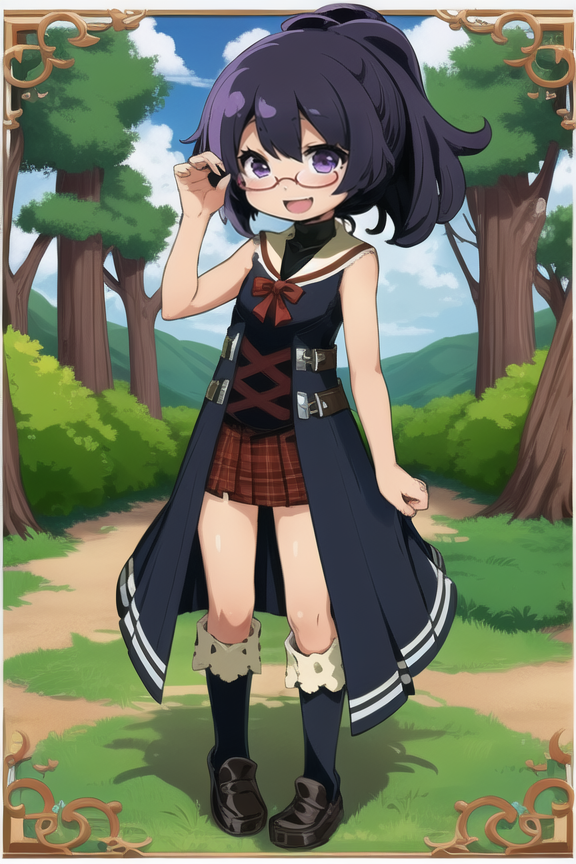
By yours truly, The Other LoRA Rentry Guy.
This is not a how to install guide, it is a guide about how to improve your results, describe what options do, and hints on how to train characters using bad or few images.
All these experiments have been carried with a rather average 1070. But training...
finite creek
ashen perch
At first, I tried to do based on this guide
https://rentry.org/59xed3#regulariza...
Great article on Training 👍🏻
ashen perch
sly leaf
So how does regularization work when it comes to LORA training (using kohya_ss)
...
Ok, so it has to be named something like 1_person, where 1 is number of repeats and person is class token if I understood correctly
 slate ledge
Has anybody finetuned SD to generate synthetic training data for other downstream models? For example, for scene classification or image captioning tasks?
pure plume
can i convert a 1.5 lora to 2.1 lora?
hexed bloom
pure plume
can i convert a 1.5 lora to 2.1 lora?

 zinc palm
pure plume
can i convert a 1.5 lora to 2.1 lora?
zinc palm
pure plume
can i convert a 1.5 lora to 2.1 lora?
what's lora? a model training technique?
 coarse crest
zinc palm
what's lora? a model training technique?
coarse crest
zinc palm
what's lora? a model training technique?
Low-Rank Adaptation. Basically a faster, more compact alternative to fine-tuning, which only trains small (injected) extra layers instead of the full model
https://github.com/cloneofsimo/lora https://github.com/kohya-ss/sd-scripts https://huggingface.co/blog/lora
some example implementations for SD
with the second one being the most common in the wild, afaik.
 digital willow
what is the best tutorial for starting with Lora training? (my tests failed, probably cause the input images were not good enough)
pure plume
people who uses Kohya SS, do you use the blip for tagging or an external tool?
finite creek
If anybody manages to train a Lora in Kohya let me know, doesn’t work for me at the moment.
 jolly lagoon
pure plume
people who uses Kohya SS, do you use the blip for tagging or an external tool?
jolly lagoon
pure plume
people who uses Kohya SS, do you use the blip for tagging or an external tool?
I use blip + the wd tagger then I manually look through them to remove any false tags/clean it up. All the auto captioners will add some crap tags in there.
 summer oriole
For those of you who manually review and tag images, Here's a free little Windows app that helps you easily go through and tag/describe/edit descriptions for those images in .txt files. https://brycebeattie.com/pages/taggist.html
Taggist - Free Windows software for making tag/description files for images | BryceBeattie.com
 lost idol
does anyone know why it is harder to train likeness on 2.1 than 1.5? training an embedding of a person, or rather a robot rn.
 primal copper
I implemented a new fine-tuning method called (IA)^3 for Stable Diffusion: https://github.com/tripplyons/sd-ia3
GitHub
(IA)^3 for Stable Diffusion. Contribute to tripplyons/sd-ia3 development by creating an account on GitHub.
 sharp solstice
has anyone experimented with automated finetuning of a 2.x model on a 1.x model?
the obvious manual way is to just generate a bunch of images from the 1.x model and use them to finetune a 2.x model maybe with the prompt that was used
spice hinge
Hello, I have 5k images and each one with a txt, how can I train SD?
Sorry I am noob :'c
ashen perch
I'm trying to train Lora with kohya_ss and I keep running out of VRAM.
Only 50MB is used before I start the training and I know 8GB is enough, because I've trained with the same settings and same images before. All of them are 512x512. I'm using v1.5 with gradient checkpointing and memory efficient attention turned on and cache latent turned off

Any suggestions?
 icy canyon
Has anyone found a way to make sd consistently leave blank space in parts of the image?
I’d like to add my own text, but it usually looks messy when I just put it over a busy image
 paper holly
icy canyon
Has anyone found a way to make sd consistently leave blank space in parts of the...
paper holly
icy canyon
Has anyone found a way to make sd consistently leave blank space in parts of the...
maybe inpaint some blank space instead?
icy canyon
paper holly
maybe inpaint some blank space instead?
Do you know any prompts that give blank space? When I do inpainting it distorts whatever was behind or next to the mask. The prompts I’ve tried are: empty double quote, the same prompt as the original image, “blank”, the color I want to to add, and some bland scenery like “barren hill”
 upper wasp
Looking for someone interested in helping me with a paid POC project. Please DM me if interested.
vast dome
IS TRAINING done in order? if I stop at 20% ALWAYS,do I not train the last 80% always?
royal island
Should it be possible to train attributes of a thing as opposed to the actual thing? For example, say I wanted to create an embedding or a lora for puckered lips. Could I take a bunch of pictures of closeup pictures of my puckered lips, do a training, and then generate any character doing that? If that should be possible would I want to train just different angles of one persons mouth doing that or would I get several people to do it and preprocess all of those images into the same training set?
hexed bloom
lost idol
does anyone know why it is harder to train likeness on 2.1 than 1.5? training an...
It really shouldn't be, just make sure you have enough data
 forest yew
Is there any advice for LoRA training someone might have? I have been trying it out trying to train on a person and it "burns" very quickly so I have been halving the learning rate repeatedly but now it only picks up very general features. I found this happens with the TI training I attempted on the same dataset so I am wondering if there might be an underlying reason (it is already very familiar with the face structure perhaps)?
 tribal frigate
Whats the reasonable minimum of pictures to train your own model? I tried to briefly google it but most articles talk about training an embedding so that's quite different i imagine
 cold wyvern
tribal frigate
Whats the reasonable minimum of pictures to train your own model? I tried to bri...
cold wyvern
tribal frigate
Whats the reasonable minimum of pictures to train your own model? I tried to bri...
You mean training from scratch or finetuning??
tribal frigate
cold wyvern
You mean training from scratch or finetuning??
i dont know whats the difference in the results honestly. like i understand it's gonna be a huge difference in terms of datasets but dont know the rest
cold wyvern
Well you generally need 5-20 images for each token you want to train, a finetune will only train a couple of tokens whereas from scratch youd be trying to train most/all tokens (49408)
tribal frigate
49k, holy hell 🙂 do you know where i can read up on this a little bit? tokens and stuff? i wanted to eventually put together a dataset for my own model but 49k doesnt seem realistic. i was hoping for something like 2k images
my motivation was to get an amalgamation of styles but with high quality images only and see what it will spit out
cold wyvern
So the list of tokens is the vocab.json file, never tried doing a multi concept finetune though. I would suspect captions would be very important for it
tribal frigate
ah, thanks. and where exactly should that be located? i dont see it anywhere and the look up function didnt find it either
this one will probably do the job, right? https://huggingface.co/stabilityai/stable-diffusion-2/tree/main/tokenizer

hmm, that actually looks like HTML code for a website. not sure its the right file
unique cloak
tribal frigate
my motivation was to get an amalgamation of styles but with high quality images ...
for styles, I would indicate around 50 to 200 pictures per style, very diversified in the subjects and settings they present
If you want to go for multi concept, it's all good but it's a little harder. You'd better start by "calibrating" all your concepts, aka training them on their own, to have a working dataset, before merging the datasets into one big dataset.
You'll need to balance the sizes of the datasets for the trainings to globally be readdy on the same total number of epochs in this callibration.
I did a guide on finetuning, but it doesn't specifically explain the full fine tune. I do spend quite a lot of words on the dataset making part of the equation, whatever your training goal is
GitHub
This is a guide that presents how Fine tuning Stable diffusion's models work. This is an entry level guide for newcomers, but also establishes most of the concepts of training in a single p...
tribal frigate
unique cloak
for styles, I would indicate around 50 to 200 pictures per style, very diversifi...
And if you create a data set for a single style like that... will it be able to extrapolate the style on stuff it hasn't seen in your data set? Lets say that you wouldnt have an astronaut there, will it be able to make an astronaut in your style?
unique cloak
tribal frigate
And if you create a data set for a single style like that... will it be able to ...
that is where the "very diversified in the subjects and settings they present" part matters.
If you give it enough different types of subjects, then yes, it manages to extrapolate to new things
this is a single style one I did : https://civitai.com/models/1158/mosaic-art

This is a Dreamboothed Stable Diffusion model trained on pictures of mosaic art. The total dataset is made of 46 pictures, and the training has bee...
you can check the dataset
I tried to present lots of types of things that I wanted to be able to prompt for
it was on the low side, 46
tribal frigate
will do, thank you 🙂
unique cloak
still worked correctly, like there is no Morgan Freeman or Woopy Goldbergs in my dataset
cold wyvern
I've taken 20 of the best photorealism images from CivitAI and am training a LoRA on that, will be interesting to see how it goes, given several of them aren't that sharp and so have blurry added to the caption...
How many it/s do you get when training @unique cloak
unique cloak
around 30 to 40 img/s, depending on the settings I use, for 1.5
img/s not it/s, it completly depends on the batch size
and also quite depends on the size you use
(I need to recheck, this seems too high)
nah
10 times less
cold wyvern
yeah I'm getting 2.5s/step
 finite creek
unique cloak
and also quite depends on the size you use
finite creek
unique cloak
and also quite depends on the size you use
Very nice guide you wrote Guizmus. Does the batch size affect the quality of the trained model?
Or just the speed for training ?
unique cloak
finite creek
Or just the speed for training ?
it affects VRAM, speed and quality
VRAM shoots a little higher with it each time you increase it
Speed goes up but can feel the contrary at first : each iteration is now a batch of multiple pictures, and each iteration takes longer because of it. but you need less iterations per epochs. In the end, it's a global speed up, even if not as major as what you get when making pictures and using batch size.
Lastly, quality. From my tests and the ones from a few friends, it's a net positive in there too, even if it has diminishing returns as you grow it even higher (back size 2 is usually quite better than batch size 1, but you get lower improvements on batch size 3 and up).
The last thing I see corelated to batch size is aspect ratio. Multiple tools out there now let you train on different aspect ratios at once, no need to crop squares. But even so, they can't batch different ratios of pictures in the same batch.
finite creek
unique cloak
it affects VRAM, speed and quality
VRAM shoots a little higher with it each time...
Thank you for your message Guizmus. Ah True, hadn’t thought about the different aspect ratios!
 fading kindle
I've spent some time fine tuning stable-diffusion 2 and stable diffusion 1.5 (base model). I'm looking into fine tuning https://huggingface.co/stabilityai/stable-diffusion-2-inpainting Are there any special considerations I need to make here? I read the model card and I was wondering if training using the diffusers fine tune script with a different set of images will interfere with the model in a destructive way (I doubt it, but I have not looked too much into how the mask conditioning is implemented in inpainting models, is it similar to the design of any other conditioning like depth-conditioned diffusion?)
 cold wyvern
I thought the idea with inpainting was to finetune the main model then do a A + (B - C) merge where A is the inpaint model, B is your finetune and C is the base model
 wicked horizon
hello @everyone,I need to develop a "background diffusion model" that generates various background and angle images based on prompts while keeping the product in the uploaded image unchanged. If you are interested in exploring and developing in this area, please message me privately. There will be handsome rewards for this cooperation.
 minor jay
Get your gpus ready to fine tune depp floyd
fading kindle
cold wyvern
I thought the idea with inpainting was to finetune the main model then do a A + ...
What do you mean by that? Did you read that somewhere? Without context this is hard for me to understand - wouldn't A + (B - C) not result in strange output in latent space (I'm assuming this is in latent space)
cold wyvern
fading kindle
What do you mean by that? Did you read that somewhere? Without context this is h...
Search on reddit for make inpainting model and theres a full instruction guide on how to do it
hot breach
finite creek
Very nice guide you wrote Guizmus. Does the batch size affect the quality of the...
some users reported having issues with training a lot of subjects with a vey large batch size, like 15-20+ on A100s, less differentiation, but take it with a grain of salt as there are many variables, tbh most people dont need to be training on A100s anyway as a 3090 is far more cost effective to rent if you are renting
you may need to bump learning rate up slightly with larger batch
 spice sentinel
Context: Trying to fine tune icons of AWS services. Dataset with ~30 different icon concept, each with 15 images 770px square. So far in my 770px, the icon is about 50px in size, so I just move it around for variation. Should my captions be "icon lambda right", "icon lambda left" ?
Below is my result with 12 epochs of ~450 images with 30 concepts, lr 2e-06, GAS 2, Batch size 5
 unique cloak
I see, but if there is only 1 type of Lambda icon, all the 3 training samples will be all the same, just translated around? So far in my 770px, the icon is about 50px in size, so I just move it around for variation. Should my captions be "icon lambda right", "icon lambda left" ?
only 1 icon is plenty enough.
Just look at my "SDArt models". I train each token on only 1 picture in the dataset, and it does great at doing variations of that picture
example base pic
and variations : #1094265318483972096 message
 unique cloak
spice sentinel
Context: Trying to fine tune icons of AWS services. Dataset with ~30 different i...
unique cloak
spice sentinel
Context: Trying to fine tune icons of AWS services. Dataset with ~30 different i...
you are targetting that specific shape of icon, with the kind of folder/tab look in all your pics ?
can you show a small screenshot of the dataset so I can get it better ?
spice sentinel
Here they are. The manifest JSON, the folder structure, the files inside folder, and 2 samples of the dataset for lambda category


 unique cloak
wait, so you have this same lambda icon just moving around ?
first, the icon is a lot too small, it should take the whole picture, not move around
second, this is not variation
to DB, this is the exact same picture
you are burning the concept in
at most, you are training a model on positionning an icon into the frame there
what types of output do you want the model to have ?
new types of lambda ? or lambdas positionned in other places ?
spice sentinel
I see. The expected output is also a small icon (50 px in 768 px image). That is the first stage. I plan to fine tune it further to use those concepts in a more complex concept such as this one below
 unique cloak
I don't think SD is the right tool for this :/
You will have a very hard time training the icons for a start, because SD isn't a database that stores pictures, it understands how they are made and try to make things in the same way, not reproduce
and controling such lines will also be impossible
prompts won't let you do this, controlnet will, and it will require that you almost draw the full output first, making it useless
I think training isn't the way to go there
spice sentinel
Yeah I doubt that from get go, but wanted to challenge it hehe
Thanks Guizmus. But say if I change the use case to produce a different type of Lambda icon, that would be possible ya? I should use the full 770px rather than 50 px icon?
unique cloak
you can totaly train a model to generate "new AWS icons", training in the style itself.
The model would understand that the icons are always square, always 1 single gradiant of color, and a hollow shape in white inside
You would train on pictures of the icon in full 768x768 (the exact size you should use)
You would caption them "AWSicon lambda orange" for example, and have only 1 of each. A total of 30 different icons with different colors captionned like that should already do a good model
This model would be able to make for example "AWSicon horse purple"
spice sentinel
Amazing advice. That would be fun too. Thank you.
What about using the concepts in "a photo" kind of prompt. For example "a photo of AWSicon lambda crafted in 3D on mountain surface". Will that work?
unique cloak
spice sentinel
Amazing advice. That would be fun too. Thank you.
What about using the concepts...
you would need to :
-either train it on some example pictures of "crafted in 3D" because I don't think the model would understand this concept
- or just use controlnet but yeah. no need for training there. Examples I did on a logo :


 spice sentinel
Yeah, I was looking at the controlnet while waiting for your reply 🙂 Seems like it tries to lock some part of the model (still trying to comprehend it).
Alright, let me do some experimentation. Thank you so much for your help today @unique cloak
unique cloak
this one was my best
 spice sentinel
unique cloak
this one was my best
spice sentinel
unique cloak
this one was my best
That is amazing
 dry jetty
does anyone know how to train a LoRA?
cold wyvern
dry jetty
does anyone know how to train a LoRA?
The AItrepeneur videos on youtube are good for learning how to do that
dry jetty
I saw and trained a LoRA but when I use it my color of the generated is blown out
cold wyvern
have you tried using the lora at a lower weight - I found the loras I made worked best at around 0.3
 atomic phoenix
I have a question about training LoRa (or dreambooth, it all depends on what hardware I can acquire). I've trained models on a certain face, to produce "avatars" in that face's likeness. Now, for a project, I'd like to train a model to produce pictures in a signature style. Let's say I want to train a model to produce only pictures that look like they're stills from the Simpsons. I take 30 shots of the style I want to use, with many different subjects, backgrounds and such. How do I tag those datasets to capture "the style"?
And for classification pictures, I'll generate 1000-1500 images with then "Scene from the simpsons" or something?
Is there a model/checkpoint that works well with animated cartoon imagery?
unique cloak
The dreambooth extension seems to generate a bunch of class images based on the captions, then use those to train against my images (22 pictures of my face)
after training completes, I try to generate some output and I get this
so, the class image, it's normal. it won't do it again as long as you don't change your class prompt, but it's also something you can remove completly by removing "prior preservation". this is regularisation data that is there to help on bigger training, but I don't think you need it
I don't know what you were training, so this example pic doesn't tell me anything
can you show me a screenshot of your 22 pictures dataset, so I can see a little what we are working with ?
dry jetty
cold wyvern
have you tried using the lora at a lower weight - I found the loras I made worke...
If I lower the weight my face becomes less recognizable, I think I need to train another one with better photos
 rare belfry
when fine-tunning a model on a face it is recommended to have 15/20 pictures maximum, why there is a limit ?
usually when training a model the more data the better
unique cloak
rare belfry
when fine-tunning a model on a face it is recommended to have 15/20 pictures max...
there isn't really a limit, you can train on more if you like, but this won't bring a better quality model. Instead, you risk :
- to have some details of the face be trained faster/better than others, making an inconsistent final result.
- to create more bias potential from any repeating feature outside of the face
- to deteriorate more the rest of the model, needing to train more because of the number of pictures
1 picture is already a lot for the AI, and more isn't better in the case of a dataset.
More if it's too close to what was already in the dataset is detrimental on all sides.
 cursive grotto
Hey, I'm looking to finetune SD for a use case involving generating realistic human faces. I'm planning to use everydream2 for this. I'm trying to keep it restricted to male faces for now.
I have used civitai checkpoints from AnalogDiffusion, AnalogMadness, and a few others. I want to create something of that quality in terms of realisitc faces, skin, eyes, and hair.
What could be the size of data set I would need? Should I crete separate data sets for faces, eyes, skin, etc or just bust up images of real people with good prompts will do? HOw many images are we looking at roughly?
unique cloak
cursive grotto
Hey, I'm looking to finetune SD for a use case involving generating realistic hu...
Those seem trained as a style, so I would say around 100 to 200 very high quality photo of this style. But I also encourage you to reach out to people that made those models : photorealistic is quite its own category, and people are really expecting top quality in there. @rapid swallow if you got one second one of those days 😉
cursive grotto
unique cloak
Those seem trained as a style, so I would say around 100 to 200 very high qualit...
Thanks man. Will DM @rapid swallow and check if he got one second 😉
 rapid swallow
cursive grotto
Thanks man. Will DM <@259757918927192075> and check if he got one second 😉
rapid swallow
cursive grotto
Thanks man. Will DM <@259757918927192075> and check if he got one second 😉
On mobile right now, but heres a copy/paste of another comment I made that has the training info I used for Analog:
For Analog Diffusion I used around 110 images. My quick count has it at 30% closeup-medium, 25% medium-full, and the other 45% as non-people or images where no face is visible (such as silhouetted or facing away). It was trained with prior preservation, 1500 class images made with the prompt "photograph", LR of 1e-6 with polynomial scheduler to 10k steps, and trained at 512x512.
Since I did Dreambooth class training, no captioning done for the dataset.
cursive grotto
rapid swallow
On mobile right now, but heres a copy/paste of another comment I made that has t...
Thanks, that is super helpful starting point
cursive grotto
rapid swallow
On mobile right now, but heres a copy/paste of another comment I made that has t...
a few doubts on this
- why did you need majority of photos with no face visible ? how does that help in improving realism?
- when your prompt is just "photograph" for the class image, wouldnt that also produce images of random photographs and not just people, diluting the regularization process?
unique cloak
not sure about 1. but for 2. :
using only "photograph" token as prompt is quite strong to train this token strongly. it won't train on other tokens, and it will try to find the common factor of all those photos : the fact that they are analogic photos.
Adding more tokens to your caption will slow the training, and won't help the style be captured.
The only downside of this method is, you got to be sure to have a very varied dataset, with a mix of all types of subjects, even no subjects at all. So no single subject gets really trained, only the style gets
 oak hamlet
hi, I want to ask if i use the photo generated by stable diffusion to train Lora (with similar face but not the same face) and then i use this lora to generate photo with weight 1.0 will i get a consistent face which is the mixture of the photo i used or how
for example, I use 10 Jisoo photos and 10 Lisa photos to train Lora, then use this Lora with weight 1.0, will I get a consistent face that is half Jisoo half lisa or will it just sometime look like Jisoo and sometime look like Lisa
rapid swallow
cursive grotto
a few doubts on this
1. why did you need majority of photos with no face visible...
You can have your doubts 🙂
rapid swallow
oak hamlet
for example, I use 10 Jisoo photos and 10 Lisa photos to train Lora, then use t...
In my experiments, such a thing would do sometimes like Jisoo and sometimes like Lisa.
oak hamlet
rapid swallow
In my experiments, such a thing would do sometimes like Jisoo and sometimes like...
thanks for your help. it help me a lot
rapid swallow
cursive grotto
a few doubts on this
1. why did you need majority of photos with no face visible...
A second response:
Analog was not intended to be only for portraits. Thats why I made my model Portrait+ for that purpose.
That should answer both 1 and 2
oak hamlet
rapid swallow
In my experiments, such a thing would do sometimes like Jisoo and sometimes like...
btw, I want to ask that is there a way to ensure a consistent face with half Jisoo half Lisa
 stiff dust
oak hamlet
btw, I want to ask that is there a way to ensure a consistent face with half Jis...
stiff dust
oak hamlet
btw, I want to ask that is there a way to ensure a consistent face with half Jis...
I would train textual inversion for both separately and then merge both token embeddings. Sometimes this works great, but not always
Hi,
I want to use SD to create images of characters from my DnD group. While not all results are bad so far, I still struggle a little bit. My current strategy is to first use textual inversion on a single picture, then create multiple good pictures of the character with heavy prompt refinment. So far so good. Now I would like the model to remember the face of the character based on these 5-10 example images, such that I can easier create new images of the same character without all the inpainting and prompt refinement.
My plan was to use textual inversion and then LORA. However, I am never really happy with the results. They seem heavily overfitted (like it has problems showing the character in other poses than from the examples). The strange thing is, that overfitting seem to happen even with textual inversion alone. If I train the images with TI it can create relatively good images, but they all look similar to each other and they are completely unable to transfer new styles to the same character. Like if I use a prompt for anime characters, I still get the same result as when I ask for a photorealistic image. What I find strange is that this does not happen when I train TI on photos of my own face. There it is perfectly able to transfer my face to completely different styles and settings. Why is it overfitting on articial AI generated images so much, but not on real photos?
stiff dust
in general I have the feeling that using e.g. only one token for TI leads to characters which generalize much better, but which are often broken. You see that TI tries to place the token between different concepts and then randomly add artefacts from one of these concepts. For example, one character has a blond braid, so sometimes a women appears in the images, probably because his token is somewhat shifted to women with braids. If I use many tokens (like 3) for TI, then overfitting occurs and it seems to memoize too much.
Any recommendations for the number of tokens and number of steps for training TI on digital faces (not real photos)?
dapper prism
Are there any tricks to training LoRAs on small datasets?
sonic narwhal
dapper prism
Are there any tricks to training LoRAs on small datasets?
also wondering about this
hot breach
thanks @rigid sorrel for running test trainings, his results from "min-SNR" technique, seems like not much going on

this is using kohya's implementation hacked into everydream2
 rigid sorrel
7.5k high resolution portrait photographs on top of SD 1.5. gray line is a SNR 5, blue line is SNR off.
 forest yew
I've tried Aitrepreneur and TheAlly's LoRA training guides and neither of them really gave me consistent results. When the Lora did hit, it was very good, but it's about.. maybe 1 or 2 in 12 images which had good results.
 stuck cedar
Hello everyone. I'm trying to generate photo realistic images of individuals using 10-15 photos of them. Even though I've been training them using dreambooth, there's a problem with the end product not quite looking like the original test subject when the generation is done, but instead looks like a different person that has similar features as the original test subject. This problem is particularly present for women. I've been mainly using realistic vision 2.0 for this task, but also tried 1.5 pruned. Do you have any advice on what I can do to make the final generated images the same as the test subjects? Perhaps there is a better model I can train on?
wicked horizon
stuck cedar
Hello everyone. I'm trying to generate photo realistic images of individuals usi...
This is an interesting and useful function,hope you can train well soon. after you done,we can cooperate for this model
 serene flicker
I'm thinking about trying training agian tonight, I haven't trained in a very long time due to xformers issues. Maybe this new fork of the webui I have will work because it has different optimizers.
It's basically for concept art geared towards game developers like myself. I am thinking about training on dreamshaperv5 but I have trained every previous embedding of mine on the base 1.5 model. But I do know dreamshaper is already pretty good at concept art so that's why I wanted to do it.
unique cloak
Anyone knows of a way to analyze your caption ?
I want to see what words I may have overused, what is trained enough and what could need a change.
I would need to dump my file names in some way and analyze the words, but somebody may have encountered this problematic already ?
stiff dust
you could visualize the cross attention maps
very manual way of inspecting the prompt, though
unique cloak
I'm not sure how I would go about that, but I was looking for a pre-training way to see, and update some words on some pictures to "balance" the concept out.
In the past, I worked with shorter captions, but here for example, I'd love to know how many time I use "picture" or "photo" for example, or "anime". I'm targeting a multi style model with quite some concepts.
I have a good idea of some main themes balance, but the inner details, the hard truth of statistics... I don't have for now
cold wyvern
Some sort of script to collate the captions and then count each word in em?
unique cloak
I think I'll ask chatGPT for a little script, this seems like a "simple enough" task
famous last words
cold wyvern
powershell should be able to sort that pretty easy
stiff dust
or just a few lines python 🤷♂️
 radiant lake
I think im ditching lora and going back to dreambooth....what yall think?
dreambooth: https://gist.github.com/basicfeatures/58966f44b6d2430f55867e85d5f6370b
lora: https://gist.github.com/basicfeatures/bb843f73d7c7247514ee4ea6f4cfe469
radiant lake
cold wyvern
Some sort of script to collate the captions and then count each word in em?
ruby ❤️
ruby's like python's younger sibling, simpler, prettier syntax... but still the same thing basically
(please keep me posted if forking my scripts and making improvements)
got a lotta crazy plans for it still 😄
stiff dust
I also like ruby much more than python 😉 I just thought it's more likely Guizmus has python installed already
I like Lora conceptionally more than Dreambooth and several papers also suggest that it is much better suited for fine-tuning
unique cloak
stiff dust
I also like ruby much more than python 😉 I just thought it's more likely Guizmu...
yeah I have the python env running and have done some small things in it, it will be the easiest to use. But tbh I was too impatient. Once I finished the dataset, I started training a test on it... x) Thanks for your tips mate, really great to have you around !
Almost done for a first "pass" :p
115/160 [9:56:52<3:57:01]
unique cloak
I'm having nice results. I'm analyzing the tokens now
In the end, I used BulkRenameUtility to be able to copy all file names into the clipboard, notepad++ to replace spaces by \n and excel for the stats
 trim portal
Hey folks. My name is Vatsal. I am a Computer Science student. I have received a research fellowship in deep learning and a data science internship at a top vc backed startup. I’m currently doing ML research at Stanford.
I am looking for people with experience fine tuning stable diffusion for Text2Image with excellent results. I have a custom dataset with image-caption pairs that I built readily available so a decent amount of the work is done already. Didn’t have time to do proper fine-tuning cause I was so busy.
I am really looking for anyone with significant experience fine tuning stable diffusion that can help me wrap up this project with good results.
Ideally we would also package the product and ship it as a web app.
 neat grove
what's the current state of the art for finetuning for drawing style (cartoon)?
I'm totally out of the loop on finetuning. I want to finetune to match a particular cartoonist's style. What should I look at?
 stone garden
Hey there, can someone be able to help me in VC? I want to create a LORA model of myself but don't know how to do it. Can someone help me?
stone garden
yea
unique cloak
but not try to ping 150k people
unique cloak
yeah I get it. but still man, you can't just ping the whole server on a size like this. it gets captured by the bot for one, but also you get reprimanded for it
there are lots of people that do LoRA, and you'll get some help, but VC channel aren't a lot used around here. it's mostly text and it will take some hours
stone garden
ok
@dense ravine I am currently using Vladmandic/Automatic
This is what I see.

I am not sure how to create one
can someone help?
 void osprey
Hello guys... I don't know much about training image data on stable diffusion to generate your own style of images. I know you need a bunch of the type of image you want to train the model on. Now, quick question. can you train a model on timelapse video of yourself drawing? I suppose the video with have a more detailed approach as to how the final result will come out...
cold wyvern
@unique cloak - maybe one needs to find the best Nerdy Rodent/olivio sarakas/aitrepeneur videos on TI/Lora making and pin them
stiff dust
stone garden
I am not sure how to create one
There are several command line scripts, but I think there is no UI
hexed bloom
`Anyone know if bucketing sizes were changed?
I noticed on the latest branch I'm getting 1080 max bucketing size at 768, but on an older build I'm getting 768 max
hexed bloom
 hexed bloom
I figured it out, they did change bucketing a bit ago
 ashen summit
hi, i heard there was a "stable diffusion training labs" discord, but i can't find a link anywhere. Was it referring to these channels or can someone DM me the link?
 neat oxide
Can anyone help me my Lora models keep coming out overbaked...
upper wasp
Anyone with experience in fine tuning models ....i have a good dataset....please DM me to discuss.
unique cloak
neat oxide
Can anyone help me my Lora models keep coming out overbaked...
usually this comes from too few pictures, or training for too long, or both. on default settings, usually, 100 steps per picture in the dataset is largely enough for any lora.
Hey wayne :p
neat oxide
unique cloak
usually this comes from too few pictures, or training for too long, or both. on ...
got 27 simages
but other people said its because its similar photos my issue is im trying to train a pose
stiff dust
what do you use as rank?
neat oxide
so it kinda has to be all the same
unique cloak
similar photos will sure create a burn quite fast
stiff dust
in general, many people just stay with overtrained Lora and instead reduce the weight at inference
training a pose sounds like Textual Inversion would be better suited for that...?
or directly using control net
unique cloak
that's an option too yeah.
when using the lora, you can reduce weight with this syntax :
a picture of a sks house lora:sks:0.8
stiff dust
do you just want to train the pose or also the person which does the pose?
hexed bloom
On the latest dreambooth version, when training the models (safetensors/ckpts) being generated, are identical to the model it was trained on. I have to manually convert diffusers to safetensors/ckpts for them to work. Anyone else experiencing this?
[+] xformers version 0.0.18 installed.
[+] torch version 2.0.0+cu118 installed.
[+] torchvision version 0.15.1+cu118 installed.
[+] accelerate version 0.18.0 installed.
[+] diffusers version 0.14.0 installed.
[+] transformers version 4.26.1 installed.
[+] bitsandbytes version 0.35.4 installed.
hi, I change the people in the photo by using inpaint. However, it is obvious that the photo is made by AI as the people generated is not merge with the background(maybe due to the color or shadow). is there any method to make the image more natural
I try to put the photo generated to img2img again to reduce denoise strength to help merging but it will affect the background of the photo
neat oxide
stiff dust
do you just want to train the pose or also the person which does the pose?
just a pose the thing is
my lora works perfectly fine
but someone in the comments complained that its overbaked at 0.8
in reality its really different depending on the model you use
but i think this is a good example of when not to listen to people sometimes
stiff dust
oh, you should use it with the same model you used for training
neat oxide

ATTENTION THIS IS IMPORTANT!!!! DUE TO HOW THE FILES WERE STRUCTURED MAKE SURE YOU PUT "FULL BODY" IN THE PROMPT FOR THE BEST RESULTS! THIS MODEL W...
if u look here
youll see my lora actually works for all kinds of models
including dreamshaper
so genuinely i just think i drove myself crazy over 1 comment 😅
stiff dust
it's will work, but not that good
I just don't get it. Your "pose" is a full body shot?
neat oxide
its the general vtuber model pose
stiff dust
I have no clue what that is 😅
neat oxide
oh so like
people take 2d images of anime girls that look like this

symmetrical or non symmetrical
they rig them up with live 2d
and then well u become a vtuber

负责了冰淇柠QAQ虚拟形象的Live2D制作
冰淇柠QAQさんのLive2Dモデル制作を担当させて頂きました
#Live2D #Vtuber
冰淇柠QAQ
https://space.bilibili.com/599254182
Illust: MonGarit
https://twitter.com/MG_down
https://www.pixiv.net/users/2868852
Modelling: 小川尚未
stiff dust
guess I'm too old for that 😂
Anyways, keep in mind that you can achieve such stuff probably with Textual Inversion, too. Somehow I think Lora is the wrong tool here
but I might be wrong 🤷♂️
neat oxide
i know very little about training so yeah youre probably right but i have no idea how to do textual inversion
stiff dust
which tool do you use? Automatic111?
neat oxide
kohya gui
stiff dust
okay, I don't know that one 😅 usually textual inversion is implemented everywhere, as it's the most basic variant of model training


 restive plank
neat oxide
no idea what to put here
restive plank
neat oxide
no idea what to put here
I followed https://youtu.be/70H03cv57-o, and he has a couple .json's that will fill all that in
LORA is a fantastic and pretty recent way of training a subject using your own images for stable diffusion. Say goodbye to expensive VRAM requirements and hello to this innovative new way of fine-tuning! In this video I will show you how to train a LORA weight using the kohya ss GUI with less than 7GB of VRAM and how you can then use those LORA ...
neat oxide
yeah that tutorial is outdated
i actually had to figure it all out myself
cuz following it it didnt work
other people in the comments section also didnt work for them
restive plank
Ah, I see now you're doing TI; it works for LoRA, but I haven't tried Kohya for TI.
stiff dust
no, what you showed is Dreambooth + TI
TI is more or less the first step for all sort of trainings. So when you do lora you do TI, too. The point is, you probably don't need the lora part at all but just the TI step
but it looks like the kohya tool is a tool for training
you probably use another tool for creating the images
most likely the automatic111 webui
and TI is in there if you go to the train tab in the webui
its called "embeddings" sometimes
unique cloak
@obtuse fern
let's not spam the "contest" channel with training talk
Usually for a single subject, 10-15 is the recommendation. 20 is quite all right too, as long as they keep diversified
 obtuse fern
I use fast-dreambooth colab and dont sure about "UNet-training-steps" part generally I do 100 per image. Is it oke
unique cloak
it's the tip I would have given, if you keep most other params standard
in particular "learning rate" can influence this quite a bit, but on defaults, this seems the good way to go
obtuse fern
thanx a lot
 tall condor
so i am trying to train a model and im not clear on a couple things. first of all im using automatic1111 dreambooth training. my first question is how is the correlation between learning rate and number of training steps per image class?
i have like 1000 images in several different folders (50-150 each) and i tried training them around 200-500 steps in 1 epoch
my main question is how do i have to create the folder cations for the model to be propper
and how do i tokenize the captions? is there a description on how to structure the caption for training a model like this where the folders kind of are cross dependent?
unique cloak
hey again 🙂
first of all, this is a very complicated project you are presenting here, compared to most first time trainings.
tall condor
i know sorry
unique cloak
how is the correlation between learning rate and number of training steps per image class?
Learning rate is how much your model will get trained per step. So the impact of it will depend on how many steps you are doing
Each step, you train on 1 or more pictures, depending on the "batch size" and the "Gradiant accumulation step" you are using (sorry it's complicated)
Usually, I tip to train for 100 step per picture in the dataset, total, so more around 100k steps than 500 in your case
this is a training that will take around 20 hours on a RTX3090TI by the way
and that is if you get it right the first time
about complicated captions that would go cross folders, and such big datasets, my second tip would be to use a dedicated training tool, and not automatic.
But to stay in automatic, you can just caption all your pictures in a text file, next to each picture. The text file should have the same name as the picture, and contain the caption
stiff dust
hi, WHAT do you want to train?
unique cloak
yeah that's a question I should ask there, it seems like you may have some base notions wrong about the good number of pictures to use
tall condor
i am aware that thraining this model will take a while yes, now here is my confusion i also got when googeling. you say train each picture 100 times. i have 1000 images and each is trained if i understand dreambooth auto1111 correctly each pic is trained in my case 200 - 300 times per epoch
resulting in 200-300k steps
stiff dust
there is no common rule for that. I would say number if steps is more important than number of steps per image
200k steps is way too much for most use cases
tall condor
my question is shall each image be trained 100 times an am i training too much? in the internet i found that each image shall be trained 1500 times
stiff dust
it's totally fine training for only one epoch
but that's also depends on what you want to train
if you want to train a concept or style I would say training each image only once is even better
tall condor
another question is if i train 100 times per image is it the same than training 10 times per image in 10 epochs?
stiff dust
yes
from a technical side, having many images and train them as few times as possible is optimal
however, seems like many people have better experiences with training very few images but train them many times
I think it depends on image quality. A few images with bad quality can heavily impact your training. So I would use as many images as you can do proper quality checks on
and for most use cases, train for a few thousand steps is sufficient.
learning rate should be as small ad possible. In Dreambooth I would use something between 1e-6 and 4e-6
tall condor
you say few thousend steps all together or per image
stiff dust
gradient accumulation is, in my opinion, useless. Use higher batch size if you can afford it, but most time the vram is too small for that
all together
but as said, it also depends on what you want to train
but 100k all together is A LOT. Like it makes sense if you want to train a new drawing style or something. If you want to train a single concept it would be too much
I think best is to make validation images and check yourself when the model starts overfitting
do not only use prompts that describe the concept you train for, but also outlier prompts that check if the model still generalizes well
tall condor
im using batches of 6 and that was also my question, in most descriptions i find that batches shall not be more than 2 - why is that
what are outliner promts?
stiff dust
make them as big as you can. It just costs you a lot of memory
tall condor
so its ok to use more than 2?
stiff dust
tall condor
what are outliner promts?
let's say you train a model on anime inages, then regularly check if the model is still able to create photography
stiff dust
tall condor
so its ok to use more than 2?
yes. Higher is better
tall condor
regarding promts, lets say my model is "car" and i have a foder car, car in red, car in red from front with headlights on, and so on. what is a propper way to structure the promt?
shall i use "car" "car,red" "car,red,headlights,font" or shall i sturcture as above
how do i make sure that my model learns "car" but also the concept of "car from front" while still using the "car" model?
stiff dust
I would rather go for complex prompts. If possible, randomize the prompt as much as possible
tall condor
complex promts means an actual description without "," seperator?
tall condor
my idea was to have the "car" model as base and then specialize it with more advanced promts
stiff dust
yes, makes sense
tall condor
i see alot of promts in the internet using seperator but i dont understand how they matter in the promts - what is the difference between "car in red" rather than "car, red"
stiff dust
I think the standard Dreambooth approach is to use something like "sks car"
but I would rather use textual inversion before starting Dreambooth
tall condor
can i do that with auto1111?
i though dreambooth is doing that with the promts i give as folder names
 iron tiger
Sorry to interrupt. Has anyone seen anywhere where Stable Diffusion is used to generate software architecture diagrams, that look like those from excalidraw or draw io? I think it would be pretty useful.
stiff dust
I don't know 😅 I usually write the training scripts myself
check if it's possible, if not just go for "sks car"
tall condor
dreambooth has an instance promt that i set for now to something like"123xyz" do you know why i need that and what it does?
stiff dust
it's unclear anyways which approach is better. Some say that "sks car" does less overfitting than using an embeddings. It's always difficult to decide for the best workflow 🤷♂️
do you have a link to the script?
tall condor
i dont really want to use 123xyz car, i want to use car
GitHub
AUTOMATIC1111 has 35 repositories available. Follow their code on GitHub.
no sec
thats not it
i use kohya_ss
GitHub
Contribute to bmaltais/kohya_ss development by creating an account on GitHub.
stiff dust
tall condor
dreambooth has an instance promt that i set for now to something like"123xyz" do...
rather go for "123xyz car". I know you want to retrain/override the word "car", but that usually end up in overfitting
tall condor
it is overfitting because i train to many times with too high learning rate or why is that?
stiff dust
think of it that way: SD was trained on millions of images about cars. Photographies, comics, digital arts and so on
so it has a very general concept of what a car is
tall condor
also training each image 10 steps in 10 epochs is the same result as training each image 100 steps in 1 epoch?