
#Mattel Electronics Handhelds
32 messages · Page 1 of 1 (latest)
 radiant rain
If you’ve heard of Rockwell International before now, I’d bet it was probably from this, one of the most famous versions of the classic “turbo encabulator” joke about engineering speak:

However, they were a real company who had a significant impact in engineering through multiple fields. Auto Race was entirely designed by them for Mattel, using their own MPU design referred to as the B6000 microcontroller series. (A driver for this processor & game can be found implemented in MAME here, as part of their RW5000 driver:)

GitHub
MAME. Contribute to mamedev/mame development by creating an account on GitHub.
radiant rain
The goal of the game is to pass oncoming traffic and get to the top of the screen without crashing into any of the other cars (dots) on the screen. It is a speed game, with the goal to get to the top of the screen four times as quickly as possible. Every time you bump into a car, you get pushed back a line, and you have a gear shift that causes both you (and the cars around you) to move faster. The timer, however, moves consistently no matter which shifter you’re on.

A look at the first handheld the Mattel Electronics Auto Race, released in 1976.
Make sure to check out Pad and Pixel for deep dives into retro gaming handhelds, videos, pictures, and more. https://padandpixel.com/
Also using the same hardware was a Battlestar Galactica tie-in titled Space Alert:

This one has you firing missiles to destroy incoming enemy fire, which descends from the top of the screen to the bottom.
Your goal is to position your cursor dot & fire it upwards to hit the missiles as they descend.
If you hit a missile, you earn two points - however, the enemy’s missiles move to the left and right to dodge your incoming attack. If they land to the left or right of your ship, you can continue - however, if the missiles hit the center, they’ve hit your ship - and that’s game over:
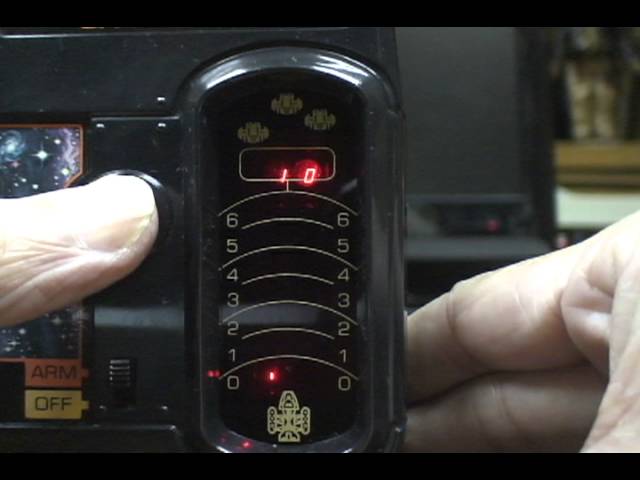
MATTEL ELECTRONICS BATTLESTAR GALACTICA SPACE ALERT retro game 1978
edited by scrumhalf film's 2011
Once the Battlestar Galactica license rights expired for Mattel, they transitioned to calling this one Missile Attack, with a more contemporary war theme:

However, what Mattel Electronics quickly became known for was their sports games, beginning with Football in 1977:
 radiant rain
Here, each run across the screen represents playing through 1 down (you can see your current score, time, & field position with the left 2 buttons, & try for a kick with the K button). (If you’re not too familiar with the rules of American football, a down is a play to advance forward across the field in 10-yard increments - you’ve got 4 tries [downs] to advance forward 10 yards, and if you can’t, the ball goes to the other team. As such, if you’re near the end zone & aren’t able to move, you probably want to kick so that you still get points.)
Similar to the earlier games, you’re dodging around dots to try to get to the other side of the screen, but play resets to the left side when you run into another dot.

The game regularly got re-released over the years, but gameplay is generally the same between Football, Football 1, and the later Classic Football.
radiant rain
That was followed up with Mattel Baseball from 1978:

You press the pitch button to have the pitcher throw the ball, which can go through at various speeds & with occasional curveballs.
Your goal is to time it to hit, or with the wilder balls, let it go past and get a ball. Three strikes, and you’re out, but if you hit it, you can mash the run button to run between bases or get taken out trying.

Mattel Handheld Baseball ⚾️ #Mattel #Conic #Football #basketball #Baseball #Soccer #Handheld #Game #VideoGame #Retro #Throwback #80s #1980s #Tiger #Atari #TouchMe #GymTeacher #Tandy #MLB #Cleveland #Guardians #JoseRamirez
Similar to the previous, this has been regularly cloned in the years since by various other companies. You can even buy direct clones of these today online.
The final Mattel game released using this hardware platform was named Gravity - while first advertised in 1978, it went unreleased until 1980, and is a curved unit based on the simulation of bouncing balls:


Created by a bonified Game Dev Legend, Gravity is one of the strangest electronic games ever released - and wow is it gorgeous!
Retrogames started as the worlds first Retrogaming magazine way back in 1995, filled with reviews and analysis of rare games consoles and hard to find videogames. In 1998 our website became the first place you could b...
From here, Mattel moved away from Rockwell and to their own designs, using microcontrollers from National Semiconductor. These were referred to as COPS or MM57 handhelds:
GitHub
MAME. Contribute to mamedev/mame development by creating an account on GitHub.
This gets to the handheld I first grew up with, which I got as a gift from my great aunt Melinda way back in the day - Mattel Electronics Soccer:
 radiant rain
This game has you controlling a bright red dot for your player, around a field of other dots that move to blockade your approach. When you hit one of the buttons, you fire towards the goal - to get it in, however, you need to maneuver both the goalie & the other players away to get a clear line to the goal.
The resulting game is surprisingly technically complex for the simplicity of the concept, and is much more difficult to maneuver around than it might appear at first glance.
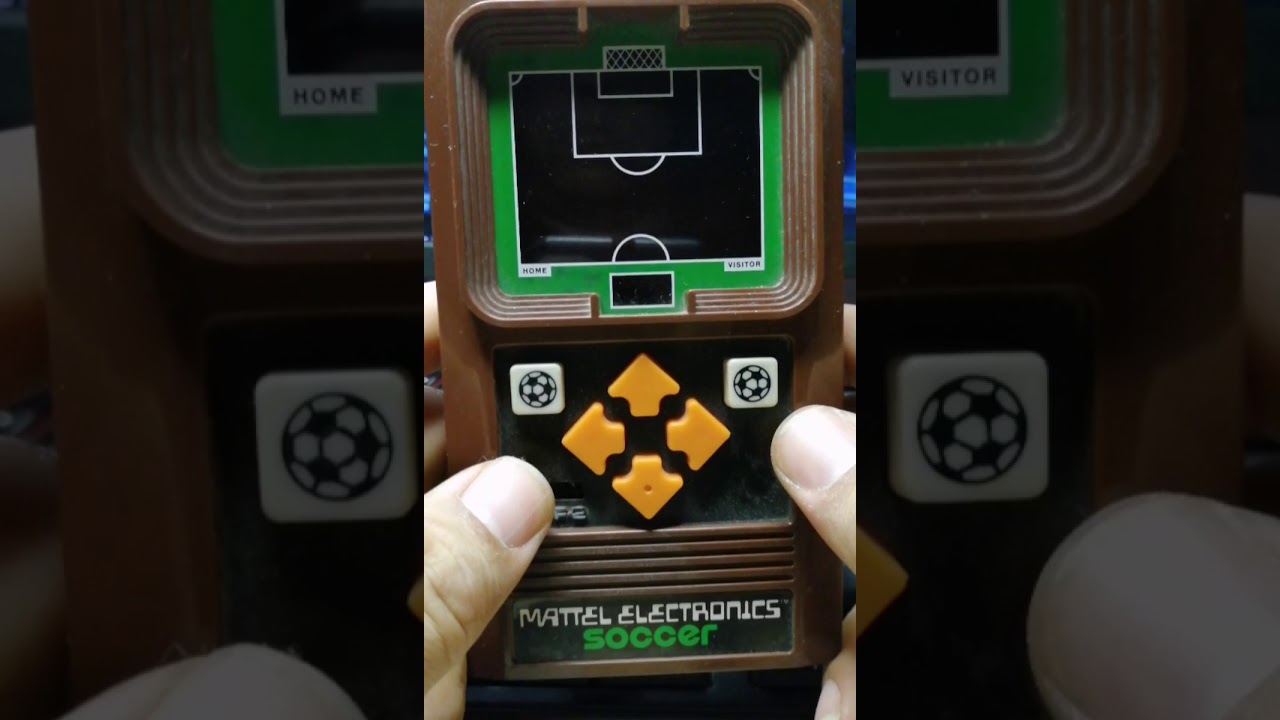
Divertidos en su época y muy épicos en la actualidad, los equipos de video juegos portátiles de Mattel fueron una historia dentro de las consolas portátiles que aun conservan su vigencia.
As such, while I’m sure nostalgia plays a part in it, it’s by far my favorite of these handhelds.
Mattel Basketball is similar, being a variant of the same game with some slightly simplified mechanics:


Mattel Handheld Games || Basketball (1978)