#programming
1 messages · Page 20 of 1
 brazen eagle
Good way to divide by 2
Shift right, and 1
The add four times is doing a shift left by 2
It's not wrong
And this is why premature optimization is bad and you shouldn't do it
The compiler is smarter than you
I should look at how Java does this in bytecode
So I can yell at people to stop trying to optimize code and make the thing readable
 wheat forge
lol
yeah agreed
people shouldn't try optimising something unless they know for sure it'll be slow, and have tested it
I was doing a thing not so long ago where I was trying to optimise some C, spent ages on this one section, then realised it was barely ever called and by focusing on another bit it knocked a lot of time off
brazen eagle
I mean if you have a 50 kHz cpu and 16K memory then by all means optimize
wheat forge
not saying you shouldn't optimise code, but you shouldn't blindly 'optimise' code that may or may not even be the problem
brazen eagle
Even then it'll probably end up worse than before with the added bonus of being unreadable now
People often try to be too clever. I would know I was one of those
wheat forge
yeah
 lilac holly
To write a program that can delete all my files in my downloads linux files should I write this in python? And where do i begin
wheat forge
why would you do that when you can use rm?
brazen eagle
rm -rf /home/name/Downloads/*
wheat forge
^
lilac holly
I want to write my own programs
 stone kayak
not in python, pretty sure I saw someone benchmark it but tbh the python interpreter dues like no optimisation so what can you expect
no I did not :-(
 onyx merlin
I think we did like ((x<<1)+2)>>1
brazen eagle
I mean in JavaScript you'd do npm install isOdd
onyx merlin
 onyx merlin
That was... the whole point
brazen eagle
Coding test?
stone kayak
I have a great write-up on a problem involving bitwise operators on my binarysearch account
brazen eagle
Oh I see
You can try to do it by overflowing the buffer...
Or underflowing those are fun too
 brazen flax
I am trying to make a DIY Wifi Pineapple using OpenWRT and in a captive portal I'm trying to log the captured creds into a file
But am stuck with PHP
I'm following this guide :
https://www.smeegesec.com/2017/03/captive-portal-wifi-phishing-with.html?m=1

As companies and organizations are becoming more aware of security risks and implementing proper protections it can be difficult for pentes...
Any idea how to log them ?
 tribal smelt
but there's a php script there @brazen flax
brazen flax
I tried the one given which saves the credentials, but it doesn't seem to work
tribal smelt
did you have stored.txt in the directory?
brazen flax
Yes. I have tried :
-> creating the file
-> not creating the file
-> change perms
-> other fixes
None helped
tribal smelt
you can dm me if you'd like.
@brazen flax Does the modified date / time of the file change when the script is ran?
And does the file actually get fwrite($file, "Username: " . $username . "\n" . "Password: " . $password . "\n\n"); in it?
wheat forge
 stone kayak
@onyx merlin this is my wacky bitwise operator writeup https://binarysearch.com/problems/Check-Power-of-Two/editorials/3057426
Learn algorithms together on binarysearch. Create a room, invite your friends, and race to finish the problem.

 onyx merlin
It wouldn't let me look so ok


 onyx merlin
bee you're mad
stone kayak
onyx merlin
bee you're mad
I probably can't do that today but I was specifically studying bitwise operators when I wrote that 🤣
wheat forge
it's a pretty obvious solution really
from the definition of a power of two
if you want to go full bitwise n-1 is ~-n
is there any way to submit a solution to that site without having to sign up
brazen flax
tribal smelt
<@!654610191312224266> Does the modified date / time of the file change when the...
I'll have a look at this.
tribal smelt
@brazen flax I'd check to see if anything is even being put in the file as well
lilac holly
im starting to learn javascript, i might learn more tonight.
 sour apex
i'm trying to write a loop to go through a website rabbit hole in bash, how do i declare the response returned as the next request and do it recursively?
should i switch to python?
sour apex
no redirects. the get request for the next request is in the response of the current request
brazen eagle
in plaintext?
sour apex
yes
brazen eagle
might as well use netcat then...
lilac holly
im really bad to hack but can this server help me get bedder
 mystic nimbus
@brazen eagle in your great escape python script, why not just put the ip in the request line instead of defining it as a variable
 true pumice
Easier to change for people viewing the script.
mystic nimbus
I just usually never had separated like that and was wondering
true pumice
I always define it separately, especially if I am going to use the host more than once, allows me to just reference the variable as opposed to getting the user to change a bunch of values.
mystic nimbus
I have had a few scripts in the past where I could have done something similar, learn something new everyday on THM
brazen eagle
I could have added it as a cli param
but since I was reusing the script a few times, I didn't feel like retyping the ip each time
I set the target ip as an env var when doing THM boxes as well, makes writeups a bit easier
lilac holly
Anyone have any recommendations on where to learn c++ practically?
lilac holly
how do i access a link using an proxy
like when i do requests.get(url), i dont want to reveal my ip
i wanna access using a proxy
onyx merlin
Why don't you want to reveal your IP? @lilac holly
lilac holly
someone people told me python is not the best for this tho
lilac holly
onyx merlin
Don't roll your own crypto.
?
i heard free vpns sell ur data, paid ones are paid
onyx merlin
You don't need a VPN usually.
brazen eagle
lilac holly
someone people told me python is not the best for this tho
They are probably correct. But also don't roll your own crypto
As for proxy settings, they should be documented
lilac holly
ok
 clever loom
hey guys im new to programming and i was wondering if it was something i could do and would it be really hard to start hacking to someone new like me
 hexed flax
clever loom
hey guys im new to programming and i was wondering if it was something i could d...
hexed flax
clever loom
hey guys im new to programming and i was wondering if it was something i could d...
of course it's something you could do if you keep practicing!
just like everything
clever loom
cause it looks very hard
onyx merlin
Programming and hacking are somewhat related, but not the same.
brazen eagle
clever loom
cause it looks very hard
I wouldn't say it's easy, but it's managable
 surreal bronze
What do you want to create?
clever loom
like what is something u guys create?
 sharp coral
if you do something repetitively on the computer often then it's worth trying to automate it through a program
I've made a wrapper for nmap because I dont feel like finding ports and having to re-scan in stages and also keep typing in those commands all the time so I made a script to feed it an IP and let it rip, thats a really basic example but the best way to learn is by picking a project and kinda figuring it out as you go along
APIs can give you a lot of fun projects too if you get some dev creds
clever loom
ok
brazen eagle
sharp coral
I've made a wrapper for nmap because I dont feel like finding ports and having t...
I just use RustScan...
but I should go a bit further and automate the scripty bits
surreal bronze
brazen eagle
I just use RustScan...
RustScan is good but it's way more satisfying creating your own 😉
brazen eagle
sure
true pumice
Imo, unless it can be improved upon its a waste of time and energy.
Also depends on what task you’re trying to complete.
 dapper reef
Hello guys, I need some advice/source if possible.
Im having a really harsh relationship with algorithms.
What is "the best" way to learn algorithms. I tried LeetCode, CodeWars, etc.. but not much improvement.
How you guys learned algorithms, how to have a deeper understanding of it?
 magic falcon
Are you talking about understanding algorithm complexity?
brazen flax
Any Archlab users here ?
surreal bronze
true pumice
Imo, unless it can be improved upon its a waste of time and energy.
Depends, its great practice 🤷♂️
true pumice
Not always, if you know another useful tool that could be created, it would be much better to put all that energy into the other tool.
 tight lark
dapper reef
Hello guys, I need some advice/source if possible.
Im having a really harsh rela...
tight lark
dapper reef
Hello guys, I need some advice/source if possible.
Im having a really harsh rela...
Have you tried coding game ? Pretty cool website to train algo 😁
stone kayak
I updated my system design cheatsheet docs. Some madlad from FAANG went ham and corrected me on a lot of it so now it's accurate 😄

Notion
A new tool that blends your everyday work apps into one. It's the all-in-one workspace for you and your team
realised i can just post the link lmao
stone kayak
>>> 12 // 5
2
>>> --0-- 12 // 5
3
>>>
My fave Python operator, the spaceship
Turn floor division into ceiling division by putting it into a spaceship
onyx merlin
Care to explain?
stone kayak
It's not actually an operator it's just abuse of mathematics:
--0-- 12 // 5
(-(-0)) - ((-12) // 5)
-(-12 // 5)
TL;DR it works in negatives (turns the world upside down) so the "floor" actually becomes the ceiling. We use abstraction because --0-- looks way funkier and funnier
onyx merlin
I swear "it's just abuse of mathematics" is your MO at this point
wheat forge
I prefer the 'goes to' operator
onyx merlin
Slides to.
 solar wave
Put under MongoDB "pain in the ass to use with Django"
Django needs every model to correspond to a database row -> Mongo supports embedded documents that don't need to contain an ID -> the models have to be set to abstract to get around it -> djongo doesn't let you serialize abstract models and the documentation is utter trash
sour apex
is there a python module that reads the text content of an image
lilac holly
pytesseract - a wrapper for Tesseract OCR
 novel cobalt
sour apex
is there a python module that reads the text content of an image
novel cobalt
sour apex
is there a python module that reads the text content of an image
major way is Tesseract + Python
sour apex
ok thank you
lilac holly
how do i add items to a existing dictionary
in python?
novel cobalt
lilac holly
how do i add items to a existing dictionary
in python?
you mean copy files?
from shutil import copyfile
 errant vortex
Who can recommend me a python resource ?
onyx merlin
For what?
stone kayak
Shameless self plug but I write about Python here https://skerritt.blog/tags/python/ that might help :)))
wheat forge
Huh?
 lilac holly
Is it possible to automate this process ?
xxd -r data.txt > data_xxd_reverse
zcat data_xxd_reverse > data_zcat
bzip2 -d data_zcat
zcat data_zcat.out > data_zcat _2
tar xvf data_zcat_2
tar xvf data5.bin
bzip2 -d data6.bin
tar xvf data6.bin.out
zcat data8.bin > data8_zcat
cat data8_zcat
stone kayak
wheat forge
Huh?
lmao mathjax rendering messed it up, it's supposed to be the set of 1 is not in the set of 1,2,3
wheat forge
ohh ok
stone kayak
sorry JavaScript libraries always break, I'll fix when I get home hahaha
brazen eagle
lilac holly
Is it possible to automate this process ?
use a bash script?
hexed flax
lilac holly
No sir <@!186470389604548608>
learning bash and writing the script will probably take you less time than doing it in Python
lilac holly
Thank you for the insight!!
 bitter dirge
dapper reef
Hello guys, I need some advice/source if possible.
Im having a really harsh rela...
bitter dirge
dapper reef
Hello guys, I need some advice/source if possible.
Im having a really harsh rela...
hey, Algorithms are something you have to create but if you want to learn some standard ones you can find em literally anywhere on the internet. If you want to develop your algorithm dev skills then you gotta practise more problems
 sleek marsh
Anyone understand MIPS pretty well, getting into learning assembly and need some help!
stone kayak
How Linus Torvalds likes to remove items from linked lists, doesn't involve the typical if special case for the start node
https://github.com/mkirchner/linked-list-good-taste

GitHub
Linus Torvalds' linked list argument for good taste, explained - mkirchner/linked-list-good-taste
 exotic skiff
anyone good with c++ in visual studio code?
 remote echo
Ask what's the question
 vernal vigil
Whats the question?
exotic skiff
im trying to use #include <bits/stdc++. h> but its not working
and I am not sure how to fix this even after research
and I have MinGW installed
exotic skiff
remote echo
Ask what's the question
do you know how to fix it?
vernal vigil
its not compiling right?
exotic skiff
its underlined
vernal vigil

Stack Overflow
I have seen recently that #include <bits/stdc++.h> includes every standard library and stl include file. When i try to compile the following code segment with visual studio 2013, it gives an ...
vernal vigil
Dope, there are many solutions given out. Try em, if nothing works out ask here someone might help.
But research first. 🙂
 remote badge
sleek marsh
Anyone understand MIPS pretty well, getting into learning assembly and need some...
remote badge
sleek marsh
Anyone understand MIPS pretty well, getting into learning assembly and need some...
well, for MIPS and assembly Derek Banas YT video provides pretty good understanding.
and check this book (8th Edition) Barry B. Brey-The Intel Microprocessors-Prentice Hall (2008)
sleek marsh
@remote badge Thank you!
 glass grove
is there any way i can encrypt some text using a passphrase in python and then decrypt the text with the same passphrase in javascript
pretty much, i want symmetrical encryption. it doesnt have to be cia security, but just encrypted.
 tulip sail
@glass grove Both those languages will have implementations of a bunch of symmetrical encryption algorithms -- those will be compatible with each other
So yes
glass grove
tulip sail
<@!423126224089513984> Both those languages will have implementations of a bunch...
ive been googling around and re-discovered aes. but im super confused how i can get it working on both languages together...
tulip sail
Well, look at each of the implementations for it. There'll be a Python implementation and a JS implementation
Break it into two separate parts
glass grove
mhm
tulip sail
No idea if those are any good, but first result on Google
glass grove
thanks, ive looked at those already, but ill reread
brazen eagle
use AES
don't try to roll your own
there should be reference implementations lying around
probably in the python crypto libraries
I think JS might have a crypto lib as well somewhere
if it's not already baked into the language
glass grove
im dont think ill be reinventing the wheel haha. im just having some trouble understanding aes
brazen eagle
plaintext + key goes in, magic happens, ciphertext comes out
glass grove
yeh, i thought it was that easy
how naive i was 😅
theres like different modes and initialization vectors ugh
brazen eagle
ah
don't use ECB mode
that's crackable if you know some plaintext
an IV is generally a nonce
glass grove
mhm
glass grove
alri
brazen eagle
The SubtleCrypto interface of the Web Crypto API provides a number of low-level cryptographic functions. Access to the features of SubtleCrypto is obtained through the subtle property of the Crypto object you get from Window.crypto.
might help for the JS side
https://pypi.org/project/pycrypto/ might be helpful for the python side
 tulip sail
pycrypto is outdated, I believe
brazen eagle
ah
tulip sail
pycryptodome is the replacement iirc?
brazen eagle
first hit on google
just make sure both ends can handle the same modes
yeah ok the IV seems to be stored in the file itself
in the example
glass grove
alright thanks guys!
glass grove
brazen eagle
GCM is probably better
pycryptodome recommends MODE_EAX. would u agree
glass grove
@tulip sail @brazen eagle i think i got it, thanks for the help!
exotic skiff
int main() {
int n;
int arr[n];
cin >> n;
for (int i = 0; i < n; i++)
cin >> arr[i];
for (int i = n - 1; i >= 0; i--)
cout << arr[i] << ' ';
return 0;
}
anyone know why this isnt running in visual studio?
its underlining the n in int arr[n], and idk why
 rain ermine
exotic skiff
anyone know why this isnt running in visual studio?
rain ermine
exotic skiff
anyone know why this isnt running in visual studio?
Did you try it on Linux?
I don't see any errors
exotic skiff
nahh im running it on windows
I might honestly just do my competitive programming stuff on my Vms
 violet ermine
@exotic skiff providing the compilation error would help in deducing the problem, visual studio can definitely be tricky for beginners
 outer jewel
Pretty sure that n needs to be a compile time constant for stack based arrays?
If you want to create an array of size n basen on input you need to use the heap, google for the new keyword, and remember to delete
violet ermine
@outer jewel oh good eye, another easy solution could be std::vector
 azure relic
underlining is likely cause n hasn't been given an explicit value yet (int n = x, etc)
 rigid fulcrum
does anyone know a good tutorial for rust
 tardy linden
rigid fulcrum
does anyone know a good tutorial for rust
tardy linden
rigid fulcrum
does anyone know a good tutorial for rust

TryHackMe
Learn Rust for someone who knows programming but doesn't know low level programming
rigid fulcrum
tardy linden
https://tryhackme.com/room/rust
its just the basics
tardy linden
You asked for a tutorial 🤷♂️
rigid fulcrum
✌️
stone kayak
Is there a file for Hugo which specifies which Hugo version to build the website with?
Like package.json for Gatsby?
If you're looking to set a specific version of a framework your Cloudflare Pages project is using, note that Pages will respect your package manager of choice during your build process. For instance, if you use Gatsby.js, your package.json should indicate a version of the gatsby NPM package, which will be installed using npm install as your project builds on Cloudflare Pages.
 proper glacier
rigid fulcrum
does anyone know a good tutorial for rust
stone kayak
proper glacier
rigid fulcrum
does anyone know a good tutorial for rust
stone kayak
Hugo on CF Pages is 2 years out of date lol
brazen eagle
I don't think there is
 hexed raft
Has anyone here developed a CyberChef module before? I’ve never developed in node.js and some mentorship would be hugely appreciated 🙌🏼
 dim slate
Can anyone explain to me, why, in C does int have 2 possible memory allocation values. Int can be either 16 or 32 bit but I can't find out what decides which it should actually be and why?
Sorry if this is worded badly.
magic falcon
Can you provide a bit of context about what you're asking? In an absolute sense memory is allocated based on architecture based word size.
dim slate
magic falcon
Can you provide a bit of context about what you're asking? In an absolute sense ...
OK, so i have a small program, which simply uses sizeof(Data_type) * 8 to return the size of a data type in C in bits. I wrote and compiled this program on 64x windows, using a Borland C/C++ compiler (bcc32) which i believe is 32x.
When comparing sizeof(int) and sizeof(long int) both return a size of 32 bits, the program also returns the range of the variable and obviously, the ranges match given that both are the same bit size. When i refer to documentation for C, long int has a size of 32bits but int can either be 16 or 32 bits. So what goes into consideration when C is determining how much memory to allocate to an int variable. Will an int always allocate to 32 bits on a 64x system and 16 bits on a 32x system (I think this is what your reply is mentioning but i'm not sure).
magic falcon
dim slate
OK, so i have a small program, which simply uses ```sizeof(Data_type) * 8 ``` to...
The compiler decided in each case - Wikipedia has a pretty good article on C data types, and should be used as a base to expand out from.
Sometimes, though, compilers will do weird stuff and do something like what you are talking about - usually it's because the programmer is doing something funky that results in the C standard being not defined for that case, or maybe the compiler isn't very well modernized. Either way, the C standard clearly defines what the size is, and it is all on the compiler to allocate 2B for short int int and [un]signed int.
lilac holly
anyone here use MacVim can I ask some questions
true pumice
What’s your questions?
lilac holly
i use colour scheme has the name "morning" but it has a problem with the colour

@true pumice you see the "0" has a white highlight and I don't know how to turn off it
vernal vigil
It looks good
lilac holly
😫
true pumice
Sorry I forgot to respond hah. I have no clue, I don't know anyone who does or use that colour scheme.
lilac holly
thanks you i'll change to another one
vernal vigil
My only question is, why are you on light theme
 solar hull
My problem with that is odd kerning.
lilac holly
vernal vigil
My only question is, why are you on light theme
I just bored at dark theme and want to change a little bit
I change them regularly
vernal vigil
God you hate yourself dont you.
brazen eagle
Oh gods light mode is so bright :(
exotic skiff
does anyone know the name for How is data stored into the stack in x86 architecture?
lilac holly
@exotic skiff you mean stack register
tulip sail
exotic skiff
does anyone know the name for How is data stored into the stack in x86 architect...
Yes, but that's A) a Google question and B) looks suspiciously like homework
tulip sail
lilac holly
<@!705962461609590875> you mean stack register
What on Earth are you talking about?
exotic skiff
tulip sail
Yes, but that's A) a Google question and B) looks suspiciously like homework
HAHAHA NO, I WAS DOING THIS ONLINE TEST AND IT SAID THAT I GOT ONE WRONG BUT IT DIDNT TELL ME WHICH ONE
it was this multiple choice thing
I asked cause that was the only question I wasnt sure of
its just for fun hah
haha*
surreal bronze
ok then
lilac holly
In order to write a simple program that runs this command --> sudo openvpn Downloads/rokie.ovpn ; will I need to write this in bash or will python suffice?
onyx merlin
God don't do that in python
Python is crazy overkill
Just add it as a bash alias or something
lilac holly
Ok bash it is lol
surreal bronze
Yeah no don't do it in python
lilac holly
#! /bin/bash/roki xD
 dull tangle
lilac holly
In order to write a simple program that runs this command --> sudo openvpn Downl...
dull tangle
lilac holly
In order to write a simple program that runs this command --> sudo openvpn Downl...
add something likealias thmvpn='sudo openvpn /home/< USER >/Downloads/rokie.ovpn to ~/.bashrc and then do source .bashrc then everytime you run thmvpn you will be prompted with your password to run the ovpn command 🙂
lilac holly
dull tangle
add something like`alias thmvpn='sudo openvpn /home/< USER >/Downloads/rokie.ovp...
freaking dope! thanks man xD
Let's see if i get this right
dull tangle
You should see in bashrc where the alias are roughly and just add your own in 🙂
surreal bronze
You could also set it up to do Muir's VPN script
lilac holly
so i would need to nano ~/bashrc to do this right?
surreal bronze
Yup
dull tangle
Yea
tulip sail
I'd do it with this myself:
alias thmvpn="tmux new -s THMVPN \"sudo openvpn ~/Downloads/MuirlandOracle-THM.ovpn \""
Depends if you use tmux I guess
tulip sail
Keeps it nicely backgrounded, means it survives virtually everything short of a reboot, and means you can't have two open at once
Oh, I'd just immediately background the session and leave it there 🤷♂️
No actual Tmux use required
And it tends to be cleaner shoving it in .bash_aliases rather than directly in .bashrc, but whichever
As long as the .bash_aliases file is sourced in .bashrc, which it should be by default for most distros
lilac holly
I ran the command you gave @tulip sail and it seems to exit me out
tulip sail
Exit you out?
lilac holly
 sharp coral
did you change the filename
tulip sail
Funnily enough, you don't have a file called ~/Downloads/MuirlandOracle-THM.ovpn
That bit needs changed
lilac holly
i am an idiot
tulip sail
Nah -- happens to everyone 😄
lilac holly
Still having the same problem lol
it worked!!!
this is utterly amazing !

I feel like god
lilac holly
Hey, can someone help me with css grids?
Can't figure out point d

This is what it should look like

This is what it currently looks like

 tepid cargo
wait is this something we should help with? seems like a homework
lilac holly
I don't think it affects that much. It's just 1 point ;-;
true pumice
Ah we usually don’t help when it’s point based, you should probably ask your teacher @lilac holly
true pumice
Giving a nudge is fine but when you’re being graded on your knowledge it is unfair.
tepid cargo
lilac holly
welp shit
didn't get auto modded what the heck?
lilac holly
Could you at-least tell me where I went wrong?
true pumice
tepid cargo
didn't get auto modded what the heck?
Check announcements 😄
Have you googled at all?
lilac holly
yep, I tried all sorts of code. nothing worked.
lilac holly
Even in programming servers. people choose not to answer my question lol
onyx merlin
lilac holly
Even in programming servers. people choose not to answer my question lol
Yeah, because homework questions
lilac holly
lilac holly
Could you at-least tell me where I went wrong?
not even this?
tepid cargo
let me see a little wait
lilac holly
Thanks
tepid cargo
so in the side1 and side 2 part..
did u set a grid-row?
cause the side1 is taking 100% height of the container which it should
maybe make all the intro article, main article grid-row of 2 and and make the side grid-row of 1
and then in the bottom it should automatically align

probably check this out
lilac holly
yep, I set grid-template-rows to custom sizes.
I'm not really allowed to change the html part. I can only mess with grids on the footer i.e the gray areas below.
tepid cargo
u don't have to change the html part
just use a specific selector
or add a class
ezpz
 surreal bronze
 solar dust
How would a music player be for someone starting out?
solar dust
How would a music player be for someone starting out?
Wdym?
 cursive orchid
@solar dust well it will boil down to audio tags in html, you can view this page to see more: https://www.w3schools.com/html/html5_audio.asp
but essentially you're going to want to store the audio files (up to you how you handle that)
and then render each one within an audio block
so in pseudocode, something like
<audio controls>
  ForEach song in songs: <source src="song.link" type="audio/mpeg" />
</audio>
So, it will boil down to finding a way to auto-detect audio files in a user's file directory?
tepid cargo
lilac holly
it works now. thanks
cool np
cursive orchid
yeah, so different languages will have different ways to find that
for example in node you could use the fs module to read the user's directory
magic falcon
it's less auto-detecting and more adding a source path to find files in. Autodetecting would be continuous scanning, which you aren't going to want to do for a variety of reasons
cursive orchid
^
lilac holly
Hey @tulip sail, sorry to bug. The command you suggested seems to reset every time i power down my machine. Is there a syntax to make it persistent ?
solar dust
I'm guessing it's a matter of a command to prompt open the file directory to choose anything in a .mp3 format.
lilac holly
So convert it from .sh to .mp3?
onyx merlin
lilac holly
So convert it from .sh to .mp3?
Excuse me, what?
tulip sail
lilac holly
Hey <@!650476435269484549>, sorry to bug. The command you suggested seems to res...
Stick it in your bash aliases
 onyx merlin
No . After it.
 onyx merlin
lilac holly
It's not letting me. Not too familiar with vim
onyx merlin
lilac holly
It's not letting me. Not too familiar with vim
Your filename looks wrong. That's what I'm saying.
You have a random .
 onyx merlin
Stop using control z
lilac holly
I switched it from aliases to thmvpn
onyx merlin
It does not close the program. It backgrounds it.
lilac holly
onyx merlin
Stop using control z
okay /:
onyx merlin
lilac holly
I switched it from aliases to thmvpn
There was a reason the file was called that.
lilac holly
onyx merlin
There was a reason the file was called that.
because it's my actual rokie.ovpn file right ?
I'm so confused
brb
onyx merlin
lilac holly
because it's my actual rokie.ovpn file right ?
Eh I'm out
Simple instructions were given
 clear needle
just ask your question
 sly lake
What does this regex do?
const escapeRegex = str => str.replace(/[.*+?^${}()|[\]\\]/g, '\\$&');
brazen eagle
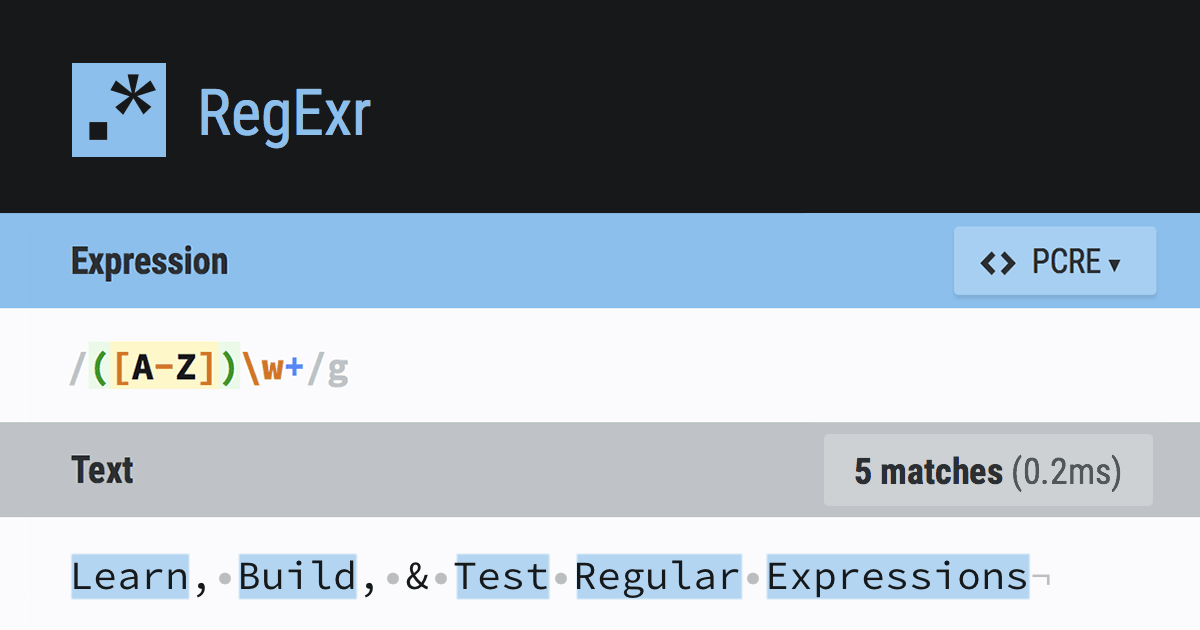
RegExr
RegExr is an online tool to learn, build, & test Regular Expressions (RegEx / RegExp).
good tool I use to understand regexes
 wispy tusk
I want to make a worm which will automatically be able to replicate and try to pivot itself across the other devices in same private network in which the victim pc is connected. The worm will also contain a reverse-shell payload and send me a shell from all the computers it has successfully pivoted to. Also the worm needs to be executed only once and it will automatically execute the next worm in the daisychain.. It will also create cronjobs/services which will be run at boot to maintain the access. How do I achieve this? I want to use python for coding it. Any good resources/references which can be helpful?
tulip sail
@wispy tusk Do I want to know why?
wispy tusk
I love making challenging tools which will help me learn a lot along the way.
tulip sail
That's illegal in enough places (to develop, not deploy), that I'm gonna say please don't ask here for it. Not a warning as much as a request there 😄
I can see where you're coming from with an educational perspective though, so if you do try it, keep it safe in a VM network and don't deploy it elsewhere
wispy tusk
Ooh...😅😅 okay..no issues😅
wispy tusk
tulip sail
I can see where you're coming from with an educational perspective though, so if...
Can Making it open-source for educational purpose be safe?
tulip sail
I personally would suggest against it, purely because there aren't many legitimate uses for other people to use it. I can see why coding it would help educationally, but chances are people will deploy it if you make it open-source.
Equally, it's outright illegal to develop that kind of thing, dependent on where you live. If you're in the UK then I would strongly suggest against it
wispy tusk
Ahhh... Alright.
 ebon jackal

idk Im being pixel perfect and still getting inconsistent positions
Im using a 19.2x10.8 graph
placing the points where I want them to be
then just multiplying their positions by 100 and adding those values to the points in my code
but its really not pretty and idk why
brazen eagle
aliasing?
stone kayak
My program relies on Hashcat, how can I get Hashcat in CI? How can I test the Hashcat module works in CI? 😛

 pine apex
stone kayak
My program relies on Hashcat, how can I get Hashcat in CI? How can I test the Ha...
pine apex
stone kayak
My program relies on Hashcat, how can I get Hashcat in CI? How can I test the Ha...
I would create a custom docker image that has all the tools you need to build and test your project. In your CI step you can just pull this image and start building/testing, without having to install tooling first, which can save quit a bit of time
magic falcon
stone kayak
My program relies on Hashcat, how can I get Hashcat in CI? How can I test the Ha...
typically each step in a CI/CD pipeline runs in it a separate container, with outputs at each stage injected into a shared storage volume or into the next image build
 sly breach
brazen eagle
Is there a hashcat docker image?
sly breach
brazen eagle
Is there a hashcat docker image?
yess there's defo a CUDA & OpenCL image(s) (:
Or at the least when I last pulled ~4-6 months ago I might have to fact check
you're largely limited by the gen of CPU (i.e. if it's cloud based) which is where I had most of the issue getting the correct SDK's for but
if you're asking about cloud lemme know what provider & tier and I can probably point you in the right direction in terms of all of the above :^ I'm v sure I still have intel SDK's that were and absolute pain to obtain
plus IIRC you can just -d "string here" "dict/ruleset" and you're a given
 hollow bison
anybody here know c++

quiet confusing why isn't this simple loop grow
i thought the array will have every single value of i
debugger didn't detect it
solar hull
I think the debugger only shows the value at *test, that is test[0]
lilac holly
anyone familiar with nginx cipher suite configuration files?
no matter how i update the "Ssl ciphers" field, the resulting supported ciphers doesn't change
not sure what's causing this
brazen eagle
did you read the doc?
there's an example config: http://nginx.org/en/docs/http/ngx_http_ssl_module.html#example
surreal bronze
import time
start = time.time()

while function is running:
    print(f"{time.time() - start}", end="\r")
How would It time a function but print what the current time is
import time
import functools

def timer(f):
  @functools.wraps(f)
  def wrapper_timer(*args, **kwargs):
    start = time.time()
    result = f(*args, **kwargs)
    print(f'Time taken: {time.time() - start}')
    return result
  return wrapper_timer

@timer
def get_result():
    time.sleep(10)
    print("Done")

get_result()
This works, but it only prints the time at the end...I want it to continually be printing how long it takes (like above) while the function is running
true pumice
I’m unsure what you mean?
surreal bronze
Might need to do threading
hmm okay,
while True:
    print(f"{time.time() - start}", end="\r")
If you run this, it will act like a stopwatch and keep on printing the time elapsed since you started the program
I want it to do this, while a function is running
true pumice
You want it to continually count up while the program is running?
surreal bronze
exactly,
but it has to keep printing the time elapsed since the program / func is running
true pumice
Give me a moment to clean up
surreal bronze
kk
Stack Overflow
I have two functions, draw_ascii_spinner and findCluster(companyid).
I would like to:
Run findCluster(companyid) in the backround and while its processing....
Run draw_ascii_spinner until
Something like this
Im kinda there
nvm.
surreal bronze
okay
import threading
import ctypes
import time

class thread_with_exception(threading.Thread):
    def __init__(self, name):
        threading.Thread.__init__(self)
        self.name = name

    def run(self):

        # target function of the thread class
        try:
            start = time.time()
            while True:
                print(f"{time.time() - start}", end="\r")
        finally:
            print('ended')

    def get_id(self):
        if hasattr(self, '_thread_id'):
            return self._thread_id
        for id, thread in threading._active.items():
            if thread is self:
                return id

    def raise_exception(self):
        thread_id = self.get_id()
        res = ctypes.pythonapi.PyThreadState_SetAsyncExc(thread_id,
              ctypes.py_object(SystemExit))
        if res > 1:
            ctypes.pythonapi.PyThreadState_SetAsyncExc(thread_id, 0)
            print('Exception raise failure')

def start_timer():
    t1 = thread_with_exception('Thread 1')
    t1.start()
    time.sleep(5)
    t1.raise_exception()

start_timer()
So turns out you cant force kill a thread, you have to have the thread "fail" / raise exception
its messy but it works
true pumice
Okay, I am back at my PC.
surreal bronze
Ah nice, I sorted it but if you can find any other way (without using global) that would be amazing 😄
its quite a fun challenge to
@true pumice
true pumice
Are you entirely set on threading?
surreal bronze
I couldn't think of any other way
Yes you could use global without threading
from time import time, sleep
from _thread import start_new_thread

def long_function():
    global finished
    sleep(20.5)
    finished = True

def time_function(func):
    global finished
    finished = False
    start = time()
    thread = start_new_thread(long_function, ())
    while finished != True:
        sleep(1)
        current = time()
        print('Time Elapsed: ' + str(current - start))
    end = time()
    print('Finished after: ' + str(end - start))

time_function(long_function)
Something like that would work without threading
but it uses global which I would rather not do
true pumice
@surreal bronze This is a sloppy way of using asyncio in python. It seems to do the job.
import asyncio, time

async def func(delay, what):
    await asyncio.sleep(delay)
    print(what)

async def main():
    start = time.time()

    task = asyncio.create_task(
        func(10, 'hello'))

    while True:
        if task.done():
           break

        else:
            print(time.strftime("%H:%M:%S", time.gmtime(time.time()-start)))

        await asyncio.sleep(1)


asyncio.run(main())
probably an existing lib
true pumice
Technically there is, time works perfectly fine. Jayy wants it to continually output how long the program was been running for which is a little hard to do without threading or concurrency etc.
brazen eagle
Ah ok
I used tdqm to make a progress bar thingy recently but you want a spinner, basically ye?
true pumice
I looked into using a spinner, I used one when I originally got into threading but some of the code was outdated so I scrapped it 😁
sharp coral
ooh this is pretty neat https://github.com/pavdmyt/yaspin

GitHub
A lightweight terminal spinner for Python with safe pipes and redirects 🎁 - pavdmyt/yaspin
true pumice
I try to stay with base libraries if I can.
surreal bronze
sharp coral
ooh this is pretty neat https://github.com/pavdmyt/yaspin
This is quite good, its what ciphey uses
surreal bronze
true pumice
I try to stay with base libraries if I can.
You could use a for loop with "\r"
brazen eagle
\r doesn't work on Windows, unless they fixed that
surreal bronze
It works with powershell
Not cmd
@brazen eagle
(With the new windows terminal)
surreal bronze
I use it all the time haha
brazen eagle
I don't do much on the CLI these days
most users want their shiny buttons
but apparently this is too shiny
background-image: gradient(linear, left top, right top,
        color-stop(0, red),
        color-stop(0.15, orange),
        color-stop(0.3, yellow),
        color-stop(0.45, green),
        color-stop(0.65, blue),
        color-stop(0.8, indigo),
        color-stop(1, violet)
      );
(yes I did do that to a highlight effect in dev)
because the client couldn't decide what colour to make it
cursive orchid
can't be as pretty as the light mode on https://0day.exposed/reverseshell/
solar dust
Hey, can I get some help real quick?
I'm trying out a problem, but I feel like I'm doing something wrong.
brazen eagle
cursive orchid
can't be as pretty as the light mode on <https://0day.exposed/reverseshell/>
didn't do the animation, but I'm sure it can be arranged
 balmy flint
Hi I need some help with lists...
I want to make a list of lists which have to be immutable when assigned to another variable
B=A```
If A is modified B won't have to modify
I searched up but didn't able to find a solution ... night orchid
from tello import Tello
import sys
from datetime import datetime
import time
start_time = str(datetime.now())
tello = Tello()
def int():
tello.send_command("command")
def takeoff():
tello.send_command("takeoff")
def land():
tello.send_command("land")
def battery():
tello.send_command("battery?")
def delay(argv):
print('delay for %s' % argv)
time.sleep(argv)
def forward(argv):
tello.send_command('forward %s' % argv)
def back(argv):
tello.send_command('back %s' % argv)
def left(argv):
tello.send_command('left %s' % argv)
def right(argv):
tello.send_command('right %s' % argv)
def flip(argv):
tello.send_command('flip %s' % argv)
def turn_left(argv):
tello.send_command('ccw &s' % argv)
def turn_right(argv):
tello.send_command('cw &s' % argv)
def mission_pad_enable(argv):
if argv == 1:
tello.send_command("mon")
elif argv == 0:
tello.send_command("moff")
else:
print("Error_mission_pad_enable")
def mp_direction(argv):
# 0 = Enable downward detection only
# 1 = Enable forward detection only
# 2 = Enable both forward and downward detection
if argv == "0":
tello.send_command("mdirection 0")
elif argv == 1:
tello.send_command("mdirection 1")
elif argv == 2:
tello.send_command("mdirection 2")
else:
print("Error in mdirection")
def mpad_go():
mission_pad_no = input("Which mission pad do u want to detect ? ")
xyz = input("What is the coordinate [x y z] ? ")
speed = input("What is the speed of the drone ? ")
temp = "go "+xyz+" "+speed+" "+mission_pad_no
tello.send_command(temp)
def mpad_curve():
mission_pad_no = input("Which mission pad do u want to detect ? ")
xyz1 = input("What is the first coordinate [x y z] ? ")
xyz2 = input("What is the second coordinate [x y z] ? ")
speed = input("What is the speed of the drone ? ")
temp = "curve "+xyz1+" "+xyz2+" "+speed+"
true pumice
balmy flint
Hi I need some help with lists...
I want to make a list of lists which have to b...
This is python, correct?
night orchid
def action(i):
if i == "o":
takeoff()
elif i == "l":
land()
elif i == "w":
distance = input(" please enter the distance (20-500): ")
forward(distance)
elif i == "s":
distance = input(" please enter the distance (20-500): ")
back(distance)
elif i == "a":
distance = input(" please enter the distance (20-500): ")
left(distance)
elif i == "d":
distance = input(" please enter the distance (20-500): ")
right(distance)
elif i == "b":
battery()
elif i == "write":
com = input("Please input the command : ")
balmy flint
true pumice
This is python, correct?
Yes
night orchid
int()
battery()
'''
try:
while True:
print("Command 😊
print("o - takeoff l - land")
print("w - forward a - left s - back d - back")
print("m - mission pad enable n - mission pad disable")
print("j - mission pad detection direction")
i = input("Please enter a command 😊
print("you enter "+i)
action(i)
except:
KeyboardInterrupt()
'''
takeoff()
forward(50)
left(50)
land()
night orchid
✋👌
true pumice
@balmy flint So you want two lists, one of which is immutable and the other that is modified?
balmy flint
Yes both are same and if one is modified it won't affect the other
true pumice
Is the program small enough to be shared here?
balmy flint
To me ?
true pumice
This is the first way that came to mind.
def list_duplicator(list):
    return [item for item in list]

A = [1,2,3]

B = list_duplicator(A)

print("List A:", A)
print("List B:", B)
print("\nRemoving an item from List A")
A.pop()
print("List A:", A)
print("List B:", B)
Output:
List A: [1, 2, 3]
List B: [1, 2, 3]

Removing an item from List A
List A: [1, 2]
List B: [1, 2, 3]
Using a function that returns the values using list comprehension means that you can continually re-use the function to do this for multiple lists. @balmy flint
balmy flint
true pumice
```py
def list_duplicator(list):
return [item for item in list]
A = [1,2,3]...
Actually this isn't working for me sadly
true pumice
What version of Python?
balmy flint
Well it's a website for coding ...it says 3.x
brazen eagle
would need a deep copy, ye?
balmy flint
deepcopy ?
true pumice
Mhm
brazen eagle
hmm, I really don't know how python's object model works
 sage urchin
@rocky latch https://www.freecodecamp.org/ is a good place to start programming.
Learn to Code — For Free
brazen eagle
is it references everywhere?
Stack Overflow
I have some problem with a List copy:
So After I got E0 from 'get_edge', I make a copy of E0 by calling 'E0_copy = list(E0)'. Here I guess E0_copy is a deep copy of E0, and I pass E0_copy into '...
true pumice
This is a simple as I can get it in python 3.9.1:
A = [1,2,3]
B = [item for item in A]
for ints then sure, but for objects they'd be pointing to the same object no?
true pumice
A = [1,2,3]
B = [item for item in A]

print(A)
print(B)
A.pop()
print("List A:", A)
print("List B:", B)
Output:
[1, 2, 3]
[1, 2, 3]
List A: [1, 2]
List B: [1, 2, 3]
B = list(A) is easy to read (maybe)
brazen eagle
Assignment statements in Python do not copy objects, they create bindings between a target and an object.
from the python doc
balmy flint
Well if I doing with copy or deepcopy both the lists get completely immutable in my case
true pumice
novel cobalt
`B = list(A)` is easy to read (maybe)
 How could I forget about
 list
novel cobalt
true pumice
<:kekw:658061932577816606> How could I forget about `list`
you need coffee☕
brazen eagle
yeah but does list do a deep copy or a shallow copy?
novel cobalt
deep copy..... iirc
balmy flint
Would I rather post a code of mine...and the output ..!
true pumice
A = [1,2,3]
B = list(A)
A.pop()
print("List A:", A)
print("List B:", B)
List A: [1, 2]
List B: [1, 2, 3]
Good idea, brb.
brazen eagle
if I had
A = [obj1, obj2]
B = list(A)

obj1.field = "Modified Field"
would obj1 change in both lists?
as both would be bound to the same target?
true pumice
If you are storing values in a list, I am sure they are references
balmy flint
Is b= list (a) is different from b=a
brazen eagle
pass by ref?
true pumice
Possibly
brazen eagle
that's generally for functions
B = list(A) calls a constructor for list using A as an initialization param
I assume
true pumice
I am pretty sure this is being taken out of scope
brazen eagle
maybe
true pumice
balmy flint
Is b= list (a) is different from b=a
Instead of storing a reference of the list, you are creating a new object.
brazen eagle
if list is only holding ints, then it's fine
if list is holding objects, then be careful
as the objects are not independent between both lists
balmy flint
brazen eagle
if list is only holding ints, then it's fine
I'm confused with this
I am having list of strings
brazen eagle
primitives are pretty much immutable
true pumice
A = [[1,2,3], [1,2,3,4]]
B = list(A)

print("List A:", A)
print("List B:", B)
A[1].pop()
print()
print("List A:", A)
print("List B:", B)
List A: [[1, 2, 3], [1, 2, 3, 4]]
List B: [[1, 2, 3], [1, 2, 3, 4]]

List A: [[1, 2, 3], [1, 2, 3]]
List B: [[1, 2, 3], [1, 2, 3]]
Yup, you are right hydra.
brazen eagle
it's a super common error
true pumice
Objects work differently, luckily when embedded objects in lists I don't usually create list copies.
brazen eagle
because pointers are hard
@true pumice if you do a deepcopy, then they'll be independent
true pumice
Eh, no need
I found a workaround a little while back for my programming assignment 😁
brazen eagle
oh dear
surreal bronze
What's up 😄
true pumice
(I re-wrote the program so I didn't have to use them because they're icky and I hate pass by reference)
brazen eagle
pass by reference is useful
balmy flint
I'm modifying the contents of lists by assigning to some string...so will it hold for deepcopy?
true pumice
It is above my pay grade.
brazen eagle
but also tricksy tricksy
naw should be fine for strings
might want to test that though
balmy flint
Oh no its not for me here😂
 rocky latch
sage urchin
<@!781798458877018183> https://www.freecodecamp.org/ is a good place to start pr...
rocky latch
sage urchin
<@!781798458877018183> https://www.freecodecamp.org/ is a good place to start pr...
thanks a lot
true pumice
Okay, it is coffee time
brazen eagle
tea time!
balmy flint
balmy flint
Oh no its not for me here😂
Oops I made a mistake.... it's working now....
lilac holly
Hey @tulip sail sorry to bug you, but can you send me the alias syntax for the thmvpn so I can added it to my .bashrc por favor. Much appreciated my friend

 steady anchor
@lilac holly
alias thmvpn="tmux new -s THMVPN \"sudo openvpn ~/Downloads/MuirlandOracle-THM.ovpn \""
lilac holly
Hey thank you !! 😊
steady anchor

lilac holly
Like pythons \n
steady anchor
yeah it is for character escaping in bash
lilac holly
Noiiiiiice
solar hull
above, that " encapsulates a series of words separated by spaces into a single string. As " would end that string, to include double quotes inside the string, they need to be escaped. And that's what \" does.
lilac holly
Woah. You are like mind reader. I too was wondering why it only had double quotes at the end and not the beginning
solar hull
so the value of that alias called thmvpn is tmux new -s THMVPN "sudo openvpn ~/Downloads/MuirlandOracle-THM.ovpn " after those escaped double quotes are unescaped.
lilac holly
And tmux new -s stands for new session correct?
lilac holly
got it thanks
 wind crane
Hi, I'm following an app to learn ethical hacking. I executed this :
#!/bin/bash
for ip in seq 1 254 ; do
ping -c 1 $1.$ip | grep "64 bytes" | cut -d " " -f 4 | tr -d ":" &
done
But when executing in the terminal it says "xxx.xxx.1.seq: Name or service not know" (with the x being my ip ofc)
onyx merlin
wind crane
Hi, I'm following an app to learn ethical hacking. I executed this :
```
#!/bin/...
 lilac holly
oh okay thanks
wind crane
onyx merlin
tysm
lilac holly
name = "emil"
age = 15
io.write("The age of", name, "is " , age, \n)
(lua)
i cant seem to get it to work, does anyone know what i have done wrong?
(SOLVED)
sour apex
This might be a dumb question but I really want to know
Does importing many modules increase the size of a script
sour apex
Ok does it make the script run slow?
onyx merlin
It will increase the footprint in RAM potentially, because it's gotta hold more references and stuff
Don't import stuff you're not using, because that's poor practice.
sour apex
Ok thanks a lot
brazen eagle
Generally we want to try to import exactly what we need
wind crane
Hi, apparently, Kali can't down the eth0 interface (not allowed to)
How can I change that ?
wind crane
@ me when answering, ty
onyx merlin
That doesn't seem like a programming question?
 dusky niche
Someone good in C language and reverse engineering?
onyx merlin
Just ask your question
dusky niche
I am making a ctf. First one. So when running the program you need to enter a key. You will get the flag when submitting the right key. But the key is hidden and the flag not
Idk how to hide that.
Someone told me to encrypt it
But I tried it 1 way. It did work. But when using radare2 it showing the flag
But its hidden with string and ltrace
So you know how to do it?
brazen eagle
encrypt it outside the program, and decrypt it live, or encrypt the input and compare against the encrypted flag
you'll probably want to hash it
and then compare the input hash with the hashed flag
unless you want then to grab the flag from the code
fun check_key( String input ) {
  return decrypt(encrypted_flag, key);
}
something like that might work
onyx merlin
What's the goal of the challenge anyway?
brazen eagle
it'll output gibberish if the key is invalid
onyx merlin
Because just use the movfuscator.
 shrewd raft
Where i can send an imgae of my code?
            try
            {
                WebClient wb = new WebClient();
                string Script = wb.DownloadString("https://pastebin.com/raw/LGGkpfBL");
                if (Script == "v0.7")
                {
                    bunifuCustomLabel1.Visible = (true);
                    // I need you to wait 5 seconds when I get here like I  do
                    bunifuCustomLabel1.Visible = (false);
                    bunifuCustomLabel3.Visible = (true);
}```C#
Dont timer on the start, timer on button click
I need them to be since I clicked the button
true pumice
Did you mention this was an exploit?
shrewd raft
true pumice
Did you mention this was an exploit?
yes
and hack my own roblox game
🙂
true pumice
Ohh no
We do not do that here.
In order to make Roblox cheats you need permission from Roblox
true pumice
Do not think you are reading what I am saying.
true pumice
In order to exploit a game engine, you need explicit permission from the game creator.
Creating cheats for Roblox is against Roblox's Terms of Service, is unethical and in some cases illegal.
Not only that, but from experience when you have permission from Roblox, they usually do not like you discussing this with others users.
true pumice
Does not matter.
shrewd raft
pls bro help me
true pumice
They do not own Roblox.
onyx merlin
-warn @shrewd raft Please stop discussing illegal activities here, Jabba already stated that we don't do that here
 wispy kestrelBOT
⚠ Warned ManiustBCT#3877
dusky niche
brazen eagle
something like that might work
Can I dm you?
lilac holly
Hello guys, are there any C programmers here?
brazen eagle
dusky niche
Can I dm you?
What about?
dusky niche
I want send the program, so you can tell me how I can change it.
dusky niche
brazen eagle
What about?
Or a screenshot
brazen eagle
Sorry not too available at the moment, post your problem here and maybe we can crowdsource it
 floral wedge
Hey,
I want to write a small application that helps me to keep track of summoner spell cooldowns in League of Legends, nothing fancy, just functional. I'd love to have it on an overlay on top of the game, but if that makes it a lot more complicated, then idc about it as much. Now to the question: Do I have to worry about resource usage of my machine (and therefore worse game performance) with such a small application and if so, which language would be appropriate to use or does it even matter at all?
 bitter field
floral wedge
Hey,
I want to write a small application that helps me to keep track of summoner...
bitter field
floral wedge
Hey,
I want to write a small application that helps me to keep track of summoner...
I think there are already tools for that but if you're interested on making you're own I dont think the language would change much since its such a simple app
floral wedge
Oh, I didn't know that. I'll look into it but will probably do it myself anyway. Thanks!
bitter field
floral wedge
Oh, I didn't know that. I'll look into it but will probably do it myself anyway....
http://www.loltracker.gg/app/?isDemo=true here is something I found
floral wedge
I just found that as well :D
sharp coral
floral wedge
Hey,
I want to write a small application that helps me to keep track of summoner...
i wouldn't worry about resource usage at all, now things may get complicated depending on if custom UI/HUDs are against the Tos/EULA for League of legends, I have no clue on that end
floral wedge
sharp coral
i wouldn't worry about resource usage at all, now things may get complicated dep...
There are plenty of them on the Internet and used by popular streamers and no one's complaining, so my guess would be no.
sharp coral
okay cool, well my super naive solution would be building a keylogger in python to listen for ability key-presses and have those trigger some timers and then have some simple GUI to house it all off-screen
the right solution would probably involve tracking down the existing HUD resources and doing a little reverse-engineering to figure out how they interact with the game client
and if there's custom UIs online that streamers use you could also track those down and maybe see if there's any useful functions you can rip from github
floral wedge
What you said first is kinda what I'm going for, the "right" solution is a bit out of my current comfort zone with such programming (never really did sth like that before and would have to Google more than usual) and I don't want to spend too much time on it since it was just a quick thought I had today. I only ever wrote small programs for the trash can as a matter of learning the concepts in school, never did anything useful or applicable in a real world scenario, so I'm not too experienced.
Thanks for the input!
onyx merlin
floral wedge
What you said first is kinda what I'm going for, the "right" solution is a bit o...
My recommendation is to NOT test it on your main account, seeing as hooking things can be picked up by anticheats
floral wedge
onyx merlin
My recommendation is to NOT test it on your main account, seeing as hooking thin...
Good shout, thanks!
 red wave
Question: I have an assignment that wants us to do operations such as A = B * 16, A = B *17, etc in a single instruction using ARM assembly (where signed integers A and B are saved in r0 and r1) . Now, since the MUL instruction only accepts registers and not immediate numbers, for the first one I just went with LSL r0, r1, #4 (aka a left shift by 4 bits). Obviously this doesn't work for something like A = B *17 because that's not a multiple of 2, so I'm totally stuck. Help?
onyx merlin
where signed integers A and B are saved in r0 and r1) . Now, since the MUL instruction only accepts registers
So
Oh, right nevermind I see the issue
red wave
Yeah the single instruction part is what makes it tough here
onyx merlin
http://altmer.arts-union.ru/3DO/docs/DevDocs/tktfldr/acbfldr/2acbb.html This looks like you're stuck at 2 instructions?
Maybe talk to your teacher and say "I think it's impossible because of these well thought out concepts, do you have any advice?"
red wave
I think according to the specific problem description, going the route of ADD + bitshifting is an acceptable way to solve the problem? So this helps a lot, thank you!
onyx merlin
red wave
I *think* according to the specific problem description, going the route of ADD ...
I'd say it's not a good solution for anything that isn't a power of 2
Maybe it's worth discussing the limitations in whatever you're submitting?
red wave
Probably, yeah
outer jewel
Stack Overflow
I am learning assembly language for ARM Cortex and I have the following problem:
Write one line of assembly instruction for the following calculation:
Apply Arithmetic Shift Right on the conte...
Probably not at all what you want. Thanks for the exercise "how to google something you don't know, and trying to find a relevant answer" though. :))
Edit: shift right... Embarrassed 😳
 coral grotto
does someone kow how to code ssl reverse shell using pipes i tried to do it but i t sends a lot of thrash data
i m trying to to do it in c language
 prisma thorn
alright, so using cpp, because I want speed and other reasons
I am trying to iterate through the argv list, in order to get arguments like -p -o etc
however, when I run the code without the little things I added, it compiles/runs fine, but adding the below code gets me
terminate called after throwing an instance of 'std::logic_error'
what():  basic_string::_M_construct null not valid
This is the code
for (int i=1; i<=argc; i++) {
        string argument = argv[i];
        if (argument.compare("-p") == 0) {
            cout << "You want a password checked?\n";
        }
    }
Any ideas as to why?
I figured it out.
I was getting an OOB from the i<=argc
prisma thorn
I know that, but argc[0] is the name of the program, which I don’t need
prisma thorn
Sorry, I meant argv
cursive orchid
big question mark to the above question
does c# even have promises
i'm using react and i'm trying to dynamically load md files, however i have no idea how to approach this
import file from '../blogs/Test.md';

fetch(file)
    .then((res) => res.text().then(console.log))
    .catch(console.error);
this is my current code which loads the file just fine
however, i need to get the blog id from the url, and load that blog, rather than Test
but react insists that import statements be at the top of the file
and using require to get the file doesn't work for some reason
import file from '../blogs/Test.md';

const Blog = (props) => {
  const { blog } = props.match.params;

  fetch(file)
    .then((res) => res.text().then(console.log))
    .catch(console.error);

  return (
    <>
      <h1>{blog}</h1>
    </>
  );
};

export default Blog;
this is the full file atm
 crisp turtle
Isn't fetch for http requests? So, couldn't you just pass it a string or whatever?
cursive orchid
if i pass it a string then it for some reason grabs the index.html
fetch('../blogs/Test.md')
 crisp turtle
Are the md files available through the webserver? I know react is a client side framework so, you would need a webserver to host the MD files.
magic falcon
cursive orchid
does c# even have promises
Not as such... The equivalent to a promise the 'future'. You'll see that in C++ concurrency/asio libraries as well as in C#.
cursive orchid
crisp turtle
Are the md files available through the webserver? I know react is a client side ...
i have them in the public directory so they are being hosted
but no worries, i got it working
import { useEffect, useState } from 'react';

const Blog = (props) => {
  const [blog, setBlog] = useState('');
  const [error, setError] = useState(false);

  useEffect(() => {
    const url = `http://localhost/blogs/${props.match.params.id}.md`;

    const getBlog = async () => {
      const response = await fetch(url);
      const file = await response.text();

      return file.includes('<!DOCTYPE html>') ? setError(true) : setBlog(file);
    };

    getBlog();
  }, []);

  return (
    <>
      <h1>beep</h1>
    </>
  );
};

export default Blog;
works just fine
 tulip ibex
 tidal panther
 livid nebula
I am new in the cyber sec
livid nebula
I am new in the cyber sec
You don’t have to but it could be useful
livid nebula
I think to learn at a normal level
tidal panther
sure just learning some can be helpful
true pumice
@tulip ibex Lets try not to make fun of anyone.
shrewd raft
who have a simple code to save file of a text
i am making my notepad
no save as
only save as .txt
true pumice
What programming language?
shrewd raft
true pumice
What programming language?
C#
 south egret
I have a question what is a good programming language if I want to work with Networks?
lilac holly
Python can be good.
 limber ore
!p sky playboi carti
 regal girder
hi, i am trying to program a unix shell in c, the shell is executing commands thought execvp, buildin commands in c and parsing spaces and pipes, right now i am trying to, when the program ./shell is called with a scriptfile, to read the file, parse the commands and execute them and then quit but i am getting an error when executing them even though i can print the commands in that same part of the code, anyone here wouldnt mind giving me a hand if possible please
`void execScript(char **argv)
{
FILE fp;
char buffer[1000];
char buf;
if ((fp = fopen(argv[1], "r")) == NULL){
    printf("File >>> %s <<< not found.\n", argv[1]);
    printf("Quitting...\n\n");
    exit(0);
}
else {
    // open file and parse commands
    printf("Executing from file...\n");
    while (fgets(buffer, 1000,fp) != NULL) {
        buf = buffer;
        add_history(buf);
        // and execute command
        execParsedArgs(buf);
        //printf( "%s\n" , buffer);
    }
    fclose(fp);
    exit(0);
}
}`
`void execParsedArgs(char** parsed)
{
// Forking a child
pid_t pid = fork();
if (pid == -1) {
    printf("\nFailed forking child");
    return;
} else if (pid == 0) {
    if (execvp(parsed[0], parsed) < 0) {
        printf("\nCould not execute command error: 0\n");
    }
    exit(0);
} else {
    // Waiting for child to terminate
    wait(NULL);
    return;
}
} `
 peak mango
@shrewd raft
> who have a simple code to save file of a text
System.IO.File.WriteAllText(content, $"{name}.txt")?
lilac holly
hi
import pyttsx3
import speech_recognition as sr
import pyaudio
engine = pyttsx3.init('sapi5')
voices = engine.getProperty('voices')
engine.setProperty('voices', voices[1].id)
def speak(audio):
engine.say(audio)
engine.runAndWait()
def takecommand():
r= sr.Recognizer()
with sr.Microphone() as source:
print("Listening....")
r.pause_threshold = 1
audio=r.listen(source, timeout=1,phrase_time_limit=5)
try:
    print("Recognizing...")
    query = r.recognize_google(audio,language='en-in')
    print(f"User Said: {query} ")

except Exception as e:
    speak("Please say that again...")
    return "none"

return query
if name == "main":
takecommand()
C:\Users\Amit\AppData\Local\Programs\Python\Python39\python.exe "C:/Users/Amit/PycharmProjects/private project/jarvis.py"
Traceback (most recent call last):
File "C:\Users\Amit\PycharmProjects\private project\jarvis.py", line 38, in <module>
takecommand()
File "C:\Users\Amit\PycharmProjects\private project\jarvis.py", line 17, in takecommand
with sr.Microphone() as source:
File "C:\Users\Amit\AppData\Local\Programs\Python\Python39\lib\site-packages\speech_recognition_init_.py", line 138, in enter
self.audio.open(
File "C:\Users\Amit\AppData\Local\Programs\Python\Python39\lib\site-packages\pyaudio.py", line 750, in open
stream = Stream(self, *args, **kwargs)
File "C:\Users\Amit\AppData\Local\Programs\Python\Python39\lib\site-packages\pyaudio.py", line 441, in init
self._stream = pa.open(**arguments)
OSError: [Errno -9999] Unanticipated host error
Process finished with exit code 1
lilac holly
lilac holly
C:\Users\Amit\AppData\Local\Programs\Python\Python39\python.exe "C:/Users/Amit/P...
why is this error coming
sharp coral
most likely a permissions error, see the following https://stackoverflow.com/questions/41518905/pyaudio-oserror-errno-9999-unanticipated-host-error
Stack Overflow
I just want to run a simple python audio code:
import pyaudio
import wave
import sys
CHUNK = 1024
wf = wave.open("4.wav", 'rb')
instantiate PyAudio (1)
p = pyaudio.PyAudio()
open stream (2)
s...
lilac holly
sharp coral
most likely a permissions error, see the following https://stackoverflow.com/que...
Thank you
this solved the problem
brazen eagle
you can use code blocks with three `
 cunning zephyr
Hi, I am trying to automate the blind sql injection with conditional responses lab and this is supposed to give letter or number for position 1 in the password. Although this doesn't give any error, it also doesn't give the desired result. Where is the error?

 mossy meadow
cunning zephyr
Hi, I am trying to automate the blind sql injection with conditional responses l...
mossy meadow
cunning zephyr
Hi, I am trying to automate the blind sql injection with conditional responses l...
can you teach me write those scripts 😦
true pumice
joy21, have you tried printing out the whole response to see if the desired response is there?
( @cunning zephyr )
cunning zephyr
true pumice
joy21, have you tried printing out the whole response to see if the desired resp...
Yes, I printed r.text and it returned the page but when tried to see the cookies using r.cookies it was empty like {}. I think the cookies aren't supplied to the webpage. Can't figure out why.
cunning zephyr
mossy meadow
can you teach me write those scripts 😦
💯
true pumice
Is your payload 100% correct?
cunning zephyr
yes. it works in burp.
lilac holly
Hi, I'm working on tool that checks MD5 hashes .. and I wonder if it's possible in python to make update just the variable with hashes on screen without having to clear whole screen
output:
TRYING HASH: '{Hash variable}'
Is it possible in python to update only that variable without clearing whole screen ?
true pumice
You can do this!
Here is an example I wrote up:
import os, time

for x in range(20):
    with open("example.txt", 'a') as file:
        file.write("test")

    print(os.path.getsize("example.txt"), end='\r')
    time.sleep(1)
The print statement, like all functions, takes parameters. The key one is end.
https://docs.python.org/3/library/functions.html#print
( @lilac holly )
lilac holly
true pumice
Here is an example I wrote up:
```py
import os, time
for x in range(20):
w...
well but if I use os.system('clear/cls') it will remove the "crakcing hash" part but I need to remove only the hash it self (sorry for bad english)

 shy socket
lilac holly
well but if I use os.system('clear/cls') it will remove the "crakcing hash" part...
shy socket
lilac holly
well but if I use os.system('clear/cls') it will remove the "crakcing hash" part...
use the end='\r' method. It resets the cursor to the beginning of the line. You will have to rewrite the CRAC.....HASH part, but is that really a problem?
alternatively use curses
quick example like :
import curses
import time
stdscr = curses.initscr()
stdscr.clear()
stdscr.addstr(0, 0, "[i] CRACKING HASH : ")
stdscr.addstr(0, 20, "AAAAAAAAAAAAAAAAAAAAAAAAAAAAAAAAA")
stdscr.refresh()
time.sleep(1)
stdscr.addstr(0, 20, "BBBBBBBBBBBBBBBBBBBBBBBBBBBBBBBBB")
stdscr.refresh()
time.sleep(1)
stdscr.addstr(0, 20, "CCCCCCCCCCCCCCCCCCCCCCCCCCCCCCCCC")
stdscr.refresh()
curses.endwin()
AAAAA .... being the hash
if hash is not same length the use stdscr.clrtoeol() after each addscr to remove excess chars
shy socket
btw the 20 in the addstr is the character number where it puts the cursor on the line
 dusty ore
Anyone here knows pascal? I need help
onyx merlin
-warn @dusty ore Please do not use homophobic language
wispy kestrelBOT
⚠ Warned JohnLmao#3515
dusty ore
Oh im sorry
tidal panther
Pascal is a blast from the past
brazen eagle
I wasn't aware people still used that language
 frozen smelt
Hey, I wanted to ask about the re module in python , is there way to print the whole line where the re was matched, i currently have it only matching the word and just printing out the word?
true pumice
RE module?
frozen smelt
yes
true pumice
Oh Regex
frozen smelt
Its something like this :
        title = "<title>"
        stringwewant = re.findall(title, r.content,flags=re.MULTILINE)
        print("############## This for the Request" + str(x) + " ##############")
        print(stringwewant)
I'm slightly confused on what you are asking.
frozen smelt
yes let me try to ellabrate a little more
soo i am trying to fuzz an endpoint , and do a get request on that endpoint and then grep on the <title> html tag , and get the contents of that tag
like in bash it could be : ```
curl http://url/endpoint/ | grep <title>
nopee
true pumice
This is something I threw together.

import requests
from bs4 import BeautifulSoup

url = 'https://example.com/'
r = requests.get(url)
soup = BeautifulSoup(r.text)

for tags in soup.find_all("insert_tag_here"):
    print(tags)
Ohh thank you, i will take a look at at the beautifullsoup library and use this
true pumice
Mhm, no problem.
frozen smelt
Thanks it worked 
 fathom prism
Where do i learn about haking
magic falcon
brazen eagle
I wasn't aware people still used that language
Pascal, Cobol and Fortran are still used in specific industries in the US - the state of New Jersey, for example, was in desperate need of cobol programmers last year because they hadn't refreshed their unemployment computer system in 30+ years
brazen eagle
I know, I'm just surprised
magic falcon
fair
a lot of scientific researchers still use fortran, too. The newer generation prefers python, but the PIs are all really old and prefer tools they know
magic falcon
It doesn't get used as much, though. R can be a weird beast to get around, since a lot of the libraries are really inconsistent in rigor and quality
brazen eagle
so...like python 😄
magic falcon
considerably more inconsistent though
as much hate as pep8 gets, it does mandate a certain amount of consistency... R doesn't really have any style guides
 coarse eagle
fathom prism
Where do i learn about haking
coarse eagle
fathom prism
Where do i learn about haking
...
 dire vortex
anyone able to help a little with C
I'm trying to use the ioctl function, but to no avail
magic falcon
post your code and error please
dire vortex
you mind if I pm? @magic falcon
magic falcon
just post here
dire vortex
#include <stdio.h>
#include <stdlib.h>
#include <sys/stat.h>
#include <sys/ioctl.h>
#include <linux/fs.h>

int main()
{
    FILE *fp;
    char test[7] = "testing";
    int val = FS_IMMUTABLE_FL;
    fp = fopen("test.txt", "w+");
    fwrite(test, sizeof(test[0]), sizeof(test)/sizeof(test[0]), fp);
    ioctl(fileno(fp), FS_IOC_SETFLAGS, &val);
    fclose(fp);
}```I'm trying to use that FS_IMMUTABLE_FL flag, but it doesn't seem to have any effect
 upbeat oar
hey there i have a quick question
can i change permisson of a file in a bash script
i have been trying for a while now like : sudo chmod $file_name +r +w +x
any tips?
onyx merlin
Look at the syntax of chmod and compare it to what you're doing
https://linux.die.net/man/1/chmod Particularly the first few lines showing how you use it
chmod never changes the permissions of symbolic links; the chmod system call cannot change their permissions. This is not a problem since the permissions ...
upbeat oar
oh i just figured it out 😄 thank you
magic falcon
dire vortex
```c
#include <stdio.h>
#include <stdlib.h>
#include <sys/stat.h>
#include <sys/...
This looks like a mis-use of IOCTL to me. Someone with more understanding of C device drivers should weigh in too, but IOCTL is intended to manage connected devices; there are other device config flags that may need to be set to manipulate a fd with that lib.
dire vortex
ahh, there's a very high chance of that 😂
I mainly scraped that script from https://stackoverflow.com/questions/32465756/setting-immutable-flag-using-ioctl-in-c
 wheat onyx
Anyone know if there is a way to make a .bat file that is located on a usb 3.0 drive run when i plug it into a computer? like I take the usb, plug it into a pc and then it auto runs the .bat file?
true pumice
Why would you want to do that?
wheat onyx
i made a script that opens a new window and plays never gonna give you up every 3 mins
onyx merlin
wheat onyx
Anyone know if there is a way to make a .bat file that is located on a usb 3.0 d...
That'd be a massive security hole in Windows, so there's a reason it's patched
wheat onyx
thats kinda what I was thinking, like with autorun.inf being patched a long time ago and stuff
is there any sort of device/product that can do what I want to do?
true pumice
Yes but the user would need to install it on their computer first.
 arctic meteor
does anyone know how to save a c# fourms .net file?
like on your windows desktop
or something
 snow smelt
I have a fucking programming quiz for you that is messing with me being noobie for the last hour...
(C++) Lets say that i have a string s = "fc4883e4"
How can i get the byte array [4] = {0xfc, 0x48, 0x83, 0xe4}
who ever solves this i give a cookie (not a session one)
brazen eagle
http://www.cplusplus.com/reference/cstdlib/strtoul/ might be of some use?
or some similar function
or strtol
steady anchor
my idea was to take the hex value mask it and then use right shift operator and store it in an array
 novel pulsar
dire vortex
```c
#include <stdio.h>
#include <stdlib.h>
#include <sys/stat.h>
#include <sys/...
novel pulsar
dire vortex
```c
#include <stdio.h>
#include <stdlib.h>
#include <sys/stat.h>
#include <sys/...
I see where this going 😂
steady anchor
snow smelt
I have a fucking programming quiz for you that is messing with me being noobie f...
#include <iostream>

using namespace std;

int main()
{
    unsigned int long foo = 0xFC4883E4;
    unsigned int long d1;
    unsigned int long d2;
    unsigned int long d3;
    unsigned int long d4;

    d1 = foo & 0xFF000000;
    d1 = d1 >> 24;
    d2 = foo & 0x00FF0000;
    d2 = d2 >> 16;
    d3 = foo & 0x0000FF00;
    d3 = d3 >> 8;
    d4 = foo & 0x000000FF;
    d4 = d4 >> 0;

    int arr[4] = {d1, d2, d3, d4};
    cout << hex << arr[0] << endl;
    cout << hex << arr[1] << endl;
    cout << hex << arr[2] << endl;
    cout << hex << arr[3] << endl;
    return 0;
}
this should work
now gimme my cookie
remote echo
steady anchor
```cpp
#include <iostream>
using namespace std;
int main()
{
unsigned int ...
But i think he was asking it was string "fc4883e4" not unsigned int
steady anchor

remote echo
And even if he wasn't asking, i would like to know
remote echo
suppose u get a string as "fc4883e4" then how would u conver it ?
In python, i might use a loop
To get [n:n*2] element
And then int('element' , 16)
No idea about cpp lol
steady anchor
there is a manual way but i would not look nice
wanna see my weird programming skills
remote echo
Ping me after you figure out ur cpp-fu lol @steady anchor
steady anchor
snow smelt
@steady anchor this is not indeed the right solution as you define unsigned int long foo = 0xFC4883E4;
The challenge is that it has to be string of any length containing valid hex system characters (e.g it could be std::string s = "fcab27bcd80e1ab25ced1683fffce3ed"
This string's length is 32, meaning that we need to end up to some byte array ba[] = { 0xfc, 0xab, ..., 0xed }
an array with size = 16
remote echo
I told ya @steady anchor
 remote echo
@snow smelt is it being cpp mandatory?
steady anchor
i know there is easy way
steady anchor
remote echo
<@266455175214923777> is it being cpp mandatory?
you wanna do it in python?
remote echo
So we can use stoi()
brazen eagle
stoi doesn't work on hex AFAIK
strike that it does
stoi won't give the arbitrary length byte array though
remote echo
I tried to write something in C, but in the end, I could not lol
brazen eagle
haven't done much C in forever
remote echo
Use cpp then haha
brazen eagle
C/CPP
remote echo
Now i am getting very eager for answers
string = "fcab27bcd80e1ab25ced1683fffce3ed"
array = []

for i in range(0,len(string)//2):
    hex_value = string[i*2:(i+1)*2]
    array.append(hex(int(hex_value, 16)))

print(array)
here is python code
no one asked for lol
['0xfc', '0xab', '0x27', '0xbc', '0xd8', '0xe', '0x1a', '0xb2', '0x5c', '0xed', '0x16', '0x83', '0xff', '0xfc', '0xe3', '0xed']
^^output
brazen eagle
hehe
remote echo
just to satisfy my bursting head lol
snow smelt
@remote echo yeah that py code will work just fine! cpp time now 😄
brazen eagle
do they want the byte array as a return?
remote echo
I am having headache out of it lol
 eager sail
do i need to learn programming for cybersec?
brazen eagle
snow smelt
<@!779393258286612541> yeah that py code will work just fine! cpp time now 😄
if the byte array the return or the print to screen?
steady anchor
there are no strings in cpp there are character arrays @remote echo
brazen eagle
there is std::string
remote echo
eager sail
do i need to learn programming for cybersec?
No, but it will be beneficial if u do
Yes
I read today
steady anchor
brazen eagle
there is std::string
it used power of library and hard work of some developer
remote echo
There is string
snow smelt

brazen eagle
that should be taken care of already
remote echo
Today i was going to start learning cpp lol
not it feels like hard af XD
isn't there a fun way learning it
remote echo
#include <stdio.h>
#include <stdint.h>
#include <string.h>

int main ()
{
    char *hexstring = "fcab27bcd80e1ab25ced1683fffce3ed";
    int i;
    unsigned int bytearray[16];
    uint8_t str_len = strlen(hexstring);

    for (i = 0; i < (str_len / 2); i++) {
        sscanf(hexstring + 2*i, "%02x", &bytearray[i]);
        printf("bytearray %d: %02x\n", i, bytearray[i]);
    }

    return 0;
}
@snow smelt check this
brazen eagle
easy way to overflow the buffer there
remote echo
i didn't code it btw
Stack Overflow
Is there any standard C function that converts from hexadecimal string to byte array?
I do not want to write my own function.
XD
remote echo
brazen eagle
easy way to overflow the buffer there
Yup
brazen eagle
I'm having issues with the byte array
remote echo
@brazen eagle u said about buffer, but keeping it 16 is fine right?
i mean, what is vulnerable or bad
brazen eagle
it's the fixed length