#general-chat
1 messages · Page 144 of 1
 dusty citrus
 hardy rock
Once upon a time I wrote some graphics utilities to run on a video card's Texas Instruments TMS34010 processor chip. A big deal at the time was that it could be programmed in C, and to celebrate this, TI sent me a fresh copy of Kernighan & Ritchie's The C Programming Language with each SDK update release, probably six of them altogether. That's my favorite book of all time, but still... But with what my employer was paying for the software tools, they could afford it.
 vernal gale
that's cool
I would love if microchip chipped in 😛 to HAL's for languages other than C
 burnt tendon
The TMS34010 was such a nifty and interesting architectural dead-end.
 late fulcrum
I did some coding on the TMS320 series CPUs a while back. More recently, their MSP430 line.
late fulcrum
@dusty citrus A fascinating look at the internals of the 6502 CPU and its instruction set. https://www.youtube.com/watch?v=fWqBmmPQP40
dusty citrus
How much did 8 bit CPUs cost in the 80s?
Did they cost much as the mainstream chips of our era?
hardy rock
@dusty citrus There were cheap chips and really expensive chips, like now. (Look at what Intel charges for 28-core Xeons these days.) The famous story is that Steve Wozniak chose the 6502 because MOS Technology was selling them for $25 each (some say $20) with no minimum quantity, but that was 1975. By the '80s people were less excited about 8-bit chips since we had 8086s and 68000s by then. Those started out in triple-digit dollars. The baseline has kept on dropping, to less than $1 each for some pretty capable microcontroller chips nowadays.
dusty citrus
I still treat 8 bit CPUs as CPUs that we used to use
 finite monolith
not Epyc territory, but it was state of the art in the 70s. By the 80s they were probably more like celerons
dusty citrus
I think a 4-bit Intel chip was well regarded in about 1974 or so.
hardy rock
Don't get me wrong, 8-bit Commodores and Ataris and Apple IIs were huge in the '80s! The CPU cost was pretty low by then, a couple of dollars, especially since they were being made by the millions and all the engineering costs had been recovered many times over.
dusty citrus
I can imagine myself in the 1980s creating myself a portable touch screen 6502 tablet that runs basic with a assembler
In 1989 my boss had hooked up a 100 megabyte hard disk drive using an external case, and a ribbon cable, to a PC on the sales floor.
It was too much storage to dedicate to any given machine, so he made it external to swap it onto different machines, as need arose.
Were there 32 bit chips in the 80s?
Not long before that my Dad had a 40 megabyte hard disk on an i286 based system (his third or fourth, and a Compaq branded unit) and declared "This will be the last computer I'll every buy" as if he'd hit the pinnacle. ;)
In 1991 or so I got an 80386 based system, which was I think still optional (286 probably still in production then)
The 386 system had, iirc, 4 megabytes of RAM.
It was just too tight to run X11 comfortably, so I never really ran X11 then.
hardy rock
The Motorola 68000 (Sun Workstations, original Macintosh, Atari ST, Commodore Amiga) came out in 1979. It was 32-bit, but with an asterisk. The registers, data bus, and instructions were 32-bit, but the arithmetic unit did everything 16 bits at a time.
dusty citrus
I thought that the 68000 came out in 1989
hardy rock
I'm trying to remember when I first had an 80386 on my desk. I'm pretty sure it was still the 1980s but probably '88-89.

The Motorola 68000 ("'sixty-eight-thousand'"; also called the m68k or Motorola 68k, "sixty-eight-kay") is a 16/32-bit CISC microprocessor, introduced in 1979 by Motorola Semiconductor Products Sector.
The design implements a 32-bit instruction set, with 32-bit registers and a...
By 1986 I couldn't walk across the room without tripping over an M68K something or other. 😉
dusty citrus
I dont even understand half of these chips you guys are talking about but I still want to learn more!
hardy rock
Chips are chips really. The CPUs work about the same as they always did. The big differences I see are all the peripherals integrated into microcontrollers--GPIOs, serial communication, timers, all would have been on separate chips back then--and also all the free development tools and open-source code we have to work with now.
You or I can design a circuit board with Kicad or a free version of Eagle and send the file off to someone who will make a batch of boards for few dollars each. That was unimaginable even in 1990.
dusty citrus
I do want to play around with old CPUs
But now with RISC V wher you can build your own CPU
I was thinking of building my own RISC V CPU in silicon
And putting it on a board for development
hardy rock
Have you run a RISC-V CPU on an FPGA? It's pretty easy and a good first step in that direction.
 fickle slate
"The Motorola 68000 (Sun Workstations, original Macintosh, Atari ST, Commodore Amiga) came out in 1979. It was 32-bit, but with an asterisk. The registers, data bus, and instructions were 32-bit, but the arithmetic unit did everything 16 bits at a time." zilog had that too
hardy rock
I built this about a year ago using free IceStorm tools and it all went together without any problems: https://github.com/mmicko/micropython/tree/legacy/ports/picorv32

GitHub
MicroPython - legacy branch contain old experiments, and experimental for new work - mmicko/micropython
fickle slate
it's kinda scuffed cause arithmitic takes twice as long >.<
dusty citrus
@hardy rock problem is that I dont know how to work a FPGA board
hardy rock
No one does until they learn it!
The documentation on IceStorm is really good. It walks you through everything. Build and deploy sample projects starting with blinkie. A board with an Ice40-up5k fpga can run MicroPython on top of a Pico-RV32 virtual cpu. I think I paid $15 for mine, something like that.
late fulcrum
One fun thing about the 68000 was it was available in a DIP package (here's one of mine)
hardy rock
@dusty citrus Yes it does and yes I have done it. It ran MicroPython. 😎
But I didn't write a single line of any of it. I just compiled and built that project that I linked to. It was all other people's work.
late fulcrum
I'm looking forward to playing with icestorm and some of its derivatives, as the manufacturer-supplied FPGA tools are not to my liking.
late fulcrum
Not 32 2901 bit-slice CPUs in parallel? 🙂
dusty citrus
Wait thats possible?
hardy rock
@late fulcrum I joked yesterday about having an allergy to software with "Studio" in the name. Nothing is worse for being bloated and clunky and cobbled together than the official FPGA toolchains that I've tried. Clifford Wolf and the other open-source EDA folks are doing God's work.
dusty citrus
Where can I buy the $15 FPGA?
hardy rock
@dusty citrus It's easy. Open the Verilog .v file in a text editor and change all the lines like reg [31:0] acc; to reg [127:0] acc;. 😁
dusty citrus
Woah
Sadly I dont know that
I want to buy the board but I dont know where can I buy it
hardy rock
I have an UPDuino v2.0 from Gnarly Grey. It looks like they're (or maybe "he's"; I think it's a one-man show) still selling them. http://www.gnarlygrey.com/
dusty citrus
CPU development career here I come!
hardy rock
And I was kind of joking about the Verilog code, but FPGA designs are written in a sort of programming language and the size of the registers, whether 16-bit, 32-bit, or whatever, is a parameter that you set to what you want. It isn't anything special.
Now, whether the design fits on the your FPGA chip or not is a different matter. Wider registers take more chip resources, and also make it run slower.
dusty citrus
Honestly this might seem embarrassing but I feel like FPGA programming should be like using a GUI and setting and connecting the logic blocks by dragging lines
hardy rock
There are tools in the official software from Xilinx and other FPGA vendors that let you do that. Electrical engineers who are used to drawing schematic diagrams are sometimes more comfortable doing it that way. People with programming experience usually like to use a programming language. Big designs like CPUs are all done with some kind of programming language these days. (In the 1970s, they used ink on paper, but they got away from that as fast as they could.)
dusty citrus
Thing is
The reason why I like visual programming is because I never was able to learn to program before
hardy rock
Well that will hold you back for sure. To do the things you say you want to do, you need to keep growing the set of skills you have to use. They might not be much now, but any programming project you can do teaches you something and gets you a little bit closer.
dusty citrus
I can start out with python
hardy rock
Python is amazing!
dusty citrus
I'm planning on using python with my raspberry pi to maybe create a discord bot for a server I am in
hardy rock
Sure, that sounds really cool! But what can you do tonight? Can you do this in Python? https://projecteuler.net/problem=1
A website dedicated to the fascinating world of mathematics and programming
vernal gale
I believe icestorm has a drag and drop tool. Ironically for the conversation at hand, it's called icestudio. https://github.com/FPGAwars/icestudio

GitHub
:snowflake: Visual editor for open FPGA boards. Contribute to FPGAwars/icestudio development by creating an account on GitHub.
dusty citrus
Does a chromosome literally contain everything you need to know about an organism?
How in the world do chemicals store data like that..is it similar to a computer at all?
late fulcrum
A lot, but not quite everything. It's stored as a series of "bases", called A, C, G, and T that pair up. So each base pair could encode 2 bits of data. In most situations, each trio of bases encodes for an amino acid, which get stacked up into proteins that serve various functions.
There is some other information stored elsewhere (mitochondrial DNA, epigenetics, and the structure of the ovum, among others), but it appears that the bulk of the information is in the chromosomes (for organisms that have chromosomes, that is).
dusty citrus
Do you really need to use linux to program a FPGA?
Because I saw a video on the ICE FPGA you need to use linux to program
late fulcrum
I think icestorm runs on a few operating systems (Linux, BSD, MacOS).
The vendor tools are generally windows-only or sometimes windows or Linux.
fickle slate
Can it generate vga haha
late fulcrum
Generating VGA with an FPGA is fairly straightforward.
dusty citrus
I really dont want to install linux just to use a FPGA
late fulcrum
Heh, I avoided using FPGAs for years because I didn't want to install DOS/windows.
fickle slate
Oof
burnt tendon
I'm presently avoiding FPGAs because I don't need more projects in progress at the moment.
dusty citrus
The reason why I want a FPGA is to build CPUs or other stuffs
late fulcrum
That's totally doable, and once you get the hang of it, it can be faster than breadboarding (especially with complex or wide word implementations)
dusty citrus
I do want to build my circuits on breadboard aswell
late fulcrum
There are some nice breadboardable FPGA breakouts like https://tinyfpga.com/
late fulcrum
Heh, I just bought one. Probably won't make a CPU out of it, but I plan to do some learning
vernal gale
there's an online course that guides you through making a cpu and programming it called nand2tetris
but they want you to do it in a simulator
I'm converting my old simulator code to verilog code for a real fpga
late fulcrum
Cool!
vernal gale
yup, I'm getting a DE10 Nano for christmas
110K LUTs and an arm coprocessor
and a good software ecosystem for retro computers, consoles, and arcades (MiSTer)
I guess verilog isn't really software but you know what I mean
dusty citrus
I'm thinking of saving some money to buy more raspberry pis
And a box of components for electronics building with my arduinos and raspberry pi
burnt tendon
I mean, the mostly-positive side to modern electronics is that it mostly lacks giant expensive purchases.
Serious photography has a bunch of eye-wateringly expensive costs
dusty citrus
I messed up my raspberry pi
So
Let's just say
I was calculating prime numbers on my pi and I went outside leaving it on with it still calculating
So I used VNC viewer to check its status
And its dead
dusty citrus
Yep
The CPU hot
Like
Hot
I think it thermal throttled so much that the pi decided to shut off
F in chat for my pi
 jagged siren
I'd assume it would shut itself down until the temperature drops to a safe level.
 grave crest
Ok, offtopic question -- I'm charging a GoPro scooter (disabled mobility style), and the charger + battery are getting insanely hot when charging. Much hotter than one would typically expect.
For those who have dealt with these sort of products, what would that be a sign of?
dusty citrus
Some background there as to what to expect as a consumer.
Also google for 'dendrites site:batteryuniversity.com' as that term comes to mind.
 vital wagon
owo
late fulcrum
They like to do that, for reasons I don't fully understand.
 mossy bane
More money
late fulcrum
How does "less capability" get to "more money"? My usual response to less capability is to take my money elsewhere.
mossy bane
Many places have monopoly. So they can restrict you. Then upsell on the stuff they removed.
Where i live its the opposite. I get stuff for free just cause they want to keep me as a customer.
late fulcrum
Where I live, it's the cable companies and landline internet that have monopolies and do that sort of nonsense. At least there's competition in the cellular carriers, which I've used to my advantage.
fickle slate
dusty citrus
i hate that you need to pay to have tethering
i mean
you have your own date
*data
you can do anything with it
but noooooooo you have to pay for tethering
late fulcrum
That's why I left Cingular (which became Cellular 1, which became AT&T) for VoiceStream (which became T-Mobile). T-Mobile lets me use my (unlimited) data any way I like.
Better yet, when I wanted a SIM for just playing with FONA type devices, they gave me a free one good for up to 200MB/month.
dusty citrus
i just hate when companies try to squeeze more money out of me
late fulcrum
It annoys me when software goes to a subscription plan. I'll use my paid-for old version of EAGLE for as long as I can, and then go to Kicad. I'll use my paid-for copy of Photoshop for as long as I can, then go to the Gimp.
dusty citrus
this is the reason why i go cheap and just pirate software
i know
its not anything good
 umbral phoenix
@late fulcrum afaict T-Mobile doesn't offer true unlimited anymore. I got in during the window when it was offered, but even that has terms where you're not supposed to have it be your main internet access, and there's still a soft cap beyond which they can throttle under congestion for network management. These days, all of the US carrier plans throttle video (except perhaps their preferred "partner") and have other restrictions.
late fulcrum
I haven't run in to that, but even throttled data is still data.
umbral phoenix
True, but for example, I won't rely on a service that routinely throttles video as my main household internet b/c I want all the bits (e.g., streaming 1080p, 4k), not just someone's idea of which bits they want me to have.
late fulcrum
For similar reasons, I wouldn't rely on any wireless link for my main household internet.
 smoky grotto
i have t-mobile unlimited it is 5gb a day with free upgrade so bassicaly unlimited
umbral phoenix
@late fulcrum Some people (like my neighborhood) don't have that option.
late fulcrum
Looks nicer than the $12 phone https://www.bunniestudios.com/blog/?tag=twelve-dollar-phone
 covert spire
That $12 one seems amusing
hardy rock
@covert spire There are lots of smartwatches out there using that same chip (or the 6261a variant), some even with SIM slots that are sold as wristphones. There's plenty of hacking potential.
Did you read the "Fernvale" follow-up to that post? https://www.bunniestudios.com/blog/?p=4297
dusty citrus
I'm thinking about studying telecommunications and computer engineering
Reason why I'm interested in telecommunications is because I was from a country where coverage isn't good and I do want to help
late fulcrum
There's at least one company who likes to go to underserved countries and donate infrastructure, but they do it so the people will get locked in to their (expensive, obsolete) technology.
dusty citrus
Which company is that?
late fulcrum
Qualcomm
dusty citrus
any way now to mod/jailbreak a iPod Touch 3G running iOS 5.1.1?
 abstract violet
@sick adder sweet! did you get a tour?
 sick adder
No, just noticed it while walking
umbral phoenix
LOL of course it's pouring rain when I'm trying to get my GPS module working ☔
 zenith kraken
Hi - Anyone know somewhere where the instructions for mcp3008 work?
 ocean sigil
@zenith kraken What is your application -- does this help ?https://learn.adafruit.com/mcp3008-spi-adc

Adafruit Learning System
Add analog inputs to your project with this chip!
zenith kraken
On Pi 4 - Running buster - was working fine last week when I was using the depreciated Adafruit library - I was doing testing and had to rebuild SD card. Since then the module is not discovered when I type in python then import mcp3008. I've tryied circuitpython by the install fails. However if I load the depriciated library I do get data out of MCP3008 but not like it use to look before.
ocean sigil
hmmm -- I use "blinka (Circuit Python) on an RPI-4. it should install. I would double check all wiring if it is not finding the device.
zenith kraken
yeh I've done all the checks - swapped the wiring too & got another mcp3008 - same thing. I'm using the install from this link - https://github.com/adafruit/Adafruit_CircuitPython_MCP3xxx/

GitHub
CircuitPython library for MCP300x SPI ADC's, may later support MCP320x as well - adafruit/Adafruit_CircuitPython_MCP3xxx
I've also used this link and whilst the test works it doesn't change anything - https://gallaugher.com/makersnack-installing-circuitpython-on-a-raspberry-pi/
I'm just trying to use moisture sensors
ocean sigil
do you get error messages? Did you get "blinka" installed and did it pass the "blinkatest.py"
zenith kraken
I haven't tried blinka yet - I'll give it a go. If not I'm just gonna dash the chip and use a very basic setup with it. A week of troubleshooting is enough! Thanks for your help!
ocean sigil
Good luck!
 proven olive
I now have a fully automatic NERF gun and am honestly not sure I should have such power.
abstract violet
Absolute power corrupts absolutely
proven olive
That is 100% correct.
I bought a Stryfe motorized nerf gun back in 2015, with the intent to mod it to be fully electrical/electronic. But the mechanics of it didn't work out.
Now, four years later, someone's made a kit for exactly that. Turns out I was overthinking it all along
abstract violet
I heard they make DRM ammo now on their latest model @proven olive
proven olive
Hah, yeah, I saw that
From what I can tell, though, it's just a different type of dart, so there'll be clones and such eventually I'm sure
dusty citrus
I wish there was a public nerf war
dusty citrus
Where people will bring in their own nerf guns and there will be a all out war with 2 teams
dusty citrus
I like automatic nerf guns
covert spire
I don't even have an automatic one
dusty citrus
Nerf guns are like the people who like wars but that is safe
covert spire
I thought that's what paintball is for
I just got a nerf gun because my nephew decided to get one & shoot at me randomly
Then again, he is in military, so . . .
dusty citrus
Air soft is like nerf guns but buffed up from what I heard
finite monolith
Absolute power rocks absolutely too
abstract violet
@proven olive @dusty citrus there are lots of public nerf clubs/groups
 blazing pond
I was wondering if I could get some career advice for an engineer friend of mine just starting out. He's looking for work that pays better than his generic software dev job but doesn't want to be out in the sticks. What sort of things could be done in NY Metro area? He's got a Masters in electrical engineering, nearly done with a PhD, specializing in RF engineering, experience with ADS, Altium, Cadence, HFSS, PSpice, MicrowaveCST etc.
Job searching is a bit challenging for him atm since he lives in Germany, but he's a US citizen and is looking to work here for a few years/a decade until he can go back to Germany with a little more seniority under his belt.
 solar hamlet
Why nobody does that with keyboards?
abstract violet
I kinda like it, but the weight of the stuff on top might make it uncomfy over time?
solar hamlet
well, you would hold the tablet anyways
just to clarify, you don't support the weight with your fingers, you hold it with the middle of your palms, the fingers need to move freely
abstract violet
what does the other side look like?
and my comment is mainly towards usage over time
esp with smaller hands
solar hamlet
the other side would be just a screen, and the buttons for thumbs on the sides
I'm mocking it up with a split keyboard PCB right now
abstract violet

Click here to see Vivek using my controller! https://sugru.io/BenHeck I loved using Sugru mouldable glue for this gaming accessibility project. Grab some for...
solar hamlet
no need to break an existing device, the firmware for them is pretty simple
dusty citrus
hiya guys
dusty citrus
Whoever has some workable knowledge of Japanese, I have a question. Why do ごめん and ごめんなさい mean the same thing? I see them switching things like おやすみなさい and おやすみ. I just saw もち instead of もちろん
late fulcrum
I thought ごめん was closer to "beg your pardon" and ごめんなさい is more like "I'm sorry", but I can't claim to have a workable knowledge of Japanese.
vernal gale
Yeah I think it's a "levels of politeness" type thing
gomen is informal, gomenasai is a bit more formal
like arigatou and domou arigatou gozaimasu
dusty citrus
photo of AD when i went to greensboro back in august 3
covert spire
I know where dat is
 left flax
Hey folks - for those that don't know about our monthly MakerCast live streams, out latest stream was this morning, and we had a super exciting special guest - Jeri Ellsworth!!!
https://www.youtube.com/watch?v=38hobZsm4nM&t=603s

Maker Cast is a new monthly live show featuring a bunch of YouTube makers. Join us as we talk about making stuff, new trends, and our latest projects. The sh...
dusty citrus
I heard that there is a single board computer for 32 dollars
But for some reason I cant find it
Well
It's a x86 single board computer
 lilac tangle
dusty citrus
lilac tangle
dusty citrus
Oh yes!
I want to use it to build my self a portable windows tablet for school or light gaming
ooh, i could use that for Snort and Samba
as Snort is only x86
late fulcrum
There also the 86Duino, the Udoo, Arduino 100 and the late unlamented Edison.
dusty citrus
it looks like you need to buy another board to power the atomic PI
and do you really need to have a wifi antenna to have working wifi?
ocean sigil
what about the $10 https://www.adafruit.com/product/3400
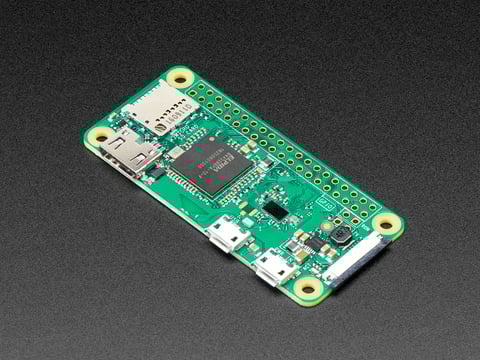
If you didn't think that the Raspberry Pi Zero could possibly get any better, then boy do we have a pleasant surprise for you! The new Raspberry Pi Zero W offers all the benefits of ...
dusty citrus
thats ARM
ocean sigil
sorry -- I did not realize ARM was not acceptable
 proven geode
@dusty citrus It looks like some people have had success building Snort and running on Raspberry Pi 3. Some claim it wants more than 1-2GB RAM to run well, so a Pi 4 with 4GB may be a better option than a Pi 3.
Scroll past the first “No” answer. :-D
https://security.stackexchange.com/questions/163013/can-snort-run-on-a-raspberry-pi
https://www.youtube.com/results?search_query=snort+raspberry+pi&sp=CAI%253D

Information Security Stack Exchange
I am in the preliminary stages of designing a cybersecurity suite for my home network. I don't have any servers or anything, just the standard home setup (computers, tablets, game consoles). The
Enjoy the videos and music you love, upload original content, and share it all with friends, family, and the world on YouTube.
late fulcrum
You could also make a WiFi antenna out of a piece of wire.
dusty citrus
Wait really?
I do want to make a portable windows computer
And I want the huge heatsink to be removed
late fulcrum
How do you plan to get rid of the heat? Not use the GPU and underclock it?
late fulcrum
It's not quite an ARM CPU in a DIP package, but it's an ARM CPU in an 8-SOIC package with a DIP adapter. https://www.st.com/en/evaluation-tools/stm32g0316-disco.html
dusty citrus
And I do want to connect a touchscreen to it
dusty citrus
i put my raspberry pi NAS under my tv stand in my bedroom to get it from all the electromagnetic radiation from the ac/furnace system right next to it, due to the effects of that on non-ECC memory
for the new one i might build in the future, any opinions on these specs?
Example use: Retreving LibreOffice Writer document to edit from on another PC, Streaming 720p video, could possibly run Snort
4 GB DDR2 ECC memory
Intel x86 based (800 MHz to 2.8 GHz)
2x Western Digital Red NAS drives in RAID 1 config
LSI RAID SATA PCI card for drives mentioned above
1 Gbit or 10 Gbit ethernet (if not included in system, get ethernet PCI card)
Mid-Tower Case
Motherboard that supports above parts
late fulcrum
Yow, 64 bit quad core 1.7" SBC US$9.90 https://www.seeedstudio.com/ROCK-PI-S-Mini-Computer-with-Rockchip-RK3308-256RAM-p-4286.html

Rock Pi S is a Single-board computer(SBC) with a small size and high-performance cost ratio.
covert spire
What did I just click on?
 echo agate
What a cute little board
dusty citrus
Thinking of creating some projects with that board
Like
Creating
A mini phone like device that uses radio waves insted of using cell service
blazing pond
@dusty citrus For something like that, I'd honestly look at cramming a 4 GB Raspberry Pi 4 into a USB 3 multi-bay drive enclosure
 errant atlas
I have an Atomic Pi and it's HUGE. It's more of a Desktop than Tablet. I'll see if I can find the pictures I took. I bought a Mean Well power supply for it and had to wire it for AC. The board is 5v at 3A and the class-D stereo power amplifier needs 12V at its full power (2x5W), or you could just use HDMI audio.
blazing pond
Consumer NAS that lasts a long time is hard
Like, minimal costs for compute side, and nearly all the money in storage
If you use pre-owned hardware, you also get its wear and tear
If you use new hardware, you have to trade off reliable, over-powerful, and not-cheap
errant atlas
(Do not try at home) Cardboard computer box
blazing pond
My NAS is a Celeron J1900 mini-ITX board, for example. It's about 5 years old at this point and other than not scaling up to e.g. running a Minecraft server, it does the business
errant atlas
mini-ITX is probably the best way to go, rather than an Atomic Pi
blazing pond
A modern equivalent would be, hm.... I'd say a Zen-based AMD Athlon dual core in a low-end motherboard
You could easily do an Intel Celeron too but six of one, half dozen of the other, etc.
AMD generally prices its lower-end stuff for better value than Intel right now
Hm but even low-end A320 motherboards can still cost a pretty penny. $80 is the current cheapest on Newegg
add a CPU and RAM and that's still nearing $200 of compute
But that gives you lots of room for drives and controllers. 4 SATA, one PCIe x16 slot, and one mini PCIe slot for WiFi that you could easily put an adorable mPCIe SATA controller on
gigabit LAN built in
blazing pond
AMD CPUs support ECC. Not sure on Athlons, but all Ryzens do
so a Ryzen 3
Intel segments that off
Xeons only
heck I gotta head out
but also look into UnRAID as your NAS OS
Their tech isn't great for speed but it's aces for reliability and easy recovery without having another identical machine to rebuild an array on
tl;dr it does parity but it doesn't stripe, so most of your drives can still be read as single drives in a Linux system
late fulcrum
My oldest NAS is a Drobo, but they dropped support for it. Then I tried QNAP, but their security model worries me, so I gave that one away. Then I tried an old gaming PC with OpenNAS, which works pretty well, but chugs away mostly ignored in the basement for occasional mirror backups. Current unit is a ThunderBay. Synoptics makes some nice ones too.
grave crest
@late fulcrum I'll throw my hat in the ring for Synology. I've used them since 2013-ish, two models -- DS413j and DS1819+. They're turnkey, great support, and have been solid as a rock.
Nicest part about the synology is that all models support all of their software -- so you can get an entry-level model and run top-tier services on it like Docker, Plex, etc. You're only limited by the CPU and RAM available. There's not artificial limiting of services available just because you bought the "cheap" model.
[you really don't want to run Plex on their entry level 'j' series model. Like, you really don't want to do that. But you could try, if you want! 😛 ]
late fulcrum
Heh, I meant Synology, just misremembered the name.
grave crest
Wait, your memory isn't perfect? Given your breadth and depth of knowledge, some of us were taking bets you're a benevolent AI from the future 😛
dusty citrus
@blazing pond I am literally watching the show right now, and I see your picture
I came to ask: what is fire?
blazing pond
Fire? Which show? Which picture? Forgive my confusion
blazing pond
ohhh, yes indeed
My girlfriend whipped this icon up for me because my last icon choice was far too cursed for her tastes
blazing pond
It's a plasma resulting from high-temperature chemical oxidation
it occurs when that reaction is self-sustaining
dusty citrus
So, I’m just learning about chemical reactions, so I’ll take a beginner’s guess and assume the reactants are oxygen and energy?
Something combining with oxygen, and needing a lot of energy to do so?
Oxygen is pretty stable, isn’t it?
blazing pond
No. Oxidation does not technically require oxygen, but it's named after oxygen's usefulness as an oxidizing agent
Burning is also an exothermic process
It releases energy, rather than absorbing it
If it absorbed energy, it would make things get colder
dusty citrus
So, it gives energy to the things around them, letting them light, too
blazing pond
And oxygen is very reactive, one of the most reactive elements
dusty citrus
Bruh..
blazing pond
It's stable over the short term as O2, but otherwise combines readily with other elements
The reason why we have free oxygen in the atmosphere is because of biological processes
dusty citrus
We’re just learning about photosynthesis and cellular respiration
I find it so, so cool to think about this at the molecular level
blazing pond
On other planets like Mars without active oxygen-producing life, oxygen has long ago combined into gases like carbon dioxide or fixed into the soil e.g. by rusting iron
blazing pond
Probably AP physics?
It's not that crazy but it requires some background to understand it as something as simple as it is
dusty citrus
Ah, physics
dusty citrus
Yeah, plasma’s a fourth
blazing pond
Plasma is a fourth stage, and it's essentially an ionized gas
dusty citrus
Some sort of liquid-gas thing
blazing pond
liquids, gases, and plasmas are all generally "fluids"
They can flow, rather than atoms being relatively fixed in place like with solids
Liquid and gas, per my understanding, mostly vary by how strongly intermolecular forces hold them together
Between gas and plasma, the main difference is whether the component chemicals are stable molecules (gas) or are so energetic that electrons separate and the fluid is made of charged particles, i.e. ions and free electrons
dusty citrus
Can plasma react? Or is it too stable? Like, if an unstable compound is open to something fire has, and it touches fire, will it complete?
blazing pond
I'm not sure exactly where the reaction takes place within a flame, but generally the products of burning do evolve through the burning process
Generally, something with carbon and hydrogen in it burns with oxygen to produce water (hydrogen and oxygen) and a combination of carbon soot, carbon monoxide, and carbon dioxide depending on how much oxygen is available
dusty citrus
Ions and free electrons, you say? That’s crazy...
blazing pond
Carbon monoxide itself is unstable so it can undergo further changes after it's given off
dusty citrus
That’s a lot of reactions
blazing pond
In this electroboom video you can see how a flame interacts with high voltage as Mehdi stumbles across using fire to trigger his Jacob's Ladder https://www.youtube.com/watch?v=lT3vGaOLWqE

Thank you everyone for raising my channel to where it is. And DO NOT try making a Jacob’s Ladder at home! I still want to have you around. Lulzbot mini in Am...
It's also an important safety warning because unlike most of his pratfalls, the accident near the end of this video was unplanned and he nearly kills himself
dusty citrus
So, if it’s free electrons, and you chuck an atom with 3 valence electrons, will it borrow one of those free floating electrons to calm itself down?
blazing pond
It can indeed. But as long as things are still in a plasma state, there's enough ambient energy to shake those electrons back off
But as you cool from plasma back to a regular gas, ions recapturing electrons is part of that transition
dusty citrus
Ah
blazing pond
However you touched on something really neat there
blazing pond
Ions borrowing free-floating electrons is how electricity works in wires.
dusty citrus
Yes
blazing pond
Applying a voltage to a circuit causes electrons to slowly bump their way forward through the circuit. It's actually not terribly fast, 1 amp through 10 cm length of thin wire can actually take a minute?
Like literally, a minute for the actual electron to go from one end to the other
dusty citrus
What?
blazing pond
The much faster transfer of energy is a wave front of the electrons stimulated into motion

With electricity so fast, how fast do you think electrons move in a wire? Is there a “Yo-Mama” joke in there somewhere?! It would be pretty awesome if you su...
Electroboom is great
dusty citrus
So the whole “near speed of light” thing is a half-truth?
blazing pond
The signal does indeed go near the speed of light, yes
But it's like highway traffic
At all points, traffic is going at highway speeds
but an individual car takes quite some time to get from one point to another
dusty citrus
Ah
blazing pond
As for why ash is irreversible... That is because of entropy
Entropy is a bit of a difficult topic, and I don't think you would get a really rigorous look at it until college physics?
dusty citrus
Entropy...something something, the universe will end, something something
Red dwarves, blah blah
blazing pond
I'm gonna do my best on this, but fair warning, it may not be good
Entropy is a statistical measure of how disordered a system is... or, how many different arrangements it can be in while still being fundamentally the same
Like, take a pile of salt and a pile of pepper separated
you can mix up the salt and mix up the pepper
but they'll still look like two piles of two things
But if you mix the two piles together into one big lump of salt and pepper, there are many more ways to mix them up and still have them be "a big mess of salt and pepper"
dusty citrus
Got it so far. My understanding of a system is something that processes matter and energy
blazing pond
The total entropy of a closed system cannot decrease. A "closed" system being one where there is no external input of energy
dusty citrus
Yes
blazing pond
Closed system: The earth and the sun, taken together. Open system: The earth by itself (because it's bombarded by sunlight constantly)
Burning, as a chemical reaction, creates a lot of entropy. You can't just un-entropy the ash
dusty citrus
Weirdly, Human Geography taught me that
blazing pond
The only thing you can do is move the entropy elsewhere, and that's pretty difficult.
Like, you could get atom-scale tweezers and separate out the carbon atoms and glue them back into organic shapes
dusty citrus
Saying that Thomas Malthus was wrong because he didn’t consider a country as an open system
blazing pond
and the process of you doing that would burn energy in your body
dusty citrus
I see
blazing pond
so the entropy would be transferred to your metabolic waste products
dusty citrus
What the?
blazing pond
I tried to elaborate on waste products and was not polite enough :v
dusty citrus
Hm
blazing pond
But most of your energy-burning metabolic waste is water and carbon dioxide that you exhale
Not coincidentally the same end-products as burning
dusty citrus
That’s crazy
blazing pond
That's thermodynamics!
dusty citrus
thunderf00t would like to know your location
Very interesting explanations, thank you
blazing pond
Hopefully I'm more right than not! :)
dusty citrus
Oh, weird...I just remembered N-Tropy from Crash Bandicoot because of this conversation
My childhood
late fulcrum
As for the speed of electrons versus the speed of electricity, imagine a tube filled with marbles. Push a marble in one end, and a marble pops out at the other end. However, the marbles haven't moved very far or fast.
dusty citrus
Ah

Debussy - Rêverie Click the 🔔bell to always be notified on new uploads! •Follow Rousseau on socials: ♫ Instagram: http://bit.ly/rousseauig ♫ Twitter: http://...
dusty citrus
dusty citrus
I'm thinking of a idea of putting a raspberry pi as a wristwatch
late fulcrum
@grave crest It occurs to me that we've met in person, so if I'm an AI, I apparently have a meat puppet as well. 😜
umbral phoenix
(sorry, wrong channel)
dusty citrus
Imagine thinking madbodger isn’t a robot
grave crest
@late fulcrum Wouldn't all sufficiently advanced AIs appear as magic?
dusty citrus
im doing something really stupid
im trying to install ubuntu touch on my old tablet
but its getting kinda difficult
fickle slate
what happened to the user who was banned on suspicion of being a bot?
thinking back that was very humorous
late fulcrum
Clarke was right, I suppose. Then again, if I'm an AI from the future, perhaps I developed from the brain of the person you met in the past?
late fulcrum
That's sort of what I was getting at.
dusty citrus
Or what if he is a terminator
late fulcrum
I did design this poster for The Sarah Conner Chronicles
late fulcrum
Oh boy, found some cheap brand new leafblowers without batteries or chargers on eBay. Time to build a hovercraft! Margie is unsure about this project.
dusty citrus
I've see YouTube videos of people building their own fusion reactors in their homes
ocean sigil
maybe a hovercat!
 edgy apex
My car now has a pi 3 installed in the trunk
So it runs kismet, my goal is to using ping/curl to try and test the speeds of any open networks it comes across. I think it's possible but I will have to look more into it
abstract violet
Happy Thanksgiving @cursive pike and other fellow Canadians :3 🇨🇦 🦃
 cursive pike
@abstract violet Back at you. We just had Thanksgiving Dinner Poutine. Does it even get any more Canadian than that?
 stray wind
I had my Thanksgiving poutine last night. Sooooo good. First proper poutine I've ever had.
 lyric hull
okay so
can i ask someone to help me with some uni stuffs... i didnt wanna ask, but i dont wanna fail this assignment
late fulcrum
You're probably better off just asking your real question, instead of asking if you can ask a question.
late fulcrum
Heh, I remember the nodal analysis problem you were working on back in August
lyric hull
yes <~>
and i actually feel i got rteally good at it, but uts the ac thats messing me up
late fulcrum
AC is where things get wonky
lyric hull
as i understand it, converting the variables to phasors are supposed to help eleviate the stress as you can then do calculations asif they are normal dc circuits
late fulcrum
If I'm reading the the problem statement correctly, it seems like that's what's expected (those look like instantaneous voltages to me, but I could be barking up the wrong tree)
lyric hull
e.e
 hidden bluff
Just installed dropbox after a fresh windows install. It thinks the first sync will be done in 2 months 😦
late fulcrum
It's like french fries with cheese curds and gravy. Decadent goodness. There's a place in Los Angeles that makes an Indian version that's weirdly wonderful.
It's tricky to find decent poutine in the United States, but a trustworthy friend from Canada says that the Mile End Deli in Brooklyn offers a worthy version.
abstract violet
happy thanksgiving @vernal gale ! 😄
vernal gale
Happy thanksgiving
echo agate
Not sure what happened here, but it certainly caused problems.
late fulcrum
Looks like stress cracking.
Or possibly an internal short which generated heat which ended up cracking the whole component.
echo agate
Definitely shorted inside, it was causing the voltage rail to overcurrent, thus failed power sequencing, thus no workies 😦
late fulcrum
Ouch. I'm used to components failing with no visible sign.
echo agate
Me too! I found the short by pumping current through it and looking at the board with a thermal camera, didn't expect the failure to be so obvious
late fulcrum
While it's annoying that it broke, it's kind of nifty that it's visible, and I appreciate you sharing it: I don't see something like that every day.
errant atlas
I just started reading the newsletter and came across the Chumby post. I still have my Chumby One, does anyone still have their Chumby? What are you using it for? Mine is just a clock right now, but I kind of want to do something with it. Ideas?
jagged siren
My Chumby was my original tweetable/IOT office door sign. Used an offline firmware when chumby.com went away, and eventually it either fried a few flash drives, or had some other issue. Don't think it's alive now.
late fulcrum
It appears the Adafruit Emoji broadcast system is working
stray wind
@vernal gale As well you should have!
dusty citrus
I’m learning japanese
But I’m noticing something really weird
Reading it and writing it are super far apart in memory
I try to write physically, with a pencil, and I’ll suddenly forget completely what a character looks like. But reading, I can breeze by with simple phrases
proven geode
@dusty citrus Just found this:
http://www.studykanji.net/kanjiquiz/chrome

Study Kanji
Learn Japanese Hiragana, Katakana, or Kanji with flashcard quizzes
I have this book somewhere; I studied Japanese for a bit. It shows how some pictograms evolved into kanji, as on the cover illustration:
https://www.amazon.com/Kanji-ABC-Andrew-Dykstra/dp/0917880005/ref=sr_1_1?keywords=kanji+abc+dykstra&qid=1571266224&sr=8-1
covert spire
I just been using apps
dusty citrus
I'm on Duolingo for japanese
It's awesome
If I could find some sort of way to practice writing electronically, though, that'd be so cool
Imagine just having a drawing tablet of sorts, and a program that judged writing
I have a book for Kanji as well
Learning a new character set must be incredibly stimulating for the brain
late fulcrum
18 year old buys an IBM Power Z mainframe. https://www.youtube.com/watch?v=45X4VP8CGtk

Connor Krukosky is an 18-year-old college student with a hobby of collecting vintage computers. One day, he decided to buy his own mainframe...an IBM z890. T...
late fulcrum
He spent less than $350 (the computer itself was $280 or so).
 balmy rivet
I'm watching an episode of Blacklist, an FBI crime drama, and this is their bomb. I just can't... I don't have the words to describe my feelings towards this.
dusty citrus
Just be glad it wasn’t a circuit playground.
Why are the most radioactive elements named after planets?
@balmy rivet
Yep, everything nice and hooked up
late fulcrum
@dusty citrus Uranium was named after the planet Uranus because Uranus had just been discovered, and Martin Klaproth figured that naming his new discovery after another well-publicized scientific discovery made sense. The discoverers of Neptunium and Plutonium followed suit.
However, those are hardly the "most radioactive" elements, many (Francium, Astatine, Radon, etc.) are much more radioactive (leaving aside the fact that elements have multiple isotopes, some of which are more radioactive than others).
dusty citrus
Then why doesn’t NASA use the more radioactive ones to power their rovers, instead?
They’re using plutonium
late fulcrum
Because they decay rapidly, the power sources would run down in a few days or hours. It's the old concept of "those who burn twice as bright burn half as long".
There are also issues of what's practical to produce, and which elements have decay products that won't ruin your apparatus.
For example, Actinium-233 has this decay chain, with different (alpha and beta) decay mechanisms.
Plutonium has 15 isotopes, all radioactive. NASA uses Plutonium-238, which has a half-life of 87.7 years, in their RTGs.
It decays to Uranium-234, which is relatively stable, with a half-life of 245,507 years. That, in turn decays to Thorium-230, with a half-life of 75,382 years. These decay products mostly just sit there, and don't cause issues with the generator.
dusty citrus
Wow...
proven olive
It's like. We could use chlorine trifluoride to heat our houses. But heating oil or even wood is a much more reasonable option.
 waxen crest
Well, there are some RTGs made with Polonium
And they had a usable lifetime of only like 10 years IIRC
late fulcrum
I remember polonium 210 begin used in antistatic brushes, didn't know polonium (possibly a different isotope?) had been used in RTGs.
grave crest
@late fulcrum I have one of those brushes, bought it back in 1999 or so. From my research, it loses the effectiveness after about one year. But interesting effect -- it yellowed the white lining of the thin cardboard/paperboard box it came in, only right below the emitter.
http://www.company7.com/staticmaster/products/staticmaster.html
Company Seven, offering the Staticmaster products. We are a technical resource for the international amateur and professional research, manufacturing and law enforcement/defense communities.
Personally, I never noticed a difference between the Staticmaster brush and a regular lens brush made of horsehair or other material.
late fulcrum
I would expect the yellowing was from atmospheric contaminants deposited on the lining.
grave crest
I honestly don't know -- but it was exactly where the grill was pressed against the box, and even had the shape and lines of the grill. Granted, they're just alpha particles...but I wouldn't want to hold that in my hands all day every day.
proven olive
I don't know, it sounds pretty rad to me
late fulcrum
Right handed molecules are the ones that twist plane polarized light to the right, left handed ones are the converse.
 ruby obsidian
https://en.wikipedia.org/wiki/Dextrorotation_and_levorotation :: ah; closer to my background. May be of interest, that (effectively) all "Active" biomolecules such as proteins, information encoding molecules like DNA & RNA (and therefore, life itself) are chiral. And for multiple, probably driven by chance events (which itself is proof of evolution from a single initial "lifeform"), is right-handed" or "dextro" (note that I am over-simplifying substantially..)

Dextrorotation and levorotation (also spelled laevorotation) are terms used in chemistry and physics to describe the optical rotation of plane-polarized light. From the point of view of the observer, dextrorotation refers to clockwise or right-handed rotation, and levorotatio...

Chirality is a geometric property of some molecules and ions. A chiral molecule/ion is non-superposable on its mirror image. The presence of an asymmetric carbon center is one of several structural features that induce chirality in organic and inorganic molecules. The term...
 gleaming ibex
Extremely off topic but if anyone goes to Taco Bell anytime soon and gets the Xbox $5 box, could/would they send me the code that comes inside 😅👀
ocean sigil
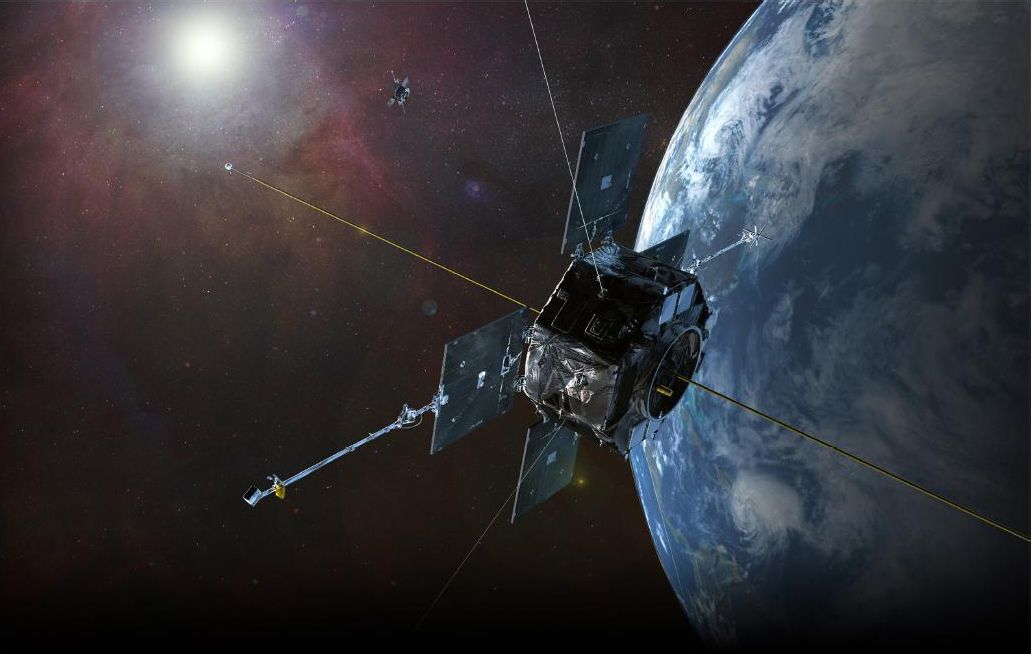
In case anyone finds it of interest - this has what has been keeping me busy for the past 12 years or so -- 5 years building it before launch! my role was to write the software to control one if the science experiments and to operate the instrument on orbit. It was a great success and a great experience... now I can really retire... https://www.space.com/van-allen-radiation-probes-end-mission.html
 gleaming ibex
That's lit
ruby obsidian
@ocean sigil this is amazing! I have so many questions!!
ocean sigil
@ruby obsidian Feel free to ask questions. I'll warn you that I am not a scientist so my knowledge of the detailed science is limited. My job was developing the software then preparing commands and monitoring the telemetry to make sure the instrument was working properly.
proven geode
@balmy rivet OMG. Do you perchance know which season and episode?! That's kind of amazingly bad. I want to hear the awful dialog that goes along with it. Also, it would be fun for us to identify the parts.
grave crest
@ocean sigil That's an out-of-this-world project!
dusty citrus
Is varying density based on temperature answered by thermodynamics?
dusty citrus
Just wondering what field the question falls into
hardy rock
@dusty citrus Sure, temperature, density, and pressure, it's all about that. Although in thermo you're usually talking about gases. Thermal expansion and contraction of solids and liquids gets less attention.
I had a random conversation with a physics professor a few years back who said he had been looking into thermal expansion and thermal stresses in solids and that it was an under-researched field, that there weren't a lot of resources out there to work from.
It's physics generally but thermodynamics is part of physics.
 karmic kite
Curious if anyones tried the new arduino suite?
ruby obsidian
@ocean sigil thanks! Ok. First set of questions: I'm assuming the craft used reaction wheels to maintain position? Was always curious if the reaction wheels "decayed" over time, and the spacecraft controllers had to update the s/w to account for that..
Also, am I correct in assuming programming was in C? Or ADA(less likely?).
Thank you for indulging my curiosity! :)
ocean sigil
@ruby obsidian the spacecraft did not use reaction wheels. The were spin-stabilized (~6 rpm) and used gas thrusters (hydrazine) for maneuvers. Programming languages varied for each instrument and the spacecraft. We used C and assembly language for our computer. Typically, the computer resources were very limited due to power and radiation constraints.
ruby obsidian
Got it. Thank you! one more question:
Did you have a clone on the ground where you tested the code etc. like the mars rovers? Is that common practice for all spacecraft?
ocean sigil
Yes. Typically a High fidelity “engineering “ model is used for ground testing. For our instrument,, we had the engineering model of our computer and sensors connected to a Spacecraft emulator. All command sequences and code were tested before upload to the system on orbit.
ruby obsidian
thank you! Sorry, one last question: how was the spacecraft "emulated"? Was it s/w emulation? Building such an accurate model in s/w itself seems like (to me) a massive challenge..
ocean sigil
The emulator was mostly hardware and really only had to emulate the interfaces and data path. I did not operate rtfs spacecraft. Our commands were routed through the spacecraft to our computer and our data was sent to the spacecraft for transmission to the ground. The emulator allowed us to realistically test our commands and receive telemetry. The Spacecraft operators had a much mor complex test platform, hardware and software, to test the e s/c operations.
@dusty citrus I worked on MMS as well (FIELDS)
Great! Nice to hear!
They have lots of fuel remaining. They will operate for a long time.
Yes, glad to have been able to be part of it.
I spent over 15 years working on it!
@ruby obsidian good simulators are indeed a challenge, but critical to successful missions.
Usually less expensive than a full extra set of hardware, though
Also for a system like Van Allen Probes. Where you have 5 instruments and one spacecraft. .
One each of the 2 spacecraft.
@dusty citrus it’s really exciting to hear that you are working with the SWD data. Good luck with your paper!
hidden bluff
So this usb-c to thinkpad adapter is a thing that exists
 jagged pewter
Does anyone have any lamp recommendations while working on electronics? I can't seem to find the appropriate keywords to look up for lighting solutions for your desk
jagged siren
None myself, but googling 'electronic workbench lighting' returns several people's experiences, including https://www.stuffandymakes.com/blog/2013/03/17/electronics-workbench-led-upgrade and http://www.made2hack.com/electronics-workbench-led-lighting-upgrade/
StuffAndyMakes.com
I guess I forgot to post an update to the update of my workbench. Not only did I clean up the gigantic mess that had accumulated on it, I improved the lighting and workspace availability:
Prior to this upgrade, I had fluorescent lighting under the blue cabinets over ...
jagged pewter
ah great! That does get me closer to what I was looking for. Thank you @jagged siren !
grave crest
@hidden bluff I'm actually interested in your workbench design -- laser etched?
hidden bluff
yeah. you can remove the bottom of the full spectrum laser we have so we used that to engrave some useful and less useful things into the hackerspace tables
so electronics reference, guest wifi password, ruler, and logo are engraved into the table
grave crest
That's pretty rad 🙂
hidden bluff

Some of us stayed up late building brushless motor drivers (VESC).

 Twitter
ruler and guest wifi before urethane: https://twitter.com/sbhackerspace/status/658200601201803264
In addition to our logo we also laser engraved some useful things into our new tables.
 Twitter

electronics reference https://twitter.com/sbhackerspace/status/660206139208937472
 dusty citrus
I’m curious
If I ate a mass of simple sugars and starches, would they still taste sweet?
karmic kite
So pie?
dusty citrus
Hmm
Is food sugar as we know it still just C6H12O6?
Would a glob of CH2O (a monosaccharide) taste the same?
 versed pumice
Table sugar, sucrose, is fructose and glucose in a dissacharide
Afaik simple sugars are sweet
And I imagine starches are starchy
But this seems super testable
No assay like bioassay, that's what I say.
late fulcrum
C6H12O6 is a monosaccharide (glucose, fructose, etc.). Food sugar (sucrose) is C12H22O11. However the sweetness comes from its structure, the empirical formula just gives the counts of the atoms.
 shrewd hatch
@late fulcrum what are your thoughts on this https://www.tindie.com/products/saimon/4-ports-isolated-usb-uart-converter/

Tindie
Isolated USB - UART converter with 4 independent ports
late fulcrum
That looks really useful, a safe way to hook up a serial link to several things at once, even if they're all floating at different voltages
late fulcrum
There's some discussion on EEVblog https://www.eevblog.com/forum/testgear/ruideng-riden-rd6006-dc-power-supply/
hardy rock
It's never a bad chip. But today's another of those days when it's good to have a spare unused chip around to prove it to myself.
It wasn't a bad breadboard either.💡
 tame saddle
haha. the removal of variables is just good methodology. 🎉
hardy rock
@tame saddle It turned out to be operator error again, as usual. But doing something seems to help the process along, not just sitting and frowning and thinking about it.
tame saddle
exactly. just keep moving forward. electrons don't have will power. but we do... 😄
abstract violet
Pretty cool graphics made with ASCII 😄
if you modify the url's number (x1 - 12 for example) the developer showed their progress along the way
late fulcrum
Not quite ASCII, more like ANSI graphics.
 drowsy pilot

#CardinalTagle #TheWordExposed #JesComTV Please support our Mission https://jescom.ph/donate/ hirtieth Sunday in Ordinary Time Lectionary: 150 Reading 1SIR 3...
 short pulsar
https://thecity.nyc/2019/10/how-manhattans-city-bakery-crumbled-under-weight-of-debts.html Business models: Expansions can be challenging.

The City
While doing brisk business in sweet treats, the Union Square institution was embroiled in high-cost borrowing from an industry under state probe.
dusty citrus
Are there any legitimate japanese speakers here?
I have a goofy question, so ping me
abstract violet
@vital harness sweet! How are you cooling the helmet?
 vital harness
I am not... Lol. I do have a little fan, but it does not seem to get hot enough to need, to be honest.
waxen crest
Excuse me, that is a scarily exact looking costume
dusty citrus
going as hippie this year since i am completely out of ideas...
I have already finished this little project
@vital harness looks amazing
late fulcrum
@dusty citrus Looks a little floppy to me.
grave crest
Yeah I'd agree with @late fulcrum --- seems really alien to me too.
 idle iron
learning eagle... very cool and amazing. I like being able to "export library of the parts from a given schematic" doing that now with all the adafruit stuff i own
late fulcrum
That's how I built a fair chunk of my personal library, but there are also stuff from SparkFun and other projects and libraries, and of course a handful of parts I created.
dusty citrus
here is the costume
 drifting oasis
Anyone have any idea where I can find a mating connector for a Toby AO5 cable? I'm looking for the board side. Preferably, there'd be a cool breakout to 0.1" spacing, but any through hole'd do. Toby's info on it is here: https://www.toby.co.uk/cable-wire-to-board/200mm-idc-connectors/a05-valcon-wire-to-board-2mm-dual-row-idc-socket-114mm-profile/
Valcon - 2mm pitch dual row cable mount IDC socket; 3mm centre ploarising bump; Terminates with L02 series 1mm pitch flat grey cable;
Cable assembly available;
 fading sinew
dusty citrus
fading sinew
dusty citrus
.oO(Seasons don't fear the Reaper..)
STM32F405 all sold out!
There were 82 left at midnight. ;)
dusty citrus

The span between A and C is just a wooden cross-member.
https://en.wikipedia.org/wiki/Utility_pole
What I want to know is how they achieve strength at B where it joins the pole.
Looks to me like it's just a hole drilled through the cross-member, which looks to be about 4x4". A bolt goes through that.
Why doesn't it split there? << main question I have
A and C want to roll towards the ground, in the plane of those high-tension wires.
There are two metal straps, halfway between A and B, and between B and C, to join the main pole near F.
I look at this thing every day, as it's right across from my porch. ;)
The only answer I have is 'because oak is really strong' ;)
late fulcrum
I'm guessing there's not a whole load of load at the point where the bolt goes through, because the cross beam is supported by the gusset ("F"). Do you want me to try to find my lineman's handbook?
dusty citrus
@late fulcrum I think your intuitive read would be enough, thanks.
I Just don't see it .. the wood should split under the load.
If the pivot floats (very low load) that leaves the outer two straps, which don't look bulky enough for this job.
late fulcrum
There's also the question of how the outer straps are attached to the crosspiece and if that attachment creates a weak spot.
dusty citrus
I'm not seeing a whole lot of hardware up there; this particular pole is single-crossmember (neighboring poles have dual crossmembers in parallel).
Obviously they work and work well. I just don't see how they achieved that.
The load at B seems to bear on the pole at the long axis so it can be ignored, I think.
 lost condor
Yearly stream of my Internet of Pumpkin project is live. Was originally going to have monster m4sk eyes, but I couldn't get them attached in time.
So now it's a fairly boring "Change the pumpkin colors through chat"
But, you know, have fun if you want to mess with it. 😄
Next year though...CRAZY EYES.
proven geode
@lost condor That's fun!
lost condor
I'm changing it right now to support multiple colors. 😄
proven geode
Is it running on a Pi? Seems to support named colors, like skyblue!
lost condor
So, it's two parts. I have a script that is reading the chat, parsing the colors, and pushing them out to my MQTT server
And then in the pumpkin is hardware connected to wifi and listening to the MQTT channel
proven geode
I'd reword the bottom like:
The pumpkin changes color based on chat. Any valid CSS color should work. Try one of these:
red skyblue green #ff6600 #f00
Good idea
Also, apparently my oauth token just expired
So I have to do that whole fun thing again
lost condor
Made that change. Thanks for the idea @proven geode
 paper walrus
Does anyone know if I can use multiple gift cards on a single order?
late fulcrum
I learned long ago to put the soldering iron on one side of the joint, and the solder on the other "because the solder flows toward the heat." I wondered for a long time why that is, and today I learned about the Marangoni effect (flow due to differences in surface tension), which might explain it (apparently many welding techniques depend on it).
 fair summit
@paper walrus Email support@adafruit.com if you haven't figured it out yet
paper walrus
Ah, will do thanks
dusty citrus
I haven't been on adafruit for a long time
 limpid pulsar
@lost condor just tried it. That is super cool 😮
lost condor
@limpid pulsar Yep, saw ya. Thanks!
dusty citrus

Like this and want to help support my future projects - send bitcoins to 1MEeRmWAViTKsU3ty8dxCrY36Bi635j5k9 This is a machine I built to calculate square roo...
This is actually amazing
proven geode
Very cool, @dusty citrus!
dusty citrus
That thing looks like something out of a steampunk world
late fulcrum
I'd been playing with relays, but was having issues with the same thing he did: doing clocked synchronous logic with devices that have varying timing and dead periods. I'll have to watch his video on how he solved that, as I think it would be cool to go from simple "and"/"or" logic to a flip-flop or simple counter.
fickle slate
Hmm, I would just commit to building a full on relay CPU and just program it to do floating point math
lost condor
@proven geode The irc connection died when you were trying to mess with the pumpkin. I just redid it with a much simpler implementation.
The old one was trying to respect Twitch's oauth-for-IRC and there's just too many ways for that to go wrong, for literally no useful purpose since it's server to server communication.
Going to turn it off soon though, and get started on thanksgiving. I have an idea.
proven geode
@lost condor Cool. It's working quite well now! What's the tech stack?
lost condor
@proven geode There's a nodejs script running on a server listening to the twitch chat, parsing colors from messages, and then publishing the RGB values into an MQTT channel. Inside the pumpkin is a Pi Zero W with a pimoroni unicorn hat providing the light. A python script is listening to the MQTT channel and handling the colors.
Isolating them through messaging allows for a lot of flexibility, and the ability to bring online new event sources without needing to modify the code lighting the pumpkin.
proven geode
Very cool!
 sweet mango
Wow, I have not checked this discord server in a while (Busy with school), so much has changed. 😃
dusty citrus

eBay
The DueProLogic is a complete FPGA. The DueProLogic makes programmable logic easy with an all. The block diagram shows all of the parts of the DueProLogic. There are two. DueProLogic Overview. DueProLogic Features.
Is this a good FPGA board to start with?
echo agate
Seems pretty well outfitted for a small inexpensive FPGA board
late fulcrum
Looks like it's not supported by Icestorm, Nextpnr, or Symbiflow.
echo agate
Definitely gonna have to deal with Quartus
late fulcrum
Blargh. Tried twice, never got it to install and run. Sticking to open source from now on.
vital harness

I was Mysterio from Spider-Man: Far From Home for #Halloween. I had a lot of fun making this costume: I cut and crafted the helmet, designed the outfit in Photoshop, and a lot more. There was tough competition, but I won Most Original Costume at work! 😍 #SpiderMan #Cosp...
 Twitter
Finished my costume!!!!
grave crest
@vital harness Congrats!
late fulcrum
That's awesome! Well done!
vital harness
Thank ya'll!
hardy rock
Poking around the web last night looking at more FPGA CPU designs and I got interested in the OpenRISC project. I thought of this topic when I found some nice looking tutorials that target the Terasic DE0-Nano board (Cyclone IV FPGA) and Quartus. https://github.com/juliusbaxter/mor1kx-dev-env/wiki/OpenRISC-SoC-on-FPGA

GitHub
Development and verification environment for the mor1kx core - juliusbaxter/mor1kx-dev-env

GitHub
Repository and Wiki for Chip Hack events. Contribute to embecosm/chiphack development by creating an account on GitHub.
GitHub
Repository and Wiki for Chip Hack events. Contribute to embecosm/chiphack development by creating an account on GitHub.
The Cyclone IV on the DE0-Nano board has about 3.5 times the logic elements as the one on the board that @dusty citrus asked about, for maybe $20 more. And the OpenRISC demos go as far as booting Linux on the chip.
That work was done for an event called ChipHack in 2014. It's possible that some of those instructions have been broken by new versions of software since then. Also, there was another ChipHack event in 2017 that used a Lattice iCE40 FPGA with open-source tools, that's also well documented. http://chiphack.org/
dusty citrus
Which FPGA board do you reccomend guys?
late fulcrum
For what? TinyFPGA ($12 - $38) is cheap and small, Digilent Basys 3 Artix-7 ($149) is designed for students and has a lot of nice built-in peripherals (switches, LEDs, seven-segment displays, VGA, etc.)
hardy rock
TinyFPGA BX (the more expensive option) and the Symbiflow toolchain can take you from blinking an LED and reading a button all the way up to running MicroPython on a RISC-V processor. It could keep you busy for a while without being a huge investment.
dusty citrus
I'm really happy that the new STM32F405 board does more than one bootload/upload method (DFU SWD and I think using the USART).
The USART method seems to be used a lot by Forth programmers.
hardy rock
I followed your adventure along as well as I could without having one of the boards. My experience getting started with an STM32 Blue Pill was being confused by all the programming options, not knowing if I had to do A and B and C, or if I could pick any one of them. But hooking an FT232R to two pins on the board and writing the bootloader over serial turned out to be easy enough, once I realized that was all there was to it.
dusty citrus
Wow so you are ahead of me in that.
The DFU method turned out to be root permissions; everything else works as low priv user.
(Linux centric POV)
I want to do it non root but don't know how. Tried g+s and chown root:dialout on the uploader bin.
(and u+s for SUID root I think)
Used to play with that stuff a lot, fifteen years ago or longer.
I'm sure if I just did what you're supposed to do (Trust the Manufacturer and use default-JRE) I wouldn't have this issue to sort.
Pretty sure JRE isn't used at CLI.
My present method is to upload_to_target.sh ./path/to/binfile -g in a shell script (MSDOS 'batch' file).
I even uploaded a mecrisp-stellaris bin file to the target that way.
(and circuit python, too)
(mecrisp wants USART2 while we don't have it on ours)
So I have to recompile for our target.
I'm also a brand new USB C user and I'm liking it. ;)
OBTW this is a TINY feather and is NOT the same size as Feather M4 Express.
hardy rock
This turned out to be the simplest Blue Pill solution for me but I have no idea how it relates to other STM32 boards if at all: https://medium.com/@paramaggarwal/programming-an-stm32f103-board-using-usb-port-blue-pill-953cec0dbc86

Medium
While the $2 board is cheap and very commonly found, getting up and running is slightly convoluted. Here is a short guide on how to set it…
dusty citrus
That was a big surprise. ;)
Yeah it's an F103.
STM32 is the major category.
I don't know one from the other, from F103 to F405 and friends.
I think our family here is F405/F415/F407/F417.
(bootloader says this)
The mecrisp binfile is F407. (iirc)
hardy rock
For the F103 all I had to do was put rx on pin a9 and tx on pin a10. A Python program handled writing the binary. I just told it which /dev device was the FTDI breakout.
dusty citrus
There's a guy on YouTube who used bluetooth to talk to the blue pill and does his uploads wirelessly!
When I do get mecrisp working, it'll be via TX/RX not CDC/ACM (USB) to converse with it.
Once the firmware is resident, I could literally remove the USB connector, as it won't be used.
(Will probably DFU it to get the firmware resident, though).
hardy rock
The script I used is called stm32loader.py. There seem to be a few versions of it, some more fancified than others. But it handles more than just the F103. chip_ids = { 0x412: "STM32 Low-density", 0x410: "STM32 Medium-density", 0x414: "STM32 High-density", 0x420: "STM32 Medium-density value line", 0x428: "STM32 High-density value line", 0x430: "STM32 XL-density", 0x416: "STM32 Medium-density ultralow power line", 0x411: "STM32F2xx", 0x413: "STM32F4xx", }
dusty citrus
Well, the mecrisp source tree shows things I need to know about the chips he's already ported to.
My guess is this amounts to a small number of addresses, and a small number of pins to manage (say, for USART6 vs USART2 for a port).
So your python script probably has 0x8000 address in there somewhere.
(with more zeroes than that!)
0x08000000
0x08004000 is only an erasure point, not an entry point. It's a flashROM boundary only.
hardy rock
Yes def usage(): print """Usage: %s [-hqVewvr] [-l length] [-p port] [-b baud] [-a addr] [-g addr] [file.bin] -h This help -q Quiet -V Verbose -e Erase -w Write -v Verify -r Read -l length Length of read -p port Serial port (default: /dev/tty.usbserial-ftCYPMYJ) -b baud Baud speed (default: 115200) -a addr Target address -g addr Address to start running at (0x08000000, usually)
dusty citrus
Since the uploader, when it succeeds, reports this:
Erasing memory corresponding to segment 0:
Erasing internal memory sectors [0 2]
erasing sector 0000 @: 0x08000000 failed
erasing sector 0001 @: 0x08004000 failed
erasing sector 0002 @: 0x08008000 failed
```I was in almost a panic when I saw that. ;)Erasing 'all' addresses that.
hardy rock
(I'm impressed by the Forth interpreter linked from that site running on the iCE40 HX1K FPGA. I've got an iCEStick with that chip and it's not a very big chip.)
dusty citrus
We've had Forth on C8051F330D with like 8kb flashROM and like 756 /bytes/ of RAM. ;)
When you have only 756 bytes of RAM you write your program a lot more carefully. ;)
hardy rock
Yes but the processor logic is hard-coded on that. 😁
dusty citrus
Oh I missed your point entirely. ;)
I think mecrisp has a good rep but I've never once run it.
Any Forth using thumbulator is apt to be machine language sourced.
('written in assembler or pseudo-assembler', I take it)
hardy rock
I'd have to look up what other resources the HX1K has, probably a block of RAM to use, but it's about 1000 lookup tables for the whole processor/interpreter.
dusty citrus
There was a show and tell guest here a couple of years ago who was implementing their own ALU (somehow).
And there was a BBS on the Internet composed of only 7400 series chips, that implemented a full CPU somehow.
We learned vacuum tubes in high school, and had like one day on transistors. ;)
hardy rock
His J1 CPU is 127 lines of Verilog! https://github.com/jamesbowman/swapforth/blob/master/j1a/verilog/j1.v

GitHub
Swapforth is a cross-platform ANS Forth. Contribute to jamesbowman/swapforth development by creating an account on GitHub.
I might have to play with that some. There are full build instructions for the iCEstick.
I've been looking at soft CPU implementations but there's usually so much extra stuff that it's hard to follow the decode/execute logic. This almost fits entirely on my screen.
@late fulcrum linked to this video series about two weeks ago and I've been watching it a little bit at a time before bed. He walks through the whole process. https://www.youtube.com/watch?v=yLs_NRwu1Y4

The LMARV-1 (Learn Me A Risc-V, version 1) is a RISC-V processor built out of MSI and LSI chips. You can point to pieces of the processor and see the data fl...
When you say "a BBS on the Internet composed only of 7400 series chips" was that a running system connected Internet? Or just the design for one that you could look at?
dusty citrus
He had an address - I think you telnetted in.
hardy rock
Excellent...
dusty citrus
Probably not the one I'm aware of already:
http://cpuville.com/Projects/Original-CPU/Original-CPU-home.html
hardy rock
I've been trying to cook up a concept for the lamest homebrew CPU not using an FPGA--maybe using two chips instead of just one. None of the glory of using 74-series TTL or relays or any of that, but just barely one step beyond putting it all on one FPGA.
hardy rock
That CPUville site is nicely done, well organized.
dusty citrus
This is a really good record of his progress. Wow.
I remember him using wire wrap.
Thing was huge when completed.
Homebuilt CPUs WebRing was a thing.
hardy rock
More recent snapshot of the site talks about porting the Minix OS to it and getting the web server running. https://web.archive.org/web/20191015084544/http://www.homebrewcpu.com/
dusty citrus
Telnet interface available:
https://web.archive.org/web/20041129142908/http://homebrewcpu.com:80/
hardy rock
Looks like it might still be an active site but just offline at the moment.
dusty citrus
64.142.4.132 port 10001 or 100001 (I can't count zeros with my eyes very well)
January 2005 so no doubt at a different IP if at all.
hardy rock
Oh, I'm logged in right now.
dusty citrus
He probably went webbed interface after the novelty wore off.
hardy rock
Magic1 login: guest
Password:

    * - * - * - * - * - * - * - * - * - * - * - * - * - * - * - * - *
    *                                                               *
    *      Bill Buzbee's Magic-1 HomebrewCPU TTL Minicomputer       *
    *                                                               *
    *    Running 16-bit Minix 2.0.4 at a blazing 4.09 Mhz......     *
    *                                                               *
    * - * - * - * - * - * - * - * - * - * - * - * - * - * - * - * - *


Running .profile...
Don't forget to set your terminal type. Example:

export TERM=xterm
export TERM=vt100
Installing hacky-ls as hls (use hls if ls is missing)
$```I think my real name is in his guestbook. I telnetted in and (presumably) signed his guest book.
What address? You can DM if you don't want to make it public. ;)
hardy rock
It's on his webpage: So, to telnet in to magic-1, do: "telnet magic-1.org 51515".
hardy rock
To log in, use the id "guest" and the password "magic".
dusty citrus
Or my firewall is at issue locally.
Still .. you were talking to 7400 series chips, there. ;) Haha
dusty citrus
Here's the writeup of a nearly new bbs magic:
https://web.archive.org/web/20041207022955/http://www.homebrewcpu.com/talk_to_magic-1.htm
hardy rock
When I got in I was at a shell prompt, and the home directory for guest is writable by the user so there are lots of greetings there.$ pwd /usr/home/guest $ ls 15Years.txt GUESTBOOK2019 anon.sig hello_world p13WasHere 50primes HelpMeMakeOneO brasswashere hello_world.c pmgwashere 50primes1 HubrisWasHere code hello_world.o primes AjWasHereWithL JasonWasHere dat.c hello_world.s primes.sh BenWasHere LeeWasHere dat.s his data file rand BugraWasHere LiamWasHere factor jbevren;) rogue.esave Calendar_17 MatCatWasHere fibbo jon_WasHere sqrt.s Code README figo kingdom.bas story.sav Code2 README.txt forum.txt kingdom.sh temp Code3 SimonWasHere game_menu.sh mines.s test-sc.db Felipe TinyBasic hacky-ls new_primes test-sc.lst FromCreepNT YourMomWasHere helloFromBrigh new_primes.c test-sc.tbl FromKayla a.out hello_from_chi new_primes.o test.c GKWasHere advsave hello_there new_primes.s testdir $ uptime 23:30 up 3 days, 15:37, 2 users $ ls -ld . drwxr-xr-x 9 guest guest 1216 Oct 22 13:25 . $ ls -lConnection closed by foreign host.
OK, getting late and I think I've used up my free fall-back hour now. 😁
Congrats on getting the STM32 Feather going and thanks for the HomebrewCPU link. That was fun!
dusty citrus
https://termbin.com/wzdc
(tada!)
(Linux/Unix only):
alias termbin_it='nc termbin.com 9999 <'
Requires netcat to be present. This is a #linux -ism on freenode, I think.
late fulcrum
Heh, I'm friends with the guy who wrote netcat
sweet mango
I forgot today is daylight savings time. I was wondering why my watch was at a different time then everything else. 😆
late fulcrum
Ben Eater's next segment on his "Hello, world on 6502 breadboard" is up: https://www.youtube.com/watch?v=yl8vPW5hydQ

Schematics, datasheets, kits, and more at https://eater.net/6502 Support these videos on Patreon: https://www.patreon.com/beneater or https://eater.net/suppo...
dusty citrus
ah yes the bob ross of electronics
idle iron
working on ItsyBitsy display anyone know a display that can fit in 13mm x 26 mm area?
at this point i dont mind what kind, TFT, LCD, LED, OLED, VFD.... ect
@viscid folio
was thinking of doing two versions one with display on top and other with display on bottom, like a mirrored version
late fulcrum
I wonder if the little OLED used on these would fit https://www.adafruit.com/product/4087

The latest Raspberry Pi computers come with WiFi and Bluetooth, and now you can add even more radio options with the Adafruit Radio Bonnets! Upgrade your Raspberry Pi with an RFM69 or LoRa / ...
Erf, not quite, looks like it's 30 x 11.5
finite monolith
you silly 95% of the world and your goofy "Daylight Savings Time"
idle iron
@late fulcrum that will work fine if i remove the bottons
i guess ill do that, they were just going to pins anyways with spot to cut on bottom
idle iron
@late fulcrum is it okay to place stuff under the display? or am i going to need to put the stuff on the bottom of the board?
late fulcrum
Thin stuff is probably fine if you have something compliant between like foam tape
fickle slate
Homebuilt CPUs WebRing is a good thing
someone should compile all the Homebuilt CPUs WebRing webpages into a single location for easy rehosting
It's like the best source for building CPUs
hardy rock
@fickle slate There's a homepage that's still active: https://www.homebrewcpuring.org/ringhome.html
And as the host of that page says, the contents of the project sites is the intellectual property of each of the authors.
fickle slate
That's good
And I know the authors have the rights to their webpages, but I think it should be OK to backup the sites for when they inevedibly go down
 torpid belfry
Not without permission
fickle slate
waybackmachine does it
torpid belfry
Posting other peoples' content without permission is technically publishing without rights
All I know is that someone wanting to preserve a copy of content does not give them a legal right to publish that copy. They can make a copy for themselves, but the minute they make that copy publicly available, they are in murky legal waters.
fickle slate
ohh, as long as the webpages are up, then no they shouldn't be rehosted
torpid belfry
even if they aren't up, they shouldn't be rehosted without permission
I believe that the loophole wayback uses is that they're not just hosting the content out there. You have to requests a specific page (and point in time) and then you only see that page
it doesn't change the legal boundary, but it does help them prove their intent is to provide backup, not republish
fickle slate
waybackmachine has to delete pages if people request
hardy rock
The sites have been archived by the Wayback Machine. @dusty citrus and I took considerable advantage of that last night.
torpid belfry
yup, but that's true of anyone in US jurisdiction thanks to DMCA
fickle slate
Basically if the original creator isn't around anymore, and the original webpage is down, then it wouldn't be a big deal, regardless of the technical legality.
torpid belfry
Dunno
I have heard of people getting hit with lawsuits out of the blue for stuff like this
Very costly ones
fickle slate
Ehh, would the creator not want their work to be remembered after they die and can't pay for site hosting anymore?
torpid belfry
So while there might be low risk overall in that situation, that's not the same as no risk, as the law in most jurisdictions is not on your side
hardy rock
Point is moot. The sites that don't object to being archived have been archived. Unless you really just want to argue about this stuff.
fickle slate
would the creator's family sue someone over rehosting something their relative made that can't earn them money?
torpid belfry
Well, this is offtopic so... 😉
Sometimes the creator takes their material down for Reasons.
And gets upset when someone revives it without asking.
fickle slate
I don't think "i am dead and i can't pay for site hosting" is a valid reason 😉
torpid belfry
it's not your call to make
that's kinda the point
creators have the right to determine how their stuff is handled, including neglect if that's what they want
your want of their content does not override their right to not provide it
fickle slate
they won't be around to care
anyways, yea it's a moot point since the pages are on waybackmachine anyways
torpid belfry
So it's not whether something is right, it's whether you can get away with it?
hardy rock
 torpid belfry
I mean, there are lots of arguments you could have made about the current IP/copyright regime that would have a lot of merit, but you skip straight to the utilitarian argument of "can I get away with it?"
Yeah, you're the kind of "fan" no content creator wants. Good to know, <plonk>.
fickle slate
k
hardy rock
And really, by now, shouldn't it be enough just to post the number of the xkcd cartoon? Eg, "386" for this one. Because there's one for just about every occasion.
fickle slate
i'll let you take the argument to the waybackmachine if you'd like
It is quite close to fair use anways
idle iron
here is an example of the OLED ItsyBitsy display board
doesnt look very pretty 😷
idle iron

GitHub
OLED display for ItsyBitsy. Contribute to hexthat/Bitsy-Display-Add-On development by creating an account on GitHub.
no clue if it would work... i put 2k pull up on SLC and SDA like the datasheet says but the Pi one doesnt have that and the capacitors are of different value then what i think the datasheet says... but i cant read datasheets well so....
can someone knowledgeable have a look at this? maybe @stray wind if you ever get some free time
late fulcrum
Capacitor?
idle iron
i looked at the other example https://learn.adafruit.com/adafruit-oled-featherwing/download and its about the same as the bitsy one im working on 😋 I should have looked at that one first
 late fulcrum
@finite monolith There's a petition up to eliminate the silly daylight savings time: https://www.change.org/p/abolish-daylight-savings-time
stray wind
@idle iron Link me the datasheet, I'll see if I can find a moment. But I will caveat this with not really having much experience with this either. I'm getting pretty good at reading datasheets, but I've designed only 4 boards or something, and none were as complicated as yours. I've done more driver work than board design. That FeatherWing is a good place to start. Begin there and squish it.
idle iron
i assume having slightly higher capacitor doesnt negatively effect it
I'm mostly worried now about putting resistors and capacitors under the display now, a easy fix would be just have the screen on bottom but I doubt that would be usefull for everyone, my other thoughts were just using smaller sized ones like 0603-MINI or 0402 @stray wind What is your opinion on that?
stray wind
@idle iron We often have the displays on the opposite side of the board, but that side then becomes the top, and everything else is on the bottom. I think the only concern with having things under the display is whether the display will adhere to the board properly, and maybe heat considerations, but with a display that size, I don't think it warms up enough to matter.
Swapping the display with all the components could mean rerouting your board, but if it makes it work, might be worth it.
idle iron
Im okay with rerouting everything like start over I find Eagle very fun. When top becomes bottom and bottom becomes top... does that make it okay to place capacitors and resistors on bottom of board?
sick adder

Sensors worn on the surface of the skin -- aka temporary e-tattoos -- can measure a variety of electrical and biomechanical signals in the human body. But now researchers have discovered how to...
idle iron
new top would have just screen and reset button bottom would have everything else
stray wind
Yep, take a look at some of our display breakouts, I'm fairly certain everything else is on the bottom.
sick adder
doesn't it present problems at manufacture to have components soldered on two sides?
idle iron
awesome sounds good
sick adder
or at least, increased cost?
idle iron
i think your right jepler it adds steps
stray wind
Correct.
sick adder
so on a product like this, they have a cutout and pass the ribbon cable to the component side of the board https://www.adafruit.com/product/2050

Add some jazz & pizazz to your project with a color touchscreen LCD. This TFT display is big (3.5" diagonal) bright (6 white-LED backlight) and colorful! 480x320 pixels with ...
but .. you also want the reset button as a minimum, hm
idle iron
yeah for sure cause add-on will cover up MCU's reset
dusty citrus
I use a 3/16" (or so) diameter tact switch cap on my RESET buttons, and just about every project gets one. Or I use a tall skinny one that pokes through the chassis where I can get to it easily (generally in the dark without my reading glasses on).
My mounting solution for the RESET board (tiny perfboard to mount the switch) gives additional tactile feedback - the screws are surface mount heads spaced about an inch apart, on each side of the RESET tact switch cap itself.
idle iron
@stray wind I remade it https://github.com/hexthat/Bitsy-Display-Add-On I'm having issues with milling out the edge where OLED is folded.
I'm very thankfull for autosave in Eagle almost lost 3 hours of work.
GitHub
OLED display for ItsyBitsy. Contribute to hexthat/Bitsy-Display-Add-On development by creating an account on GitHub.
stray wind
@idle iron I've never done a milled out bit before, so I have nothing to offer there unfortunately
late fulcrum
Various board houses have different recommendations. I commonly see it on both the milling and dimension layers, with "CUT OUT" text inside it for clarity.
dusty citrus
.oO( .. So .. it'd say Cut it out and not quit it! ;)
The idiom cut it out makes no sense to me, in the quit it sense of this idiom.
late fulcrum
Perhaps the meaning is of the "excise this behaviour from your lexicon" variety?
idle iron
im going for REVC now, does it matter if i flip it upside down? it would just end up being a slight tweak in the lib right?
im referring to the display
dusty citrus
Kids say this all the time (I think that's still true, in USA culture). cut it out.
The parents say it, too. ;)
idle iron
i hear "knock it off" more
late fulcrum
Depends on which library you're using, but I think that most of them can accommodate varying orientation. If not, just turn the whole assembly around for viewing :). Note that if you mean putting the display face-down, I'm unsure if that would work 🙂
idle iron
lol not face-down
late fulcrum
I didn't think so, but I've seen some creative approaches!
idle iron
lol now that you say that how awesome would it be face down into a cutout....
late fulcrum
I was thinking that yesterday when the sole remaining part on one side of the board was the reset switch, and thinking there are reverse-mount switches available that you can access through a hole in the board.
idle iron
i like that idea, so many possibilities
Ive seen some really strange buttons from cheap china stuff too where its just like small peace of steel with 45 angle hovering over a pad, that when press makes the contact with the pad... you can make some super super small ones of thoses
idle iron
im really liking this version
dusty citrus
I have a stainless steel salad bowl, about as deep as it is wide at five inches.
If I plonk it with my finger (like triangle folded paper football flicking) it rings pretty loudly.
Held very close to a microphone, it pegs the VU meter. ;)
If you really want to saturate an audio amp, that's a quick way to do it. ;)
 scenic osprey

 dusty citrus
When I talk to someone I will be saying something and then I forgot what was I about to say, why does that happen? And how does that happen?
dusty citrus
crow .. shiny object .. dotcom
idle iron
updated my github of current version of the display, criticism welcomed. i went abit crazy with 3.3v. im theory is more = less heat
echo agate
When it comes to power and ground traces, go big if you've got the room
dusty citrus
go big or go home haha
My boss put labeled 3.3v and GND points on the perimeter of the larger boards, and silkscreened them. Looked like Fort Apache, with the perimeter. ;)
I'll have to look; I seem to recall that right-angle IDC header pin arrays fit on the edge of those boards.
sweet mango
@dusty citrus @late fulcrum the transistors are working, while testing them with 5v on the base caused it to let out the fatefull smoke, but they still work  . I added a 2.2kΩ resistor to the base of the transistor and the microcontroller.
late fulcrum
Yes, you need current limiting resistors for bipolar transistors
sweet mango
Yeah, I forgot about that. 😆
dusty citrus
@sweet mango I keep a breadboard handy that already has a working BJT driver circuit on it, ready to go. I've had it for years. Whenever I need this, I dig it out and capture its schematic, to recreate it. Have never disassembled it, no matter how urgent the need for cannibalization of its components. ;)
(It also has ULN2803 Darlingtons on it, for further reference)
iirc, the ULN2803's sink current to ground.
Since a microcontroller can't source much current, that means to use ULN2803, you also need some kind of a driver off the microcontroller GPIO pin, in addition to the ULN2803.
So you have GPIO > BJT > LED > resistor > ULN2803 > GND in the path. Both ends are now switched; disabling either end (source or sink) will make the LED go out (dark, no light, no current flow).
That has applications in an X Y matrix.
I usually put the current-limiting resistor for the load (the LED) between the LED and ground.
You can put the current-limiting resistor between the GPIO pin and the LED (totally omitting the driver transistors) for low load applications (singleton LEDs) but I decided not to do that, and instead to put the resistor on the other side of the LED (closer to ground).
🔸
 oak igloo
i got a broken uv light sensor then i asked amazon for a refund and i got an rgb light sensor 😑
late fulcrum
At least you got something. I got a thundering silence, followed by unending requests for "more documentation" when I kept at it. One of the many reasons I no longer do business with amazon.
@dusty citrus, the ULN2803 has an internal 2.7k current limiting resistor and should take a max of 1.35mA to saturate it: even a feeble microcontroller I/O should be able to supply that much current.
dusty citrus
@late fulcrum Right. I don't even think about the ULN2803 input in terms of power consumption. I had the ULN2803 (there) for the real load, sinking current, but didn't show the input (at all) to ULN2803.
late fulcrum
You had mentioned "Since a microcontroller can't source much current, that means to use ULN2803, you also need some kind of a driver off the microcontroller GPIO pin, in addition to the ULN2803" and I wasn't sure I understood what you were saying there. While you could use a driver, I don't think it's necessary even with a SAMD51, which shouldn't be loaded with more than 2mA.
dusty citrus
The application was a bank of 32 LEDs. In four groups of 8 LEDs.
The ULN2803's completed the grounds (exactly four grounds for the four groups of 8 LEDs).
The (eight) BJTs were connected to microcontroller GPIO pins (at the Base of the BJT through a resistor).
So you would turn on an LED column with its corresponding BJT driver, and a row with the ULN2803 providing a path to ground.
So the microcontroller had to have 12 GPIO pins available.
I used a 3-to-8 decoder, iirc, to save on actual GPIO pins. ;)
The 2803's were maybe overkill as I ended up using a light duty cycle and POV techniques, after I saw the ghosting of the array of 32 LED's.
late fulcrum
I was building something like that, and instead of a 3-to-8 decoder plus driver, considered using an SPI driver, then decided to just use an HT16K33 to replace everything
dusty citrus
I recently did an array of 7-segment x 4 LED displays, and I think I ended up painting each digit in sequence (possibly only 4 segments at a time, for a total of eight 'paint' events per cycle). Running that at 300 hz to remove flicker.
I don't remember if I used even BJT's for that. ;) May've just used GPIO pins directly.
I still have it now, but I realized I spent a lot of time painting the display, so I considered it a 'display only' project.
Might add an i2c listener at some point. It's trinket M0 based.
late fulcrum
I had another project where I was writing the code to multiplex a VFD, but I had horrible ghosting issues (it turns out electrons don't move terribly fast with only 24 volts nudging them along)
dusty citrus
Did video blanking help?
I had no idea (at all) that video blanking was required for POV projects, but luckily I thought of it (from video blanking CRT's) during the early phases of my first POV project (that bank of 32 LEDs).
The project I just linked (above) iirc, allows you to slow it down to human speed so you can see just how it works, by stepping through each illumination/blanking event, at (say) 1 Hz. ;)
probably 'slew' (just glancing through the code now). And it was shift-register based (which I forgot all about, until just now). And is a Simon Monk Guide lift. ;)
HT16K33 is obviously the better choice. I still haven't done a project based on it.
late fulcrum
This entire display (3 alphanumeric displays, 10 seven segment displays, and some LEDs) along with the keypad is being run by a single HT16K33. It's a great chip.
dusty citrus
Nice!
late fulcrum
I hacked up the AdaFruit library to support pairs of seven segment displays and the keypad
dusty citrus
I want eventually to have a box on my tabletop that looks just like the Altair, runs forth, has toggle switches to set single bits, programmable in Octal, and try to recreate what it was like to have a machine like that and have to boot it by throwing banks of toggle switches to get it started.
Inside will be a modern microcontroller simulating all that. ;)
sweet mango
@dusty citrus just got your message. That is a nice IC, I might have to get some of those to experiment with in the future.
dusty citrus
@sweet mango Just remember ULN2803 cannot source current -- it cannot supply your 3v or 5v or 12 volts. It sinks current, only ('completes the ground path').
sweet mango
Yep, got it. Thank you.
dusty citrus
The microcontroller pin cannot sink that much current, which is why ULN2803 (and similar) are used there.
I think 5 mA is a sane limit for a single microcontroller GPIO pin to sink current .. for a singleton.
I prefer about 2 mA or less, there, though. 5 is pushing it pretty hard.
I think the SAMD21 was in the 4 to 5 mA range for either sourcing or sinking (single-pin application).
A typical single segment of a 7-segment display can pull up to 15-20 mA if you let it.
That's why they're usually pulsed, rather than 'burned incandescently' (straight DC circuit, no pulsing at all).
So you use PWM techniques, instead.
 loud escarp
@idle iron Check out these guys; they're legit
https://www.aliexpress.com/store/224898?spm=2114.12010608.0.0.591b5bf5R2JC6Y
late fulcrum
Wow, great big (up to 8Mbit) FRAM chips. https://www.mouser.com/new/cypress-semiconductor/cypress-excelon-fram/
waxen crest
What's the advantages of FRAM?
Oh
unlimited read/write endurance
Yeah, that seems like it would be useful when most microcontrollers seem to only have 10,000 to 1,000,000 writes for their flash memory
late fulcrum
It's also much faster to write and you don't need an erase cycle. Additionally, it uses less power.
 floral urchin
But the price tho, 2-8 mbit, not even megabyte
I can see why mcu has only limited read/write endurance for cost benefit
sick adder
Any advice for an over the ear headphones with good mic? I expect to be doing more audio/video chats and what I have now is cheap uncomfortable in-ear style. There must be something all the gamers love...
jagged siren
HyperX Cloud II ? Haven't had any complaints. The headset has a phone-style 3.5mm combination plug, and it also comes with a USB interface.
dusty citrus
The ad copy written to promote 'Machine Learning' didn't really give me any brainstorms on how it'd be useful to me.
Need a good blog post on that. ;)
"It sounds as if it was valued" considering a new product is out, dedicated to its pursuit.
For the $35 bux, the module that supports it (with included mic) is a good value, compared with similar offerings already available in kit form here.
I'm thinking about closed circuit television as a solution to my avoidance of TFT's less than 7" diagonal. ;)
(watch it through a live camera, at 39" diagonal HDTV ;)
idle iron
@late fulcrum "108MHz QSPI" thats pretty darn good most QSPI i see are around 80MHz
do you know what the "Mbit/s" rate is?
dusty citrus
What FPGA board do you reccomend for beginners
late fulcrum
Just do a Discord search on "FPGA" and you'll see our replies when you asked the same thing on Sunday.
dusty citrus
Sorry if I'm being annoying
late fulcrum

