#circuitpython-dev
1 messages · Page 414 of 1
 slender iron
 idle owl
Yep
slender iron
 orchid basinBOT

Did you mean to say "built-in"?
idle owl
@slender iron Oof, it's worse.
orchid basinBOT
Thanks. Looks like this needs to be updated with product info, but I can do that in another PR.
idle owl
This time included the following amongst the normal reloads: ```Auto-reload is on. Simply save files over USB to run them or enter REPL to disable.
code.py output:
OSError: [Errno 5] Input/output error
Code done running.
reset 18286
soft reboot
Auto-reload is on. Simply save files over USB to run them or enter REPL to disable.
code.py output:
OSError: [Errno 5] Input/output error
Code done running.
Press any key to enter the REPL. Use CTRL-D to reload.
reset 19510
soft reboot
Auto-reload is on. Simply save files over USB to run them or enter REPL to disable.
code.py output:
Code stopped by auto-reload.
soft reboot```
But reloads more, and faster.
slender iron
I see that too
 manic glacierBOT
Ok, I essentially ported this over to MatrixPortal to test how it would do on the ESP32 Coprocessor and in the process found a bunch of stuff that is creating duplicate references. So I think the root problem is caused by 2 things:
- The code creates a lot of the networking stuff outside of the MagTag library (while at the same time automatically initializing the same stuff inside of the MagTag library)
- The later CircuitPython versions don't handle the conflicting references very well...
idle owl
slender iron
I see that too
I'm assuming the reset ### is a debug thing?
slender iron
yup, the number is the internal time that the reset happened
☝️ seems better
I do still get a couple
idle owl
Loading it now.
I'm still getting a bunch. But not as fast as the last firmware you sent. And no I/O errors.
slender iron
how big of a file are you copying?
idle owl
I'm not copying a file right now. I'm adding or deleting one line to or from code.py and saving.
idle owl
I can find a tiny file to copy if you want me to try that too.
Yes. I just updated the gist as well.
Want me to simplify and try again? I mean, people are going to have files more complicated than this, so it's a good test, but I can try it with less code if you'd like.
slender iron
nah. longer files may write more to the fs
idle owl
Ok
slender iron
I'm only really seeing one now
one reload per save
I don't have all of the libraries though
idle owl
This time when I pressed a key to start the time.monotonic() timer, it reloaded on its own, did 4 reloads before settling back down again.
All pretty close to reset 324494
If that matters.
Figures I would pick the finicky board for this project 😄 Is there a potential bug? Doesn't matter. Kattni will find one!
slender iron
ya, that's weird. mind posting the log for them?
idle owl
(Key on the project)
slender iron
the numbers should be at least 750 apart
idle owl
You mean the serial output?
slender iron
ya
idle owl
Press any key to enter the REPL. Use CTRL-D to reload.
reset 324494
soft reboot

Auto-reload is on. Simply save files over USB to run them or enter REPL to disable.
code.py output:

Code stopped by auto-reload.

Press any key to enter the REPL. Use CTRL-D to reload.
reset 325672
soft reboot

Auto-reload is on. Simply save files over USB to run them or enter REPL to disable.
code.py output:

Code stopped by auto-reload.

Press any key to enter the REPL. Use CTRL-D to reload.
reset 326768
soft reboot

Auto-reload is on. Simply save files over USB to run them or enter REPL to disable.
code.py output:

Code stopped by auto-reload.

Press any key to enter the REPL. Use CTRL-D to reload.
reset 337816```I think they're about that far apart, I meant they were relatively close to each other.Not identical.
slender iron
are you using pycharm?
orchid basinBOT
idle owl
I am.
slender iron
I wonder if it has special files on the drive
slender iron
that shouldn't be new though
idle owl
Also true.
slender iron
I'm not seeing an issue from finder now
I copied all the needed libs over and got one reload per copy
idle owl
Wait, it regenerates the .idea file on save. So it's not because of how I opened it specifically.
I can try opening it in something else, but I feel like this should still be fixed... There wasn't an issue with this before.
Atom: ```code.py output:
Code stopped by auto-reload.
Press any key to enter the REPL. Use CTRL-D to reload.
reset 761727
soft reboot
Auto-reload is on. Simply save files over USB to run them or enter REPL to disable.
code.py output:
OSError: [Errno 5] Input/output error
Code done running.
Press any key to enter the REPL. Use CTRL-D to reload.
reset 762767
soft reboot
Auto-reload is on. Simply save files over USB to run them or enter REPL to disable.
code.py output:```
Which created no extra files on opening.
slender iron
I haven't seen an OSError yet. that's very weird
idle owl
Right?
There's a NeoKey FeatherWing on it, but it's using keypad, so I'm not even sure what would be failing.
slender iron
it could somehow be the import statements failing
idle owl
Oof. In the time it took PyCharm to open, I got something like 13 reloads. No I/O error this time though.
slender iron
have you tried a non-rp2040?
idle owl
No. This is what I was working on. I can try TFT Feather ESP32-S2, sitting here. Or go get a SAMD51/nRF.
TFT Feather is likely running Arduino at the moment. So I'd have to grab some code for it too.
idle owl
right. ok. hold on.
slender iron
another feather rp2040
idle owl
three reloads opening PyCharm.
1 reload editing code.
on TFT Feather ESP32-S2
Running a digitalinput button = red LED example.
slender iron
that's still fewer than rp2040 right?
idle owl
by a lot.
idle owl
slender iron
another feather rp2040
One reload editing code on RP2040!
Wait...
four this time.
😕 Ugh.
slender iron
weird
slender iron
1250 reload time for feather rp2
idle owl
One reload again on save from simple edit.
slender iron
I do remember seeing a second reload sometimes
idle owl
rebooting now.
One reload. Takes ages (obvs), but only one.
Let me copy something
Small file, one reload
26k file.
slender iron
ya, it feels a little slow to me
slender iron
750
idle owl
I can try that one again.
2 reloads after save this time, which yeah, I've seen that too. Let me try copying something.
One reload.
Still feel slow, but I'll take it over waiting seconds for a bunch of reloads to end.
Also, that was a file that probably copied in the amount of delay time
let me try something like a lib.
slender iron
the delay should reset at the end of each write
since we're trying to ignore small delays between writes
idle owl
One reload!
Was a relatively big one too.
(or glancing at file sizes, seemed like it)
slender iron
the delay is a bit more noticeable now since we exit the code immediately
slender iron
🍕
idle owl
👋🏻
manic glacierBOT

As the original creator of this issue, I'm looping back to close this issue and happily use the work of @kevinjwalters at https://github.com/kevinjwalters/Adafruit_CircuitPython_SPS30
 gloomy shuttle
Moving the timestamp calculation to only when you press the key fixed the flickering for me.
while True:
    key_event = keys.events.get()
    if key_event:
        if key_event.pressed:
            print(key_event.key_number)
            if key_event.key_number == 1:
                if START_TIME is None:
                    START_TIME = time.monotonic()
                    PULSE_TIME = time.monotonic()
            elif key_event.key_number == 0 and START_TIME:
                CURRENT_TIME = time.monotonic()
                elapsed = CURRENT_TIME - START_TIME
                elapsed_min = elapsed // 60
                elapsed_sec = elapsed % 60
                timestamp = f"{int(elapsed_min):02}:{math.floor(elapsed_sec):02} "

                keyboard.write(timestamp)

    if START_TIME:

        time_pulse.animate()

This unifies the delay into the post-run delay that also waits
for user input and fake sleep. This ensures we always delay.
Previous code would only delay if the code.py was running when
autoreload was triggered. Now it will always delay.
We also now suspend autoreload when a USB write starts and then
resume on completion. This should prevent reloading in between
sectors of a single write.
We have a guide that uses it. It was removed in #6043 without
realizing that.
Fixes #6152

https://github.com/Xinyuan-LilyGO/T-01C3
I'm not sure where these creator/creation bluetooth IDs come from
idle owl
gloomy shuttle
Moving the timestamp calculation to only when you press the key fixed the flicke...
Ooh nice. I also switched to LED animation library because of the limitations of the "manual" pulse code. But good to know since I might stick with the original code!
manic glacierBOT
Force pushed to fix debug uart change (83593a1558c2e00be13a62e502fcb9ee923a9d6f)
orchid basinBOT

you edited teh esp32s3 not c3
orchid basinBOT
manic glacierBOT

This looks excellent, and I see that you tested it with @kattni's help. Thanks for yet another iteration on this. I think it's in very good shape now.
The sole CI failure is transient and unrelated to the code.
manic glacierBOT
Oops, I didn't know it had to be enabled in CircuitPython to use the coprocessor.
manic glacierBOT

hi
I added a board with ISP1807 developed by our company.
https://www.switch-science.com/catalog/6454/
hi
I added boards developed by our company like Pro Micro.
https://www.switch-science.com/catalog/6939/
manic glacierBOT

Is currently someone working on this? There are edits to remove blinka and, i guess, the terminal output.
https://github.com/adafruit/circuitpython/blob/main/supervisor/shared/display.c
manic glacierBOT

@tannewt I'm happy to push this forward now 🙂
 tulip sleet
@slender iron @idle owl I have 7.2.2 release notes ready to go with the MatrixPortal and auto-reload fixes. Can push the button any time and do the release.
 half pendant
Can I play music using my Adafruit Metro M4 feat? I read on the adafruit website that the Metro M4 has audio input and output. I have a Adafruit STEMMA Speaker (Plug and Play Audio Amplifier), but all the syntax listed on the website for this speaker is for the CPX. Can I use this speaker with the Metro M4? What is the CircuitPython syntax?
 tidal kiln
@half pendant please ask in #help-with-circuitpython , this channel is more for development work on the circuitpython core firmware
manic glacierBOT

Compiling mpy-cross with clang 13 currently produces a few warnings, which are incompatible with the -Werror flag configured in its .mk file.
TL;DR: Clang 13 adds a warning for "variable is set but its value is not used", which causes mpy-cross to fail to build. Adafruit's GitHub Actions use Clang 12, which does not include this warning.
This is reproducible on main, and mpy-cross in tags at least as far as 7.0.0. I see that there are successful builds in GitHub Action...
Thanks for the report. We try to avoid blanket disabling of warnings as errors, so that we can catch new unintentional errors. So in this case we could add void (n_pos_args); etc to the code at that particular place.
Good point.
Yes, adding this to all 5 variables would work; it might make sense to do it in the macro itself in case it's reused.
orchid basinBOT
It doesn't looks like this board has been added to CircuitPython yet and I can't find anything new on the S3, so I'll just close this and stash away the images for a later date.
slender iron
@tulip sleet go ahead with the release of you’ve tested the reload too and are happy with it. I won’t be at my desk for an hour and 20. We’re doing the car seat check this morning
 dusk gull
I am really hoping this is not a bad place to ask this, because it is a bit more advanced and it involves the build and development side of Circuit python. I was going to create an issue on github but it suggest using dicord or forums first.
Basically I build a lot of custom boards, I have used Micropython heavily in the past and with Damiens help added some features that really improved this experience. I often use the clock input with an oscillator and not a crystal (bypass mode) and Damien made easier access to this. The SAMD51 and SAME51 chips are different because they also have two clock inputs that you can select from. I have dug in the repos and found references to the clock sources, but not how to config them in a board folder/definition.
Now if there is a good way to do this now, awesome! If not I would heavily suggest that more of the clock input sources and configuration should be easy to put into config for the board.
Again sorry I found myself between two worlds with this question.
tulip sleet
dusk gull
I am really hoping this is not a bad place to ask this, because it is a bit more...
We have support for no-crystal builds, but not general support for other clock inputs. If you see a straightforward way to add clock input selection, we would certainly entertain a pull request. Note that some aspects of the samd implementations are in a separate repo: https://github.com/adafruit/samd-peripherals. See clock.* in that repo.
dusk gull
tulip sleet
We have support for no-crystal builds, but not general support for other clock i...
Thanks for the reply. Yeah that is what I noticed was many example of just using the internal clock. I am running CAN and other peripheral that need higher accuracy clocks over wide temperatures. Ideally this would be in the board config and passing a value to change from crystal to bypass mode would hopefully be simple enough.
#if MICROPY_HW_CLK_USE_BYPASS #define MICROPY_HW_RCC_HSE_STATE (RCC_HSE_BYPASS) #else #define MICROPY_HW_RCC_HSE_STATE (RCC_HSE_ON) #endif #endif
I will look at that repo.
Is this a not so bad place to discuss implementation regarding this?
 jaunty juniper
this is the right place
tulip sleet
It's fine to discuss this in GitHub as an enhancement issue, too. See how far you can get with the code. We aren't so likely to add this ourselves because there is very little demand (sorry), but as I mentioned, we welcome contributions
dusk gull
No worries, I just want to make sure I can talk to devs, I work with another developer that can also help with implementation, he is just not familiar with the clock setup and wanted to know more for the core developers.
Very much appreciate your time, and the repo you sent me @tulip sleet looks like it might have what I need. Worst case I can make a docker of a of circuit python to house a custom build system until it can be pull requested.
tulip sleet
you can just fork circuitpython and samd-peripherals and keep branches in the forks with your changes. A docker should not really be necessary.
Once you like your changes, you can submit PR's.
dusk gull
tulip sleet
Once you like your changes, you can submit PR's.
Sorry, yes overkill. I just will need to support a build system for a client during the prototyping phase, and I can share the docker with them and interact with it easily within VS Code. It has worked quite well with Micropython. I have a script that moves my custom board files (stored in the app repo) over to the docker image that VS Code mounts, and then I run the build processes.
But for the short term a fork makes the most sense
orchid basinBOT

Automated website update for release 7.2.2 by Blinka.
dusk gull
Another questions that I hope is worthy of the dev chat. I am working with a client that want to have as big as a filesystem as possible with external flash and avoid SD. I have seen examples of up to 64MB flash being used with Circuit Python, is there a limit outside of FAT? I am looking to use 125MB, but see no examples and was not sure there is a deeper reason for this, or that most people just do not need it.
tulip sleet
dusk gull
Another questions that I hope is worthy of the dev chat. I am working with a cli...
The code in CircuitPython can support large SD cards, so external flash should be OK too. 125MB should be no problem. I use it with 16GB SD cards all the time, and 32GB should too. ExFAT is available but is sometimes disabled (depends on the board).
dusk gull
tulip sleet
The code in CircuitPython can support large SD cards, so external flash should b...
Thanks once again. I figured but it was not clear after a lot of searching what was considered the limitations. It sounds like config of the flash chip is the biggest effort than.
tulip sleet
we define flash chip config in this repo: https://github.com/adafruit/nvm.toml
dusk gull
tulip sleet
we define flash chip config in this repo: <https://github.com/adafruit/nvm.toml>
Thanks, I saw that and plan on using an existing supported series, so it should be minimal setup. Just was not sure about any other limitations. Thanks!
idle owl
@tulip sleet Regarding the reload issue, I'm not sure what Scott finally decided to do. I was still running into issues last night, but didn't test whatever the final PR was. I can test it now if you like. Obviously, the release is in progress, but still.
tulip sleet
idle owl
<@!329766224093249548> Regarding the reload issue, I'm not sure what Scott final...
I copied a font file to an RP2040 on macOS, and it worked OK, with only one restart. I used the Finder.
as well cmd line
idle owl
Fair enough. I need a new build anyway because I currently have a debug test build from Scott running on this. I'll grab something.
tulip sleet
it's a lot better, maybe not perfect? we can always do another one, but I didnt' wnat to leave 7.2.1 out for long (also due to the MatrixPortal _bleio missing)
idle owl
Right, I agree.
@tulip sleet Oof, reload is slow. But it's still faster than waiting for 5 reloads in a row. That's significantly better with the 7.2.2 build. Oh I see it says "Reloading soon." Good wording.
tulip sleet
that was a good wording change. The reload time really reflects what's going on: it's safer than before. It doesn't wait more than 0.75 second after that last right.
macOS writes so many files... cp -X or whatever may make things more palatable for you.
idle owl
It was doing it while editing code, was my real problem.
tulip sleet
does pycharm store backup files on CIRCUITPY?
idle owl
Copying files, eh, inconvenient. Waiting for multiple seconds, or it felt like it, for it to stop reloading and actually run the code every time I changed something was incredibly frustrating.
I tried it with Atom too.
PyCharm has that .idea folder it puts in your working directory
But I deleted that and tried Atom, and same results.
tulip sleet
the old way, it didn't stop the program immediately, which means files might be changing out from under the program while it was running.
idle owl
Ah.
tulip sleet
i think it's really only 2 or 3 seconds, but compared with the old one, it does seem longer. Even 0.5 -> 0.75 seconds delay is noticeable
idle owl
Yeah for sure.
 lone axle
idle owl
PyCharm has that `.idea` folder it puts in your working directory
lone axle
idle owl
PyCharm has that `.idea` folder it puts in your working directory
If you're interested in stopping it from creating that .idea directory on the device there are some steps here: https://learn.adafruit.com/welcome-to-circuitpython/pycharm-and-circuitpython#creating-a-project-on-a-computers-file-system-3105042-4 that show how to set it up so that the "project" in pycharm is stored on your local PC (which is where the .idea dir will live) but the CIRCUITPY drive is added in as an extra content root which allows you to see and edit files on it.
idle owl
lone axle
If you're interested in stopping it from creating that `.idea` directory on the ...
Hmm. Weird but interesting. I always end up opening PyCharm from the command line in the directory I intend to work within. I guess that would be different?
lone axle
That is different from how I generally start it up. But I think you could still do it that way. You would open the terminal in the project directory that is on your PC rather than the CIRCUITPY drive and run your start command. I would guess that will open PyCharm to that project specifically which should remember the content root configuration and still show you those files.
idle owl
Ah fair enough.
lone axle
Honestly I didn't realize you could start it from the terminal in a certain location. That is awesome and actually probably easier than my normal workflow of using either File -> 'Open' or 'Open Recent'. Because I can find stuff outside of pycharms file explorer much faster. I'm glad you mentioned this, I will probably start opening it this way when I am trying to get specific projects open.
idle owl
I had to set something in PATH or some such, but now I can go into any directory and do pycharm . and open it.
lone axle
oh nice, I should add an entry in PATH for it. I had to do the full path to /opt/somewhere.
idle owl
PATH might not be right. I can't remember what was.
manic glacierBOT

@ladyada Use Case: I would like to use one core for monitoring a Loconet (from Digitrax) communication channel and a DCC reception (using PIO for the low level work) and use the other core for managing 16 GPIO (servos/buttons/current block detection/IR sensors, maybe other uses later), updating a neopixel bus, i2c communication (RFID, eeprom, display, etc) and possibly a bit more. I want to keep the loconet and DCC on it's own core to help prevent data loss in the PIO I/O buffers. I'm just ge...
lone axle
I think there are a few ways, maybe alias is another one. I've set up a few things like that. But I do it in-frequently enough that it hasn't gotten stuck in memory. I have some notes with the steps I've used before.
slender iron
@dusk gull This is definitely the right place to chat about circuitpython development and we'd love to have you PR your changes so that you can use upstream in the long run.
With the broadcom port I put the "CIRCUITPY" drive on an SD card and it worked with multigig just fine.
One limitation to check is that the QSPI or XIP peripheral supports flashes of the size you want
manic glacierBOT

CircuitPython version
Adafruit CircuitPython 7.2.2 on 2022-03-15; Adafruit Feather RP2040 with rp2040
Code/REPL
No code or input needed to reproduce the problem.
Behavior
Connection lost (read failed: device reports readiness to read but returned no data (device disconnected or multiple access on port?))

Use Stop/Restart to reconnect.
This message occurs shortly (<30 seconds) after connecting thonny 3.2.7 to an ```Adafruit RP2...
dusk gull
Fully understanding people are busy, which includes myself and why I am asking, but does anybody internally or externally to Adafruit have time to help me with some modification to Circuitpython for external clock support. I have more money than time at the moment. And somebody that is much more familiar would be a help as well .
 random junco
@dusk gull If no one responds here, maybe try posting on the Adafruit job board?
dusk gull
random junco
<@!404481546712776705> If no one responds here, maybe try posting on the Adafrui...
Thanks Paul, I will try that next. I am hoping to catch the eye of somebody familiar with the clocks side of this. Basically a paid improvement to the ecosystem. But I understand that the people here probably are quite busy.
 proven garnet
Is the CI acting up for anyone else?
Hopefully I'm not reposting 😬
Particularly on libraries, I'm having trouble in the "Install dependencies" step

GitHub
Follow up to our conversation earlier, here's what an example fix would look like in changing the relevant libraries. I guess this is a competing change to adafruit/circuitpython#6151 so I'...
slender iron
that's usually an actions problem
proven garnet
Rerunning resulted in the same issue for what it's worth
I guess I can file an issue there, thanks!
slender iron
¯_(ツ)_/¯
manic glacierBOT
I don't think there is work to disable it completely. deshipu only added a flag to remove the Blinka logo: https://github.com/adafruit/circuitpython/pull/5298
proven garnet
Actually it looks like it links back to adafruit/actions-ci-cirvuitpython-libs
proven garnet
With install.sh
manic glacierBOT
Do you see this on 7.2.1 or 7.2.0?
See https://adafruit-circuit-python.s3.amazonaws.com/index.html?prefix=bin/adafruit_feather_rp2040/en_US/ for previous versions.
@nicolasff Are you able to do a PR for this? You are in the best position to test and fix. Thanks!
And what is the host computer OS and version of Thonny you are using?
Ya, I didn't follow that. I'm used to seeing someones example code and the backtrace for the exception they are seeing.
The simplest thing is probably to switch this check to this shared checker: https://github.com/adafruit/circuitpython/blob/main/py/argcheck.c#L173 It includes the variable name and the expected range in the error.
Would you be willing to try and make a PR to do it? You've already found the spot to change. :-)
Creator ids are documented here: https://github.com/creationid/creators Please make one for LilyGo on their behalf and we could make a second repo to list the creation ids for them. We don't actually need them involved. It's just good to document them somewhere.

Further investigation shows that the ESP IDF function get_calibration_offset() is returning a different value than it previously did. This is used to calculate the returned voltage value, and is the cause of the change in CP7.2, which now uses a newer IDF.
It looks like there was a significant change in the IDF when it comes to calculating the calibration offset.
@tannewt, do we need to change our calculations in CircuitPython to adjust for this?
This looks good too. Thank you!
@aivarannamaa FYI. We switched our autoreload a bit and may have broken Thonny.
@DavePutz I have no idea. You are the expert at this point. :-)
This brings in the reload changes which will be good to test on main. It also brings in the removal of CIRCUITPY_AUTORELOAD_DELAY_MS definitions in each board that were never changed but copied everywhere.
slender iron
ok, I think we could do a 7.3 release once 6160 and 6144 are merged
idle owl
z00m
manic glacierBOT
And also the espressif I2c pullup fix
slender iron
oh, I am seeing a crash with wifi on main now though
tulip sleet
slender iron
ok, I think we could do a 7.3 release once 6160 and 6144 are merged
do you want to do it, or if you want, I can. I could show you in screenshare how to use AWS Athena if you would like an example
slender iron
I can do it. I want to look into this wifi stuff first
I think the httpserver library needs to go into the bundle
tulip sleet
do you want me to make a release of the HTTPServer library? I was thinking about replacing it with Neradoc's library or https://github.com/deckerego/ampule
manic glacierBOT
Seeing the problem on 7.2.2, not seeing it on 7.2.1, Thonny version 3.2.7, Ubuntu 20.04.4 LTS: Linux ub2004 5.13.0-35-generic #40~20.04.1-Ubuntu SMP Mon Mar 7 09:18:32 UTC 2022 x86_64 x86_64 x86_64 GNU/Linux.
slender iron
do you want to support it?
tulip sleet
eh, I could, but it could be nicer. The routing is pretty weak. The other WSGI libraries don't do file transfer out of the box, though, it's part of the routing code
I thought it was going to be used for the wordle stuff, but that's still in process
I wrote it as a bespoke thing for the word game demo
do you have a use for it immediately, so you want it in the bundle?
slender iron
I was trying to use it and noticed it wasn't in the bundle
tulip sleet
it was because I wasn't really satisfied with it, but it works ok
slender iron
I've got an idea on how we could do a wifi workflow and I was trying to start from it as an example
tulip sleet
main thing is that it supports EAGAIN, which some other ones didn't
we can release it as 0.x.0, and the API will change
slender iron
release is different from being in the bundle
tulip sleet
ok, I will PR it to the bundle
tulip sleet
lol
slender iron
you can always bump a major version number
https://github.com/adafruit/circuitpython/pull/6144 is waiting for a final ok
manic glacierBOT
tulip sleet
ah, i missed your resolution
slender iron
np, I can bug you more and more as needed
manic glacierBOT
slender iron
@onyx hinge I'm considering picking up your mdns work
 onyx hinge
@slender iron I think that would be great! You had a clear idea about some of the naming stuff, and I'd love to see it finished.
slender iron
I'm wondering if we could use it so expose a rest api at circuitpython.local
for a wifi workflow
onyx hinge
I wasn't thinking about wifi workflow pe se but that would sure help
slender iron
I'm wondering if code.circuitpython.org could do requests to circuitpython.local
onyx hinge
you can also (by going further than my patch set) actually define a service so that programs can enumerate just circuitpython-style devices
that I do not know
slender iron
I'll rework your branch so I can test it
won't hurt to have a mdns module anyway
have you tried .local on your phone?
I wonder if android and ios do it too
onyx hinge
on android, chrome and firefox can both browse to a "http://example.local" address. of course, you can never have an SSL certificate for a .local so https would bring up warning dialogs
slender iron
I wonder what that warning looks like if you have json do a request
manic glacierBOT
I'm picking this up. I want to experiment with MDNS.
onyx hinge
apparently insecure websockets ws:// are basically not allowed. wss:// presumably requires a valid security certificate matching the name being used
idle owl
@lone axle I updated the gist, by the way. jfurcean suggested moving the time calculation into the key event instead of outside of it, and said it eliminated the flickering. I wasn't seeing it using the LED Animation library anyway. I left the "manual" pulse code in there as well in case you'd rather do that. Let me know what you think and I can PR it to your repo. Or I can PR it and you can review it that way, if that would be easier.
onyx hinge
- Install the Browser extension to test unsecure (ws://) connections
- Modern browsers do not allow connecting to an unsecure server from a secure origin.
[from some online web socket test page]
idle owl
Either way, wanted to let you know it's working, you don't have anything to fix. It's now a matter of preference. 🙂
slender iron
seems like they should have an exception for .local
slender iron
we can do insecure websockets from insecure pages though right?
maybe circuitpython.local is the main page you visit
lone axle
idle owl
Either way, wanted to let you know it's working, you don't have anything to fix....
Nice! thank you. I did assemble one of my neo key featherwings today. I'll try out the latest version tonight after class (about 4.5 hours from now). I'll reply here once I've had a look, if you're already done for the night by then though definitely don't worry about PR or anything till tomorrow.
idle owl
lone axle
Nice! thank you. I did assemble one of my neo key featherwings today. I'll try o...
Yeah it's food time relatively soon, so definitely tomorrow. No rush on testing either. Simply wanted to make sure you knew there wasn't anything to fix anymore, since that was the last status.
lone axle
slender iron
we can do insecure websockets from insecure pages though right?
I'm not sure of the full context of what you're discussing but I do know that insecure ws:// connections can be made from an insecure http:// page at least in my experience with modern browsers. I've mostly used http://localhost:8000/something pages for it and have successfully tested websocket stuff that way.
slender iron
@lone axle I'm thinking we could have circuitpython devices editable that way
lone axle
if the webpage is deployed and is under https:// protocol then the browser will not allow it to connect to insecure websocket though ws:// will not work in that case.
slender iron
we use mdns to advertise circuitpython.local
each device checks for circuitpython.local before it takes that name
 viscid pine
you could do a wildcard cert and dns trick like plex does
lone axle
Interesting. So user would be able to open their browser on another PC on the same network to that page and it would be a basic code editor / file manager type thing?
lone axle
That would be awesome
slender iron
it can also run the detection for other devices and publish their hostnames
(this is what I'm trying to test to make sure it's possible)
onyx hinge
@slender iron from a https page you can't request a http page via javascript, firefox says "Blocked loading mixed active content “<url>”"and links to https://developer.mozilla.org/en-US/docs/Web/Security/Mixed_content
Going https with a bad certificate also fails with no chance for the user to allow.
slender iron
right, makes sense. so we can't have code.circuitpython.org do it directly since it's https
but circuitpython.local could be a stub that loads resources from code.circuitpython.org
viscid pine
viscid pine
you could do a wildcard cert and dns trick like plex does
trying to exlain this but i got censored haha
slender iron
too many asterisks?
viscid pine
Filippo Valsorda
This week Plex, a self-hosted media server, announced that they now offer TLS to secure all connections, including those to the user's servers. This is actually pretty interesting. Background A quick overview of the Plex architecture to understand why this is different from the average HTTPS deployment. The server is
lone axle
the xs I think probably got it caught by the bot.
slender iron
yup
viscid pine
tldr: it allows the https site at app[dot]plex[dot]tv to request local addresses over https
slender iron
haha, that's tricky
onyx hinge
that's interesting but I doubt you'll get letsencrypt or other free and api-driven issuers to let us play that game
slender iron
I'm not sure we need to either
as long as we're ok not encrypting locally
and anyone who cares could setup their own domain and certs
onyx hinge
get something working, then find help from someone more sophisticated, isn't the worst way to do it.
though you have to go into that discussion with little attachment to your code or architecture
slender iron
that's how I try to operate
 crimson ferry
onyx hinge
on android, chrome and firefox can both browse to a "http://example.local" addre...
crimson ferry
onyx hinge
on android, chrome and firefox can both browse to a "http://example.local" addre...
my security cams at home are .local and have a self-signed certificate, works fine (once you allow the cert)
slender iron
interesting...
@crimson ferry what's your feeling on doing a wifi workflow this way?
crimson ferry
hadn't thought about it, not sure I know enough to have an opinion at this point
slender iron
any objections to an iterator style of results for searching for services?
similar to ble scanning
onyx hinge
@slender iron you could always look at what was done in this micropython lib, even if you don't directly adapt/adopt it https://pypi.org/project/micropython-mdns/ .. there's also this, but it's deprecated https://github.com/home-assistant-libs/netdisco and whatever this is .. at least it's actively developed? https://github.com/xlfe/radiale
slender iron
ya, I'll take a look at those
I saw zeroconf for cpython but don't like the query method
onyx hinge
I'm sure you can find some other ones. nothing I found seems super well adopted. maybe I was on the wrong search terms, I don't know how mdns, dns-sd, zeroconf, avahi, and maybe some other name all interrelate
slender iron
I like the potential that circuitpython.local will "just work"
manic glacierBOT

In the past I have done a lot of custom boards using Micropython, lately I have been moving to SAME51 chips and one client is wanting to use Circuitpython.
So far the main limitation I have found is support setting external clock inputs, and allowing them to be just a clock input (bypass mode) so I can use an oscillator instead of a crystal. There are two main clock inputs so having that selectable would be good also.
Ideally this would be just another value passed in the board config...
onyx hinge
https://godbolt.org/z/sTPG4eoKv Apropos of nearly nothing, I was sketching out a ROM emulator for RP2040. I believe output enables can be handled from a PIO module, so this function just concerns itself with reading the address [12 of them at GPIO2..13], indexing into the ROM array, and sending the data back out the GPIO.
clang implements the bit trick I was thinking of when I chose to put address[0] on gpio2, while gcc needs two additional instructions to do the address calculation. Chalk one up for clang's optimizer. I still think it'd be neat to see if we could build one of our ports with clang someday.
My long-suffering friend whose workflow involves a DOS computer, a floppy, and a UV-eraseable EPROM needs something better... no, it won't be a circuitpython project 😁
slender iron
I'd like clang too but the code size has always been more than needed
should be easy to do on a per-port level
slender iron
@onyx hinge here is my mdns working branch: https://github.com/tannewt/circuitpython/tree/mdns
I got pretty far today
proven garnet
Looking at adding type annotations to adafruit_imageload, and it says in the functions that it accepts things using the Bitmap and Palette APIs. Does that mean there should be a typing.Protocol for those types in circuitpython_typing?
lone axle
@idle owl I tried out your latest version. Nice job, I like the led_animation variation better than the pixel color manual fading. Looks good to me. When you have a chance PR it and I'll get it merged in.
lone axle
proven garnet
Looking at adding type annotations to `adafruit_imageload`, and it says in the f...
can you point me to one of the ones your looking at? I'm inclined to think we'd use the class Bitmap or Palette from displayio rather than a protocol, but maybe I'm not thinking the right thing.
Seperate from that, I did have the thought the other day that Color would be another good typing protocol for us to have though. and it would allow tuple 0-255 values or hex i.e. (0, 255, 0) or 0x00ff00 lots of things support these interchangably.
proven garnet
lone axle
can you point me to one of the ones your looking at? I'm inclined to think we'd ...
GitHub
Super-slim image decoder that loads code as needed to minimize memory use - Adafruit_CircuitPython_ImageLoad/init.py at main · adafruit/Adafruit_CircuitPython_ImageLoad
lone axle
proven garnet
https://github.com/adafruit/Adafruit_CircuitPython_ImageLoad/blob/main/adafruit_...
Ah, I see. It could import them from Blinka_Displayio, but maybe separating it from that and having it exist as a protocol would be better than requiring it. I think those classes should exist in the stubs for the core as well. I wonder if we can reference those with our types.
orchid basinBOT
Hi
I added board ssci_isp1807_dev_board developed by our company.
Hi
I added board ssci_isp1807_micro_board developed by our company.
manic glacierBOT

Here’s a brief summary of what I did to make the bitmap redrawing work.
- Call
lcd_ll_startonce in an initialization step. - I hacked the ESP-IDF definition of
esp_lcd_panel_tto include a new function to do the bitmap copy only. This function checks the x,y bounding box ranges, takes the Semaphore, copies the bitmap into the framebuffer, flushes the cache, then gives back the Semaphore.
Note, the esp_lcd_panel_t Is the generic base class structure for a panel, and each d...
Some fixes with countio.Counter.__init__ typing:
- Parameter
pullwas missing its default ofNone, causing IDEs to falsely warn/error - Docstring was missing the name of params
edgeandpull.
manic glacierBOT
A macro in py/bc.h declares five variables that are used to hold data temporarily, without their values being used after the assignments. This causes "unused-but-set-variable" warnings in clang 13. We mark these variables as explicitly ignored to avoid this new warning.
Initially reported in #6158; the fix with (void) var_name; was suggested there and I was asked to open a PR with this fix.
@tannewt opened! I noticed that the same issue had actually been addressed with other macros already, e.g. in cfd08448a1cba0040ad3c62bce02b5f8bd76dd1d.
I hit more warnings somewhere else while building mpy-cross (negative array bounds with sp[-MP_OBJ_ITER_BUF_NSLOTS + 1] in py/vm.c), I'll investigate and will open a separate issue once I understand exactly what's going on. I looks like clang being too strict and not recognizing a previous pointer increment.
manic glacierBOT

CircuitPython version
Adafruit CircuitPython 7.2.2 on 2022-03-15; Adafruit FunHouse with ESP32S2
Code/REPL
import board
import time
from i2cperipheral import I2CPeripheral

from adafruit_dotstar import DotStar
dots = DotStar(
    board.DOTSTAR_CLOCK, board.DOTSTAR_DATA,
    5, brightness=0.2)

def dispatch(request):
    print(request)

def service():
    t=0.25
    with I2CPeripheral(board.SCL, board.SDA, (0x42,)) as device:
while Tru...I was able to reproduce this, but if I convert the mp3 to mono first, it goes away. Reducing the bitrate further didn't fix the issue.
manic glacierBOT

Unfortunately I'm not able to reproduce this with the exact same setup: Thonny version 3.2.7, Ubuntu 20.04.4 LTS, RP2040 Feather with CP 7.2.2. I also tried Thonny 3.3.13 and RPi Pico with the same result.
I do get this error when I disconnect the USB cable, but this is expected.
manic glacierBOT
With 7.2.2, ReloadException is printed when a file is written when code.py is not running or does not exist
>>>
ReloadException:
>>>
ReloadException:
>>>
ReloadException:
>>>
ReloadException:
>>>
ReloadException:
>>>
ReloadException:
>>>
ReloadException:
>>>
ReloadException:
>>>
ReloadException:
>>>
This is probably the cause of #6159.
I see this, noted in #6159:
With 7.2.2, ReloadException is printed when a file is written when code.py is not running or does not exist. Reported in #6165, and probably subsumes this.
>>>
ReloadException:
>>>
ReloadException:
>>>
ReloadException:
>>>
ReloadException:
>>>
ReloadException:
@slender iron @onyx hinge We need a 7.2.3 ^^. I am going to the dentist in less than an hour. Will see if I can fix it before then.
onyx hinge
ooof thanks dan
tulip sleet
(gdb) bt
#0  mp_obj_print_exception (exc=0x20002208 <mp_state_ctx+84>, print=0x6385c <mp_plat_print>) at ../../py/obj.c:204
#1  pyexec_friendly_repl () at ../../shared/runtime/pyexec.c:667
#2  run_repl (first_run=false) at ../../main.c:784
#3  main () at ../../main.c:890
backtrace, just documenting in case I have to stop before done; have to do non-work things now
tulip sleet
I think this is because autoreload_suspend is not being checked before raising the exception in one or more new places
off to the dentist, back in 2-2.5 hours, prob
 orchid basinBOT
You could just remove the purchase section altogether since the board isn't available.
Section removed.
orchid basinBOT

@fabaff, @makermelissa, my sincere apologies I missed this while it was happening. Yes - VINA-D21 is no longer for sale. VINA-D51 has always been a separate product, so it is not a replacement. And I apologies for not making these updates myself. :-(
Thank you!
tulip sleet
@slender iron i think I have a a fix for autoreload issues from this morning. finishing testing
slender iron
@tulip sleet ok great! I just got to my desk
manic glacierBOT

Is there a way to redirect (or copy) sys.stderr to usb_cdc.data?
slender iron
@tulip sleet are you sure we want to ignore triggers during all suspends?
I guess that matches the old behavior
tulip sleet
I originally put a check for autoreload_suspend in the initiate function, but it didn't work quite right
slender iron
initiate is used by supervisor.reload() too
so that needs to be thought of separately
tulip sleet
I think there are some races, but in general, if you're suspended, you don't want an autoreload, even a deferred one.
there is something broken about the PR: it didn't start a build or post here
I'm opening an identical PR
tulip sleet
I dunno. An issue posted. It looks like just that PR
onyx hinge
reverting it all is an option, now that we know it's more of a can of worms than initially anticpated.
slender iron
I like to think that we're close
onyx hinge
Me too, each time
tulip sleet
I think the new way is better, but it's not quite what people expect. There was a significant bug in 7.2.0
slender iron
folks can always use old versions too
tulip sleet
what we had was inadequate testing
slender iron
@tulip sleet do you have a feather rp2040 build?
tulip sleet
yes, I do, you want to try it?
slender iron
ya, agreed
yes please
right after talk of inadequate testing 🙂
of course I don't use thonny anyway
manic glacierBOT
Do not raise ReloadException if in the REPL.
Also undo autoreload suspend before triggering autoreload. This is not imperative, but if autoreload_trigger() were to check the suspend state (it does not currently), it would have the wrong value. This was originally necessary when I was testing a different fix.
- Fixes #6159
- Fixes #6165
Please test! I tested on macOS and Linux with a Metro M4 and a Feather RP2040,
modifying a running code.py, copying a 40kB file while running, and ...
tulip sleet
@slender iron did you test with Thonny? I don't know how, but I could try
slender iron
no I didn't
manic glacierBOT
Do not raise ReloadException if in the REPL.
Also undo autoreload suspend before triggering autoreload. This is not imperative, but if autoreload_trigger() were to check the suspend state (it does not currently), it would have the wrong value. This was originally necessary when I was testing a different fix.
- Fixes #6159
- Fixes #6165
Please test! I tested on macOS and Linux with a Metro M4 and a Feather RP2040,
modifying a running code.py, copying a 40kB file while running, and ...
tulip sleet
tested with Thonny, and I made release notes
slender iron
you probably want to wait until actions is happy again
slender iron
shakes fist at matrix portal build
tulip sleet
in the PR, or locally? Maybe we should think more about what to remove
slender iron
in my 7.2.2 pr
freezing stuff is so inefficient
@viscid pine https://github.com/creationid/lilygo-creations
idle owl
lone axle
<@!330227457296957440> I tried out your latest version. Nice job, I like the `le...
I like the LED Animation option better too - the manual option limits the colors you can use. I'll PR it this week/weekend!
tidal kiln
FYI - GH actions appear to be down right now, just did a PR and nothing ran
https://www.githubstatus.com/
idle owl
tidal kiln
FYI - GH actions appear to be down right now, just did a PR and nothing ran
<htt...
Yah, see a lot of conversation above. It's been down for a bit. 😕
tulip sleet
tidal kiln
FYI - GH actions appear to be down right now, just did a PR and nothing ran
<htt...
It is delayed. It eventually runs. I closed a PR and and opened an identical one, but that was a waste.
tidal kiln
@tulip sleet cool. thanks. i'll just keep an eye on it.
manic glacierBOT
No, usb_cdc.data is meant for user controlled output. What are you trying to do?
Tested with Thonny on Linux, seems to work as expected. I am not very familiar with a Thonny workflow.
You are accidentally changing the esp-idf here too. It was updated yesterday so you may have pulled without updating submodules.
The fix itself looks good. Thanks!
You found the right repo. We're happy to review and merge pull requests.
Us Adafruit-funded folks don't have the time to add this either though. Others can speak up if they'd like to help. The Adafruit jobs board is another place to get the offer out there.
It'd be awesome to have you available as a contractor for CircuitPython. You aren't the first person to want to hire someone to make additions.
displayio should only update pixels that have changed. However, it may do it multiple times if objects provide dirty areas that overlap. The computation result should be the same though.
Looks good. Works well on Linux and Mac with file transfers and code.py edits from Sublime Text.
And also the espressif I2c pullup fix
I am definitely still getting up to speed with circuitpython and developing on the build system. But I do work with others that are. I think with minimal pointers on review I can help get this developed.
I feel like github search in repo is less powerful than it used to be, as I am trying to search for references to function calls in the clocks section so I can continue to piece together how to modify this, both to test it works and to suggest implementation changes for a pull request.
...
CircuitPython version
Adafruit CircuitPython 7.2.2 on 2022-03-15; Adafruit CircuitPlayground Express with samd21g18
Code/REPL
import time
import gc
print(gc.mem_free())
import digitalio
import touchio
import busio
import board
import usb_midi
import neopixel

import adafruit_lis3dh
print(gc.mem_free())
from adafruit_midi import MIDI

from adafruit_midi.note_on          import NoteOn
from adafruit_midi.control_change   import ControlChange
fr...
PRs like https://github.com/adafruit/Adafruit_CircuitPython_SSD1322/pull/16 are competing PRs to resolve the same issue
I feel like github search in repo is less powerful than it used to be, as I am trying to search for references to function calls in the clocks section so I can continue to piece together how to modify this, both to test it works and to suggest implementation changes for a pull request.
https://cs.github.com is an invite-only codesearch beta that is very nice. You might want to get on the list.
@tannewt and I use ag or similar grep -r tools to search through the source tree.
[adafruit/circuitpython] New tag created: 7\.2\.3
orchid basinBOT
Automated website update for release 7.2.3 by Blinka.
 main furnace
Dang I just install 7.2.2. 🤷
tulip sleet
main furnace
Dang I just install 7.2.2. 🤷
I reinstall 20 times a day 🙂
manic glacierBOT
@tannewt want to pull in the latest autoreload stuff?
Oops, I caught that locally but never pushed. Thanks!
manic glacierBOT
Confirming that Adafruit CircuitPython 7.2.3 on 2022-03-16; Adafruit Feather RP2040 with rp2040 fixes the bug. Thank you for the amazing turnaround!
idle owl
@tidal kiln With three address pins (+1, +2, +4), and a base address of 0x20, is the max available 0x27?
And there's only 8 possible addresses that way?
 lone sandalBOT
 idle owl
MCP23017 I2C GPIO expander
Three address pins instead of the four I've been dealing with lately.
 idle owl
Ok.
I'm doing up another table for you. 🙂
Wanted to make sure I had done the math right.
tidal kiln

you're setting these 7 bits. one is pre-set to 1. the others, A0 etc are set by the pins
 tidal kiln
>>> hex(0b0100000)
'0x20'
that's A0=A1=A2=0
the first three bits
>>> hex(0b0100111)
'0x27'
etc
yah, table looks correct
manic glacierBOT
idle owl
Thank you!
tidal kiln
oh, and 3 of the bits are set to 0
basically, the first four are always 0100 and you only change the last three
idle owl
Ok, that makes sense from the image you sent
manic glacierBOT
@makermelissa Is the reworked library now working fine on MagTag and an M4 with AirLift (ESP32)? Should I retest both with the Google Calendar project?
@dhalbert, the examples were rewritten for both MagTag and PyPortal to make better use of resources. You can retest if you would like, but I still need to come up with a simplified example that causes the problems.
idle owl
@lone axle In commenting my code, I realised something we missed. There's no hours conversion in the code! I'm pretty confused by how you did the minute and second math (Python magic!), so I have no idea how to make elapsed_hours happen, and I also don't know how to add it to the _time_str. Related, does _time_str need to be private? Seemed a little odd in this code, but perhaps there is a reason I am missing.
The meetings do top an hour from time to time, so I think it's worth adding hours to the timestamp versus using extended minutes.
lone axle
idle owl
<@!382939733107408897> In commenting my code, I realised something we missed. Th...
There isn't a specific reason I made it private really, just auto piloted to that. we could drop the leading underscore.
idle owl
lone axle
There isn't a specific reason I made it private really, just auto piloted to tha...
Ok, will do!
@lone axle I added separate directories for the MacroPad and NeoKey versions. I think it's worth renaming the repo to "CircuitPython_Timestamper" once this is merged. 🙂
lone axle
@idle owl Agree'd I will change that. RE the minute / second math:
elapsed = CUR_TIME - START_TIME  # elapsed running time in seconds
elapsed_min = elapsed // 60  # total seconds divided by 60 in order to get minutes
elapsed_sec = elapsed % 60  # "remainder" of seconds past the highest full minute
I find it easiest to think about with a specific example in mind. So lets say that the counter has been running for 730 seconds.
elapsed will be 730.
elapsed_min will be 730 / 60 which is 12.16667. But it uses the double slash division to drop the remainder decimal portion so we end up with just 12
elapsed_sec is where we will get back that remainder decimal that we ignored in the previous step. I tend to think of % modulos as the very first way that I learned division in elementary school. We would divide and get answer and remainder (rather than exact answer with decimal). Modulous operator will find just the remainder portion and ignore the answer portion.
So 730/60 = 12 with remainder 10 so the modulos value is the 10
In this example we end up with 12 elapsed_min and then 10 elapsed sec. So our 730 seconds is equal to that 12 minutes 10 seconds.
idle owl
Ah ok
So we'd have to do hour math, and then add logic that if it is less than an hour, don't include the hour in the string, or let it include 00:00:00 all the time?
lone axle
Yep that is correct. I think I like leaving off the hour if it's not needed even though it's more logic in the app. it matches how youtube shows the time that way
 idle owl
Exactly! That's what I was thinking.
lone axle
I'll add that functionality to it. I'll go ahead and put it into both of them after it's merged.
idle owl
Oh, ok. That works. I super commented the code, so it'll need more commenting if new code is added.
I'll submit a PR now, it's ready other than the hour code.
lone axle
sounds good. Thank you for adding the version for feather and all of the comments!
idle owl
You're entirely welcome! I'm looking forward to using it.
lone axle
@idle owl unrelated but interested in your opinion on this. What if we had an extra marking that got rendered on this page: https://circuitpython.org/contributing for PRs that are in draft status?
idle owl
Hmm. That would be nice. I can see how that would be helpful too.
lone axle
I'm not sure how it gets generated. But I am curious to learn more about how it comes together. I'll poke around in circuitpython-org repo a bit sometime to see if I can figure out how to add that.
idle owl
Ok, sounds good.
Please keep me posted on the addition of the hour code. So I can pull it down, test it, and most importantly... use it.
lone axle
idle owl
Please keep me posted on the addition of the hour code. So I can pull it down, t...
I just pushed the change for hours to the NeoKey Featherwing one. I'm going bring the comments to the macropad one as well so it'll be a bit longer before that one is pushed.
I cheated by adding arbitrary extra time to CURRENT_TIME in order to test and it seems like it works as expected, but the true test will be in ~55 minutes when it's run long enough to roll over on it's own.
idle owl
lone axle
I just pushed the change for hours to the NeoKey Featherwing one. I'm going brin...
Yeah I thought about trying to add it myself, but had no idea how to test iterating when it only rolls over every hour. 😄
lone axle
My other job has from time to time required programming things that rely on relatively long schedules before. After waiting for long timers to elapse only to realize some reason why something was broken a few times I started figuring out how to artificially raise things to get some basic sanity checks done more quickly. Occasionally something will still fail due to unforeseen real-world circumstances, but have saved so much time catching basic stuff this way.
idle owl
Makes a lot of sense!
tulip sleet

Adafruit Industries - Makers, hackers, artists, designers and engineers!
From the GitHub release page: This is CircuitPython 7.2.3, the latest bugfix revision of CircuitPython, and is a new stable release. Notable fixes to 7.2.3 since 7.2.2 Fix spurious ReloadExceptions…
manic glacierBOT
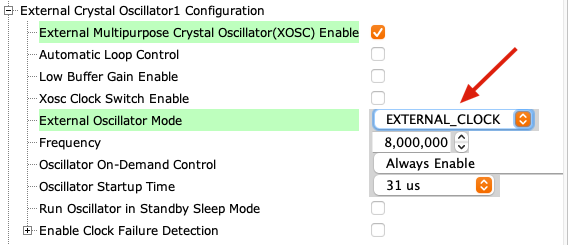
For reference, this comes from the MPLAB configuration, which shows that the basic config of setting enabling the XOSC0 or XOSC1 is enabled for both crystal and oscillator, just the mode is set to either external clock or crystal.
manic glacierBOT

Whenever calling supervisor.reload() on my new, freshly updated Slider Trinkey, it just stops the code, forcing me to manually reset the device for supervisor.set_next_code_file() to take effect, which isn't the case for my other Trinkey devices running Circuitpy. I pasted the relevant code below:
`import time
import board
import analogio
import supervisor
import neopixel
import touchio
import gc
pixels = neopixel.NeoPixel(board.NEOPIXEL, 2)
analog_pin = analogio.AnalogIn(board...
slender iron
oops. I meant to test that....
manic glacierBOT
Lowering the sample rate of the mp3 down from 44100 to 16000 makes the issue go away. I think the noise i just stuttering because the processor isn't keeping up.
lone axle
@idle owl It successfully wrapped to an hour and seems good 01:13:21
idle owl
lone axle
<@!330227457296957440> It successfully wrapped to an hour and seems good `01:13:...
Great! I have it running here too. I'm only 14 minutes in though. 😄
manic glacierBOT

Thanks, I make BOARD=??? clean after each build.
I restarted from scratch and managed to build the firmware with asyncio working. I had to tinker with circuitpy_mpconfig.mk which is not optimal (as opposed to a purely mpconfigboard.mk solution) but I understand you cannot easily serve all kinds of custom builds and the stock build types at the same time.
BTW make -j4 BOARD=trinket_m0 clean all doesn't work...
manic glacierBOT
Please revert to 7.2.0 for now. We reworked the auto-reload code extensively to fix some issues, and missed some edge cases.
manic glacierBOT
I just had a problem with a program that stalled/crashed when I had the console turned off. So it would have been nice to see the traceback in data. But I found the bug in the meantime (I queried usb_cdc.console.connected when usb_cdc.console didn't exist so I had to change the respective line to if usb_cdc.console and usb_cdc.console.connected: ...
orchid basinBOT
@bd34n, thanks for the clarification.
manic glacierBOT

CircuitPython version
Adafruit CircuitPython 7.2.3 on 2022-03-16; Raspberry Pi Pico with rp2040
Board ID:raspberry_pi_pico
Code/REPL
nothing
Behavior
nothing
Description
when i drag or copy .uf2 file in pi pico its not giving me all files in that i wan't
Additional information
nothing
slender iron
anyone looking into the supervisor.reload issue?
(I just subscribed to github status here using a webhook)
idle owl
@tidal kiln I managed to explain the address jumper concept to Liz, and blew her mind. She's never understood what they do, only that they change the address. Anyway, point is, you taught me well enough to teach someone else. Thanks!
tidal kiln
@idle owl 0xneat!
manic glacierBOT
This doesn't seem like an issue with the code. Please post here for general support: https://forums.adafruit.com/viewforum.php?f=60
CIRCUITPY_CREATION_ID = 0x00C30001
CIRCUITPY_CREATOR_ID = 0xC3C30000
You may be able to send it yourself. supervisor.get_previous_traceback() should return the last traceback string.
tulip sleet
slender iron
anyone looking into the supervisor.reload issue?
I did not have a chance to start that yet
manic glacierBOT
Generally, I only clean if I get a QSTR error or change a makefile. The rest of the time, you should be able to do incremental builds.
idle owl
@tidal kiln Still not comfortable explaining how it maps to bits, but explaining how to calculate the addresses, and what that part means is pretty clear to her now. 🙂
I can picture how it maps, but can't put it into words well enough to teach someone else.
manic glacierBOT
Let's fix it in the libraries instead. We should not use str to send binary data.
tidal kiln
ah. yah. with just words, tough. that diagram from datasheet should help though?
idle owl
Oh right. Yeah.
tidal kiln
it's a very simple mapping. there's not much going on.
idle owl
Issue is, I at least have some experience with registers and so on, so the image makes sense to me.
We have to get that part clear first.
tidal kiln
don't really even need to think about registers
idle owl
No, I know
tidal kiln
just binary notation for numbers
idle owl
But I'm saying picturing how bits work is easier for me because I've worked with registers.
Yeah I tried to explain from that stand point too
To say there were eyes glazing over is an understatement 😄
tidal kiln
fwiw - i'm constantly doing quick checks in python, things like hex(98) or print(0b100110)
tulip sleet
me too
idle owl
Yeah I mentioned how you usually show me the results in Python.
tidal kiln
i don't have one of those brains that can think in arbitrary base. i'm base 10 only. 😦
 blissful pollen
Is there a learn guide that talks about binary (and even hex, and octal). It could be useful for a lot of concepts
 stuck elbow
for a long time I didn't even know how to convert between decimal, hex and binary, I just used functions for that, it was just enough for me to know they are different representations of numbers
idle owl
blissful pollen
Is there a learn guide that talks about binary (and even hex, and octal). It cou...
stuck elbow
no unary system :(
manic glacierBOT
Here is what 4.1.2 has available in the REPL:
Adafruit CircuitPython 4.1.2 on 2019-12-18; Adafruit CircuitPlayground Express with samd21g18
>>> import gc
>>> gc.mem_free()
21168
And 7.2.2:
Adafruit CircuitPython 7.2.2 on 2022-03-15; Adafruit CircuitPlayground Express with samd21g18
>>> import gc
>>> gc.mem_free()
17808
I glanced at the map file and think this is a combination of TinyUSB updates and the switch to split stack (c and pystacks).
The difference...
blissful pollen
I wonder if there was something that gave a practical example as to why you use them. Such as registers for binary, colors / addresses in hex. I know for me examples always help.
idle owl
Hmm.
stuck elbow
hex is mostly used because it's easy to convert to binary, and always has the same number of digits at 8 bits
well, ok, the latter is true of any system if you add leading zeroes
manic glacierBOT
I'd suggest generating the code from MPLAB for the setting you want and comparing to what we have in samd-peripherals. Generally changing clocks means you need to ensure the dependent clocks (especially USB) are the correct value.
blissful pollen
I always feel hex is a shorthand to binary. At least when it is 1 or 2 digits. Many more that gets tricky to picture
jaunty juniper
we put bytes at addresses that are multiples of 8, so hex maps naturally to that
tidal kiln
it's easier to see 0xFF0000 as "red" vs. 16711680
manic glacierBOT
Sure, I might as well since the CI didn't run on that last commit. Will look at the supervisor.reload issue first.
stuck elbow
@tidal kiln then 0xff doesn't scream "blue" at me
idle owl
I always guess my way through hex colors when trying to make colors other than red, yellow, green, cyan, blue, violet.
blissful pollen
For colors I try to always use leading zeros (e.g. 0x0000FF for blue) for clarity
blissful pollen
idle owl
I always guess my way through hex colors when trying to make colors other than r...
This is the way
stuck elbow
I used to work as a web developer a few years, so I can look at a color and type its hex rgb
idle owl
stuck elbow
I used to work as a web developer a few years, so I can look at a color and type...
That sounds like a talent.
stuck elbow
idle owl
That sounds like a talent.
it's just repetition
jaunty juniper
I never got to that point, though I can do yellow, cyan, magenta, and infer shades of it
jaunty juniper
but if one of the components is not zero (or equal to another one), I'm lost
idle owl
blissful pollen
I wonder if there was something that gave a practical example as to why you use ...
Agreed about this. Would be nice.
stuck elbow
the absolute difference between components gives you the saturation, the balance between them gives you hue, and the average value gives you brightness
blissful pollen
Then add the gamma stuff PaintYourDragon uses for LEDs and really make your head hurt 🙂 But it looks so nice
idle owl
Uff.
stuck elbow
it's easier to think about colors in terms of HSV
idle owl
Not for me 😄
blissful pollen
stuck elbow
the absolute difference between components gives you the saturation, the balance...
Never thought of it like that (or read it). That's really cool
stuck elbow
you have to make the correction that blue doesn't add brightness
because of a bug in how our optic nerves are connected
this is why even blue light seems dark
idle owl
We are super buggy.
stuck elbow
you want bright blue, you have to add red and green to it
blissful pollen
I was reading why we cannot make brown in LEDs that also was messing with my head
jaunty juniper
I want to object to the idea that blue light seems dark, after I put black tape on a billion electric devices with a piercing blue LED 😉
stuck elbow
blissful pollen
I was reading why we cannot make brown in LEDs that also was messing with my hea...
orange leds will look brown if next to other leds
blissful pollen
stuck elbow
orange leds will look brown if next to other leds
Neat I should try that. For my game timer I have player color and brown is fairly common but could not get a good "brown"
idle owl
jaunty juniper
I want to object to the idea that blue light seems dark, after I put black tape ...
I, too, have many devices with multiple layers of gaffers tape on them.
jaunty juniper
yeah, brown is orange next to something that makes it look brown 😉
stuck elbow
I mostly tape the logotypes, because being autistic I can't help reading them each time I look at them
so it's very annoying when I think "DELL" each time I look at the screen
idle owl
I mostly tape things headed for the bedroom, because I can't sleep with any form of light in the room. It's.... more than annoying.
idle owl
stuck elbow
so it's very annoying when I think "DELL" each time I look at the screen
Oof, that would be annoying.
stuck elbow
in Pattern Recognition the main character is allergic to logos and excessive design
idle owl
stuck elbow
I mostly tape the logotypes, because being autistic I can't help reading them ea...
Now that you say it, I'm suddenly hyperaware of all of the names and logos on everything on my desk. I can't imagine dealing with this all the time.
stuck elbow
idle owl
Now that you say it, I'm suddenly hyperaware of all of the names and logos on ev...
Have I told you about the awareness of tongue? ;-)
blissful pollen
stuck elbow
in Pattern Recognition the main character is allergic to logos and excessive des...
Oh wow I remember reading that ( I think I read it vs saw the movie)
stuck elbow
blissful pollen
Oh wow I remember reading that ( I think I read it vs saw the movie)
there was a movie?
jaunty juniper
right ? Asus, Samsung, Belkin, Plantronics, JBL... Clue
idle owl
stuck elbow
Have I told you about the awareness of tongue? ;-)
lol. I kind of deal with that... I get dehydrated and then my tongue starts to push into my teeth and cause pain and I have to deliberately hold my tongue off of my teeth to avoid it..... It's.. not easy.
blissful pollen
stuck elbow
there was a movie?
IMDB told me when I googled it to see.
stuck elbow
idle owl
lol. I kind of deal with that... I get dehydrated and then my tongue starts to p...
ouch, sorry for that
yeah, many bugs
idle owl
stuck elbow
ouch, sorry for that
🤷🏻♀️ I remember decades ago being told by my orthodontist to hold my tongue back because it was pushing my teeth out. I never mastered it, and my teeth now have huge gaps between them along the inside. Perfect for a tongue to fit into and kind of get chewed on. 🙄
stuck elbow
I didn't realize tongue can be so strong
manic glacierBOT
I agree, and that is what I started. One good thing about the external clock vs crystal is basically all the clock settings are the same except if you need to drive the crystal or not. I am hoping this could be a single flag.
One thing that is odd to me is CAN at speeds greater than ~125K wants a much higher accuracy clock, but the Feather M4 CAN only as the 32kHz crystal on it. So I am not sure if it actually fits into the expected tolerance for CAN at 250K and above.
Tested on Linux and macOS with Feather RP2040.
- Copied 40k file to CIRCUITPY while running.
- edited
code.py. - wrote a
code.pywith asupervisor.reload(). Works as expected. supervisor.reload()in the REPL does nothing (as expected, I would think).
All behavior is as expected. Thanks!
manic glacierBOT
Tested on Linux and macOS with Feather RP2040.
- Copied 40k file to CIRCUITPY while running.
- edited
code.py. - wrote a
code.pywith asupervisor.reload(). Works as expected. supervisor.reload()in the REPL does nothing (as expected, I would think).
All behavior is as expected. Thanks!
slender iron
(had to shrink a board build)
manic glacierBOT
tulip sleet
@slender iron my xhci driver gets upset too, and it's an Intel board with its own USB hw. I think it's Linux drivers. Every few days I lose all USB and have to reboot
slender iron
ya, mine is an asus motherboard
jaunty juniper
ugh pylint and its:
adafruit_esp32spi/adafruit_esp32spi.py:389:26: E1101: Module 'struct' has no 'unpack' member (no-member)
@jaunty juniper As long as everything else is happy, it's ok to explicitly disable Pylint no-member for that line. Sometimes it's the nature of CP that Pylint can't find things where it expects to.
jaunty juniper
I believe that's an error that only happens locally, not in the CI, I'm just baffled since it's a basic built-in module in python
I had a case where it would not report 10 struct errors if there was another error in the code, but not if it's the only one, so it went away on its own 🤷
idle owl
The CI often has more things installed than you do, so it is able to find things more easily.
I ran into that quite a bit, but the more libs and Blinka stuff that got installed, the less it happened.
I think that's part of the issue though, is that CP doesn't have struct bits where it should, so it's looking for it where Python would keep it, and it's not quite right.
manic glacierBOT

Lowering the sample rate of the mp3 down from 44100 to 16000 makes the issue go away. I think the noise is just stuttering because the processor isn't keeping up.
How do you go about lowering the sample rate of the mp3?

How do you go about lowering the sample rate of the mp3?
I use Audacity. Lots of tutorials online on how to lower the sample rate and always worked well for me.
manic glacierBOT
lowered to 16kHz and its producing the same static noise on mine.
@prplz are you still using the following code? or a different one?
`import board
import audiomp3
import audiopwmio
audio = audiopwmio.PWMAudioOut(board.GP0)
decoder = audiomp3.MP3Decoder(open("slow.mp3", "rb"))
print("Begin playing!")
audio.play(decoder)
while audio.playing:
pass
print("Done playing!")`
jaunty juniper
idle owl
<@!199811382793863168> As long as everything else is happy, it's ok to explicitl...
ah I had a mysterious version of pylint installed in /usr/local/bin/ not sure from where 🤷
idle owl
jaunty juniper
ah I had a mysterious version of pylint installed in `/usr/local/bin/` not sure...
Ahhh. Sneaky.
I know I have an extra one somewhere, it keeps telling me I don't need it anymore, but I'm lazy.
jaunty juniper
oh wait that's not the issue in the repo itself
idle owl
Ugh.
jaunty juniper
bumping the pylint version from v2.11.1 to v2.12.2 in .pre-commit-config.yaml solved it
idle owl
Um... This is for an actual lib? We don't want to change the config files on a single library and not others. And changing it across the board is a whole other process.
jaunty juniper
I wonder if pre-commit had a weird version cached independently too
idle owl
Also possible. I'm not sure how it reinstalls after the first run if something changes.
jaunty juniper
after I changed the version it showed that when I ran pre-commit:
[INFO] Initializing environment for https://github.com/pycqa/pylint.
[INFO] Installing environment for https://github.com/pycqa/pylint.
[INFO] Once installed this environment will be reused.
[INFO] This may take a few minutes...
HA deleting ~/.cache/pre-commit fixed it
idle owl
Oooh.
jaunty juniper
had to snoop to find out where it was running pylint from
idle owl
Nicely done!
manic glacierBOT
I've been trying to piece together a simple example, but it just keeps not failing. Unfortunately, maybe a complex example is all that does fail, like maybe it's related to memory or something. You can still access the old Google Calendar code before I fixed it up here:
https://github.com/adafruit/Adafruit_Learning_System_Guides/tree/d9e11884fbe45d1502447be6f74f665a4be47c2c/MagTag_Google_Calendar
Can you upload slow.mp3 somewhere so I can try it?
Here are the ones I'm using: mp3s.zip
mono.mp3 is 44100Hz with one channel and stereo.mp3 is 16000Hz with two channels
yes
slow.zip
I will try your sounds when I get a chance. Again I am using the STEMMA speaker from adafruit
slender iron
any opinions on what the default hostname should be for networked circuitpython devices? maybe cpy-<board name>-<mac>?
jaunty juniper
Nina uses arduino-**** with the first 2 bytes of the mac address
blissful pollen
mac is kinda long to use the whole thing? But not sure of another good method to make the names unique
jaunty juniper
which is weird now that I think of it, aren't the first bytes the manufacturer ?
blissful pollen
yup as far as i recall
jaunty juniper
maybe it uses the last bytes
blissful pollen
last 2-3 bytes may be okay, kind of a balance of ease of remembering for newbies to uniqueness
slender iron
ideally you won't need to remember
manic glacierBOT
Your mp3 files play fine for me. I'm just plugging the PWM pin straight into the line in on my computer (I know, probably not the best idea).
Could this maybe be an issue that the speaker has with PWM? I will see if anyone can do some more testing with other boards and PWM.
slender iron
I think I can have a unique name and circuitpython.local
this one would be cpy-espressif_esp32s3_devkitc_1_n8r2-7cdfa1e076e0
viscid pine
Can you test this with a dac instead of PWM?
jaunty juniper
let me see if I have that
viscid pine
samd usually have dac, right?
slender iron
ya
viscid pine
turns out the example mp3 file was already low sample rate and plays fine, the thing i was experiencing was different completely :(
running out of ideas
manic glacierBOT
hmm your stereo.mp3 works for me, but not my slow16kHz.mp3.
The stereo.mp3 plays very quietly and the sound goes away when I try changing the volume on the STEMMA speaker itself.
how do you connect it straight into the computer line is that pin 0 on the raspberry pi pico?
viscid pine
the plot thickens
gloomy shuttle
slender iron
this one would be `cpy-espressif_esp32s3_devkitc_1_n8r2-7cdfa1e076e0`
Are underscores valid in a hostname?
slender iron
I think so. I hardcoded it and it worked
I think shorter would be better though because on my phone you only see the start of the long hostname
with cpy-<mac> I can see some of the path
jaunty juniper
gloomy shuttle
slender iron
with `cpy-<mac>` I can see some of the path
That shortened one makes the most sense to me.
viscid pine
thanks @jaunty juniper
slender iron
I like this.
 blissful pollen
that looks good
jaunty juniper
ok it's good if I reduce the gain, it was a little too high, that wasn't the case with the PWM
slender iron
that's the non-manufacturer part of the mac
gloomy shuttle
so there could still be collisions but statistically unlikely?
slender iron
yup
viscid pine
jaunty juniper
ok it's good if I reduce the gain, it was a little too high, that wasn't the cas...
so pwm is just always bad with that slow.mp3?
slender iron
@tulip sleet httpserver is pretty nice! did you think about handling request headers at all?
tulip sleet
I didn't think about anything, hardly 🙂 I took some existing code and made it work better, but it was done in a hurry for the wordle demo
jaunty juniper
viscid pine
so pwm is just always bad with that slow.mp3?
no actually it's good with reduced gain
is there a misunderstanding on how to use the speaker ?
blissful pollen
I vaguely recall compression level being a problem for me too. Like too much and it took too long to decode. But I could be wrong
viscid pine
and sample rate
stereo 44.1KHz fails, have to mono it or lower rate
but thats not the case with the file the user has
viscid pine
jaunty juniper
no actually it's good with reduced gain
with the pot on the speaker?
jaunty juniper
yes
manic glacierBOT
@Neradoc reports that slow.mp3 plays ok if you adjust the volume pot on the speaker, can you try that?
jaunty juniper
slender iron
now the next question is: do we have the circuitpython service run on port 80?
jaunty juniper
8080 ? 8888 ? 5000 ?
tulip sleet
slender iron
now the next question is: do we have the circuitpython service run on port 80?
I would say not, since the user program may want to use it.
8888 is easy to remember
88
circuit=7 letters, python=6 letters, 76
I wonder if those low ports are reserved in some RFC
slender iron
probably
slender iron
we'd need to explain it as circuitpython.local:####/ then
tulip sleet
I think that's ok
slender iron
which would redirect to cpy-######.local:####/
tulip sleet
7676 is not in the list
blissful pollen
Anything above 1024(I think there?) is free to use
slender iron
I'm not actually to the point of adding it yet 🙂
tulip sleet
there are just some canonical ones, but it doesn't matter, tomcat, etc. is not going to run on a CPy board
slender iron
I think I did prove out the idea will work though
I can advertise as both circuitpython and cpy-###### at the same time
tulip sleet
can you advertise as something.circuitpython.local, that could be on 80, and would not necessarily conflict with a user server on circuitpython.local:80. Does mdns allow that
board.circuitpython.local
slender iron
not really
the thing I found said it works sometimes
it treats "board.circuitpython" as the hostname
and some implementations don't like the .
tulip sleet
hmm, too bad
slender iron
any domain differentiation would need to be done by the http server I think
manic glacierBOT
We do have this at build time through DEBUG_UART. We don't currently allow boot.py to set it up though.
manic glacierBOT


Let's add a way to work with CircuitPython over the (local) web!
How it should work
- First, load
http://circuitpython.local:7676in a web browser. This uses mDNS to do a local domain lookup. - All CircuitPython devices on the network will reply with their IP. The first will win.
- The browser will then request / from that IP.
- The running webserver will see the
circuitpython.localhost and will return with a 302 redirect to the device's specific domain which will be `cpy-...
Thank you for the discussion! We've now add a BLE workflow and I've laid out what I see for a web workflow in #6174. Let's continue discussion there.
manic glacierBOT
This allows for CircuitPython to resolve a .local domain and find
other devices with MDNS services.
First step for #6174

Given that these devices can (in some cases must) have their SSID/KEY set and perhaps an IP, I think it would be good to add a way to set the hostname. In the secrets.py file, an optional parameter named mDNS name or hostname or the like would be super helpful.
If that isn't found, then the circuitpython.local would be the default. But this allows a longer-term solution when there are > 1 CP device on the network.
Also, why are we using port 7676? That makes the assumption that W...
Given that these devices can (in some cases must) have their SSID/KEY set and perhaps an IP, I think it would be good to add a way to set the hostname. In the secrets.py file, an optional parameter named mDNS name or hostname or the like would be super helpful.
This is possible with wifi.radio.hostname already. The mDNS hostname currently defaults to cpy-###### but we should probably have them align.
#6175 allows for changing the unique name through `mdns.Server(wifi.radio).hostna...
manic glacierBOT

wifi.radio.hostname does make it to the router via DHCP.
The ability to "pin" or reserve DHCP MAC-to-IPv4 addresses is a convenience offered by the router, I'm not aware of any standards that cover it.
As I read this, hostname and mDNS hostname may get aligned, but since wifi and mdns would be separate imports, it should hopefully support use cases where a wifi.radio.hostname is desired but not an mDNS hostname.
manic glacierBOT
Got it! Thank you for assisting me !
manic glacierBOT
If you're making wifi persistent, how about a telnet server too?
manic glacierBOT
Stop resetting WiFi completely between VM reloads. We want to keep the serial connection alive.
This is desirable for web workflow. However, users are currently in full control of starting and stopping a Station and connecting to an AP, starting and stopping an AP, starting and stopping wifi, etc. There should be a mechanism where user code still retains full control of whether / when / how the device interacts with a wifi network, during code execution and across reloads and resets. In ...
manic glacierBOT
ah yes. Good idea. Thanks a lot.
 solar whale
When did alarm.pin get merged into alarm. It used to be imported separately. import alarm import alarm.pin now it is part of alarm.
manic glacierBOT

There was one bit which looked suspicious; aside from that some comments that don't require any direct action on your part.
I appreciate you picking up this work, since I dropped the ball. I didn't do any testing, but I look forward to using it once I remember what project I was working on that called for it.
Instead of true use GC_ALLOC_FLAG_HAS_FINALISER. Not using a finali(s/z)er here would be an easy mistake to make in a fresh implementation of Server; is there a way to move the allocation step to a place where it would be shared by all ports?
For that matter, why is RemoteService in the common-hal? If it's just a container for some data found during a search, then why not make it a kind of NamedTuple or similar, allowing it to live in shared-module.
Is there any need to stop advertising a service short of resetting the device?
lone axle
@low sentinel I am interested in diving into vectorio a bit to see if I can make some tweaks. Peeking into the code I came up with a few questions that I think you may be able to point me in the right direction on. 1) The DEBUG function here https://github.com/adafruit/circuitpython/blob/8319faa032639012a5618670a5e0797012ccf4b5/shared-module/vectorio/VectorShape.c#L27-L28 in order to "enable" this would I just need to un-comment the bottom line and comment the top line? Then all of the debugging messages will print to serial? 2) The specific I am interested in first is adding an optional argument to constructor to allow user to specify a different color index within the palette for the shape to get filled with (by default it will use color index 0) I found the code that I think is responsible for setting that index here: https://github.com/adafruit/circuitpython/blob/8319faa032639012a5618670a5e0797012ccf4b5/shared-module/vectorio/VectorShape.c#L371 I'm curious if that is actually the right spot though.
We had someone ask about this functionality the other day and It seemed like a nice challenge for me to attempt in order to get some more practice working on things in the core. I happy to tinker with it a bit to get it done but am trying to make sure I'm not way off base with my initial understanding of things.
 low sentinel
Hey @lone axle
- correct.
- you’re close, but line 395 is the place in VectorShape. Notice though that VectorShape does support multi-color shapes. If you bake the index into VectorShape you will wall off multi-color shapes, which is not a great thing to do.
Instead I’d recommend either (a) adding the palette parameter to each IShape implementation or (b) writing a Decorator IShape that marshals a 1 from a decorated IShape to a configured palette number instead. Either way seems fine. (a) is more memory and performance efficient (1 fewer dynamic method call per pixel, 1 fewer heap structure).
crimson ferry
ESP32SPI UDP Sockets
manic glacierBOT
If you're making wifi persistent, how about a telnet server for the repl too?
Yup! I mention something similar in #6 but forgot to add it to the TODO list.
This is desirable for web workflow. However, users are currently in full control of starting and stopping a Station and connecting to an AP, starting and stopping an AP, starting and stopping wifi, etc.
Agreed! I'd probably add a supervisor.disable_web_workflow() just like supervisor.disable_ble_workflow(). That'd move it ...
I agree, and that is what I started. One good thing about the external clock vs crystal is basically all the clock settings are the same except if you need to drive the crystal or not. I am hoping this could be a single flag.
Great! Simple is good.
One thing that is odd to me is CAN at speeds greater than ~125K wants a much higher accuracy clock, but the Feather M4 CAN only as the 32kHz crystal on it. So I am not sure if it actually fits into the expected tolerance for CAN at 250K a...

This is such a neat idea! Looking over the tasks you've outlined with an eye toward finding some part that I might be capable of helping with, I'm curious if the internal HTTP server that you mentioned is something that will get written with python code? or it's internal to the core and thus written in C?
lone axle
low sentinel
Hey <@!382939733107408897>
1) correct.
2) you’re close, but line 395 is the pla...
Thank you! I appreciate the guidance. Do I understand correctly that the -= 1 is allowing it to support palettes with more colors because it will go negative and then wrap back around to the last index in the palette similar to accessing it from python code like palette[-1]?
manic glacierBOT
Nope! I thought about adding it but never did. Will delete for now.
The need for a finaliser is implementation specific in this case (therefore common-hal) because this implementation is a wrapper around the IDF allocated mdns_result_t. We could move it to shared-module and not need a finaliser but that'd require a copy of all the data into the MP heap even if it is never read.
It's available in the IDF API but I'm not sure it is needed. We can always add it later.
low sentinel
lone axle
Thank you! I appreciate the guidance. Do I understand correctly that the `-= 1` ...
Not quite - there's comments in there about how vectorio IShape uses the special value 0 to communicate "not covered by this shape." VectorShape bridges between that semantic and the palette semantic by subtracting by 1.
IShape color selection is internally 1-based indices while Palettes are 0-based so VectorShape is just translating IShape's index domain to Palette index domain.
in an ideal world this thing would return a struct, but it is called once for every pixel so every abstraction and data type indirection you add reduces pixel fill rate. Vectorio tries to be as close to the same speed as bitmaps as it can be and a magic 0 was measurably faster (on my feather m4 express, I don't remember by how much) than other options like a pixel struct.
manic glacierBOT
The underlying issue is being discussed in https://gcc.gnu.org/bugzilla/show_bug.cgi?id=99578, as mentioned in the code. It looks like the gcc folks are fixing the warning regression, which got a lot of pushback from people trying to access memory at fixed addresses, e.g. (void *) 0x12345678.
manic glacierBOT
I got a response from Zhang. I guess that's the person's name and mentioned as "Technical email" on their website. #6084 and #6079 also needed PIDs and requesting them on behalf of LilyGo was no problem.
For the record:
A brand new device shows
$ lsusb
[...]
Bus 003 Device 104: ID 2e8a:000a Raspberry Pi PicoArduino
Boot mode
$ lsusb
[...]
Bus 003 Device 103: ID 2e8a:0003 Raspberry Pi RP2 Boot
 prime flower
slender iron
any opinions on what the default hostname should be for networked circuitpython ...
prime flower
slender iron
any opinions on what the default hostname should be for networked circuitpython ...
WipperSnapper takes the last 3 bytes of the MAC address which are/should be unique to the NIC
crimson ferry
I took me 5 years to get a collision on the last two bytes (across esp8266, esp32, esp32-s2, and esp32-s3 devices), so even with Espressif having multiple OUIs, the odds of collision on the last 3 are exceedingly low 😉
manic glacierBOT

Hype! This probably won't be useful to anyone, but here's my OTA solution I built for my project. It just fetches from GitHub.
 lucid solar
@slender iron I want to port the ST7565 driver over to displayIO, who knows that API the best, do you think?
slender iron
I'd just start with the most similar driver
lucid solar
I've tried that...but have got stuck
The other ST**** driver is totally different, and the other GLCD driver isn't compatible in the slighest
slender iron
I can try to help you through it
welp, I thought I fixed my doc build and checked locally but actions disagrees with me and 🦄 on load build output...
lucid solar
@slender iron I'll look at it again tomorrow. And let you know...thanks!
manic glacierBOT
viscid pine
@slender iron your board init has these lines, they probably kill usb: // This board has LEDs connected to the USB pins USB_SERIAL_JTAG.conf0.usb_pad_enable = 0; USB_SERIAL_JTAG.conf0.dp_pullup = 0;
slender iron
Oh! Did I copy that over?
viscid pine
yep
slender iron
trying it now
viscid pine
also maybe you have to make sure they arent getting reset?
slender iron
I'll wrap it up next week. thanks again

 misty garnet
would asyncio fit on a custom, stripped-down SAMD21 build, or are there other issues as well?
tulip sleet
misty garnet
would asyncio fit on a custom, stripped-down SAMD21 build, or are there other is...
I'm not sure the actual library would fit even when you enabled async and await
stuck elbow
you can decrease the filesystem size to 48kB, then you can fit some more stuff in it
manic glacierBOT
I submitted the form mentioned on https://github.com/raspberrypi/usb-pid but not sure if it went through (aka. didn't get a conformation).
crimson ferry
Should there be separate board definitions when pin polarity changes on a board rev? It will get confusing with the * and *_INVERTED <#help-with-circuitpython message> it would be nice to continue to be able to write generalized cross-device code using hasattr or similar to know how to interact with a pin or feature
manic glacierBOT
Implementing color_index argument and property for all of the vectorio shapes. This allows user to specify which color index to fill the shape from the given palette. Previous behavior was always defaulting to the 0 index within the palette.
There is a script illustrating it's usage in this PR inside of tests/vecotrio/color_index.py
manic glacierBOT
manic glacierBOT
So far I’ve been using ESP-IDF version 4.4. There were a commit in the last two weeks to address some of the issues I observe above, and mentions some corrections for streaming mode.
I’ll need to pull these lates changes and assess if they clear the path for fast drawing in the base ESP-IDF, as demoed above.
manic glacierBOT
basically the feather esp32-s2 with a different module
manic glacierBOT
I did the same, no confirmation though. Let's see. Also in the mean time opened an issue on their official github repo to see if we got any luck.

 minor plume
Has something changed with GitHub or our build procedure, or is something confused on my local system? I made a fresh fork of adafruit/circuitpython and cloned it, but when I try to “make fetch-submodules”, I get a whole bunch of errors like “fatal: reference is not a tree: a8abc3aa8dece6c4d0152b001dfca7d2c279f899”, followed by a bunch of “fatal: Unable to checkout” errors (starting with “fatal: Unable to checkout '5d01882c41dbc4115bc94f0b61c093d5a6b812b6' in submodule path 'extmod/ulab'), and then the make exits with an error code 128.
solar whale
Are you running the make fetch-submodules in the top directory of the repository?
manic glacierBOT
Looks good to me. (obviously) could not test.
minor plume
@solar whale Yup.
It could be something messed up on my machine but I figured I’d ask before I spend a lot of time chasing ghosts.
manic glacierBOT
Missing the new color_index
Missing the new color_index
I didn't test but looked over the code. One question what if I set a color_index outside the range of the palette? I am just unsure if the palette automatically handles and wraps that or if you need a check for the size of the palette vs the color_index.
manic glacierBOT
This looks right to me
Fixed with latest commit
Nice catch, thank you. Fixed with latest commit
@gamblor21 good question on the outside range. There isn't automatic wrapping for values outside the range, however they also don't result in an exception. Current behavior is values outside of the valid range result in the shape being drawn black which is maybe unexpected behavior.
I'll add some more explicit checks that raise an exception for invalid values.
Thanks for having a look over this!
manic glacierBOT
On valid ranges for color values - it’s really up to the colorconverter/pixelshader/palette to decide what to do with an index out of range, no? I agree with just passing the configured color index straight into the pixel shader as you have it here. Why define a different behavior for invalid indices than the object to which those indices matter?
manic glacierBOT
I evaluated the recent commits to assist with rgb LCDs and they resolve the issue that I observed above. I'm getting decent speed, here's an example of a 10x10 pixel bouncing box:
I performed an alternate test with 400x400 squares (about half the display size) and am getting around 25 frames per second.
Here's my example code. Adjust box_size to see the impact of redraw size on t...
manic glacierBOT
slender iron
@minor plume does it have to do with st_driver?
minor plume
slender iron
<@!353373147199832074> does it have to do with st_driver?
The first of the string of errors was in extmod/ulab but there were a bunch of them. I haven’t spent any time troubleshooting but can tomorrow if need be. Here’s the log from my second attempt at “make fetch-submodules” (so, skipping the part that seems to have cloned successfully):
https://gist.github.com/tammymakesthings/2d30d9951e172b8a579497a01f19dcb5
 slender iron
looks like the data/nvm.toml directory is broken
the "unable to checkout" errors are expected
the git submodule foreach after should handle it
minor plume
Ah. That makes sense.
Last time I did this I did the “make fetch-submodules” and then walked away for a while. So I wasn’t sure which errors are expected and which aren’t.
slender iron
maybe do git submodule update --init data/nvm.toml
you want to avoid blanket doing that though because the broadcom folder has a giant repo in it
minor plume
Let me try that and see what happens. One moment…
Huh. That produced no output, but I did a fresh clone of my repo fork and it seems to be working now. So I’m not sure what’s going on…but I think I won’t worry about it unless it happens again.
Oh! Maybe I do know the problem. I typically rename my remotes (origin => tammymakesthings, upstream => adafruit). The last time I cloned, I renamed them before I did the make fetch-submodules, and this time I did the make fetch-submodules first. So maybe whatever the fetch-submodules Makefile target is doing is getting confused if the remotes are renamed.
Nope, that can’t be it. It still errored on data/nvm.toml.
Hmm.
Let me check something in my git config.
OK. Figured it out, I think. I had clone.defaultRemoteName set in my .gitconfig, and that was messing up the make fetch-submodules target. It’s fetching now, and we’ll see if my hypothesis is correct, but I bet that will fix it.
Yup. Seems to have fixed it. So now I know: make fetch-submodules will fail if you have clone.defaultRemoteName set in your .gitconfig. I wonder if that’s a common enough condition to be worth documenting someplace that it’ll break the Makefile target. 🤷♀️
(Or, in the alternative, if it’s worth adjusting the way make fetch-submodules works so it asks Git for the configured default remote name if one is set. Also an option, but I don’t know how common people using that setting is.)
manic glacierBOT
If this trade-off needs to be changed in the future, we can do it. My gut would have said that since the CircuitPython heap is generally larger than the IDF heap it might be better to preemptively move it, especially since then we can rely on the GC to free it after it's no longer possible to use it.
Looks like the doc build still needs some attention though. I couldn't get the github actions page to open (unicorn error) so I couldn't check into it further.
That does make sense to me, it would be better to enforce the range within Palette which should then carry over to the usage here if I understand correctly.
onyx hinge
I'm really having trouble / feels while using the recently updated "changes" view in github. I am sure part of it is just the "hates change" note on my character sheet, but in particular I can't seem to figure out how to view the whole change at the spot of a resolved comment where the line that the comment was made on was deleted in a latter commit. Also, because there are scrollbars within scrollbars (WHY!) mouse scrolling just doesn't quite work consistently. That seems to be triggered by opening or closing a resolved comment(?)
manic glacierBOT
I did not test but it looks good to me now.
That does make sense to me, it would be better to enforce the range within Palette which should then carry over to the usage here if I understand correctly.
Makes sense to me. The original was more of a question just to ensure it was thought of (and possibly a long term issue for Palette if it does not check ranges).
idle owl
@onyx hinge So... CI failed on my MicroPython PR. Damien provided a suggestion to fix it, but I a. have no idea which version of the IDF I'm supposed to be referencing, and b. have no idea where to put that line. I figured I'd ask you first, and then ping Limor if you're unsure. https://github.com/micropython/micropython/pull/8406
manic glacierBOT
Is there any chance this gets called when result is NULL and resulting in a crash? Seems it can only occur if deinit is called and someone still tries to access the object. I have seen similar behavior in other libraries (no deinit check so a hard crash if someone makes a mistake and continues to call the object).
manic glacierBOT
There are examples (e.g., https://github.com/adafruit/Adafruit_CircuitPython_CircuitPlayground/pull/114), where it would be desirable to use Pins directly as dictionary keys.
slender iron
onyx hinge
I'm really having trouble / feels while using the recently updated "changes" vie...
I haven't run into this yet but am excited for the treeview
tulip sleet
@idle owl i was using black 22.1.0 locally, but pre-commit specifies 20.8b1. They are fighting with each other. I can update .pre-commit-config.yaml to be 22.1.0. Is there a reason not to do that? tnx
onyx hinge
@idle owl I just got back to my desk, can try to sleuth the answer now if it's still pertinent
idle owl
tulip sleet
<@!330227457296957440> i was using black 22.1.0 locally, but pre-commit specifie...
No reason not to, but we should have Eva run a patch if we're going to update it anywhere. Consistency is important.
tulip sleet
this came up before, but I can't remember what the resolution was
idle owl
onyx hinge
<@!330227457296957440> I just got back to my desk, can try to sleuth the answer ...
Yeah, I didn't know where to start, so I haven't gotten anywhere with it. I guess if it's not obvious to you (which sleuthing implies it's not), maybe I should check with Limor first. I don't want you to put a ton of time into this. I figured you might know since you helped me with the rest of it.
idle owl
tulip sleet
this came up before, but I can't remember what the resolution was
What repo are you working with that's causing you issues right now?
onyx hinge
@idle owl it's a matter of having to go check things inside idf git, i can do it and limor is not likely to "just know" without doing the same.
tulip sleet
Adafruit_CircuitPython_Requests. I am looking in cookiecutter, and the black version is not specified at all
idle owl
onyx hinge
<@!330227457296957440> it's a matter of having to go check things inside idf git...
Ooh. Ok. Proceed then please!
idle owl
tulip sleet
Adafruit_CircuitPython_Requests. I am looking in cookiecutter, and the black ver...
Hmm. Yes it is....
tulip sleet
🤦♂️ I was looking in cookiecutter's own .pre-commit-config-yaml
idle owl
😄 I figured
Ok, so, I think Eva can run a patch this week, or walk me through it since I'm trying to learn how.
Go ahead and update Requests for now, and the patch will simply skip it.
onyx hinge
@idle owl ```esp-idf$ git tag # What are some release tags?
...
v4.0.4
v4.1
...
esp-idf$ git grep GPIO_NUM_20 v4.0.4 || echo 'no results' # not in 4.0.4
no results
esp-idf$ git grep GPIO_NUM_20 v4.1 || echo 'no results' # is in 4.1.0
v4.1:components/soc/include/hal/gpio_types.h: GPIO_NUM_20 = 20, /*!< GPIO20, input and output */
Ok!
tidal kiln
am i missing something? or are these docs essentially empty?
https://docs.circuitpython.org/projects/portalbase/en/latest/
crimson ferry
@tulip sleet looks like when I reviewed requests, it bumped the other reviewers off, didn't mean to do that... is there a way to control that?
tulip sleet
crimson ferry
<@!329766224093249548> looks like when I reviewed requests, it bumped the other ...
which PR?
idle owl
tidal kiln
am i missing something? or are these docs essentially empty?
<https://docs.circu...
Looks empty to me too. I think it's borked.
crimson ferry
@tulip sleet adafruit_requests #102
crimson ferry
ok, I'll just comment so the other reviewers list stays intact
tulip sleet
what you reviewed is not correct
tidal kiln
@idle owl thanks. any ideas why?
idle owl
tidal kiln
<@!330227457296957440> thanks. any ideas why?
No, I checked the builds, they're all passing. I can run it again to see if that's the issue. But it's probably not.
manic glacierBOT
I've added code to guard against it. It'll also trigger the CI. Hopefully it will be happier today.
idle owl
tidal kiln
<@!330227457296957440> thanks. any ideas why?
That did nothing. Someone would need to dig. @lone axle Do you mind looking into this?
lone axle
idle owl
That did nothing. Someone would need to dig. <@!382939733107408897> Do you mind ...
Not at all. Just to confirm, you mean the lack of content in the docs for PortalBase? https://docs.circuitpython.org/projects/portalbase/en/latest/
idle owl
lone axle
Not at all. Just to confirm, you mean the lack of content in the docs for Portal...
Yep! That's the issue.
lone axle
I'll see what I can find.
idle owl
Thanks!
tidal kiln
@lone axle thanks. maybe related? the docs here look OK, but the badge says failing:
https://docs.circuitpython.org/projects/matrixportal/en/latest/
the repo is very similar
idle owl
@tidal kiln Some of them failed for Reasons, and need to be manually rebuilt. Not sure if that's one of them.
That did not resolve Portalbase.
lone axle
I think the ones with the failing badge are a different issue. As best as I can tell RTD was just having downtime or some other problems coincidentally when we did a sweep that caused the docs to get re-built, their system didn't complete the builds successfully. But has since been repaired and can build them but there is no easy way to trigger a mass re-build.
idle owl
Right. Each one must be run manually.
lone axle
I made a PR here: https://github.com/adafruit/Adafruit_CircuitPython_PortalBase/pull/66 adding a few core modules into the mock list. Not sure if / how it could have succeeded in actions previously, nor whether this missing are the root cause of the lack of content on the docs page.
With this branch from the PR my local build does seem to include all of the API docs though. I'll keep an eye on CI to see if it builds successfully there.
idle owl
We can fumble with PortalBase if needed.
onyx hinge
@idle owl so long story short I think that for "#if ESP_IDF_VERSION >= ESP_IDF_VERSION_VAL(4, x, 0)" , x is 1.
idle owl
onyx hinge
<@!330227457296957440> so long story short I think that for "#if ESP_IDF_VERSION...
Ok! Thank you!... any idea where to put that line?
I didn't see anything like it in the file....
onyx hinge
+    {{&machine_pin_type}, GPIO_NUM_20},
+#else
     {{NULL}, -1},
+#endif
``` I think the change ends up looking more like thisInteresting. PR is merged and RTD does show a new build: https://readthedocs.org/projects/adafruit-circuitpython-portalbase/builds/ but still missing the content. I will poke around some more after the meeting. There are definitely a few differences in my environment vs. the RTD / action container. None that I would have expected to cause this issue. But I'll try to get a local venv matching the container to see if I can get the same results.
idle owl
lone axle
Interesting. PR is merged and RTD does show a new build: https://readthedocs.org...
Sounds good, thanks.
onyx hinge
<@&356864093652516868> I failed to send out an earlier reminder, so here's your 5-10 minute reminder: the weekly meeting starts soon. Please update your notes in the document and join us in the voice channel when we wrap up our internal meeting! https://docs.google.com/document/d/1oq50yQiocKcPcGAHEyFuRJqNOz5ipXDD62D0aPNctq8/edit

Google Docs
CircuitPython Weekly for March 22, 2022 Welcome to the CircuitPython Weekly meeting notes! Feel free to add your Hug Reports and Status Updates early. During the meeting, we go through them as a round robin sorted by username. If you can’t make the meeting and would still like to participate, ...
slender iron
brb
 digital shoreBOT
 adafruit
Owner
adafruit#3230
Category Channels
8
Text Channels
61
Voice Channels
6
Members
33675
Roles
35

ID: 327254708534116352 | Server Created
·
solar whale
what's a "work day"?
 errant grail
Just listening today.
slender iron
✋
 turbid radish
😁

Twitch
I stream electronics,, CircuitPython, and other maker stuff. Computer geek, electronics/space nerd, singer/musician, writer/novelist. LGBTQIA+ rights are human rights. Black lives matter. Down with racism and fascism. Feminism must be intersectional. Just say no to hatred and bigotry.
Yes please contribute
Yes, big or small
 hidden oxide
Hello

 mental nexus
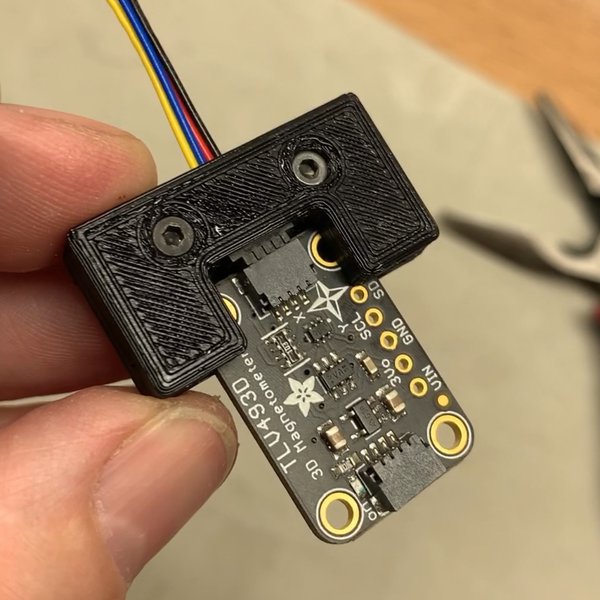
A quick mock-up to solidly hold a Stemma QT cable in a slot so you can plug and unplug sensor boards easily.
turbid radish
Congrats!
solar whale
@slender iron Remember to make the FS witeable on the QTPy C3
slender iron
shouldn't it by default because it has no USB?
solar whale
I don't know -- I recall that for the ESP32C# devkit - it had to be changed. -- ah but I think you made that for all with out USB
slender iron
ya, I think I made it depend on CIRCUITPY_USB
crimson ferry
there are also some duplicated PIDs
manic glacierBOT

I redid Circuit python and libraries from scratch. This seemed to have solved my issue.
Thanks
idle owl
21st 🙂
slender iron
@tulip sleet when do you want to go over things?
lone axle
@idle owl and @tidal kiln I am thoroughly perplexed now. But on the up side the page does now seem to contain the proper content. I noticed that adding index.html to the URL did pull up a page with the proper content on it: https://docs.circuitpython.org/projects/portalbase/en/latest/index.html so it seems like for some reason the https://docs.circuitpython.org/projects/portalbase/en/latest/ was not pointing specifically to that index page. Looking through the build logs one of the things that jumped out to me was a missing sections about examples since portalbase does not have any examples in the repo. I made this PR: https://github.com/adafruit/Adafruit_CircuitPython_PortalBase/pull/67 to add one to see if that resolves our problem..... But now all of the sudden the RTD page does have the proper content in it. So I'm not sure if my push to this PR branch somehow caused a difference on the real page, or if it changed coincidentally. But either way it seems like it does have the right things on it now.
 ember iris
Thanks all!
blissful pollen
Ha I was able to join just as I heard "have a good week everybody"
crimson ferry
@idle owl what's the CP code mechanism to distinguish between ESP32-S2 Revs B and C for the power control pin? I was thinking we'd need two board defs
idle owl
lone axle
<@!330227457296957440> and <@!337989520962093057> I am thoroughly perplexed now....
Sometimes with docs it's better to be lucky than good. 😄
mental nexus
Thanks everyone!
 candid sun
thanks folks!
proven garnet
Thank you!
 gilded cradle
Thanks
idle owl
crimson ferry
<@!330227457296957440> what's the CP code mechanism to distinguish between ESP3...
It's in C code right now, I haven't ported it to CircuitPython. It will be in the guide this week for sure. I'll try to remember to ping you with it once I have it so you can test it.
solar whale
Our first was 3 weeks late 😮
tidal kiln
idle owl
Sometimes with docs it's better to be lucky than good. 😄
maybe it was just something temporary, that was broken last time a build was attempted?
solar whale
2nd was early
idle owl
tidal kiln
maybe it was just something temporary, that was broken last time a build was att...
I don't think so. It didn't seem that way.
lone axle
tidal kiln
maybe it was just something temporary, that was broken last time a build was att...
I think it was more than that, because it also was missing stuff after my earlier PR from today (first attempt to fix) got merged.
idle owl
@slender iron Good luck, hopefully I don't see you next week 🙂
lone axle
My guess is either 1) it coincidentally re-built itself as I was working on attempt #2 and succeeded, or 2) somehow me pushing and making the new PR caused the live page one to also re-build in a successful way. I'm unsure whether we need the newer PR or not. But maybe the lack of examples dir was causing our trouble, that was my theory at least.
idle owl
lone axle
My guess is either 1) it coincidentally re-built itself as I was working on atte...
Sphinx and RTD are mostly a mystery. I think the 2nd PR can be merged, and we'll see what happens.
ember iris
Is there a guide that suggests/outlines how to make packages that are suppose to sit on the pc, and process data from a circuit python device? Like the PM2.5 particle sensor has a lot of noise on the signal, and a desktop pc setup can easily filter it and report a cleaned up signal. It wouldn't be a circuit python library, but a helper library/script
idle owl
ember iris
Is there a guide that suggests/outlines how to make packages that are suppose to...
I don't think there's anything we've written that covers this. Not that I'm aware of anyway.
ember iris
idle owl
I don't think there's anything we've written that covers this. Not that I'm awar...
Sounds good. I didn't want to start writing a small module in a haphazard way if there was a guide to follow.
idle owl
ember iris
Sounds good. I didn't want to start writing a small module in a haphazard way if...
I think if you model it similarly to how we write helper libraries for CircuitPython, you'll have a solid base to work from. CP is Python compatible, so the concepts should translate pretty easily.
Probably without all the extras and so on that cookiecutter adds, but following some of the basic concepts, is what I'm saying.
ember iris
Awesome! That'll give me a direction to go, thank you!
onyx hinge
@idle owl still here for the moment
idle owl
onyx hinge
<@!330227457296957440> still here for the moment
So.... like this?

Fuzzy on what the indentations should be, there are other if's in there at that indent.
onyx hinge
I think so! they have a CI check for the code's indentation, and that may be the correct style
idle owl
Ok good.
That was my next step was to remember how to run all of that again.
Reading the code conventions page first this time.
Can I do git commit -ms "Commit message" for it to also sign off?
onyx hinge
-s -m "Commit message" maybe?
onyx hinge
. tools/ci.sh and then one time ci_code_formatting_setup and then each time you want to check, ci_code_formatting_run. that's for indenting the code. ci_commit_formatting_run was for checking commit messages.
idle owl
Ooh ok.
Thank you!
@onyx hinge ci_code_formatting_setup is asking for a password, is that expected?
onyx hinge
yes but it won't work on a mac now that I look at it
onyx hinge
sudo apt-add-repository --yes --update ppa:pybricks/ppa
sudo apt-get install uncrustify
It has to install the program "uncrustify". Do you have it installed for circuitpython core? it's the same.
idle owl
Yeah, it's in a venv for building circuitpython.