#circuitpython-dev
1 messages · Page 278 of 1
 manic glacierBOT


not yet but it ought to work with internal storage (unless it has a SPI flash on it?)
 teal bear
"not too much" I like it
manic glacierBOT

I didn't get it working flashing any bootloader onto it. It has a serial flash installed but I would prefer it working qith the internal storage.
manic glacierBOT

@hierophect no problems at all, I am not in hurry If not for fixing the urgent bug with feather stm32f405. Regarding the submodule, I am not so sure why even a fresh clone didn't work hmmmm. Please try to follow Scott suggestion https://github.com/hathach/tinyusb/issues/242 to see if that works. Scott is git master :)
@hierophect no problems at all, It is Christmas time :)
no problems at all, thanks for the PR
 lone sandalBOT
 lone sandalBOT

 river quest
New board coming soon, runs CircuitPython (of course!)
youtube url if that does not render to play here .. https://youtu.be/uNDqkglM8_Y

Special edition of top secret! Introducing Clue!
We broadcast the weekly ASK an ENGINEER video show and this is the segment on items or concept products that may/might/could be introduced into the Adafruit store in the future (or not)! It's not out yet, so please don't ask q...
 tough flax
Hi Folks - Any update on the Bonding issues with BLE HID? I have projects that are kind of stuck and we're about to go with an Bluefruit Friend + an M4 board. I'd much rather spend the same money on NRF52840 Feathers & be done with it.
 meager fog
@tough flax no updates yet, and folks are out for the holidays
tough flax
Ok... my day job is dead over the holidays so I have some time starting Thursday...
I could probably do this in Arduino & at least not change the hardware
I know @tulip sleet was very close
Thanks for the update though... missed you in NYC last week
 onyx hinge
import busio
import digitalio
import time

b = busio.SPI(board.SCK, MOSI=board.MOSI)
stb = digitalio.DigitalInOut(board.D5)

stb.switch_to_output(True)
d = bytearray(4)
d[0] = d[1] = d[2] = d[3] = 0xff
print ("trylock")
b.try_lock()
print ("write")
b.write(d)
print ("strobe")
stb.value = False
stb.value = True

print ("done")
while True:
    time.sleep(1)
``` looks like this is approximately what I last wrote to code.py, earlier I had seen it was dying after the s.write call. Wonder why.nrfx_spim_xfer (p_instance=0x200044a0 <spim_peripherals>, p_xfer_desc=0x2003fd28, flags=0)
at nrfx/drivers/src/nrfx_spim.c:581
581 while (!nrf_spim_event_check(p_spim, NRF_SPIM_EVENT_END)){}
(gdb) where
#0 nrfx_spim_xfer (p_instance=0x200044a0 <spim_peripherals>, p_xfer_desc=0x2003fd28, flags=0)
at nrfx/drivers/src/nrfx_spim.c:581
#1 0x00055d6e in common_hal_busio_spi_write (self=self@entry=0x20008680, data=0x200086d0 "\377\377\377\377",
len=<optimized out>) at common-hal/busio/SPI.c:249
I put my "1D Wave Simulation" for circuitpython & neopixel in a gist: https://gist.github.com/jepler/d1e5623931b285c7d23cb511a9a9de09

Gist
"1D Wave" demo for circuitpython & neopixel. GitHub Gist: instantly share code, notes, and snippets.
it's mesmerizing, and there are a bunch of numbers you can try changing and see what they do 🙂
(never did make any headway on my spi crash 😦 )
manic glacierBOT

I ran the following code:
import board
import busio
import digitalio
import time

b = busio.SPI(board.SCK, MOSI=board.MOSI)
stb = digitalio.DigitalInOut(board.D5)

stb.switch_to_output(True)
d = bytearray(4)
d[0] = d[1] = d[2] = d[3] = 0xff
b.try_lock()
b.write(d)
and it hangs during write. The last few frames of the traceback are:
Program received signal SIGTRAP, Trace/breakpoint trap.
nrfx_spim_xfer (p_instance=0x200044a0 , p_xfer_desc=0x2003fd28, flags=0)
...hm that read a little snippy. wording hastily revised 🙂
'night and merry xmas. ho ho ho.
manic glacierBOT

Which board and version is this, and have you tried an earlier version? It did used to work :). This may be due to upgrading nrfx.
 tawdry gust
So it turns out if you try to instantiate a UART on a 4mb ESP32 micropython build it just gives a guru meditation error.
And crashes and reboots
manic glacierBOT
I looked over the nrfx 2.0 changes and the changes made to CircuitPython for the update, and I don't see anything obvious, so more debugging is in order.
manic glacierBOT
Turns out it was my wiring. I was using an experimental board and it's simply not right; in effect, I had hooked SCK to GND. For better or for worse, this makes nrfx_spim_xfer hang forever(!) I initially dismissed the wiring a possible cause, because "obviously" the functioning of the code couldn't depend on the input value on SCK or MOSI.
!! Yes, I just tried this, and it worked for me on an unconnected Feather '840. That's pretty odd.
 tulip sleet
@tough flax I am writing code, but it's not done. Bonding is my first priority right now
tough flax
Happy Hanukkah @merry turretb. Let me know (after tonight) if I can help test.
tulip sleet
@tough flax HID should work with just pairing. You just have to pair each time (and maybe forget the device in between0; the only thing bonding is adding is not having to re-pair.
manic glacierBOT
fix race condition with setup packet + scsi status response
adafruit/Adafruit_TinyUSB_Arduino#37
Also use the new dcd_edpt0_status_complete() to prepare for next setup packet, and SET_ADDRESS request
https://github.com/hathach/tinyusb/blob/master/src/portable/microchip/samd51/dcd_samd51.c#L151
composed of
https://github.com/hathach/tinyusb/pull/243
https://github.com/hathach/tinyusb/pull/244
https://github.com/hathach/tinyusb/pull/245
manic glacierBOT
I tried this directly from https://github.com/hathach/circuitpython/tree/samd-improve-usb. On a cold restart (plugging in USB cable), there are severe delays. CIRCUITPY mounts, but it takes a very long time (see the 11 second gaps):
Dec 25 13:09:22 salmonx kernel: [517406.491287] usb 3-1: new full-speed USB device number 56 using xhci_hcd
Dec 25 13:09:22 salmonx kernel: [517406.654664] usb 3-1: New USB device found, idVendor=239a, idProduct=8026
Dec 25 13:09:22 salmonx kernel: [5174...See comments re delays on cold restart.

What is the current state of this?
I would love to do some animations with a 120px Neopixel strip but the refresh rate is abysmal with the default library :/
I could only find the api doc but not really sure on how this is supposed to be used, does it tie into the standard neopixel library?
manic glacierBOT
ok updated guide/product plz check
manic glacierBOT
ok start with the UF2 bootloader, you can probably look at the Trinket M0 or Feather M0 Basic for inspiration :)
 manic glacierBOT

[adafruit/circuitpython] New branch created: badge\-develop

Building the ports/atmel-samd/pybadge_airlift firmware (as of the morning of 12/25/2019) and then loading it onto a PyBadge (I don't see a hardware rev designation) causes the board to stop working. By that, I mean CIRCUITPY doesn't reappear as a mass storage device the display doesn't initialize (it stays dark with no backlight). The bootloader, however, works, so I can load the ports/atmel-samd/pybadge firmware (built at the same time) to restore functionality.
Let me know if you need an...
its a totally different board, so its not expected to work. what were you expecting to happen?
manic glacierBOT
Ahhhh, ok. I put an AirLift FeatherWing on it and it timed out trying to find the FeatherWing. I thought it was SPI contention, since I thought the display and the Airlift were both SPI devices, and so I figured the pybadge_airlift was the supported configuration. I'll go back to trying the PyBadge + AirLift FeatherWing combination.
@ladyada Oh for heaven's sake. I just tried the esp32_simpletest.py code and it works fine. I'm not sure where I went wrong before, but it seems good.
 lone axle
Is there already effort underway to bring the Bluefruit Playground app to Android?
manic glacierBOT
Thanks for testing this out Dan, I will double check it :)
lone sandalBOT

 slender iron
@lone axle not that I know of
 obsidian compass
Hi, Is there a sample code where multiple rotary encoders have been interfaced to a board running CP?
Need it for a project
manic glacierBOT

The voltage monitor pin is on PA03 but it is not defined in the pins.c file for the feather_stm32f405_express board.
it is referenced in the Guide https://learn.adafruit.com/adafruit-stm32f405-feather-express/power-management#measuring-battery-4-8
I'll try to test this and create a PR if it works OK.
manic glacierBOT
fixes #2430 -- tested on feather_stm32f405_express
lone axle
@slender iron Santa brought me a Circuit Playground Bluefruit, and I've got a knack for making things with Android. I think I'm going to have a go at starting a version of Bluefruit Playground for Android.
manic glacierBOT
The issue is caused by race issues when receiving SETUP packet, that cause the setup sometime get lost. The issue exists, but got worse with latest changes (that make timing is just right for the issue).
@tannewt @dhalbert I recently made several improvements for samd51 then mostly copy over to samd21. I am tired of copying, so I take this chance to unify them into single dcd_samd.c file as well. SAMD51 split the interrupt source into multiple IRQ, there is a bit of overhead when putti...
slender iron
@lone axle that would be amazing! Let me know if you have any questions about the BLE service API
 old smelt
CP 5.0.0 Beta 2 on an Evo M51 proto. Lots of work left to do, but this is an encouraging hurdle to clear on the CP side!
 stuck elbow
that's a big chip
manic glacierBOT
stuck elbow
anybody remembers how to access arbitrary memory locations in CP?
 solar whale
@stuck elbow is is builtins.memoryview?
solar whale
or uctypes, but I can't seem to find it https://circuitpython.readthedocs.io/en/latest/docs/library/uctypes.html
stuck elbow
no, memoryview is a way to slice and dice bytearrays
ctypes is for calling C functions on Unix
stuck elbow
yeah, I seem to remember talking with tannewt about making a library that gives you access to the bootloader config, and I think he said you could do that in pure python
but I may be remembering wrong
 timber mango
Is uctypes.bytearray_at(addr, size) in CP? That would work. Edit: oh sorry, already mentioned.
stuck elbow
it's only in the Unix port
not on the microcontrollers
thanks for looking, I guess I was wrong
manic glacierBOT
 twilit geyser
Can I do something like pms_uart = busio.UART(board.D13, board.D12, baudrate=9600, timeout=10)? Software UART's fine, if I don't have to write one
I know Arduino has SERCOMs
 ruby atlas
Hrm, I seem to have caused a feather nrf to not boot circuitpython. the bootloader gladly starts up, but when booting 5.0.0b2 (or my own branch build) it flashes the nepixel red once then clears it. Not sure how to check what it's doing from jlink/gdb too see what's going wrong.
stuck elbow
@twilit geyser sure, it should work, as long as you pick pins that support uart
@ruby atlas there was a learn guide on debugging
@ruby atlas this is for samd, but should be similar: https://learn.adafruit.com/debugging-the-samd21-with-gdb

Adafruit Learning System
Using GDB to better understand program state and history.
ruby atlas
@stuck elbow i'll guess i'll start by double checking if i even hit the circuitpython code by stepping every instruction.
stuck elbow
you can display the call stack to see where you are
ruby atlas
#0 0x00027000 in cpu_get_regs_and_sp ()```that doesn't look very promising
ruby atlas
^C
Program received signal SIGTRAP, Trace/breakpoint trap.
[Switching to Thread 57005]
0x000f9f9a in ?? ()
(gdb) bt
#0  0x000f9f9a in ?? ()
#1  <signal handler called>
#2  0x00000000 in ?? ()
#3  0x00000adc in ?? ()
Backtrace stopped: previous frame identical to this frame (corrupt stack?)```ya
stuck elbow
memory corruption?
ruby atlas
or maybe flash corruption?
stuck elbow
I meant something is overwriting the stack
ruby atlas
oh, yeah, i agree.
or the stack isn't from circuitpython - "start" isn't stopping.
The program being debugged has been started already.
Start it from the beginning? (y or n) y
Temporary breakpoint 1 at 0x438e0: file ../../main.c, line 406.
Starting program: /Users/rhooper/Devel/cp/circuitpython/ports/nrf/build-feather_nrf52840_express/firmware.elf```time to re-build, re-flash, and re-try.
stuck elbow
good luck
onyx hinge
@old smelt I'm excited about Evo M51, even though I don't have a use for it in mind...
old smelt
Thanks @onyx hinge! It's fun to see things start coming together.
ruby atlas
Hrm, had to (re-)flash the bootloader then flash 5.0.0 beta 2. (Now re-flashing my build)
manic glacierBOT

While the MAC is still changing every power cycle, calling ifconfig appears to correctly set the IP address now (v4.1.2):
# set up networking
spi = busio.SPI(clock=board.SCK, MOSI=board.MOSI, MISO=board.MISO)

eth = wiznet.WIZNET5K(spi, board.D10, board.D11)
eth.ifconfig(('10.2.1.220', '255.255.255.0', '10.2.1.1', '10.2.1.1'))
I didn't need to explicitly disable DHCP, and the correct IP shows up in eth.ifconfig() calls after a few seconds.
manic glacierBOT
Revisited this over the break using v4.1.2, and with a few tweaks to my code (and a fixed IP address), things seem more stable with the Feather M4/Ethernet Wing setup:
[09:38:29] ssube@cerberus ~/code/ssube/prometheus-express (master@93aa0347) > time ./scripts/bench-curl.sh
...
Request: 9800 of 10000
Request: 9900 of 10000
Request: 10000 of 10000

real    6m47.389s
user    1m27.865s
sys 0m...@slender iron in the Bluefruit Playground BLE services API do we need to do anything to "enable" the outputs? I think I've got the CPB connected to Android and I've found each of the services that it offers with the adaf... UUIDs. As a first test I'm attempting to read from the temperature service / characteristic (adaf0101-c332-42a8-93bd-25e905756cb8) but I am always getting back null data. Wondering if something else needs to be done before the first value can be read.
lone axle
Hmm that could be my issue perhaps. I didn't do any sort of manual pairing process like I would for headphones or a speaker. But I am connected enough from the Android code to list out the services and characteristics. Maybe I need to be paired more explicitly to use them
slender iron
it doesn't look like it needs it
there is a measurement period characteristic that might need to be set

GitHub
Adafruit code for the Nordic nRF52 BLE SoC on Arduino - adafruit/Adafruit_nRF52_Arduino
lone axle
I did try setting characteristic (adaf0001-c332-42a8-93bd-25e905756cb8) to 0 then wait 500ms and attempt temperature read, got null that way as well
slender iron
hrm, @gentle bronze would know
(he may be asleep though because it's getting late for him)
lone axle
ah, 0 is update when change, maybe I should try 1 or something more specific
thank you for that link, I found the iOS code but hadn't come across the CPB side yet.
 gentle bronze
value in is period in ms, 0 is update on changes, -1 is disabled 🙂
Measurement Period: 0001
{ int32: period }
Read + Write
period = 1 to 2^31-1: Milliseconds between measurements
period = -1: Stop measuring
period = 0: Update the measurement whenever it changes, as often as possible
slender iron
@gentle bronze what is the default value?
gentle bronze
for temp it is 1000 (ms)
lone axle
I tried setting to 0 and 1, in both cases I get success result from android setValue() function call, and afterward I can successfully read the int that I wrote from the 0001 period characteristic. But still getting null when I attempt to read value from 0101 temperature characteristic 500ms later.
gentle bronze
it is the arduino implementation default, not the specs default though
did you enable the cccd of the 0101 characteristic
lone axle
Hmm, to be honest, I'm not sure what that means so I'm guessing not
I am a bit new to BLE, reading into CCCD a bit now. Tis probably part of my problem. Thank you
gentle bronze
write value 0x0001 to cccd to enable the notification on a char, CPB will start a timer for sampling temp
 prime flower
@solar whale Did you ever figure out the "behind the scenes" issue with the ESP-IDF's NTP call?
slender iron
@gentle bronze shouldn't a read work even if notifications aren't active?
lone axle
I did find a descriptor on the 0101 temperature characteristic it's uuid is "00002902-0000-1000-8000-00805f9b34fb" which I think is the one for cccd. Tried writing the Android API constant BluetoothGattDescriptor.ENABLE_NOTIFICATION_VALUE as well as a byte array constant like: {0x0001, 0x0000}. Both indicate success true on the gatt.writeDescriptor() function call but still always getting null when I attempt to read the temperature characteristic.
 idle owl
<@&356864093652516868> Today is the last day to add your hug reports and status updates to the Notes Only Edition of the CircuitPython Weekly! Please try to have your notes in by 4pm Eastern. If you need more time, let me know directly and I'll do what I can to work around it. The next time we'll be meeting in Discord is 6 January 2019 at 11amPT/2pmET. Hope you're all having a wonderful holiday! https://docs.google.com/document/d/1qcUDQqpMWpGJG-k72A39dbQ3a86JXMlnighWci6pS20/edit

Google Docs
NOTES ONLY EDITION # CircuitPython Weekly for 27 December 2019 ### This is a notes only meeting! Please add your hug reports and status updates by 27 December 2019. There will not be a recording of this meeting. The next recorded meeting on Discord will occur on 6 January 2...
slender iron
@lone axle that sounds like the right approach
does android have an api for setting the cccd itself? nrf does
lone axle
I didn't find anything mentioning cccd in the API, I was able to find it with this getDescriptors() function on the BluetoothGattCharacteristic instance for the 0101 characteristic.

Android Developers
lone axle
iterating through those I found the one with uuid "00002902-0000-1000-8000-00805f9b34fb" and then attempted to set the value and write it with BluetoothGatt.writeDescriptor() https://developer.android.com/reference/android/bluetooth/BluetoothGatt.html#writeDescriptor(android.bluetooth.BluetoothGattDescriptor)
Android Developers
I wonder if I should be attempting to listen for the notifications instead of attempting to read it once more manually
That portion of the code looks like this atm:
                                Log.d(TAG, "descriptor: " + desc.getUuid());
                                desc.setValue(BluetoothGattDescriptor.ENABLE_NOTIFICATION_VALUE);
                                boolean descWriteResult = gatt.writeDescriptor(desc);
                                Log.d(TAG, "descriptor val : " + desc.getValue());
                                Log.d(TAG, "descriptor write result : " + descWriteResult);
Where desc is the BluetoothGattDescriptor instance with uuid 00002902-0000-1000-8000-00805f9b34fb and gatt is the BluetoothGatt object with the open connection
Hmm, earlier hathach mentioned the default period value for temperature characteristic is 1000. I attempted to read that value before writing as well and I am getting null value when I read that as well
maybe I have a larger issue that is causing all of the reads to fail. I will tinker with it some more. Thank you though I think you guys got me pointed in the right direction
lone axle
Yeah, I think I am not reading the value properly. i think I need to be using this function: https://developer.android.com/reference/android/bluetooth/BluetoothGatt.html#readCharacteristic(android.bluetooth.BluetoothGattCharacteristic) instead of getValue() on the characteristic object. and it's async so need to set up the callback
Android Developers
I managed to get -Infinity instead of null reading the temp so, getting closer I think.
ruby atlas
Hmm, is there a better spot to set a breakpoint than softdevice_assert_handler to catch why I'm ending up in the hardfault handler?
66      STATIC void softdevice_assert_handler(uint32_t id, uint32_t pc, uint32_t info) {
(gdb) bt
#0  softdevice_assert_handler (id=1, pc=87328, info=0) at common-hal/_bleio/Adapter.c:66
#1  0x00024a44 in ?? ()
Backtrace stopped: previous frame identical to this frame (corrupt stack?)```
Interesting. I'll xheck it out.
On Sat, 28 Dec 2019, at 03:13, Sean Sube wrote:
Revisited this over the break using v4.1.2, and with a few tweaks to my code (and a fixed IP address https://github.com/adafruit/circuitpython/issues/2274#issuecomment-569294120), things seem more stable with the Feather M4/Ethernet Wing setup:
[09:38:29] ssube@cerberus ~/code/ssube/prometheus-express (master@93aa0347) > time ./scripts/bench-curl.sh
...
Request: 9800 of 10000
Request: 9900 of 10000
Request...
 drowsy geyser
I notice there's no documentation of the stm32f4 port on circuitpython.readthedocs.io. Is this by design, or is there something I can help configure?
lone axle
@slender iron @gentle bronze I've managed to get successfull reads
Thanks you both for the help. I'm able to subscribe to notifications on the buttons now and get good results back that represent the states. Didn't get the temperature working yet, but I think I should be able to figure out the rest of them.
lone axle
I got temperature working as well now. I was getting -Infinity due to differences in the float formats I think. Wrapping with a different byte order like this is allowing me to get usable values out of the temperature notification:
float tempVal = ByteBuffer.wrap(characteristic.getValue()).order(ByteOrder.LITTLE_ENDIAN).getFloat();
slender iron
@lone axle nice job!
@drowsy geyser we probably need to add something to the docs directory for it
manic glacierBOT

disable only turns off ENABLE but doesn't set the init tracking that
nrfx uses. uninit hangs if ENABLE is off and is called because it
waits forever for TX to stop.
gentle bronze
@lone axle glad that you work it out. @slender iron yeah with cccd disabled, the active read will return the most recent sample
lone axle
I think there will be similar issues with writing to the services. I'm having a go at the tone service now, but probably will call it a night soon.
manic glacierBOT
SPI and I2C do it a different way, like this, in the constructor. They do disable in deinit(), and in the constructor, they try to do do an nrfx init(), and only if that fails do they do the uninit(). I can't remember exactly why, but this was a better choice. Is UARTE different for some reason? Maybe it should follow the pattern in SPI and I2C.
    nrfx_err_t err = nrfx_spim_init(&self->spim_peripheral->spim, &config, NULL, NULL);

// A soft reset doesn't uninit the driver ...Hooray! The tone playing is working now.
drowsy geyser
@slender iron Ok. I haven't read the "how to generate the docs" docs yet, but I just wanted to offer.
manic glacierBOT
I have the Feather STM32F405 Express board. I built firmware for it on Christmas. I have an LPS3x bord connected via QT. If I just print data, everything is fine. If I try to push the data to AdafruitIO, though, I get an error "AttributeError: 'str' object has no attribute 'encode'. When I run
adafruit/Adafruit_CircuitPython_AdafruitIO/examples/mqtt/adafruit_io_simpletest.py it throws the same error and backtrace. Here's the backtrace, code to follow down below.
Press any key to ente...I think this is related to this setting https://github.com/adafruit/circuitpython/blob/master/ports/stm32f4/mpconfigport.mk#L16
encode needs MICROPY_CPYTHON_COMPAT but that is only include in the CIRCUITPY_FULL_BUILD
I'll try setting this to CIRCUITPY_FULL_BUILD
manic glacierBOT

I tried to do a ring buffer, but it's a bit out of my depth. For now I just made a simple 1-item buffer for a single-byte report, but I updated the Python API to be what was suggested. We can change the underlying implementation later on.
Thank you for working it, Jerry! Let me know when you'd like me to test and verify, and I'll do a pull/sync/update and build the new firmware.
manic glacierBOT
I was able to create a workaround by editing adafruit_minimqtt.py tp replace all the .encode calls to use bytes(string,"UTF-8") or equvalent fro the calls:
here are the diffs:
jerryneedell@Ubuntu-Macmini:~/projects/stm32f405/airlift$ diff adafruit_minimqtt.py ~/projects/adafruit_github/Adafruit_CircuitPython_MiniMQTT/
121c121
<         if self.password is not None and len(bytes(password,"utf-8")) > MQTT_TOPIC_LENGTH_LIMIT:
---
> if self.password is not None and len(pa...false hope -- this workaround does not work for the originally posted issue
fails with ```Press any key to enter the REPL. Use CTRL-D to reload.
Adafruit CircuitPython 2.0.0-6036-g7387f6092 on 2019-12-28; Feather STM32F405 Express with STM32F405RG
import minimqtt_demo
Connected to Adafruit IO! Listening for DemoFeed changes...
Subscribed to jerryn/feeds/DemoFeed with QOS level 0
Publishing a new message every 10 seconds...
Publishing 38 to DemoFeed.
Traceback (most recent...
manic glacierBOT
ok -- fixed the workaround so let me know if you want me to create a PR to adafruit_minimqtt for this.
lone axle
Got the light sensor, accelerometer, and neopixels working successfully this morning. I think I've got everything from the iOS app now. Time to build out a more generalized component to control everything and then build out the GUI.
Is there any video that goes more in depth on each module within the iOS Bluefruit App than this one: https://www.youtube.com/watch?v=pThUwgZF6p0 ? I will try to match the iOS interface as best as possible but I don't have a iDevice to play with the app so I'll have to work from a video for now.

Preview of "Bluefruit Playground" ... working on the best way to record the iPhone screen and the wireless Circuit Playground Bluefruit (Nordic nRF52840). Using Wirecast for now...
#bluetooth #iphone #ble
Visit the Adafruit shop online - http://www.adafruit.com
-----------...
slender iron
@lone axle email me and I'll connect you with stuff. my email is scott@adafruit.com
lone axle
Done.
onyx hinge
boy there's nothing like starting a "full" keyboard implementation to make you appreciate how much is baked into easyavr / qmk! a bit bogged down in just how to handle "layers" at the moment.
manic glacierBOT
@jerryneedell CIRCUITPY_FULL_BUILD is a setting directed at the features in py/circuitpy_mpconfig.mk, and was created for new boards such as the STM32 that do not include all features yet. It should probably get revisited to either update existing ports to use it (CXD does not, for instance) or remove it in favor of manually disabling everything that isn't used per port.
Could you try manually adding the MICROPY_CPYTHON_COMPAT setting to mpconfigport.mk, or moving it from full to minimal ...
manic glacierBOT

When attempting to run the sample circuitplayground_button_a.py code that came with the CircuitPython 5 bundle (adafruit-circuitpython-bundle-5.x-mpy-20191228). Code crashes at imports due to
no module named 'adafruit_lis3dh'
This is with adding the adafruit_circuitplayground to the lib folder on the CircuitPlayground Bluefruit.
From online searching it implies their is an error with the CircuitPython build or the Ada library. If you think this is user error please let m...
@hierophect I made this change
jerryneedell@Ubuntu-Macmini:~/circuitpython_jerryn/ports/stm32f4$ git diff
diff --git a/py/circuitpy_mpconfig.h b/py/circuitpy_mpconfig.h
index 932d4f855..ff6b7f4ad 100644
--- a/py/circuitpy_mpconfig.h
+++ b/py/circuitpy_mpconfig.h
@@ -182,7 +182,7 @@ typedef long mp_off_t;

 // Remove some lesser-used functionality to make small builds fit.
 #define MICROPY_BUILTIN_METHOD_CHECK_SELF_ARG (CIRCUITPY_FULL_BUILD)
-#define MICROPY_CPYTHON_COMPAT ...@onyx hinge have you seen kmk? circuitpython keyboard software inspired by qmk
onyx hinge
@slender iron ooh I'll look
slender iron
they have a separate discord here too: https://discord.gg/vQ6UjT
manic glacierBOT
The Circuit Playground Bluefruit doesn't have the library modules for the on-board sensors "frozen" in, unlike the CPX. See https://learn.adafruit.com/adafruit-circuit-playground-bluefruit/circuit-playground-bluefruit-circuitpython-libraries for information about adding those libraries.
manic glacierBOT
@jerryneedell as you seem to have determined yourself, I don't believe there is any particular standard on length that silicon vendors like ST or Microchip follow when setting the unique ID for a chip.
In any case, thanks for determining that setting needs changing! Let me regroup on Monday and I'll issue a PR fix for it. Might end up revamping that whole section as noted earlier.
In any case, thanks for determining that setting needs changing! Let me regroup on Monday and I'll issue a PR fix for it. Might end up revamping that whole section as noted earlier.
Glad to help - I learned a lot from this.
 ionic elk
@slender iron is there any way at the moment to edit the contents of a bitmap for displayIO directly?
slender iron
@ionic elk bitmaps support assignment of pixels via []
ionic elk
Sweet. So I can perform a transform pixel by pixel?
slender iron
GitHub
left! right! forward! turtle power! Contribute to adafruit/Adafruit_CircuitPython_turtle development by creating an account on GitHub.
ionic elk
can I turn an OnDiskBitmap into a regular bitmap?
slender iron
no, because we assume OnDiskBitmap files won't fit in memory
ionic elk
gotcha
manic glacierBOT

It seems very strange to choose the function monotonic_ns() when you cannot achieve nanosecond resolution. What is the point of using ns, rather than ms. monotonic_ns() gives the user the immediate impression that the function provides nanosecond resolution; what else could it mean? Why else does it exist?
A compounding issue is that the resolution restriction is not documented in the circuitpython docs, along with the unit that time.monotonic() yields.
ionic elk
@slender iron in that case, is it possible to make a regular bitmap out of an on disc bitmap? Since onDiskBitmap isn't subscriptable. nevermind found imageload
manic glacierBOT
These functions also exist in "regular" Python: https://docs.python.org/3/library/time.html?highlight=monotonic_ns#time.monotonic. The documentation is similarly vague :slightly_smiling_face:. Please do open a new issue if you would like improved documentation. In practice, the resolution is not going to be nanoseconds, but it depends on the particular board.
Ah, thank you! I actually have never seen time.monotonic_ns() in Python3 before, so I assumed it was a CircuitPython specific function. I was just using it to benchmark a sampling rate, and realized the output was too chunky by about 3 orders of magnitude. Yes, I'll open an issue shortly about the documentation; as CircuitPython is geared more towards beginners, it seems important to equip them with details of function inputs and outputs.
In general, any module in CircuitPython whose name matches a CPython (regular Python) module has an API that is the same or a subset of the CPython API. This way people can write programs in CircuitPython and expect them to run on CPython if they use the standard CPython modules. This is unlike MicroPython, which feels free to alter the CPython API. In the past, MicroPython prefixed their modules with "u" (like ujson) to indicate they were not compatible with CPython, but they are moving aw...
manic glacierBOT
I've used MicroPython quite a bit, which is probably why I was confused. Very unfortunate that they are moving away from that; It makes sense that a domain specific language (or branch) would provide different functionality and toolsets than one for general computing, but this comes with the requirement that nomenclature indicates the difference between the parent language and the domain specific language. As I'm just starting to look into CircuitPython, I find it an interesting middle ground...
manic glacierBOT

It looks like lines 307 and 312 of py.mk use the alias PYTHON rather than PYTHON3 which is used later in the file (at 330 and 338). Evidently this breaks building mpy-cross if your system does not point python at the python3 . Changing the PYTHON references to PYTHON3 fixed it for me on a completely vanilla, brand-new WSL install of ubuntu 18.04
manic glacierBOT
Where is this py.mk file you are referring to? I have not had any issue building mpy-cross on my Linux system with python and python3.
at the top level directory of the repostitory I use:
```make -C mpy-cross/``
lone sandalBOT

 subtle sun
@tulip sleet I am updating my fork of circuitpython for a badge i am working on. I seem to have a problem with I2C. I get an exception with "SDA or SCL needs a pull up". When i looked through the changes since my last pull i saw that you made a change effecting I2C https://github.com/adafruit/circuitpython/commit/85a648224fea027eb3635b7a3746cd6c12d738a6 . I am trying to understand what has changed. If i understand correctly the code now checks for presence of external pull up resistors. Could you please explain to me why this is necessary? aren't the built in pull up resistors enough?
tulip sleet
@subtle sun busio.I2C does not use the internal pullups. It expects external pullups on the devices (e.g., on the breakout board). And there are not external pullups on the microcontroller board.
So the code checks that there is actually an I2C device connected, with proper pullups. This code is not new.
The internal pullups are quite weak (20kohms, if I remember right). The external pullups are typically 10k, and on a few devvices you need stronger pullups (typically 2.2k - 4.7k)
subtle sun
@tulip sleet I see that the code has existed on the samd port but this commit introduced it to the nrf port. It seems that the twim peripheral on the nrf which is used to implement busio.I2C does use the internal pullup. I see this issue when using I2C Addons (SAO) which don't always have pullups.
@tulip sleet if i understand correctly you are saying that not using an external pullup is bad practice. It may work but it is not guaranteed.
tulip sleet
you are right, using the TWIM driver does turn on the pullups, which are 13kohms. However, this is not true on other boards.
...
yes, that's what I'm saying. We've seen some devices for which 10k pullups are insufficient. Our practice of adding pullups to all our I2C breakouts is from long ago (possibly partly due to how Arduino did I2C).
The reason we did the pullup checking is to fix this bug: https://github.com/adafruit/circuitpython/issues/2253

GitHub
If an nRF I2C (TWIM) peripheral is connected to pullups that are not pulled up, and then connected to an unpowered device, the peripheral can be initialized, but then operations on the bus may hang...
it's interesting that we got this bug even with the internal pullups, which are set here: https://github.com/adafruit/nrfx/blob/master/drivers/src/nrfx_twim.c#L73
in the case of #2253, there are two external pullups on the unpowered device. They are both connected to the +V for that device, but they are unpowered, so it's basically like a 20k resistor between SDA and SCL, and that causes the TWIM peripheral to hang.
subtle sun
Thanks for the explanation. I think i will build an adapter for last years badge with pullups and add pullups directly to the new badge. Hopefully that should solve this for me.
tulip sleet
does the SAO "standard" have no pullups for I2C devices on the SAO add-on?
subtle sun
To the best of my knowledge this is not required.
tulip sleet
The "S" in SAO does have relevance here, maybe 🙂
stuck elbow
iirc almost no addon actually uses the i2c
they just use the power pins
but from the design perspective, the pullups should be on the addon
tulip sleet
when I first saw a board with SAO, and that it used an unkeyed 2x2 connector, I thought it was aptly named.
@stuck elbow thanks for your informed comment; I am pretty unfamiliar with them
subtle sun
@stuck elbow This is generally true. I am testing one that does and we are planning to make a bunch. @tulip sleet the new SAO use 2x3 and have a keyed version.
 ionic elk
I made a spinny kirbo today
 errant grail
I've found that external I2C pullups are essential for reliably extending the length of the interconnecting cable. The I2C bus is designed to be mostly a current-based interconnect (from the host's perspective) to help with noise immunity, I believe.
lone axle
 timber mango
Value of the i2c pullup depends on the bus capacitance & speed and requirement to standard conformance. Hardest part to control, or measure, is the capacitance. See e.g. http://www.ti.com/lit/an/slva689/slva689.pdf
lone axle
Still lots to do, but it's coming along nicely. Tone generator is the first working module with an interface.
manic glacierBOT

I have flashed this STM F405 feather numerous times.
here are my repeated steps:
install jumper wire between 3.3v and B0.
insert usb cable. yellow light flashes.
remove jumper wire.
program following STM32CubeProg steps and receive "File download complete alert"
what i get is the neopixel pulsing green, the yellow led still rapidly flashing, and no circuitpython drive coming up on my computer.
What version of CIrcuitPython are you using? There is a known issue with 5.0beta2 on the stm32f405. You will need to use the latest build from https://adafruit-circuit-python.s3.amazonaws.com/index.html?prefix=bin/feather_stm32f405_express/en_US/
manic glacierBOT

With a file testme.py which consists of the single import statement:
import adafruit_circuitplayground.express
I get a maximum recursion depth error:
Press any key to enter the REPL. Use CTRL-D to reload.
Adafruit CircuitPython 5.0.0-beta.0 on 2019-11-19; Adafruit CircuitPlayground Express with samd21g18
>>> import testme
Traceback (most recent call last):
  File "", line 1, in
  File "testme.py", line 1, in
File "adafruit_circuitplayground/express.py", line 699,...So, TODO: Increase CPX stack size a bit more on 4.1.x and 5.x
 arctic hamlet
Technical question: Is it possible to share the SPI bus between the (Q)SPI flash memory allocated as external memory and say an SD card connected to same SPI bus? Currently when trying I get a "pin in use" style error when trying to connect the SD card over the same SPI bus. And apologies if this is not the right place, I considered an issue on GitHub, but is this an issue? /Bjarke
drowsy geyser
I know tomorrow's meeting is text-only, and I seem to remember there will be the normal Show and Tell and AaE on Wednesday, but are there any special Adafruit events Tuesday or Wednesday that I missed? (I know Big Clive is doing a livestream, but that starts at 1300 Pacific...) You know what they say about New Year's - whatever you are doing will be plentiful for the rest of the year, so I figure hanging out with "electronics Internet friends" is a good thing to do.
solar whale
@arctic hamlet I'm not sure I understand what you are trying to do. Have you modified the core Circuitpython code to do this or are you trying to do it in in python code? Can you provide an example of what you have tried?
arctic hamlet
@solar whale We have created our own port, with a mpconfigboard.mk containing:
LD_FILE = boards/samd21x18-bootloader-external-flash.ld
USB_VID = 0x04D8
USB_PID = 0xED5E
USB_PRODUCT = "XinaBox CW03"
USB_MANUFACTURER = "XinaBox"
CHIP_VARIANT = SAMD21G18A
CHIP_FAMILY = samd21
SPI_FLASH_FILESYSTEM = 1
EXTERNAL_FLASH_DEVICE_COUNT = 1
EXTERNAL_FLASH_DEVICES = GD25Q32C
@solar whale, that flash runs on the same SPI pins as my SD card, so when I used the SD card, it says one of the SPI pins are in use.
@solar whale, obviously the CS is different between the flash and the SD card...
solar whale
@arctic hamlet ah -- ok -- then I will step back an let the core developers respond -- but it sounds like you are trying to create the allocate the SPI bus pins twice rather than share the SPI bus and just have distinct selects.
arctic hamlet
yes @solar whale, I think that is what I am doing, but since it happens two different places (one being when compiling the CircuitPython .uf2 (in C I assume) and one being inside the CircuitPython in ... Python), I don't know how to tell either in C or in Python to share/use shared pins.
solar whale
I can see how that would be an issue! I thought possibly you were adding the SDCard interface into the core C code.
arctic hamlet
No, I am adding them as Frozen libs:
FROZEN_MPY_DIRS += $(TOP)/frozen/Adafruit_CircuitPython_BusDevice
FROZEN_MPY_DIRS += $(TOP)/frozen/Adafruit_CircuitPython_SD
And that works fine if I don't use external flash, such as if I do:
LD_FILE = boards/samd21x18-bootloader.ld
USB_VID = 0x04D8
USB_PID = 0xED5E
USB_PRODUCT = "XinaBox CW03 SD"
USB_MANUFACTURER = "XinaBox"
CHIP_VARIANT = SAMD21G18A
CHIP_FAMILY = samd21
INTERNAL_FLASH_FILESYSTEM = 1
solar whale
OK -- so then do you configure the two SPI devices in your python code? Or is the External Flash done in the C code and you are trying to do the SD card in Python?
As I said, I should let one of the core developers try to help you.. I wish I could help more.
arctic hamlet
Thanks, @solar whale, so the SD card SPI device is configured in my python code, and the the external flash is done in the C code ... so the latter of your 2 questions. Thank you anyhow, I will await the core developers, when they got a minute. 👍
onyx hinge
hi all! I'll continue to be "out" through thursday
bummed because winter static electricity seems to have taken out one of the touch pads on my pyruler 😢 
solar whale
@onyx hinge I had a similar failure on a gemma_m0 -- I guess they "wear out"
onyx hinge
my user reported feeling a static shock when she touched the pad which then never worked again...
it always reads the same high value now
solar whale
IIRC on mine, the pin also was not useable as output any more
onyx hinge
I've always been SURPRISED not to kill a pin with static discharge yet, since getting back into electronics with circuitpython. Used to be a very common failure mode, it seems like.
I may experiment and see if I can cover the exposed pads with a clear lacquer, which should not affect cap touch but (my gut tells me anyway) should mitigate ESD
solar whale
May be a long day -- waiting for the snow to change to ice and take out the power lines.....
 cursive condor
the snow is scheduled for noon here : warning for 25-35 cm (8-12") in 24h or so...
solar whale
I'm in NH -- started snow last night but may change to freezing rain -- Much worse in the western part of the state. We may be spared on the seacoast... up to .5inchs of ice expected in some areas -- poor trees....
only 5 inches of snow predicted -- no concern there!
@idle owl is there another "notes-only" meeting today -- or just resume normal meetings next Monday?
onyx hinge
@solar whale just next Monday
drowsy geyser
@solar whale Hanscom AFB is alreay operating on reduced staff. Mid-MA/Boston and North are supposed be bear the brunt of it. I hope you and yours are ok. When I lived in Delaware I was looking into one of those 10KW Koeler(?) LPG generators, because hurricanes. I didn't mind the storms, it was the days-long power outages.... I imagine you're in the same boat.
 raven canopy
Back at $day_job, it's super slow, so I'm catching up on podcasts. Python Bytes Episode #161 (18 Dec) has a segment featuring CircuitPython. Love it how the world's are converging!!!
https://pythonbytes.fm/episodes/show/161/sloppy-python-can-mean-fast-answers
Segment starts at 18:45
Python Bytes podcast delivers headlines directly to your earbuds.
drowsy geyser
@solar whale Here in the Pugent Sound area they (1) don't like road salt because it gets into the water supplies, and salmon. (2) don't get enough snow to invest in road-clearing equipment. On those occasions when it does snow, given all the hills, it can be a dicey proposition. Last February we got 10 inches and the greater Seattle area basically shut down.
raven canopy
Hanscom was likely on skeleton already. Tis the season... 😁
manic glacierBOT

Make no sense to say this is experimental and will change in 4.0.0 when we are already above 4.0.0.
This should be removed, or updated to say it will not be in x.0.0
solar whale
@drowsy geyser We are lucky in that we live on the same block as the schools so we tend to get power restored quickly! We have a wood stove for heat and our gas stove and water all work without power so it's really not too bad for us when it goes out. My daughter live in Seattle and we hear the tales of the impact of snow on the area. Having learned to drive here, she is amused by the panic that ensues when it snows 😉
drowsy geyser
@solar whale Oh yeah. I grew up in Indiana (much snow/ice/cold) and then lived for a long time in Delaware, where we'd get Nor'Easters four or five times a year that down by the coast we'd get 35+ inches each time. I've driven to work in Jeep with snow sheeting back over the hood because it was deeper than the Jeep was tall. Then everyone here freaks at anything more than a heavy frost. It's fairly amusing.
manic glacierBOT
Adds the MICROPY_CPYTHON_COMPAT flag to the STM32 port, which does not currently use the FULL_BUILD setting. Resolves #2433.
I think this might be a good opportunity to discuss the build settings in py/circuitpy_mpconfig.mk, since they're getting a little bloated. Right now we have:
- CIRCUITPY_FULL_BUILD (everything on the list)
- CIRCUITPY_SMALL_BUILD (just turns off full build only items)
- CIRCUITPY_DEFAULT_BUILD (everything not in full build
- CIRCUITPY_MINIMAL_BUILD (turns ...
manic glacierBOT
manic glacierBOT
I agree the BUILD flags should be tuned up (I was thinking of ALWAYS, MINIMAL, 192kB, 256kB, FULL). Worth opening an issue, but not urgent.
lone axle
Two more module interfaces are working with their basic functionality:
https://youtu.be/33CtigJeMX4
 manic glacierBOT
Tested on Metro M4, Metro M0, CPB, and F405 Feather. All show CIRCUITPY promptly after both cold and powered restarts. Thanks!
idle owl
<@&356864093652516868> Reminder, no meeting today! Next recorded meeting is 6 January 2020. Looking forward to seeing you all in the new year!
river quest
hi hi @lone axle that is neat! may i add it to the newsletter we do each week?
manic glacierBOT
@rhooper hi - what are ya currently blocking on for this PR - we can get some help to wrap up this PR.
lone axle
@river quest You can for sure. Thank you 🙂
river quest
thanks!
manic glacierBOT
hiya we're still hacking away at the PR - please help test when its released!
slender iron
@arctic hamlet I don't think we have a way to concurrently do QSPI and user SPI
you may be able to run the SPI flash over SPI with the board.SPI object that the user code can access too
@ionic elk wasn't having much success sharing SPI between flash and display on meowbit though so it might need more work
ionic elk
I haven't been able to test it much. I was planning on making an issue as soon as I wrap some other Meowbit issues. But it might just be Displayio that'd have that issue.
stuck elbow
I suppose dma makes this really tricky
manic glacierBOT

@ladyada
From the top of my head, these are the remaining tasks:
- [ ] Free up time somehow!
- [ ] Sort out making it so native method calls can call python subclass overrides (specifically so the native
.fill()can call.show()on the python subclass). This is needed forauto_writeto work properly with the native.fill(). We could skip native .fill() for now. - [ ] Finish writing pypixelbuf so that implementations without pixelbuf work
- [ ] Test and merge the neopixel c...
ionic elk
I was successful in accessing the board.SPI part, but since it blew up USB right after I figured it was likely DisplayIO calls on reset conflicting with required MSC activity
manic glacierBOT
@rhooper would it be ok for other folks to implement/test some of these TODOs?
good catch :) thanks fnord!
@ladyada absolutely fine with me. the more people that know the changes the better!
all i’d ask is that work be coordinated so i don’t spend time doing something someone else is working on.
sure, they'll post here in this thread
 orchid basinBOT

As suggested in #347, this adds a board counter for the downloads. Tested on my system locally with Jekyll. If it all looks good, I'll add the same to the Blinka page.
orchid basinBOT
With the other PR in place now, this fixes #347. Tested with Jekyll on my system locally.
manic glacierBOT
Gladly! Lemme know when there is something to test.
orchid basinBOT
Just like we did for the downloads page, but with features oriented more towards SBCs.
river quest
stats post is up! https://blog.adafruit.com/2019/12/30/some-circuitpython-stats-for-2019-circuitpython/

Adafruit Industries - Makers, hackers, artists, designers and engineers!
In early 2019 we posted up our CircuitPython 2019 post, and soon we’ll have a CircuitPython 2020 post which will have a recap of what we’ve done together as a community and where we mig…
manic glacierBOT
lone axle
Another one down:
https://youtu.be/9K8-3KdXKhg

I've never done 3D rendering before but going to try to figure it out for the accelerometer next.
river quest
Preview of the latest "Python for microcontrollers” newsletter! Last one for 2019! Featuring community projects, sneak peeks of hardware, and more! SIGN UP! “Python for microcontrollers” newsletter! https://www.adafruitdaily.com

Preview of the latest "Python for microcontrollers” newsletter! Last one for 2019! Featuring community projects, sneak peeks of hardware, and more! SIGN UP! “Python for microcontrollers” newsletter! https://www.adafruitdaily.com
#circuitpython #python #micropython
manic glacierBOT
manic glacierBOT
manic glacierBOT
I have been running into an issue where the hard-fault handler gets triggered on the Feather nRF52840. Unfortunately, the board starts flashing yellow and isn't visible on USB when this happens: neither as a serial port, nor as a drive. Pressing reset is required.
I tried disabling the bluetooth code.
I tried 5.0.0b2
I tried master
I tried new-pixelbuf-api without bluetooth code.
I tried not using pixelbuf at all (just neopixel).
I tired without USB connected.
The same code on...
manic glacierBOT
Did you set a breakpoint on HardFault_Handler?
manic glacierBOT
Even on a fresh board, it faulted.
I did, it didn't trigger. Interrupting execution showed it in the NORDIC_SOFT_DEVICE_ASSERT safe mode. I set a breakpoint on softdevice_assert_handler. See below.
(gdb) break HardFault_Handler
Breakpoint 1 at 0x43b16: file supervisor/port.c, line 168.
(gdb) run
The program being debugged has been started already.
Start it from the beginning? (y or n) y
Starting program: /Users/rhooper/Devel/circuitpython/ports/nrf/build-feather_nrf52840_ex...One reason this can happen is if the softdevice detects that it has missed a BLE timing window. This is often due to something else taking too long with interrupts off. I did search for this pc value, but no one has reported that.
It could be that neopixel_write is taking too long somehow. Could you try this specifying DotStars instead? You don't have to actually connect anything, just try the same code.
manic glacierBOT
That would make sense - neopixel_write is called the majority of the execution time in that particular code. Is there some way to make sure BLE timing windows are not missed? The dotstar test is ongoing. I'll post if it ever crashes to the NORDIC_SOFT_DEVICE_ASSERT.
Is there a better way to handle NORDIC_SOFT_DEVICE_ASSERT?
manic glacierBOT
Is there a better way to handle NORDIC_SOFT_DEVICE_ASSERT?
It should never happen. It means something bad has happened that it can't recover from.
manic glacierBOT

Looks like an issue with our board definitions prevented the user from accessing external flash, I've fixed this in the latest release (1.7.4) and am able to get a proper JEDEC ID from the flash chip using the SdFat_circuitpython example. However, it seems like we are unable to mount the filesystem
lone axle
Still need to add the text outputs, and I think there is still something slightly wonky with the angle of the 3d model. But I'm excited to have gotten the 3D rendering and accelerometer working this much:
https://youtu.be/2Bi-BNPjark
 lone axle
The rotation pivot point was at the bottom of the board instead of the center I think, that is what was making it a bit wonky still.
 inland tusk
Was there a circuitpython weekly meeting and when is the recording going up on youtube?
inland tusk
okay thanks and HAPPY NEW YEAR to everyone
lone axle
Working pretty well now:
https://youtu.be/9kwz6_pGGwg
 manic glacierBOT

I've run into this same problem, slow animations. I'd also be happy to test this once its released.
cursive condor
@lone axle very nice ...
ruby atlas
cpx powered reading lights for the kid's bunk beds.
touch pads control colour, buttons adjust brightness, switch turns off the LEDs.
 umbral dagger
ruby atlas
umbral dagger
ruby atlas
Not much at the default brightness (0.04)
onyx hinge
Nice!
https://automatetheboringstuff.com/2e/ a friend pointed me at this, though a lot of it will not apply to circuitpython.. always room for more python learning material
raven canopy
automate is a pretty good series.
our friends over at Python Discord have a good curated list of resources, in case you'd like it: https://pythondiscord.com/pages/resources
We're a large, friendly community focused around the Python programming language. Our community is open to those who wish to learn the language, as well as those looking to help others.
lone sandalBOT
 drowsy geyser
@raven canopy Ooooh, Python Discord? How does one get an invitation to that server?
raven canopy
@drowsy geyser link from the website: https://discord.gg/python
drowsy geyser
Thanks, @raven canopy !
raven canopy
yw!
raven canopy
started my CircuitPython in 2020 entry. already feels like the longest first draft in history. 🤣
manic glacierBOT

Messege: Crash into the HardFault_Handler
You are running in safe mode which means something unanticipated happened.
Looks like our core CircuitPython code crashed hard. Whoops!
Please file an issue at https://github.com/adafruit/circuitpython/issues
with the contents of your CIRCUITPY drive and this message:
Crash into the HardFault_Handler.
Which board and which version of CircuitPython is this?
Trinket M0
adafruit-circuitpython-trinket_m0-en_US-4.1.0
@deshipu Note that it is now a lot easier to adjust the size of the internal filesystem, the size of the nvm area, etc.
using the I2c drivers (adafruit_bus_device) from
adafruit-circuitpython-bundle-4.x-mpy-20191123
            except:
                # Handle IO exception by waiting it out
                time.sleep(0.010)
                #print("Exception")
What exception are you getting above, on which line? Could you remove the handler temporarily so we can see the backtrace? Also, have you tried updating to 5.0.0-beta.2 and also updating the librariies? It seems like the FX29 may be pathological in some way.
@deshipu Note that it is now a lot easier to adjust the size of the internal filesystem, the size of the nvm area, etc.
Oh, really? Is there documentation on that?
It was part of https://github.com/adafruit/circuitpython/pull/2371. See https://github.com/adafruit/circuitpython/blob/32b82032a1af88314aa260665a4bfd8c4b7a6988/ports/atmel-samd/mpconfigport.h#L116-L135, for SAMD51. Note that changing the NVM size will move the filesystem, so the existing filesystem in internal flash will get trashed
tulip sleet
@timber mango I edited the GitHub comment to add "So you can change these constants in your mpconfigboard.h"
stuck elbow
@tulip sleet thanks! I'm not yet entirely sure if I want nvm or not
it could be useful for savegames, but I would need some way of managing saves from multiple games then
tulip sleet
you could shrink the filesystem a bit and get back some native modules if you want them. nvm has to be at least one page long (8k) if it exists
 pastel panther
heya @ionic elk if you have a minute, please take a look at this forum thread; the user is having an issue with i2c and an oled display
https://forums.adafruit.com/viewtopic.php?f=60&t=159872&p=789428#p789428
stuck elbow
@tulip sleet yeah, it's a difficult decision, but I think it's mostly supposed to be for games, not for electronics, so it should be fine, I can still disable analogio if I need more space — it saves a lot
manic glacierBOT
The exception was:
'OSError: [Errno 5] EIO\r\n'
I do not have line info but I believe it occurs during an I2C read when the device is not ready [ device.readinto() ]
Unfortunately the crash occurs irregularly and almost randomly. I have the code running on multiple "systems" and at best (from debug point of view), a crash occurs after several hours, and at worst never. This one happened overnight.
I have not tried updating as of yet.
Is there a way to force an automatic restart...
pastel panther
hey @tulip sleet, can you take a look at this when you have a minute or two? User is having issues with SD cards:
https://forums.adafruit.com/posting.php?mode=reply&f=60&t=159785
wiring and board details are pending
Accounts
manic glacierBOT
You can call microcontroller.reset() to do the equivalent of pressing the reset button.
Do you need 100Hz update? what happens if you lengthen the sleep() in the main loop. I see that the datasheet says it can take 3 msecs or 8.4msecs to get a reading (at "4 MHz" -- I'm not sure what clock frequency it's talking about there, because the max I2C freq is 400 kHz).
Also there is a typo in your test program:
FaultCount = FalutCount + 1
All of this does not excuse the crash, which should not happen, though there are some devices that really confuse the I2C peripheral on some chips.
manic glacierBOT
Could you give us a part number or purchase link for the particular FX29 you are using? It may be worth ordering one and trying it out.
Thanks for catching the Fault with my Fault Counter :)
I do need the 100Hz Update. This should be achievable - I tested without the delay and was getting continuous updates at a much higher rate without any errors.
And the FX29 documentation certainly leaves room for improvement. Here is the documentation for the I2C controller that is in it.
IDT_ZSC31015-Datasheet_DST_20161114.pdf
...
I assume you have I2C pullups somewhere? Are they 10K each, and are they located at the end of the FX29 wires (which seem longish?). Is there any special stressing going on with the load cell when it crashes, or is it just sitting quietly?
I am just asking all this to make sure we can duplicate your setup. Thanks.
We are using 4.7K pullups.
The wires we ended up with are shorter - we are deploying the 40mm length.
Crashes are uncorrelated with pressure, or changes in pressure. Usually the crash happens when there is a constant (low) pressure. My overnight failure happened on the bench, with no pressure at all.
I appreciate the questions, and the help.
In my code I plan to replace the time.sleep() statement with the microcontroller.reset() in the exception handler. Is there an easy way fo...
To cause an exception, you just raise it: raise OSError, for instance.
The exact part number you gave, FX29J0-040B-0100-L, does not seem to be stocked anywhere. The "J" says I2C without sleep, and no one stocks J models. https://te.com does not list that as a regular item either, though the datasheet implies you could order it (which I guess you did). See below.
So this looks harder to reproduce on our bench. We could get the I2C controller and try that. But do you have a J-Link and...
I believe the sensor is new - which is why we ended up ordering the parts digikey had in stock at the time rather than the ones we originally wanted.. And that means we got the K version (with sleep) rather than the J version (which we wanted).
I don't have the setup you describe - so remote debugging is not in the cards at this point. Sorry, but thanks for the offer.
So is the one you actually have in hand a FX29K0-something? DigiKey has none in stock, but Mouser has these, which are pretty similar (load range, cable length, and connector vary). I could get one of those: https://www.mouser.com/TE-Connectivity/Sensors/Force-Sensors-Load-Cells/_/N-deui5Z1yzvvqx?P=1z0s0dsZ1yzs6ii&Keyword=29k0&FS=True
The J vs K sleep difference might be significant and might be confusing the Atmel I2C driver.
solar whale
@pastel panther @trim elm Thanks for the warm welcome to my "inbox" on this New Year!
 trim elm
@solar whale lol
manic glacierBOT
This is the correct sensor. The "sleep" feature may indeed be the cause or part of the cause.
Unfortunately, the IDT controller referenced above is programmable only during manufacturing and not during operation - so sleep can not be disabled once a part is in your hands.
All of the sensors are mechanically identical
The load range is determined by a resistor so it should not affect communications
The cable length is short enough so that it should not be a factor
We are using the conn...
manic glacierBOT
One more question: the ZSC31015 is a OneWire device, not I2C, so is there another microcontroller that's converting the OneWire to I2C? I would guess so. So whatever firmware is running in that microcontroller might be flaky. Have you talked to TE about this?
TE supplied me the ZSC document after a long quest to get info beyond what is found in the data sheet.
I don't hold much hope of getting more useful info beyond what I have..
And so, no. At least not yet.
manic glacierBOT
I worked around the native .fill() method being unable to call .show() on subclasses using a helper function in _pixelbuf instead.
Dotstar and Neopixel changes appear to work, but I need some assistance gathering up examples to test compatibility.
https://github.com/adafruit/Adafruit_CircuitPython_NeoPixel/pull/59
https://github.com/adafruit/Adafruit_CircuitPython_DotStar/pull/42
slender iron
<@&356864093652516868> here is the CircuitPython 2020 post! I'm excited to hear from you all! https://blog.adafruit.com/2020/01/01/what-do-you-want-from-circuitpython-in-2020-circuitpython2020-circuitpython/

Adafruit Industries - Makers, hackers, artists, designers and engineers!
As 2020 starts, let’s take some time to set goals for CircuitPython in 2020. Just like 2019 (full summary here), we’d like everyone in the CircuitPython community to contribute by posting the…
 cunning crypt
@slender iron Perhaps the "A post on the CircuitPython forum" could be a link to said forum?
slender iron
@cunning crypt good idea. updated!
drowsy geyser
Oh, now this has completely de-railed what I was working on. Writing a blog post on my thoughts.
Here you go, @slender iron et al. http://blog.moyer.ai/2020/01/02/circuitpython-2020-thoughts/

Adafruit has asked for feedback on CircuitPython goals for 2020. Here’s their list of topics. I’ll add my comments in a different color so they stand out. This was just off the top of m…
slender iron
Thanks @drowsy geyser !
drowsy geyser
No worries. I'll give it more thought and update the list as I go. 🙂
onyx hinge
https://blog.adafruit.com/tag/circuitpython2019/ in case you need inspiration or just to see what people were thinking a year ago
Adafruit Industries - Makers, hackers, artists, designers and engineers!
these are a lot more introspective than my first draft
raven canopy
hehe. most of mine at this point is "last year"... 😄
manic glacierBOT
Pypixelbuf has had some testing done - seems to work - but needs the same kind of testing as the Dotstar and NeoPixel PR. It also needs putting in pypi so that the Dotstar and Neopixel builds can pass.
https://github.com/adafruit/Adafruit_CircuitPython_Pypixelbuf/pull/3
onyx hinge
@raven canopy with my weekly reports, I find I seldom worked on what I said I would. How much less likely is it for a whole year?
raven canopy
lol. fair point. i've definitely had This Week: do x entries for multiple weeks.
@onyx hinge i do currently have an "overall goal" in my draft at this point, but i will be adding some SMART* goals. (* Specific, Measurable, Achievable, Realistic, Time-based)
 obtuse pulsar
hoping for any help with a problem initializing I2C on an ItsyBitsy M4 Express to control an Adafruit DRV2605L haptic motor controller - using the example code, I receive an "ValueError: SCL in use" error.
Running 4.1.2 with associated drivers
onyx hinge
oops wrong link
does the "i2c scan" example have the same problem @obtuse pulsar ? https://learn.adafruit.com/circuitpython-essentials/circuitpython-i2c#find-your-sensor-15-10
 obtuse pulsar
@onyx hinge I will try that
@onyx hinge That does not error and returns I2C addresses found: ['0x5a']
onyx hinge
Okay, that may mean it's something wrong with the other example. Can you send a link to that code?
I do have an itsy m4 if I can find it, but not the motor controller
obtuse pulsar
@onyx hinge https://learn.adafruit.com/adafruit-drv2605-haptic-controller-breakout/python-circuitpython#

import busio
import adafruit_drv2605
i2c = busio.I2C(board.SCL, board.SDA)
drv = adafruit_drv2605.DRV2605(i2c)```this code causes the error
onyx hinge
I see.
I tried that code but because I don't have the board, I get this: ```Traceback (most recent call last):
File "code.py", line 5, in <module>
File "adafruit_drv2605.py", line 101, in init
File "adafruit_bus_device/i2c_device.py", line 78, in init
File "adafruit_bus_device/i2c_device.py", line 76, in init
ValueError: No I2C device at address: 5a
line 5 is the one which says drv=.
Can you paste your whole error, from "Traceback" to the end? And for that first line in code.py, verify whether it's the drv= or i2c= line
obtuse pulsar
  File "code.py", line 4, in <module>
ValueError: SCL in use```The line causing the error is the i2c= line
newbie question, how do you properly paste code in the chat window to format properly?
onyx hinge
Put three of the "backtick" character together: This character: ` at the start and the end
raven canopy
```
code
```
code
thank you
onyx hinge
@obtuse pulsar what you are seeing is really strange. What happens if you move the "import adafruit_drv2605" line below the "i2c =" line? It seems like something unexpected is happening before "i2c =" and this may help figure out what it is.
obtuse pulsar
import busio
i2c = busio.I2C(board.SCL, board.SDA)
import adafruit_drv2605
drv = adafruit_drv2605.DRV2605(i2c)```produces
  File "code.py", line 4, in <module>
  File "/lib/adafruit_drv2605.py", line 10, in <module>
ValueError: SCL in use```How did you put adafruit_drv2605 on your device? Can you erase adafruit_drv2605 from CIRCUITPY and copy it fresh from the bundle?
obtuse pulsar
import busio
import adafruit_drv2605
i2c = busio.I2C(board.SCL, board.SDA)
drv = adafruit_drv2605.DRV2605(i2c)```
produces
```Traceback (most recent call last):
  File "code.py", line 4, in <module>
ValueError: SCL in use```(is it possible that you accidentally put some of your code in adafruit_drv2605?)
obtuse pulsar
I will install a fresh library bundle
onyx hinge
https://github.com/adafruit/Adafruit_CircuitPython_DRV2605/blob/master/adafruit_drv2605.py#L10 should be unable to cause that error
GitHub
CircuitPython module for the DRV2605 haptic feedback motor driver. - adafruit/Adafruit_CircuitPython_DRV2605
raven canopy
note: if using .mpy, none of the comments will be there. i'm suspecting that its line 101 in the raw file (it's the only one that makes sense.) 😄
tulip sleet
but I still think it preserves the line numbering ??
when reporting errors in the backtrace
onyx hinge
My error was with a .mpy file too, and it reported what I think is the true location in the .py file, line 101
raven canopy
hmm... TIL. nevermind me... 😄
tulip sleet
@onyx hinge's point about the line numbering is well-taken. Either the file in lib/ has been changed by mistake or you have another adafruit_drv2605.py or .mpy in the top level directory (which gets searched before lib/)
obtuse pulsar
I may try to reflash and start fresh with the OS and LIB bundles to make sure
tulip sleet
you don't need to replace the whole bundle, just that .mpy file
raven canopy
i'm checking the file in today's bundle. @obtuse pulsar is that the version you are using?
obtuse pulsar
12/28
tulip sleet
make sure on Linux and Windows when copying to CIRCUITPY via Finder or Explrorer or command line that you eject the drive on windows or sync on Linux
obtuse pulsar
will do
tulip sleet
that ensures the file is completely copied
onyx hinge
thanks for checking @raven canopy
lone axle
Is there any effective difference between setting neopixels to a dark color like (0,0,1) vs. setting them to a bright color like (0,0,255) but also setting the brightness setting down to something low like 0.01?
onyx hinge
@lone axle You can change the brightness dynamically
so for instance you could set brightness to 0.01, set all your pixels, and then ramp brightness from 0.01 to 1.0 in steps, without recalculating all your pixels
(of course, circuitpython is recalculating the pixels for you :))
lone axle
I see. Thank you
pastel panther
@idle owl, to update the bundle to reflect a lib being renamed, is it as simple as replacing the old with the new in the .gitmodules, docs and wherever else the old one is used?
obtuse pulsar
A refresh of the file system and libraries fixed the issue!@onyx hinge @raven canopy @tulip sleet
now onward with my haptic project! a haptic remote extension for visually impaired television "watchers"
onyx hinge
@obtuse pulsar I'm glad to hear it. Sorry you ran into trouble in the first place!
that sounds like an interesting project, I hope you'll let us know more as it progresses.
If you haven't met @tough flax it sounds like you should.
pastel panther
indeed!
obtuse pulsar
will do and thank you...great experience as a first timer with CircuitPython! I will reach out to @tough flax as I have a number of accessibility projects in mind
tulip sleet
@obtuse pulsar You may be interested in this: https://github.com/dhalbert/ShortcutBox, which is what got me working on CircuitPython. I built it for a filmmaker with cerebral palsy who wanted to use keyboard shortcuts in Adobe Premiere using foot-operated buttons.
onyx hinge
huh seems I toasted the neopixels on this pygamer. They were working, but now they don't light at all. including when I double-click into the bootloader.
on my other pygamer they light up when going to bootloader
I wonder what happened, I guess I was repeatedly picking up and putting down the board to press buttons, so it could be another static shock
🙎
oh well, time to call it a night!
tulip sleet
i think you need a wrist strap! humidity there must be low!
onyx hinge
it is and I guess I do
tulip sleet
would be interesting to Saleae it and see if you're getting signals to the first neopixel. you could skip over the first if it's the first that's fried.
lone axle
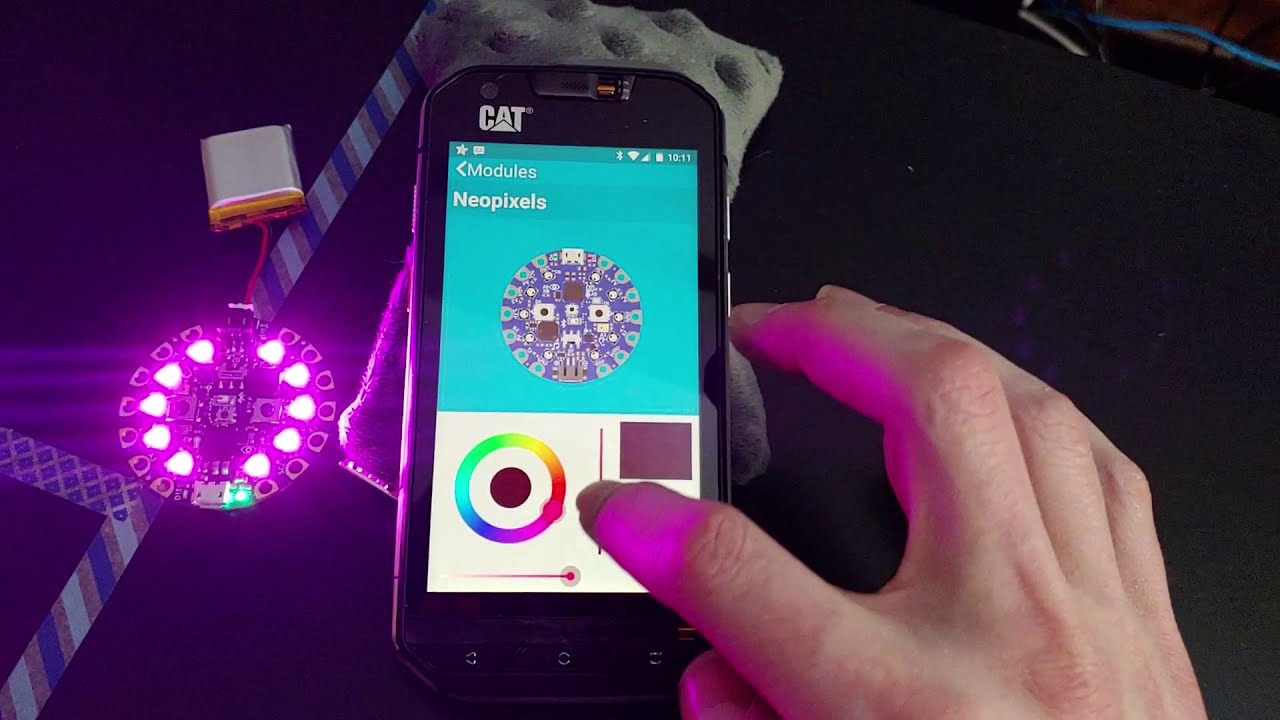
Neopixels are coming along. Just need to make the pixel selectors and then the sequence animations:
https://youtu.be/qdRthujdr4I
 onyx hinge
@tulip sleet that occurred to me too
looks like the output of the mcu is damaged, no signal can be seen at the input of the first neopixel.
idle owl
@onyx hinge Seems unlikely to be static shock, these boards are pretty tolerant.
onyx hinge
not sure what else to blame. software shouldn't be able to do that either
idle owl
Well if you scoped it and it's not sending a signal, then no, that's pretty likely to be hardware.
But I've zapped a Feather so hard that it hurt, made my display flicker, ejected everything I had connected to my laptop and put the board into safe mode. Still worked.
onyx hinge
same here, but this week my luck changed
onyx hinge
@idle owl happy to, link?
idle owl
Pro tip: Your board will not mount CIRCUITPY or *BOOT if you have it plugged into a wall charger and not your computer. 🤦
onyx hinge
I ran into two charge-only cables recently. curse them.
onyx hinge
you're welcome
manic glacierBOT
Making a note of this forum issue (experiences internal displayio error on reset) to try and validate whether it's related: https://forums.adafruit.com/viewtopic.php?f=60&t=159872&p=789428#p789428
ionic elk
Ok, I'm properly back today for the rest of January! I've done my best to keep up/catch up on any STM32F4 bugs/happenings but if anyone sees something I don't appear to have responded to, please let me know so I can get on it! @pastel panther just made a note of that I2C displayio thing on the corresponding issue, I'll take a look ASAP
pastel panther
@ionic elk welcome back!
onyx hinge

Adafruit Industries - Makers, hackers, artists, designers and engineers!
Introduction Hi! I’m Jeff Epler, AKA @jepler. Python has long had a special place in my heart, because it is the computer language that makes me feel like I can accomplish anything I dream up. Wh…
manic glacierBOT
onyx hinge
OK, that does it for today's random acts of github.
 main meteor
I did too. Was having errors flashing old Arduino boards with an FTDI Friend. The problems turned out to be 2 bad Arduinos, 1 bad FTDI Friend, 1 bad FTDI cable, and 2 charge-only USB cables (one mini, one micro). That was a long difficult slog.
Note to future self: when you can't connect or even find a port, check the USB listing for your serial chip: if it ain't there, you've got a bad chip and/or a bad cable/port, don't bother looking downstream until it at least enumerates as a USB peripheral.
slender iron
@onyx hinge pulseio should work in the background. how slow are the pulses though? it caps out at 16bit microseconds
slender iron
@drowsy geyser re your post: feature requests should be done as github issues
for the live stream what would you like to see? the in the weeds section tends to be the place we take questions now
the awesome page is the master cheat sheet: https://github.com/adafruit/awesome-circuitpython
GitHub
A curated list of awesome CircuitPython guides, videos, libraries, frameworks, software and resources. - adafruit/awesome-circuitpython
ionic elk
could someone do a sanity check for me? I need to figure out the difference between these two blocks of code:
    self->chan_handle.OCNPolarity = 0;
    self->chan_handle.OCIdleState = 0;
    self->chan_handle.OCNIdleState = 0;
    self->chan_handle.OCMode = TIM_OCMODE_PWM1;
    self->chan_handle.Pulse = 7000;
    self->chan_handle.OCPolarity = TIM_OCPOLARITY_HIGH;
    self->chan_handle.OCFastMode = TIM_OCFAST_DISABLE;
    if (HAL_TIM_PWM_ConfigChannel(&self->handle, &(self->chan_handle), self->channel) != HAL_OK)
    {
        mp_raise_ValueError(translate("Could not initialize channel"));
    }

    TIM_OC_InitTypeDef sConfigOC = {0};
    sConfigOC.OCNPolarity = 0;
    sConfigOC.OCIdleState = 0;
    sConfigOC.OCNIdleState = 0;
    sConfigOC.OCMode = TIM_OCMODE_PWM1;
    sConfigOC.Pulse = 7000;
    sConfigOC.OCPolarity = TIM_OCPOLARITY_HIGH;
    sConfigOC.OCFastMode = TIM_OCFAST_DISABLE;
    if (HAL_TIM_PWM_ConfigChannel(&self->handle, &sConfigOC, self->channel) != HAL_OK)
    {
        mp_raise_ValueError(translate("Could not initialize channel"));
    }
On the STM32F401, only the second, with a locally declared config structure, will allow PWM to start. The first version works on every other STM32 we support.
slender iron
are there fields that the first will leave uninitialized?
ionic elk
nope, every single field in the struct is initialized in both versions
I also tried a memset(&(self->chan_handle), 0, sizeof(TIM_OC_InitTypeDef)); in the first, didn't seem to do anything
slender iron
hrm, what is the error code you get back when it fails?
ionic elk
No errors. the PWM just either works or it doesn't. Internal values are all as expected.
slender iron
did you check the errata for the chip?
ionic elk
This works, which is wack:
    self->chan_handle.OCNPolarity = 0;
    self->chan_handle.OCIdleState = 0;
    self->chan_handle.OCNIdleState = 0;
    self->chan_handle.OCMode = TIM_OCMODE_PWM1;
    self->chan_handle.Pulse = 7000;
    self->chan_handle.OCPolarity = TIM_OCPOLARITY_HIGH;
    self->chan_handle.OCFastMode = TIM_OCFAST_DISABLE;
    TIM_OC_InitTypeDef sConfigOC = self->chan_handle;
    if (HAL_TIM_PWM_ConfigChannel(&self->handle, &sConfigOC, self->channel) != HAL_OK)
    {
        mp_raise_ValueError(translate("Could not initialize channel"));
    }
hrm, that is doing a copy
ionic elk
right. So the values of the chan_handle are fine... but passing it in is screwing up somehow
ionic elk
haven't dealt with data alignment in this context, what are you suggesting?
manic glacierBOT
@pbricmont that is impressive! Any chance you have a debugger that can snag a backtrace from the hard crash?
slender iron
@ionic elk print out the address of the two and see if they are aligned
I don't think that is it
I'd suggest using gdb to look at all of the registers of the timer after you call set
ionic elk
I'll give that a shot. I still don't totally get what could be going on with the alignment.
is that something I should keep researching here or are you confident that's not it
slender iron
it doesn't seem like an issue
I'd skip to the register stuff

GitHub
A set of GDB/Python-based utilities to make life debugging ARM Cortex M processors a bit easier - bnahill/PyCortexMDebug
ionic elk
good link
slender iron
very helpful
prime flower
@slender iron thanks for the "in 2020" post notification, I've been writing my thoughts throughout the last month in prep for a post 😄
 ivory yew
Speaking of 2020, here's my #circuitpython-dev2020 thoughts: https://blog.thea.codes/thoughts-on-circuitpython-2020/

Things I'd like to see from CircuitPython.
slender iron
🎉
ionic elk
@slender iron just for the record addresses are 0x20007004 (&(self->chan_handle), bad) and 0x20017c58 (sConfigOC), good.
raven canopy
is now super intrigued on @ivory yew's library package management thoughts. 😄
manic glacierBOT
This implementation is totally fine. Thanks for doing it! Just a couple suggestions but then it should be good to go.
How about changing this to read_report_into so that it doesn't do an allocation?
onyx hinge
@slender iron interesting, I overlooked that it works that way. For wwvb you need to distinguish .2, .5, and .8 second pulses
slender iron
can you do that by just sampling the pin?
manic glacierBOT
@theodox Please create a PR with the fix. We'd love to merge it in. Let us know if you need help doing that. Thanks!
Any idea what is turning off interrupts? I thought the nRF neopixel code used a peripheral to do it and didn't mess with interrupts.
ionic elk
@slender iron I have determined that the problem is not specific to the F401, but actually to the DEBUG=1 flag of the makefile: IE, whether the cflags -ggdb, -fno-inline, and -fno-ipa-sra are enabled. When they are, the issue does not occur.
ionic elk
I had turned DEBUG off to compile at a smaller size to try and fit it into the remaining space allocated by the Meowbit custom bootloader
basically yeah. Fails only when I can't look at it lol
slender iron
fuuuuun 🙂
ionic elk
and it's at that exact spot: where &(self->chan_handle) is passed in
slender iron
you can try with each of those flags off separately
ionic elk
When I looked at it with GDB, everything was the same ofc
I'll research the flags a bit. But at this point it's worth asking whether I should switch to something else, since I've at least diagnosed the problem and it's quarantined with DEBUG.
slender iron
all of our release builds are optimized though
ionic elk
Oof gotcha. I'll dig deeper then
Probably good to get a nice hard answer here since I'm not sure if other STM32 hal components might be affected. I haven't tested super extensively with DEBUG off - it's enabled in all current builds.
slender iron
we should definitely getting it going with opt
you can still read the peripheral registers so it'd be worth getting that workflow going
asm("bkpt") can break you where you want to too
slender iron
ya, I believe so
ionic elk
ok, new learnings. i'm on it
slender iron
👍 keep me posted on how it goes
ionic elk
what's the biggest benefit to optimized build? Speed or size?
Just noting that we can't increase internal filesystem size due to caching
slender iron
size and speed due to the inlining
drowsy geyser
@slender iron I updated the post with your answers, but the one thing I wanted to clarify is the office hours idea. Here's what I replied: I was actually thinking more along the lines of a university professor or teaching assistant office hours, where any of the students can show up for detailed help or questions. "In the weeds" feels more like the Q&A at the end of Ask and Engineer. Also, since I didn't realize that was open to anyone, for non-CircuitPython-implementation questions, I'm pretty sure other community people won't know that. Discord is great, and people seem to ask in either #help-with-circuitpython or #circuitpython-dev, but I feel like people refrain from long threads in-channel. Office Hours would be a place to interact and teach in a more face-to-face way, if that makes any sense.
manic glacierBOT
Check out this guide about adding new boards to CircuitPython: https://learn.adafruit.com/how-to-add-a-new-board-to-circuitpython
onyx hinge
-ggdb should be the least capable of introducing behavioral differences, nothing of 'debugging info' makes it to a .bin / .uf2 file
slender iron
@drowsy geyser for private discussions I'm going to start a calend.ly for scheduling mentorship time
for technical support/help I'd rather do it publicly
have you watched any of my streams I did
drowsy geyser
Totally understand. Thanks. Uh, no, didn't know you did those streams!
onyx hinge
@slender iron background sampling means never having to worry how long foreground stuff takes. The AVR 8-bit MCU ones I've tinkered with just used a 100ms sampling interrupt but you may be right that I am just not framing the problem in the right way to fit with CP.
slender iron
@drowsy geyser need a link to the recordings? I'd be happy to do more like them.
drowsy geyser
@slender iron Please! I'll binge them this afternoon. 😉
onyx hinge
it would be nice to accurately know the time of the transition because one of them (would have to look up which) is synchronized to the start of the second
slender iron
@onyx hinge to use PulseIn we could just switch to a 32-bit time value
onyx hinge
Or add a prescaler?
onyx hinge
honestly though if CP already could do one of the things I imagined, that's a good outcome too and I'm still happy it was something I posted about 🙂 🙂
what the ---- ! my pygamer LEDs are working again, and I didn't change anything
slender iron
@drowsy geyser https://www.youtube.com/watch?v=baa5ILZTRkQ https://www.youtube.com/watch?v=aWQzoxDyMvI https://www.youtube.com/watch?v=11B-3voAwdg

Live stream of @tannewt debugging memory issues in CircuitPython.
Visit the Adafruit shop online - http://www.adafruit.com
LIVE CHAT IS HERE! http://adafru.it/discord
Adafruit on Instagram: https://www.instagram.com/adafruit
Subsc...

Go behind the scenes and see how CircuitPython is released as @tannewt releases 4.0.0 Beta 4. Afterwards, have some Friday fun hacking on a GameBoy with CircuitPython.
Originally streamed on https://www.twitch.tv/tannewt/
Visit the Adafruit shop online - http://www.adafruit...

Scott (@tannewt) did a livestream on how-to review CircuitPython code on his Twitch channel: twitch.tv/tannewt
Scott's sponsored by Adafruit to work full-time on CircuitPython.
Visit the Adafruit shop online - http://www.adafruit.com
---------------------------------------...
@onyx hinge 🙂 it's interesting to know what things people don't know about
drowsy geyser
Thanks, @slender iron !
raven canopy
its been so long since i opened the sheet. but wouldn't 32-bit time value consume two TCs? and aren't they specific groups, that might be complicated on a pin-mapped basis? loads the sheet, after asking the question.
manic glacierBOT
Do we have a new issue for using the CCRAM? We could definitely use it and free up the normal ram for the circuitpython heap.
I want to start adding more information about memory locations to CircuitPython. The iMX RT line runs code off of flash so we'll want to start designating some code to sit in RAM. We may also be able to speed up execution by moving the stack and other common state to core coupled memory. (mp_state struct is one candidate.)
Note, the CCM memory is actually data-only (not on the instruction bus):
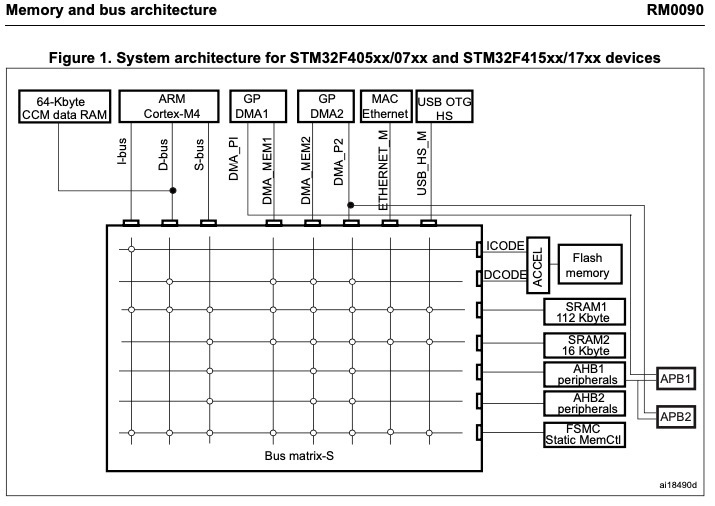
river quest
What do you want to see in CircuitPython in 2020? #circuitpython-dev2020
https://blog.adafruit.com/2020/01/01/what-do-you-want-from-circuitpython-in-2020-circuitpython2020-circuitpython/
Adafruit Industries - Makers, hackers, artists, designers and engineers!
As 2020 starts, let’s take some time to set goals for CircuitPython in 2020. Just like 2019 (full summary here), we’d like everyone in the CircuitPython community to contribute by posting the…
manic glacierBOT

hello.
I managed to build CP with CIRCUITPY_DISPLAY_LIMIT = 2 for the monster m4sk, and made the 2 displays working nicely. It would be a great idea to allow, at least for this board, multiple displays...
Not sure. https://github.com/adafruit/circuitpython/blob/master/ports/nrf/common-hal/neopixel_write/__init__.c#L229 might be if DMA isn't used - I'll check with a JLink later.
slender iron
dan added it, some sort of optimization
`-fipa-sra
Perform interprocedural scalar replacement of aggregates, removal of unused parameters and replacement of parameters passed by reference by parameters passed by value.

Enabled at levels -O2, -O3 and -Os.`
Using the GNU Compiler Collection (GCC): Optimize Options
manic glacierBOT
That is an excellent idea. However, I wonder how it will work when we store more than one report in the buffer? I was thinking we could then just hand the allocated string to use user and remove it from the buffer without copying then, but with this we will need to copy and free it.
onyx hinge
@ionic elk Suppose you have a structure: struct pt { int x, y; }; as a local inside a function. If the complier turns it into two variables pt__x and pt__y, it might have new opportunities for optimization. For instance, if it then notices that pt__y was never ever assigned, or an assigned value never used, it can omit it. Like all optimizations, it's not intended to make a visible difference for "conforming code" but of course sometimes we all write code which ends up being interpreted differently than we expected the compiler to do..
anyway, that is my lay understanding of what "scalar replacement of aggregates" is ..
ionic elk
HMMMMM
BIG HMM
so, say, in a struct, where you've got a bunch of variables that are getting assigned to registers, it could decide that some of them don't matter, for some reason? Potentially?
manic glacierBOT
Nevermind, I just realized that the string is added to the buffer in an interrupt, so the whole buffer would need to be pre-allocated anyways.
ionic elk
also I guess dan created no-ira-spa? my mistake was searching for the whole thing as opposed to just the ira-spa part
onyx hinge
-fFOO usually enables an optimization, and -fno-FOO turns it off again.
ionic elk
so it's an implicit thing
manic glacierBOT
Why is this needed? Does it apply to the whole file? I've done (void) var; instead. That is clearer about which parameter is unused.
I'd prefix this with pixelbuf_ for clarity.
Really really close. The show stuff looks fine except the name. Another questions about unused param but good otherwise.
Think we should raise a NotImplementedError?
pastel panther
@idle owl @ruby atlas I'm about to add a review to the Adafruit_CircuitPython_PyPixelBuf PR, please wait to merge
manic glacierBOT
Should we add another error string, or is mp_raise_NotImplementedError(NULL) ok here?
This is leftover from the _subscr changes - removing these.
I think the I2C and SPI pattern is an artifact of the early code that didn't correctly reset the peripherals on soft reset. Want me to update the other two as well?
It looks like the I2C disable was added here: https://github.com/adafruit/circuitpython/pull/1277/files#diff-0fadf6b9ea8a38a03206d10c865959c3R59
stuck elbow
@slender iron here is mine: http://dopieralski.pl/posts/2020-01-02-circuitpython/
slender iron
thanks @stuck elbow
manic glacierBOT
OK, that makes sense to me. The point is that nrfx_..._uninit() is now idempotent in our fork of nrfx. I guess I changed that but didn't go back and utilize the new capability. So yes, please fix the other busio impls. Thank you.
ionic elk
@slender iron is it OK if I wait on mine until Monday? I've got a Circuitpython buddy here in A2 who uses it full time and we were going to co-op on a post
drowsy geyser
@stuck elbow and @slender iron I strongly second a community keyboard design!!!! I've wanted one ever since the Hackster site published an article about it. I would be very much willing to help with requirements and programming (not good enough at PCB design yet.) Definitely would want per-key LED lighting with Cherry MX or Brown switches. BLE. USB interface for wired connections. LiPo battery. OLED status display, etc, etc.
ionic elk
But I could push him if earlier is better
stuck elbow
@drowsy geyser there is KMK
drowsy geyser
Err? Not familiar with it. Off to Google.
slender iron
@ionic elk no rush at all. We want to wrap up by the 13th
stuck elbow
they have their own discord server
onyx hinge
@drowsy geyser I am excited about keyboards too.
slender iron
@drowsy geyser @obra from keyboard.io and I were discussing a CP dev keyboard
onyx hinge
second hand-wire keyboard in progress, I think I'll be able to slot in the itsy nrf when it shows up on my doorstep 🙂 🙂
personally I want some kind of screen and an FN+??? key to switch to the Python REPL on the built in screen and FN+??? to paste the last printed result in as though I typed it. that would be amazing.
so! many! things! to be excited about
drowsy geyser
That looks interesting, but it's a bit to Kerbal for me. I'd like all the components surface mounted, program directly in CircuitPython, not by adding on boards.
 tall vigil
Hi folks
onyx hinge
I can totally see that POV too. A product couldn't be hand-wired IMO. For me, it's the right choice, due to PCB fabrication costs vs my time being "free"
stuck elbow
I'm not sure you can inject characters into the REPL at the moment
tall vigil
Coming in completely blind, so possibly totally wrong on context, but I've been loving JLCPCB's low-cost SMT service.
They've made me some fairly decent keyboard PCBs with surface mounted components quite cheaply and quickly in the past few months.
onyx hinge
@stuck elbow not yet, micropython has some provision for it (webrepl) but it's not in CP at the moment
tall vigil
You'd have to hand-solder connectors
stuck elbow
@onyx hinge I'm sure @indigo wedge will be working on it for his keyboard wing
onyx hinge
stuck elbow
@tall vigil I think I ordered the pcb for my Flouder keyboard from them too, was something like $12
onyx hinge
also, this is repl-while-main.py which is again .. unusual
maybe interact.py can be ported from python to circuitpython
stuck elbow
@onyx hinge I wouldn't be above having a separate chip for the keyboard handling, talking serial
even a stupid atmega would do, or attiny with a shift register
tall vigil
Some of our boards, we push the key scanning and last-mile LED driving off to an ATTiny88 so that the user's code doesn't mess with our keyscanning and led driving timing loops
Then we talk to that over i2c.

GitHub
Keyscan controller, with added APA102C LED driver using an ATtiny88 - keyboardio/avr_keyscanner
stuck elbow
right, here serial would be probably more intuitive
tall vigil
For a hobbyist board, I might not bother. But for a product, it's super-useful.
tall vigil
I really need to deal with BLE HID. What's been scaring me off is having to deal with shipping lipo batteries
ionic elk
@slender iron I figured out the thing by the way. It was a dereferenced pointer from a totally different part of the code that was being cleverly disguised by the optimizer as a struct issue due to memory organization.
I'll get a PR in tomorrow
tall vigil
(This is an extreme example of what "full stack" now means in my world 😉
ionic elk
@tall vigil Can you package it so the user puts in their own batteries? Because that's way easier
tall vigil
Quite possibly. But it's -not- the common practice in the industry
And really, we've got plentry of product backlog 😉
ionic elk
Well the industry standard practice is to have a billion dollars
manic glacierBOT
This
- fixes DMA hangs by taking an upstream update
- makes MP3File objects reusable, eliminating out of memory errors
- adds an "rms_level" property so we can animate some neopixels
ionic elk
so I try not to take too many tips from them 😉
tall vigil
It's more about customer perception than anything else
slender iron
👍
tall vigil
Though there was a very cheap bluetooth keyboard on kickstarter recently that did...very well.
ionic elk
Did they deliver?
tall vigil
It's the third product by a funded company
They had a unique solution here. They did not make a big deal about it, but the way they want you to use it is to plug in a USB power brick.
(We did a kickstarter for our first product. It took us 3 years to deliver. I... have a lot of empathy)
ionic elk
I mean most of the time I find Kickstarter projects are a) doomed b) a tiny pretend shell company funded by a chinese OEM to field test a prototype or c) the rare well managed startup that really ought to be on crowdsupply instead
tall vigil
I love the folks at crowdsupply. The target demographic is very different than kickstarter.
ionic elk
yeah they're fun. But category b) was really my point - they make projects that are actually extremely expensive seem dangerously accessible. They aren't things you want to emulate
tall vigil
Interestingly, I'm seeing more and more tiny chinese companies try kickstarter, which is super fascinating.
ionic elk
in my experience they are rarely actually tiny
tall vigil
I've talked to a bunch of them behind the scenes.
I spend a bunch of time in SZ. I've visited some of 'em in person.
Really, there are all kinds of things going on
ionic elk
Well, I'm just speaking to my personal experience running a KS. YMMV
slender iron
@tough flax we are super close to having BLE HID support. https://github.com/adafruit/Adafruit_CircuitPython_HID/pull/43 is the last piece
GitHub
This will be a new major version because the constructor signature changes.
hid_simpletest.py and hid_keyboard_shortcuts.py tested and work.
tall vigil
@slender iron is there other keyboard-related stuff I can be helpful about?
slender iron
I don't think so, it's been pretty stable. The last challenging thing was getting BLE HID working with iOS but its been sorted out
tough flax
Thanks @slender iron (and @tulip sleet) - I know you have all been working hard on it - just lots of things in our world that will be much easier w/o the Feather M0 BLE + Arduino code :-
🙂
onyx hinge
@slender iron @raven canopy should volume control go in audiomixer if it's being added? Per channel float, default 1.0?
raven canopy
@onyx hinge audiomixer has level per voice/channel.
onyx hinge
Oh already? Yay!
raven canopy
yeah, that's what i was working on with finishing up DeanM's initial work. 😄
onyx hinge
The site is called read the docs but apparently I don't
raven canopy
lol. i'm guilty of it everyday...
tough flax
I am making great progress on the USBFilter project that lets me convert weird old USB protocols to standard ones (mainly USB). It "just works" and I'm thrilled with how easy it is to tweak the code in Python for our end-users.... However (there's always a However)....
I am running this on two Trinkets with the USB Host (Arduino) running on one and the other running CP talking over UART to it. And I keep running out of memory. I know I could use an M4 Itsy, but a) that's more cost and I want to make these very affordable and b) it's lots more pins for these kids to solder (more chances to screw up).
The biggest memory hog (I think) is the map that converts (x,y) coordinates to keystrokes. It's a 8x12 array of Keycode values. I switched it to be a tuple of tuples which got me to the point where I can have one grid in memory and it works. When I add a second (for the other side of the keyboard overlay), I get
MemoryError: memory allocation failed, allocating 1265 bytes
Can anyone think of a more efficient way to allocate these? Or perhaps a way to reload the whole program when the overlay changes? I REALLY don't want to redo this in Arduino (I know I can)... I like the kids being able to tweak this for their target users, and CP really works for that.
Thoughts?
I probably should have made an issue 🙂
 scarlet maple
@tough flax Trinket M0? I also see https://circuitpython.readthedocs.io/en/4.x/shared-bindings/uheap/__init__.html and https://circuitpython.readthedocs.io/en/4.x/shared-bindings/ustack/__init__.html for estimating object size and stack size in CP.
tough flax
I'm getting no joy on these in CP 5.x... were they removed?
idle owl
The Adafruit Trinket M0 may be small, but do not be fooled by its size! It’s a tiny microcontroller board, built around the Atmel ATSAMD21, a little chip wit...
They were not removed...
What do you mean "no joy", @tough flax?
tough flax
I can't call, import, or reference them from CP at the REPL
idle owl
Oh, the shared bindings. I thought you meant CP overall, apologies. I think they're no longer u.
tough flax
I tried with no u...
idle owl
Fair enough. I'm not sure then.
scarlet maple
Nope. Just did some searching. Have no Trinkets, just a Portal and a Gemma.
idle owl
Wait...
They might not be implemented for Trinket because of the size.
Dan or Scott would know for sure.
tough flax
I'm all for removing things for more space on the M0s... but it does make them less useful as a suggestion ';-)
scarlet maple
Wouldn't think 96 (then 192) copies of an element would be that large, but depends on what they're made of. Is this tuple of tuples containing bytes, int32, etc.?
manic glacierBOT
Is setting a breakpoint on __disable_irq the right way to catch what might be disabling interrupts?
tough flax
It's containing constants from Keycode in the Adafruit_hid library. They are integers.
qwerty = ((Keycode.ESCAPE,Keycode.TAB,Keycode.GRAVE_ACCENT,Keycode.KEYPAD_NUMLOCK,Keycode.KEYPAD_NUMLOCK,Keycode.INSERT,Keycode.HOME,Keycode.END,Keycode.END,Keycode.PAGE_UP,Keycode.PAGE_DOWN,Keycode.DELETE),
      (Keycode.F1,Keycode.F2,Keycode.F3,Keycode.F4,Keycode.F5,Keycode.F6,Keycode.F7,Keycode.F8,Keycode.F9,Keycode.F10,Keycode.F11,Keycode.F12),
      (Keycode.ONE,Keycode.TWO,Keycode.THREE,Keycode.FOUR,Keycode.FIVE,Keycode.SIX,Keycode.SEVEN,Keycode.EIGHT,Keycode.NINE,Keycode.ZERO,Keycode.MINUS,Keycode.EQUALS),
      (Keycode.Q,Keycode.W,Keycode.E,Keycode.R,Keycode.T,Keycode.Y,Keycode.U,Keycode.I,Keycode.O,Keycode.P,Keycode.BACKSPACE,Keycode.BACKSPACE),
      (Keycode.A,Keycode.S,Keycode.D,Keycode.F,Keycode.G,Keycode.H,Keycode.J,Keycode.K,Keycode.L,MOUSE_NW,MOUSE_N,MOUSE_NE),
      (Keycode.Z,Keycode.X,Keycode.C,Keycode.V,Keycode.B,Keycode.N,Keycode.M,Keycode.SEMICOLON,Keycode.QUOTE,MOUSE_W,MOUSE_CLICK,MOUSE_E),
      (Keycode.CAPS_LOCK,Keycode.LEFT_SHIFT,Keycode.LEFT_SHIFT,Keycode.SPACEBAR,Keycode.SPACEBAR,Keycode.SPACEBAR,Keycode.COMMA,Keycode.PERIOD,Keycode.FORWARD_SLASH,MOUSE_SW,MOUSE_S,MOUSE_SE),
      (Keycode.LEFT_CONTROL,Keycode.LEFT_ALT,Keycode.WINDOWS,Keycode.LEFT_ARROW,Keycode.RIGHT_ARROW,Keycode.UP_ARROW,Keycode.DOWN_ARROW,Keycode.ENTER,Keycode.ENTER,MOUSE_DBL_CLICK,MOUSE_RIGHT_CLICK,MOUSE_DRAG))
Is each int 32 bits, then?
tough flax
They aren't declared that way - it'a all Python numbers in the HID code: https://github.com/adafruit/Adafruit_CircuitPython_HID/blob/master/adafruit_hid/keycode.py
GitHub
USB Human Interface Device drivers. Contribute to adafruit/Adafruit_CircuitPython_HID development by creating an account on GitHub.
#pylint: disable-msg=invalid-name
    A = 0x04
    """``a`` and ``A``"""
    B = 0x05
    """``b`` and ``B``"""
    C = 0x06
So 1 byte each. If that list/tuple/etc. were implemented as a linked list of some kind, then maybe that's 9 bytes per element (8 bits for the keycode, 32 bits for the forward and backward neighbor)? 864 bytes for each list/tuple, and the M0 has 32 KB RAM.
tough flax
I don't think it's one byte each. I think by default Python stores everything as a larger number than that. So, probably 32 bits... maybe more. Maybe some arbitrary precision number with way more than 4 bytes. Then overhead for the tuple. I can't think of why they'd store an unmutable tuple as a linked list (you can't modify it).
The reason I asked this was to see if there was a more efficient way of doing these maps (I knew they weren't efficient... I just don't know how to do better in Python).
scarlet maple
True. So might just be basically an array, but if the keycodes are stored as a 32-bit or greater, we're still in the roughly 1 KB range for each array.
tough flax
yes
scarlet maple
https://github.com/adafruit/circuitpython/issues/583 indicates ints and floats are both stored at about 32 bits each.
There is garbage collection (https://circuitpython.readthedocs.io/en/latest/docs/library/gc.html), but one would think any automatic GC would be enough.
onyx hinge
If you have all "small" integers then a bytearray or array.array can store them in less memory
tough flax
So, it seems the code to assign each value to an element of an array takes more memory than the declared nested tuples (does that sentence make sense?) So I need some approach that can be declared without adding all of the assignment code. Perhaps struct.pack() into a bytearray?
onyx hinge
there's also the space used by the python code, it seems to me.
i.e., the space to actually store the processed form of "C = 0x6"
scarlet maple
bytes might be even more compact than bytearray.
tough flax
Right, originally I had a two dimensional list that I declare each element
qwerty[0][0] = Keycode.ESC
qwerty[0][1] = Keycode.F1
Etc...
That didn't even let me have one set of values. The nested tuples got me running (yay) but I can't change the overlays because I can't declare a second grid.
I am going to try using struct.pack() and see where that goes
BTW, does anyone know if Keycodes can be > 1byte?
onyx hinge
no, USB keycodes fit within 1 byte
tough flax
Ok, thanks
Nope! Even doing this I can't fit two grids in memory:
qwerty = (struct.pack('BBBBBBBBBBBB',Keycode.ESCAPE,Keycode.TAB,Keycode.GRAVE_ACCENT,Keycode.KEYPAD_NUMLOCK,Keycode.KEYPAD_NUMLOCK,Keycode.INSERT,Keycode.HOME,Keycode.END,Keycode.END,Keycode.PAGE_UP,Keycode.PAGE_DOWN,Keycode.DELETE),
            struct.pack('BBBBBBBBBBBB',Keycode.F1,Keycode.F2,Keycode.F3,Keycode.F4,Keycode.F5,Keycode.F6,Keycode.F7,Keycode.F8,Keycode.F9,Keycode.F10,Keycode.F11,Keycode.F12),
            struct.pack('BBBBBBBBBBBB',Keycode.ONE,Keycode.TWO,Keycode.THREE,Keycode.FOUR,Keycode.FIVE,Keycode.SIX,Keycode.SEVEN,Keycode.EIGHT,Keycode.NINE,Keycode.ZERO,Keycode.MINUS,Keycode.EQUALS),
            struct.pack('BBBBBBBBBBBB',Keycode.Q,Keycode.W,Keycode.E,Keycode.R,Keycode.T,Keycode.Y,Keycode.U,Keycode.I,Keycode.O,Keycode.P,Keycode.BACKSPACE,Keycode.BACKSPACE),
            struct.pack('BBBBBBBBBBBB',Keycode.A,Keycode.S,Keycode.D,Keycode.F,Keycode.G,Keycode.H,Keycode.J,Keycode.K,Keycode.L,0,0,0),
            struct.pack('BBBBBBBBBBBB',Keycode.Z,Keycode.X,Keycode.C,Keycode.V,Keycode.B,Keycode.N,Keycode.M,Keycode.SEMICOLON,Keycode.QUOTE,0,0,0),
            struct.pack('BBBBBBBBBBBB',Keycode.CAPS_LOCK,Keycode.LEFT_SHIFT,Keycode.LEFT_SHIFT,Keycode.SPACEBAR,Keycode.SPACEBAR,Keycode.SPACEBAR,Keycode.COMMA,Keycode.PERIOD,Keycode.FORWARD_SLASH,0,0,0),
            struct.pack('BBBBBBBBBBBB',Keycode.LEFT_CONTROL,Keycode.LEFT_ALT,Keycode.WINDOWS,Keycode.LEFT_ARROW,Keycode.RIGHT_ARROW,Keycode.UP_ARROW,Keycode.DOWN_ARROW,Keycode.ENTER,Keycode.ENTER,0,0,0))
I think the code to make those calls is actually bigger than the declared tuples.
tulip sleet
@tough flax You could store a precompiled version of the table in a file and just read the bytes in the file
tough flax
Which brings me back to my original thought. Can I modify code.py to import a different file & restart the interpreter somehow? I know this would add writes to the Flash, but they don't change overlays too often
tulip sleet
the table can be an array.array so it's packed as densely as possibl.e It could be bytes or halfwords.
tough flax
In what language, Dan?
Python or C? I am good with Python, but C would be hard for folks to change
tulip sleet
could be python, running on a larger computer
you could import the existing HID keycode file so people can use the same names
since all it does is define a bunch of integers
tough flax
I do import the HID keycode file, but the order of the grid is how I look things up.
I think what you're saying is to make the two arrays (probably nested tuples) and then run mpy-cross on them
tulip sleet
I mean in the generating script that runs on the larger computer, you would import the keycode file
tough flax
The might make it small enough to import?
tulip sleet
not nested tuples, because that will contain pointers. It would be most compact to store a one-dimensional bytes and index into it "manually", with
tough flax
I'm good with one dimension
tough flax
In this case, yes
So, I write a separate program (in Python) that just reads the two grids and writes them out as bytes in the right order to two files
overlay1.dat and overlay2.dat.
tulip sleet
right
tough flax
Then I read that in from my code.py?
And it becomes what, an object of type bytes?
a bytearray?
Can you index into those in Python?
tulip sleet
right, you would allocate a bytestring that is the right length (you could find out the length of the .dat file and allocate it once).
a bytearray would be beter, right
 unreal vault
Anyone have a link to what the CircuitPython Runtime Staus LED flashes mean on a Feather M0 Express?
unreal vault
Thank you @tulip sleet !
tulip sleet
@unreal vault you'd be happier connecting via serial and seeing the printout though 🙂

Adafruit Learning System
New to CircuitPython? This is the place to start.
tough flax
I know this is just the jaded old C programmer in me, but doesn't this seem nuts, @tulip sleet that you can't declare 100 bytes in code and have it take up roughly 100 bytes in memory?
tulip sleet
the problem is the size of the initialization code, because it has to run at runtime. You could also do something like
a = bytes('\x03\x04\x55...') which would mostly be parsed at compile time
in a true compiled language, all the names would get resolved at compile time, but not in this interpreted language
tough flax
What will mpy-cross do for me? Nothing?
tulip sleet
it saves having to compile the .py at run-time when you do an import, but it is not going to do the initialization at compiile time, except for building literal strings, etc.
unreal vault
@tulip sleet thats the thing, nothing showing on serial when running example code. Just flashing. If I try simple example code at REPL it works. Working with sample code provided for CharlieWing
tulip sleet
do you have Serial open in Mu? Try typing ctrl-c to interrupt the running program, then at the >>> prompt type ctrl-D
tough flax
Mwuuuhahaaaa - mpy-cross on the file got me two 🙂
tulip sleet
right, it will save some memory, maybe that is all you need !
if you get a failure on the import it's becuase the on-board compiler ran out of memory
tough flax
Nope! I can actually do 3!
tulip sleet
this issue is why I have a bytes in https://github.com/adafruit/Adafruit_CircuitPython_HID/blob/master/adafruit_hid/keyboard_layout_us.py#L53
it concatenates all the invidual bytes at compile time to make one string. But it is not going to do the lookups Keycode.WHATEVER at compiled time
(it would be nice, but that's not the language semantics)
tough flax
AH! But I could copy that to a file, manipulate it into the right order (using your awesome comments) and then mpy-cross them
Probably get all 7 of the standard overlays in!
tulip sleet
I didn't realize that example was relevant :), I just gave it as an example of a compile time bytes . Great!
tough flax
So, for today (which is what matters today), I have my two standard overlays fitting using just mpy-cross
That means Intellikeys users who have the QWERTY and Web Access overlays can flip them over and have both work.
Over time, I can go through the yukky process of mapping all of the standard overlays into your bytes structure and them mpy-cross'ing them into a "overlays.mpy" file
This works
I mean, it sucks, and I wish I had M4s... but this works
Turns out I can get 6 copies of that array in by mpy-cross'ing the file!
That's plenty!
manic glacierBOT

@tannewt Unfortunately, I don't have a debugger.
 craggy galleon
Is there any CircuitPython Learn Guides for adding new sensors to the CircuitPython eco-system?
E.g. SDS011 Pollution Sensor does not have any CircuitPython support atm but I am working on building a driver but have no guide or standards to stick to.
I've sort of just been making it up as I go - but then realising that it is hard to stick to any existing standards when using this method.
I'm happy to help write up a guide if that is what is needed. I have a pretty strong idea after playing around with all the low-level drivers for other existing sensors for the past year.
All I can say now is that the best method for adding support for a new sensor is to take a relatively new CPY driver repository and copy the core components then follow along adjusting as needed.
It just gets a bit tricky at times. If there was a guide it would be straight forward and all new device drivers would come out the same.
solar whale
@craggy galleon take a look at https://learn.adafruit.com/creating-and-sharing-a-circuitpython-library
craggy galleon
@solar whale this is what I was looking for 😄
But I think it needs to go a bit further into how to structure the driver as well - like if you are using an I2C or SPI device. They are all very specifically set out in the other drivers.
solar whale
I hope it helps -- and typically, I think people just use an existing driver as a starting point especially for the I2C/SPI implementation.
craggy galleon
Any ideas on how to fix the "toJson is undefined" for cookiecutter?
I've tried both Python2 and Python3 just to see if that makes any difference.
solar whale
I wonder if the guide needs to be updated since the switch to github actions from travis.... hopefully someone involved in that will be online later.
craggy galleon
I'll wait patiently 😉 . I tried a few different versions of python just in case that was the issue. No luck.
timber mango
Hi experts, just a quick, probably unnecessarily broad question, but:
I want to program my CPX from a linux laptop. Is this hard to set up?
solar whale
Not at all. The CPX will mount as CIRCUITPY. Just copy files to it.
You can install mu on Linux as well
solar whale
pip3 install mu-editor
See The section python instructions
Note that your user has to be a member of the dialout group
timber mango
Haha, I don't even know what that means :D
Guess I have some reading up to do.
onyx hinge
morning all
I wonder if anybody has ideas about how to work on https://github.com/adafruit/circuitpython/issues/2417 in which SD card activity in the background can lock up circuitpython until you use the reset button
GitHub
In jeplayer, I ran into the following hang when I had a bitmap on SD and I also manually called refresh. The problem appears to be linked to the fact that the same file is being "f_read&am...
switching to a non-Python implementation of SD card I/O might work, because it would likey be written so that background tasks can't occur while a foreground SD card read is ongoing.
Providing a "critical section" (e.g., as a decorator) that could block background task processing while it existed is another option, but it would be easy to misuse, again resulting in apparent lockups of the device
right now I have careful coding in JEplayer so that background I/O (mp3 playing, OnDIskBitmap reading) can never overlap with foreground SD I/O, but that feels easy to break
tulip sleet
@onyx hinge i have to go out in a minute, but my basic thoughts are: SD access needs to be serialized. A simple lock for SD actiivity in pariticular might work, or a work queue might be better. At one time we thought about redoing the SD card library in C, because it was so buggy, but it's now in better shape, and it's not clear how it would fit in the M0 ports.
onyx hinge
OK, "serialized" seems a lot like my "critical section decorator" idea, so maybe we're on the same wavelength. ttyl. I'll potentially bring this as an In The Weeds item Monday
if disk_read/disk_write blocked background tasks when calling into Python it might suffice, and not put any burden on Python code authors or provide a dangerous "block background tasks" decorator
onyx hinge
hm running into safe mode resets with audiomixer, but I don't have my segger at the coffee shops. changing gears from trying to add volume to JEplayer via audiomixer to .. not sure what
timber mango
@solar whale Thanks, I'm working on setting the laptop up now, just installed new harddisk, next up: Finding power supply and a big enough USB pen to install the linux system.
Do you have any suggestions? It's jungle for me, the only reason I want to go with linux is that I don't need to worry about purchasing and installing windows on this ancient X200.
onyx hinge
@timber mango suggestions for linux? I think that mint and ubuntu are regarded as the two most beginner friendly incarnations these days. https://linuxmint.com/ https://ubuntu.com/
Ubuntu
Ubuntu is an open source software operating system that runs from the desktop, to the cloud, to all your internet connected things.
timber mango
Thank you, @onyx hinge, I'll give them a go. I remember having used Ubuntu long ago, so I'll start with that. Cheers.
manic glacierBOT
I saw a __disable_irq() during neopixel_write. Here's the traceback.
#0  common_hal_neopixel_write (digitalinout=digitalinout@entry=0x20008790, pixels=0x20009eb0 "\023", numBytes=960)
    at common-hal/neopixel_write/__init__.c:229
#1  0x0005e79c in neopixel_write_neopixel_write_ (digitalinout_obj=0x20008790, buf=<optimized out>)
    at ../../shared-bindings/neopixel_write/__init__.c:74
#2 0x000364c6 in fun_builtin_2_call (self_in=0x82e84 <neopixel_write_neopixel_write_obj>, n...@tannewt I haven't gotten to making a new issue yet as I wasn't sure exactly what I would be making it for. Check out my posts earlier in the thread for some more CCRAM info - it's restricted enough that right now I can't think of a much better use for it than what Micropython uses it for, which is simply a large buffer for internal filesystem tasks (which is something I do want to implement this month). I'll link the appnote I attached earlier again:
https://www.st.com/content/ccc/resource/...
I'll fix the failing build soon, I don't think it'll change the substance of the PR.
onyx hinge
Wow great substantive comment on my 2020 blog post! https://blog.adafruit.com/2020/01/02/jeffs-ideas-for-python-on-hardware-in-2020-time-timekeeping/#comment-355353
Adafruit Industries - Makers, hackers, artists, designers and engineers!
Introduction Hi! I’m Jeff Epler, AKA @jepler. Python has long had a special place in my heart, because it is the computer language that makes me feel like I can accomplish anything I dream up. Wh…
old smelt
Hi All - I have a vague recollection of seeing usage guidelines for the CircuitPython/Blinka logos before. Do they exist? Can someone point me in the right direction?
tulip sleet
@timber mango @onyx hinge I use Ubuntu (long term support 18.04.x, 20.04 arriving in April), but use it with the cinnamon desktop, which I find more compact than the Unity interface. After I install Ubuntu, I do apt install cinnamon-desktop-environment
 wind trellis
@timber mango If you're looking for recommendations, I've been enjoying Debian 10 with the Mate desktop lately, from the same family as Ubuntu and Linux Mint which I've also used. (They're both Debian derivatives actually.) It seems solid and non-quirky, and also most similar to Raspian if that matters. For installation, the smallest USB stick you can buy should be enough. 4GB would work but I haven't seen those for sale for a while.
river quest
hi hi @old smelt
our art collection is here: https://www.dropbox.com/sh/l6tp9ym5nf8h5v9/AABGu_q2pcdUQdx1avr8Xvvda?dl=0 and the usage is here: https://www.dropbox.com/s/zvl0o4pr3lucfz3/license-readme.txt?dl=0 (in the collection as well, text file).


feel free to email me as well if needed, pt@adafruit.com with any questions on usage, etc.
old smelt
Thanks Phil!
raven canopy
@onyx hinge if I'm understanding that comment correctly, and remembering how FrequencyIn ended up; that's essentially what happens. It sets up a reference timer as a counter, attaches pin interrupts to the reference to capture triggers, and tracks any overflows. The only issue to deal with when freewheeling the ISRs is smashing the other interrupts; mainy USB.
idle owl
Working on updating a guide. There is a microphone on both the Circuit Playground Express and Bluefruit, however, the special sound features of the Circuit Playground Library are not supported on Express due to memory limitations. In the guide page, if you were going through it, would you want to know why it doesn't work on the Express? Or would you rather there simply be a warning saying it doesn't work on the Express, and not have an explanation and only discuss Bluefruit in the page content?
manic glacierBOT
Based on that traceback, the nRF neopixel_write implementation is falling back to a busy-waiting NeoPixel write implementation:, which will mess up the BLE timing. That will happen if it can't get a PWM peripheral. So find_free_pwm() is returning NULL for some reason. Maybe the PWM peripheral is not reset properly and appears to still be in use even after it's freed after the neopixel write.
I think the correct thing to do instead is if we can't get a PWM peripheral, then check to se...
slender iron
@onyx hinge I think you could start work on removing systick if you have cycles
that is preventing us from starting to sleep
manic glacierBOT
inhibit_background_tasks isn't initialized to 0 anywhere except implicitly on hard startup. (Is all the data RAM initialized to 0?) I'm worried about it being non-zero after certain errors that might not hit the reinitialization of data RAM.
I wonder if this is going to cause significant possibly fatal hiccups in background tasks. It certainly might cause hiccups in display refresh, and we also expect to service USB at least every 1 msec.
slender iron
@tulip sleet you around? want to sync on ble in 5?
tulip sleet
yes, you mean video?
slender iron
yup
tulip sleet
sure, started a call
solar whale
@timber mango You'l find most of the guides assume you are using Ubuntu so it's a good choice. I've had no problems with it.
 lusty crane
im getting a "NotImplementedError: Board not supported GENERIC_LINUX_PC" error with the examples/veml7700_simpletest.py
solar whale
@lusty crane -- is this with an MCP2221 on a linux system?
lusty crane
no, it's a I2C-Tiny-USB on linux
solar whale
@lusty crane OK -- I know nothing about that ... sorry -- the only way I know to use the CP libraries on linux is with an FT232H or MCP2221 but I ran into that same error with the MCP2221
@tulip sleet Do you have any idea what is shipped on an ItsyBitsy nrf52840 -- can't make much sense of it
/dev/ttyACM0 is streaming BLE data , but no CIRCUITPY and nothin shows up on my iPhone to connect to.
I put CP on it ian it seems happy, just curious what it was running
idle owl
@solar whale Arduino example.
solar whale
@idle owl thanks -- pretty blinking lights
solar whale
@idle owl @raven canopy did you see the questions from @craggy galleon at about 0604 EST above -- about using cookiecutter to set up a library -- are there some new steps not in the guide for using it now that travis is not used?
raven canopy
@solar whale I did. I'll take a peek a little later if noone jumps on it.
 half sedge
Hi, my proposal to present Circuit Python in the IoT track of Fosdem'20 has been accepted: https://fosdem.org/2020/schedule/event/iotcircuitpython/ and I will have 20 minutes (almost a lightening talk) to present how to do IoT with Circuit Python. The goal is to present a Bluefruit demo and an Airlift demo. I would have a few questions and a request to Adafruit... can I discuss this here? Or do I send an email somewhere?
 raven canopy
@craggy galleon @solar whale i peeked real quick. cookiecutter uses Jinja2 as its templating parser, which uses {{ }} as an expression delimiter. this is causing the issue with the Actions workflows, which also have ${{ }} as an expression delimiter. there's one way around it that i know of right now. i'll do deeper dive on it and come up with something though.
half sedge
Thanks @slender iron : (1) I am looking for a list of date related to the history of Circuit Python (and Micro Python) and I believe that Mister Ladyada has been collecting those. Could I have access to that? Is it published somewhere?
Like date of release (that I can find in the release page), some key dates, ...
That would be put in the slide deck, not that I hope to have much time to talk about this in the presentation.
(2) I have been working on a jargon list https://gist.github.com/dglaude/bc8043cdccef9e643eeaeb99f2e9fb97 that I would like to cross-check and enhance. It is basically the Adafruit "marketting" language or words used to talk about some technology: NeoPixel, Airlift, Bluefruit, Blinka, ...
Gist
Adafruit jargon file. GitHub Gist: instantly share code, notes, and snippets.
lusty crane
i think this is where the problem is: https://github.com/adafruit/Adafruit_Blinka/blob/master/src/board.py
GitHub
Add CircuitPython hardware API and libraries to MicroPython & CPython devices - adafruit/Adafruit_Blinka
it doesn't have the GENERIC_LINUX_PC
half sedge
That also would be to put in the slide deck, and some will be used in the presentation. The idea is to bootstrap user into Adafrult words, or better understand documentation.
lusty crane
could i modify the blinka to include the PC?
half sedge
(3) I am looking for news and ETA about the LED baseball hat support. I have ordered one, that should arrive on time for my presentation and could use as a wow demo of BLE communication from CircuitPython and a device. I have no clue who was working on this.
(4) I was wondering if I could get Circuit Python giveway to distribute at Fosdem to the participant of the IoT track. Something like "stickers" with Blinka on it.
slender iron
@half sedge https://github.com/adafruit/OTD
GitHub
Of the day data sources. Contribute to adafruit/OTD development by creating an account on GitHub.
- email me and I'll pass it on: scott@adafruit.com
- I believe the person released a library for it. nothing is needed in the core
half sedge
adafruit/OTD ? I was talking about key date in Circuit Python history. 🙂
slender iron
I would hope that would have circuitpython dates
release dates are easy to pull from github
and most other stuff ends up on the blog
half sedge
Ok, I'll dig the date I believe are important. I started a cross reference of CP release and relate that to new hardware. Like 4.0 => displayio => PyPortal
solar whale
@raven canopy Thanks for digging into it
lone sandalBOT
onyx hinge
@slender iron I may start SysTick work when I need small breaks from JEplayer but really getting heads down on it will come later on.
half sedge
@slender iron I sended the email.
manic glacierBOT
We sure can't guarantee that the I/O operation will take any bounded length of time, so I agree there's a chance of missing some ticks. But isn't that already the case, when the display background text needs to read from SD?
The main difference I can think of is, the total quantity of I/O in one background task is probably bounded, but a user could probably read larger amounts of data (say, 32kB if they work at it?) in the foreground, and that blocks background by much longer than reading...
onyx hinge
how long does it take to read 32kB from SD?
about 0.7s, ouch
reading 1 block takes 7ms already 😦
manic glacierBOT
On my pygamer with this sd card https://adafru.it/1294, reading 1 512-byte block takes about 7ms and scales linearly from there. It's no trouble at all to make a sd read take the majority of a second.
slender iron
@onyx hinge can you see the baudrate?
onyx hinge
I am not aware of setting a baudrate so it's at a default value
slender iron
hrm, I wonder. you could use a logic analyzer to see why it takes so long
onyx hinge
so you're surprised at 7ms / 512 bytes? I mean, I am a bit too
is the SPI bus the same one that's on regular I/O pins, making it easily scopable?
just CS i guess would be private
slender iron
it's been a while since I've done it
it may not be broken out, next time you do an order you should pick up a breakout for sd
problem is that long wires can cause a lower speed
onyx hinge
I am having trouble even spotting the SD socket on this schematic https://cdn-learn.adafruit.com/assets/assets/000/076/005/original/adafruit_products_PyGamer_Sch_p1.png?1558716704

I guess I can trust my working source code though ``` spi = busio.SPI(board.SCK, MOSI=board.MOSI, MISO=board.MISO)
cs = digitalio.DigitalInOut(board.SD_CS)
its on page 2: https://cdn-learn.adafruit.com/assets/assets/000/076/006/original/adafruit_products_PyGamer_Sch_p2.png?1558716722
 onyx hinge
oh silly me
slender iron
looks like it is broken out on the featherwing
onyx hinge
baudrate=1320000 (default)
slender iron
that is a weird number
onyx hinge
so I'm getting roughly half that as an effective speed (512Byte/7ms ~= 585000bit/s)
manic glacierBOT
I'll take a look at the pwm reset logic. It sounds similar to the issue I found with UART reset.
Is SD-less CP something we actually want to support? I assume BLE will be on most of the time.
onyx hinge
oh even the sd-cs is broken out, that's convenient
manic glacierBOT
We'll set it to 0 as long as it ends up in .bss. (the linker map can confirm this.)
onyx hinge
okay here's how SCK looks, from a high level
f.seek(0); f.read(512). it takes some time to get going and then it does a big block
slender iron
right, the big block could probably be faster but not the polling
onyx hinge
during the tail it is 1.32MHz as expected
manic glacierBOT
This looks good to me! Thank you for your incredible persistence. @dhalbert you will need to approve as well or at least dismiss your review.
onyx hinge
when reading more blocks it's less of the slow "head" part and more of the fast "tail" part, note changed timescale
manic glacierBOT

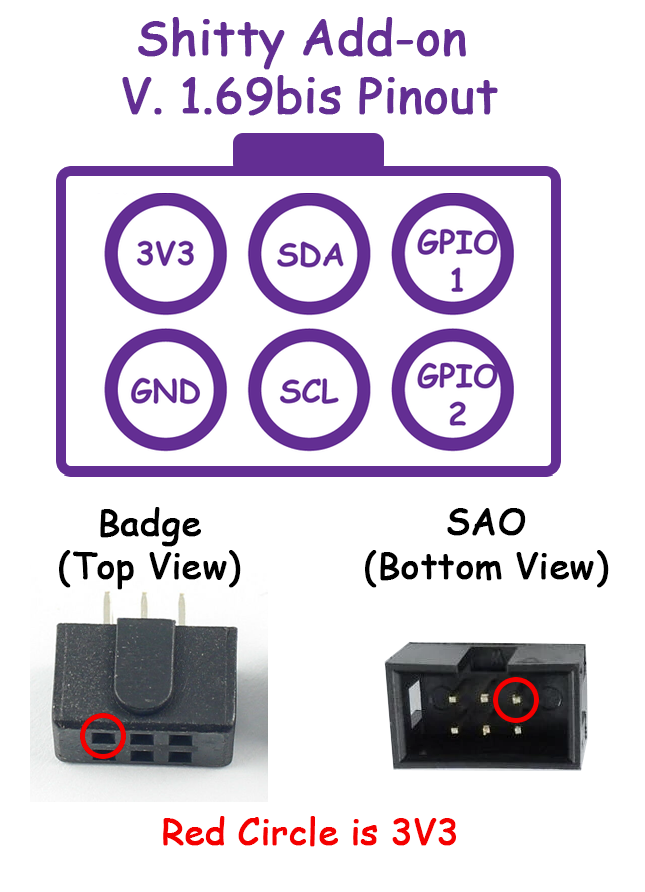


I was playing around in CircuitPython to work out the possible and best ways to detect if os.urandom is present. It turns out it's always present so I then started looking at the exceptions that it throws on platforms with no hardware, e.g. SAMD21 (M0) like the CPX. I noticed during that experimentation that even on a CPB where there is hardware support this fails for values above 64. Either that's a bug or it's a confusing use of the NotImplementedError exception?
Adafruit Circui...that sort of happens at the fatfs layer
it looks if >512 (>1023?) bytes are being written AND they are sequential in block address, and issues a read for them all.
manic glacierBOT
I have no need for lengths above 64 btw!
onyx hinge
but maybe the python layer could track this across multiple requests too, and get some savings from sequentiality
manic glacierBOT
@Marius-450 please make a PR to bump it to 2. I don't think we want more than that due to the RAM it takes but 2 makes sense for the m4sk.
@pbricmont Bummer. How many would you like to support in the end? What are you using them for?
onyx hinge
64MHz doesn't work (errors). 32MHz doesn't work (doesn't error, but gets wrong data). Maybe the 13.2MHz was an empirical maximum.
os.listdir("/sd")
['000.BLP']
should have been 000.bmp
slender iron
¯_(ツ)_/¯
stuck elbow
close enough!
slender iron
that number probably came from testing
onyx hinge
16MHz happens to work on this one card
but clearly not a lot of headroom in SPI baudrate
what does any of this mean for #2446, if the concern is the amount of time foreground I/O can block a background task?
this is NOT blocking JEplayer, fwiw, it is a tangent because I coded around it..
manic glacierBOT
Why allow changing the filename? Can't you avoid OOM by passing in a shared bytearray buffer into the constructor?
Yes, I could, but it would ultimately be more finicky. There are a BUNCH of separate memory allocations, and writing a mini-allocator to make them come out of a passed in block didn't seem like a good use of time.
- disk I/O buffer
- sample buffers
- main mp3 decoder object
- 7 internal pointers in mp3 decoder object
There should be plenty of data that we use in RAM that is only accessed by the CPU. The stack is almost that but we may need to move some DMA memory.
Buffering the internal flash filesystem isn't something I'd do in that space because DMA could be used to flush the cache out of RAM. With external flash it will be used for that.
Please open a placeholder issue and we can discuss related work there. Thanks!
We sure can't guarantee that the I/O operation will take any bounded length of time, so I agree there's a chance of missing some ticks. But isn't that already the case, when the display background text needs to read from SD?
Yes, but that is interruptible, I think, so that USB background tasks are not blocked during that time. Display refresh prevents itself from being called recursively. Blocking all background tasks is problematic. Blocking background tasks that do SD operations is w...
 gilded cradle
@drowsy geyser I got your friend request, but I needed to turn off PMs because I was starting to get too many. Did you have a question?
manic glacierBOT
You don't need to allocate everything out of that block, you just need to allocate the things that are hard to reallocate.
I'm wary of this change because it breaks the mental model of one MP3File per file. It'd be more of a MP3Decoder at that point. That may be ok but I feel like there may be a way to make the allocations more reliable instead.
drowsy geyser
@gilded cradle I was just going to say I haven't forgotten the CPB+Gizmo issue. Try/Except can work around the problem, but I want to find out what's causing it, and why it happens for me but not you. I'm still working on it. 🙂
And totally understand the "too many PMs" problem.
gilded cradle
Sounds good. Just update the issue whenever you get a chance.
manic glacierBOT
There are at least 5 allocations each bigger than 1kB, the biggest is over 8kB. What threshold would you consider for being "hard to allocate"?
drowsy geyser
Will do!
manic glacierBOT
Is SD-less CP something we actually want to support? I assume BLE will be on most of the time.
If we can do a deep sleep with SD on, then it's OK to assume it's on. I think before you added the CircuitPython service, the SD was enabled only if _bleio was imported.
And it can still be disabled (Adapter.disable), so yes, I think we should still check whether the SD is enabled or not.
fwiw in arudino, where of course it is a compile-time decision whether to use MP3 or not, they found it was reasonable to just statically allocate 1 playback object rather than do the allocations dynamically.
:+1: Thank you for all this work!!
ruby atlas
Ooh, I can run master now!
slender iron
🎉
stuck elbow
got oshhw certification for pewpew m4! apparently it's the sixth device in ch
slender iron
nice job @ruby atlas
drowsy geyser
Holy smokes. I just did a git pull and the number of diffs is huge....
tulip sleet
@slender iron when you need non-py-object heap storage, you always use gc_alloc(), is that right? and do you ever bother to gc_free()?
slender iron
I think m_malloc is a slightly higher level macro
I'm not sure I free but I definitely make sure the collect process will find the pointer
tulip sleet
right, I have to make the beginning of my linked list a root pointer
i think I am going to be adding a bleio background task to do the deferred internal flash writes
slender iron
kk
tulip sleet
@slender iron ok sorry, a little more thinking on this. I was going to alloc in a BLE event handler, but if that triggers a gc, i wonder if we'll be in trouble. we have other cases where we add to a list or something in a BLE event handler (like during BLE discovery), and I was always worried about those. You probably encountered those in your refactoring. So I'm wondering if I should worry or not.