#circuitpython-dev
1 messages · Page 147 of 1
 timber mango
 stuck elbow
you don't have rgb.mpy?
timber mango
sure I do
the rgb.mpy can be removed without error. the rgb.py cannot be removed (otherwise ... no attribute 'color565' )
stuck elbow
it should be there
timber mango
well, I have them both. but not enough memory 😃
stuck elbow
as long as .py files is there, CircuitPython will load that
by the way, changing the order of imports may help
timber mango
I tried ... in vain
stuck elbow
are you also importing anything else?
timber mango
import time
import board
import busio
import digitalio
import adafruit_gfx.gfx as gfx
import adafruit_rgb_display.ili9341 as ili9341
stuck elbow
the first 4 don't take memory, as they are built-in
 opaque patrol
per the example in github..``` from adafruit_rgb_display import color565
but you should remove rgb.py and only use the mpy
timber mango
@opaque patrol: doing this brings me back to 'AttributeError: 'module' object has no attribute 'color565' '
stuck elbow
@timber mango I just realized I gave you the wrong link for the mpy files
it's the micropython version of the library
you should get the circuitpython one

GitHub
Adafruit_CircuitPython_RGB_Display - Drivers for RGB displays for Adafruit CircuitPython.
opaque patrol
@timber mango What version of CP do you have and what is the version on the library? The library version can be found in the VERSION.txt file in the lib folder
stuck elbow
sorry about that
opaque patrol
The library is included in the bundle as well https://github.com/adafruit/Adafruit_CircuitPython_Bundle/releases/download/20180207/adafruit-circuitpython-bundle-2.2.1-mpy-20180207.zip
timber mango
@opaque patrol: it is the bundle 2.2.1 that I installed, the same 2.2.1 for CP (as far as I understand ... sure I did not get anything like version 3.x.x)
opaque patrol
I am loading 2.2.1 on my Metro M0 to check. It was in 2.2.0 so you would think it is in 2.2.1
timber mango
@stuck elbow: do not worry - i replaced according to your new reference but still: I must have rgb.py as well
same result about memory consumption
stuck elbow
@slender iron this doesn't look correct:
MemoryError: memory allocation failed, allocating %u bytes
If you have rgb.py then that might cause a name collision with the color565 in the mpy
timber mango
@opaque patrol: is it not an file '...uf2'-file that starts my CP? in this case I run 2.2.3
opaque patrol
The uf2 contains circuitpython. The libraries are in the lib folder. Those are in the link I pasted above
If you look in the lib folder, there should be a folder named 'adafruit_rgb_display' and this contains the library files including rgb.mpy
timber mango
correct - it is there. the bundle I used up to now dated Feb-05.
opaque patrol
If you type this in the REPL, does it give an error? ``` from adafruit_rgb_display import color565
fine, no errors.
opaque patrol
Then you should be able to use it in your file. Unless you are also importing the rgb.py file
timber mango
opaque patrol
The gfx is for micropython. I think everything that is in that is in the rgb_display cp library
Try using on these as your imports ```import time
import board
import busio
import digitalio
import adafruit_rgb_display.ili9341 as ili9341
from adafruit_rgb_display import color565
Here is the example in the ILI9341 file....I can't say for sure if it is up-to-date, but it should be better than trying to use the gfx ``` import busio
import digitalio
import board
from adafruit_rgb_display import color565
import adafruit_rgb_display.ili9341 as ili9341
spi = busio.SPI(clock=board.SCK, MOSI=board.MOSI, MISO=board.MISO)
display = ili9341.ILI9341(spi, cs=digitalio.DigitalInOut(board.GPIO0), dc=digitalio.DigitalInOut(board.GPIO15))
display.fill(color565(0xff, 0x11, 0x22))
display.pixel(120, 160, 0)
It looks pretty much the same ...
I enclose the (meanwhile) modified example name "ili9341_test"# Simple test of primitive drawing with ILI9341 TFT display.
This is made to work with ESP8266 MicroPython and the TFT FeatherWing, but
adjust the SPI and display initialization at the start to change boards.
Author: Tony DiCola
License: MIT License (https://opensource.org/licenses/MIT)
#import gfx
#import ili9341
#import machine
Build-in Libraries
import time
import board
import busio
import digitalio
Extra Libs which take RAM
import adafruit_rgb_display.ili9341 as ili9341
from adafruit_rgb_display import color565
import adafruit_gfx.gfx as gfx
Setup hardware SPI at 32mhz on ESP8266 MicroPython.
#spi = machine.SPI(1, baudrate=32000000)
Setup Metro-M0 SPI bus using pins (instead of hardware SPI):
from board import D13, D12, D11, D9, D10
spi = busio.SPI(clock=D13, MOSI=D11, MISO=D12)
For the Metro-M0
dc = digitalio.DigitalInOut(board.D9)
cs = digitalio.DigitalInOut(board.D10)
Setup ILI9341 display using TFT FeatherWing pinout for CS & DC pins.
display = ili9341.ILI9341(spi, cs=cs, dc=dc)
Optionally create faster horizontal and vertical line drawing functions using
the display's native filled rectangle function (which updates chunks of memory
instead of pixel by pixel).
def fast_hline(x, y, width, color):
display.fill_rectangle(x, y, width, 1, color)
def fast_vline(x, y, height, color):
display.fill_rectangle(x, y, 1, height, color)
Initialize the GFX library, giving it the display pixel function as its pixel
drawing primitive command. The hline and vline parameters specify optional
optimized horizontal and vertical line drawing functions. You can remove these
to see how much slower the filled shape functions perform!
graphics = gfx.GFX(240, 320, display.pixel, hline=fast_hline, vline=fast_vline)
Now loop forever drawing different primitives.
...
 idle owl
@timber mango Can you edit your message and place three backticks (the key at the top left of your keyboard with the tilde) on either side of your code? It makes it much easier to read.
timber mango
# adjust the SPI and display initialization at the start to change boards.
# Author: Tony DiCola
# License: MIT License (https://opensource.org/licenses/MIT)
#import gfx
#import ili9341
#import machine

# Build-in Libraries
import time
import board
import busio
import digitalio
# Extra Libs which take RAM
import adafruit_rgb_display.ili9341 as ili9341
from adafruit_rgb_display import color565
import adafruit_gfx.gfx as gfx

# Setup hardware SPI at 32mhz on ESP8266 MicroPython.
#spi = machine.SPI(1, baudrate=32000000)
# Setup Metro-M0 SPI bus using pins (instead of hardware SPI):
from board import D13, D12, D11, D9, D10
spi = busio.SPI(clock=D13, MOSI=D11, MISO=D12)

# For the Metro-M0
dc   = digitalio.DigitalInOut(board.D9)
cs   = digitalio.DigitalInOut(board.D10)

# Setup ILI9341 display using TFT FeatherWing pinout for CS & DC pins.
display = ili9341.ILI9341(spi, cs=cs, dc=dc)

# Optionally create faster horizontal and vertical line drawing functions using
# the display's native filled rectangle function (which updates chunks of memory
# instead of pixel by pixel).
def fast_hline(x, y, width, color):
    display.fill_rectangle(x, y, width, 1, color)

def fast_vline(x, y, height, color):
    display.fill_rectangle(x, y, 1, height, color)

# Initialize the GFX library, giving it the display pixel function as its pixel
# drawing primitive command.  The hline and vline parameters specify optional
# optimized horizontal and vertical line drawing functions.  You can remove these
# to see how much slower the filled shape functions perform!
graphics = gfx.GFX(240, 320, display.pixel, hline=fast_hline, vline=fast_vline)

# Now loop forever drawing different primitives.
...```😃
@idle owl: the backtick is not on all keyboard in the same position. indeed, I had to google how backtick looks like to find it top right hand sided ... 😃
idle owl
Oh good to know! Thank you!
opaque patrol
@timber mango Remove the gfx from import and comment out the line ``` graphics = gfx.GFX(240, 320, display.pixel, hline=fast_hline, vline=fast_vline)
These functions are built in to the ILI9341 library in CP
    display.fill_rectangle(x, y, width, 1, color)

def fast_vline(x, y, height, color):
    display.fill_rectangle(x, y, 1, height, color)
They can be called simply as ```
display.hline(x,y,width, 1, color)
display.vline(x,y,height, color)
success, I can apply the two instructions above.
how can I write text to the display?
stuck elbow
I'm afraid we don't have the library for that yet
timber mango
thanks to all of you !!!!
... i learnt quite a lot tonight. It's midnight in Europe and I call it a day. I'll drop by from time to time to see how libraries progress.
Good night - and good luck 😃
 tulip sleet
@stuck elbow https://github.com/adafruit/circuitpython/issues/569 We've got a bug for memory allocation failed, allocating %u bytes. It manifests in other ways too.
opaque patrol
The %u means unknown 😃
stuck elbow
@tulip sleet oh, cool
@tulip sleet I'm trying to get the gamepad module to work in 3.0, but I'm hitting a weird problem — it works when the GamePad object is created from the REPL, but not when it's in a frozen module
tulip sleet
@stuck elbow can you import it at all when it's frozen?
stuck elbow
yes, importing works, it's where I create it that matters
the crash happens in the tick function as soon as it tries to read the pin state
tulip sleet
did you freeze gamepad or something that uses it?
stuck elbow
something that uses it
tulip sleet
if you .mpy the something that uses it and import that, does it also crash?
stuck elbow
yes
tulip sleet
so the problem is that the using code is .mpy, not that it's frozen? If the using code is .py, it's OK?
stuck elbow
yes, sorry, I wasn't precise
ok, one more datapoint, if the .mpy file imports a .py file in which GamePad is created, it crashes too
I will report an issue and describe it in detail
tulip sleet
@stuck elbow thanks!
 brazen bluff
Hi everyone. I just added a new linux system and went with Mint. I'm wondering if I want to use the adafruit classic playground. How do I install circuitpython on Mint?
timber mango
Probaby just need an editor, circuit python is just as easy as editing a text file. but the writeup contains information on linux. https://learn.adafruit.com/welcome-to-circuitpython?view=all

New to CircuitPython? This is the place to start.
Mu is our recommended editor and is cross platform
brazen bluff
I'm able to unzip the tarball but I"m not sure what to do from there?
stuck elbow
do you have any board from Adafruit, like the Feather M0 or the Circuit Playground Express?
 solar whale
@brazen bluff circuitpython executes on the micro controller, not on your host system. You can use your linux system to install circuitpython on the microcontroller, but unfortunately, it won’t run on a CircuitPlayground Classic. You need one of the supported boards. There is a list here. https://www.adafruit.com/category/956.
 steady flower
hello world!
solar whale
@steady flower Hello!
steady flower
I'm new here. just created an account
solar whale
Welcome - Are you using CircuitPython?
steady flower
yes. I have a Circuit Playground Express.
solar whale
Nice!
steady flower
I have some basic programming experience with it-I've made simple animations with the Neopixels and stuff
solar whale
It is a great platform for leaning - both programming and how to use the various sensors.
steady flower
I agree.
I got the STLs of the case that the Ruiz brothers made for the Playground, and printed one out for mine. it works great!
solar whale
That's great! They have provided some great cases for different boards and projects.
steady flower
cool. thanks
 carmine hornet
So none of the outputs on my trinket m0 are working
Can someone help please?
I need it for a project that's due tomorrow
Even pin 13 isn't working
stuck elbow
can you tell us what you are doing exactly, and how you know it's not working?
carmine hornet
import board
import time

motor = DigitalInOut(board.D1)
motor.direction = Direction.OUTPUT

led = DigitalInOut(board.D13)
led.direction = Direction.OUTPUT
while True:
    motor.value == True
    led.value == True
    print("on")
    time.sleep(1)
    motor.value == False
    led.value == False
    print("off")
time.sleep(1)```It prints on and off, but nothing is actually happening
stuck elbow
what do you expect to be happening?
carmine hornet
Pin 13 and the D1 should turn on, wait a second, and turn off
stuck elbow
how are you checking if they are on/off?
carmine hornet
The led onboard should turn on, and the led cconnected to d1 should turn on (it's labelled as motor, because I put a relay there before, but used an led for debugging)
They were working before
stuck elbow
how is the led connected?
 manic glacierBOT
 carmine hornet
D1 to resistor to led to ground
Also, the led is staying on and not turning off and the onboard led is doing the opposite
stuck elbow
and the cathode is to ground?
stuck elbow
you say it worked before, what did you do with it just before it stopped working?
carmine hornet
I changed the relay
But the relay before wasn't working either
And it was working, but then it just stopped
stuck elbow
how was the relay connected? is it just a relay, or is it a relay module with a transistor on it?
carmine hornet
Relay with transistor and optocoupler
 rotund basin
Anyone know if usb communication is in the Cpython, so I can communicate with another device via usb?
stuck elbow
@rotund basin what kind of another device? and by cpython you mean the normal python on your PC?
@carmine hornet I'm sorry, I'm out of ideas about what you could try
carmine hornet
I going to re-flash circuitpython to see if that helps
stuck elbow
you can also try disconnecting everything you have connected
manic glacierBOT
Unless I have misunderstood something design guide should have matching the definition with the Unified Sensor Driver. Magnetometers (usually) return X, Y and Z values instead of just one.
rotund basin
@stuck elbow I mean a gps or a cellular module that is connected to a feather by usb
Usb = full duplex communications
stuck elbow
I'm not sure circuitpython supports the host mode of the usb
rotund basin
Hmm
stuck elbow
I think that the samd21 microcontroller can act as a host in some limited cases (for a keyboard, for example), but otherwise it's mostly in a device mode
that is, something you connect to the usb, not something that you connect usb to
rotund basin
Ok cool, it's not that important at the moment 😃
solar whale
@carmine hornet I treied you code on a trinket_m0 and get teh same results - D13 stays on - looking at it.
stuck elbow
@carmine hornet I see the problem, you use == instead of =
carmine hornet
Of course I did
stuck elbow
sorry I didn't catch that
solar whale
yes - just saw the ==!!
carmine hornet
And D1 was staying on because of the way my circuit was designed
solar whale
sorry - I was looking at the wong led (power was on 😉 . replacing the == with = now D13 blinks. I don;t have D1 connected
manic glacierBOT
32bit unsiged integer could store timestamps until year 2106. With unsigned you lose the possibility to represent days before epoch though.
timber mango
its not turning off? You sure its not a latching relay?
carmine hornet
The relay doesn't turn on or off
I tried the cicuit with an led and it works
I also tried it with the relay connected to 3v and it works
I'm rebuilding the circuit now
timber mango
ok
timber mango
I am not sure what you are doing but I don't see why it would need one, but then again I am unfarmiliar with your project.
an Led would
timber mango
you want to limit current to an LED to prevent from burning it out, but a relay I'm not really sure but I would think as long as your pulsing it within its rating I don't see why you would need one
yay!
timber mango
are you using a transistor?
carmine hornet
Yes, and an optocoupler
timber mango
ok cause was searching and found some troubleshooting for a npn transistor but not to do with an optocoupler
timber mango
hmm I hope that don't mean a dead relay, faint is bad
carmine hornet
It works when I connect it from 5v to ground
Also, the optocoupler and transistor work, I tried them with an LED
timber mango
Yea I'm not really sure, wish I knew moer about hardware maybe I can look up while you tinker.
carmine hornet
Just tried with a different relay
Louder noise, no motor
Oh, the battery isn't on
Odd, the motor sometimes works
timber mango
perhaps this post will help

Instructables.com
This instructable will show you how to use any relay new or used with your ARDUINO the safe and proper way, If you purchases a preasymbled relay board for your...
it includes a schem and is using the same parts as you
timber mango
yea was wondering that but heh
carmine hornet
I'm also using the power from the trinket
Maybe a different power supply will help
timber mango
to run the motors you mean? yea.
carmine hornet
No, in the circuit diagram the relay is connected to a seperate power supply
IT WORKWETKJRKJLWRJIORGJIDFPGJOFDOJGPDFJOGFOGJPS
Sorry
But it works
timber mango
yay!
manic glacierBOT

yes this is correct, thanks for the catch - on our mag sensors we do this already :)
timber mango
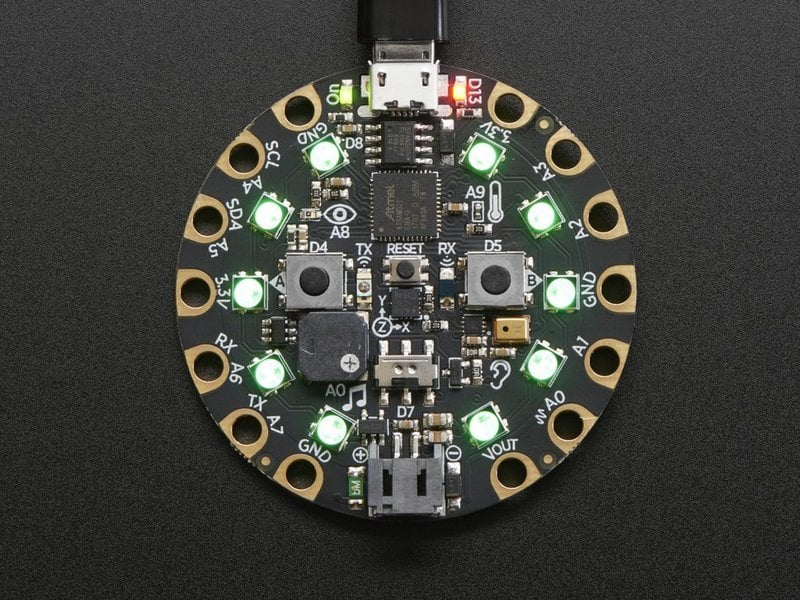
On the circuit playground express, is there a way to control the volume of the speaker? I see the tone_volume in _sine_sample, but I'm not sure how one would modify that function to allow the volume to be defined by a parameter
I know there is a set volume in makecode, will have to dig if it gives up the code
examining the code looks like:
music.setVolume(128)
but that is the javascript from makecode
is that javascript? I am working in circuitpython
ahh. Hmm. good to see that it is possible, but now to figure out how that would be done in python. Is the source for that javascript available somewhere?
yea just trying to see if maybe there is an example brb
 timber mango
so something like this? maybe?
https://books.google.com/books?id=Bic3DwAAQBAJ&pg=PA149&lpg=PA149&dq=circuit+python+volume&source=bl&ots=yztncV9WCY&sig=mrFGJ-9w--0EbY7Vu33c-8YpS2U&hl=en&sa=X&ved=0ahUKEwiLob6rxJ7ZAhVKx2MKHa5tAGcQ6AEIdDAF#v=onepage&q=circuit python volume&f=false

Google Books
dunno that is all over the place too bad tony or someone is not on
opaque patrol
I don't know if you can adjust the volume directly but theoretically the amplitude of the sine wave controls volume (I think)
timber mango
yes, BD, I do believe you are right. now I just need to add a function to change that dynamically.
opaque patrol
@timber mango You are the first person to recognize the initials
timber mango
hah, my technician's license finally pays off. what do I win? 😄
opaque patrol
I tested with the code at https://learn.adafruit.com/adafruit-circuit-playground-express/circuitpython-audio-out ```
v2 = 14.5
for i in range(length):
sine_wave[i] = int(math.sin(math.pi * 2 * i / 18) * (2 ** v2) + 2 ** 15)
Make faster and easier than ever with MakeCode, CircuitPython or Arduino!
I think the value I replaced with v2 might be changing the amplitute. It is difficult to tell
timber mango
yes, that would give you 15 steps of volume to play with?
opaque patrol
No, I am still testing it...
timber mango
that may be a bit much (2^15) to fiddle with. maybe match the makecode 2^7 value?
opaque patrol
I modified the sample code from above to increment the value so you can get an idea... ```
from digitalio import DigitalInOut, Direction
import audioio
import board
import array
import time
import math
FREQUENCY = 440 # 440 Hz middle 'A'
SAMPLERATE = 8000 # 8000 samples/second, recommended!
Generate one period of sine wav.
def gen_sine_wave(v2):
length = SAMPLERATE // FREQUENCY
sine_wave = array.array("H", [0] * length)
for i in range(length):
sine_wave[i] = int(math.sin(math.pi * 2 * i / 18) * (2 ** v2) + 2 ** 15)
return sine_wave
enable the speaker
spkrenable = DigitalInOut(board.SPEAKER_ENABLE)
spkrenable.direction = Direction.OUTPUT
spkrenable.value = True
vs = 14.0
while vs < 16.0:
vs += 0.25
print(vs)
sine_wave = gen_sine_wave(vs)
sample = audioio.AudioOut(board.SPEAKER, sine_wave)
sample.frequency = SAMPLERATE
sample.play(loop=True) # keep playing the sample over and over
time.sleep(1) # until...
sample.stop() # we tell the board to stop
Not sure if that helps or not, It might be changing the tone, I don't have a good ear for that
timber mango
here is a guitar project that describes adjusting the volume to get rid of the high volume buzz, I was trying to isolate the exact line but I'm not having much luck, anyway it might be something to look over, he also has code on github here is the link:
http://scruss.com/blog/2017/12/27/circuit-playground-express-chord-guitar/

Since there are seven touch pads on a Circuit Playground Express, that’s enough for traditional 3-chord (Ⅰ, Ⅳ, Ⅴ) songs in the keys of C, D and G. That leaves one pad extra for a Ⅵmin chord f…
opaque patrol
He adjusted the wav files to change the volume
timber mango
ahh ok was wondering why I could not find an adjustment even in the github doh sorry
opaque patrol
At the bottom it says "This is roughly how I sythesized the samples" is a link to another articule which contains a link to Sox, a free sound processing program
timber mango
thanks for the info, all. I'll look into this further and put in an issue on the repository. I'm not quite to the level of putting in a pull request myself
idle owl
@timber mango When you get to that point, don't hesitate to ask for help with GitHub and git!
timber mango
@idle owl I will keep that in mind! I'm very impressed by the community that works on circuitpython. I know you're working hard on that, so thank you for all your work!
idle owl
I'm glad to hear that! And we all thank you 😃
@timber mango Scrolling back... What code are you using? There's some issues with a couple of the snippets posted and I want to make sure you're starting on the right track.
timber mango
@idle owl I'm working from scratch with the circuitpython library. I'm working on the idea of a cpx theremin, but I need to be able to change the volume of the tone quickly in response to a change in capacitance on one of the inputs
idle owl
Oh nice!
timber mango
the idea is nice, but as I've come to appreciate lately: PoCorGTFO 😄
idle owl
Ok. We updated the documentation in a few places as we found better ways to work with the onboard speaker on the CPX. As well, there are updates in CircuitPython itself to make the sound stuff work way better. So make sure you're using the most up-to-date builds as you get started.
timber mango
@idle owl ohgood! where would I find that? I found a bad linke on https://learn.adafruit.com/remote-control-tree-ornament-with-circuit-playground-express/code-the-circuit-playground-express for the libraries

Use an IR remote and CircuitPython to change the colored lights of your holiday tree ornament!
idle owl
Which link?
timber mango
@idle owl " install the library bundle onto your board as shown here. " it links to https://learn.adafruit.com/adafruit-circuit-playground-express/about-circuitpython-libraries when it should link to https://learn.adafruit.com/adafruit-circuit-playground-express/circuitpython-libraries
Make faster and easier than ever with MakeCode, CircuitPython or Arduino!
 neon ferry
Hello everyone. I've been enjoying CircuitPython a lot. I noticed that my project stops after a few hours and it seems to be running out of memeory. Is it normal to manually call the MicroPython garage collection occaisonally? Or shold I just arange to only allocate memeory at startup? Other ideas? Any answers appreciated and nice job on the platform!
garbage* not garage 😃
idle owl
It's not necessarily abnormal, but you also shouldn't necessarily need to run garbage collection. What's the project?
timber mango
have you tried leaving it running with a serial connection open? maybe there is an error being thrown that would be helpful in figuring out where the issue is coming from?
neon ferry
It's a little alarm clock that get time from NIST TCP TIME protocol (a string that they send you when you conenct). I return a list of [hours,minutes,seconds] from a function that gets time from the string. I think that is the things that is alllocating. I was jsut surprised since I'm new to Python and especially this Python.
Oh and there is some string formatting too whcih might allocate.
Hey bsx, no exceptiuno, btu I added "print("free: " + str(gc.mem_free()))" and it creeps up every loop 😃
idle owl
Neat project!
neon ferry
Or down i mean!
idle owl
Hmm ok
neon ferry
So do you guys have any "run forever" CircuitPython projects?
idle owl
I have a lamp that's been running for 3 days but it's not gathering more data, it simply runs its loop.
It does sound like you're loading up memory and it's not getting cleared.
timber mango
same. I have something waiting for input from button or touch, but it doesn't connect to anything outside those inputs. how are you doing the TCP connection? is it possible that you are caching something from that connection that may not be clearing when it loops?
neon ferry
# Get the time string from NIST. This uses time procotol rather than
# more efficient NTP, because I could not find a way in MicrpPyton to
# get date and time from seconds since 1970.
s = socket.socket(socket.AF_INET, socket.SOCK_STREAM)
#s.connect(('time.nist.gov', 13))
s.connect(('132.163.97.2', 13))
b = s.recv(1024)
s.close()
return b.decode('ASCII')
Have you tried adding a gc.collect() in it to see if it helps? I've not worked with gc enough to know how effective it is in code - I've usually used it in the REPL.
neon ferry
    # Example: b'\n58158 18-02-09 17:26:41 00 0 0 802.0 UTC(NIST) * \n'
    s = s.replace('-', ' ')
    s = s.replace(':', ' ')
    fields = s.split()

    hours = int(fields[4])
    minutes = int(fields[5])
    seconds = int(fields[6])

    # Get rid fo military time
    if hours > 12:
        hours = hours - 12

    # Convert to PST
    hours = hours - 8
    if hours < 0:
        hours = hours + 12

return [hours, minutes, seconds]```kattNI: I jsut tried using "gc.enable()" to see that exact thing
idle owl
We currently have an issue open to add gm.time - it's being worked on but it's not implemented yet.
neon ferry
Ya that issue came from a convo with me 😃
idle owl
Oh nice! Ok
idle owl
Oh ok, good!
neon ferry
Alright, alright, still learnign the platform. Good stuff and thanks for your thoughts.
idle owl
You're welcome! Never hesitate to ask. Multiple times I've asked a question and realised my answer simply from talking it out. It happens!
timber mango
@neon ferry Thank you for sharing, I didn't realize that was something to worry about. gc.enable() has been added to my knowledge base now!
neon ferry
I'm used to the desktop as well!
idle owl
It's an unsual case to need it. There are places where CircuitPython goes garbage collection on its own, but obviously in this case, it's not at times that are helping.
But gc is great to have, it's true.
neon ferry
It's a major part of the decision to use CircuitPython for sure. THat adn you all seem to have done the work for the boards...
idle owl
😃
neon ferry
Anyway, time to go make a box for it! See you next time
tulip sleet
@neon ferry gc.enable() turns on garbage collection, but it's turned on already by default. To force a garbage collection at a particular time, do gc.collect(). If you want to double-check whether it's on, do gc.isenabled()
neon ferry
Hi Dan. Just saw this. Hmm. Maybe that was not my issue then. It would have been strange to have it off by default now that I think about it. Thanks for the reply! I've added some exception handlers, and I'll post back when I figure it out. Jim.
tulip sleet
@neon ferry there can still be fragmentation, which might be the problem you're having. So putting a gc.collect() in the main loop might help, and then check and see whether gc.mem_free() is still decreasing steadily. GC is not run until free space gets tight.
neon ferry
I'm going to let it run as it takes a while to die. Maybe it is not even that and I'm instead getting an exception during networking. Thanks for your ideas, it helps! I have some info logged to the serial port now so I won't miss it I think.
manic glacierBOT

 candid stump
Anyone know how to force the mu editor to recognize circuit playground instead of thinking it is looking for a microbit? This is on a mac. CIRCUITPY is mounted, but restarting mu results in it still thinking I am trying to use a microbitl
 raven canopy
@candid stump in the bottom right corner, the current mode is shown. it probably says "micro:bit". if you click it, a menu should come up and you can select "Adafruit". https://learn.adafruit.com/welcome-to-circuitpython?view=all#using-mu
tulip sleet
@candid stump only more recent versions of mu support circuit playground
what version are you using?
manic glacierBOT
 ruby lake
only one thing left to code for first module playground example program, knob selection of midi cc controlelr type
 slender iron
<@&356864093652516868> and everyone else. We're on for our normal meeting tomorrow (Monday) here in Discord. Its at 11 am Pacific / 2 pm Eastern. See you then!
 indigo wedge
8PM CET, got it!
slender iron
how are things going @indigo wedge ?
indigo wedge
Things are good, it's 7.30AM here, getting ready for work :D
slender iron
great! 😄 Have a good day. I'm doing my homework before the meeting tomorrow 😃
indigo wedge
Nice!
slender iron
yup yup, helps me get ahead for the week
manic glacierBOT

@microbuilder and @arturo182 is this ready to merge?

Yes, pending @microbuilder's review.
manic glacierBOT
We had a bad cookiecutter for a while that added extra lines into the README.rst in the ReadTheDocs badge like this:
.. image:: https://readthedocs.org/projects/adafruit-circuitpython-vcnl4010/badge/?version=latest

    :target: https://circuitpython.readthedocs.io/projects/vcnl4010/en/latest/

    :alt: Documentation Status
It should be:
.. image:: https://readthedocs.org/projects/adafruit-circuitpython-vcnl4010/badge/?version=latest
:target: https://... fierce oar
Hello CP wizards! I need help: I can't get my gemma m0 to work in my project, code worked fine on my trinket m0. Have been trying to work through the CP guide to fix my issues, but keep hitting dead ends. Hoping someone has a moment to help me troubleshoot tomorrow evening, thanks in advance!
manic glacierBOT

47c8e20 nrf: Make sure to not use SD functions when SD ... - arturo182
29ae4cd nrf: Fix building pca10056 without SD - arturo182
05bd5d4 nrf: Remove nRF51 boards and files, update README - arturo182
8bfdaa8 nrf: Remove SAMD mentions carried over while co... - arturo182
381f47b nrf: Only support SD 132 v2.0.1 and v5.0.0 and ... - arturo182
stuck elbow
@fierce oar it's hard without knowing what the issues are
manic glacierBOT
Works with no SD as well as s132 2.0.1 and 5.0.0.
manic glacierBOT
Not directly relate to this pr, but is it intentional that all other properties are lowercase except eCO2 and TVOC? It would make sense to keep all properties lowercase.
manic glacierBOT

 tidal kiln
@strange juniper so it was just a USB 3.0 issue? (sorry for delay)
fierce oar
@stuck elbow didn’t want to type too much without anyone around for dialogue, figure it’s something simple so I’ll check back after work tonight.
tidal kiln
@fierce oar can you describe what happened?
manic glacierBOT
 fierce oar
@tidal kiln I had been running the CP NeoPixel sample code on a Trinket M0 with NeoPixels, then I moved everything over to a Gemma M0 and changed the pin number and the NeoPixels won’t light. When I try to make changes to the main.py file, a small change like just changing the PIN number, I can’t save the file because it’s out of space
I’m on a MacBook Pro, I tried to reinstall the default files, but not enough space for them even though I deleted everything I could see, so I thought it was the hidden files issue. I didn’t have the energy to dig into terminal last night so I was looking for the files to copy over that keep the hidden files from being placed on the drive but I couldn’t find them
fierce oar
Anywhoo I can post links to what I’m talking about when I’m back at my computer after work, gotta hit the traffic now 😃 thanks!
tidal kiln
k. later. good luck with commute.
manic glacierBOT
Thanks for the quick review @microbuilder ! :)
indigo wedge
7 commits away from 10k 😄
manic glacierBOT
NP. I don't know how many people will be running this on the PCA10040 but since it's easy to support, we may as well.
Boards needing safe mode support:
- [ ] Feather nRF52
- [ ] pca10040
- [ ] pca10056
neon ferry
Just a note for posterity regarding some questions I was asking yesterday: Dave is correct that the garbage collection is indeed on by default (it would be madness if not), and that was not my problem. (The real problem is not being used to Python yet.) Thank you to all helpers.
(I meant Dan) /over
tidal kiln
@neon ferry you can also edit your previous post(s) LIKE THIS! 😀
solar whale
without getting too deep into the weeds, can anyone shed any light on this error. ```Traceback (most recent call last):
File "<stdin>", line 1, in <module>
File "vl53l0x_test.py", line 13, in <module>
File "vl53l0x_test.py", line 12, in <module>
File "adafruit_vl53l0x.py", line 498, in range
File "adafruit_vl53l0x.py", line 291, in _read_u8
File "adafruit_vl53l0x.py", line 291, in _read_u8
File "adafruit_bus_device/i2c_device.py", line 86, in readinto
TypeError: extra keyword arguments given
@tidal kiln Goctha
solar whale
What I am looking at is https://github.com/adafruit/circuitpython/blob/master/shared-bindings/busio/I2C.c#L185 and I wonder if this is where the error is coming from, Something in the argument list... Am I correct in thinking this code is what gets executed by the i2c read?
GitHub
circuitpython - CircuitPython - a Python implementation for teaching coding with microcontrollers
tidal kiln
@solar whale what's vl53l0x_test.py?
solar whale
I've never seen this on any other board, so I suspect it is an nrf52 issue, but wanted to see if anyone recogniced somethin inthe bus_device stuff that would indicate it is an issue there.
tulip sleet
@solar whale where is the adafruit_vl53l0x.py code?
solar whale
@tidal kiln it is the test code for the vl53l0x driver.
Just a sec- I'll post it - slightly modified from example.
from board import *
import busio
import time

import adafruit_bus_device.i2c_device as i2c_device
import adafruit_vl53l0x


with busio.I2C(PA27,PA26) as i2c:
    vl=adafruit_vl53l0x.VL53L0X(i2c)
    while(True):
        print ("distance " , vl.range)
        time.sleep(1)
why the context manager for busio.I2C?
tulip sleet
line 86 in i2c_device.py just passes in the kwargs it gets, so we have to go back to _read_u8. Could you point to that code?
solar whale
just a sec
GitHub
Adafruit_CircuitPython_VL53L0X - CircuitPython module for interacting with the VL53L0X distance sensor.
I think taht is what you wanted, correct?
tulip sleet
oh I was spelling it wrong "one" vs "el"
solar whale
what really puzzles me is that it runs for awhile before failing.... the error looks more like a fundamental syntax error.
tidal kiln
File "adafruit_vl53l0x.py", line 498, in range
huh. that line raises a timeout exception
https://github.com/adafruit/Adafruit_CircuitPython_VL53L0X/blob/master/adafruit_vl53l0x.py#L498
GitHub
Adafruit_CircuitPython_VL53L0X - CircuitPython module for interacting with the VL53L0X distance sensor.
@solar whale your code looks functionally equivalent to the unmodified example, do you get the same issue running that?
https://github.com/adafruit/Adafruit_CircuitPython_VL53L0X/blob/master/examples/simpletest.py
GitHub
Adafruit_CircuitPython_VL53L0X - CircuitPython module for interacting with the VL53L0X distance sensor.
solar whale
@tidal kiln I'll try that.
yup ```
import vl53l0x_example
Range: 8190mm
Range: 8190mm
Range: 141mm
Traceback (most recent call last):
File "<stdin>", line 1, in <module>
File "vl53l0x_example.py", line 25, in <module>
File "adafruit_vl53l0x.py", line 498, in range
File "adafruit_vl53l0x.py", line 291, in _read_u8
File "adafruit_vl53l0x.py", line 290, in _read_u8
File "adafruit_bus_device/i2c_device.py", line 102, in write
TypeError: extra keyword arguments given
it does look like some corruption going on, since the same code is executed multiple times in the loop.
solar whale
OK - so maybe it is a misreporting of the error - A timeout is a lot more understandable
tidal kiln
does line 498 of your copy of adafruit_vl53l0x.py jive with the repo?
solar whale
I'm running the .mpy from the 3.x Bundle release
 fading solstice
time out defaults 0
solar whale
@fading solstice sorry - I'm not sure how to interpret that - is 0 the error number for timeout?
fading solstice
class VL53L0X:
    """Driver for the VL53L0X distance sensor."""
    # Class-level buffer for reading and writing data with the sensor.
    # This reduces memory allocations but means the code is not re-entrant or
    # thread safe!
    _BUFFER = bytearray(3)

    def __init__(self, i2c, address=41, io_timeout_s=0):
# pylint: disable=too-many-statements
io_timeout_s=0 if defaults to no timeout
solar whale
ah - yes - it is usually not enabled.
fading solstice
problably not line 498?
solar whale
an there is significant variability in the measuremnet times when running this code.
I'll admit, the traceback does not make a lot of sense to me.
fading solstice
agreed
solar whale
I'll try this on some differnt boards and see if I can reproduce it on anything other than the nrf52.
idle owl
@slender iron Do you want me to do the release on NeoPixel? Or did you plan to?
solar whale
FYI - I just ran the same code on a feather52 (I was running it on the PCA10056 NRF52840 DK board) and so far, the error has not been reporducible,
very intersting. This does appear to be an issue with that board. At least that helps focus the investigation. Thanks for the help. @tidal kiln @tulip sleet and @fading solstice
manic glacierBOT

I have been seeing an issue with I2C on the PCA10056 board with the CircuitPython master as of this morning:
Adafruit CircuitPython 3.0.0-alpha.1-140-g0388a57 on 2018-02-12; PCA10056 with NRF52840
I am opening this as a "heads up" and I'll continue to experiment with it.
The error reported below is using the vl53l0x driver from the current "bundle" and the test code from the examples subdirectory of the repo
https://github.com/adafruit/Adafruit_CircuitPython_VL53L0X
for t...
timber mango
When I see something I don't understand from a reporting mechanism like that traceback, I usually introduce a new error (which functions as a breakpoint) to try to find where things went wrong.
manic glacierBOT
Thanks for the heads up, I have not tested the DKs with I2C at all so it's quite possible it's broken there. Tomorrow I'll grab some I2C boards from my hackerspace to test, if I can reproduce and get a backtrace in C then it will be easier to fix.
On more piece of information - I tried moving SDA and SCL to PB14 and PB15 but I can't get i2c_scan to even see any devices. i2c_scan works on PA27 and PA26 but the code fails with the issues reported above.
@arturo182 FYI - I have not seen any I2C errors with an mcp9808 temperature humidity sensor. I'll try a few more sensors and report.
 tidal kiln
no mic. just going to listen in this week. nothing new from me. group hugs to all.
idle owl
Ok thanks @tidal kiln
idle owl
Keyboard ambience.
 errant grail
A life-rhythm.
slender iron

GitHub
We had a bad cookiecutter for a while that added extra lines into the README.rst in the ReadTheDocs badge like this:
.. image:: https://readthedocs.org/projects/adafruit-circuitpython-vcnl4010/badg...
idle owl
And we're happy to help you with learning GitHub!
indigo wedge
👏
indigo wedge
Hug report for Kevin aka. microbuilder (don't think he's here, someone relay 😉 ) for being super cool about having to review all my PRs and @solar whale for testing my nRF changes 😃
idle owl
@indigo wedge Keep rocking it! Kevin is super happy to have the help. You're doing great!
indigo wedge
Thanks 😃
idle owl
@errant grail That's great to hear, thank you for the feedback! Super helpful.
 timber lion
sino:bit MicroPython
Port of MicroPython for the sino:bit single board computer (a variant of the BBC micro:bit & Calliope Mini).
raven canopy
Hugs: @tannewt for a really good review and suggestions on Trellis lib. Group hug for support efforts this week on discord; I think the community really values this, and it keeps new members coming back.
 inner raft
I may have found a minor bug in main.py that ships on the Trinket M0. The wheel() function returns an array of values. This works for the DotStar lib but doesn’t seem to work for the NeoPixel lib. Other examples of wheel() for NeoPixels returns a tuple, which does work.
indigo wedge
This week I'll try to look at #588 (Rename pins to match nRF convention), #615 (Add safe mode to nRF boards) and general nRF HAL cleanup.
idle owl
@inner raft You are correct. When did you purchase your Trinket?
indigo wedge
Correct 😃
inner raft
2 weeks ago
idle owl
@inner raft Hmm good to know. I was under the impression that we had updated to resolve that. I'll look into it. Thanks for letting us know!
 prime flower
balancing robots >>>
opaque patrol

GitHub
Sprite_Editor - A pygame based sprite editor to create sprites and images for ugame
idle owl
@prime flower If you make a PR for it, you can request the reviews through that. Otherwise you can just let us know when you're ready and make sure we're aware of location and so on. If you do create the PR, make sure to include a comment about not wanting it merged until you have reviews on it.
@inner raft One more question: did you purchase your Trinket directly from Adafruit or through a reseller?
prime flower
sure! I'm going to push the repo public by Wednesday, EOD. I'll put the new examples (USB-HID, CapTouch, IR) on a PR and the rest has already been committed.
thanks
inner raft
Direct from adafruit. I can dig up the order num if needed.
idle owl
@inner raft No need. I wanted as much info as possible on the timeline. This is perfect. Thank you!
opaque patrol
30 years for a 9V battery is pretty good lifetime
inner raft
Ordered Jan 31 it looks like.
idle owl
@inner raft Perfect, thank you.
errant grail
@tulip sleet Super idea!
manic glacierBOT
TVOC and eCO2 are not words but acronyms ... is my thinking. anyone want it lowercased? I could shim existing libraries if people feel strongly!
timber mango
FRAM if you don't need too much storage.
tidal kiln
@inner raft i just checked the main.py in the zip here:
https://learn.adafruit.com/adafruit-trinket-m0-circuitpython-arduino/downloads#files
and its version of wheel returns a tuple.
do you still have the copy of main.py that shipped with your trinket?

CircuitPython or Arduino IDE on this tiny little microcontroller board
errant grail
StringCar CPy repo: https://github.com/CedarGroveStudios/StringCar3v1CPy

GitHub
StringCar3v1CPy - StringCar 3v1 BoomerPong conversion from Arduino to CircuitPython
timber mango
nuuuuuuuuuuuuuu hardware!
idle owl
nu nu nu
timber mango
itz excitin
idle owl
I got mine too!
solar whale
mine come tomorrow 😦
indigo wedge
😄
raven canopy
mission accomplished? 😄
ruby lake
pipe dream: usb data pins on feather header
timber mango
@idle owl ill opena n issue for that now
idle owl
@timber mango Excellent
raven canopy
Let me know what drivers you want help ported. That's easy...ish. @idle owl
timber mango
no status updates, lots of little things 😃 played with webusb
yep! 😃
hug reports to tonyd for updating firmata to CPX, lets us move away from the classic CP
kattni for working on ikea project
arturo for helping with nrf52
dastels for awesome guides - keep em comin!
wait what??
what did i say 😦
oof
ok sommersoft worked on trellis and its great
ok that passed
i didnt swear! promise 😃
and danhalbert for hacking on webusb / UF2 with me
thats it!
This week, I was able to interface CP2104 PiUART to
an old 8051-based microcontroller project, to replace an
aging MAX3232 serial interface to the host PC. I also
finally figured out how to do the RESET and C2 (two-wire
programming) lines for this development system, which
requires pin sharing. The C2 interface provides in-
circuit debugging as well as programming an uninitialized
device. Since the Silabs C8051F330D only has 20 pins (it
shipped in a now-deprecated DIP-20 package) and C2 isn't
used all that often, it makes sense to share the pins for
both C2CK and /RST (RESET). It all works now, exactly as
the original amrFORTH system did. Serial bootloader code
tweaking on both the host PC and the microcontroller figured
as well.
PiUART == awesome!
Also did a 14-segment alphanumeric display this week, the
hard way. ;) Kept up on discipline and have been diligently
capturing schematics, using Fritzing.
idle owl
@raven canopy I will, thanks! The guides I'm going to be starting with are Trinket, but I'll definitely open an issue and let you know if we run into needing something ported.
raven canopy
Update: fought LED changes to Trellis all day Saturday; don't try forcing class inheritance when it isn't needed. Got past that, now just working out the buffer slicing for LED & buttons. No movement on isSerialConnected, but that's a quick one to finish. Will visit open issues later in the week for next task.
Makes total sense.
slender iron
GitHub
circuitpython - CircuitPython - a Python implementation for teaching coding with microcontrollers
timber mango
raven canopy
Brb...
indigo wedge
Working on it 🙂
timber mango
im into alpha release!
indigo wedge
I think the HAL cleanup will allow me to get a better overview of what works and what doesn't.
slender iron
GitHub
circuitpython - CircuitPython - a Python implementation for teaching coding with microcontrollers
timber mango
just very tiny ones
yahh
i have to update the testers yes
but no strong ETA
the testers burn in the bootloader
i just haven't updated them - so busy!
BUT
you can load in the update_uf2.bin
and MAGICALLY it will become uf2 capable
yes m0 is weird in that you can remove the bootloader prot fuses via userland
which is kinda odd but hey whatever, good for us
i just havent gotten to updating the testers
you can update bootloader whenever you like, its low risk
tulip sleet
new UF2 bootloaders: https://github.com/adafruit/uf2-samd21/releases/latest
timber mango
yep webUSB is the only big update
tulip sleet
use the "update-bootloader" files. You can use the .ino version, compile it and upload it via Arduino, or use the .bin with bossac.
timber mango
yah there is a risk, we've not seen it come up yet
(someone needing to jlink)
that is correct
idle owl
Hah! Good thing, because I didn't even think about the possibility of bricking anything.
idle owl
@timber mango Later! Thanks for stopping in!
timber lion
i have to run too to a 12pm
timber mango
we gots hive mind here
slender iron
GitHub
circuitpython - CircuitPython - a Python implementation for teaching coding with microcontrollers
opaque patrol
I gotta go, see ya later.
raven canopy
Later BD
slender iron
bye @opaque patrol !
prime flower
@idle owl if you need any arduino <-> circuitpython reference, the explorers guide for metro / explorers for circuitpython is intended for that purpose...also lmk if there are any arduino "helpers" which I might've missed (stuff that's been ported over is mostly in simpleio, like shift/servo/tone)
oh also - totally unrelated but I had to restore an iphone that bricked itself (with all my google authenticator codes on it) this weekend. remember to back up your phones/auth software as often as you back up your computer, and have other forms of recovery than just your phones
idle owl
@prime flower Will do. I'm going through the super intro Arduino guide first. I'm already to a point of basically being able to translate general functionality. I've literally never done anything with Arduino before last week, so it's getting familiar with Arduino first that I'm doing now.
raven canopy
How far from MPy do you want to get with 8266?
prime flower
nice! the explorers guides are loosely based off of those. I'm excited to see what you think of arduino, coming from circuitpython
(its kinda rare to see someone going that direction)
idle owl
Add to that the fact that I learned Python almost entirely through CircuitPython.
I'll let you know 😃
raven canopy
To bridge that: esp32 waiting on MPy or roll our own?
timber mango
In Arduino IDE if you want to get into subdirectories for larger projects, name the first level below the project level 'src' so that all paths begin with './src'. #include <Arduino.h> in any .cpp file.
raven canopy
The question comes up alot about it, which is why I ask
idle owl

GitHub
Expand the CircuitPython Expectations page to include more FAQs. If there are other things you are finding people constantly asking, please comment on this issue! Thanks!
Potentially combine with C...
raven canopy
👍
idle owl
Thanks!
prime flower
👋
errant grail
Thanks!
indigo wedge

raven canopy
I have a topic, but next week is cool though. Later taters (and caters).
tidal kiln
👋
 umbral dagger
bye
prime flower
bye
slender iron
@timber mango nah, we wrapped up
timber mango
ok thx
errant grail
Thanks everyone. Appreciate the answers and interactive discussion! Bye!
timber mango
(that was the results for 'aloha')
@slender iron for 3.0 did y'all discuss a beta checklist?
sorry i missed 😦
slender iron
we talked at a high level but opted to do it out of the meeting
indigo wedge
It's nice working having people in the background, too quiet now 😄
inner raft
@tidal kiln yes I still have the original main.py that shipped with the trinket saved off
timber mango
Yeah that's my routine for newly arrived targets -- get the goodies off them before exploring.
solar whale
Cool! feather_m0_adalogger now boots to FEATHERBOOT - woohoo! Thanks!
 timber mango
This is probably an unaltered factory image. I hope. ;)
6356f5bc3960f5e3d06154648deb677c CURRENT_Trinket_M0.UF2
@inner raft yep. that's returning a list alright. i think there might be different versions of wheel floating around. unfortunately. i just checked the current gemma version and it's a list also. we'll try and update these when we can.
@inner raft do you know how to convert that code to tuple? if not, can provide.
inner raft
oh yeah I'm an old hat at regular python 😃
is there a way to get errors out of code when it runs on the Trinket? I'm spoiled by python stack traces in other environments.
 opal elk
timber mango
opal elk
timber mango
REPL
inner raft
is there a doc on getting REPL access to the trinket's interperter? I missed that somehwere...
timber mango
Yeah the tutorials have a 'chapter' on that.
inner raft
ah! so there is. thanks!
timber mango
Jump in there, skim -- a reasonable shortcut list is in the left column.
You can edit main.py on your host pc hard disk and then copy it to the mounted USB volume, and also have a serial session going to the REPL. There's some interaction between the two.
inner raft
Yeah this is pretty cool so far! I love being able to just save main.py and have it automatically start running on the trinket! Not that the Arduino way of doing thigs was hard, but this is certinaly slicker 😃 Nice job all.
timber mango
Type Control C whenever you don't understand and cannot seem to interact with REPL.
inner raft
neat!
timber mango
inner raft
ah that's a cool idea
timber mango
eval() is a pretty amazing thing
 sick creek
webUSB for that would be cool
manic glacierBOT
Revamped the make-pins.py script so it generates cleaner pin files which are used instead of the static board ones.
On the DKs you get PX_YY for both board and microcontroller.pin and on the feather52 you get silkscreen names like A0, D13 or SCK for board and PX_YY for microcontroller.pin.
Tested with digitalio and analogio modules.
indigo wedge
that was easier than i thought 😄
manic glacierBOT
While O0 is great for debugging, the produced binary doesn't fit on the
feather52 anymore.
Thanks. Just waiting for the automated tests to run and I'll have a look at this.
manic glacierBOT
We use -Os for both debug and regular builds on the M0/M4. gdb seems fine with this. We also use -flto, which saves a lot of space. And we set -DNDEBUG even on the debug builds. It appears to me to mostly just turn off some assertions.
gdb is fine with -Os, but some variables might get optimized out, so I'd prefer to use the least compression possible while still being able to build and flash. It's a good balance.
stuck elbow
@slender iron Sorry for missing the meeting
@slender iron I have been thinking some more about the esp8266 and did some looking around, and I think I want to try to make a 32u4 that speaks MTP on one end, and ampy on the other.
idle owl
@stuck elbow No apologies needed.
 river quest
stuck elbow
river quest
stuck elbow
you look a little like an evil overlord with a pet 😃
tidal kiln
hi blinka!
timber mango
Barney went on a diet
ruby lake
Falcor!
stuck elbow
wasn't Falcor more white?
ruby lake
well, yeah
stuck elbow
and, like, hairy?
manic glacierBOT

asyncio provides event loop code and asynchronous coroutines that fit perfectly with the I/O needs of these all-I/O boards.
Strongly related to https://github.com/adafruit/circuitpython/issues/197, though things have changed since then. I'd love to see async and await available and used with asyncio. I have time to work on this but would need guidance on how to do the right thing.
idle owl
@slender iron @tulip sleet Issue posted by Wolf regarding asyncio port. So we can begin to coordinate when to meet up. https://github.com/adafruit/circuitpython/issues/619

GitHub
asyncio provides event loop code and asynchronous coroutines that fit perfectly with the I/O needs of these all-I/O boards.
Strongly related to #197, though things have changed since then. I'd lov...
raven canopy
RE: evil overlord: "Dr. Adafruit and Misses Blinklesworth" star in "Mho's Resistance 2: Mystery on the Circuit Playground Express" (best I could do after a Monday at work)
timber mango
https://circuitpython.readthedocs.io/en/stable/ PERMISSION DENIED
opaque patrol
timber mango
No, no .. the Makezine article lists that as the access point. It's a Well-Known <whatzit>
raven canopy
stable, and another one (1.x i think), were turned off b/c of out-dated information.
but, you make a very good point
@slender iron can we redirect on RTD pages? see @timber mango's comments above.
timber mango
Where can someone begin learning CircuitPython? I assume learn.adafruit.com, but is there anywhere else?
Our API docs are also a great place for lots of tiny examples.
https://makezine.com/2017/08/11/circuitpython-snakes-way-adafruit-hardware/
Then you click on 'Our API docs' (which is a hyperlink) and you get .. bupkus.
stuck elbow
I guess the official python tutorial may be a good place to look at too.
raven canopy
we could probably also get Make to update the link...
"latest" should always be available...
timber mango
Without being toooo strident -- there's a whole rant about persistence of URLs and that sort of thing. Apple basically implemented that rant in the form of persistent identifiers on its HFS+ filesystem.
stuck elbow
well, we don't control readthedocs
timber mango
That's about as good an answer as there can be. "It's not ours to say".
stuck elbow
that url wasn't supposed to be published anyways
we have no "stable" docs
I'm not going to argue with you, of course, getting a 404 is a bad experience
tidal kiln
@timber mango yah, that makezine link appears to be not valid, are you just pointing that out, or are you wondering where to go?
timber mango
I'm thinking in terms of the beginner, but he said 'examples' so I was all abouit that.
A short list of major resources might go well in the sidebar of the Tutorials for the main products running CP.
tidal kiln
things change. today we'd probably link to this:
https://learn.adafruit.com/welcome-to-circuitpython/overview
which didn't exist when the makezine post went up
New to CircuitPython? This is the place to start.
timber mango
I'm kind of Warf ONE BRIDGE when it comes to things (like books) having well-known-locations.
Just seems wrong to change locations by fiat.
"It was hard enough finding it once."
timber mango
I think you get what I'm saying. ;)
stuck elbow
I do, but there is really nothing I can do about it personally
other than to point to the correct address
timber mango
You do enough already. ;)
I posted the initial message figuring someone would say "oh that's not supposed to happen" and it'd be fixed in 2 minutes.
Any other outcome was off the script. ;)
tidal kiln
unfortunately we don't have edit access to the host site
stuck elbow
sorry, we kind of use what tools are out there, they are not perfect
you know, computers
at least you can buy a good shovel
timber mango
Did you happen to see Showtime's /Twin Peaks/ reboot? Dr Jacoby and his shovels. ;)
stuck elbow
I did not, I was quoting Erasmus Smums
timber mango
It's a good quote.
stuck elbow
oh, nice, didn't know they can do that
slender iron
will set up the redirect now
thanks for the link @tulip sleet and the heads up @timber mango
doesn't work 😕
I'll email caleb and see if he can update it
 ebon horizon
Is there a single place where CircuitPython examples exist? I feel like the only way I'm finding example code is "random" articles on the Learning pages.
slender iron
@ebon horizon let me find the repo
GitHub
Adafruit_Learning_System_Guides - Smaller programs and scripts to display "inline" in Adafruit Learning System guides
 storm folio
In a quandary - we’re building a cool data logger for almost every sensor we can think of for a North Pole expedition. Best board seems to be PyBoard but CP doesn’t appear to run on it. We need to get a RFM69 working to transmit the data. Any suggestions?
slender iron
all the new guide code goes there
@storm folio it shouldn't be too hard to get the rfm69 drivers for circuitpython working on micropython
ebon horizon
@slender iron oh okay. I guess that qualifies as a list.
timber mango
Anyone have an idea as to how I could smooth out a capacitance read from touchio.TouchIn(board.A1).raw_value without losing too much resolution?
slender iron
thats the closest I can think of
@ebon horizon we've also added examples to each driver repo as well
storm folio
@slender iron I didn’t feel like porting the 720+ lines of code if I could avoid it. I already wrote some bridging classes (MyPin,MySPI) to start and that fooled most of it. I’ve found use of “monotonic” time and the Micropython supports time differently (easy to fix). Unlike all the other drivers I already ported, this one is more difficult to debug.
stuck elbow
@storm folio I guess you will have to implement the rfm69 communication yourself, the cp library is very basic and probably not enough for your use case anyways
ebon horizon
@slender iron What I was really hoping for, and I feel like is needed, is a nice "examples" structure. How to digital IO, how to serial, etc. I'm finding the stuff, but it's all scattered about
slender iron
@storm folio sounds like you've got most of it working!
@ebon horizon https://learn.adafruit.com/adafruit-trinket-m0-circuitpython-arduino?view=all#circuitpython-playground
CircuitPython or Arduino IDE on this tiny little microcontroller board
storm folio
@slender iron @stuck elbow I suppose I think I may just proxy through a Feather.
slender iron
@ebon horizon there are similar examples for other boards too (@idle owl and @timber mango plan on unifying them soon)
ebon horizon
@slender iron yeah, like. funny, i've been on that page a dozen times the past couple of days, never made it that far down
timber mango
The Metro M0 Express was my go-to for "I bet they already thought of this" hunting. It was the best documented of the new boards, around July-August 2017 timeframe, I beleived.
ebon horizon
maybe 6, but you get my point
slender iron
@ebon horizon we're still refining the docs 😃
ebon horizon
@slender iron but thank you. that is the kind of list I had in mind
stuck elbow
@storm folio it's not like the datasheet for rfm69 is secret knowledge or that a simple communication would require years of study — and I'm guessing you want to have this thing robust
ebon horizon
😃
slender iron
great! I'm glad we have it somewhere 😃
stuck elbow
@storm folio so adding extra parts just to run a library is probably not a good idea
one more thing that can break, etc.
timber mango
The main problem with the documentation is that it explains things in a way that someone with very little experience can follow (and succeed with). This creates a 'oh no .. please .. oh no' problem for the person with a large working vocabulary who just needs to find it quickly.
slender iron
@timber mango caleb updated the link for me
idle owl
Is time.monotonic() in milliseconds?
idle owl
ok thanks
stuck elbow
@timber mango I think that we have both reference docs (for experienced people who just need to know what is there) and tutorials etc. (for less experienced people)
I suppose we don't have much in the middle
ebon horizon
there's sort of a in between that's missing. not to draw parallels, but kind of like the arduino reference documentation
don't get me wrong, you can find what you need. it's just a bit of work
stuck elbow
as always, but it would be nice to make it less work
slender iron
@ebon horizon something different from https://circuitpython.readthedocs.io/en/2.x/ ?
stuck elbow
in the worst case you can look at the source code and the schematics 😃
timber mango
Oh I'd rather have the 'oh no' stuff than not have it. It's just I have to develop my own relationship to it (which I have). Mozilla helps a lot because it supports a simple /search kind of interaction with the current web page.
ebon horizon
since we're on the topic of documentation. 😃 how do I send characters over serial (from terminal to circuitpython)
timber mango
@ d I use the schematics all the time. Never found a real discrepancy, either. ;)
slender iron
@ebon horizon pyserial on your computer and input in circuitpython
that would be something good to have a guide on. you aren't the first person to ask about it
stuck elbow
I think you can also simply echo stuff to /dev/ttyACM0
slender iron
@idle owl if @quick oyster wants to chat tonight I am free for the next hour or two
ebon horizon
sorry to have to ask, so what about non-blocking?
slender iron
we don't have a way currently. I believe @timber mango looked into it and python doesn't have a non-blocking way itself
what are you trying to do?
ebon horizon
send single characters over serial to control the program
like +, - to increment variables
timber mango
slender iron
@ebon horizon is trying over usb I believe @timber mango
@ebon horizon I don't think we have a good solution now
ebon horizon
@timber mango that only works if I'm connected to a usb to serial adapter
which, okay, maybe that's what I do for now
stuck elbow
in normal python you would first set the terminal into a non-blocking or half-blocking mode
or use a library that does it for you, like the curses
alternatively, you could do a select on the sys.stdin
but no select in cp
ebon horizon
yup
manic glacierBOT
I'd probably write out what they stand for in lowercase if we were to change it. They'd then be long but explanatory. @tuupola its a good idea. Mind opening an issue for it?
slender iron
knowing how its done in python is super helpful. do we have an issue for it already?
(if not, we should)
stuck elbow
I think it's not so simple, because neither spi nor i2c devices are input streams that you could select on
stuck elbow
or any other i/o we have
slender iron
right
timber mango
Yeah I get confused and forget myself. I designed it for the TX/RX pair and the UART, then wonder why there's no traffic on the USB port. ;)
The CP2104 comes up as /dev/ttyUSB0 in Linux. It has a TX/RX pair to talk to the microcontroller directly on its TX/RX pair.
storm folio
@stuck elbow @slender iron Thanks, but we’re receiving rfm69 on a feather already, one more feather allows us to move forward tonight on other things. I’ll finish porting the Adafruit library when I get a break.
slender iron
keep us posted @storm folio . I hope its reliable enough for you. CircuitPython is very young still
manic glacierBOT
This done @siddacious ?
@tuupola CircuitPython's ints are 31 bit signed so we only get 2**30 without long int support enabled.
ebon horizon
thanks guys. got my matrix ... matrixing
timber mango
(toMATo)
ebon horizon
my proof of concept was to build a LED matrix and then write the CP code. Turns out, I would have had it working in a single day, if my NPN and PNP trays didn't get mixed up
(the serial stuff I was asking about was to debug the behavoir.)
manic glacierBOT
[adafruit/circuitpython] New comment on issue #619: asyncio, async, and await would be super helpful
@wolf adding this would be awesome! I don't know much about asyncio myself so it'd be great to chat about what is needed for it. I know micropython has uasyncio but haven't looked at it myself. I'd want us to match the way CPython works even if MicroPython doesn't.
When are you available to chat or what guidance can I help with? I'm on Discord during the days Pacific time and can hop on other times if I know ahead of time. Thanks!
slender iron
glad you got it working @ebon horizon
ebon horizon
I'd share it, but it's for my post this week. I don't know want my new secret crush to see it before the 14th. 😉
slender iron
😃 post it then!
timber lion
oh someone was working on a sprite editor right? I just noticed some stuff from code.org uses this nifty thing that might be handy: https://github.com/piskelapp/piskel

very nice looking web-based sprite editor
raven canopy
RX/TX on boards that have it run through the UART, IIRC. Although, you still get the USB data if it's hooked....i think that's what I read.
timber lion
pretty much all ready to go 😃
idle owl
@slender iron @quick oyster doesn't do late nights during the week, he's got early mornings. I can't say for sure but afternoons will probably work best.
slender iron
that was @opaque patrol I think @timber lion
k, I'm flexible @idle owl just gotta plan ahead
idle owl
@slender iron Yep that was the plan 😃
slender iron
I like this explanation of generators: https://stackoverflow.com/questions/1756096/understanding-generators-in-python

Reading the Python cookbook at the minute and currently looking at generators. I'm finding it hard to get my head round.
As I come from a Java background, is there a Java equivalent? The book was
yay stackoverflow
idle owl
@slender iron I saw that one! I didn't click, but read the preview in search.
I understand these better than I realised. That's excellent.
opaque patrol
@timber lion That looks nice, I will have to check it out
manic glacierBOT
Good one to do when we do multimedia key support (i believe we just need to craft the report API)
slender iron
ok, the beta list is pretty short but the tasks are big: https://github.com/adafruit/circuitpython/issues?q=is%3Aopen+is%3Aissue+milestone%3A"3.0+Beta"
GitHub
circuitpython - CircuitPython - a Python implementation for teaching coding with microcontrollers
timber mango
@raven canopy in Arduino IDE it's as simple as Serial.print() vs Serial1.print() to redirect to one or the other. The default is the external interface used to program the device (TX/RX can't be easily coerced to serve in that role afaik). The SAMD21G18A has some kind of internal USB interface -- that's the one using Serial.print().
manic glacierBOT
Bumping this to Alpha milestone since it could be hardware related.
slender iron
@ebon horizon this issue has background about the blocking input: https://github.com/adafruit/circuitpython/issues/231

GitHub
OK its odd but hear me out :)
python used to allow raw REPL keygrabs (e.g. 'press any key to continue') but deprecated it in 3 for just input() which is blocking and requires a return key
it would ...
manic glacierBOT

[adafruit/circuitpython] New comment on issue #619: asyncio, async, and await would be super helpful
It'd be great if we could coordinate with @dhalbert as well.
ebon horizon
@slender iron good background, thanks
slender iron
you're welcome!
manic glacierBOT
[adafruit/circuitpython] New comment on issue #619: asyncio, async, and await would be super helpful
Telling me that we want to match CPython over MicroPython is exactly the kind of guidance I'm looking for. I'll have to figure out the details; I'm starting from scratch here. Anything you can tell me about goals, constraints and dreams will be a help. I am Eastern time, so my 4pm (about when I arrive home from work everyday) might be convenient for both of us. Once we pick a time, just about any day works for me. Work for you? (and @dhalbert and @kattni)
[adafruit/circuitpython] New comment on issue #619: asyncio, async, and await would be super helpful
4pm eastern works great for me! Wednesday - Friday are best for me.
There is more design guidance here: https://circuitpython.readthedocs.io/en/latest/docs/design_guide.html Its a random assortment of stuff.
[adafruit/circuitpython] New comment on issue #619: asyncio, async, and await would be super helpful
Yes, most days are fine for me. Just Monday afternoons are taken for all three of us. You saw that there is a MICROPY_PY_ASYNC_AWAIT compile option? We just don't have it turned on.
[adafruit/circuitpython] New comment on issue #619: asyncio, async, and await would be super helpful
Then I propose this coming Thursday, 15 February at 4pm Eastern on Discord. That will give me a little time to do research first so I have the right grounding to absorb your advice.
[adafruit/circuitpython] New comment on issue #619: asyncio, async, and await would be super helpful
Thursday 4pm works for me.
aren't super dim. This will make status NeoPixels a bit bright
but one can use samd.set_rgb_status_brightness() to dim them.
Just tried old and new on an ItsyBitsy. Nicely brighter but not too much.
Try on a neopixel and let me know if its too much. Its borderline for me but folks can change it.
It is kind of bright especially when in REPL. Would it be easy to #if or #ifdef a different set of color values for DotStar vs NeoPixel?
Yeah, we can. I was hoping not too but understand its unrealistic to think they will be the same.
we could ifdef the default brightness instead too.
idle owl
@slender iron For building CP, where did I get the arm-gcc for mac?
slender iron
I think brew install gcc-arm-embedded
you may need to add a source
or brew cask install gcc-arm-embedded
manic glacierBOT
I've dimmed the neopixel through the brightness control rather than the color definitions.
slender iron
<@&356864093652516868> Here is the recording of today's meeting. https://youtu.be/J1HfORpx1ng

Notes with timecodes are available here: https://gist.github.com/tannewt/be426e0982f022607d6d0c4fd5194f8a Join here for the chat all week: http://adafru.it/d...
manic glacierBOT
Retested and seems good. I had two Metros side by side and very similar, maybe a teeny bit dimmer on the brightness-controlled one, which is actually good.
Also retested Itsy and it's fine.
idle owl
@tulip sleet Do we still need to build mpy-cross before we can make circuitpython?
tulip sleet
@idle owl only for frozen modules (i.e., CPX, right now)
idle owl
Ok, so if we are building for the CPX, then we need mpy-cross?
tulip sleet
yes
it used to build automatically, then we turned that off, but it probably should build automatically in a smarter way.
idle owl
Realising I haven't done this in a while or setup this new machine to build CP.
tulip sleet
new Mac or the Linux box
tulip sleet
yeah jus make in that dir
idle owl
Ok
tulip sleet
you could make clean;make
fierce oar
update on my earlier issue, it's somehow magically working now kinda 😃 yay!
timber mango
anyone have an experience with smoothing out touchio.touchin().raw_value? it is pretty jumpy and it'd be nice to have it as a more stable proximity sensing value
idle owl
@fierce oar Yay!
fierce oar
colors are funny on my neopixels though, all white and not rainbow cycling like they're supposed to. but they're lighting up now!
idle owl
Hmm. Did you ever post your code or the context? Did you want help or are you still troubleshooting on it yourself 😃
fierce oar
id love some help if you're not too busy
i posted the context briefly this morning but can re-summarize
idle owl
I'm helping another friend too, but that won't be long. Yah, please resummarise!
manic glacierBOT
Build fails on boards with no rgb led (e.g. feather basic) :(
idle owl
@tulip sleet Sorry, one more thing: is it /atmel-samd/ or /ports/atmel-samd/?
tulip sleet
atmel-samd on 2.x, ports/atmel-samd on master (3.x)
idle owl
ahh ok
tulip sleet
MicroPython reorganized the tree and put all the ports under ports/
timber mango
I haven't done a build in months. ;)
idle owl
It hasn't been that long for me, but long enough apparently. It was all in my history before
make BOARD=circuit_playground_express doesn't work
timber mango
seems to me there was a directory where if you did an 'ls -1' in it the names of the directories matched the necessary targets for BOARD there.
fierce oar
I had the Circuit Python NeoPixel demo code running on a trinket m0 with a short strand of neopixels attached, and it was working fine. then I swapped the board to a gemma m0 and couldn't get the neopixels to light
idle owl
@tulip sleet what am I missing... it's something obvious.
timber mango
Trinket you pick your own pin; on Gemma I'm not sure what pin is used.
tidal kiln
@idle owl for mpy-cross?
idle owl
@fierce oar using the demo code from trinket and gemma? or from a separate neopixel example?
@tidal kiln no, for building CP for a CPX
fierce oar
i tried a bunch of things last night, including removing and restoring files, and today they're lighting but the colors are wrong
raven canopy
BOARD=circuitplayground_express
timber mango
that underscores my observation /andon
fierce oar
one sec i'll grab some links
raven canopy
all good. i usually ls boards when in the ports/atmel-samd after not building for a while.
idle owl
@raven canopy FREEZE ../../frozen/Adafruit_CircuitPython_BusDevice ../../frozen/Adafruit_CircuitPython_LIS3DH ../../frozen/Adafruit_CircuitPython_NeoPixel ../../frozen/Adafruit_CircuitPython_Thermistor Traceback (most recent call last): File "../../tools/preprocess_frozen_modules.py", line 6, in <module> import semver ModuleNotFoundError: No module named 'semver' make: *** [build-circuitplayground_express/frozen_mpy] Error 1
Thoughts?
fierce oar
using these https://www.adafruit.com/product/3484
code is from here https://learn.adafruit.com/adafruit-neopixel-uberguide/circuitpython

These incredibly small surface-mount LEDs are an easy way to add a lot of very tiny (but bright!) colorful dots to your project. They are just mind-bogglingly small. As they are ...

Everything you always wanted to know about Adafruit NeoPixels but were afraid to ask
tulip sleet
@idle owl git submodule update --init --recursive
raven canopy
yep...that's what i was thinking
idle owl
This is all coming back to me now
timber mango
three backticks top and bottom on a line by themselves
idle owl
@fierce oar Three backticks on either side, the one on the upper left of the keyboard by the tilde ~
@fierce oar You soldered up your own strip from single pixels?
fierce oar
# CircuitPython demo - NeoPixel

import board
import neopixel
import time

pixpin = board.D1
numpix = 10

strip = neopixel.NeoPixel(pixpin, numpix, brightness=0.3, auto_write=False)


def wheel(pos):
    # Input a value 0 to 255 to get a color value.
    # The colours are a transition r - g - b - back to r.
    if (pos < 0) or (pos > 255):
        return (0, 0, 0)
    if (pos < 85):
        return (int(pos * 3), int(255 - (pos*3)), 0)
    elif (pos < 170):
        pos -= 85
        return (int(255 - pos*3), 0, int(pos*3))
    else:
        pos -= 170
        return (0, int(pos*3), int(255 - pos*3))

def rainbow_cycle(wait):
    for j in range(255):
        for i in range(len(strip)):
            idx = int ((i * 256 / len(strip)) + j)
            strip[i] = wheel(idx & 255)
        strip.write()
        time.sleep(wait)

while True:
    strip.fill((255, 0, 0))
    strip.write()
    time.sleep(1)

    strip.fill((0, 255, 0))
    strip.write()
    time.sleep(1)

    strip.fill((0, 0, 255))
    strip.write()
    time.sleep(1)

    rainbow_cycle(0.001)    # rainbowcycle with 1ms delay per step
oh hey i did it
yes
timber mango
Put in 'python' on the same line as the top backticks for syntax highlighting
idle owl
First off, it's strip.show() now.
I don't know if that will fix the issue you're reporting though.
tulip sleet
if there are two different versions of CPy on the two boards that might explain it.
fierce oar
yes i soldered the nano neopixels to wire by hand in series
oh yes that's one of my questions! how does one know which version of cp is on one's board?
idle owl
Can you connect to the REPL?
fierce oar
i couldnt figure it out last night, and i saw that there are specific downloads based on your version
idle owl
Are you on Windows/Mac/Linux?
fierce oar
mac
timber mango
auto_write=False
idle owl
@fierce oar https://learn.adafruit.com/welcome-to-circuitpython/advanced-serial-console-on-mac-and-linux
New to CircuitPython? This is the place to start.
@fierce oar Or if you're using Mu editor, you can do it through the editor
storm folio
@slender iron any thought of a CP build for the PyBoard?
raven canopy
@timber mango since, .show()/.write() is being called, auto_write being off won't make a diff.
tulip sleet
@storm folio it's a different manufacturer's chip, so would be a lot of porting. And it's not our board
tidal kiln
@fierce oar
when you connect to REPL you'll get a banner with verison:
Adafruit CircuitPython 2.2.3 on 2018-02-05; Adafruit CircuitPlayground Express with samd21g18
>>>
or, just look in boot_out.txt, might have same info
storm folio
How about making a board with similar (Or better) specs?
timber mango
@tidal kiln was that a REPL syntax tag or what? sweet.
fierce oar
oh the boot_out.txt has it now (last night it was empty, but i reinstalled files at some point)
Adafruit CircuitPython 2.2.3 on 2018-02-06; Adafruit Gemma M0 with samd21e18
tidal kiln
@timber mango no, just the backticks trick, but with syntax hilighting
tulip sleet
@storm folio we're working on M4 boards: SAMD51x
fierce oar
apologies for my noobishness, i don't really speak computer
idle owl
@fierce oar Ok that's the most recent. So you'd want the library from the 2.x bundle
@fierce oar No apologies needed!
@fierce oar You can also do inline code by putting a single backtick on either side of the line you want to look like code
storm folio
@tulip sleet M4 would be awesome. For now I’m stuck between PyBoard and M4 and CP (and not M4). I could switch to other controllers, but the number of io/ports are super helpful for our project.
tulip sleet
@storm folio We have M4 dev boards and are actively working on that for CPy 3.0. But we don't do estimated dates - sorry! - it will be ready when it's ready.
fierce oar
ok i installed mu and now i can see the repl
idle owl
@fierce oar The code is working for me on a CPX (with the right pin identified). Hmm.
(That was the closest thing I had with neopixels on it)
Changing write to show, while correct, didn't make a difference in the function of it.
fierce oar
yep my pin is right, and it's connecting fine (i can see it updating when i make changes and save) but the colors are just funky - is there somewhere to identify what kind of color profile is being used? like in the arduino code?
storm folio
@tulip sleet no problem! Python (and the Adafruit CP libraries) have made most things super easy. Much easier than we thought it would be. I’ve ported a few classes, but it wasn’t much work. It is sad that MP and CP aren’t somehow closer (so we would have to do almost no work) but we get it.
For this project we can’t wait for the new hardware, but we’ll use it when it comes out in the future. Thanks!
raven canopy
@fierce oar are you sure you have the PID 2427 neopixels that you linked earlier?
fierce oar
@raven canopy yup
raven canopy
okie dokie. just wanted to make sure they weren't a GRB version.
fierce oar
yes that was my thought too
idle owl
@fierce oar My first thought was that they were RGBW which messes things up like your'e saying, but that's not it
fierce oar
weirdly they display the right colors with the same code on my trinket m0 though
timber mango
Use another port pin.
idle owl
Did you try reflashing CircuitPython onto the Gemma?
fierce oar
@idle owl yes
idle owl
Ok.
fierce oar
@timber mango have not tried that, will do, one min
tidal kiln
@fierce oar since you're working with bare neopixel, are you sure it's not a hardware issue
fierce oar
@tidal kiln pretty sure, it works perfectly on the trinket m0, but there could be something hardware related i don't understand
be right back
manic glacierBOT

It's compiling, loading and giving me a REPL and a working status neopixel however in testing I ran into some SPI issues but I don't know how to differentiate problems with my board and board config from CP issues.
I think it's good enough for now to allow others to build for a 51G and get others using it. I'll open another issue if I find something that needs to be fixed.
tidal kiln
if you're getting them to work on the trinket, then probably not. have you gone back and tested on the trinket?
fierce oar
@tidal kiln yes, just checked it again, still works correctly on the trinket (colors are right and cycle through the rainbow)
changed to pin D2, neopixels are all white, no cycling (on pin D1 it was mostly white but i could still see it cycling through incorrect colors
trying others
idle owl
Try powering it off of the Trinket but using the gemma for data
fierce oar
ok, one sec, need another cable
timber mango
I would target the first pixel in the strand and ignore all the other pixels. If that one cannot be made to respond correctly, target the next one in line. It would also be simpler to have a second pixel just for the device under test. Test that one once on the known system (to gain confidence) then transfer it to the unknown system.
fierce oar
ooh that worked @idle owl
idle owl
@fierce oar Ok it's a power issue with the Gemma then
fierce oar
neopixels are doing what theyre supposed to
timber mango
score!
idle owl
@fierce oar Were you powering it from the vout or 3vo on Gemma?
fierce oar
ahhh yes i definitely was powering it on vout instead of 3vo
idle owl
Same on Trinket or no? USB or 3vo on Trinket?
fierce oar
no 3v on trinket
idle owl
Ok try 3vo on Gemma
fierce oar
yep it's working
idle owl
Excellent!
timber mango
You will do the same for others. ;)
idle owl
@fierce oar I would have thought it would work on both, so don't feel silly.
fierce oar
but! all the other issues really threw me, and by the time i got to the unknown power issue i was already very confused 😃
timber mango
I wasn't even going there. I was going for cold solder joints and damage to the array from transferring it from one controller to another.
fierce oar
little things like not being able to save my .py files directly made me think something else was going on
idle owl
@fierce oar Tons of variables
fierce oar
but i just need to get more familiar with using circuit python
i'm very used to the arduino ide guiding me along
timber mango
and 3vo ;)
raven canopy
those must be sennnnssssiitive. i've never had a problem pushing npix at 5v with a 3.3v signal.
well, not that few npix...
fierce oar
these are the second tiniest things ive ever soldered 😃 i guess they're pretty finicky
timber mango
Signalling at 5v with 3.3 vcc would be far worse.
fierce oar
but they look so cool!
idle owl
@fierce oar That's awesome!
raven canopy
those little suckers are in the no. mustn't drink coffee until AFTER i solder these category.
fierce oar
@raven canopy yep! they're easy to lose, but hard to forget!
timber mango
Let's just be glad that Elvis never had access to them. ;)
fierce oar
thanks for all your help everyone!
idle owl
@fierce oar So cool!
fierce oar
thanks for helping me troubleshoot that, t's so helpful to have brains that are farther away from your project than your own 😃 hugs to all!
raven canopy
very chic!
idle owl
@fierce oar I'm glad we got it sorted!
tidal kiln
Yay! Nicely done @idle owl
idle owl
@tidal kiln Thanks! 😃
tidal kiln
@fierce oar are those to go along with those blinky eye lashes?
fierce oar
@tidal kiln tee hee... no i don't actually have those eyelashes (they belong to my friend), and i don't think i could stick those on my eyelids 😃 but these are actually less practical than those! mostly for photoshoots, a short costumed/cosplay event
raven canopy
they'd make for great flashlights...or fantastical "go yonder" pointers. 😄
npix, white, and full brightness is just shy of sunlight on the equator...
manic glacierBOT
In code I find consistency a good thing. If everything is lowercased there is no need to remember whether one should use capital letters or not. For example lux might be confusing. Is it acronym or word? Should it be sensor.lux or sensor.LUX? Also when seeing sensor.TVOC one is not really sure if it is a constant or property.
I do not have strong feelings about this, but my choice would be lowercased acronyms sensor.tvoc and sensor.eco2.
idle owl
RGBW at full brightness gets even closer.
raven canopy
i remember the first time i turned a set on. of course i stared directly at them while hitting upload. 🌞
from that point on, setBrightness(25) was part of every new sketch.
fierce oar
dimming them definitely helps with photography too
wow i'm much happier using mu, even for the small changes i make to the code
idle owl
Good!
raven canopy
i still haven't broken away from PuTTY and IDLE...keep saying i'm going to, but then I get working on something and, well..yeah. 😄
when did it become 11PM? holy moley. well, new new Trellis LEDs are working again. might as well stop there.
timber mango
💤
manic glacierBOT
ill defer to @tannewt on this one, i don't care too much, we'll just have to update our existing libraries :)
Oh, did not know. Just out of interest where did the one bit go?
slender iron
@fierce oar I have a spare itsybitsy if you want to use it
fierce oar
@slender iron ooh too kind! i'll have to think of an excuse to use it in my next project! 😃
piiiiiins for days!
manic glacierBOT
We lose bits due to pointer boxing where data is stored in pointers themselves. There is a bit of explanation here: https://github.com/adafruit/circuitpython/blob/master/py/mpconfig.h#L66
To avoid hijacking an unrelated thread I move this here. Currently there is mixed capitalization in the design guide concerning unified sensor driver property naming.
Consistency is usually good thing. If everything is lowercased there is no need to remember whether one should use capital letters or not. For example ...
manic glacierBOT
 timber lion
fascinating article on history of chinese fonts in unicode: https://r12a.github.io/scripts/chinese/
turns out there are almost 22k characters in traditional and simplified alphabets.. at 12x12 fonts that's 300kb alone of font data to try storing on the 256kb flash 😃
"we're going to need a bigger boat"
luckily there are subsets of 'only' 7k or maybe up to 13k that are the most common
timber mango
Can just store them on the 2mb flash no?
timber lion
unfortunately no extra space on the nrf51 that the microbit/sinobit use 😃
timber mango
Yea true, wish Adafruit would carry spi flash chips again and give us a 4mb option on the M0, its why I can't wait for Esp32 to have micropython.
Its a power hog a bit though I'll have to dig into how it is with the radio off might still not much of a battery powered sensor though. Adafruit Needs some low power stuffs.
 steel copper
Add a microSD card reader? It will steal some pins from the 2x13 but for good purpose.
stuck elbow
samd21 is pretty low power, I would think?
timber mango
Low power as in microamp and nanoamp range. They are good chips but not low power, good for 99% of uses though I'll agree.
Just such a struggle to get performance and low power if only we could bridge the gap between a moteino and a feather M0. I'm sure could desolder a lot of stuff and thow on a better regulator, but is a niche area so I can see why its not on the top of the list.
I"m late to the game but the fram msp430 type stuff comes to mind, I'm surprized something was never arranged with Adafruit seeing their relationship with Ti
Competition is great but there are so many great chips that sometimes it seems competition and ease of use really hamper moving superior tech forward.
It don't help that our addtion to ease of use, coupled with the face pace of new chip releases helps keep us under the cutting edge. Esp8266 is a great example when 32 has been out so long and far superior hardware wise.
I'm so used to spell check messing up everything I say that I now do it myself. almost 2am that my cue for bed.
stuck elbow
you won't get circuitpython running on any microamp-range chip
but there are some AVR-based boards out there
 jovial wind
@timber mango I've run MicroPython on the esp32...
manic glacierBOT
I need to get a bootloader PR in (likely later today) before the changes here, but I'll review and test this as soon as the nRF52840 serial bootloader PR is out.
BTW, if you put any new test code and examples together, feel free to include them in either the ports/nrf/examples folder or a board level examples folder if it's board specific.
I'm convinced a lot of people look directly at the code repo and examples that ship with it as their first point of contact, so having up to date examples there makes sense to me, and being in the repo generally increases the chance of them being up to date with the latest API changes, especially with things ...
timber mango
Huge typo:
https://learn.adafruit.com/getting-started-with-flora/blink-onboard-led
Next it's time to load up a program on your FLORA. There is an LED on board, so let's blink it! Plug in the USB cable and paste the following code into the Adafruit Flora IDE:
That should have been Arduino IDE. ;)
 crystal pumice
hey, so im playing a lil bit with the feather dotStar and the feather M0 express. im following the tutorial. uploaded the animation example of the xmas tree and snow. it gave me the following: File "code.py", line 2, in <module>
MemoryError: memory allocation failed, allocating 128 bytes
ive got only two libs in the lib folder
what am i missing?
solar whale
@crystal pumice The memory allocation is due to lack of RAM and not related to the amount of files stored on the device. You can try just rebooting and trying again. Sometimes after a clean boot more memory is avaialble. If that does not work, check that all library files on your system are .mpy files. It takes more memory to load a .py file. Only your code.py files or other files you created shouled be .py files.
solar whale
where did you get doststar_featherwing.py ?
crystal pumice
downloaded from one of the links in one of the guides
but i see the example code got: import doststar_featherwing
so is there an mpy version?
solar whale
looking...
hmm not seeing one but you can create one if you want to see if that helps. What OS is your computer?
rotund basin
Hey all, got my new feather adalogger 😃 , but bossa can't find the device?? 🤔 , I'm on Ubuntu
solar whale
@rotund basin - should be /dev/ttyACM0 is that what you tried?
solar whale
that should work.
rotund basin
Without the/dev it says no device found
solar whale
I ran into taht yesterday because I hsd not plugged in my USB cable 😉 just checking...
rotund basin
It shows up on ls /dev/ttyACm*
solar whale
wht command are you using - I have used bossac -e -w -v -R -p ttyACM0 image.bin
rotund basin
solar whale
hmmm - other thatn the obviosu things like verify that it is a data capable cable, Im at a loss. - check dmesg out but after you plug it in - it should be recognized as ttyACM0 -- with capital M
just at thought- I never have used the -i try without that
crystal pumice
@solar whale ive got win10
solar whale
@crystal pumice if you look at https://github.com/adafruit/circuitpython/releases and scroll down to the 2.2.0 release, you will see version of mpy-cross for various systems Download the windows version then run mpy-cross dotstar_featherwing.py in the directory where you have the files. this will create dotstar_featherwing.mpy - delete the .py file from your featehr and copy the .mpy version to the lib folder.
GitHub
circuitpython - CircuitPython - a Python implementation for teaching coding with microcontrollers
@rotund basin FYI - I just used bossac on my adalooger yesterday so I know it can be done.... it does not look like your system is seeing the USB device
solar whale
lower case?
crystal pumice
@solar whale when i run the exe its opens a CMD window and then it shuts down instantly. is there another way to compress py to mpy?
solar whale
@crystal pumice hmm - I don't have a windows system so I have not seen that. Hopefully someone else online can help there? - give me a minute and I'll create an .mpy version
crystal pumice
10q king!
ruby lake
hm, I might be able to write a patch manager in cp
solar whale
@rotund basin FYI - here is my syslog from when I plugged in the adallogger ```Feb 12 15:32:09 Ubuntu-Macmini kernel: [78667.585166] usb 3-3.4: new full-speed USB device number 28 using xhci_hcd
Feb 12 15:32:09 Ubuntu-Macmini kernel: [78667.706447] usb 3-3.4: New USB device found, idVendor=239a, idProduct=8015
Feb 12 15:32:09 Ubuntu-Macmini kernel: [78667.706451] usb 3-3.4: New USB device strings: Mfr=1, Product=2, SerialNumber=0
Feb 12 15:32:09 Ubuntu-Macmini kernel: [78667.706454] usb 3-3.4: Product: Feather M0 Adalogger
Feb 12 15:32:09 Ubuntu-Macmini kernel: [78667.706456] usb 3-3.4: Manufacturer: Adafruit Industries
Feb 12 15:32:09 Ubuntu-Macmini kernel: [78667.707307] cdc_acm 3-3.4:1.0: ttyACM0: USB ACM device
Feb 12 15:32:09 Ubuntu-Macmini kernel: [78667.708411] usb-storage 3-3.4:1.2: USB Mass Storage device detected
Feb 12 15:32:09 Ubuntu-Macmini kernel: [78667.708601] scsi host7: usb-storage 3-3.4:1.2
Feb 12 15:32:09 Ubuntu-Macmini kernel: [78667.710397] input: Adafruit Industries Feather M0 Adalogger as /devices/pci0000:00/0000:00:14.0/usb3/3-3/3-3.4/3-3.4:1.3/0003:239A:8015.0007/input/input16
Feb 12 15:32:09 Ubuntu-Macmini kernel: [78667.769503] hid-generic 0003:239A:8015.0007: input,hidraw4: USB HID v1.11 Mouse [Adafruit Industries Feather M0 Adalogger] on usb-0000:00:14.0-3.4/input3
Feb 12 15:32:09 Ubuntu-Macmini kernel: [78667.770910] input: Adafruit Industries Feather M0 Adalogger as /devices/pci0000:00/0000:00:14.0/usb3/3-3/3-3.4/3-3.4:1.4/0003:239A:8015.0008/input/input17
Feb 12 15:32:09 Ubuntu-Macmini kernel: [78667.830088] hid-generic 0003:239A:8015.0008: input,hidraw5: USB HID v1.11 Keyboard [Adafruit Industries Feather M0 Adalogger] on usb-0000:00:14.0-3.4/input4
note it was seen as ttyACM0 - upper case ACM.
rotund basin
Yes of course , I'm typing on my phone and it auto correct
Is that in bootloader mode ?
solar whale
ah - yes - I did the "double" tap to enter bootloade mode.
rotund basin
My device doesn't come up as adafruit in bootloader
solar whale
did oyu enter bootlader mode before running bossac?
rotund basin
Yes
solar whale
hmmm -- just to verify connection - can you try using Arduino to load "blinky"
rotund basin
I
I despise arduino
The host windows computer doesn't recognize it ether 🤔
It's unknown device
On com5
solar whale
I'm stumped - hopefully someone else with more suggewtions will be on soon....

 tulip sleet
@rotund basin Let's make sure it's an Adalogger M0 and not 32u4, right? When you double-click the reset button, what happens to the red LED?
also is it windows7 or 10?
also make sure you're using a USB cable that's not charge-only. If new verify it passes data with something else (like a phone or another adafruit board)
solar whale
@tulip sleet I noticed that the last few CP releases have not include the mpy-cross builds - Is that intentional? Also should the "windows" version run on Windows 10? a user this morning had some problems with it.
tulip sleet
@solar whale - not intentional - I have to copy them by hand. The old versions should work fine. I have run the Windows version on Windows 10: I think I created it on Windows 10. Who's the user?
solar whale
@crystal pumice tried it and had some probllem - scroll back to to 941 AM.
tulip sleet
they're running it by double-clicking. You have to run it on the command line.
it doesn't have a GUI
solar whale
Ah - good to know.
tulip sleet
@crystal pumice you have to run mpy-cross.exe on the command line: it doesn't have a GUI. Just do mpy-cross.exe nameofyourpythonfile.py
rotund basin
@tulip sleet it has the SD card lol .. when I go to bootloader mode it goes from red and green blinks to red solid
solar whale
@rotund basin there are two versions of the adalogger M0 and 32U4 it should be lablel on the silkscreen.
manic glacierBOT
Because it will add another board to the repo that will need to be updated as well, and will create a conflict. I can merge this one in as well and the conflict will be in the BL PR, it just needs to be handled in one of them but I've had my head down in code all day and haven't had a chance to try this one out so I was going to submit the BL PR for review, and then find a solution to keep both of these happy.
If you want to get this in right away, I'll test it later tonight and manage the...
timber mango
Heya folks! some exciting news today ~ Particle has some new boards out and they're Feather compatible!

Particle
Introducing Particle's third generation of development kits – the Argon, Boron, and Xenon
but most exciting, the y have an nRF52840 processor on board. THE SAME CHIP WE'LL BE SUPPORTING IN CIRCUITPYTHON!
w0w 😃