#Foundations - Learning Graphics Programming with the Zig Programming language
1 messages · Page 4 of 1
 delicate delta
that's the foundation section of the book
resources is in the next section
I have the older edition in digital format, I never read it though
 maiden gazelle
Chapter 7
delicate delta
ah yeah you're way ahead
maiden gazelle
I have 3rd ed
maiden gazelle
No my physical copy is 1st edition
delicate delta
oh
delicate delta
the 3rd chapter is taking me a bit, I read every section, then come back and reread and write notes
 fleet dew
all this talk reminds me that I should read real time rendering
delicate delta

I don't do any of the problems in the books though, I build scenes that do the things the books go over
some of I am not doing as I want to make progress
like plane intersection I didn't do
I haven't done any lighting yet either, I need to through the opengl book for that as I'm stuck on using opengl honestly, that's next after I get through chapter 3, 4 and 5 of GEA
I'm reading all the math review chapters too
just because I need it
maiden gazelle
delicate delta
like plane intersection I didn't do
You have other opportunities to study/apply math as far as I can see
So skipping those in GEA makes sense I think
delicate delta
I don't know
I switched to a high contrast light theme everywhere except on that laptop
delicate delta
it really doesn't have anything to do with zig?
 ivory verge
yep 0
delicate delta
it's just like Loris's personal project
ivory verge
but it might install zig as a dependency
delicate delta
I went to the conference in Milan this year and it wasn't really about zig either, only most of the attendees were all zig devs and it was fun to meet them all, andrew mlugg a bunch of them
but like one talk out of 3 days of talks were about zig, the workshops were zig
the sycl conference which is Loris's
I don't know
ivory verge
sycl is such a misleading term
ivory verge
yeah
like i am here just to see what other people make and how cool their shit is 🙂
i wanted to write a message based chat platform since forever, i might actually write one this year
delicate delta
what would you write it in
ivory verge
c# most likely
ivory verge
but it would just be an api and some websocket bs so that anyone could make a client in any language
ivory verge
delicate delta
the stackoverflow tech stack?
more or less
you can aim much lower, and not support 100mio concurrent users, but just 200 or so
lets see 🙂
or i just go back to irc and click on links to see the image 😄
 queen hinge
ivory verge
you can aim much lower, and not support 100mio concurrent users, but just 200 or...
queen hinge
ivory verge
you can aim much lower, and not support 100mio concurrent users, but just 200 or...
I once made a messaging app thing
Was able to support 11k concurrent users with minimal effort
Granted I also didn’t have anything being saved to disk
queen hinge
11k was what happened to be the amount it was able to deal with before connections started timing out iirc
Like socket time out I think it was, not timeout implemented by me
delicate delta
queen hinge
I once made a messaging app thing
Was able to support 11k concurrent users with ...
What was the stack?
queen hinge
delicate delta
What was the stack?
Iirc
Java socket connections for both server and client
Like 4 threads dedicated to processing clients, 4 dedicated to accepting them
 was a while ago, I don’t remember exactly
delicate delta
On just a single server?
queen hinge
Just my desktop computer
delicate delta
What were those 11k connections doing?
delicate delta
Why did a football stadium worth of people join your desktop server?
queen hinge
They were all my own desktop
delicate delta
I see
queen hinge
Basically, I wrote a program to just spawn a bajillion dummy client connections to see how many I could handle
delicate delta
TCP?
queen hinge
Whatever java websockets do
delicate delta
Oh web socket
queen hinge
Probably TCP behind the scenes somewhere
Oh not websocket just socket
 why are those two terms so similar
I mean
They are similar things but like
One’s general, one’s for websites
Websockets aren’t a part of java api
robber_fly: swift predatory fly having a strong body like a bee with the proboscis hardened for sucking juices of other insects captured on the wing
robber_fly: swift predatory fly having a strong body like a bee with the proboscis hardened for sucking juices of other insects captured on the wing
tensor(0.0339, device='cuda:0', grad_fn=<NllLossBackward0>)
Also adventures in AI
My AI can recite dictionary definitions
Related note
TIL I learned that hugger-mugger is an actual word in dictionaries
delicate delta
Is it verbatim
queen hinge
delicate delta
Is it verbatim
Of those two
Top is dictionary, bottom is AI
It does learn verbatim, because well, that’s kinda how AIs often are, especially if there’s not a lot of variety to the dataset
queen hinge
delicate delta
Is it verbatim
Btw, are you a hugger-mugger?
delicate delta
idk what that is
even after looking it up I don't know what it means
a hugger-mugger presentation of the facts of the case that left everyone confused
a tale of hugger-mugger doings and international espionage
the definition of hugger-mugger is a bit of a hugger-mugger
 queen hinge
its definition is a state of confusion and the word leaves people in a state of confusion
delicate delta
if you said it to the wrong person they may challenge you to a duel
queen hinge
lol
optimizer: refating of near theptputscdchnr georgair bual sfnpor the rig ers of the amsica coronisers(1727-17rndt follraofwo thoserneinpes os ahp aupl thelfbclan anogrti enoliaid analartomethe pndpereoraora tnelthelipandlipatndlphelandlrahd theloeanelopand tndlopasend porlhaa and eartraane tagar andlitnemand iala tarlonasand phu anoloane phepopases and porliaa and cuugras andlianeaoanu ialerthelonasand slupieand ece ialahclopnand phuliaa and eoriraerandliprnelr phd ial andloandrparaoeneand tor ancland porlian and phuedialerand eadiing plrlialeranolacurthepoendand the i
OH
My model's only 6.5M parameters currently
that is smol
queen hinge
AI status update...
this is a single entry in my dataset that I'm hand typing
delicate delta
:/
delicate delta
I didn't expect AI to have emotions
ivory verge
queen hinge
Iirc
Java socket connections for both server and client
Like 4 threads dedicated...
in 1998 or so, i wrote a "chat" application which used txt files and a ftp server as the transport medium 😛
each client would connect to the ftp, check the last file date, and if its newer than last time, would pull the txt file, show the content in some textbox, and when i entered a message hit send, it would upload the whole stuff again 😛 with my text appended
delicate delta
I wrote an IRC client once and lots of IRC bots. An IRC bot used to be my default first project for a new programming language. I spent a long time on that IRC client it was pretty good.
ivory verge
hehe yea, everyone joining irc did and does : )
like kids write discord bots these days hehe
delicate delta
I also worked on the imgur mobile web site web sockets nodejs backend, so probably most of the people who were on the internet 10 years ago and saw a cat gif connected with code I wrote :P
ivory verge
i have never used any mobile website though, but i appreciate it that you did work on it 🙂
besides mobile banking
delicate delta
You haven’t open a browser on a phone ? 🤔
Just your bank?
You clicked links in reddit? 
Well probably for the best
ivory verge
i dont do reddit
i have an account but i never use it really
and pc masterrace, im not a fan of mobile/web/console platforms
delicate delta
Reddit is evidence that the internet was a mistake
ivory verge
not just reddit
ivory verge
hehe
queen hinge
ivory verge
and pc masterrace, im not a fan of mobile/web/console platforms
Personally I choose to only play geometry dash on mobile
delicate delta
btw I haven't updated with any foundation updates because I've just been reading
I got about 4 more chapters to go before I'm back to rendering anything
I'm about 30 pages into chapter 4 of GEA and it's a 160 page chapter, then I'll read the math chapter and the math chapter in my opengl book and then I'm probably going to be rendering quite a bit, I want to iterate between chapters that I'll build things with and GEA though so I can get through that book as part of my goal for the first set of books that I initially started with
ivory verge
looking forward to what comes out of this this time : >
the vector/plane visualization🇮🇸🇲🇸 last time were super cool already
delicate delta
thanks, even though it doesn't lead to any rendering I've already learned so much from GEA that I'm doing wrong just with my zig code, I haven't thought about alignment at all or cache performance and if I want this to be a good engine I'll have to consider it, so I am glad I'm reading that book
ivory verge
: )
queen hinge
Lemme just say
Alignment and cache performance are not explicitly required for good performance
Just having a good data structure in the first place goes a long way
And also skipping over useless calculations
I.e. the player’s hitbox already contains some block
There’s no reason to handle that block when checking for collisions for motion, since the player isn’t going to properly collide with that block anyway
delicate delta
makes sense
queen hinge
queen hinge
I.e. the player’s hitbox already contains some block
There’s no reason to handle...
Mojang checks all blocks in old position to new position and it makes their code run way worse than it needs to
Iteration order can also be important
Sometimes it’s objectively better to go xzy instead of xyz
Ex, Minecraft; you can grab the chunk instance on the z of the xzy loop and use that single chunk grab for the entirety of the y loop
Can’t do that with xyz
delicate delta
The Graphics Programming With C++ book publisher sent me the companion files 

Mode  Size (KB) LastWriteTime       Name
----  --------- -------------       ----
la---      1214 2024-09-07 12:57:08 grid.obj
la---         2 2024-09-07 12:57:08 icosahedron.obj
la---         1 2024-09-07 12:57:08 pyr.obj
la---         0 2024-09-07 12:57:08 pyrSimple.obj
obj files :P
all obj
cool though


neat
delicate delta
yeah I like it
pretty good and doesn't cost any where near as much as adobe stuff
good enough for me
better than gimp by a mile
delicate delta
I was looking at other formats besides gltf, like USD and FBX and I think I'll just stick with gltf
and I guess obj files since I have some
I think it wouldn't be to hard to just wrap the meash and gltf loader that's in the fastgltf example and then export a C function that calls that code via extern C wrapper https://github.com/spnda/fastgltf/blob/main/examples/gl_viewer/gl_viewer.cpp
tinyobject-c and fastgltf I think is what I'll go with
if I get that to work easy enough with zig which I expect to
unless there's something non ABI compliant about the types
ivory verge
usd seems like the jpeg2000 of fbx
they turned that format into a weird collection of things, nothing straight forward, like gltf where you just look at the spec and find what you need to know
instead usd seems to be a collection of 20 things with weird ass names again where each stands for some facet of the universe usd supports
delicate delta
the sdk for fbx is kind of intimidating
from a zig perspective anyway
if I was just writing C++ and using visual studio it wouldn't be a problem
delicate delta
I think gltf does everything I want for now though
ivory verge
yeah i think its more than enough
delicate delta
USD doesn't seem like it's intended use is real time rendering
although it can be used for that
ivory verge
my understanding its more like a transport format for inbetween all sorts of software in the industy
something like collada tried to be 20 years ago
delicate delta
oh shit, maybe I can't use these assets from the book in my open source project
ivory verge
you might find similar ones on sketchfab.com
delicate delta
I think maybe I create a branch I don't push to my repo for now
for just the assets idk
I'm not going to push anything copyrighted to it
delicate delta
oh I'll just put them into the application data folder I already have
and show an error if that scene is loaded with those files I guess
what I should do actually is just create a generic viewer
and it can load any of these things based on what's in that folder
and just shows an empty list if nothing is in there
idk
 wild ember
delicate delta
oh shit, maybe I can't use these assets from the book in my open source project
wild ember
delicate delta
oh shit, maybe I can't use these assets from the book in my open source project
very nice assets here which are all CC0 https://polyhaven.com/models
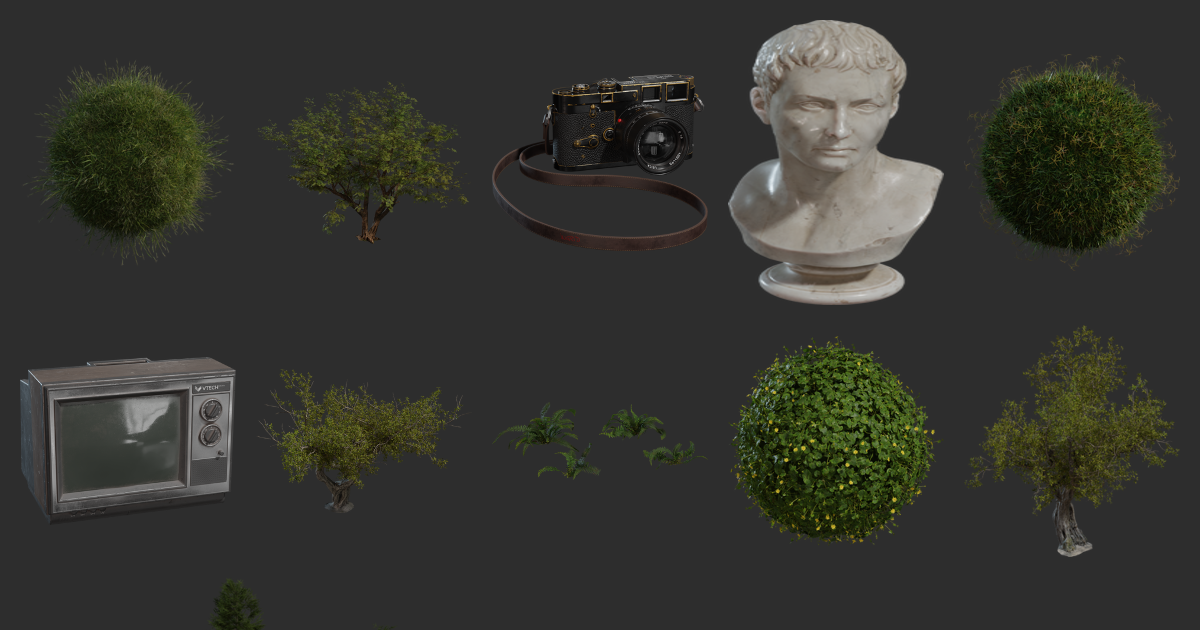
Poly Haven
Hundreds of free 3D models, ready to use for any purpose. No login required.
they are all extremely high poly
delicate delta
wild ember
very nice assets here which are all CC0 https://polyhaven.com/models
wow thank you
delicate delta
these 150+ page chapters are so exhausting
even if I am learning
I thought this diagram was unintentionally funny

if you were looking for a way to get your multi-threaded concurrency to operate as fast as a single thread using a mutex will do it for you
delicate delta
based on my current progress I think I'll be rendering again by next weekend
if work doesn't end up taking up my evenings
#1248864886772072591 message last time I did any rendering was 2 weeks ago, so 3 weeks of reading 😅
this should probably be the last time there's so much reading without rendering as I had these GEA big chapters on hold until I got through the basic math through projections, it's like all rendering from here on out, with some physics and animations somewhere along the way, but the big meaty render-free chapters will all be behind me
well two of the last three chapters in game math are purely physics and they're big chapters, but that's a while from now
delicate delta
Ya‘ll GEA is really transparent about who this book‘s intended audience is and it’s not individual devs building their own engine


A hundred or more developers plus a QA team is a minimum requirement for the book to be applicable
 wise imp
@delicate delta https://vkguide.dev/docs/extra-chapter/multithreading/
btw that atomic-fence assert thingy is very useful
but using volatile in 2024 is absurd
use atomic but use relaxed mode which is basically the same as a volatile load
delicate delta
wise imp
<@116331284749484040> <https://vkguide.dev/docs/extra-chapter/multithreading/>
btw I'm totally going to cheat and read the spec and the vulkan programming guide book before I do your guide :P
but I'll do it
I might actually do it in C++ though because you use the bootstrap stuff, or partially in C++
wise imp
for multithreading if you are interested just go grab taskflow
delicate delta
wise imp
<@116331284749484040> <https://vkguide.dev/docs/extra-chapter/multithreading/>
holy shit this is great, thank you
wise imp
just make absolutely sure you quarantine the fuck out of it into a pimpl or similar with a wrapper
taskflow oblierates compile times on anything that includes it directly
delicate delta
oh ok
 wise imp
what do you mean obstruct
delicate delta
does work ever wait to be done
wise imp
the parallel for does, the other doesnt
see the future.wait() on the parallel for, while the other has nothing
delicate delta
oh I see
I meant more does it block waiting for work to start
as in waiting for other threads to finish
I see a count but it's not clear to me how it's used
it looks it just returns without doing the work
oh you're scheduling multiple workers there
wise imp
up to 4 workers
its a very simple atomic style parallel for
it launches 4 workers, then each worker does atomic add to grab what index they are going to execute
taskflow has its own parallel for, but you cant control how many workers it launches
 elder kettle
FYI bjorn you can multithread GL rendering just fine you just need to use persistently mapped indirect draw buffers and a bit of extra structure to manage what's being recorded
It's not like Vulkan where you can write commands to switch pipelines and vertex buffers and stuff but the draw calls themselves (assuming the state setup is handled elsewhere) work fine
So it won't be as generic as Vulkan threading but if you have several systems that have a large specialized workload like CPU particle systems or foliage instancing or whatever you can easily fill the data/draw buffers on a thread
And then at the final render step you pull up each system, use its internal state to bind whatever input data it needs, and then dispatch your indirect draw buffers
delicate delta
Ah I tried something like with blockens but hadn’t gotten to indirect
wise imp
i wouldnt recomend it
for gl what works great is a custom RHI command system
kinda like how unreal works, you have a thread whose sole thing is to do ogl api commands
the rest of the threads build a command buffer and throw it into that api thread
as a bonus if you have that sort of thing you can also use it with vulkan and others
elder kettle
I don't have an RHI at all I use GL directly
wise imp
thing is that if you are going full indirect your cpu cost goes so fast you dont even really need to MT it
my current block engine is fully ST on the renderer
 elder kettle
Mine isn't full indirect since there are a lot of things I need to do on the CPU but it's still fairly indirect
Like my foliage system still has a lot of CPU labor to fill draw buffers but since it just fills data and indirect buffers (double buffered too) it could trivially be moved to a thread
I am running it single threaded too but I'm just extrapolating
Or if you're going to just do CPU frustum culling or something
But yeah it's true if you rolled your own command system then you could multithread the actual swapping of pipelines and stuff as well
delicate delta
I'm a bit of a ways away from this probably being anything I will have to tackle, I think once I get to building a game it will be small levels with low mesh counts to start with, but I am trying to build out a broad foundation of understanding so I recognize problems and understand things people are talking about on this server
delicate delta
I finished Chapter 5 of GEA
I read straight from Chapter 2 to 5, 350+ pages and took comprehensive notes
I am over it lol
Chapter 5, a basic game math overview, was very good. I think it's very much worth reading. I really liked reading about the math from someone who is not a mathematician but actually creates games, shipped The Last of Us 2 and Uncharted, and Medal of Honor. I get a sense of what's important. I also found his short explanations and definitions way better than the math heavy explanations from my math books and I liked his description of how he's used some of the math in games.
I am basically going to focus on https://athena.ecs.csus.edu/~gordonvs/textC3E.html now and get through OpenGL stuff and actually render. I might switch back to GEA every couple of chapters so I can make a little bit of progress on it a bit at a time and not do another 300+ pages of it
I'm going to get back to my math books after C3E, it's all just rendering from here on with physics at the end
delicate delta
Actually
I realized something today from reading chapter 5, my matrix rotations are incorrect for a left handed coordinate system
If I stick my thumb out and curl my left hand, my fingers rotate clockwise
my rotations are all righthanded!
 pub inline fn rotationY(angle: f32) matrix {
     return mc(.{
-        @cos(angle),  0, @sin(angle), 0,
-        0,            1, 0,           0,
-        -@sin(angle), 0, @cos(angle), 0,
-        0,            0, 0,           1,
+        @cos(angle), 0, -@sin(angle), 0,
+        0,           1, 0,            0,
+        @sin(angle), 0, @cos(angle),  0,
+        0,           0, 0,            1,
     });
 }

fixed
None of my other books explicitly said it, but GEA did
they did point it out when talking about the cross product but my brain never connected it to the rotation matrices when I wrote them
like this would still be wrong if I had skipped this chapter or hadn't read this book, this is why I'm reading
ivory verge
delicate delta
If I stick my thumb out and curl my left hand, my fingers rotate clockwise
im picturing you doing that finger thing 😄
delicate delta
hrm
ivory verge
im not trying to make fun of you
delicate delta
but my rotation around the y should be reflected across the diagonal?
pub inline fn rotationX(angle: f32) matrix {
    return mc(.{
        1, 0,           0,            0,
        0, @cos(angle), -@sin(angle), 0,
        0, @sin(angle), @cos(angle),  0,
        0, 0,           0,            1,
    });
}

pub inline fn rotationY(angle: f32) matrix {
    return mc(.{
        @cos(angle), 0, -@sin(angle), 0,
        0,           1, 0,            0,
        @sin(angle), 0, @cos(angle),  0,
        0,           0, 0,            1,
    });
}

pub inline fn rotationZ(angle: f32) matrix {
    return mc(.{
        @cos(angle), -@sin(angle), 0, 0,
        @sin(angle), @cos(angle),  0, 0,
        0,           0,            1, 0,
        0,           0,            0, 1,
    });
}
is that just for right handed systems?
delicate delta
ivory verge
im not trying to make fun of you
oh I know :P
they all rotate clockwise now when looking from positive into negative
which, making a hand gesture is correct
ivory verge
hmm rotationy looks different
i thought the sign is flipped for the two sin()
pub inline fn rotationY(angle: f32) matrix {
    return mc(.{
        @cos(angle),  0, @sin(angle), 0,
        0,            1, 0,           0,
        -@sin(angle), 0, @cos(angle), 0,
        0,            0, 0,           1,
    });
}
but this is correct given the left hand rule
you can see I move the y positive
then looking from the positive into my thumb
the thing rotates the same direction as my fingers
so I think the matrix is correct
and that's how all the other axis rotate
is the Y supposed to rotate opposite the other axis?
ivory verge
what is your world up here +X Up?
 delicate delta
so if this were right handed it would be reflected
but because my coordinate system is cursed it's not
I want to hire a math professor to evaluate my zig math
ivory verge
hmm what if you flip the two sins?
delicate delta
it rotates the wrong way
Claude says this is correct for a right handed coordinate system
ivory verge
i dont trust LLMs
queen hinge
Discord is a flawless piece of software with absolutely no bugs or glitches whatsoever
 queen hinge
ivory verge
i dont trust LLMs
queen hinge
ivory verge
i dont trust LLMs
Especially with obscure things!
 queen hinge
What does claude say if you ask it to design an LLM architecture?
delicate delta
as I have a left handed coordinate system
ivory verge
https://en.wikipedia.org/wiki/Rotation_matrix#Basic_3D_rotations it is right handed, indeed
queen hinge
that embed
delicate delta
ok well everything is rotating around correctly with my matrices that I pasted above
so I'm keeping them
also, when you flip the coordinate systems you flip one of the axis right
so this makes sense I think
if my translations are correct and my rotations are correct and I don't have two left hands then this is correct
ivory verge
perhaps add some conversion matrices
ivory verge
so that you can easily convert from XUpRH to YUpLH or something
delicate delta
so much stuff breaks if I do that though
ivory verge
unit tests : >
delicate delta
no no the math breaks
my projection will break, my frustum extraction breaks
actually no my projection is fine
ivory verge
so your code breaks, not the maffematics : >
delicate delta
because I convert to Y up prior to projecting
no
the math is different
I would have to write both right handed and left handed math
ivory verge
you are extracting planes always the same way, no matter how the frustum is oriented
that shouldnt break
delicate delta
when I extract the planes from the frustum the frustum is Y up
but my coordinate system is X up
so I have to convert them back
ivory verge
as long as all operations happen in the same coordinate space its fine, and then you just convert to/from if needed
delicate delta
plane extraction is not happening in the same coordinate system it's in clip space
I take the extracted planes and transform it by my full MVP matrix
then it works
they're antivectors
the planes
queen hinge
ivory verge
so that you can easily convert from XUpRH to YUpLH or something
Alternatively
Hard code the transformation
delicate delta
each one of my math books has a completely different coordinate system and the projection matrices they all use are different
ivory verge
😄
delicate delta
here's blender
it's a right handed coordinate system
it goes counterclockwise when looking in the direction from positive
so I'm doing it right
so unity is left handed
I think something is wrong in my math
delicate delta
I'm sorry I wasted time on this but everything is behaving correctly even though my matrices don't look anything like anyone elses
☑️ my GL winding order is clockwise
☑️ my matrix rotations rotate clockwise when angle is increased across all 3 axes
☑️ my quaternions rotate clockwise for positive angle changes across their rotation axis
☑️ my positive x translate goes up, my positive y translate goes into the screen, my positive z translate goes right
things that are weird:
my coordinate system transform doesn't have a reflection ?
my extracted frustum plane normals require negating the normal to work?
my extracted frustum planes require a transposed perspective matrix to extract?
my y rotation matrix negative sin is not reflected across the diagonal compared to x and z rotation?
elder kettle
Tfw you choose an exotic coordinate system and have to suffer the strange consequences of it 😭
delicate delta

elder kettle
(just teasing)
I honestly couldn't say whether those weird things are expected or not though
But I would definitely expect sign changes and flipped columns and stuff
the y rotation one seems plausible
elder kettle
haha
delicate delta
I'm sure the moment I import a gltf I will have something fucked, if not, then good, if so, I fix whatever happens then
but I'll wait until then
elder kettle
You should just be able to pass all transformations through a matrix that converts coordinate systems
delicate delta
yes
@elder kettle your winding order in your RHS coordinate system is counterclockwise and your rotations for increased angles all go counterclockwise?
elder kettle
Yeah
delicate delta
nice
elder kettle
oh right winding order
yeah you may need to swap the winding order or reorder the indices
delicate delta
no I just did that
so they're all clockwise now
they were counterclockwise which is incorrect for LHS
I was wondering if in your coordinate system they're counterclockwise
I sunk some time into this today so a bit of lost day progress wise, but I want to be intentional about my coordinate system and have it all be correct as much as I'm capable of, glad I read that chapter though
elder kettle
the right handedness is applied to everything generally
I guess you could choose left handed winding in a right handed system but idk why you would
delicate delta
don't you have to be intentional about it if you do your own geometry
elder kettle
The choice of handedness is arbitrary so you may as well choose them to be the same
Yeah you do but it's arbitrary
delicate delta
the cross product produces a vector in a direction based on handedness, I would like my surfaces to be visible in the direction the cross product produces a surface normal given the same handed winding order
I had to fix that today
elder kettle
oh yeah changes the cross product too lmao
I hope you try a right handed coordinate system sometime before you get too used to this one because if you ever get a job where you actually need to do math it's going to be unbelievably confusing to be more intuitively familiar with this extremely nonstandard system
delicate delta
some game engines are left handed though
yeah but I was just doing it differently as a means to learn so I wouldn't just copy and paste matrices, but had to figure this stuff out
if I had just gone with a RHS Y up I wouldn't have had to fix all this and wouldn't have learned what I've learned
elder kettle
fair enough
delicate delta
these math books just declare what coordinate system they use and never explain how that choice changes the math
all these books are like that
they do go over the cross product though
delicate delta
yeah that's what I appreciated about GEA, it actually mentions that explicitly
it's not even a math book, it just has a math chapter
that actually was the first thing I thought about when I woke up this morning, I finished reading at like 1 am, went to bed and woke up thinking wait are my rotations going in the right direction? lol
they weren't
elder kettle

Someone leant me this book at work last year when we were working on a particularly nasty rotation problem and it was very unhelpful because it just assumed one specific choice of convention
and we were trying to work out the impact of those choices
actually that was 2 years ago damn
delicate delta
Oh damn, that book looks cool though
elder kettle
my enthusiasm for it was rather dampened by its lack of rigor in that regard but it was decent yeah
still helped me understand the problem I just had to figure it out myself
delicate delta
Yeah that sucks
Your team are like the people that get called when Apollo 13 is stranded in space and they need math to rescue the crew
delicate delta
Alright finished the 3D math chapter in the Graphics Programming in OpenGL with C++ book. There's was nothing new in that one. It's just rendering now, with some GEA progress every so often along the way.
maiden gazelle
delicate delta
what I should do actually is just create a generic viewer
Same tbh
I'm also not pushing models due to both copyright & size
maiden gazelle
delicate delta
these 150+ page chapters are so exhausting
Yeah it was a long read and I think I successfully managed to forget most of it lol. But it's a nice overview. I'd still take a look at this chapter if I wanted to delve deep into multithreading, just to see a big picture view again, before moving on to detailed resources.
maiden gazelle
delicate delta
Chapter 5, a basic game math overview, was very good. I think it's very much wor...
Hmm maybe I shouldn't have skipped it
maiden gazelle
delicate delta
I will have to
Not necessarily
You can transform the transformations too
For example I use LH coord system where Z points forward (towards the screen), x to the right and y up. glTF uses the same X & Y, but it is right-handed so its Z axis points towards the user.
So when importing node transforms from glTF, I construct a change of basis matrix from glTF's to mine, which consists of my x y z cardinal axes, just the z is inverted, as that is the only difference between the two systems.
I just have to sandwich the glTF space transformation between this change of basis matrix & the other way around change of basis matrix (from my system to glTF), which happens to be the same matrix if you think about it!

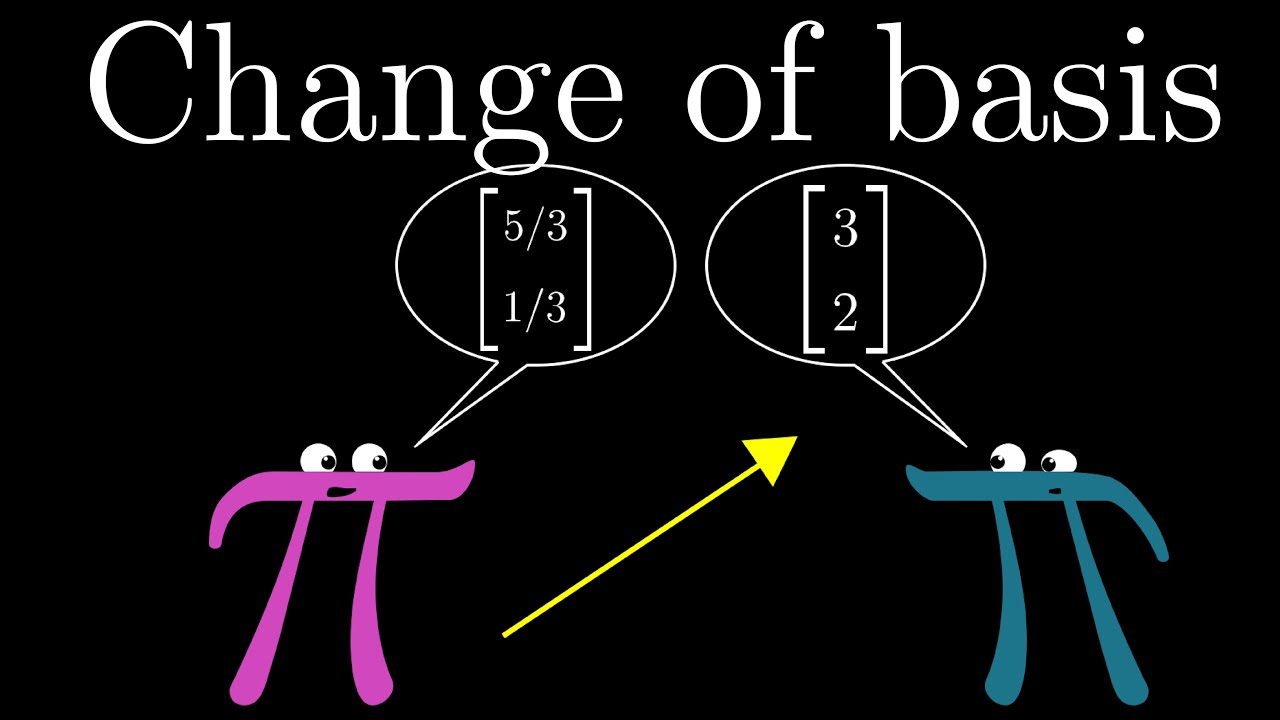
How do you translate back and forth between coordinate systems that use different basis vectors?
Help fund future projects: https://www.patreon.com/3blue1brown
An equally valuable form of support is to simply share some of the videos.
Home page: https://www.3blue1brown.com/
Future series like this are funded by the community, through Patreon, w...
The second part of this video is a good touch up on the subject of change of basis for linear transformations
maiden gazelle
delicate delta
these math books just declare what coordinate system they use and never explain ...
Exactly ...
delicate delta
Thanks!
maiden gazelle
You probably knew these as well but just wanted to hint at it. You can of course create conversion functions between coord systems too but if it is just to interface with different formats, maybe you can "cheat" like this too.
delicate delta
I am not sure, but I will find out how much trouble I am in when I add a mesh loader 😅
It should be fine I will just always apply the transformation to my coordinate system at the end after all object space transformations and animations
delicate delta
chapter 4 CGPOC first program a plain red cube, with zig and my existing scene flavor


delicate delta

program: u32,
location: c.GLint,

const Uniform = @This();

pub fn init(prog: u32, name: []const u8) Uniform {
    const loc: c.GLint = c.glGetUniformLocation(@intCast(prog), @ptrCast(name));
    return .{
        .program = prog,
        .location = loc,
    };
}

pub fn setUniformMatrix(self: Uniform, m: math.matrix) void {
    const v = math.matrix.array(m);
    c.glProgramUniformMatrix4fv(@intCast(self.program), self.location, 1, c.GL_FALSE, &v);
}

const c = @import("../c.zig").c;
const math = @import("../math/math.zig");
my little don't look uniforms up by name every frame code :/
idk
elder kettle
Fortunately I can't make heads or tails of this language so I can't pass judgement on any of your code
delicate delta
yeah the casting is a bit noisy
because I'm dealing with C types and I am using zig
otherwise this would look a lot like C
it just builds a struct with a method that I can call setUniformMatrix on every frame with a 4x4 matrix by location
const Uniform = @This(); is just a compile time thing to assign the surrounding struct type as variable with a name to use
I am going to have to add stb_include to proceed
delicate delta
the book wants me to add a bunch of matrix math in the shader
and I don't want to copy and paste
elder kettle
What's the math for
delicate delta
it's not really math it's just transformation matrices actually
elder kettle
I'm just curious what you're doing that already has so much matrix math, tbh 90% of my vertex shaders are like a 3-liner
void main()
{
    gl_Position = viewProj * model * vec4(in_position, 1);
    out_normal = model * in_normal;
    out_uv = in_uv;
}
well I'm just following the book, but this example is a bunch of instanced cubes that rotate every frame and it does all the rotations in the shader
elder kettle
I'd do the rotation on the CPU tbh
delicate delta
it's like 10K cubes
delicate delta
well it's just a tutorial in the book
elder kettle
Alright fair enough
elder kettle
also 10k isn't that many you could still easily do it on the CPU
delicate delta
after this it does a hiearchy mesh with animations, sorry its 100k
I agree though
it's being silly in an early chapter
elder kettle
Generally the scenario will either be CPU transforms put into an SSBO for rendering, or transforms done in compute and then read in the VS
delicate delta
it's like teaching instancing
elder kettle
because the odds that you only need the transformation matrices once is unlikely
delicate delta
I just kind of want to see if I can use stb_include in zig
delicate delta
stb_include is uncessary I can just use std.mem.concat and @embedFile
elder kettle
I just copy paste personally
delicate delta
yeah that works
elder kettle
I have 16 vert shaders for my project, they don't get made that often so idrc
Most things that are complex enough to warrant reusing aren't generic enough to need to be reused
delicate delta
I have a whole bunch, each scene has its own, and they're all the same
this is the first time I'm doing anything fancy with a shader in this project
elder kettle
Well I only have one scene
Mine are all different
But they're short enough to not be worth trying to use common code
But I did recently start using stb_include for my foliage stuff but that's because it's a relatively complex system with many SSBOs and interpretation steps to generate the actual transform data from the compressed buffer elements
delicate delta
for stb_include what do you use for your path?
file path
is it part of the project root?
do you have like a resources or app_folder that you use?
I guess it's a visual studio thing
elder kettle
I have a resources/shaders folder
Eventually I'd have the game exe in root and then access the resources folder from there but for the time being I set a specific working dir in VS
delicate delta
ivory verge
looks cool 🙂
also cool to see these patterns emerge everytime you do silly stuff like that
queen hinge
delicate delta
GPU instancing, I’m assuming?
delicate delta
queen hinge
GPU instancing, I’m assuming?
Just draw elements instanced, but all the animations are in the vertex shader
I am just sending frame time and using instanced id
GPUs are cool
queen hinge
delicate delta
Just draw elements instanced, but all the animations are in the vertex shader
That’s GPU instancing, yeah
queen hinge
Nah, not in this case
delicate delta
I need a Graphics Programming dictionary to understand the words people use on this server
queen hinge
me too
I generally just use terms I see others use or terms I come up with on my own, lol
GPU instancing is one of the ones I saw someone else use
I think GPU instancing is just another term for draw instanced but I’m not 100% sure
Probably
delicate delta
This is a great new addition to my tech
babble speak I use to ask product managers for more time to get something done
Just kidding I don’t do that
queen hinge
So
Pytorch
Having had rewritten my AI like 7 times so far
… pytorch is great, though I’m still not a fan of python’s lack of explicit typing
… and the lack of curlies
… or even at leastlua if (condition) then logic endlike LUA or TI basic
delicate delta
Yeah I don’t like python or ruby or any of these languages where white space is a significant part of the syntax
I used to write python as a job, like in 2010
But it was a step up from PHP at the time so I was happy
queen hinge
I like being encouraged to type things and discouraged from not typing things
Because having that makes it a lot easier to just grab library, go since I can use the type hints to resolve how to use a library far faster than without those
I also like having something equivalent to curlies because copy/pasting and formatting becomes painful without those
delicate delta
It’s kind of crazy how python is dominating again, I thought for sure python 3 debacle and Go were going to be the end of python
queen hinge
Being able to arbitrarily separate a random snippet of code into its own block is… pretty nice as a formatting option
Lets me indent a thing to make it stand out without having a syntax error, and I can just put a comment above the block to state the blocks purpose
delicate delta
I frequently use just two curly braces in zig just to create a block to temporary scope and isolate work
queen hinge
Yep
I do that sometimes in java too
delicate delta
And it makes code more readable
queen hinge
And my god do I wish I could do that in python
Need it there more than I do in java
delicate delta
Have to make a bunch of inline functions or use a lambda
You can nest functions in python
queen hinge
if True:
# code
delicate delta
Nah just lambda it
queen hinge
funfact; scopes don’t really exist in python!
delicate delta
It’s definitely more fluid
queen hinge
if cond:
    x = 5
print(x) # error if cond is false, elsewise prints 5```usability of python
python’s syntax
ehhhh not sure about that one
struct Matrix[type: DType, rows: Int, cols: Int]:
oh
Struct syntax is closer to records than classes
 delicate delta
The life of a value in Mojo begins when a variable is initialized and continues up until the value is last used, at which point Mojo destroys it. This page describes how every value in Mojo is created, copied, and moved
Mojo seems like an improvement to me
queen hinge
obviously the solution is to make the best language model on the market, and then make it only run on my own custom AI framework written in java
Or zig
I still need to take a closer try at zig
delicate delta
Not quite a good time to try zig imo unless you are cool with rewriting code a bunch of times all the time
Just kidding it’s not really that bad, but it’s a new language still under significant development
You are signing up for that when you use zig
delicate delta
cube and pyramid from chapter 4

my colors aren't nice as in the book

it's like a combination of my x up and my own geometry is a little different, I don't like theirs, but I'm using their colors
elder kettle
delicate delta
my colors aren't nice as in the book
sRGB moment probably
delicate delta
it's all srgb
but yeah in the book they don't use it
so yes, that's part of it
I can disable it easy enough per object idk
maiden gazelle
delicate delta
stb_include is uncessary I can just use std.mem.concat and @embedFile
There is "Line" support in stb_include, which looks %99.9 trivial to implement but I didn't bother with it and just used stb_incude for shader includes
Not necessary yeah
delicate delta
I just was able to use zig’s std library to concatenate shader source I can directly embed using zig built in ‘@embedFile’ so I just didn’t need to deal with run time file loading and C memory management and c null terminated char arrays in zig
I will eventually just compile shaders to spirv from straight zig source anyway so all my shader code will get reworked
ivory verge
perhaps you can also make the background color not true black, but {0.01f} or so
delicate delta
yeah that black background is terrible
I keep forgetting to change it when I'm working on the project
been meaning to for weeks now
ivory verge
: )
delicate delta
that and the imgui theme
delicate delta
this new coderabbit ai PR review feature is neat
 delicate delta
ivory verge
: )
delicate delta
ivory verge
: )


using the green theme you shared

looks way nicer than black
and default imgui theme imo
I like that green dear imgui theme
delicate delta
it has orange highlights
queen hinge
I see no orange
 delicate delta
I am going to alternate each chapter of CGPOC with one with GEA so I keep making progress on that giant book
so chapter 6 of GEA is next
maiden gazelle
delicate delta
Damn that imgui color scheme is nice
It is very cool bateman but that's nothing
 delicate delta
Yeah I agree
delicate delta
I think my eventual game will be construction zone themed, so bright orange and yellows
concrete gray
I should start working on the 3D models for that game while I learn about graphics programming
maiden gazelle
delicate delta
I think my eventual game will be construction zone themed, so bright orange and ...
Sounds cool can’t wait to see what you come up with
I have a tower defense project in mind but not sure if I’m gonna follow through on that one
delicate delta
I love tower defense games
especially if it's not on rails and the creeps have to pathfind and you can build obstacles
maiden gazelle
That’s the exact game I had in mind 😄
You build the path by placing towers on a grid
delicate delta
I really like chapter 6 of GEA, the memory section in particular with per frame memory and all the custom allocators
the rest of it was like CS101 and otherwise felt like big studio problems though, like internationalization and configuring a massive engine
yeah for sure I'm going to build a web portal for my internationalized strings and engine configuration
oh though I did love the scheme -> C++ header section for building configurations for animations, physics parameters, player mechanics and stuff
reminded me of Madrigal's tools
delicate delta
one GEA chapter at a time is the way to go, way easier to deal with, did one chapter in a single day today, back to rendering tomorrow, CGPOC chapter 5 is about textures 
maiden gazelle
delicate delta
the rest of it was like CS101 and otherwise felt like big studio problems though...
i18n is a mess especially in windows with all this utf crap
maiden gazelle
delicate delta
I really like chapter 6 of GEA, the memory section in particular with per frame ...
Ryan Fleury’s videos on memory arenas are nice too
delicate delta
Zig actually ships with an arena allocator
delicate delta
I am going to have to build an asset loader to do this chapter, I'm not just calling stb_load_image in the middle of my scene code
just going to build the bare minimum to load textures but in a way I can add models and other stuff later
not going to get fancy with comptime I just want to make progress and I'll probably change the loader once I get through GEA and learn more about it
and after read some of the other engine books I have too
delicate delta
still quite a bit of work even so
maiden gazelle
I tried to do the bare minimum but it took a lot of time still
delicate delta
ok ok ok ok so close
so much work
it's like 3 lines of code in the book, it's a massive PR in my engine
delicate delta

ok texture is loading
now to add texture coordinates
much work, but real close now
this is my DSA texture object in zig
name: c.GLuint = 0,
texture_unit: c.GLuint = 0,

const Texture = @This();

pub fn init(image: *assets.Image) Texture {
    var t: Texture = .{};
    var name: u32 = undefined;
    c.glCreateTextures(c.GL_TEXTURE_2D, 1, @ptrCast(&name));
    c.glTextureParameteri(name, c.GL_TEXTURE_WRAP_S, c.GL_CLAMP_TO_EDGE);
    c.glTextureParameteri(name, c.GL_TEXTURE_WRAP_T, c.GL_CLAMP_TO_EDGE);
    c.glTextureParameteri(name, c.GL_TEXTURE_MIN_FILTER, c.GL_LINEAR_MIPMAP_LINEAR);
    c.glTextureParameteri(name, c.GL_TEXTURE_MAG_FILTER, c.GL_LINEAR);
    c.glTextureStorage2D(name, 1, c.GL_RGBA8, @intCast(image.width), @intCast(image.height));
    c.glTextureSubImage2D(
        name,
        0,
        0,
        0,
        @intCast(image.width),
        @intCast(image.height),
        c.GL_RGBA,
        c.GL_UNSIGNED_BYTE,
        image.stb_data.ptr,
    );

    c.glGenerateTextureMipmap(name);
    t.name = name;
    return t;
}

pub fn bind(self: Texture) void {
    c.glBindTextureUnit(self.texture_unit, self.name);
}

const c = @import("../c.zig").c;
const assets = @import("../assets/assets.zig");
just hard coding all those settings atm
delicate delta
success

doesn't look like much but I now have a full fledged texture asset loader
that caches
adding additional textures is super easy
and it loads from the windows app data directory so none of these copyrighted files are in my repo
unless they are HDR because I skipped that
delicate delta
delicate delta
I'm going to fix my 100 shaders
all my scenes have their own shaders
I'm going to make it so my vertex vao/buffer code owns the vertex attributes part of the vertex shader, my instance buffer code owns the that part of the vertex attributes, and then the scenes can submit a main function, and most of my frag code is pretty much one of three, color, normals as color or, as of today, a texture coordinates sampler
it was really painful to add texture coordinates to all those shaders
I also want to switch to TQS instead of a 4x4 matrix for my instance matrices
I'm not going to do that right now
but this change will make that easier
queen hinge
delicate delta
all my scenes have their own shaders
mojang moment
 queen hinge
mojang has several shaders they don't even use in minecraft
the corresponding java code just flat out doesn't exist in the game's jar
which-
implies they generated stuff using scripts tbh
several of them are just rearranged element orders of others
queen hinge
they're likely not doing it at runtime nor comptime
delicate delta
hrm, right as part of baking a model or something is ok too
any kind of automation that's smart and efficient is good
mine were just literally copy and pasted
so a step up
ivory verge
there is a little mistake in it
ivory verge
delicate delta
this is my DSA texture object in zig
```rs
name: c.GLuint = 0,
texture_unit: c....
in the storage call
you want to calculate the miplevels, and pass that in, instead of the 1
since you are generating mips
delicate delta
Oh
ivory verge
1 + floor(log2(max(width, height)))
might be 1 + ceil(...) i always mix the two
but for a 1024 texture you should get 10
delicate delta
Because I went the DSA way I didn’t exactly follow the book with that code and I will fix it thank you!
ivory verge
1 miplevel textures are the ones you use for fbos most likely
like gbuffer attachments
for those you dont have to call generatemips either
queen hinge
delicate delta
hrm, right as part of baking a model or something is ok too
I was talking about the shaders
delicate delta
ivory verge
there is a little mistake in it
so looks like the book didn't cover this at all because it uses SOIL2 to load the images and it does that automatically. I looked at SOIL2's code
            int MIPlevel = 1;
        int MIPwidth = (width+1) / 2;
        int MIPheight = (height+1) / 2;
        unsigned char *resampled = (unsigned char*)malloc( channels*MIPwidth*MIPheight );

        while( ((1<<MIPlevel) <= width) || ((1<<MIPlevel) <= height) )
I am not using SOIL2 I'm using stb_image which doesn't do any of this and anyway I want to learn OpenGL.
Thanks for letting me know, they did discuss mipmap levels in the book but the book is more about concepts and not about the OpenGL API specifics and they say to go look it up
in this case I didn't follow the book's instructions to look at all the parameters of the functions I was using 😅
ivory verge
soil and stb just load the pixel data from disk/memory
delicate delta
and their documentation
nah
GitHub
SOIL2 is a tiny C library used primarily for uploading textures into OpenGL. - SpartanJ/SOIL2
this is SOIL2
ivory verge
they might have opengl helper functions to also create a texture
delicate delta
it creates texture objects directly
delicate delta
you just get your GLuid and you're good to go, you do have to specify sampling
ivory verge
++MIPlevel;
they upload every mip manually
i was about to mention earlier that you can do that as well
but you still need to allocate those maps in the storage, when using glTextureStorage
delicate delta
would prefer to just call the glTextureStorage2D unless that's not performant or something
I don't know I guess it depends on the outcome
ivory verge
just cater for mips if you need them, otherwise miplevels 1 is fine
delicate delta
if there's some issue with how I'm doing it and I get artifacts or it looks wrong or is slow I can revisit but I will fix that 1 level I have right now
cater for mips? what does that mean?
ivory verge
make space for them, when calling glTextureStorage, by telling it how many mip levels there are
delicate delta
I'm going to go read the spec I guess
ivory verge
glTexImage2D != glTextureStorage
ivory verge
yes
thats what i am talking about
i omitted the 2d because there is a 3d variant too
i thought that was obvious 🙂
delicate delta
my reading of this in the spec is that by supplying a levels will result in the storage for the arrays required for when I call glGenerateMipmap


oh that's what you said
ok ok I think I understand thank you!
looking at the SOIL2 code makes sense now
I changed it to
    const w: f32 = @floatFromInt(image.width);
    const h: f32 = @floatFromInt(image.height);
    const mip_map_levels: c.GLsizei = @intFromFloat(@ceil(@log2(@max(w, h))));
    c.glTextureStorage2D(name, mip_map_levels, c.GL_RGBA8, @intCast(image.width), @intCast(image.height));
just your regular zig casting mayhem
I am going to add this to my notes
these are my mipmapping notes
- Mipmapping
- MIP stands for Multum In Parvo, Latin for "much in a small space"
- stores a series of successively lower-resolution copies of a texture imagee
and then repeating the process in the remaining one-quater of the image
space for the same image at one-quarter of the previous level or the
original resolution if at the beginning, and then subdividing further until
the remaining quadrant is too small to contain any useful image data.- will require storage that is 1/3rd larger than the original image
- in older systems it might possibly do this in separate R, G, and B
components- used for preventing artifacts caused by image resolution issues when
texturing mapping objects during rendering.- can be used with linear filtering, bilinear filtering and trilinear
filtering using one or two mipmaps at nearest resolution and use one more
texels to interpolate a color- levels to mimpap to depend on context, but given width w and height h for an
imageceil(log2(max(w, h))will produce the max possible levels
ivory verge
if you have no mips, but have enabled generating mipmaps. you will get a fancy effect going which looks like "fog"
because when it samples into nothing ness (because you have mipmap filtering going) it will returnnothing and that will most likely black, but since its interpolated you see something like fog
delicate delta
oh neat hrmmm
so it's sampling the texture and undefined values and interpolating them?
asking the old gods for what the color should be at the pixel location
ivory verge
yeah
delicate delta
my notes btw
$ .\Count-Lines.ps1
Current markdown line count: 12861
who needs functional memory when you can just write it all down
ivory verge
: )
delicate delta
finished chapter 7 of GEA, pretty cool stuff about asset conditioning pipeline and resource management and file system stuff
time for loading 3D models I guess
delicate delta
switched my sphere to use the one from the book, it's better, mine was over complicated, and it had texture coordinates
I did the single point at the ends thing with mine, I also had way too many vertices
the one in the book you can set a precision on it
delicate delta
too spherical? :O
elder kettle
Just trying to tempt you down the nightmare of physical geodesy
delicate delta
    // Generate bindless handle
    t.handle = c.glGetTextureHandleARB(t.name);
    if (t.handle == 0) {
        return TextureError.BindlessHandleCreationFailed;
    }

    // Make the texture resident
    c.glMakeTextureHandleResidentARB(t.handle);

    t.uniform = Uniform.init(program, uniform_name);
pub fn setUniformHandleui64ARB(self: Uniform, handle: c.GLuint64) void {
    c.glProgramUniformHandleui64ARB(@intCast(self.program), self.location, handle);
}
#version 460 core
#extension GL_ARB_bindless_texture : require

out vec4 fo_frag_color;
in vec2 f_tc;

layout(bindless_sampler) uniform sampler2D f_samp;

void main()
{
   fo_frag_color = texture(f_samp, f_tc);
}
idk why people need to use radian conversion when dealing with 360 or 180, that's just 2 * pi and pi
actually zig has std.math.tau 
delicate delta
this book is creating the same matrix in a loop over and over again
    // rotate the first ring about Y to get the other rings
    for (int ring = 1; ring < prec + 1; ring++) {
        for (int i = 0; i < prec + 1; i++) {
            float amt = (float)toRadians((float)ring * 360.0f / (prec));

            glm::mat4 rMat = glm::rotate(glm::mat4(1.0f), amt, glm::vec3(0.0f, 1.0f, 0.0f));
            vertices[ring*(prec + 1) + i] = glm::vec3(rMat * glm::vec4(vertices[i], 1.0f));

            texCoords[ring*(prec + 1) + i] = glm::vec2((float)ring*2.0f / (float)prec, texCoords[i].t);

            rMat = glm::rotate(glm::mat4(1.0f), amt, glm::vec3(0.0f, 1.0f, 0.0f));
            sTangents[ring*(prec + 1) + i] = glm::vec3(rMat * glm::vec4(sTangents[i], 1.0f));

            rMat = glm::rotate(glm::mat4(1.0f), amt, glm::vec3(0.0f, 1.0f, 0.0f));
            tTangents[ring*(prec + 1) + i] = glm::vec3(rMat * glm::vec4(tTangents[i], 1.0f));

            rMat = glm::rotate(glm::mat4(1.0f), amt, glm::vec3(0.0f, 1.0f, 0.0f));
            normals[ring*(prec + 1) + i] = glm::vec3(rMat * glm::vec4(normals[i], 1.0f));
        }
    }
they could just create rMat once in the outer loop?
something I don't get about C++?
 glm::mat4 rMat = glm::rotate(glm::mat4(1.0f), amt, glm::vec3(0.0f, 1.0f, 0.0f))
 rMat = glm::rotate(glm::mat4(1.0f), amt, glm::vec3(0.0f, 1.0f, 0.0f));
 rMat = glm::rotate(glm::mat4(1.0f), amt, glm::vec3(0.0f, 1.0f, 0.0f));
 delicate delta
the state of wavefront obj loaders in C and zig is not great
I will have to write my own
tinyobjloader_c loads from files
that was my problem with stb_include as well
I don't want to use C to read files
stb_image lets me give it the bits
every time I want to use a dependency, some other library, and I see the state of zig I just feel despair man
people just cannot keep their shit up to date
if you aren't along for the ride don't write a library in zig you know
you're just creating litter, it's littering, it should be an arrestable offense, straight to jail
I have never written a zig library and I never will
I'll probably end up writing my own gltf parser too
and eventually replace all my dependencies with just my own zig code
delicate delta


this looks weird though

I don't think that's in the texture

I had to
- self.texture_coordinates[t_index] = .{ s, 1 - t };
- exchange the first face with the third face for all f 1/1/1 2/2/2 3/3/3 (so had to switch 1 and 3)
- I had to add a reflection matrix in my shader that reflected along one of the axis
- turn off SRGB
cuz LH x up mayhem never ends

oh and also write my own obj parser
queen hinge
when doing lights
PLEASE add options for falloff modes

inverse square is annoying to work with if you want a specific light length
delicate delta
I don't make these things, they came with the book
:\
that's good to know though
is that a material thing
like I am just going to write my own lights?
queen hinge
uh
whenever doing lights, you're going to have do some kinda shader
somewhere in that shader will be a falloff mechanism
the physically accurate one is inverse square falloff, which tends to result in lights either not going far enough or being way too freaking bright
in my case, it's ending up with the light not falling off fast enough, since I'm not going for stylistic lighting rather than realistic lighting
delicate delta
ok what's the light GUI thing you're showing
is that a godot thing
are you doing things in blender? do you import that somehow? I'm just not following
queen hinge
this is blender
delicate delta
I'm familiar with fall off
I just don't know why you're showing me light settings in blender :P
queen hinge
because it seems the fall off setting was removed from blender and it's bothering me
delicate delta
hrm
queen hinge
basically
inverse square falloff is a lot harder to tune in, but it's physically accurate
linear falloff is really easy to tune, but is not physically accurate
I assume
ngl I kinda feel like linear is the more accurate one
solution for my problem: use a negative brightness sun
why? yes
delicate delta
queen hinge
solution for my problem: use a negative brightness sun <:KEKW:666849321462792234...
what are you doing in blender
queen hinge
delicate delta
what are you doing in blender
Recreate and pose a model to use it as a reference for a drawing
queen hinge
delicate delta
oh and also write my own obj parser
Obj is such a nice and simple format
delicate delta
it was fun yeah, but my weird coordinate system always ruins all the fun
everything I do is always broken at first
and broken in just the weirdest way
queen hinge
delicate delta
I had to
1. self.texture_coordinates[t_index] = .{ s, 1 - t };
2. exchange the ...
3 of those sound relatively standard for objs, actually
delicate delta
and what incantation of flipped signs, subtract from one, reflection, switch around vertices will I have to do perform to fix whatever thing is always a mystery
queen hinge
Obj uvs tend to be upsidedown for some reason
delicate delta
maybe grassman algebra avoids all this maybe I should get serious about it
I just have to think in 4 dimensions across hyper geometry
queen hinge
delicate delta
it's how we will ascend
queen hinge

delicate delta
:P
queen hinge
I should put that emote in my about me whenever I next get nitro
which, quite literally, might happen if I go on hiatus for a week
pretty sure there have been like 3 instances of discord just giving me nitro because I was offline on vacation for a week
delicate delta
nitro is your drawing app? you have like 10 projects
queen hinge
discord nitro
delicate delta
oh
queen hinge
delicate delta
you have to have nitro to put an image in your bio?
queen hinge
Yes
I’m like
99% sure
I’m pretty sure I only have an animated emoji in my bio because discord is funky and didn’t automatically remove it
I’m not sure, and I don’t want to test, because if I’m right, I can’t undo my test
queen hinge
delicate delta
nitro is your drawing app? you have like 10 projects
10 might be a tiny bit of an underestimate

(Most of these are on indefinite hiatus)
There’s also a few not included in that count 
queen hinge
delicate delta
nitro is your drawing app? you have like 10 projects
Drawing app is doodlart
But currently I just use krita
delicate delta
ok ok ok, I finished the 3D models 6th chapter of CGPOC, I finished writing my notes. Next is a relatively short chapter in GEA, chapter 8, which is about the game loop and real time simulation, and then next in chapter CGPOC is lighting, which will be the first time I ever do lighting that isn't the fake minecraft lighting I did in Blockens
yeah chapter 8 of GEA is like 34 pages, which is probably the shortest chapter in that book
I have to read like 3 or 4 pages in GEA for every page in CGPOC

This is a new book I got
 queen hinge
delicate delta
ok ok ok, I finished the 3D models 6th chapter of CGPOC, I finished writing my n...
queen hinge
delicate delta
ok ok ok, I finished the 3D models 6th chapter of CGPOC, I finished writing my n...
Convenient timing with me getting annoyed with blender’s lights
 queen hinge
At least it’s not 6 days
 delicate delta
I'm going to exercise and go to bed, good luck with your drawings in Krita
queen hinge
Oh I’m not on pc
Nor do I have the model (it’s a minecraft model and I need to deblockify it before I can draw it because perspective and shapes are not things I’m great at)
I’m about to go to bed too
queen hinge
delicate delta
But something tells me you have a healthier sleep schedule than me
delicate delta
gotta get rest!
queen hinge
queen hinge
basically
inverse square falloff is a lot harder to tune in, but it's physically...
As I understand it
With inverse square, the brightness falls off with distance automatically based on the brightness
So if you have a stupidly large room, you need the power of the entire sun to light it up, even if all your objects are also scaled up to match
Can’t really tell it hey go further without telling it hey be as bright as the freaking sun afaik
With linear this is not a problem
You specify brightness, and distance
It linearly fades off based on vector length between the source and the fragment from brightness to 0
delicate delta
queen hinge
As I understand it
With inverse square, the brightness falls off with distance a...
That’s good to know!
delicate delta
Next week I have to go to Salt Lake City for work and drag two work computers with me so I probably will not make much progress then. I may just read the Vulkan spec or something
Completely unnecessary trip tbh
The Mastering Vulkan book would fit in a plane seat.
wise imp
mastering vulkan book is amazing
its deeply under-rated
the thing actually walks you in detail into implementing quite a few fancy modern techniques
the volumetrics i have on my engine are copied from there, it was a huge help
delicate delta
yes it looks really good
maiden gazelle
Hmmm good to know
queen hinge
Advice: don’t accidentally offset a model by 0.00001 pixels
Someone may notice it
(One of my online friends accidentally offsetted a model by a very small value a long time ago, and well… I was the one who noticed )
delicate delta
pixels?
delicate delta
that's a value approaching a number lower than ULP
say ULP is v 1 + less then v doesn't change anything
unit in last place or whatever
queen hinge
I don’t remember exactly what the value was
But it was small enough that it was like maybe a pixel’s difference from less than a unit away iirc
delicate delta
hrm
delicate delta
sorry I was referring to machine epislon
delicate delta
I finished chapter 8 of GEA, pretty short chapter about render loop and time delta and a job system. I read chapter 7 of CGPOC which is all lighting and so I'll be starting on some lighting work today, I also noticed the chapters have exercises for extra things to do and I like them and I think I will do some of them. Really excited
I also realized I can still work with renderdoc, my texture abstraction is pretty great, I'm going to add a command line arg the texture object is aware of and switch between bindless and texture binding based on it so I can just pass in a command line arg in renderdoc and it will use the old style of texture binding
I'm also going to add a default magenta 1 px texture whenever a texture doesn't load instead of it just appearing black
I have a lot of work to do the rest of this week just on lighting, then on to shadows probably after next week, I won't be able to do much due to work travel but the weekend I should be productive again
delicate delta
This is an interesting blog post from Ryan Fleury from Rad Game Tools at Epic about memory allocation https://www.rfleury.com/p/untangling-lifetimes-the-arena-allocator

Making performant dynamic manual memory management in C feel almost like garbage collection.
I'm going to read it a few times
queen hinge
queen hinge
~~which, quite literally, might happen if I go on hiatus for a week <:KEKW:66684...
remember when I spoke about discord giving me nitro? 

 queen hinge
yea they just randomly decided to give me a full month for free
delicate delta
why
queen hinge
no idea
delicate delta

ivory verge
i just cancelled mine, after 5 years
queen hinge
delicate delta
<:what:436625629081894912>
discord™️
delicate delta
hrm
queen hinge
discord was like
nitro (one month free)
 delicate delta
there's no viable alternative to discord
so I'm not making any changes personally
but I respect these choices, discord has many flaws
queen hinge
yeah discord just give me nitro randomly
🤷 idk why
takes up 37 characters in my about me
delicate delta
it didn't notify you in some way with a message?
I think you just paid for it and are lying
queen hinge
 delicate delta
ok I am sorry I doubted you and accused you of telling untruths
queen hinge
pretty sure I've gotten like 3 trials of nitro at this point
maiden gazelle
delicate delta
This is an interesting blog post from Ryan Fleury from Rad Game Tools at Epic ab...
Long read but worth it imo
maiden gazelle
delicate delta
I'm going to read it a few times
His language seemed a bit abstract at the beginning parts of the post
I also re-read it a couple of times and aside from the beginning parts, the rest flowed more naturally imo
ivory verge
the handmade club also likes to sound a little elite
delicate delta
hey, zig nightly now has labeled switches!
    const val = s: switch (six) {
        0...4 => break :s false,
        5 => break :s false,
        6...7 => break :s true,
        else => break :s false,
    };
this is amaze
assign to variable directly from a switch
delicate delta
so I made a command line arg to use texture binding
and now I have a working renderdoc again

also added a 1 texel sized debug texture for when loading a texture fails
 queen hinge
delicate delta
hey, zig nightly now has labeled switches!
```rs
const val = s: switch (six...
queen hinge
delicate delta
hey, zig nightly now has labeled switches!
```rs
const val = s: switch (six...
Hey this is that thing in J16 that was added that I didn’t realize how good it was until I didn’t have it
There’s a lot of those
delicate delta
yeah it's really nice
delicate delta
Really basic Gouraud Shading, all in the vertex shader. First time I've ever done any lighting. My torus normals are mirrored so I need to fix that.
I had to fix so much shit. I had to separate out my matrices in camera, I had to add SSBO buffers. I had to add materials and lights. I had to idk, this took all afternoon and evening.
ivory verge
delicate delta
hey, zig nightly now has labeled switches!
```rs
const val = s: switch (six...
looks quite verbose, its neater in c#
queen hinge
You needed SSBOs for this?
ivory verge
no
delicate delta
No you can just spam uniforms
I can stick all my lights and materials in the ssbbos I made
ivory verge
can be an ubo too
delicate delta
True
delicate delta
ok fixed my normals and my colorspace, the gouraud shading looks correct now
can tell the normals are fixed better with this
ok on to phong shading
delicate delta
hrm
a torus is an interesting shape to test lighting with
trying blinn-phong next
wild ember
queen hinge
You needed SSBOs for this?
SSBOs mainly become necessary when you need a lot of data. For example animation bone transforms.
queen hinge
makes sense
delicate delta
they're just nice to have though, why use UBO if I can use an SSBO
wild ember
UBOs are potentially faster but it depends on the implementation
SSBOs are often implemented as a texture lookup
And you may or may not have any texture bandwidth to spare
delicate delta
you're saying it uses texture unit hardware?
wild ember
This is what I've heard, but it's also possible to implement differently
delicate delta
interesting
wild ember
For small buffers you should generally prefer UBOs
delicate delta
good to know, thank you!
queen hinge
a lot of gpu stuff is implementation dependent
you actually aren't even guaranteed to even have support for GL_NEAREST
delicate delta
I mean, I'm only targeting my own GPU :/
and any brave soul that wants to pull my repo
I do want to make a game eventually though
x up lh is not for the faint of heart though
wild ember
delicate delta
and any brave soul that wants to pull my repo
Me later
Oh wait I might need to install a zig compiler
delicate delta

yes, and I stay up to date with zig nightly, I literally update my compiler every day
wild ember
Damn
delicate delta
I use zigup if you're interested, but there's zigvm too
yeah, zig is...a lifestyle choice you know
wild ember
Ah I see
delicate delta
I don't know if there will be a standard
wild ember
They drop new C++ like every 3 years
delicate delta
I like C++ I wish I had good editor tools and nice dependencies
the community uses ZLS which is a language server, and it is frequently behind or broken
well it's not that bad
but it can be bad sometimes
delicate delta
huh
I think the blinn-phong in the book is incorrect
it calculates the halfway vector in the vertex shader
and then uses the interpolated value in the fragment shader
it loses all specular
if I do it in the fragment shader and use the L and V and H from there it looks correct
I have their C++ code but I don't want to build it
void main()
{
    Material f_m = f_materials[0];
    Light f_l = f_lights[0];

    vec3 f_L = normalize(fo_lightdir);
    vec3 f_V = normalize(-v_matrix[3].xyz - fo_vert);
    vec3 f_N = normalize(fo_normals);
    vec3 f_H = normalize(f_L + f_V).xyz;

    float cosTheta = dot(f_L, f_N);
    float cosPhi = dot(f_H, f_N);

    vec4 f_global_ambient = vec4(0.7, 0.7, 0.7, 1.0);
    vec3 f_ambient = ((f_global_ambient * f_m.ambient) + (f_l.ambient * f_m.ambient)).xyz;
    vec3 f_diffuse = f_l.diffuse.xyz * f_m.diffuse.xyz * max(cosTheta, 0.0);
    vec3 f_specular = f_m.specular.xyz * f_l.specular.xyz * pow(max(cosPhi, 0.0), f_m.shininess);

    fo_frag_color = vec4((f_ambient + f_diffuse + f_specular), 1.0);
}
this works for me
made it a bit shinier with a f_m.shininess * 4.0

cool cool
lighting, we did it
queen hinge
vec3 f_ambient = (fma(f_global_ambient, f_m.ambient, (f_l.ambient * f_m.ambient))).xyz;
should be equivalent I think
delicate delta
what's fma
queen hinge
fused multiply add
delicate delta
I've never heard of that, I am getting a refund for all these books
queen hinge
I believe it's a little faster than (a*b)+c
delicate delta
I learn more from this server than from this tower of books fml
queen hinge
but I'm not actually sure if it is meaningfully faster
it's also cleaner in some scenarios
elder kettle
Fma isn't just a GPU thing either x64 has it
elder kettle
wild ember
SSBOs are often implemented as a texture lookup
I think what you're thinking of is image load/store
Texture logic is still specialized, and UBOs are ostensibly similar in perf because they may be put into special memory closer to the core
But SSBOs and image load/store are basically both just standard main VRAM read/write
I'm guessing texture lookup is quite a bit faster than SSBOs and image load/store still
queen hinge
delicate delta
I learn more from this server than from this tower of books fml
This server is likely also a lot more willing to jump into the deep end than your books 
delicate delta
I'm still in the shallow end of the pool
delicate delta
Ok I changed what kind of game I want to make. I have a good idea for a simple game with a simple concept and small levels
An escape game, each level is a puzzle while your being chased kind of like RE2 but without any zombies or combat
The character you play is a little old obsolete robot scheduled for reclamation and you’re trying to avoid being caught
Not a new idea of course but would be fun to make and simple
No giant open world maps, easy occlusion, immutable terrain, hand made levels
Just like every small level has its set geometry and models and lights etc
And each level is its own small achievable goal to make and measure progress on
The fun will be in making cool looking levels and thinking of puzzles
Going to keep going on these books for now though
delicate delta
also I think my approach to making a game will be to make it playable, and then make it look good, and then iterate on making them each better in turn, but before I do anything at all fancy just have a bare bones thing that is playable instead of working on rendering first
like if it's just a couple of pixels moving around and that's a playable game that works as a start
like for the first level
delicate delta
If I didn't have a no combat rule I think I would just make a Doom clone, but I'm making this instead, which I think will be very similar and fun
wild ember
elder kettle
I think what you're thinking of is image load/store
This is where I first heard it at 38:20 https://www.youtube.com/watch?v=-bCeNzgiJ8I
Although this talk is 10 years old now  so maybe things are different

In this session, Cass Everitt and John McDonald from NVIDIA will talk about some newer extensions to OpenGL and how they can reduce (or even eliminate) driver overhead. We'll discuss where performance goes, how to effectively profile GL, as well as specific extensions such as bindless rendering and MultiDraw commands.
Speakers: Cass Everitt (NV...
ivory verge
ah the OG azdo vijeo
delicate delta
I'm going to add some more lights also
queen hinge
just wait till you learn about shadows
delicate delta
that's the next chapter
queen hinge
meanwhile I just accidentally setup a while true loop to create windows
for some reason
ctrl+alt+delete temporarily paused the window creation
which like, not gonna question it, considering that was my saving grace there
delicate delta
you made an AOL punter
queen hinge
reason is because I'm making an ANTLR parser, and wanted to get a list of every statement in a sequence of statements
but I didn't know what to make my stop condition and accidentally ran with run instead of debug

the freaking one time where it is extremely important for me to use debug is the one time I accidentally use run
queen hinge
delicate delta
that's the next chapter
nice
delicate delta
queen hinge
reason is because I'm making an ANTLR parser, and wanted to get a list of every ...
that's kind of cool
queen hinge
queen hinge
reason is because I'm making an ANTLR parser, and wanted to get a list of every ...
each statement is open in its own window
delicate delta
elder kettle
Nice imgui theme haha