#Fwog and co.
1 messages · Page 11 of 1
 long robin
oh I think I know what the problem is
view space Z gets smaller as you go 'away' from the camera
wew that was the problem
the whole time I was assuming that view space Z got larger, just like depth
actual contact hardening, kinda

 heavy cipher
contact denoising
long robin
some yummy artifacts

the rays are escaping through holes in the heightmap of the cart
increasing the fake thickness of the heightmap removes it, but makes the shadows harder
 long robin
Maybe I can plug in dlss to fix dlss
 brisk narwhal
if one dlss doesn't work, two will do the trick 
long robin
we've had one dlss, yes, but what about second dlss?
 oak garden
i love it when my release build crashes


 woops
heavy cipher
woops
heavy cipher
co stands for co-pain, shared suffering with our comrades
 gilded widget

 golden schooner

long robin
 has gained a rival
 shell inlet
long robin
increasing the fake thickness of the heightmap removes it, but makes the shadows...
shell inlet
long robin
increasing the fake thickness of the heightmap removes it, but makes the shadows...
epic?
looks like variance shadow map bleeding but is most likely unrelated though
or is it 🤔
long robin
Well it is related to high depth discrepancies in the shadow map
long robin
be me
reading multi-hundred page pdf
accidentally tap end key while trying to navigate with arrows
https://youtu.be/iQs0bEGXhl8
 oak garden
I guess that would be multi-thousand page pdf yeah
long robin
perchance
gilded widget
Vulkan based pdf reader
golden schooner

GitHub
Pathtraced Realtime Engine. Contribute to swr06/Candela development by creating an account on GitHub.
 long robin
I put these images on top of each other in paint.net and I still can't see any difference as I quickly switch between them
 heavy cipher
this may have been an animation
heavy cipher
and the energy loss is for rough
heavy cipher
yuh
long robin
 shell inlet
long robin
I put these images on top of each other in paint.net and I still can't see any d...
shell inlet
long robin
I put these images on top of each other in paint.net and I still can't see any d...
GGX conserves energy at 0 roughness and starts to lose it as it increases so martty is on the money
golden schooner
so
@shell inlet
you keep helping all the lost frogs
with all the brainwormy things
when do you create a project fred 🙂
shell inlet
never
shell inlet
ok I can't promise that though
golden schooner
: )
shell inlet
as it stands currently I can only extrapolate into never
golden schooner
fari enoguh
this is also hte most bare bone extension .txt ive ever seen https://github.com/KhronosGroup/GLSL/blob/master/extensions/ext/GL_EXT_multiview.txt
hmm
can i use gl_ViewIndex in a vs in conjunction with glViewportIndexed?
or how/when does the vs know what gl_ViewIndex to use?
answer seems no as they are totally unrelated it seems
hmm its vulkan only ;C
 final cove
you know what that means
golden schooner
hehe
long robin
Multiview is for efficient VR rendering I thought
 daring surge
yes
and holo lens :^)
but that's kind of VR too
oh wait i think that's the wrong name
i meant lightfield displays >w<
NO
i meant looking glass displays
i am having a moment
 long robin
 heavy cipher
daring surge
i meant looking glass displays
heavy cipher
daring surge
i meant looking glass displays
AR
long robin
shell inlet
GGX conserves energy at 0 roughness and starts to lose it as it increases so mar...
Isn't there a term you can add to counteract the energy loss
Idk I need to keep reading these PBR things
shell inlet
you can naively compensate it back to 1 by preintegrating (into a LUT) and adding the missing energy back
howe ver it does not account for saturation
check out erik heitz paper for the ground truth multiscatter which has no closed form
alternatively check kulla-conty or turquin's papers with approximations
shell inlet
why are you interested in ms before implementing regular one first
golden schooner
i would be interested in clustered volume + pbr 🙂
long robin
shell inlet
why are you interested in ms before implementing regular one first
I'm not, it was just in some PBR presentation I was looking at
shell inlet
do I have double standards? I'm telling you to implement this and that first but I haven't implemented shit myself, only grokking papers
okay I actually implemented turquin's paper though
by stealing pbr code from nabla
going through it myself would have been a massive pita back then
why bother when devsh and his "sweatshop" did the job for me and put the code out there
I didn't do it without permission either and wasn't planning to ship it so I feel no guilt
long robin
No need to put sweatshop in quotes
shell inlet
I'm quoting devsh
final cove
I should probably look at nabla PBR code at some point, him pointing out the PBR on learnopengl was incomplete and wrong kinda trashed most of my interest in it
"so you're telling me I am gonna have to sit there and piece together how these layers of approximation formulas actually work and debug the math?" fuck that, retvrn to blinn-phong
long robin
@final cove I've been reading through the links on this page and they've been pretty good
https://interplayoflight.wordpress.com/2013/12/30/readings-on-physically-based-rendering/

Over the past two years I’ve done quite a bit of reading on Physically Based Rendering (PBR) and I have collected a lot of references and links which I’ve always had in the back of my m…
final cove
nice I am definitely gonna have to take a look at this
long robin
It's fr giving me a much better understanding
long robin
Frogday
I learned yesterday that there's a material called spectralon which is an almost perfect lambertian material
And it's used for capturing the albedo of a surface in a photo (by placing in the image to serve as a reference white point)
golden schooner
i feels like vsauce or veritasium made a video about it already
long robin
Mayhap
I want to get some of it myself just for the lulz, but it's probably proprietary and costs $250 for a tiny amount
golden schooner
: )
long robin
fak off mate
OpenGL Debug message (131222): Program undefined behavior warning: The current GL state uses a sampler (0) that has depth comparisons disabled, with a texture object (0) with a non-depth format, by a shader that samples it with a shadow sampler. Using this state to sample would result in undefined behavior.
opengl 🤓
long robin
I just added that error to my ignore list because it's cancer
it happens because I clear all the bound samplers and textures at the start of rendering (in debug mode), which makes the GL think I'm about to commit war crimes on the sampler
btw do you think there's a way I can optimize this with trig identities
  float theta = atan(radius * xi.y);
  float cosTheta = cos(theta);
  float sinTheta = sin(theta);
I realized I don't need the atan since I can just plug in the angle directly
joe
long robin
heavy cipher
that debug drawn image be flippin out
what not being cleared does to a mf(ramebuffer)
shell inlet
long robin
joe
feels like it should be blurred more
here it almost looks like constant pcf with contact hardening, but I might be wrong
half asleep and don't want to open blender to confirm my sus
long robin
I think part of the problem is the tone mapping hiding it
long robin
another thing limiting the penumbra width is the fallback for when a ray reaches its max iteration count
heavy cipher
is this panning or smth
 long robin
probs
it has all the usual artifacts and more
anyways, here are all the parameters that influence penumbra width
heavy cipher
long robin
it has all the usual artifacts and more
just how grandma used to make
shell inlet
can you do more than 10 steps per ray for science
heavy cipher
yes, i think you are right
long robin
if the source is thicc enough then there is no umbruh past a certain distance
long robin
heavy cipher
is this panning or smth
I don't have 16k^2 shadow maps like UE5 unfortunately
heavy cipher
why not
shell inlet
 heavy cipher
just change the number in the source code bro 🙂
 heavy cipher
yeah, i thought about it a bit more and realized
shell inlet
I did 2d simulation in paint
long robin
shell inlet
can you do more than 10 steps per ray for science
10 steps is sufficient for the small object, but the larger one needs moar steps to be accurate
shell inlet
ok nice, that's epic, poggers, blessed
long robin
watch the frames go right out the window
UE5 apparently has some heuristic to estimate the surface thickness rather than having a hardcoded value like I do
scene-dependent parameter hell my beloved
shell inlet
depth peeping
long robin
the rays be slippin through the cracks
long robin
depth peeling is actually one of the first things I thought of to add more info
but idk, seems expensive
shell inlet
can you raster once and store min and max depth
long robin
plus it's not infallible
long robin
shell inlet
can you raster once and store min and max depth
I would have to raster twice I'm pretty sure
shell inlet
but here just somehow do software depth compare
long robin
the nice thing about smrt is that you just plug a normal shadow map in
btw UE5 also does a thing where the ray length for directional sources depends on the distance from the surface to the camera
which is why there is that weird warping effect when you get close to the shadow
 shell inlet
that's ugly
long robin
my guess as to why they have the variable ray length is to make both far and near shadows look good
anyways I gtg to sleep, gn my froges
shell inlet
same, gn
shell inlet
you merged rtsm to main?
also another thing to get thickness might be to use two shadowmaps one with front faces and another with back faces
didn't think too long about it so might be stupid
what does ue do tho
long robin
shell inlet
you merged rtsm to main?
yeah
long robin
shell inlet
what does ue do tho
it looks at all the depths traversed so far and uses some heuristic to determine how thick it actually is
Since the Virtual Shadow Map only stores the first depth layer where naive iteration misses intersections with any occluders behind the first one, a variety of light leaking artifacts can happen where the occluders overlap. These types of light leaks are resolved using a gap-filling heuristic that extrapolates depths behind the first occluder based on depths seen before the point of occlusion.
shell inlet
that does not actually explain what the heuristic is
long robin
yeah it's not very helpful other than indicating that it has some magic
I would look at the source, but it's impenetrable to mortal eyes
 long robin
my cousin is visiting so my time is getting the succ
shell inlet
👍 👌
long robin
I kinda wanna work on my galaga clone game soon
shell inlet
2d?
long robin
yeah
there is a thread or project post somewhere
naturally, the most recent convo was something completely unrelated
 shell inlet
"galunga github" 1st result
long robin
kek
I guess because a) it got traffic from the jam; and b) some commits reference galunga
long robin
no clue tbh
shell inlet
I mean if you linked it from ld website then that would probably count as a cite
for webcrawlers
unless nofollow
long robin
I can add this to fwog quite easily
https://registry.khronos.org/vulkan/specs/1.3-extensions/man/html/VkAttachmentLoadOp.html
then I can use the fancy schmancy glInvalidate* functions and probably experience driver bugs since no one uses them
idk why I had bool clearOnLoad in my render attachment struct and not gone one step further to make it an enum
gonna have to update all the examples again 
long robin
I stumbled upon VK_ATTACHMENT_STORE_OP_NONE
seems like a way to avoid UB when a shader does not write to one of the targets of a framebuffer
final cove
it is? it looks like it originates from the dynamic rendering EXT
long robin
I see that it is both a qualcomm thang and a dynamic rendering thang
heavy cipher
there is no point in having an unwritten attachment on desktop, since you can sample them instead
store op none is useful when you are loading a read-only attachment as a input attachment
long robin
is that for subpasses
heavy cipher
wdym
long robin
the term "input attachment" scares me
anyways, isn't it UB to have store op store for a RT but the shader doesn't actually write to it
I thought store op none would also help with that
heavy cipher
its not UB
long robin
ok then that's just a glism
heavy cipher
its just an issue because if the data was read only
why are you storing it back
muh bw
and store_op_dontcare makes the result rt contents undefined
long robin
I don't get the purpose of that one
it seems like load_op_dont_care would be sufficient
long robin
the use case I can think of for the load op is when you know that the previous contents don't matter since they'll be overwritten
long robin
ah, can you still do per-fragment ops?
the "contents within the render area are not needed after rendering" bit makes me think that
heavy cipher
let me give a motivating example (motivating you to understand it):
you want to render some depth tested geo as the final thing
so you want to LOAD the depth attachment contents, but you don't need it later so you can have STORE_OP_DONTCARE
long robin
yeah that makes sense
I wonder if that has any practical implications, since you still need to write to memory for per-fragment ops
heavy cipher
its about mobile really
you have tile memory
this is management of loads from global mem to tile mem, and stores from tile mem to global mem
heavy cipher
on pc you can still get a small benefit by less cache traffic I think
long robin
I can't picture how that'd work
the tile mem thing makes complete sense tho
kinda annoying how all these mobileisms creep into vulkan
shell inlet
does anything except mobile even need render passes
oak garden
VK_VUK_dynamic_rendering
heavy cipher
(vuk doesn't use dyn rendering atm)
long robin
does it even matter tho
 long robin
I'll be counting
golden schooner
long robin
I stumbled upon `VK_ATTACHMENT_STORE_OP_NONE`
is that like GL's GL_NONE?
long robin
In what context?
golden schooner
drawbuffers
long robin
Hmm perhaps
golden schooner
since you kind of have to set that exschleppingly too for some reason
 golden schooner
are you contemplating on a vulkan variant of fwog? 🙂 whilefighting ombies
long robin
Lmao discord's game detection gets stuck
My computer isn't even on
Anyways, a Vulkan abstraction will perhaps come at some point
golden schooner
a vuk2 will be based on fwog2whichisbasedonvk or a fwog2 on vuk?
excuse me, i meant vwog
heavy cipher
golden schooner
is that like GL's `GL_NONE`?
btw, it is not
long robin
I wonder how benefishial it is to do glClearNamedFramebufferfi to clear depth and stencil at once, compared to two separate calls
it clamplicates my code so I want to remove it
eh fuggit, it's gettin delet
the fact that combined depth+stencil formats exist is
long robin

turns out the sampler that I called "nearest" was actually linear so it was sampling garbage
golden schooner
intermeresting effect still
long robin
I really have no idea how the gap-filling heuristic that UE5 uses for SMRT works
These types of light leaks are resolved using a gap-filling heuristic that extrapolates depths behind the first occluder based on depths seen before the point of occlusion
my guess is it's some kind of statistical test
though that's kinda obvious lol
maybe if the variance is high, the heightmap thickness can be increased to reduce the odds of light leaking
daring surge
algorithm is left as an exercise to the reader
long robin
there is a particular aesthetic about this image
 shell inlet
generative art
oak garden
Looks different every time you run it
final cove
 long robin
I'm debating whether or not I should add docs to fwog
pros: people would know how to use fwog
cons: I forgor how to make docs, I have 0 users that need docs
would be a good exercise at least
heavy cipher
remove some docs and rely on underflow

 heavy cipher
not great myself at documenting either
long robin
in this case I was actually referring to the wrap function, but I was indeed browsing your docs to copy them as well
heavy cipher
i think the doc setup is neat
so copy that
i don't think copying vuk documentation verbatim will help fwog users ( )
)
long robin
idk how to copy the doc setup
the problem is that I only used doxygen a few times in college for some trivial schtuff
heavy cipher
fortunately for your frogly self, i remembered where i copied mine from
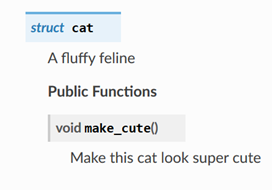
C++ Team Blog
Writing good documentation is hard. Tools can’t solve this problem in themselves, but they can ease the pain. This post will show you how to use Sphinx to generate attractive, functional documentation for C++ libraries, supplied with information from Doxygen. We’ll also integrate this process into a CMake build system so that we have a unified w...
long robin
what if I just copy FSR 2 and make a mega readme and call it docs
https://github.com/GPUOpen-Effects/FidelityFX-FSR2/blob/master/README.md
long robin
actually I was just about to ask about the different approaches
heavy cipher
multiple incomplete contradictory sources
long robin
I think FSR 2 benefits from this megalith approach because it's a relatively new and unique API that must be "fully" integrated to work
whereas other APIs benefit from the autogen approach when the user just wants to know how one function works
heavy cipher
its not so shrimpl after all
long robin
FSR 2 does have code annotations for autogenerating docs
heavy cipher
FSR has a smaller api surface compared to fwog
long robin
well fwog is supposed to be intuitive, so maybe it doesn't need any docs
heavy cipher
dogjiff
 heavy cipher
i always pass memes less than 8 months old by reference
long robin
ok I might half-ass this
and just put the code annotations (fancy comments) but not actually generate docs
but I'll decide after I read that ms link
golden schooner
@long robin you are supposed to rattle some cages at AMD
to have spelling errors fixed in $EXTENSION.txt
long robin
Lol the old ATI one?

 long robin
golden schooner
maybe you can get an autogram from the old man, when you meet him
long robin
golden schooner
maybe you can get an autogram from the old man, when you meet him
he's still here 🤩
though I don't think he'd like to be pestered about a little typo in this ancient ext 😄
long robin
 digital lion
which extension
digital lion
which extension
GL_ATI_meminfo
the author of it
I read it and found a tiny typo, then deccer wanted me to see if the author was still at AMD
digital lion
ok
golden schooner
its not about pestering him
digital lion
what about Graham Sellers, do you know him? I've seen him on a lot of less ancient extensions
golden schooner
just to talk to these peeps and coercing them to quietly continue work on OpenGL 4.9 and 5.0
i remember back when i was in vocational training, i had a guy i kept talking to, old fart, knew everything about mainframes and cobol etc
was super interesting to see how he hacked on the machine sometimes or how the machine worked best when fetching billions of records etc
also liked science fiction and fantasy books 🙂
long robin
digital lion
what about Graham Sellers, do you know him? I've seen him on a lot of less ancie...
I don't know him
 fiery sorrel
fwog
fiery sorrel
long robin
pros: people would know how to use fwog
cons: I forgor how to make docs, I have ...
what would be easier than that

well i guess these shaders can be apart of some kinda resource manager for shader hot reloading
and hence i can store the frag and vertex shaders in an unordered_map or somethin ig
fiery sorrel
I like Fwog so far it reminds me of Vulkan in terms of CreatePipeline and codebase layout. That yummy 'BindLayout' stuff
@long robin i like
long robin
fiery sorrel
what would be easier than that
Well that's part of the examples, not Fwog itself
I haven't sufficiently bikeshedded a design to put into the API, so for now I just expect people to load shaders themselves
shell inlet
I've heard rust guys put a whole glsl->spirv compiler into the preprocessor
which optionally lets you load glsl or spirv from file
in their vulkan implementation
but also do you really need that? I don't think so
what else you need than load from file
oak garden
its possible but i dont really like it
long robin
shell inlet
what else you need than load from file
I'd like include handling to some degree
shell inlet
load from file - get the shader handle - feed into shader program
long robin
stb_include is nice
shell inlet
ok that should be a part of the custom preprocessor or custom lang that transpiles to glsl or compiles to spirv or whatever
long robin
sadly only the chonky shader compilers seem to have full support for includes
long robin
I don't want to ship shaderc with fwog, for example
shell inlet
but why do you need to?
long robin
I'd rather ship something lightweight, like stb_include
shell inlet
glsl in opengl doesn't compile to any IR anyways so you're stuck with either supply full source or path to full source
long robin
shell inlet
but why do you need to?
It'd be nice if Fwog has a shader loading utility
shell inlet
ok then what do you want, a function "check last modified metadata and recompile" + "custom #include sub"?
long robin
Just something simple that can load a shader with includes
As in: give file path, get a string with the processed shader back
long robin
OpenGL doesn't support it, so you need middleware
shell inlet
but you have it working though
long robin
Nvidia actually supports Google_include_directive, oddly
shell inlet
does amd refuse to build the shaders with it?
long robin
shell inlet
but you have it working though
I'm currently using stb_include which isn't perfect because it can only search one directory
But for now it's okay
shell inlet
long robin
Nvidia actually supports Google_include_directive, oddly
I was also surprised, you're the first person from whom I've learned that it actually works on nv
or were you always having stb_include do the job?
long robin
I used shaderc in another project solely for preprocessing shaders
But it's so overkill
shell inlet
I remember thinking it was google extension not working instead of no explicit casts
long robin
shell inlet
some fwog samples have includes in them
The samples use stb_include as a dependency
Base Fwog (without the samples) has no file loading thingy
shell inlet
btw what's the length limit for shaders?
long robin
Uh, infinite?
long robin
Yeah
golden schooner
there is one more thing to keep in mind, dependencies of your shaders, when you modify a Common.glsl then you need to compile all programs including Common.glsl
long robin
There was a max number of instructions
Ye I've no plans for dependency tracking and automatic recompilation
golden schooner
probably shrimpler to just actively (re)compile the program recreate the pipeline in question
long robin
We've talked about it before. I basically want a constructor for Fwog::Shader that takes a path to the shader (and maybe a path to the include directory) and automatically loads the shader and processes includes
golden schooner
we did?
long robin
Yeah like twice at least 😄
golden schooner
using paths likek that feels like a wonky idea, but i need to fink about it
shell inlet
exclusively constructor?
what if you want to recompile it
resupply the path?
delete old instance and replace with new?
long robin
The only concept of recompiling in Fwog is making a new shader and pipeline and deleting the old ones
shell inlet
I find constructing with path and deferring to .Compile() nicer
you can call it again for recompilation and the shader keeps the path
and what else I forgot dementia
ok yeah can make Compile() return itself I guess, for stupid Shader("path").Compile().Thing();
I wouldn't do that tbh
fiery sorrel
long robin
I haven't sufficiently bikeshedded a design to put into the API, so for now I ju...
Thats why the comment confused me. I thought loading the shaders ourselves is expected lol
long robin
But it would be nice if Fwog could do it
Or not, idk
Writing a little std::ifstream wrapper is not hard
Handling includes is significantly harder
fiery sorrel
I still think of shaders like other violatile data like textures, model files, audio files etc @long robin
OH
I know what ur askin
Automatically scan some folder to build the shaders at startup?
long robin
Nah I mean just a utility function that you pass a path and get a source string (with processed includes)
Processing includes is the interesting part
final cove
you'd also need to be able to provide include search paths
I think filesystem interaction is a bit out of scope for a graphics lib personally, and properly supporting #include just welcomes that rabbit hole
golden schooner
im also not a fan of providing include paths and whatnot
long robin
I'll just stick with making the user do this schtuff, though I'm still tempted to add an stb_include wrapper since I use it a lot myself
I'm still just following the sphinx tutorial
 heavy cipher
who tf is Jake
long robin
some guy
heavy cipher
sussy
long robin
baka 😳
this isn't even all of the docs folders I've made so far

this isn't even my final doc
long robin
would be funny to do vulkan-fwog interop
with GL_EXT_memory_object
probably wouldn't be a fun debugging experience though
hehe forget this
can any debugger even handle two APIs at once?
heavy cipher
yeah, windbg
long robin
I was trying to google if renderdoc supported it, but found this interesting article instead
https://gpuopen.com/learn/integrating-renderdoc-for-unconventional-apps/
rip linux people tho
golden schooner
long robin
rip linux people tho
why rip?
long robin
because the tutorial is only for Windows enjoyers
golden schooner
that stuff should work on lunix too
loading renderdoc's thing and invoking it from your code
i have that code in EngineKit, albeit unused 🙂
long robin
ye, but you'll have to call some posix functions or whatnot to do it
clearly, it is insurmountable
golden schooner
dlopen dlsym is the same as LoadLibraryX, GetProcAddress
librenderdoc.so vs renderdoc.dll
long robin
I only interacted with these functions once in my operating systems class years ago
golden schooner
: >
long robin
Back in the stone age for me
golden schooner
like a year and a half ago?
long robin
nah, like three and a half years ago now
golden schooner
time flies
long robin
since that was in my second year of college
shell inlet
this guy outSEOs your lib
 long robin
I'm gonna strangle that fwog
heavy cipher
stwangle that fwog :3
 viral haven
Does Fwog have any side projects? Just realized this thread is called 'Fwog and co'
long robin
It's called that because sometimes we discuss vuk in here
And other completely unrelated stuff
viral haven
I see. I thought you were working on a new Vk / Dx wrapper similar to Fwog (but using a better graphics API that is)
long robin
 long robin
ngl I'm gaining a lot of incidental knowledge about vulkan by copying it with fwog
crazy how it be like that
long robin
ruh roh

doxygen ain't generating the xml that I explicitly told it to generate 😩
ah it IS generating the xml, but sphinx or breathe or whatever is looking in the wrong place for some reason
nvm there are like 50 index.htmls and I opened one that was stale
what a pro
 heavy cipher
 long robin
now I just need to take what I learned in this tutorial and apply it to the actual project. 🦐le
long robin
I just had a thought for a hypothetical debugging feature
kind of like shader printf
where you can output any value from a fs to a hidden "debug" texture that deduces its format based on the type of the value
then some histogram is automatically applied to color the image
because I'm tired of having to debug tiny values by making sure they fit in one of my existing render targets and multiplying them by 1000 or whatever to be visible
or having to divide large values by an arbitrary huge number to see them
long robin
I imagine it would be integrated like shader printf, by having a hidden resource bound to your pipeline (in this case a render target)
long robin
oak garden
Idk how you’re gonna do the type deduction though
just look at the variable type being written out
oak garden
So just inspect shader code and bind the corresponding image based on that
long robin
it doesn't have to be efficient, just use RGBA32_INT or RGBA32_FLOAT
yeah it would definitely be something more easily implemented by a driver
long robin
yeah
for example, trying to debug integer IDs can be painful
especially if they span a large range of values
oak garden
Yeah this is definitely nice to have for debug overlays and stuff
long robin
some automated histogram analysis could go a long way
heavy cipher
renderdoc has this feature
heavy cipher
that, ye
heavy cipher
open a new jar of elbow grease then
golden schooner
dont let that vulkan person talk you out of this glism
long robin
basically I want to be able to write something like this
debugVisualizeEXT(someRandomScalarInMyFragmentShader);
and have it appear in some automagic render target that matches the variable type
golden schooner
if the shader was generated
long robin
well the API side of things would be messy
yeah generated shaders could do this, if I had full control over the API and shader compiler
like, ahem, a driver would
golden schooner
all you need to do is generate a  string
isnt gobi working on something like that
that "shady" thing 😄
long robin
slim jimmy
that's just a shading lang
or a shading lang generator, I'm not really sure
golden schooner
me neither : >
slim jimmy made me laugh out loud
if only cminusminus had proper reflection
heavy cipher
long robin
yeah generated shaders could do this, if I had full control over the API and sha...
doesn't the shader code pass through fwog?
just mangle it
golden schooner
it does
golden schooner
you lookout for some bogus symbol, sensibly placed
long robin
I guess I could just always use RGBA32_float for now
golden schooner
hmm and artificially append soem layout (...) out vec4 magicattachment
golden schooner
one would need to adjust the linter's grammar file then
golden schooner
we can send them a PR
long robin
Hah
golden schooner
dont look for excuses
long robin
I don't need an excuse to not do it
long robin
But it's not a double negation
long robin
I never negate
long robin
I can actually try to put this in fwog
long robin
golden schooner
what would you actually write then
I'll just accept that my linter isn't perfect
golden schooner
would debugThingyEXT(somevariableinglsl) be the thing you want?
long robin
I haven't bikeshedded it enough
I need to figure out what it would look like from the API side
golden schooner
lets cook up some exshrimple
oak garden
You can easily add a #define that removes it when not running fwog
golden schooner
mayhaps that helps to come up with some apiism
long robin
oak garden
You can easily add a `#define` that removes it when not running fwog
well I'm not concerned about the shader not working outside of fwog tbh
but yeah you could put a define
golden schooner
#include <Fwog.DebugVisualizer.glsl>

layout (location = 0) vec4 o_color;
layout (location = 1) vec4 o_majeek;

void main()
{
  o_color = DrawOwlTheBestWayPossible(drawParams);
  o_majeek = debugVisualizeEXT(drawParams.SomeThingToInspect);
}
somehing like that?
long robin
yes but without the user having to define o_majeek themselves
golden schooner
yeah
long robin
it would just go into an unused location
golden schooner
MAX_LOCATION -1 perhaps
ah wait
and then you can generate the include file from code (under the hood)
hmm can you turn a lambda into a string somehow in c++?
long robin
probably not
golden schooner
mayhaps with that you could deschribe what debugVisualizeThingy is supposed to do
or is there something like expressions
long robin
well the shader intrinsic just writes to a hidden render target
then the API will process it somehow (maybe the user can choose from some preset algorithms) and give the user a rgba8_unorm texture they can draw
long robin
the intrinsic writes to an intermediate texture that can be processed into something that can be displayed as color
golden schooner
how likely is it that you will ever use all 8 attachments
golden schooner
yeah
attachments.DebugAttachment
hmm i didnt notice you changed TextureView to TextureProxy or i might have forgotten
long robin
golden schooner
hmm i didnt notice you changed TextureView to TextureProxy or i might have forgo...
You must be in some internal file
I wonder how hard it would be to patch spir-v in a similar way
I won't think about it
Btw the automatic type deduction of the intrinsic isn't actually that important
I can just make a different intrinsic for scalars and vec4s, with integer and float variants
Then I won't have to semantically analyze the shader
golden schooner
so you just provide overloaded functions in an include file
golden schooner
i mean they could be majeekally added to the string, without the include
long robin
Hmm the include would solve some things
golden schooner
ye, it would eliminate that hassle of where to add the shizzle
long robin
But at the same time, it'd be nice to not have to include anything to use this feature
Especially since including stuff in glsl sucks
golden schooner
#extension GL_FWOG_debug_visualizer : require
long robin
And fwog still doesn't natively support include
long robin
golden schooner
`#extension GL_FWOG_debug_visualizer : require`
Lol would this be a disguised include
golden schooner
mayhaps not require, but enable, to keep the compiler quiet
long robin
ye
 long robin
Gotta finish docs first
golden schooner
ah the excuses
long robin
And the article martty and I were making
golden schooner
now im curious 🙂
golden schooner
while (!queue.empty()) { queue.dequeue(); }
long robin
golden schooner
now im curious 🙂
Well that's for if you want to pester me to complete something
once it's published™️ you'll see
 wind trout
Does Fwog and Co mean eventually more than just OpenGL?
long robin
the "and co" is just a catch-all since the convo often ends up getting super derailed here
mostly because I talk about random stuff
@wind trout do you mind if I make a suggestion for your article about bindless textures (I'm snooping on your website)
well it's actually two things
long robin
wind trout
Oh lol, I was wondering if FwogVk or something
maybe some day
anyways
- it would be helpful to show how to construct a sampler from a uvec2 in a shader
here's an example shader where I do that
https://github.com/JuanDiegoMontoya/GLest-Rendererer/blob/main/glRenderer/Resources/Shaders/gBufferBindless.fs
it would just be 1 or 2 sentences showing how to do it, since sometimes it's nicer to manipulate uvec2s than sampler2Ds
- make a note of how indexing textures with non-dynamically-uniform values invokes UB, then show how you can mitigate it (on NV, you just need GL_NV_GPU_shader5 enabled, and on AMD, you need GL_EXT_nonuniform_qualifier)
https://registry.khronos.org/OpenGL/extensions/NV/NV_gpu_shader5.txt
https://github.com/KhronosGroup/GLSL/blob/master/extensions/ext/GL_EXT_nonuniform_qualifier.txt
your example code will probably break on AMD unless you use NonUniformEXT
it's annoying because it "just works" on NV (as you can see) since their hardware works differently
wind trout
Oh wow yeah those are both really good. Is it safe to reference the first link? I couldn’t find a license in that. I’m already linking to you actually in the other resources section, but for that I link to your blog
wind trout
long robin
your example code will probably break on AMD unless you use NonUniformEXT
This is interesting to know since I don’t even think the superbible mentions this.
Kind of scary though
long robin
oh sorry about forgetting the license, you can use the code for free
you really just need to look at the two important lines, which are declaring the bindless texture in a buffer as a uvec2, and turning it into a sampler later on
which doesn't really need attribution 😄 (but I appreciate asking)
wind trout
Awesome thanks. I’ll add those in and put in a new link back to you!
Edit: Added both with links
long robin
also you could mention section 3.8.2 in the GLSL 4.6 spec, which talks about this
3.8.2. Dynamically Uniform Expressions and Uniform Control Flow
well
in case you don't want to explain exactly what causes the UB 😄
fiery sorrel
I can dog food Fwog as a primer for a NIH engine right? @long robin
let me rephrase: What would you like to see Fwog's dog food
long robin
do whatever you want
I want my fwog to be abused
and I mean it's basically just a GL wrapper
fiery sorrel
I always wanted to use Vulkan in 'story mode'
long robin
 fiery sorrel
(easier Vulkan)
golden schooner
long robin
and I mean it's basically just a GL wrapper
dont lie
its not JUST a gl wrapper
its more or less what opengl should have been since 3.0
long robin
it's a gl way of life
golden schooner
its what nividia should have used for their opengl-to-vulkan guide 🙂
golden schooner
 shell inlet
yeah the way I see it is you click a button and it takes a snapshot of the scene for each probe and generates irradiance maps that you interpolate between
could also add prb specular with split sum approx
shell inlet
unfortunately I'm yet in educational limbo and only having wet dreams of contributing my weird ideas to fwog
long robin
I finally have all this autodoc stuff hooked up to fwog, but now I need to debug this

problem for tomorrow me
shell inlet
is doxygen the only doc generator out there
it's everywhere
so either that or it's really good
long robin
doxygen is just good at autogenerating references from public headers
final cove
I've never seen anything else used for C++, it's really good at dealing with C and C++ specifically
shell inlet
I might get a chance to cobtribute to fwog while I'm attending college
done with assignments the hope is they don't overload us with crap during session
how easy it is to generate cubemaps in fwog?
like render to cubemap
long robin
Not hard
I think you have to create a 2D texture view of each face in order to render to it
shell inlet
I want to try to tackle the probe based static GI
half life 2 style but with interpolation
shell inlet
it should work better with irradiance
glossy would look ugly without parallax correction
could try to fit a convex polyhedron to the scene by shooting rays randomly from the probe position though will look weird most of the time
still could be better than nothing
hand fitted polyhedra would look better
parallax correction is basically projecting the cubemap onto a convex polyhedron
usually a box
needs analytical intersection method
you can raycast if you have a depth map stored with cubemap
you've done it before
shell inlet
Recently I was using a parallax corrected cubemapping technique to add some glass reflections to a project (you can read about parallax corrected cubemapping in this excellent writeup). In general,…
replace box intersection with any convex shape intersection code
I think you can even use concave shapes and if you can discard positions that are occluded from initial cubemap capture positions yet visible from the viewer's position, you can attempt to get the info from a neighbouring probe
long robin
That sounds hard
shell inlet
kinda borderline software rt
but basically can use low poly geometry proxies with bvhs
at that point why not just rt
long robin
lol I put /// @namespace Fwog and now I get several screens of this
 oak garden
Time to start documenting :p
long robin
well I actually get an error because apparently TeX isn't installed or something
H:\Repositories\Fwog\out\build\x64-Debug\EXEC : error : Problems running epstopdf. Check your TeX installation!
oak garden
Fun times
long robin
110 updates for MiKTeX available
 rugged notch
Abandon the entire project while you still can
Dont want to? That's sunken cost fallacy my friend
long robin
finally, docs
 rugged notch
Sseth here
long robin
I'm sadly learning that I don't know how to write doxygen comments that well
maybe if I just spam them on every public symbol it'll work
 hybrid pivot
I find it difficult to write comments a lot of the time. Especially when it feels super obvious
/** Sets the clear color of the image. */
void SetClearColor(float, float, float, float);
yeah, some things are self-documenting
I need to figure out how to tell sphinx to make an API reference for a file
oh snap, if I use .. doxygennamespace:: Fwog it generates a reference for everything in Fwog
doxygenfile is where it's at
long robin
another possible brainworm: async pipeline creation
I guess it could be a simple future type that holds a maybe-"compiled" (linked) pipeline
the purpose would be to leverage magical driver parallelism for shader compilation
long robin
man why is making code blocks in sphinx such a pain
you must end a paragraph with :: and a blank line to start a code block, each line in which much be indented
 long robin
🇫
long robin
is it really "smart" if it does different things in different contexts

I'd've preferred for it to do one thing consistently so I don't have to check the docs when I'm confused by what's happening
long robin
now I can finally schleep
mfw there's a misspelling in that page
oh well I fix it later
heavy cipher
well done
long robin
how do I tell VS to not autocomplete
  /// <summary>
  ///
  /// </summary>
when I type ///
I found it

 valid oriole
Apps & Programs -> Find VS -> Right Click -> Uninstall
shit you were faster
I had the stackoverflow q in my clipboard already
long robin
the problem is that I half assed my search before I asked
then I noticed the search bar and typed "comment" as you can see, which immediately solved it
long robin
I have a weird "problem"
I have this
struct GraphicsPoipeloineInfo
{
  ...
    /// @brief Non-null pointer to a vertex shader
    const Shader* vertexShader            = nullptr;
    /// @brief Optional pointer to a fragment shader
    const Shader* fragmentShader          = nullptr;
  ...
};
obviously it's not ideal that there are non-null and maybe null pointers to shaders in the same struct
long robin
I could make vertexShader a reference
only "downside" is that it forces you to bind the reference immediately
golden schooner
that works?
long robin
yes
golden schooner
c-isms
long robin
you can put references and const members
but they have to be bound/set when the object is constructed
which means no delaying it
oak garden
too bad optional<T&> is not allowed
long robin
std::optional<std::reference_wrapper<T>>
long robin
tbh I think my best bet is just going with Shader& in the struct
golden schooner
internal record struct GraphicsPipelineDescriptor
{
    public Label PipelineProgramLabel;

    public string VertexShaderSource;

    public string FragmentShaderSource;

    public InputAssemblyDescriptor InputAssembly;

    public VertexInputDescriptor VertexInput;

    public RasterizationDescriptor RasterizationDescriptor;

    public DepthStencilDescriptor DepthStencilDescriptor;

    public ColorBlendDescriptor ColorBlendDescriptor;
}
hmm can you prohibit "direct" construction of your GraphicsPoipeloineInfo
and only let ::CreateGraphicsPipolinoe construct it
long robin
so I'd have a constructor for my thing that exists because another thing has too many parameters to put into a constructor 
hmm
the different kinds of shaders could be different types
I smell a virtualism coming on
I wonder how UB it is to destroy a derived object using a pointer to a base object that has no vritual destructor, if the derived object has no additional members
golden schooner
that sounds shify
golden schooner
golden schooner
hmm can you prohibit "direct" construction of your GraphicsPoipeloineInfo
are you referring to this?
long robin
I'm referring to some other thing that entered my train of thought
golden schooner
ah
long robin
w.r.t. to the UB stuff
golden schooner
i was finking about the
struct ism
{
    someRef& reff;
};
``` thing, eh, i clearly know too little about c/c++ and its ismswha
golden schooner
and force its creation only via some ism CreatePipopleoine(ismDescriptor);
long robin
you have to bind a reference at construction time
golden schooner
ah otherwise the compiler will yell at you?
long robin
so if you have a reference member, it needs to be a constructor parameter or provided in the initializer list
golden schooner
ok
long robin
golden schooner
i was finking about the
```c
struct ism
{
someRef& reff;
};
``` thing, eh, ...
ism i { myObj }; // okay, reff is bound during construction
ism j; // bad, won't compile
excuse this waste of time 🙂
long robin
wtf
    this->~Fence();
    return elapsed;
looks cursed
long robin
3000 undefined behaviors of allah
    this->~Fence();
    sync_ = std::exchange(old.sync_, nullptr);
    return *this;
looks even cursor
long robin
my fence class is super crusty, I find as I add docs
it has a function called Signal which doesn't even signal the fence
golden schooner
 long robin
this paper is pretty cool @shell inlet
https://arxiv.org/pdf/2301.11376v2.pdf
efficient SSGI and AO
golden schooner
@digital lion i saw that image again while looking for something else

and i was wondering if it makes sense to get rid of RT4 and put that value into RT0.A
since its the same datatype
digital lion
uh why u asking me lol
i guess that would work
seems like it would be more efficient
golden schooner
i believe you posted that back when, but its so far up that i cba to find it again xD
oak garden
golden schooner
and i was wondering if it makes sense to get rid of RT4 and put that value into ...
id think that too but since its depth im not sure gl will like that unless you write to it manually
golden schooner
ah, indeed, the labeling is a little deceiving
digital lion
golden schooner
i believe you posted that back when, but its so far up that i cba to find it aga...
ah you are right it's teardowns g buffer format #1019779751600205955 message
golden schooner
ah thats what it was, i just flew past it and didnt pay attention to the stuff around it
digital lion
oak garden
id think that too but since its depth im not sure gl will like that unless you w...
The actual depth texture is "Z-Buffer". RT4 is just R16_UNORM
from jakers blog hehe
 golden schooner

long robin
yeah the g-buffer format in teardown is not optimal
lol I noticed in my writeup that I "introduced" the concept of transparent rendering twice
oak garden
lol
wind trout
Maybe dumb question but how do you jump to the first post?
long robin
I don't think there is a straightforward way
long robin
noooo
over 10k messages 😄
you'll be scrolling for a while
I have an idea
#1019779751600205955 message
I searched for "fwog" in:your-projects and sorted by oldest
@wind trout in case you are scrolling
wind trout
ahh ok glad I decided to give up early, yeah that's the smart way
need to check out the new Fwog docs
long robin
they aren't up yet
they'll be here when they're "done"
https://fwog.readthedocs.io/en/latest/
wind trout
oh cool ok, bookmarked
long robin
currently I'm just annotating the important bits of the API with doxygen comments
this is the easy part of doc writing since it's super mechanical
long robin
I wonder if there's a way to make doxygen/sphinx/readthedocs spit out links to the source code in the generated docs
long robin


I wonder how I should document the stuff in Config.h
https://github.com/JuanDiegoMontoya/Fwog/blob/main/include/Fwog/Config.h
I think I'll just make a doc page for configuring Fwog rather than relying on doxygen comments
wind trout
Doxygen wouldn’t do a good enough job with the comments in this case?
long robin
I don't think they'd have enough necessary context
E.g., most of these require adding project-wide defines, so it's easier to just explain all that in a paragraph
The beauty of the doc system is that I can mix doxygen autodocs with longer hand-written stuff
Another issue is that I don't even know what to put the doxygen comments on in that file 😂
wind trout
That makes sense, doxygen seems like such a nice little tool
golden schooner
long robin
over 10k messages 😄
you talk too much
golden schooner
long robin
I wonder what deccer thinks about documentation
if the documentation not overwhelming, showing how stuff is used with exshrimples then its good, and links to the reference docs
if it only consists of
// clear's framebuffer
void Foo::ClearFramebuffer(Framebuffer ...)
{
}
then its also no use
long robin
Ye
I try to at least document potentially surprising behavior or other not obvious preconditions
And I have to assume how much the reader knows, so I assume they'll be an "average OpenGL user"
golden schooner
sounds reasonable
long robin
It's still kinda hard to know what to document sometimes
I'm erring on the side of "too much" as a result
golden schooner
the reference docs perhaps, should be good to understand what what function does
long robin
golden schooner
if it only consists of
```c
// clear's framebuffer
void Foo::ClearFramebuffer(F...
This is a funny example because clearing a framebuffer has several surprising behaviors that ought to be documented
golden schooner
and then yuo just cook up some general use, and perhaps some mansplaining about the architecture or reasoning
golden schooner
long robin
This is a funny example because clearing a framebuffer has several surprising be...
hehe i should not have used the framebuffer in that example 😛
long robin
I get what you meant ofc
long robin
golden schooner
and then yuo just cook up some general use, and perhaps some mansplaining about ...
Yeah. I'll put that schtuff in the docs somewhere
So far I just have doxygenisms
The basic usage guide should be shrimple enough since the only new concepts to gl people are pipeline objects and render passes
golden schooner
if you use doxygen for the api reference that should also work
how to use and mansplaining could just sit in wiki/some.md
golden schooner
unweird it 🙂
long robin
It's more like me not understanding my tools
long robin
I need to unweird me
golden schooner
i gtg for now but if you need help with something still we could talk later
 stray warren
Took a quick look at Fwog and was surprised at how shrimple it was to build and run the examples! Really appreciate it when there exist well documented and working examples for any lib 
 fiery sorrel
shrimple*
golden schooner
 stray warren
Ah yes 🦐 my bad
golden schooner
its what its
stray warren
Love the random usage of the underwater creature memes in unison lol 😄 Like no one said it but we all just started to use them out of nowhere
long robin
is there a way to tell doxygen to generate docs for a #define that doesn't exist
context: I have this
#ifndef FWOG_DEFAULT_CLIP_DEPTH_RANGE_ZERO_TO_ONE
  #define FWOG_DEFAULT_CLIP_DEPTH_RANGE_NEGATIVE_ONE_TO_ONE
#endif
and doxygen only wants to document FWOG_DEFAULT_CLIP_DEPTH_RANGE_NEGATIVE_ONE_TO_ONE since it exists
tried making a @def comment for both, but doxygen can see that the ZERO_TO_ONE define isn't real
ok looks like the only solutions that involve doxygen are massive hacks
good thing I have sphinx
long robin
wtf sphinx makes list text bold if it has a submember

oh okay, the solution is to simply add blank lines
very intuitive
long robin
mashallah martty went through sphinx hell first so I wouldn't have to 🙏
smh even after my prayer sphinx doesn't want to nest the elements of my toctree
ah, apparently using ====== vs ------ under headings has a semantic meaning, I should've guessed
oak garden
 of course
long robin
I appreciate the verbosity of C++ a little bit more every day
fiery sorrel
too tired to do anything too brain heavy but also kinda bored. I think I'll poke around the Fwogland
lets go

 shell inlet
very trianglish
 shell inlet
that's just because srgb weird and nonlinear perceptually


 fiery sorrel


alright we are having a good time and all
except
i gotta figure out what part of Fwog is cryin

texture?

renderdoc time
no callback errors when renderdocin
 fiery sorrel
alright i did it
the errors now dont show up even in debug mode
how did I fix it?
i didnt do anything it just fixed itself
oak garden
pray to allah it never comes back
fiery sorrel

anyways folks we did it. A program made with Fwog

It really makes you feel like Vulkan
 shell inlet
fiery sorrel
It really makes you feel like Vulkan
shell inlet
fiery sorrel
It really makes you feel like Vulkan
have you used vulkan before?
fiery sorrel
yea
Fwog uses Vulkan like boilerplate
but i like that its less verbose and i dont have to worry about syncronization

should show the BindGraphicsPipeline part
 shell inlet
does it have a command buffer or what's the point in calling it cmd
it can't be cause it's opengl, in opengl there's only command buffers via nvidia only extension
oak garden
the fact that its a command doesnt necessarily imply that theyre buffered
fiery sorrel
it doesnt do command buffers
@long robin can explain it bettter but to me its like
opengl with a vulkan skin
not in terms of performance or capacility but how the codebase looks
i feel u bro

what does the Frog button do

||adds green fog||
ah i meant to say fwog is OpenGL with a Vulkan skin
golden schooner
there are no commandbuffer-esque-isms in fwog yet
long robin
Yep
oak garden
tbh it probably should be
golden schooner
and then you check whether you disable it or not by negating whether it should be enabled or not