 grim gyro
Dear Coding Train folks,
I am a huge fan of the amazing work done by Dan and all of you, especially the new next-gen ml5 library.
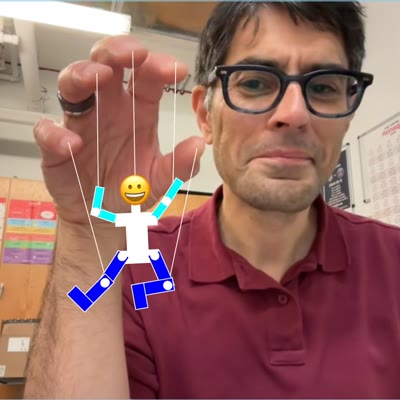
I have been playing around with it a bit. Here is an example using hand-tracking:
https://openprocessing.org/sketch/2654309
and here is one using face-tracking:
https://openprocessing.org/sketch/2672733
On a Macbook, both sketches run just fine. However, on an old Chromebook, of the sort used by my students (I teach in a K-8 school), the hand-tracking one runs very noticeably slower. The face-tracking one is quite fast on a Chromebook, but the hand-tracking code is very laggy. That is surprising to me, because both tasks should be about as hard as each other, in terms of computational demands. If anything, I would suspect that hand-tracking should be easier.
There is probably a similar performance-difference on my Macbook too, but it's only noticeable on older and slower hardware.
I'm wondering whether maybe the ml5 hand-tracking code uses an old and somewhat inefficient model. I'll bet there are some very fast and lightweight JS-compatible hand-tracking models out there these days. However, I don't know enough to know which ones might be suitable.
By the way, the hand-tracking code linked above uses the mediapipe runtime, but the tfjs runtime isn't any faster.
On a separate but related note, it would be great to know if there are any ml5 models that work well on an iPhone or Android, using the built-in front-facing camera. The sketches linked above do not really work properly on mobile, and again I am too ignorant to know how to fix that!
Any help greatly appreciated, and thanks again for making these great libraries!
Raj
P.S. I found the ml5 discord channel, but it seems to be very inactive these days. So, I'm posting this here instead. I hope this is ok!

 glass grotto