#help-38
1 messages · Page 200 of 1
 bright quarry
 tame tusk
How do I find the integrating factor?
I know that I’m supposed to do some form of u-sub and it has to do with the y^n.
 elder linden
bright quarry
are you sure about that sir
elder linden
bright quarry
are you sure about that sir
why not
bright quarry
elder linden
why not
ill let you figure that out
 whole coral
elder linden
why not
whole coral
elder linden
why not
Is your claim that this is Q?
 tame tusk
Do I have to just work to get u=y^-1/2
bright quarry
tame tusk
Do I have to just work to get u=y^-1/2
that is your sub yes
tame tusk
Would multiplying both sides by y^-1 work?
 bright quarry
tame tusk
Would multiplying both sides by y^-1 work?
bright quarry
tame tusk
Would multiplying both sides by y^-1 work?
why?
tame tusk
To get the y^-(1/2) needed for the u sub to work
bright quarry
let v = y^{1/2}, then what is v'?
tame tusk
-1/2 y^-(3\2)
tame tusk
So it’s the same then?
tame tusk
Are you not asking for the derivative of y^-(1/2)?
If you are my earlier answer wasn’t correct?
whole coral
tame tusk
Are you not asking for the derivative of y^-(1/2)?
(With respect to x)
tame tusk
If there is no x in the function with it being y^-(1/2) then it just serves as a constant right?
tame tusk
🥲
bright quarry
1 - 1/2 = 1/2
 west magnet
the derivative of y^(1/2) is (1/2)y^(-1/2)y'
whole coral
tame tusk
If there is no x in the function with it being y^-(1/2) then it just serves as a...
(and it's worth being careful, that just because you can't see an x, doesn't mean there isn't a dependency on x)
bright quarry
tame tusk
Are you not asking for the derivative of y^-(1/2)?
no, the derivative of y^{1/2}
v = y^{1 - 1/2} = y^{1/2}
west magnet
$\frac{y'}{2\sqrt{y}}$
 solid kilnBOT
bagelguy3
 west magnet
if we need to get y = f(x) then shouldn't we find some way to get the y' and y in terms of a product rule differentiation and then integrate it
or perhaps a chain rule
bright quarry
west magnet
if we need to get y = f(x) then shouldn't we find some way to get the y' and y i...
well we eventually do integrating factor if thats what you mean
tame tusk
bright quarry
no, the derivative of y^{1/2}
(1/2)y^(-1/2)
bright quarry
youre forgetting the chain rule
you're differentiating with respect to x
that is y
what are you missing
tame tusk
X
west magnet
tame tusk
(1/2)y^(-1/2)
u have to multiply by the factor of y' since y = f(x)
think of y as a function
stop thinking of it as a variable
tame tusk
I thought I was doing a u-sun earlier and just keeping in mind the derivative
I do t even know what’s happening anymore
bright quarry
you are doing a substitution
west magnet
$\frac{d}{dx} f(g(x)) = f'(g(x))g'(x)$
solid kilnBOT
bagelguy3
 tame tusk
Dy/dx along with what I said before
west magnet
$\frac{dy}{dx} = y'$
solid kilnBOT
bagelguy3
 west magnet
$dy = y' dx$
solid kilnBOT
bagelguy3
 west magnet
bright quarry
you are doing a substitution
west magnet
bright quarry
you are doing a substitution
You do substituion in differentiation?
I've only ever learnt single variable differentiation
bright quarry
if $y’ + p(x) y = q(x)y^n$ then let $\mathcolor{blue}{v = y^{1-n}}$ so that $\mathcolor{red}{v’ = (1-n)y^{-n}y’}$. we do this to transform the differential the differential equation into a differential equation where we can use the method of integrating factor. observe that if you then multiply the original differential equation by $(1-n)y^{-n}$ then you get the following,
,,\begin{align*}
&(1-n)y^{-n}(y’ + p(x)y = q(x)y^n)\
&\iff (1-n)y^{-n}y’ + (1-n)p(x)\mathcolor{blue}{y^{1-n}} = (1-n)q(x)y^{n-n}\
&\iff \mathcolor{red}{(1-n)y^{-n}y’} + (1-n)p(x)\mathcolor{blue}{y^{1-n}} = (1-n)q(x)\
&\iff \mathcolor{red}{v’} + (1-n)p(x)\mathcolor{blue}{v} = (1-n)q(x)
\end{align*}
oof
there we go
solid kilnBOT
knief
 bright quarry
and now in this DE we can use integrating factor
let mu(x) = exp(int (1-n)p(x) dx)
@tame tusk
bright quarry
west magnet
You do substituion in differentiation?
you can but that’s not what i was getting at
west magnet
k
tame tusk
What is mu?
bright quarry
tame tusk
What is mu?
just an integrating factor variable
that’s what i’ve always used
what do you use? rho?
u?
solid kilnBOT
knief
 bright quarry
let mu(x) = exp(int (1-n)p(x) dx)
bright quarry
bright quarry
let mu(x) = exp(int (1-n)p(x) dx)
$\mu(x) = e^{\int (1-n)p(x) \dd{x}}$
solid kilnBOT
knief
 bright quarry
solid kiln
**knief**
bright quarry
solid kiln
**knief**
^
bright quarry
solid kiln
**knief**
do you understand this?
tame tusk
I don’t remember the 1-n being used in the integrating factor
bright quarry
it’s the coefficient of v
tame tusk
With mine would it be just the p(x)
bright quarry
🤔
no it’s always 1-n
but the n changes
so long as it’s of the form y’ + p(x)y = q(x)y^n
you can derive this in your example
$y’ + \frac{y}{x-2} = 5(x-2)y^{1/2}$
solid kilnBOT
knief
 bright quarry
let $v = y^{1/2}$
solid kilnBOT
knief
 bright quarry
then as we said before, $v’ = \frac{1}{2}\cdot y^{-1/2} y’$
solid kilnBOT
knief
 bright quarry
so in order to get something like v’ + a(x)v = b(x)
we multiply both sides by 1/2y^{-1/2}
tame tusk
So it would end up being mu(x)=e^((1/2)(y/(x-2))dx
bright quarry
solid kiln
**knief**
do you follow so far?
tame tusk
Yes
solid kilnBOT
knief
 bright quarry
do you still follow?
bright quarry
solid kiln
**knief**
i’m just multiplying both sides by the coefficient of y’ here
tame tusk
Yes
bright quarry
ok then
$\frac{1}{2}y^{-1/2}y’ + \frac{1}{2}\cdot \frac{1}{x-2}y^{1/2} = \frac{5}{2}(x-2)$
solid kilnBOT
knief
 bright quarry
yes?
tame tusk
Yes
bright quarry
ok then we switch in terms of v
$v’ + \frac{1}{2} \cdot \frac{1}{x-2}v = \frac{5}{2}(x-2)$
solid kilnBOT
knief
 bright quarry
make sense?
tame tusk
Yes
bright quarry
ok then we can just use integrating factor
notice how this lines up with the general case
1/2 = 1-n
and p(x) is still 1/(x-2)
likewise we have q(x) = 5(x-2)
and the /2 is from 1-n again
so our general case is consistent
now for the integrating factor
i’ll use exp for e^ for convenience
let $\mu(x) = \exp( \int \frac{1}{2}\cdot \frac{1}{x-2} \dd{x})$
solid kilnBOT
knief
 bright quarry
what does the integral inside evaluate to?
solid kilnBOT
bagelguy3
 west magnet
I see
bright quarry
but we don’t need the C here
we can let c = 0
it won’t make a difference in the end
it’s a good exercise to go through why that is
@tame tusk
west magnet
i haven't learnt multi variable diffential equations
tame tusk
Is it because it doesn’t need a physical quantity
west magnet
ok forgive me for using wrong term
bright quarry
it’s just not separable
west magnet
I meant I've only solved equations where we are given in the form y = f(x) find y'
bright quarry
which is what you learn in calc 1/2 or ap calc
bright quarry
tame tusk
Is it because it doesn’t need a physical quantity
what
no it’s because it’s redundant in the end
west magnet
also why do question papers write $\frac{dy}{dx}$ Why don't they just write y'
solid kilnBOT
bagelguy3
 bright quarry
preference
west magnet
L preference
west magnet
yes
solid kilnBOT
knief
 solid kilnBOT
knief
 solid kilnBOT
bagelguy3
 west magnet
$\d{f(x)}{g(x)}$
solid kilnBOT
bagelguy3
 bright quarry
$\pdv{f}{x}$
solid kilnBOT
knief
 west magnet
oh
bright quarry
that’s for partial derivative though
bright quarry
@tame tusk do you need any more help or no
tame tusk
No I have to head soon anyway. Thank you for your help though.
bright quarry
you’re welcome
tame tusk
/close
bright quarry
.close
 trim joltBOT
Channel closed
Closed by @bright quarry
Use .reopen if this was a mistake.
trim joltBOT
 Available help channel!
Send your question here to claim the channel.
Remember:
• Ask your math question in a clear, concise manner.
• Show your work, and if possible, explain where you are stuck.
• After 15 minutes, feel free to ping <@&286206848099549185>.
• Type the command .close to free the channel when you're done.
• Be polite and have a nice day!
Read #❓how-to-get-help for further information on how to ask a good question, and about conduct in the question channels.
 wheat torrent
How can I use a right triangle to assist me with solving this integral using trig sub?
trim joltBOT
wheat torrent
How can I use a right triangle to assist me with solving this integral using tri...
wheat torrent

 trim lichen
$\int \frac{\pi}{\sqrt{8 - 2x^2}} \dd{x}$
solid kilnBOT
Ann
 trim lichen
is your integral this?
wheat torrent
Yes
trim lichen
ok
first order of business is to factor out a 2 from this root
get $\frac{\pi}{\sqrt{2}} \int \frac{1}{\sqrt{4-x^2}} \dd{x}$
solid kilnBOT
Ann
 trim lichen
don't use the letter x as a multiplication sign!
wheat torrent
yep, i apologize
trim lichen
and then substitute $x := 2\cos(\theta)$. draw a right triangle and label one of its acute angles $\theta$; then label two of the sides in such a way as to make $\cos(\theta) = \frac{x}{2}$.
solid kilnBOT
Ann
 wheat torrent
i got it
wheat torrent
solid kiln
**Ann**
why do we do x=2cos(theta)
isnt x = 2sin(theta)
oh, thats if the theta is at the top corner of the triangle
trim joltBOT
@wheat torrent Has your question been resolved?
 trim musk
wheat torrent
why do we do x=2cos(theta)
trim musk
wheat torrent
why do we do x=2cos(theta)
Won’t really matter you will get the same result
trim musk
trim jolt
<@1216166696931426405> Has your question been resolved?
Yo since when does the bot have a gender
trim joltBOT
Channel closed
Closed due to timeout
Use .reopen if this was a mistake.
trim joltBOT
Available help channel!
Send your question here to claim the channel.
Remember:
• Ask your math question in a clear, concise manner.
• Show your work, and if possible, explain where you are stuck.
• After 15 minutes, feel free to ping <@&286206848099549185>.
• Type the command .close to free the channel when you're done.
• Be polite and have a nice day!
Read #❓how-to-get-help for further information on how to ask a good question, and about conduct in the question channels.
 limpid marlin
,, \int_{0}^{\frac{\sqrt{2}}{2}} \sqrt{1 + u^2} ,du
solid kilnBOT
a5667.
 limpid marlin
Can someone help me with this definite integral?
I don't want to do trig substitution as it seems like too much work.
I was wondering if IBP would help.
 buoyant sluice
a tan sub would be helpful
limpid marlin
I tried it, but the result is something for which I would have to use additional partial fraction decompositin. I am too lazy for that.
limpid marlin
Let me rewrite it and show you my steps. Maybe I made a mistake somewhere.
It becomes 1/cos^3 yeah, and I made it equal to cos/cos^4 and then I made u = sin(x)
limpid marlin

This is what I got with trig sub
Then I'd have to find constants A, B, C, D ... too much work
buoyant sluice
What sub did u use
 zinc ginkgo
you can IBP before u sub
limpid marlin
tan(x) first, then sin
zinc ginkgo
u = sec(x) and dv = sec^2(x) dx should work
 limpid marlin
zinc ginkgo
u = sec(x) and dv = sec^2(x) dx should work
limpid marlin
zinc ginkgo
u = sec(x) and dv = sec^2(x) dx should work
sorry, I am not used to sec(x) can we please do it in sines and cosines?
u = 1/cos(x) ?
du = -sin(x)/cos^2(x)
Is this correct?
zinc ginkgo
,w diff 1/cos(x)
solid kilnBOT


 zinc ginkgo
u = sec(x) and dv = sec^2(x) dx should work
zinc ginkgo
zinc ginkgo
u = sec(x) and dv = sec^2(x) dx should work
do you know how to find v ?
zinc ginkgo
,w diff tan(x)
solid kilnBOT
 zinc ginkgo
yes
limpid marlin
yup
zinc ginkgo
use int u dv = uv - int v du
limpid marlin
IBP from here right?
 zinc ginkgo
if that integrand equals 1/cos^3 sure
limpid marlin
limpid marlin
Oh, I multiplied divided by cosx here, I guess I can skip that step, right
zinc ginkgo
correct
limpid marlin
What do we do from here? I applied IBP

let u = tan?
and cancel cos^2x?
what do I do with sin
sin = u * cosx
right?
please tell me I can do this ...
but it won't work
I need to get rid of any x
zinc ginkgo
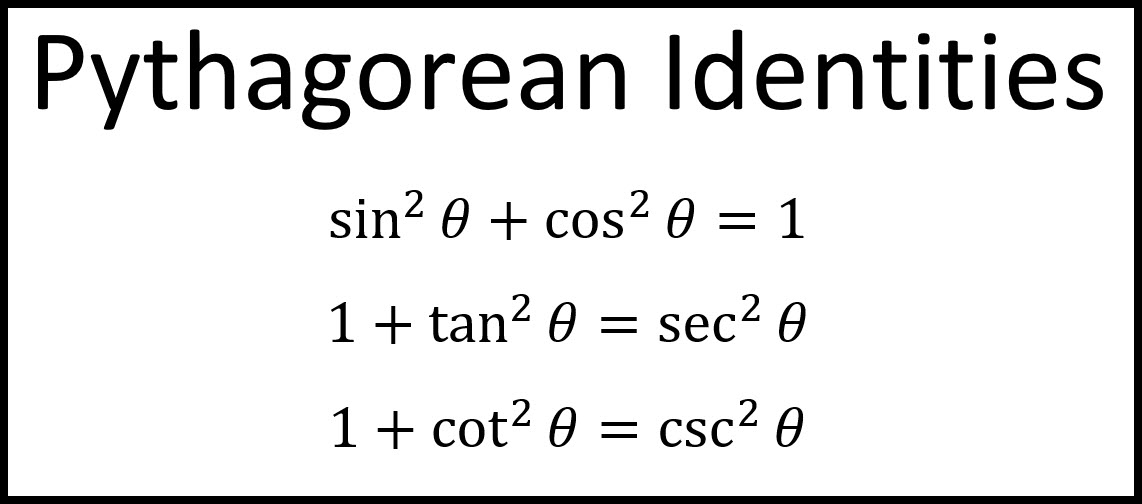
you can write the integrand as tan^2(x) * sec(x)
then use a pythagorean identity
all of this is harder to see if you keep insisting on using sin/cos instead of tan/sec
reducing everything to sines and cosines is good for trig identities, not integrals
limpid marlin
zinc ginkgo
then use a pythagorean identity
Can you please explain this part? So, there is no additional substitution?
 limpid marlin
My teacher gave me identities for sin and cos only // but yeah I can easily derive them, thank you!
so we get sec^3(x) - sec(x) ?
limpid marlin
is there some formula for sec^3? cuz I only know the integral of sec^2
sorry if I am asking yet another stupid question
zinc ginkgo
limpid marlin
it's the same integral you started with at the top
so you have something like int sec^3 = tan * sec - int (sec^3 - sec)
you might have messed up a sign somewhere
zinc ginkgo
limpid marlin
My teacher gave me identities for sin and cos only // but yeah I can easily deri...
this probably should be sec - sec^3 instead
limpid marlin
oh ... I think I understand now, we got the same integral with - so we can bring it to the left and divide both sides by 2?
zinc ginkgo
try it and see
limpid marlin
I get something like this
 limpid marlin
zinc ginkgo
this probably should be sec - sec^3 instead
limpid marlin
zinc ginkgo
this probably should be sec - sec^3 instead
I think the opposite was correct))
if it was sec - sec^3, they would cancel out
right?
I can do int(sec(x)) so the main work is done I think (if I didn't mess up of course)
zinc ginkgo
ohyes. my bad your sign was right the first time
this can be integrated

usual way to teach it is by multiplying by (sec + tan)/(sec + tan) and do u sub
limpid marlin
zinc ginkgo
this can be integrated
yup, I usually change everything to cos and sin then do u-sub for this integral, but I wll try to follow your advice and keep sec and tan this time around!
I will now do the same but with definite integrals on my own now
Thank you sooo much for your help I understand it so well now!!!
Have a wonderful rest of your day!:)
.close
trim joltBOT
Channel closed
Closed by @limpid marlin
Use .reopen if this was a mistake.
trim joltBOT
Available help channel!
Send your question here to claim the channel.
Remember:
• Ask your math question in a clear, concise manner.
• Show your work, and if possible, explain where you are stuck.
• After 15 minutes, feel free to ping <@&286206848099549185>.
• Type the command .close to free the channel when you're done.
• Be polite and have a nice day!
Read #❓how-to-get-help for further information on how to ask a good question, and about conduct in the question channels.
 quaint slate
 trim joltBOT
quaint slate
quaint slate
trim joltBOT
quaint slate
quaint slate
sorry for the foreign language gibberish but
BAsically my problem is that i dont understand that formula
it says that K is THE UPPER PART
but then says that k = n2-3

which is this

but then it says the opposite
partea de sus = UPPER PART
partea de jos = DOWN
which is inversed
~can someone pls give me the correct formula~
quaint slate
quaint slate
for this
 storm peak
 quaint slate
thanks
quaint slate
storm peak
OK SO
based on this
what are the 2 conditions gonna look like
Cnn => n = n
and C 0r => r = 0
storm peak
quaint slate
Cnn => n = n
u mean nCn?
quaint slate
yes
storm peak
its 1
quaint slate
again sorry for the gibberish but look at this

we have r (k) the one with 6n and 9
but here it says n2-3
storm peak
i think like this a different notation
storm peak
storm peak
so like n in ur notation is r here
quaint slate
storm peak
hmm i see, can you please rewrite it for me ? based on this
for context i want to solve this

but not having a proper formula
is giving me trouble
 quaint slate
hmm how would you solve it ?
quaint slate
quaint slate
for context i want to solve this
this is the problem
the rest is just AI trying to solve
storm peak
wait
storm peak
storm peak
basically form what u sent
which notation do u use in while colving problems first or second
like which were u though
thought
cuz i personally neveer saw the second one till now
quaint slate
by second you mean this?
 storm peak
ye
quaint slate
well i had this in mind but it doesnt really make sense so i stopped
basically my problem is identifying the n and k
quaint slate
quaint slate
for context i want to solve this
here
storm peak
quaint slate
for context i want to solve this
it will be one when n^2-3=n^-6n+9
or n^-3 = 0
assuming C does stand for combinations
quaint slate
storm peak
assuming C does stand for combinations
yes
ok give me a sec

is this the correct
formula(s)?
storm peak
quaint slate
k shld be 0 not m in second one
storm peak
honestly just plug in the formulae and check cuz it define up and down it depends whihc notation ur using
quaint slate
idk what you mean by plug in
storm peak
storm peak
basically form what u sent
.
quaint slate
oh ok
storm peak
quaint slate
idk what you mean by plug in
like just keep m = 0 in the first fromula
to be sure
cuz the notation u showed is smtg i never saw
trim joltBOT
Channel closed
Closed by @quaint slate
Use .reopen if this was a mistake.
trim joltBOT
Available help channel!
Send your question here to claim the channel.
Remember:
• Ask your math question in a clear, concise manner.
• Show your work, and if possible, explain where you are stuck.
• After 15 minutes, feel free to ping <@&286206848099549185>.
• Type the command .close to free the channel when you're done.
• Be polite and have a nice day!
Read #❓how-to-get-help for further information on how to ask a good question, and about conduct in the question channels.
 stuck oyster
Hello!
I am currently working on a research essay on Poncelet's Porism. I have decided to do an analysis and comparison between Jacobi's proof and Cayley's proof however I am facing some difficulties in understanding Jacobi's proof...
Can anyone provide a watered down explanation on the proof?
Help is much appreciated 🙂
trim joltBOT
stuck oyster
Hello!
I am currently working on a research essay on Poncelet's Porism. I have ...
stuck oyster
stuck oyster
Hello!
I am currently working on a research essay on Poncelet's Porism. I have ...
This is the proof I am referencing!
trim joltBOT
@stuck oyster Has your question been resolved?
trim joltBOT
@stuck oyster Has your question been resolved?
trim joltBOT
@stuck oyster Has your question been resolved?
 edgy willow
stuck oyster
Hello!
I am currently working on a research essay on Poncelet's Porism. I have ...
edgy willow
stuck oyster
Hello!
I am currently working on a research essay on Poncelet's Porism. I have ...
seems like a rough time since it's translated, has lots of algebra, and lacks pictures. looks like the main thing it's using is https://en.wikipedia.org/wiki/Jacobi_elliptic_functions#Addition_theorems
maybe this has a good summary? http://olivernash.org/2018/07/08/poring-over-poncelet/index.html#bjs-porism-proof
trim joltBOT
Channel closed
Closed due to timeout
Use .reopen if this was a mistake.
Available help channel!
Send your question here to claim the channel.
Remember:
• Ask your math question in a clear, concise manner.
• Show your work, and if possible, explain where you are stuck.
• After 15 minutes, feel free to ping <@&286206848099549185>.
• Type the command .close to free the channel when you're done.
• Be polite and have a nice day!
Read #❓how-to-get-help for further information on how to ask a good question, and about conduct in the question channels.
 thick wraith
 trim joltBOT
thick wraith
thick wraith
trim joltBOT
thick wraith
thick wraith
Need to find X, i've been looking at this for hours and can't find anything resources to a similar question
 native pilot

 final kiln
is e the midpoint of CD?
 lone basin
,rccw
 solid kilnBOT
 final kiln
is e the midpoint of CD?
final kiln
final kiln
is e the midpoint of CD?
.
lone basin
final kiln
is e the midpoint of CD?
@thick wraith
thick wraith
Not specified
lone basin
Isnt the question impossible then 2derpy
thick wraith
i tried to write it off to emphasize that, nothing is to scale
solid kilnBOT
King Leo
 final kiln
if we do not know where e is relative to CD then the triangle EDB gives no useful information, and we cannot find x
lone basin
!original
trim joltBOT
Please show the original problem, exactly as it was stated to you, with the entire original context. A picture or screenshot is best. If the original problem is not in English, then post it anyway! The additional context might still be helpful. Do your best to provide a translation.
final kiln
do you know if <ACB is a right angle?
thick wraith
final kiln
do you know if <ACB is a right angle?
not specified.
thick wraith
trim jolt
Please show the original problem, **exactly as it was stated to you**, with the ...
was copied from a white board. i may have not copied that e is a midpoint if it's impossible but im almost certain it didnt say.
lone basin
thick wraith
was copied from a white board. i may have not copied that e is a midpoint if it'...
Then the question is impossible
final kiln
without at least one angle or something else this question is unsolvable
thick wraith
Alright, can i also post a second one i'm struggling with?
or do i need to open a new help channel
also i'll just solve as if E is a midpoint just in case i copied it wrong.
lone basin
thick wraith
or do i need to open a new help channel
!1q
trim joltBOT
thick wraith
or do i need to open a new help channel
It is suggested that you limit yourself to one question per help channel, opening a new one once your original question is answered and your original channel has been closed. This is to make your channel easier to follow for potential helpers and can bring attention to the fact that your question has changed.
trim joltBOT
Channel closed
Closed by @thick wraith
Use .reopen if this was a mistake.
Available help channel!
Send your question here to claim the channel.
Remember:
• Ask your math question in a clear, concise manner.
• Show your work, and if possible, explain where you are stuck.
• After 15 minutes, feel free to ping <@&286206848099549185>.
• Type the command .close to free the channel when you're done.
• Be polite and have a nice day!
Read #❓how-to-get-help for further information on how to ask a good question, and about conduct in the question channels.
 final nova
what cases should you natural log both sides in order to find the derivative? i know it works for x^(-11x), is there a general rule?
trim joltBOT
final nova
what cases should you natural log both sides in order to find the derivative? i ...
lone basin
final nova
what cases should you natural log both sides in order to find the derivative? i ...
In general $ \dv{x} \qty(f(x)^{g(x)})$ requires you to $\log$ both sides
solid kilnBOT
King Leo
 lone basin
final nova
any function f(x) and g(x)?
lone basin
final nova
any function f(x) and g(x)?
Yes, assuming f and g aren’t constants (otherwise you could just use exponent/power rule)
final nova
i see ty!!!
when you ln both sides, do you still basically just focus on one side? like in this example ln(f(x)) just turns to f'(x)/f(x)
 bright quarry
final nova
when you ln both sides, do you still basically just focus on one side? like in t...
bright quarry
final nova
when you ln both sides, do you still basically just focus on one side? like in t...
differentiate implicitly
you’re not "focusing on one side"
final nova
im kind of confused on why the derivative of ln(f(x)) is f'(x)/f(x)
final nova
ohhh i see ty!!
bright quarry
you’re welcome
trim joltBOT
Channel closed
Closed by @final nova
Use .reopen if this was a mistake.
trim joltBOT
Available help channel!
Send your question here to claim the channel.
Remember:
• Ask your math question in a clear, concise manner.
• Show your work, and if possible, explain where you are stuck.
• After 15 minutes, feel free to ping <@&286206848099549185>.
• Type the command .close to free the channel when you're done.
• Be polite and have a nice day!
Read #❓how-to-get-help for further information on how to ask a good question, and about conduct in the question channels.
 daring karma
Sorry if this is the wrong place to ask this, but any idea on why my calculator is saying undef when the answer is clearly 1/2?
 trim joltBOT
daring karma
Sorry if this is the wrong place to ask this, but any idea on why my calculator ...
lone basin
daring karma
Sorry if this is the wrong place to ask this, but any idea on why my calculator ...
trim joltBOT
daring karma
Sorry if this is the wrong place to ask this, but any idea on why my calculator ...
lone basin
daring karma
Sorry if this is the wrong place to ask this, but any idea on why my calculator ...
It’s possible your calculator is rounding the denominator down to 0
daring karma
lone basin
It’s possible your calculator is rounding the denominator down to 0
but the answer is still 1/2, right?
and do you think there would be a way to calculate it such that my calculator does indeed say 1/2?
lone basin
daring karma
and do you think there would be a way to calculate it such that my calculator do...
Idk
trim joltBOT
Channel closed
Closed by @daring karma
Use .reopen if this was a mistake.
Available help channel!
Send your question here to claim the channel.
Remember:
• Ask your math question in a clear, concise manner.
• Show your work, and if possible, explain where you are stuck.
• After 15 minutes, feel free to ping <@&286206848099549185>.
• Type the command .close to free the channel when you're done.
• Be polite and have a nice day!
Read #❓how-to-get-help for further information on how to ask a good question, and about conduct in the question channels.
 rose nimbus
I've got a question involving solving a system of differential equations:
I need to find the general solution of
x' = x + 2y + z
y' = 6x - y
z' = -x - 2y - z
I'm just a bit confused on how to start it since x' = -z' and thus they aren't linearly independent
trim joltBOT
rose nimbus
I've got a question involving solving a system of differential equations:
I need...
elder linden
x', z' and y' are also variables or what
rose nimbus
first derivatives
elder linden
okay
trim joltBOT
@rose nimbus Has your question been resolved?
 queen dew
rose nimbus
first derivatives
queen dew
rose nimbus
first derivatives
x' = dx/what
trim joltBOT
@rose nimbus Has your question been resolved?
Channel closed
Closed by @rose nimbus
Use .reopen if this was a mistake.
trim joltBOT
Available help channel!
Send your question here to claim the channel.
Remember:
• Ask your math question in a clear, concise manner.
• Show your work, and if possible, explain where you are stuck.
• After 15 minutes, feel free to ping <@&286206848099549185>.
• Type the command .close to free the channel when you're done.
• Be polite and have a nice day!
Read #❓how-to-get-help for further information on how to ask a good question, and about conduct in the question channels.
 wind forge
Hello, I'm not entirely sure how to graph f"(x), mainly with transferring the jump on f' onto f"; from my notes I have written down that a jump function becomes a hole in the derivative but what I have drawn doesn't seem to be the case
 trim joltBOT
wind forge
Hello, I'm not entirely sure how to graph f"(x), mainly with transferring the ju...
trim joltBOT
wind forge
Hello, I'm not entirely sure how to graph f"(x), mainly with transferring the ju...
@wind forge Has your question been resolved?
trim joltBOT
@wind forge Has your question been resolved?
trim joltBOT
@wind forge Has your question been resolved?
trim joltBOT
Channel closed
Closed due to timeout
Use .reopen if this was a mistake.
Available help channel!
Send your question here to claim the channel.
Remember:
• Ask your math question in a clear, concise manner.
• Show your work, and if possible, explain where you are stuck.
• After 15 minutes, feel free to ping <@&286206848099549185>.
• Type the command .close to free the channel when you're done.
• Be polite and have a nice day!
Read #❓how-to-get-help for further information on how to ask a good question, and about conduct in the question channels.
 slate knoll
Help
trim joltBOT
slate knoll
Help
trim lichen
image on its way?
 trim lichen
,rccw
solid kilnBOT
 slate knoll
I mostly want help with b and c
buoyant sluice
b) just looks like ibp
slate knoll
What's ibp
buoyant sluice
ibuprofen the medicine
trim joltBOT
@slate knoll Has your question been resolved?
 dapper swift
trim joltBOT
dapper swift
trim joltBOT
@slate knoll Has your question been resolved?
 sacred jackal
slate knoll
Yes
sacred jackal
slate knoll
Yes
!showwork
trim joltBOT
slate knoll
Yes
Show your work, and if possible, explain where you are stuck.
sacred jackal
slate knoll
I haven't done anything
try substituting things
say in the question statement, you have "Iₙ", so to show your effort, you have to recall the definition of this symbol in the question
also, you may consider following the advice from other helpers
slate knoll
sacred jackal
try substituting things
say in the question statement, you have "*Iₙ*", so to sh...
No help
sacred jackal
slate knoll
No help
no work, no help
slate knoll
It's not like I haven't tried. I cant make it
sacred jackal
slate knoll
It's not like I haven't tried. I cant make it
you have to show you what you've tried
trim joltBOT
@slate knoll Has your question been resolved?
trim joltBOT
Channel closed
Closed due to timeout
Use .reopen if this was a mistake.
Available help channel!
Send your question here to claim the channel.
Remember:
• Ask your math question in a clear, concise manner.
• Show your work, and if possible, explain where you are stuck.
• After 15 minutes, feel free to ping <@&286206848099549185>.
• Type the command .close to free the channel when you're done.
• Be polite and have a nice day!
Read #❓how-to-get-help for further information on how to ask a good question, and about conduct in the question channels.
 gusty pendant
hello, I am struggling with the following problem:
"Suppose column 1 + column 3 + column 5 = 0 in a 4 by 5 matrix with four pivots.
Which column is sure to have no pivot (and which variable is free)? What is the
special solution? What is the nullspace?"
based on my knowledge, I thought it's a given that the last column should have a free variable (though I don't understand why exactly, just that most matrices seem to reduce to that form.)
after some time thinking about it, I seem to understand how to get to the solution, however, this is when I assume the last column contains a free variable. Why does it have to be the last column? wouldn't the statement "column 1 + column 3 + column 5 = 0" still hold for a matrix like
0  1  0  0  0
-1 0  1  0  0
0  0  0  1  0
-1 0  0  0  1
?
trim joltBOT
gusty pendant
hello, I am struggling with the following problem:
"Suppose column 1 + column ...
gusty pendant
(the given solution says that the free variable is contained in the last column. The matrix above is a possible counter-example to why I think the free variable doesn't have to just be in the first column. Because of this, I am looking for a reason that proves a matrix like the one above somehow does not hold for the given information or does not resolve to the same given solution)
https://math.stackexchange.com/questions/636828/free-variables-nullspace-for-a-matrix-with-the-sum-of-certain-columns-zero-ve seems to provide some explanation for the solution, but the sentence "As far as x5 = -x1 - x3, so the x5 don't have pivot because it depends on x1 and x3." doesn't seem clear enough for me to understand.
Why does x5 depend on x1 and x3? couldn't we arrange the equation so that x3 depends on x1 & x5, or for x1, x3 & x5?

Mathematics Stack Exchange
Suppose column 1 + column 3 + column 5 $\mathbf{ = 0} \quad (\bigstar)$ in a 4 by 5 matrix with four pivots.
Which column is sure to have no pivot (and which variable is free)? What is the
spec...
 supple copper
gusty pendant
https://math.stackexchange.com/questions/636828/free-variables-nullspace-for-a-m...
supple copper
gusty pendant
https://math.stackexchange.com/questions/636828/free-variables-nullspace-for-a-m...
Yes
It doesn’t matter
gusty pendant
supple copper
It doesn’t matter
"Which column is sure to have no pivot (and which variable is free)?" implies that one column always will have a free variable in a 4x5 matrix in a specific spot
supple copper
In a 4x5 matrix one column is sure to have no pivots
When you try to define a pivot you end up not caring where it is in terms of the columns
gusty pendant
supple copper
When you try to define a pivot you end up not caring where it is in terms of the...
could you elaborate on what you mean by not caring?
supple copper
You say A is a matrix, do Gaussian elimination to it until you have a pivot where ever possible right aka row echelon form
But this the same as saying apply a bunch of elementary matrices to A until you read row echelon form
But there’s nothing stopping you from swapping columns at this point and calling another column the free variable one
gusty pendant
Usually I'd assume the most straightforward way is to start eliminating the other values under each pivot. left to right, resulting in a no pivot column in column 5
supple copper
It’s as you say, x₁ + x₃ - x₅ = 0 means one of these are free
It doesn’t really matter which you pick
supple copper
gusty pendant
Usually I'd assume the most straightforward way is to start eliminating the othe...
But this is a convention that has nothing to do with idea of pivots
gusty pendant
supple copper
It doesn’t really matter which you pick
the solution says that the free variable must be in column 5, though.
 supple copper
You just pick that ordering because you like it
gusty pendant
supple copper
You just pick that ordering because you like it
true
supple copper
gusty pendant
the solution says that the free variable must be in column 5, though.
Yeah but at the same time you can arrange it such that column 3 is a combination of the other ones and hence has no pivot
 marble wharf
under the implicit understanding that you do this specific ordering (which is a common and useful assumption in the context of a book) then its forced that the last one has no pivot
often the books have defined pivots in that specific way
as resulting from gaussian elimination without column swaps and so on
 jaunty scarab
it explicitly depends on how you define the pivot. Doy ou have the definition of your textbook handy?
gusty pendant
jaunty scarab
it explicitly depends on how you define the pivot. Doy ou have the definition of...
I can look for it, though I'm not exactly sure where to find it
 supple copper
Either way it’s a convention
gusty pendant
this is the first 3 sections of the table of contents
jaunty scarab
it would be somewhere under 1.3 or 2.4, most likely
supple copper
It’s not really meaningful to point and say that column in particular is more free than other columns
jaunty scarab
Anyways. Your book is likely assuming "do not swap columns"
and you're told that columns 1, 3 and 5 add to zero, aka, they are linearly dependant
which means that at least one doesnt have a pivot
if you respect the order (aka dont swap columns), the pivots are always gonna be in the first-most columns first. Since at least one must not have a pivot, the last-most will not have a pivot
gusty pendant
supple copper
It’s not really meaningful to point and say *that column* in particular is more ...
ok, that makes sense if i assume that the solution is restricted to a certain method of obtaining a free variable column in a given 4x5 matrix
marble wharf
column swaps are a bad idea in general, they are not allowed if you actually want to solve a linear system (or at least not without further modifications)
supple copper
I mean up to the point where you want to talk about pivots there’s no column that’s more special than others
jaunty scarab
unless very specific cases, column swaps are just asking for computation mistakes, honestly
supple copper
But it may be useful to have some convention so it’s easier to discusss
gusty pendant
jaunty scarab
if you respect the order (aka dont swap columns), the pivots are always gonna be...
what if you were to eliminate the values under the "pivots" from right to left, resulting in pivots in the right columns? that wouldn't require any column swaps would it?
supple copper
But your question is specifically why column 5, why not 3 or 1, in which case the answer is just convention
jaunty scarab
then you would "technically" not have a triangular matrix after being done
supple copper
There’s no real reason why we do it this way other than if everyone agrees to do it this way then it’s easy to talk about it
gusty pendant
alright, thanks for the help guys. though this question gave rise to another question, relating to column swaps, I haven't really experiemented with those kind of operations yet
jaunty scarab
everything that is defined using row operations can be defined using column operations.
Since row operations are more efficient in paper-space when done by hand, it's a good convention to have.
Since they are also equivalent, it's convenient for everyone to agree to do it only one of the ways
gusty pendant
jaunty scarab
unless very specific cases, column swaps are just asking for computation mistake...
what do you mean by computation mistakes?
gusty pendant
jaunty scarab
everything that is defined using row operations can be defined using column oper...
since based on this, column operations are just another way of working through the problem right? so what typically could happen that would result in a mistake as opposed to if you were to do row operations?
jaunty scarab
first off, people is a lot more used to do computations like addition in vertical. Thus, working with the rows (as in, add the 1st row to the 2nd row) is closer to what people has been trained since being a child
also, working with columns means that some algorithms need more vertical space to be stated, like gaussian elimination for solving linear systems. Since most of the world is more used to working with long lines but limited vertical space, it's more "natural" than having a tall as fk thing written, and a lot of wasted space on the side
both of those add to "you do more mistakes cuz you've done it less times"
gusty pendant
i see. Oh, btw, in regards to column operations, since the matrices are (at least based on what i'm currently working with in matrices) linear equations right?
so how would that work if you're adding a column to another, since that would be like adding 2x_1 to 4x_2? you can't add them right?
but the fact that column operations are a thing implies that there's a reason or proof that these operations work.
trim joltBOT
@gusty pendant Has your question been resolved?
trim joltBOT
@gusty pendant Has your question been resolved?
trim joltBOT
Channel closed
Closed due to timeout
Use .reopen if this was a mistake.
Available help channel!
Send your question here to claim the channel.
Remember:
• Ask your math question in a clear, concise manner.
• Show your work, and if possible, explain where you are stuck.
• After 15 minutes, feel free to ping <@&286206848099549185>.
• Type the command .close to free the channel when you're done.
• Be polite and have a nice day!
Read #❓how-to-get-help for further information on how to ask a good question, and about conduct in the question channels.
 trim joltBOT
 heady mesa
help please
trim joltBOT
heady mesa
help please
trim joltBOT
@heady mesa Has your question been resolved?
trim joltBOT
@heady mesa Has your question been resolved?
trim joltBOT
Channel closed
Closed due to timeout
Use .reopen if this was a mistake.
trim joltBOT
Available help channel!
Send your question here to claim the channel.
Remember:
• Ask your math question in a clear, concise manner.
• Show your work, and if possible, explain where you are stuck.
• After 15 minutes, feel free to ping <@&286206848099549185>.
• Type the command .close to free the channel when you're done.
• Be polite and have a nice day!
Read #❓how-to-get-help for further information on how to ask a good question, and about conduct in the question channels.
 cloud dirge
Can someone explain the change in order of summation indices? I always struggle with this

 trim joltBOT
cloud dirge
Can someone explain the change in order of summation indices? I always struggle ...
cloud dirge
trim joltBOT
cloud dirge
Can someone explain the change in order of summation indices? I always struggle ...
cloud dirge
 silver glade
you can plot it on j,k axes
silver glade
you can plot it on j,k axes
ah I see that now, is this the usual way of tackling changes in summation indices- to plot it?
silver glade
i'm not sure
trim joltBOT
@cloud dirge Has your question been resolved?
sacred jackal
cloud dirge
Can someone explain the change in order of summation indices? I always struggle ...
Mathematics Stack Exchange
Suppose that the series $\sum \limits_{n=1}^{\infty}a_n$ is absolutely convergent and let $I\subseteq \mathbb{N}$ such that $I=\bigsqcup\limits_{k=1}^{\infty}I_k$. Then show that $$\sum \limits_{n...
trim joltBOT
Channel closed
Closed due to timeout
Use .reopen if this was a mistake.
Available help channel!
Send your question here to claim the channel.
Remember:
• Ask your math question in a clear, concise manner.
• Show your work, and if possible, explain where you are stuck.
• After 15 minutes, feel free to ping <@&286206848099549185>.
• Type the command .close to free the channel when you're done.
• Be polite and have a nice day!
Read #❓how-to-get-help for further information on how to ask a good question, and about conduct in the question channels.
 hasty silo
someone pls help 🙏 so i put like variables and wrote the thing like a(v1)+b(v2)+c(v3) but what do i do after that
 trim joltBOT
hasty silo
someone pls help 🙏 so i put like variables and wrote the thing like a(v1)+b(v2)...
trim joltBOT
hasty silo
someone pls help 🙏 so i put like variables and wrote the thing like a(v1)+b(v2)...
@hasty silo Has your question been resolved?
silver glade
They seem to be independent
hasty silo
silver glade
They seem to be independent
yeah
 tame sorrel
silver glade
Doesn't that mean they form a basis?
tame sorrel
silver glade
Doesn't that mean they form a basis?
yes
hasty silo
silver glade
Doesn't that mean they form a basis?
yeah so what do i do after this 😭
tame sorrel
if W = span(v1,v2,v3) and v1,v2,v3 are linearly independent then {v1,v2,v3} is a basis of W
tame sorrel
hasty silo
yeah so what do i do after this 😭
just prove that theyre linearly independent
hasty silo
tame sorrel
just prove that theyre linearly independent
i did av1+bv2+cv3=0 and proved a,b,c are zero
tame sorrel
yeah then thats it
tame sorrel
tame sorrel
if W = span(v1,v2,v3) and v1,v2,v3 are linearly independent then {v1,v2,v3} is a...
you can write this out if its necessary for points
tame sorrel
hasty silo
that seemed too direct which is why i was confused 😭
lol ok
hasty silo
tame sorrel
you can write this out if its necessary for points
oh yes okay
thank you sm 😭
tame sorrel

hasty silo
.close
trim joltBOT
Channel closed
Closed by @hasty silo
Use .reopen if this was a mistake.
trim joltBOT
Available help channel!
Send your question here to claim the channel.
Remember:
• Ask your math question in a clear, concise manner.
• Show your work, and if possible, explain where you are stuck.
• After 15 minutes, feel free to ping <@&286206848099549185>.
• Type the command .close to free the channel when you're done.
• Be polite and have a nice day!
Read #❓how-to-get-help for further information on how to ask a good question, and about conduct in the question channels.
 orchid bane
 trim joltBOT
orchid bane
orchid bane
trim joltBOT
orchid bane
orchid bane
So I see that I was able to get integral cos^n(x) on both sides so I can add it on both sides
But like how exactly do I do that with the coefficient of -(n-1)
orchid bane
It’s already out the integral
orchid bane
zinc ginkgo
then factor the integral out of the sum
Oh I see
Brb imma do it and send in here
Wait
So like it’ll be sin(x)cos^(n-1)(x) over (n-1)
And the n-1 in the 1st integral will cancel out
zinc ginkgo
show the entire equation
orchid bane
zinc ginkgo
show the entire equation
I did look at what I sent
Wait bruh
All it is 1+n-1
I’m so slow
 trim joltBOT
@orchid bane Has your question been resolved?
trim joltBOT
Channel closed
Closed due to timeout
Use .reopen if this was a mistake.
Available help channel!
Send your question here to claim the channel.
Remember:
• Ask your math question in a clear, concise manner.
• Show your work, and if possible, explain where you are stuck.
• After 15 minutes, feel free to ping <@&286206848099549185>.
• Type the command .close to free the channel when you're done.
• Be polite and have a nice day!
Read #❓how-to-get-help for further information on how to ask a good question, and about conduct in the question channels.
 median iron
I think a circle with radius 4 and center (4, -3) makes the most sense here
 trim joltBOT
median iron
I think a circle with radius 4 and center (4, -3) makes the most sense here
median iron
trim joltBOT
median iron
I think a circle with radius 4 and center (4, -3) makes the most sense here
median iron
but I have never seen a circle in that form
i thought circle was $x^2+y^2=r^2$. where do we get an x term or y term?
solid kilnBOT
UCYT5040
 median iron
ohh wait isnt it actually $(x-h)^2+(y-k)^2=r^2$? I think I'm on the right track here, since $(x-h)^2=x^2-2hx+h^2$, so we end up with that x term. I'll try this out
solid kilnBOT
UCYT5040

 nimble stone
youre indeed going the right way
median iron
I ended up with $x^2+y^2-8x+9=-6y$ so $(A+B+C+D)=(\frac{-1}{6}+\frac{-1}{6}+\frac{8}{6}+\frac{-9}{6})=\frac{-1}{2}$
solid kilnBOT
UCYT5040
 median iron
but the correct answer is $\frac{-3}{6}$
solid kilnBOT
UCYT5040
 trim joltBOT
Channel closed
Closed by @median iron
Use .reopen if this was a mistake.
trim joltBOT
Available help channel!
Send your question here to claim the channel.
Remember:
• Ask your math question in a clear, concise manner.
• Show your work, and if possible, explain where you are stuck.
• After 15 minutes, feel free to ping <@&286206848099549185>.
• Type the command .close to free the channel when you're done.
• Be polite and have a nice day!
Read #❓how-to-get-help for further information on how to ask a good question, and about conduct in the question channels.
Channel closed
Channel closed due to the original message being deleted.
If you did not intend to do this, please open a new help channel,
as this action is irreversible, and this channel may abruptly lock.
Available help channel!
Send your question here to claim the channel.
Remember:
• Ask your math question in a clear, concise manner.
• Show your work, and if possible, explain where you are stuck.
• After 15 minutes, feel free to ping <@&286206848099549185>.
• Type the command .close to free the channel when you're done.
• Be polite and have a nice day!
Read #❓how-to-get-help for further information on how to ask a good question, and about conduct in the question channels.
 topaz musk
 trim joltBOT
topaz musk
topaz musk
trim joltBOT
topaz musk
topaz musk
im confused
it tells me to subtract 2y from both sides of the equation
but its wrong am i missing something here
whole coral
Assuming they just want you to type 2, by how it looks?
It seems almost as if they're asking you in the form xy' - [blank] y = x^[blank] e^x, and you're meant to fill those blanks?
topaz musk
.close
trim joltBOT
Channel closed
Closed by @topaz musk
Use .reopen if this was a mistake.
Available help channel!
Send your question here to claim the channel.
Remember:
• Ask your math question in a clear, concise manner.
• Show your work, and if possible, explain where you are stuck.
• After 15 minutes, feel free to ping <@&286206848099549185>.
• Type the command .close to free the channel when you're done.
• Be polite and have a nice day!
Read #❓how-to-get-help for further information on how to ask a good question, and about conduct in the question channels.
 barren rose
$\lim_{x \to 0} \fract{\int_{0}^{x^{2}} sin(\sqrt{t})dt}{x^{3}}$
solid kilnBOT
OBSERVER
Compile Error! Click the  reaction for more information.
(You may edit your message to recompile.)
 barren rose
$\lim_{x \to 0} \fract{\int_{0}^{x^{2}} sin(\sqrt{t})dt} {x^{3}}$
solid kilnBOT
OBSERVER
Compile Error! Click the reaction for more information.
(You may edit your message to recompile.)
 barren rose
$\lim{x \to 0} \fract{\int{0}^{x^{2}} sin(\sqrt{t})dt}} {x^{3}}$
solid kilnBOT
OBSERVER
Compile Error! Click the reaction for more information.
(You may edit your message to recompile.)
 barren rose
$\lim{x \to 0} \fract{\int{0}^{x^{2}} sin(\sqrt{t})dt}{x^{3}}$
solid kilnBOT
OBSERVER
Compile Error! Click the reaction for more information.
(You may edit your message to recompile.)
 barren rose
x^3 is in D.r
whole coral
Do you mean
[
\lim_{x\to 0} \frac{\int_0^{x^2} \sin(\sqrt{t}) \dd t}{x^3}
]
?
solid kilnBOT
@whole coral
 silver glade
should we make a substitution in the integral that changes the upper limit to x?
barren rose
main direction for solvind this is newtons formula
whole coral
Newton's formula?
 dense breach
what does that do?
barren rose
i am stuck at[
\lim_{x\to 0} \frac{\int_0^{x^2} \cos(x) \dd t}{x}
]
dense breach
like what is equal to that expression you just gave
barren rose
this is wat is asked
dense breach
i find no results when searching "newton's formula calculus"
barren rose
 dense breach
i would use lhopitals rule

 dense breach
yeah that
barren rose
i am stuck at lim cosx/x
dense breach
it's just fundamental theorem of calculus with chain rule on h(x)
barren rose
as it is indefinate
whole coral
(and did you mean "indeterminate"? for which, it also isn't)
barren rose
i think i havn't practice enough manupulations
 dense breach
try plugging in 0
silver glade
i didn't get cos()
applying l'hopital's rule once, you should get something with sin() in the numerator, right?
barren rose
1 min let me try again
silver glade
how's it going?
$\frac{d}{dx}\int_0^{x^2}(\sin\sqrt{t})dt=(\sin\sqrt{x^2})\cdot 2x$
solid kilnBOT
Axe
 whole coral
barren rose
1 min let me try again
whole coral
barren rose
1 min let me try again
Ping for above 
trim joltBOT
@barren rose Has your question been resolved?
barren rose
 barren rose
whole coral
Ping for above <a:KL1PingNom:593406196187398204>
barren rose
whole coral
Ping for above <a:KL1PingNom:593406196187398204>
Here
I wasted some time logging in on my phone
What can we do next
silver glade
you should have differentiated the denominator during the same step when you differentiated the numerator
barren rose
Ok
silver glade
and you differentiated the numerator twice, when you only need to do it once
whole coral
barren rose
i think i havn't practice enough manupulations
(if you simplify what you find at the first application, you'll find something that you already have here!)
barren rose
So D.r will be 6x
barren rose
whole coral
(if you simplify what you find at the first application, you'll find something t...
Already ??
silver glade
$\frac{d}{dx} x^3=3x^2$
solid kilnBOT
Axe
 barren rose
silver glade
$\frac{d}{dx} x^3=3x^2$
barren rose
silver glade
$\frac{d}{dx} x^3=3x^2$
I know I was talking about diff it rwice
whole coral
It'll be (a scalar multiple of) one of those on the list, so you don't need two l'h applications 
silver glade
yeah just do it once
whole coral
You only need one
barren rose
this lim only for N.r right
silver glade
what is N.r?
whole coral
Numerator
barren rose
Numerator
whole coral
And the limit applies to everything at once
barren rose
I am still getting cosx over x
Can you please please please tell me the full solution because my brain is not working properly to comprehend anything
barren rose
whole coral
And the limit applies to everything at once
The more I try to understand the more I forgets
silver glade
$\lim_{x\to 0}\frac{(\sin\sqrt{x^2})\cdot 2x}{3x^2}=\frac{2}{3}\lim_{x\to 0}\frac{\sin|x|}{x}$
solid kilnBOT
Axe
 barren rose
How did N.r become x from x^(2)
silver glade
sqrt(x^2) = |x|
barren rose
Sorry is D.r
silver glade
oh i canceled an x
silver glade
not quite
silver glade
the absolute value messes it up
barren rose
abs. val. =??
silver glade
|x|
silver glade
we're past the integration step
barren rose
@whole coral and @silver glade thankyou alot
silver glade
$\lim_{x\to 0^{+}}\frac{\sin |x|}{x}=\lim_{x\to 0^{+}}\frac{\sin x}{x}=1$
solid kilnBOT
Axe
 barren rose
silver glade
we're past the integration step
barren rose
silver glade
we're past the integration step
maybe it wouldn't be nessary as this is a SCQ
silver glade
ok
barren rose
for x approching -0
silver glade
$\lim_{x\to 0^{-}}\frac{\sin |x|}{x}=\lim_{x\to 0^{-}}\frac{\sin(-x)}{x}=\lim_{x\to 0^{-}}\frac{-\sin x}{x}=-\lim_{x\to 0^{-}}\frac{\sin x}{x}=-1$
solid kilnBOT
Axe
 silver glade
the sign affects x^3 though
trim joltBOT
Channel closed
Closed by @barren rose
Use .reopen if this was a mistake.
trim joltBOT
Available help channel!
Send your question here to claim the channel.
Remember:
• Ask your math question in a clear, concise manner.
• Show your work, and if possible, explain where you are stuck.
• After 15 minutes, feel free to ping <@&286206848099549185>.
• Type the command .close to free the channel when you're done.
• Be polite and have a nice day!
Read #❓how-to-get-help for further information on how to ask a good question, and about conduct in the question channels.
 jaunty sparrow
I am trying to write an interval where my function is positive. I have taken the integral of a function and completed it already, but within my work, I canceled out a sqrt(tan^2(theta)). I now need to write an interval in which the function is positive. my question is, Do I write it as [pi<=x<=3pi/2)U[0<=x<=pi/2) or do I need to write it as [pi<=x<=3pi/2]U[0<=x<=pi/2]?
tldr, do I include where the function is 0,0 in my interval or not?
 trim joltBOT
jaunty sparrow
I am trying to write an interval where my function is positive. I have taken the...
jaunty sparrow
trim joltBOT
jaunty sparrow
I am trying to write an interval where my function is positive. I have taken the...
jaunty sparrow
I looked it up and didn't get the answers I was looking for
 ionic ginkgo
depends if 0 is considered +ve? I prolly won't
jaunty sparrow
okay thanks
I'll just use parenthese then
my understanding is that by definition of a positive number x>0 not x>=0
ight cool
'preciate it
.close
trim joltBOT
Channel closed
Closed by @jaunty sparrow
Use .reopen if this was a mistake.
Available help channel!
Send your question here to claim the channel.
Remember:
• Ask your math question in a clear, concise manner.
• Show your work, and if possible, explain where you are stuck.
• After 15 minutes, feel free to ping <@&286206848099549185>.
• Type the command .close to free the channel when you're done.
• Be polite and have a nice day!
Read #❓how-to-get-help for further information on how to ask a good question, and about conduct in the question channels.
median iron
 trim joltBOT
median iron
median iron
trim joltBOT
median iron
median iron
I set $a=20^2018\$ and $b=18^2018$
solid kilnBOT
UCYT5040
 median iron
so then $(a-b)(x+1)=(b-a)$
solid kilnBOT
UCYT5040
 median iron
then $(x+1)=\frac{-1(a-b)}{(a-b)}$
solid kilnBOT
UCYT5040
 median iron
so $x+1=-1$ and $x=0$
solid kilnBOT
UCYT5040
 median iron
wait nvm i did that last part wrong
x=-2
and thats correct
nevermind then
.close
trim joltBOT
Channel closed
Closed by @median iron
Use .reopen if this was a mistake.
Available help channel!
Send your question here to claim the channel.
Remember:
• Ask your math question in a clear, concise manner.
• Show your work, and if possible, explain where you are stuck.
• After 15 minutes, feel free to ping <@&286206848099549185>.
• Type the command .close to free the channel when you're done.
• Be polite and have a nice day!
Read #❓how-to-get-help for further information on how to ask a good question, and about conduct in the question channels.
trim joltBOT
Channel closed
Channel closed due to the original message being deleted.
If you did not intend to do this, please open a new help channel,
as this action is irreversible, and this channel may abruptly lock.
Available help channel!
Send your question here to claim the channel.
Remember:
• Ask your math question in a clear, concise manner.
• Show your work, and if possible, explain where you are stuck.
• After 15 minutes, feel free to ping <@&286206848099549185>.
• Type the command .close to free the channel when you're done.
• Be polite and have a nice day!
Read #❓how-to-get-help for further information on how to ask a good question, and about conduct in the question channels.
 latent jay
How many grams of gold are contained in a bar weighing 4.2 kilograms, if its content is 95%?
trim joltBOT
latent jay
How many grams of gold are contained in a bar weighing 4.2 kilograms, if its con...
 cedar flower
latent jay
How many grams of gold are contained in a bar weighing 4.2 kilograms, if its con...
cedar flower
latent jay
How many grams of gold are contained in a bar weighing 4.2 kilograms, if its con...
how far have you gotten
lone basin
latent jay
95% - 4,2 kg
100 % - xkg?
Uhh
 red mountain
latent jay
95% - 4,2 kg
100 % - xkg?
red mountain
latent jay
95% - 4,2 kg
100 % - xkg?
no.
cedar flower
latent jay
95% - 4,2 kg
100 % - xkg?
95% of the 4.2kg is gold
(and 5% is "not gold")
lone basin
latent jay
here we find for x
✅
trim joltBOT
Channel closed
Closed by @latent jay
Use .reopen if this was a mistake.
Available help channel!
Send your question here to claim the channel.
Remember:
• Ask your math question in a clear, concise manner.
• Show your work, and if possible, explain where you are stuck.
• After 15 minutes, feel free to ping <@&286206848099549185>.
• Type the command .close to free the channel when you're done.
• Be polite and have a nice day!
Read #❓how-to-get-help for further information on how to ask a good question, and about conduct in the question channels.
latent jay
The tourist traveled 20% of the entire way. It remains to go 36 km more than he did. What is the length of the journey (in km)?
trim joltBOT
latent jay
The tourist traveled 20% of the entire way. It remains to go 36 km more than he ...
 real rose
latent jay
The tourist traveled 20% of the entire way. It remains to go 36 km more than he ...
real rose
latent jay
The tourist traveled 20% of the entire way. It remains to go 36 km more than he ...
Label the total distance x
Then he traveled $\frac15x$
solid kilnBOT
mathisfun
 solid kilnBOT
mathisfun
 real rose
$\frac15x+36$ is also the total distance
solid kilnBOT
mathisfun
 latent jay
what next
real rose
latent jay
what next
$\frac15x+36=x$
solid kilnBOT
mathisfun
 real rose
See why?
real rose
latent jay
1/5 of all distance - x
Yes
real rose
solid kiln
**mathisfun**
I covered all of that here
latent jay
yes
real rose
latent jay
1/5 of all distance - x
You know how to solve equations right?
One variable equations
real rose
solid kiln
**mathisfun**
^
latent jay
real rose
You know how to solve equations right?
yes
real rose
latent jay
yes
Ok
real rose
solid kiln
**mathisfun**
Solve
latent jay
real rose
Solve
.
real rose
latent jay
the answer is 60
Huh
latent jay
what
real rose
latent jay
what
The point is:
- The question you sent is wrong
OR - The answer bank is wrong
red mountain
!original
trim joltBOT
Please show the original problem, exactly as it was stated to you, with the entire original context. A picture or screenshot is best. If the original problem is not in English, then post it anyway! The additional context might still be helpful. Do your best to provide a translation.
latent jay
real rose
The point is:
1. The question you sent is wrong
OR
2. The answer bank is wrong
- Its correct
- Its correct
.close
trim joltBOT
Channel closed
Closed by @latent jay
Use .reopen if this was a mistake.
Available help channel!
Send your question here to claim the channel.
Remember:
• Ask your math question in a clear, concise manner.
• Show your work, and if possible, explain where you are stuck.
• After 15 minutes, feel free to ping <@&286206848099549185>.
• Type the command .close to free the channel when you're done.
• Be polite and have a nice day!
Read #❓how-to-get-help for further information on how to ask a good question, and about conduct in the question channels.
 wanton wasp
could someone explain why the answer isn't 17/8?
 wanton wasp
orthogonal means perpendicular
so i'm finding a value of x which gives gradient 1/2
btw f(x)= -0.5*x² + 6x - 13
the x value was 11/2
so I plug that in the original function to get 39/8
I then solve the line equation for c
39/8 = (1/2) * (11/2) + c
but apparently 17/8 isn't the right answer
I double checked to make sure it wasn't a calculation error and got the same result
 wooden remnant
If its orthogonal why are you looking for gradient 1/2?
wanton wasp
because it says the line equation is 1/2x + c
ohhhhh
nvm
negative reciprocal
🤦
ty
wanton wasp
.close
trim joltBOT
Channel closed
Closed by @wanton wasp
Use .reopen if this was a mistake.
wanton wasp
.reopen
trim joltBOT
✅
wanton wasp
.close
trim joltBOT
Channel closed
Closed by @wanton wasp
Use .reopen if this was a mistake.
Available help channel!
Send your question here to claim the channel.
Remember:
• Ask your math question in a clear, concise manner.
• Show your work, and if possible, explain where you are stuck.
• After 15 minutes, feel free to ping <@&286206848099549185>.
• Type the command .close to free the channel when you're done.
• Be polite and have a nice day!
Read #❓how-to-get-help for further information on how to ask a good question, and about conduct in the question channels.
 marsh hare
 trim joltBOT
marsh hare
marsh hare
trim joltBOT
marsh hare
marsh hare
I need to find the derivaitve
Im confused on what Im doing wrong/right because this is the answer key:

I know all the rules of how to find the derivative but this one is confusing me
Ive been stuck on it for a while now and cant figure it out
trim lichen
sounds like maybe some algebraic rewriting BS might be at play
marsh hare
Yeah LOL
trim lichen
can't say anything more than that atm tho
real rose
marsh hare
Im confused on what Im doing wrong/right because this is the answer key:
They must have factored a (1+x)^2 in the numerator somewhere
Try to find that
 nova spire

from here
1-x^3 factors into (1-x)(1+x+x^2)
so one 1-x in factor
and also the obvious x in factor
Then factor by those two and it should clear way to another (1-x) factor
marsh hare
im still a little confused can u write it out
nova spire
2x(1-x)(1+x) - 3x^3 x(1-x) ...
marsh hare
nova spire
2**x(1-x)**(1+x) - 3x^3 **x(1-x)** ...
but this one has a power to the three

loll idk i dont gett ittt 🥲
nova spire
marsh hare
1-x^3 = (1-x)(1+x+x^2)
so 2x(1-x^3)(1+x) becomes 2x(1-x)(1+x+x^2)(1+x) (mb)
nova spire
2x(1-x)(1+x+x^2)(1+x)-3x^3 x(1-x) - 3xx(1-x)(1+x+x^2)
trim joltBOT
Channel closed
Closed by @marsh hare
Use .reopen if this was a mistake.
trim joltBOT
Available help channel!
Send your question here to claim the channel.
Remember:
• Ask your math question in a clear, concise manner.
• Show your work, and if possible, explain where you are stuck.
• After 15 minutes, feel free to ping <@&286206848099549185>.
• Type the command .close to free the channel when you're done.
• Be polite and have a nice day!
Read #❓how-to-get-help for further information on how to ask a good question, and about conduct in the question channels.
trim joltBOT
 wary sparrow
so for example this is a lesson i just did
on inscribed angles
was able to solve these problems easily

this is an optional "challenge problem" i tried and struggled with, id like more problems with harder problems like this

same for this

there are only 2 of these challenge problems available on khjan academy for this lesson, not nearly enough to build up valuable intuition
real rose
wary sparrow
this is an optional "challenge problem" i tried and struggled with, id like more...
Note that $S=r\theta$ for a radius $r$ and a degree $\theta$ of a circular sector ($S$ is the arclength)
solid kilnBOT
mathisfun
 real rose
wary sparrow
same for this
real rose
wary sparrow
same for this
Ok same concept here
Just use the inscribed angle theorem to find the angle APC
wary sparrow
yeah i ended up understanding how to do them but im just asking what some good resources on finding more of these problems are
wary sparrow
solid kiln
**mathisfun**
although i dont really understand your explanation/how you came up with this
real rose
wary sparrow
although i dont really understand your explanation/how you came up with this
Think of circumference
You know formula right?
wary sparrow
yep
real rose
What is it
wary sparrow
2*pi*r
solid kilnBOT
mathisfun
 real rose
It portions the circumference into $\frac{2\pi}{\theta}$ portions
solid kilnBOT
mathisfun
 wary sparrow
could you draw a picture out if possible
never mind i just watched a video on the proof and i understand it
.close
trim joltBOT
Channel closed
Closed by @wary sparrow
Use .reopen if this was a mistake.
trim joltBOT
Available help channel!
Send your question here to claim the channel.
Remember:
• Ask your math question in a clear, concise manner.
• Show your work, and if possible, explain where you are stuck.
• After 15 minutes, feel free to ping <@&286206848099549185>.
• Type the command .close to free the channel when you're done.
• Be polite and have a nice day!
Read #❓how-to-get-help for further information on how to ask a good question, and about conduct in the question channels.
 cinder lark
 trim joltBOT
cinder lark
real rose
cinder lark
is the opposite 60 and hypotenuse 61?
trim joltBOT
cinder lark
real rose
cinder lark
is the opposite 60 and hypotenuse 61?
No
Opposite is 11
Look at where theta is pointing
cinder lark
thankk you
that's what I had reached as well
I didn't realize 11 was the opposite
thanks thanks thanks ❤️
.close
trim joltBOT
Channel closed
Closed by @cinder lark
Use .reopen if this was a mistake.
trim joltBOT
Available help channel!
Send your question here to claim the channel.
Remember:
• Ask your math question in a clear, concise manner.
• Show your work, and if possible, explain where you are stuck.
• After 15 minutes, feel free to ping <@&286206848099549185>.
• Type the command .close to free the channel when you're done.
• Be polite and have a nice day!
Read #❓how-to-get-help for further information on how to ask a good question, and about conduct in the question channels.
 odd tapir

 orchid wagon
that is +infty
odd tapir
5/0 would be +infinity?
dense breach
It can be
orchid wagon
well more like 5/0+ is +infinity
dense breach
Depends on whether it approaches zero from above or below on each side
 split chasm
1 sec, looks like something dodgy is going on
there was no need to use conjugates here
orchid wagon
yeah
dense breach
dense breach
Depends on whether it approaches zero from above or below on each side
Oops there's only one side
So then it's really unlikely to be undefined
Just look at whether the denominator approaches 0 from above or below
split chasm
did you try direct evaluation?
split chasm
yes,
but you'd need to consider the direction the denom is approaching 0 from
odd tapir
how do i find the direction in this case?
dense breach
See if it's positive or negative as x → -∞

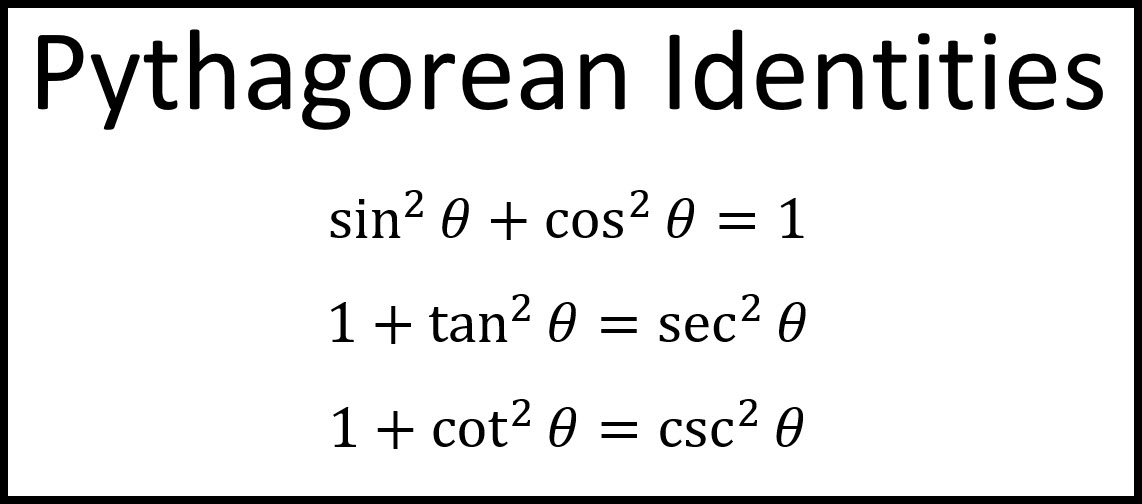 odd tapir
1 + 5/x + 1/x^2 ?