#help-38
1 messages · Page 86 of 1
 burnt mulch
 solid kilnBOT
Civil Service Pigeon
 burnt mulch
making $$\frac{1}{1+\cos x}=\frac{1}{2\cos^2 \frac{x}{2}}=\frac{\sec^2 \frac{x}{2}}{2}$$
solid kilnBOT
Civil Service Pigeon
 burnt mulch
@rain wharf ^
 rain wharf
why is this though?
is there a trig identity im missing?
i mean there is but what is it
burnt mulch
double angle identity

Khan Academy
Learn for free about math, art, computer programming, economics, physics, chemistry, biology, medicine, finance, history, and more. Khan Academy is a nonprofit with the mission of providing a free, world-class education for anyone, anywhere.
this might be a good reference ^
here's the derivation of cos 2x tho (here it's theta instead of x, but the logic is the same)
 burnt mulch
anything else?
burnt mulch
👍
 trim joltBOT
Channel closed
Closed by @rain wharf
Use .reopen if this was a mistake.
trim joltBOT
 Available help channel!
Send your question here to claim the channel.
Remember:
• Ask your math question in a clear, concise manner.
• Show your work, and if possible, explain where you are stuck.
• After 15 minutes, feel free to ping <@&286206848099549185>.
• Type the command .close to free the channel when you're done.
• Be polite and have a nice day!
Read #❓how-to-get-help for further information on how to ask a good question, and about conduct in the question channels.
 warm depot
hey
trim joltBOT
warm depot
hey
warm depot
how’s it
just needed some help on this
i’ll send the question
we doing 26

would it be an=-2 x 9^n
<@&286206848099549185>
hello
u think u can help
kk
oh yeah
ok
can u check some of my other work
they’re easier questions
than this
we’re doing 3 and i got geometric

and for 4 i got arithmetic
question 8 we doin and the first six terms are 10,5,0,-5,-10,-15

and is this graph right

we doin 15 and i got a1=243, an=an-1/3

in 20 we’re also writing a recursive tile and i got a1=35, an=an-1-11

is this all right?
@wraith hinge
u replied to the same one
oh ok
lol
aight
ok
alright
thank you
trim joltBOT
@warm depot Has your question been resolved?
trim joltBOT
Channel closed
Closed due to timeout
Use .reopen if this was a mistake.
trim joltBOT
Available help channel!
Send your question here to claim the channel.
Remember:
• Ask your math question in a clear, concise manner.
• Show your work, and if possible, explain where you are stuck.
• After 15 minutes, feel free to ping <@&286206848099549185>.
• Type the command .close to free the channel when you're done.
• Be polite and have a nice day!
Read #❓how-to-get-help for further information on how to ask a good question, and about conduct in the question channels.
 shell meadow
Two brothers save their money in dollars, seeking to protect themselves from a possible devaluation of the sol.
devaluation of the sol. The younger brother currently has one-third as much savings as his brother, but if he were to buy $15 from the older brother, the younger brother would
brother, but if he were to buy $15 from the older brother, the younger brother would have a savings
savings equal to three-fifths of what would be left for his brother.
How much money did each initially have in savings? Answer: 30 and $90
Help, i need the process of this exercise (i tried it multiple times and failed, im done)
trim joltBOT
shell meadow
Two brothers save their money in dollars, seeking to protect themselves from a p...
 fathom ivy
trim joltBOT
fathom ivy
trim joltBOT
Please show the original problem, exactly as it was stated to you, with the entire original context. A picture or screenshot is best. If the original problem is not in English, then post it anyway! The additional context might still be helpful. Do your best to provide a translation.
shell meadow
Two brothers save their money in dollars, seeking to protect themselves from a possible devaluation of the sol. The younger brother currently has one-third of his brother's savings, but if he were to buy $15 from the older brother, the younger brother would have savings equal to three-fifths of what his brother would have left. How much money did each of them initially have in savings? Ansr. 30 and $90
Mb

<@&286206848099549185>
trim joltBOT
@shell meadow Has your question been resolved?
shell meadow
<@&286206848099549185>
trim joltBOT
@shell meadow Has your question been resolved?
trim joltBOT
@shell meadow Has your question been resolved?
trim joltBOT
Channel closed
Closed due to timeout
Use .reopen if this was a mistake.
Available help channel!
Send your question here to claim the channel.
Remember:
• Ask your math question in a clear, concise manner.
• Show your work, and if possible, explain where you are stuck.
• After 15 minutes, feel free to ping <@&286206848099549185>.
• Type the command .close to free the channel when you're done.
• Be polite and have a nice day!
Read #❓how-to-get-help for further information on how to ask a good question, and about conduct in the question channels.
 lucid torrent
Why is it that cosx = cos(-x)
trim joltBOT
lucid torrent
Why is it that cosx = cos(-x)
 nimble stone
its an even function, though you can see it graphically
,w graph cos(x) from -2pi to 2pi
solid kilnBOT


 Requested by aldrnari_
nimble stone
Requested by aldrnari_
nimble stone
theres a symmetry about the y axis
lucid torrent
,w graph sin(x) from -2pi to 2pi
solid kilnBOT

 Requested by itsnotabbas
lucid torrent
Requested by itsnotabbas
lucid torrent
Oh yeah I can see how sin is different
Can you help me understand this
Thus, cos a = sin(90° - a)
⇒ cos(-x) = sin(90°+x)
trim joltBOT
@lucid torrent Has your question been resolved?
trim joltBOT
Channel closed
Closed due to timeout
Use .reopen if this was a mistake.
Available help channel!
Send your question here to claim the channel.
Remember:
• Ask your math question in a clear, concise manner.
• Show your work, and if possible, explain where you are stuck.
• After 15 minutes, feel free to ping <@&286206848099549185>.
• Type the command .close to free the channel when you're done.
• Be polite and have a nice day!
Read #❓how-to-get-help for further information on how to ask a good question, and about conduct in the question channels.
 solid belfry
question is "what time does it take an aircraft to decelerate uniformly from 100ms-1 to a stop if the distance covered along the runway is 1500m
trim joltBOT
solid belfry
question is "what time does it take an aircraft to decelerate uniformly from 100...
solid belfry
so i know d=1500m initial velocity = 100ms-1 and final velocity is 0
and the equation to use is probably vf= vi+ a x t but i dont have the time or the acceleration so i acnt rearrage that to find t
and theres no equation to find t without a
kinematic equations
 proven hound
You can use the equation
vf²-vi²=2as to find acceleration first
And then use the equation you mentioned above to find the time taken
proven hound
It's alright, np
solid belfry
how do i rearrange the equation
i got it wrong
the vf^2 one
actually nvm
!close
.close
trim joltBOT
Channel closed
Closed by @solid belfry
Use .reopen if this was a mistake.
trim joltBOT
Available help channel!
Send your question here to claim the channel.
Remember:
• Ask your math question in a clear, concise manner.
• Show your work, and if possible, explain where you are stuck.
• After 15 minutes, feel free to ping <@&286206848099549185>.
• Type the command .close to free the channel when you're done.
• Be polite and have a nice day!
Read #❓how-to-get-help for further information on how to ask a good question, and about conduct in the question channels.
 leaden current
 trim joltBOT
leaden current
trim joltBOT
leaden current
 left oriole
 leaden current
1
 hallow spruce
leaden current
<@&286206848099549185>
hallow spruce
leaden current
<@&286206848099549185>
 leaden current
sry
 novel sleet
leaden current
but i did and that gets me nowere
novel sleet
leaden current
but i did and that gets me nowere
why do you think that
leaden current
u get
novel sleet
okay let me ask this, what is something that you can always do when you have cos and sin in a term
leaden current
cosx/3sinx.cos^2-sin^3x
novel sleet
specifically in integration
novel sleet
leaden current
cosx/3sinx.cos^2-sin^3x
uh
leaden current
leaden current
cosx/3sinx.cos^2-sin^3x
this is what u get after explngin sin3x
novel sleet
leaden current
cosx/3sinx.cos^2-sin^3x
$sin 3x = 3 sin x - 4 sin^3 x$
leaden current
novel sleet
okay let me ask this, what is something that you can always do when you have cos...
substitite t=sinx or cosx so taht we can eliminate the other
solid kilnBOT
naxtisy
 novel sleet
where did u get cos^2x from
leaden current
i derived it from sin(2x+x)
novel sleet
leaden current
i derived it from sin(2x+x)
ahaha
thats very cool
but sadly theres already a formula for sin 3x
leaden current
leaden current
cosx/3sinx.cos^2-sin^3x
u substtite cos^2x as 1-sin^2x
okay after this
novel sleet
leaden current
u substtite cos^2x as 1-sin^2x
no but
novel sleet
solid kiln
**naxtisy**
with our new formula
leaden current
yes
solid kilnBOT
naxtisy
 leaden current
yep
novel sleet
oh nvm
novel sleet
you can simplify them by cross multiplying
novel sleet
a general tip?
novel sleet
if theres a trigo integral you cant solve
your trigo is missing not the integration
If theres a step where youre stuck
Look at the step before it
leaden current
okay
novel sleet
leaden current
tommorow i have an exam
do you have a school textbook?
novel sleet
leaden current
i was solving previous year papers
well
leaden current
this is one of our papers
novel sleet
look at the solved examples in ur textbooks
leaden current
yes
novel sleet
a lot of times schools need to use those to make sure the stuff is from their books
and if youre done with that
leaden current
okay yes
leaden current
okay alright
ill just stop solving questions, go thru the textbook examples and then just look at previous year questions
thanks
novel sleet
leaden current
ill just stop solving questions, go thru the textbook examples and then just loo...
yep
also
dont go in the room to score 100, go in there to solve maths
if you dont realise where your exam time went, it was probably a good exam
all the best
novel sleet
leaden current
scared
you shouldnt be
leaden current
that ill mess up and there'll just be one question that i wont get
and ill miss the 100
novel sleet
let me tell you something you wont like
leaden current
hmm
novel sleet
that 100 will never get you anywhere except maybe a presitine college, the more you go towards the 100 the further you move from maths
the more you move towards maths, the less you care about 100 and more about knowing
leaden current
my teacher told me at the start of the year that i should get 100 for this exam, i dont wnana let her down
novel sleet
leaden current
my teacher told me at the start of the year that i should get 100 for this exam,...
you dont owe anyone anything
dont live like an asset to people
leaden current
okay
novel sleet
leaden current
ill tell u how my exam went tmrw
uhm
i would rather hear how fun the questions were
leaden current
thank u for the much needed advice i wasnt ready to tell myself
leaden current
novel sleet
or how boring they were
gotchu
trim joltBOT
Channel closed
Closed by @leaden current
Use .reopen if this was a mistake.
trim joltBOT
Available help channel!
Send your question here to claim the channel.
Remember:
• Ask your math question in a clear, concise manner.
• Show your work, and if possible, explain where you are stuck.
• After 15 minutes, feel free to ping <@&286206848099549185>.
• Type the command .close to free the channel when you're done.
• Be polite and have a nice day!
Read #❓how-to-get-help for further information on how to ask a good question, and about conduct in the question channels.
 elder glade
How do I show this
 trim joltBOT
elder glade
How do I show this
trim joltBOT
elder glade
How do I show this
 gritty harness
solid kilnBOT
gritty harness
solid kilnBOT

 trim joltBOT
@elder glade Has your question been resolved?
elder glade
I got this but idk what to do now

 sacred sapphire
elder glade
I got this but idk what to do now
sacred sapphire
elder glade
I got this but idk what to do now
whats cbrt(3) cubed
and cbrt(4) cubed
elder glade
what?
sacred sapphire
oh its cbrt(2) sorry
elder glade
yea
elder glade
is it 9root4? for the first amd 9root16 for the last?
sacred sapphire
no?
you have cube root of 2
if you cube that you get 2 yes?
because cube and cube root cancel each other out
sacred sapphire
are you talking about the middle?
elder glade
No I thougt you meant the (3root2)^2 and (3root4)^2 at the start and end
sacred sapphire
those are not squares..?
sacred sapphire
yes
 sacred sapphire
can you simplify cbrt(2) * cbrt(4)
trim joltBOT
Channel closed
Closed by @elder glade
Use .reopen if this was a mistake.
Available help channel!
Send your question here to claim the channel.
Remember:
• Ask your math question in a clear, concise manner.
• Show your work, and if possible, explain where you are stuck.
• After 15 minutes, feel free to ping <@&286206848099549185>.
• Type the command .close to free the channel when you're done.
• Be polite and have a nice day!
Read #❓how-to-get-help for further information on how to ask a good question, and about conduct in the question channels.
elder glade
Hiw do I do this
 trim joltBOT
elder glade
Hiw do I do this
trim joltBOT
elder glade
Hiw do I do this
 rancid matrix
just sub the value of x in the LHS of the eq
elder glade
But idk how to do (root5 + 1)^-2
solid kilnBOT

 Requested by penlover._08607
elder glade
Requested by penlover._08607
elder glade
but it's -2? Is it it just the same but each ^2 is ^-2
sacred sapphire
you just do 1/(1 + root5)^2
elder glade
oh ok
elder glade
how did u get that
 elder glade
Ye that makes sense thx
solid kilnBOT
 Requested by penlover._08607
rancid matrix
Requested by penlover._08607
rancid matrix
,w expand (a+b)³
solid kilnBOT
 Requested by penlover._08607
trim joltBOT
Requested by penlover._08607
trim joltBOT
Channel closed
Closed by @elder glade
Use .reopen if this was a mistake.
trim joltBOT
Available help channel!
Send your question here to claim the channel.
Remember:
• Ask your math question in a clear, concise manner.
• Show your work, and if possible, explain where you are stuck.
• After 15 minutes, feel free to ping <@&286206848099549185>.
• Type the command .close to free the channel when you're done.
• Be polite and have a nice day!
Read #❓how-to-get-help for further information on how to ask a good question, and about conduct in the question channels.
 stray portal
what is the proof of this
 trim joltBOT
stray portal
what is the proof of this
stray portal
trim joltBOT
stray portal
what is the proof of this
stray portal
like how can ik that intuitively
 marble wharf
what do you know about a_k
this is a partial fraction decomposition more or less
but only works if a_(k+1) -a_k=1
trim joltBOT
@stray portal Has your question been resolved?
stray portal
marble wharf
this is a partial fraction decomposition more or less
thats what i was thinking
stray portal
marble wharf
what do you know about a_k
the only other info is that |a6|=a8
meaning a7=0 and a1=-6d
but other than that nothing suggests ak+1 - ak = 1??
marble wharf
you arent telling me everything
stray portal
mb
marble wharf
how could you ever conclude anything about a7 just from knowing something about a6 and a8
stray portal
sorry the q is in korean

its an arithmetic series an with common difference that isnt 0
marble wharf
well then at least $\frac{d}{a_k a_{k+1}} = \frac{1}{a_k} - \frac{1}{a_{k+1}}$
solid kilnBOT
Denascite
 marble wharf
which means with the given equation you can solve for d
trim joltBOT
Channel closed
Closed by @stray portal
Use .reopen if this was a mistake.
Available help channel!
Send your question here to claim the channel.
Remember:
• Ask your math question in a clear, concise manner.
• Show your work, and if possible, explain where you are stuck.
• After 15 minutes, feel free to ping <@&286206848099549185>.
• Type the command .close to free the channel when you're done.
• Be polite and have a nice day!
Read #❓how-to-get-help for further information on how to ask a good question, and about conduct in the question channels.
 bright pine
$$ \text{(a) Find y’ by implicit differentiation.}$$
$$ \text{(b) Solve the equation explicitly for y and differentiate to get y’ in terms of x.} $$
$$ \text{(c) Check that your solutions to parts (a) and (b) are consistent by substituting the expression for y into your solution for part (a). $$
5x^2 - y^3 = 7
trim joltBOT
bright pine
$$ \text{(a) Find y’ by implicit differentiation.}$$
$$ \text{(b) Solve the equa...
solid kilnBOT
Nerdy_Coder
$$ \text{(a) Find y’ by implicit differentiation.}$$
$$ \text{(b) Solve the equation explicitly for y and differentiate to get y’ in terms of x.} $$
$$ \text{(c) Check that your solutions to parts (a) and (b) are consistent by substituting the expression for y into your solution for part (a). $$
5x^2 - y^3 = 7
```Compilation error:```! File ended while scanning use of \text@.
<inserted text>
\par
<*> 604427359898173440.tex
I suspect you have forgotten a `}', causing me
to read past where you wanted me to stop.
I'll try to recover; but if the error is serious,
you'd better type `E' or `X' now and fix your file.``` bright pine
$$ \text{(a) Find y’ by implicit differentiation.}$$
$$ \text{(b) Solve the equation explicitly for y and differentiate to get y’ in terms of x.} $$
$$ \text{(c) Check that your solutions to parts (a) and (b) are consistent by substituting the expression for y into your solution for part (a). }$$
5x^2 - y^3 = 7
solid kilnBOT
Nerdy_Coder
$$ \text{(a) Find y’ by implicit differentiation.}$$
$$ \text{(b) Solve the equation explicitly for y and differentiate to get y’ in terms of x.} $$
$$ \text{(c) Check that your solutions to parts (a) and (b) are consistent by substituting the expression for y into your solution for part (a). }$$
5x^2 - y^3 = 7
```Compilation error:```! Missing $ inserted.
<inserted text>
                $
l.52 5x^
        2 - y^3 = 7
I've inserted a begin-math/end-math symbol since I think
you left one out. Proceed, with fingers crossed.```
 red sentinel
What are you asking?
red sentinel
is there a graph or equation that comes with it?
bright pine
No
trim joltBOT
@bright pine Has your question been resolved?
trim joltBOT
Channel closed
Closed due to timeout
Use .reopen if this was a mistake.
Available help channel!
Send your question here to claim the channel.
Remember:
• Ask your math question in a clear, concise manner.
• Show your work, and if possible, explain where you are stuck.
• After 15 minutes, feel free to ping <@&286206848099549185>.
• Type the command .close to free the channel when you're done.
• Be polite and have a nice day!
Read #❓how-to-get-help for further information on how to ask a good question, and about conduct in the question channels.
 arctic socket
a,b,c,d are positive real numbers
if
a+b+c+d >= 1/a + 1/b + 1/c + 1/d
prove
a+b+c+d >= 2/(a+1) + 2/(b+1) + 2/(c+1) + 2/(d+1)
trim joltBOT
arctic socket
a,b,c,d are positive real numbers
if
a+b+c+d >= 1/a + 1/b + 1/c + 1/d
prove
a+b+...
 frozen plover
AM >= HM? 
arctic socket
for what numbers?
arctic socket
for now i managed to show a+b+c+d >= 4 if that helps
trim joltBOT
@arctic socket Has your question been resolved?
trim joltBOT
@arctic socket Has your question been resolved?
Channel closed
Closed by @arctic socket
Use .reopen if this was a mistake.
trim joltBOT
Available help channel!
Send your question here to claim the channel.
Remember:
• Ask your math question in a clear, concise manner.
• Show your work, and if possible, explain where you are stuck.
• After 15 minutes, feel free to ping <@&286206848099549185>.
• Type the command .close to free the channel when you're done.
• Be polite and have a nice day!
Read #❓how-to-get-help for further information on how to ask a good question, and about conduct in the question channels.
 wraith hinge
If the electric field in some region is given (in spherical coordinates) by the expression [
\6{\vj E}{\vj r} = \4kr\9{3\vcr+2\6\sin\theta\6\cos\theta\6\sin\phi\vc\theta+\6\sin\theta\6\cos\phi\vc*\phi}
]
for some constant $k$, what is the charge density?
trim joltBOT
wraith hinge
If the electric field in some region is given (in spherical coordinates) by the ...
solid kilnBOT
 wraith hinge
So, my issue is calculating the divergence in spherical coordinates here since its a bit fucked up
to give the physical background: [
\div \vj E = \4{\rho}{\eps_0}
]
which is whats known as Gauss's law
solid kilnBOT
 wraith hinge
rho is the charge density
wraith hinge
solid kiln
the angles here are formed with the convention that theta is the polar angle
nimble stone
alright
wraith hinge
so with that said: I tried to use the generalised divergence for any orthogonal coordinate system $(u,v,w)$ with metric coefficients $f, g, h$ respectively.[
\div \vj E = \41{fgh}\bs{\pdv u (E_u gh) + \pdv v (E_v fh)+ \pdv w (E_w fg)}
]
solid kilnBOT
 nimble stone
spherical coordinates arent a orthogonal coordinate system
wraith hinge
darn it i keep misclicking
wraith hinge
nimble stone
spherical coordinates arent a orthogonal coordinate system
how so?
they are are they not? the basis vectors span all of R^3
nimble stone
maybe im high rn
wraith hinge
solid kiln
which i belive should be [
\div \vj E =\41{r^2\6\sin\theta}\bs{\pdv r (E_r r^2\6\sin\theta)+\pdv \theta (E_\theta r\6\sin\theta)+\pdv \phi (E_\phi r)}
]
solid kilnBOT
 wraith hinge
anyways plugging in to that formula gives me the wrong result
so im surely doing something wrong maybe
nimble stone
 nimble stone
seems so, what are you ending up with exactly
wraith hinge
,, 3k\eps_0\4{1+\6\cos{2\theta}\6\sin\phi}{r^2}
solid kilnBOT
 wraith hinge
well u can ignore the epsilon
but my book is like saying
,, 3k\eps_0\4{1+\6\sin{\theta}\6\sin\phi}{r^2}
solid kilnBOT
 nimble stone
would you be able to show your steps
nimble stone
1+sin(y)[cos^2x-sin^2x]
hm
i think your answer is alright
im not actually sure how your book makes that jump
,w divergence {3k/r, 2k/r * sin(theta)cos(theta)sin(phi), k/r * sin(thata)cos(phi)}

 nimble stone
numerator does indeed become 1+cos(2theta)sin(phi)
nimble stone
no idea, you sure you copied everything right when doing it
 trim joltBOT
Channel closed
Closed by @hasty halo
Use .reopen if this was a mistake.
trim joltBOT
Available help channel!
Send your question here to claim the channel.
Remember:
• Ask your math question in a clear, concise manner.
• Show your work, and if possible, explain where you are stuck.
• After 15 minutes, feel free to ping <@&286206848099549185>.
• Type the command .close to free the channel when you're done.
• Be polite and have a nice day!
Read #❓how-to-get-help for further information on how to ask a good question, and about conduct in the question channels.
 versed tinsel
How do I do this
 trim joltBOT
versed tinsel
How do I do this
hallow spruce
trim joltBOT
versed tinsel
How do I do this
hallow spruce
,rccw
solid kilnBOT
 trim joltBOT
@versed tinsel Has your question been resolved?
Channel closed
Closed by @versed tinsel
Use .reopen if this was a mistake.
Available help channel!
Send your question here to claim the channel.
Remember:
• Ask your math question in a clear, concise manner.
• Show your work, and if possible, explain where you are stuck.
• After 15 minutes, feel free to ping <@&286206848099549185>.
• Type the command .close to free the channel when you're done.
• Be polite and have a nice day!
Read #❓how-to-get-help for further information on how to ask a good question, and about conduct in the question channels.
 oak shard
Hello,, this is a very stupid question but i got logarithms a long time ago so i rlly dont remember the rules and i dont have enough time to go and read them again. My question is how did they get 84 db, im not sure what they did at the last step before the answer.
trim joltBOT
oak shard
Hello,, this is a very stupid question but i got logarithms a long time ago so i...
oak shard
 trim joltBOT
@oak shard Has your question been resolved?
trim joltBOT
@oak shard Has your question been resolved?
trim joltBOT
@oak shard Has your question been resolved?
trim joltBOT
@oak shard Has your question been resolved?
trim joltBOT
@oak shard Has your question been resolved?
trim joltBOT
Channel closed
Closed due to timeout
Use .reopen if this was a mistake.
Available help channel!
Send your question here to claim the channel.
Remember:
• Ask your math question in a clear, concise manner.
• Show your work, and if possible, explain where you are stuck.
• After 15 minutes, feel free to ping <@&286206848099549185>.
• Type the command .close to free the channel when you're done.
• Be polite and have a nice day!
Read #❓how-to-get-help for further information on how to ask a good question, and about conduct in the question channels.
 hot osprey
pls help with math
trim joltBOT
hot osprey
pls help with math
 full dock
trim joltBOT
full dock
trim joltBOT
@hot osprey Has your question been resolved?
left oriole
 trim joltBOT
Channel closed
Closed due to timeout
Use .reopen if this was a mistake.
Available help channel!
Send your question here to claim the channel.
Remember:
• Ask your math question in a clear, concise manner.
• Show your work, and if possible, explain where you are stuck.
• After 15 minutes, feel free to ping <@&286206848099549185>.
• Type the command .close to free the channel when you're done.
• Be polite and have a nice day!
Read #❓how-to-get-help for further information on how to ask a good question, and about conduct in the question channels.
 hazy mist
can someone help me solve this
trim joltBOT
hazy mist
can someone help me solve this
hazy mist
i have no idea where to start
 vestal vault
Solve what?
hazy mist

 kindred pier
hazy mist
can someone help me solve this
kindred pier
hazy mist
can someone help me solve this
!status
trim joltBOT
hazy mist
can someone help me solve this
What step are you on?
1. I don't know where to begin.
2. I have begun but got stuck midway.
3. I got an answer but I was told that it's wrong.
4. I got an answer and would like my work checked.
5. I have a question about someone else's work/solution.
6. I have completed the problem and don't need help anymore. Thank you.
7. None of the above
1
kindred pier
hazy mist
1
Find every length of every line segment. Then use pythag theorem with ABC
hazy mist
how to i find the length of every segment
 wheat stirrup
The shape is a rectangle so you'll know the length of each sides of smaller triangles
Use pythagoras to find AB and BC
trim joltBOT
@hazy mist Has your question been resolved?
trim joltBOT
Channel closed
Closed due to timeout
Use .reopen if this was a mistake.
Available help channel!
Send your question here to claim the channel.
Remember:
• Ask your math question in a clear, concise manner.
• Show your work, and if possible, explain where you are stuck.
• After 15 minutes, feel free to ping <@&286206848099549185>.
• Type the command .close to free the channel when you're done.
• Be polite and have a nice day!
Read #❓how-to-get-help for further information on how to ask a good question, and about conduct in the question channels.
hazy mist
wheat stirrup
Use pythagoras to find AB and BC
but we only have 1 value for each trangle in the rectangle
 runic geyser
you can work out the other sides, eg. because one side of the rectangle is 5, so is the other
trim joltBOT
@hazy mist Has your question been resolved?
trim joltBOT
Channel closed
Closed due to timeout
Use .reopen if this was a mistake.
trim joltBOT
Available help channel!
Send your question here to claim the channel.
Remember:
• Ask your math question in a clear, concise manner.
• Show your work, and if possible, explain where you are stuck.
• After 15 minutes, feel free to ping <@&286206848099549185>.
• Type the command .close to free the channel when you're done.
• Be polite and have a nice day!
Read #❓how-to-get-help for further information on how to ask a good question, and about conduct in the question channels.
 quiet turret
 trim joltBOT
quiet turret
quiet turret
trim joltBOT
quiet turret
quiet turret
$\text{a)} P(1-k) = q - r \ \text{b)} \overrightarrow{FE} = 2(r-q) + p \ \ \text{rearrange (a) to make r-q subject.} \ r-q = (k-1)p \ \ \overrightarrow{FE} = 2(k-1)p + p \ = 2kp-2p+p \ =(2k-1)p$
solid kilnBOT
pixel

 worldly wing
How did you get the answer for a?
quiet turret
worldly wing
How did you get the answer for a?
$\overrightarrow{AB}$
solid kilnBOT
pixel
 trim joltBOT
@quiet turret Has your question been resolved?
quiet turret
.close
trim joltBOT
Channel closed
Closed by @quiet turret
Use .reopen if this was a mistake.
Available help channel!
Send your question here to claim the channel.
Remember:
• Ask your math question in a clear, concise manner.
• Show your work, and if possible, explain where you are stuck.
• After 15 minutes, feel free to ping <@&286206848099549185>.
• Type the command .close to free the channel when you're done.
• Be polite and have a nice day!
Read #❓how-to-get-help for further information on how to ask a good question, and about conduct in the question channels.
 tawdry atlas

 trim joltBOT
tawdry atlas
trim joltBOT
tawdry atlas
 blazing geode
I got 4b^2 for the first
tawdry atlas
Can u show me your steps of how u got there?
blazing geode
I’m in a bad mood sorry
tawdry atlas
No problem
 wicked trail
tawdry atlas
No problem
wicked trail
tawdry atlas
No problem
the working out in pencil uses (a/b)^n = (a^n)/(b^n)
thats how they got the answer
$(\frac{a}{b})^n = \frac{a^n}{b^n}$
solid kilnBOT
taro
 tawdry atlas
Oh I see now
solid kilnBOT
taro
 wicked trail
do u know how to simplify that?
wicked trail
oh wait no theres a much easier solution i overlooked
tawdry atlas
Ok
tawdry atlas
Alright
wicked trail
you have a b in the numerator
and the denominator
that you can cancel
which leaves you with?
tawdry atlas
So the one problem I have is the power(^) at b. How do I get to b^2
I got it
.close
trim joltBOT
Channel closed
Closed by @tawdry atlas
Use .reopen if this was a mistake.
trim joltBOT
Available help channel!
Send your question here to claim the channel.
Remember:
• Ask your math question in a clear, concise manner.
• Show your work, and if possible, explain where you are stuck.
• After 15 minutes, feel free to ping <@&286206848099549185>.
• Type the command .close to free the channel when you're done.
• Be polite and have a nice day!
Read #❓how-to-get-help for further information on how to ask a good question, and about conduct in the question channels.
hazy mist
can someone help me with c
 trim joltBOT
hazy mist
can someone help me with c
trim joltBOT
hazy mist
can someone help me with c
 wispy totem
@hazy mist hello
we have a right triangle there
hypotenuse length is 13
length of one of its perpendicular sides is 12
we will need the length of the other side to find everything asked in the question
we can find this using the pythagorean theorem
let's call the length of the unknown side x
In a right triangle, the sum of the squares of the lengths of the two perpendicular sides will be equal to the square of the length of the hypotenuse
It is shown as a²+b² = c²
c is hypotenuse
we have 13cm as hypotenuse length
12cm as perpendicular side length
and "x" as the other perpendicular side length
so x²+(12cm)² = (13cm)² in this situation
then x²+144cm² = 169cm²
then x² = 169cm²-144cm²
=> x² = 25cm²
=> √(x²) = √(25cm²)
=> |x| = 5cm
x has no negative value
so x = 5cm directly
 heady swallow
so complex .
.
wispy totem
maybe
wheat stirrup
The question is just asking for sin cos tan
wispy totem
i'm worried that people won't understand me
heady swallow
easy guys
wispy totem
wispy totem
i'm worried that people won't understand me
but i guess it gets complicated
heady swallow
Is the subject paddling
hazy mist
i did pythag on this one but it came out wrong
 wispy totem
must be 5√3
wheat stirrup
cos = adjacent / hypothesis
sin = opposite / hypothesis
tan = opposite / adjacent
1-tan²a = 1/cos²a
wheat stirrup
If you don't want to calculate the remaining side 
wispy totem
maybe
but isnt it wrong
1+tan²a = 1/cos²a i think
am i wrong?
so tan²(theta) = 3 here
yes its true
hazy mist
wispy totem
must be 5√3
these are the answers in the book
 wispy totem
okay but this is function values
sintheta
costheta
and tantheta
it is 5√3
but since tan(theta) = 5√3/5 here, tan(theta) = 5√3/5 = √3
do you get it?
and likewise sin(theta) = 5√3/10 which is √3/2
tawdry atlas
@hazy mist need a pic of the answer?
heady swallow
what are you arguing about
 tawdry atlas
Use the tan ratio opposite/adjacent
hazy mist
i keep getting 8.077
hazy mist
tawdry atlas
Use the tan ratio opposite/adjacent
thats what i did
tawdry atlas
Let me solve real quick
wispy totem
x ≈ 7.5323 i think
hazy mist
how
tawdry atlas
Got the same
hazy mist
what did i do wrong
wispy totem
tell me what you did
hazy mist
tan46*7.8
wispy totem
no
tawdry atlas
7,8/tan46
wispy totem
1/tan46 × 7.8
hazy mist
why
wispy totem
not tan46 directly
because tan46 = 7.8/x
when u multiply by 7.8 again
it will be (7.8)²/x
you need to turn it upside down first
like
if tan46 = 7.8/x
then 1/tan46 = x/7.8
So now when you multiply all that's left will be x
1/tan46 = x/7.8
=> 7.8 ×1/tan46 = 7.8 × x/7.8 = x
like this
tawdry atlas
Or
wispy totem
or you can use cot
tawdry atlas
Interesting
wispy totem
as an abbreviation
tawdry atlas
Since x is the divisor I took to the other side to which it multiplies to tan46 then I divided tan46 on both sides then I got 7,532372443
Still works right?
wispy totem
yes
it is the same thing actually
first multiply by x and divide by tan46
both sides
tawdry atlas
Then x cancel x on the other side
wispy totem
yes
trim joltBOT
@hazy mist Has your question been resolved?
trim joltBOT
Channel closed
Closed due to timeout
Use .reopen if this was a mistake.
Available help channel!
Send your question here to claim the channel.
Remember:
• Ask your math question in a clear, concise manner.
• Show your work, and if possible, explain where you are stuck.
• After 15 minutes, feel free to ping <@&286206848099549185>.
• Type the command .close to free the channel when you're done.
• Be polite and have a nice day!
Read #❓how-to-get-help for further information on how to ask a good question, and about conduct in the question channels.
trim joltBOT
 dull temple
what is that a graph of?
 dull temple
(that's an equation but i guess it might be possible to treat y as a function of x)
 quiet flint
yeah it requires implicit diffrentiation
im able to get the second option but i dont understand where the 1 is coming from
in the graph also i cant really see any positive slope
dull temple
yeah i don't see it either, if x increases y should decrease, given how the equation is just adding a bunch of stuff together to get 0
quiet flint
so what do you think the answer key is wrong?
dull temple
probably? i'm not sure how they got that at all
quiet flint
yeah thats what i was wondering
well theres a solution thats given to it but it dosent really answer the question. especially when u look at the graph
 dull temple
y = x doesn't make sense as a solution
quiet flint
yeah
dull temple
that's a "phantom solution" introduced when they squared it
quiet flint
whats a phantom solution
dull temple
something that looks right but doesn't check out
quiet flint
i see
dull temple
ummm if i said like $4 = x$ and then squared both sides to get $16 = x^2$ and then solved that to get $x = \pm 4$ then i've introduced a fake solution in there
solid kilnBOT
hayley!
 quiet flint
ohhhh
that makes alot of sense now
alright thanks thats all the help i needed really anyway
.close
trim joltBOT
Channel closed
Closed by @quiet flint
Use .reopen if this was a mistake.
trim joltBOT
Available help channel!
Send your question here to claim the channel.
Remember:
• Ask your math question in a clear, concise manner.
• Show your work, and if possible, explain where you are stuck.
• After 15 minutes, feel free to ping <@&286206848099549185>.
• Type the command .close to free the channel when you're done.
• Be polite and have a nice day!
Read #❓how-to-get-help for further information on how to ask a good question, and about conduct in the question channels.
 sand obsidian
What am I doing wrong here please?
 trim joltBOT
sand obsidian
What am I doing wrong here please?
trim joltBOT
trim joltBOT
sand obsidian
What am I doing wrong here please?
trim joltBOT
Channel closed
Closed by @sand obsidian
Use .reopen if this was a mistake.
trim joltBOT
Available help channel!
Send your question here to claim the channel.
Remember:
• Ask your math question in a clear, concise manner.
• Show your work, and if possible, explain where you are stuck.
• After 15 minutes, feel free to ping <@&286206848099549185>.
• Type the command .close to free the channel when you're done.
• Be polite and have a nice day!
Read #❓how-to-get-help for further information on how to ask a good question, and about conduct in the question channels.
 frank merlin
how can i visualise this?
 trim joltBOT
frank merlin
how can i visualise this?
trim joltBOT
frank merlin
how can i visualise this?
@frank merlin Has your question been resolved?
 low skiff
You’re looking for the flux through the part of the surface I shaded in purple
 trim joltBOT
Channel closed
Closed due to timeout
Use .reopen if this was a mistake.
frank merlin
.reopen
trim joltBOT
✅
frank merlin
@low skiff why do they use the crossproduct here instead of the dot product


I thought i needed to use this theorem
@marble wharf ?
could you help
low skiff
Well that rx x ry cross product gives you the normal vector to the surface then you dot product with the vector field
I’m pretty sure that X is a typo
Especially because vector X vector is another vector and they have it a scalar in the next line
frank merlin
low skiff
I’m pretty sure that X is a typo
an okay thank you
got me confused there
.close
trim joltBOT
Channel closed
Closed by @frank merlin
Use .reopen if this was a mistake.
trim joltBOT
Available help channel!
Send your question here to claim the channel.
Remember:
• Ask your math question in a clear, concise manner.
• Show your work, and if possible, explain where you are stuck.
• After 15 minutes, feel free to ping <@&286206848099549185>.
• Type the command .close to free the channel when you're done.
• Be polite and have a nice day!
Read #❓how-to-get-help for further information on how to ask a good question, and about conduct in the question channels.
 ocean gate
 trim joltBOT
ocean gate
trim joltBOT
ocean gate
 rough goblet
U-sub
marble wharf
probably better to first get rid of the annoying x^(3/2) inside the arcsin
ocean gate
trying
trim joltBOT
Show your work, and if possible, explain where you are stuck.
rough goblet
$$\int_{}^{}x^{2}\arcsin\left(x^{1.5}\right)dx$$ is what we have
U-subbing with u^{1.5} --which hopefully works-- we get:
$$\int_{}^{}u\arcsin\left(u\right)du$$
wraith hinge
ocean gate
i tried doing by parts but got stuck and couldnt do it
i think its straightforward using by parts
ocean gate
lemme see my mistake again
rough goblet
wraith hinge
i think its straightforward using by parts
how
solid kilnBOT
ren
$$\int_{}^{}x^{2}\arcsin\left(x^{1.5}\right)dx$$ is what we have
U-subbing with u^{1.5} --which hopefully works-- we get:
$$\int_{}^{}u\arcsin\left(u\right)du$$
```Compilation error:```! Missing $ inserted.
<inserted text>
$
l.50 U-subbing with u^
{1.5} --which hopefully works-- we get:
I've inserted a begin-math/end-math symbol since I think
you left one out. Proceed, with fingers crossed.``` rough goblet
WHY IS IT ITALICIZED
OMFG
$$\int_{}^{}x^{2}\arcsin\left(x^{1.5}\right)dx$$
current integral
U subbing with u = x^{1.5}
$$\int_{}^{}u\arcsin\left(u\right)du$$
solid kilnBOT
ren
Compile Error! Click the  reaction for more information.
(You may edit your message to recompile.)
 ocean gate
okay now stuck here
 trim joltBOT
Show your work, and if possible, explain where you are stuck.
rough goblet
hm
ok wait
yea no still dk how u got that
show ur work
that's not how it goes
wraith hinge
oh wait yeh you would need substitution anyways, carry on ren
ocean gate
 rough goblet
that... u-sub is wrong???
why is it 1*arcsin u
what????
dv = arcsin u
t = u
t * v - int (v dt) -> t*v - int v
trim joltBOT
If you are done with this channel, please mark your problem as solved by typing .close
ocean gate
thankyou for efforts though (:
rough goblet
np
ocean gate
.close
trim joltBOT
Channel closed
Closed by @ocean gate
Use .reopen if this was a mistake.
trim joltBOT
Available help channel!
Send your question here to claim the channel.
Remember:
• Ask your math question in a clear, concise manner.
• Show your work, and if possible, explain where you are stuck.
• After 15 minutes, feel free to ping <@&286206848099549185>.
• Type the command .close to free the channel when you're done.
• Be polite and have a nice day!
Read #❓how-to-get-help for further information on how to ask a good question, and about conduct in the question channels.
 cunning pond
can someone help me understand big-O, big-Omega and theta notations, I only found some videos about big-O notation which were okay but they had multiple answers as valid solutions and I wanted to know how could I get the closest solution
trim joltBOT
cunning pond
can someone help me understand big-O, big-Omega and theta notations, I only foun...
cunning pond
for example I have f(n) = 3n^2 + 6n + 2
 proven palm
cunning pond
can someone help me understand big-O, big-Omega and theta notations, I only foun...
proven palm
cunning pond
can someone help me understand big-O, big-Omega and theta notations, I only foun...
f(x) = O(g(x)) means that |f(x)| ≤ kg(x) for some constant k starting at a certain point; so for instance 3n^2 + 6n + 2 = O(n^2) because we can say that it is always bounded by 11n^2 starting at n=1
cunning pond
okay what do you mean by always bounded by 11n^2
can you explain that a little slowly, please
proven palm
its absolute value always less than or equal to 11n^2
cunning pond
okay but wouldn't that mean that it's also less than or equal to 11n^3 for example
proven palm
starting at x=1 and continuing on forever, it is less than or equal to 11n^2
intuitively it's about limiting "how fast" the function grows
Some functions (like cubics or any higher-order polynomial) eventually surpass any conceivable quadratic, but this function does not
thus we say it is O(n^2)
proven palm
big omega is the exact opposite
cunning pond
because I saw someone do it as omega(n^2) and omega(n)
proven palm
starting at some point, |f(x)| ≥ kg(x)
So your function is also omega(n^2)
Take 3n^2 for instance; your function is never less than that starting at n = -1/3
So we also say that the function does not "fall behind" any conceivable quadratic
cunning pond
proven palm
So we also say that the function does not "fall behind" any conceivable quadrati...
im lost here
proven palm
Imagine the function f(n) = 3n
Can you think of a quadratic that this function is always greater than?
proven palm
therefore 3n is not omega(n^2)
3n eventually "falls behind" any conceivable quadratic
does that make sense?
proven palm
well, 3n is sometimes greater than some quadratics
but for any quadratic, there will be a point at which 3n becomes less than the quadratic and stays less than the quadratic as n increases
All of these notations refer to boundedness after a certain point
Not boundedness everywhere
Generally what we care about is what we are looking at for very large values of n
cunning pond
okay okay
so why can't it be omega(n) since at very large values of n, f(x) will always be greater
proven palm
3n is omega(n)
As starting from 0, it is always greater than kn if k < 3
But it is not omega(n^2)
cunning pond
proven palm
3n *is* omega(n)
no no I meant the previous function
cunning pond
cunning pond
for example I have f(n) = 3n^2 + 6n + 2
this one
proven palm
it is
cunning pond
proven palm
So your function is also omega(n^2)
oh you said here it was omega(n^2) so I was a little confused
proven palm
Any polynomial of degree n is O(x^a) if a ≥ n, and Omega(x^b) if b ≤ n
So 3n^2 + 6n + 2 is O(n) and O(n^2), but we use O(n^2) because it is more useful
cunning pond
sorry but define more useful
proven palm
It tells us more about the function
If we say a polynomial is O(n), we know it is at least degree 1
But if we say it's O(n^2), we know it is at least degree 2
cunning pond
oh so it rules out degree 1
proven palm
Yep
cunning pond
what about in case of sorting algorithms
proven palm
We'd take the "largest" function f that it is O(f) of
cunning pond
big-O is usually O(n^2) but big-omega is sometimes omega(n)
proven palm
Defining "largest" using an ordering such that if f = O(g), f ≤ g
cunning pond
cunning pond
big-O is usually O(n^2) but big-omega is sometimes omega(n)
why take n but not n^2 here
proven palm
cunning pond
big-O is usually O(n^2) but big-omega is sometimes omega(n)
For which function?
proven palm
I'm not sure why it would use Omega(n) there, but also I'm not involved in the compsci side of it
cunning pond
well okay thank you so much for the rest
cunning pond
oh right I forgot about that my bad
proven palm
So 3n^2 + 6n + 2 is Theta(n^2)
cunning pond
okay I know it would be in the middle of both inequalities
but how do I solve it exactly
proven palm
solve for what?
cunning pond
theta
cunning pond
like for big-O I would write that |f(x)| ≤ kg(x)
cunning pond
and for omega I would write the opposite
proven palm
you'd write k1g(x) ≤ |f(x)| ≤ k2g(x)
cunning pond
okay so how would it go for the function I have
and the omega thing here which I still wanna figure out <= 5n^2 + 5n + 2 <= 11n^2
wait 5n^2
proven palm
yeah
take the leading coefficient for the lower bound coefficient, and add up the coefficients for the upper bound coefficient
That's the easiest way of doing it for polynomials of the same degree
cunning pond
so it's gonna be theta(n^2) because g(x) here is the same as g(x) on the other side
proven palm
yes
trim joltBOT
Channel closed
Closed by @cunning pond
Use .reopen if this was a mistake.
trim joltBOT
Available help channel!
Send your question here to claim the channel.
Remember:
• Ask your math question in a clear, concise manner.
• Show your work, and if possible, explain where you are stuck.
• After 15 minutes, feel free to ping <@&286206848099549185>.
• Type the command .close to free the channel when you're done.
• Be polite and have a nice day!
Read #❓how-to-get-help for further information on how to ask a good question, and about conduct in the question channels.
 wanton cave
i dont know how to do this
 trim joltBOT
wanton cave
i dont know how to do this
wanton cave
trim joltBOT
wanton cave
i dont know how to do this
wanton cave
.close
trim joltBOT
Channel closed
Closed by @wanton cave
Use .reopen if this was a mistake.
trim joltBOT
Available help channel!
Send your question here to claim the channel.
Remember:
• Ask your math question in a clear, concise manner.
• Show your work, and if possible, explain where you are stuck.
• After 15 minutes, feel free to ping <@&286206848099549185>.
• Type the command .close to free the channel when you're done.
• Be polite and have a nice day!
Read #❓how-to-get-help for further information on how to ask a good question, and about conduct in the question channels.
wraith hinge
Determine the set of zeros of the function in R:
f(x) = x³ + x² - 2x -8
i have no idea how to solve this
trim joltBOT
wraith hinge
**Determine the set of zeros of the function in R:
f(x) = x³ + x² - 2x -8**
i h...
 lament reef
I'd recommend the rational roots theorem if factoring isn't working out
wraith hinge
lament reef
I'd recommend the rational roots theorem if factoring isn't working out
Grade 9
 grave hill
I mean without the factor theorem the other option is to guess. However, there is a methodical way of guessing here. The zeroes of this function can only be +- the divisors of the constant term i.e. +-1, +-2, +-4. or +- 8
It still means 8 guesses, but 3 (or a double root) of them are correct
 swift plaza
grave hill
I mean without the factor theorem the other option is to guess. However, there i...
swift plaza
grave hill
I mean without the factor theorem the other option is to guess. However, there i...
whats this theroem?
wraith hinge
grave hill
I mean without the factor theorem the other option is to guess. However, there i...
Ok but is that an accepted answer
if this was on the test
and i wrote:
S.S = {...} (bec. i guessed)
would i get the mark ?
grave hill
swift plaza
whats this theroem?
I'm not sure what it's called, my linear analysis professor taught me it
grave hill
wraith hinge
Ok but is that an accepted answer
if this was on the test
and i wrote:
S.S...
I can't speak for your teacher, but if you haven't been taught a method to solve cubic equations, they can't really expect anything else than guessing roots
grave hill
swift plaza
whats this theroem?
I think it's the rational root theorem now that I think about it, I just checked wiki. You have to consider the coefficient for the cubic term though when deciding roots
trim joltBOT
Channel closed
Closed by @quaint pumice
Use .reopen if this was a mistake.
Available help channel!
Send your question here to claim the channel.
Remember:
• Ask your math question in a clear, concise manner.
• Show your work, and if possible, explain where you are stuck.
• After 15 minutes, feel free to ping <@&286206848099549185>.
• Type the command .close to free the channel when you're done.
• Be polite and have a nice day!
Read #❓how-to-get-help for further information on how to ask a good question, and about conduct in the question channels.
 dim kite
Hello
trim joltBOT
dim kite
Hello
dim kite
I have a general question on IBP
lets say for an integral of exponential * log
in general, should we take u as exponential or log?
trim joltBOT
@dim kite Has your question been resolved?
dim kite
<@&286206848099549185>
 tropic notch
dim kite
lets say for an integral of exponential * log
tropic notch
dim kite
lets say for an integral of exponential * log
i would integrate the exponential
cause its easier with the chain rule
trim joltBOT
Channel closed
Closed by @dim kite
Use .reopen if this was a mistake.
trim joltBOT
Available help channel!
Send your question here to claim the channel.
Remember:
• Ask your math question in a clear, concise manner.
• Show your work, and if possible, explain where you are stuck.
• After 15 minutes, feel free to ping <@&286206848099549185>.
• Type the command .close to free the channel when you're done.
• Be polite and have a nice day!
Read #❓how-to-get-help for further information on how to ask a good question, and about conduct in the question channels.
 dark lily
have I done this correct? I am unsure of the derrivatives


 delicate bobcat
trim joltBOT
delicate bobcat
trim joltBOT
Channel closed
Closed by @dark lily
Use .reopen if this was a mistake.
trim joltBOT
Available help channel!
Send your question here to claim the channel.
Remember:
• Ask your math question in a clear, concise manner.
• Show your work, and if possible, explain where you are stuck.
• After 15 minutes, feel free to ping <@&286206848099549185>.
• Type the command .close to free the channel when you're done.
• Be polite and have a nice day!
Read #❓how-to-get-help for further information on how to ask a good question, and about conduct in the question channels.
 worthy sky
on a unit circle
trim joltBOT
worthy sky
on a unit circle
worthy sky
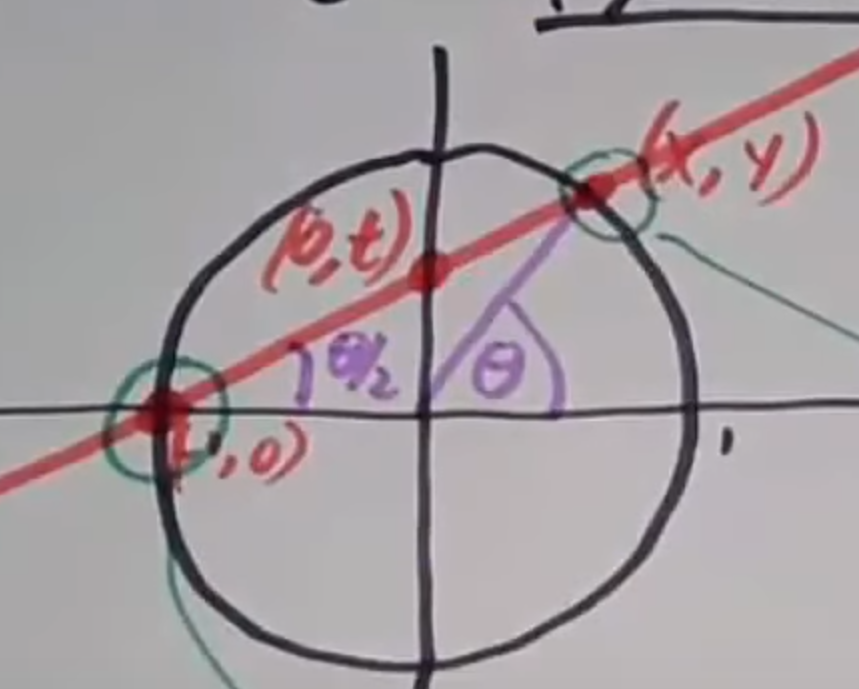
we have theta for the angle marked theta
how do you know the one to the left of it is theta/2?
i forgor
burnt mulch
worthy sky
https://i.imgur.com/Rr2YbAE.png
inscribed angle theorem
trim joltBOT
Channel closed
Closed by @worthy sky
Use .reopen if this was a mistake.
trim joltBOT
Available help channel!
Send your question here to claim the channel.
Remember:
• Ask your math question in a clear, concise manner.
• Show your work, and if possible, explain where you are stuck.
• After 15 minutes, feel free to ping <@&286206848099549185>.
• Type the command .close to free the channel when you're done.
• Be polite and have a nice day!
Read #❓how-to-get-help for further information on how to ask a good question, and about conduct in the question channels.
 barren crescent
 trim joltBOT
barren crescent
barren crescent
trim joltBOT
barren crescent
barren crescent
how do i solve this kind of problem?
 bright quarry
what is the sqrt when written as an exponent
barren crescent
wdym
barren crescent
oh
solid kilnBOT
dqvidutzul
 barren crescent
oh thats brilliantly simple
 spiral socket
use this for your exercise and write 4 as $2^2$
solid kilnBOT
dqvidutzul
 spiral socket
yes but do the whole process, it will help you understand
spiral socket
yes
spiral socket
$\sqrt{4} = 2$
solid kilnBOT
dqvidutzul
 spiral socket
$\sqrt{4y^2} = \sqrt{4} \cdot \sqrt{y^2}$
solid kilnBOT
dqvidutzul
 spiral socket
which is just 2y
spiral socket
go ahead
barren crescent
ok this ones a little different

i cant simplify the first term
square root of 49 issss
7
spiral socket
here you have a cube root not a square root anymore
barren crescent
^3 * square root of x^2 times ^3 * 7^2
can you get the square root of an exponent
thats not a thing right
spiral socket
square root of an exponent?
barren crescent
mhm
like for 29^2
49^2
whoops
like the sqr of 49 is 7
can that just be 7^2
<@&286206848099549185>
warm depot
yeah
 brazen forge
where do you have a square root?
 brazen forge
not a square root
barren crescent
my god
i do not even know what that is!
i thought it was like
oh dear
ok that changes things
<@&286206848099549185> does anyone know anything cube root
trim joltBOT
@barren crescent Has your question been resolved?
trim joltBOT
Channel closed
Closed due to timeout
Use .reopen if this was a mistake.
Available help channel!
Send your question here to claim the channel.
Remember:
• Ask your math question in a clear, concise manner.
• Show your work, and if possible, explain where you are stuck.
• After 15 minutes, feel free to ping <@&286206848099549185>.
• Type the command .close to free the channel when you're done.
• Be polite and have a nice day!
Read #❓how-to-get-help for further information on how to ask a good question, and about conduct in the question channels.
trim joltBOT
@hard grove Has your question been resolved?
 hard grove
.close
trim joltBOT
Channel closed
Closed by @hard grove
Use .reopen if this was a mistake.
trim joltBOT
Available help channel!
Send your question here to claim the channel.
Remember:
• Ask your math question in a clear, concise manner.
• Show your work, and if possible, explain where you are stuck.
• After 15 minutes, feel free to ping <@&286206848099549185>.
• Type the command .close to free the channel when you're done.
• Be polite and have a nice day!
Read #❓how-to-get-help for further information on how to ask a good question, and about conduct in the question channels.
 foggy dragon
I remember doing something similar for highschool a few months back but I have not revised back and have forgotten how to do roots of unity (which I believe is what you do here).
trim joltBOT
foggy dragon
I remember doing something similar for highschool a few months back but I have n...
 trim joltBOT
Channel closed
Closed by @foggy dragon
Use .reopen if this was a mistake.
Available help channel!
Send your question here to claim the channel.
Remember:
• Ask your math question in a clear, concise manner.
• Show your work, and if possible, explain where you are stuck.
• After 15 minutes, feel free to ping <@&286206848099549185>.
• Type the command .close to free the channel when you're done.
• Be polite and have a nice day!
Read #❓how-to-get-help for further information on how to ask a good question, and about conduct in the question channels.
 bleak sandal
help
trim joltBOT
bleak sandal
help
bleak sandal

my final answer is y= 25sin9.47x + 25
but im not very sure if it is right because it has decimals
 viscid flower
solid kilnBOT
viscid flower
solid kilnBOT


 trim joltBOT
@bleak sandal Has your question been resolved?
Channel closed
Closed by @bleak sandal
Use .reopen if this was a mistake.
Available help channel!
Send your question here to claim the channel.
Remember:
• Ask your math question in a clear, concise manner.
• Show your work, and if possible, explain where you are stuck.
• After 15 minutes, feel free to ping <@&286206848099549185>.
• Type the command .close to free the channel when you're done.
• Be polite and have a nice day!
Read #❓how-to-get-help for further information on how to ask a good question, and about conduct in the question channels.
 hidden vapor
I'm not sure how to start this question. Though I think i have to subtract some vectors from each other to get each var A, B, C, and D but I'm not sure of the order.
 trim joltBOT
hidden vapor
I'm not sure how to start this question. Though I think i have to subtract some ...
trim joltBOT
hidden vapor
I'm not sure how to start this question. Though I think i have to subtract some ...
 naive girder
i think you got to do more than just subtracting
hidden vapor
true
naive girder
to form a plane you need it's normal
and here you can find its normal by finding the cross product of two non parallel vectors that lies on the plane
you already have one of them which is [2,1,1]
naive girder
sounds about right
hidden vapor
ok ill try that
Here's what I did so far

now I have to use the normal to get the equation
I'm not sure how to do that
trim joltBOT
@hidden vapor Has your question been resolved?
trim joltBOT
@hidden vapor Has your question been resolved?
hidden vapor
.close
trim joltBOT
Channel closed
Closed by @hidden vapor
Use .reopen if this was a mistake.
Available help channel!
Send your question here to claim the channel.
Remember:
• Ask your math question in a clear, concise manner.
• Show your work, and if possible, explain where you are stuck.
• After 15 minutes, feel free to ping <@&286206848099549185>.
• Type the command .close to free the channel when you're done.
• Be polite and have a nice day!
Read #❓how-to-get-help for further information on how to ask a good question, and about conduct in the question channels.
quiet turret
 trim joltBOT
quiet turret
trim joltBOT
quiet turret