#book-recommendations
1 messages · Page 70 of 1
 solid bloom
 slender cargo
As an introduction it seems to at bare minimum require a good instructor, or be supplemented by other books.
 remote vortex
Indeed
slender cargo
Great book. That book even teaches enough Calculus in case you want practice on the computational side
 earnest wolf
slender cargo
As an introduction it seems to at bare minimum require a good instructor, or be ...
earnest wolf
slender cargo
As an introduction it seems to at bare minimum require a good instructor, or be ...
i mean, if an instructor fills in the holes that rudin left, will it really be PMA or just a completely different ||(normal)|| course? 
 daring lake
slender cargo
Great book. That book even teaches enough Calculus in case you want practice on ...
daring lake
slender cargo
Great book. That book even teaches enough Calculus in case you want practice on ...
I think I solved all problems in its first 8 chapters, took a very long time though 💀
slender cargo
daring lake
I think I solved all problems in its first 8 chapters, took a very long time tho...
Sounds like a great way to learn Analysis!
I think Bartle's main idiosyncracy is that it primarily teaches integration through Riemann sums instead of the Darboux way.
daring lake
I actually disliked that part
The notations were also strange to the point that Rudin's chapter on integrals was easier to read
slender cargo
Yeah I can see that chapter as being a reason to use a different book
 vital bane
earnest wolf
i mean, if an instructor fills in the holes that rudin left, will it really be P...
vital bane
earnest wolf
i mean, if an instructor fills in the holes that rudin left, will it really be P...
that's true, rudin isn't a bad textbook if you're taking a real analysis class. But if you're self-learning it is horrendous  it is a good reference book tho
daring lake
What do you expect? Since most calc books will be around the same level as stewart
Apostol does things a little differently iirc, would be a little more terse than Stewart
daring lake
Yeah Ig Apostol then (or Spivak but its very terse, I wouldn't really recommend it), or you can pick up an Analysis book like Bartle & Sherbert or Abbot
 neat citrus
Some book recommendations for differential equations that is a little bit easier to read?
 terse garnet
daring lake
Yeah Ig Apostol then (or Spivak but its very terse, I wouldn't really recommend ...
terse garnet
daring lake
Yeah Ig Apostol then (or Spivak but its very terse, I wouldn't really recommend ...
Are there any modern books that are proof based
daring lake
I don't know any
 remote knoll
Proof based calculus is just real analysis, pretty much. And there are a bunch of those
remote knoll
Probably, for instance, real analysis focuses mostly on why calculus works, and less on how to compute anti derivatives
So you'll lose out on worked problem practice
neat citrus
neat citrus
Some book recommendations for differential equations that is a little bit easier...
If someone knows, ping me!
terse garnet
analysis
vital bane
remote knoll
Proof based calculus is just real analysis, pretty much. And there are a bunch o...
More like proof based calculus + structure of R
remote vortex
Structure of R is a necesary part of making the proof-based calculus possible
So it counts as part of that
vital bane
I suppose 
earnest wolf
#real-complex-analysis message
guys, can u summarise in a few words how different LADW is, compared to LADR (or if it's too different, then just the approach it takes)
 elder pendant
earnest wolf
https://discord.com/channels/268882317391429632/576508782637744130/1224038920317...
elder pendant
earnest wolf
https://discord.com/channels/268882317391429632/576508782637744130/1224038920317...
There’s a (fantastic imo) pinned message about linear algebra that includes a comparison of these two. Hth!
 novel hound
I've had this happen with a specific book - when I mailed customer support about it, they said it was because the book was not available for my region (although they did give me the contact info of the local seller responsible for it's distribution). Try removing books from the cart to identify which book is problematic.
 lusty escarp
novel hound
I've had this happen with a specific book - when I mailed customer support about...
lusty escarp
novel hound
I've had this happen with a specific book - when I mailed customer support about...
Yeah, you are right. For me, Linear Algebra Done Right by Axler is causing problems.
earnest wolf
u mean this review by dami?

tbh did find any comparison btw the two there
ah, ok, I see
balances theory and computation
then I hate that book
 remote vortex
LADR is much more focused on theory and proofs than computations.
I don't know what LADW does but judging by the title, presumably not that
Also LADR is a title that's hugely full of itself and I'd have expected more from Axler
earnest wolf
remote vortex
I don't know what LADW does but judging by the title, presumably not that
never judge a book by the title 
like, when I heard someone recommend a book to me called '[...] Done Right', my first though was: «it must be smth like 'A guide how to become a surgeon in 24 hours'»
 sudden kindle
LADR good
remote vortex
Axler is generally good at writing books and exposition, so his book is fine at what it does.
I don't do linear algebra much, but Axler's measure theory book is excellent and I recommend it without hesitation
So just in terms of Axler as textbook-writer, I rate him high
earnest wolf
remote vortex
So just in terms of Axler as textbook-writer, I rate him high
I think he also is an editor of most springer undergraduate math series
sudden kindle
There are some computations in Axler, but its not the focus for sure
 sage python
Yeah there's this weird dynamic in linear algebra classes
sudden kindle
The problem about using diagonalization to get an explicit formula for Fibbonaci numbers is peak math 👌
sage python
Where a lot of people take a class that's devoid of general ideas and is just a lot of RREF
And then they take a second class that does all the theory
remote vortex
So sort of like the calculus -> real analysis progression?
sage python
The reason for this is that first class is meant not just for future math majors (they don't have manpower or demand to offer an entirely separate track for math majors from the start), but for scientists and engineers
Who would feel the theory is a distraction
So now some linear algebra books are written around "the second course in that progression"
sudden kindle
I wanna learn everything there is to know about metallic numbers
remote vortex
sudden kindle
I wanna learn everything there is to know about metallic numbers
Sodium numbers, Mercury numbers, Uranium numbers....
sage python
Axler is kinda in that category. It's technically self-contained but the reason it has fewer computations was that it has in mind an audience who knows the stuff
remote vortex
Yeah, reading Axler if you've never seen a matrix before, might be confusing
remote vortex
Yeah
sudden kindle
Is there a book on metallic numbers?
I wanna know connections to rational approximation, continued fractions, geometry and arithmetic
sage python
While HK, FIS, LADW are more one stop shopping
sage python
sudden kindle
Is there a book on metallic numbers?
Don't even know what those are lol. What's the interest?
earnest wolf
sage python
Axler is kinda in that category. It's technically self-contained but the reason ...
I mean.... No?
I took real analysis (1) before calculus and went through LADR (ofc not all chapters) without knowing much computations
earnest wolf
earnest wolf
I mean.... No?
I took real analysis (1) before calculus and went through LADR (o...
and really loved the theory focused approach without «solve this linear system by hand; compute the determinant; does this system has infinitely or only finitely many solution» kind of stuff
maybe the only important thing missing is gaussian elimination
sage python
Yeah I'm not saying it isn't doable. I'm saying the reason it ignores computations, as said in the preface
Is that it thinks you already learned them and thus don't need to learn them now
It's not necessary for the presentation but it's less "Axler thinks they're expendable" so much as "Axler thinks you have them covered"
sudden kindle
sage python
Don't even know what those are lol. What's the interest?
They continue the sequence golden ratio, silver ratio, ...
 trail hemlock
participation ratio?
 flat marten
the best linear algebra book is greub 100%
 round shore
sudden kindle
They continue the sequence golden ratio, silver ratio, ...
round shore
sudden kindle
They continue the sequence golden ratio, silver ratio, ...
~~so, useless maths ~~
remote vortex
That's most maths
 gray gazelle
should i do discrete math before i do combinatorics, number theory, proofs etc etc
should discrete math be the base of all discontinuous mathematics
or can i learn combinatorics, number theory and all very advanced math easily without starting with discrete
slender cargo
gray gazelle
or can i learn combinatorics, number theory and all very advanced math easily wi...
Just go with whatever your school's intro to proof class is. Yeah most of the topics in a Discrete Math class will be covered in higher math classes.
sudden kindle
round shore
~~so, useless maths ~~
Yep
 remote sparrow
gray gazelle
should i do discrete math before i do combinatorics, number theory, proofs etc e...
remote sparrow
gray gazelle
should i do discrete math before i do combinatorics, number theory, proofs etc e...
combinatorics is a topic in discrete math
sudden kindle
I like useless math
remote sparrow
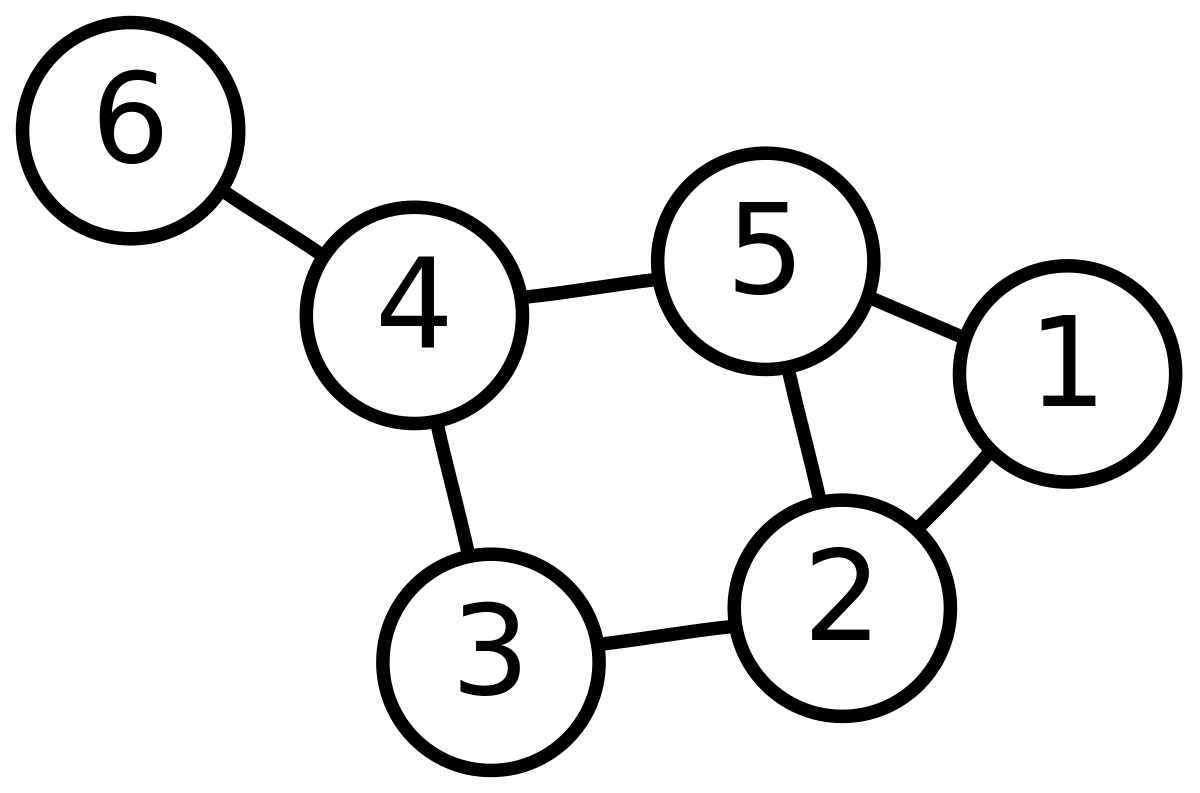
Discrete mathematics is the study of mathematical structures that can be considered "discrete" (in a way analogous to discrete variables, having a bijection with the set of natural numbers) rather than "continuous" (analogously to continuous functions). Objects studied in discrete mathematics include integers, graphs, and statements in logic. By...
discrete math classes are usually a hodgepodge of things CS students need to know
 gray jungle
earnest wolf
I mean.... No?
I took real analysis (1) before calculus and went through LADR (o...
gray jungle
earnest wolf
I mean.... No?
I took real analysis (1) before calculus and went through LADR (o...
its possible but its also important to do some hands on computations
usually a course is either too focused on computations or too focused on theory, its good to know both
with exceptions ofcourse
earnest wolf
remote sparrow
discrete math classes are usually a hodgepodge of things CS students need to kno...
just to add one more thing: in my uni (EU; discrete math is a compulsory subject) the class differs for different majors
for example, CS students focus more on finite automatons and boolean algebra stuff, while (pure) math students lean more towards ZFC, for example (altho we also have combinatorics and graph theory)
so yeah, it just illustrates how much a course with the same name differs not only across different universities, but even within the same institution
earnest wolf
sudden kindle
I like useless math
useless math is the best math
remote sparrow
CS students need basic combinatorics + graph theory + calculus for algorithms
earnest wolf
remote sparrow
CS students need basic combinatorics + graph theory + calculus for algorithms
calculus for algorithms
what's that? like big o stuff?
or u just meant the usual calc: limits, integrals...
remote sparrow
earnest wolf
> calculus for algorithms
what's that? like big o stuff?
analyzing the computational complexity of algorithms is part of algorithms, yes
 molten mason
gray gazelle
or can i learn combinatorics, number theory and all very advanced math easily wi...
molten mason
gray gazelle
or can i learn combinatorics, number theory and all very advanced math easily wi...
As said above. Discrete math means differently in different places.
In my university if you're a math major you take all those as separate full courses with their own textbooks.
If you're a CS major it's just cherry-picked topics from each of these courses all combined in one quick course.
If you're asking about courses at your school, I would ask classmates and advisor.
If you want to learn on your own and get your own textbooks and whatnot, then if you want to just learn some quick nonsense for CS, get a discrete math book. If you want to know each topic and actually learn each subject, get a book in each i.e. a proofs book -> set theory -> algebra, number theory, and combinatorics
 glossy zealot
Guys what is a source or book to quickly review trigonometry for real analysis?
I forgot most of it, even encountered some inequalities that I did not know about (like |sin(x)|<=|x|)
 misty galleon
Looking for a physics book of similar quality to something like Stewart or Thomas calculus textbooks with lots of examples and practice problems, intuitive explanations and proofs, also starting my basic, I don’t know much of any physics but I want to the book to contain basics to advanced in it
 violet shuttle
glossy zealot
Guys what is a source or book to quickly review trigonometry for real analysis?
...
violet shuttle
glossy zealot
Guys what is a source or book to quickly review trigonometry for real analysis?
...
...i didn't know that inequality, and i passed the written graduate analysis qualy here
don't spoil it for me
clearly we just need to check the interval [0,1]
sin(0)=0. sin(1) can be evaluated to be ≈.84<1. Now I was going to then try to see if I could use convexity but sine is actually concave.
f(x) = sin(x) - x
it is 0 at 0 and ≈.16>0 at 1
we want to show this function is never negative.
it suffices to show it has no roots on the interval (i suspect this is true)
so f'(x) = cos(x) - 1
but this has no roots in the interval (besides 0), QED.
 uncut zealot
glossy zealot
Guys what is a source or book to quickly review trigonometry for real analysis?
...
uncut zealot
glossy zealot
Guys what is a source or book to quickly review trigonometry for real analysis?
...
You should not need any trig for real analysis.
violet shuttle
glossy zealot
Guys what is a source or book to quickly review trigonometry for real analysis?
...
The professors here who've I've had opportunity to see do some trig universally don't remember most of them
(anyways you'll rederive anything you need in a real analysis textbook)
uncut zealot
If you want to learn trig properly, learn enough complex analysis to understand Euler's identity, then pivot to fourier or harmonic analysis
violet shuttle
violet shuttle
The professors here who've I've had opportunity to see do some trig universally ...
Yet, all of them can prove the rest easily by just doing algebra on the definition as the real and imaginary part of exp(ix)
Knowing the existence of a double angle formula is more valuable than knowing the actual formula.
glossy zealot
I asked about trig because I had to do these proving sin(x) and cos(x) are continuous functions

violet shuttle
glossy zealot
I asked about trig because I had to do these proving sin(x) and cos(x) are conti...
...?
have you proven exp is?
if so then it's immediate
glossy zealot
Yes I did
violet shuttle
you know that the difference of two continuous functions is continuous right?
and that if you divide by something that's not 0 you'll still be continuous?
so what was the issue?
glossy zealot
Yep I got to use that
violet shuttle
like all of the proof is in that exp is continuous
 hallow oriole
i like the mvt proof of that identity
glossy zealot
violet shuttle
like all of the proof is in that exp is continuous
I did not get to learn anything about relationship between cos/sin and exp
violet shuttle
glossy zealot
I did not get to learn anything about relationship between cos/sin and exp
then you don't know what cosine and sine is.
were you using a real analysis textbook or something else?
glossy zealot
And the question was forcing me to do epsilon delta proof directly
violet shuttle
if this question was asked before you even know what sine and cosine are, it's not good pedagogy.
sine is defined as the imaginary part of exp(ix)
cosine as the real part.
exp(x) is defined as \sum \frac{x^n}{n!}
this definition is well defined because this series converges
specifically, it converges at any point by the ratio test, and on any interval [a,b] you can use M at the boundary to apply the Weierstrass M-test and show uniform convergence.
Thus exp(x) is continuous.
glossy zealot
That is very interesting, I will look into it more, thank you!
violet shuttle
If you are learning real analysis, you better learn this, and if you're taking a class that doesn't go over this you should revolt.
 violet shuttle
pick up a copy of baby rudin
glossy zealot
violet shuttle
pick up a copy of baby rudin
I intended to go into Rudin after Im done with my intro analysis course
violet shuttle
if you finish your intro to analysis course properly than baby rudin won't do much for you
 tribal crow
Rudin is an intro analysis course
 rich sun
Not a recommended first intro though 
violet shuttle
rich sun
Not a recommended first intro though <:catthimc:732011802459635713>
I recommend it to people that happen to be exactly like me when I read it
 charred mason
Has anyone here heard of or read geometry & imagination by Hilbert and cohn-vossen?
I've heard it's amazing
But it'll be great to get some perspective on the practical side like how hard it exactly is and how much time it requires
 hoary sand
Any good books to get a better understanding on line integrals?
uncut zealot
hoary sand
Any good books to get a better understanding on line integrals?
Functions of One Complex Variable by John Conway
hoary sand
uncut zealot
*Functions of One Complex Variable* by John Conway
Thank you!
violet shuttle
uncut zealot
*Functions of One Complex Variable* by John Conway
...?
violet shuttle
hoary sand
Any good books to get a better understanding on line integrals?
what do you actually want
surely you don't literally mean a book dedicated to line integrals
now, I do like Conway's book, but, do note the title.
I can't tell if Pear is memeing or just assuming you wanted a text on complex analysis
uncut zealot
hoary sand
Thank you!
Specifically chapter IV, by the way
uncut zealot
violet shuttle
I can't tell if Pear is memeing or just assuming you wanted a text on complex an...
It's April Fool's Day
violet shuttle
(i am likely to call complex analysis line integrals "contour integrals" instead)
uncut zealot
violet shuttle
(i am likely to call complex analysis line integrals "contour integrals" instead...
I thought contour integrals referred specifically to when the path is closed? Which to be fair is what happens like 99% of the time in CA
violet shuttle
yeah uhh actually maybe
i thought "contour" just meant "Cauchy used the word in his stuff"
uncut zealot
Valid. You can probably pass the complex qual just by saying "Cauchy contour residue" three times.
hoary sand
violet shuttle
what do you actually want
A book that would help me learn inverse kinematics would be pretty cool for programming.
violet shuttle
hoary sand
A book that would help me learn inverse kinematics would be pretty cool for prog...
try a book on robotics
violet shuttle
uncut zealot
Valid. You can probably pass the complex qual just by saying "Cauchy contour res...
nonono you need to at least write 2\pi n a few times (choosing different n of course)
uncut zealot
violet shuttle
nonono you need to at least write 2\pi n a few times (choosing different n of co...
This is just the value of every integral ever. (where n represents the winding number of the zeros of the bottom of the fraction)
hoary sand
violet shuttle
try a book on robotics
Theory of Applied Robotics: Kinematics, Dynamics, and Control by Reza N. Jazar, I'll try this one.
 loud cradle
why are they called line integrals anyway, when the curve is not generally a line
uncut zealot
A line is simply the image of [0,1] under some continuous map
"lines have to be straight" is homophobic propaganda.
loud cradle
lines have to be convex, better? 😁
molten mason
uncut zealot
"lines have to be straight" is homophobic propaganda.
Euclid homophobic confirmed
Cancel Euclid
remote vortex
he's dead
 midnight compass
uncut zealot
"lines have to be straight" is homophobic propaganda.
midnight compass
uncut zealot
"lines have to be straight" is homophobic propaganda.
Haha polynomial transformation of vector space go brr
 void gazelle
Whats a good engineering or such book for someone say beginning graduate level math but wants to actually apply what they know into manipulating real world things
 broken meadow
does Kreyszig advanced engineering mathematics fit the bill?
i havent read it myself but i recall mentions from before
void gazelle
broken meadow
does Kreyszig advanced engineering mathematics fit the bill?
I did actually check this out and liked it a lot, however i was thinking more in the lines of a book that is like
This math will help you find this perfect length to saw this block of wood
Or this math is for wiring
Stuff i can actually use my math degree on
broken meadow
hmm
void gazelle
broken meadow
hmm
Thank you btw
 graceful moon
void gazelle
This math will help you find this perfect length to saw this block of wood
graceful moon
void gazelle
This math will help you find this perfect length to saw this block of wood
What does this even mean
void gazelle
graceful moon
What does this even mean
Just something very practical, something that says for example you need to get this length of wire, here's the formula, get cutting!
Something like that, but for people with a math background
Eh it probably doesn't exist when I put it like /that/
 bright epoch
void gazelle
Whats a good engineering or such book for someone say beginning graduate level m...
bright epoch
void gazelle
Whats a good engineering or such book for someone say beginning graduate level m...
Elementary applied topology
void gazelle
bright epoch
Elementary applied topology
Thank you i will check it out
void gazelle
bright epoch
Elementary applied topology
I checked out Ghrist's book on his website and wow this is great! More of this!!
vital bane
void gazelle
I checked out Ghrist's book on his website and wow this is great! More of this!!
Robert Ghrist?
void gazelle
vital bane
Robert Ghrist?
I assume that was the author of the Elementary Applied Topology book he meant
gray gazelle
its here
 rigid forge
okay, so I tried to read the books by hung hsi wu, and honestly not a fan. (no, its not about the strong ideology at the starting of the book)
so, can anyone recommend trignometry/precalculus/algebra books that are rigorous and proof-centered? (besides serge lang's book)
slender cargo
rigid forge
okay, so I tried to read the books by hung hsi wu, and honestly not a fan. (no, ...
I think the issue here is that any actual rigorous, proof-based treatment of trigonometry and algebra comes in higher level books. Serge Lang's Basic Mathematics book is the closest you will get, and even that book doesn't really show much besides a few elementary proofs.
rigid forge
slender cargo
I think the issue here is that any actual rigorous, proof-based treatment of tri...
that's sad, because I find learning math with valid reasoning more fun than just assuming it is true and applying the theorem in problems. i get way more dopamine in the former than the later.
slender cargo
rigid forge
that's sad, because I find learning math with valid reasoning more fun than just...
That's good. What you should do, is simply find a precalculus book that is easiest for you to learn from, and complete it ASAP.
And then you could get started with something like Spivak's Calculus.
Your goal right now is simply to get good intuition from a precalculus book. The rigorous stuff will come later (and not much later).
 spice sleet
I hate math so much grrrrrrrrrrrrrrrrrrrrrrrrr
molten mason
rigid forge
okay, so I tried to read the books by hung hsi wu, and honestly not a fan. (no, ...
The problem is the rigorous trig comes in calculus and series (Which would be a typical Calc II class) and then further developed in real and complex analysis. (A couple classes after Calc 3)
Trying to find rigorous proof-centered trig textbook at a pre-calculus level either doesn't exist or if it does is just not commonly known.
gray gazelle
I have been collecting every math book I can find a PDF of just by search ( not genlib or anna). Fun to see what gets recommended or used by what universities.
Also I have been going through the internet archive to see what old mathematics books exists ( that can actually be downloaded).
bright epoch
void gazelle
I assume that was the author of the Elementary Applied Topology book he meant
Yes
 magic spade
rigid forge
okay, so I tried to read the books by hung hsi wu, and honestly not a fan. (no, ...
magic spade
rigid forge
okay, so I tried to read the books by hung hsi wu, and honestly not a fan. (no, ...
What didn't you like? I wanted to try using his books
 fervent marten
what happened to the server's pic?
 hollow peak
Trans day of visibility
 torn blade
fervent marten
what happened to the server's pic?
torn blade
fervent marten
what happened to the server's pic?
the torus was removed. thats it
 smoky zephyr
fervent marten
i hate this
smoky zephyr
fervent marten
i hate this
what's the problem
violet shuttle
i mean i do like the torus
hollow peak
fervent marten
i hate this
cringe
violet shuttle
given that the trans flag has objectively the best color pallette, one considers transifying the torus and prideifying the background
gray gazelle
torn blade
the torus was removed. thats it
Why it was removed?
torn blade
gray gazelle
Why it was removed?
probably to make the trans flag more visible (haha get it trans day of visibility). clearly its working cause everyone is just starting to notice this server has a trans flag in its icon
 granite vector
violet shuttle
given that the trans flag has objectively the best color pallette, one considers...
granite vector
violet shuttle
given that the trans flag has objectively the best color pallette, one considers...
Nah, red white and blue
 sage salmon
gray gazelle
Although, let me ask, the trans day of visibility is 04/01?
sage salmon
gray gazelle
Although, let me ask, the trans day of visibility is 04/01?
03/31
remote vortex
The trans flag is fine, and the torus was taken for spring-cleaning and should be returned shortly.
 quaint solar
Does anyone have some book recommendations for complex analysis
uncut zealot
quaint solar
Does anyone have some book recommendations for complex analysis
Conway is good.
remote sparrow
quaint solar
Does anyone have some book recommendations for complex analysis
see pins as well
 crude sage
What do people think of Lang's Undergraduate Algebra? From what I've seen it's not too chatty, but does some weird organisational stuff
graceful moon
James Stewart calculus is ubiquitous, hard to go wrong with that
It’s definitely a calculus book more than an analysis book, it’s not the worlds most rigours text but it does the job of teaching multivar and vector calc imo
fervent marten
smoky zephyr
what's the problem
its not trans visibility day anymore
fervent marten
ok
slender cargo
Trans people are cool so I say we keep it up for some time (although I hope the torus comes back eventually)
 silent edge
hallow oriole
slender cargo
Trans people are cool so I say we keep it up for some time (although I hope the ...
silent edge
hallow oriole
slender cargo
Trans people are cool so I say we keep it up for some time (although I hope the ...
we just need to find it again
slender cargo
hallow oriole
we just need to find it again
True. It might be lost to the abyss.
 serene raptor
Yall ever heard of Dune 2?
molten mason
crude sage
What do people think of Lang's Undergraduate Algebra? From what I've seen it's n...
It's fine. His graduate book is a standard graduate text. The undergraduate version is a simplified version. If Algebra is too much, Undergraduate Algebra was written to prepare you for Algebra
crude sage
molten mason
It's fine. His graduate book is a standard graduate text. The undergraduate vers...
In what way is it simplified (apart from, y'know, less details to be verified by the reader)? I know that GTM lang is a reference text, but UG lang seems too short to be encyclopedic/useful as a reference. Also it seems to use a bottom-up approach in some places, like proving theorems in Z before having a later chapter do exactly the same things in more general settings. I thought GTM was much more top-down
 surreal ravine
What's a good abstract algebra book for beginners, that has a lot of exercises in it?
Does the book mentioned above have a lot?
remote sparrow
surreal ravine
What's a good abstract algebra book for beginners, that has a lot of exercises i...
surreal ravine
Thanks!!
crude sage
surreal ravine
Does the book mentioned above have a lot?
If you're talking about the book I was asking about, then no there aren't as many exercises as in comparable books. I think Artin's Algebra has more, and they have a reputation as good ones
gray gazelle
surreal ravine
What's a good abstract algebra book for beginners, that has a lot of exercises i...
Lang’s Algebra
surreal ravine
Thanks!
slender cargo
surreal ravine
Thanks!
Don't listen to eigenpuppet
surreal ravine
lmfaoo
slender cargo
surreal ravine
I'll look at them all
Along with that list, Abstract Algebra by Fraleigh and another book by Gallian are popular.
If I was self-studying I would probably check out Nathan Carter's Visual Group Theory. That book seems like a neat experiment, but it doesn't cover everything.
surreal ravine
ooh thanks! I'll check those all out and see what fits best for me
gray gazelle
Herstein’s Topics in Algebra is also good
uncut zealot
surreal ravine
What's a good abstract algebra book for beginners, that has a lot of exercises i...
Probably one of the books that's known for being the most beginner-friendly is "Algebra I: Chapters 1-3" by Bourbaki. Here's a free online pdf that I found: https://math.mit.edu/~hrm/palestine/bourbaki-algebra-1i.pdf
surreal ravine
Thank you! I didn't expect so many responses lol
crude sage
surreal ravine
Thank you! I didn't expect so many responses lol
Keep in mind that it may be April 1 wherever Pear Category Theorem is located...
surreal ravine
yup, probably shouldve waited till tmrw to ask lmaoo
 twin dirge
lol
violet shuttle
gray gazelle
Lang’s Algebra
it's terrible for exercises
I do like the book though
crude sage
violet shuttle
it's terrible for exercises
"Prove all the results in a homological algebra book"
A friend pointed out that you can do this pretty quickly by writing your own homological algebra book with no theorems
 raw bay
Anyone got good books on combinatorics?? Tryna self teach 🙏🏾
charred mason
Is there a good book on galois theory or something that historically motivates abstract algebra? I have some experience with introductory analysis(self study) and some proof based linear algebra
charred mason
raw bay
Anyone got good books on combinatorics?? Tryna self teach 🙏🏾
Interesting wish I could help but I don't have much exposure to combinatorics
hallow oriole
raw bay
Anyone got good books on combinatorics?? Tryna self teach 🙏🏾
stanley's enumerative combinatorics or bona's walk through combinatorics
probably the objectively correct starting points
 tacit crow
try sedgewick + flajolets analytic combinatorics
raw bay
Okay ty guys
raw bay
hallow oriole
stanley's enumerative combinatorics or bona's walk through combinatorics
Would those books touch onto these subtopics?
@treesarentreal.com @hallow oriole :
Sets
Functions
Introduction to Counting
Counting with Bijections
Generating Functions
Theory of Generating Functions
Burnside’s Lemma
Polya’s Theorem
Combinatorial Geometry
Graph Theory
Stirling Numbers
Ramsey Numbers
Catalan Numbers
Counting in Two Ways
Recursion
Pigeonhole Principle
Inclusion-Exclusion Principle
hallow oriole
yes
probably not going to go fully into catalan numbers, graph theory, or genfs but will give standard-ish treatments still
raw bay
Okay thank you sm🙏🏾 on that note would you know good number theory books?
hallow oriole
also you'll probably need to know basic set stuff going in anyways, but you can pick that up by osmosis
 olive kernel
i feel like literally every math book ever has a sets relations functions tutorial at the start of it
hallow oriole
raw bay
Okay thank you sm🙏🏾 on that note would you know good number theory books?
for the level you seem to be at i think 'a friendly introduction to number theory' by silverman would be a good fit
hallow oriole
nw, gl
tacit crow
raw bay
Would those books touch onto these subtopics?
@treesarentreal.com <@625857542332...
for graph theory i recommend bondy + murty
remote sparrow
charred mason
Is there a good book on galois theory or something that historically motivates a...
you don't typically study galois theory before groups, rings, and fields
hallow oriole
charred mason
Is there a good book on galois theory or something that historically motivates a...
galois theory is motivated by abstract algebra, historically, so i have trouble believing you'll find something like this
uncut zealot
charred mason
Is there a good book on galois theory or something that historically motivates a...
Proof based LA and analysis are relatively irrelevant for galois theory. A standard UG algebra text, like Pinter or Gallian, should provide the background needed for a modern treatment of galois theory. I learned the topic from Stewart, who has a dedicated book, but most people learn it initially from books like Dummit & Foote or Lang, which are graduate texts just on abstract algebra more generally.
 torn crypt
Weintraub (dedicated Galois book) I believe takes an LA based approach to galois stuff? (But LA as in including modules, I think). This assumes you know some algebra going in, however, but going into Galois stuff needs you to know a bit of ring & field stuff the way it's usually done anyway
uncut zealot
hallow oriole
galois theory is motivated *by* abstract algebra, historically, so i have troubl...
If we're talking solely historically, the motivation is kind of reversed. Galois developed a significant amount of group theory in order to prove the insolubality of the quintic even after he proved the famous correspondence that bears his name. (In particular lots of modern notation about groups, as well as the proof that A_5 is simple). Modern pedagogy kind of does it backwards compared to how it was developed historically - though admittedly in an order that results in students feeling like they're following for most of the semester instead of feeling hopelessly lost until the end.
hallow oriole
well, i stand corrected
remote sparrow
Galois Theory by david cox is a good standalone book
sage python
uncut zealot
Proof based LA and analysis are relatively irrelevant for galois theory. A stand...
Wait the linear algebra???
uncut zealot
sage python
Wait the linear algebra???
I was thinking like chapters 10-13 of D&F because I'm an idiot. A bit of UG level LA is definitely necessary.
(i.e. I was conflating homological algebra and modules with LA)
hallow oriole
uncut zealot
If we're talking solely historically, the motivation is kind of reversed. Galois...
galois must have been insanely fucking smart, holy
i knew that academically but it's sinking in now
uncut zealot
hallow oriole
galois must have been insanely fucking smart, holy
He did most of it in a single night from a jail cell the day before he died in a duel at the age of 19.
sage python
Oh that makes more sense. I was gonna say, stuff like trace, norm, minimal polynomials, Kummer theory...
 hybrid sparrowBOT

 golden salmon
I think blitzstein (https://projects.iq.harvard.edu/stat110/home) has a chapter on it that's pretty accessible, starting page 497. Link is sourced directly from the author's website

Statistics 110: Probability
golden salmon
I'll link the site then
hallow oriole
which given that it's a google drive link i doubt it
uncut zealot
hallow oriole
no links
Stop being a narc
hallow oriole
uncut zealot
Stop being a narc
im the biggest piracy advocate on this server i just don't want this place to be shut down fr
golden salmon
The google drive link is found on the site I found
uncut zealot
hallow oriole
im the biggest piracy advocate on this server i just don't want this place to be...
🏴☠️
hallow oriole
oh, yeah if it's legal go for it
hallow oriole
instead of the drive link probably just do https://probabilitybook.net
Google Docs
Introduction to Probability (second edition) by Joseph K. Blitzstein and Jessica Hwang. Chapman & Hall/CRC Press, 2019.
uncut zealot
Fun fact - downloading PDFs is legal in the US, it's just uploading pirated files that's illegal
hallow oriole
technically not true in all situations but true enough
golden salmon
not everyone is in US :^)
uncut zealot
golden salmon
not everyone is in US :^)
Discord is a company headquartered in the US and thus beholden to US laws.
golden salmon
The users themselves are not in the US, which is more what I was angling at
uncut zealot
Internet piracy is mainstream enough in Sweden that there's a major political party whose main goal is advocating for it.
golden salmon
I see
hallow oriole
when are these ever the same thing

anyone got a good book on lattice theory in relation to sphere packing that isnt the one by conway and sloane
golden salmon
hallow oriole
when are these ever the same thing <:bleak:877093280905592842>
when you're learning about lattices in some solid state physics class
 heady ember
uncut zealot
Internet piracy is mainstream enough in Sweden that there's a major political pa...
heady ember
uncut zealot
Internet piracy is mainstream enough in Sweden that there's a major political pa...
Lmao what
Oops wanted to turn off the ping but fat fingered and pressed sent
heady ember

novel hound
charred mason
Is there a good book on galois theory or something that historically motivates a...
if you want a light read for motivation and historical notes, Elements of Algebra by Stillwell is nice. Edwards Galois Theory is also notable for focusing on history. However, these aren't the best for comprehensive, well-rounded intro, but you can use them for motivation, history, etc.
 oblique hatch
What is “towards the mathematics of quantum field theory” by Frederic Paugam like?
(What does it assume, is it any good, etc?)
 lapis sundial
golden salmon
not everyone is in US :^)
lapis sundial
golden salmon
not everyone is in US :^)
Source?
earnest wolf
lapis sundial
Source?
for fun, let's do a voting under this message
remote vortex
Statement proven already.
earnest wolf
remote vortex
Statement proven already.
that ain't fun
remote vortex
What does "fun" have to do with mathematics?
golden salmon
why else do it?
 alpine rover
what are the usual prerequisites for undergrad diff geo
graceful moon
Linear algebra, general mathematical maturity
 weak solstice
Also multivariable calc
graceful moon
Some analysis for like the inverse and implicit function theorems but it’s not majorly important you could probably just black box it
alpine rover
interesting I thought analysis with multiple variables would be most important
graceful moon
It’s definitely helpful, but you can pick up the topology and stuff you need as you go, I’m also assuming for UG DG you mean like curves and surfaces where it’s less important
graceful moon
In that case yeah some analysis, LA and topology is enough
Take a look at the intro to Lees smooth manifolds and he talks about the prereqs, the appendix also covers basically everything you’d need
alpine rover
that's the exact book my course is using
alpine rover
graceful moon
Take a look at the intro to Lees smooth manifolds and he talks about the prereqs...
ahh thanks I didnt check out the appendix or intro
wow the appendix is so comprehensive
graceful moon
Yeah there’s someone here doing ISM in highschool just learning everything as they go which is insane, but shows you it’s possible lol
tribal crow
graceful moon
Yeah there’s someone here doing ISM in highschool just learning everything as th...
who’s that
graceful moon
Marlins
tribal crow
isn’t he reading Tu?
graceful moon
Possibly, actually
gray gazelle
what is the Pinter/Judson equivalent of Linear Algebra?
 haughty cypress
book recomendation for begining calculus or math self study
 marsh ingot
Spivak or Apostol
haughty cypress
marsh ingot
Spivak or Apostol
where can i pirate this
gray gazelle
haughty cypress
where can i pirate this
Piracy is illegal!
remote vortex
I mean, it is
gray gazelle
what happened to the server's logo
haughty cypress
gray gazelle
what happened to the server's logo
facts
 glad rampart
gray gazelle
what happened to the server's logo
glad rampart
gray gazelle
what happened to the server's logo
Math came out as trans so the server icon changed to show support
earnest wolf
haughty cypress
book recomendation for begining calculus or math self study
going by the question, I'd suggest khan academy?
it's great for those kinds of skills i think
gray gazelle
glad rampart
Math came out as trans so the server icon changed to show support
Absolutely Agreed this is what should be done. We gotta support everything for a better world and encourage equality!
People like Euler Newton Gauss and All the Geniuses who contributed to mathematics would be so proud!
glad rampart
True!
 drowsy thicket
gray gazelle
what happened to the server's logo
drowsy thicket
gray gazelle
what happened to the server's logo
The torus infront of it was removed because of the April 1 event. The background has always been what you see now.
It will be back to normal in short
slender cargo
@glad rampart I remember us talking about math stuff you were learning the other day. Have you considered looking at Nathan Carter's Visual Group Theory? I think if I were in high school, after having gone through Number Theory, Calculus, Combinatorics, and maybe Linear Algebra I would check that book out.
 rustic meadow
gray gazelle
what happened to the server's logo
rustic meadow
gray gazelle
what happened to the server's logo
it had the trans colors for a while the torus was just removed
glad rampart
Haven’t gone through calc or linear algebra but I’ll keep that in mind
rustic meadow
maybe some other changes were made but that's all i noticed
slender cargo
glad rampart
Haven’t gone through calc or linear algebra but I’ll keep that in mind
It's just a neat book that teaches Group Theory in a unique way that I think can be more easily self-studied.
 night harbor
is there any book to learn extreme level of math?
glad rampart
Define “extreme level”
glad rampart
You mean like competition math?
gray gazelle
night harbor
very hard
Hartshorne’s Algebraic Geometry
night harbor
glad rampart
You mean like competition math?
kinda
i am not sure
cuz i just wanna increase my knowledge
glad rampart
Just read some books on subfields that interest you
night harbor
gray gazelle
Hartshorne’s Algebraic Geometry
it only contains algebric geometry nice
night harbor
glad rampart
Just read some books on subfields that interest you
r u in uni?
remote vortex
night harbor
is there any book to learn extreme level of math?
any particular area? or do you just want something difficult?
night harbor
remote vortex
any particular area? or do you just want something difficult?
indeed
night harbor
glad rampart
I’m self teaching myself hs math
great
slender cargo
night harbor
i meant hard maths
Don't think of it in terms of "hard maths". Sounds like you want to learn more rigorous proof-based math. Start with something like Abbott's Understanding Analysis if you've taken Calculus.
remote vortex
good advice
night harbor
slender cargo
Don't think of it in terms of "hard maths". Sounds like you want to learn more r...
finished
dude
i saw in on yt
gray gazelle
night harbor
i saw in on yt
saw what?
night harbor
the book
slender cargo
As in, you learned the contents of the book through Youtube?
night harbor
stephen abbot is damn clever
night harbor
slender cargo
As in, you learned the contents of the book through Youtube?
i read that
i bought it from amazon
gray gazelle
What is your math background?
gray gazelle
Anything else?
night harbor
algebric geometry]
remote vortex
night harbor
finished
One natural follow-up to real analysis is measure theory.
Axler's or Folland's book, for example.
Folland is harder
gray gazelle
night harbor
algebric geometry]
…you’ve studied algebraic geometry?
drowsy thicket
gray gazelle
…you’ve studied algebraic geometry?
Most likely translation error
You must mean analytic geometry?
remote vortex
I mean, apparently they're very ambitious
glad rampart
Not impossible if he’s terry tao
drowsy thicket
I didn't read much of the history, just him saying he did analysis and then algebraic geometry
slender cargo
night harbor
algebric geometry]
So you have studied group, ring, and field theory?
True. If you want to make your life hard, go with Rudin PMA immediately for self study!
remote vortex
I was going to oppose baby Rudin instinctively, but then again, he did specifically ask for a hard time.
And apparently had no problem with Abbott
 peak ledge
Can anyone recommend where I can from basics to extensive things about complex plane transformations?
remote vortex
It's an excellent book, it's just a lousy book from which to learn analysis.
glad rampart
No, not a single one exists /j
slender cargo
I think it is both a high quality book and a hard book to self study from without an instructor. Just imo
remote vortex
Yes, some uncommonly talented and motivated people will be fine self-studying analysis based on PMA.
But that's definitely not the median outcome.
I wasn't accusing you of humblebragging, I'm just saying I've seen a lot of people struggle HARD with PMA
tribal crow
definitely not!
remote vortex
Yes, and a lot of people don't have your sheer perseverance and grit, is my point.
 novel obsidian
remote vortex
I wasn't accusing you of humblebragging, I'm just saying I've seen a lot of peop...
novel obsidian
remote vortex
I wasn't accusing you of humblebragging, I'm just saying I've seen a lot of peop...
my ego is so inflated rn
slender cargo
List of reasons for why I think Rudin PMA is a difficult book to learn the material from on a first pass:
- Ton of concepts mixed together that come in very quickly: metric spaces, both complex and real numbers
- Jumping from Calculus on the real line to considering cases involving both real numbers and complex numbers (and more generally metric spaces) can be confusing
- Proofs get to the heart of the argument but leave out the more laborious work, which is great as a reference (but maybe not for someone who is still getting accustomed to proofs)
In summary: need a good instructor to go along with it for a first pass, imo
gray gazelle
That's a treasure advice
remote vortex
novel obsidian
my ego is so inflated rn
I mean, you did end up skipping a lot of it eventually....
novel obsidian
remote vortex
I mean, you did end up skipping a lot of it eventually....
This is just not true. I only skipped the multivariable and convex analysis bits
remote vortex
slender cargo
List of reasons for why I think Rudin PMA is a difficult book to learn the mater...
Also not enough examples and exposition, in my opinion.
novel obsidian
Actual disinformation smh
remote vortex
novel obsidian
This is just not true. I only skipped the multivariable and convex analysis bits
Fair, I'm still impressed you managed as much as you did.
novel obsidian
remote vortex
Fair, I'm still impressed you managed as much as you did.
Admittedly I have been using 3 sources so it's not exclusively rudin self study
remote vortex
And you had access to people to ask for help coughcough
 sick river
Idk about telling people to spend as much time as they can on rigorous mathematics at that age is wise if you’re interested look into it but it’s a hobby not something you have to do so don’t see it that way
novel obsidian
remote vortex
And you had access to people to ask for help *coughcough*
Yes, make it 4 sources of information haha. You personally have set my maths career forward by about a year icl
night harbor
drowsy thicket
You must mean analytic geometry?
yes
novel obsidian
Haven't read them so idk
remote vortex
I mean, I think this of all of Rudin, so yes 😛
 fierce hedge
Ngl this can be a good or a very bad idea depending on how understanding his parents are. In fact okish at best and really bad at worst
I understand, also this is kinda out of topic for this channel
You can try something in between like Spivak and adjust accordingly. Say if you like the rigour then move to a proper analysis book else go for a calc book
tribal crow
Spivak is super readable though (I’m assuming you mean his Calculus)
molten mason
uncut zealot
Fun fact - downloading PDFs is legal in the US, it's just uploading pirated file...
Downloading a PDF of copyrighted material without the author's/publisher's expressed or implied consent even for personal use is illegal in the US. It just never gets prosecuted.
tribal crow
tribal crow
Spivak is super readable though (I’m assuming you mean his *Calculus*)
his exercises can be quite hard though
fierce hedge
While you can try proof books, I think Spivak does a fairly good job at introducing you to proofs
If you really wanna go from scratch try Tao's analysis book. He builds almost everything from ground up
molten mason
surreal ravine
Thanks!
Don't listen to TopDreg, Lang is perfect
fierce hedge
If it's Amazon you can cancel/return the order or just keep it in case the books aren't that expensive
I mean 15 usd is expensive by Indian standards
I got a copy of Thomas in trash
Yes
Sure
slender cargo
One point in Spivak's favor: he's got a full solutions manual that you can get off Amazon
But yes you could just learn Calculus through Stewart first and then go into Analysis like most people do
glad rampart
What book even is Stewart
slender cargo
glad rampart
What book even is Stewart
In the U.S. at least it's the most popular Calculus book for classroom use.
slender cargo
yes
There are much cheaper alternatives to learn Calculus, but Stewart has been tested and has pretty graphics.
glad rampart
Might buy it used when I start learning calc
It’s a book, doesn’t need to be good condition
molten mason
crude sage
In what way is it simplified (apart from, y'know, less details to be verified by...
Literally that's how it's simplified lol I think most undergrad algebra courses are 2 semesters and his Undergraduate Algebra is like 1, 1.5 semester worth of content, but at the same time he states in preface of Algebra that it's more than enough to prepare for Algebra. Algebra is only a reference text if you use it that way, you can still learn from it, it's just a steeper hill.
As far as approaches, I don't have experience with other algebra books besides Lang, but Lang does his own thing and even different things with different books. His GTM book is older and he wrote it so sections of the book are independent of other sections, so you can skip around and start mostly wherever. His UTM book is newer and chapters 1-7 are designed for a 1 semester course. That might explain his approach in each book.
molten mason
glad rampart
That’s stupid expensive
It's a mandatory textbook for many colleges and universities across the United States
Supply and demand baby
molten mason
glad rampart
That’s stupid expensive
It's supposed to have an online access with Cengage (Fun Fact, the Cengage fee is ON TOP of the textbook fee) so instructors can assign and grade homework.
If you self study, Quizlet Plus is $7.99/mo and has not just a solutions guide, but a walkthrough guide for every problem, even and odd, for the entire Stewart 9th edition
glad rampart
Couldn’t I just Google the problem solutions? If it’s so popular someone would’ve complied a list
molten mason
glad rampart
Couldn’t I just Google the problem solutions? If it’s so popular someone would’v...
No
Like
You could Google enough of the solutions, and you'll find them in random YouTube and Quora posts.
But Quizlet literally has them all in one place. And like I said they're not just solutions, but explanations.
Let me find a random screenshot
glad rampart
Well I’m 16 and don’t have disposable income
 quiet rock
Hi does anyone have like a suggested course outline or a course webpage for Apostol's introudction to ant?
molten mason
You could just keep creating accounts and use the free trials.


 glad rampart
True
But that doesn’t change the fact that the textbook is like 250$
I’ll just buy it used
molten mason
After college students use them they just toss them, donate them, sell them for cheap. The used market is amazing.
And you don't need the 9th edition, the 6th, 7th, 8th editions work just fine. They're almost identical just different problem sets.
glad rampart
I love reading textbooks
slender cargo
glad rampart
I love reading textbooks
You would probably really like Spivak's Calculus, although I'm hesitant to recommend it
(and it's cheaper)
molten mason
I personally like Howard Anton for calculus and his used books are also cheap.
My physical copy of Howard Anton is the 4th edition from 1994 and it's not that much different from the current edition.
glad rampart
I’ve heard good things about spivak
molten mason
I'm sure if you were to google "howard anton calculus 10th edition" you could find some good stuff about the book
slender cargo
glad rampart
I’ve heard good things about spivak
Spivak is very different from Stewart. Spivak will teach you why Calculus works and is much more in-depth. It is also a lot of work
He'll teach you how to do Real Analysis, but it's a major commitment
glad rampart
Sounds like my style
slender cargo
Be sure to get the solutions book that Spivak wrote so you can check your work while going through the book
since you're self-studying
molten mason
Too bad Apostol is outrageously and prohibitively expensive
glad rampart
slender cargo
Be sure to get the solutions book that Spivak wrote so you can check your work w...
Mhm
It will be fun
Might use both it and AoPS calc
slender cargo
I don't know what AoPS calc is like but Spivak is pretty self-contained
If you've already taken Trig though then I would get started on Spivak already. That book will take at least a year to get through
slender cargo
I would focus on learning Trig right now then, which shouldn't take long, and then move on to Spivak.
glad rampart
I have a plan for getting to calc
slender cargo
Sounds like you're ready for Trig if you are currently learning Combinatorics
glad rampart
I haven’t learned geometry so i don’t think I’m ready for trig
glad rampart
I have a plan
molten mason
glad rampart
I haven’t learned geometry so i don’t think I’m ready for trig
You're still like a solid year from calc then
slender cargo
glad rampart
I have a plan
I'm just offering a suggestion since Spivak takes a serious amount of time, if you want to go that route. That's the main concern
molten mason
Basic Mathematics by Lang is $41 on Amazon and would teach you pre-algebra, algebra 1, geometry, algebra 2, and trig all in one book 
slender cargo
Lang Basic Mathematics to Spivak would be a pretty straightforward path
(or just Khan Academy to Spivak)
glad rampart
slender cargo
I'm just offering a suggestion since Spivak takes a serious amount of time, if y...
Yes
It will take time, but I am ready for the commitment when I get there
 shadow dirge
What would be a great book for linear algebra, I have "Linear algebra done right", are there any good ones? (I am studying computer science so math isn't my strong point)
Thanks!
molten mason
shadow dirge
What would be a great book for linear algebra, I have "Linear algebra done right...
Abstract Algebra in college or US class called "College Algebra"
Two completely different subjects.
Stewart, Axler, Blizter, Lang, etc. At that level any textbook will be fine.
516 ratings 4.4 stars, looks good to me
remote sparrow
gray gazelle
what is the Pinter/Judson equivalent of Linear Algebra?
a well-motivated, open-source, free text that's also available as a low cost paperback is hefferon. also consider checking out Coding the Matrix by klein.
 dapper inlet
it should be illegal to recommended ebooks that cant be navigated
remote sparrow
 molten mason
remote sparrow
a well-motivated, open-source, free text that's also available as a low cost pap...
molten mason
remote sparrow
a well-motivated, open-source, free text that's also available as a low cost pap...
That website definitely looks 12 years old lmao But material looks good.
remote sparrow
glad rampart
What the fuck
older editions are very similar content wise. i got my copy of the 6th edition for $12.93.
glad rampart
Damn nice
remote sparrow
i didn't need the book by then, i just wanted to have it on my shelf
glad rampart
I think im gonna end up buying a used spivak and solutions, looks like I can get both for about 80$ total which isn’t too bad
Yes
remote sparrow
glad rampart
I think im gonna end up buying a used spivak and solutions, looks like I can get...
it's probably a good idea to get spivak used regardless of cost savings since after his death, the binding quality of his books has gone down
glad rampart
You could say he was the thing… holding them together?
loud cradle
he published, and then he perished
remote sparrow
it's an honors calculus book
glad rampart
Sounds like a skill issue to me
loud cradle
what forum is offering such dubious advice?
remote sparrow
a lot of students that go into honors calculus classes in college have had ap calculus
but not all of them
slender cargo
Spivak is 100% suitable for a first course in Calculus. It's just that Honors Calculus courses tend to go fast
molten mason
loud cradle
what forum is offering such dubious advice?
Probably reddit
loud cradle
molten mason
Probably reddit
ah yea, math experts over there
about a half step above quora
molten mason
Your account is too new
glad rampart
Spivak seems very cool I’m excited
remote sparrow
you need active, very active, or emeritus roles for image perms
loud cradle
well, physicists gonna physics
glad rampart
remote sparrow
<@616190610621333525> this page has notes for spivak
Seems cool
slender cargo
glad rampart
Spivak seems very cool I’m excited
Going the Spivak route is, like, an investment in itself. It is its own challenge.
molten mason
loud cradle
ah yea, math experts over there
about a half step above quora
MSE, PSE, Reddit, and Quora. The four horsemen of the internet math forums lol
Gotta view 30+ threads across all 4 on a topic to get an accurate review on something.
glad rampart
Itll be a good while until I actually start spivak though lol
remote sparrow
quora fuckin sucks
molten mason
I love that half of Quora answers are just "I don't know"
"Hopefully someone else knows"
and other equally-informative answers
loud cradle
bro is asking if spivak covers the full content of a real analysis course (answer: no), and the first responder is like wah wah no it's way harder than stewart, talk about a non sequitur
molten mason
"What's the difference between A and B and why?"
"Just pick A"
glad rampart
glad rampart
Itll be a good while until I actually start spivak though lol
Something to look forward to
AoPS intro to counting and probability
Wanted to learn a bit of combinatorics and probability
molten mason
Also I just read the rest of this
"It is a rigorous textbook that assumes a strong background in calculus"
It is a calculus book lmao
loud cradle
molten mason
Also I just read the rest of this
"It is a rigorous textbook that assumes a str...
yea this is just way off base
worth every cent it cost to read, i suppose
 glad rampart
What approach does spivak take exactly?
loud cradle
"i wasn't among the target audience for the book, so it's too hard for anyone to use as an intro"
loud cradle
glad rampart
What approach does spivak take exactly?
it's just a calculus book that proves the results rigorously, but aside from that it has the same content as any (single variable) calculus book
glad rampart
That sounds really really cool
molten mason
loud cradle
"i wasn't among the target audience for the book, so it's too hard for anyone to...
Also the other half of Quora answers.
"I've never taken this course, or the pre-requisite course, but I think that book is too hard"
slender cargo
glad rampart
What approach does spivak take exactly?
It teaches how the derivative and integral are actually defined and used rigorously, where as other Calculus texts will explain it to some extent but stop short. Spivak will also teach you how to work with inequalities, limits, continuity, etc. much more rigorously than traditional Calculus texts. It's Analysis + Calculus combined together.
loud cradle
exercises are more challenging of course since many of them involve proofs, and you don't have 100 redundant computational drill problems, but it's not like he doesn't teach the computational aspect
glad rampart
I have some experience in proofs
glad rampart
It’ll be a while
loud cradle
it's rigorous but the rigor is very well explained in good detail
glad rampart
I love rigor
loud cradle
you will totally understand epsilon-delta proofs and so on after reading his explanations
molten mason
and then Apostol teaches integrals before derivatives
glad rampart
I’m so excited to learn integration
tribal crow
loud cradle
exercises are more challenging of course since many of them involve proofs, and ...
chapter 19…
so. many. integrals.
lmfao
loud cradle
molten mason
and then Apostol teaches integrals before derivatives <:catking:8123863612978627...
haha, he's channeling most measure theory/analysis books
tribal crow
loud cradle
exercises are more challenging of course since many of them involve proofs, and ...
but yes, I agree with this point despite my quip
loud cradle
tribal crow
but yes, I agree with this point despite my quip
yea the difference is that most of his are challenging and not just a bunch of similar problems with different numbers, like in stewart or his competitors
remote sparrow
i don't see much mention of joseph kitchen's Calculus since it was only recently reprinted by dover in 2020, but it's only $40
tribal crow
loud cradle
yea the difference is that most of his are challenging and not just a bunch of s...
oh I see
remote sparrow
it's another honors calculus book
tribal crow
yes I 100% agree
loud cradle
in fact there were several spivak integration problems that i never could solve haha
tribal crow
I still can’t solve some of them 
I’m about to be done a course that uses spivak though
it’s been a wild ride for sure
tribal crow
Check out his Calculus on Manifolds for some of that
loud cradle
yea CoM is his multivariable book but it's nothing remotely like his calculus book
slender cargo
check out CoM if you want to see a pamphlet of math scribbles
molten mason
No and that's my biggest gripe with recommending Spivak
Apostol is the same rigor as Spivak and it covers multivariable calc as well, so basically the whole Calc I, Calc II, and Calc III course series with one rigourous author.
However, Apostol in physical text is extremely expensive.
tribal crow
slender cargo
check out CoM if you want to see a pamphlet of math scribbles
I’m reading CoM very very soon
along with ITM
loud cradle
slender cargo
check out CoM if you want to see a pamphlet of math scribbles
definitely seems too compressed for its supposed target audience
i'd recommend shifrin over spivak any day
slender cargo
molten mason
No and that's my biggest gripe with recommending Spivak
Apostol is the same rig...
I mean, just choose a multivariable book for when you get there
molten mason
slender cargo
I mean, just choose a multivariable book for when you get there
Yeah but I like having a single author to get from A -> B, not using multiple authors.
loud cradle
molten mason
No and that's my biggest gripe with recommending Spivak
Apostol is the same rig...
apostol is so boring compared with spivak too, would be great to have apostol's content but spivak's writing
slender cargo
I've seen that Shifrin recommends Spivak Calculus over Apostal due to Spivak having much higher exercise quality, supposedly
loud cradle
i can't speak much about apostol's exercises, but spivak's are great
molten mason
Unironic, Lang has a good multivariable calc book from what I've heard by others.
Ironically it's the only Lang book I haven't gone through lmfao
loud cradle
yeah i actually quite like lang's calculus of several variables or whatever it's called
slender cargo
molten mason
Yeah but I like having a single author to get from A -> B, not using multiple au...
Shifrin claims his book is a "successor" to Spivak's book
remote sparrow
read hubbard's book for that material
remote sparrow
Matrix Editions is a small publishing firm
specializing in mathematics at the university and research level. It was founded in 2001.
Its primary author is John Hubbard, professor at Cornell University.
loud cradle
btw, shifrin has a full year-long course on youtube covering his book, over 100 hours
he's a really good teacher
remote sparrow
don't buy hubbard's Vector Calculus, Linear Algebra, and Differential Forms from amazon, it's way more expensive
buy it from his website
loud cradle
well it's all relative
rudin is hard for most people's encounter with it
but a large number of people are capable of mastering it and have done so
remote sparrow
it is clearly not the one with the most prerequisites
loud cradle
compared with something like say hartshorne's algebraic geometry
molten mason
Hartshorne
remote sparrow
good thing i don't care about algebraic geometry
molten mason
@torn crypt
torn crypt
Probably linear algebra
molten mason
torn crypt
Probably linear algebra
Memes aside, 100% this
molten mason
It's simple to learn, easy to master, and a lifetime to use. Every field uses it in one way or another.
 torn crypt
Logic is #2 though 
molten mason
Calculus actually isn't used a whole lot
molten mason
Calculus is actually used in this though lmao
Although "Comprehensive Explanation" shouldn't be used with Lang
More like... "Concise Explanation"
Or just... "Concise"
Maybe succinct rather than concise
 knotty herald
remote sparrow
knotty herald
remote sparrow
i heard on springer the coupon codes HLT23 and 50off work
molten mason
I'm gonna push the Springer sale until June 30th just in case they improve the sale
I think it was only 40% on Mar 1st and now it's 50%
fervent marten
molten mason
I'm gonna push the Springer sale until June 30th just in case they improve the s...
what is the springer sale?
molten mason
fervent marten
what is the springer sale?
Springer is having a sale on math books, 50% off with 50off until June 1st
fervent marten
molten mason
Springer is having a sale on math books, 50% off with 50off until June 1st
can you send me the link pls
remote sparrow
you just enter the coupon code in checkout
fervent marten
remote sparrow
you just enter the coupon code in checkout
yeah idk how to get there lol
oh nvm
gray gazelle
book recommendation about research methodology in mathematics please
anyone knows if this exist?
or maybe a book that uses an research approach for learning?
or learning through questions
?
earnest wolf
gray gazelle
anyone knows if this exist?
or maybe a book that uses an research approach for l...
research approach for learning
u mean like scientifically accurate methods for effective studying?
gray gazelle
not necessarily scientific proved or something like that
but motivating
instead of presenting the material
making me to enquiry
torn crypt
@remote sparrow Have you seen Marker's book on logic (not models)?
earnest wolf
gray gazelle
I heard of it , never read it
then don't
it was a bad joke
earnest wolf
gray gazelle
making me to enquiry
I mean... Find some assignments / exercises and work only thru them?
remote sparrow
torn crypt
<@254820329124265984> Have you seen Marker's book on logic (not models)?
did he release it already?
earnest wolf
or read a normal book and try to prove things urself
remote sparrow
earnest wolf
I see. Then you may like this one
i think he is talking about inquiry-based learning
torn crypt
remote sparrow
did he release it already?
No clue, just saw he has one and is supposed to have come out
remote sparrow
yes i've known for some time
gray gazelle
the problem is :
- how to not spoiler my self
- how to despite "researching" , dont deviating too much of the subject
I mean is ok deviating
but , how i state the correct question
?
remote sparrow
you're supposed to mimick some proofs when you first start out
torn crypt
Gotcha, and seems like it’s not out with that response
earnest wolf
gray gazelle
the problem is :
1. how to not spoiler my self
2. how to despite "researching" ...
how not to spoiler: cover the proof?
hm, idk, it works for me pretty much. try maybe physically removing the book from the room if you can't resist the temptation
remote sparrow
don't worry if you don't fully understand the proofs given in the book right away; when you do some exercises using some results, you'll get it
gray gazelle
and also , how do I know what prerequisites or tools (mathematical tools) are needed in order to approach correctly (formaly speaking)
some subject
earnest wolf
gray gazelle
and also , how do I know what prerequisites or tools (mathematical tools) are ne...
oh, that's a great question!
you don't
trial and error, salted with some intuition
gray gazelle
namely, if I am trying to learn calculus with this approach
earnest wolf
ah, wait lol
gray gazelle
is set theory needed , or just throw in?
how do I state the questions will led my to the right theorems?
earnest wolf
I misread ur question. Nvm
gray gazelle
how do I find interesting problems?
if a book about this exist (the questions), it will be easier
(calculus was an example )
gray gazelle
gray gazelle
and also , how do I know what prerequisites or tools (mathematical tools) are ne...
Read the preface of the book. Prereqs are usually covered there
gray gazelle
gray gazelle
how do I find interesting problems?
Look at a result and it’s proof, ask what would happen if you weakened the hypotheses, strengthened the hypotheses, altered the proof, generalized definitions, etc
the major problems/difficulties are:
how to make the right question ?
how many foundation is needed for following for this approach?
that's why I was looking for a book , which I could not find
gray gazelle
gray gazelle
the major problems/difficulties are:
how to make the right question ?
how many ...
What do you mean by right question? Like something interesting? Just ask a bunch of questions and see where it leads you. If, instead, you’re looking for interesting textbook problems, any good book should have them
What subject are you trying to study?
not questiong for practice , instead questions that may lead me to a similar theory , maybe not equal , but similar to what I am trying to study
gray gazelle
gray gazelle
What subject are you trying to study?
first, logic. but i would like to extend this approach
gray gazelle
gray gazelle
not questiong for practice , instead questions that may lead me to a similar the...
So IBL?
what means IBL
?
gray gazelle
gray gazelle
first, logic. but i would like to extend this approach
Why logic? It’s basically just a set of axioms and rules of deduction, there’s not a lot of theory to build until you get deep in the weeds
gray gazelle
gray gazelle
what means IBL
Inquiry-Based Learning
gray gazelle
gray gazelle
Why logic? It’s basically just a set of axioms and rules of deduction, there’s n...
mathematical logic
gray gazelle
gray gazelle
Inquiry-Based Learning
how is it ?
never heard of it
Depends on what you’re going for. I try to read every math book as if I’m taking an IBL course; that is, treat it as a list of definitions and results (don’t read the proofs) and work out the proofs on my own, using the book as an answer key
oohh , i see .
but dont you try to cheat yourself by , I dont know , sometimes looking at the results?
Like, there’s no way you’re going to sit down with a couple definitions and reproduce modern mathematical logic miraculously. But if you have a list of results, you can work through them
(proofs)
gray gazelle
gray gazelle
Like, there’s no way you’re going to sit down with a couple definitions and repr...
ramanujan style?
gray gazelle
gray gazelle
but dont you try to cheat yourself by , I dont know , sometimes looking at the r...
Sometimes I give in, sure. My usual approach is to write down the theorems on a separate piece of paper, then put the book away so I’m not tempted to open it
gray gazelle
gray gazelle
ramanujan style?
Ramanujan had a summary of results he learned from
gray gazelle
gray gazelle
Like, there’s no way you’re going to sit down with a couple definitions and repr...
why not
I mean , the results is a little artificial , that's the difficultie, I am thinking about questions that lead results
Well yes, you should figure out the motivation for the results and what would lead you to it
not in the sense that a result is intended to be artificial , but the presentation
But it took centuries and hundreds of mathematicians to develop these fields, many of which spent years on wrong turns, so you’re not going to be able to reproduce it without knowing what the key definitions/results are
earnest wolf
gray gazelle
I mean , the results is a little artificial , that's the difficultie, I am think...
I mean, @gray gazelle suggested one idea above: use ur theorems as the questions
gray gazelle
gray gazelle
But it took centuries and hundreds of mathematicians to develop these fields, ma...
it was sort of a joke, but the problem is "If some theory was developed on questions (naturally), there is a book with that questions , in order I can look for the questions?"
gray gazelle
gray gazelle
it was sort of a joke, but the problem is "If some theory was developed on quest...
A good book should be structured to reveal those questions through its development: it should tell a story
remote vortex
the problem is that the historical development of most of the theories was a mess
it wasn't a neat sequence of questions and answers
gray gazelle
many mathematics courses are taught "upper giant's shoulders" if that means something , so you never get to the real "mathematical" process , and that's what I am loolking for
Sometimes the questions are made explicit, but otherwise, whenever you encounter a result, you should ask:
- What is it formally saying?
- What is it intuitively saying?
- Why ought it to be true?
- What does it tell us about the broader field?
gray gazelle
gray gazelle
A good book should be structured to reveal those questions through its developme...
then I have not read a lot of those. (maybe spivak was an exception, idk)
gray gazelle
gray gazelle
many mathematics courses are taught "upper giant's shoulders" if that means some...
The “real mathematical process” is asking questions, then throwing stuff at the wall until it sticks. There’s no way of knowing if you questions you ask are good until you try to answer them
but I see the result but no the motivation for that result, what was the person who discover/created that have in mind
remote vortex
there usually wasn't the person anyway
gray gazelle
gray gazelle
but I see the result but no the motivation for that result, what was the person ...
You should try to figure that out for yourself; look into the questions that the result solves, or the questions it produces
gray gazelle
gray gazelle
The “real mathematical process” is asking questions, then throwing stuff at the ...
so just go for it? whithout any preparation or map, simply exploring?
gray gazelle
remote vortex
there usually wasn't *the person* anyway
right
Well, if you really want to. I would recommend just reading some books, working through the proofs and exercises, then doing actual research when you’re ready. Ask questions and explore along the way, but it shouldn’t be your exclusive method of learning
where can I find those questions? It seems hard to find
What questions?
earnest wolf
gray gazelle
where can I find those questions? It seems hard to find
u make them urself 
gray gazelle
that lead the results
earnest wolf
gray gazelle
that lead the results
oh
gray gazelle
gray gazelle
that lead the results
Look up “[result name] related problems,”
I looked for some calculus theorems and just find practice problems
remote vortex
I think for the motivation your best bet would be to look into the history, e.g with calculus/real analysis
from the exhaustion method of the Greeks, via Newton/Leibniz, then the formalization of Weierstrass
or all the tumult around set theory that led to ZFC becoming a thing
most modern books start with the modern framework and don't discuss the history that led to it, that's true
and I don't know offhand any book that would focus on the motivation and history extensively, but I'm sure they exist
on the phone so I can't search much right now
gray gazelle
You can also determine a streamlined motivation/train of thought that leads to a result
Like, for Rank-Nullity, linear transformations are very well-behaved functions, so it’s plausible that their degree of injectivity and degree of surjectivity are related in a fairly precise way. Now, to define “degree,” the notion of dimension gives you a good tool. The image and kernel of a homomorphism are natural constructions, and their interpretations for a linear transformation are related its injectivity and surjectivity. Compute a couple numerical examples to conjecture Rank-Nullity, then prove it
gray gazelle
gray gazelle
Like, for Rank-Nullity, linear transformations are very well-behaved functions, ...
ok , so that's like start studying a book and getting ahead from the beginning , right?
“getting ahead from the beginning,” wdym?
or just making conjectures from basic things?
"wdym" what means that?
what do you mean
you begin with some theory (injectivy and surjectivity)
then conjecture the rank-nullity
so your prerequisite for this approach would be injectivy and surjectivity
As in being familiar with those concepts?
yes, that means this approach needs a base
Yeah, those concepts are kinda essential to… everything
hallow oriole
struggling to think of a branch of math that doesn’t need either yeah
how would something like that even look?
gray gazelle
gray gazelle
you begin with some theory (injectivy and surjectivity)
then conjecture the rank...
Well, odds are you wouldn’t be able to come up with rank-nullity on your own. What I’m saying is that, after reading about the result, working through the proof, and maybe doing some exercises, you should think through how you could have come up with it yourself, what might lead you to it, and what its significance is
gray gazelle
hallow oriole
how would something like that even look?
I mean, you could do geometry ala euclid and never mention functions
But basically any modern subject is going to need it, yeah
how many base knowledge you think is necessary for begin conjecturing results?
obviously not the more advanced and obscure ones , but a result that is probably well known , but maybe I didn't know
Again, it depends on what you’re studying
And you’re probably not going to conjecture and prove any super important results because they’re often non-obvious
But you should know all of the content that’s typically covered in an intro to proofs/discrete math class
And, more generally, should have a strong foundations in analysis & algebra if you want to study anything past these subjects. Like, you’re not going to pull the idea of a group and a composition series, then conjecture the Jordan-Holder theorem out of the ether
so discrete mathematics/ proofs , real analysis , and algebra are good bases for trying to have a common notion
gray gazelle
gray gazelle
so discrete mathematics/ proofs , real analysis , and algebra are good bases for...
The more you know, the better
gray gazelle
gray gazelle
The more you know, the better
yes , but the goal , is to avoid learning all by jus reading a book and trying to get at least some self ideas. so I dont know where is the correct point to just stop taking the complete theory as truth.
for example , when someone arrives to the post Phd state of mathematics , then it is probably that the person is in the frontier between the mathematics that is known and the mathematics is done.
so , that frontier is relative. but obviuosly as you say more is better , but how much ?
remote vortex
gray gazelle
so discrete mathematics/ proofs , real analysis , and algebra are good bases for...
basic set theory is the fundamental concepts for most modern mathematics
sets and related concepts are used pretty much everywhere
gray gazelle
gray gazelle
yes , but the goal , is to avoid learning all by jus reading a book and trying t...
The frontier isn’t relative, someone with a phd has studied up to the unknown in some specific subfield and is then doing research to discover something new
It takes years to get there and, generally, in someone’s whole research career they might only chip away a tiny bit of important new results
gray gazelle
gray gazelle
The frontier isn’t relative, someone with a phd has studied up to the unknown in...
I mean relative , in the sense , there is ever a gauss that al ready knew the unknown,
not relative in a broad sense
Ummm, what?
Gauss didn’t have some mystical eye into the unknown
He studied a lot of mathematics (read a lot of books), and then was a very successful researcher
But it’s not like he read one book and then pulled the rest of mathematics out of his head
He spent years reading, learning, and discussing it
remote vortex
also he was a physicist
gray gazelle
That too lol
no , I meant that the phd state of the unknown mathematics , is unknown for the most of people , but that does not mean the phd got to the point he is the only one who discover new things
for example gauss knew non euclidean geometry despite , it was considered something unknown , it was not for him
gray gazelle
gray gazelle
for example gauss knew non euclidean geometry despite , it was considered someth...
He helped develop it…
Regardless, you can try to produce “original” mathematics with a limited background, but you’re not going to learn real analysis by doing that
so getting to that advanced point or not , does not change the fact that discovering/creating some math theory is sort of personal
gray gazelle
gray gazelle
Regardless, you can try to produce “original” mathematics with a limited backgro...
ohh, I get it
is sort of a conversation between different mathematicians , what makes mathematics?
I dont know how to approach this correctly , neither if can really be correct
😕
is useful the approach I want to use?
since you said that , seems like no one really uses this
Depends what you want to do
If you want to play around with some set theory for fun, sure
But if you want to learn a bunch of mathematics, maybe eventually do research, then you should read some books
so you are trying to say that big theories and other mathematics are impossible without collaboration?
I’m saying that big theories are too big to produce without a lot of mathematical background/experience to work off of
remote vortex
gray gazelle
so you are trying to say that big theories and other mathematics are impossible ...
pretty much, yes
 chilly sentinel
surely all the low hanging fruit has just been picked and it takes a lot of education to find anything new?
gray gazelle
and what about
"The Inter-universal Teichmüller theory"
by Shinichi Mochizuki
hallow oriole
 dont worry abt it
gray gazelle
gray gazelle
and what about
"The Inter-universal Teichmüller theory"
by Shinichi Mochizuki
First off, that’s a controversial subject. Second, Mochizuki has decades of experience and training in arithmetic geometry and mathematics as a whole
chilly sentinel
what is it about mathematics that makes people who aren't educated in it want to reinvent it?
hallow oriole
chilly sentinel
surely all the low hanging fruit has just been picked and it takes a lot of educ...
honestly i doubt it. i genuinely believe there are several results that would be important that a motivated undergrad could find (especially in combinatorics, knot theory, etc) but you’d have to be very very lucky and talented
remote vortex
chilly sentinel
what is it about mathematics that makes people who aren't educated in it want to...
I think it's the allure of the idea of everything following logically from a set of rules
gray gazelle
hallow oriole
honestly i doubt it. i genuinely believe there are several results that would be...
Yeah, but even an undergrad would have been exposed to some analysis, algebra, topology, etc
I dont think that all follows from axioms , but I believe no theory is complete, and every theory can be approached from a diferent point of view
so , basing yourself in what is already constructed limits what you can create
hallow oriole
gray gazelle
Yeah, but even an undergrad would have been exposed to some analysis, algebra, t...
i’m not sure i would explicitly describe this as a “lot of education”, though
glad rampart
We’ve known no sufficiently complex axiomatic system is complete for a while now
gray gazelle
hallow oriole
i’m not sure i would explicitly describe this as a “lot of education”, though
I know, I’m just saying that no one is going to read 3 pages on set theory and then solve a bunch of outstanding problems
hallow oriole
sure, fair
i dont think any undergrad with the capabilities listed above could solve more than one
gray gazelle
gray gazelle
I dont think that all follows from axioms , but I believe no theory is complete,...
That’s orthogonal to the problem
still I am having trouble to find the problems that motivates the theory, cause some texts are about the general problems
but not the specific problems
What do you mean by general and specific?
I read elements of the history of Mathematics
and there it talks about the general problems
but does not states what where those problems at all
I mean, if you want specific problems, read a textbook on the subject
hallow oriole
can u give an example of a general problem
gray gazelle
thats the problem , modern textbooks dont write too much about that
remote vortex
gray gazelle
but does not states what where those problems at all
the book should cite sources, and those sources should discuss the issue in more detail
gray gazelle
remote vortex
the book should cite sources, and those sources should discuss the issue in more...
I will look at
it
gray gazelle
gray gazelle
thats the problem , modern textbooks dont write too much about that
what modern textbooks have you looked at?
remote vortex
that's a big part of research, following the sources
gray gazelle
right
I was not aware of that
thanks a lot
you are right , I looked at the bibliography and there were cited the papers, is a bibliography of more than 300 citations , I did not look at it maybe because of laziness or fear , or maybe the two
remote vortex
well, you found them now, that's what matters
gray gazelle
so I think I will do that. That really solved my problem . thanks a lot
gray gazelle
remote vortex
that's a big part of research, following the sources
do you know a book with this tips , like how to search papers or something I maybe will be missing ?
are courses on this?
once I talked with a professor about this but he wasn't to help too much
There are some articles on advice for research, you can look them up
remote vortex

Academia Stack Exchange
I am curious as to how mathematicians conduct research. I hope some of you can help me solve this little mystery.
To me, mathematics is a branch where you either get it or you don't. If you see the
here, for example
quiet rock
quiet rock
Hi does anyone have like a suggested course outline or a course webpage for Apos...
Bumping this question
violet shuttle
glad rampart
It’s a book, doesn’t need to be good condition
I agree with you. For most things you should be able to get a book that costs like $30 on average and $60 at most
 sage basin
Should I press on with Fulton's Algebraic Curves and try to do better with algebraic geometry or set it aside and read Lam's A First Course in Noncommutative Rings?
gray gazelle
My algebra is so shit I cannot do most of the assessment problems in Stewart's Calculus. So, I shall be remediating with Intermediate Algebra for Colleges by William L. Hart.
gray gazelle
hallow oriole
for basic algebra
It is a book I got for probably a dollar at a thrift store. I have tried to do Khan Academy but I really don't like to learn through video, at least not initially. Has a copyright of 1948 and I am really enjoying the explanations.
glossy zealot
Sometimes the videos put me to sleep
It’s more about the voice of the instructor and my ability to fall asleep quickly
Reading books or listening to female instructors is less drowsy
gray gazelle
remote sparrow
a well-motivated, open-source, free text that's also available as a low cost pap...
is it an easy book? I found this another one by Meckes which seems nice
 junior isle
What do you guys think about morton curtis' linear algebra book?
remote sparrow
gray gazelle
is it an easy book? I found this another one by Meckes which seems nice
meckes is great! i've recommended it before
gray gazelle
I even found a course page which is taught by meckes himself
remote sparrow
tragically elizabeth meckes died of cancer a couple years ago
remote sparrow
gray gazelle
I even found a course page which is taught by meckes himself
elizabeth meckes had a course webpage following the book. not sure if mark meckes had one
remote sparrow
gray gazelle
oh it is by elizabeth?
gray gazelle
I see
 fleet solstice
Question, does Blitzer's College Algebra textbook, cover some topics that you learn in Precalc?
Besides the trig stuff
 night zinc
Hi  I want to ask for some books/sources recommendation about Game theory in Auction
 main hill
Anybody used Swokowski's calculus textbook? Cause I'm looking into it and I see classic edition, alternate edition, the original version with analytic geometry and have hard time choosing the right for me
Don't understand what's the difference
gray gazelle
Kindly suggest tough maths books for high school maths
For national Olympiad and competitive exam( JEE)
glad rampart
AoPS is great in general and especially for comp math
gray gazelle
glad rampart
AoPS is great in general and especially for comp math
AoPS?
glad rampart
Art of problem solving
gray gazelle
glad rampart
Art of problem solving
Does it have calculas , algebra, conic section, algebra, trigo, probability, permutations and combinations, etc?
hallow oriole
dont do combo in aops if you want to learn real combo, pick up a dedicated book
glad rampart
hallow oriole
dont do combo in aops if you want to learn real combo, pick up a dedicated book
AoPS intro to combo has been fine for me so far
hallow oriole
sure, it's fine for competition combinatorics
glad rampart
What exactly does AoPS not teach that a “real combo” book would
hallow oriole
competition combinatorics is just very far away from what people in combinatorics are doing these days and even for a pretty long time
glad rampart
that goes for most math that can be taught to grade schoolers reasonably
hallow oriole
for reference, my thoughts are based off the book called "AOPS Intermediate Counting And Probability" on archive.org
glad rampart
I don’t know about that one, I’m reading the intro one
hallow oriole
the intro one should probably be a subset of this one, then
<@&268886789983436800>
glad rampart
hallow oriole
the intro one should probably be a subset of this one, then
I don’t think that’s how that works
 night gorge
Thanks
hallow oriole
glad rampart
I don’t think that’s how that works
does the intro to prob one cover more than this?
wait
can u js send the toc
glad rampart
It covers different things I’m pretty sure
hallow oriole
what's the toc
glad rampart
hallow oriole
instantly i see a complete lack of graph theory, basic ramsey theory like R(3,3) computations and such, no sieve anything, no generating functions, no coloring problems, no probabalistic method, no lattices, no complexity theory
glad rampart
My guy this is a textbook made for like 8-10th graders
slender cargo
hallow oriole
instantly i see a complete lack of graph theory, basic ramsey theory like R(3,3)...
I think that’s fine for her case. She’s in high school
Hasn’t taken geometry yet
hallow oriole
like i've been saying, i think it's perfectly fine for competition math and such
glad rampart
“Being good for competition math” implies it doesn’t actually teach anything about combinatorics which imo is completely false
There is a certain limit to what one can feasibly teach in a textbook with what the target audience is likely to know and I think this book does a good job at covering what it can
hallow oriole
glad rampart
There is a certain limit to what one can feasibly teach in a textbook with what ...
fair point!
hallow oriole
glad rampart
“Being good for competition math” implies it doesn’t actually teach anything abo...
fwiw i genuinely think this is true to an extent, but this is just my experience from having skimmed comp math textbooks relative to everything i've done in certain other textbooks
glad rampart
I think you think they’re much more focused on comp math than they are
hallow oriole
aops?
glad rampart
Yeah
gray gazelle
hallow oriole
dont do combo in aops if you want to learn real combo, pick up a dedicated book
Yea thanks
hallow oriole
gray gazelle
Kindly suggest tough maths books for high school maths
For national Olympiad an...
fwiw for these purposes aops is fine
hallow oriole
glad rampart
Yeah
am i? they specifically wanted books for national olympiads and the jee
gray gazelle
glad rampart
Yeah
Thanks a lot dude
Do you know any more books?
Need atleast 3
gray gazelle
gray gazelle
Thanks a lot dude
Do you know any more books?
Need atleast 3
@hallow oriole do u?
hallow oriole
glad rampart
Yeah
it's possible, i guess
i'll check out the actual book and come back with a more informed opinion
glad rampart
Have fun
hallow oriole
gray gazelle
<@625857542332874763> do u?
for comp math? unsure. having said that if you're taking the jee consider getting a prep book specifically for that exam, there's bound to be something good
gray gazelle
hallow oriole
for comp math? unsure. having said that if you're taking the jee consider gettin...
Ignore comp math
Just suggest tough maths book for high school
gray gazelle
hallow oriole
recommendations are dependent on what you need
What I need?
A tough math book that's it for advanced high school
gray gazelle
hallow oriole
calc, discrete math, nt, etc?
Sets, Relations and Functions, Algebra, Matrices, Probability and Statistics, Trigonometry, Analytical Geometry, Differential Calculus, Integral Calculus, vectors, etc
 fallow creek
lol
so calculus and an econ class
any standard calc book is pretty good tbh
id shoot for older like 80s
gray gazelle
gray gazelle
Sets, Relations and Functions, Algebra, Matrices, Probability and Statistics, Tr...
You won’t find just one book covering all of that in detail
Naive Set Theory by Halmos is a good (and brief) intro to set theory
gray gazelle
gray gazelle
You won’t find just one book covering all of that in detail
I don't want also
You can name books separately for each topic
By Algebra, do you mean high school algebra or abstract algebra?
 steel patio
gray gazelle
Ignore comp math
Just suggest tough maths book for high school
steel patio
gray gazelle
Ignore comp math
Just suggest tough maths book for high school
Look up the book “How to Prove It”. This is an introduction to higher level math. It’s an introduction to set theory and notations. It will show you how to prove stuff like why $\sqrt{2}$ is irrational and stuff. Then this can be applied to all types of math like real analysis (calculus), abstract algebra, and other discrete math topics
 hasty eagleBOT
OGBrownSkin
 gray gazelle
steel patio
Look up the book “How to Prove It”. This is an introduction to higher level math...
gray gazelle
steel patio
Look up the book “How to Prove It”. This is an introduction to higher level math...
Thanks man!!
gray gazelle
gray gazelle
By Algebra, do you mean high school algebra or abstract algebra?
elementary algebra, abstract algebra, advanced algebra, commutative algebra, and linear algebra.
gray gazelle
gray gazelle
Sets, Relations and Functions, Algebra, Matrices, Probability and Statistics, Tr...
Guys pls help me with this
Am really not getting plus I have to spend money wisely 😞
Ok. well if you’re not familiar with elementary algebra yet, then you’d need to learn that before calculus. Commutative/advanced algebra are subfield of abstract algebra, as is linear algebra(though often you take a linear course before abstract). However, for all of those, you’ll want to be comfortable with proof writing
fallow creek
i would probably get a seperate commutative algebra book if you want to learn it specifically
the other stuff is covered in your standard algebra textbook
gray gazelle
Atiyah Macdonald is a good first text for comm alg
fallow creek
but i would do algebra before calc
gray gazelle
fallow creek
but i would do algebra before calc
you mean elementary, right?
fallow creek
as calc and some trig ideas need a lot of algebraic breaking down for lack of better term lol
well... isnt elementary just arithmetic lol
standard stuff quadratic equation
gray gazelle
Yeah
I’m just saying that someone probably shouldn’t try to study ring theory before calculus, for mathematical maturity reasons
fallow creek
exactly
i tbh wouldnt attempt commutative till after calc
you need a comprehensive idea of space
but thats bc i feel like calc is more rooted in standard algebra than anything else
gray gazelle
fallow creek
i tbh wouldnt attempt commutative till after calc
Well yeah, you shouldn’t try commutative until after a first (or second) course in modern algebra
steel patio
gray gazelle
elementary algebra, abstract algebra, advanced algebra, commutative algebra, and...
I would look into group theory books for a better understanding of abstract algebra especially if you’re still in high school. It will kinda challenge what you’ve learned about commutative algebra and show you what most of math is like
steel patio
steel patio
I would look into group theory books for a better understanding of abstract alge...
And you’ll learn about “abelian groups” which are the idea that 1 + 2 = 2 + 1
molten mason
hallow oriole
idk pick up rudin or sum
Why not just suggest Lang for algebra then 
fallow creek
i would group trig and analytical geom together tho
but i cant recommend books really
i just self study bouncing around
gray gazelle
I feel like I just learned those in precalc & calc
fallow creek
well