#math-pedagogy
1 messages · Page 37 of 1
 hasty widget
And the worst part was that the learning curve was steeeeeep
In one class we went from an intro to vectors through dot products and cross products to divergents and curls
It was 3 hours of progressive neurological disorder
hasty widget
for you 
 river steppe
Lol
 civic tree
lol
 limpid mantle
how do you teach to someone who doesn't want to learn
 pearl fossil
hasty widget
pearl fossil
hasty widget
Or you take the Asian approach
Take a stick to class
Jk
@wild dune sounds interesting, though are other teams going to be able to listen to the other's guesses?
hasty widget
Or just give a depressing lecture on the importance of math > to get good grades > how institutions value math > to have opportunies

 empty fable
Anyone know a good place to learn/review calc 3?
I helped someone in here earlier with it and I was a lot more rusty than I should have been and want to brush up on skills
Please @ me with suggestions. bed time for me
 severe chasm
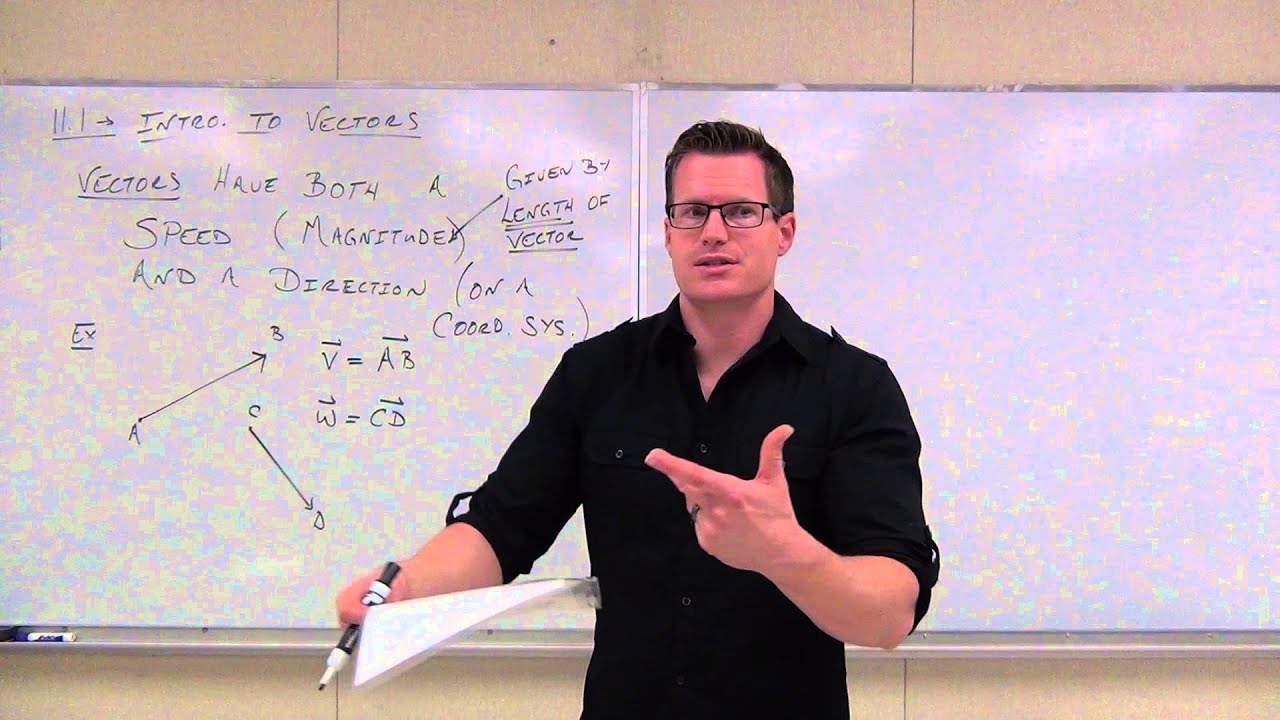
Calculus 3 Lecture 11.1: An Introduction to Vectors: Discovering Vectors with focus on adding, subtracting, position vectors, unit vectors and magnitude.
 hexed perch
this guy is awesome
 wise onyx
 brazen glade
anyone here good at statistics
 turbid zenith
@wild dune What sorts of functions?
 brazen pendant
So we have this system where our students have to solve three “core exercises” throughout the semester to get a grade bonus. the first one was released and is like impossibly hard (relates to the extremely black magic-y Golub-Welsch-Algorithm for Gauss-Legendre-Quadrature, which is not understandable even with a solid linear algebra background… and the students haven’t even covered inner products yet…)
I’ve written a mail about this to the main assistant, hope it gets changed
cause like, no student will be able to solve this
I’m questioning if I could
turbid zenith
Ah very cool
Interesting idea 😃
Depending on the level of sudent maybe like $\sin(\pi x)$
 burnt vesselBOT
DMAshura:
 astral fox
@brazen pendant it's bonus tho, right?
brazen pendant
yes, but these will be exercises that they should expect to be useful and worth doing
last years were mostly pretty cool actually
brazen pendant
not nearly as much as this, they were a bit time-consuming but generally fair
+0.25, on a linear scale from 1 to 6 with ≥4 required to pass
(i.e. 5%)
astral fox
each?
brazen pendant
no, if you do three
brazen pendant
that’s about the most of a bonus you’ll like, ever get
astral fox
yeah
brazen pendant
in any subject
astral fox
tbh answering (more than n) questions right on a final exam usually bonus
brazen pendant
also there’ll be more than three of these, but I can’t just tell my students ”just ignore this core problem, it’s actually just bad”
astral fox
maybe also suggest some more and let students choose 3?
brazen pendant
that’s already the plan but we don’t know how many will come
I think we had some six-ish
and had to do 3
brazen pendant
they’re only in the beginning of linalg 2
astral fox
all the more reason
brazen pendant
we’re talking second semester students
 brazen pendant
second semester physics students
brazen pendant
probably,
probably not
this course has a reputation for being bad but doable to pass, essentially
so students are not exactly going to go the extra mile
astral fox
i mean they're in physics
astral fox
well they'll probably need to know how to work with complex vector spaces so do some stuff on that?
brazen pendant
I’m not quite sure why you’re suggesting kinds of exercises to me
I’m in no power over the exercises beyond giving feedback to the main assistant
or the prof
(and it’s a numerical methods course, focussing on ODE)
(but they’re doing quadrature now as a warmup)
for reference also, the first core exercise we got (which I assume will be featured again next week or the week after) was implementing a bunch of ODE solvers and plotting the solar system with them
which is just really cool
(they gave initial values ofc)
limpid mantle
what's the purpose of this channel?
 meager pewter
Anyone that has read/done the exercises in Concrete Mathematics by Knuth?
 turbid zenith
Damn, well I missed it
Though I do have a question if anybody's up for answering it
What do y'all think of the way that complex numbers are currently introduced/taught in (your school system)?
 lethal leaf
complex numbers are a dumb name but I think they're taught fine
I wasn't taught like "ooooooh these are scary" and never felt that way
it was just taught as "here's another way to write negative square roots"
 weary veldt
I think it's taught quite nicely with an emphasis placed more onto the Argand Diagram and Geometry side of things rather than the algebra component. Some solutions to hard problems using algebra can be very elegantly solved by thinking geometrically.
limpid mantle
I don't even remember how they were taught to me
but it sticked
"this means the parabola doesn't touch the X axis"
I think i was actually introduced just as a number with the property that i^2 =-1
and they are kinda vectors
I used them a lot in school because I learned electricity there
and so we used them lotsa
turbid zenith
I feel like a lot of the time when they're introduced it's completely algebraically, and that kind of annoys me
"How do you take a square root of a negative number? You can't. But it's okay, we'll make up an imaginary answer."
And then if you're lucky, at the very end of the unit you might learn to graph them
 ocean bobcat
the square root of a negative number only exists algebraically
as evidenced by the fact that we called the reals the reals
the complex numbers are mighty handy for mathematics but the things in real life that they measure are abstract while the real numbers have very concrete existence as measurements
the nonnegative reals, anyway
visualizations like the complex plane or thought experiments like "what are the roots of this obviously rootless quadratic  " are useful to help you get your bearings but anyone with a solid grasp of basic algebra should just be able to live with the declaration that you can now write down things of the form "a+bi" where "i^2 = -1"
turbid zenith
See I have to disagree
If you think of them geometrically, it makes much more sense and is much more motivated
Just by introducing the idea of "Hey we have a number line, and we can move along it and stretch along it ... what if we could also rotate off of it?"
 wispy slate
i hate maths
turbid zenith
The whole concept that numbers can also describe rotation makes it much more down to earth
I'm sorry to hear that @wispy slate
 tawdry venture
@wispy slate great, then why are you here?
wispy slate
so i can improve
tawdry venture
okay, fair enough
ocean bobcat
i will agree that the complex plane is a helpful visualization, especially for interpreting complex multiplication; however, suggesting that there is a hitherto unknown "rotation" to the real numbers seems unnecessarily confusing, especially as an introduction to complex numbers, given the fact that in most applications the cartesian form of a complex number is a lot more arithmetically useful and students struggle with exponents and logarithms and the associated rules that are requires to use polar form correctly
wispy slate
sorry that’s to much to read
ocean bobcat
as someone who realized early on that algebra was just "push the symbols around and don't make mistakes" i found complex numbers a cakewalk and was really thirsty for what i know now to be ring theory
i think that visualizations and appeals to intuition make good supplementary learning material but that it's not useful to try to hijack intuition unless you can do so perfectly (by which i mean, in a way where wrong interpretations can be very quickly recognized and weeded out)
 wicked minnow

Mathematics Educators Stack Exchange
In algebra II, USA, we teach our students complex numbers. However, after algebra II, they never use complex numbers until pretty much complex analysis. The whole point of teaching them complex n...
turbid zenith
@ocean bobcat When I taught complex numbers to my geometry class as being fundamentally about rotation, they were a lot more comfortable with it than a lot of Algebra II students I'd taught
But I think I'm just going to disagree with you fundamentally here
Since the way you think about math is like ... the antithesis of how I think about math and how I try to get students to think about math
wispy slate
idk maths is big noob
turbid zenith
(i.e. nothing but symbol-pushing)
wispy slate
i think ima come on this everyday and complain that math is hard
 unreal ledge
I think both is important. It helps to have the visualization, but take that away, it shouldn't tank a student
turbid zenith
Sure, that makes sense
My ideal introduction would be to introduce i as a number that upon multiplication rotates a number by 90 degrees -- from that you can easily extract powers of i, and then you can let the algebra take over from there
As in i acts algebraically just the way you'd expect. But it feels like it "comes from somewhere".
You don't have to do DeMoivre's Theorem in its full trigonometricity to start thinking of complex numbers in terms of rotation.
ocean bobcat
the trouble i have is that in my (admittedly limited) tutoring experience people will react positively to pictures just because they go "aha, yes, a picture, this is pleasing to the eye and i can parse it" but whether it sticks from the perspective of comprehension is a 50-50
unreal ledge
I wonder if a student would have trouble with that approach, without knowing vectors?
turbid zenith
I've found they don't --- though it depends what you mean by "knowing" vectors
Again you don't need to know the full generality and mechanics to start playing with the ideas
turbid zenith
@wispy slate Try to see a reason for everything you're doing. Like why it works.
If you understand why something works it's a hell of a lot easier to do it and not feel like you have to memorize a bunch of arbitrary rules.
You'll always have some memorization to deal with but it makes it much less painful.
turbid zenith
Yeah, practice and effort can't be avoided. But you can refocus HOW you practice and WHERE your effort goes.
ocean bobcat
how can you expect to become good at a thing if you don't want to do it
wispy slate
idk sounds like to much work
ocean bobcat
rip
 young stream
I’ve gotten reasonably deep into number theory, topology, and kinda into complex analysis at a late undergrad or very early grad student as a high schooler over the last year or so
 old badge
doing an algebra2+pre-calc+some calc over here
(primarily learning alg2, bur messing around with the other 2 and gonna acrually learn over the summer)
i believe it's very possible
quite fun too, and more controlles
no teacher controlling what you're doing
just syllabi and what you want to learn
 strange bronze
One thing that I've been thinking about recently: to what extent is "humour" valuable in mathematics education? Is it just distracting?
Like using the above to illustrate the concept of a complement of a set
civic tree
hehe
strange bronze
It's funny, but does it actually make learners form useful connections, or does it just obscure the concepts?
I also recall old memes like:
"a wild e^x appeared!"
"Go, calculus student!"
"Calculus student used d/dx!"
"It wasn't very effective..."
Or whatever
civic tree
ok those memes are just bad
strange bronze
Are the "connections" formed by these jokes/analogies actually meaningful
civic tree
the bit above sounds okay but idk enuf about sets to say how much it's distracting
strange bronze
Or even just something like "we don't write the × symbol when multiplying anymore because mathematicians are lazy"
To beginning algebra students
I mean, on one hand, I'd imagine a lot of students would feel more excited/engaged in the material if it feels more.... Personable? I guess
Or like they're using a "trick"
But on the other... Yeah, there's a reason "trick" is a bit of a slur in mathematics
Like in the above example, it obscures the real reasons we avoid × (looks too much like x, makes polynomials and formulas look messy, dilutes the connection between multiplication and fractions, ultimately unnecessary)
And even if you explain it like that... Id imagine introducing it as a "hack" would still make students view it as such
ocean bobcat
math meme facebook groups are the only way to stay sane for some
though arguably those people are already way past insane
 lime echo
Hmmm, currently picking modules (deadline is still a while away) for my MSc, and this is what I've got so far:
- Differential Geometry & Lie Groups
- Advanced Partial Differential Equations
- Complex Function Theory
- Modules & Representation
- Harmonic Anlaysis
I need a total of 6 (+ a 2 semester project) and curious if anyone had any suggestions o:
Currently eye-ing up Semi-group theory, Geometric group theory, or Hyperbolic geometry
Could pick a statistical module, or even an OR one
lime echo
Any thoughts? o:
brazen pendant
I don’t have any real thoughts except hyperbolic stuff is cool… but geometric group theory sounds fun too, even though I have no clue what it entails
lime echo
I just talked to my tutor, asked him the question I dumped here
he said it seems like I enjoy analysis, so if I wanna do a PhD I should focus on analysis themed modules
moreover, since I picked all the availible analysis modules offered, just pick what I find interesting
 boreal sentinel
Sasha and Sascha
lime echo
I ish superior one! 
 scarlet perch
t!choose sasha | sascha
 hot stormBOT
🤔 | Colorodo Brown Stain, I pick sascha!
scarlet perch
oof
old badge
hey do hyperbolic geometry @lime echo
it's so very fun and stupid
i don't even understand it bc i havent taken a coirse on it
but i love it
i'm surprised that's even an option
also what's an MSC?
wispy slate
yo some basic question
2x+1 / x
is the same as
2x+ 1/x
?
whole thing over x vs only the 1 over x
is it the same
no
 indigo shale
you can distribute it tho:
$$\frac{2x + 1}{x} = \frac{2x}{x} + \frac{1}{x} = 2 + \frac{1}{x}$$
burnt vesselBOT
tawdry venture
why is your latex render in times new roman
wispy slate
why not
tawdry venture
times new roman < computer modern
brazen pendant
computer modern < libertine tho
boreal sentinel
Wingdings > comic sans
 warm lintel
braille > wingdings
boreal sentinel
Nordic runes > braille
 weary linden
Hello, and good morning everyone! I've just started my first College Math class this week, and it's giving me a bit of trouble. I am trying to do it mostly on my own without getting a tutor involved. I am having problems finding the proper equations, to get to my answer. I even looked online and was not able to get a specific set of rules to use, for this problem I am on. I was wondering if someone had a moment to tell me if I have figured out the correct steps to take, in this problem I am working on. (apologies for the wall of text!)
brazen pendant
don’t ask to ask. just ask your actual question, but do it in the right channel; this is for discussing how to teach math n stuff, not for math help
weary linden
I tried, but I have no permission in the mathematics channel under general.
weary linden
And I am not sure what this falls under.
brazen pendant
because that’s not where to ask questions
when in doubt do it in a question channel
which are… made for questions
weary linden
Under MATH HELP: OPEN?
weary linden
Again, I am not sure what this problem falls under, it doesn't seem to fit any of the specific criteria listed for any of those channels. And my problem is finding the equation. Could you recommend one of the channels for me?
weary linden
Thank you.
 fading robin
Are you guys grad TAs?
boreal sentinel
Oh wait I got confused with being a phd
Then in that case I'm Sascha's inverse
Grad but not a TA
 tepid sand
can a teacher invalidate a student's answer and solution just because "it's too advanced"?
something along the lines of "i didn't teach that yet"
 blissful knoll
the only problem i see with solving an easier problem with a more advanced technique is if the method follows from the simpler statements you have to solve
circular reasoning and all that
tho it really depends on the teacher 
tepid sand
i mean
i just used l'hopital's rule on 3 problems
that's it
it's not even that "advanced"
in fact, it was much easier using l'hopital's rule
blissful knoll
as long as you properly apply it i dont see a problem
tepid sand
instead of cancelling out common factors and stuff
blissful knoll
tho its always a good idea to try without l'hopital
tepid sand
im too lazy for that reeeeee
i actually double checked without l'hopital's rule and my answer is still correct
reeeeeeee
 tepid sand
but can i complain
i'm actually on a scholarship and in order to maintain it, i need to keep my grades above a certain value
and the problems my teacher didn't count as correct took a decent chunk off
blissful knoll
that seems weird to me
but if you wanna be sure, you should ask the teacher if its okay to use lhopital
tepid sand
the quiz already took place and the score's already there
so idk if i can still ask that
blissful knoll
oh
you can always try to reason with them
tho im not sure how effective that will be
since technically it is a correct solution to the problem
blissful knoll
at least in 3, lhopital cant be used right
if that says s -> 9 then its not 0/0
or inf/inf
tepid sand
i did manual approximation and it approached the same value iirc
hold on let me get my calculator
and if you check what 16/7 is
oh, it's 4 btw
not 9
sorry my handwriting's shite
blissful knoll
hmm then i dont know
 bleak ingot
 crisp vapor
ah shet haha sorry
 tall bay
i whined about math education so much it finally has its own channel
but now i have no whining left to do
thats tuff
 spark flare
Just whine to your heart's content !
turbid zenith
Does anyone have any suggestions for student-centered activities about graph theory appropriate for motivated/gifted high school students?
hasty widget
"It is also based on the conclusions of Krutetskii’s research, stating the existence of three types of mathematical ability: analytical, geometric and harmonic (combining the other two). The test was validated by a panel constituted by two university teachers of mathematics, one teacher of mathematics of the 2nd cycle and one 1st cycle teacher specialized in mathematics. . . ." - Ferreira, D., & Palhares, P. (2008). Chess and problem solving involving patterns. The Mathematics Enthusiast, 5(2), 249-256.
brazen pendant
literally explained in the next four words
wispy slate
any arbitrary set can be adjusted to contain 1.9repearing
 wispy seal
and we see the limit supremum is 2
wispy slate
im gonna right 1.9h for that btw
wispy slate
i feel like u're working with poor definitions
wispy slate
there are uncountably many sets of numbers
wispy seal
Do you know what a real number is
Omg
Not those sets
R=set of all real n umbers
etc.
wispy slate
im aware of that.
though those are not definitions of the numbers just a nice a heuristic for organzing them.
but okei
wispy seal
they're the definitions of the terms real...
You can't just go say a real number is only a whole integer
which is what you've been suggesting
wispy slate
that is not a definition of the reals that sufficies to do arithmetic or anything of equal complexity eith the reals
and i didnt say that
i didnt say anything like thay
wispy seal
what are you talking about. Provide an example.
wispy slate
that*
wispy seal
you said .9h in your notation is not real
wispy slate
what are you talking about?
wispy seal
multiple times
wispy slate
i said 1.9h8 is not a real number
wispy seal
...
I will admit that while I strongly think it's a rational number because of limit epsilon definition, since I'm not confident I'll leave that unsaid. Look at the irrationa ldefinition
that's still a real number
even the wacky infinite number
wispy slate
okay, what do you think an irrational number is?
wispy seal
Any non imaginary number
wispy slate
and what do you think a real number is?
wispy seal
a real number is any number expressed on the real number line
wispy slate
okay, thats a circular definition
i can just as readily ask, what is the real number line
wispy seal
Fine
a real number is a value of a continuous quantity that can represent a distance along a line
Dictionary definition
wispy slate
well, that's not a mathematical definition
and arguably not a platonic/physical based one
wispy seal
it is from wikipedia I can find the wolfram source
wispy slate
i am asking you what you think a real number is
wispy seal
Consider the set of rational numbers, ℚ.
For any two Cauchy sequences of rational numbers 𝑋=⟨𝑥𝑛⟩,𝑌=⟨𝑦𝑛⟩, define an equivalence relation between the two as:
𝑋≡𝑌⟺∀𝜖∈ℚ>0:∃𝑛∈ℕ:∀𝑖,𝑗>𝑛:∣∣𝑥𝑖−𝑦𝑗∣∣<𝜖
A real number is an equivalence class [[⟨𝑥𝑛⟩]] of Cauchy sequences of rational numbers. (See Equivalence Relation on Cauchy Sequences.)
The set of real numbers is denoted ℝ.
I'll admit I have no clue what that means as I didn't take a class in set theory
wispy slate
that's certainly one such definition
wispy slate
okay, so this is a definition of real numbers. there are multiple.
wispy seal
Informal one I go by: Any number on the number line is referred to as a real number.
This includes more numbers than the set of rational numbers as 2‾√ for example is not rational.
The set of real numbers is denoted ℝ.
wispy slate
however, it relies on a particular notion of sequences, differences between sequences, and convergence
for these reasons, i think 1.9h8 is not a real
wispy seal
I feel like you're messing with me: the definition of a real number is pretty solidly set
wispy seal
and it literally says up there that real numbers can be ifninite
With infinite terms
And 1.9999h8
wispy slate
there are many things that satisfy thar
that*
and the reals are not unique in that regard
wispy seal
has no difference fro msomething with infinite terms
wispy slate
there are, for example, surreal numbers
and hyperreals
and infintesimals
the real line can be thought of as having "gaps" that are too big for any real number to fill.
which is where infintessimals come in
wispy seal
HMm reading up on it
Okay, I'll admit I'm not at all experienced with the concept of surreal numbers, but it seems to me that .9h in this case does not equal 1
@wispy slate
wispy slate
yes. .9h in this case id say equals 1
wispy seal
@wispy slate But if we use the definition of surreal numbers I've found, it seems like that would not be the case
correct me if I'm wrong, but it seems like surreal numbers are based on the idea that infinitisemal [1-.9h] does not equal 0
Now, if we go ahead and assume the real numbers are complete... doesn't 1.9h8=2
tawdry venture
you need to first define what $1.\overline98$ means, and if you define it as $1 + 0.9 + 0.09 + \cdots$, explain why you're putting that eight there
burnt vesselBOT
Ann:
tawdry venture
and what, for example, something like $1.\overline97$ would refer to
burnt vesselBOT
Ann:
wispy seal
@tawdry venture Well I still rather firmly believe that if we assume the real number line is complete, that would all be 2
Because we can just subtract the .0h7
And then we get .9h
added with .0h7
burnt vesselBOT
Ann:
burnt vesselBOT
Ann:
wispy seal
@tawdry venture if we assume the real set is complete it is 0 isn't it
They all become an epsilon delta limit
Which goes to 0
burnt vesselBOT
Ann:
wispy seal
Now that I've read up about surreal numbers, I can kind of see what you were trying to argue if you use a different definition for reals where infinitesimals have actual values....
tawdry venture
you can't make any statements about it before you define it
tawdry venture
so you define $0.\overline01 = 0$?
burnt vesselBOT
Ann:
wispy seal
as n-> infinity
tawdry venture
the limit of $10^{-n}$ as $n \to \infty$ is indeed 0.
burnt vesselBOT
Ann:
wispy seal
Then I’d definite .0h1 as zero if the real set is complete
tawdry venture
so this begs the question
why even bother with $0.\overline01$ in the first place if you're defining it as zero right off the bat?
burnt vesselBOT
Ann:
wispy seal
Well why do you need to define it? In cases like 1.9h8 you can use the method of subtracting and taking the limit to get 2
So long as you can prove for n>N x-L<E
tawdry venture
$2 \cdot 0.\overline9 = 1.\overline9$
burnt vesselBOT
Ann:
wispy seal
Hm okay yeah that’d probably be the logical conclusion of me using complete real sets. On the other hand if we kind of abuse notation
We can use infinitisemal values like .0h1
And subtract them out
And make everything in terms of .9h+some small value
wispy seal
Okay why can’t we turn things like 1.9h7 is 1.9h+.0h7
Take the limit for 1.9h as 2. And turn .0h7 as zero
brazen pendant
one way to define $0.\overline{0}1$ would be as $0 + \varepsilon$, where $\varepsilon$ is a number defined to be smaller than $\frac{1}{n}$ for all natural $n$, but bigger than $0$
burnt vesselBOT
Sascha Baer:
brazen pendant
(hyperreals)
of course, ε is not a real number
but you can certainly define it
and study its properties
 onyx knoll
 sterile rover
ok here's a bit of an odd question
wth is calculus?
see where I am from, calculus is not separate from analysis
in calculus do we just postulate the computation rules for limits and derivatives and integrals
without any proofs?
 normal aurora
where I'm from calculus is just anything involving differentiation and integration
so limits aren't included
 vestal quiver
There's no "calculus" either where I'm from
sterile rover
there's no proofs in calc is there
vestal quiver
In France, mathematics teaching is divided in 3: analysis, algebra and probabilities
normal aurora
no mechanics 
vestal quiver
that would be physics
sterile rover
CM is 99% mathematics tho
the other 1% is newton's third law
anyway back to calculus
vestal quiver
mhmm
sterile rover
I might be able to find what a calc curicculum looks like
vestal quiver
do you mean it's mostly calculations?
sterile rover
but how is it taught?
normal aurora
in america they use a bunch of weird labels
normal aurora
probably some weird handwavy shit
sterile rover
hmm, I probably need a USian
normal aurora
hmmm

Khan Academy
Learn for free about math, art, computer programming, economics, physics, chemistry, biology, medicine, finance, history, and more. Khan Academy is a nonprofit with the mission of providing a free, world-class education for anyone, anywhere.
seems quite good actually
sterile rover
dang that looks like cancer
brazen pendant
for me “calculus” is essentially analysis sans the rigor
basically, we have calculus in high school (learn the rules of integration and differentiation “intuitively” or computationally) and then analysis if you’re a math or math-adjacent major first year uni
no epsilons in calculus
but of course we don’t call the course “calculus”, we call it “mathematics”
because our high schools don’t have modular courses
you just have math
and the teacher has to teach certain topics till the end
normal aurora
in the UK we have
'Maths' and 'Additional Maths'
then 'Maths' and 'Further Maths'
brazen pendant
the word “calculus” really doens’t even exist in German tbh. the fundamental theorem is called “Fundamentalsatz der Integral- und Differentialrechnung”
sterile rover
Infinitesimalrechnung ?
sterile rover
uhh no?
Die Infinitesimalrechnung ist eine von Gottfried Wilhelm Leibniz und Isaac Newton unabhängig voneinander entwickelte Technik, um Differential- und Integralrechnung zu betreiben.
brazen pendant
never heard it called that
sterile rover
hmm
wispy seal
Hmm calc as I was taught always included the formal limit definition to prove stuff
wispy slate
they just say "here's the actual definition of limit" and then for the rest of the course there are no rigorous proofs
wispy seal
@wispy slate not always
My calc class tried to prove it at least explain why everything was
Chain rule, product rule,
Actually I forgot why product rule is a thing
wispy slate
lol
wispy seal
I could probs prove it through chain rule abusive notation 🤔
I think it’s proven actually through limits tho
:bleh
wispy slate
prove it through multivariate chain rule
wispy slate
why?
wispy seal
I only got six hours of sleep so I might be doing math wrong
¯_(ツ)_/¯
Hmm assume f=function u * fiction g both in terms of x
Yeah okay I don’t see it
I’d have to try the limit way
Yeah I looked it up and there’s a really elegant chain rule proof

Mathematics Stack Exchange
A while back I saw someone claim that you could prove the product rule in calculus with the single variable chain rule. He provided a proof, but it was utterly incomprehensible. It is easy to prove...
civic tree
yus
 soft valley
is not this for math teachers?
civic tree
it's for any discussion of math edcations lol
soft valley
oof
soft valley
In the "high school" (meant for 16-19 year olds here) you can choose differential equations, matrix calculus etc
What should I choose lol
soft valley
lol
soft valley
it is a special math high school though
soft valley
there is also like science n stuff
civic tree
my highschool is just known for having kids that are above average and nothing else
no real focus in any subject
exemplar test scores and nothing more
it's sad
soft valley
oof
soft valley
we do not have that
we have ib high schools tho
so yeah there is 15 optional courses for u to take in math
soft valley
sure
civic tree
yus ty
soft valley
there is game theory and basics of analysis
and statistics
and some math competition courses
civic tree
😭
soft valley
😭
civic tree
okay !!
soft valley
there is an entry exam tho
nothing that hard
just the stuff that has been taught in our schools
soft valley
"However, our mathematics high school is not just a high school. It is a community where mathematically oriented, special talented young people can develop their mathematical thinking skills beyond the usual high school level while being part of a group of highly respected individuals, but also working closely, eager to learn and develop."
sksk I am wheezing
 fervent topaz
I'm not sure if this is the right place to ask, but I need help studying math.
My study style just does not work.
Any suggestions for approaching a math text book and studying/taking notes?
wispy seal
@soft valley I'd suggest De
soft valley
De?
soft valley
oh
wispy seal
If your school offers it Linear algebra/multivariable calc ofc
wispy seal
Lin alg is a pretty interesting class ¯_(ツ)_/¯
It's what a lot of modern computing is based on
Ofc all these classes depend on the teacher, but DE is very interesting
wispy seal
Then again, it can also be a waste of time
Multivariable calc in my exp. has stuff you actually learn
Diffeq felt a lot like Multi+extended Calc+some cool stuff
soft valley
is it hard lo
wispy seal
Depends. It's a HS class, so probs not as hard as it could be? Probs more introductory level
soft valley
idk about here
wispy seal
If you're into proof stuff, you can try complex analysis. But that probs requires DE first
Are you US?
soft valley
Nope
wispy seal
I went to a sort of mathy school in the US
soft valley
It is a math high school in Finland
wispy seal
And I'd say in my experience: DE was kinda useless but interesting how we learned logic stuff. PDE was like multi but worse (it had to do with the teacher liking Mathematica tons so it's meh)
Multi was good
soft valley
the only one if we do not count 1 weird place
wispy seal
very mathy and cool stuff
Lin alg: was cool. Really useful
Complex Analysis: was why I kinda gave up on math :L
Was too proofy
soft valley
oof
I enjoy math anyway so I will take a few courses more cuz 30 in year is needed at least
(total in everything else ofc)
like English etc
wispy seal
oh this is a different system
wispy seal
Now that I noticed, I will say I'm a bit offended I was never told I was being taken off. On the other hand I was a bad helper
soft valley
wish we had it
soft valley
there are required courses but I am talking about the optional ones
classic geometry, game theory, diff eqs, matrix calc, statistics, basics of analysis, complex numbers and functions
what do u think? also some preparation for exams and math olympiad courses etc
fervent topaz
@wispy seal what do you mean which thingo?
wispy seal
@soft valley oh sorry take stat for real
Diffeqs is suggested
Matrix calc hmm I'm assuming that's multi calc
Yeah I'd take that
Complex depends how it's taught and what you're after.
Could be interesting
Also lmao MOs
I was shit at those was never careful enuf :/
@fervent topaz sorry when did I say thingo
Oh to the question you asked
what class is what I meant
fervent topaz
@wispy seal Calculus but honestly in general
soft valley
Oof
wispy seal
@fervent topaz for learnign calc
For me, it was not too bad as you can think of it in limits and real life
one thing that helpsi s proving stuff
doing problems ofc
fervent topaz
i just am bad at writing notes i think
civic tree
oh matrix calc is multivariable? so like not like insane matrices but just vectors? lolwut
wispy slate
lol ninja
civic tree
ya fam
wos worried they made yet another calculus field
again
there’s already like
200 calculus
s
wispy slate
calculi
civic tree
ye lol
wispy slate
what do you mean
soft valley
like what optional math courses should I choose
wispy slate
is linear algebra available
wispy slate
take the uni course then lel
soft valley
and ofc there is the stuff taught for all of us which is basically ”khan academy: algebra, precalc and calc, trig, vectors”
🙄
yeah I will if I have enuf time
Some do their math homework for 2 hours
wispy slate
and you do it in 5 minutes
soft valley
nah
wispy slate
lol
wispy slate
im also smol
soft valley
yesyes
ok I do my ”math homework” in few minutes but it is basic arithemics
so not real math
ik I spelled that wrong
wispy slate
ah ok
 proper sky
What is a gud math class to end with in senior year of high school
 topaz summit
How do I develop an intuition for math? Big question, I know, but I've made it all the way up to calc 2, taken stats, do computer science undergrad research using concepts from probability and Bayesian inference, etc but I still feel like I'm struggling to wrap my head around the basics when it comes to reading the actual math. It's like approaching a new language every time and not remembering it the next time lol
Or like I'm not able to keep all the meanings for each symbol in an equation in my head and interpret the overall meaning
astral fox
do easy problems & verifications as you're reading
topaz summit
I've done that, lol. Like I said, it feels like everytime I'm approaching it for the first time. Even seeing the equation for a line in a slightly different form completely throws me off
It eventually comes to me because I work hard at it, but even after putting hours of practice into it, it still takes me twice or three times as long to do what plenty of others just kind of do. it's like I have some form of dyslexia but with mathematics
 topaz summit
true. and it works when it works, until I'm constrained by time lol
oh well, c'est la vie
 deft bridge
@topaz summit try taking to people about the math. Try to put yourself in situations where you'll have to explain it to others. Try to put yourself in environments that force you to think about it a more diverse set of ways. Not to sure what other environments though
 weak hawk
@topaz summit Imo hang around people who are good at math and actually talk to them
Their passion is quite infectious
soft valley
I wish I could talk to people who are really good
my friend is good but the math we have now is pretty easy for everyone and should not be called math
wispy slate
there are people here who are really good though
 sweet swan
What can people do with high level mwth degrees besides being a teacher
wispy slate
research
 hexed harbor
Math improves thinking, and you can never have too much of that. Also, programming is kinda a form of mathematics.
normal aurora
silently hoping I don't become a programmer
 stuck lark
My class is planning a revolution to avoid a math test tomorrow... French problems...
unreal ledge
One might say it's a French revolution
limpid mantle
une révolution s'il vous plaît
 wind river
Mdrrrrr
wispy slate
mdr
boreal sentinel
vdr
brazen pendant
Today I wanted to hold my class, had planned to do everything on the projector
my laptop's VGA port broke, it seems
That was a fun improv and I need a new laptop set up till next week
soft valley
alright
 olive mulch
yeah, also calculus, number theory, combinatorics etc
olive mulch
basically it all depends what your goals are as a programmer, but in general you'll do fine with algebra, linear algebra, some discrete maths, some calculus and some number theory
soft valley
ofc they teach u basic single variable calc
sadly there is no linear algebra
unless you want to take a university level course
but in university there is
olive mulch
yeah, multivariate calc can be useful, simulation, graphics, AI, etc benefits from knowing some
ah, well if you're really motivated then you can get a primer on linear algebra for computer scientists / engineers etc
it's all very useful material
soft valley
well it has the most courses u can take in math in this country
so cannot really do better
 vivid junco
lmao that pic
wispy seal
@proper sky if you want to go into math
some proof based course
@soft valley computer programming needs set theory right...
 indigo hollow
hello
wispy slate

indigo hollow
I want to know how
Can I solve a PDE using Probability
some recommendation
for books
if possible plz
wispy slate
🤔
There is probably some niche context where it is.
But it'd be the other way around 99% of the time.
And even then there's surely a better way.
wispy slate
Which one?
indigo hollow
pdv{C}{t} = pdv{C}{x}{x}
$$ pdv{C}{t} = pdv{C}{x}{x} $$
$$ \pdv{C}{t} = \pdv{C}{x}{x} $$
$$ \pdv{C}{t} = D.\pdv{C}{x}{x} $$
burnt vesselBOT
Musbou:
indigo hollow
with D is positive constant
wispy slate
And what's your approach
indigo hollow
I am at the begining point
i tried to understand Characteristics method
but I didin't find anything suitable to my level
And I am trying to find some advices on a way to solve it
brazen pendant
please use the right channel
also please don’t answer questions in the wrong channel, just redirect
we might as well not have channels otherwise
 lost raptor
What's a nice intuitive way to explain asymptote behavior to people with virtually only high school algebra knowledge?
normal aurora
it describes the general direction of the curve as you progress along it
 halcyon swift
im not experienced with making diagrams and stuff but I'd like to ask if there are any places to look for a formal understanding of this addition algorithm. its super helpful for adding large numbers together.
tawdry venture
your diagram all but fails to explain the algorithm
brazen pendant
@normal aurora perhaps show how as you “zoom out”, the curve starts to look more and more like its asymptote
eg √(x)/√(1+x) looks like this from 0 to 5,
(and now we fiddle with wolfram alpha no not cut the y axis)
annoyingly, wolfram alpha seems to not understand mathematica syntax well enough
Plot[Sqrt[x]/Sqrt[1+x], {x, 0, 500}, PlotRange->All] just gives an “I don’t get it” error
but the point is that would look almost like a line
halcyon swift
@tawdry venture thats ok im just really bad at diagrams ill come back at a later time to try to make one that's better
old badge
wanna hear something? my girlfriend, who is in my advanced maths class didn't know the difference between circumference and area, and couldn't give me the formula
apparently her teachers just never prioritized it for more than a few short days, as it wasn't tested on
imagine being in high school maths and not knowing the circumference formula
American education in a nutshell
spark flare
I didn't know this formula when I entered high school either
brazen pendant
or calculus
old badge
idk it just seems so fundamental to me
i mean, not fundamental, but
they just spebt so much time on it in my classes
actually, it seems the kids who did advanced math earlier got really screwed
they tookk 2 yrs of pre-algebra and stuffed it all into one, to muddle school kids with a subpar teacher
so they all did mediocre in algebra
now theyre in honors geometry and cant solve quadratics
math educatuon
tawdry venture
big yikes
 viral crag
considering that I'm 35% through what I need to know for series/sequences/divergence tests
and have some knowledge of taylor, maclaurin, taylor identities etc etc
should I start using my prep review books now? Or should I wait until I've finished
ap exams are next month and I was wondering if the prep books could help accelerate my progress a bit
astral fox
should already be comfortable with practice tests tbh
wispy slate
Anyone know anywhere I can learn the stuff in the advanced math section online
brazen pendant
not really the channel to ask
textbooks are the way to go
figure out what you wanna learn in particular and well tell you how to get there
im just always here potato
 plain valve
yeah but this channel as well - that's a coincidence lol
only channel i've checked today
tawdry venture
apparently not.
unreal ledge
I'm on mobile, the sidebar is hidden unless I look for it - which I never do. I assume a lot of people are in my boat
wispy slate
i should buy a boat
civic tree
5 wood in a u shape tho
 lapis furnace
^^^^^^^^^^^
civic tree
yUh
 fading zinc
I am currently self-studying a Measure Theory book. Would it be possible for anyone here to kindly review my progress periodically at your convenience and also quiz me as per your schedule?
Kind of losing discipline working on my own.
 prisma hawk
Sidebar.
 proper sky
Nice
brazen pendant
private or at your school? what'll you be teaching?
spark flare
Private, l'll teach maths to highchoolers
I'll try negociating to see if I can tutor freshmen too but they want someone who is at gradschool for that
vestal quiver
French highschoolers?
spark flare
Yes
vestal quiver
are you not afraid that may be boring?
spark flare
Yes but I gotta make money 🤷
vestal quiver
Oh yeah indeed
spark flare
If it's too boring I'll stop,m and I'll try finding uni students online 🤷
But I'm registered in a tutoring website and I havennt found anyone
brazen pendant
the fact that you can TA starting from your third semester is one of the best things about my school, tbh
spark flare
But can you tutor uni students?
Or wait, TA means teacher assistant right
So you follow a teacher around basically?
brazen pendant
I am currently in my fourth semester and im a teaching assistant, holding 2h of classes (tutorials) per week and correct homework
I get paid for 15h
spark flare
I think I lacked enthusiasm during my interview 😰
brazen pendant
@spark flare 28 Francs/hour at 15h/week for 14 weeks; 1 franc is essentially equal to one USD though you have to factor in the much higher cost of living
I only actively teach 2h/week, the rest is correcting homework and preparing, and occasionally helping out in the StudyCenter (which is basically an unstructured tutorial where people can go to solve problems and ask the TAs)
spark flare
@brazen pendant francs? Where do you live, the 20th century's France 
brazen pendant
swiss francs
tawdry venture
CHF
 winged horizon
what am I
civic tree
less than one
also real talk
do you think it's a good idea for me to start like a seminar kind of thing at my school
sort of seminar
it wont be super duper long talks
but like
smol presentations
monthly or biweekly
where ppl who like math can sign up and present at a competent level some math
brazen pendant
I mean do you have things to talk about?
slash know people who do
and do you have people who would listen to them
civic tree
i could come up with a few multivariable calc presentations
brazen pendant
if the answer is yes to both, then why the heck not
civic tree
but
yea the issue is
people
my school is supposed to be academic
but it's fake
its sad and there are like
many people i can imagine who'd want to hear and do presentations
but cant because of how much stress is already on them from all these other fake things the school makes them do
there are other people also who know more math
and they could also present too
but are they gonna is the tough part
idk how im gonna motivate this schoolwide
brazen pendant
I feel like the way to go would be get 2-3 more people on board to rotate with you on presenting and make it very clear than anyone is invited to join in
and in particular, absolutely anyone is invited to actually listen, because no audience makes it a bit noninteresting :P
wispy slate
Do ppl teach in this channel
vestal quiver
no, they rather talk about teaching
civic tree
i talked to one of the math teachers (who is also my supervisor for my IB paper  ) about starting the seminars and he said that we could definitely do it, and told me that we'd work on creating a set of topics in advance !!!
im excited
he's very wholesome too we had a discussion about the nature of math versus art and why beautiful results arent seen in highschool because we're still working on the basics, while for something like art, people can understand already with a little bit of competence why some work of art is significant
he said that if we were to take what we were doing in highschool in a math class and apply it to art education, it would be like painting a canvas single colors over and over again
rip highschool maths then
im not fully on the idea of the comparison but eh
you get what i mean
anyway im just happy that something is gonna happen i think
 grim laurel
That's awesome! I hope it goes well!
brazen pendant
I feel like it's less painting with one color and more painting by numbers
the results in high school can be alright, but there was no creativity involved, it's just following steps
 solemn glacier
When it comes to actually having a solid understanding of maths
What cna I do that’s not studying my text book?
Don’t get me wrong, I don’t mind it, I spend 2 hours with it every day
But I’ve noticed a pattern with it
Th ebook does a good job at teaching me the subjects in theory
But then when I get to an mock exam paper, it falls a part because I’m not used to applying it practically
brazen pendant
I reckon a solid 50% of your study time should be solving problems
if your textbook has problems, do those; else find ones on google, there's problem sheets for everything floating around
knowing the theory and applying it are very different, but the latter can help you a lot in understanding the former
tawdry venture
theoretical knowledge without practical applications is exactly and precisely WORTHLESS.
brazen pendant
eeh
that's taking it too far
I think there's merit in knowing theory from fields you're not working in, because it means when you do need it you've heard of it and know what to look for
i'm not surprised you're constantly miserable with a mindset like that
tawdry venture
i should just shut up before i start spewing any more bullshit in the agitated state i'm in
brazen pendant
that's an extremely pessimistic outlook
(note for the confused reader: there was a deleted message)
tawdry venture
thanks for confirming it's all my fault, though
brazen pendant
look, I will not tell you it's not if you so much desire it to be
anyway, imo, knowing more is always good, but it is extremely important that pure knowledge is not enough to get you anywhere
in the end, results matter
if you know all the grammar rules but don't practice speaking you wont be holding conversations, nevertheless knowing those rules can be useful, and interesting in their own right
if your goal is not speaking the language but learning about it, why bother practicing to speak (answer: because it will still help you keep those rules memorized)
 dusky scarab
Should be more like 5% learning theory, 95% struggling with problems imo
brazen pendant
unless you have a ridiculous amount of time, you'll never get anywhere at those speeds
you can't keep working on the same stuff for ages
dusky scarab
and that is indeed why I never get anywhere XD
brazen pendant
like let's say you study a few pages of theory for an hour. You now propose to solve exercises on that theoey for 20 hours
dusky scarab
At one point in last semester I tried proving lagrange theorem from (practically) scratch
Spent 14 hours on it
brazen pendant
something like 3 hours of classes (theory) and 4-6h of homework has worked well for me
which lagrange theorem
order of subgroup divides order of group?
dusky scarab
Yes
dusky scarab
Yeah if you know what cosets are XD
brazen pendant
a few more if you have to justify group multiplication to be bijective (when fixing one argument)
dusky scarab
yes I did not realise that for like 13 hours ok XD
To be fair a lot of that time was spent trying to prove some other difficult results
Like cauchy's theorem
In any case I doubt many people know how hard it actually is to come up with a proof of lagrange theorem
Because lecturers just blurt out the proof in class
that's actually one of the reasons I don't go to lectures
But imo, group axioms, relevant definitions, and the statement of lagrange's theorem is comparable in difficulty to an IMO3/6 problem
Anyway, getting back to what I was saying before - learning material usually takes almost no time at all anyway: really all you need are definitions, and then the "understanding" bit can be built when doing the problems
brazen pendant
yea it's definitely a proof with a lot of insight behind it
dusky scarab
Yeah it is XD
One of the main difficulties was actually realising that you had to start from the subgroup
And prove that all groups containing the subgroup have order a multiple of the subgroup's order
dusky scarab
yeah I still don't see how bezout is helpful XD
brazen pendant
if you can, look at their curriculum/materials. there'll be things they do differently than what you're used to and it's good to be prepared for that and not confuse them with your own favourite notations/tricks
 autumn trellis
I think you must take take inspiration from Richard. Visit Aops ,click on resource then go to the video library observe his way of teaching. @spark flare
wispy slate
patrick who
spark flare
@autumn trellis thankq I'll check it out !
@turbid zenith maths, I don't know exactly but I think they're doing probabilities right now so probably (lol) this
autumn trellis
https://artofproblemsolving.com/videos @spark flare
Videos aligned to our Prealgebra text, the first half of our Introduction to Algebra text, and our Introduction to Counting & Probability text.
@wispy slate I mean Richard Rusczyk.
wispy slate
oh
autumn trellis
I love his way of teaching.