#math-pedagogy
1 messages · Page 25 of 1
 tawny slate
getting baited like this is how alt-right propaganda continues to spread on social media platforms
gotta learn when to hold your tongue and ignore it
 astral sinew
I'm kind of used to it, I am from a French discord server and crackpots regularily join the server, he is far from the most aggressive I've ever met, so it was quite funny lmao.
tawny slate
i do think it's entertaining (@ outsider would probably agree here too) but ultimately there are better things to spend time on still, i regret even reading as much as i have
 quasi maple
That's why I stick with the #prealg-and-algebra to #calculus region despite having a BA in this sorry excuse for a subject /half-sarcasm
astral sinew
If you regret anything, be aware I spent half of my holidays basically fantasizing off beaten backs trails in the Alps, for the next vacations my parents will take (because hiking is my sole passion), by watching offline and online maps
tawny slate
that's... a great way to spend your time?
quasi maple
I'm only occasionally on this channel as well because I tutor A Level maths
tawny slate
that's far more healthy and productive than reading the words of cranks online
quasi maple
tawny slate
that's far more healthy and productive than reading the words of cranks online
that's called being a politician
astral sinew
Not really no. I have failed exams and years because of my activity. It is becoming a compulsion (by the way do not be trapped to give your sympathy to my message).
 valid patrol
tawny slate
getting baited like this is how alt-right propaganda continues to spread on soci...
valid patrol
tawny slate
getting baited like this is how alt-right propaganda continues to spread on soci...
how in the world is this alt right? Flov went over to Foundations so i dont understand the whining on here, its like they went onto math pedagogy instead of the therapist advice discord
how is this relevant to politics? please elaborate
quasi maple
They didn't say that what you said is alt-right ffs
They're claiming the baiting on display is how alt-right propaganda spreads
valid patrol
quasi maple
They're claiming the _baiting_ on display is _how_ alt-right propaganda spreads
what baiting?
that sounds like another ad hominem attack, oh talking about foundations of mathmatics , oh hes a far-right?
quasi maple
Again, that's their claim, not mine
valid patrol
quasi maple
Again, that's their claim, not mine
all good, i understood, im just laughing now
quasi maple
valid patrol
that sounds like another ad hominem attack, oh talking about foundations of math...
oh hes a far-right?
Don't accuse ad hominem when you've misinterpeted what they said
valid patrol
it was moved to foundation, anyone wanted to continue, it was just intriguing that it was attacked as being like the alt right
quasi maple
[note this doesn't invalidate your argument either (fallacy fallacy), but it's more about your argument being unclear]
We can drop this conversation.
 icy needle
what is math pedagogy
tawny slate
the teaching of math, the theory behind it
icy needle
what makes that diferent from normal math teaching that warrants a name given to it?
tawny slate
it's more "meta"
like for instance, I can teach you trigonometry, but that doesn't mean you know how to teach trigonometry well once you learn it
knowing how to teach trigonometry well requires not only a good understanding of trigonometry but also how those ideas are structured and knowing general educational principles and psychology
some example questions relevent to pedagogy but not something the students should concern themselves with:
suppose the school curriculum has you learn the courses in order: algebra 1, geometry, algebra 2. why this order? is there a better order? geometry classes often focus on introducing the notion of proofs. is this the best place to do it or is there a better way to approach it? many students struggle with the jump from algebra 2 to precalc, why is this and what can be done to help students?
 native iron
Are there any low hanging fruit papers or books about pedagogy a math grad student could read to improve their math teaching skills? I've learned a lot about teaching from experience but I still don't feel very good at it.
 robust fiber
Hey there! So I plan on doing some voluntary work tutoring middle school students in math, to prepare them for their high school application exams. I am a physics student (bachelor of science) and naturally have a very good grasp of the concepts being taught, but I am no teacher. I struggle a lot with transmitting knowledge to those with little to no pre-conceived notions of the matter. I rely a lot on algebraic notations and conventions and analytic proofs to explain why something makes sense or is correct, which more often than not confuses the students instead of actually helping them. Are their any books or resources I can use to allow me to understand better how to teach?
 dapper flume
robust fiber
Hey there! So I plan on doing some voluntary work tutoring middle school student...
dapper flume
robust fiber
Hey there! So I plan on doing some voluntary work tutoring middle school student...
Couple words of advice on the teaching mindset from a middle school teacher:
- In each lesson, determine what the learning objective is and how you could measure that the student has achieved it. It should be specific and actionable. Everything in the lesson will be focused using this objective. Where do you get these objectives? Well, you know your student is prepping for certain entry exams. Look at the objectives those are assessing.
- A modern understanding of education is that learning doesn't occur when a teacher transmits information into the student, but when the student fits new information into their pre-existing cognitive schema. Basically, when a student can identify their misconceptions and correct them, they are learning. You can give the world's most well-made explanation of how the quadratic formula can be derived, but if that student is not a part of that derivation process, then they are probably not gonna learn very much. If you don't know the student's pre-conceived notions of a subject, make an effort to determine what they are, and guide the student to correct them as needed. (This is a skill that takes some practice. My default approach is to have a student demonstrate their thinking in detail, reiterate their thinking back to them, and then "poke holes" in their approach with simple examples).
- Curiosity is powerful, but confusion is more powerful. Students learn very deeply (and feel good learning) when they work through a state of confusion and move into a state of clarity. An effective teacher facilitates this phase transition. Make yourself a safe space for the student to struggle and express confusion. When they do, lead them on a path to clarity. Make them do the work (as long as it is relevant to the objective).
Relevant short reads:
Constructivist learning: https://www.simplypsychology.org/constructivism.html
Book of strategies to figure out what the student is thinking https://www.corwin.com/books/the-formative-5-1e-250542
Jesus those embeds are so huge lol
robust fiber
dapper flume
Couple words of advice on the teaching mindset from a middle school teacher:
1. ...
Thank you very much for the advice!
dapper flume
robust fiber
Thank you very much for the advice!
No problem! Lmk if you got specific ideas that you wanna understand better
 tight star
based on an interaction i had in a help channel recently, i want to ask whether people distinguish between questions that do make sense to ask, where the answer could be "yes" or "no", and questions that don't make sense to ask
to illustrate this point: asking "is this fruit green?" is a question whose answer could be "yes" or "no"
but asking "is the number 3 green?" i feel fits more into the latter category - a question that doesn't make sense to ask
in a sense, the answer to that question is "no", but for a different reason than "is this tangerine green?" having an answer of no
in math terms, this came up with the question "could an unordered set satisfy the supremum property?", which i wanted to explain was more like the second type of question - one that doesn't make sense to ask
i suppose you could approach this type-theoretically
 cosmic ibex
I think there is an additional risk there, namely that students get hammered into them that every set is "unordered" in the sense of being district from a list. So the word is already a bit ambiguous.
 austere delta
tight star
in math terms, this came up with the question "could an unordered set satisfy th...
austere delta
tight star
in math terms, this came up with the question "could an unordered set satisfy th...
If someone asked me if an unordered set can have the supremum property Id answer "Well, the question doesn't quite make sense. The supremum property is a property relating to the order of an ordered set."
So I guess the answer to your question is yes, I do distinguish between questions that make sense and questions that don't.
Not to say that one can't give meaningful answers to them. For example explaining what the supremum property is and how it has to do with ordered set would seem like a meaningful answer to the question (but that answer is neither yes nor no)
tight star
yes, that was exactly what I was trying to do, but I seemed to run into the issue of them not understanding what it means for a question to not make sense
austere delta
Hmm, did you compare with the is 3 green question to them?
I have had plenty of people ask me things that doesn't make sense, but I haven't really experienced someone not understanding that questions can not make sense
I may have encountered people not understanding why their specific question doesn't make sense though. Don't recall specifically, but I think I have
tight star
austere delta
Hmm, did you compare with the is 3 green question to them?
yeah that was the example I used
it took a while for them to get it
I did succeed eventually but I was wondering whether I could’ve gone about it a better way
austere delta
I see. Well, I don't know, maybe. Sometimes understanding something takes time. I guess they just hadn't really thought through this idea before.
quasi maple
austere delta
Hmm, did you compare with the is 3 green question to them?
tbf, without seeing the conversation in question, I could absolutely imagine a student's response to this being "What does that have to do with what I asked?"
tight star
quasi maple
tbf, without seeing the conversation in question, I could absolutely imagine a s...
here's the link
quasi maple
Well that was a linguistic clusterfuxk
austere delta
I guess a more to the point example could have been, does the set {green, red, blue} have the supremum property?
tight star
mm, i see
austere delta
Then they can notice whether it makes sense themselves
quasi maple
I think actually it's the opposite of what Troposphere suggested
That in fact the only sets they had on their mind were ordered sets
tight star
yeah, that seemed to be what was happening
quasi maple
(because they kept only referring to Q and R as frames of reference, which are ordered)
What was needed to explain this was a statement like
A set needs to be ordered in order to have a supremum
I wouldn't dive into metamathematics when explaining the mathematics of the same concept at the same time
Like how "The objects in a set need to have colours as a property in order to ask questions like 'are there red objects here?'."
tight star
yeah that makes sense
quasi maple
An aside - HS and first-year ug students I feel tend to find really difficult the possibility of defining two things at the same time
It's why "elements of a set" is quite a difficult concept to start out with
tight star
oh?
quasi maple
(though tbf I've had HS students who struggle with Venn diagrams despite anything they say to claim to me "yeah this is easy")
quasi maple
tight star
oh?
Well because you can't define it like
"A set is a collection of elements / an element is any member of a set"
austere delta
I guess for many people when first learning math set is thought of as "set of real numbers". Since you only really talk about them in terms of sets of solutions
quasi maple
It's circular
tight star
i see
quasi maple
austere delta
I guess for many people when first learning math set is thought of as "set of re...
[the annoying bit being that solution sets are also sets in this sense too  ]
]
dapper flume
tight star
based on an interaction i had in a help channel recently, i want to ask whether ...
I am not super experienced with using this form of questioning but my instinct is that it could lead to some really interesting results! It sounds like asking nonsensical versions of questions students have already heard could be useful to establish exactly what the domain of an idea is. So iff understanding that domain is important for the learning objective, that line of questioning may be great.
You see a need for understanding the domain of an idea when you look at students transitioning into courses like calc 1 where they're so used to going through the motions of algebra and precalc that they'll take derivatives for no reason, or claim f=f' without thinking, etc. Maybe the question "what is the maximum of f(x)=1/x on [-1,1]?" doesn't strictly satisfy the type of question you are talking about, but it has a similar function in that it forces students to consider where their pre-existing cognitive schema applies in practice. In this case, dismantling the idea that every function has a maximum on an interval. Whenever you are strengthening their schema, you are probably doing something productive as an instructor.
Definitely would watch out for confusion though. Those questions have the potential to dismantle the confidence of someone who has an underdeveloped working knowledge of the matter, because they feel like they should understand what the supremum of an unordered set should mean.
Surprisingly enough, I've heard of this questioning style used at length by some elementary school teachers teaching early phonics, reading, and literacy. Asking nonsense questions with that elementary sing-song voice can actually be a lot of fun for young kids. They might ask something like "how is this book feeling right now?" and all the kids burst out into giggling while saying "Mx. Dysxleia, books don't have feelings!" Some kids in that room will have thus learned that the "feelings" property is something possessed by people, not by objects, which is important for them to distinguish at that age.
 wispy slate
question. would the 4 pillars of cognition, recursion(discovery), compression(internalization), entropy(flaws), and balance(alignment) help people to learn? i mean these are the 4 things people use to learn usuallt it seems
theyre all used in harmony
to learn fast
tight star
dapper flume
Surprisingly enough, I've heard of this questioning style used at length by some...
aw that’s very cute
dapper flume
It is!
dapper flume
wispy slate
question. would the 4 pillars of cognition, recursion(discovery), compression(in...
I'm not familiar with this model of cognition and I'm struggling to find sources that match the four pillars you listed. How can I find this?
In general, if a model is evidence-based and had practical applicability, I'm sure a decent pedagogy can be constructed.
tawny slate
i have noticed that students struggle with the question "Is 7 true?"
many of my students have to think for like 3 minutes before saying yes its true
wispy slate
dapper flume
I'm not familiar with this model of cognition and I'm struggling to find sources...
oh i intuited it
so i aint saying its surefire
but idk seems like that could help
also the reason i feel like teaching is flawed is thet only see it in 1 dimension
which is why geniuses are misunderstood
wouldnt the best idea be to rank it on metacognition?
not just symbolic
dapper flume
tawny slate
i have noticed that students struggle with the question "Is 7 true?"
Why did you ask this question? Curious about the learning objective and the audience
wispy slate
tawny slate
i have noticed that students struggle with the question "Is 7 true?"
well why not go into number theory to help them understand
instead of throwing definitions?
the goal to learn is to understand
not memorize
no?
tawny slate
ok slow down, if the 4 pillars you mentioned are just things you made up, you probably want to define those things pretty carefully and in detail, otherwise when you say things like "see it in 1 dimension" we have no clue what dimension this is referring to
wispy slate
oh basically definition thinking
like
memorization
somes intelligence
dknt work like that
tawny slate
dapper flume
Why did you ask this question? Curious about the learning objective and the audi...
teaching middle schoolers the difference between equations (which are logical) and expressions
wispy slate
sometimes people dont learn well by getting thrown definitions
tawny slate
trying to revisit and strengthen foundations
austere delta
tawny slate
i have noticed that students struggle with the question "Is 7 true?"
As any good C programmer knows 7 is true while 0 is false
wispy slate
like
principles
of that thinf
thing
thats probavly why tbeyre struggling
cause they ask why and getting thrown a definition
doesnt answet why
understandinf foes
tawny slate
dude you went from using 4 pillars you made up to giving vague descriptions
wispy slate
and you dont teach by force either
wispy slate
tawny slate
dude you went from using 4 pillars you made up to giving vague descriptions
ah sorry
idk how to explain it well
but please dont discredit me
because you dont understand
thats not what a teacher does
thats ego
tawny slate
im not discrediting you i have no clue what you're talking about
tawny slate
no
wispy slate
im tryna simplify it
tawny slate
please dont
wispy slate
tawny slate
please dont
wouldnt limiting ai not help students due to the fact youre restricting thrm from tools?
it isnt a matter of memorization and academic grades
its a matter of internalizing knowledge
thats why the eduxation system is flawed
it seems
tawny slate
its a tool with minimal benefit and is far too easily abused, i dont have time to go into this in detail
wispy slate
tawny slate
its a tool with minimal benefit and is far too easily abused, i dont have time t...
how can it be abused if it helps teach in their own style?
but sure
 tardy ember
wispy slate
because you dont understand
tardy ember
wispy slate
because you dont understand
the issue with saying this is that "you just don't understand what i'm saying" is an argument that is frequently used by people genuinely spouting complete nonsense
wispy slate
tardy ember
the issue with saying this is that "you just don't understand what i'm saying" i...
how am i?
i mean can you explain
im curious
isnt your view dismissing me
without bothering to try to understand?
is that really teacher like?
how are you going to teach well
if you do this to others
tardy ember
did you actually read the words that i just said or are you just responding to some vague vibes where it sort of looks like i'm disagreeing with a message that you said that sort of looks like you're saying that we should listen to you instead of dismissing you?
tawny slate
- no one here has an obligation to teach you
- we arent teaching you anything
- its not our fault we literally cant tell what you're saying
wispy slate
tawny slate
1. no one here has an obligation to teach you
2. we arent teaching you anything
...
well when i offered to use ai to
you refused
tight star
tawny slate
many of my students have to think for like 3 minutes before saying yes its true
that's fascinating to me
wispy slate
so isnt that you refusing to understand?
tawny slate
no its me refusing to read AI outputs
i will happily read your words but i am not reading AI output
wispy slate
tardy ember
did you actually read the words that i just said or are you just responding to s...
why dismiss anyone
why not?
if i cant expkain
and ai cwn
and you refuse
isnt that preventing me from expla8ning?
tawny slate
what is with not postgrads labeling themselves postgrads
wispy slate
i understand it
but
i cant seem
to put itnin simple enough terms
due to the limitations
of lanfuagr
tawny slate
i graduated high school maybe im a postgrad too
tardy ember
wispy slate
why dismiss anyone
please say the words "extent manager parade" if you actually saw this message and read the words it contained
wispy slate
not the owner?
wispy slate
tardy ember
please say the words "extent manager parade" if you actually saw this message an...
what?
extent manager parade ig
idk why you said that
tardy ember
because you've replied to both of my messages saying things that have nothing to do with their content
wispy slate
tardy ember
because you've replied to both of my messages saying things that have nothing to...
is it maybe you dont understand
?
tardy ember
you're dismissing me by not even reading what i'm saying
you're the one who doesn't understand
tardy ember
tardy ember
the issue with saying this is that "you just don't understand what i'm saying" i...
well take this message for instance
wispy slate
well why do you think its nonsense
tardy ember
your response was "how am i?" which is a complete non-sequitur because i did not claim anywhere in this message that you are doing anything
wispy slate
tardy ember
your response was "how am i?" which is a complete non-sequitur because i did not...
isnt that using logical thinking to defend
instead of being open?
why need to defend?
dapper flume
tawny slate
teaching middle schoolers the difference between equations (which are logical) a...
I see. Middle schoolers are at a funny age where they are learning to be less rigid in their learning. Any unconventional question can drive a lot of kids that age to feel like they're stupid because they're supposed to know answers to questions you ask.
A certain rapport is pretty crucial to get away with asking questions like "is 7 true?" and fulfill your learning intention. If the rapport is weak, then you'll get standoff-ish behavior.
Some things to consider that come to mind:
- Practice a lot with questions that do make sense before trying one that doesn't
- Be intentional about when you ask a question like "is 7 true?" It should be at a pivotal point in the lesson when you expect students to reckon with the fact that an expression doesn't make any truth claim.
- Any single yes/no question that takes a middle schoolers 3 minutes to think about is a sign to me that they have some kind of fear or shame that they're not understanding. If a whole minute passes, I would be prompting students to tell their partner what they are thinking and then share out after, so that they feel less alone in the fact that they don't understand what the question means.
- Later on, ask some more questions like "is x+7 true?" to solidify the intuition as a useful test for mathematical truth claims.
tawny slate
wispy slate
also youre all talking to me at once
i literally told you to slow down and be more descriptive and you went full blast dumping every thought that immediately came to mind, js
wispy slate
how are you going to be a teacher
wispy slate
tawny slate
i literally told you to slow down and be more descriptive and you went full blas...
im trying to explain i apologize
im notnthe best at communicwtion
thats why i ask you to be open
instewd of immediately dismissing cquse it doesnt make sense
at the curremt moment
how are you goinf to learn new things
if you keep doing that
tardy ember
well we can learn new things from people who actually make sense
tawny slate
maybe be less concerned with whether or not im learning anything and be more concerned with whether you're learning anything
wispy slate
which slows learning
tardy ember
we're not limiting our options
wispy slate
tawny slate
maybe be less concerned with whether or not im learning anything and be more con...
why are you concetned about me
and how arent you
tardy ember
it's just not really possible to learn from someone if the statements they make don't mean anything
tardy ember
tardy ember
it's just not really possible to learn from someone if the statements they make ...
or at best it's way less efficient
wispy slate
it never is
if you discard ideas without considering how is it more effecient
what if an idea you discarded
could help you
tardy ember
wispy slate
hownso? your knowledge isnt final
well yeah obviously, if we knew everything then why would we need to be learning at all
wispy slate
tardy ember
well yeah obviously, if we knew everything then why would we need to be learning...
correct
tawny slate
dapper flume
I see. Middle schoolers are at a funny age where they are learning to be less ri...
yeah i definitely get that, i try not to let students drag on thinking for too long and explain that not all my questions are well formed, but it doesn't make it a "trick question" either, theres a reason for each question
tardy ember
wispy slate
if you discard ideas without considering how is it more effecient
i'm not talking about discarding ideas though
wispy slate
so why dismiss me
tardy ember
you haven't presented any ideas
tardy ember
you've just said words
tardy ember
well no they aren't
wispy slate
explain
tawny slate
im about to ping a mod, this is flooding the channel
tardy ember
you're communicating so badly that you haven't actually succeeded at communicating any ideas
wispy slate
well why use thay as a reason to shut me down?
tardy ember
i'm not
wispy slate
then what is it
tardy ember
to be honest i've mostly just been responding to each thing you've said without any coherent plan of what i'm actually trying to do
wispy slate
well doesnr that limit you?
tardy ember
i guess mostly just, you need to understand the extent to which you're the one who's failing to communicate
dapper flume
tawny slate
yeah i definitely get that, i try not to let students drag on thinking for too l...
Exactly. And I commend the fact that you hold middle schoolers to such a high standard of thinking. If they get accustomed to confronting these "trick" questions, they'll be so much more confident in the foundational material that will carry them through high school.
It might help to have a nonverbal signal to prepare students for a "trick" question. Like asking the questions with your hands like 🤷
wispy slate
isnt it both?
i mean
we have our flaws
you discard someone bexause od theirs
ylu close their door to learning
tardy ember
where did you get this idea from that i'm "discarding" anything
wispy slate
is that really teacher like?
well
you refused to ask
you just called my ideas nonsense
how is that mot discarding?
tardy ember
tardy ember
where did you get this idea from that i'm "discarding" anything
this is what i'm talking about, you say things that don't make sense and then claim that i said things that i didn't
tardy ember
wispy slate
you just called my ideas nonsense
i didn't call your ideas nonsense
wispy slate
then what did you call em
wispy slate
how are they nonsense
also isbnt you telling me wyat im doing
and what im not
forcinf your ciew
on me?
teachinf doesnt xome from force
but undersyandinf
quasi maple
Type a little slower and with full sentences, you sound like you're choking on your own vomit (and I would know, that literally happened to me two weeks ago)
wispy slate
quasi maple
Type a little slower and with full sentences, you sound like you're choking on y...
ah sorry. this is why i need ai. im autistic so its hard for me to
also adhd
jm trying
but as you can see
its not very effective
quasi maple
What was your argument anyways? I've only just clicked onto this channel and it seems a clusterfuxk, so I can't really make heads or tails out of this
wispy slate
oh basically
cant you teach
via rhe 4 pillars of cognition?
lemme expmain what they are
so
recursion
is discovery
exploring new ideas
compression is internalization
adding it to your knowledhe
entropy is finding flaws in your approacu
balance is connecting them all together to learn
all 4 can help teach and learn without forcing definitions
tardy ember
(that makes a lot more sense than anything else you've said so far, so, good job)
quasi maple
tardy ember
(that makes a lot more sense than anything else you've said so far, so, good job...
I have that magic touch
wispy slate
quasi maple
I have that magic touch <:opencry:586078614865444865>
thank you
for being open
to letting me expkain
i appreciate it
its just
when people rapidfire
i cant keep ip well
therefore making my responses less clear
quasi maple
Try not pressing enter after every three or so words, though
tawny slate
again, we were the ones who told you to slow down
wispy slate
tawny slate
again, we were the ones who told *you* to slow down
yes but how am i supposed to if youre all overwhelming me
with messages
its action too
quasi maple
It comes across as somewhere between panicking and rushing
wispy slate
yes because i am being rushed
like take now for instance
its slower on your end im not being bombarded
and im explaining better
quasi maple
If you send it as one message, in general, it slows us down, since we don't have to play "find out what happens in this next episode of Dragon Ball Z" after every line
In any case - this sounds a little like how primary school teaching is done, though?
wispy slate
quasi maple
If you send it as _one_ message, in general, it _slows_ us down, since we don't ...
well when you all use the point im not responding to all the messages that i dont understand it puts me in a tough spot
wispy slate
quasi maple
In any case - this sounds a little like how primary school teaching is done, tho...
sorta but more in depth
and allows for it to account for all students
not just a subset
tardy ember
i mean i think it depends on exactly what you mean by "using" this
quasi maple
wispy slate
well when you all use the point im not responding to all the messages that i don...
byootiful, we got a full message outta ya 
tardy ember
like i think probably any successful strategy for teaching would involve things that you could characterise as all four pillars at various points, just because those are four activities that human brains do
wispy slate
thank you. i appreciate your patience
wispy slate
tardy ember
like i think probably any successful strategy for teaching would involve things ...
yes
but the school system
doesnt seem to focus on that
thats the issue
they think in definitions and wonder why most struggle
quasi maple
I was about to say, yeah, what is this being proposed against? What's the current model you see in schools?
wispy slate
see they try to teach via defining things. but that style is rigid
thats the issue
learning is fluid
not rigid
quasi maple
And, I guess, also - what school years are you considering? The concepts being taught, and the age ranges this relates to, are huge factors in how you teach something
wispy slate
its applicable to all
not just one subset
thats what makes it useful
when you only think
about who it applies to
you limit your own ability
to teach all
teaching is for all not just a few
learning too
quasi maple
...Right, but my point still stands: we're aware that generally, one size does not fit all
tardy ember
wispy slate
see they try to teach via defining things. but that style is rigid
i mean i think again this depends on what you mean
tawny slate
protip: just because someone says something to you or asks you a question does not mean you have a time limit by which you need to respond
you can like, just respond tomorrow
wispy slate
quasi maple
...Right, but my point still stands: we're _aware_ that generally, one size does...
except thats cause they do it by force. you are right
tardy ember
like i think there are a lot of problems with the standard school system, which include how rigid it is
wispy slate
tawny slate
protip: just because someone says something to you or asks you a question does n...
yes but you used it against me
thats the issue
or atleast seemed to
tardy ember
but i think "they try to teach by definitions" is in some ways the opposite of the problem
wispy slate
tardy ember
i mean i think again this depends on what you mean
basically the approach
quasi maple
Okay, BUT: your plan, as you're trying to imply?, relies on adapting to the student - not all students are going to need the SAME amount of adapting
wispy slate
tardy ember
but i think "they try to teach by definitions" is in some ways the *opposite* of...
how so? how does teaching only definitions boost understanding more than talking about the fundamentals of the subject?
wispy slate
quasi maple
Okay, BUT: your plan, as you're trying to imply?, relies on adapting to the stud...
correct
thats whats useful
its fluid
tardy ember
wispy slate
how so? how does teaching only definitions boost understanding more than talking...
that's not what i said
wispy slate
not rigid
well
what did you say,m,
say?
sorry for misunderstanding
actually gimme a sec im walking in 88 degree weather rn
lemme get home first
tardy ember
i said
i think "they try to teach by definitions" is in some ways the opposite of the problem
wispy slate
well why is that?
tardy ember
to be more specific, in my experience they don't mention definitions at all or even the concept that something can be defined
which probably makes it more confusing
tardy ember
tardy ember
to be more specific, in my experience they don't mention definitions at all or e...
(this is mostly just like, up to high school level, i assume if i had gone to university it would be different but i haven't yet)
wispy slate
bounding all teaching like the school system does to that
is the issue
definitions need to be there
as a support
not the main system
tardy ember
i mean i'm confused about how the issue can be binding everything to definitions, in a system that does not present definitions at all
wispy slate
tardy ember
i mean i'm confused about how the issue can be binding everything to definitions...
they base their metrics
on defined things
thats how
quasi maple
tardy ember
(this is mostly just like, up to high school level, i assume if i had gone to un...
You're right, explicitly stating what a definition is is really something that only gets done at uni; I do wish it'd be more explicit at at least HS
wispy slate
quasi maple
You're right, explicitly stating what a definition is is really something that o...
exactly
it should be all not just those 2
you limit your approach who and that goes against the approach
quasi maple
But your statement about rigidity suggests that that is what's happening, because the whole school system is based on that
wispy slate
yes
it is id say
their metrics
grades require output
but some people
are intelligent not in output
but in understanding
quasi maple
But Bee and I are both saying that isn't true, because definitions aren't made explicit to begin with
wispy slate
quasi maple
But Bee and I are both saying that _isn't_ true, because definitions aren't made...
except theyre used as a tool
quasi maple
I think where the confusion lies is that we're operating under different premises
wispy slate
id say so
tardy ember
quasi maple
But Bee and I are both saying that _isn't_ true, because definitions aren't made...
no i think i get it actually
tardy ember
you're not talking about "definitions" in the mathematical sense ("a group is a set G and a binary operation on G that is associative and has an identity and inverses")
quasi maple
That is the philosophy in debating, generally, yes
wispy slate
tardy ember
you're not talking about "definitions" in the *mathematical* sense ("a *group* i...
yes
perfect
tardy ember
you're talking about like, grades and stuff, and the rigidity of how the system tries to measure learning
quasi maple
These aren't definitions, for the record
quasi maple
These are types of assessment
quasi maple
Teach.. what, though?
Like, give an example of this
wispy slate
well for example, when someone in class struggles to understand
tardy ember
tbh i think you have a point, trying to "define" learning as something measurable and quantifiable instead of like, talking to the student to figure out how much they understand, is just, not particularly a great idea
wispy slate
instead of repeating it
why not ask him
remember teaching is learning from each otjer
other
quasi maple
So, for instance, suppose I wanted to understand how to add fractions?
quasi maple
I mean, teach me this under this framework; what would you say?
quasi maple
So far I understand that fractions refer to parts of a pie, say
quasi maple
...Again, that's not what I'm asking
quasi maple
Suppose I am a student who needs to learn how to add fractions, and my understanding of it is that I know fractions like parts of a pie
How then would I learn what adding fractions is?
wispy slate
well, first up understand what a fraction represents
so a ratio
you can then build off that
to make the knowledge stick
and make it easy
quasi maple
"what's a ratio?"
tight star
-# imo parts of a pie is one perspective on fractions, but i don’t think it’s a good one for understanding addition
wispy slate
quasi maple
"what's a ratio?"
a ratio is basically how many parts of a whole
quasi maple
-# you're right mb lol
wispy slate
kinda like pie slices
you slice the pie into 4 pieces
you take 1
thats 1/4
you can apply that to anythinf
not just that
tight star
i think the distance perspective on fractions is better suited to understanding fraction arithmetic
wispy slate
intuition is the best tool
and yes
see
it can be adjusted
thats the 4 pillars
thats what seperates geniuses
from normal people
quasi maple
Imma stop with the example (i've yet to eat lol); suffice to say - my general point is that schools generally do this already, i.e. adapt to different students' needs. This is largely dependent on the country in question. At least in the UK, schools already generally divide year groups into classes (or "sets") depending on their level of understanding of a subject, or classes into different tables (this is certainly the case in primary school).
quasi maple
wispy slate
thats what seperates geniuses
separates*
wispy slate
quasi maple
Imma stop with the example (i've yet to eat lol); suffice to say - my general po...
i guess so. im more of talking on the grading metric
tight star
quasi maple
Imma stop with the example (i've yet to eat lol); suffice to say - my general po...
since the groups in school are finite i think sets are sufficient
you won’t have a proper class of students
wispy slate
tight star
since the groups in school are finite i think sets are sufficient
except what if theres an outlier
what do you do
tight star
well you can take unions etc
quasi maple
wispy slate
except what if theres an outlier
Maths joke - "classes" and "sets" are both mathematical objects
tardy ember
tight star
since the groups in school are finite i think sets are sufficient
(to clarify, this is a joke on the difference between "sets" and "classes" in mathematical terminology)
quasi maple
(and further, all sets are classes, not all classes are sets)
wispy slate
quasi maple
Maths joke - "classes" and "sets" are both mathematical objects
exactly its limited
thats godels incompleteness theorem
quasi maple
...what?
wispy slate
basically godel says
quasi maple
No it isn't?
wispy slate
that a top system
implies another system that overlooks it
that allows that system to exist
thats how newton found calculus
quasi maple
That isn't the Incompleteness Theorem though?
quasi maple
The (first) Theorem states that a system of axioms that is internally consistent (i.e. there's no statement that this system can prove both to be true and to be false) cannot in and of itself prove that it is consistent
wispy slate
quasi maple
The (first) Theorem states that a system of axioms that is internally consistent...
yes meaning you have to see outside of it
to fully capture the system
quasi maple
Not quite
wispy slate
thats why definitive thinking limitd
how so?
give me some examples of groundbreaking discoveries
quasi maple
Because if you build a bigger system, you cannot prove that it's consistent
wispy slate
quasi maple
Because if you build a bigger system, you cannot prove that it's consistent
math isnt consistent
thats the point
math will never be complete
trying to say it is
quasi maple
wispy slate
math isnt consistent
We LITERALLY DO NOT know this
wispy slate
well based on history
we thought math was complete right?
but each time
we get proven wrong
quasi maple
Who's "We" here?
 swift hatch
we never thought this
quasi maple
We are aware of the Expanse


 quasi maple
wtf is a Morphic Collapse Stack?
wispy slate
basically no matter how much you see outside of it
it plays into anotherlayer
i came up w it
via intuition
this says thay
no matter how much you look outside of the system
youll just enter a new one
quasi maple
So again
quasi maple
A quote attributed to Einstein is that “The more I learn, the more I realize how much I don't know.”
Going back much further, Plato said in his account of his teacher Socrates, "For I was conscious that I knew practically nothing" (often simplified to "I know that I know nothing")
Literally from Plato to Einstein, we've known there to be things we didn't yet know
That is literally what science is about
What the Incompleteness Theorem is about is a proper mathematical proof that no system of axioms can prove itself consistent; this doesn't mean "we can explore new things"
When we say "we have to look outside the system" this means we have to nigh de facto assume a priori that there is another axiom, i.e. something to take as fact, outside this system that suggests this original system be consistent
 turbid zenith
There has to be a word for that sort of thing, where it's an extremely precise statement within a particular context that slowly turns into woo the further outside of that context it gets
e.g. anything to do with "quantum" nowadays
quasi maple
turbid zenith
There has to be a word for that sort of thing, where it's an extremely precise s...
Yeah it's called scientific journalism
swift hatch
semantic broadening?
tawny slate
quasi maple
The (first) Theorem states that a system of axioms that is internally consistent...
omg #foundations will eat you alive
turbid zenith
By the way just wondering, has anyone here used PreTeXt to author math textbook stuff?
I'm starting to get into it now and I'm wondering if anyone else has taken the leap before :V
tawny slate
turbid zenith
There has to be a word for that sort of thing, where it's an extremely precise s...
i need this term, ping me if this ever comes up
turbid zenith
tawny slate
i need this term, ping me if this ever comes up
Maybe I should ask ChatGPT 😛
tawny slate
boooooooo
turbid zenith
I vote we just start calling it "decoherence" 😂
tawny slate
ill invent a term before i ask an LLM
turbid zenith
Maybe "semantic decoherence"
tawny slate
turbid zenith
I vote we just start calling it "decoherence" 😂
i like this
i was thinking more colloquially "word melting"
turbid zenith
Oh I like that too
turbid zenith
tawny slate
ill invent a term before i ask an LLM
Not a fan of using them under any circumstances? 😛
turbid zenith
Fair enough
tawny slate
i want to prove to people that there is literally no use for it where it is needed
turbid zenith
I use them pretty regularly but with a salt lick next to me
So I can always grab a few grains whenever necessary
turbid zenith
tawny slate
i want to prove to people that there is literally no use for it where it is *nee...
I pretty much agree with this
tawny slate
you know, i actually have a technical model for certain types of semantic decoherence
not a cognitive model but a linguistic model
turbid zenith
Oh yeah?
tawny slate
question: is a hot dog a sandwich?
turbid zenith
. . . ❤️
I'm going on my sixth year of using that as my opening lesson in my liberal arts math class
tawny slate
i promise thats not the model, thats simply the motivation, the hook

this is the example
when we use a word that has a descriptive meaning, it often has multiple properties that it must satisfy
and not all objects of this class need to strictly satisfy all properties, thats obviously not how language works
what makes these alignment charts so funny is that they take two fairly primary characteristics of an object's definition and stretch it on two axis
turbid zenith
See I want to know where open faced sandwiches fall on that chart
tawny slate
when we try to abstract a concept, we often are very happy to stay within either a small radius of the quintessential example or stretch one property to the extreme
if we begin to stretch multiple properties simultaneously, now we no longer feel the word should be used to describe it anymore, there are much stronger competing signals
turbid zenith
Interesting way of thinking about it
tawny slate
so through this means, you can melt words very fast
turbid zenith
That would explain why the ice cream waffle and the chicken wrap are less egregious than the Pop-Tart
tawny slate
just travel one axis at a time and then use the most extreme example and apply it back to the quintessential
interestingly, i mentioned this applies to descriptive definitions
but this also can be adjusted slightly to apply to prescriptive definitions too
because we abstract things all the time in math
again, this is just a linguistic model, what actually happens in someone's head when they word melt is typically due to like hyper associativity and adhd and such, so they melt words much differently
turbid zenith
I would love to see a paper written on this
swift hatch
a word is defined by what it isn't 👍
turbid zenith
The missile knows where it is at all times
quasi maple
Because it knows where it isn't
quasi maple
tawny slate
omg <#537009662654939167> will eat you alive
ik it's a massive oversimplification, but if I had to explain it thoroughly to someone for whom some people have doubted their pending graduate role, then the conversation wouldn't have got anywhere
~~not that it did go anywhere  ~~
~~
tawny slate
oh yea i totally get it
turbid zenith
Oh yeah, roles
tawny slate
i just immediately retract my entire soul into my body whenever anything remotely foundations is mentioned because good god that field is cursed
turbid zenith
I forgot about those 😂 I should update mine now that I'm finally out of school
Oh I guess "postgraduate math" already works lol
quasi maple
idk if I want to update mine
Because I've got a UG degree in maths, but am doing a PG in CS
I can defo read through PG stuff in my own time without the pressure of exams but still
turbid zenith
Being done with the pressure of exams is the most freeing thing dear lord
 tall bolt
turbid zenith
Being done with the pressure of exams is the most freeing thing dear lord
tall bolt
turbid zenith
Being done with the pressure of exams is the most freeing thing dear lord
I keep trying to reassure myself I’ve only got one exam period left 
So excited to never have to do that again
turbid zenith
Anyone in here going to be at MAA MathFest?
tight star
I was thinking about this again recently
And i feel like you can sum it up as lying along two orthogonal axes
“operational” vs “extensional”, and “typed” vs “untyped”
the way functions seem to be usually thought of in school math seems to be primarily “extensional”, since that’s what graphs are for
i wonder to what extent including a complementary “operational” perspective could help
quasi maple
Well if I have to explicitly explain what a function is, I start with the definition of a mapping
You take two sets A the input set and B the output set
A mapping is a system of lines that connect the elements of A with the elements of B
Any such arbitrary system is a mapping (oversimplifying that but still)
We call a mapping a function if for each element in A there's AT MOST ONE line coming from it to some element in B
If this function, call it f, has an element a in A that has this line, we call the element in B on the other end of the line f(a)
quasi maple
[Aside, and this is because I don't teach this to HS students usually - we can also call f(A) the set of all elements in B that have a line connected to them]
tight star
but i do feel like it's useful to also emphasise the operational point of view
quasi maple
So that's the thing
The other way I teach this is by talking about "function machines"
A lot of kids in primary school will have heard of this, at least in the UK, from my experience
tight star
yeah, i'd say that's a more "operational" approach ^.^
quasi maple
lemme see if I can find a worksheet on that
oo this one actually has drawings beyond the level of SQUARE
 tight star
yeah this is very operational
viewing a function as a (sequence of) transformations on an input, rather than as a relation
tawny slate
i like to start with operational, then provide the set definition as eli5 as i can, then unify the two explicitly
for instance, if your function is {(1,4),(2,9),(3,5)}
the function's operational instruction would simply be:
read input
if 1, output 4
if 2, output 9
if 3, output 5
so any lookup table acts as a function too, which is how functions can be super-generalized, customized to the extreme, making it a very powerful and abstracted definition
this i think motivates the two different ways to viewing it
tight star
yeah i like this
for me it’s useful to just have the language to describe what notion of function I’m talking about
 floral shuttle
Yeah pictures like the above are how I'm accustomed to thinking of functions. When i learnt to program i gained the conception that these boxes are to be labelled with their possible inputs (domain / parameter types) and outputs (codomain / return types) So in total i think of functions as a black box that turns domain shaped things into codomain shaped things. the operational aspect to me is just implementation details and not really important to understanding what the function is
Two functions are the same if they act the same and have the same labels
so i guess its like the sets triple of domain, codomain, and functional relation
tight star
floral shuttle
Yeah pictures like the above are how I'm accustomed to thinking of functions. Wh...
yeah having the labels for domain and codomain is the "typed" axis
sometimes functions are viewed as "untyped" without an explicit domain or codomain
so ig the combinations are "untyped, extensional", "untyped, operational", "typed, extentional", "typed, operational"
turbid zenith
quasi maple
oo this one actually has drawings beyond the level of SQUARE
I have to wonder ... when was the last time a machine actually looked like that XD
I've always wondered this about the "input/output machine" drawings of functions
quasi maple
turbid zenith
I have to wonder ... when was the last time a machine actually looked like that ...
They generally refer to factory machines, e.g. conveyer-based machining systems
I wanted to find a conveyor-based diagram to illustrate this and then gave up - I'm not making a powerpoint here so
 rapid tusk
quasi maple
oo this one actually has drawings beyond the level of SQUARE
rapid tusk
quasi maple
oo this one actually has drawings beyond the level of SQUARE
yea this is how i was introduced to them years before i learned any algebra
 autumn tangle
I guess this is pedagogical but let me know if not; I'm writing an introduction to ordinal collapsing functions and was wondering how it looked?
 crude lava
Have you had students who mixed up unions and sum of vector subspaces ?
 serene dew
Hi everyone, I have a question.
Students sometimes struggle with the fact that continuity is only defined at points of the function's domain. For example the function $f:\mathbb R\setminus{0} \to \mathbb R: x \mapsto \frac {1}{x}$ is continuous although it has a "jump" at $x=0$. So:
Why is continuity only defined on the function's domain? What's the benefit? How should a lecturer answer to such a question of a student?
 burnt vesselBOT
Mēdèn ágān
 tight star
serene dew
Hi everyone, I have a question.
Students sometimes struggle with the fact that ...
tight star
serene dew
Hi everyone, I have a question.
Students sometimes struggle with the fact that ...
i think the issue is that "continuity" is often conflated with "connectedness" at this level
so if the domain is disconnected, it feels strange to the student to nevertheless call the function continuous
austere delta
serene dew
Hi everyone, I have a question.
Students sometimes struggle with the fact that ...
Well, I guess if it's not defined by the domain, then where should we draw the line?
Is the cuberoot function R -> R continuous? Is it discontinuous at i?
Or perhaps the square root function R+ -> R+ is that discontinuous at negative reals?
I guess the issue is maybe that all functions are sort of thought of as partial functions from R
tight star
to me this feels like a different direction though
it is true that if you take the "can draw without lifting pen from the page" intuition, then 1/x is not continuous
but this is more to do with the domain being disconnected than the function being discontinuous
on the other hand it's perfectly possible to draw the square and cube root functions without lifting your pen off the paper
austere delta
Well, would the same students think a constant function on R\{0} is discontinuous? Maybe they would, idk
tight star
austere delta
Well, would the same students think a constant function on R\\{0} is discontinuo...
yes, i think so
they'd say that there's a discontinuity at 0
a "removable" one
tight star
tight star
i think the issue is that "continuity" is often conflated with "connectedness" a...
that's why i said this
austere delta
I don't have much experience with teaching at this level
tawny slate
would it be helpful to think of continuity being defined + limit value?
tight star
austere delta
I don't have much experience with teaching at this level
this is based off my interactions with people in this server who've had similar confusions
also my experiences from school
tawny slate
like if f(c) is defined, and also lim x to c f(x) = f(c), then this is definition of continuity, right? sanity check?
tight star
it's just a place where the "continuity is drawability" intuition breaks down
you can go ahead and introduce the limit characterisation too
but you'd then have to explain it in a bit more detail
austere delta
tawny slate
like if f(c) is defined, and also lim x to c f(x) = f(c), then this is definitio...
I mean the definition breaks down a little if c is an isolated point of the domain, (depending on how you define lim[x->c] I guess)
tawny slate
thats true i guess
whats the level of the student here, high school or like univ analysis?
feel like the answers for each could be very different
serene dew
tawny slate
whats the level of the student here, high school or like univ analysis?
University Analysis.
autumn tangle
Well, then it's clear to me at least: the function is a function from its domain to somewhere else. It doesn't make sense for it to be continuous or discontinuous at random other locations. Like, is the function f(x)=x^2 from R to R discontinuous where you plug in dorf? That question doesn't even make sense.
If it was high school I'd definitely appeal to the embedding within R though
 coral copperBOT
Please do not trust ChatGPT or similar AI tools for mathematical tasks, as they often generate output which "sounds correct" but has numerous factual or logical errors. Use of these AI tools to answer other people's help questions is strictly against server rules (see #rules).
 zinc dove
Is there a guide on how to craft your courses (labs/homework) around the assumption that students will use a language model (ChatGPT) to help them solve problems?
rapid tusk
give them shit that GPT will spin its wheels in circles on
on occasion I’ve fed it and other models relatively simple problems that they completely shat themselves trying to solve
just for experimentation
but uh
I think making them fully explain their solutions will catch the GPT crunchers easily
turbid zenith
rapid tusk
give them shit that GPT will spin its wheels in circles on
This is getting harder and harder to do, though. Stuff that ChatGPT couldn't do a year ago, it cranks through effortlessly nowadays.
I've had to move to replacing out-of-class problem sets with in-class assessments, and I hate every bit of it.
And apparently it doesn't matter if you've set things up so that there's incentive to improve, with opportunity for revisions and reflection etc ... people still often seem to take the easy way out
rapid tusk

turbid zenith
One thing it is still bad at is image processing, so if you have it refer to an image it'll often get things wrong ... but that runs into accessibility issues
rapid tusk
we're so cooked
turbid zenith
I gave students this assignment, and it was easy-ish to tell who used ChatGPT because it didn't catch the two black "0" spaces
But then some students were like "oh I didn't think those counted since they didn't have 1-6 on them" ... which I gueeeeeess is reasonable but I'm still not sure if I buy it. So what I did was if students put stuff out of 18 instead of 20, I just graded the problems as being wrong ... but I let them revise it if they chose to do so. Even so, it made it very clear just how many students used ChatGPT.
(I am pretty proud of the casino game ... it's like a hybrid of roulette and Sic Bo, and it has a negative EV pretty close to zero)
rapid tusk
ooh wow
would've loved to see problems like this in my probstats classes lol
unfortunate that so many would rather just GPT it instead of actually working through it and learning 😔
 spring cedar
Speaking of ChatGPT, does anyone know of some good and proven methods for preventing students from just copying and pasting a lab document or something similar into ChatGPT? There is one method I can think of, but it isn't really preventative, and is moreso a means of catching if they are using it or not.
turbid zenith
Printing it out?
autumn tangle
phone cameras exist (I'm guessing this is something one can do from home)
austere delta
spring cedar
Speaking of ChatGPT, does anyone know of some good and proven methods for preven...
Step 1) convince administration you shouldn't have mandatory exercises
Step 2) tell students the exercises are for their own benefit not for gpt's benefit.
Step 3) stop caring about adults destroying their own learning potential
spring cedar
lol
 errant iris
spring cedar
Speaking of ChatGPT, does anyone know of some good and proven methods for preven...
errant iris
spring cedar
Speaking of ChatGPT, does anyone know of some good and proven methods for preven...
preventative is tough. asking them to walk through their reasoning would be fun.
austere delta
Orally presenting solutions can be good, but requires a lot of resources from the grader
There are also other issues with timing and accesability
zinc dove
turbid zenith
I gave students this assignment, and it was easy-ish to tell who used ChatGPT be...
Thanks for sharing!
autumn tangle
austere delta
Orally presenting solutions can be good, but requires a lot of resources from th...
Tbh this is a good suggestion if you're able to implement it; from experience it forces you to know your stuff well
But also I feel completely the same way as jagr's first comment tbh. If it's pre-college it's different obviously, or if they're cheating on an assessment, but I always found it strange the focus on grades in educational settings.
errant iris
in-class assessments.
autumn tangle
If anything, I've found the education system in opposition with my education rather than in line with it. Makes Mark Twain's quote "I have never let my schooling interfere with my education" one of my favorites.
autumn tangle
errant iris
in-class assessments.
Oh wow, I would have guessed it easier to check if someone was using it then
I guess people can be sneaky on their phones or something... printing it out would probably help then as sarc said
errant iris
no thats my suggestion
autumn tangle
Oh lol sorry I was mixing you up with OP
errant iris
na na
autumn tangle
mb
errant iris
that persons smarter than i am
you also have to make them love the math.. a combination of these strategies would hopefully work
errant iris
autumn tangle
mb
np
austere delta
AI hasn't been a big problem in my teaching, but something I know have been done since the '80s (and probably much earlier, but that's how far my knowledge reaches) is blatantly copying homework of others.
I think the main problem is homework being mandatory feeling like a chore in hindrance of learning instead of a tool to help learning. And this is a beauracratic issue much more than an educational one.
It's also an evil spiral. We have this feedback system, and comments I get from the students in classes without mandatory exercises is that they prioritize mandatory (usually tedious and pointless) exercises in other courses over more focus on courses they struggle with
(I should admit my pov is skewed towards students taking pure math courses in addition to more computational / engeniering focused math courses)
tawny slate
austere delta
Step 1) convince administration you shouldn't have mandatory exercises
Step 2) ...
question: would this not put more emphasis on testing as the metric for whether students pass or not? is this desired?
austere delta
tawny slate
question: would this not put more emphasis on testing as the metric for whether ...
It's definitely an issue, but it doesn't seem to me that mandatory exercises solve it. At least not in the way I see it implemented here.
Here exercises, don't provide credit. They're only mandatory for being allowed to take the exam. It's a beauracratic/ political issue, in that exams need to be the measure from above politics, but the uni doesn't actually want that
So it's a compromise serving no one
Idealy you would have fewer 'better' exercises with less deadlines
But the course programs need to cater to different student groups competeing with each other and hell breaks lose
tawny slate
hmmmm makes sense
zinc dove
And how do you grade 140 blue book exams?
quasi maple
zinc dove
And how do you grade 140 blue book exams?
Through tears
tight star
I’ve been listening to some of Steven Strogatz’s words on pedagogy recently, and they really resonated with me
One thing that particularly interests me is how much emphasis he places on the importance of empathy for teaching, and how the main thing to aim for should be to get students to love the question
So - how do people here get their students to love the question?
dapper flume
tight star
So - how do people here get their students to love the question?
Yeah that's a question that perpetually interests me. It helps me to reflect on why I "love the question." I am concerned with my agency over the pursuit of truth. I realize that being independent means, in part, being able to come about the truth for oneself.
That's all pretty philosophical, though, and my entire life's contexts influence that philosophy. It's hard to apply that directly to my pedagogy.
What i can do, though, is make "asking the question" a habit in my class. I cannot make somebody love the question, but I can influence them to ask the question. And should these questions enlighten a student, they will love the question on their own.
So the framework here is to set up an environment where asking the right questions have the potential to lead students to some moment of enlightenment or wonder. This is kinda a secondary goal of the inquiry model, which prepares students to "ask the right questions" with the primary goal of leading the students to discover truths for themselves. The cognitive incentive structure of the inquiry model is Constructivist, meaning it relies on the natural tendency for humans to desire resolutions to disequilibriating knowledge (i.e. we want to make sense of things that don't fit into our pre-existing schema). A similar effect seems to lead students to enjoy the process of asking questions that reveal the truth, since "happy chemicals" are released when confusion becomes clarity.
Practically, it is important to make your classroom a safe place for questions to be asked. All questions in reasonably good faith, even "dumb" questions, should be treated as worthy of consideration. Students should be encouraged to seek out answers to their own questions, and their findings should be noticed, shared, and possibly commended. In general, you can control the environment of your classroom in such a way that it feels good to ask good questions, and the love might follow from there.
 lethal leaf
If you explain something in recitation/discussion
Like go over a solution to a problem
And a student asks a question which basically amounts to "I zoned out completely can you explain it again"
What's the best way to respond? Obviously it'll be quicker to go over it again since everything is already written on the board.
But like, do you give a speed run full explanation?
Or is there a tactful way to move on quickly?
 quasi musk
lethal leaf
Or is there a tactful way to move on quickly?
quasi musk
lethal leaf
Or is there a tactful way to move on quickly?
Just give a quick recap of the thing, like 30 seconds or less. Or move onto a similar example (if you can) and highlight the steps there on the board, and map them to the problem
If it's not feasible to do either of those, refer them to office hours
tawny slate
tight star
So - how do people here get their students to love the question?
the way i approach making videos on my youtube channel is that i try to make it into a story
i could always wax lyrical about how elegant or pretty it is, or how practical and important it is, and thats good, but if students dont share my interest or passion to begin with then it's not very effective and can even distance them, like someone geeking out about a special interest you don't care about
humans, however, innately are drawn to each other because we have an ingrained social tendency, where we crave social connection in a way much like craving food when we are hungry. by telling good stories, as if you were writing fiction, sharing gossip, teasing their curiosity, you connect with them easier
so it could be something really small like instead of saying "this math problem is really cool" say "this math problem changed my life", or it could be focusing on the drama between historical figures, or personifying the math objects, anything that turns your math into soap opera or anime
of course, this kind of idea can be easily abused, it can be a kind of emotional and psychological manipulation when pushed to extremes, so just make sure you're applying it ethically, use some common sense
quasi maple
tawny slate
the way i approach making videos on my youtube channel is that i try to make it ...
That second last paragraph is essentially what I did when I gave a crash course on Galois Theory some 14 hours ago in a help channel
Specifically I mentioned a brief history of Nicolo Tartaglia and used this GIF as a summary:

[because the character being thrown here is also called Tartaglia; I was referring to his cubic formula being stolen ]
dapper flume
tawny slate
the way i approach making videos on my youtube channel is that i try to make it ...
Yes yes yes! Narratives are such a great tool for garnering interest
 astral agate
Hi, I’ll be tutoring a 5th grader from a vulnerable background this semester as part as a program to help students who need help with catching up with math.
I feel lots of enthusiasm to help this child with math, and, if I have the chance, show him pure mathematics.
However I feel a little bit insecure about how am I supposed to do it properly. I’m always told how bad I am at explaining things, so, firstly, I would like to know how you guys practice this
Because I really struggle at doing that most of the time, and I don’t want to fail to teach this kid properly
Also
How can I know what’s his favorite way of learning? For example, I know some kids like to learn with games, but other get distracted with them
So, as a summary, I’m eager to help this kid get better at mathematics, and to introduce him to the more elegant and interesting side of them, however I have no technical ability in doing that
tawny slate
so others here might be able to give you more technical and detailed info, im just going to give a very quick overview of the most general things, to get you in the right direction and cover the most common mistakes
firstly, more importantly than anything, is listening and patience. it is generally not easy to get a clear picture of what a student is missing and how to fill that in, there are a lot of puzzle pieces. dont rush to start explaining. ask questions to the student the same way youd expect them to ask you. always be empathetic and know the experience revolves around them first and foremost. no matter how excited you may be to introduce pure math, hold that in until you can see that they are ready and receptive to it, and be prepared to be understanding if they dont react the way you expect. its easy to take for granted what you already know, hard to remember what it was like to not understand something. be humble, and if you're not sure how to explain something or don't know the answer, be open and honest about it and be more prepared for next time
secondly, to get practice, nothing beats actually just tutoring/teaching more. there are several ways you can simulate this: you can try to imagine what questions a student might ask you, you can roleplay with another person, or try to help some people in places like this, at least writing out explanations. although its not going to be nearly as efficient or rich as tutoring in person, at least you can get feedback on your approach here
last but not least, try to focus more on the student than the result. I cant say for the program specifications, but the student definitely benefits if rather than pushing for them to be able solve certain problems, a passion and confidence is developed in them. thats not to say that getting them caught up in school isnt important further down the line, but the impact it will have on their mentality and study habits is not to be underestimsted, even for that express purpose
dapper flume
All these are really great. I'm going to specifically second that first piece of advice-- a common pitfall for eager teachers and tutors is forgetting to listen. Your voice is very powerful but it is not the one that needs to learn. The student's voice must be elevated.
Using various assessment strategies, you can build in opportunities for the student to use their voice for learning. When I teach full classrooms, I use software like Desmos Classroom to real-time monitor the train of thought of every student at once. As a tutor, you have the luxury to do this verbally (with a pencil handy) whenever you want. Ask mostly open-ended questions. Let the student fully communicate their train of thought, even if it's wrong. Sometimes just saying it out loud or drawing it is enough for them to notice a mistake. Lead them to figure out how to correct it using their knowledge.
To learn, one has to have agency over the process of learning. An explanation given too early, no matter how eloquent, robs the student of the opportunity to fully integrate new knowledge into the web of concepts they already understand. Use your voice wisely, and that may mean using it sparingly.
 elfin sleet
On the topic of using your voice sparingly, you may not realize how unwilling people are to just try things. A shockingly high amount of the time, when someone says "I don't know how to solve this problem", if you just say "do you have any ideas what the first step could be", and keep prompting with "ok, and what would you do next", they'll just solve the whole thing correctly on their own
tight star
elfin sleet
On the topic of using your voice sparingly, you may not realize how unwilling pe...
yeah i've experienced this quite a lot - i wonder where that unwillingness stems from?
cosmic ibex
My assumption is that they somehow think being wrong is worse than being stuck.
dapper flume
tight star
yeah i've experienced this quite a lot - i wonder where that unwillingness stems...
Fear of failure for sure. Also like-- assumption that the correct way to do math is beyond their understanding? Like if they've been conditioned over time to believe they're bad at math, then when something is intuitive, that almost makes them less confident that it's right
tight star
dapper flume
Fear of failure for sure. Also like-- assumption that the correct way to do math...
wow i relate to this quite strongly
mostly for algebra
dapper flume
tight star
mostly for algebra
Me: "Okay so now it's just 2x + 3x, which is....?"
Student: "uhmmm... i dunno."
Me: "Can you combine 2x and 3x?"
Student: "Idk. Six... point five "
Me: "You have two xylophones, and you get three more. How many do you have now?"
Student: "Uhhhhhhhhh.. five?"
Me: "Yeah, so if you have 2 x's and you get 3 more, how many are there?"
Student: ".................. 5x?"
Me: "Yeah exactly"
Student: "That's all that is?!?!?!?!?!"
tight star
dapper flume
Me: "Okay so now it's just 2x + 3x, which is....?"
Student: "uhmmm... i dunno."...
this is fascinating to me
what do students think "2x + 3x" means?
dapper flume
Anything but their intuition
tight star
is this because they get traumatised from the symbol-pushing...?
dapper flume
I suspect that's the case for some of em yeah
tight star
i feel like there must be a way to teach algebra better than that
dapper flume
Sometimes I just ask something like "if you had to guess what this could mean, what would you say?" And they would say 2x+3x=5x without fail
elfin sleet
tight star
yeah i've experienced this quite a lot - i wonder where that unwillingness stems...
Yeah, I think it's mostly a lack of confidence/fear of failure. I think the other piece is that for people like us, even if we don't think we'll be able to solve a particular problem, we trust our methods and reasoning, so we're able to just try things and see if they work. Whereas if you're a student struggling with middle school/high school math, you probably don't have much ability to tell if your methods are even valid. So you kinda can't just try things, because even if they seem to work, you don't know whether your steps are "allowed"
dapper flume
Like it's crazy how much of the middle-to- high- school math struggle appears to be an emotional cognitive block
tight star
right right i have heard this
that the rules for algebra can feel so arbitrary that it's difficult for students to tell whether their steps are allowed or not?
dapper flume
elfin sleet
Yeah, I think it's mostly a lack of confidence/fear of failure. I think the othe...
Yeah excellent point to bring up
dapper flume
tight star
that the rules for algebra can feel so arbitrary that it's difficult for student...
Indeed, especially if they've been nearly failing math for years on end and they assume that whatever the rules are, they must be complicated, because otherwise I must be stupid for not getting it
tight star
dapper flume
Indeed, especially if they've been nearly failing math for years on end and they...
it is a little difficult for me to get into the mental space of someone who gets confused by the rules of algebra
do you have an idea what their confusions tend to be, and why they get confused?
dapper flume
It seems more like a "when" than a "what" to me so far. Kids seem to do just fine learning the rules early on in 6th or 7th grade. They even find it fun. But for some reason, people struggling in small ways go undetected in the higher grades, and suddenly they need to complete the square and have no idea what the hell that's supposed to mean
I'm not 100% clear on exactly how or why this happens the way it does. Maybe higher level teachers are abandoning the intuition- and manipulative-based ways of understanding early algebra because they assume that intuition is rock solid. I dunno for sure.
Abstraction is a crucial yet sensitive thing to teach. I wonder if some algebra teachers are fully aware of the amount of abstraction that goes into a concept like having a rule for completing the square
tight star
part of me honestly wishes i could sit down with some of these kids and try to understand what they're finding difficult
dapper flume
I do try. I have conversations hoping to figure out what part of the math is hard. The baffling part is that most times, the conversation usually ends with the student realizing or admitting that the concept is actually not hard.
tight star
do you think they say that genuinely, or just to placate the tutor?
dapper flume
Its a worthy mystery for every individual. Sometimes it boils down entirely to anxiety. I had a kid who was an avid 3b1b watcher in 7th grade and would invent genuinely challenging problems for himself just for fun, but would completely blank out on basic geometry on the test due to intense grade pressure from his parents.
tight star
yeah, i can relate...
dapper flume
tight star
do you think they say that genuinely, or just to placate the tutor?
probably some bit of both.
tight star
i can blank out on basic algebra
dapper flume
It's always worth investigating anxiety as a cause for this, especially when assessment strategies aren't helping the diagnosis
dapper flume
tight star
i can blank out on basic algebra
Barely got a B instead of an A in ODEs class because on my final i said 2+3=6
dapper flume
dapper flume
It's always worth investigating anxiety as a cause for this, especially when ass...
Regarding dealing with learning anxiety, a prompt I like to use to help em "snap out of it" would be something like
"Forget math for just a second. What is this problem asking you to do? How would you approach this?"
Genuinely they'll sometimes just invent the correct math because it is intuitive to them. Or at least make progress
astral agate
dapper flume
It's always worth investigating anxiety as a cause for this, especially when ass...
Yeah, I remember as a kid seeing my classmates responding nonsense out of nervousness. You could even see on their face how uncomfortable they were.
That’s one of my objectives, to make the kid feel in a safe space, where he can fail as much as he wants, ask as much as he wants, try ideas as much as he wants
tight star
(they)
dapper flume
astral agate
Yeah, I remember as a kid seeing my classmates responding nonsense out of nervou...
This is kind of a microcosm of a common maladaptive anxiety coping pattern. Ego is very powerful, and if one has low "math self-esteem," one way for them to cope is to go "all-in" on that identity. Saying with their full chest that they are one of the millions of people who are bad at math and they're proud of it. They'll say things like "Einstein flunked out of the second grade and look where he went!"
I'm not convinced any of these people are really proud of lacking math skills. In fact, when we poll our students at my school, the one disposition every student marks "Agree" on is
I feel good when I solve a hard math problem on my own.
Virtually everyone feels good when they do math well, but the behaviors we see appear to be coping mechanisms to avoid shame
tight star
dapper flume
This is kind of a microcosm of a common maladaptive anxiety coping pattern. Ego ...
honestly i can relate to this a lot more strongly than i expected, in terms of going "all-in" on an identity of not being good at math
it's part of the reason i always clarify that i'm a physicist, not a mathematician
dapper flume
Yeah I definitely relate too. The "I'm just a teaching major" while taking my math minor was a convenient shield to my ego at times
If a person cannot fix an issue they have with themselves, the least they feel they can do is to own that flaw.
tawny slate
are we doing some kind of privilege competition here
i only have an engineering degree, my shield might be the strongest
dapper flume
LOL
This is me with chess
I'm better than every layman but worse than almost everybody who plays somewhat frequentlh
zinc dove
Thanks for the insight!
 split hemlock
This is where the supreme nerds reunite
I don't know how I can chat in here if I am not supposed to be here
turbid zenith
Have any of y'all found good ways to give students choice on exams? Like of course there's "here's 5 problems, choose any 3" etc, but has anybody taken it further than that? Say, with different levels of questions that let students earn credit by tackling more easier question or fewer harder ones?
quasi musk
turbid zenith
Have any of y'all found good ways to give students choice on exams? Like of cour...
I had a professor in undergrad give us a long Algebra final, with many problems of varying point values. Easy ones were 5 pts, medium ones 10, hard ones 15, and very difficult ones 20 pts. The directions were get to 100 pts
We had six hours to do so
If you didn't get to 100, let's say your score was 80 pts. Then you were 20 away from 100, so your score would be 80-20 = 60
(The total exam was out of 270 pts, so there were plenty of time & pts to grab)
For analysis, I had something along the lines of "Pick one problem between 1 and 2. Pick one problem between 3 and 4". That repeated for the different classes in the sequence
zinc dove
quasi musk
If you didn't get to 100, let's say your score was 80 pts. Then you were 20 away...
So, your score for the exam was: total points obteined - (100 - total points obtained)?
quasi musk
The directions were to get to 100 pts. Maximum was 270 pts. It seems like in order to get an A in the class you needed to get over 100
But it depended on the curve
It was very vague how the scoring worked
I took this class many years ago, and I wasn't a fan of the class' assignments and structure at all
zinc dove
quasi musk
It was very vague how the scoring worked
Isn't that bad not being transparent about how a test is scored?
quasi musk
Most of my classes have been very vague as to what scores translate to as grades. Usually professors will curve at the very end. And if you ask them to explain the rubric and where you fall on that they'll explain it
But beforehand they almost never tell you
This has been my experience at universities in the US
e.g. I got a 30% on my Real Analysis Final which ended up being a B+
autumn tangle
That has been my experience too, but I've always felt my professors ended up handing out fairer scores than what an "actual" grading scheme would have assigned me
tight star
Has anyone had success in using category theory primarily as a pedagogical tool? What sort of difficulties should I expect to arise if I tried that?
autumn tangle
How long should exercises in a book for advanced undergrads be? I'm aiming at that level for my large numbers book but when writing the solutions to some of the exercises I have to make sure things work out, I'm getting long proofs like these... this one's only 2/3 finished.

I mean, for a paper or graduate student that's nothing, but I'm not really trying to aim at that level XD
 cloud zealot
autumn tangle
How long should exercises in a book for advanced undergrads be? I'm aiming at th...
cloud zealot
autumn tangle
How long should exercises in a book for advanced undergrads be? I'm aiming at th...
you can break a longer problem into parts or multiple exercises, specially single them out with some symbol such as an asterisk or star, or categorize them as "projects"
autumn tangle
Okay, I guess this one should probably become a few parts haha
What do you mean by "projects"? That sounds intriguing
cloud zealot
autumn tangle
What do you mean by "projects"? That sounds intriguing
here's an example
 autumn tangle
Sorta looks like a problem that's just a lot of parts, right?
I guess like a guided problem
cloud zealot
alternatively, instead of making a fixed problem, you could give more open-ended suggestions for further investigation (see the back of ideals, varieties, and algorithms for examples)
 autumn tangle
I would love that but its been incredibly difficult to find references for large number stuff that isn't just a crappy page on this amateur community's fandom wiki 😢
cloud zealot
there are also projects in this free abstract algebra book
autumn tangle
I'll give it a look though
quasi maple
tight star
Has anyone had success in using category theory primarily as a _pedagogical_ too...
While I'm interested (and with little knowledge with cat. theory), I'm also confused - wdym by this?
tight star
quasi maple
While I'm interested (and with little knowledge with cat. theory), I'm also conf...
using it as a tool for teaching, i mean
quasi maple
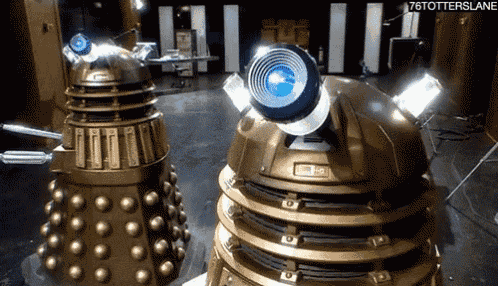
Like, I'm guessing you mean using it as a method to teach, not as a subject to teach
But I can't see what this should mean
tight star
here is an example of what i mean
in this case i'm essentially using flowcharts as a pedagogical tool for algebra, and category theory is there in the background to guide their usage
turbid zenith
The only case where I've done something close to that is when teaching about the Laplace transform etc as a problem solving method
quasi maple
Function machines? That counts as cat. theory?
tight star
quasi maple
Function machines? That counts as cat. theory?
Well you can start introducing things like universal properties etc as operations on such machines
tawny slate
tight star
in this case i'm essentially using flowcharts as a pedagogical tool for algebra,...
so im not well versed in category theory, at all, but how is this different from just saying in general that there are correspondences between things?
like if i'm teaching combinatorics and I demonstrate bijections between things, does this count? what about analytical geometry, where we convert algebra problems to geometry and vice-versa? polar and rectangular coords for complex numbers? do these count?
tight star
tawny slate
like if i'm teaching combinatorics and I demonstrate bijections between things, ...
I’m less interested in debating what is and isn’t cat theory
what matters to me is whether I can use its ideas to explain stuff better
tight star
tight star
Well you can start introducing things like universal properties etc as operation...
also this
What I’ve found is that category theory provides a systematic language to talk about correspondences between things in a precise way
tawny slate
ok then im just unqualified for this conversation, sorry
tight star
tawny slate
ok then im just unqualified for this conversation, sorry
Here’s where i introduced complex numbers using yoneda in the background
turbid zenith
I see that you mentioned Yoneda at the very end, but is that really "using" Yoneda?
tight star
turbid zenith
I see that you mentioned Yoneda at the very end, but is that really "using" Yone...
Well yoneda part 1 at least
turbid zenith
What I mean is, every part of that explanation would have made sense without mentioning Yoneda
As someone who doesn't know a thing about what Yoneda says, I still have not come away having any idea what it's about
Other than "👋 something something is versus does 👋"
Likewise when I explain Laplace transforms, what I draw for students is in some sense like a commuting diagram (convert ODE problem into algebra problem, solve the algebra problem, convert the algebra solution to an ODE solution and you've solved the original ODE problem), which is cool for me to notice, but I'm not yet sure if the commuting diagram framework would have any relevance to students
Not discounting the possibility outright, I'm just not sure I see it yet
tight star
turbid zenith
What I mean is, every part of that explanation would have made sense without men...
Yeah, that’s part of the point for me
It’s something that’s there in the “background”, but you don’t need to frontload with all the formalism
tight star
turbid zenith
As someone who doesn't know a thing about what Yoneda says, I still have not com...
Mhm, and that’s not the intended takeaway
It’s primarily an introduction to complex numbers
turbid zenith
So what would be the takeaway for teachers? That knowing some category theory would help with explanations?
If so I can agree, fluency in more math is a great way to gain more perspective!
Like being multilingual.
tight star
turbid zenith
So what would be the takeaway for teachers? That knowing some category theory wo...
Yes - in my case, i was only able to come up with that explanation after learning some category theory
It’s what lets me organise all the ideas in my head in the background
turbid zenith
Fair enough!
tight star
The end result is indeed something you don’t need category theory to explain, which is by design
turbid zenith
Any time I see connections between things it helps me understand them better
tight star
But this type of explanation is something that’s quite natural categorically, and so something you can apply to lots of other things
turbid zenith
But I have to be very careful not to think that what made it click for me is always what will make it click for others
tight star
Indeed, that’s why I’m always testing out my ideas on this server
But I’ve had quite a bit of success using “is-does duality” in my explanations
turbid zenith
Yeah I think that’s a natural part of abstraction in math
tight star
Yep yep, it’s not fundamentally categorical, or even fundamentally mathematical
Say in linguistics, where the “is” of a word is like its definition, whereas the “does” is like its usage
And indeed there are lots of instances of is-does duality in maths that aren’t category-theoretic; distribution theory comes to mind
There’s simply a systematic “universal” way that is-does duality manifests itself within category theory, and this is precisely the yoneda lemma
turbid zenith
Well hopefully one day I’ll learn what it says!
I know it’s mentioned in Cheng’s category theory book, which I still need to finish
tight star
turbid zenith
Other than "👋 something something is versus does 👋"
Specifically, there is a completely precise/rigorous mathematical sense in which yoneda is just “what something is is isomorphic to what something does, categorically”
If you’re at all familiar with index notation, it is very very analogous to how raising/lowering indices gives you a way to translate between vectors and covectors
turbid zenith
I’m begrudgingly familiar 😛
tight star
In this case the vector world is the “is” part, whereas the covector world is the “does” part - it’s how a vector v interacts with other vectors w
turbid zenith
I heavily dislike superscript indices on principle
tight star
Specifically, if you’ve got an inner product on V, then what a vector v “does” is interact with other vectors w to produce the scalar <v, w>
I.e. it induces a linear functional $\langle v, - \rangle : V \to \mathbb{R}$
burnt vesselBOT
Pseudo (Cat theory #1 Fan)
 tight star
So an inner product gives you an “is-to-does” translation $V \to V^*$, where $v \mapsto \langle v, - \rangle$
burnt vesselBOT
Pseudo (Cat theory #1 Fan)
 tight star
And (in finite dim) this is an isomorphism
So you get two equivalent perspectives on vectors - as elements of V (“is”) and as elements of V* (“does”)
This gives you the freedom to choose which perspective happens to be more convenient - for example, sometimes a vector naturally appears in the “does” world (think gradient of a scalar function), and its the inner product that lets you translate it to the “is” world
3b1b’s cross product video is essentially about the statement that $\langle \vec v \times \vec w, \vec z \rangle := \det(\vec v, \vec w, \vec z)$
burnt vesselBOT
Pseudo (Cat theory #1 Fan)
 tight star
i.e. that its easier to understand what the cross product “does”, in terms of what <v x w, -> is, and then the inner product tells you what the cross product “is”
Again, none of this explanation required cat theory, but it’s the kind of explanation I couldn’t have come up with before learning cat theory
 tight star
turbid zenith
Cat theory
tight star
turbid zenith
Cat theory
Another analogy I like to use is that category theory is like “coordinate-free mathematics”
In the same way that diffgeo is coordinate-free tensor calculus
Or abstract linalg gives a coordinate-free to talk about matrix algebra
tawny slate
if it's so profound why is it a lemma and not a theorem
tight star
You can always convert a coordinate-free argument to one in coordinates
But having the coordinate-free perspective makes some arguments more transparent, and also gives you a guide for which coordinate computations you should do
tight star
tawny slate
if it's so profound why is it a lemma and not a theorem
Unsure, but some people have suggested calling it the “fundamental theorem of category theory”
tawny slate
a bit unrelated but i do think higher math does help inform teaching and provide perspective sometimes
i dont think that you always need it, its not like you cant teach without it, but a lot of the design inherent in math is informed by a lot of higher ideas in ways that i think are underappreciated
like learning abstract algebra helps give a motivation for why we care about properties like commutative and associative, why we can't take those for granted, why we give them names and teach them explicitly
tight star
turbid zenith
So what would be the takeaway for teachers? That knowing some category theory wo...
Yep yep! And as solid angles pointed out, this is essentially my argument for cat theory
It’s not that you teach it directly
But more that knowing of its existence gives you a “coordinate-free” perspective that can help guide your explanations
Even if your explanations are only ever in coordinates
 boreal agate
tight star
3b1b’s cross product video is essentially about the statement that $\langle \vec...
boreal agate
tight star
3b1b’s cross product video is essentially about the statement that $\langle \vec...
EVIL
BEGONE FOUL DEMON
turbid zenith
...?
boreal agate
MAKE WAY FOR OPERATIONS THAT MAKE SENSE IN ANY NUMBER OF DIMENSIONS
tight star
It’s like how knowing a bit of Euclidean geometry can help you do coordinate geometry more efficiently
turbid zenith
boreal agate
MAKE WAY FOR OPERATIONS THAT MAKE SENSE IN ANY NUMBER OF DIMENSIONS
Such as?
boreal agate
turbid zenith
Such as?
exterior product :3
 vocal phoenix
boreal agate
MAKE WAY FOR OPERATIONS THAT MAKE SENSE IN ANY NUMBER OF DIMENSIONS
vocal phoenix
boreal agate
MAKE WAY FOR OPERATIONS THAT MAKE SENSE IN ANY NUMBER OF DIMENSIONS
Are you feeling alright?
turbid zenith
I love the wedge product
boreal agate
(the cross product really is evil, i find it to often be more confusing than helpful)
turbid zenith
But I'm not yet sure if it would be right to introduce it first
tight star
boreal agate
(the cross product really is evil, i find it to often be more confusing than hel...
You can’t really avoid it in physics
boreal agate
i only see it as a reasonable operation when we consider so(3)
 pure light
living in 3 dimensions seems as good an reason as any to priviledge 3-dimensional constructions
turbid zenith
Like the next time I teach Calculus III, I really have played around with doing things in terms of bivectors instead, but I worry it might be too abstract
boreal agate
tight star
You can’t really avoid it in physics
you absolutely can!
turbid zenith
For the students who are learning it for the first time.
boreal agate
turbid zenith
Like the next time I teach Calculus III, I really have played around with doing ...
it all depends on how its presented
tight star
boreal agate
you absolutely can!
Ok but just because you can doesn’t mean you should
turbid zenith
And for example, the cross product really does seem to be useful for, say, the TNB frame
tight star
turbid zenith
Like the next time I teach Calculus III, I really have played around with doing ...
Hm so what do you think bivectors could be helpful with?
boreal agate
personally i think that when the wedge is properly explained (and its relation to subspaces) it is incredibly intuitive
boreal agate
tight star
Ok but just because you can doesn’t mean you should
we should
turbid zenith
tight star
Hm so what do you think bivectors could be helpful with?
Well, there are certain physical quantities like torque that at least to me seem to make more sense as bivectors than cross products
boreal agate
turbid zenith
And for example, the cross product really does seem to be useful for, say, the T...
thats true
turbid zenith
And the area element dA could be viewed as a wedge of dx and dy
tight star
Ah yeah I’ve heard this argument
turbid zenith
But I'm not convinced yet that it would be beneficial for students to first learn it this way
boreal agate
turbid zenith
And the area element dA could be viewed as a wedge of dx and dy
its so much deeper than this though!
turbid zenith
boreal agate
its so much deeper than this though!
And that's my problem.
Going to the most abstract general thing isn't always the best pedagogical idea for students who are first getting a good feel for it.
boreal agate
personally i think introducing differential forms before wedge in general is bad practice
starting out with just the exterior algebra makes far more sense
tight star
For me I think my worry with bivectors and multi vectors generally are the weird addition rules
boreal agate
turbid zenith
Going to the most abstract general thing isn't always the best pedagogical idea ...
imo the exterior algebra isnt abstract at all
tight star
Once you get to multivectors, you have to distinguish between simple ones, which are just products of vectors, and general ones which are sums of products of vectors
boreal agate
it connect back to geometry incredibly well
tight star
For vectors alone you don’t run into this issue
boreal agate
tight star
Once you get to multivectors, you have to distinguish between _simple_ ones, whi...
yeah but until you start messing with clifford algebras and differential forms you wouldnt really care about the non simple ones
turbid zenith
So how would you recommend teaching it to novices, @boreal agate ?
tight star
tight star
Once you get to multivectors, you have to distinguish between _simple_ ones, whi...
So at least for me I don’t have as nice a visual picture of k-vectors compared to k-blades
tight star
boreal agate
yeah but until you start messing with clifford algebras and differential forms y...
I don’t really see why
Maybe if you gave me a nice geometric picture of, say, bivector addition
boreal agate
turbid zenith
So how would you recommend teaching it to novices, <@473024797446766592> ?
id say start from the motivation
we have a relatively simple problem at hand - we want an object that somehow represents a plane, but we want it to be less abstract than just a subspace, so we may perhaps consider areas and orientation, and perhaps we could differentiate this oriented area. there are all sorts of examples of such things: directed angles in 3d exist in planes, and are quite literally twice the normalized area of the disk segment they form. parallelograms in 3d are another example, and for the physics students there are far more examples through angular momentum, the magnetic field, etc.
turbid zenith
Okay, so what should they do with them then?
I'm looking at my copy of Stewart and where cross products are applied
Here's one such example
 boreal agate
then we say - ok: we want at least a way of taking a pair of vectors and describing the specific oriented area they form as sides of a parallelogram, so we just have an operation taking some v and some u and producing this oriented area. its clear (and easily checked geometrically) that this operation must be bilinear. moreover, if we swap the arguments, the orientation exactly flips, so we should end up with a negative. then we can notice: hey, we can take this higher! we can also consider oriented parallelepipeds! its easy to see why in 3d it might be a little trivial, but there is no reason we shouldnt be able to apply this to 3 vectors to get this notion
turbid zenith
How would one do this problem with bivectors instead?
boreal agate
then its also easy to see that this just becomes a form of concatenation, and so wed expect some sort of associativity. we can then hope to reduce the n-ary operations into just one binary operation, which acts as a formal antisymmetric bilinear product
we can then ask: "wait, but does this actually model oriented areas like we wanted?"
turbid zenith
All of that makes sense to somebody who already understands what a formal antisymmetric bilinear product is.
boreal agate
so we might hope to check if we can recover the plane from a bivector
turbid zenith
I'm asking about my engineering and physics majors who are learning this for the first time.
turbid zenith
turbid zenith
Here's one such example
And how they might do a problem like this under such a framework.
So I'm interested to see what a bivector version of that solution might look like instead.
boreal agate
turbid zenith
And how they might do a problem like this under such a framework.
they wouldnt; the exterior algebra does not depend on metric structure, so without resorting to more advanced ideas like hodge duals you wouldnt be able to express what "normal" means
boreal agate
turbid zenith
All of that makes sense to somebody who already understands what a formal antisy...
you dont need to!
turbid zenith
Okay, so then I wouldn't want to teach them something they can't use to solve problems.
boreal agate
right now were just searching for what such a hypothetical thing might look like, and what it must surely satisfy
turbid zenith
I think you're not understanding what I'm getting at.
boreal agate
turbid zenith
Okay, so then I wouldn't want to teach them something they can't use to solve pr...
you can use it to solve problems, just not this one.
austere delta
turbid zenith
How would one do this problem with bivectors instead?
Tbf this problem doesn't really seem to be using the cross product other than by notation.
The relevant quantaty being calculated is just the area of the parallelogram swepped out by r' and r''. If you just rename this to "area of bivector" nothing would really change I guess
boreal agate
austere delta
Tbf this problem doesn't really seem to be using the cross product other than by...
yeah you can actually do that
turbid zenith
@austere delta It seems to be pulling it from curvature, looking at it
boreal agate
so you dont need a hodge dual you just need to know how the metric structure applies to bivectors
austere delta
I think the harder things is when you need to add cross products.
Adding bivectors might be less intuitive in the regard...