#math-pedagogy
1 messages · Page 22 of 1
 turbid zenith
So if I were giving my result to a layperson I would have been like "yeah about 660 thousand" or something
 midnight scarab
I meant 667 thousand would've been better than 666 thousand
midnight scarab
Is it just me who always has to stop decimal expansions at a place that's rounded down?
turbid zenith
NOPE I always try to do that too!
turbid zenith
I will deliberately try to avoid rounding up
midnight scarab
Yeah
midnight scarab
midnight scarab
As in I'd never write e = 2.72
It's like "but 2 is the wrong decimal 😱"
 tall bolt
Is there a reason to introduce R before you understand the completion of a metric space?
I’m not convinced that most mathematicians care particularly much in general. I have had multiple lecturers tell me they just consider classes and sets to be “collections of stuff”, functionally they are. You could just talk about collections of stuff for a couple of years but why bother doing that it’s just clunky
I mean my university doesn’t even offer a course on set theory, you could do your UG-PhD here quite easily with just that idea of a set
My point is, you know the reason, it’s clunky and pedantic to bother otherwise and most people just don’t care
 thin kayak
to be fair, at least to me, Russel's paradox always struck me as a very nitpicky thing, and regarding sets as just collections of stuff suffices in pretty much all the actual use cases of sets
yea
tall bolt
As much as I’m sure the foundations people would be upset I think it’s just that it doesn’t really matter. You need to be actively trying to break sets for it to be an issue, or you just say class and maybe it’s a proper class maybe it’s a set who cares it’s fine. At the end of the day it’s just collections of stuff and for the working mathematician that’s good enough
I’m not dismissing set theory btw, it is important that we have things on a firm basis, and I’d love to learn more about it, but fundamentally for the things most people are doing using the word set naively is perfectly ok
 tawny slate
id also like to point out
remembering why we even have the rigorous treatment of set theory helps understand what it is and isnt good for
mathematicians did plenty of math before they did foundations, and its worked
the point of foundations was to try and make sure math was internally consistent, and weirdly this isnt an absolutely answerable question in some cases
so as long as your math is consistent, this isnt a concern
additionally, we wanted to find a universal unification of math, which is also usually not the point of your math classes
quirks like R being uncountable are technically true but can also largely be ignored because you can take the set of definable reals, which is countable, and you still have limits and everything you need and its still fine
so really there's not much to gain other than to show some quirks of math and inspire curiosity
but if you do happen to hit some contradiction for which set theory can help explain away, go ahead
otherwise, its mostly there for notation use than anything else
 tardy ember
tawny slate
quirks like R being uncountable are technically true but can also largely be ign...
tardy ember
tawny slate
quirks like R being uncountable are technically true but can also largely be ign...
you can take the set of definable reals, which is countable
...this is actually surprisingly subtle and also i don't really understand what the problem is that you're trying to solve here?
tawny slate
i could add more context to that yeah
for example
some people say the reals dont actually exist
i know its not a standard opinion, but an opinion like that can be entirely ignored because functionally all math we do can be in terms of the definable reals instead
we dont actually need to rigorously work with the reals in this sense
tardy ember
...i'm confused about what kind of person would object to the real numbers on the basis that they don't exist, but has no problem with a big enough set of "definable reals" to cover "almost all of maths"
unless by "almost all of maths" you mean like, all of high school, which yeah that can totally be done over something like the computable numbers with essentially no issues
tawny slate
is that not the context?
tardy ember
...ok fair
 austere delta
I mean sets come up all the time, so you need to refer to them somehow, whether that be by "set" or "collection of objects".
Both of those words have the same meaning in English, so I don't see a reason to prefer the latter. The only effect would be that they would have to change terminology to the former at some later point in their life, which seems kinda pointless
 timid shard
also redefining sets as "a collection of numbers" (and not "things") fixes everything
thin kayak
Hey is it a bad idea from a pedagogical standpoint to add an additional section to a chapter on vector spaces that talks about more advanced concepts such as isomorphisms, direct sums, normal and quotient spaces, dual spaces, etc?
cause like I want to talk about these incredibly beautiful and profound concepts but I can also understand that, to a new reader who has never been introduced to linear algebra, it can be a little intimidating and it might drive them away
tawny slate
my approach to this has always been can you introduce this topic to your audience in a way that requires almost nothing for them to learn
as long as you can give the basic idea, itll be good enough, no need to be technical or anything
for instance, when explaining why complex numbers are important, i might say "is a real to the power of a real a real? no. but a complex to the power of a complex is always complex" rather than "complex numbers have closure under exponentiation, and we can prove this by..."
thin kayak
yeah
timid shard
personally, I find giving definitions to abstract things which won't be explored in the book and are defined just for the sake of definition annoying
it might be super pretty, but I'll get there when I take a course that actually has uses for it...
thin kayak
Yeah, i get where you're coming from, i'm just thinking that, as someone who enjoys math (duh) I find it really thrilling to see a textbook talk about something I totally did not expect it to
Like, for instance, a calculus textbook giving a sort of "preview" of the formalism of real analysis with epsilons and deltas
or a complex analysis book giving an overview of the riemann hypothesis, etc.
timid shard
the question is if the calculus student that spent 30 mins trying to decipher the definition only to find out it's useless for them is also thrilled
thin kayak
that's why i would label the section as optional, but i dont know if that would really take care of that issue
or maybe i could relegate it to an appendix?
 strange bronze
At the very least, add a clear note to the beginning that most linear algebra courses don't cover the material at all
thin kayak
noted
 wary ether
Last week, I asked my linear algebra class to email me with the wildest examples of vector spaces they could possibly find. I even gave them what I thought was a cool example.
This week, with one day until the next class, I have no emails in my inbox.
:(
 heavy trail
wary ether
Last week, I asked my linear algebra class to email me with the wildest examples...
heavy trail
wary ether
Last week, I asked my linear algebra class to email me with the wildest examples...
Gotta play to their ADHD-isms. Email them the day before and tell them you'll be cold-calling them.
no mercy
tall bolt
To be honest I tried to think of a fun vector space after you said that and struggled to come up with anything particularly interesting. I’m sure I know some but it really drawing a blank
I guess you can consider the vector space over F2 with addition given by XOR and multiplication by AND (I think those are the correct gates, and the correct way around, I could be forgetting though)
tall bolt
That’s true, I consider that a very obvious space at this point, but when I first learned about vector spaces that did blow my mind a little
midnight scarab
Just for funkiness, any "obvious" one but over Q
wary ether
Yeah, I was hoping for things like R as a Q-space. If I feel there is still enthusiasm and merely fear of a big beardy mathematician then I might show them R/Q
 abstract grove
how about the free vector space on a set. You could construct the free vector space with basis all of your students 
abstract grove
yeah, it's hard to think of any actual good use for that.. more kind of a meme example. Could be fun though
 halcyon glade
Just wondering, why are you writing a linear algebra textbook? There's so many already out there lol
halcyon glade
wary ether
Last week, I asked my linear algebra class to email me with the wildest examples...
My favorite example in high school was {42}
 pure light
i like R+ over R with addition as multiplication and scalar multiplication as exponentiation
thin kayak
halcyon glade
Just wondering, why are you writing a linear algebra textbook? There's so many a...
for fun :3
wary ether
halcyon glade
My favorite example in high school was {42}
An unironically great example
tall bolt
wary ether
Yeah, I was hoping for things like R as a Q-space. If I feel there is still enth...
This actually is a good example, I’ve never thought of R as a Q vector space before, that would be a bit funky
wary ether
If I'm feeling mean I could try getting them to prove that it's infinite-dimensional
but this would really be mean
 proven shuttle
Not sure if this is the best place, but I'm currently grading and the question is to state Riemann's criterion for integrability. A few students have written (where P is a partition)
$\lim_{\Vert{}P\Vert\rightarrow{0}}(U(f,P)-L(f,P))=0$
this notation is very unusual to me (and it is not in their lecture notes). I'm trying to understand where they got this from because I've never seen it (indeed, what is the norm of a finite set P that would make sense here? The smallest gap size?)
 burnt vesselBOT
LayneTheAndroid
 midnight scarab
wary ether
but this would really be mean
midnight scarab
wary ether
but this would really be mean
It's probably not that hard depending on how much background they have. It's just that ||Q^n is countable for any n||
And then you can also mention transcendentality and give an explicit infinite family of lin indep elements
wary ether
They could do it this way, but I don't think they know about cardinality results like this
I would have to prompt them with transcendentality, yes.
But this is also kind of a lie isn't it. Even if we look at the algebraic elements we still get an infinite extension
There are lots of subtleties here
midnight scarab
wary ether
They could do it this way, but I don't think they know about cardinality results...
Yeah that's why I said it depends on their background. Like if they had some proof based course before they probably would have seen that
(Though technically transcendentality is either a cardinality argument, or you have to prove that eg e is transcendental which is not so easy)
midnight scarab
wary ether
But this is also kind of a lie isn't it. Even if we look at the algebraic elemen...
Isn't the degree of an algebraic extension that of the minimal polynomial of the element you're adjoining, and hence finite?
 dapper flume
proven shuttle
Not sure if this is the best place, but I'm currently grading and the question i...
dapper flume
proven shuttle
Not sure if this is the best place, but I'm currently grading and the question i...
Seems to me ||P|| is the largest gap size. I saw a similar notation on this brief page

Statistics How To
The norm of a partition (sometimes called the mesh of a partition) is the width of the longest subinterval in a Riemann integral.
wary ether
midnight scarab
Isn't the degree of an algebraic extension that of the minimal polynomial of the...
Try explaining that to freshers
proven shuttle
dapper flume
Seems to me ||P|| is the largest gap size. I saw a similar notation on this brie...
ah thanks, that's probably it. I think they still misapplied it
wary ether
midnight scarab
Isn't the degree of an algebraic extension that of the minimal polynomial of the...
I misread this the first time I saw it.
There are algebraic extensions that are not finite.
You simply adjoin infinitely many algebraic numbers that are sufficiently different from each other
timid shard
dapper flume
Seems to me ||P|| is the largest gap size. I saw a similar notation on this brie...
I've also seen this before
although it was for a random homework exercise so I have no idea if the professor just made it up
midnight scarab
wary ether
You simply adjoin *infinitely many* algebraic numbers that are sufficiently diff...
Oh yeah sure
tawny slate
meta suggestion: every week, on a random day, ping @ everyone that they should not use chatgpt for math
obv im kidding but the time ive spent in this server lately, the amount of people im seeing using chatgpt for everything is truly terrifying
not sure whats scarier, the frequency in which they use it or their stubbornness in asserting that its trustworthy and reliable
halcyon glade
It is surprisingly trustworthy for most math problems, until it isn't
tawny slate
i noticed that if you ask it "standard" rote problems like solving a quadratic by plug and chug into the formula, it does fine
but as soon as you go into any slightly abstract territory, it starts to get real loony
i asked it for a nontrivial example of a false equation and it gave me 2+2=5 and went on about george orwell's 1984
it is shockingly bad
abstract grove
I think you're selling it somewhat short
it can solve a lot of abstract problems from grad textbooks with no issues
I just gave it "Prove that if a group homomorphism f: G -> G' has a left inverse, i.e. a homomorphism g: G' -> G such that g(f) = id_G, then f is a monomorphism in the category of groups. Do this from scratch categorically, i.e. don't appeal to the fact that injective homomorphisms are monomorphisms."
and it gave a completely correct answer
granted, this problem is straightforward if you know the definitions
but it's not like it's only good at math up to high school level
tawny slate
yeah i never said that, in fact in an abstract sense i think that is also a "standard rote problem"
abstract grove
well, then we could debate what a "standard rote problem" is. If it's any problem that's standard material in grad class and not too difficult, and it's good at most of those, that's pretty amazing to me
 rapid tusk
tawny slate
obv im kidding but the time ive spent in this server lately, the amount of peopl...
rapid tusk
tawny slate
obv im kidding but the time ive spent in this server lately, the amount of peopl...
the undergraduate student “””””””””government””””””””” at my uni is looking to implement free premium subscriptions to chatgpt for all undergrads
I fucking swear to god.
 clever girder
tawny slate
obv im kidding but the time ive spent in this server lately, the amount of peopl...
clever girder
tawny slate
obv im kidding but the time ive spent in this server lately, the amount of peopl...
i had someone i tutor email me ""their"" homework asking if it was right
it was very clearly a chatgpt screenshot and it even got the variables wrong
yeah it's fine at regurgitating problems whose solutions have already been published extensively, or at very common plug and chug computations. but it doesn't understand logic at all
 dense dragon
tawny slate
meta suggestion: every week, on a random day, ping @ everyone that they should n...
dense dragon
tawny slate
meta suggestion: every week, on a random day, ping @ everyone that they should n...
this but genuinely
I was helping my friend with CS stuff and took the liberty of blocking chatgpt on his computer while I had a sudo terminal
 cloud zealot
rxddit.com
I'm working on a document where I explain a lot of intro to real analysis topics, that roughly corresponds to the topics I took when I learned analysis. It's about 100 pages and I'm thinking of making a github and making it free for everyone. What kinds of things should I do before that? I'd want this to be something that guides the reader and i...
 twin hound
tawny slate
obv im kidding but the time ive spent in this server lately, the amount of peopl...
twin hound
tawny slate
obv im kidding but the time ive spent in this server lately, the amount of peopl...
Yeah 100%, they don't even have the common sense to ask wolfram alpha
rapid tusk
by the wolfram theorem the problem is trivial 😃
clever girder
i don't think the problem is unique to these ai models. an ai model will never understand logic, full stop. it cannot cite sources and does not reason, it guesses.
it is inherently unreliable and so shouldn't be treated as a reliable source
tawny slate
i have a coworker who is an enthusiast for these models, he knows all the latest models and subscribes to all of them and every time we have this discussion he says that the models are getting to be so good that the metrics are growing like a vertical wall as if they're reaching some kind of breakthrough
and every single time he offers me to try it if i don't believe it, and every time i try it, it fails, sometimes miserably so
not that it cant ever do anything impressive, but that it is just not consistently so, ever
ive tried 4o, ive tried grom, ive tried a bunch of other ones i don't remember the names of
ive asked them all kinds of questions not just math, and even he says the very first question i asked one of them got its reasoning model to think for longer than his record
it sucks, it still sucks, and i doubt thats ever changing
timid shard

Can Google's new research assistant AI give scientists 'superpowers'?
By Michael Le Page
https://www.newscientist.com/article/2469072-can-googles-new-research-assistant-ai-give-scientists-superpowers/
Link to Patreon:
https://www.patreon.com/acollierastro
I have merch: https://store.dftba.com/collections/angela-collier
I’m on Nebula! If you’d...
good rant lol^
tawny slate
again, not because it will never produce anything impressive or useful, but that when you put such a powerful tool in the hands of people who dont know how to wield it, no clue how to verify their information or source quality, it becomes a dangerous tool
my coworker says "skill issue" but its like ok but you know "skill issue" is the same reason we dont give kids guns
i have this same conversation with anyone enthusiastic about AI, who defends its usage, but it seems something about AI as a topic gets people to the point of being sycophants, as if AI being the most amazing thing is like this undeniable truth with the same conviction as religious kooks
 onyx ocean
abstract grove
I think you're selling it somewhat short
onyx ocean
abstract grove
I think you're selling it somewhat short
This has been my experience as well. I think it’s a very delicate balance when using it. I’ve given it some, to me, non-trivial set theory problems that had me stumped and overall I’ve been impressed with the responses (4o). Admittedly, it’s often wrong when it provides a proof, but enough of the overall idea is there for me to finish/correct it.
halcyon glade
rapid tusk
the undergraduate student “””””””””government””””””””” at my uni is looking to i...
Wait I think this is a good idea
It just needs to be spelled out clearly what the academic integrity implications are, but I think that's something every professor should briefly address nowadays in addition to their usual academic integrity policies, probably somewhere in the syllabus
 frail pelican
There's a recent tweet about students wanting to back to paper/live class discussions
Learning has to come from within
halcyon glade
tawny slate
my coworker says "skill issue" but its like ok but you know "skill issue" is the...
Okay this is a big leap of a comparison
frail pelican
If students see education as a blackbox that only requires a blackbox throwing in blackbox material, then they will get nothing
halcyon glade
I think we should educate students about good, responsible ways to use ChatGPT. No use sticking our head in the ground. I do think it has the potential to dramatically change education for the positive.
frail pelican
I also don't think AI should be underestimated. If used right with basic code checking/function calling it should be able to solve a lot of worksheets
frail pelican
halcyon glade
I think we should educate students about good, responsible ways to use ChatGPT. ...
I don't think it will be a positive change, but it will certainly be something they have to contend with
Academic integrity is at an all time (?) low
It's literally never been this bad
In past recent memory
halcyon glade
There's a lot of creative ways you could use GPT in education. I remember a physics professor here was using it to generate explanations of physics concepts and then he gave the explanations to his students and asked them to pick which one didn't make sense and why.
I feel like you can also do things like have the students turn in their conversation transcripts with ChatGPT and then get a very fast idea of where they're confused and why.
(I haven't tried that personally, just shooting out ideas.)
I find that GPT is also often helpful at generating intuitive explanations of concepts with good analogies.
tawny slate
ok well, i still dont think colleges should fund openai as a business
and ideally yes, we educate everyone on how to properly and safely use AI
i dont think anyone disagrees with that
but i also think that doesn't solely include operationally how you use it, i think it also needs to include understanding of what a LLM is, issues pertaining to AI like algorithmic bias, and some sociology
because people dont just interact with their own AI outputs, people also interact with AI outputs of others
when something has such widespread centralized cultural impact, being unquestioning is highly dangerous imo
when search engines like google became a thing, what entered the public consciousness was quality of sourcing, like the meme of when educators all said "wikipedia isn't a reliable source"
because of how AI can't explain its reasoning and the lack of transparency into how it works deeply, as well as issues such as algorithmic bias and alignment, i think these ideas need to also enter the public consciousness
once you see what chatgpt is capable of you are going to talk about it with other people, inevitably
i think this burden and scope is a lot bigger than with something like search engines and the internet and i don't know where to place that burden
it's far easier to say "don't use it" just to be safe
and on a personal level, after getting familiarity with LLM outputs, they really do feel soulless and flat
i have issues utilizing any piece of AI output directly in any creative work because it really does feel both like cheating and just... flavorless?
it like pollutes my work
but that's personal opinion
halcyon glade
tawny slate
it's far easier to say "don't use it" just to be safe
It's easier sure, I don't know that it's more helpful for the student, and I think students realize that and will end up using it anyways. It's best that we train them on what to avoid and what types of usage patterns can be productive. Also I don't think we were talking about using AI directly in creative work. Yes I agree that people should be educated on societal problems surrounding AI. I think the comparison to Google/Wikipedia is apt. It'd be absurd for educators to tell students "Never use Google search or Wikipedia." now. Obviously both of those have important drawbacks and are quite susceptible to misinformation, but they're also very powerful tools for education.
tawny slate
but on a meta level, the biggest difference between the two is in their "difficulty" of use
when you find something through search, you can evaluate the quality of the source
you cant do that with LLMs
the nuanced differences between them are also what makes it more susceptible for abuse and misunderstanding
i dont disagree with anything you guys have said, i just think the standard needs to be much higher here and its just not being met
the cons are way more significant
im worried that focusing too much on the benefit they provide ignores the problems they create, and I'm really not sure the tradeoffs are net positive right now
tawny slate
thats ... not what i was talking about
why dont we also first destroy the environment so that find out the cons ourselves before determining whether its good or bad
halcyon glade
I don't think it's reasonable to expect every student to find out all the cons themselves
tawny slate
thats also not the point
since when did i put the onus on students to figure out on their own whether AI is good or bad
halcyon glade
I was responding to mq
tawny slate
oh ok then i agree with you sorry
halcyon glade
Np
Expecting students to learn information literacy themselves by giving them an infinite source of information is IMO tantamount to giving students books and expecting them to learn literacy by themselves
tawny slate
tawny slate
im worried that focusing too much on the benefit they provide ignores the proble...
also that response pretty much supports my point that this is in fact happening
midnight scarab
There are also other cons like ai-related energy consumption
halcyon glade
tawny slate
im worried that focusing too much on the benefit they provide ignores the proble...
I definitely understand the desire to be more cautious than blindly accepting. I do worry though that not exposing students to tools like this will leave them behind in understanding the benefits and drawbacks rather than more aware, especially as these tools and their effects become more and more omnipresent.
tawny slate
thats why i never mind explaining the issues and dangers of these technologies
but i also feel like we cant just sit there and let things the way they are
im also getting the feeling like too many people are attaching so much of their identity to LLMs that if one day these LLMs just ceased to exist
people wouldnt know what to do and be totally lost
 empty gull
proven shuttle
Not sure if this is the best place, but I'm currently grading and the question i...
empty gull
proven shuttle
Not sure if this is the best place, but I'm currently grading and the question i...
A lot of standard real analysis books use this notation I believe
empty gull
tawny slate
it sucks, it still sucks, and i doubt thats ever changing
I think that this is equally an unrealistic view of AI, as is thinking AI is the greatest thing ever invented
They're glorified search engines I think, but very effective ones
Maybe one day we get to a point where they'll be able to do very complex math logic, maybe we don't
But what I think they definitely will be useful for is getting us good references for stuff
Like asking for if X thing exists in the literature or similar types of queries
halcyon glade
Yeah it's pretty good for recommending papers even if it hallucinates sometimes tbh
tawny slate
empty gull
I think that this is equally an unrealistic view of AI, as is thinking AI is the...
i think i disagree completely from a sociological perspective, but this would be going beyond just the topic of pedagogy
i actually have evidence and examples of how AI has created problems, but the pro AI people simply dont care or think its not a big deal or none of their business
on the other hand, im not ignoring the fact that it can be useful. seems weird to "both sides" this
 gleaming flame
burnt vessel
**LayneTheAndroid**
gleaming flame
burnt vessel
**LayneTheAndroid**
Apostol's Mathematical Analysis in particular defines the norm like this for partitions, iirc. @proven shuttle
heavy trail
proven shuttle
Not sure if this is the best place, but I'm currently grading and the question i...
If it's not in the lecture notes then they almost certainly got it from ChatGPT. Ask ChatGPT for a criteria for Riemann integrability and I'll bet you'll see that notation.
halcyon glade
Is there a textbook for the course? It might be from there as well.
thin kayak
do you guys think that representing the first transformation does more harm than good because of the confusing effect it has on the region?

i want to make the connection that linear transformations effectively "preserve the shape more" but idk if its worth it when the first transformation has such a bizarre effect
cloud zealot
how do you have so many hours in celeste

also is T given by a formula in Figure 1.9...?
thin kayak
cloud zealot
how do you have so many hours in celeste
vencord
thin kayak
cloud zealot
also is T given by a formula in Figure 1.9...?
its essentially complex squaring
$$
T: \begin{bmatrix} x\ y \end{bmatrix} \longmapsto \begin{bmatrix} x^2 - y^2\ 2xy\end{bmatrix}
$$
burnt vesselBOT
BigBoyConst
 tawny slate
if only you could print animations
i think the most thing confusing is that the boundary goes around twice, didnt look obvious to me the first time when i didnt know what T was
thin kayak
yeah
that's why im contemplating not accurately plotting what D gets mapped to but just plotting something that doesn't have the same overall shape as D for my point to still stand
tawny slate
ooh, idea, might help if the outline was some recognizable shape too
like instead of starting with a blob for D, draw a uh
hm
thin kayak
oh like a cat or something instead of a blob
tawny slate
yeh
thin kayak
that could work
but now i need to find points that create a curve that looks like a cat 💀
wish me luck
thin kayak
holy moly
honestly i might just ask chat gpt LMAO
i cant be asked to manually plot points in desmos for like 2h for this
thin kayak
yeah
tawny slate
or just take an arbitrary outline and put it against a fourier series
then transform point by point
also not too difficult
thin kayak
or if i wanted to be super extreme i could do like 3b1b did in his video on fourier series and apply the complex fourier series to an svg image to get a curve out 💀
tawny slate
yeh exactly
thin kayak
oh wait we had the same idea lmao
i mean i dont need to find a curve since even for the blob im just interpolating the points using pgfplots
but its still tedious since for it to look at least somewhat like a cat ill probably need more than 25 points
tawny slate
it also doesn't have to be crazy, like maybe instead of making a cat, just make like, idk, a house?
lots of straight edges, that thing
thin kayak
ill see what chatgpt gives me and if its ass i might consider another method
here goes nothing
ok uhhh

kind of terrifying
but not terrible all things considered
thin kayak
it was so worth it to manually plot points
 thin kayak
not even a little bit terrifying
 tawny slate
and once again we see that chatgpt is garbage
it would be kinda weird if a LLM was able to do this well
 vapid herald
Can anyone evaluate a teaching philosophy statement for me?
tawny slate
!da2a
 coral copperBOT
No need to ask “Can I ask…?” or “Does anyone know about…?”—it’s faster for everyone if you just ask your question! See https://dontasktoask.com/
tawny slate
you cant just post it?
heavy trail
tfw
 lethal hornet
made me forget what rock paper scissors was
 gleaming cradle
heavy trail
tfw
gleaming cradle
heavy trail
tfw
He got a good point though, how is making you hand straight looks like scissor?
turbid zenith
heavy trail
tfw
Omfg this is so real
And I teach games in one of my classes all the time
turbid zenith
Btw I’ve been thinking a lot about inquiry based learning
And I think I’m really beginning to see that a significant number of students just… don’t know how to inquiry
Because they’re so used to Step 1 Do This, Step 2 Do That
Has anyone else noticed the same thing, or does anyone else have a different experience?
rapid tusk
the sheer inability of students to independently think/interrogate
is frankly terrifying
tall bolt
turbid zenith
Has anyone else noticed the same thing, or does anyone else have a different exp...
I had to teach in 2 different schools last semester as part of a maths education course im taking this year, and yeah I found this big time. We taught the same lesson, to the same year in 2 different schools, and one of the tasks was rather open ended, it was about drawing lines between nodes on a circle and seeing what shapes come out, we were trying to get them to spot any patterns, hoped they could see you get a "star" shape when the step size is coprime to the number of nodes.
One of the schools really thrived with this, because their teacher as part of their normal lessons incorporated stuff like that, she actually used enquirey. The other class were utterly lost, their teacher just handed them out huge worksheets on their ipads for every lesson so they just never learned how to do it
This was at the late primary level though, so do with that what you will

 winged swift
Im quite close to becoming a teacher myself, how do I teach inquisitiveness
halcyon glade
I feel like you have to ask open ended questions and foster an environment where student opinions and ideas actually matter
This depends a lot on age level though
(Obligatory "I am not a professional teacher or anything")
winged swift
ill be going into teaching 13-15 y/o
kind of a prime age to begin this type of thinking
heavy trail
turbid zenith
Has anyone else noticed the same thing, or does anyone else have a different exp...
Yes, absolutely. I have to simultaneously coach them on how to inquire productively.
In my CS classes I tell them I'm teaching them the scientific method, and not the posterized version from grade school. They're sort of taken aback at first but if I hold the line they get it.
heavy trail
turbid zenith
Has anyone else noticed the same thing, or does anyone else have a different exp...
But also, an element of "same as it ever was". Here's John Dewey in 1898:
 turbid zenith
heavy trail
But also, an element of "same as it ever was". Here's John Dewey in 1898:
turbid zenith
heavy trail
But also, an element of "same as it ever was". Here's John Dewey in 1898:
Wow.
tawny slate
i have the privilege of being able to sprinkle a dose of philosophy discussion into my classes here and there
but i suppose a lot of people don't get this flexibility and privilege, especially working in public sector
dapper flume
Inquiry is a habit and it can be built. It's grueling to be the first teacher to do inquiry with students for the first few weeks or months of trying. Once it's a habit, the students have become much healthier learners and ultimately they will have learned more.
Especially in the case of K-12 students (keep in mind I'm in the USA), they're forced to be at school, and they have less developed frontal lobes, and spending time paying attention to things they don't like is torturous for some of them. If they're resisting when you first start doing inquiry lessons, staying quiet or being sarcastic or asking "well if you know why don't you just tell us?" and all that, that's not necessarily a sign it's not working. In fact I reckon that's a sign that you're creating a sufficiently challenging environment for them to grow into. Be compassionate and hold high expectations. They need to experience that cognitive disequilibrium in order to learn.
heavy trail
dapper flume
Inquiry is a habit and it can be built. It's grueling to be the first teacher to...
100%. It can pay dividends, but it's like doing things to improve a bank account's interest rate vs. just depositing money. And if you do it right, most of the dividends will be realized in some future class or situation!
It's also really hard if the broader school environment doesn't support or reinforce it.
 dapper flume
"make our nervous system our ally instead of our enemy" is banger
timid shard
This video takes a deep looking into how to answer the age old student question "When will I ever use math?" Exploring all the nuances and pitfalls of trying to explain how math is useful in real life.
This is a re upload of part 1 and 2 of this series from last year that we wanted to put back out as a combined video
"When Will I Ever Use Thi...
timid shard
better to not answer than get it wrong
especially if they're at the stage where it's supposed to be obvious
I've had pupils apologise for making mistakes
timid shard
timid shard
I've had pupils apologise for making mistakes
which is really sad tbh
I always respond nah it's natural/means you're learning or something, I hope that helps
but my broader point is that people find it embarrassing to get tutoring, so making mistakes is even worse
at least, some people I've talked to about this
wdym
oh my experience is with 15+ year olds
age could explain a lot tbh
basically happened by accident, a friend asked me for help and it got spread by word of mouth
hang flyers if you don't have any friends with siblings the right age
platforms exist for sure, you need to look it up
abstract grove
it hasn't really. Most people who need a tutor have no idea how to teach themselves, so no idea how to use an AI effectively
abstract grove
they're in the business of getting people to write up answers to problems from books, right?
I could see that industry tanking now
rapid tusk
ch*gg LMAO
eXpErT aNsWeRs cOVerInG kEY cOnCePts
that shit has been overdone to the point that the word “concept” has lost all meaning for me
honestly i say good riddance to this "cheat on your homework" "company"
though it is sad to see the TOTAL enshittification of some sites like quizlet
used to be an ok place to find flashcards/etc
but then they started pushing the whole "cheat on your homework by looking up answers and/or using our dogshit chatgpt clone"
and it all went down the toilet
 flint wharf
and it costs money now which also sucks
i liked their 'learn' feature, it was nice to have spaced repetition built in
used it a lot for quiz bowl in high school
rapid tusk
one of my friends coded their own version of it once it got removed from quizlet proper
Anki is also a thing but setting up your own decks can be slightly cumbersome
tall bolt
abstract grove
it hasn't really. Most people who need a tutor have no idea how to teach themsel...
I don’t think that stops most people who use AI
abstract grove
I'm sure plenty of people give it a try, but a lot of them probably find it isn't helpful at explaining things to them, so they want a tutor anyway
or they're young enough that their parents just get them a tutor
halcyon glade
rapid tusk
Anki is also a thing but setting up your own decks can be slightly cumbersome
Agreed with Anki, I think if you're just using it like Quizlet (just basic cards), it's pretty easy to make cards for stuff. To me, making the cards teaches me more than actually doing the cards most of the time anyways.
 lethal leaf
rapid tusk
honestly i say good riddance to this "cheat on your homework" "company"
lethal leaf
rapid tusk
honestly i say good riddance to this "cheat on your homework" "company"
ok but this is only because it's been replaced by ChatGPT
it's not really goodbye to cheating companies as a whole lol
rapid tusk
with gpt it's obvious when it's being used
and it has an even worse success rate
so idk
cloud zealot
inb4 chegg comes out with cheggpt
rapid tusk
that's just as incoherent and inaccurate as all 10000000 other chatgpt clones
most of the traditional "answers" websites have become nigh unusable anyway
with their kEY coNcEptS bloat that fucking NEVER helps in context
 tawdry venture
reblog to make it die faster
 primal pewter
hello
how should one introduce the notion of convergence of sequences to ppl with nascent amount of Calculus knowledge?
Because I think that throwing the definition at them and slowly parsing it may not be the apt approach
But rather motivating the idea and then turning to the definition would be my bet
I would love to hear some thoughts on this from the folks here
Okay
How do I make the notion of "arbitrarily close" come across to the audience?
oh yes! I have seen exercises where people use makeshift keywords with switched quantifiers

ah interesting!
halcyon glade
primal pewter
how should one introduce the notion of convergence of sequences to ppl with nasc...
Do you mean like the formal definition? Or a picture? I feel like there's a million ways you could visualize convergence geometrically
You could have the students debate about Zeno's paradox
primal pewter
interesting suggestion
primal pewter
halcyon glade
Do you mean like the formal definition? Or a picture? I feel like there's a mill...
I think the picture gives off the impression that sequence just terminates after finite iterations. To counter this, I would have to introduce the notion that it is a subset of R that bijects with N.
Any ideas on how to do this without being reductive?
halcyon glade
I think they will understand that it is a picture and that you cannot actually draw infinitely many dots
primal pewter
Right
halcyon glade
Another classic is the geometric interpretation of 1/2 + 1/4 + 1/8 + ... as the area of a square
primal pewter
I will mention it, just in case to nullify ambiguity
 elfin saddle
Hey
timid shard
primal pewter
how should one introduce the notion of convergence of sequences to ppl with nasc...
a textbook (not in English unfortunately) I had read once basically introduced it like this:
- motivating examples (zero sequence, 1/n, n (divergence), etc
- using these examples to give intuition to "the limit of a function is a number that once we 'go to infinity' we 'get really close'.
- explaining that that is vague and we want precise definitions in maths
- explaining what a neighborhood is
- using that to define 'really close is'
- connecting it all together with what 'going to infinity' is
- using the previous examples with this definition
I think it worked really well
heavy trail
primal pewter
how should one introduce the notion of convergence of sequences to ppl with nasc...
Game semantics are helpful in a classroom setting.
I can make an expression like 4 + 1/n as close to 4 as you like. Test me.
You pick a distance and I'll find some value of n so that everything from that point on is at least that close to 0.
Have them actually pick. Bet you can't make it within 0.1. Watch me.
Oh yeah, how about 0.01? Watch me.
timid shard
timid shard
a textbook (not in English unfortunately) I had read once basically introduced i...
reading the book itself now, they actually use "the limit of a function is a number that most of the sequence is really close to" which I think helps with the n > N part
sequences "go" in one direction
although yeah, in non Hausdorff space a limit needn't be unique
but this intuition still works, funnily enough
you just have a sequence that most of it is arbitrarily close to two different numbers
heavy trail
Cold call. Make them sit in silence until someone says something. Ask a student before class to help model what you're expecting during lecture. etc
timid shard
heavy trail
Cold call. Make them sit in silence until someone says something. Ask a student ...

If you are a 🎥 movie lover - you're gonna love our channel 👌
Get your popcorn 🍿 & 🥤soda and enjoy legendary scenes from
your favorite movies. You might also find some great clips🎬 you completely forgot about or even find something completely new to spend your afternoon on. Don't worry, we all do it sometimes 😉
SUBSCRIBE & CLICK THE BELL B...
midnight scarab
timid shard
reading the book itself now, they actually use "the limit of a function is a num...
Yeah I think the "all terms starting from a particular index" is important to emphasise. In other words, to arbitrary precision the sequence for n>N is indistinguishable from the constant sequence (= l)
Also might be interesting to mention how this is equivalent to infinitely many terms being close to l
(Now without talking about starting from some index, or even ordering at all)
midnight scarab
midnight scarab
Yeah I think the "_all_ terms starting from a particular index" is important to ...
And give examples where just a subsequence approaches l (e.g. take a sequence cvging to 1 but now have all the odd index terms be 0)
timid shard
midnight scarab
Yeah I think the "_all_ terms starting from a particular index" is important to ...
this is the intuition phrasing that slowly gets more precise
so that emphasis comes later
midnight scarab
Yeah not all at the same time 😅
 obtuse pagoda
Hey everyone!
Do you think learning about rings before groups (like Hungerfords intro to abstract algebra) can be more beneficial?
austere delta
obtuse pagoda
Hey everyone!
Do you think learning about rings before groups (like Hungerfords ...
I believe it can, it just comes down to the student.
The main pro is that students typically have a lot of examples and motivation for rings already from linear algebra, number theory, polynomials, and elementary algebra.
But if one prefers a more abstract axiomatic approach, it might be better to start with groups, just because they have fewer axioms.
 surreal lily
I preferred rings first (I read undergrad Hungerford), but I also took a number theory class that talked a lot about modular arithmetic the semester before. If I hadn’t had a lot of exposure to modular arithmetic, I don’t know if that would still be my preference. I have a classmate who hated the rings first approach of Hungerford as a sophomore undergrad, so I would imagine it depends on the student and how much exposure to rings they have had
turbid zenith
What’s y’all’s take on Cognitive Load Theory?
tawny slate
i think its well supported by evidence scientifically, it makes sense to me and helps me personally
I often make lots of mistakes when i have to operate on both low level and high level thinking simultaneously
heavy trail
turbid zenith
What’s y’all’s take on Cognitive Load Theory?
A few thoughts:
- I think there are real issues with the validity of "cognitive load" as a theoretical construct.
- The "purest" forms of cognitive load theory explicitly exclude motivation from its analysis. Most educators balk at this, so CLT folks either try to bolt it on or they treat it as something entirely orthogonal
- CLT has a hard time explaining what's going when learning tasks/skills/etc. that have significant non-cognitive components. The CLT account for learning to ride a bike isn't very satisfying.
For example, when learning to ride a bike why do students learn better (faster, more robustly, etc.) with balance bikes than with training wheels?
The CLT picture is all about information processing. Well, we're creating a mental representation of the task. When we're riding a bike, we're acting out that mental representation. Everything is about the efficiency of input, encoding, decoding, and output.
If I learn faster using one Method A than Method B then ipso facto that's evidence Method A has lower extrinsic cognitive load.
tawny slate
mmmm i think after reading what youve said, my response may have been oversimplistic
i do think minimizing extraneous cognitive load is functionally useful from a design perspective, so i dont have an issue with using the high level ideas of the theory
but it is true that is not complete for being a model of learning, i think that should be pretty self-evident
i think more important than minimizing cognitive load is attention, i think learning cannot happen, period, without attention
turbid zenith
Good thoughts so far, thanks @heavy trail and @tawny slate
I"m trying to figure out if it might be relevant to my math education dissertation.
So I've been doing some reading on it but I'm not sure about it yet.
 spark flare
Haven't read it all but thought this might interest some people here: https://www-fourier.ujf-grenoble.fr/~demailly/manuscripts/geom_elem_eng_long.pdf
tawny slate
that reminds me, Im not even sure if this is a pedagogy question but i have no clue where to ask this
i was trying to figure out what the difference in intuition between algebra and geometry lies, like why are some things so obnoxiously difficult geometrically but trivial algebraically and vice versa?
at first i thought it might just be that the axiomatic foundations are very different, and we just at some point at a high level just accept some intuitive translation between the two that would normally be very difficult from a foundations view
but now im wondering if its deeper than that, because, say with complex numbers, rectangular form is arguably "more algebraic" and polar form is arguably "more geometric", but rectangular makes addition easy while polar form makes multiplication easy. but like, we dont really understand the connection between addition and multiplication because of prime numbers??? idk if im just being too associative or there's something there i just dont see
gonna read this in detail soon and see if it helps answer any of my questions
austere delta
tawny slate
but now im wondering if its deeper than that, because, say with complex numbers,...
I mean, the reason rectangular/polar coordinates makes addition/multiplication easier is that it reduces it to addition/multiplication of real numbers. So that should have nothing to do with prime numbers, or the connection between multiplication and addition of natural numbers.
If I were to argue about what makes rectangular/polar more algebraic/geometric I'd say rectangular is "more algebraic" because both addition and multiplication is easy (there's nothing hard about multiplication in rectangular coordinates) and that polar coordinates is "more geometric" because it describes complex multiplication as a rotation.
Whether there are deeper things one can say idk, but I don't think this is it
tawny slate
thats what i figured too
idk, to me, this is the "deepest elementary" question that i have no clue how to answer
turbid zenith
austere delta
I mean, the reason rectangular/polar coordinates makes addition/multiplication e...
I think the prime numbers bit has less to do with complex numbers and more to do with natural numbers
When I hear "we don't really undersatnd the connection between addition and multiplication because of prime numbers" I interpret that as the fact that if you know the prime factorization of n, you know next to nothing about the prime factorization of n+1
That's how I explain to students why the Collatz conjecture still isn't solved
Divide by 2: Easy.
Multiply by 3: Easy.
Add 1: Dear lord what have we done, anything can happen now
midnight scarab
There's a quote by Landau (the physicist) which goes like "prime numbers are meant to be multiplied. Why would you add them??"
halcyon glade
tawny slate
but now im wondering if its deeper than that, because, say with complex numbers,...
Addition and multiplication of complex numbers are both algebraic and geometric
Addition is translation; multiplication is rotation and scaling
tawny slate
yeah i get that
but why is it so hard to translate intuition between the two then
for example, the parallel postulate needing to be its own axiom isn't exactly obvious
but when you reframe the axiom as its analytic form, it's trivial
what makes the geometric foundation so different from the algebraic foundation that our intuition of them is totally different, that we even have problems that are easy in one but hard in the other?
timid shard
algebra is one layer of abstraction further
the equation of a line is more of a representation than the line itself
whereas the drawing of the line is the line itself
if you get what I mean
tawny slate
i get that, but it doesn't answer my initial question at all lol
timid shard
why not? I think it's pretty uncontroversial to say that an extra layer of abstraction will completely change intuition
halcyon glade
I mean I think algebra and geometry are just at surface completely different
Algebra is about symbolic manipulation whereas geometry is about visual and spatial reasoning
It's a miracle that they should be related at all, and it should be taught as miraculous that you can use one to understand the other
abstract grove
"algebra without geometry is blind; geometry without algebra is dumb" - somebody
the quote about the angel of geometry and the devil of algebra, or something like that, is a good one too
tawny slate
well the issue isn't that im surprised that the layer of abstraction changes intuition, my question is what is the nature of this particular case? how does geometry illuminate algebraic problems in a way that it is very difficult using geometry itself, and vice-versa? both of these things feel very intuitively strong, and yet somehow they build ideas in completely different directions
tawny slate
like hypothetically, since they're describing the same things, solving the same problems by some transformation of the problem, we should be able to find a common axiomiatic foundation or something underpinning both of these fields
but I'm not too well versed in geometry axiom systems, and so it's even more difficult to explain how one axiom system relates to the other
whenever I look at a set of geometry axioms, it looks completely and totally different from algebraic axioms, i see no reason they should even be able to solve the same problems
what's the intuition to this?
 void lynx
abstract grove
"algebra without geometry is blind; geometry without algebra is dumb" - somebody
void lynx
abstract grove
"algebra without geometry is blind; geometry without algebra is dumb" - somebody
that's a nice quote, it was by Weyl?
Hermann Weyl?
void lynx
tawny slate
whenever I look at a set of geometry axioms, it looks completely and totally dif...
algebra axioms as in...the axioms of the basic algebraic structures? Groups/Rings/Fields/Modules etc?
abstract grove
void lynx
that's a nice quote, it was by Weyl?
I'm not sure who said this one, I see some places online saying David Hestenes but that name doesn't ring a bell for me. I'm sure I read it somewhere
void lynx
he's the Geometric Algebra physics guy
abstract grove
the Hermann Weyl quote is "In these days the angel of toplogy and the devil of abstract algebra fight for the soul of every individual discipline of mathematics."
midnight scarab
Algebraic topology won in the end
 stone plover
https://youtu.be/77fhZB9mbWY?si=goTm3qz53cfot64z I thought this was a shitpost 😭
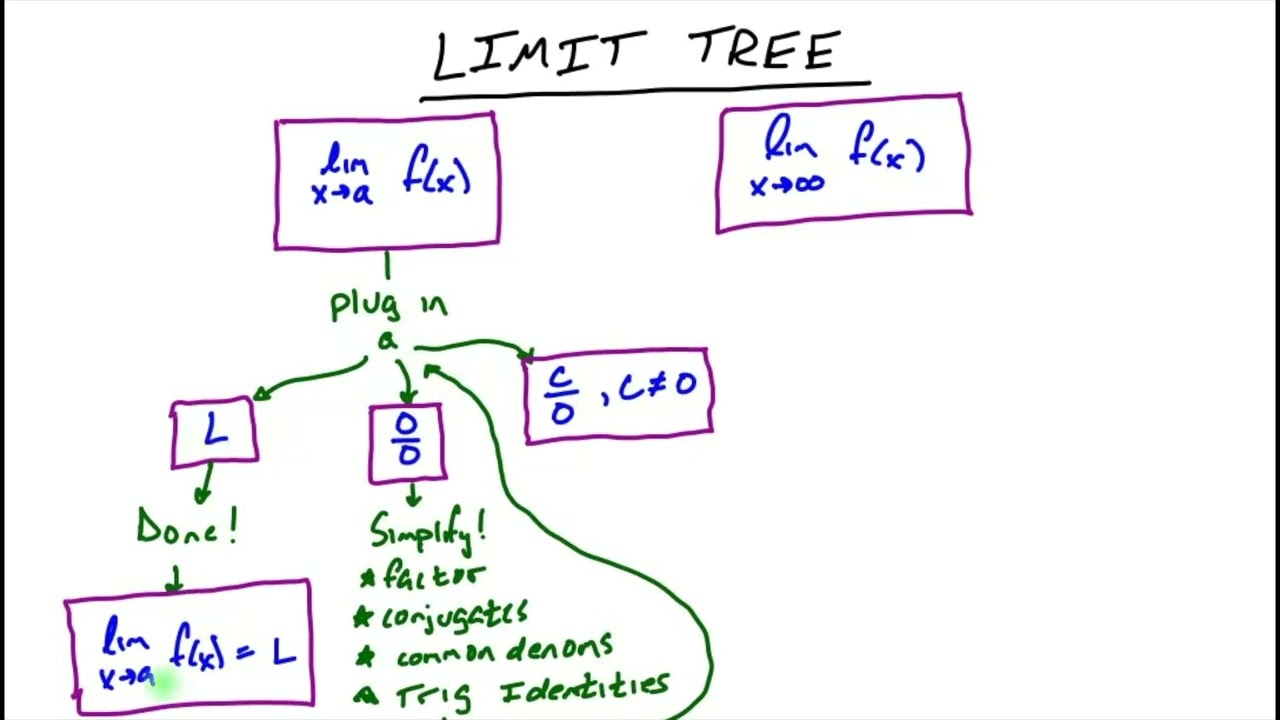
Master Calculus with these simple steps to evaluate any limit!
👉🏼 Need more help? Claim one FREE TUTORING SESSION. Reach out using this link: https://www.tutorwiththebest.com/tutoring-contact
In the Topic of Interest section click "Youtube Special"
Dominate calculus. Subscribe to The Hitchhiker's Guide to Calculus and survive calc with our vid...
rapid tusk
and the passing score is so low that plug n chuggers can get past it without actually understanding anything they're doing
halcyon glade
void lynx
algebra axioms as in...the axioms of the basic algebraic structures? Groups/Ring...
I assume we are talking about algebra as in Cartesian geometry
Addition, multiplication, polynomials, etc.
void lynx
halcyon glade
Addition, multiplication, polynomials, etc.
elementary algebra has axioms?? Why was I never taught it 
halcyon glade
I think he just means the approach and method of reasoning, not any strict sense of axioms
void lynx
ah I see
tawny slate
spark flare
Haven't read it all but thought this might interest some people here: https://ww...
im still making my way through this, seems like it could be relevant to my question
 azure flicker
HI

 tepid smelt
I had a student ask why do we rationalize the denominator and I honestly still don't really understand what the point is
pure light

Mathematics Stack Exchange
In grade school we learn to rationalize denominators of fractions when possible. We are taught that $\frac{\sqrt{2}}{2}$ is simpler than $\frac{1}{\sqrt{2}}$. An answer on this site says that "ther...
halcyon glade

Mathematics Educators Stack Exchange
I'm teaching an "intermediate algebra" college course ($\approx$ junior high school or beginning high school algebra) and we have a bunch of problems on rationalizing denominators. How do I motivat...
 topaz current
reading the backlog of this channel was great because I learned about Wiio’s laws https://jkorpela.fi/wiio.html and this book on common misconceptions in maths #math-pedagogy message and about this really great answer to the question “When will I ever use maths in real life?” https://mat.fsv.cvut.cz/zindulka/texts/Douglas_Corey.pdf .
Thanks everyone for sharing!
Wiio's
heavy trail
topaz current
reading the backlog of this channel was great because I learned about Wiio’s law...

 rugged wraith
 rapid tusk
wrong channel.
 honest peak
abstract grove
the Hermann Weyl quote is "In these days the angel of toplogy and the devil of a...
honest peak
abstract grove
the Hermann Weyl quote is "In these days the angel of toplogy and the devil of a...
related:
Algebra is the offer made by the devil to the mathematician. The devil says: "I will give you this powerful machine, it will answer any question you like. All you need to do is give me your soul: give up geometry and you will have this marvellous machine." - Michael Atiyah
lethal leaf
abstract grove
the Hermann Weyl quote is "In these days the angel of toplogy and the devil of a...
is there a source for this quote?
I wanna add it to my quote list
tawny slate
is anyone able to give a rough eli5 of what makes that quote feel right?
i don't think ive done nearly enough of each of those subjects to get a feeling for why this metaphor works
 lyric fractal
Bit of a general question folks, but how do you assess the time needed on a test? I'm writing a 1 hour ODE exam for a class i'm teaching, and im basically just following my intuition on this, is there any concrete methods to make sure the time is fair/correct?
its just two questions and 4 simple ODEs, but i suppose it would take me ~15 minutes to solve it if im slow
i dont mind the time being generous more so than im worried its too little
midnight scarab
Well if it'd take you < 15 mins that seems reasonable
Worst case you can adjust the grades right?
lyric fractal
fair enough
lyric fractal
5 is quite a bit, we had 2 hours. But this is a technical degree so its a bit different
for some reason
they only do 1 hour exams
midnight scarab
I mean I actually liked the 6h exam
It felt much more relaxed
Though perhaps too relaxed
🇫🇷
But just 1 particular exam
No, the maths D, which is exclusive to Ulm (aka ENS Paris)
ENS >> X obv
I didn't say that
(Also I won't say anything more for non-doxx reasons)
midnight scarab
midnight scarab
ENS >> X obv
More seriously though at X your 1st year is wasted and also a large fraction of students doesn't want to go on to do math research VS at an ENS
And a math prof that used to teach there also complained about convoluted enforced syllabi
Like a very half-baked course on Lebesgue integration
Which required some uhh contortionism and blackboxing
 feral swan
looking for any resources talking about graduate education and training of mathematicians
If there is a systematic treatment then thats great but any small writing as well
halcyon glade
Yes, that is correct
I personally feel like you have to assess the energy level of your students and use a mix of strategies, plus "passive" and "active" learning are not monoliths, different strategies can succeed or fail in very different ways
It's not generally gonna be true that active learning strategies are always better than passive learning ones, but I think it's important to have a flexible toolkit
It forces you to engage in the material. It's very common for students to think they know something when they don't really understand it.
That's generally not a good idea
But I'm a hypocrite if I tell you not to
halcyon glade
Anyways this is the pedagogy channel, so idt this is the right place to talk about this
tawny slate
halcyon glade
I personally feel like you have to assess the energy level of your students and ...
curious in what cases you can give where passive learning beats active learning, and more fundamentally, how you define the two
halcyon glade
I think there's just a variety of many strategies that are all considered "active learning" and they won't all be better than traditional lectures
Also in general lectures will deliver information faster, which is useful in some cases
I'm a TA and my recitations are usually a mix of the students working on practice problems and talking about them as a class, and mini-lectures
tawny slate
to me, the definition of active vs passive was about the role of attention in learning, so lectures and textbook reading can all be considered active learning as long as the learner isnt distracted
under this definition, i am not aware of any case in which passive learning is ever good or effective
midnight scarab
tawny slate
curious in what cases you can give where passive learning beats active learning,...
Well passive is probably "faster" in covering material, but not with the same depth of understanding
tawny slate
not under the definition i use, i dont think
from a neuroscience perspective, attention is a necessary component of learning, learning doesn't happen without attention
but it sounds like you guys are just using a different definition entirely
where active is about engagement with the subject material and passive is about just rote accepting information to memorize
halcyon glade
Yeah I am not using the same definition as you. I was treating passive/active as a property of the classroom structure rather than the individual student.
In my mind, passive learning involves the student being the recipient of unknown knowledge whereas active learning engages the student to do some task to discover or apply the knowledge. Probably I'm confusing it with other terms in the literature.
I definitely think attention is always critical.
midnight scarab
tawny slate
where active is about engagement with the subject material and passive is about ...
Well idk if it has to be just rote accepting. As Eric said to me the distinction is mostly about the format. So passive would be following along a reasoning/proof whereas active would be coming up with it yourself (with hints/guidance)
So even in the passive scenario ig there's still an 'active' component of understanding each step
Being able to say "yes that's true"
halcyon glade
Yeah I don't think lectures need to be rote memorization. Fundamentally they're about the professor having knowledge and transfering it to students though.
timid shard
At the undergraduate level isn't the struggle giving out as much information as possible rather than students understanding it? I think that's a strong point for lectures
at least in maths, I think it's expected the active studying will be done at home with the ton of info given out in a lecture
timid shard
lecturer can customise the material and answer questions
heavy trail
I think it's hard to say generically whether "going to class" is worthwhile. Individual professors make use of lecture time differently. They follow the book to varying degrees, e.g., they might prove the same theorems but in a different way, they might emphasize important details that a novice is likely to gloss over when reading alone, etc.
I've had classes where the lectures were really the heart of the experience and the books acted more like supplementary material. I've had classes where there was no textbook at all. I've had classes that were pretty hands on in terms of student involvement (Moore method, etc.). And I've had classes which were about as close to the professor reciting the textbook verbatim as you can imagine.
A good lecture in a class using a textbook is like a well-run guided tour through the material. Your attention will be drawn to things you're liable to miss on your own, and you have the opportunity to inject some of yourself into the experience (questions, requests for recommendations, etc.).
For example, a class using a "classic" textbook like Baby Rudin, which written in a very particular, borderline idiomatic style, can benefit a lot from a guided tour.
halcyon glade
(Going to classes is also just nice for meeting people tbh)
tepid smelt
I have experienced more bad lectures than good. It's interesting at the highschool level though we have moved away from textbooks all together. Most modern curriculum is just a set of tasks from a workbook and a minor summary page at the end. They really want students to actively discover concepts with little guidance then the instructor is supposed to summarize the day at the end. So students lose so much when they miss class which is quite often. I still don't really understand this shift when it's so different compared to what they will experience in college.
I guess from a pedagogical perspective I do think lectures are valuable when done well. That said I don't know exactly how to define a good lecture. In my experience I have always learned more from reading and doing problems. A good book makes a huge difference though.
tawny slate
im surprised no one has yet mentioned the value of peer study groups
sometimes when you're stuck, you just work it out with the colleagues next to you working on the same thing
 slender echo
hey guys, im looking to get some feedback on what kind of struggles students face when trying to understand a written explanation of a math concept or derivation
in my experience, students can have some of the following issues with derivations
- too concise, not enough intermediate steps covered
- students mess up the simple stuff like basic algebra
- too long, forget what the point of what they were reading was
- lack of knowledge of earlier concepts important for an explanation/derivation
what other issues do you guys think students face when reading derivations? what do you think are ways to address some of these issues? would appreciate any feedback you guys have
 sly cargo
I think that students often need a graphical representation of derivation because the concept is fundamentally different from others that they have learnt. I feel that 3blue1brown's explanation using extensive graphs and images shows clarity
Hope it helps!
turbid zenith
Anyone up for looking at my Applied Calculus exam for our multivariable calculus unit? Wondering what anyone would estimate for how long it would take to do the problems. I tried to "sanitize" as much as possible, and the students have a practice test that has very similar problems (but the test is meant to be easier).
rapid tusk
slender echo
hey guys, im looking to get some feedback on what kind of struggles students fac...
skipping too many steps is a big issue i notice with a lot of solutions especially for contest problems
i've written problems for a contest at my uni for about 3 years now and i've had to revise a lot of solutions for readability when i'm putting them into the solutions file for public release
tawny slate
slender echo
hey guys, im looking to get some feedback on what kind of struggles students fac...
this point is slightly different from "lacking earlier concepts", but sometimes there is a missing/incorrect definition for one or more words being used. it's not that they can't understand it, but that they just misunderstood something
not sure if that counts
similarly, something close to "too long, forgot the point" is if you just choose some arbitrarily chosen variable values, functions, or even techniques, and even though there is no issue following the proof to its conclusion, the students is confused about the motivation for discovering the proof
"why did we pick x to be [thing] here? i can see that it works, but why choose that? where did that come from?"
as for addressing these issues, im not sure there are many general tips
there are plenty of tips for addressing the individual problems, and I think educators just have to pick and choose what combination or synthesis of these ideas to apply, because it's just so broadly contextual, and our resources are finite
for instance, it helps to have lots of ideas prepared. when teaching the derivation of the quadratic formula, I have a "simple" approach, two "slick" approaches, one "complete" approach, each with their own pros and cons
but sometimes a student is just too far behind, and none of these work, and then it's a different thing you gotta fix altogether
 turbid zenith
Ugh why are we still teaching Descartes' Rule of Signs
I'm teaching a support class for College Algebra, and today we're supposed to review what's going to be on their next test
And I'm just like ... why do we teach this anymore
tall bolt
I had to look up what that was, and I see why I’ve never encountered that, seems nice I guess but I’m not entirely sure when you would ever need to use that
turbid zenith
I know exactly when you'd need to use it
When you need to find how many possible positive and negative roots there are before the age of calculators
tall bolt
A very fair point haha
turbid zenith
I found an old book recently at an antique book store near me and it was fascinating! It was a book all about polynomials and methods for doing stuff with them!
With such quaint by-hand methods such as ... uh ... Descartes' Rule of Signs ... and synthetic division ... wait a minute
turbid zenith
Nope!
Like ... okay I get it, often doing things by hand first gives extra intuition
tall bolt
Synthetic division I can almost get behind because it’s useful to understand the algorithm, but yes we do have sage, Mathematica, wolfram alpha, Macauley2…
turbid zenith
I pretty much guarantee you that 99% of students get no intuition from Descartes' Rule of Signs
I only really ever use synthetic division as synthetic substitution because it's a faster way to plug something into a polynomial if I have to do it by hand
tall bolt
I guess the main I thing I think of it being useful for is like Grobner bases, but again like you’re never doing that by hand in any practical setting
cloud zealot
that rule of signs thing has a surprisingly long proof
at least from the reference provided on the purplemath page
turbid zenith
Yeesh wow
cloud zealot
In mathematics, Descartes' rule of signs, described by René Descartes in his La Géométrie, counts the roots of a polynomial by examining sign changes in its coefficients. The number of positive real roots is at most the number of sign changes in the sequence of the polynomial's coefficients (omitting zero coefficients), and the difference bet...
there's some shorter ones referenced here
however, i guess that initial link has the advantage of being elementary
tall bolt
I didn’t read the proof but I did think it would be somewhat non trivial, it is a surprising result to me at least
As I said, seems nice but I can’t think of any case where I’d ever possibly need to use it
Aside from being specifically made to do so for a test
tawny slate
actually i have a few niche uses of Descartes rule of signs
which i suspect hints at a more important larger idea
so im actually still personally working out if there is a much more simple and intuitive proof for it and a better way to explain its utility
heavy trail
 tawny slate
the general direction im coming from is that polynomials can be manipulated into higher degrees, which may be useful, but now the question is whether that introduces extraneous real solutions
Descartes provides a very straightforward guarantee that it wont happen
turbid zenith
Hmmm I would be interested to see what that ends up looking like
Though I still wonder why introduce it at this level
 torpid dew
How do you teach problem solving skills?
I've noticed that some students I am tutoring will memorize a procedure for solving a specific kind of problem, but are completely unable to generalize it when the problem is slightly modified
E.g. knowing the chain rule and the product rule but not being able to take the derivative of sin(2x)*e^x because they can't figure out that they need to use both
tall bolt
torpid dew
I've noticed that some students I am tutoring will memorize a procedure for solv...
I’m actually reading about some stuff like this right now (well avoiding reading about it), it’s actually a kind of hard problem that a lot of people are thinking about.
Part of the issue is that school curriculums generally encourage just learning the procedure, and then people struggle to get creative. I’ve been reading some arguments today that possibly the best way to do it is to simply give the students hard problems and get them to struggle through it, and this struggling part is quite important (mathematical resilience it was called in the papers I was looking at) and then of course, you can scaffold and the like as appropriate
Potentially this isn’t a particularly helpful answer, maybe someone has a more hands on experienced answer, but like, there is no one concrete method that people have pinned down yet, it does seem to be a systemic issue in many school systems
dapper flume
tall bolt
I’m actually reading about some stuff like this right now (well avoiding reading...
A model i employ a lot along this reasoning is to have students make an attempt at a hard problem, then generate questions. Then we will address the questions as a group and collectively build a clearer view of the problem and what a solution means. Afterwards, they do the same problem again, this time with all the newfound context.
It's pretty standard inquiry, but it's especially powerful when it is a frequent habit, because over time, I've witnessed students decide that they are more willing to take risks and try new things when they know their classmates will soon be there to help address their questions.
tall bolt
Im wondering if anyone could point me in the direction of some papers which look at the importance of the content discussed in an introduction to proofs course at universities? I wanted to write an essay on this, but really all I can find is this https://scholarship.claremont.edu/cgi/viewcontent.cgi?article=1358&context=jhm paper from 2017 pointing out that there doesnt seem to be much literature looking at it. Im wondering if anyone knows of anything which has considered this
Essentially I want to do this because im sceptical of the concept of introduction to proofs (and I actually think that paper I linked draws the opposite conclusion to what it should, intro to proof courses are silly exactly because different areas of maths hinge on different ideas), and I need to write some paper on pedagogical issues at the tertiary level for a maths education class im taking
I guess if there isnt much literature on this i'll just need to come up with something else, but yeah any pointers to anything even tangentially related would be appreciated, im currently just doing a bit of a broad review of some papers on the transition to uni from highschool (preferably UK or at least European based) and its going a little more slowly than Id like, because im just realativley unsure where to start
cloud zealot
tall bolt
Im wondering if anyone could point me in the direction of some papers which look...

Associate Professor of Mathematics Education, California State University Long Beach - Cited by 73 - Mathematics Education - The Nature of Mathematics - Proof and Proving
my ug advisor has some papers in this area
also i saw some papers by susanna epp of discrete math textbook fame about this
tall bolt
This is big, I’ll take a look in the morning (got frustrated and decided to call it quits for the night) thank you!
cloud zealot

CSU Long Beach - Cited by 101 - mathematics education - inquiry - equity - justice - epistemology
here's another link
tepid smelt
slender echo
hey guys, im looking to get some feedback on what kind of struggles students fac...
I think it really depends on the level of the class. For example, with my high school freshmen—who might only encounter a few formal derivations—it really helps to provide multiple modalities. When we derive something like the quadratic formula, it's important to not just show the algebraic steps, but also include written explanations for why each step is happening and pair that with some visual intuition, like completing the square with area models or diagrams.
That said, even when everything is clearly laid out, many students still struggle to care. They often just want a simple procedure to follow so they can get their homework done or pass the test. For them, the motivation isn't always there to understand the deeper reasoning, so part of the challenge is also making the "why" feel worth understanding.
 sleek jetty
My little sister (15) says that she wants to learn about linear algebra
However, I experimented with teaching her basic 1st order logic (introduction to quantifiers, logical operations) and that went terribly, to say the least
I want to consider a better approach to teaching her mathematics, and my goal is to not only teach linear algebra, but to hopefully instill in her an appreciation for mathematics
I think the failure of the experiment can be attributed with massive leap in abstraction: I already started with propositions and quantifiers, but I think I should have taken more time to explain them, or ignored them entirely, teaching her about some logic on the way
But then, if we do ad hoc, then I fear she may get confused about the proofs, and then learn nothing. If we spend time on logic, then I fear the time we take learning logic might demotivate her, as it is rather formal
Is the assumption that I should approach her learning via proofs a flawed one? Frankly, I do not see any other way to enlighten her with the austere beauty of math, but I see that proofs are not accesible for everyone
dapper flume
sleek jetty
My little sister (15) says that she wants to learn about linear algebra
I see in this situation someone who's brain is in a special situation. Curious and enchanted by a foreign topic of mathematics, eager to see the world in a new way, ready to receive an information bomb to satisfy their questions. I would wonder where this interest stems from. Did she see a 3b1b video on YouTube that looked fascinating? Does she want to follow in the footsteps of someone she knows who uses linear algebra? Did she hear that linear algebra will be valuable in achieving her own dreams?
In any case, having a large mathematical curiosity does not always mean one is primed to learn the nitty gritty of a subject. Curiosity is a space in the mind that gets filled with satisfaction, not necessarily with pure engagement. Indeed, the strongest learning happens when curiosity is present, but satisfying curiosity is not learning.
When you approach your little sister, think about what you believe is the best outcome for her situation. Is she going to pursue this academically? Then perhaps the exposure to the art of proof is good, even if hard. Is she artistically enthralled by the visualizations she sees on the internet? Then maybe an informal discussion about some cool geometric properties of vectors in R^n would suffice.
It's no surprise that first order logic faltered here. It's already a hard subject to learn from scratch, and if her brain is primed by all the cool visuals of linear algebra, then it may be extra confusing to see those visuals absent from FOL.
I learned to appreciate mathematics through informal visualization, and eventually I felt the desire to understand those things fundamentally. That's how I ended up learning math more formally.
Could be similar or different for your sister. Just be sensitive to her reason for being interested.
sleek jetty
dapper flume
I see in this situation someone who's brain is in a special situation. Curious ...
Hi, thank you for your response!
I think her curiosity in mathematics stemmed from osmosis of what I am studying (naturally, younger siblings tend to mimic older siblings), and from her classmate who she somewhat competed with for grades. Said classmate had a discussion with her about linear algebra and upon hearing my terrible lectures, the classmates remarked "i can teach you linear algebra better than your brother." On the other hand, I do think I might be pushing it myself, as I already have a good knowledge of mathematics, and I was able to convince her to learn logic. Another vector for curiosity could be the lack of excitement in her math classes versus my excitement for my own, so she definitely understands that there is something more beautiful to math.
She is currently interested in chemistry at the moment, which was what I was interested in at the time, but chemical mathematics is somewhat dry: ODEs, maybe a little bit of group theory, and maybe some quantum mechanics (fancy linear algebra). Her life-long passion has alway been about art, so I think the visual nature of linear algebra and geometry was what draws her to math. I do remember her telling me "teach me geometry!", but at the time, I thought she meant geometry ala Euclid, which I confess I know very little. But it then seems that she wants to learn something about linear algebra, and especially because this is a very important primordial field of math.
I see now, maybe something a bit more informal would be good. I was thinking of a lesson plan that requires merely calculation as homework, but teaches more of the elegant stuff in math (complex numbers and euler's identity, 2D vectors and wedge/inner products)
dapper flume
sleek jetty
Hi, thank you for your response!
I think her curiosity in mathematics stemmed ...
Indeed, you may have a better path there. Students at her age usually haven't really been exposed to math as a field of deduction yet, only as a field of calculation. She sees your passion for linear algebra, but does not understand what that passion is really for. Kindergarteners can walk into a college ODE's class and be amazed at how these people are manipulating these giant equations, but they cannot yet appreciate what an ODE is (I recall revealing to kindergarteners that I am a math teacher, only for them to expect me to do 7843 times 8466 in my head, because to them, that's what hard math looks like)
Curiosity is a very unintuitive emotion. From what I understand (I am not an evolutionary biologist), it may have evolved into humans as a short-term motivation to manipulate and understand one's environment when there is a feeling of relative safety. If that's how curiosity mechanically works, then its wonderful to know that your sister feels safe expressing a desire to explore the unknown with you. Unfortunately, that "short-term" caveat is strong here, as curiosity alone does not offer one the discipline they need to study a subject from all its axioms and technicalities.
Watch any popular math YouTube channel and you'll see that they have millions of views, thousands of which express their feelings in the comments sharing that they simultaneously feel like they learned everything and nothing all at once. I do think these people learned to better appreciate the beauty in math, and some people still may have been inspired by this kind of content to pursue the study more deeply. However, in their curiosity, they did not have the long-term motivation to click all the links in the description, and read the papers, and research what the terminology means, and get precise with definitions.
I think your revised approach to focus on calculation and visuals is more likely to strike a good balance between the exposure to rigor and the satisfaction of curiosity.
Since we have technology, it is really helpful for cases like this to whip out the web widgets. Like this matrix transformation visualizer. You can challenge your sister to drag the red and green marquees (the mappings of the basis vectors) to wherever they need to go such that (1,1) maps to, say, (-5,2). Have her reflect on what she notices, what her strategy was, what she wonders. That might open the doors for some deeper discussion (i.e. that there are multiple ways to do this, etc.).
sleek jetty
dapper flume
Since we have technology, it is really helpful for cases like this to whip out t...
Ah, that is a very good strategy! Thank you!
dapper flume
Some ideas come to mind for how to elicit some higher-order thinking here:
- Turn on the "Show In/Out Vector" module, and challenge her to do several basic transformations with it (rotate 90 degs, reflect about y axis, etc).
- Turn on "Show Eigenvectors" module, and slide the t slider back and forth. See if she notices what's so special about those vectors. For another matrix, turn the eigenvectors off, and see if she can visually predict where those eigenvectors will be while sliding the t slider.
- Turn on the "Show Determinant" module and have her recall how to find the area of a parallelogram. Define the determinant as that area (for now- more technicalities can come later on). See if she can create a transformation that maps (1,1) to, say, (5,-2) in such a way that the determinant is less than 0.5, or greater than 5, etc.
- In all of these, see if she can notice what the numbers in the matrix equation represent. If things go very well, maybe see if she can derive a way to compute the place (1,1) lands given a certain matrix, without using the widget.
In particular, do not be quick to point out that she's right or wrong. She is probably capable of figuring that out. Help her test her theories.
dapper flume
sleek jetty
Ah, that is a very good strategy! Thank you!
no problem! I also just dropped some specific ideas to try out if you want some inspiration ^
midnight scarab
Lin alg has a very natural geometric side which may be more appealing
I feel like motivation for logic comes from trying to prove non-trivial things
Whereas most "elementary" examples seem just uselessly pedantic
midnight scarab
midnight scarab
Lin alg has a very natural geometric side which may be more appealing
Like dyslexia said, rotations and other linear trafos are a natural playground
Composition of linear maps explains matrix multiplication
dapper flume
midnight scarab
I feel like motivation for logic comes from trying to prove non-trivial things
resonates with my own experience a lot. I think I only started really caring about proving things when I saw some videos on some counterexamples in real analysis (a la Dirichlet function) shortly after finishing Calc II. At that point, I stopped trusting things that look right, and I think that really kickstarted my desire to get formal with math.
midnight scarab
midnight scarab
Composition of linear maps explains matrix multiplication
Applied to rotation matrices this immediately gives you the formulas for sin(a+b) etc
You can also introduce complex numbers
dapper flume
complex numbers are a good example, since they line up well with what most 15 year-old math students are learning in school (quadratics in particular). I've never met a student who wasn't at least a little bit interested with the visual intuition of complex numbers, when presented well.
tepid smelt
There are a lot of visual and concrete concepts within linear algebra that a 15-year-old can absolutely grasp. Even in basic Algebra 1, students are introduced to vectors visually—thinking about arrows on a plane, vector addition, and scalar multiplication. They also see matrices when solving systems of equations and using them for geometric transformations like rotations and reflections. These ideas can be taught in a very intuitive, hands-on way, and they can help her build confidence and appreciation for the structure and elegance of math without getting overwhelmed by formality too soon.
I guess what I’m saying is that there’s a lot of meaningful mathematics she can explore at her level that will naturally build toward more abstract ideas later. I wouldn’t suggest skipping the foundations—those are important for understanding the deeper ideas in linear algebra, and they help develop the reasoning skills that are eventually needed for proofs. But I also think it's important to meet her where she’s at and make the experience feel rewarding and engaging.
turbid zenith
How do y’all feel about multiple choice as an assessment method for university mathematics, particularly lower division courses like calculus? Not exclusively, but in addition to free response questions? (Essentially like the AP Calculus test?)
tawny slate
i personally think that when composed well, with intention, they are fine, but it really depends on how they are used
some questions are better suited for multiple choice, for instance if you have a soft question, a question with some room for interpretation, or a question where you are expected to test the choices (which f here satisfies f'(0) = 0?), or if you might be expected to exploit the multiple choice logic somehow, like using process of elimination
but even then, for a university level exam, I would still expect students to show work, because the point of multiple choice here imo isnt to create problems where we only check the answer for convenience and automatic grading, but as its own structure for encouraging a certain kind of thinking or reasoning
this is my take on the design of these questions, stemming mostly from my own style of teaching, im also curious what other people think about this
halcyon glade
sleek jetty
Is the assumption that I should approach her learning via proofs a flawed one? F...
I don't see why one needs to formally learn first-order logic before talking about linear algebra. The proofs in linear algebra are often simple and provide good scaffolding for someone learning how to prove things for the first time.
heavy trail
sleek jetty
Is the assumption that I should approach her learning via proofs a flawed one? F...
These are all separate things:
- Learning "proofs"
- Learning "logic"
- Learning basic "formal first-order logic"
- Learning "linear algebra"
Quantifiers, logical operations, etc. and the rest of formal logic came about between the middle 19th century and early 20th century. Mathematicians were using "logic" and doing "proofs" long before those formal tools — so there's no reason to think the latter is a prerequisite for either of the former.
So, conflating (1)-(3) into a single bucket of "proofs" is your mistake.
Your sister needs to engage w/ the subject in a way that maintains her forward momentum. She's probably spent most of school in a situation where the justification for she's learning "today" is a vague preparation for what she will learn "some day". Reinforce that experience at your own risk.
Also, I might be over-interpreting what you said, but you said she wants to "learn about linear algebra", not that she wants to learn (how to do) linear algebra.
She's young and she's a novice, so you shouldn't expect her conception of "learning about linear algebra" or even "learning (how to do) linear algebra" to be consistent w/ the conception of someone with more expertise. You have to understand what she thinks she's asking for when she says she wants to "learn about linear algebra", not just dive into an impromptu lesson on formal first-order logic.
 quasi musk
turbid zenith
How do y’all feel about multiple choice as an assessment method for university m...
quasi musk
turbid zenith
How do y’all feel about multiple choice as an assessment method for university m...
I think they get an overly bad reputation, but I think multiple choice can be a good way to phrase concept questions without worrying too much about students processing every little detail properly
I remember I had a calculus exam where part of it was sketch this curve given these properties. Then I had a following True/False sequence of questions, each of which was answered by drawing the graph in the previous problem correctly
Or applying a well-known theorem
heavy trail
turbid zenith
How do y’all feel about multiple choice as an assessment method for university m...
I think it has a place, but most students are pretty good at meta-gaming assessments like that. It can be hard to know what their responses are measuring if it's not designed well.
tawny slate
thats why when i design multiple choice questions i require them to show work anyways, and/or i embrace the meta-gaming and design around it
i have always said that a core skill that students lack is "sanity checking", being able to tell when an answer is "obviously wrong", and creating multiple choice questions where the entire point is to eliminate the wrong choices is a great way to test for this skill
of course, that doesn't mean it can't be meta-gamed even further, but at some point the level of metagaming on math is a math skill itself, so it tests what it originally tests for anyways
tepid smelt
turbid zenith
How do y’all feel about multiple choice as an assessment method for university m...
I had a number theory class that had true and false questions on every test but you had to prove why something was true or false.
I guess it depends how you want students to show work. Are you going to give full credit to someone who circles all the correct responses with no work?
austere delta
turbid zenith
How do y’all feel about multiple choice as an assessment method for university m...
The way I've seen it used is mostly to cut down on grading resources by having parts of the exam automatically graded.
If a human is gonna grade the tests I don't see much benefit from having students not justify their answers.
turbid zenith
tepid smelt
I had a number theory class that had true and false questions on every test but ...
Yeah it depends on what kinds of questions are being asked.
 abstract magnet
Advanced math textbooks be like:
addition is a commutative & associative operations wrt 2 operands
rapid tusk
ok and
tall bolt
abstract magnet
Advanced math textbooks be like:
addition is a commutative & associative operati...
Yeah, it’s useful to have words for the important properties of addition so that when we look at more exotic algebraic structures we can describe them in a way that’s familiar to us
 vocal phoenix
Also I don't think that's the definition of addition, especially in a field.
abstract magnet
Ik I was lowkey joking lol it was my idea of how addition would be explained in a higher math setting
abstract magnet
tall bolt
Yeah, it’s useful to have words for the important properties of addition so that...
Hence ‘abstract’ algebra
turbid zenith
Y'all. I am losing hope for these students.
I saw a student today using PhotoMath.
Except the question was literally just to plug the fourth root of 2 into their calculator and give the answer to two decimal places.
They couldn't even do that.
abstract magnet
turbid zenith
Y'all. I am losing hope for these students.
I saw a student today using PhotoMa...
I’m v tempted to say it’s just laziness
pure light
it becomes so ingrained as a habit they just start using it for everything out of instinct
i had a student in my tutoring session who used chatgpt as a calculator
tall bolt
I also think part of it is just the massive push for everyone to go to uni now. Some people don’t want to do it and that should be ok, but we’re now in a situation where pretty much every job requires a degree so you get that nonsense
 wheat helm
heavy trail
I think it has a place, but most students are pretty good at meta-gaming assessm...
wheat helm
heavy trail
I think it has a place, but most students are pretty good at meta-gaming assessm...
What place did you have in mind?
I’ve seen good T/F questions, and I think “multiple choice” format could work as a natural generalization when the task before the student is to sort some situation into one of a small handful of cases (e.g., number of solutions to an equation: zero, positive finite, infinite). I think this works best when the options present to the student are “natural” because there’s less information the student can use to game the system.
I wonder if you had anything different in mind where there’s maybe some interesting interaction between the options of the question and the statement of the question or something.
tall bolt
I’ve never understood the point of multiple choice questions, especially in maths. You still need to do all of the work of solving a “normal” problem, but now that working isn’t assessed and someone who doesn’t have a clue what they’re doing has a 1/4 chance of just getting it right anyway
vocal phoenix
Multiple choice questions make it much easier to effiiently and consistently grade a lot of papers
And indeed the cost of it is that it changes what is actually being graded
wheat helm
tall bolt
I’ve never understood the point of multiple choice questions, especially in math...
If you have a situation where there’s some natural map $\varphi:X\rightarrow S$, for some finite set $S$, then picking an interesting $x\in X$ and asking where it lands in $S$ is a good way to investigate $\varphi$.
burnt vesselBOT
sanchace
 wheat helm
What do you guys think about asking students to rate (or even wager based on) their confidence/conviction on individual questions?
I think it’s probably a good way to collect better statistics about questions, but IDK how it affects the psychology of students.
tall bolt
wheat helm
If you have a situation where there’s some natural map $\varphi:X\rightarrow S$,...
I’m unsure what you’re getting at
tawny slate
example of a "multiple choice" question:
which is bigger? 2^49 or 3^81
show your work
another example:
select the function that grows the fastest as x increases (could reword this better, but you get where im coming from)
a) 2^x
b) x^15
c) x!
d) integral 2^x dx
another one:
which of these numbers is a perfect square? (no calculator allowed, explain reasoning/show work)
a) 3535353535
b) 1232343456
c) 4444355556
vocal phoenix
If you include "show your work" , then I don't consider this a multiple choice question anymore, but I'll grant you there's ambiguity there.
I was thinking in the framework where the grading is entirely based on which answer they picked.
tawny slate
these are so easy to make, you just have to understand how you would exploit multiple choice questions, and thats the kind of thinking you should test with these questions
tawny slate
vocal phoenix
I was thinking in the framework where the grading is entirely based on which ans...
i think this is the original motive for this form of question, but i think educators are missing an excellent tool if they arent making the best use of this by dismissing it entirely
austere delta
tawny slate
another one:
which of these numbers is a perfect square? (no calculator allowed...
This isn't even multiple choice, it's just a three part exercise.
(In each part determine if the number is a square)
vocal phoenix
If we expect them to show their work and grade them on that basis, then I'm not sure whether the format of the question itself is hugely significant.
tawny slate
a none of the above choice would be unfair and against the spirit of my intended question, edited
tawny slate
vocal phoenix
If we expect them to show their work and grade them on that basis, then I'm not ...
its not the form itself that matters, its about the structure of what kinds of questions you can even ask which determines what skills you plan on testing for in a student
austere delta
The point is that when people say "multiple choice exam" they don't just mean a normal exam where there aren't that many possibilities for what the answer could be.
tawny slate
im not sure that you truly need multiple choice questions in the sense that any multiple choice question could be rewritten as an open ended one, but it sure makes our job as educators easier and im not totally certain that there isn't a cognitive difference
austere delta
Prove or disprove the following statement is not a multiple choice question even though the answer is true or false
tawny slate
yeah, i get that, i think its pretty common sense that those exams are about the ease of grading and not necessarily a quality test of math abilities
but the point im trying to highlight is that we all agree what the wrong way of using multiple choice questions is, but imo there is a right way to doing it that does have value
tawny slate
tawny slate
another one:
which of these numbers is a perfect square? (no calculator allowed...
let me add more context to this guy, this is a question on a number theory 101 exam, high school level
should take all of 1 min to solve
austere delta
Yeah, I guess it's an exercise in showing things not being squares. It serves as a big hint I guess
tawny slate
concept questions are good too:
which of these statements is true about f(x) = (x-4)^3 (x+1) (x+3)
a) the unique y-intercept is located at (0,-189)
b) it crosses the y-axis at 3 different points
c) there is a double solution at x=4, so it will be tangent to the x-axis there
d) the polynomial is degree 5, so there are 5 unique solutions
my choices could be improved but again, you get the general gist
you can even abstract the actual polynomial/values with arbitrary constants to force a more abstract understanding and not allow them to manually plug/plot the function, depending on the expected level of the students
austere delta
These are just prove/disprove questions though. Is there any gain in thinking about them as multiple choice.
tawny slate
it rewards a student taking the time to brute through the choices if they really need to, but students who have a strong intuition know what to check for immediately and save time
additionally, some problems you cant really rely on plotting or manual evaluation
its more of a pure test of conceptual understanding rather than "symbol pushing"
maybe this example is more clear:
assuming w,x,y,z are variables, all other letters are arbitrary constants, not necessarily distinct:
w + z + y + z = 1
aw + bx + cy + dz = e
bw + cx + dy + ez = a
cw + dx + ey + az = b
determine the number of solutions of this system
a) 0
b) 1
c) 4
d) infinite
e) cannot be determined
this tests whether a student abstractly understands what is necessary to determine the number of solutions while providing a little bit of priming hints, not leaving them completely in the dark
it places the "trick" options in front of them so they cant complain about "but there is no answer, i dont know how to do this"
so even if the student is expected to write their reasoning, they cant say this question isnt fair
"cannot be determined" is right there
personally, the general design approach i come from is this:
- testing math abilities isnt just testing your practical and technical skills, like being able to solve an equation, its also about building understanding and intuition
- testing only purely solving equations and showing work is a very shallow test of these skills, that can be gamed in the same way that any questions can be gamed by hard memorizing the rote process
- therefore, the goal is to test more broadly, test the intuition in addition to technical skills
- reverse engineer the skills or intuition you want to test for by capturing the ideas you think are important, and where they can be applied
- iterate on the design to test for that idea appropriately, from a pedagogy view
you inject your own worldview into this, for instance, i believe that it would be a travesty if in any class teaching modular arithmetic, we don't teach students to actually naturally reason within that space
for instance, there are tons of mathematical statements which are highly large and unwieldy that could be utterly destroyed with a simple modular arithmetic check, since modular arithmetic doesn't care about the magnitude of the problem
so if a student never develops an ability to sanity check ideas using modular arithmetic, i don't feel like they have really understood the meta lessons of modular arithmetic, its something they get tested for once and will never use again in their lives so long as they can help it
tawny slate
tawny slate
another one:
which of these numbers is a perfect square? (no calculator allowed...
therefore, i explicitly test for it
i could rewrite this question as an open ended question, like
what are some techniques you can use to check that a number is not a perfect square?
but now the students write essays off rote memorization instead of actually applying those ideas in practice, so my multiple choice question tests both the concepts and the skill
tall bolt
I think I’d have to disagree with that, I’m not sure any question type is worse for assessing concepts and skill than MCQ. For one thing, it’s the only type of question where you can roll a dice and get the answer correct. You don’t provide any working and so you could be getting to the correct answer in a completely incorrect fashion, and I think any question which can reasonably be asked as a MCQ is susceptible to rote memorisation and you’ve got no ideal if the student has a surface level instrumental understanding or if they actually know what’s going on
tawny slate
it doesnt have to be multiple choice, my point is dont avoid it just to avoid it, use it when it fits your goals
tawny slate
tall bolt
I think I’d have to disagree with that, I’m not sure any question type is worse ...
i am operating under the assumption the students still have to show work and explain their reasoning
because im not grading this through any automation, im still grading by hand
tall bolt
tawny slate
i am operating under the assumption the students still have to show work and exp...
I don’t think you can count that as a MCQ then, that’s just a multi part exercise
It’s realistically a show that question with extra steps
tawny slate
it is most certainly not multipart question
did you actually try to solve that question
tall bolt
Multi part was poor word choice from me, a show that is what I mean
tawny slate
anyone who thinks thats a multipart question either hasn't actually tried the problem or doesn't fundamentally understand the reasoning of the problem
tall bolt
That question is certainly not what I have in mind when I think of a MCQ, because I don’t think it’s any different if you just remove the options
There is the psychological aspect of maybe keeping students calm so they realise that “we can’t say” is a valid answer, but I feel like they should be comfortable with that idea by the time they’re being tested on it anyway, an example like that should come up
tawny slate
it certainly doesnt hurt to make it explicit
the reason it must be a multiple choice is because ||there is logic between the answer choices, you cannot reasonably find the correct answer because the point is to eliminate the two others. removing the options doesn't serve any benefit for testing the skill in question||
tall bolt
I haven’t tried that one no, I’ll have a look at it now
The point I was making above isn’t that making it explicit is bad, I think it’s a good question, my point is that it’s not what I’m thinking of when I say MCQ, because I don’t think it is really any different to just asking someone to find the roots or whatever
tawny slate
sorry i think what i just typed came off as a bit antagonistic and slightly missing your point
tall bolt
I think I’m in agreement with jagr, if you have to show working etc it’s just a 3 (2 if you’re smart about it) part question. I think it’s a good problem, but I again think it’s essentially just a show that, and not what I have in mind for a MCQ, but this is just kinda splitting hairs at this point
tawny slate
yeah i think we are basically in agreement then
tall bolt
tawny slate
sorry i think what i just typed came off as a bit antagonistic and slightly miss...
No worries haha, but yeah I guess this is just kinda semantics now
Thinking about it some more I think the squares question is slightly different because it also tests someone’s ability to think about a problem broadly rather than diving right in I suppose (by eliminating the 2 others) but I’m still unsure if it’s in quite the same spirit
Because if someone was silly about it, somehow recognised one as a square and still checked the others they’d reasonably still need to get full marks, despite missing what you’re testing
It is interesting though, something to think about
tawny slate
if a student happened to just be able to square root that number quickly by hand, im not splitting hairs at that point and just giving them the point
that kid has enough special interest in math that i dont need to worry about them LOL
that does remind me of something though
on at least one occasion a student has applied the quadratic formula to every single problem involving quadratics before we even learned about it, even including ones where you are expected to apply vieta's
the algebra got insanely messy but the kid was just really efficiently good at symbol pushing and so they just blasted every problem with it and still got the answer
i could always make the vieta's problems more annoying but that wouldnt prove my point to the student, and i don't want to move to higher degrees because then the student still wouldnt respect quadratics
had to compose this one for him on the fly:
find all solutions for x in terms of r:
a) x^2 - (r + 1 + 1/r)x + r+1/r
b) x^2 - (r + 1 + 1/r)x + r+1
c) x^2 - (r + 1 + 1/r)x + 1+1/r
so i think being able to compose problems on the fly of reasonably arbitrary complexity is a very useful skill for educators
tall bolt
In fairness to your student, I’ve never heard of Vietas formula and just grinding through the quadratic formula and CAS has served me pretty well so far
tall bolt
tawny slate
so i think being able to compose problems on the fly of reasonably arbitrary com...
Oh for sure, it’s one thing I’m terrible at (though, not an educator, I just do some tutoring for the first year courses at my uni) and I really wish I was better
It’s always very impressive how people with some more experience can come up with very helpful, non trivial examples on the fly
tawny slate
i dont mind if a student finds ways around a problem that wasnt what i intended, im actually very excited about that and proud
the issue was, in a lesson about solving quadratics and vieta's, the student had an air of arrogance, that the lesson was a waste of time because the quadratic formula existed
and therefore completely tuned out my lesson entirely, despite being a smart kid who likes math
and that i had to shut down
otherwise id encourage students to find their own ways to break my problems, means i have to design around that for the future
wheat helm
tall bolt
I’m unsure what you’re getting at
The situation I described above is exactly the situation of a T/F question, or of certain kinds of multiple choice questions with exhaustive possibilities.
wheat helm
Also, I don’t see the fact that you can get the right answer by chance to be an issue. The student who guesses is penalized by having a lower chance of success. You are still gaining information about the student’s understanding, but it is now probabilistic—and that’s not an intractable problem.
There are some interesting consequences, though, like maybe assigning a fixed number of points to each question is the wrong way to do it.
heavy trail
wheat helm
Also, I don’t see the fact that you can get the right answer by chance to be an ...
What experience do you have designing + grading tests as you describe for students? What does the process of extracting + incorporating that "probabilistic" information look like?
Like, do students' grades now have error bars?
What have you, yourself done?
wheat helm
heavy trail
What experience do you have designing + grading tests as you describe for studen...
I work as a private tutor, so I don't need to assign grades to student in any way that makes it necessary to take questions of grading "fairness", etc., too seriously. However, I have used mcq's on evaluation tests--usually, I try to ask a few similar ones grouped together so that I have multiple "trials". The thing I'm trying to do intuitively when I review students' work is to try to reject the null hypothesis that the student "doesn't understand the material"; although I don't actually assign them numerical "scores" (since they're thin statistics reflecting the quality of their work and I have the luxury of being able to carefully walk through the tests with them and talk/give feedback), I would imagine that you'd want the score you assign to group of questions to somehow capture your confidence that the student actually understands the material.
So, if the student gets m out of n k-valued mcq's correct on a particular topic, I have various options on how to grade that to reflect the information I've learned about the student: I could give them m/n if I treat each question individually, or I could give them $P(#\text{correct} \leq m \vert \text{guessing iid uniform}) = \frac{\sum_{i=0}^{m}\binom{n}{i}(k-1)^{n-i}}{k^{n}}$ if I assume equal difficulty for questions, or I could do something even more sophisticated by using an empirical measure of difficulty based on the number of students who answered each questions correctly, etc. etc. Ultimately, I think the thing to do is to compute some integral over distributions based on various things, but I haven't thought about it enough yet.
burnt vesselBOT
sanchace
 wheat helm
heavy trail
What experience do you have designing + grading tests as you describe for studen...
wheat helm
heavy trail
What experience do you have designing + grading tests as you describe for studen...
||I can't tell if you're asking about grades having error bars in good faith (based on what you've said to me about this different channels), but|| I think error bars for grades are not necessarily a bad idea--I just haven't had the need to try anything like that yet.
The particular curve above is pretty lenient, consistent with rewarding a student for simply doing better than random guessing. If you wanted to blend that score with one demanding a higher proficiency, you would simply try to reject a different distribution (that maybe guesses a little better than uniform). That's what I mean by integrating.
turbid zenith
I did not expect this fascinating an answer to using MCQs
…or that this conversation about MCQs would go on this long! Not complaining at all though, it’s certainly given me more to think about
quasi musk
I know the SAT used to have a -1/4 for wrong answers, corresponding to a penalty for guessing
As you'd have a 1/4 chance to get a question right just based on luck
tall bolt
Am I right in thinking that pedagogy is broadly the field concerned with learning and teaching, things like: Theories of learning, educational policy, what students should learn, how best to help them learn etc. Then, didactics is specifically concerned with how to teach effectively? I thought this was the case, but I came above this graphic which threw me off, because in my thinking the practice/knowledge based should be the other way around

I suppose I dont love either term, because I think its both. Im writing a little about the didactic contract, which I wouldn't describe as being particularly "practice orientated"
tall bolt
As another question, can anyone find this paper? "Artigue, M. (2007) Teaching and Learning Mathematics at University Level, paper presented at the conference ‘The Future of Mathematics Education in Europe’, Lisbon, December." Its cited in another paper im reading but I cant track it down
heavy trail
tall bolt
Am I right in thinking that pedagogy is broadly the field concerned with learnin...
Where is this from?
tall bolt
It just appears in a search for didactics vs pedagogy, it is from some paper so perhaps theres context missing, but I was mainly wanting to check my interpretation of things is correct
heavy trail
tall bolt
It just appears in a search for didactics vs pedagogy, it is from some paper so ...
I don't think it's a widely used distinction in the Anglosphere, at least. I've never heard "didactics" in that sense and a cursory search turns up, well, a single paper with that image.
If it's meaningful then pedagogy is the broad field about learning and learning experiences, and didactics is one aspect.
Maybe it's a distinction made for that one paper.
tall bolt
For context im writing about the transition to teritary mathematics, and im discussing the 3 categories of issues students face that De Guzman laid out, Didatic issues is one of them. Im looking at some stuff about the didactic contract which in fairness, seems to be mainly looked at in the french speaking part of the world, but there is stuff to say
It came up in a literature review of Di Martino et al too, so yeah just trying to make sure I understand the distincition
heavy trail
tall bolt
For context im writing about the transition to teritary mathematics, and im disc...
I believe there's a Francophone field of "didactique"
tall bolt
heavy trail
I believe there's a Francophone field of "didactique"
Yeah from what ive seen its largely from Brousseau, and his work has only recently (relatively speaking) been translated to English, but it seems as though, at least from what ive read, the ideas are gaining some traction
In any case, this isnt hugely important, but if the reason for me struggling to find a really clear cut distinction between the two is because there isnt one im happy
 stiff ruin
Hi everyone, I'm a first-year PhD student and soon I will have the opportunity to speak at a math outreach day in my ex high school. Of course, I will be telling the students how studying mathematics is and what for me means being a PhD. Also, I will have to present some math topic in a simple, playful and interactive way. Do you have any suggestion on the topic I can choose? Consider that the students are between 14 and 18 years old and that only interested students participate. Thanks!
turbid zenith
young birds think food will automatically jump to their mouth since their mothers fed them like that
This video is relevant to this channel.
tall bolt
This is actually some of what I was looking at with my above discussion about didactics, there is a change in the didactic contract between secondary and university education because largely the food does jump into the birds mouth in highschool, and it’s a big jump for students to get where they need to be in uni
That being said, I think your calculus students want the food directly placed in their mouth pre chewed from some of the stories you’ve shared 
heavy trail
get outta here with that french stuff
heavy trail
The language of "contract" is funny because it usually requires two parties to:
- Agree
- Understand what they're agreeing to
- Exchange consideration
What "contract" has a student signed?
Really there's just a discontinuity between the culture of K-12 teaching and university teaching. If you take a plant that grows in low-pH soil and drop it in high-pH soil, is a "contract" being broken? Or would you expect there to be a new, hard-to-predict gradient of adaptability when the environment changes?
But that's nothing particular to education. Any time there's a cultural discontinuity, you should expect surprising (mal-)adaptations.
The same thing would happen if a student moved from the US to Japan in 5th grade. Was a "didactic contract" broken?
tall bolt
I mean its the same idea as the social contract really, it is entirely implicit and this is where the difficulty comes from, it is cultural and there are disparities between what different parties view to be the terms. I think saying there is a cultural difference is saying much of the same thing
I think contract is the correct way to put it, because there is, at least eventually, a mutual understanding and agreement between the student and the teacher about their respective roles in the students education. The teacher provides a certain level of support and knowledge to the student on the condition that the student also puts in effort on their own time. What that level of support is, and how much is expected to be done varies depending on the institution, the subject and the teacher, they all have different terms if you like
I suppose, much like the social contract, the issue is that as the student or the citizen, you dont have much of a say on the terms, you simply have to accept them and move on. Of course culture isnt fixed in time, the norms of a society change and I think in a classroom setting the same can happen, a good teacher should understand and try to meet the needs of the students.
heavy trail
tall bolt
I think contract is the correct way to put it, because there is, at least eventu...
Well, plenty of (secondary and post-secondary) teachers do actual "learning contracts". I do.
I suppose contract-talk makes sense metaphorically insofar as it makes sense for any generic social situation. But what is lost by replacing contract with, like, "norms" or "social norms"?
 stiff oriole
hey yall, question about teaching/tutoring mentality.
i have done some aspect of tutoring/teaching for years, in music, computer science (very basics) and even some math.
however, throughout all of that, i have rarely ever felt like i "successfully" helped someone, or made them better off. is this a common feeling, or do i just suck at teaching and explaining?
this is an especially important question in my mind, because i'm interested in working at my university's math tutoring center soon.
tall bolt
heavy trail
Well, plenty of (secondary and post-secondary) teachers do *actual* "learning co...
Yeah there are for sure cases where it is made explicit, this is probably a good thing. I dont think there is much thats lost by replcing it with norms, because as you say it is just a metaphor. I suppose one argument could be that it isnt a "norm" because it varies so much between different educators, but fundamentally I think it is just a metaphor
dapper flume
stiff oriole
hey yall, question about teaching/tutoring mentality.
i have done some aspect ...
How are you assessing whether your student has learned?
stiff oriole
dapper flume
How are you assessing whether your student has learned?
i guess i'm not, really. what would be good methods for this?
dapper flume
stiff oriole
i guess i'm not, really. what would be good methods for this?
Assessment is a really broad term here. Does not need to be a test or a project. Just literally any way to get some data that helps you conclude whether something was learned.
Think of any conversation where you are interested in the other person understand you correctly, like giving your secret operative directions to go to the checkpoint and grab a specific and really important item. Would you just tell the person the directions and then walk away? Probably not. You would probably want to have some way to know they understood you. At the very least, you want to see them nodding along. Ideally, you would ask them to do something which demonstrates their knowledge of the subject, like explaining the mission back to you. All that is assessment.
I feel like i suck at teaching most when I forget to assess my students. Have them complete a task which requires them to demonstrate their skill. If you're tutoring solving linear equations, you can ask them to come up with a problem and explain to you how they think about solving it.
tawny slate
dapper flume
Assessment is a really broad term here. Does not need to be a test or a project....
i think this is one of the tips that has improved my teaching the most
tutoring/teaching isnt just infodumping, its about connecting with and understanding the other person so you can most effectively communicate and reach them
dapper flume
Yeah it's so crucial to assess regularly
I could go deeply into the real meta methods like inquiry, etc. but that very first great leap forward you make when learning to teach happens when you learn to assess regularly and pull out the student's voices
In my college tutoring side gig I pretty much never tell someone how to do a skill. I start right away with assessment, getting the student to teach me what they know (so you say you have to prove this trig identity. What exactly does that look like?). If they go "deer in the headlights," that's when I pivot my assessment to questioning (what exactly is the goal of your problem? Given no other tools, would you approximate the tangent line to the function?). If the student is particularly foundational or anxious I'll resort to analogy (instead of solving c² = a² + b² -2abcos(C), how would you solve 3 = 4 + 5 - 2x? Can you use that approach to isolate cos(C)?)
stiff oriole
dapper flume
Assessment is a really broad term here. Does not need to be a test or a project....
ok, well when you explain it like that, i have done this. for example, having the student work through certain parts of the problem (if they're not comfortable doing it all the way through), or the whole thing if they can.
of course, i make sure to check in with students often - "how are you feeling about xyz concept? is it making sense?" my problem with this is that there's not really a good way to verify their response other than them doing a problem all the way through or whatever
dapper flume
That's getting at the art of assessment. Questioning is a subtle craft. What exactly are you assessing by asking "does xyz make sense?" Are you assessing that they really learned it, or are you merely assessing their sense of confidence?
A big pitfall i used to fall into a lot was working on the assumption that confidence was a signal of knowledge. In fact, often times it's just the opposite. People can walk into an exam feeling so confident that they understood what they studied, and then utterly bomb the exam. It's a strange but critical phenomenon to be aware of.
People feel confident when they feel like they're learning, which often happens when they are having something explained to them really well. But getting something explained to you isn't learning.
I'm aware that not every valuable assessment can be a full length problem. But consider this student work and subsequent questions:
Problem: solve the system
y = 2x
2x + 3y = 8
Student: i know im supposed to do 2x + 3(2x) = 8 but I don't really know what to do from here
Me: What was that thing you did?
Student: i replaced y with 2x.
Me: and what's the point of doing that?
Student: to solve the problem?
Me: Fair enough. Remember when you had problems like 3x + 4 = 19? What did you do with those?
Student: just solve for x
Me: exactly! So why dont you solve for x in 2x + 3y = 8?
Student: i cant because there's a y
Me: precisely. So what's the advantage of that substitution step?
Student: now there's only x
Me: great! Now you know what to do next
-----------------'
Compare that with:
Me: Okay, so your substitution looks really strong, do you agree?
Student: yes I understood that
Me: great! So from here you can just solve for x by doing inverse operations, like so [provide a demonstration]. Make sense so far?
Student: yeah that makes way more sense than what my professor said.
Me: now you can use that x to solve for y by plugging it back into the original equation. And tada! You're done.
Student: wow, that seems easier than I thought.
At first blush, both students seem like they're in a good spot. Arguably, the second student looks like they understood more in less time. But I don't have much information about that second student. The best I know about their understanding is i took their word for it.
With the first student, sure they're progressing seemingly slower, but boy do I know exactly what they're thinking
That's what good teaching does, fundamentally
stiff oriole
i understand, that's a very clear example
if it was me teaching right there, i probably would've gone for the second option. but yeah, i see how the first is much better
dapper flume
What is an example of a math subject you (will) teach?
stiff oriole
well, i want to work at my uni's math tutoring center. if they decide they like my application, i'll have to take an exam on pre-calculus topics and calculus I concepts (limits, continuity, basic techniques for differentiation and simple integrals, etc.) - then i can interview, etc.
(FWIW im currently taking diffeqs)
i feel very confident that i understand and can teach algebra/pre-calculus topics, but i'm going to have to brush up on certain aspects of calc I.
it is possible that students will come in asking about multivariable calculus or diffeqs or above, but im sure a math major or graduate student could help them better than i could
stiff oriole
dapper flume
What is an example of a math subject you (will) teach?
tldr: algebra up to basic calculus
dapper flume
Alright excellent, similar to my tutoring sections.
I'm a student coming to you because I just can't figure out how to do optimization word problems in Calc 1. Can you think of a couple possible misconceptions that people might have on these problems?
stiff oriole
dapper flume
Alright excellent, similar to my tutoring sections.
I'm a student coming to you...
oh geez, you're putting me on the spot
well, i guess one common issue with basic optimization problems is people not connecting with the underlying calculus concept(s) (that being, you're basically finding extrema)
in other words, people struggle to turn the word problem into a calculus problem
actually,
- people might struggle to turn the word problem into a calculus problem
- people might struggle to understand specifically what calculus concepts are relevant in solving the problem
but, if you were really coming to me about this, i would probably ask to look at a specific problem you struggled with and to see your work and where you're struggling specifically, and target that weak point
dapper flume
stiff oriole
oh geez, you're putting me on the spot
well, i guess one common issue with basi...
Apologies for any performance anxiety I've sparked xD. Gotta practice what I preach with assessment.
I think you nailed the most common issues. I'll give you an example of my work, and see if you can generate a useful question that will help you gain more information about what I'm thinking.
Problem: what is the maximum area enclosed by a rectangular fence with a perimeter of 64 feet?
My Attempt: if the perimeter is 64, then all the sides add to 64 feet. A rectangle has 4 sides, so 4x = 64. That means x = 16, and the area is 256. I'm not sure if that's the biggest, and i don't really know what equation to use.
rapid tusk
need to properly justify why the square is the optimal case
can you find an area function that you can optimize?
rapid tusk
"since that's area"
what do you mean by that?
is the area of any rectangle x^2?
think of the general case
dapper flume
Oh uh, I guess not. That would just be for a square, right?
rapid tusk
yep
we know the perimeter of the rectangle we're looking at is 64; let's say it has length l and width w
can you find an equation relating l and w?
dapper flume
I know that A = lw. But idk how to optimize two variables
I suppose I could figure out how to do it with x. Maybe I optimize f(x)=2x + (64-2x).
rapid tusk
rapid tusk
can you find an equation relating l and w?
(hint: perimeter)
dapper flume
2l + 2w
Ohhh waiittttt
(Pause here for now lololol)
You see how much more you understand about my thinking?
By asking questions that way, and coming prepared with your knowledge of common misconception?
dapper flume
Indeed it is so fundamental
Consider yourself ✨️ assessed ✨️
I hope you feel more equipped now, and i would love to hear about how that goes, if you wish to follow up at any point
I must now sleep
stiff oriole
ok, goodnight, thanks lol
dapper flume
Goodnight
 next sinew
tawny slate
that does remind me of something though
on at least one occasion a student has ...
next sinew
tawny slate
that does remind me of something though
on at least one occasion a student has ...
How do you introduce polynomials, is the fundamental theorem of algebra something you give some sort of justification for? afaik you can either prove Vieta's formulas from the fundamental theorem or by using the quadratic formula (we took the latter approach in high school)
I do kind of agree with Nope that I think Vieta's formulas are mostly magic formulas that are not too terribly interesting in my opinion
In high school we applied them to code a numerically stable algorithm for solving quadratic equations (the solution involving subtraction can can cancel catastrophically)
and that's the only real use case I know for them
midnight scarab
I can't seem to recall any specifics rn, but Vieta has proved useful for higher degrees quite a few times
Oh it's also the same idea for the relation between coefficients of the characteristic polynomial and the det, trace and other symmetric combinations of the eigenvalues
tawny slate
next sinew
How do you introduce polynomials, is the fundamental theorem of algebra somethin...
i generally throw the fundamental theorem of algebra at my students, but explicitly lay out the fact that i dont have an elementary proof for it and it is something they are going to have to accept without proof for the time being, and that this is not ideal but practical
i point out that the reason its called a "fundamental theorem" is because it is relatively speaking extremely ubiquitous while being difficult to prove, and exceptionally so in this case
and then i would absolutely prove vieta's using the fundamental theorem of algebra because its clean and generalizes almost effortlessly
from here, i explain that it is an important conceptual tool as well as occasionally being an explicit problem solving technique, that it helps better shape their intuition of what polynomials are like, what their properties are
i can then fire off some examples to illustrate this point:
- show them the quadratic, cubic, quartic formula, and ask them how ugly they think the quintic formula must be, and surprise! nothing higher even exists, so we should be grateful that vieta's shows off something "out of reach" of explicit formulas and that we cant rely on them
- vieta's is also very clean and easy to describe and generalize compared to those explicit formulas
- vieta's reminds you that the roots have this symmetry between them, that you can trivialize by reordering (x-r) factors but this reinforces that concept
- sometimes you can find shortcuts to problems that are really complicated if you were to rely on the formulas
- is a foundational building block to justify things like rational root theorem
- good sanity check for problems involving polynomials, can trivialize some otherwise annoying steps, such as finding the last root of a polynomial when you have all the others
this list goes on and on, but the point is that its a core part of the intuition of understanding polynomials, its important in that abstract, like how graphing functions is useful conceptually
ran out of characters, one more use case:
- vieta's is one step of the conversion of a quadratic from standard form to vertex form, and while you achieve the exact same thing completing the square, i think by tying these concepts together, it is encouraging a deeper understanding and pushes mastery rather than rote memorization of steps
and we care about this conversion because this can trivialize the derivation of the quadratic formula, now even the motivation for the derivation of the explicit formula can be made more intuitive
still dont have a strong motivation for why we care about polynomials other than:
- almost all "nicely behaved functions" have a finite or infinite polynomial representation, so this is like the "DNA" of the function (taylor series), and we can do analysis on this
halcyon glade
Personally I never learned Vieta's formulas in school and the only place I've ever seen them used are in math competition problems
I agree they're a pretty natural consequence of the fundamental theorem though
halcyon glade
tawny slate
still dont have a strong motivation for why we care about polynomials other than...
Another reason might be, it's basically the only type of function you can make just using the four basic operations, right? +, -, *, / (besides rational functions which are just a straightforward generalization of polynomials)
So it makes sense why they'd be ubiquitous
tawny slate
halcyon glade
I agree they're a pretty natural consequence of the fundamental theorem though
actually i think this sentence is a great summary, there is something there that is both quite subtle and stupidly obvious in hindsight that i hadn't thought of in that way
next sinew
tawny slate
ran out of characters, one more use case:
- vieta's is one step of the conversio...
how do vieta's formulas help in completing the square?
midnight scarab
Well the way I think about solving a quadratic is (x-x1)(x-x2) = (x - (m - d))(x - (m+d)) = (x-m)^2 - d^2
With m the avge of the roots being given by Vieta
Whence you find d = sqrt(m^2-c/a)
heavy trail
tawny slate
actually i think this sentence is a great summary, there is something there that...
Vieta's formula is indispensable for analyzing polynomials of higher degree and over other fields.
I don't think playing chicken with this student will work. You have to give them a question where their current muscles just aren't suitable.
For example, maybe ask them to determine whether x^4 + 2x^2 + 1 has any integer roots.
midnight scarab
Isn't this just (x^2+1)^2?
heavy trail
midnight scarab
Isn't this just (x^2+1)^2?
Well, if they see that then you know at least they have it in them not to brute force.
They might also say, well, the product of the roots has to equal plus/minus 1 and therefore...
(The goal probably shouldn't be to force them to use Vieta's, but to feel compelled by the situation to reach for anything else without thinking it's contrived.)
midnight scarab
Well if I wanted to "bruteforce" I'd just say it's a quadratic in y=x^2 and the discriminant is negative
heavy trail
midnight scarab
Well if I wanted to "bruteforce" I'd just say it's a quadratic in y=x^2 and the ...
Ok, but look at the situation/habit/reflex @tawny slate is trying to address.
And if your approach was an issue for other reasons, why couldn't we modify the example polynomial?
I don't think I understand the point you're making. Sorry.
midnight scarab
I'm just saying that to make a convincing point about the usefulness of Vieta you'd at least need something that isn't just a quadratic in x^2
Otherwise even for me the natural thing is to treat it as a quadratic and not to invoke Vieta
Actually my original comment was secretly also wondering why you said integer roots
heavy trail
midnight scarab
I'm just saying that to make a convincing point about the usefulness of Vieta yo...
@tawny slate can speak for their priorities in this situation. But when I'm in a situation like this, where:
- There's a student with a reflexive, "over-developed" habit
- I want them to exercise a different habit (or at least consider exercising)
- I try to add obstacles I think are just inconvenient enough, but because of some combination of their temperament and time spent developing (1), they plow through those obstacles without taking notice
Then my priority is to get them to at least feel like they need to reach for something other than their reflexive habit. If they reach for what I have in mind, all the better, but at that point self-consciously questioning (1) is the priority.
In Cozmo's case, their student thinks using anything but the quadratic formula is a "waste of time" and they will use it wherever they can. Depending on their temperament, it might even become a point of pride, like "Oh? You think I can't use the quadratic formula for any problem you throw at me? Try your best."
on at least one occasion a student has applied the quadratic formula to every single problem involving quadratics before we even learned about it, even including ones where you are expected to apply vieta's
The problem there (IMO) isn't that they're not applying Vieta's. If that was the only goal then I'm sure they would if you told them "Apply Vieta's or I'll fail you."
But what "lesson" is actually being taught there? If anything it'd reinforce their belief that using anything but the quadratic formula is a waste of time, served up by teachers because they need stuff to grade.
So, if they suddenly went, "Well, x^4 + 2x^2 + 1 is (x^2 + 1)^2 and the only roots of x^2 + 1 are i, -i" then I'd say the main goal was achieved: they self-consciously exercised another habit.
And if they did that then odds are they'd also be more receptive to seeing how Vieta's formula could have helped.
midnight scarab
This isn't any different from them realising they don't need the quadratic formula to solve x^2 + 1 = 0
Which doesn't do much for convincing them that sometimes they need to reach for something else
And surely if they're being obstinate this isn't going to help
heavy trail
I dunno, I might give them x^2 + 1 and ask them what the roots are, just to see what their habit is.
heavy trail
midnight scarab
And surely if they're being obstinate this isn't going to help
But even if they answer as you did, I've learned something. Before I might not've been sure whether they have other habits they could reach for but aren't, or whether it's really quadratic-formula-or-bust for them.
So if they say something like "Well, x^4 + 2x^2 + 1 is a polynomial y^2 + 2y + 1 in x^2 then I can factor it as (y+1)^2 = (x^2 + 1)^2. And the only roots of x^2 + 1 are i,-1"
I've learned something.
That displays a level of understanding I could work with. The student might just be bored. They get more stimulation out of annoying me about Vieta's or seeing how far they can push the quadratic-only approach than applying it as asked.
tawny slate
heavy trail
Vieta's formula is indispensable for analyzing polynomials of higher degree and ...
I LIKE THIS EXAMPLE
sometimes it really really is tempting to go the route of "use vieta's or ill fail you", because i wonder if simply trying it with vieta's and/or getting some muscle memory familiarity would help, but i think its far too risky in most all cases and doesn't really challenge me as a tutor/teacher
heavy trail
tawny slate
sometimes it really really is tempting to go the route of "use vieta's or ill fa...
Yeah, I agree. I think that's likely to further entrench the student's attitude/habits and make them less likely to adjust in the future, when it's really worth it.
midnight scarab
Perhaps slightly artificial but something like
find (p+1)(q+1)(r+1) for p,q and r the roots of a cubic can be a good example where it's Vieta's or nothing
Well unless you go and pull out the cubic formula but at this point I'd just be impressed and let the student be
(Assuming they can do it by hand)
tepid smelt
tawny slate
sometimes it really really is tempting to go the route of "use vieta's or ill fa...
I don't think there's anything inherently wrong with this. Sometimes a technique is more useful in future classes and it's fine to leave it at that
tawny slate
my goal, as cufflink accurately described, is to get the students to get a broad perspective on how to use all of the tools at their disposal
yes that kind of example could work, but why would i limit myself to that kind of example?
heavy trail
A few Vieta-or-nothing polynomials should probably be in there, but I think the overall goal is to get the student to:
- Feel like the problem isn't contrived
- Feel compelled to use something other than the quadratic formula
tawny slate
tepid smelt
I don't think there's anything inherently wrong with this. Sometimes a technique...
in context it is exceedingly risky, in general not necessarily a bad thing, but it is highly contextual
heavy trail
Like, I get it, you're allergic to Vieta, or we're in this power struggle, or Vieta confounds you and you're protecting your ego, or whatever else...
Do you have it in you to reach for anything else?
heavy trail
tawny slate
in context it is exceedingly risky, in general not necessarily a bad thing, but ...
Agree. You realy risk poisoning them against that future experience.
Plus, so much of school feels like sharpening your knife in preparation for tomorrow's activity.
Oh, and tomorrow's activity is just another knife-sharpening activity, too.
tawny slate
hilariously, this is a great conversation id love to have with a student, but in the context of having it with educators interested in pedagogy, this conversation is significantly more tiresome
heavy trail
Sometimes you really do need to sharpen your knife. A student learning to play the trumpet or the flute or the violin or whatever has to be able to get the thing to make a sound before they can do other stuff.
Do they need to have all 12 major scales baked into their muscles before they try to play their first piece of music? No, and that risks giving them a wrong impression about what "learning to play an instrument" or "learning music" is.
heavy trail
tawny slate
hilariously, this is a great conversation id love to have with a student, but in...
 tawny slate
oh i really like that, saved
thats really a piece that everyone today should read, especially in our current political climate
heavy trail
His whole book Experience and Education is good and it's very short, like not even 70 pages.
tawny slate
gotcha, thanks!
heavy trail
tawny slate
gotcha, thanks!
It's one of the last things he wrote about education per se and is partly a reflection on his earlier (more influential) educational writings like Democracy and Education.
It puts a damper on folks who think Dewey's whole idea was throwing students into uncontrolled situations and letting "experience" do the teaching, or that he wanted to minimize/eliminate the role of the teacher in the learning process.
Last thing I'll share:

 heavy trail
tawny slate
gotcha, thanks!
heavy trail
tawny slate
gotcha, thanks!
If you wind up doing something w/ the polynomials, share here! I'd be curious what you decide to do and how it plays out.
tawny slate
yeah its moments like this i wish i went into more pure math direction in college
i always wonder if courses like analysis or topology or category theory etc would help elucidate any of these broader questions i have
tawny slate
heavy trail
It's one of the last things he wrote about education *per se* and is partly a re...
this isnt really math now per se, but i think this is a great point that supports the idea that there is a fine line between free speech and propaganda that is very significant and has to be tread carefully
why force someone to consume propaganda when you can just inundate them with false choices and let them brainwash themselves?
halcyon glade
midnight scarab
Perhaps slightly artificial but something like
find (p+1)(q+1)(r+1) for p,q and ...
although this is pretty simple to distribute out—perhaps a good case for not teaching vieta's formulas at all and having the student observe it themselves (can you generalize your answer to this question to other degrees?)
tall bolt
heavy trail
Sometimes you really *do* need to sharpen your knife. A student learning to play...
This has actually been a really big problem with my algebraic geometry course this semester I think. It’s introductory, classical AG, so no schemes or any of the fun stuff and it’s been so incredibly hard to stay motivated through the semester.
As you say, it really feels like everything has been a knife sharpening exercise for tomorrow’s activity which is the same again.
I’m aware it’s necessary, and AG leads to a lot of fun stuff later on, but even as a late UG student (late as in, only finals left to do) it can be very hard to care when it’s just that over and over. That’s certainly worse for younger students who have no clue about the bigger picture
frail pelican
heavy trail
His whole book *Experience and Education* is good and it's very short, like not ...
I wonder if pedagogical theory is useful for teaching juniors in companies
tawny slate
i will say that purely from personal experience it has, and if you have any curriculum/lesson design experience it informs how you write your documentation too
you no longer just write stuff down just to have it somewhere, you will actually take the time to make it accessible, refactor existing documentation
 solar wraith
Is there any hard tests I can do?
 true anchor
Hey folks, I am in the process of writing a fairly unconventional textbook on mathematics and physics, and I want your thoughts on the pedagogical approach
The main idea is to invert the traditional order of curriculum: to begin with a thorough education in formal mathematics (logic, set theory, analysis, etc.), use this to describe the (quantum field-theoretical) behaviour of subatomic particles, and then work upward through the complexity hierarchy--explaining atoms in terms of subatomic particles, molecules in terms of atoms, and so on--culminating in, rather than beginning with, the familiar phenomena of everyday life
Lots of other stuff too, if anyone wants to discuss further
For example, introducing intentionally incorrect solutions to exercises (having forewarned students of this) in order to encourage critical and thorough engagement with the material
 vestal tangle
who is the intended audience?
rapid tusk
there have been zillions of attempts at "from first principles" texts and every time
you gotta ask yourself
"is it worth agonizing over all these details right from the start?"
usually the answer is no.
same reason we don't start teaching kids arithmetic by going over the peano axioms
tawny slate
did you notice that its pretty easy to describe classic motion?
did you notice its hard to explain quantum physics or black holes?
did you notice its easy to teach addition?
did you notice that both proof theory and model theory are absurdly difficult?
everything is easiest starting from the middle and complex as you move to either small or large extremes
how to be a good person: easy
what does "good" really mean: hard
how can we fully understand a method to determine if something is good: hard
true anchor
vestal tangle
who is the intended audience?
Basically highly motivated and intelligent autodidacts lol
vestal tangle
i like the idea of a book that starts from scratch and builds to something really spectacular in the end. when i was a kid i loved this book called "from counting to calculus", in retrospect i think it was poorly executed but i still like the idea
true anchor
Of course these are all good points, and that is why the approach is unconventional. However, I think logic is actually more intuitive than addition, and counting makes the most sense in the context of cardinalities, for example
tawny slate
true anchor
Basically highly motivated and intelligent autodidacts lol
i think this is too broad
what matters i think is what you are expected of the reader, and just saying "smart and motivated" is way too general when youre going deep into a niche topic of speciality
like a person smart in history is not necessarily going to be good at math, and vice versa
what are the concepts and language that the reader should be familiar with?
i think you need to think much more deeply about this question and get some more tutoring experience before taking on a project like this if you want it to reach more people
rapid tusk
far too often I find people going down the “from first principles” rabbit hole just for the sake of doing it to boost their own egos
I don’t see how this is any different
“wow look at me and my soPhIsTIcatEd rIGoR!!1!!”
even in the math world
no one asked.
true anchor
tawny slate
i think you need to think much more deeply about this question and get some more...
Of course I have thought about this. You presume too much.
true anchor
rapid tusk
I don’t see how this is any different
I don’t see how you could divine my psychological motivations so precisely from what I’ve said.
These responses have been somewhat more rude, and less substantive, than I was expecting, but then it’s been a long time since I spent much time talking to people on the internet
tawny slate
tawny slate
what are the concepts and language that the reader should be familiar with?
...less substantive?
shrug ok
tall bolt
true anchor
These responses have been somewhat more rude, and less substantive, than I was e...
You just seem upset that people are telling you it’s not a great idea, I think the responses have been perfectly measured
austere delta
Well, I guess it's fair to take elrichardo's comments as rude given the mocking tone. But if the plan is to actually make a textbook for others I think you should take some of these comments to heart.
You say that you've of course thought alot about it, but having the intended reader be simply a highly motivated autodictate doesn't really indicate that. It doesn't say very much about what the reader already knows, why they care, what they should want out of the book, what motivations you're meeting.
But irregardless, it's not the worst idea to write a book just for yourself. Writing can be fun and gives you a deeper understanding of things, even for things you already understand well. Then whether it benefits anyone else can be a happy biproduct.
tawny slate
additionally, "highly motivated and intelligent" is almost never the demographic for my teaching, it is the goal
if youre already highly motivated and intelligent then you dont really need me, im trying to help the ones who need it
this is not everyone's case but could be a different perspective to consider
tall bolt
tawny slate
additionally, "highly motivated and intelligent" is almost never the demographic...
Yeah I suppose my question is that if you’re highly motivated and intelligent, what’s the issue with the current materials that exist
But I think jagr makes a very good point that doing it simply for your own interest is a perfectly valid and valuable reason
true anchor
To be clear, I’m not dismissing the points themselves, just the manner in which they were delivered. I’ve received the same criticism before, and had of course considered it thoroughly myself before beginning the project. Those criticisms didn’t bother me, because they didn’t insinuate that I had never tutored anyone, hadn’t thought about the downsides of my approach ahead of time, or that I was egotistical, without so much as having read the preface.
true anchor
tall bolt
You just seem upset that people are telling you it’s not a great idea, I think t...
More mind reading, yay
true anchor
tall bolt
Yeah I suppose my question is that if you’re highly motivated and intelligent, w...
This is a great point, thank you. One factor is that I have been looking for a textbook like this myself for my entire life, and have not found one. (The two pedagogical techniques I have mentioned are, of course, not the only distinguishing characteristics of my book).
I have found that generally, good textbooks focus on one subject, and do not carry the reader through the entire mathematical hierarchy. Those that attempt this (Principia Mathematica for example) tend to be extremely formal and intended only for mathematicians/logicians, and do not make the branch to physics.
Certainly I have never heard of a book that attempts to teach physics in this reverse order without assuming prior physics education.
true anchor
tawny slate
additionally, "highly motivated and intelligent" is almost never the demographic...
This is a completely reasonable approach, but I think my target demographic deserves good books too
To clarify, my target audience is not literally just “intelligent and motivated”; I could explain in more detail but was just answering quickly.
^ as indicated by the word “basically” and “lol”
true anchor
austere delta
Well, I guess it's fair to take elrichardo's comments as rude given the mocking ...
I very much appreciate you saying this 🙂
I do appreciate all of this feedback
tawny slate
true anchor
To clarify, my target audience is not literally just “intelligent and motivated”...
for the future though, given that you wanted detailed advice regarding your work, and we were asking for more context, you should try to give more context than less, without being too long-winded
true anchor
tawny slate
for the future though, given that you wanted detailed advice regarding your work...
Yes absolutely, that was my bad
tall bolt
true anchor
This is a great point, thank you. One factor is that I have been looking for a t...
I think textbooks don’t carry a reader through the entire journey because that is just not a feasible thing to do, you need to make some judgement about assumed knowledge somewhere.
I question the need for or quality of such a text, but it could certainly be an interesting read if you get it right.
As I said, I think doing it purely for your own enjoyment is perfectly valid, however as far as pedagogy goes I doubt this will be the most efficient way for anyone to learn
And efficiency aside, just the best way, I think by not taking the vaguely historical path you lose a lot of motivation for why things are the way they are, and the need to introduce any of the machinery
true anchor
Would anyone be interested in reading the preface? I explain my reasoning in detail there
true anchor
tall bolt
And efficiency aside, just the best way, I think by not taking the vaguely histo...
Great point, but I do intend emphasize motivations. I will never teach something without a very natural explanation as to why
I do see the downside wrt the history
If anyone does want to read the preface, here it is: you are very welcome to call me egoistic after reading it haha
tawny slate
ahhh here we go, some meat
so at this point im treading the line between pedagogy and evaluating the actual content of this, but its philosophical enough so w/e
true anchor
hahaha sorry I should’ve posted it earlier, didn’t want to come off as advertising or something
tawny slate
sometimes to understand something better, we dont just look smaller, into its component pieces, sometimes we take a bird's eye view, by going bigger
tawny slate
true anchor
hahaha sorry I should’ve posted it earlier, didn’t want to come off as advertisi...
youre good, this is just an easier way to provide context, as its literally already written out
true anchor
I take back my statement of “less substantive” btw
tawny slate
tawny slate
sometimes to understand something better, we dont just look smaller, into its co...
for instance, why do we even care to define complex numbers? might be helpful to explain that we desire certain higher level properties like closure
breaking it down into smaller pieces only highlights like say the computational aspect
true anchor
Ah, the breaking down thing is mostly about physical phenomena rather than the mathematical phenomena
tawny slate
and even if you argue that it leads to the higher level picture, the point is 1. you need to actively place attention onto it for the reader to actually learn it (neuroscience principle of attention) and 2. you can really start anywhere, you dont necessarily have to start from the bottom up
tawny slate
true anchor
Ah, the breaking down thing is mostly about physical phenomena rather than the m...
yeah my point still holds
true anchor
Of course you don’t have to start from the bottom up: almost no texts do haha
tawny slate
you can do it as a motivation just because, but it is something to consider pedagogically when convenient
yeah
secondly, not everything can even be broken down
true anchor
tawny slate
secondly, not everything can even be broken down
True, I address this
I think?
tawny slate
you describe I think how decomposition is arbitrary, but not the issue of decomposition itself
for instance, you explicitly mentioned you wanted to cover psychology, are you also covering economics?
true anchor
I don’t think it’s true that breaking things down emphasizes computation. Starting with set theory for math, and the Standard Model for physics, emphasizes the most general truths, and I will of course explain their importance
tawny slate
im not aware of how you can plausibly break psychology down to the level of atoms meaningfully, step by step
afaik, once you step into the realm of atoms, you are already far removed from "psychology"
true anchor
Are you familiar with the concept of Dynamic Programming by any chance?
tawny slate
yes
true anchor
The idea is that understanding is recursive and that my approach is essentially applying dynamic programming to avoid all the redundancy and teach everything in a unified manner from the foundation. So instead of separately breaking down psychology and, say, geology, we first teach the foundation common to both, and can then simply branch to each domain.
The base cases are subatomic particles, so we just start there
tawny slate
just as how you cant break down into psychology, not sure how you build into psychology
tawny slate
hmmm, then i might find your preface misleading
true anchor
I say at the start this whole thing is probably impossible
tawny slate
i might pick this up expecting more than i actually get
true anchor
first sidenote
tawny slate
the stating of your goals is fine, but now my expectations are too high or misplaced
even with your sidenote
may want to clarify what exactly your book will cover
true anchor
Well, I don’t know that yet, and likely the book will never be finished, because there is too much to cover
I intend to use it as a living document and teach from it myself
But if I did finish it then yes I agree
tawny slate
oh ok, then it sounds like pedagogy isnt a priority at the moment
it sounds like youre in a drafting stage, this is brainstorming
true anchor
Well, I’m teaching from it as I go
true anchor
I’m working chapter by chapter: I’m past the brainstorming phase on the first chapter, and haven’t yet started the second
What? I’ve finished the section on logic; what’s wrong with teaching logic from it?
Pedagogy is definitely a priority, because 1) it determines the order in which the chapters are written and 2) the content of each chapter
tawny slate
basically it just comes down to the fact that, in my personal opinion, you have pedagogical questions pertaining to the overall approach of your textbook as a whole, but its missing critical context so theres not much to go off of
i cant help you determine the order or content of the chapters if you dont even know what chapters exist beyond 1 and 2
and you havent really given a clear description of the target audience either
it really does sound like youre just writing this for yourself right now
true anchor
Well I don’t want help on the order or content of the chapters, that’s the job of the author. More on ideas like “is it a good idea to tell the reader you’re going to intentionally falsify solutions to exercises”, etc.
tawny slate
ok sure, thats more specific
true anchor
tawny slate
it really does sound like youre just writing this for yourself right now
This is fairly accurate, yes. Or maybe my past self.
tawny slate
in that case i would say yes, as long as you clarify immediately why its wrong
in fact most textbooks start by warning you of a wrong solution right before it is presented, for good reason
students can sometimes spend a lot of effort trying to understand the logic of something to internalize it, and if it turns out to be wrong, sometimes undoing that bad intuition is not easy
i do think it is contextual, but it is something to be done with care and respect imo
true anchor
That’s a good point; but if I tell them at the start that the solutions can be wrong, won’t they be less likely to bend over backwards to make it seem reasonable?
Yes I think it’s a sharp blade to easily cut oneself with
tawny slate
sure, but if you go so far as to say "any solution could be wrong, youll have no idea until youve already interalized it and forgotten about it later, good luck!"
feels like youre saying to the student "im going to make your life miserable, good luck!"
they probably think its demeaning to their intelligence and disrespecting their time