#linear-algebra
2 messages · Page 54 of 1
 scarlet ermine
so if a is a 6x8 matrix, the smallest number of dimensions in the null space is 2, because there's 2 free variables i think
 vast torrent
"Null space Rn" doesn't make sense
vast torrent
Oh sorry lol
scarlet ermine
anyway but if there's only 1 solution does that mean that the null space is 0 dimensional?
like theres 0 free variables
vast torrent
Do you know the rank nullity theorem
scarlet ermine
i've heard of it but i don't understand it
i tried to read the wiki page but it went way over my head
vast torrent
Khan academy is probably better
The matrix version is
Let A be an mxn matrix of numbers
scarlet ermine
but anyway so i just want to make sure that i understand, so if the same problem was 'a is a 8x6 matrix, whats the smallest dimension of the null space', would the dimension be 0 because its possible there's only 1 solution?
vast torrent
The rank is the dimension of the span of it's columns
scarlet ermine
i'm having a hard time visualizing it and a 0 dimension anything doesn't make sense but i don't see any other solution
vast torrent
The 0 dimensional space is
{0}
The set with the 0 vector and nothing else
Its basis is the empty set
scarlet ermine
i see
 rustic panther
@slow scroll If $A, B \in M_3 (\mathbb{R}) ; and ; det A = -7, det B = 4$, what is $det (A^{-1} B)$ to 2 decimal places?
(don't tell me the answer just point me in the right direction)
Is $M_3$ here a 3x3 Matrix?
 stoic pythonBOT
glee:
scarlet ermine
so is a 1 dimensional space both a matrix that contains just 1 solution and a solution that has one free variable?
 slow scroll
 rose grotto
how do I find the basis
for the subspace S
ik that basis is a row with a leading 1 right
 gray dust
you can use the condition in the set to do this really quick
 north sierra
columns
gray dust
if we have that all vectors in S satisfy x-2y+5z=0, they also satisfy x=2y-5z
gray dust
na
north sierra
oh
cause thought it would be a basis of NulA
since youre solving for x
but how would this be done?
rose grotto
@gray dust there’s multiple things that can be A
like infinite possibilities
Right
For a basis of that
gray dust
WTH IS A
north sierra
lol
rose grotto
What u mean
north sierra
yeah i dont know where i got A from
gray dust
the q makes no mention of anything with the name A
rose grotto
Oh ur not talking to me
north sierra
what type of basis are we finding?
gray dust
you can use the condition in the set to do this really quick
if we have that all vectors in S satisfy x-2y+5z=0, they also satisfy x=2y-5z
all vectors in S of the form (x,y,z) satisfy x-2y+5z=0, and they also satisfy x=2y-5z bc algebra
north sierra
yeah
gray dust
if you're still stuck the idea is this. x,y,z are not totally free variables. they are constrained to take on a particular set of values due to this eqn
gray dust
what you can do is rearrange the eqn
and make one of the variables dependent upon the other two
do you see how i got x-2y+5z=0 to x=2y-5z
rose grotto
yeah
gray dust
from this we can say that y & z are free vars, and whatever values they take on, x must have a value dictated by x=2y-5z @rose grotto
that's kinda what i'm getting at but not quite
and it's not your q
north sierra
sry im curious
rose grotto
ty
 dusky epoch
it's the dimension of S, not of R^3.
dusky epoch
because you've found a basis for it that consists of two elements
and as such, any basis for S will have 2 elements
which is what it means for dim(S) to be 2
rose grotto
why 2 elements
gray dust
try using this to make a sub:
from this we can say that y & z are free vars, and whatever values they take on, x must have a value dictated by x=2y-5z @rose grotto
rose grotto
why not 3 elements
vast torrent
what was the original question fruit
dusky epoch
there are two elements
one is [2, 1, 0]
the other is [-5, 0, 1]
north sierra
original question is here: https://cdn.discordapp.com/attachments/540211747613704221/655947307887493131/Screen_Shot_2019-12-15_at_8.40.07_PM.png

@vast torrent
rose grotto
but why can't .I do like 0, 10,5 @dusky epoch
dusky epoch
well, [0, 10, 5] isn't in S, for a start.
but you can make another basis for S if you want.
if you really don't like that one
you can make another one
but even then
it'll have
two elements
which is
what it means
for a space
to be of dimension 2
rose grotto
I meant like 10,4
0,10,4
@dusky epoch why can't I do that
as one of my elements
then have 3 elements
dusky epoch
because if you add [0, 10, 4] to your set
it'll start being linearly dependent
and therefore, not a basis
rose grotto
it wont work in the subspace?
like it wont fall under the conditions
is that what u mean
vast torrent
do you know what a basis is
vast torrent
tell me what a basis is
I've never heard of one before
I know about vectors and stuff
rose grotto
oh
vast torrent
teach me what a basis is
rose grotto
its like
vast torrent
(I'm pretending)
dusky epoch

vast torrent
I gave up acting to do math
dusky epoch
you don't know what a basis is.
dusky epoch
jeez
i can't say no because that'll make you come up with even more ridiculousness but i can't say yes either because that's not nearly close enough to a coherent and correct answer
rose grotto
;
 timber minnow
I have something that's half linear half stat, should I post here to move things along lol
north sierra
what are you having trouble with mob
rose grotto
I dont understand why they chose those 2 basis as the answer
and not something like 0,10,4
gray dust
can you re read what i suggested
timber minnow
no?
rose grotto
@gray dust what u said was x=2y-5z
but doesnt 0,10,4
fit that
@half ice ya so why doesn't 0,10,4 work
 half ice
Well, any possible basis of this space has two vectors
vast torrent
you should learn what a basis is
before figuring out how to find one and what isn't one
half ice
(5,0,-1) is in the space, but can't be expressed with the span of your basis
dusky epoch
0,10,4 doesn't have a 1 in it
so its not
a basis
timber minnow
^^ there's your problem
dusky epoch
you don't know nor understand what a basis even IS, and any further discussion is not going to fix that
you need to go back to your notes, your textbook, your lecture slides, WHATEVER, and learn the actual definition of a basis, including what type of object a basis IS in the first place, since you seem to be missing even that
rustic panther
Definition 4.5. Let V ⊂ Rn
be a linear subspace, a basis of V is a set of vectors v1, v2 · · · , vk ∈
V such that
(i) span{v1, v2 · · · , vk} = V , and
(ii) the vectors v1, v2 · · · , vk ∈ V are linearly independent.
So a basis of V is a set of vectors in V which generate the whole subspace V , but with
the minimal number of vectors necessary
 quaint pelican
These equations can not be solved since the all zero row in coefficient matrix doesn't have 0 correspond in b right(What i mean is Ax=b and here is the augmented matrix (A|b))
 magic slate
@rose grotto idk if this helps but I'll send.it anyways
since the y and z are just free parameters you can replace them with some s and t
and then you can write <x, y, z> in terms of those two params
gray dust
no real need to replace y & z, replacing x with 2y-5z is fine enough
magic slate
and you can find that the 2 in the pic are basis vectors
i mean tru
ive just been taught that way
and it makes it a little clearer to me
rose grotto
@magic slate I found out how to do it, ty tho
magic slate
ok good
quaint pelican
We can make c to REF form by row exchange operation, right ?
north sierra
you need to make sure a zero row is below all the other rows
and that all the entries under a pivot entry are 0s
quaint pelican
Ok i get it now, but these system of equations is not solvable since they are not consistent, right ?
north sierra
it's not augmented so you can't say they aren't solvable
oh it says its augmented
nv
m
yea
none of them are consistent
quaint pelican
Ok thanks a lot !!
north sierra
np
quaint pelican
Can i ask for the books on Linear Algebra which i can use for learning on my own ?
quaint pelican
Okay
 wintry steppe
If I’m trying to prove linear independence of a set of vectors, what exactly am I expecting from my solution when I row reduce my matrix?
So like, if linear dependence is if one of the vectors is a linear combination of the other with at least one of the scalars being nonzero, I know that I either expect a RREF matrix with a unique solution (no free variables) or infinitely many solutions (one free variable
 native lodge
Ones along the main diagonal
If you rref, you are expecting to get the identity matrix
wintry steppe
But that gives a unique solution
Don’t I need my scalars to all be zero for linear independence
vast torrent
Amphy Zoro didn't say the matrix was square
native lodge
Sad
Say it was square though
You end up with Ix=0
Which then says x=0
So the vector of scalars is the zero vector
wintry steppe
Is there a better way of proving linear dependence and independence
Other than putting the vectors in a matrix and solving it
native lodge
Not that I know of. rref is the most conclusive way to tell
If it’s dependent, then you know how many dependent vectors there are as well using the rref
wintry steppe
I mainly ask this because I use this for when they ask if a matrix is invertible or not and I always have this in my head that if the columns of the matrix are linearly independent then it’s an invertible matrix
native lodge
Easiest case that requires little work. If you have more vectors than the dimension of the space you want to span. In other words, you have an mxn matrix where n>m, then surely you have a dependent set of vectors
vast torrent
If M is a full rank square matrix with columns a1, ..., an, and the gram schmidt process gives you the orthonormalized e1,...,en, why is the R matrix what it is? <ei,aj> as entries in the upper triangle?
let's say a 3x3
intermission while I work on the latex in bots
$\begin{bmatrix} \vdots & \vdots & \ a_1 & a_2 & a_3 \ \vdots & \vdots & \vdots \ \end{bmatrix} = \begin{bmatrix} \vdots & \vdots & \vdots \ \hat{u_1 } & \hat{u_2} & \hat{u_3} \ \vdots & \vdots & \vdots \ \end{bmatrix} \begin{bmatrix} \langle \hat{u_1}, a_1 \rangle & \langle \hat{u_1}, a_2 \rangle} & \langle \hat{u_1}, a_3 \rangle \ \cdot & \langle \hat{u_2}, a_2 \rangle} & \langle \hat{u_2}, a_3 \rangle} \ \cdot & \cdot & \langle \hat{u_3}, a_3 \rangle} \end{bmatrix}$
{u1,u2,u3} are the Gram Schmidt orthonormalization of {a1,a2,a3}
$\begin{bmatrix} \vdots & \vdots & \vdots \ a_1 & a_2 & a_3 \ \vdots & \vdots & \vdots \ \end{bmatrix} = \begin{bmatrix} \vdots & \vdots & \vdots \ \hat{u_1 } & \hat{u_2} & \hat{u_3} \ \vdots & \vdots & \vdots \ \end{bmatrix} \begin{bmatrix} \langle \hat{u_1}, a_1 \rangle & \langle \hat{u_1}, a_2 \rangle} & \langle \hat{u_1}, a_3 \rangle \ \cdot & \langle \hat{u_2}, a_2 \rangle & \langle \hat{u_2}, a_3 \rangle \ \cdot & \cdot & \langle \hat{u_3}, a_3 \rangle \end{bmatrix}$
$\begin{bmatrix} \vdots & \vdots & \ a_1 & a_2 & a_3 \ \vdots & \vdots & \vdots \ \end{bmatrix} = \begin{bmatrix} \vdots & \vdots & \vdots \ \hat{u_1 } & \hat{u_2} & \hat{u_3} \ \vdots & \vdots & \vdots \ \end{bmatrix} \begin{bmatrix} \langle \hat{u_1}, a_1 \rangle & \langle \hat{u_1}, a_2 \rangle & \langle \hat{u_1}, a_3 \rangle \ \cdot & \langle \hat{u_2}, a_2 \rangle & \langle \hat{u_2}, a_3 \rangle \ \cdot & \cdot & \langle \hat{u_3}, a_3 \rangle \end{bmatrix}$
stoic pythonBOT
gfauxpas:
vast torrent
here {u_1,u_2,u_3} are the Gram Schmidt orthonormalization of {a1,a2,a3} which are assumed lin. ind
here A = QR, and wikipedia says R is unique is we choose diagonal matrices to be positive. It doesn't say what we need to impose to make it unique if R has nonreal entries
stoic pythonBOT
gfauxpas:
Compile Error! Click the  reaction for details. (You may edit your message)
vast torrent
Okay i just figured out why R is what it is. My question is still what do we impose to get uniqueness
Wait no i didn't figure it out D:
part of my confusion as to uniqueness is my presumption that the orthonormalization of {a1,a2,a3} is not unique? does GS produce a unique result? D:
vast torrent
<@&286206848099549185>
 empty copper
The GS process requires picking one vector to be simply scaled by its own norm, so I would say that GS produces inherently non-unique orthonormal bases
depending on which vector you pick first
vast torrent
well the order of the columns in A determines the order
where A = QR
but the gram schmidt process presumably isnt the only way to get orthogonalization. and WP says R is unique, not that Q is, on second reading
 carmine terrace
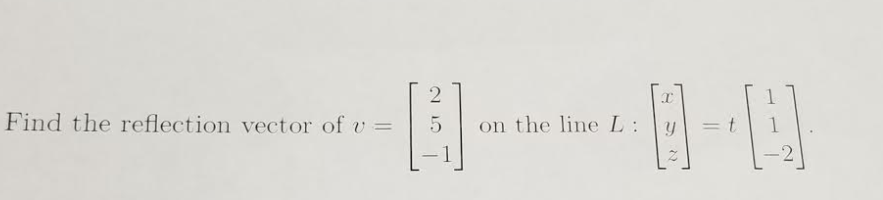
 gleaming topaz
Cant you just do orthogonal projection?
 leaden ermine
Hi, quick question. If a matrix has orthonormal columns, and another matrix acts on it, will the resulting matrix have orthonormal columns as well(Aside from that other matrix being the zero matrix), regardless of what the other matrix is? I am having a hard time showing that, if it is true.
vast torrent
hint: if M is orthonormal, is 5M orthonormal?
or -2M or whatever
any non unit scalar
leaden ermine
Hi, Yes
However a matrix would apply different numbers to each entry. So if I had a matrix [[1,0],[0,1]] and a matrix [1,1,1,1] acted on it, the output would be [[1,1],[1,1]]
where my original matrix was orthogonal, but my new one is just a matrix of all 1's, which isn't orthogonal
vast torrent
if the determinant isn't +-1, the matrix isn't orthonormal
vast torrent
still worth asking your question about orthogonal matrices
leaden ermine
Well this is in the context of primary component analysis
where I am taking a data matrix, A. Performing SVD. I then have a matrix V(Transpose), which are the orthonormal eigenvectors of A_Transpose x A, right?
So that matrix V(Transpose), is an orthogonal matrix, and I will be taking the first k eigenvectors of it
My dataset will then act on that matrix to produce a smaller data matrix. But the question is, does the new data matrix have orthogonal columns
vast torrent
not sure
vast torrent
Why is your basis of vectors such large entries
wintry steppe
vast torrent
You can scale them all by 1/5 for example
wintry steppe
it's just in regards to the word problem
I'm just having trouble understanding
what exactly it is I'm supposed to do
vast torrent
Oh
gleaming topaz
a in terms of that basis
So basically what you need to multiply each basis vector by in b) to get the vector a
wintry steppe
Anyone have a text or some resource to help make linear algebra less abstract?
Although I do know a few applications where I can use linear algebra in
But for the most part, this semester’s Linear Algebra 1 course has been very abstract
For one in Calaculus I had an easier time connecting theory to application but for linear I can’t do that as often apart from some of the more subtle and easier things
magic slate
3blue1brown
his video series on the essence of linear algebra
it's intended as a companion for a proper course but he gives some phenomenal intuition on a vast amount of linear algebra topics

YouTube
A geometric understanding of matrices, determinants, eigen-stuffs and more.
gleaming topaz
Well you know what basis's are right?
wintry steppe
isn't it like a combination of vectors
that can create
any other vector in that given space
 dire delta
Is there a generic name for the symetry present in tensors where you can arbitrarily arrange the diagonal
 tidal kettle
@wintry steppe by uniquely we mean theres only one set of weights that describes each vector in the space
say we took out basis vectors to be the colums of a matrix a
the linear transformation described by A maps each vector x to one and only one unique b
so for any b in the span of our basis vectors, there is only one unique solution x
wintry steppe
So i was watching this video about abstract linear spaces
or vector spaces rather
Home page: https://www.3blue1brown.com/
The tools of linear algebra are extremely general, applying not just to the familiar vectors that we picture as arrows in space, but to all sorts of mathematical objects, like functions. This generality is captured with the notion of a...
and he was talking about how derivatives can be represented as matrix transformations
so would the taylor series expansion of e^x be the eigenvector of that derivative matrix?
i don't know a lot about linear algebra
i just wanna know if my intuition is right
vast torrent
If e^x is an eigenfunction then it's an eigenfunction
e^x and the power series of e^x are the same object
wintry steppe
well in the video, the coefficients of the polynomial are in a vector
vast torrent
Power series are not polynomials
wintry steppe
but in the video the matrix is infinitely large
vast torrent
{1,x,x²,x³,...} does not generate e^x in any linear combination of them
Which time?
wintry steppe
9:00
vast torrent
Ill click
Yes this is talking about polynomials
{1,x,x²,x³,...} is a basis for the space of polynomials in x
e^x is not in the span of {1,x,x²,x³,...}
wintry steppe
ok
also a second question
What do cross product and dot product mean in a physics perspective?
vast torrent
However in the space of, say, differentiable functions
wintry steppe
oh keep going
wintry steppe
ok that makes sense
vast torrent
But we don't really know what a basis of "the space of differentiable functions" looks like
So we can't use matrices for that space
wintry steppe
which is why i assume its an abstract space
vast torrent
Well we know all about it
But not what its basis looks like
And without knowing a basis, you cant use matrices. But its still a vector space
wintry steppe
thats interesting
vast torrent
The axiom of choice implies that every vector space has a basis
But in general we don't know what they look like for infinite dimensional spaces
wintry steppe
sorry but what is the axiom of choice
vast torrent
Uh its a proof rule
magic slate
thats cause you need infinite basis vectors to represent an infinite dimensional vector space right?
vast torrent
To put it mildly
An axiom is
A statement you accept as true without proof, which you use to prove theorems
Like "every statement is true or false"
wintry steppe
yeah
vast torrent
Or "if a set exists, so does its power set"
Things like that
So you can use axioms to prove every vector space has a basis
Without telling you what the bases actually are
The axiom of choice is
Given any collection of nonempty sets
There's a function that maps each set to an element inside the set
The function "chooses" an element in each set
wintry steppe
so we just assume that's true?
also that would be like "Find the max number" right?
vast torrent
Yeah, mathematicians have proven you can't derive it from the usual set theory axioms
If you had a set of infinitely many pairs of shoes
You could create a map that sends every pair of shoes to the right foot shoe in each one
If you had a set of infinitely many pairs of socks
You would need the a.o.c. to pick a sock from every pair
We assume that picking a sock from each pair is a well-defined process that we are allowed to do
wintry steppe
and that would identify each pair?
i thought it would pick one element from the set
oh
nm
vast torrent
No, a choice function would send each set {left sock, right sock} to right sock
wintry steppe
right, its a infinite set of sets
vast torrent
Even though there's no difference between the right and left socks
It's that level of abstraction you need to prove vector spaces have bases
Without knowing what the bases are
wintry steppe
So wouldn't that assume that each set is ordered in one way or another
like if you didn't know what right and left meant, then you couldn't do the mapping
vast torrent
You probably don't appreciate what a good question that is :)
The choice function is very very closely related to the concept of "putting sets in order"
Of assuming every set can have a nice order assigned to it in a certain way
If you want to learn more about this
The first chapter of Topology by Munkres explains the axiom of choice
wintry steppe
thanks a lot
vast torrent
Np
wintry steppe
if you dont mind can i ask another question
wintry steppe
nice
so what is the physics representation of the dot product and the cross product
im understand the calculations
vast torrent
The problem btw with learning about aoc
wintry steppe
but i don't get the intuition behind it
vast torrent
Is that you get confused whenever you see a news article mentioning AOC
wintry steppe
lolol nice
wintry steppe
ok
vast torrent
Though graphically
The dot product is related to the angle between vectors
a.b=|a||b| cos(theta)
wintry steppe
yeah
 steady fiber
a good physics understanding of the cross product comes from torque
like when you are rotating a wheel
wintry steppe
yeah thats what i was wondering
steady fiber
the torque is the cross product of the radius and the force
wintry steppe
i understand that the torque is perpendicular
but how do you know that the magnitude is the area between the radius vector and the force vector
vast torrent
The direction of axb is perpendicular to both a and b and its direction is given by the the right hand rule
The magnitude of axb is the area of the parallelogram with sides a and b
wintry steppe
yeah
steady fiber
$\tau=\frac{dL}{dt}$
stoic pythonBOT
PorosInMyAshe:
steady fiber
and $\frac{dL}{dt}=r\times \frac{dp}{dt}+\frac{dr}{dt}\times p$
stoic pythonBOT
PorosInMyAshe:
steady fiber
where p is the momentum
the 2nd term is obviously 0
since dr/dt = v, and v x (mv)
is 0
they're parallel vectors
dp/dt is F
and that's how you arrive at the cross product
L = r x p btw
that's why the derivative is that
wintry steppe
so when you use the chain rule here
vast torrent
Product rule
steady fiber
kind of, yes
vast torrent
The product rule looks the same
steady fiber
but the order has to be the same
as in the r term is also in front
since it's r x p
not p x r
vast torrent
Dot product product rule also looks the same
steady fiber
not commutative here
 steel mist
anyone online
 wooden pike
No
 viral mason
I was able to finish Lin Alg with an A (85) thanks for all your help @gray dust @half ice @dusky epoch @vast torrent
dusky epoch
congrats
viral mason
thank you
half ice
Yay! Glad.
viral mason
:)
gleaming topaz
Why is the magnitude of the vector product the area of the paralellogram spanned by the 2 vectors?
 cursive narwhal
Consider the area of the triangle formed by the 2 vectors, $\overrightarrow{a}$ & $\overrightarrow{b}$
stoic pythonBOT
Abhijeet Vats:
cursive narwhal
So, the initial points of the two vectors have been joined up and we've connected their terminal points using a straight line.
Now, suppose that the two vectors were directed such that there was an angle of $\theta$ between them.
stoic pythonBOT
Abhijeet Vats:
cursive narwhal
Now, this is a geometric theorem but we can say that the Area of the Triangle, given by A, is:
$A = \frac{1}{2} \cdot |\overrightarrow{a}||\overrightarrow{b}|\sin(\theta)$
stoic pythonBOT
Abhijeet Vats:
cursive narwhal
Essentially, we're multiplying the lengths of the two sides of the triangle and the sine of the angle between them. That's something from basic geometry and we've just applied the idea here
Now, of course, you know that the two vectors will form a parallelogram if i draw another 2 vectors that are just parallel translations of the original 2. That second triangle, then, has to be the same as our original triangle. Hence, it's area is also A, given by the formula above. Thus, you have the area of the parallelogram, B, given as follows:
$B = 2A = |\overrightarrow{a}||\overrightarrow{b}|\sin(\theta)$
That's nothing but the magnitude of the cross product of the two vectors.
stoic pythonBOT
Abhijeet Vats:
cursive narwhal
If you can't visualize what i'm saying above, try to draw it out. It'll make more sense if you can use my explanation above as a guide but derive most of it yourself. That will, undoubtedly, make it easier to remember.
gleaming topaz
@cursive narwhal Thank you, will read it soon and see if I understand. Appreciate the help
@cursive narwhal Not sure if you can simplify it further but I followed to the part where the magnitude of a multiplied by magnitude of b and the angle sin between them is the area of the paralellogram but why is this the same as axb?
I mean magnitude of axb
cursive narwhal
Eh there's a way to derive it from the definition of a cross product
Like, the cross product of two vectors is defined by the cross products of the unit basis vectors. We've defined the cross products of any two unit vectors to produce a particular vector using the right-hand rule. I'm pretty sure you can use that to derive the magnitude of the cross product
gleaming topaz
Alright, thank you once again.
 wind hound
Hey, I have question, that I have the answer to, I want others to solve it as well
Question:
Take any matrix of any order, find an algorithm to extract any of the elements in the matrix. Allowed operations are Multiplication by other matrices, addition with other matrices and determinant
the matrices used in the algorithm must only depend on the order of the original matrix and the position of the element you're trying to extract
 sonic osprey
what are the elements of the matrix
wind hound
real numbers
sonic osprey
Then it's impossible
wind hound
why?
sonic osprey
Because non-computable numbers exist
wind hound
what do you mean?
sonic osprey
just google non-computable number
wind hound
ok
So?
as I saw, non computable number are those for whom we can't develop an algorithm
for a number n, we can't figure out n decimal places
@sonic osprey ^
right?
@sonic osprey ??
But they are still real numbers, and follow properties of real number...
If you wish to take non computable number in the matrix, let's say, 'Mu' leave it as Mu in the matrix
who told you to find exact value of Mu
sonic osprey
Is that not what "extracting any of the elements in the matrix" means
wind hound
Ok ok
look
if the 1st row of matrix is [1, Mu, 22]
and you wanted to extract Mu
then after the algorithm, you'll get Mu
no matrix
that's my question
sonic osprey
"as I saw, non computable number are those for whom we can't develop an algorithm"
wind hound
Leave it a 'Mu'
sonic osprey
That makes no sense
wind hound
This assumes you had the value of Mu in the first place
wind hound
Ok
wind hound
Yes
sonic osprey
But if you computed the first few digits and got
3.141592
You couldn't tell if it was pi
or just 355/113
And even if you kept computing more digits
You still wouldn't be able to tell if it was acutally pi
or some fraction that's close to pi
wind hound
Yes
sonic osprey
Or even some other irrational number that's close to pi
sonic osprey
sure?
wind hound
that's what i'm saying
Nowhere you multiplied every decimal place with 1
but you got pi
right?
vast torrent
What
wind hound
Yep, but your abstract mind can
and, algorithms are not only for computers
but also for your mind
vast torrent
"No actual computer can hold real value numbers" how is that true
empty copper
tfw I can't store the real number 0 in my computer 
vast torrent
CAS can't store irrational numbers ? Like "the root of x²-2"?
sonic osprey
I mean, it's really not storing them, calculations with them are just algebraic manipulation
vast torrent
Algorithms that can't even theoretically be implemented aren't algorithms? How would that even work
sonic osprey
And you're right, by store I mean actually store the digits of
vast torrent
unless its a rational number with a denominator a power of 2
vast torrent
Really? It can't store 1/8 in binary?
wind hound
Guys I wasn't talking about computer algorithm
vast torrent
8 would be 0.001 BIN
sonic osprey
I mean, usually when people say algorithm, they mean turing computable algorithm but uh
is your matrix square
vast torrent
@wind hound there are no mind algorithms that aren't for computers, how would it even be an algorithm
sonic osprey
I think I misunderstood your question earlier
sonic osprey
His idea is that he has a matrix with all the values already in it
wind hound
Yes
sonic osprey
But you just don't know what the values in the matrix are
wind hound
There you go
vast torrent
Like the data are encrypted?
wind hound
It's okk
sonic osprey
so is it square
wind hound
No lol
vast torrent
Then what
wind hound
as far as I know Doesn't matter
sonic osprey
but you know the dimension of the matrix right
wind hound
That's why I said it only depends n certain things
sonic osprey
Which you can do by multiplying on the right by an NxN matrix with only one 1 and the rest 0's
Then multiplying by the vector (1,0,0..,0) on the right will give you the first element in that row
sonic osprey
okay yea
so you want to multiply it on the left by an MxM matrix
You can do this in either order, it's just transposed
sonic osprey
Uh I mean
after you do those two steps, you have a Mx1 or maybe its Nx1 vector with all zeros except one place
Where it's the value you want
so you should be able to multiply it by a 1xM or 1xN vector with all zeroes and one 1
sonic osprey
I mean sure
You're left with a 1x1 matrix with the entry you want
Take the determinant I guess
wintry steppe
Could someone explain why it is the case that:
If Ax=b is a system of linear equations, where A is an mxn matrix whose rows add up to 0. Then it is necessary that the sum of all the components of b to add up to 0 for there to be a solution
wintry steppe
adding all the m 1xn rows
wind hound
then what about columns?
wintry steppe
what do u mean?
wintry steppe
no
wind hound
rowXcolumn
wind hound
No, its still not clear
ok, so you want to add up the elements with all the elements downward
then you'll get 0?
wintry steppe
yes
wind hound
Oh
wintry steppe
(0 0 ... 0) n times
wind hound
then It's really simple
so
what you wanna do is take any number x from real number
then imagine then multiplied with the matrix
it gets distributed all over the matrix
now that matrix is equal to the other matrix 'B'
Right?
wind hound
how do you get a column vector if you multiply x(real number) with a mxn matrix?
ohhh
okk
I thought x is a real number
wintry steppe
no
wind hound
Okk
Yeah, I got the answer now
So, try to imagine the matrix multiplication that's going on
I'll go step by step
let's try this with 2x2 matrix and 2x1 matrix and B is 2x1
got it?
wintry steppe
k
wind hound
So,
first element of the x is x1
and when you multiply, multiply the row of the first matrix with the column of the next
so, first element of A which is at row=1 column=1
gets multiplied by x's first element
right?
wintry steppe
ok, standard matrix multiplication
wind hound
Yep
now
think about the second multiplication that you'll do, 2nd row with the x
in that too you'll multiply the first element with a1
right?
wintry steppe
k
wind hound
so, when you get the final matrix/vector
and you add downwards
then you'll add the elements multiplied by a1
and then you take a1 common then you'll get 0
right?
wintry steppe
hang on
if I see the matrix multiplication as b = x1*A1+x2*A2+...+xn*An
where Aj , j=1,...,n are the columns of the matrix
wind hound
think of it this way, first element of x is always multiplied with the elements of A in the first column
Yep
wintry steppe
and I add the columns together
wind hound
Then when you add the rows then you can take the x elements as common
wind hound
Yep
wintry steppe
right
wintry steppe
ok, I think I get it
 frank blade
So, morale of the story: there is a relationship between matrix systems and simultaneous (linear) equations.
wind hound
np
wintry steppe
what do u mean Boni?
frank blade
I only summarised what ColorCookie had explained to you.
Your learnt at some point how to solve simultaneous equations:
2x + 3y = 3
5x + 2y = 10
Every such system of simultaneous equations can be written in terms of the Ax=b.
As they said, try writing them out, and you should see the relationship.
wind hound
@frank blade Yep
wintry steppe
I'm aware of this, I was just looking in the wrong spot for making sense of the statement
wind hound
It happens
 short gorge
How does one express this as even or odd
is it to do with the number of disjoint cycles
or the size of them
dusky epoch
are you asked to find whether this permutation is even or odd
ie determine its parity
you don't have to do any cycle stuff to do that
@short gorge
short gorge
The 2 disjoint cycles I've found for it are (1,5,6)(2,8)
on this basis is it odd, because the product of the 2 lengths is even, therefore odd
dusky epoch
yes it is odd but not for that reason
short gorge
Right. Is it to do with it being an even number of disjoint cycles?
 south sedge
Hi, I'd like to write the quadratic equation in canonical form. what is the symmetric matrix for this expression? How do I write sqrt(3) as a sum of 2 non-zero numbers?
gray dust
$\sqrt{3}=\frac{\sqrt{3}}2+\frac{\sqrt{3}}2$
stoic pythonBOT
RokettoJanpu:
 flint wharf
hello, I have a task in matrix to prove or disprove that adj(A+B) = adj(A)+adj(B)
I am not sure how to start with this, am I suppose to write random numbers or use parameters?
native lodge
maybe intro to linear algebra by strang?
or just search up practice problems for each lesson you do
intro to linear algebra is probably what is best for you then
 royal vigil
so I haven't had a class on functional analysis yet, so be kind
but is the dimension of an infinite dimensional vector space the cardinality of its smallest basis?
like for example functions on the reals can be represented by a countably infinite basis (infinite polynomials) or as an uncountably infinite basis (Fourier transforms)
so could we say the dimension of the set of functions on the reals is aleph naught?
steady fiber
functions on the reals cannot be represented by Fourier transforms, only functions that are square integrable can be represented by fourier
also you cannot represent all functions over the reals with power series
royal vigil
ok, pretend I said continuous and infinitely differentiable functions on the reals
steady fiber
still no
e^-(1/x^2) is the stereotypical function
with a point inserted at x=0
infinitely differentiable, continuous, not analytic
royal vigil
ok, for the sake of answering my original question (which was not about the semantics of representing functions with series/fourier transforms) what about the set of functions that can be represented by both fourier transforms and power series
assuming it's closed on multiplication and addition and whatnot
steady fiber
sure, you can say the dimension of all function that can be represented by a power series is something
apparently the dimension of all functions from R->R is 2^2^aleph naught
kinda big
for polynomials it's 2^aleph naught
royal vigil
why would it be bigger than aleph naught?
couldn't all polynomials be represented with a power series?
vast torrent
@royal vigil yes they can, and?
royal vigil
If it can be represented by power series, then it can be represented as a linear combination of other polynomials
royal vigil
Isn't {1, x, x^2, x^3,...} a basis for the set of polynomials?
A set whose cardinality is aleph naught?
royal vigil
Yeah
royal vigil
I mean @steady fiber said it wasn't so I was confused
vast torrent
Oh indeed i see he said that
steady fiber

Mathematics Stack Exchange
I'm trying to find the cardinality of the set of all polynomials with coefficients in ℝ.
What's wrong with the following proof:
Let $f$ be a function:
$$f: \mathbb R[x] \to P(\mathbb R)$$
$$f(a_{...
I just went on math stack exchange ngl
and it says cardinality of all polynomials with real coefficients is that
steady fiber
oh ya you're right
it is indeed aleph naught
for dimension
I'm kinda stupid at times
vast torrent
nah
 floral prairie
line (x-1)/2=2y=z+1
how do i convert that to smt i can use
i want it like ax+by+cz+d=0 or smt
if i set t=(x-1)/2=2y=z+1 i believe this is called parameterize in english? i can then set up a system of quations x,y,z and express them in (t) and find its coefficients
ill try that
gleaming topaz
If I have a linear transformation S:R3->R3, would I just put all this into an augmented matrix with the untransformed vectors to the left and then calculate RREF for it to get the transformation matrix for S?


 wintry steppe
How is this not the rotation matrix about y axis?
(0,0,1) lands behind the zy plane from the looks of it so the x coordinate must be negative?
oh wait anti clockwise
MY BAD BYEEE
wintry steppe
Hello we had a 2x2 matrix in the exam, and we had to diagonalize it, however the 2x2 matrix has only one lambda, not two
Can it be diagonalized?
gleaming topaz
Yes and no, depends on what you got as a basis for the null space, so for it to be diagonalized you need a 2-dimensional null-space
 wintry spruce
f( [a,b], [c,d] ) = [ a*c , b*d]
what's the name for this operation?
dusky epoch
what are those square brackets supposed to mean
wintry spruce
@dusky epoch two vectors
dusky epoch
oh like column vectors
,,,,, idk i'd call this "coordinate-wise multiplication" if i had to
why do you need a name for it
wintry spruce
@dusky epoch i wanted to write it down ha - "element wise product" was about all i had
 terse mirage
yes that
vast torrent
hey guys, looking for more help please with these practice exams
I dont understand the student posted solution for this one
Let A, B, C be nxn invertible real matrices
consider the equation
$\lambda^3 Ax + \lambda Bx = Cx$
stoic pythonBOT
gfauxpas:
vast torrent
Show: if n is odd, there is at least one real number lambda and real non-zero vector x such that this equation holds
well before I go to the answer key
how would I approach such a thing
I notice that this equation is the same as
$\left({\lambda^3A + \lambda B - C}\right)x = 0$
stoic pythonBOT
gfauxpas:
steady fiber
it does show that $\lambda^3A + \lambda B - C$ is non-invertible
stoic pythonBOT
PorosInMyAshe:
steady fiber
if you can show that you can find a lambda st that becomes non-invertible
vast torrent
hmm
steady fiber
then you've solved the problem
vast torrent
$\ell(\lambda) = \det(\lambda^3A+\lambda B-C)$
stoic pythonBOT
gfauxpas:
vast torrent
should I do this and find roots?
well I dont know how to find roots
I do know cubics have a real root
but this has 3 different matrices
so I can't use anjy theorems I know about char. polynomials
cayley-hamilton or whatever
steady fiber
$\det(\lambda^3A + \lambda B - C)=0$ is what we have to prove for us to solve the problem
stoic pythonBOT
PorosInMyAshe:
steady fiber
and that determinant has a characteristic equation with odd degree
which means it has at least one real root
vast torrent
but I dont know how to have a characteristic equation of 3 matrices
steady fiber
you just sum the terms up
vast torrent
I only know for a polynomial in one matrix
steady fiber
and find the determinant of it
vast torrent
ooh
steady fiber
it's not really a characteristic equation
it's just a polynomial
that has odd degree
and you know that an odd degree polynomial
has at least one real root
vast torrent
and it's a polynomial that's degree odd degree... how do we know it's odd degree just because n is odd
steady fiber
yes
steady fiber
yes we have to prove it has odd degree
steady fiber
okay, so if we do the laplace expansion, along any row of our summed matrix, we will get a $A_{ij}\lambda^3+B_{ij}\lambda+C_{ij}$ multiplied by a cofactor
stoic pythonBOT
PorosInMyAshe:
steady fiber
and that's a degree 3 polynomial
and if we keep doing this, the final polynomial will have degree 3n
which is odd when n is odd
vast torrent
wait, that's for each cofactor coefficient, that formula?
steady fiber
you can prove it by induction, for a 1x1 matrix, the polynomial would be degree 3, for an nxn matrix, the degree of the polynomial would be 3+degree of the (n-1)x(n-1) minor
ya, the laplace expansion formula
it's not very rigorous here, but do you get what I mean
vast torrent
well induction will make it rigorous
steady fiber
yes
steady fiber
what's part 2
vast torrent
for n =2 , find a counterexample
where there is no real lambda and x!=0 such that the equation holds
I don't want to jus tguess randomly
I want to have an approach rather than just hope I pick the right ones
I see that the answer key picks one of the matrices to be I
steady fiber
A = Identity, C = zero matrix
steady fiber
oh true
then I'll make C something else
but ya, starting with identity is probably a good idea
vast torrent
$\ell(\lambda) = \det(\lambda^3 I + \lambda B - C)$
stoic pythonBOT
gfauxpas:
vast torrent
I only need one counterxample
steady fiber
and manipulate the coefficients however
vast torrent
but I don't want to just shoot in the dark randomly until I find one
steady fiber
to make a function that's always positive
or whatever
it's not a shoot in the dark
it's getting the polynomial and then using the properties of polynomials to make it always positive
or always negative
vast torrent
okay so
vast torrent
uh
steady fiber
if you want to make it easier
vast torrent
just to make computation easier
steady fiber
your polynomial is just $\left(a_{1}x^{3}+b_{1}x+c_{1}\right)\left(a_{2}x^{3}+b_{2}x+c_{2}\right)$ then
stoic pythonBOT
PorosInMyAshe:
steady fiber
x is lambda
vast torrent
$\begin{bmatrix} \lambda^3 + \lambda a - b & 0 \ 0 & \lambda^3 + \lambda c - d \end{bmatrix}$
stoic pythonBOT
gfauxpas:
steady fiber
oh true, we made A = I
vast torrent
,w (lambda^2 + lambda a - b)(lambda^3 + lambda c -d) expand
stoic pythonBOT
 Requested by gfauxpas#9497
vast torrent
Requested by gfauxpas#9497
vast torrent
,w distribute (lambda^3 + lambda a - b)(lambda^3 + lambda c -d)
stoic pythonBOT
Requested by gfauxpas#9497
vast torrent
gross
steady fiber
lol
steady fiber
,w distribute (lambda^3 - lambda c - b)(lambda^3 + lambda c -d)
stoic pythonBOT
 Requested by PorosInMyAshe#2423
steady fiber
Requested by PorosInMyAshe#2423
steady fiber
becomes that
vast torrent
set b = -d
vast torrent
,w distribute (lambda^3 - lambda c +d)(lambda^3 + lambda c -d)
stoic pythonBOT
Requested by gfauxpas#9497
vast torrent
okay this is quadratic in lambda^2
steady fiber
you can probably put that in desmos
vast torrent
yeah but I wont have a compuiter on the exam
I will have enough time to multiply polynomials
so I'm cheating now
but I wont have desmos
vast torrent
I dont want to lose invertibility but I dont think I will
,w distribute (lambda^3 - lambda 1 - b)(lambda^3 + lambda c -1)
stoic pythonBOT
Requested by gfauxpas#9497
vast torrent
ah of course, as long as I dont turn them into 0
set b = -a
b=-1 I mean
,w distribute (lambda^3 - lambda 1 +1)(lambda^3 + lambda c -1)
stoic pythonBOT
Requested by gfauxpas#9497
vast torrent
getting better
steady fiber
https://cdn.discordapp.com/attachments/540211747613704221/657388334544453652/wolf.png over here why not just test out a c and d

 vast torrent
how'd you get that
vast torrent
,w distribute (lambda^3 - lambda c +d)(lambda^3 + lambda c -d)
stoic pythonBOT
Requested by gfauxpas#9497
vast torrent
ah, so I did
but I dont want lambda=0 to ruin things
oh nm
-d^2 is not in lambda
hmm
vast torrent
the answer key does use 3 diagonal matrices
but doesn't tell you how to come up with them
oh, well
he does do
steady fiber
I personally would use another approach
vast torrent
one matrix is the transpose of the other
steady fiber
make A and B both I
vast torrent
to simplify things
steady fiber
and allow C to have any entry non-0
then you get $\left(x^{3}-x+a\right)\left(x^{3}-x+b\right)-cd$
stoic pythonBOT
PorosInMyAshe:
steady fiber
and all you have to do is make cd a very large negative number
and you're done
if you shift the function up enough, it just cannot have a root
vast torrent
can you go back and slow down a little bit please
steady fiber
sure
vast torrent
my ritalin wore off by now
vast torrent
sure, and let's make C diagonal too
steady fiber
then the determinant is $\left(x^{3}-x+a\right)\left(x^{3}-x+b\right)-cd$
stoic pythonBOT
PorosInMyAshe:
steady fiber
and if you set a=b=0
vast torrent
to assume 4 degres of freedom is enough to have a coutnerexample?
that's our guess?
vast torrent
trying to build intuition here for how to find counteramples onan exam
steady fiber
by setting a,b to 0, you get $\left(x^{3}-x\right)\left(x^{3}-x\right)-cd$
stoic pythonBOT
PorosInMyAshe:
vast torrent
we have in theory 12 degrees of freedom to make a counterexmaple
steady fiber
which you can simplify to $x^{2}\left(x^{2}-1\right)^{2}-cd$
stoic pythonBOT
PorosInMyAshe:
vast torrent
we're narrowing it down to 4?
vast torrent
sure
steady fiber
and then just make cd massive
like c=-1000, d = 100000
the function is shifted too far up to have a root
vast torrent
cool. I got it, I'm just trying to learn intuition here to create counterxxamples on my exam
steady fiber
and ya, there you go
vast torrent
if I have 12 degrees of freedom
and im trying to make a counterexample
I should make an educated guess that 4 degrees of freedom is enough?
steady fiber
make the complicated parts I
like in this case the lambda^3
so we made A = I
i went further and made B = I too
so coefficients of lambda are already set
and then keep a reasonable amount of degrees of freedom from the rest
so instead of 2 for C
vast torrent
it could be that any assumption we make is going to ruin our chance of finding a counterexample, but if the space of non-solutions is big enough our chances are pretty good, right?