#point-set-topology
1 messages · Page 150 of 1
 dire warren
 gritty widget
GL(2,R) is a Lie space
 dim meadow
Gln(R) is a lie group
gritty widget
The proof I found for showing the nth homtopy group of n spheres is iso to the integers uses homotopy type theory
Is there a way to do it without type theory or is that how it’s done canonically
 honest narwhal
Lmao nobody ever uses homotopy type theory for that. I'd wager most topologists don't know homotopy type theory
There's a way using differential topology (Hopf degree theorem) and I think if you know that S^n is simply connected you can use Hurewicz?
 steel needle
they do it in the books by the freudenthal suspension theorem @gritty widget
definitely ignore homotopy type theory lol
 lucid turret
Could anyone help proving this?
Prof gave us definition of fundamental class ONLY. with no further insight
So for example how do I determine fundamental class of sphere S^n ? I know it's supposed to be generator of Hn(S^n,Z) with some property, but idk any generators of Hn
no words on higher homology group generators either
I fucking hate classes like this
dim meadow
https://math.stackexchange.com/questions/3164063/is-a-function-x-times-y-to-z-continuous-iff-precomposition-with-continuous-f/3209266#3209266
Someone found a counterexample!

Mathematics Stack Exchange
Is a function from a product space $X \times Y \to Z$ continuous if and only if precomposition with all continuous functions $X\to X\times Y$ and $Y\to X\times Y$ are continuous? Clearly one direc...
steel needle
@lucid turret a generator of Hn(S^n, Z) is the identity S^n -> S^n
oh shit @dim meadow
lucid turret
@steel needle where do I find proof of this statement? somewhere in Hatcher?
steel needle
sure
I mean it follows from say cellular homology
since there's only one top dimensional cell
or from simplicial homology noting that this map isn't 0
if you regard the first S2 as a simplex
lucid turret
well if I see S^n as CW complex and use CW complex homology all I know is that generators of its chain complex at n are at bijection with cells of dim n
i.e. there's one generator which we called the same we call our cell
Idk how I can see that from cellular homology is what I'm trying to say
steel needle
I mean it's what you said about CW complex structure
that's how you compute cellular homology
lucid turret
But I honestly can't see why I can see the identity as a generator from the CW structure
steel needle
an N-cell is an embedding from S^n
you're just saying who the N-cell is
through the identity map
lucid turret
ok according to my definiiton n-cell is just the interior of the n-ball we're attaching when we build CW complex
 round stump
I have to show that ]0,1[ is homemorphic to the real number line, can I make it into ]-inf,0[ union 0 union ]0,inf[ using y=1/x but restrict it away from x=0?
if that makes any sense
I know there is a better way to do it, but i'm curious if that is allowed?
steel needle
yeah @lucid turret
wait
ok i'm cheating a bit
but you can see spheres also as cells
it's maybe better to see it as a gluing of two 2-cells
given by the top and bottom hemispheres
round stump
<@&286206848099549185>
steel needle
that's not gonna be continuous colen
but that's the idea
arctan is the usual function that you use
 west spindle
you can go for a rational function too
round stump
hmmm not seen arctan used
my book says some funky thing using abs or some log function
steel needle
you can even use piecewise linear functions
 gentle ospreyBOT
Colen:
round stump

west spindle
there are many homeomorphisms
round stump
yea, just these seem weird to me
1/x was my initial idea but thats only half the line
west spindle
1/x + 1/(x-1) i think this should give you one
round stump
hmm
west spindle
,w plot 1/x + 1/(x-1)
gentle ospreyBOT
 Requested by Ann#8192
west spindle
Requested by Ann#8192
west spindle
ye
round stump
How do you do the arctan one?
its not in my book sadly
]0,1[ can go to ]-pi,pi[ with y=(2x-1)*pi?
$\left(\frac{1}{2}\right)\left(\frac{x}{\pi}+1\right)=y$
inverse
gentle ospreyBOT
Colen:
steel needle
you just need to come up with any monotone function that goes from -inf to inf in finite time
has to be monotone
:^)
round stump
is this right?
(1) {(r,θ):r>0} and (2) {(r,θ):r>1}
(1) maps from (r,θ) -> (r+1,θ) with inverse (r-1,θ)
Thus {(r,θ):r>0} -> {(r,θ):r>1}
Which is identical to {(r,θ):r>1}
there
 round stump
they are the same length
it just looks a bit weird
who needs paint when you have desmos 
dim meadow
Yeah, just do a bunch of different configurations of that
round stump
yea think I have now, just was a bit confused on what it was asking. An example pic would've been nice
dim meadow
Nice
dim meadow
Oof it's actually trivial true
The space is star convex
@dire warren those 4 am fuckups though
gritty widget
Hello, I need some help on the following: We are given a 1 dimensional simplicial complex $\Gamma$ over a field K and are supposed to calculate $H_0(\Gamma)$. $H_0(\Gamma)$ is given as $Z_0(\Gamma)/B_0(\Gamma)$ with $Z_k(\Gamma)=ker \partial_k$ and $B_k(\Gamma)=Im(\partial_{k+1})$, where $\partial_k:C_k(\Gamma) \rightarrow C_{k-1}(\Gamma)$ and $C_k(\Gamma)=K-span{[\tau]:\tau\in\Gamma, dim \tau = k}$.
gentle ospreyBOT
mathDE:
 pliant dragon
Quick Q, whats an example of an irreducible but connected topological space?
steel needle
Ck(G) should be the span of the ones of dimension k, not the complement, right? @gritty widget
think about what the boundary (B) of a 1-simplex looks like
because that's what you're quotienting by
and think what a 0-cycle (Z) looks like
H0 has a very straightforward description
gritty widget
Yes excactly, - wasnt supposed to be a set minus at all. Sorry for the confusion.
The relative boundary of a 1 simplex is the two points spanning the simplex. What do you mean by a 0-cycle? Just one point?
gritty widget
All of them since $C_{-1}$ is just 0
gentle ospreyBOT
mathDE:
steel needle
yeah
therefore Z0/B0 is what
all the points
identifying the ones which are connected by lines
gritty widget
So Z0 are all points and B0 are all points which were boundaries in C1. But what exactly is the difference between H0 and B0 then?
steel needle
B0 is Z-linear combinations of boundaries (pi - pj)
where pi and pj are connected by a line
H0 is a quotient of Z0/B0
which is gonna be Z-linear combinations of points, where those which are connected by a line are equal
 bitter yoke
@pliant dragon every irreducible space is connected? There'd be no way to split up your space into two disjoint open sets if every pair of open sets intersects
gritty widget
Ah ok thanks @steel needle
steel needle
there's a very simple description of it
that I'm refraining from saying
because I don't wanna spoil it
but you should think about it
steel needle
yes
lucid turret
you're never too sure 😄 ty
Btw do you think that the fact that R^3 \ (R^2 \ 2 disjoint open balls) has fundamental group of circle is obvious?
Or does it need additional commentary
steel needle
it's clear, you can comment on a retraction that makes it obvious
gritty widget
where's an example of a non trivial loop there tho wait
oh wait I get it now
there we go
you have a wall with two holes in it lol
round stump
How can I show a cube without a boundary is homeomorphic to a sphere without a boundary? (In R3)
I'm thinking to show that they're both homeomorphic to R3 but unsure how to proceed
dire warren
Let X be a metric space, and let C be it’s completion.
Is it true that a function f: X -> R can be extended to a continuous function F: C -> R iff for every c in C, there exists r > 0 such that the restricted function f|(B_r (c) intersect X) is uniformly continuous?
round stump
<@&286206848099549185>
 vague mulch
whomst pungg in non questions channels 
round stump
I have a test in a few days so trying to clear some stuff up 
west spindle
wlog we can assume the cube is (-1,1)^3
vague mulch
but i suppose you could just do a scaling on the radius
round stump
wlog?
vague mulch
without loss of generality
west spindle
without loss of generality
round stump
vague mulch
gott ago fast
west spindle
and then just construct the mapping by scaling linearly along each straight line from the center to the boundary
round stump
hmmm
wym?
My book says to use (-1,1) to the real line but idk how that applies to a cube
west spindle
oh, the book suggests using the entire space as an intermediary?
sure that works then
if you have a homeo $\varphi : (-1,1) \to \bbR$ you can make a homeo $$\varphi^3: (-1,1)^3 \to \bbR^3$$ by applying $\varphi$ coord-wise
gentle ospreyBOT
Ann:
west spindle
$\varphi^3(x,y,z) := (\varphi(x), \varphi(y), \varphi(z))$
gentle ospreyBOT
Ann:
west spindle
coordinate-wise
round stump
(x,y,z) -> (f(x),f(y),f(z)) where f is a homeomorphism from ]0,1[ to the real line is what my book says
so that
round stump
but I just don't understand what that means really, like is the reasoning because you can stretch x, y and z out so that stretches the entire cube with them?
unsure on what is actually happening in the background
west spindle
well
if h (or phi) is thought of as "stretching" then i guess yeah you could just say you're stretching the cube along each dimension
round stump
okay, and for the sphere we're just saying v/(1+|v|)?
mapping radially outwards?
I was thinking to change to spherical coordinates but don't think that really helps much
west spindle
you can go spherical if you want actually
(r, phi, theta) -> (g(r), phi, theta)
where g: (0, +infty) -> (0,1) is a homeo
doesn't matter exactly what it is
only that it's a homeo
round stump
Ahh yea, that I like more. I've been using the polar, spherical and cylindrical tricks a lot
west spindle
yeah those come in handy a lot
round stump
okay one last Q, I know we can't but what is the problem with just mapping everything to (0,0,0) and saying the same?
Like we can overlap sometimes but not like that?
Confuses me
 midnight jewel
yes. homeomorphisms are bijective (and the inverse must be continuous too)
round stump
thanks uwu
 stable sable
Topology question: Show interval I = [a,b] subset of the reals is compact... the notation alone gives us closed and bounded, does it not?
gritty widget
have you already proved closed and bounded subset of R^n => compact
 minor stag
~~ heine borel~~
stable sable
we have the heine borel thm'
minor stag
^
stable sable
right... i was thinking so but didn't know if I was overlooking something
 earnest grove
Does topology have any practical applications?
 languid cedar
it allows you to drink coffee out of a dount
 ember maple
Coffee donut meme 
dim meadow
Does anyone have any references for infinite connected sums of manifolds?
dim meadow
@gritty widget you have any ideas?
I mean like a book where it's defined
The construction I was using was you construct a direct system whose ith term is the connected sum of the first i manifolds - the ball you glue the i+1st manifold on
True
But I think they're all diffeomorphic
Hmm
How would you get a cantor tree?
dim meadow
@gritty widget how would that work?
 vale lynx
Can anyone please explain to me why the part in red is correct?
 loud heart
Is there any situation where we would consider simplicial or CW complexes over Δ-complexes?
I'm wondering if homology by Δ-complexes and singular homology are all you need for baby's first homology computations
honest narwhal
I think CW is most common
Seems to be the most common way that a space is given to you
Simplicial complexes are kind of old school, I know it has the advantage over CW complexes that it's purely combinatorial, while CW isn't, but idk much about Delta complexes. I know you can triangulate spaces with way fewer simplices in the Delta case so I wonder if there's any real reason for simplicial complexes to exist anymore
🤷
loud heart
yeah it feels like these are all mentioned just to respect the history of the subject
it just seems much faster in general to use delta complexes
wondering if we had a computer to do all these computations, when would it pick one way of gluing over the others?
honest narwhal
Nah CW I think is the modern way of doing things
vale lynx
Second attempt:
Can anyone please explain to me why the part in red is correct?
gritty widget
is this from the field arithmetic book?
 near crown
say u have a 2d planetary system on the surface of a torus. would this explain repulsion force?
midnight jewel
I’m not convinced this is a coherent question. what is there to be explained about repulsion forces?
near crown
hmm
because
gravity attractss
but if it is in a closed surface than it can cause a repulsion effect
is this doable ona computer program?
midnight jewel
yes, if the system is constrained, those constraints can be seen as forces acting against the “natural flow” of the particles
near crown
could this explain dark matter or somthing?
midnight jewel
yes, you can model the equations of motion e.g. via lagrangian mechanics
near crown
why dont we see such simulation
midnight jewel
how could this explain dark matter?
near crown
im a big math newbi
near crown
is ther a physics room?
midnight jewel
and I guess in the math setting most closely related to analysis
not in this server cause this is a math server
let’s move to #multivariable-calculus tho cause it’s the most topical on this server
near crown
ok
vale lynx
@dire warren I've considered the definition yet couldn't understand.. I attached the def, if you'd like to take a look
@gritty widget Yeah, it is
gritty widget
ah ok
dire warren
What’s the definition for compatible?
vale lynx
Sorry for all the screen shots, it's easier that way..
dim meadow
@vale lynx inverse limits aren't that bad
Draw a picture and it will make sense
Basically you have a map from X into the Cartesian product
Which should descend to a surjection onto the inverse limit
vale lynx
thanks, @dim meadow, I don't think inverse limits are bad, I'm rather new at this but I find it interesting.. My question is not regarding the inverse limit, it's about a part of a proof I attached few massages back
dim meadow
Oh, what was the question?
dire warren
I think X itself must be viewed as a inverse system
With X_i = X for all i
And pi_ij = id
Then we have
dim meadow
That kind of reminds me of chain complexes
dire warren
We then have
Pi_ji Phi_j = phi_i
For all i > j
So that phi_i^-1 (s_i) = Phi_j*-1 pi_ji^-1 (s_i) = phi_j^-1 pi_ji^-1 pi_ji (s_j) (by definition of inverse system, s_i = pi_ji (s_j)
Well now I’m stuck
I would like cancel the pi_ji^-1 and pi_ji
But
It doesn’t work that way..
Argh I’m so close
vale lynx
Ok, it's a little bit loose but I think the compatibility allows us to determine the the preimage of s_j by \theta_j is contained in the intersection
vale lynx
what do you mean?
dire warren
It’s pi_ji phi_j = phi_i for all i < j
In that case this is settled
Let i < j. Then Phi_i^-1 (s_i) = phi_j^-1 pi_ji^-1 (pi_ji) s_j
Which in particular is a superset of phi_j^-1 (s_j) (because s_j is an element of of pi_ji^-1 pi_ji s_j)
Done
vale lynx
I'm not sure I got this line: Phi_i^-1 (s_i) = phi_j^-1 pi_ji^-1 (pi_ji) s_j
Did you get it from the compatibility def?
dire warren
Err
s_i = pi_ji s_j from the definition of inverse system
And then the left hand part is just inverting this: Pi_ji Phi_j = phi_i
^ this one is from compatibility
All good?
vale lynx
Sorry, I'm kinda slow todaY..
Let's denote x_i=phi_i^-1(s_i).
then by the line: Phi_i^-1 (s_i) = phi_j^-1 pi_ji^-1 (pi_ji) s_j
after you cancel pi_ji^-1 pi_ji with each other, you get: phi_i^-1 (s_i)=phi_j^-1 (s_j)
meaning x_i=x_j.
How is it possible?
dire warren
You can’t cancel
Them
In general s_j is an element of pi_ji^-1 pi_ji s_j
Note that the rhs is a set,
And pi_ji is the swt theoretic inverse, it is not the inverse function
So we can’t just cancel but we can conclude that phi_i^-1 s_i is a superset of phi_j^-1 (s_j)
vale lynx
ooooohhh..
I think I got it.
A bit convoluted of them to just throw it in the proof without any explanation
thanks very much
dire warren
No prob!
 pure zodiac
Hello again
steel needle
there's interesting algebraic topology exercises on graphs
bitter yoke
The topic is called topological data analysis and you could look into that
steel needle
for example the fundamental group has a very nice description
but for point set topology you probably won't find much near that background
it's a pretty self contained topic
pure zodiac
I have experience in DFF networks and their variants
I heard sometimes topology can be embedded within these networks? Is there a nice way to visualize them? I can generate 2d and 3d shapes/objects/manifolds in a C++ program I made
My experience with these DFF networks is typically feeding data into them (data science)
and I will look into "topological data analysis" thank you
pure zodiac
^that
steel needle
it's the topology you get when you draw them inside some R^n
pure zodiac
My english isn't very good with math
After some quick googling, this looks pretty cool:
https://arxiv.org/pdf/1710.04019.pdf
thanks for the suggestion
gritty widget
since Euclidean spaces are contractible it's pretty fun and easy to play around with homotopies on em
Theres a really trivial one that is sooo much fun to fuck w in desmos lol
https://www.desmos.com/calculator/4nz7qmv7te
I know the example here isn't actually a homotopy cause of the breaks but still it's a good teaching tool
a better example would be s^3 to sin(s), maybe change the step to 0.00001

Desmos Graphing Calculator
hit the play button, change up the functions
there's PDE stuff that's more graphically amusing but this is nice too tbh lol
anyone know good educational tools for topology?
getting physical is neat, but anything specific even?
gritty widget
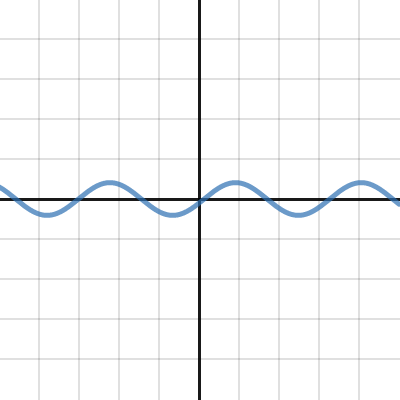
Desmos Graphing Calculator
here's another one showing the transitive property
put in any functions you'd like
ember maple
So I have been thinking of doing integration on some space X by using singular simplices,
first by defining a complex that would model (mapto) X. Then take the value of function f on X pulled back to the simplex on its barycenter. Then do the sum f_x*Dx, with f_x is value at barycenter of simplex x and Dx is a suitable measure on simplex x. Summing it over the simplices ala Riemann sum. Then further refining the model complex with barycentric subdivision, hopefully convergent.
What's better way to do this?
 zinc tinsel
I need help with general topology someone save me
midnight jewel

zinc tinsel
Someone teach me it from the ground up.
midnight jewel
read munkres or hatcher's notes and ask questions when you're confused
hatcher's notes are linked in #books-old, no one's reviewed munkres yet so it's not listed there but it's essentially the standard work
pointset topology is pretty easy imo, provided you've done some analysis to motivate it
just gotta do a bunch of exercises to get unituitive things internalized
ember maple
Hmm it seems cayley graph is simply connected
midnight jewel
there’s tons of different cayley graphs and certainly not all of them are
like this one for the dihedral group of the square certainly does not look simply connected
 fervent citrus
ㅋㅋㅋ
ember maple
Oh right
midnight jewel
I would, without much thought, conjecture that the cayley graph of a finitely generated group is simply connected iff the group is free
cause if it’s not then you’ll have a cycle
and that’s gonna make being simply connected rather difficult
ember maple
Yeah I was looking at free group cayley graph. Must have mistaken that for general cayley graph
lucid turret
The Stone–Čech compactification of space X is naturally homeomorphic to the spectrum of C*-algebra C_b(X) of cts bounded functions with sup norm (this was in fact original construction of stone-čech compactification)
Does anybody know of some modern text that proves/treats this?
lucid turret
Nice, ty. That looks very interesting
honest narwhal
What properties of a Cayley graph only depend on the group actually?
I know if you choose different generating sets you'll get something quasi-isometric
Are quasi-isometries homotopy equivalences?
Oh wait no Z^n is quasi-isometric to R^n and I don't think Z^n is contractible, is it?
zinc tinsel
I don't understand much of the notation used in general topology
steel needle
like what
zinc tinsel
These labels are foreign to me.
I'm not disputing that.
I would love to know more on what they are.
What they mean*

zinc tinsel
How about in this context
bitter yoke
You know when people use indices for the $\Sigma$ notation? It's the same thing here.
gentle ospreyBOT
Zopherus:
minor stag
you're just unioning sets which have indexes contained in some set
bitter yoke
Except you're performing unions/intersections instead of adding
 digital peak
sounds like a #proofs-and-logic problem
midnight jewel
Munkres literally has an entire intro section dedicated to getting you to know all the prereqs for topology
midnight jewel
however, if you don’t know this notation, I assume you’ve not done much analysis. and topology without analysis is just weird. like, they don’t rely on each other, but topology is motivated by things that come up in analysis, and it’ll be really weird stuff without that context
ember maple
^
Though if you really want to jump into topology I think there was that book that do it mostly on metric space
Was it topology without tears?
Not sure
It was freely available for download somewhere (and I meant not in something like lib gen)
 tawny smelt
i wouldnt learn topology without knowing some analysis first tywin
zinc tinsel
Well, I just got munkres :D
steel needle
yeah I'd learn some analysis first
 feral copper
Is this S1 u S1 link isotopic to the trivial S1 u S1 link ?
(here, there are 9 petals for the toric knot K(1,9) but there could be any given n>=2)
west spindle
can you remind me what the defn of isotopy is
feral copper
I took this one : https://en.wikipedia.org/wiki/Ambient_isotopy (the article is very concise)
I think it's not the case tho :\
Even n=2 seems to be problematic
Not even isotopic to ^
bitter yoke
Did you try computing some of the standard knot invariants? Some polynomials? To see if they match up?
dim meadow
So someone mentioned in a seminar that there is a classification of integer homotopy invariants for manifolds in terms of betti numbers, trace, and some other stuff
Does anyone know of any papers about that?
midnight jewel
RIP the prereqs for the 4-manifolds course are way more than what I could reasonably get down before fall
which sucks becasue I really would want to take it and it’s a one-time thing
but you essentially need to have all of diffgeo I&II and algtopo I&II down
or at least various topics that will be presented throughout those
loud heart
For a given n, is the homology group H_n just a "reduction" of π_n? What I mean is that the generators for π_n always includes all the generators for H_n.
loud heart
yes but it seems for each copy of Z we get for calculating H_n, there's at least one copy of Z for pi_n
 frigid patrol
An example to think about is pi_2(T)
T being the torus
pi_2(T) = 0
But H_2(T) = Z
That's because there's no spheres in the torus but there is a 2-cycle, that being the whole torus itself
loud heart
hmm strange
frigid patrol
Do you know what a cycle is?
loud heart
boundary map takes any cycle to 0
frigid patrol
You build cycles out of pieces called simplicies or cells. When you attach these n-cells along their faces so that the whole thing "wraps up", ie there is no boundary, that means you've sort of encapsulated a hole via your cycle.
frigid patrol
Yes
loud heart
yeah the latter makes sense
frigid patrol
For example
You can glue lots of triangles along their edges to triangulate a sphere
That entire complex would be called a cycle
But you could also glue the triangles in such a way that they triangulate a torus
That's still a cycle, and formally you can check it has no boundary
Where as the homotopy groups only check for spheres in your space, the homology groups check for cycles, which are much more general
frigid patrol
Glad to help
loud heart
going back to just homology groups, what is a good way to interpret the actual computation?
frigid patrol
What do you mean?
loud heart
I mean it's kerd_n/imd_(n+1) what is a good way to think about what this actually is?
as in what this quotient is actually measuring
frigid patrol
I could give you the intuition in 5 seconds if I could draw on a paper
But I'll have to type
So we talked about cycles and how they account for cavities or holes in your space.
But really you wanna talk about cycles upto equivalence. Two cycles are equivalent if you can move one onto the other. So imagine physically moving a loop or some other cycle in space from position A to position B. This traces out a cylinder which happens to be a n+1 dimensional chain. And the boundary of this cylinder is the difference between the two cycles, the initial cycle and the terminal cycle. So a very convenient way to define this equivalence relation is to say two cycles are homologous if one can be moved onto another, ie if their difference is the boundary of an n+1 chain (the cylinder connecting them)
loud heart
so is this quotient measuring the extent to which generating cycles in the denominator can be moved onto generating cycles in the numerator?
frigid patrol
But cycles in the denominator are treated as 0
loud heart
I mean when I did the actual computations it seems for e.g if you have two hollow triangles pasted together that H1 goes from Z + Z to 0 once you fill the triangles
frigid patrol
Look
n+1 chains are like bridges between n cycles
If two n cycles are on opposite sides of an n+1 chain, then they are equivalent
If an n cycle is literally just the boundary of an n+1 chain, then it's 0
Think of a hollow tube but then there's a cap at the right end. (I would draw this)
Then you have one cycle going along width of the tube. But it's really a trivial cycle because you can move it along the tube to the right end and see that it's the boundary of this cap or disk . So it doesn't capture a cavity or hole, what would be a hole is actually filled in as a disk (2 chain)
loud heart
yes this makes sense
dire warren
@midnight jewel what book is the 4-manifolds course using?
midnight jewel
doesn’t say, but it’s on Seilberg-Witten theory
whatever that is
this is the course description
of those prereqs, the only thing I have some knowledge of is the easiest parts of homotopy
but tbh the course description doesn’t sound nearly as exciting as I thought it would anyway
midnight jewel
meanwhile, next semester’s Geometry class is like, exactly what I was hoping for
axiomatic euclidean geometry and then projective geometry
dire warren
That’s a lot of prereqs..
midnight jewel
I mean it's pretty much just algebraic topology and differential geometry, both of which you can do in your third year
dire warren
Well I mean
I’ve done riemannian geometry and smooth manifolds
But I’ve never seen moduli spaces or elliptic operators
midnight jewel
any we're doing Van Kampen now
... "before we get to Van Kampen, we have to do some algebra"
 real notch
I apologize for the trouble because lmao I'm an imbecile, but
what exactly is locally convex anyway?
gritty widget
@real notch Are you familiar with topological vector spaces? Locally convex spaces are basically generalizations of normed vector spaces and seminormed vectors space. They’re topological vector spaces whose topology is defined by a whole set of seminorms rather than a single seminorm.
real notch
ooh
gritty widget
@real notch Here’s how to define the topology. If $F$ is a set of seminorms on a vector space $X$, then a net in $X$ is convergent in the locally convex topology generated by $F$ if and only if it is convergent with respect to every seminorm In $F$.
gentle ospreyBOT
lugita15:
gritty widget
Or if the topology is Hausdorff you can use sequences rather than nets.
real notch
I'm rather poor at topo, so I'll try not to fuck it up
loud heart
What is meant by "homology is the simplest example of a functor and can be used to approximate functors, sort of like a derivative"? Does anyone know what this means, if it's even well formed?
 uncut surge
"Homology is the simplest example of a functor" is a really strange sentence
Maybe the simplest example of a derived functor?
midnight jewel
yea wouldn’t that be more like… the identity functor between a category and itself?
mapping everything to itself. that ought to be a functor unless I’m absolutely stupid
and it’s pretty simple
^^
uncut surge
Yeah. Or Hom. There's a bunch of simpler functors
midnight jewel
followed perhaps by the forgetful functor as a second easiest example
uncut surge
But homology is I guess a derived functor, and the simplest version of derived functors. I think, I don't actually know much about this
loud heart
yeah that seems more reasonable
midnight jewel
this statement is missing f,g continuous, right? it doesn’t really make sense otherwise
honest narwhal
Yeah
midnight jewel
since the homotopy itself has to be continuous and it couldn’t be if f wasn’t
honest narwhal
When doing AT I think the general rule is to assume continuity unless it's explicitly specified that it isn't (the term I've seen for when it isn't assumed is "set map")
midnight jewel
that was actually a nice exercise. did force me to think a little bit but then it wasn’t tedious
honest narwhal
Your definition of contractible is that the identity is nullhomotopic, right?
midnight jewel
yes. in particular, it’s weaker than deformation retractible (where the point to which is being contracted to is fixed by the contraction)
the last exercise on the sheet is on showing that they’re indeed not equivalent
the ⇐ direction was essentially trivial, just set Y=X, f = id, g = x0 and you’re done
the ⇒ direction was a bit more interesting
onto part b), which is the same… except the functions are now Y→X
well, that was just way easier
 wind sierra
Are connectedness, compactness and fundamental groups the only topological invariants? As in, is there any pair of non-homeomorphic topological spaces such that you need new invariants to show they're not, in fact, homeomorphic?
midnight jewel
how do you use any of those to show that [0,1) and (0,1) are not homeomorphic?
they have the same fundamental group, are connected, and not compact
but the former has a special point {0} where removing it leaves it connected, the latter does not
so they can’t be homeomorphic
wind sierra
...wait, how does this show they're not homeomorphic?
midnight jewel
if they were homeomorphic, then there should be a point in the other set that upon removal makes the set homeo to [0,1) \ {0}
basically
assume f is a homeo: [0,1) → (0,1)
then f restricted to (0,1) is a homeo (0,1) → (0,1) \ {f(0)}
but the latter is disconnected, the former is not
contradiction
midnight jewel
so, cut points are a thing
but also read the paragraph below this for a warning
wind sierra
Yeah, I see. I still have to pass my algebraic topology exam so I know almost nothing about it, except what fundamental groups are and how to use them to show the open disc is not homeomorphic to the open sphere.
midnight jewel
what is an open sphere?
wind sierra
An open ball in R^3.
midnight jewel
oh, why not just call it that then
wind sierra
Because I felt like calling it an open sphere.
wind sierra
Yeah, I hate the fact there's thousands of names to remember for literally anything.
midnight jewel
also, path-connectedness would be another invariant
which is different from connectedness
wind sierra
Yeah, I've heard about that. I thought it was too similar to connectedness though.
midnight jewel
and then higher homotopy groups, and I think homology and cohomology bring their own invariants too, but I don’t know them
I just know those topics exist
wind sierra
I see, thanks for your answers anyway.
dim meadow
There is another cool integer invariant that I recently learned about called the signature that only works for oriented manifolds of dimension 4k
midnight jewel
euler characteristic is also an invariant isn’t it
basically, there are a lot of invariants
wind sierra
Well, that's very interesting.
dim meadow
Yeah, but Euler characteristic is determined by rank of cohomology groups
midnight jewel
as said I don’t know anything about (co)homology
dim meadow
There are more general things called characteristic classes that I plan on learning about this summer
honest narwhal
Milnor Stasheff?
dim meadow
Yeah
honest narwhal
Lol I love how in algebraic topology there are 500 intro books and then barely anything after that
wind sierra
Are you studying topology and algebraic topology on your own, @dim meadow? Not at college/uni?
dim meadow
Yeah, I have a friend who wants to do homotopy theory who was complaining about that this week
Like he's past the intro books but he's plateaud
honest narwhal
Hatcher, Concise, Fulton, Rotman, tom Dieck, Greenberg/Harper, Spanier, Massey, Vick sorta, Munkres sorta
dim meadow
Lmao yeah there's a lot
honest narwhal
Also Bredon which I think is probably just the correct one tbh
dim meadow
You forgot May
honest narwhal
Concise = May
dim meadow
Lmao
honest narwhal
That's what Peter himself refers to it as
dim meadow
Oh cool
honest narwhal
I guess because it feels strange for him to be like "Read May". But yeah he always jokes that it's unreadable
But yeah a friend was trying to learn Bredon/equivariant cohomology
And resources for him were a nightmare
We were both doing REU papers and I remember just seeing the pure contrast between his having to look everywhere for things and my having just two books that covered everything
dim meadow
Honestly, even if I'm doing something that only needs one or two sources I always look up a million other sources
Research must have been hell before access to the internet
/libgen/scihub/arxiv
honest narwhal
Yeah I imagine
west spindle
@midnight jewel is that hatcher
 stoic vigil
dim meadow
stoic vigil
dim meadow
This is more analysis than topology
dim meadow
This one is topology
But also it's not particularly hard
If you know basic definitions
stoic vigil
The solution would be extremely nasty though.
dim meadow
Why?
dim meadow
What do you mean?
stoic vigil
Bashy.
dim meadow
What computation could you possibly need
dim meadow
Okay so basically spse C is a closed subset of X and a is a point disjoint from C. Then we can take the corresponding neighborhood V of a and it's closure $\bar{V}$ so that $\bar{V}$ is regular. Then if C intersects $\bar{V}$, the intersection is closed and so you can make nbds around $C\cap \bar{V}$ and around a so that their intersection is empty. Notice the complement of the nbd around $C\cap \bar{V}$ is a closed neighborhood which contains a and doesn't intersect C so we can use that to get an open neighborhood around C. We can then use the open neighborhood around a in $C\cap \bar{V}$ to get a open set U so that $U\cap \bar{V}$ is the nbd around a. We can then intersect U with V to get the second open set around a which doesn't intersect the open set around C.
gentle ospreyBOT
Liquid:
Compile Error! Click the  reaction for details. (You may edit your message)
dim meadow
@stoic vigil
Literally just follow your nose
And draw pictures
I can post a pic of the pictures I drew if you want
stoic vigil
Sure.
dim meadow
This is the main one
Also the second condition implies hausdorff
Idk why they gave hausdorff
Does my argument make sense?
@stoic vigil
dim meadow
I guess I used some stuff without mentioning
Like closed subset of closed subset is closed
But that stuff should be second nature
But yeah, the first intuition when you see this sort of problem is to make nbds around every point
But the only way that works is if you have some sort of compactness condition
An easier way just to see that this condition implies hausdorff is given two points a, b you can take the balls around a and b as the V given in the condition. If either point is in the interior of the others ball you can simply take the nbds U, U' which separate them inside the closed ball, take the open sets in X which intersect with $\bar{V}$ to give you U and U', and intersect those nbds with V
gentle ospreyBOT
Liquid:
Compile Error! Click the reaction for details. (You may edit your message)
dim meadow
@stoic vigil what did you mean by computation btw?
dim meadow
Is this bash?
stoic vigil
Not really.
dim meadow
How else would you do this?
stoic vigil
Here's a solution I found.
dim meadow
By bashing
dim meadow
That just looks ew
dim meadow
It might actually be my argument
stoic vigil
:0.
dim meadow
If I could unpack it
What I did just seems like the natural thing to do
I don't want to unpack it though
Does stack exchange have a dark mode?
 marsh forge
Does anyone know if in general the space $$X\times I$$ is homotopic to $$X$$?
gentle ospreyBOT
MaxJ:
marsh forge
Whoops too many dollar signs, anyway I is the unit interval here
honest narwhal
Yeah
So define $f:X\times I \to X$ by $f(x,t) = x$ and define $g:X\to X\times I$ by $g(x) = (x,0)$
gentle ospreyBOT
Dami:
marsh forge
Right yeah that makes sense. Trying to make sense of applying Mayer-Vietoris to T^3
honest narwhal
T^3 = S^1 \times S^1 \times S^1?
marsh forge
Yeah
honest narwhal
I'd probably cop out here and use Kunneth tbh
Visualizing stuff like this isn't my forte
marsh forge
What was the approach? Did you just cut S^1 into two intervals?
dim meadow
You used the standard charts on S^1 I think
So yeah
The intersection was homotopic to the disjoint union of two points
So the cohomology of the intersection was the product of the cohomology of two S^2's
I was doing de rham so it was pretty easy
But I had to write out the full exact sequence
Are you doing homology or cohomology @marsh forge
you can get the 0, 1, and 3 homology for free, I believe
by poincare duality it doesn't matter tbh
So yeah, you literally have one dimension to figure out
Are you allowed to use poincare duality?
 chilly silo
I just got asked a topology question I realised I can't answer, despite having studied topology for a while
ember maple
@chilly silo maybe you just need pen and paper
chilly silo
Let's say you have a finite set X = {1,2,3}. Define a topology T={∅,{2},X} and a second topology T'={∅,{1},{1, 2},X} and an undergrad just claimed that T' was comparable to T because, up to isomorphism, you could simply swap elements 1 and 2. Is there a canonical way of describing this?
midnight jewel
what is an isomorphism here tho
cause I don’t think you just want to allow any bijection
chilly silo
So, he didn't know what to say when I asked him that. So that issue was cleared up
But what he asked next was, is there anything useful that comes out of doing something like that?
midnight jewel
neither $i_1: (X, T) \to (X, T'), x \mapsto x$ nor the other direction are continuous, so they’re not comparable. simple as that
gentle ospreyBOT
Sascha Baer:
midnight jewel
hm
chilly silo
Yes, clearly
It's definitely an abstract question coming from someone who doesn't know a whole lot about topology. But it got me thinking, and I can't just say, no, that's not useful
midnight jewel
hm, so I suppose you could make equivalence classes on the topologies by “these are equivalent up to a bijective map”
 sleek canyon
you're just comparing topologies
midnight jewel
I don’t know what those could tell us or be used for
sleek canyon
you compare topologies up to iso
not up to set theoretic issues
that would be useless
midnight jewel
what is an isomorphism here tho
sleek canyon
...
ember maple
Homeomorphism?
sleek canyon
ye
ember maple
Doesnt seem to exist
sleek canyon
he already said what the homeo is
chilly silo
I suppose I could talk about homeomorphisms, but he just finished calc 3. I'm not sure he's ready for a more formal introduction to topology
ember maple
Oh I didn't see that
chilly silo
Yeah
sleek canyon
sounds ready to me
chilly silo
I guess. I'll introduce what a homeomorphism is tomorrow
ember maple
As long as he's motivated enough
chilly silo
Yeah, and I could use some undergrad help on projects, especially cuz some of them have a lot of compute power lol
My roommate's an undergrad and he's got way more physical cores than he could ever use
 small obsidian
@chilly silo
Neither are topologies?
chilly silo
Wut
small obsidian
Since {2} ∩ X = {1, 3} isn't an open set
chilly silo
Uh
The intersection of {2} and X is {2}...
You're doing set difference
But, backwards
 shadow ermine
Calculate the fundamental group of the complement K \ S^1, where K is the Klein bottle and S^1 is the boundary of a disk D^2 inside the Klein bottle K.What's the answer (without workings) to this? It came up in my exam and curious if I got the right result.
midnight jewel
is that even well-defined? as far as I can see that's a disconnected space, so you'd have to choose a basepoint
shadow ermine
that's word for word what was on the exam
midnight jewel
well choose a basepoint inside the disk D^2 and it'll be trivial, qed
(I don't have enough intuition to answer the interesting part)
shadow ermine
I mean, this is how I imagine the problem
atleast, in the exam that's what I drew xD
midnight jewel
but that D^2 isn't in the bottle
what you drew is a cylinder tho
so it ought to be Z
shadow ermine
it says D^2 was inside the bottle
and I drew the disc inside the bottle with the boundary touching the surface of the klein bottle
shadow ermine
technically no it doesn't
but look at the question
and look at the drawing
it seems like the inside
midnight jewel
the only way the statement makes sense to me is that D^2 is embedded in K
shadow ermine
but I know what you're saying
but lets scrap the original question and look at the drawing
remove the red from the klein bottle
shadow ermine
so that's Z
midnight jewel
cylinder ought to have fundamental group Z
shadow ermine
??
zinc tinsel
Oh sorry
I scrolled up and I saw Raysena say "I actually started topology with not much background either"
midnight jewel
topology isn't hard, it's just unmotivated without experience in analysis
zinc tinsel
though I'm dimwitted unfortuantely
midnight jewel
so you'd be learning things that don't seem to be at all interesting cause you lack the context of what results they generalize
shadow ermine
I found topology difficult xD because there're so many definitions which seem sorta random until you put in a bit of effort to figure out what they mean and why we want the definitions that way
midnight jewel
you could pick up munkres rn and learn it but it would be weird
zinc tinsel
I'm still in the set theory chapter of munkres book
XD
Sorry
The logic and set theory
attempting to break this down into smaller piece so my small brain can process xD
shadow ermine
I would have preferred to learn topology in my own time, at my own pace, as opposed to learn it at uni where you memorise the definitions and move on to keep up with the pace of the class but then everything seems random/boring until you figure out those definitions and relearn everything xD
Also, that picture of text seems soo dull for what it's trying to describe xD
zinc tinsel
Too advanced for me ;-;
shadow ermine
I think you'd surprise yourself
ember maple
@zinc tinsel I started with reading Wikipedia and just focused on making sense of neighborhood
Took quite long time though
zinc tinsel
I understand that the contrapositive of something like "If it is my birthday, I will eat cake" is "If I don't eat cake, it is not my birthday"
shadow ermine
what's the negation of
"for every x > 0, f(x) > 0" ??
ember maple
There exists x > 0, f(x) < 0?
zinc tinsel
too much for me xD
shadow ermine
f(x) < 0 or f(x) = 0 yeah
zinc tinsel
My brain struggles with the function notation XD
ember maple
Yeah with the equality too
zinc tinsel
for every x is larger than 0, function of x is larger than 0
shadow ermine
those are things you'll need to get used to if you're reading a text like this
zinc tinsel
if x is smaller than 0
ember maple
Well if you're persistent enough one or two years should be enough to internalize the language of topology
Maybe
zinc tinsel
then the function of x is smaller than 0
?
how long would it take to master differential calculus :p
shadow ermine
a life time
ember maple
^
zinc tinsel
I mean
to understand the calculus required for top xD
Because I'm terrible with calc
shadow ermine
btw, this principle logic stuff with quantifiers and what not etc.. probably belongs in #proofs-and-logic more than it does here
zinc tinsel
sorry
shadow ermine
are you talking about, the usual calculus courses like AP calculus, vector calculus, complex variable theory etc... ?
dw 😛
zinc tinsel
AP calculus
shadow ermine
oh, people are usually pretty confident with that stuff after 2 years of maths undergrad work
and that's split focus on other topics as well
ember maple
And the thing about analysis motivating topology that's probably quite true. One particular thing for example is that thing about continuity defined using open set. I think there was motivating example in real function. Though I got that quite later.
In the end like other things it's about persistence. And usually motivation feed that so
shadow ermine
Yeah, the real eye opener/motivation for topology is when you get to metric spaces in analysis and generalise continuity of a function through open balls (that uses the matric) etc... and THEN show this is equivalent to another definition involving open sets (independent of the metric)
So when thinking about what properties you need a space to have in order to describe continuity of functions, you don't actually need a metric xD you can have a topological space
zinc tinsel
.
ember maple
^ three step above
zinc tinsel
different language in my head XD
A metric space is a set that has a distance function withing on the set
ember maple
Try topology with metric space book. I think it's not that painful to think of
zinc tinsel
or am i confusing it
ember maple
What was the book again
 zinc tinsel
Byeeee
ember maple
It's free download
zinc tinsel
Topology without tears?
zinc tinsel
oh well
I'm still sturggling to understand this negation idea
XD
i'm just hopeless
ember maple
That's something you get used to with experience I think
zinc tinsel
virtually no analysis experience
ember maple
Yeah it's probably that book. I remember the typesetting.
ember maple
One way to think of topology probably as a kind of microscope you use to examine the space in question.
Say you want to look at bacterium. Discrete topology is like atomic scale microscope that give too much information atom by atom. While trivial topology (X and empty set) is like meter scale microscope that's too big to see any bacterium.
zinc tinsel
mhm
Also
What happens when X is the empty set
Is that the super trivial topology xD?
west spindle
the empty space can only ever be endowed with the empty topology
it's a bit of a trivial case
midnight jewel
I mean it's still just called the trivial topology
it's also the discrete topology
west spindle
as is the singleton space
midnight jewel
same with X having only one point
ember maple
Is it called a logical tautology?
west spindle
no
midnight jewel
I think you will learn more if you do it yourself
make sure you truly get the definitions and see why this would not work
ember maple
Take a closer look at 2nd condition of topology
midnight jewel
the fact you don't understand it immediately means there's a definition you've not understood fully
so you must go back and reread stuff closely, with the example in mind
ember maple
Persistence
midnight jewel
oh boy there we go
zinc tinsel
infinite subsets
ember maple
Van kampen theorem
midnight jewel
be sure to clearly distinguish "set with infinitely many elements" and "infinitely many sets" from one another
and be clear about what is meant when something is called infinite
 gloomy plover
I miss those blackboards :(
ember maple
Is that hagoromo chalk
midnight jewel
I strongly doubt it
zinc tinsel
Can't find anything on infinite union
Yea I'm lost
Someone tag me if they can help
minor stag
What do you not understand
Its a union of infinitely many sets
@zinc tinsel
A topology has to be closed under arbitrary unions
minor stag
When we say a set is closed
Under some operation
We mean , if we take a,b in the set and apply the operation to them, say a+b, it has to exist in the set too
zinc tinsel
I have not covered that
minor stag
In this case under the operation of unions our set has to remain closed
midnight jewel
(note that a topology is a set of sets)
minor stag
Its the definition of a topology
midnight jewel
(so the above statement makes sense)
zinc tinsel
I'm very dimwitted unfortunately
minor stag
 tepid totem
$\mathcal T_4$ contains all finite subsets. For it to be a topology is must also contain ALL possible (including infinite!) unions of elements of $\mathcal T_4$. Since for any $n$ the set ${n}$ is finite, we certainly have that all these sets are in $\mathcal T_4$. But the infinite union ${2} \cup {3} \cup {4} ... = {2,3,4,...}$ is an infinite set, so it's not an element of $\mathcal T_4$. So it's not a topology.
minor stag
Its right here
gentle ospreyBOT
killer_memestar:
minor stag
Number ii
zinc tinsel
I don't understa Nd any of it
minor stag
Read slower
The definition of a topology is rather abstract
Look at the examples
Think through them 
minor stag
So what part do you not understand
The set of sets has to satisfy those rules to be a topology
Do you understand why the first example is a topology?
zinc tinsel
What are finite aubsets
minor stag
Are you sure you have the math background for this
Finite subsets are sets with finite elements
tepid totem
they are subsets that are finite
minor stag
Which are a subset of some superset
zinc tinsel
Then how is N finite
minor stag
I don’t think you’re ready for topology if you’re still getting used to sets
N as in the natural numbers?
zinc tinsel
Yes
minor stag
If you mean ALL POSSIBLE subsets of N
There are infinitely many
We call that the power set of N
Ok nvm i get it
zinc tinsel

 minor stag
Theres a difference between FINITE SUBSETS and FINITE COLLECTION OF SUBSETS
In this case its finite subsets where the subsets have finitely many elemens
Like {1,2}
{7}
midnight jewel
that's precisely what I emphasized about 20 minutes ago
minor stag
You are mixing up really basic terms here
Have you done any rigorous math before this
midnight jewel
be sure to clearly distinguish "set with infinitely many elements" and "infinitely many sets" from one another
and be clear about what is meant when something is called infinite
zinc tinsel
I'm very dumb, as my dad tells me baer
midnight jewel
like I literally emphasized this
zinc tinsel
Moronic is more precise
midnight jewel
you're not gonna gain anything by insulting yourself
minor stag
^
midnight jewel
but you are jumping into the deep end here somewhat
it's not particularly hard stuff per se, but you lack the mathematical maturity
midnight jewel
you do, but that's not the only option you have
minor stag
I can take an infinite union of all sets except the ones containing 2
midnight jewel
consider the union of all sets {n} where n is an even number
minor stag
Then my final set is an infinite set which is N{2}
Ok my dash dissapeared
But N set difference 2
midnight jewel
and mine's an infinite set too (the set of all even numbers)
neither of these are all of N
zinc tinsel
Rightttt
minor stag
Why not do real analysis first
It will motivate ideas in topology while also letting you get familiar with set notation working with calculus
Which is hopefully something you’re familiar with
zinc tinsel
So when you infinitely union the finite subsets of N but apply some sort of condition on the elements you get a set that does not belong to the topology
zinc tinsel
;-; thought I actually got it XD
But because it does not belong to N it defies the axioms
zinc tinsel
And thus makes T not a topology
minor stag
An axiom is something we take to be true in our system
zinc tinsel
I thought the definition of a topology is made up of axioms
minor stag
Where
zinc tinsel
A different text
zinc tinsel
Yes
minor stag
An AXIOM is something we take to be true
minor stag
What  im confused
tepid totem
there are multiple meanings of axiom, logical axioms (probably what @minor stag is thinking of) and non-logical axioms like the field axioms that define a field, group axioms and the axioms of a topological space
zinc tinsel
But anyways
minor stag
Your original statement was right
zinc tinsel
The infinite union of subsets where the elements of the finite subsets have some sort of condition produces a set which is not a subset of N, therefore meaning that T cannot be a topology
Oh ok
dim meadow
@tepid totem what do you mean by non logical axioms?
I would call group and field axioms logical axioms
Cause they're expressible in first order logic
minor stag
Logic 
dim meadow
Maybe I'm just missing context
midnight jewel
I think the intended distinction is this:
-a “logical axiom” is something which we declare as true and that’s it. stuff like the axioms of set theory, with which we now just work
-on the other hand, there are axioms of some system (e.g. a field), which are properties of that kind of system. we can’t simply assume them to be true, but have to verify that our given system really does satisfy them
tepid totem
From Wikipedia: These are certain formulas in a formal language that are universally valid, that is, formulas that are satisfied by every assignment of values. Usually one takes as logical axioms at least some minimal set of tautologies that is sufficient for proving all tautologies in the language; in the case of predicate logic more logical axioms than that are required, in order to prove logical truths that are not tautologies in the strict sense.
Non-logical axioms are formulas that play the role of theory-specific assumptions. Reasoning about two different structures, for example the natural numbers and the integers, may involve the same logical axioms; the non-logical axioms aim to capture what is special about a particular structure (or set of structures, such as groups). Thus non-logical axioms, unlike logical axioms, are not tautologies. Another name for a non-logical axiom is postulate.
midnight jewel
of course you could take it further and say, well, we can try to verify whether our system of set theory really satisfies the axioms of ZFC
so in that sense I suppose they’re really one and the same
it’s just that the first are kinda taken to be a property of the universe, and not soemthing to be questioned
dim meadow
Hmm, I've never heard this non logical axiom term before
midnight jewel
me neither
dim meadow
It seems like a silly distinction
midnight jewel
either way, it’s definitely common parlance to consider whether a certain object satisfies certain axioms
gritty widget
midnight jewel
you have ended up in the way wrong end of this server
 plain bane

gritty widget
cant ping helpers?
midnight jewel
but like, you’re in the “a few years into university” section of this server, this is the topology and differential geometry channel
gritty widget
my bad 
midnight jewel
you’re not in the right place
gritty widget
nvm
zinc tinsel
Anyone able to explain this definition to me?
minor stag
It just means if there are finitely many elements in the set
Its said to be finite
Like you give me a set {a,c,b} i can map a-1 c-2 b-3
So the set is finite
zinc tinsel
What does it mean by one to one function