#groups-rings-fields
406252 messages · Page 512 of 407
 latent anvil
Well I don't know if it breaks when n = 1 or when n ≠ 1
but it seems unlikely in either case
latent anvil
I was trying to think of one but failing
 solemn rain
meeh i gotta go
sleep
this seems hivh level
as someone in the comments suggested words that i do not know yet
 bleak abyss
Again it turns out to be wrong
bleak abyss
F^{\times}
bleak abyss
It's just scalar multiples of the identity
Yeah found a counterexample on MSE: https://math.stackexchange.com/questions/624289/examples-of-non-isomorphic-fields-with-isomorphic-group-of-units-and-additive-gr

Mathematics Stack Exchange
YACP mentions in a comment that:
There are examples of non-isomorphic fields $K$ and $L$ with $(K,+)\cong
(L,+)$ and $(K^{\times} ,\cdot)\cong (L^{\times},\cdot)$
Can someone provide an exampl...
Now GL_n(F) for n > 1 is gonna be tougher to break
solemn rain
Gl_n is isomorphic as group to Gl_m iff m=n (over any field)
bleak abyss
Wait yeah lol this just says like
GL_n(k) cannot be isomorphic to GL_m(K) if m\ne n
This says nothing about the fields
It says that like
GL_2(R) can't be iso to GL_3(C(t))
Or something
solemn rain
okaay
someone did acomment
suggested some big words that idk
should i post it?
okay i will
||It should be possible to identify the Borel subgroup as a maximal solvable subgroup and then compute the length of its derived series.||
idk what the fuck are those
what are ||borel subgroups||
ik the rest
bleak abyss
That's an AG thing
solemn rain
oh okay
bleak abyss
So a good bit above your head
latent anvil
oh cool
I figured that the derived series or a central series or something would come up
bleak abyss
Not soon
latent anvil
but did not expect AG
bleak abyss
I feel like you should spend a good bit of time bulking up on easier background
solemn rain
yea yea i will not learn AG b4 reading analysis and topology texts atleast
AG is supposed to be grad right?
so yea this comes much later
ig
anyways
i will leave you to the problem
cuz i wanna sleep gl boys and you dont have to thank me for my amazing problems
 prime gale
GL boys.😆
 tribal pasture
Generally linear boys
 chilly ocean
@solemn rain yo homeboy where did you learn group stuff from
 carmine fossil
What is this secret code?
 woven obsidian
I'm trying to understand this proof of cayley-hamilton for modules
Do they mean that Delta is the matrix with the element in row k, col i being $\varphi \delta_{ki}-a_{ki}$ ?
 cloud walrusBOT
AoiKunie:
woven obsidian
Because for a fix k,i $\varphi \delta_{ki} - a_{ki}$ is just a matrix with elements in A, right?
cloud walrusBOT
AoiKunie:
woven obsidian
I figured it out
 woven delta
@leaden finch suppose p is a product of 2 other integers
 leaden finch
oh, why do we suppose that
chilly ocean
to find contradiction
woven delta
Also this belongs in #elementary-number-theory
 acoustic lodge
hey im reading through harold pinters abstract algebra at the moment. It is very easy to read. What book should i read after this one? I want to focus on number theory to understand ramsey theory better. I think i have to learn galois theory as well, (the pic of my avatar). Any good recommendations? Lecture notes also fine but a lot of the ones ive found have mistakes in them
prime gale
Serge Lang's book "Algebra" is pretty standard for second Algebra course.
Also really cheap compared with most.
At least it was in second edition published by Addison Wesley. Looks like third edition is Yellow, thus expensive.
acoustic lodge
ty
 eager willow
looking at the representation for the cyclic group order $p$ $C_p$ given by the generator $$A =\begin{pmatrix} 1 & 1 & 1\ 0 & 1 & 0 \ 0 & 0 & 1\end{pmatrix}$$ over $F =\mathbb{F}_p$.
I found the proper sub $FC_p-$modules that look like the spans of ${(1,0,0)^T}, {(1,0,0)^T, (0,1,0)^T}, {(1,0,0)^T, (0,0,1)^T}$. Are there any others? How can the module afforded by this representation be a direct sum of nonzero submodules?
cloud walrusBOT
datorangeguy:
eager willow
p being an odd prime in case that wasn't clear
 prime gale
Model theory is part of set theory.
 scarlet estuary
ehhh
it's certainly part of formal logic
but you dont need sets to do model theory
prime gale
I guess so. But I've never heard of any models not based on sets. Though I never studied either set theory or model theory.
scarlet estuary
anyway, are you aware of the difference between semantic and syntactic entailment? @smoky cypress
 smoky cypress
No
scarlet estuary
okay so
smoky cypress
I haven't really learned any formal logic
scarlet estuary
some theorems/statements can be derived directly from the logical rules of a theory itself
this is called "syntactic entailment/provability"
ie it comes from the syntax of the theory
when we start adding interpretations to these syntactic manipulations, such as interpretations of truthhood and falsehood
or when we start considering how we can, well, model these syntactical rules within a larger overall system
this is called the "semantic" level
and "semantic" entailment would mean something that is true in all models
obviously, if something is syntactically true, it has to be semantically true or your system doesnt make sense
(we call this "soundness" or "consistency")
prime gale
Isn't there a theorem saying they are the same thing?
smoky cypress
Well that's very vague, but I guess if I really want to learn about it I'll have to read some model theory book
scarlet estuary
the converse doesnt necessarily hold however
prime gale
Completeness?
scarlet estuary
completeness is that semantic entailment implies syntactic provability
it doesnt hold in all formal systems
prime gale
I see.
scarlet estuary
but it holds in, say, first order logic as a result of godel's completeness theorem
anyway
the study of syntactics is called "proof theory"
and the study of semantics is called "model theory"
roughly speaking at least
smoky cypress
oh ok
scarlet estuary
(naturally, in practice there tends to be a lot of crossover and stuff)
here's a more "concrete" example since so far i've been pretty abstract
you may be familiar with the peano axioms of arithmetic on N
smoky cypress
yeah
scarlet estuary
one important result is that these define a unique model of the naturals
if you have a set that follows the rules of the peano axioms, it must be the same thing as N
(up to notational differences)
smoky cypress
Yeah
scarlet estuary
what if we don't say that, however?
er
let me rephrase
what if we "weaken" the peano axioms?
smoky cypress
Like if the successor function is not injective
Then we'll get different things
Like Z/nZ
scarlet estuary
well, not quite
we could potentially get different things
Z/nZ would be a valid model of such an axiomatization
smoky cypress
Yeah
scarlet estuary
but N would also be a valid model
since both of these follow all the syntactic rules, once that axiom is removed
they just have different interpretations
in fact, i handwaved slightly when i said the peano axioms uniquely define N
depending on how you axiomatize PA, there could be multiple models
(speciifcally the first-order axiomatization permits multiple models while the second doesnt IIRC)
smoky cypress
Ok
scarlet estuary
however, any model of PA contains N
smoky cypress
Well I'm not exactly sure what first order logic means
scarlet estuary
(or something isomorphic to it)
prime gale
In fact, there is no way any set of first order axioms can characterize N.
scarlet estuary
indeed, by completeness combined with incompleteness
we can make some model theoretic statements about nonstandard models of N
tennenbaum's theorem is quite an important one
models of PA cannot be recursive (nor can their addition/multiplication)
to give a concrete example of a nonstandard model of PA
consider the set of all sequences of natural numbers
N^N
call two sequences equal iff they agree except on a measure 0 subset
this is a nonstandard model of arithmetic with usual semiring operations
this is called an "ultraproduct" construction
prime gale
What is measure zero subset?
scarlet estuary
in this context, iff they agree except on finitely many entries
you might know the term "almost everywhere"
woven delta
That's not an ultraproduct then
 hot lake
one important result is that these define a unique model of the naturals
@scarlet estuary whut
woven delta
Oh sorry
smoky cypress
Oh ok
scarlet estuary
@woven delta wdym
smoky cypress
What's the successor then?
prime gale
Add one to everything.
 eager kindle
What is a perfect finitely presented group?
smoky cypress
Ok
hot lake
remind us what is a perfect group
woven delta
Also could you clarify what you mean by measure on N? Do you mean like density or something
hot lake
zero measure here means finite subset i think
scarlet estuary
in this case its just a trivial measure
woven delta
Then how are you talking about ultraproducts?
eager kindle
I just recently learned what a finitely presented group, Zef. XD I have to summarize this paper that requires a lot more knowledge of group theory then I currently have
hot lake
looks like you need to go definition hunting
woven delta
Oh I thought you were handwaving measure, not the ultraproduct thing
hot lake
wait doesn't the ultraproduct need a nonprincipal filter or something wonky like that
scarlet estuary
which PA does not do
but yes im handwaving this too
and yes you need a nonprincipal ultrafilter
woven delta
Lol Zef that just means an ultrafilter which is an extension of the cofinite filter
It's not too wonky
hot lake
and you need axiom of choice to find one or something
woven delta
No
hot lake
really ?
woven delta
The ultrafilter axiom is weaker than choice
hot lake
that's kinda still not in ZF then ?
woven delta
Yeah
scarlet estuary
@woven delta anyway define a finite additive measure on your indices of the sequence in the "dumb" way, ie m(A) = 1 if A is in your ultrafilter, 0 otherwise. then definign equivalence by equal almost everywhere on the indices and quotienting by this gives you your ultraproduct
assuming your ultrafilter is nice enough
scarlet estuary
thats what i was getting at
trying not to dive into too much explicit fuckery here
woven delta
Sorry for being pedantic lol
scarlet estuary
its fair
the notable thing here is that
this model of PA is (isomorphic to) the hypernaturals
ie the hyperreals >= 0 with fractional part 0
woven delta
Hmm
scarlet estuary
("fractional part" extended the natural way)
woven delta
I guess if you use the same ultrafilter to construct the hyperreals sure
I could see that making sense
scarlet estuary
so in practice this is like
N but it also contains "infinitely large naturals"
if you restrict your view to just N though
woven delta
You can actually explicitly write some infinite elements down
smoky cypress
Interesting
woven delta
Like an infinite element just mean a sequence that goes to infinity
I guess I should say something about Los' theorem actually
So that these statements make more sense
prime gale
Thanks. I learned about explicit construction of whacky naturals in first order PA. Is there any explicit construction of whacky naturals in ZF?
smoky cypress
I feel like I've asked this before, but what should I read to know basic logic
 slate forum
Imgflip
prime gale
Stalks?
hot lake
spectral sequences ?
woven delta
So Los' theorem says that in an ultraproduct, for a first order formula $\psi(x_1, x_2, ..., x_n)$ in n variables, the n-tuple of elements $a_1, a_2, ..., a_n$ of your ultraproduct satisfy $\psi(a_1, a_2, ..., a_n)$ iff the set of indices i such that $\psi(a_1(i), a_2(i), ..., a_n(i))$ is true in $M_i$ is in your ultrafilter
smoky cypress
sheaf
cloud walrusBOT
Liquid:
slate forum
Sheaves, stalks, germs, kernel
woven delta
So in particular this applies to stuff talking about less than
So consider the fomula $x> n$ for each n
cloud walrusBOT
Liquid:
woven delta
(where n just mean 1+...+1 n times)
Then a sequence which goes to infinity satisfies each of these formulas for all but finitely many indices
So therefore such a sequence a has $a>n$ for each n
cloud walrusBOT
Liquid:
woven delta
And that's what we call an infinite element
This theorem also tells us ultraproducts where each structure we are indexing is the same has the same first order theory as that structure
So that's why this ultraproduct is a model of PA
@smoky cypress read enderton and marker
Enderton's book is called a mathematical introduction to logic and Markers book will come up if you Google Marker model theory
smoky cypress
Lmao
scarlet estuary
yeah sorry i shouldve clarified there that
that is a very misleading statement
lmao
you wouldve been justified
not just incompleteness but also
compactness
 thorn delta
Let H < S_n such that [S_n : H] = 2. How would I show that H contains a 3 cycle?
prime gale
Doesn't. Take n=2.
thorn delta
Eh, okay. first suppose that S_n contains a 3 cycle.
prime gale
Are you assuming H is normal?
thorn delta
yea, kind of ig. Any subgroup of index 2 is normal.
prime gale
Yes--you are right. Dumb me. Okay. Let s be a 3 cycle. Then consider image of s under S_n->S_n/H=Z/2.
Got to be zero. Therefore s is in H.
thorn delta
interesting, I'm not sure i see why that is tho
thorn delta
no, i couldn't tell. I just don't see any reason why the canonical map should take 3 cycles to the identity in S_n/H
thorn delta
oh wow, true. Thanks
 cinder bone
I completed a) and got r=12
but I can't figure out how to relate that to b)
I know if b and 21 are coprime, then 21k = 1 + b^(12) is true for some k
and i know 21p = (341)^99 + q is true for some p & q
using an online calculator, i know that the solution is q=20
but, not sure why
cloud walrusBOT
IAmJon:
 upper inlet
idrk number theory so you'll have to deal with the 341^3 on ur own ig
thorn delta
341 mod 21 is 5 and then use the relations Jon gave. Not sure if this counts as #groups-rings-fields tho
upper inlet
they were referred here cause they asked if they could ask about groups and modular arithmetic
It's fine tho because no one was using this channel 
cinder bone
hmmm
i know 341 and 21 are relatively prime
okay so 341^3 mod 21 is 20
how can i relate that back to the relations Jon has given
use 341 as b and cancel somewhere?
yeah im big confused
cinder bone
im thinking it through
wouldnt that mean the answer is 5^99?
341 modulo 21 = 5 is equivalent to 341 ≡ 5 (mod 21) so wouldn't 341 ^99 modulo 21 = 5^99 be equivalent to 341^99 ≡ 5^99 (mod 21)
thorn delta
yes, so now you have (5^12)^8 * 5^3 = 5^99 so there is more ez simplification you can do
thorn delta
um yea it should be
cinder bone
5^99?
thorn delta
what do you have so far? How are you not getting 20
cinder bone
im confused where i implement the fact that b^12 ≡ 1 (mod 21)
and how 5^99 wouldn't be the straight up answer
since that's 341^99 mod 21
thorn delta
well, 5^99 > 21 so the answer will reduce further.
The point of writing (5^12)^8 * 5^3 = 5^99
is that we can use part a) to compute 5^12 mod 21
cinder bone
okay so i have (341^12)^8 * 341^3 ≡ (5^12)^8 * 5^3 (mod 21), (5)^12 ≡ 1 (mod 21), and (341)^12 ≡ 1 (mod 21)
im thinking i have to somehow get to 341^2 ≡ 4 (mod 21)
upper inlet
Right, so what does that tell you about the value of (341^12)^8*341^3
mod 21
because mod is multiplicatively distributive iirc, you can simply replace 341^12 with 1 in that expression
cinder bone
so then I have 341^3 ≡ 5^3 mod 21
upper inlet
did you see what I wrote?
cinder bone
yeah.
upper inlet
do you see how that simplifies the expression?
cinder bone
(341^12)^8*341^3 = 341^3
upper inlet
Ok just making sure we're clear on that
cinder bone
mod 21
upper inlet
so then I have 341^3 ≡ 5^3 mod 21
I believe you can say this
cinder bone
and similarly (5^12)^8*5^3 = 5^3
upper inlet
yep
and 125 is small enough so that you could easily do the remaining calculation by hand
,w 125 mod 21
cloud walrusBOT


 Requested by IAmJon#5792
upper inlet
Requested by IAmJon#5792
upper inlet
badda bing badda boom
upper inlet
np
thorn delta
i.e. 5^3 = 25 *5 = 4 * 5 = 20 mod 21 since 25 = 4 (mod 21) just to get more use out of those rules
thorn delta
oh so when they say an action from S4 to D_4^k, they mean an action from S4 to {D_4^1, D_4^2, D_4^3}?
woven delta
Okay do you know any sylow theory?
thorn delta
nope
woven delta
Oh ok, this sort of thing is exactly what the sylow theorems are about
But okay anyway there are 3 subgroups of order 8 which get congugated to each other by any element of S^4
This gives you a map to S^3, where you send an element to the permutation that acts like that element does on those 3 subgroups
thorn delta
right, okay i see
cloud walrusBOT
inhyak:
thorn delta
@gleaming egret n^{1/b} must be rational, and since the nth root of a prime is irrational for n >= 2, you have to have that p^b divides n for each prime p dividing n.
you just want n^{a/b} to be rational though?
hm, but if b is negative then n^{1/b} won't be an integer in general. Lets move to #help-8
thorn delta
okay, back to this question i was on earlier. I've been super distracted lol
I'm not quite clear on the very last part.
"Neither will serve as each leads to quotient group too small to act transitively on three elements."
I know what it means for a group to act transitively, but I only know the very very basics of group actions, so I don't quite understand why this is important.
leaden finch
anyone good with abstract algebra?
thorn delta
@leaden finch what's your question?
leaden finch
im struggling on a problem and i dont get the concept
thorn delta
alright, what's the question exactly?
smoky cypress
That's more of a number theory problem
leaden finch
is it?
smoky cypress
Yeah but we can do it here
So, every integer is congruent to 0, 1, 2, or 3 modulo 4
Right?
leaden finch
thats bc of the congruence mod?
scarlet estuary
im not sure what that means
it's because of the definition, yes
anyway:
- what's 0^2 mod 4?
- what's 1^2 mod 4?
- what's 2^2 mod 4?
- what's 3^2 mod 4?
leaden finch
0 , 1 , 0, 1 ?
scarlet estuary
right.
what does that tell you about congruences of squares?
every integer is congruent to either 0, 1, 2, or 3 mod 4
and when we square one of those, we get either 0 mod 4 or 1 mod 4
can you "fill in the gaps" to complete the proof?
leaden finch
wait.. which gaps
scarlet estuary
mainly just justifying why we can make conclusions based on the square of the congruence
rather than having to square the number before taking it mod 4
leaden finch
hmmm we can say that were are subtracting?
chilly ocean
@solemn rain yo homeboy where did you learn group stuff from
solemn rain
bed time stories
chilly ocean
lmao stop trolling man
thorn delta
Bumping my question since the activity here kinda died last night. I'm still not quite clear on the last part of this proof. I'm stuck on the part where it says "Neither will serve as each leads to quotient group too small to act transitively on three elements."
I know the definition of a transitive action, but idk how that is supposed to apply here. It talks about S4/ker(f) acting transitively on 3 elements? What action are they talking about exactly?
solemn rain
do you mean the part that S_4 acts on D_4 by conjugation?
if so
then remember the orbit-stablizier theorem
where the action is conjugation
thorn delta
okay, idk orbit-stabilizer theorem, but I am referring to the very last few sentences, where it explains how the "quotient group would be too small to act transitively" if the normalizers had order >8
solemn rain
[G : G_x] = |O_x|
this is the orbit stablizier theorem
the proof is simple you just define a map from G to O_x
f such that f(g) = g*x where * denotes the action
f is surjective
now G_x is a subgroup here
f(g) = f(h) implies that g is h in G/G_x
so the function that sends gG_x to g*x is a bijection
hence same number of elements
@thorn delta i think this is what the proof meant by too small
it doesn't satisify this: [G : G_x] = |O_x|
got it?
thorn delta
not really. why wouldn't [G : G_x] = |O_x| hold?
thorn delta
right, but then what do you mean by this?
it doesn't satisify this: [G : G_x] = |O_x|
solemn rain
the orders
of G
wouldnt satisify this
i think thats what they mean that G is too small
thorn delta
 I must not know enough about group actions for this to make sense. I don't really even understand how the action of S4/ker(f) (assuming that's the quotient its talking about?) on 3 elements is defined, much less why it needs to act transitively.
solemn rain
say we have a set A
and G acts on the set A
say N is a normal subgroup pf G
sorry power went off
anyways just define the action just how you would define it in any group
u dont need an explicit one to see
wait oh i just read
yea just compute orders
24/12 is e
2*
2 cannt act on 3
transitively
@thorn delta
thorn delta
but idek why we care about it acting transitively?
thorn delta
the action has only one orbit
solemn rain
okay
cuz the action must be transitive 2 elemente cant act
on 3
orbit stab?
got it?
thorn delta
I'm not sure I am understanding what you are getting at. It sounds like you are saying the same thing in just slightly different ways.
IF S4/ker(f) acts transitively on 3 elements i.e. |O_x| = 3, while |ker(f)| > 8, then yea, I do see that you get the issue of [G : G_x] = 2 != 3 = |O_x|.
But I'm just not seeing why we need a transitive action to conclude that S4/ker(f) is iso to S3.
solemn rain
i dont think u need to
lmao nvm idk wow
is it because S_n acts transitively
i mean thats S_n/something]
not sure what difference does this make
yea S_n acts transitively always
i think
so thats why
@thorn delta
i really hope someone fixes the mess im saying
thorn delta
hmm? You don't mean that EVERY action of Sn on a set is transitive, do you? Not sure I am understanding oof
thorn delta
right, okay, i know that. Still not really connecting the dots though lol. We're not talking about Sn acting on {1, 2, ..., n} transitively by evaluation, we are talking about S4/ker(f) acting on 3 elements. Its clear that if S4/ker(f) doesn't act transitively on 3 elements, then it can't be iso to S3, but I don't think that is the point you are trying to make
solemn rain
N must be ker(f) the normalizer must be of order 12 or 24 hence cant satisfy acting transtiively
hence iso to S3
the question taht i cant answer is why do we have to have a transitive action
my probable answer is that S naturally acts transitively
and the action by the quotient group is just same action as the group
but i am not sure and idk and im sleepy
thorn delta
i think i follow so far, but yea idk either. ill come back to it another time maybe. thanks for explaining some of it tho.
 royal yarrow
I would recommend moving that to either proofs and logic or discrete math
maybe precalc
 obsidian path
I understand that since it's induction it's not as intense but.. I really believe this is trickier than your average induction question
Ok, I'll just move it and delete my messages from here then. Apologies
royal yarrow
My objection wasn't that it wasn't a hard problem, but that it's not abstract algebra
no worries
obsidian path
no I understand gotcha, ty!
 old hollow
If you union the elements of a quotient group, does it give you the original group again
woven delta
If you take the union of all the equivalence classes yes
That's part of the definition of an equivalence class
old hollow
Oh lol
Is an equivalence class a set?
I’m just confused why it’s called a “class”, is that a mathematical object or term
carmine fossil
A class is identical to a set,but if it were a set it would violate a set axiom
old hollow
Which set axiom
carmine fossil
Some set axiom
scarlet estuary
erm
carmine fossil
Set until not
scarlet estuary
i'd assume you mean restricted comprehension
but in all common cases equivalence classes are sets
i dont think theres any particular reason why theyre named as they are
scarlet estuary
you can certainly construct an equivalence class that would be "larger than" a set, e.g. groups being equivalent iff the element with maximum order has the same order
or whatever
but practically speaking i havent really seen this
old hollow
Ah
 dusty oracle
A more trivial example is for all sets, x ~ y iff a tautology is true
Then the equivalence class of any set would be the class of all sets
 jagged salmon
Hi everyone, is anybody here involved in researching complex valued neural networks? Specifically multicomplex? I'd love to see if you could point me to some interesting literature that isn't so easy to find.
If you have anything over bicomplex or higher orders, I'd be especially interested 🙂
hot lake
multicomplex ??
jagged salmon
It's a number system in Hypercomplex.
You might have heard of one of the more well known hypercomplex numbers, such as Sedenions
They're super interesting, i'd recommend reading about them
hot lake
not having associativity is kinda eeeeh
well idk any literature about complex valued neural networks
maybe you could make quaternions useful for movements through space
jagged salmon
Yea there's a lot of literature for quaternion neural networks
And split-complex
And not having associativity is a bit unsettling initially, but the group I work with has libraries built in many programming languages to replicate any functionality that multidual and multicomplex numbers have, so I'm not worried about the number systems themselves, rather their behavior in neural networks
slate forum
let X be an irreducible affine variety, then we define A(X)=k[x]/I(X), and O_X is the structure sheaf on X that assigns to each open set U the rational functions on U whose denominators don't vanish anywhere on U, why is it that O_X(X)=A(X)?
prime gale
Are you asking why (upsidedown L)(Spec_A)=A?@slate forum
prime gale
That is, for any ring (commutative with unit) (upsidedown L)(Spec_A) = A.
prime gale
Same as H^0.
prime gale
Yes.
slate forum
of what?
prime gale
Also same as O_(Spec_A)(Spec_A).
That is, if X=Spec A, then O_X(X) = H^0(X,O_X) = (upsidedown L)(X).
slate forum
What homology are we using?
prime gale
Well, those three things are all equal whether or not X=Spec A. But if X=Spec_A, then they are all equal to A.
slate forum
We haven't introduced homology at all yet
prime gale
Well, it is kind of tautological that H^0(X,O_X) = the others, because that's how we define cohomology.
prime gale
I think what you are asking is why, if X=Spec_A, that O_X(X)=A. I don't remember how to prove, but it isn't hard. Certainly Harshorne contains a proof. It isn't just a tautology, but it also isn't hard.
prime gale
Your X is Spec_A.
slate forum
Like this is just about an irreducible affine variety
 stoic rose
Your X is Spec_A.
@prime gale This is not schemes, just varieties
prime gale
Everything I've said is still true for affine varieties.
stoic rose
If I understand well you are asking why O(X)=A[x1,..,xn]/I where X is the variety V(I)?
prime gale
Don't have to know what a scheme is. But you more or less already know what one is, if you know what structure sheaf is.
stoic rose
What is A(X)?
slate forum
coordinate ring
prime gale
Okay. Let me look at your definitions.
slate forum
k[x_1...x_n]/I(X)
stoic rose
Ok yes I see
prime gale
So you are asking, if A is an integral domain, why the intersection of A_p=A, for p prime ideal of A, right?
slate forum
$\mathcal{O}_X(U):={\frac{f}{g} \mid g(u)\neq 0 \forall u\in U}$
cloud walrusBOT
HelixKirby:
cloud walrusBOT
HelixKirby:
prime gale
Whoops. Again I am being too general.
slate forum
The fact that things get more abstract than what I'm already saying blows my mind
prime gale
I think you are looking for Hilbert's Nullstullensatz. Or whatever. My spelling isn't that great.
slate forum
I don't think so
stoic rose
So roughly O(X) is the set of polynomial functions X->k. Such a function is given by a polynomial on all the affine space that we can restrict to X only. However, we want to count polynomials that agree on X, so we have to quotient out the ring of all polynomials of the affine space k[x1,...,xn] by those who vanish on X, i.e., I(X)
Does this makes sense?
slate forum
these are essentially polynomials on A^n, but we restrict them to X?
prime gale
You are trying to prove that A=intersection A_p, where p is a maximal ideal containing I. A_p = {f/g, such that g(p)!=0}.
slate forum
Perhaps? I don't think so though
prime gale
Isn't this literally your statement?
Just replace O_{X,p} with A_p. Just another name for same thing.
stoic rose
Yes, for example suppose you want to give a regular function on the parabola defined by y-x^2=0. This function is a polynomial in x and y, say x^4. Note however that the function x^4 is the same as, for example, the function y^2 if we restrict our view on the parabola (because, there, y=x^2). This is why we quotient by I(X)
slate forum
Could I think of I(X) as the kernel of restriction of polynomials on A^n to X?
prime gale
Yes.
stoic rose
You are trying to prove that A=intersection A_p, where p is a maximal ideal containing I. A_p = {f/g, such that g(p)!=0}.
@prime gale I think the commutative algebra just obscures it. I know that book and, at least up to this point, the emphasis is on geometry, I don't even think that localizations are defined in generality
slate forum
So, the coordinate ring is to be thought of as polynomials restricted to X
I guess?
But these have no denominators
prime gale
Anyway, you are trying to prove that A = intersection O_{X,p}, right?
prime gale
Yes. A=A(X).
slate forum
O_{X,p} are functions that locally look like rational functions where the denominator does not vanish at p
Is that right?
prime gale
So it suffices to prove that every g(x) of degree >=1 vanishes at some point on X.
Well, mod I, anyway.
stoic rose
So, the coordinate ring is to be thought of as polynomials restricted to X
@slate forum Yes, though you ideally want to think of the variety X by itself and not too much as embedded in the affine plane. This is why you want to know some intrinsic properties of it, such as the regular functions defined on it (or its open sets). This is a bit counterintuitive when you discover algebraic geometry for the first time but it is a quite important abstraction.
slate forum
So, don't think of it as living in an affine space?
How is its topology defined then?
stoic rose
Well at some point you have to consider it as a subset of the affine space but once you know its intrinsic structure (topology, sheaf) then you can think roughly only about this structure and not about the actual points in the affine space
So it suffices to prove that every g(x) of degree >=1 vanishes at some point on X.
@prime gale I'm not sure but I think he is more looking for an intuitive explanation than a rigorous proof, which I think follows kind of directly from his definitions (correct me if I'm wrong)
slate forum
Ok, so here's my big question, why is it that regular functions on X, which are rational functions whose denominators don't vanish on X, are the same as A(X)=k[x_1,...x_n]/I(X)
prime gale
I think there is something to prove. @stoic rose I think he is more or less proving that if A is a ring, then H^0(O_{Spec A})=A.
stoic rose
I think there is something to prove. @stoic rose I think he is more or less proving that if A is a ring, then H^0(O_{Spec A})=A.
@prime gale The book doesn't use schemes, that will jsut be more confusing
prime gale
Ok, so here's my big question, why is it that regular functions on X, which are rational functions whose denominators don't vanish on X, are the same as A(X)=k[x_1,...x_n]/I(X)
@slate forum You mean "don't vanish anywhere on X", right?
slate forum
The book has not defined schemes yet
yeah
That's what I mean
the denominators are never zero anywhere on X
How is it that I can write a fraction f/g = h/1, where h is in A(X)?
Since I think O_X(X) is by definition a subset of Frac(A(X))
prime gale
That is the statement that if g is not contained in any maximal ideal, then g is a unit.
slate forum
it is?
prime gale
Well, if you have f/g with g a unit, then you have your h, right?
The statement that g vanishes at p is just the statement that g is in the maximal ideal p.
stoic rose
Ok, so here's my big question, why is it that regular functions on X, which are rational functions whose denominators don't vanish on X, are the same as A(X)=k[x_1,...x_n]/I(X)
@slate forum Ok I kind of cheated before because I said that regular functions where polynomials on X. Actually we can have rational functions in k(x1,...,xn) but we can show that for every such rational function that doesn't vanish on X, we can find a polynomial that agrees with it on X, so we can basically suppose everything is a polynomial
slate forum
That they're rational is unnecessary?
prime gale
Isn't that what I just proved?
stoic rose
Every rational function that don't vanish on X is equivalent to a polynomial (in the sense that the rwo agree on X) In some sense, we can kind of kill all singularities outside of X by multplying by a suitable polynomial that is 1 on all X and 0 on the singularities
slate forum
I don't know why this is so confusing to me
oh?
How so?
This is what I have to work with
So $if f/g\in \mathcal{O}_X(X)$, then we have $g(p)\neq 0$ for all $p\in X$, there's apparently some way for me to make $f/g=h/1$.
cloud walrusBOT
HelixKirby:
stoic rose
I would need to think a bit for the proof of this but intuitively you can see that we can demand that a polynomial is 1 on X and 0 on all the (finitely many) singularities and then kind of interpolate
slate forum
And apparently, that $g$ does not vanish on $X$ anywhere means that $g$ is a unit in $A(X)$?
cloud walrusBOT
HelixKirby:
prime gale
Yes.
stoic rose
Yes, its inverse is 1/g, which is well defined because g doesn't vanish
slate forum
but that's not a polynomial
stoic rose
That's a regular function
prime gale
It might be one.
prime gale
For example, in the ring R[x]/(x-1), 1/x is a polynomial.
slate forum
wat
If g were not a unit, then there's a maximal ideal in A(X) that contains it, this corresponds to an ideal containing I(X) in k[x_1,...x_n]
prime gale
Well, in the ring R[x]/(x-1), x=1, so 1/x is a polynomial.
prime gale
@leaden finch Sorry--too hard for me.
slate forum
Isn't this number theory?
slate forum
uhhh, just do what it says?
stoic rose
Since you restrict your attention to the variety X, there is not a single quotient of polynomials in k[x1,...,xn] that can represent a given regular function. In the exemple I gave above y^2 and x^4 represent the same function on the parabola. In am's example, 1/x correspond to the polynomial 1 on the variety x=1 (which is here just a point)
slate forum
for all cases here it's either 0 mod 4 or 1 mod 4
prime gale
@stoic rose Well, it is just a point if R is a field.
slate forum
Ok...
leaden finch
yes, but am i on the right track?
slate forum
Seems fine?
stoic rose
@leaden finch this would be better suited in #elementary-number-theory , plus we are already having a discussion
leaden finch
how do i know which ones one no congruent?
slate forum
uhh, if it has a remainder of 1, then it's 1 mod 4, if it has no remainder it's 0 mod 4
But uhh, yeah, on Z(y^4-x^2), then sure, x^2=y^4
stoic rose
@stoic rose Well, it is just a point if R is a field.
@prime gale yeah we are talking about varieties over fields here, let's not go into more complicated things
prime gale
How are you defining I(X)?
slate forum
The polynomials that vanish on X
prime gale
How are you defining X?
slate forum
X is an irreducible affine variety
prime gale
How are you defining affine variety?
slate forum
an irreducible algebraic set
I just say irreducible in the definition of affine variety because apparently people don't always require them to be irreducible
prime gale
This is really nullstullensatz.
prime gale
You are wondering why, if you have a variety defined by {f_i}, then I(X) = ideal generated by {f_i}, right?
slate forum
The only ones I'm familiar with are maximal ideals are of the form (x_1-a_1,...,x_n-a_n) and that I(Z(J))=r(J)
I don't think so
prime gale
Oh. So you already accept that I(Z(J)) = <J>?
prime gale
Sorry--I mean I(Z(J)) = radical(<J>).
slate forum
that's a version of Nullstellensatz
If a polynomial vanishes on the common zero locus of a set of polynomials, then some power of it is in the ideal generated by those polynomials
prime gale
If you accept that, then any function that doesn't vanish anywhere on Z isn't contained in any maximal ideal containing I. Therefore is a unit in k[x]/I.
prime gale
Do you accept that if f is contained in a maximal ideal containing I, then f vanishes somewhere on Z?
cloud walrusBOT
HelixKirby:
prime gale
I take that as a yes?
cloud walrusBOT
HelixKirby:
prime gale
What's r?
slate forum
but $r(m)=m$
cloud walrusBOT
HelixKirby:
cloud walrusBOT
HelixKirby:
prime gale
You don't really have to worry about radicals when comparing stuff with prime ideals.
slate forum
Are we saying $I$ is prime/
cloud walrusBOT
HelixKirby:
prime gale
No. But m is prime.
slate forum
ok, so yeah, $r(I)\subset m$
cloud walrusBOT
HelixKirby:
prime gale
r(I) is contained in p iff I is contained in p, for prime p.
Anyway, that is a digression.
Back to the question, Do you accept that if f is contained in a maximal ideal containing I, then f vanishes somewhere on Z?
prime gale
Well, Z(m) is contained in Z(I), right? And f vanishes on Z(m).
prime gale
So if f vanishes on Z(m), and Z(m) is contained in Z(I), then can you conclude that f vanishes somewhere in Z(I)?
slate forum
sure, Z(I) has Z(m) in it
prime gale
So you agree with statement?
prime gale
Back to this statement: any function that doesn't vanish anywhere on Z isn't contained in any maximal ideal containing I. Therefore is a unit in k[x]/I.
prime gale
Do you accept that if f is not contained in any maximal ideal, that f is a unit?
slate forum
if it were not a unit it would be contained in a maximal ideal, which is a contradiction
so yes
Why did I have to go back and forth so much between affine space and the ring?
prime gale
Still not sure that is what you were trying to prove, but you have proven that if g doesn't vanish on Z(I), then g is a unit in k[x]/I, right?
slate forum
yeah, I think that's it then?
I wanted to show that O_X(X)=A(X)
So, I guess that's it?
prime gale
Sounds like that is unwinding definitions + Nullstullensatz.
slate forum
I guess, but if I couldn't do that
I don't know how I'm gonna be able to do anything
jesus
prime gale
I guess it didn't help that I started with all the wrong definitions.
slate forum
So, instead of directly showing g was a unit, we instead went around and showed that it wasn't contained in any maximal ideal of A(X)
prime gale
@slate forum By the way, you mentioned about things getting more abstract than this. It gets scary.
slate forum
I like abstraction
stoic rose
Ok, so here's my big question, why is it that regular functions on X, which are rational functions whose denominators don't vanish on X, are the same as A(X)=k[x_1,...x_n]/I(X)
@slate forum Let me try an explanation. Suppose you have a rational function f/g that does not have poles on X. We want to show that 1/g is equivalent to a a polynomial in the quotient k[x1,...,xn]/I, i.e., that g becomes a unit in this quotient (this is the commutative algebra way of saying there is a polynomial that agrees with 1/g on X). The fact that g does not vanish on X can be translated into saying that there is no point on which both I and g vanish, i.e. V(I+<g>) is empty, i.e. I+<g>=<1> by nullstellensatz. Thus I and <g> are coprime. By chinese remainder theorem, we can thus find a p in k[x1,...,xn] that is congruent to 0 mod g and 1 mod I. This is a multiple of g that is a unit in the quotient k[x1,...,xn]/I, so g itself must be a unit in that quotient (I is I(X))
slate forum
I just didn't know it could get worse
stoic rose
I typed too slowly but that's an alternative explanation 😋
stoic rose
Yes, actually we don't really care about f
slate forum
ok, just making sure
prime gale
f can be zero. I would say something more clear like "g is nowhere vanishing". non vanishing can be ambiguous.
But I know what you mean.
stoic rose
Oh yes that was a typo, corrected
stoic rose
Now you understand 
slate forum
I wanted to take f/g = h/1, then show f=gh mod I(X), that is f-gh vanishes on all of X
though, I didn't actually have a candidate for h
but I guess this means that I need to solve for h, so I need to know that I can invert g
stoic rose
Yep exactly
prime gale
radiateur gives you a way to construct h. I guess my way doesn't.
cloud walrusBOT
HelixKirby:
slate forum
is that right?
stoic rose
Z is the set of zeros?
cloud walrusBOT
HelixKirby:
stoic rose
I'm used to V but yes 👍
stoic rose
If r(J)=1 => 1^n is in J for some n => J=(1)
stoic rose
Yep
slate forum
so there are polynomials $a,b\in k[x_1,\dots x_n]$ and $h\in I(X)$ such that $ag+bh=1$, so $ag-1 = bh$, so $ag=1 mod I(X)$
cloud walrusBOT
HelixKirby:
prime gale
I think you phrased it very well.
stoic rose
I don't think you're dumb, juggling between geometry and algebra can be very confusing, I myself struggled a bit to find the proof 
 stark salmon
hey there, been working on this example sheet, last question has been really thought, not sure where to start tbh, anyone have any tips on how one could go about solving this ?
Let G be a group that acts on the set X and let H be a subgroup of G. We define the set : \\ $X^H = {x \in X | hx = x$ for all $h \in H}$ \\ ie. the points of X that are fixed by H. Show that if H is normal, then the group action of G on X leads to there being an action of G/H on $X^H$.
cloud walrusBOT
Frogu:
carmine fossil
What does it mean to say there is a group action of A on B?
prime gale
Just define the obvious group action, then show that your definition is well defined and is a group action.
 eager bobcat
Where to start with 36 ... I have proven to myself that the remainder of division of 2 multiples of 3 is a multiple of 3
Trying this right now but not sure what to do
I feel like I have to get rid of the b coefficient but not sure how 2
chilly ocean
@solemn rain yo homeboy im learning group stuff from dummit foote
chilly ocean
yo so additive Q and Z aren't isomoprhic, but if we changed ordering,on let's say Z, could we find the isomorphism? It feels like there should be one (but it wouldn't be integer group then I guess)
 sharp sonnet
hot lake
sharp sonnet
hot lake
isomorphic as groups or as ordered sets ?
carmine fossil
Are Q and Z isomorphic as sets?
chilly ocean
yes
as groups I mean
Z should still be a group if we make it dense right
like if we preserve the ordering from Q
yeah I know
hot lake
well ordering has nothing to do with the group structure
so idk what you mean with reordering
it sounds like you are asking "if I paint this triangle blue, can it become a square ?"
chilly ocean
yeah nvm for some reason I thought the operation might change
and as you said comparing elements doesn't mean anything
prime gale
Actually, you can change the color of letters by adding and removing parts. https://en.wikipedia.org/wiki/Synesthesia
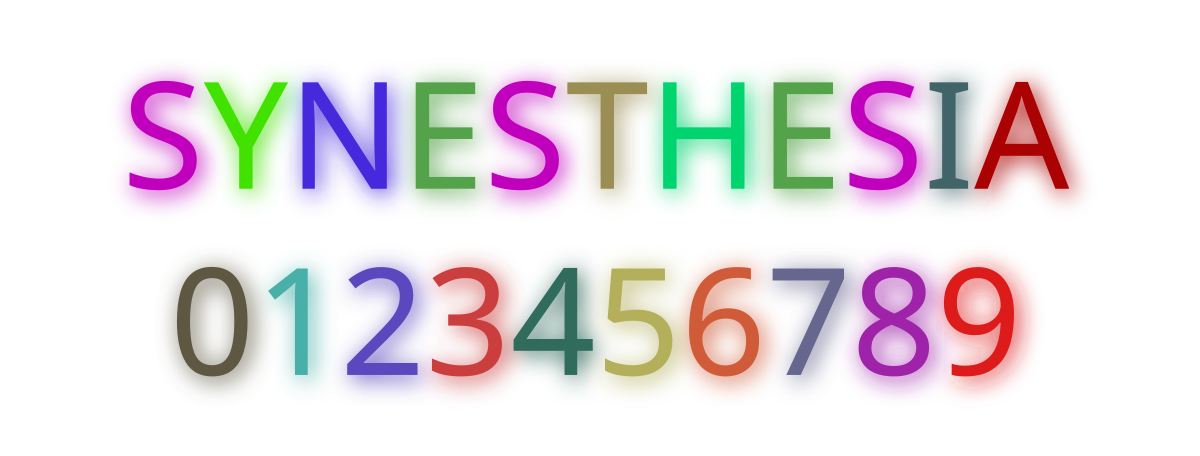
Synesthesia or synaesthesia is a perceptual phenomenon in which stimulation of one sensory or cognitive pathway leads to involuntary experiences in a second sensory or cognitive pathway. People who report a lifelong history of such experiences are known as synesthetes. Awarene...
hot lake
xD
chilly ocean
ok I think I know why I understand group action: it's a map from G x A to A, where G group A some set - but for me it feels like g*a might not be element of A
maybe I haven't seen enough examples, but just seems weird to take a product of completely different structures and map them to just some set
prime gale
Your map has to satisfy associativity condition.
And also, identity has to act as identity on A.
chilly ocean
does associativite imply the product ga is in A?
or is it kinda assumed or to check when defining a map?
prime gale
I mean that you need these two conditions in addition to what you mention.
chilly ocean
I just don't see how those two conditions would imply the image is in A, feels like first you define a map, then you check if the image is in A, then you check those 2 conditions
prime gale
Don't worry about it. If you continue to study math, you will see billions of examples of group actions on sets.
chilly ocean
I have to worry about it
prime gale
It isn't something obscure.
I mean, don't worry about not seeing enough examples. You will see plenty.
It is super important topic in math.
chilly ocean
Are you saying if you have some group G and set A, any mapping from GxA satisfying those two conditions maps to A?
prime gale
You are assuming that g*a is in A. That is part of your definition. You don't prove it from your definition. Though if you have an example and want to prove your example is indeed a group action, then you need to prove it.
chilly ocean
ok.
prime gale
No. I am saying you left those two conditions out of your definition of group action.
chilly ocean
yes I did because that's not what I was confused about, but now its clearer
prime gale
But don't worry about not having enough intuition about what a group action is. You will see plenty of them and get the intuition.
chilly ocean
btw would you write $(f \circ g )(x)$ as $f(g(x))$ or $g(f(x))$?
cloud walrusBOT
Godel:
chilly ocean
One of the books I'm using uses the 2nd one and it triggers me so much, slows me down every time it appears
carmine fossil
Which one?
prime gale
Huh? Never heard of it being second one. Weird book.
I have heard of (fg)(x) = g(f(x)) though. And also (fg)(x) = f(g(x)). But with the o, it is never ambiguous.
carmine fossil
prime gale
That all looks fine to me. (gof)(p) = g(f(p)) = (fg)(p). All pretty normal.
carmine fossil
(fg)(p) is not same (fog)(p)?
prime gale
When people write (fg)(p), sometimes they mean f(g(p)). Sometimes they mean g(f(p)). But when people write fog(p), they meaen f(g(p)). Never g(f(p)).
When people write (fg)(p), sometimes they mean fog(p). Sometimes they mean gof(p). I always use the o, so it is not ambiguous.
If you are thinking about the right action of a group G on a set A, then (fg)(a) = g(f(a)). If you are thinking about a left action of a group G on a set A, then (fg)(a) = f(g(a)).
carmine fossil
Ok,In that sense
Also,Why would you ever use right actions? Can't you just use left actions in every single case?
prime gale
Yes. But sometimes one is more convenient to talk about. You can convert a right action into a left action with the group isomorphism g->g^{-1}.
hot lake
that's not really a group isomorphism
prime gale
Sorry. You are right. Shouldn't have said group isomorphism. But it is a way to convert right action to left action.
 vestal snow
Is the subgroup (x^2,y^3) normal in the free group F({x,y})?
prime gale
Doesn't seem like it. Doesn't contain x^-1y^3x.
vestal snow
Hmm okay.
Can someone help me out with formalizing my proof for this?
C_n means Z/nZ in this notation
I have everything I need basically
Suppose H is a group with maps f: Z_2 --> H and g: Z_3 --> H
Define a function from G as x goes to f(1) and y goes to g(1)
How do I prove that this function from G to H is well defined?
prime gale
What's H?
vestal snow
Any arbitrary group with morphisms from Z_2 and Z_3
We're trying to prove that G is the coprod of Z_2 and Z_3
prime gale
I see. Using definition of coproduct.
prime gale
Since construction of coproducts is easy for finite groups, I would just use construction.
vestal snow
Yeah, but how would you show well defined?
Like we want to get a function from the coprod into H
And you always run into the problem of proving well defindedness
prime gale
To show it is well defined you only need to show that x^2=0 and y^3=0, right?
That is, (image of x^2)=1_H and (image of y^3)=1_H.
vestal snow
I get what you mean intuitively, but when formalizing it, don't we need to show that representation of an element does not change where it goes through our function?
prime gale
Huh?
vestal snow
Like if we have some product of x and y = some other product of x and y
We need to show they go to the same element
prime gale
You have map from F_{x,y}. You have defined a map from F_{x,y} to H. To show that this descends to a map from G, you only need to show that image of x^2=1 and image of y^3=1.
vestal snow
Oh is this a theorem?
prime gale
I wouldn't call it a theorem...
prime gale
More the definition of "G is subject only to relations x^2=1 and y^3=1."
prime gale
Square means dot. That is, the thing you plug into your function.
slate forum
I understand that
But what goes in?
Like earlier it says (f,v):=f(v), but now it's supposedly defining a map from V to k by taking a function as input?!
prime gale
v_i^* is the function that takes a vector to its v_i coefficent.
prime gale
Could be. If (a,v) means put standard inner product on the vector space with basis and evaluate inner product of a and v, then it looks correct.
slate forum
But it didn't say anything about an inner product
prime gale
I dunno. I just have those two pages. That is just an interpretation that can make it correct. But in any case, you understand the concept, right?
prime gale
Or it could be a sucky book. But as my friend pointed out, you need to read sucky books, because papers are usually really sucky compared with books.
chilly ocean
i can't find an explanation on why cycle decomposition loops back
and when it does and doesn't loop back
prime gale
Unless you provide more context, nobody's going to know what the hell you are talking about.
Are you talking about symmetric groups?
Maybe some weird homology thing?
prime gale
WTF does loop back mean?
chilly ocean
loop back is when f^m(x) =x
prime gale
Are you talking about permutations on a finite set?
chilly ocean
ya
prime gale
Then it'll always "loop back".
prime gale
Well, eventually f^a(x)=f^b(x), for some a and b with a!=b because set is finite. Only finite number of permutations. Infinite number of integers. So they can't all be different.
Then, since f is invertible, f^(a-b)(x) = x.
chilly ocean
and since we're talking about permutations, it'll be bijective right?
prime gale
Yes. f is bijective because f is a permutation.
chilly ocean
ok thank you
prime gale
No problem. Sorry if I sound a bit rude.
prime gale
It's just that if you start inventing your own language, nobody is going to know what you are talking about unless you explain your new language.
slate forum
@prime gale it's Rotman's homological algebra
 golden pasture
f is a root of unity
thorn delta
there is a typo here, right? sigma(x_1, x_2, ..., x_n) should be (x_2, x_3, ..., x_p, x_1) and not x_2x_3...x_px_1
 timid hull
yeah i think so
 steady axle
Suppose we have a projective resolution P -> Z -> 0 of G modules with finite Z rank and we apply Hom( _ , Z) then we get 0 -> Z -> Hom(P, Z) - (1) . Why is (1) exact again?
prime gale
Isn't Hom always left exact? That is, isn't all that other information you have irrelevant?
You can prove your statement with nonsense directly from fact P->Z is epi. Let f: P->Z. Let g in Z = Hom(Z,Z). Assume image of g in Hom(P,Z) is zero. That is, assume g o f: P->Z is zero. Then since 0 o f:P->Z is also zero and f is epi, then g=0. Thus Z->Hom(P,Z) is injective.
@steady axle
steady axle
Isn't Hom always left exact? That is, isn't all that other information you have irrelevant?
@prime gale projective resolution is ... -> P_2 -> P_1 -> P_0 -> Z -> 0 , how does left exactness do the job?
prime gale
I see. You mean P is not just one module.
steady axle
no it is not. additionally in ... - > P_3 -> P_2 -> P_1 -> P_0 -> Z -> 0 P_is are projective
prime gale
I haven't thought this through, but cohomology of (1) is derived functors of Hom, right?
steady axle
it is Hom(_, A) where A is a G module
prime gale
So you are asking why R^iHom(_,Z)(Z) = 0, right? I am just rephrasing, not adding anything.
steady axle
I am not very comfortable with the language of derived functors. What I want is when we consider Z dual of ... - > P_3 -> P_2 -> P_1 -> P_0 -> Z -> 0 why is it still exact?
If it helps the context is definition of Tate cohomology via complete resolutions
prime gale
I don't think it is just some easy nonsense. I have actually never looked at a left derived functor before--let alone this one.
Is this how you define Tate cohomology? That is, Tate cohomology is derived functor of Hom(_,Z)?
steady axle
No.
There is a way (called splicing maybe) to connect P ->Z->0 and (1) (its Z dual) to get a very long sequence then apply Hom(_,A) and define homology groups in usual way
prime gale
Looking at wikipedia, the cohomology groups are Ext(Z,Z).
steady axle
i.e. ker/im
this is one way another way is to use norm map between oth homology group and 0th cohomology group to stitch together long exact sequences of homology and cohomology to get vey long exact sequence
the 1st one is the one i am trying to learn
2nd one is easier
prime gale
And wikipedia says Ext^i(A,B)=0 if A is projective. But I guess that is all cheating.
That is, I am probably using tons of results that you are learning this stuff in order to prove.
Wait a minute, isnt your statement trivial?
Z is projective, so the trivial resolution is a projective resolution. The cohomology doesn't depend on which resolution you pick. Cohomology is zero for trivial resolution. So it is zero for your resolution. Therefore exact.
Trivial resolution is 0 -> Z -> Z -> 0.
steady axle
but Z is not free over Z[G]
prime gale
What is G?
steady axle
group, finite in this case : )
prime gale
I see. I thought you were talking about Z modules--aka abelian groups.
steady axle
oh sorry no.
prime gale
So Z[G] is non abelian group ring?
steady axle
yes
prime gale
Wow--I never even thought about non commutative rings.
Looks like I am totally wasting your time. But you taught me something.
steady axle
no i thought about some things which i had not earlier so it was helpful
prime gale
This stuff is normally defined for "abelian categories" which all goes out the window.
steady axle
which stuff?
prime gale
Everything I've learned about abelian categories.
Sorry--I mean derived functor stuff and injective or projective resolutions is usually defined for abelian categories. So everything I've learned goes out the window.
Maybe your stuff is an abelian category. I have no idea.
steady axle
well we are interested in cohomology of modules which is an abelian category so this stuff is in fact in abelian category setting afaik
prime gale
I guess you are looking at Ext groups. I have no idea why they are zero.
steady axle
why are u convinced that they are 0
prime gale
It is just rephrasing your statement in terms of derived functors. Not adding anything.
That is, definition of Ext groups is cohomology of (1). It turns out you can also define Ext groups as right derived functors of Hom(Z,_). So if you can show that for any injective resolution, that if 0->Z->I is exact, then 0->Z->Hom(Z,I) is exact, then you have shown Ext is zero, and thus Hom(P,Z)->Z->0 is exact.
I think this stuff is true for all abelian categories, so it should work in your case. But I have no clue about group rings.
How does Z[G] act on Z? Every element of g acts as identity on Z?
steady axle
How does Z[G] act on Z? Every element of g acts as identity on Z?
@prime gale yes
woven obsidian
How do I view k as a k[x]-module?
By letting the "multiplication by scalar f(x)" be f(x) * a=f(0) * a? For some a in k
steady axle
By letting the "multiplication by scalar f(x)" be f(x) * a=f(0) * a? For some a in k
@woven obsidian yes
woven obsidian
Thanks
 oblique river
@woven obsidian there are lots of ways -- for any b in k you can have f(x) act on a by multiplication by f(b). The only one that makes the sequence in the problem compatible with the k[x] action is if you choose b=0
since the kernel is (X)
 loud kettle
Man rings were never introduced to me as necessarily commutative. When I took my undergrad class in algebra rings were always non commutative, surprising to find that so many were introduced to rings as commutative
solemn rain
pussy mathematicians
chilly ocean
@prime gale hey can i ask you a Q about yesterdays question that i asked you
prime gale
@chilly ocean You can ask. If it is too hard for me, I won't be able to answer.
smoky cypress
If f is a surjective homomorphism and m is a maximal ideal of the codomain then is preimage of m a maximal ideal of the domain
prime gale
If your ring is commutative with unit, then I think so.
Easy to prove with just definitions.
 restive shard
Hi. Could anyone recommend me an interesting book on the applications of abstract algebra to analysis?
 ocean magnet
is that what algebraic topology is? 👀
solemn rain
@cinder bone what do you think
cinder bone
yes? im inclined to think
something about ad-bc=1
prevents me from throwing a matrix full of zeros in there
but idk how to prove
scarlet estuary
are you familiar with the determinant
cinder bone
i should be able to multiply by a matrix to get the identity matrix
solemn rain
yea
an inverse for x, call it x^-1
should satisify xx^-1 = x^-1x = identity
now try to see how this element looks like
i know its a 2x2 matrix with coefficints from R
whats missing is that is the determinant 1
cinder bone
yeah i get that