#precalculus
1 messages · Page 265 of 1
 viscid thistle
 willow bear
no, Shakespeare lived way too long ago.
viscid thistle
ok ur english is hard
 vestal thorn
Am I doing this correct yall?
willow bear
no
vestal thorn
rip
willow bear
there are multiple issues with this
the derivative of sin(x) is not 1-sin(x), for one.
willow bear
and then you had some alge-bruh moments
vestal thorn
Ah ye I see nvm lol
 heady lotus
if u hate something u will hate called by that name
I like noodles
Doesnt mean i would like being called noodles
Your logic is flawed
viscid thistle
vice versa may not be true
heady lotus
Vice versa isnt true for many true statements
All congruent triangles are similar is always true
Vice versa isnt
viscid thistle
yes that means my logic isnt flaw
heady lotus
Your logic doesnt hold either way
viscid thistle
give examples either way then
You should continue this thing in a different channel
heady lotus
Yes
viscid thistle
.purge
 trim hemlock

viscid thistle
why are u sweaty ?
vestal thorn
Aight then is it correct now?
mb I should also probably be asking in the other channel but ye
heady lotus
The - sign shouldnt remain
It's vu'-uv', remember
You probably did vu'+uv'
@vestal thorn
vestal thorn
Ah yeah my bad I see my mistake I did uv’ - vu’
heady lotus
👍
heady lotus
Np
 oak arch
Base is not given
So we should assume by default its 10?
Could you please help me understand how it simplifies to xlog(e)
trim hemlock
do you know this identity
oak arch
Nope
Oh but with that example I understand now
Thanks
Actually nvm
I dont understand
trim hemlock
ok lets start proving it
trim hemlock
so that leaves us with xb
oak arch
When we have log_a(a^xb), and log_a, and a^xb cancel each other out, how comewe are still left with xb
oak arch
Ah ofc
trim hemlock
so now just use that same rule for log(e^x)
oak arch
Why do you say "but x = log_a(y)
trim hemlock
because y = a^x
oak arch
oh yes
trim hemlock
so take the log_a on both side
oak arch
log both sides
oak arch
Awesome, I understand it now! Thanks a lot ❤️
trim hemlock
np glad could help
 flint pulsar
hi i was just wondering for part ii, where it's asking to find the percentage increase, would you just differentiate the equation to get the answer?
flint pulsar
hm okay, so how would you go about solving it? do you need to differentiate at all in this case?
willow bear
no
notice that each time t increases by 1 (marking the passing of one day), the weight goes up by a factor of 10^0.05
that makes sense to you, right
flint pulsar
yup bc t = 1 is 1 day that has gone by
 obsidian monolithBOT
Result:
1.122018454302
12.202%
flint pulsar
ohh that makes complete sense now, thank you for clearing that up!
 fallow solstice
saying ||FUCK|| is now banned (WARNING PRESS SPOILER AT OWN RISK)
 shadow plaza
||x|| will spoiler 'x'
 lament fiber
How do I find the domain of f(x)= sqrt(sin x-cos x)?
in [0,2pi]
without using the graphs of the functions?
viscid thistle
it's easier if you draw them though
lament fiber
I can do tan x>=1
in the first and third quadrant
in the second and fourth quadrant I can't divide
or I can
yeah, but I'm curious what the method would be if you don't use a graph
actually
I think I have a way
shadow plaza
@lament fiber just look for the smaller intervals in [0,2π] in which sinx≥cosx
lament fiber
I can do tan x>=1
or tan x<=1 in Q2
I don't know if it's a correct way to do it idk
shadow plaza
Is my approach not helpful, Obi?
lament fiber
Sure
(If it's about dividing by cos x
the sign of the inequality will change when cos x<0, which is in Q2 )
but I think my approach is wrong in some other way
obsidian monolithBOT
Sidharth:
viscid thistle
||x||will spoiler 'x'
@shadow plaza thanks
obsidian monolithBOT
Sidharth:
shadow plaza
Now notice that there are points in the third quadrant for which tan(x)≥1 but cosx≤0 for all x in third quadrant.
Therefore f(x) is undefined
lament fiber
I'm confused
shadow plaza
So you cannot base your answer on tanx without some extra restrictions
lament fiber
okay, let me read what you said fully
thanks for putting up with me
shadow plaza
okayy
lament fiber
but how does this relate to me saying
sin x- cos x must be >=0
which means sin x>=cos x
and I can divide by cos x without reversing the inequality when cos x>0 and reversing when cos x<0
to get x when tan x>=1 in Q1,Q4 and x when tan x<=1 in Q2,Q3
how does this relate to changing sqrt(sin x-cos x) to sqrt(cos x * (tan x-1))?
I figure this is where my poor knowledge factors in
shadow plaza
1 is also greater than 0 i.e 1>0 but you cannot divide both sides by 0,can you?
lament fiber
yeah
willow bear
@Okka#4940 please do not give people false ideas. cussing is not against the rules of this server.
ah they left
lament fiber
lmao
shadow plaza
Similarly, let sinx=0.7 and cosx=-0.3(purely hypothetical values solely for the purpose of explanation). Therefore, 0.7>-0.3 but 0.7/(-0.3) is not greater than 1, is it?
lament fiber
okay, so I consider when cos x=0
or do I just give up on this approach altogether because it's fundamentally wrong
oh
Similarly, let sinx=0.7 and cosx=-0.3(purely hypothetical values solely for the purpose of explanation). Therefore, 0.7>-0.3 but 0.7/(-0.3) is not greater than 1, is it?
yeah I know this, dividing by a negative value on both sides reverses the inequality
I mentioned that
shadow plaza
The point is if sinx≥cosx then tanx≥1 only when cosx>0
shadow plaza
So this doesn't hold in third Quadrant
shadow plaza
Ohh. I am sorry. I didn't see that
lament fiber
so is the approach fine, then?
shadow plaza
I am not sure that it is
lament fiber
so here
the domain is found by solving
cos x>=0 and tan x>=1 and get the intersection of the sets?
shadow plaza
Okay let's try to analyse this using f(x)
lament fiber
okay
shadow plaza

We know that this is true
The value of f(x) is defined only when:
A) cosx≥0 and tanx-1≥0
B) cosx<0 and tanx-1<0
makes sense?
lament fiber
not B)
for a value under the radical you can't have it negative right?
for real functions
viscid thistle
this could be done graphically also right ? sinx>=cosx
viscid thistle
ohh okayy
shadow plaza
Okay, so let cosx= -a then √cosx=√-a=√a×i
Similarly we'll obtain another i from √(tanx-1)
And since i²=-1
lament fiber
yeah
shadow plaza
Ofc
shadow plaza
That is the definition of domain, is it not?
lament fiber
yeah
shadow plaza
Okay, so you follow so far?
lament fiber
yes
shadow plaza
Okay so now can you obtain the respective intervals satisfying those two conditions?
lament fiber
yeah
shadow plaza
The union of those two sets of values will be your domain
lament fiber
thanks a lot for answering

shadow plaza
Anytime
lament fiber
I never considered the part with i^2 in any problem
I'll keep it in mind now
I don't know if this is a stupid question, it probably is, but how do I get better at this stuff
I guess I should start thinking more instead of mechanically going for stuff like sin x>=cos x => tan x<=1 or tan x>=1 etc 🤷
shadow plaza
You should pick a book(that you trust is good for this sort of stuff) and read it. Don't cram things up but try to make sense of them. Once you step up to a point where things seem more logical and you don't feel the need to remember anything is the point where you'll start to get better at this stuff
lament fiber
Any suggestions?
I guess I should try to get through high school Math first, or is it not needed?
shadow plaza
Ofc, you'll also need some practice to feel confident enough to tackle problems
Aah. I am not very good at suggesting books. You can ask in #book-recommendations
lament fiber
Yeah I've been actively trying to do this for the last few months
okay, thanks a lot for all the help!
shadow plaza
yw
viscid thistle
not sure how to go about applying exponents -2/3 to 125/8, can anyone help? Thanks
This is how I attempted to solve the problem
lament fiber
so the fraction gets flipped
(8/125)^2/3
keep in mind that the bracket means both 125 and 8 get the ^-2
(8/125)^2/3=
[(8/25)^2]^1/3
because (a^x)^y= a^(x*y)
simplifying you get 2^(3*2/3) for the top
and similarly 5^(3*2/3)
so it's (2/5)^2
in summary
what you did is right but you need to do what you did to 125 to 8 as well
 sick steppe
make a log function that models the data
viscid thistle

 sand harbor
LOL
 patent lance
Hey there
I cant figure out this problem
if anyone could like explain how i would do it
sick steppe
do you know graph transformations?
patent lance
I dont know what that means
but if it means like
how a graph changes depending on how the equation is affected
then I usually do
 quaint mason
@sick steppe wym by making a log function from that data
patent lance
Im not sure what type of problem this is though if that makes sense
sick steppe
It's a graph change based on the equation frosty
 pastel cloud
Halp
patent lance
Ah ok
quaint mason
u mean the lnReg?
sick steppe
@pastel cloud remainder theorem
@patent lance g(x) is a translated version of f 1 unit in a direction
sick steppe
do you know what direction?
patent lance
my first thought
was down
because -
then left
because -
but Im not sure how to figure that specific thing out
quaint mason
y=a+b(lnx)?
sick steppe
If it were down, it'd be f(x)-1
patent lance
so itd be to left?
sick steppe
cause f(x) are y values
sick steppe
no, horizontal translations are backwards, x-1 means 1 right
pastel cloud
if you have (x-1) what value of x will make it zero?
sick steppe
^
patent lance
1
sick steppe
right, so the x=0 point gets moved to x=1
pastel cloud
lol don't
sick steppe
oh trust me horizontal transformations period are hard when learning them
pastel cloud
it's learning new things
sick steppe
cause everything is backwards to vertical
patent lance
im not even sure
what type of equation
the graph is
looks like absolute value
but its like
wonky
pastel cloud
it's not it's a piece wise function. Not just one function.
patent lance
ah
pastel cloud
all that matters though is all x values are shifted in that example
pastel cloud
if it was f(x-1) + 1 then all x values shift right by 1 and all y values would shift up by 1
pastel cloud
yes
pastel cloud
half credit?
pastel cloud
it should be a full mark
patent lance
its fine ill just take it
Oh
maybe its because I put too many points
that was it, next problem was extremely similar
pastel cloud
@sick steppe do you think u can help me with my question?
sick steppe
yeye
pastel cloud
sick steppe
yeah, use remainder theorem
pastel cloud
I know how to divide polynomials, and I also know how to use synthetic division.. but im not sure how to work backwards
sick steppe
do you know remainder theorem?
pastel cloud
if there's a remainder than x+3 is not a factor / zero
sick steppe
yes or no lol
pastel cloud
i don't think so
sick steppe
If I divide a polynomial P(x) by x-a, P(a) will be the remainder
sick steppe
ye
pastel cloud
I don't think I want to know the questions you have problems with lol
What level are you at?
sick steppe
1st year uni
pastel cloud
Good stuff.
 potent rover
If at some point the derivative of a function is 0. And the double derivative is also 0, will that point be a point of maxima or minima or will it be none of it?
I am experiencing this problem with the above question
Answer given in (3)2
But double derivative is also 0 at that point
Pls help
sick steppe
if first derivative = 0, then it's a horizontal tangent
if 2nd = 0 then it has no concavity
so it'll be a saddle point
(Think of x^3 at x=0 for what a saddle point looks like)
patent lance
ok so
I got this question right
but it took wayy too long
and i needed demos
desmos
so i feel like ive been doing it wrong
what is the proper way to go about that question
sorry for asking so many questions
potent rover
so it'll be a saddle point
@sick steppe Thank you
pastel cloud
 vapid mica
damn u guys are really struggling huh
sick steppe
@pastel cloud same thing with the last one i helped you with.. except you have to solve 2 equations for 2 unknowns
quaint mason
yeah, do u have any ideas? @vapid mica
pastel cloud
@sick steppe I looked at the solution for it and I still couldn't understand it
It's really disheartening
I could just be tired.. had a long day yesterday and been doing math for 5 hours today.
 elder charm
$$p(x) = (x+1)(x+a) + 4$$
$$p(x) = (x-5)(x+b) + 4$$
- that's what being divisible with remainder means. a and b are some constants. That means:
$$
p(x) = x^2 + (a+1)x + a + 4 = x^2 + (b-5)x -5b + 4
$$
Two polynomials can only be equal when all their coefficients are, so we have a system of 2 equations for 2 variables:
$$
a+1 = b-5
$$
$$
a+ 4 = -5b + 4
$$
By solving them for either of the variables, we can obtain p by substituting into the polynomial equalities above. So:
$a = -5b$, $-5b+1 = b-5 \implies b = 1$, therefore $p(x) = (x-5)(x+1) + 4 = x^2 -4x -1$
@pastel cloud
obsidian monolithBOT
ConfusedReptile:
pastel cloud
I tried reading it a few times I'm just not understanding completely.
So for the first equation you subbed in (x+1) and 4 then solved?
which gave you x^2 + (a+1)x + a + 4?
pastel cloud
f of g(x)
it's the same as f(g(x))
example if g(x) = 2
you would then input it into f(x) = f(2) and then find the answer.
g(x) = 1 + x
f(x) = 3x
What is f[g(x)]? if x = 1
g(1) = 1 + 1 = 2
f(2) = 3(2) = 6
therefor, f[g(1)] = 6
It's a composite function @patent lance
Two functions combined.
patent lance
@pastel cloud ty got conifused when it wasnt normal parentheses
 patent beacon
No, if your life is threatened we cannot save it for you
pastel cloud
if his parents will kill him if he gets a bad grade in math.... lol
viscid thistle
^
patent beacon
Take 0, put it into g. Then whatever you get, put that into f
Or instead yeah, there's a single function we call f o g that is just the combination of those two
 tribal vapor
 zenith jacinth
is it possible to find the height using 2 angles and 1 side?
 cobalt storm
 worthy summit
x+5/x+1 is less than or equal to x-2/x-1
patent beacon
Yes that's correct
 earnest jungle
$\frac{x+5}{x+1} \leq \frac{x-2}{x-1}$
obsidian monolithBOT
LifeSource:
patent beacon
(x + 5)/(x + 1) - (x - 2)/(x - 1) ≤ 0
Then, combine them into one fraction
Cross-multiply to make the denom the same
Note that this is the exact same process as
5/2 - 5/3
Just, with x in it
worthy summit
5(-2)-3/(-2-1)(-2+1)
earnest jungle
$\frac{(x+5)(x-1)}{x^2 - 1} - \frac{(x-2)(x+1)}{x^2 - 1} \leq 0$
obsidian monolithBOT
LifeSource:
patent beacon
Yeah that's the end goal
earnest jungle
$\frac{(x+5)(x-1)-(x-2)(x+1)}{x^2 - 1}\leq 0$
obsidian monolithBOT
LifeSource:
earnest jungle
$\frac{x^2 + 4x - 5 - (x^2 - x - 2)}{x^2 - 1}\leq 0$
obsidian monolithBOT
LifeSource:
earnest jungle
$\frac{5x - 3}{x^2 - 1}\leq 0$
obsidian monolithBOT
LifeSource:
 charred frigate
i feel stupid that i cant do this
solving the inequality 3+20/x >=0
$3+\frac{20}{x}\geq 0$
obsidian monolithBOT
nix:
charred frigate
i got 1/x >=-3/20
 full pagoda
not wrong but how you flipped the entire thing is odd lol
charred frigate
but i tried flipping everything and switching the inequality sign but that doesnt work apparently lol
charred frigate
lol tutoring a student in it so gimme a min
full pagoda
gotcha haha
charred frigate
ok so im just nervous about multiplying x because it can be negative or positive
do we need to split it up into cases
full pagoda
i would set up a line and find where each solution is positive or negative
honestly not too sure what that's called, it's been a while
charred frigate
same
full pagoda
i'll draw out what i mean real quick
charred frigate
i havent had to do something like this in years
 uncut mulch
alternatively you can multiply both sides by x^2 (which is known to be non-negative)
so that you don't have to worry about the direction of the inequality
full pagoda
uncut mulch
and solve the resultant quadratic ineq using curve/wave method
full pagoda
this is what my approach would be
then i'd take a number in between each of those to find out when it is positive/negative
and that's what you get for answers
so it'd be (-infinity, -20/3) U (0, infinity)
because those solutions are positive, which satisfy the original equation
of being greater than or equal to zero
@charred frigate does that make sense? i can explain if you'd like
charred frigate
so basically identify critical points and test?
full pagoda
yes
charred frigate
thats definitely a lot smarter than trying to finagle it algebraically
full pagoda
haha yeah it's a bit easier
viscid thistle
I have no idea what the question is asking me
😢
How am i supposed to read this table?
 iron acorn
first, start with finding g(1)
g(1) basically means g(x) when x=1
when x=1, g(x)=0
the question is asking for f(g(1)), and now that we know g(1)=0
we have to find out what is f(0)
and f(0) is 4
so f(g(1))=4
willow bear
@viscid thistle do you know what function composition is?
if not, it might do you some good to read up on it
oh god you multiposted
 swift jasper
Hi guys, my math teacher told me to prove the Cauchy-Buniakovski-Schwarz inequality using mathematical induction. I solved P(1) P(2) and P(3) correctly and I also wrote P(K) and P(K+1), but I am having some difficulties proving P(K+1). Any help will be much apprecitated. I have also attached P(K) and P(K+1)
viscid thistle
Guys for the second one I'm getting the answer to be 3430, while the textbook says that the answer is 4606
my methodology for it would be to make two cases, one where the husband served and one where the wife served
and just add them both at the end
using this method you get 8C4 x 7C5, when the husband is serving
and when the wife is serving you get 8C5 x 7C4
but when you add these two you get 3430
Nice name
 tropic wyvern
@viscid thistle you forgot to account for the case where both husband and wife did not serve
the best way to solve this is to find the number of committees where both husband and wife are serving and subtract that from the total
you'll find that you do get 4606
viscid thistle
Ahhh, thanks a ton mate that makes sense
 blissful ridge
The flaw in your above Calculation was you didn't consider the case neither of them served
lament fiber
What’s the range of sin(cos x)?
My textbook says [-sin 1, sin 1] which as I understand comes from [sin(-1), sin 1]
but if we take f(x)= sin x and g(x)= cos x
then q(x) = f o g = sin(cos x)
wouldn’t that mean the range of q(x) is the range of f(x) that is [-1,1] ?
I understand that since -1<= cos x <= 1 you’re only getting the set of values of sin x for x belonging to [-1,1] so where did I go wrong in my approach with the composition of functions
 olive zephyr
the range of q(x) is the range of f(x) but in a restricted domain (specifically of the range of g(x))
You can think of it as sin(x) being 1 at pi/2 radians but cos(x) only outputting values up to 1 (<pi/2)
lament fiber
yeah the domain of f(x) must be a superset of the codomain of g(x) right
oh yeah that’s basically what I said at the end
You can think of it as sin(x) being 1 at pi/2 radians but cos(x) only outputting values up to 1 (<pi/2)
@olive zephyr can you please explain
olive zephyr
If you think of cos(x) assigning each real number to another real number
lament fiber
doesn’t cos x have the range [-1,1]
olive zephyr
yes
lament fiber
that doesn’t line up with what you said earlier though (“You can think of it as...”)
lament fiber
oh
olive zephyr
so my cos(x) will have to output pi/2 for q(x) = sin(pi/2)=1
lament fiber
yeah makes sense now
olive zephyr
great!
lament fiber
I understood that part(I stated that already) but how do I proceed to find the range from there?
I understand that since -1<= cos x <= 1 you’re only getting the set of values of sin x for x belonging to [-1,1] so where did I go wrong in my approach with the composition of functions
this was what I said
lament fiber
which I then remembered you need to ensure that codomain of g(x) is a subset of the domain of f(x) as you put it
olive zephyr
and the range of that is [-sin(1),sin(1)]
lament fiber
so you need to find the maximum and minimum values of sin x for x in [-1,1]
yeah but how do I get there
finding the max and min
without calc
olive zephyr
You can look at the graph
olive zephyr
welcome!
 pseudo sonnet
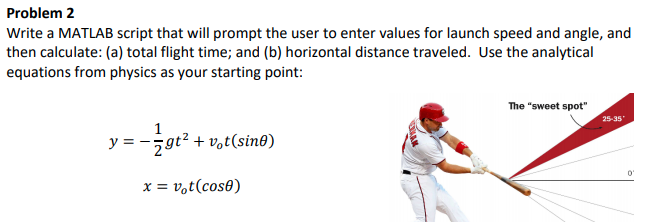
how do I get a total flight time equation
do I solve the first equation for the variable t?
 robust sky
any suggestions to go forth without a calc?
robust sky
thought it was exp. decay, would it just be r?
patent beacon
I'm not exactly sure, really does depend on the class haha. I would suspect arⁿ
But if your teacher has made it clear that 1-r should work instead, I can't trump the teacher
Anyway, divide the bottom line by the top one, that eliminates a
uncut mulch
partially
 fiery wren
oh, and including csc?
uncut mulch
then yes
uncut mulch
it's a bad question
vapid mica
does anyone know how to tell if its cos or sin from the graph if horizontal translations are present?
viscid thistle
Yeah prob
viscid thistle
Usually cosine starts at the top and goes down and sine starts from the bttom
That's how I figure it out but I may be wrong
In your case, pretty sure it would be a sine function
You could also test those in desmos
vapid mica
yeh ik that but the graph translates horizontally
i dont wanna do that
im gonna be screwed when we have in person tests
wait im dumb nvm there isnt a horizontal translation
its sin yeh ur right
vapid mica
yeh
vapid mica
yeh it was
viscid thistle
Was it negative?
viscid thistle
kk bet
 naive prism
how do u do this
i got the equation is (x-7)^2+(y-8)^2=r^2
and that the other equation is y= -3/5x + 19
but like what do i do from there
sick steppe
@naive prism r would be the perpendicular distance between the centre of the circle to the tangent point
 mossy tiger
How did i do this wrong. I did long division. (x^2+8x+7)/(x-1)
I got x + 7 as the quotient
uncut mulch
looks like you messed up your division
 honest depot
hello, im starting precalculus and was doing trig identities. Can anyone help me solve this, and perhaps give the steps?
tanX + cotX
the goal is to simplify using trig identities
full pagoda
what do tan and cot break down into?
honest depot
so then itd be (sinx/cosx) + (cosx/sinx)?
full pagoda
yes
honest depot
this is what i have: (sinxcosx/cosxsinx)+ (cosxsinx/sinxcosx)
i feel that thats wrong
is it?
full pagoda
yes
honest depot
what would it be
full pagoda
what is the least common multiple of the fractions (sinx/cosx) and (cosx/sinx)?
honest depot
im not sure
full pagoda
if you want to combine both fractions, you need to get a common denominator
what is cos(x) missing that sin(x) has?
(not a trick question)
honest depot
cos
honest depot
so then the denominator is cosxsinx?
full pagoda
yes
sick steppe
You were close with your original answer, just slightly off
honest depot
1
sick steppe
Ye
sick steppe
You did the most repeated/used trig identity question there is🥳
full pagoda
yeah, trig identities can suck a lot
sick steppe
But legit it is a good question: you do the 3 common trickd
full pagoda
i always go back to one place: if you can't think of anything to do with it, break it down into sin and cos
sick steppe
Sin and cos everything, common denominator, pythagorean and reciprocal
patent lance
so my teacher just did the thing on the right
and i was a bit confused
she factored out a negatibve
from -x^2-x+12
nvm i get it
mossy tiger
How do I find it if I can't identify the x-int?
honest depot
thats not centered
mossy tiger
so there isn't a way to solve for it?
honest depot
this is a weird one- the two x intercepts should be equidistant from the y intercept, but they are not
mossy tiger
what if there aren't x-intercepts
honest depot
so do you see the two points where the line crosses over a coordinate exactly
its (-1,-5) and (2,0)
mossy tiger
how do you know that\
honest depot
thats how you know what the amplitude is- in cot and tan graphs there is no height, so the A value determines how above or below the line will cross a point from its center
look at the graph again, the line crosses over (-1,-5) and (2,0)
so yeah that graph is really weird
they should both be +/- 3 away or +/- 1 away- it can't be both
if one of the trig identities is --> 1+tan^2x=sec^2 , can it be use like this? 1+tanx=secx
is anyone still up
wait
hm
im at this step of the problen
this is the question
so the lcm is secx^2-1
so its like
cos(x)(secX-1) + (cosX)(secx+1)/(sec^2x-1)
(sec^2x-1) simplifies to tan^2x
can anyone help after this step? i now have cos(x)(secX-1) + (cosX)(secx+1)/(tan^2x)
my final asnwer is 2cos^3x/sin^2x
if anyone can confirm or reject that that'd be great
@strong ermine what do you think, sorry for the ping
 strong ermine
no idea sorry
honest depot
lol
strong ermine
just browsing through channels
honest depot
i really hate the one with fractions ughh
strong ermine
while procrasinating
honest depot
well it was nice to meet you
strong ermine
i hope you get help
try going to questions tab and asking this
and after like 15 min if no one responds
ping helpers
honest depot
thank you
viscid thistle
how do I decompose this?
this is what i did so far, is everything correct? I'm not very confident in decomposition and still practicing it.
uncut mulch
the degree of the numerator is higher than the denominator so you should probably do some long division first
 gilded brook
I've gotten this problem wrong 3 times now I'm using the Law of sines for it and I'm either doing it wrong or messing up somewhere
What am I suppose to be doing?
 astral mantle
what answers are you getting?
gilded brook
It changes each time but for my last one I got
astral mantle
i would use the same significant figures for the answers
and b is close but not correct
wait this is a different question than the last one
wtf
gilded brook
Significant figures?
full pagoda
@gilded brook you're given tthe measure of angle a, the side length a, and the side length b
what can you figure out with these?
gilded brook
Simplfied left side
Then got sinB alone by times it both sides
dividing 25sqrt2 both sides
arcsining the right side
full pagoda
why did you do 1/sin(45)
gilded brook
Separate fractions
full pagoda
what
full pagoda
where are you getting a 45 degree angle from
gilded brook
Thats angle a
full pagoda
angle a is 50
gilded brook
thats old angle a I'm solving picture above it
gilded brook
kk
gilded brook
Yeah
Is the standard rounding to the second decimal?
If it doesn't say what to round it to
gilded brook
Idk what that is
full pagoda
but it seems you haven't learned that yet since you questioned it before
yeah
have you taken chemistry yet?
gilded brook
Nah
gilded brook
I won't be taking chem anytime
gilded brook
But now with angle B and angle A I can get angle C
full pagoda
132.65973014
@gilded brook is this what you got for C?
gilded brook
Angle C? or c
full pagoda
angle C
gilded brook
Angle C I got 87.7
full pagoda
correct
gilded brook
for a+b+c=180
gilded brook
and I can get by doing 25/sin45=c/sin87.7
full pagoda
yes
 lean tusk
how do I get the range for this function?
gilded brook
Which is 35.33
full pagoda
👍
full pagoda
oh shoot
been a while since i've done law of sines
forgot about amibiguous triangles
damn that's my bad i led you in the wrong direction
gilded brook
Its all good, I got 2 more attempts for this same problem then it'll have to switch
Do you know the steps for the one obtuse angle?
full pagoda
if i remember correctly, when you're solving for angle B, you just take that number and subtract it from 180
gilded brook
Do I subtract angle A with it?
full pagoda
no, you're given angle A
gilded brook
So I would just 180-47.34 and that would be angle B?
gilded brook
and then you can find angle C The normal way?
full pagoda
yes
gilded brook
and you can find c the normal way?
full pagoda
what did you do for c?
gilded brook
angle C = 2.34
and I got c=0.082
I did the same thing as before but instead of 87.7 I used 2.34
full pagoda
i got c = 1.44
full pagoda
i do it the other way around, but as long as you keep it consistent, it works either way
gilded brook
Weird let me try again.
full pagoda
gilded brook
Same way you just showed
full pagoda
are you sure?
gilded brook
Yeah
full pagoda
So you're typing into your calculator: 25sin(2.34)/sin(45)
and it's giving you 25.4?
gilded brook
Yeah
gilded brook
Tried it on my hand calculator, and two website calculator
All 3 are giving me 25.4
gilded brook
Heres Mathaway

Heres symbo

And I cant take a pic of hand calc
But its a TI-84
gilded brook
Maybe? I'm not sure
full pagoda
click "mode" next to the blue 2nd button on your calculator
and go down to the 4th set of options
where it says radian and degree
switch to degree
full pagoda
that's a few decimals off
gilded brook
But should I answer in radians since it's a side and not an angle?
full pagoda
no, radians are still dealing with angles
an angle measurement can be converted from degrees to radians by multiplying it by pi/180
full pagoda
the decimal is off
gilded brook
Still?
full pagoda
yeah
gilded brook
That was just by putting in 25sin2.34/sin45
full pagoda
full pagoda
lol good
gilded brook
Yeah Idk what I was doing differently
full pagoda
haha
full pagoda
nice
gilded brook
Alright man thanks for the help!
full pagoda
no problemo
lean tusk
how can I get the range of this function?
full pagoda
also, side note: whenever you see the degrees symbol, make sure your calculator is in degrees
gilded brook
Will do!
full pagoda
how can I get the range of this function?
@lean tusk do you know what the range is for a normal csc function?
lean tusk
yeah, (-oo,-1] U [1,oo)
lean tusk
full pagoda
the vertical translation is down 2
wait is it telling you the answer or is that your answer
lean tusk
oh wait I got it
full pagoda
alright
full pagoda
ah, there is another vertical transformation
gilded brook
I figured it out was using rounded 21 instead of exact value
lean tusk
how do I find the domain for this function
I know the parent function's domain is (2n+1)pi/2
blissful ridge
You have to find the values of x wherever sec(2x+4) is not defined
gilded brook
is that the trig section in pre cal???
@IcyKing#4126 no this is pre calc
 hasty nest
@lean tusk is this what you meant when you typed out the parent function’s domain or is it something dif? I can’t tell
Bc we can use this to help with that last question
 tough onyx
lean tusk
tough onyx
lean tusk
actually @hasty nest would you mind running that by me to make sure I got the right way to solve it?
hasty nest
Yeah so basically what I did was I just set the domain of the parent function equal to the inside of the parenthesis (so in this case 2x+4) and then I solved for x which gave me the domain @lean tusk
Did you use a dif method?
hasty nest
Ah ok
Also if you ever wanna double check then doing a quick sketch of the graph can help sometimes
np
 tame wedge
Is there any way to find an interval for 'a' for which the polynomial: 42x^{5}-36x^{4}-20/ax^{3}+36x^{2}-18x-4 has some number of solutions?
Say I wanted to know for what values of 'a' there were 3 solutions
willow bear
what is the equation you are analyzing? $$42x^5 - 36x^4 - \frac{20}{a} x^3 + 36x^2 - 18x - 4 = 0?$$
obsidian monolithBOT
Ann:
viscid thistle
So you don't know what the greatest integer function is?
(Which says it in the name)
Also this isn't a question, you just stated f
viscid thistle
Yeah so you didn't post the question
As i said
The question is probably about studying continuity
Am i right?
obsidian monolithBOT


 Requested by Al𝟛dium#4084
 halcyon edge
Ohh nice i see
viscid thistle
Do you see how it rounds to the integer -1 in this case
halcyon edge
Actually im new to this concept will google about it more
They never told us about it in the class
halcyon edge
Yes thanks a lot
 copper breach
hey can someone help me with a problem
sick steppe
@copper breach we can help if you post the question
 celest gulch
Hey so far I have this for my equation
shouldnt the x^2 cancel out?
my graph still touchs y=3
 neon escarp
quick question: for an even function with a jump discontinuity, does it need to be on both sides?
sick steppe
@neon escarp what's "it"
neon escarp
the jump discontiniuty
sick steppe
a jump discontinuity is vertical, so it's 1 dimensional
Im not entirely sure what you're asking
neon escarp
yeah but for an even function doesnt it need to be symettrical
sick steppe
Yes there would have to be one
sick steppe
ok with what
obsidian monolithBOT
Vanilla Creamy:
Compile Error! Click the  reaction for details. (You may edit your message)
obsidian monolithBOT
Vanilla Creamy:
Compile Error! Click the reaction for details. (You may edit your message)
worthy summit
ooof
sick steppe
$frac{4^(x+h)-4^x}{h}$
obsidian monolithBOT
moshill1:
worthy summit
alright well we know what we are trying to say
sick steppe
yeah
worthy summit
so I know how to set up but
I don't know how we get the answer which is 4^x(4^h-1)/h
the steps to get there illude me
sick steppe
do you know power/exponent laws?
sick steppe
what's the one where you multiply 2 things with the same base but different exponents
(a^b)(a^c)
worthy summit
you just add the exponenets
 lime bolt
4^x * 4^h
worthy summit
so if you subtract 4^(x+h)-4^x
sick steppe
@lime bolt that question wasnt for you
lime bolt

sick steppe
@worthy summit you agree 4^(x+h) = 4^x * 4^h right?
sick steppe
so you have [4^x * 4^h - 4^x], what can you do?
worthy summit
wehre do you get the 4^x * 4^h from? I thought you would be adding those two terms
sick steppe
4^(x+h) = 4^x * 4^h
worthy summit
no it's 4^x + 4^h
viscid thistle
Why are you doing limits
worthy summit
wait
sick steppe
no, multiply things with the same base means add the exponents
sick steppe
so do you see now?
worthy summit
can you go math voice coms?
sick steppe
no
worthy summit
ok
lean tusk
can someone walk me through how I'd get the domain for this function? I've been getting -3/4 + 3πk/8 but the answer is -3/4 + πk/8
worthy summit
okay so I know that 4^x * 4^h
sick steppe
yeah
worthy summit
so know we have 4^x * 4^h - 4^x all over h
sick steppe
yep
sick steppe
combine terms?
worthy summit
oh man
im having a bad day with this crap
cuold you walk me through the rest of it
sick steppe
factor out the 4^x and you're done
worthy summit
wdym
sick steppe
you want to show 4^x*4^h-4^x = 4^x[4^h-1]
sick steppe
ye np
worthy summit
I was getting confused with where the -4^x was placed
not realising that if you just put like this -4^x(4^x * 4^h)
you can factor it out from there
and boom
@lean tusk I don't think I can help you, but someone else may be able to
lean tusk
I'll repost the question so people can see it 🙂
worthy summit
Thank you @sick steppe
lean tusk
can someone walk me through how I'd get the domain for this function? I've been getting -3/4 + 3πk/8 but the answer is -3/4 + πk/8


the way I've tried solving this is by setting 4x+3 = π/2 + πk (the parent function's domain) and solve for x, but that leaves me with the wrong answer
 echo pelican
@lean tusk
So you need to consider where secant is undefined
It happens at pi/2 and 3pi/2
Actually hold up
I think the solution they gave you may not be right
You get it by setting 4x+3 = kPi/2
But this is only right if you take k to be an odd number
Since secant is undefined at odd numbers of pi/2
shadow plaza
no. That is only true when k is even
echo pelican
Checking for secant to be undefined this would be at pi/2 or 3pi/2
shadow plaza
That too a multiple of 4 only
shadow plaza
The solution says πk/8. Let's say k=3, then how is sec(3π/8) undefined?
echo pelican
You are saying x would equal that