#precalculus
1 messages · Page 251 of 1
 old nimbus
yeah
 patent beacon
Gray, or Grey?
old nimbus
Grey?
 uncut mulch
griy the noone's happy
 blazing raven
16 - the area between the parabola and the x-axis bounded by x = -2 and x = 2.
32/3 ?
old nimbus
you talking to me?
blazing raven
It doesn’t matter ....
blazing raven
Sorry. I am tired.
blazing raven
Stay up to the screams of the night 😛
old nimbus
when integrating (y-1)^1/2
do I use the chain rule or no?
wait nvm thats only for differentiation
uncut mulch
generally you should apply chain rule
old nimbus
Would I raise that power by 1 and times that wout the front?
uncut mulch
are you integrating wrt y?
old nimbus
wrt?
uncut mulch
with respect to
patent beacon
What's your goal?
old nimbus
would it be 1/2(y-1)^3/2?
just integrating
oh ok then
nvm I got it
Can anyone explain to me the trapezium rule?
patent beacon
Get reimann sums in general?
How an integral can be interpreted as an infinite sum of the areas of rectangles?
old nimbus
The trapezium rule
patent beacon
It's the average of the left riemann sum, and the right riemann sum
patent beacon
Feel free to post
blazing raven
Never trust a politician’s math ...
old nimbus
why?
 novel cargo
you guys learning definite integrals in precalc?
 proven marten
pog
 past meadow
grinding on your mum
blazing raven
I grin ding ..?
proven marten
What textbook is this
novel cargo
why is that a bad thing?
@old nimbus I'm not judging. I don't have the knowledge to form an opinion on this matter. I just thought this is more calculus stuff.
novel cargo
generally it isn't a bad thing doing more advanced things
old nimbus
Is it advanced?
novel cargo
calculus starts with limits, then derivatives, applications of derivatives, anti derivatives/integrals, definite integrals, applicaitons of integrals...
novel cargo
yeah, I would say so
there are layers to all these stuff so
you go over it once like inch deep
next time foot deep
and then you drown
 harsh smelt
and then you are out or R^3
old nimbus
Oh haha
novel cargo
^
harsh smelt
because you are in R^n
novel cargo
commander nailed it
harsh smelt

 blissful ridge
novel cargo
what's the benefit of parametric equations?
in linear equations, I see they are separating the movement on the x and y axis into two equations
but what's the benefit?
 willow bear
have you done physics yet
if you interpret the parameter as time, your parametric equations become the equations describing the motion of a particle
and the curve becomes its trajectory
also this is more of a calculus thing but parameterizations let you calculate the lengths of curves using integrals
harsh smelt
implicit differentiation also
novel cargo
doing a little bit more trigonometry and some more analytic geometry, I deem myself somewhat ready for calculus
really excited about it
hope I don't lose enthusiasm by then lol
looking at it, I see that parametrizaiton enables us to introduce a new independent variable
time, like Ann said
willow bear
it doesnt need to be time but it gives a good visual if you interpret it as time
hell it's very often called t
which helps
novel cargo
yeah, time feels intuitively an independent variable that can be introduced in almost any equation
I mean even in real life
novel cargo
$x(t) = \frac{1}{4}t + 5$
 obsidian monolithBOT
az:
novel cargo
$y(t) = t^2 + t$
obsidian monolithBOT
az:
novel cargo
is there a way to plot them in wolfram (or other) other then combine them first?
is there a way to combine them with wolfram to check my work?
this give a parabola
$y(x) = 2x^2 - 6x + 5$
obsidian monolithBOT
az:
 viscid thistle
is there a way to plot them in wolfram (or other) other then combine them first?
Wym?
novel cargo
right now, to plot the graph, I write it in terms of x and y (combine them) and then plot
isn't there a way to feed the system the parametaized version with t as independent variable and get the plot
and also maybe the combine version?
just to check my work
I'm also new to this subject so maybe I'm expressing my problem wrongly or something idk
uncut mulch
just tell it to plot (1/4 t + 5, t^2 + t)
viscid thistle
Use desmos
uncut mulch
if you're doing it in desmos set an appropriate interval for t
novel cargo
can wolfram also combine them for me?
uncut mulch
,w plot (1/4 t + 5, t^2 + t)
obsidian monolithBOT


 Requested by ramonov#0921
willow bear
Requested by ramonov#0921
willow bear
@novel cargo desmos does parametric equations!
uncut mulch
novel cargo
lol
that's what I was doing
got it
is there also a way to get the unparametarized equation?
the combined one
oh, man
hyperbola in parametarized form looks really weird
 near monolith
What exactly is the question?
willow bear
are you asking how to know the coordinates of those grid lines
cause those are 10 and -10
they were not labeled so as to reduce clutter
near monolith
Well they are halfway to the origin
near monolith
That should work
 somber folio
can you pls explain how that works D:
novel cargo
is this a trig equation?
willow bear
the tick marks on each axis are equally spaced
somber folio
no i jsut wanna learn how to read these coordinates
novel cargo
ok, sorry
near monolith
For the closest marked line, you should count how many grid lines up it is
In this case, 18 is up at the 2nd grid line
Then to find out distance for a single gridline, you divide
18 / 2 = 9
near monolith
If 18 were on the third one up, then what would the first grid line up be?
near monolith
Yes
viscid thistle
👍
viscid thistle
Need to find the area of the rectangle without the area of the semi circle
Like the smaller parts
Sure
So $\underbrace{A_{\text{rectangle}}}{length \times width}-\underbrace{A{\text{semicircle}}}{πr²}=A{\text{what you want}}$
obsidian monolithBOT
Al𝟛dium:
viscid thistle
What’s the formula for area of a semi circle
Do you know the known formula for the whole circle
A=3.14r^2?
Yeah but use π and not an approximation
Then if that is the whole circle, half the circle what do you think it'll be?
(3.14r^2)/2
Good job but i insist, π not 3.14
Alright
So $\underbrace{A_{\text{rectangle}}}{{\text{length}} \times {\text{width}}}-\underbrace{A{\text{semicircle}}}{πr²}=A{\text{what you want}}$
obsidian monolithBOT
Al𝟛dium:
novel cargo
aledium, how to you write the pi sign?
novel cargo
oh
viscid thistle
novel cargo
are these fractions?
viscid thistle
Dots?
 lime bolt
difference of 2 squares
novel cargo
multiplication
lime bolt
im assuming u mean the two upper and lower chunks are meant to be bracketed right?
as this has multiple interpretations
viscid thistle
aledium, how to you write the pi sign?
I have it in my keyboard, if not use \pi
 stuck lark
greek keyboard or hotkeys
lime bolt
oh yea on mobile you can get custom keyboard extensions
but then it is also possible on pc
novel cargo
true
novel cargo
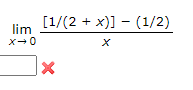
just wanted to say the graph could be for this limits (although I don't know limits still very well)
viscid thistle
Np
 opaque olive
$f(x)=x^m(x-1)^n\f'(x)=x^m(x-1)^n(mx^{-1}+n(x-1)^{-1})$
obsidian monolithBOT
Yes:
opaque olive
how would i find the second derivative from f(x)
stuck lark
f''=(f')'
opaque olive
shall i just use product rule again
or is there a simplification to make it easier?
stuck lark
whatever makes sense
opaque olive
his calculus book?
opaque olive
$(mx^{-2}+n(x-1)^{-2})+a(mx^{-1}+n(x-1)^{-1})+b(mx^{-1}+n(x-1)^{-1})$
obsidian monolithBOT
Yes:
obsidian monolithBOT
Yes:
opaque olive

ive done the first part ...
this is the part concerning the second derivative
<@&286206848099549185>
blazing raven
Er ... so what do you have so far?
Do you have a formula for the x-value at the stationary point?
Take two derivatives and verify that that point is a minimum / maximum by finding all possible x values and showing the x from the first part is "the one."
novel cargo
for a I have: $33\frac{1}{3} \cdot 2\pi = \frac{22\pi_{rad}}{min}$
for b I have: $22\pi \cdot 12 = \frac{264\pi_{in}}{min}$
willow bear
200pi/3 radians per minute yeah
and no it should be 800pi inches per minute for the second part
wait no
400pi
the radius is 6 in
novel cargo
why is it so important to remove irational numbers/radicals from denominator?
willow bear
it's not, but usually radicals in the numerator are considered simpler than radicals in the denominator
that's subject to context tho
novel cargo
instead of 1/sqrt(2) writing sqrt(2)/2 seems more complicated
 modest mist
Nah
 cedar cipher
why is it so important to remove irational numbers/radicals from denominator?
@novel cargo makes it simpler to approximate
1/√2 would be 1/(1.414..) let's say you stop at 3 places. 1/1.414 is more tedious than calculating 1.414/2
novel cargo
true, makes sense
novel cargo
$\csc{\theta} = 3$
obsidian monolithBOT
az:
novel cargo
$\sec(90^{\circ} - \theta) = \sec(\frac{\pi}{2} - \theta) = \csc \theta = 3$
obsidian monolithBOT
az:
novel cargo
someone check please
willow bear
well so far you haven't done anything wrong but also haven't said much either
nor have you been clear what exactly your goal is here
are you trying to solve this equation for θ?
novel cargo
was an exercise that asked to find other trig functions based on the given one using identities
csc theta was given
and sec(90 - theta) was sought
but I can solve it for theta too
good idea
novel cargo
because you are much more advanced than I am
and think in your domain
your level
which is normal
I understand and appreciate that
learning a lot
willow bear
i mean ok like
alright
you're given csc(θ) and asked for sec(90°-θ) and you've recognized that those are in fact one and the same
so good job
novel cargo
so we have 1/ sin theta = 3 or sin theta = 1/3
looking up sin theta = 1/3 we get 0.34 rad
sin's period is 2pi
so we have 0.34 + n * 2pi for n being all integers including zero
just not sure if I'm missing half of the solutions
novel cargo
so we also have (pi - 0.34) + n * 2pi
shouldn't a calculator give me both solutions when I input arcsin(1/3)?
willow bear
no
arcsin isn't multivalued
arcsin(x) is the angle between -pi/2 and +pi/2 whose sine is x
and that's unambiguous and refers to one angle and one angle only
novel cargo
so the fourth quadrant and the first
so, I have to imagine the solutions in the four quadrants, think about the graph, its parity and stuff and make an educated calculation
uncut mulch
easily shift between quadrants
novel cargo
what do you mean?
uncut mulch
sry vague wording,
makes it relatively easy to express general solutions
can also help evaluate stuff like sin(240°) without a calculator / memorising every single value on the unit circle
novel cargo
when I see something greater than 2pi i subtract the greatest possible multiple of 2pi from it and have a standard angle
or add, if it's negative
I think I'm missing something obvious here
uncut mulch
what would you do with something like sin(240°) though (without access to a diagram of the unit circle, calc or memorising all of it)
novel cargo
I'd say it's in the third quadrand
negative for both sin and cos
also, equal to 240 - 60
sign filpped for sin
like thinking in the quadrants and moving the terminal side and imagining what happens with the x and y values
uncut mulch
also, equal to 240 - 60
not quite
novel cargo
oh sorry
uncut mulch
the reference angle would be 240° - 180° = 60°
uncut mulch
why subtract 60 twice?
novel cargo
subtract 60 once to get to the horizontal (180) line and another time to move back the same amount to have the same x and y values
uncut mulch
that's inefficient
novel cargo
agree
uncut mulch
and can be inconsistent
uncut mulch
the reference angle is the acute angle made between the terminal arm and the x-axis
novel cargo
oh man
that's what I'm doing all along just made in a formal and consistent way
the reference angle I mean
uncut mulch
in this case, that can be determined by subtracting 180° from 240°
novel cargo
true
uncut mulch
as indicated in the middle diagram
novel cargo
the same angle just in the first quadrant
uncut mulch
hence since 240° is in quadrant 3
sin(240°) = -sin(60°)
novel cargo
you are turning on some lights in my head, good sir
uncut mulch
would be an application of reference angles
angles don't need to necessarily be nice, and you can apply the same idea to get a decent idea of the size
novel cargo
angles being nice?
uncut mulch
non-special
novel cargo
ahh
yeah, some of them are really naughty
It's starting to make sense
thanks Ramonov
 rapid falcon
There are two wheels with a belt around both of them. If I'm trying to find the linear speed of the belt (v=radius(omega)), then do I add up the radii and omega of both circles before multiplying?... or do I just use the values of the larger circle?
novel cargo
you have to calculate the angular speed of one of the wheels in rad then multiply that with that wheel's radius
rapid falcon
thanks
 mighty onyx
Anyone good at expontential functions?
lime bolt
yes
viscid thistle
@mighty onyx just ask it
 fossil crownBOT
From
Rule 1
The help channels are solely for help with math, so feel free to post your question. Asking whether you can ask a question or if anyone knows about some specific topic is unnecessary, so please try to avoid questions of that nature.
mighty onyx
Give a formula for the function illustrated using a vertical shift of an exponential function. The two points marked on the graph are A=(−1,−7) and B=(1,2). The red horizontal line is given by y=5, and is a horizontal asymptote of the function.
viscid thistle
can we see the function too? @mighty onyx
mighty onyx
That's all it gives me besides Y=_____
viscid thistle
it seems like you were given a illustration
mighty onyx
viscid thistle
okay so $f(x)=a(b)^x+c$ we'll use this, a marks the y-intercept as $(0, a)$, b represents the growth and c represents the horizontal asymptote
obsidian monolithBOT
Al𝟛dium:
mighty onyx
okay
viscid thistle
so you are given 2 points, but we already know that c=5 in our case, so you can make a system of eqn for the rest
viscid thistle
can i see them?
with the work you did to get them
this channel is occupied, i'll tag you on a free one so that i can help you.
 dusk solstice
ok
viscid thistle
We have a parabola based on number of sales over a long period of time where s = number of sales and t = time (in months). The equation representing the number of sales as a function of time is: s = -0.7t2 + 8t + 6
In excel, create a t-chart for this function.
In Cell A7 label t (time) In Cell B7 label s = -0.7t2 + 8t + 6
In cells A8 and A9 you get to choose the t value we wish. Choose 2 values for t.
Using excel, find the average rate of change between those 2 points.
Chose another 2 values for t and find the average rate of change between those two points.
could someone help me out here with this question?
this channel is still occupied, i'll tag you on a free one so that i can help you.
sorry
 weak needle
Is not that just Excel?
viscid thistle
yeah but i have no knowledge on excel
mighty onyx
@viscid thistle
Here is my work the 1.069×1.8708^1 works but not for 7 and the other one is just wrong
And don't worry about the log problem
opaque olive
$(a+b)^{2}\leq2a^2+2b^2$
obsidian monolithBOT
Yes:
opaque olive
how do i show this is true?
im guessing i start with the fact that (a+b)^2 is bigger or equal to zero
but it doesnt get me anywhere
viscid thistle
Here is my work the 1.069×1.8708^1 works but not for 7 and the other one is just wrong
@mighty onyx do you have the solutions?
Also i don't understand your letter
mighty onyx
I don't have the solutions I just went on to my other homework dealing with logarithms. I will ask my teacher what is the answer.
uncut mulch
@opaque olive 2a^2+2b^2 = (a+b)^2 + (a-b)^2

 steady seal
how do i go about this
https://i.imgur.com/ajdrXCS.png
 uncut mulch
get rid of skyscraper fractions
 tame wedge
 jade heron
If a<0 u could call it damped sinusoidal I think
novel cargo
oh man
I'm starting to understand some of the stuff that wolfram throws at me
happy
harsh smelt
,w lambert-W function
obsidian monolithBOT

 Requested by Commander Vimes#7532
novel cargo
Requested by Commander Vimes#7532
novel cargo
what function is W even?
stuck lark
google lambert W
stuck lark
not really
novel cargo
what then?
 hallow thunder
it is the inverse function of $xe^x$ @novel cargo
obsidian monolithBOT
jedben2:
novel cargo
thanks
obsidian monolithBOT
 Requested by Commander Vimes#7532
somber folio
Requested by Commander Vimes#7532
somber folio
oh did i do something wrong
harsh smelt
,w lim sqrt((x^2-3x-4)/(x^3+1)) as to -1
obsidian monolithBOT
 Requested by Commander Vimes#7532
harsh smelt
Requested by Commander Vimes#7532
harsh smelt
nah, you are correct
somber folio
thank youu
somber folio
Am i graphing this correctly
viscid thistle
Uh no
harsh smelt
branch 4-x is sus
it has negative slope
but as graphed, positive
and second branch
why it is 1?
somber folio
i thought it was like y=mx+b
viscid thistle
x+4 is also a bit sus
somber folio
y intercept would be 4 in x+4 and slope would be 1/1 right 

 rustic mortar
does this type of function have a name?
@tame wedge
This is the bessel function if i'm not wrong
one of the bessel functions atleast
viscid thistle
It is a piecewise function. @somber folio
somber folio
hm ok leme just try again
novel cargo
cos(x - pi/2) is cos(x) shifted to the right by pi/2 which equals sin(x)
what is cost(pi/2 - x)?
I can't wrap my head around this
viscid thistle
cost?
hallow thunder
*cos
viscid thistle
@hallow thunder cos(pi/2-x) is just sin(x) too
novel cargo
I admit
but how is cost(pi/2 -x) also sin(x)?
isn't it moving horizontally to the left?
willow bear
going from x to pi/2 - x is a reflection across the vertical line x=pi/4
viscid thistle
because cos(x)=cos(-x)
hallow thunder
since $\cos(x)$ is an even function, we can factor out $-1$ from the inside: $\cos(\frac{\pi}{2} - x) = \cos(-( x - \frac{\pi}{2})) = \cos(x-\frac{\pi}{2}) = \sin(x)$
obsidian monolithBOT
jedben2:
novel cargo
oh, you are making too much sense, good sir
thanks
still trying to understand Ann's argument
it sounds very enlightening
willow bear
reflecting across the line x=a gets you from y = f(x) to y = f(2a-x)
hallow thunder
novel cargo
this is just true with trig functions because they periodic, r?
hallow thunder
(sorry for crappy writing)
willow bear
periodicity doesn't matter here
novel cargo
true
I'm starting to see
also, a side question:
how much do I have to be good with precalc before starting calc?
this is an open ended question, IK
I'm asking bc there is so much to it
hallow thunder
i would have a basic understanding of derivatives, integrals and limits.
hallow thunder
thats good then
novel cargo
not the techniques necessarily
derivatives give you the rate of change
the tangent line
the slope of the graph at a particular point
the notion comes from limits
integrals are the inverse or something of derivatives
they give you the area under the graph (I really don't understand this one lol)
 slow roost
lol this is for pre calc review but its more of like alg: if f(x)=4x-x^2 find f(d)-f(-4)
willow bear
what's giving you trouble here claire
slow roost
can someone check if i got it right or if i made a mistake somewhere? i got 32
ik how to do it, its just i dont have the answer key unlocked
so i cant rlly check
lol i think im prone to mistakes due to the - signs
hallow thunder
@novel cargo i would also have a look at finding derivatives of some functions too since you will do complicated ones in calc
novel cargo
maybe I'm wrong
slow roost
oops f(4)-f(-4)
willow bear
f(d) - f(-4)?
novel cargo
bc f(d)
slow roost
mb i mistyped it
willow bear
,w f(x) = 4x-x^2; calculate f(4) - f(-4)
obsidian monolithBOT
Wolfram Alpha doesn't understand your query!
Perhaps try rephrasing your question?
Click here to refine your query online
 Requested by Ann#0413
novel cargo
Requested by Ann#0413
novel cargo
got it @hallow thunder
willow bear
yup 32 checks out
slow roost
yay
tysm
what did u use for desmos by chance
i dont have access to our answer key yet
willow bear
willow bear
yes
novel cargo
didn't know this worked
slow roost
ah tysm!!!
how about if sqrt f(3/2)
i tried desmos and my answer was off by decimals
i got 2sqrt3-3/2
not sure if there was a calculation error
 heady lotus
this should be the answer imo
Since sqrt is not distributive over addition or subtraction
You can't take the square root of the numbers individually and add/subtract them
viscid thistle
Yeah $\sqrt{a-b}\neq \sqrt{a}-\sqrt{b}$
obsidian monolithBOT
Al𝟛dium:
slow roost
yeah im not sure
obsidian monolithBOT
Al𝟛dium:
viscid thistle
Tho there is not much of simplification
slow roost
sure
viscid thistle
Ok know how to do common denominator?
slow roost
mhm
viscid thistle
How should i interpret that?
slow roost
for 6-9/4 under the sqrt?
viscid thistle
Yes
slow roost
multiply the 6 by 4 to get 24/4
viscid thistle
Yes
slow roost
so thats 24/4-9/4= 15/4 well sqrt 15/4
viscid thistle
Yes
slow roost
how did u guys get the sqrt6-9/4 tho
viscid thistle
And then as $\sqrt{\frac{m}{n}}=\frac{\sqrt{m}}{\sqrt{n}}$ you can simplify a little bit further
obsidian monolithBOT
Al𝟛dium:
slow roost
how am i suppose to plug it in properly tho
cause i did 4(sqrt3/2) - (-sqrt3/2)^ hence why i got 2sqrt3-3/2
but clearly thats incorrect
viscid thistle
$f(x)=4x-x²$ would you be able to get f(3/2)?
obsidian monolithBOT
Al𝟛dium:
slow roost
um what?
viscid thistle
cause i did 4(sqrt3/2) - (-sqrt3/2)^ hence why i got 2sqrt3-3/2
I see what you did now
viscid thistle
$\sqrt{f(\frac32)}\neq f(\sqrt{\frac32})$
slow roost
oooo
obsidian monolithBOT
Al𝟛dium:
slow roost
oo
viscid thistle
Better
lime bolt
bruh
viscid thistle
Wait where are you now on
slow roost
im on the 4x part
putting sqrt f(3/2) into 4x
lol can u do it on paper or something
from what im understanding this is what yall did
viscid thistle
hence why its sqrt 6?
$\sqrt{\frac{4\cdot 3}{2}}=\sqrt{\frac{{\color{green}{4}}\cdot 3}{{\color{green}{2}}}}=\sqrt{{\color{green}{2}}\cdot 3}=\sqrt{6}$
lime bolt
it is trivial
obsidian monolithBOT
Al𝟛dium:
viscid thistle
Okay let me just write everything out
lime bolt
your pfp 🤔
slow roost
lol im pretty sure i understand it now
i just interpreted the subsitution in correctly
i was suppose to plug 3/2 into the 4x and then take the sqrt of it
but i saw it as 4*sqrt3/2
which is correct
its suppose to be sqrt 3*4/2
and then for the -x^2 its (3/2)^2 and then take sqrt of that
so thats sqrt 9/4
viscid thistle
$f(x)=4x-x²$ $\sqrt{f(3/2)}$ let's first get f(3/2) and then sqrt the result. $$f(3/2)=4(\frac32)-(\frac32)²=6-\frac94$$ then the sqrt as it is asking for $\sqrt{f(3/2)}$ $$\sqrt{f(3/2)}=\sqrt{6-\frac94}=\sqrt{\frac{15}{4}}=\frac{\sqrt{15}}{2}$$
slow roost
mhm yeah i understand it now
obsidian monolithBOT
Al𝟛dium:
viscid thistle
Glad to hear
slow roost
tysm!
somber folio
am i defining this correctly
 hushed sorrel
yes
slow roost
is it crossed out bc theres no solution or?
hushed sorrel
maybe ur teacher just doesnt want u to do that question idk
mighty onyx
Give a formula for the function illustrated using a vertical shift of an exponential function. The two points marked on the graph are A=(−1,−7) and B=(1,2). The red horizontal line is given by y=5, and is a horizontal asymptote of the function.
anyone know how to do this?
willow bear
do you know the general form of an exponential function?
mighty onyx
Y=a(b)^x
willow bear
lowercase y, but yes.
in your case it'll be $y = a \cdot b^x + 5$ due to the vertical shift.
obsidian monolithBOT
Ann:
willow bear
you have two unknowns to solve for, and you have two (x,y) pairs.
use the given points on the graph to construct two equations in a and b
then solve those equations
mighty onyx
so after we enter our two points is should look like $2 = a \cdot b^1 +5$ and $-7 = a \cdot b^2 +5$
obsidian monolithBOT
Albot1288:
mighty onyx
** $-7 = a \cdot b^-1 +5$
obsidian monolithBOT
Albot1288:
mighty onyx
right?
obsidian monolithBOT
Yes:
willow bear
@mighty onyx late reply and ^{-1} but yes
 willow stream
$\tan(\pi /3)/(\pi/3)^2$?
obsidian monolithBOT
Dozenford:
willow stream
How would I go about simplifying this
I know tan would resolve to $(sqrt(3)/2)/(1/2))
$(sqrt(3)/2)/(1/2))
novel cargo
enclose it with $
obsidian monolithBOT
Dozenford:
Compile Error! Click the  reaction for details. (You may edit your message)
willow stream
There, I know tan would result in this and the bottom is just pi square over nine
but where do I go from there?
uncut mulch
misplaced parentheses in your Tex.
tan(pi/3) would simplify to just sqrt(3)
and then multiply the numerator and denominator by the same thing to get rid of skyscraper fractions
willow stream
Oh alright
so before I evaluated tan(pi/3) I would just cancel out pi/3 from top and bottom
uncut mulch
no
uncut mulch
you should also know that without having to write and divide sin(pi/3) by cos(pi/3)
willow stream
Yeah that's true
mighty onyx
Ok so I got 1/6 for B
uncut mulch
you were getting somewhere before, but this is completely wrong
especially since there are square roots of negatives
$\begin{cases} -7 = ab^{-1} + 5
\ 2 = ab^{1} +5
\end{cases}$
obsidian monolithBOT
ramonov:
uncut mulch
this is the system you should be solving
mighty onyx
I got A as +-6 and B as +- 1/2
uncut mulch
for b^x to be well defined for all x, b needs to be positive
and as a result there is only one possible value for a here
mighty onyx
Here is the work I got using substitution
uncut mulch
i can't really read what's going on there
mighty onyx
so with the first line I turn my ab^-1 into a/b
next with 2=ab=+5 I turn it into b=-3/a
then -7= a/3 +5
and got +- 6
uncut mulch
lots of missing signs in your work
making that substitution would result in
-7 = -a^2/3 + 5
which does lead to a = +-6
however one of the solutions are extraneous for the initial premise
specifically the domain of (standard) exponential functions is all real numbers,
and to satisfy that, the base of the exponent must be positive
eg (-1/2)^(1/2) would be undefined
obsidian monolithBOT
Albot1288:
uncut mulch
i.e. using
a = 6 would get you b=-1/2
which is a solution to the system being set up but does not model an exponential function with the given properties.
a = -6 would get you b=1/2
which does work
mighty onyx
What's dumb is I had put that in but he says to put the exponent inside the parenthesis so.... rip
Thanks everyone for helping with this hard problem
uncut mulch
that's unecessary though
they'd be equivalent
they themselves had the exponent outside
mighty onyx
yeah but atleast it's over now
novel cargo
I've learned arcsec's domain is -1 <= X <= 1
my calc tho gives:
how's this defined?
gives this for sqrt(-2) as input to arcsec
sorry, was so confused forgot to write that
I interpreted arcsec as 1/arccos
we have to make an exception for zero
bruh, spit it out
stuck lark
arcsec ISN'T 1/arccos
 echo wagon
Can your calculator tell me what arcsec(0) is? Since 0 is in your domain
Also, I've never seen a calculator with arcsec on it lol

 echo wagon
arcsec(-sqrt(2)) is not the same as arcsec(sqrt(-2)) btw
echo wagon
Is this a troll post lol?
novel cargo
the original question?
echo wagon
Yes
echo wagon
Okay, but why is your calculator giving you that value? Lol
novel cargo
my calc is for real
echo wagon
,w calculate arcsec(-sqrt(2))
obsidian monolithBOT

 Requested by Lunasong#7197
echo wagon
Requested by Lunasong#7197
echo wagon
This is the right answer lol
echo wagon
Stop using it
novel cargo
you have any suggestions? Ubuntu
stuck lark
https://cdn.discordapp.com/attachments/363224154469826562/747553561382224050/unknown.png what's this trash

 novel cargo
my calculator
echo wagon
At least arcsec(0) isn't defined, so they made up a value
novel cargo
I take full responsibility
echo wagon
But arcsec(-sqrt(2)) is actually defined and they just give some other value
novel cargo
lol
stuck lark
imagine using an rng to guess the evaluation at pts outside domain of defn
echo wagon
Lmao
novel cargo
I don't fully understand but sounds funny to me too
 narrow pier
echo wagon
narrow pier
echo wagon
What do you think and is it a test?
stuck lark
eg evaluating $x\mapsto\frac1x$ at 0, but instead of saying undefined the calc says $\frac\pi e$
obsidian monolithBOT
RokettoJanpu:
narrow pier
wow
eg evaluating $x\mapsto\frac1x$ at 0, but instead of saying undefined the calc says $\frac\pi e$
obsidian monolithBOT
Turnip:
novel cargo
Turnip learns fast
narrow pier
hahahahahha
stuck lark
$\tan(\frac\pi2)=\phi^{-\sqrt2}$
obsidian monolithBOT
RokettoJanpu:
echo wagon
@novel cargo BTW the domain of arcsec is $(-\infty,-1] \cup [1,\infty)$, so literally the opposite of what you had
viscid thistle
what is "this function"
narrow pier
its impossible
obsidian monolithBOT
Lunasong:
novel cargo
it really depends on context
echo wagon
They probably mean the set of those points
narrow pier
yea
viscid thistle
oh, I thought those were multiple choice options
echo wagon
Anyway, what do you think the range is Turnip?
stuck lark
arcsec is defined as the inverse of sec where the domain of sec is restricted to [0,pi]\{pi/2}
narrow pier
its the difference between the highest and lowest in a set
echo wagon
No
narrow pier
yikes
stuck lark
$\mathrm{im}(f):=\brc{f(x):x\in\mathrm{dom}(f)}$
obsidian monolithBOT
RokettoJanpu:
echo wagon
An informal description would be: The range of a function is the set of all output values of a function
stuck lark
the set of f's images as you vary f's input over f's domain
novel cargo
when Turnip is done, explain to me the difference between image and range
stuck lark
diff name same thing
narrow pier
An informal description would be: The range of a function is the set of all output values of a function
knowing that what is a step i could take to solving
lime bolt
you havent showed the fucntion yet
novel cargo
knowing that what is a step i could take to solving
@narrow pier consider all possible outputs for the possible inputs. that's the range
echo wagon
It's ${(17,17), (14,6),(2,-6),(13,17) } $
obsidian monolithBOT
Lunasong:
stuck lark
@novel cargo *codomain
novel cargo
OruniJetak, I once read a linear algebra book and they made a difference between the two
lime bolt
no that is still the range
novel cargo
maybe it was the codomain
echo wagon
Can you tell us what the outputs are for the function? @narrow pier
lime bolt
every element of the codomain doesnt have to be an output
stuck lark
no diff @novel cargo
lime bolt
there is a difference
stuck lark
not talking to you
echo wagon
I've seen the codomain called the range too, but that's dumb and should be avoided.
narrow pier
17 -> 17
14 -> 6
2 -> -6
13 -> 17
echo wagon
So the outputs are?
stuck lark
range is far more often synonymous with image
lime bolt
it is equivalent
narrow pier
what do you mean outputs
stuck lark
diff name same thing
lime bolt
what the function produces given an input
echo wagon
If x is in the input, f(x) is the output
@novel cargo look like they disappeared. So where did you get this whack calculator?
novel cargo
just a second
lime bolt
lol getting those calculators with graphs and stuff is pretty silly
novel cargo
@narrow pier
echo wagon
Lol
lime bolt
i think my school is gonna make me pay like £80 for one
novel cargo
all made with GNU software too
lime bolt
but im just gonna say no
stuck lark
it's a rock grinder
uncut mulch
hand-held graphics calcs should be banned
novel cargo
@echo wagon I searched for good calcs on Ubuntu and one of the good according to reviews was Qalculate!
echo wagon
I think to get students to rely less on their calculators, they all need to be given az's calculator
novel cargo
no one recommended it
uncut mulch
tables
lime bolt
is a high-functioning caclulator necessary
echo wagon
No, I literally use an abacus
stuck lark
🤢
novel cargo
the bestest of calculators
stuck lark
make it compute $\sqrt[i]{i}$
obsidian monolithBOT
RokettoJanpu:
stuck lark
with usual branch cut
novel cargo
says degree must be rational
echo wagon
So it can do i/0 but not that? Lame
novel cargo
yeah, I'm disapointed
stuck lark
lame
 low owl
college said "buy a graphing calculator" -- so I buy one....College Algebra last semester : You can't use that. --- Precal this semester : You can't use that
don't buy graphing calculators lol
 velvet blade
Why to buy them? Can't we have a small monitor and keyboard setup with desmos in it while being tested?
 delicate rivet
what does it mean by "signed area"?
i googled it, and it highlighted the area under the curve between certain points, but is that not the area / distance travelled?
low owl
Why to buy them? Can't we have a small monitor and keyboard setup with desmos in it while being tested?
They strictly enforce a "nothing except pen/pencil, paper, and a scientific calculator" policy here by making you take your exams via Lockdown Browser + Live Webcam. Have to show your work-area lol
 cursive rock
hey im new here
viscid thistle
@delicate rivet can you explain yourself better? I'm not getting what you are trying to say, the area below the function on a velocity time graph is indeed the distance traveled
cursive rock
Why does 1 over X2+X = 1 over x2 + x3 over x2? I dont understand
uncut mulch
what's written on the page is incomplete but
$\frac{1}{x^2} + x = \frac{1}{x^2} + x \cdot \frac{x^2}{x^2} = \frac{1}{x^2} + \frac{x^3}{x^2}$
obsidian monolithBOT
ramonov:
delicate rivet
@delicate rivet can you explain yourself better? I'm not getting what you are trying to say, the area below the function on a velocity time graph is indeed the distance traveled
@viscid thistle in the picture i sent the first dot point said that "the signed area between a v-t graph and horizonal axis is the displacement x", could you please explain what signed area is?
here's the picture
 bright ravine
if the area is below the x-axis, then it is considered negative (i.e. in this case it would mean negative displacement)
novel cargo
$sec[arcsin(x-1)]$
obsidian monolithBOT
az:
novel cargo
$arcsin(x-1) = u$
obsidian monolithBOT
az:
novel cargo
$\sin{ u} = x - 1$
obsidian monolithBOT
az:
harsh smelt
\
novel cargo
$\cos{u} = \sqrt{1 - (x-1)^2}$
obsidian monolithBOT
az:
novel cargo
$\sec{u} = \sec{[\arcsin{(x-1)}]} = \frac{1}{\sqrt{1 - (x-1)^2}}$
obsidian monolithBOT
az:
novel cargo
$0 < x \leq 1$
obsidian monolithBOT
az:
past meadow
,w sec(arcsin(x-1))
obsidian monolithBOT

 Requested by Sneaky#0928
novel cargo
Requested by Sneaky#0928
novel cargo
oh my
past meadow
it is poggers
past meadow
pretty poggers tbh
novel cargo
lol
past meadow
couldnt you be less restrictive with the domain tho
obsidian monolithBOT
Sneaky:
obsidian monolithBOT
Sneaky:
past meadow
so all you care about is $(x-1)$ being in $[-1,1]$
obsidian monolithBOT
Sneaky:
obsidian monolithBOT
Sneaky:
novel cargo
yeah, bc zero
past meadow
so yeah, $0<x<2$
obsidian monolithBOT
Sneaky:
novel cargo
👍
 severe prawn
A bus company collected a total of $1080 from
passengers one morning. Each passenger paid either
a $3.00 regular fare or a $1.50 reduced fair. If 7 of
every 8 passengers paid the regular fare, what is the
total amount of money, in dollars, that the bus
company collected from passengers paying the
regular fare?
novel cargo
you can convert this maybe to a two equations two unknowns system
severe prawn
doesnt work for me
severe prawn
but the correct answer is 1008
novel cargo
what does 1008 stand for?
severe prawn
x
novel cargo
what does x stand for?
novel cargo
so, you saying that 1008 ppl paid 3 dollars in addition to others who paid less would result to 1080, which is the total amount collected?
do I understand you correctly?
novel cargo
so then what is x?
novel cargo
look at the equations, and try to describe them in plain english, is my advice
viscid thistle
w as s u p
novel cargo
hey
novel cargo
haha
viscid thistle
Thought I was getting close to the solution and babam I ended up where I started
Turns out
I made the silliest mistake on it
And did an oops with a factor
I did something like (3x-2)(x^2-1)(x+6) and the (x+6) was supposed to be subtracted
Anyways
What y’all up to?
novel cargo
yes
viscid thistle
How’d you do it
novel cargo
arccos(x/2) = u
viscid thistle
Mhm
novel cargo
so cos u = x/2
viscid thistle
Mhm
novel cargo
now you can say adj/hyp = x/2
novel cargo
from there you can calc sin u = sqrt(4 - x^2)
viscid thistle
m h m
viscid thistle
Agreed
novel cargo
this in my precalc book but marked as calc
viscid thistle
mhm
delicate rivet
to find the min & max, you find the stationary right? I solved for the derivative, but I got plus/minus root6/3.... how would you do this by and is this even correct?
blissful ridge
Do you mean $\frac{\sqrt{6}}{3}$
obsidian monolithBOT
The Godfather:
willow bear
you need to compare the values of f at:
- the stationary points inside your domain
- the boundary points of your domain
so in this case, f(0), f(2) and f(sqrt(6)/3)
the smallest among these will be your min and the largest your max
delicate rivet
thank you!
delicate rivet
how did they get 1.9?
i subbed in 0, 2 & ±sqrt6/3 and got:
(0, 3); (2, 7); (sqrt6/3, (4 x sqrt6)/6 + 3); (-s/qrt6/3, (-8 x sqrt6)/6 + 3);
uncut mulch
seems they did an approximation
you don't need to calculate f(-sqrt(6)/3) since -sqrt(6)/3 isn't in your domain
delicate rivet
oooo right right, but i put it into the calculator and it didn't come out as 1.9?
uncut mulch
did you put appropriate parentheses?
 austere void
-sqrt(6)/3 is roughly -0.8
delicate rivet
yep, im p sure i did; i put in (4*sqrt6)/9 + 3
it came out as 4.08 which would round up to 4.1
uncut mulch
how are you getting (4*sqrt6)/9 + 3
delicate rivet
since the stationary point is positive/negative sqrt 2/3
so i subbed it back into the first equation
(sqrt(2/3))^3 - 2*sqrt(2/3) + 3
uncut mulch
check your signs