#precalculus
1 messages · Page 220 of 1
 pale pond
 carmine elbow
Does anyone here know how to do half life equations?
 past meadow
what about them?
 unique hill
which question specifically
carmine elbow
Question 14
past meadow
theyre all the same, just diferent numbers, so it doesnt really matter
unique hill
sneaky u help cora since u answered first
past meadow
hmm ive kinda forgotten about this to be honest, but im pretty sure just looking at the formula you can substitute 25 in for a(t) as well, since its time we know at time 5.27, theres half of 50 remaining, right?
nighty could you check if im right if you're still there? im not perfectly sure if im right
past meadow
it sounds right, from there you can divide both sides by 25, then take ln of both sides, and solve from there
carmine elbow
?
past meadow
are you familiar with logarithms?
 viscid thistle
theres a 3blue1brown video explaining logarithms
its pretty cool
for visual people like you
carmine elbow
Can you show me?
viscid thistle
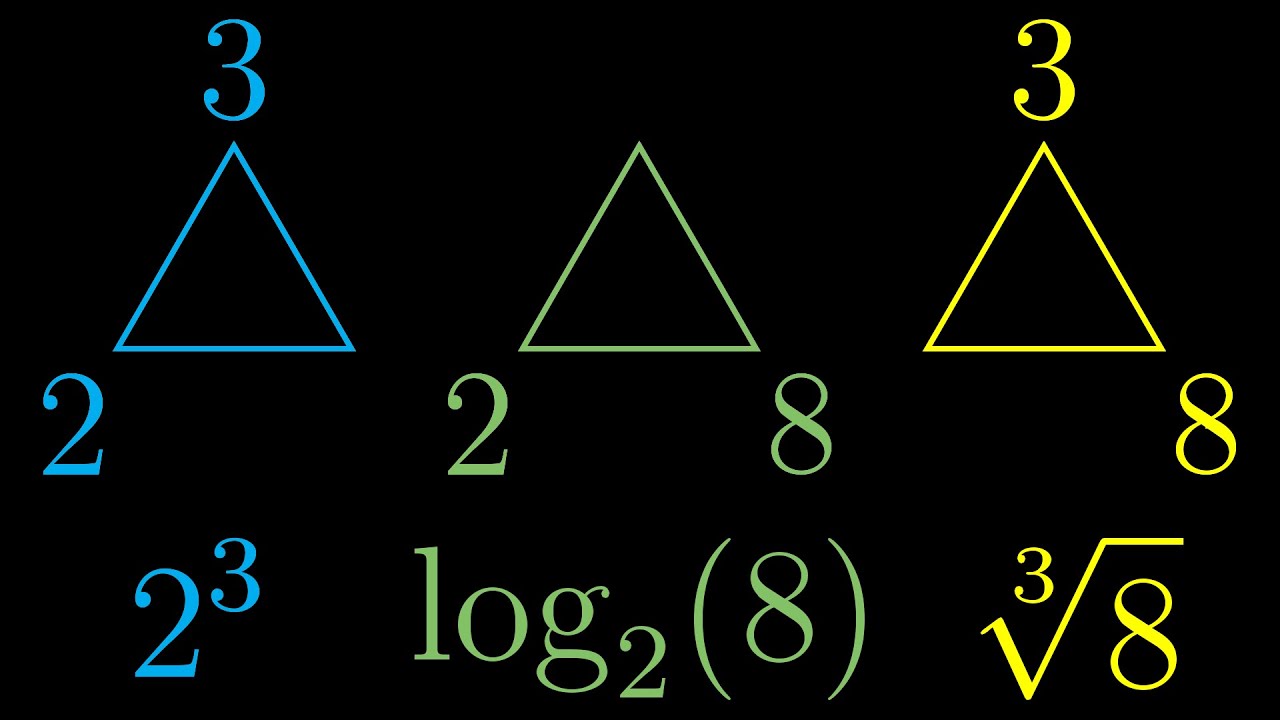
In math, exponents, logarithms, and roots all circle around the same idea, but the notation for each varies radically. The triangle of power is an alternate notation, which I find to be absolutely beautiful.
(This is the corrected version of the one I put out a month or so a...
past meadow
o 3blue1brown is great
 tardy ridge
Yo I don't understand how to not brute force to solve this
if you are on a cube
6 vertices
you start at a vertex
after moving to another vertex 8 times, what is the probability that you get back to the original vertex
carmine elbow
@viscid thistle is this specific to my problem?
unique hill
@past meadow i havent done these in a while, but did u get 25=50e^(5.27)k
cuz half life then mass is halved
past meadow
yeah i did nighty
tardy ridge
whoops looks like this is occupied
unique hill
ok noice
viscid thistle
@carmine elbow no but its interesting
carmine elbow
You’re right. Since it’s half, it should be 25 = 50e^k(5.27) @unique hill
carmine elbow
I think so. I’ll work it out and show you how I do it
I want to make sure I know what I’m doing
This is what I have so far
unique hill
holup
past meadow
where did your e go
past meadow
in the second to secoond last line you take ln of both sides, and your e just dissapears
carmine elbow
the e is naturla log so I just took the natural log of both sides
unique hill
your last step is incorrect
carmine elbow
lne = 1
unique hill
from second last
carmine elbow
right?
unique hill
yes
@past meadow that's not what he's having trouble with btw
cora, your 5.27k should be outside of the ln
past meadow
yes that was what i was trying to say
unique hill
channel's taken btw
past meadow
kordal try a #❓how-to-get-help channel
carmine elbow
unique hill
you shouldnt have an extra k in the denominator
ok forget the three last steps
from 1/2 = e^(5.27k), you can bring the 5.27k to the front of the ln using log laws
carmine elbow
There’s an extra k because I’m bringing that whole section over to the left and dividing it by the ln(1/2)
unique hill
from 1/2 = e^(5.27k), you can bring the 5.27k to the front of the ln using log laws
@carmine elbow
ignore the last 3 steps you have
past meadow
then you have ln(1/2)=5.27k
carmine elbow
Ok
past meadow
do you understand how we got that?
unique hill
and the rest is same concept rly
carmine elbow
Yes. And I saw the extra k that you guys were talking about
unique hill
ok so you know how to get the k out right?
past meadow
thats right
carmine elbow
Thank you for your help!
 south forum
is the answer to both of these no?
i'm trying to study and the bottom one with the graph is confusing me
doesn't it have to pass the horrizontal line test?
unique hill
are u asking for both of these questions
south forum
yes
7 and 8
i think the answer to both is No
because i know for sure 7 doesnt pass the horizntal line test
unique hill
nah only the first one is not
past meadow
7 is definitely no
south forum
i cant tell by looking at the graph if 8 does or not
past meadow
8 is probably yes
south forum
alright
 harsh condor
I have the question:
eep
I solved it tho
Find x, 2ln(x) = sqrt(ln(x))
And so I found x by doing:
(2*ln(x))^2 = ln(x) [squaring both sides]
4*ln(x)^2 = ln(x)
4 = ln(x)/ln(x)^2 [divide both sides by ln(x)^2]
4 = 1/ln(x)
1/4 = ln(x)
e^(1/4) = x [Bring the old e into here]
But I was wondering
 willow bear
yes you did miss a solution
 pale bison
you gotta be careful when you divide
willow bear
be careful*
harsh condor
Ye, so there would be the negative solution too
unique hill
pub u can change the font
unique hill
ok gotcha
pale bison
are you typing an essay bRo
unique hill
:\
harsh condor
Yes.
Instead squaring both sides, if I decided to, bring e into it immediately.
e^(2ln(x)) = e^(sqrt(ln(x)))
x^2 = e^(sqrt(ln(x)))
What could I do?
Is e^(sqrt(ln(x))), like death or something? can I not break it down?
pale bison
yes, it's death
harsh condor
rip
pale bison
4*ln(x)^2 = ln(x)
minus ln(x) on both side then factor would be the best idea to avoid division
the fact that it looks like a quadratic would help you to identity when stuff like this happens
harsh condor
4*ln(x)^2 - ln(x) = ln(x) - ln(x)
4*ln(x)^2 - ln(x) = 0
pale bison
keep going
unique hill
another essay incoming
pale bison
it better be a good one
i mean it's superb that they can use parenthesis unlike many many other users in this discord
unique hill
true
harsh condor
I've done some sinful things in this essay.
"imagining" ln(x) to be z temporarily to solve the quadraitc
4z^2 - z = 0
8z - 1 = 0 [cheat a bit]
8z = 1
z = 1/8
4(1/8)^2 - (1/8) = -1/16
Vertex = (1/8, -1/16)
4(z - 1/8)^2 = 1/16
(z - 1/8)^2 = 1/64
z = sqrt(1/64) + 1/8 [replacing z with ln(x) again]
ln(x) = sqrt(1/64) + 1/8
harsh condor
I use vertex to find quadratic, since I never remembered the quadratic formula.
Also a bit quicker imo
unique hill
you dont need the vertex
unique hill
yea
harsh condor
Shiet
unique hill
it's not a quadratic
pale bison
sorry that i said quadratic, that probably mislead you
unique hill
so you're good now?
harsh condor
4*ln(x)^2 - ln(x) = ln(x) - ln(x)
4*ln(x)^2 - ln(x) = 0
unique hill
nvm
harsh condor
Is that part correct?
harsh condor
Idk how it got there tho....
pale bison
factor out the z
harsh condor
Oh
pale bison
ripparoni
harsh condor
ripparoni indeed
unique hill
you're good now?
harsh condor
nope, idk how z(4z - 1) helps?
unique hill
= 0
harsh condor
I can only go to ln(x)(4ln(x) - 1) = 0
harsh condor
I can like divide 0/z, but thats illegal
unique hill
$z(4z-1)=0$
harsh condor
z(4z - 1) = 0
pale bison
latex gore
 obsidian monolithBOT
nighty:
pale bison
z is ln(x) btw nighty, so i guess it's fine if they decided to change it back
unique hill
yes but isnt it faster if u get the values of z and then sub into ln(x)?
harsh condor
Idk, what to do after that?
(4z - 1) = 0/z
4z = 0/z + 1
z = 1/4
unique hill
nani
harsh condor
feels illegal
harsh condor
0/z is 0
unique hill
you're cancelling out a value of z
harsh condor
Though that is technically the correct answer
harsh condor
Yeah
harsh condor
z(4z - 1) = 0
But the z is already factored out isnt it?
unique hill
z(4z-1)=0, so it's obvious that z=0 or 4z-1=0
i think you're having one of those mind blanks
pale bison
i think you meant or
harsh condor
OOoh, yeah there is that way of thinking lol.
harsh condor
4z - 1 = 0
4z = 1
z = 1/4
unique hill
for one of the sln yes
harsh condor
I have compeltely forgotten that z(4z - 1) = 0 is solveable.
I was completely relying on algebra
And not thinking rip
harsh condor
Yeah so:
ln(x) = 1/4
or
ln(x) = 0
And so
x = e^1/4
or
x = e^0
unique hill
x=1 for last, yea
harsh condor
Yea, damn i feel smooth brained today
harsh condor
Yeah thanks for sticking along
unique hill
no problem
harsh condor
Helps heeps
harsh condor
Aight cya!
 random steppe
Hi, I'm having some trouble determining which function is leading and lagging for:
y1 = 5cos(2x + pi/3) and y2 = 4sin(2x + pi/3)
Is it true that if the phase difference (a2 - a1) is negative, then then y2 leads y1 ??
harsh condor
Idk, physics so I can't be sure but from what I know about basic trig:
cos(x) = sin(x + pi/2)
So, cos(2x + pi/3) = sin(2x + pi/3 + pi/2) = sin(2x + 5pi/6)
So looking at:
y1 = 5 * sin(2x + 5pi/6)
y2 = 4 * sin(2x + pi/3)
I'd imagine, y1, to look "slightly" like y2, but behind by pi/2. Since adding more to the x, makes it go more to the left.
To find the exact offset,
Given sin(ax + b), the offset from 0 will be b/a.
random steppe
hi, thanks for replying! My working is fairly similar as I also converted to cosine to sine
I found the offset to be pi/4 radians
harsh condor
That sounds about right
random steppe
But i wasn't sure whether if the phase difference (a2 - a1) is negative, then then y2 leads y1
as in, here the phase difference is: pi/3 - 5pi/6 = -pi/2
so do you know if having a negative (or positive) phase difference implies y2 is leading y1 (or vice versa for positive)?
harsh condor
Well, I would assume that just knowing the offset wouldn't tell you which wave is shifted more than the other.
Since there is also the period of the wave.
One could be faster than the other, though in this case, both waves have the same period
But what I can tell from this is that, y1, probably is slightly behind y2.
I would assume (a2 - a1) would tell you which one leads the other if, both have the same period.
random steppe
Yeah i agree they would definitely have to have the same period to be comparable
but also in the same sense, we would just divide by k: (a2-a1)/k so that gives the 'offset'
harsh condor
Whats K?
random steppe
k is the coefficient of x
random steppe
wait no so (a2-a1)/k gives us the translation along the x axis to get from y1 to y2 (or vice versa)
harsh condor
I dont think (a2 - a1)/k would tell you the difference of offsets between the two. Since there is the other x's coefficient too.
random steppe
(a2 - a1)/k would only give the offset of the 2 functions when k (the coefficient of x) is the same for both functions
that was actually the formula we were given
harsh condor
Not entirely sure, but I assume there is some proper formula for the phase difference.
random steppe
phase difference = a2 - a1, where a is in (kx + a)
i'm just confused over how we would determine which function is leading or lagging analytically from the functions only
(like without sketching a graph)
thank you for your help so far by the way
harsh condor
From the functions only, I would convert both to sine waves.
And check whichever one has the larger offset.
Which ever one has the larger coefficient is probably lagging behind.
So e.g
y1 = sin(ax + b) and
y2 = sin(ax + c)
(b - c) > 0, it probably means y1 is behind y2
(b - c) < 0, it probably means y1 is ahead y2
Of course we have this is only true when both have the same period.
So yeah I think your formula checks out in these general situations. Tho idk the specifics about phase shifts so there might be specifics I'm missing.
pale pond
i know i asked the same question yesterday, but i just got back to doing it and im still stumped
can anyone help with 7?
 lost mesa
@pale pond express tan and sec in terms of sin and cos
 uncut mulch
combine fractions
apply trig identity relating sec and tan
factorise, simplify
simplify further
 quartz garnet
there are different approaches
i wouldve multiplied (sec(x) - 1)/(sec(x) - 1) to the first fraction
quartz garnet
uhuh and the 1/tan x will cancel out and then sec/tan = csc
lost mesa
mhm
 vague minnow
 muted granite
Having difficulties building a polynomial with 2,-2, -1+3i, and p(1)=54. It can only have real coefficients and zeros. The -1+3i is throwing me off. Thoughts?
 patent beacon
I'm guessing you mean "roots"?
If -1 + 3i is a root of a poly with real coefficients, then -1 - 3i is as well @muted granite
Wait, you can only have real zeros? Then what are 2,-2,-1+3i?
muted granite
@patent beacon Yeah only real zeros. I think it wants me to take 2,-2,-1+3i and turn it into a polynomial that equals 54.
patent beacon
@muted granite How would you take 1 and make a polynomial out of it?
p(1) = 54 is not "a polynomial that equals 54"
 vague crystal
@vague minnow oh boy those are fairly ugly
I'm pretty sure you can factor the second fraction
although....
$x^2 + y^2 - 625 = 0 -> x^2 + y^2 = 625$
obsidian monolithBOT
bela:
vague crystal
that turns into a circle with radius 25 
 stuck lark
$x^2 + y^2 - 625 = 0\implies x^2 + y^2 = 625$
vague crystal
not sure if that helps at all though just spitballing obvious relationships 
obsidian monolithBOT
RokettoJanpu:
vague crystal
oh thank you pog
forgot what that operator was
i'm 95% sure you can factor that fraction into something cleaner but not sure
muted granite
@patent beacon I am not sure exactly what to do. But this is the question.----Build a polynomial function p(x) of least degree having only real coefficients and zeros: 2,-2, -1+3i, and p(1)=54. ( Give your final answer completely multiplied out in normal polynomial form )
patent beacon
The polynomial has real coefficients.
The polynomial has these zeroes: 2,-2, -1+3i
p(1) = 54
Worth mentioning, the polynomial does not have real zeroes. The zero -1 + 3i has a conjugate zero, so -1 - 3i is also a zero
vague crystal
hmmm
i'm not really sure how you can eliminate the i
also oop
made an oopsy
OH MY GOD
nevermind absolute moron i am
make mathematical errors, i must
This is actually a very cool and clever problem 
I found a polynomial but p(1) = -39 for mine
 hollow oar
OOOOOOOOOOOO
viscid thistle
Write an arithmetic sequence that gives the nth positive x-intercept of the graph of f(x)=cos18x. Leave your answer in terms of π.
how do I do ^^^
 twilit rock
Wait a bit
viscid thistle
@viscid thistle u said /8 for the other equation?
in geo-trig chat
ya
i didnt wanna interupte u
dw bout iot
 orchid pier
hello i have a homework problem i dont know how to solve. arccos(cos(pi+1))
viscid thistle
pi+1
viscid thistle
arc cos and cos just cancel out
harsh condor
It's not
viscid thistle
yah.....
harsh condor
PI + 1 gets shrunken into the range of cos.
twilit rock
Yaaa
viscid thistle
no its still within the range?
twilit rock
arccos range is 0 to pi
harsh condor
Oh yea
viscid thistle
pi+1<2pi
harsh condor
Should be then.
orchid pier
so the answer is pi+1?
viscid thistle
yah
viscid thistle
why not?
harsh condor
PI + 1 = 4.14...
viscid thistle
they didnt specify for a domain?
harsh condor
The actual answer arccos(cos(PI + 1)) = 2.14159...
harsh condor
cosine basically takes a dip at pi/2
viscid thistle
yah
harsh condor
So at pi/2 it's gone to zero
twilit rock
arccos range is 0 to pi
twilit rock
No pi
twilit rock
arccos not cos
viscid thistle
or pi/6=11pi/6
harsh condor
Just use unit circle.
viscid thistle
if its 0->pi then its pi-1
viscid thistle
@orchid pier was there a range for the question
twilit rock
Ans is pi - 1
viscid thistle
k it probs ask for the range then
twilit rock
2.142
twilit rock
arccos has only 1 primary range 0 to pi
viscid thistle
oh yah ur right
orchid pier
ok so to show my work i should write arccos(cos(pi+1))=arccos(cos(2pi-(pi+1)))=arccos(cos(pi-1))?
im trying to read your picture
@twilit rock
harsh condor
That seems about right.
orchid pier
ok thanks everyone i appreciate it
twilit rock
Cool
muted granite
@patent beacon (x-2)(x+2)(x+1-3i)=54 would that be the answer?
twilit rock
What's the question???
muted granite
@twilit rock Build a polynomial function p(x) of least degree having only real coefficients and zeros: 2,-2, -1+3i, and p(1)=54. ( Give your final answer completely multiplied out in normal polynomial form )
the (1-3i)^2 doesn't work. But I suspect there is a multiplicity in there.
I know it wants the final answer to look like a polynomial that you could do synthetic division on but the -1+3i and =54 is throwing me off.
patent beacon
I agree that polynomial has the zeroes you need.
The question asks you to multiply out the polynomial, so why not go ahead and check if it has real coefficients?
vague crystal
doesn't work
willow bear
because it'd be really disappointing if you made a mistake you yourself didn't see
@twilit rock
willow bear
no
twilit rock
Why?
willow bear
a factor of (-1+3i) doesn't give -1+3i as a root any more than a factor of 10 gives 10 as a root
twilit rock
???? Whatttm
?
willow bear
the polynomial you wrote down has neither -1+3i nor -1-3i as roots, bazinga.
vague crystal
i forgot you can just....take a polynomial and multiply it by a factor if you want it to equal a certain value
vague crystal
I literally spent so long trying to figure out why I couldn't find a p(1) = 54 polynomial
and i'm just now realizing that you can just multiply the polynomial by a constant
willow bear
if you want -1+3i as a root, then you need (x+1-3i) as a factor.
vague crystal

twilit rock
Ooohh .. ya ya .. I meant the above one sorry LOL
willow bear
the blind leading the blind...
twilit rock
OOO come on .. it was just a small mistake .. I just missed an x for god's sake ...
People here are not that stupid to not understand what I ment
willow bear
very bold assumption right there
vague crystal
I think it does
willow bear
you can't pull a "they'll understand what i mean" here
in math you've really got to take care to not say incorrect things
willow bear
ok this looks fine now
muted granite
@twilit rock Where did the -18/16 come from? so confused
twilit rock
-18/13 bro
You can multiply any constant to a polynomial without changing d gree or roots
To make p(1) = 54
muted granite
ooh ok. So the question is asking "create a polynomial with these zeros that equals 54?"
 twilit rock
Sure
 copper matrix
khan academy is making me go insane
Magnitude is root of X squared + y squared
Direction is inverse tangent of y divided x
twilit rock
@muted granite yes
muted granite
thank you.
copper matrix
but i cant get it
copper matrix
how do i find it tho
twilit rock
Let me show you bro
copper matrix
to find both X and Y for A should be easy since all i have to do is [5COS(30), 5SIN(30)]
but idk how to find x and y for P
it only gives me 6 m/s
copper matrix
uh
@twilit rock so by 56 degree ur sure that its in the first quadrant?

mean its in the fourth quadrant?
also can u show me what u did to get the first answer o3o, (thanks for helping me btw)
copper matrix
so if its in 4th
twilit rock
Yaa
copper matrix
wouldnt it be 360 - 56
twilit rock
And?
copper matrix
5cos30) = 4.33
5sin(30) = 2.5
root 4.33^2 + 2.5^2 in my calculator
and i didnt get 3
4.99
for the wind spped
twilit rock
What's the given answer??
copper matrix
i havent answered it yet
copper matrix
if i get this wrong i gotta do the whole 10 question test again but heres go nothing
twilit rock
🤣🤣
copper matrix
ph
twilit rock
Practice is good u know
copper matrix
it was third quaddrant?
ive done this test like 17 times my man
cause i cant get 100%
 copper matrix
sigh this is not how life is supposed to work
im asian im supposed to have an A in everything, but i got a B ._.
sigh asian life hard
twilit rock
I am asian too bro
copper matrix
my mom's belt says otherwise
unique hill
relatable
copper matrix



my answers are right, right?
magnitude is -1,1
direction is 45
https://gyazo.com/c54e5cb32d930d5f86f5d434b8024f6f

since its -x,y its on the second quadrant
180 - 45 = 135 degrees
what was the formula to change degrees to radians? @twilit rock
copper matrix
that gives 2.4
copper matrix

2.4 is over 2
HMM
"In what direction is the ring getting pulled? ** Assume 0 is the rightward direction.** "
does this mean i just should use 45 degrees instead of 135?
since if i change 135 degrees to radians it gives 2.4
if i do 45 degrees to radians it gives 0.8
copper matrix
meaning that?
btw im really sorry im bothering you with this, this late at night o3o
twilit rock
What's the question??
copper matrix
nvm
i was right but im retarded
and i doubted myself
and then i got the question wrong cause i changed it
twilit rock
Lol.. it's ok...
Bro sleep now .. you may be tired
I am also feeling sleepy lol
😅😅
copper matrix
thanks for your help
you should sleep, ill stay up trying to do tihs by myself
since the deadline is in 1 hour
sorry for being a burden
and thanks for your help
 proud gate
I have just barely gotten into conic sections and wondering.
Is the famous y=x^2 where the 2d plane intersects the cone at a prevose exact angle?
copper matrix

@twilit rock thank you so much, I did it by myself, but there was one question which I didnt know how to do, but then I remembered what you showed me with the earlier question and i was able to figure it out
unique hill
now you can avoid that belt
unique hill
:(
 heady jewel
prolly kidding
copper matrix
Yeah I’m kidding
I only used to get “disciplined” when I was younger
but it’s normal in asian families
proud gate
Is that the vector section on precalculus on khanacademy i see?
orchid pier
hello i have a home work problem.
Given cos alpha = sin beta = 1/3 with -pi/2 < alpha < 0 and 0 < beta < pi/2 what is tan(alpha - beta)
willow bear
uh huh. and what's giving you trouble here?
orchid pier
i am coming up with no solution, is that right? i think if i used the co tangent it would be zero
but i dont know
my end result is -9(sqroot2)/4 divided by zero
orchid pier
if i used the cotangent sum and different formula, would it be zero? or still undefined
willow bear
cot(α - β) would be 0
orchid pier
the question asks for tan(a-b), would the right answer be undefined or using the cot function to get zero
willow bear
the right answer would be undefined because you are not asked for cot
you are asked for tan
orchid pier
ok thank you very much ive been doing this problem over and over again
proud gate
How does the equation x^2 + y^2 = r^2 plot a circle?
Idk why it does it
Like for a visual representation
willow bear
are you familiar with the distance formula
 odd dagger
a circle is the locus of points that are equally far away from some point
willow bear
@proud gate
willow bear
i mean
yes
okay so now
the expression $\sqrt{(x-0)^2 + (y-0)^2}$ represents the distance between which two points?
obsidian monolithBOT
Ann:
proud gate
(x,y) and the orgin(0,0)?
willow bear
yes
sorry for the late reply. i was afk
so
don't you agree that the equation $\sqrt{(x-0)^2 + (y-0)^2} = r$ describes all the points at distance $r$ from the origin?
obsidian monolithBOT
Ann:
proud gate
Yes
willow bear
and so this equation describes the circle of radius r centered at the origin
does that make sense to you
proud gate
I believe so
Im doing soome checking
I dont have much experience with both x and y values in same side of a equation
willow bear
you're already overthinking it
think about what this equation is actually saying
"the distance from a point (x,y) to the origin is equal to r"
isn't it obvious that a point fits this description if and only if it lies on the circle of radius r centered at the origin?
proud gate
I believe so
I guess now im just trying to figure out it graphs it.
But i guess it does the distance formula a few times to find the points right?
With bounds of the radius
proud gate
Well you know, a function is defined by having 1 output for some input.
And since a circle isnt a function i just figure its graphed with a different method.
Sry idk how to explain xD
willow bear
a circle is graphed by drawing a circle
proud gate
So a graphing calculator just draws a circle at the h,k point with a radius of r?
willow bear
maybe? or maybe it uses some general algorithm that it uses for every other equation
 indigo silo
a circle of radius r is given by the equation x^2+y^2=r^2
willow bear
congrats, you added precisely nothing new to the conversation
indigo silo
oh
i didnt read it sorry
wait did i not
Well you know, a function is defined by having 1 output for some input.
And since a circle isnt a function i just figure its graphed with a different method.
@proud gate
but i just said how to graph it with a function
willow bear
How does the equation x^2 + y^2 = r^2 plot a circle?
this is the original q
indigo silo
oh
i didnt read that far lol
i would have to draw to explain
just use pythagoras
indigo silo
oh
muted granite
are 1,1,(2+√2),(2-√2) the zeros for x^4-6x^3+11x^2-8x+2? thanks.
uncut mulch
are you unsure about the methods used to reach those values?
muted granite
im iffy because when i did synthetic division I had to finish with the quadratic formula.
I know for sure the 1,1 are zeros.
uncut mulch
what's the issue with using the quad formula?
and/or are you also unsure whether you did synth division correctly
,w factor x^4-6x^3+11x^2-8x+2
obsidian monolithBOT
 Requested by ramonov#0921
 versed basalt
How to calculate 2^8/5 and similar things with calculus ?
uncut mulch
your zeroes look ok
muted granite
Cool thanks. Looks like i took it a step further than the calculator.
uncut mulch
,w solve x^4-6x^3+11x^2-8x+2
obsidian monolithBOT
Requested by ramonov#0921
uncut mulch
@versed basalt be more specific
versed basalt
@uncut mulch how to calculate 2^8/5 on pen and paper exam?
 drowsy quail
You're kidding right?
versed basalt
i wish
uncut mulch
is that: $\frac{2^8}{5}$ or $2^{8/5}$
obsidian monolithBOT
ramonov:
versed basalt
ofc the latter lol
 uncut mulch
and no calculators are allowed?
versed basalt
nope
 visual wasp
does $(x^2-1)^3 = ((x-1)(x+1))^3=(x-1)^3(x+1)^3?$
obsidian monolithBOT
Admin:
drowsy quail
Yes it does
visual wasp
Thanks
drowsy quail
Np!
viscid thistle
for this hyperbola equation: https://gyazo.com/1b0c09ce4a961aadde8d1a8844e086fc

would the foci be (0, 2+ sqrt29) and (0, 2- sqrt29)
and the asyntomptes would be y = 5/2x +2 and y= -5/2x +2
 smoky needle
hello, can someone explain to me how to solve this problem? I don't really get what it's asking..
patent beacon
Can you draw the graph of |x| + |y| = 1?
If you were to flip the graph over the x-axis, or the y-axis, would it look the same?
viscid thistle
Hello
I had to prove that two consecutive Fibonacci numbers are coprime
I made that but I don't know if it's right
Can you tell me if it's wrong
muted granite
if -1+3i is a give zero for a polynomial, would it be expressed (x+(-1+3i)) or (x-(-1+3i))? What about the conjugate?
patent beacon
If a is a zero
Then (x - a) is one of the factors
If the polynomial has real coefficients and has a complex root,
Then the conjugate of that root is also a root
muted granite
create a polynomial function p(x) of least degree having only real coefficients and zeros: 2,-2, -1+3i, and p(1)=78.
Can someone double check to see if I did correctly? Thanks. I think I am having troubles translating the complex number into zeros.
 fleet yew
,w expand (x+1-3i)(x+1+3i)
obsidian monolithBOT
 Requested by AMD#4434
obsidian monolithBOT
Requested by AMD#4434
obsidian monolithBOT
Requested by AMD#4434
obsidian monolithBOT
Requested by AMD#4434
obsidian monolithBOT
PhysicsMonster:
fleet yew
Lim dont exist lol
willow bear
that's where you're wrong amd
the limit does exist
$\cos(\sqrt{x+1}) - \cos(\sqrt{x}) = -2\sin(\frac{\sqrt{x+1}+\sqrt{x}}{2}) \sin(\frac{\sqrt{x+1}-\sqrt{x}}{2})$
obsidian monolithBOT
Ann:
willow bear
$\sin(\frac{\sqrt{x+1}-\sqrt{x}}{2}) = \sin(\frac{1}{2(\sqrt{x+1}+\sqrt{x})}) \to \sin(0) = 0$
obsidian monolithBOT
Ann:
obsidian monolithBOT
PhysicsMonster:
willow bear
divide num and denom by x
 stable pasture
whoops gotcha
willow bear
arcsin(x)/x and arctan(x)/x both approach 1
stable pasture
i have a few more, i'll post
obsidian monolithBOT
PhysicsMonster:
stable pasture
^this one
willow bear
yeah ok so what's giving you trouble with this one
heady jewel
@viscid thistle can you repost again
i dont get the first line which states
$F_n=k[F_{n+i}]$
obsidian monolithBOT
Lionel:
heady jewel
rather use induction
or you could just do repeated subtraction
like gcd(a+b,b)=gcd(a,b) and you will reach f_2=1 which would directly give your result
stable pasture
yeah ok so what's giving you trouble with this one
idk I cant simplify it
also $$\lim_{x\rightarrow \frac{\pi}{4}}{\left(2x\tan{x}-\frac{\pi}{\cos{x}\right)}$$
obsidian monolithBOT
PhysicsMonster:
Compile Error! Click the  reaction for details. (You may edit your message)
willow bear
first suggestion: turn the limit into a limit at 0, those tend to be easier to analyze
perhaps $\varphi := \theta - \frac\pi4$
obsidian monolithBOT
Ann:
willow bear
this substitution
viscid thistle
Ok so I have to prove that Fn and Fn+1 are comprime so I supposed that they are and I used induction
In France the first line means Fn = k mod Fn+1
Because if they are comprime their integer division has a remainder
willow bear
reste
remainder
viscid thistle
Yes thanks
indigo silo
About the limit above approaching pi/4 just use lhopital bruh

 muted steeple
Hi guys, can someone help me clear up an ambiguity that i have about $\sqrt[m]{\sqrt[n]{a}} = \sqrt[mn]{a}$
obsidian monolithBOT
꧁༺Vocal༻꧂:
muted steeple
So i'm solving $\sqrt[3]{y\sqrt[]{y}}$ and i get $y^{\frac{1}{2}}$ using the rational exponent manipulations...
but using that rule i can't seem to get the same, answer.
with radicals
obsidian monolithBOT
꧁༺Vocal༻꧂:
muted steeple
i get something like $\sqrt[3 \cdot 2]{y \cdot y}$
obsidian monolithBOT
꧁༺Vocal༻꧂:
 serene heath
how are you getting that
muted steeple
https://cdn.discordapp.com/attachments/363224154469826562/698850048418644058/169117441631322114.png using that rule

i can see clearly what's going on with rational exponents and get correct answer, i just can't see what's the thing is with radicals.
serene heath
y^3/2 right?
serene heath
so you have $\sqrt[3]{y^{3/2}}$
obsidian monolithBOT
the one n only:
serene heath
u see your mistake?
muted steeple
yep
serene heath
np
stable pasture
no LHopital plz
I wouldnt have asked the problem here if I wanted a lhopital solution
willow bear
did my substitution suggestion help
stable pasture
well that was the first thing that had come into my mind, and I did that... but I can't reduce it to a solvable form...
 novel dirge
thought I sent the wrong picture
but I didn't
anyway, can someone explain this to me?
my first answer was 14/21
because it says he wants to buy a bday card and the company has 21 cards of which 14 are bday cards
but in the solution, it says that the desirable result are the ones that aren't bday cards
 lost cove
Yes, it is asking for the probability that one selected card out of the 21 is not a birthday card
serene heath
read the question
novel dirge
oh
damn
I focused on the description
wow, feel like an idiot now
makes sense now that it is asking for non-bday
 astral mountain
at the start of this video the guy says that 1/x isnt continuous
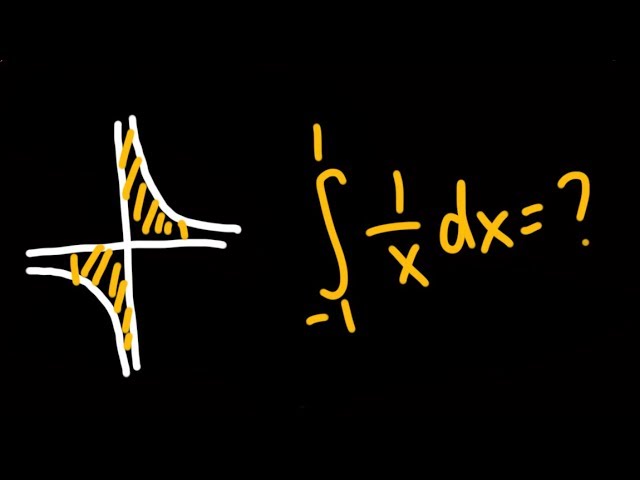
The debate of the integral of 1/x from -1 to 1. Is this zero or divergent?
My follow up video: "NO MORE DEBATE" https://youtu.be/b7WUupyMXJk
note: the "a" in the property I wrote in the video has to be finite
i.e. Integral from -a to a of an odd function is 0, where the ...
but from what I've learned it is
muted granite
@fleet yew thanks
 frozen needle
you shouldn't take this channel too seriously x')
willow bear
bprp lmfao
willow bear
imagine thinking bprp would ever be rigorous
astral mountain

 rigid beacon
yea it isn't not continuous at x=0 @astral mountain
astral mountain

frozen needle
0 isn't even in the domain, the continuity at 0 isn't a subject of discussion to have
what you can say though is that however you extend the function at 0, the extension won't be continuous at 0
patent beacon
You can integrate functions that have discontinuities. sin(x)/x comes to mind
But 1/x isn't integrable, asking about an integral over x = 0 makes no sense
 fallen crane
Can anyone help me figure this out?
I know that it is just trial and error, but I am trying to look for a quicker method than just going through all my plausible options, because I want to keep my work neat
Also, I need to know how to do it using the matrix/box method, so if anyone know hows to use the box method, that would be great 🙂
patent beacon
Far from trial and error, though it may seem like it. Try the form:
ax + by
fallen crane
Wait, what do you mean?
fallen crane
The questions says that we have to figure out what A and B are though
patent beacon
This gives you this system:
3a = A
4a + 3b = -6
4b = B

 fallen crane
hol up
ive been trying to do it now with the system
but im still a bit confused
Which numbers would I input and how would I show where I got those numbers from?
willow bear
your system is underdetermined. it does not have a unique solution.
fallen crane
How would I figure out the equation?
willow bear
you can't
fallen crane
I asked my teacher, and he said that there is an answer and that it is not undetermined
willow bear
there are some things left unstated here
a lot actually
is it implicitly assumed that the coefficients have to be integers or what
fallen crane
yes
willow bear
even then there will be infinitely many solutions
like (a,b) = (3, -6) or (a,b) = (6, -10) or (a,b) = (9, -14) etc...
,w expand (3x+4y)(3x-6y)
obsidian monolithBOT
 Requested by Ann#0413
willow bear
Requested by Ann#0413
willow bear
,w expand (3x+4y)(6x-10y)
obsidian monolithBOT
Requested by Ann#0413
willow bear
,w expand (3x+4y)(9x-14y)
obsidian monolithBOT
Requested by Ann#0413
willow bear
so there are at least 3 possible solutions
how's one meant to know which one your teacher had in mind?
fallen crane
He said that any is fine, but preferably the one that has the most simple numbers
like this one
 harsh heart
hmmm
willow bear
so...
harsh heart
i think i know
willow bear
okay so you were given a problem without a unique solution.
that's fine i guess.
the wording made me think a unique sol was expected tho.
fallen crane
ya I see how it can be confusing, my teacher has kind of a repuation for poorly wording his questions
anyways, how would I show my work in figuring out this equation?
novel dirge
I need some help with probability again
watched the Khan academy lessons, but got stuck trying to do more difficult problems
lost mesa
ask
novel dirge
if we randomly pick 5 numbers from a lottery with 50 numbers, what are the chances of getting numbers 7,13 and 33?
I thinkI can start by getting 5C50
novel dirge
or is it marked with K?
I think it is supposed to be combinatorics
but Idk if I should even do that
willow bear
nCk is for combinations
"combinatorics" is the name of the entire field of mathematics
anyway
willow bear
does the order of numbers matter
novel dirge
it is a lottery
willow bear
is 1, 2, 3, 4, 5 a different outcome from 5, 4, 3, 2, 1
willow bear

novel dirge
just my guess because it is a lottery and lotteries usually take order into account
we didn't really go over this with our teacher, just got the basic formulas for combinations, permutations and variations
but now Idk if I even have to use that for this problem
if it was just to get chances of taking those 3 numbers from 50, I could just write 3/50 and get it
but here, I am not sure what to do
willow bear
it really depends on how the lottery works
novel dirge
lol
@willow bear what I wrote is the entire problem/question
it is nowhere stated how the lottery works
lost mesa

novel dirge
and her explanations just confuse me even more
I already ranted about her here a few times
but to shorten the story, she is doing everything she can to mess with us
novel dirge
gives us just some definitions and tells us to do homework
lost mesa
that way, there's no room for a wrong answer if you get both of them right
novel dirge
now after several homeworks, she told us she is going to grade it
lost mesa
talk about shitty teaching damn, sorry man
novel dirge
and even worse is that she is our class teacher( Idk if that is the right translation)
but that aside, how do I approach the problem?
even if I use permutation and combination to get 5 out of 50
how do I get the other 3 numbers out of that?
lost mesa
i can't really help u rn, im a bit busy so i can only pop in here and there
novel dirge
np
lost mesa
sorry
novel dirge
don't worry
I'll just wait here until somebody answers
honestly, I am kinda ashamed that I have to bother strangers to explain something to me that should be basic and easy to understand
novel dirge
yes
tardy ridge
whoops sorry
novel dirge
What is the probability that by drawing 5 numbers on a lottery which has 50 numbers in total, we will get numbers 7,13 and 33?
tardy ridge
ok assuming by 50 numbers, she or he means from numbers 1-50
so lets say you have drawed your desired numbers, 7 13 and 33
there are 47 choose 2 ways to draw the other two random rumbers
and there are 50 choose 5 ways to draw in total
so you would do 47 choose 2 / 50 choose 5
tardy ridge
So this is actually hypogeometric distribution, you can imagine it as 3 red balls and 47 blue balls
do you know hypogeometric distribution
novel dirge
never heard of it
tardy ridge
ok i will first explain how to do the question, if you don't get it search up hypergeometric distribution and come back
tardy ridge
so you want to choose the 3 red balls and 2 of the 47 blue balls
novel dirge
why are we first looking for the 3 numbers?
instead of 5
just seems a bit counter intuitive to me
not saying it isn't right, just that I want to understand the logic behind it
novel dirge
ok
tardy ridge
so you want 3 red balls (or 33, 7 and 13) and 2 blue balls
since you are choosing 5 balls in total, even if you get all 3 red balls, you will still have to fill in the two spots with non - red balls (or blue balls)
so 3 choose 3 ways to pick the three red balls
and 47 choose 2 ways to pick the 2 blue balls
(there are 3 red balls in total and 47 blue balls in total)
over the total amount of ways to choose any 5 ballso
which would be 50 choose 5
so what it would be is
3 choose 3 * 47 choose 2 / (50 choose 5)
if you don't understand this part you can look at hypergeomtric distribution
novel dirge
so 3 choose 3 ways to pick the three red balls
@tardy ridge why 3 out of 3?
tardy ridge
There are only 3 red balls, and you need to choose all of them, and 3 choose 3 =1
tardy ridge
well for the sake of explanation
if you the question was worded differently
like choose 2 red balls in 5 picks and there are 3 red balls in total
it would be
3 choose 2 * 47 choose 3 / (50 choose 5)
novel dirge
so we basically divide the number of balls we want to get (the 5 ) with the total number of possibilities?
tardy ridge

An introduction to the hypergeometric distribution. I briefly discuss the difference between sampling with replacement and sampling without replacement. I describe the conditions required for the hypergeometric distribution to hold, discuss the formula, and work through 2 si...
novel dirge
thanks
in the end, we want to get the number of options that fit our conditions/ total number of options ?
tardy ridge
yeahos
tardy ridge
nice
tardy ridge
,rotate
obsidian monolithBOT
tardy ridge
well find the circumference
that thing is spinning 7200 circumferences every minute
@lucid spindleXskull
@carmine elbow
carmine elbow
Ok
 sharp marsh
How do I find tan θ = 1
lost mesa
sovling for theta?
carmine elbow
so for the circumference, do you use 2pi r^2?
sharp marsh
Degrees and radians ya
lost mesa
@sharp marsh tan(x) = C, x = arctan(C)