#precalculus
1 messages · Page 209 of 1
 willow bear
 viscid thistle
lol i don't get it
why should that be the starting position
i mean i know you put it there
idk this is a difficult concept for me
willow bear
at the start the wheel has yet to rotate so the angle of rotation is 0
idk how else to explain it
willow bear
the center of the wheel starts out at (0,R), but the position of the yellow spot relative to the center is (0,-R) at the start
willow bear
it's not explicitly marked bc the starting position of the wheel isn't explicitly marked
yknow maybe i'm not really explaining this well
viscid thistle
@willow bear idk it's also very new to me and i am very dumb either way so it doesn't help
parametric equations new i mean
willow bear
what have i told you about self deprecation
viscid thistle
@willow bear well it's true tho if you look at like terrance tao he knew this stuff at like 10 years old
willow bear
don't compare yourself to terry tao lmao
i mean ig if you wanna wallow in self pity and nothing else then go right ahead
like there's obv gonna be giants better than you
or me
willow bear
it's not a good use of your time
to like. compare yourself to one particular math giant and always end up concluding that you're nothing compared to them
viscid thistle
well
how do i get better at parametric equations
they are so overwhelming
do you have any resources
willow bear
not that i can think of rn
viscid thistle
no hope
willow bear
??
 odd helm
I’m not sure where I went wrong how should I set this problem up?
odd helm
<@&286206848099549185>
 fleet yew
@odd helm looks right
odd helm
But when I do tan(15) I get a decimal and if I divide 18810 by a decimal it’s going to get bigger
fleet yew
Are you in degree mode
Also it should be a decimal
The horizontal distance IS greater than the vertical distance
Because the angle is less than 45
odd helm
Ah I see now thank you
odd helm
Where did I go wrong?
 rigid sun
your angle is on the wrong side
when you're walking and someone tells you to look at something, are you looking strait at the ground and then tilting your head up?
obviously not
so when someone says, "look up!" or "look down!" it obviously means that you were looking forward to begin with
fleet yew
Angle of depression is the angle below the horizontal
 cedar cosmos
$5x+1$
 obsidian monolithBOT
charlestang06:
viscid thistle
Hi I need help with this easy problem, I have no idea why its wrong
viscid thistle
Ohhhhh
I meant 2
Omg i wrote it in paper 2 but on the website 8
Fuck it happens to me everytime
I am blind
Thanks a lot ^^
 scarlet sky
Hello
I was wondering if someone could help me on ellipses and hyperbolas ?
<@&286206848099549185>
 uncut mulch
!15m
Ask the actual math question first. If its unanswered after 15m THEN you can ping helpers once
 regal gorge
Can anyone recommend study sites for precalc
I’m confident inThe classroom but keeping up on it by myself is hard
So I’m looking for a good alternative support
 patent beacon
Here is a set of notes used by Paul Dawkins to teach his Algebra course at Lamar University. Included area a review of exponents, radicals, polynomials as well as indepth discussions of solving equations (linear, quadratic, absolute value, exponential, logarithm) and inqualit...
Paul's is seriously one of the best. Everything below calc is there
 harsh cipher
Question
I'm asked to sketch Cos^2x + 2cosx -1 = 0.
If i put in the following equation in ti 83 calculator
cos(x)cos(x)+2cos(x)-1
i get the same graph as putting in the -1 in a new equation
it means the same thing right?
patent beacon
Maybe you were asked to sketch
cos²(x) + 2cos(x) - 1?
Including the = 0 fixes the value of x
scarlet sky
Wait why did my picture get deleted
harsh cipher
yes that's the equation
ok let me put in y2 = 0
no I'm getting this weird graph that has a straight line pi to 3pi/2
patent beacon
,w graph cos(x)^2 + 2cos(x) - 1
obsidian monolithBOT
 Requested by Kaynex#7520
harsh cipher
Requested by Kaynex#7520
harsh cipher
yea I have that weird straight also
maybe I'm right
weird straight line but I guess that's because of the 2x
2cosx omg can't type today
harsh cipher
@patent beacon thanks
 keen sigil
could someone please explain how i'd do a question like this?
A rectangular hyperbola has centre (0,0) and vertices on the y-axis. If (5,7) and (10,k) are points on the graph of the hyperbola, determine the value of k.
 ripe wasp
and
obsidian monolithBOT
Yugito Abyss:
willow bear
no
first off, bad tex.
second, even disregarding that, these conclusions are not valid
not at the surface, anyway.
ripe wasp
I see, and i was gonna question if those were right or not
willow bear
ok well
TECHNICALLY, for THIS PARTICULAR EQUATION, these conclusions actually do happen to be correct. HOWEVER, stating them like this is, at best, unjustified and obscure.
ripe wasp

I am here to myself ask WHy this works
cause i don't understand
its in one of my class notes
and i so confused why teacher did that
willow bear
your teacher did that???
ripe wasp
yeah
willow bear
excuse me what the fuck
i mean
can you like. take a picture or screenshot of your teacher's work
bc honestly that's not something i would even think to do even on a bad day
ripe wasp
Can't rlly its in my notes
and maybe its correct

i mean it does look absurd
but then again as you said it works out to be true
willow bear
i view it as an accident more than anything
ripe wasp
Well, i can neither confirm nor deny whether it was an accident or not
Oh and it is given that x lies in the range 0 to pie/2
willow bear
pi, not pie
 ripe wasp
Hm actually i only presented the thing after this, so i was confused myself, sorry lol
willow bear
it'd help if you presented the problem in its entirety exactly as it was stated to you with all details included and everything written out verbatim and word-for-word
ripe wasp
I will do that from now on, thanks
odd helm
I’m not sure what I’m doing wrong I chose 15 and 13 as my answers because when I plugged them in for B I got a number greater than one so there can’t be any inverse sin so no solution
uncut mulch
,w solve 0 < 18sin(75deg)/x < 1
obsidian monolithBOT
 Requested by ramonov#0921
uncut mulch
Requested by ramonov#0921
uncut mulch
,w 9/2 * (sqrt(2) + sqrt(6))
obsidian monolithBOT
Requested by ramonov#0921
uncut mulch
those seem correct
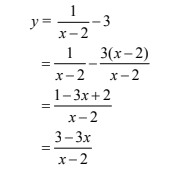 uncut mulch
because whoever did that is bad at math
 proud jetty
00f that was on my schools website for answer key
how would u do it?
turing it into p(x)/q(x)
harsh cipher
Hello
Question
for 2sin^2x + sinx -1 = 0
What is the general solution?
I tried graping but my general solutions are
0.52+ 2pi n, 2.62+2pi n , 4.71 + 2pi n
answer says its pi n not 2pi n
 valid violet
It's quadratic in s=sin x so you can write it as 2s²+s-1=0
 worn prairie
using the quadratic formula, s = -1 or 1/2. So since arcsin(-1) = pi, i would guess that's why pi showed up as the answer
harsh cipher
ok
one more question
this question....if you divinde 0 by root 2
we are left with cos^2 x - cos x=0
to get cos x (cos x -1 ).
how can we have pi/4 and 7pi/4 as our answer
I only got pi/2 and 3pi/2
I mean how can we just create root 2 back in to our equation when solving for cos x -1=0

harsh cipher
we're solving for the exact value here
 clever inlet
You definitely did not divide correctly
 stark ivy
you get cosx(root2cosx-1)
harsh cipher
ok..i tried to lose the root 2 first
stark ivy
thats where you went wrong
stark ivy
yeah
harsh cipher
so you take out cos theta
stark ivy
sqrt2cosx-1=0
harsh cipher
from both
stark ivy
and cosx=0
harsh cipher
thank you both
 lost mesa
depends on the calculator
basically, you plug them into your calculator on a list, then plot a regression
viscid thistle
TI-83?
lost mesa
https://www.dummies.com/education/graphing-calculators/compute-a-regression-model-on-the-ti-83-plus/

Regression modeling is the process of finding a function that approximates the relationship between the two variables in two data lists. To compute a regression model for your two-variable data on the TI-83 Plus, follow these steps: If necessary, turn on Diagnostics. When the ...
valid violet
are you trying to find the best fit line or to find an exact n-1 degree polynomial that goes through n points?
I dont know if the ti83 can do best fit quadratic or cubic etc
 leaden stratus
How can I verify this identity?
willow bear
what have you tried
leaden stratus
I tried to write that tan as sin/cos @willow bear
willow bear
uh huh
leaden stratus
Wdym
willow bear
i mean
okay
you did that
did it also occur to you to write cos(α - 3π/4) in the denominator as -cos(α + π/4)
and perhaps do a similar trick with the cosine on top except differently
willow bear
wrong parenthesis placement.
anyway
this should bring you closer to establishing that the right hand side is equal to sin(α + π/4)/cos(α + π/4).
leaden stratus
Yeah but why the denominator becomes -cos (a+pi/4)
willow bear
because i CHOSE to apply the identity cos(x-π) = -cos(x).
leaden stratus
Ohhh that's why
But -cos(x) isn't also cos (x+pi)?
But in that way it won't become pi/4 🤔
@willow bear
willow bear
But -cos(x) isn't also cos (x+pi)?
did i say it wasn't?
when someone says 3+4 = 7, do they in saying so deny that 2+5 = 7?
willow bear
the way you worded it made it sound as if what i said made you believe cos(x+π) = -cos(x) was false
willow bear
anyway, another identity that might come in handy here is cos(x + 3π/2) = sin(x)
leaden stratus
-sin(x) = cos(x+pi/2), right?
willow bear
what exactly do you have rn
willow bear
as cos(α + π/4 - 3π/2) perhaps
leaden stratus
But 3/2pi is an associated angle
I would do an associated angle of an associated angle O_O
willow bear
,,,,what
willow bear
alpha + beta + 30° = 180°
 sturdy haven
I used geometric series
sturdy haven
But it is asking how much money you will have after 5 months
sturdy haven
You are adding up all the money for a total
viscid thistle
it never says that
it says your money doubles
which i assume means multiplying by 2 every month
sturdy haven
In problems involving money how do you know when to use series or explicit formula?
 astral mountain
does 1/sqrt(x) have a vertical asymptoot ?
viscid thistle
yes
harsh cipher
Hello
Question
2cosx -3 = 0
there is no solution for the above equation?
agree?
whereas cosx +1 = 0
x = pi
agree?
lost mesa
agree for both
harsh cipher
thank you
viscid thistle
For 2cos(x)-3=0, you would have cos(x)=3/2 which is greater than 1, therefore, outside the domain of cos(x). This means there are no solutions to the equation. For cos(x)+1=0, cos(x)=-1, x=pi is your solution in (0,2pi) but you're general is pi+2pi(n)
harsh cipher
yes and in degrees it would be 180+ 360(n)
viscid thistle
yeah
 tender knoll
Hello!can someone please help me with this question
This is what i got and i just dont know how to get rid of the x....
 tender knoll
Thats where i get stuck on, i thought if i expand (1-x)ln4 it becomes division
 stuck lark
a(b+c)=ab+ac
stuck lark
very naisu 
stuck lark
i actually don't get how (1-x)ln(4) led to ln(4)/(xln(4))
fleet yew
No it makes sense
stuck lark

harsh cipher
Hi
2Cotx + root 12 = 0
cot x = -root 3
I couldn't figure this one out on my own
tender knoll
Nicenice
sturdy haven
If there is a question that says the population of rabbits on an island is increasing at 4% and you start with one thousand
Then in the first year do you start with one thousand or 1040
willow bear
the population is 1000 at the beginning of the first year and 1040 by the end
sturdy haven
So how would you find the fifteenth year
willow bear
what do you mean by "find the fifteenth year"
do you have the problem you're looking at, EXACTLY AS IT IS STATED
sturdy haven
The population
willow bear
VERBATIM and WORD-FOR-WORD
since apparently using one of this pair of synonyms fails to get the point across most of the time
do you have the exact problem statement?
sturdy haven
Yes
willow bear
then post it
sturdy haven
The population of rabbits on an island increases annually at a rate of 4%. If the starting population is 1000, what will be the population in the 15th year.
willow bear
okay so this is kind of ambiguous but i would assume they mean "if the starting population is 1000, then what will the population be 15 years later"
i.e. 1000 * 1.04^15
willow bear
well, there is a quick and easy way to sum all the numbers from 1 to n
sturdy haven
N/2(a1+an)
willow bear
yknow what fuck it i'm too tired to tell you that capitalization matters and also that you should be more careful about notation in general
willow bear
you're asked to solve n(n+1)/2 = 465 for n.
willow bear
you're told that there is no phase shift. so the equation for the temperature can be written down as $T(t) = T_0 + A \sin(kt)$, where $A, k$ and $T_0$ are parameters to be determined from the information you have
obsidian monolithBOT
Ann:
willow bear
you're told that the period of this function is 16, from which you can find k, and that the low is 37° while the high is 40.4°, so you should know the amplitude (A) and the vertical shift (T_0)
valid violet
@weak fractal rectangles have equal opposite sides
and all those expressions can be simplified by factoring and cancelling things
 weak fractal
@valid violet ty
viscid thistle
,rotate
obsidian monolithBOT
proud jetty
o.O
viscid thistle
can you make an equation with that data
proud jetty
idk probably
obsidian monolithBOT
mop:
proud jetty
im kinda confused?
viscid thistle
so $f(x)=\frac{2-k}{5x+k}$
obsidian monolithBOT
mop:
viscid thistle
then $f(3)=\frac{2-k}{5(3)+k}$
obsidian monolithBOT
mop:
viscid thistle
right?
proud jetty
yea I did that much
proud jetty
15?
viscid thistle
it's in the q
proud jetty
go on?
proud jetty
the y value?
uncut mulch
\frac{numerator}{denominator}
uncut mulch
what do you mean 2 unknowns?
as your bad tex implied earlier, f(3) = -2/19
$f(3)=\frac{2-k}{5(3)+k} = -\frac{2}{19}$
obsidian monolithBOT
ramonov:
uncut mulch
right?
proud jetty
yes
but like in this case the values of k is same right?
which happens to be 4
;O
tf i was solving it like u slove for x
valid violet
When you use the same variable for than once in the same expression then they're all.the same variable
More 4than
proud jetty
ic i couldn't solve cuz I didn't know how i would slove for two x
valid violet
And you can solve for k that would work if you didn't see the solution by inspection
(x+3)/(2x-1)=19
You can have things like that
uncut mulch
,rotate
obsidian monolithBOT
proud jetty
12
uncut mulch
cross multiply
fleet yew
with the stipulation that x cannot be -2 or -9
harsh cipher
Question if anyone is awake
I cannot solve this problem.
I almost did but went wrong somewhere towards the end.
Let me explain where I got stuck.
So I use the conjucate for the left equation and arrive at
Sec^2x -1/ Sin^2x (secx-1)
why am i not getting 1-cosx in the denominator

uncut mulch
consider: factorising the numerator
harsh cipher
ok let me try that
uncut mulch
of the original
uncut mulch
uh to be more specific, take out a factor of sec(x)
uncut mulch
$\sec(x) \cdot \br{\frac{\sec(x) + 1}{\sec(x)}} = , ?$
obsidian monolithBOT
ramonov:
harsh cipher
secx+1
harsh cipher
2secx
uncut mulch
how are you getting 2sec(x)?
harsh cipher
tbh I dont know
uncut mulch
$\frac{\sec(x)}{\sec(x)} + \frac{1}{\sec(x)} = \ ?$
obsidian monolithBOT
ramonov:
harsh cipher
1+secx/sec x
obsidian monolithBOT
ramonov:
harsh cipher
1
uncut mulch
$\frac{1}{\sec(x)} = \ ?$
obsidian monolithBOT
ramonov:
uncut mulch
no
harsh cipher
1/secx
harsh cipher
cosx
harsh cipher
yes
uncut mulch
and that's the hard part done
applying 1-2 simple identities should get you what you need
LHS = $\frac{\sec(x)(1 + \cos(x))}{\sin^2(x)}$
obsidian monolithBOT
ramonov:
harsh cipher
LHS should be Sec^2x -1.....
harsh cipher
okay
uncut mulch
and then consider:
sin^2(x) + cos^2(x) = 1
uncut mulch
did you manage to get it?
uncut mulch
ok i'll put stuff in spoilers for when you wake up
harsh cipher
tyty!
uncut mulch
|| sin^2(x) + cos^2(x) = 1|| → ||sin^2(x) = ?||
consider: ||a^2 - b^2||
 warped swift
uncut mulch
warped swift
uncut mulch
$-\ln(3) = \ln(3^{-1})$
obsidian monolithBOT
ramonov:
 winged cloak
What does it mean if E is in symmetrical relation with V?
willow bear
context?
willow bear
no, can you show like
the text where you saw that phrase
and maybe check if it's defined elsewhere
willow bear
on donne la définition de «E est une relation symétrique» en bas
c'est pas «E est en relation symétrique avec V» comme suggèrerait la façon dont tu l'as dit en ang
winged cloak
Donc en gros v1,v2 c est la mm chose que v2, v1 ?
willow bear
en gros, on fait pas de distinction entre une arête de v1 à v2 et une arête de v2 à v1
winged cloak
Et une partie de VxV ça voudrait dire quoi alors ?
willow bear
une... partie... c'est à dire un sous-ensemble
winged cloak
Donc c possible pr un graphe orienté pour un x on est plusieurs v ?
willow bear
mon dieu tes messages sont beaucoup trop difficiles à lire avec tout ce langage sms
winged cloak
Pardon 😥
winged cloak
On a un sommet x qui fait partie de l ensemble V
willow bear
oui
winged cloak
Oui j aurais mieux fait de l appeler v
winged cloak
Et donc si on a un sommet v et les arêtes qui font partie de VxV ça veut dire qu on peut avoir plusieurs arêtes Pr un même sommet ?
winged cloak
Oui j ai changé
willow bear
V majuscule c'est l'ensemble de TOUS les sommets
v minuscule désigne habituellement un des éléments de V, c'est à dire un sommet
VxV c'est l'ensemble de toutes des couples de sommets
couples ordonnées
winged cloak
Oui je sais je sais ds le cas d un orienté
Mais est ce qu'on peut dire la même chose Pr un non orienté en parlant des E ?
Je sais que ma question a l air un peu stupide mais J essaie de comprendre
Non OK g compris merci de ta patience👌
tender knoll
Hello can someone help mewith this
I dont get how to get x fromthis
I tried to get everything to base 5 so i can just make the exponents as the equation but its not working with -100
And in the answer sheet it says: 1/2
uncut mulch
a^(b+c) = a^b*a^c
 maiden blade
Doing ln(-100) and using log laws is not permitted
uncut mulch
log does work like that
tender knoll
Ohh
tender knoll
Then i can only chnge base to get answer?
uncut mulch
log isn't linear
consider applying what I posted above
uncut mulch
consider simplifying the left side first
tender knoll
Would it be this?
uncut mulch
that's a good start
uncut mulch
log(a) + log(b) \neq log(a + b)
tender knoll
So i do need to add log or something?
tender knoll
What indont get is how 5^(4x+1) can equal to 5*5^(4x)
uncut mulch
a^(b+c) = a^b*a^c
tender knoll
So this kind of question is ok to make + into * without adding ln or log?
Cuz in class we always added them
uncut mulch
added what ?
wdym turning + into *?
tender knoll
The 4x+1
Into *
I get that if thee was ln infront i’d do that
But i never knew u can do that without it
uncut mulch
- doesn't "turn" into *
tender knoll
Oki so if the exponenet is polynomial of a number
I can just change it into that form alwqys?
Not using ln ?
uncut mulch
the:
a^(b+c) = a^b*a^c
exponent law is applied to get
5^(4x + 1) = 5^(4x) * 5
tender knoll
Okii
uncut mulch
and you have a decent knowledge of that
tender knoll
What if it was 25^(4x+1)?
uncut mulch
just because it's a question supposedly in the log section doesn't mean. you should chuck log at it directly
uncut mulch
if you want tto
tender knoll
Then 25^(4x+1) turn into 5^(8x+2)?
uncut mulch
yes.
tender knoll
Ah icic
When i see an exponent with number outside of term idk what to do, but now i know we can just distribute like normal right?
uncut mulch
can you show what you're doing by continuing with the original question
uncut mulch
nope.
tender knoll
Am i allow yup knew i was wrong
uncut mulch
you just implied that
5^(4x+1) = 5^(8x)
tender knoll
Oh
uncut mulch
note that both your terms have 5^(4x) in them
uncut mulch
$5^{4x} -5 \cdot 5^{4x} = -100$
obsidian monolithBOT
ramonov:
tender knoll
uncut mulch
you can use a substitution if you want
(but not necessary)
tender knoll
Oh
Oh soafter i change 5^(4x+1) to (5^4x) and (5^1)
I should just treat those like its own body?
uncut mulch
weird wording
tender knoll
And cuz its multi i can move that 5 over?
Yea i dont really know the terminology
Oh
uncut mulch
u*5 = 5u
is applying the commutative property of multiplication
tender knoll
uncut mulch
yeh that works
uncut mulch
np
tender knoll
Is it illegal if log(-#)?
It always has to be positive?
It says to find the domain for this function
uncut mulch
when dealing with real numbers, it(#) needs to be greater than 0
uncut mulch
are there any other situations when
(x+5)/(x-7) is positive?
tender knoll
It doesn’t say if it is pos or neg
tender knoll
Oh yea i just put that there instead of writing and
uncut mulch
firstly what are the intersections of
(-5, inf) AND (7,inf)?
uncut mulch
not U
uncut mulch
not for what you have atm
we'll get to that
tender knoll
Ok
uncut mulch
for this case it should be: $(-5,\infty) \cap (7, \infty)$
tender knoll
I just do t get which direction i need to set < or >
obsidian monolithBOT
ramonov:
willow bear
ram
are you sure log_10( (x+5)/(x-7) ) is undefined for values like x=-100
bc that's what you seem to be saying
uncut mulch
"it" was referring the the # which was meant to represent the argument
tender knoll
The case u mean by my numebr line graph?
Oo
Do i actually need to test this before coming with solution
uncut mulch
there are two cases when the inside is positive,
- when both the numerator and denominator are positive
- when both the numerator and denominator are negative
currently you are working on 1.
and what are the common set of values when you draw (-5, inf) and (7,inf) on the number line
viscid thistle
Yo
uncut mulch
that works
viscid thistle
uncut mulch
where are you stuck?
viscid thistle
30
uncut mulch
what have you tried?
 violet quail
how do i solve for x?
harsh cipher
Question
I used 9pi/12 and 4pi/12 to simplify and arrived at the answer
root3+1/ 2 root2
Answer key says root3 -1 for the numerator
hmmmm
question is for a)
question is, is it negative sin or positive sin because its 3pi/4. Reference angle is pi/4
sin is positive in quadrant 1 and 2
 remote veldt
@violet quail x = 0 is clearly a solution. Consider the graphs of ln(1 - x) and x - x^2/2
To the left of x = 0, ln(x) is strictly decreasing and x - x^2/2 is strictly increasing. See what you can draw from that - is it possible for them to intersect to the left of x = 0, if one function is going down, and the other is going up?
ln(1 - x) is not defined for x >= 1. So, the other place you need to check is (0, 1). You'll notice that ln(1 - x) is still decreasing in this interval, while x - x^2/2 is increasing. Same question - if they're equal at x = 0, one graph is going down, and the other graph is going up, is it possible for them to intersect again?
Once you address those cases, you have a solution, and you have whether or not there are any other solutions
@harsh cipher are you sure you used the formula correctly? yes, sin is positive in Q2, but keep in mind, the formula has a subtraction sign
violet quail
can't i just solve it algebraically somwhow?
harsh cipher
Yes I did
Because it has a negative sign
We can change the signs later when writing the answer.
(1/root)(1/2) - (1/root2)(root3/2)
Same as root3-1/2 root2
remote veldt
@violet quail short answer? not at the level you're working at
 pale bison
yes that's how you can apply the sum and differences formula
harsh cipher
okay I'm trying my new method if I can solve as tan(pi/6 - 3pi/4)
it's prob the same as writing alpha and beta as pi/4 and pi/3
i mean the answer should be the same but I just couldn't solve with ratios that were used for pi/6 and 3pi/4
pale bison
break it up into sine and cosine
harsh cipher
well the video lesson had instructions to solve using trig ratios
and to simplify and use rationalizing fractions to further simplify
harsh cipher
cool
tender knoll
U dont have answer key?
tender knoll
Yup
harsh cipher
oh
harsh cipher
this problem took me 1hr+
LOL
i got it now though
Free factor calculator - Factor quadratic equations step-by-step
harsh cipher
hahaha
harsh cipher
Question
Question 5a)
my answer was 0
answer key is (2-2root10)/9
because I'm sure 2root10/9 - 2root10/9 - 0
oh no i got it wrong
viscid thistle
@harsh cipher you still need help?
@harsh cipher you use the pythagorean identity to get sin^2 A + cos^2 A = 1 and sin^2 B + cos^2 B = 1. then you can solve for sin B to get sin B = sqrt(1 - cos^2 B). and you know cos B, which is 2/3, so sin B = sqrt(1 - 4/9) = sqrt(5)/3.
doing the same with cos A, you get cos A = sqrt(1 - sin^2 A) and you know sin A = 1/3, so cos A = sqrt(8)/3.
using the angle addition identity, you have sin(A - B) = sin A cos B - sin B cos A, substituting in known values you get sin(A - B) = 1/3 * 2/3 - sqrt(5)/3 * sqrt(8)/3 = 2/9 - sqrt(5)/3 * sqrt(8)/3 = 2/9 - sqrt(40)/9 = (2 - 2sqrt(10))/9.
i might've made a mistake since i typed it out on the computer without a piece of paper to check my work but hopefully that's correct
see if you can do the second one from there.
viscid thistle
Can somebody help me. Book answer is 2sin(a). But whatever I try, simply cant get there
willow bear
consider that tan(a/2) = sin(a)/(1 + cos(a))
 serene heath
?
 viral trail
I can figure it out by using limit h ->0 of f(x+π/2 + h), but how can I find the limit without changing to variable h?
I can't simplify 1 - sinx
willow bear
do you mean without using the substitution h = x - π/2
i mean ig you could like... write 1 - sin(x) as 2sin^2(x/2 - π/4)
kinda meh tho
viral trail
Thank you
 blazing raven
Just for practice / thought (algebra II / Trig / limits / other)...
Which TWO of the following graphs are the same:
f(x) = sin(x)
f(x) = (x sin(x))/x
f(x) = ((x+1) sin(x))/(x+1)
f(x) = ((x^2+2x+1) sin(x))/(x^2+2x+1)
(inspired by an AMC problem)
 uneven dawn
I dont even know what to search online to find a tutorial?
if anyone even knows what this type of problem would be called that would help a ton. on my exam in a couple hours and i have no clue what it is
 dim jungle
viscid thistle
dim jungle
viscid thistle
I have to solve this vector application and i just don't understand where to even start tbh
patent beacon
5 miles west:
(-5, 0)
4 miles southwest:
(-4/√2, -4/√2)
Add the vectors together to get the vector displaying where she is now:
(-5 - 4/√2, -4/√2)
That much make sense? @viscid thistle
This approximates to (-7.828, -2.828)
viscid thistle
do you add those two numbers up ???
 shy briar
herro
viscid thistle
hola
shy briar
If a scientist mixed 10% saline solution with 60% saline solution to get 25 gallons of 40% saline solution, how many gallons of 10% and 60% solutions were mixed?
😦
me no understand how to do
viscid thistle
sorry i'm dumb asf so im not helpful 😅
shy briar
the basic rule for doing this is you need to have atleast two variables and have it like (Let: x=(something) and y= (something))
but its too hard
😡
patent beacon
@shy briar
Heyo. Let x be the gallons of 10%, let y be the gallons of 60%. You can make two equations with x and y.
shy briar
thanks
i already got someone else to solve it
tho
i got another equation tho
An investor who dabbles in real estate invested 1.1 million dollars into two land investments. On the first investment, Swan Peak, her return was a 110% increase on the money she invested. On the second investment, Riverside Community, she earned 50% over what she invested. If she earned $1 million in profits, how much did she invest in each of the land deals?
fleet yew
@shy briar still need help with this?

 stuck lark
$\trig$
obsidian monolithBOT
RokettoJanpu:
 tawny nacelle
 stuck lark
custom command
 harsh cipher
this is so lame.
no where in the lesson they taught about double angle identity for tangent
for sum and difference they did.
not for double angle identities.....
wtf?
harsh cipher
can someone check my work please
1/2-cos^2 3x
write as single trig identity
i got 1/4 cos 6x
answer key says -1/2 cos6x
oh nm
viscid thistle
why is that image so large lol
you can't even zoom in without making one identity the size of your whole screen, jeez
patent beacon
@stuck lark
Can I make a custom command like that? Where can I learn?
pale bison
\newcommand{\newcommand}{nou}
willow bear
that wouldn't work
you'd have to use \renewcommand to override an existing command definition
pale bison

patent beacon
I guess I'll Google the details, then
pale bison
like, if you do \newcommand{\RR}{\mathbb{R}}
then whenever you type /RR, it's gonna get replaced with \mathbb{R}
viscid thistle
Could anyone explain how she got this out of 5 in the fraction?
willow bear
0.8 = 4/5
willow bear
you have these equations
can you solve for P(H) and P(T)
i want a "yes", a "no", or a "let me try"
willow bear
okay, can you show your attempt then?
viscid thistle
and that's where the 5 comes from
viscid thistle
i am
willow bear
$\begin{cases} x = 4y \ x + y = 1 \end{cases}$
obsidian monolithBOT
Ann:
willow bear
would you be able to solve this system of equations for x and y
it's really not rocket science. i'm sure you can do it. just don't overthink it.
viscid thistle
yeah i can, but i think it's simpler than that. it's a probability equation and i know that it has to equal to 1. knowing hte sample size in this example would be {TTTTH}, that's where the 5 would come from
correct?
willow bear
man your wording
but i mean
how's this system of equations not as simple as it gets
like you can just
susbtitute the first eq into the second
get 4y + y = 1
or 5y = 1
and there's your five that you were confused about the origins of
viscid thistle
lol i know. i wanted to make a picturable sample size. it's easier to solve probabilities when u can envision it.
for me, at least.
 undone pawn
oh
viscid thistle
I'm suck at how she got 33 and 11
I figured out the example I posted on top, but I can't quite get to a destination here..
willow bear
P(2) = 2P(1)
P(3) = 3P(2) = 6P(1)
P(4) = 4P(3) = 24P(1)
P(1) + 2P(1) + 6P(1) + 24P(1) = 1
33P(1) = 1
it really is just that
@viscid thistle
viscid thistle
Oh...
Right
I'm stupid
System of equations it is
Like you said
at the beginning.
Thank you
harsh cipher
I have a question
finding non-permisssble values for the below equation.
sec x/1-sinx
1/cosx cannot equal 0
sinx cannot equal 1
willow bear
did you mean $\frac{\sec(x)}{1-\sin(x)}$
obsidian monolithBOT
Ann:
harsh cipher
yes
willow bear
what did i say on multiple occasions about parentheses
anyway, it's cos(x) that cannot equal 0
1/cos(x) can never equal 0 anyway
harsh cipher
oh yes you're right about the numerator
can you please repeat what you said about parentheses. I'll make a note
willow bear
they are required when writing fractions in plaintext, because order of operations is a thing no matter how much you might wanna forget about it
obsidian monolithBOT
Ann:
harsh cipher
correct
willow bear
yeah so
obsidian monolithBOT
Ann:
harsh cipher
ok so I must write (secx/1)/(1-sinx)?
harsh cipher
ah okay
let me explain my thought process for the question.
for the numerator cos x cannot equal 0. So pi/3 and 3pi/2.
pi/2
and the denominator 1-sinx I got pi/2
willow bear
are you asked to do this on [0,2pi] or on the entire number line
harsh cipher
Yes


 harsh cipher
0<equal to theta and less than 2pi
harsh cipher
yes
harsh cipher
yes I didnt carefully read your question
willow bear
okay so [0, 2pi] then
harsh cipher
yes
harsh cipher
pi/2, 3pi/2 for the numerator. pi/2 for the denominator.
willow bear
no
harsh cipher
okay
willow bear
your final answer
should be
"the expression is undefined for precisely the following values of x:"
followed by the list of all such values
harsh cipher
yes answer key shows x cannot equal pi/2 and 3pi/2
willow bear
indeed
harsh cipher
so what did I do wrong?
willow bear
you failed to connect the dots between "the numerator breaks for π/2 and for 3π/2, while the denominator doesn't break but becomes zero for π/2" to "the expression is undefined at π/2 and at 3π/2"
harsh cipher
Thank you
viscid thistle
@willow bear what do I do from here?
viscid thistle
Sin(2a) + 2sin(a) = 2sin(2a)
I think. And 1+cos(a) = 2cos(a/2)^2
I can maybe cancel out the twos.
pale bison

willow bear
sin(2a) ≠ 2sin(a) !!!
sin(2a) ≠ 2sin(a) !!!
sin(2a) ≠ 2sin(a) !!!
sin(2a) ≠ 2sin(a) !!!
sin(2a) ≠ 2sin(a) !!!
pale bison
"true" for smol a
willow bear
@viscid thistle
how do you read my message saying in as direct a manner as possible that sin(2a) and 2sin(a) aren't the same thing and the immediately afterward pretend they ARE the same
pale bison
they didn't read your message duh
willow bear
it's not math it's reading comprehension
how are the words "is not" so hard to understand
i was under the impression they weren't
viscid thistle
I dont appreciate getting talked to like that.
willow bear
ok but let's get back to the point i was trying to make
sin(2a) and 2sin(a) are not the same
like. yknow
sin(2a) = 2sin(a)cos(a), if you wanted to have an identity to apply here.
viscid thistle
Oh, i see. I cant just add them together
willow bear
for the love of god please 
willow bear
and here too
willow bear
thank you
harsh cipher
my final answer is ((-2 root21)/17)
willow bear
what's your denom. is it 17 or is it 19
harsh cipher
did you get sqrt4(21)/17?
willow bear
no, i did not
harsh cipher
well that's the answer in the answer key
I looked because I had to check my incorrect answer
😛
willow bear
the correct answer is tan(2x) = 4sqrt(21)/19
harsh cipher
hmmm I got it incorrect somewhere in the end again
because I did manage to write -4sqrt(21)/38
I might've got the (-4) part incorrect as well
well I know the answer is incorrect for now.
uncut mulch
should be /17 right?
harsh cipher
lol the answer key is right?
 hard hornet
F for Ann
uncut mulch
depends on what the key actually says
harsh cipher
answer key says.......
uncut mulch
because: sqrt4(21)/17 isn't and it seems like you're misrepresenting it
harsh cipher
4sqrt(21)/17
uncut mulch
yes, that would be correct
harsh cipher
omg Ann disappointed everyone..
now...question is how the hell did the denom become 17,,,
uncut mulch
as mentioned earlier, show your steps
harsh cipher
Well I first used pythagoras to find tan(x).