#precalculus
1 messages · Page 196 of 1
 fluid shore
What do you mean? It's still under a square root.
fluid shore
Okay, don't repeat the same thing over and over again with 'domain and range'
It's under a square root
 trim fable
yes
fluid shore
When is a square root defined?
fluid shore
What's greater than 0? Be precise.
trim fable
x>0
fluid shore
Are you sure?
fluid shore
when is $\sqrt{4-x^4}$ defined
trim fable
when
 obsidian monolithBOT
Abhijeet Vats:
fluid shore
??????????
fluid shore
Okay, go and google this. Learn it properly and then do the harder problems.
fluid shore
What if $x = -\sqrt{2}$
obsidian monolithBOT
Abhijeet Vats:
trim fable
yeah
fluid shore
Is the composite function still defined?
fluid shore
You need to go and learn this a bit more carefully. Don't do the problems until you have covered the theory.
fluid shore
Yeap
I'm not turning you away, it's just that it's pointless for me to give you a 10 minute lecture on this
fluid shore
🙂
trim fable
tho

This video describes how to find the domain and range for the composition of two functions. Remember that in the composition, inputs will go through one function, then the other. This means we must make sure the first function does not produce a number that the next functio...
u know the way they did it
like mapping it out
would u say thats a better way then just graphing?
fluid shore
It looks analytical, as opposed to being graphical. Certainly sounds like a better sort of approach
It's not like you HAVE to do it that way but it's good to know how to do it that way, especially if you're doing something math-related at uni
trim fable
oh
tbh the thing is
im good at math but
i feel like with my teacher she really just
tells us what steps shes doing and not really
explaining the reasoning or like
idk i get confused with her
so i usually mess up the thinking questions
fluid shore
But those form the meat of what math is about. It's okay, there are many resources online that you can rely on. Use them to learn the material and work through the problems
trim fable
ikkk
and i love mathhh
tho ik my calc teacher would be good
coz i have him for data rn so yeah
ill be able to understand and discover more
which im excited for and ye
well cya ima work on this
fluid shore
Well continue with your work and keep the passion alive
It'll help you quite a bit in the future
trim fable
hey tho
i left 6 for now so i can focus on it tom
but for #7
there can be more than 1 answer write so is it fine that i said
that for a
g(x)=x^2
f(x)=sqrt(x+6)
@fluid shore
fluid shore
Looks correct
fluid shore
^id means identity, in case you're not sure
 languid crane
Ok
trim fable
didn't even
notice that
lol
till now
tho why is the answer 2?
@languid crane
languid crane
Well
trim fable
?
languid crane
I’m not sure what it’s asking
trim fable
same tbh
fluid shore
Well, it seems to be the case that the car is running most economically when the rate of gasoline consumption per unit time is at a minimum
 uncut mulch
not sure what you plugged in,
but if you plot c(v(x)) on a graphing program, you should observe that the is a min at x=2
trim fable
@fluid shore
i have a question
if ur there
how do u know when the data would be validif u take the range of one function and set it as the domain of another function
trim fable
anyoneee
trim fable
oh
hi
domain and range of
composite functions
so u know how u take the inner function and u set its range as the domain of the outer
im talking about that
 willow bear
what
trim fable
and checking if the values are valid
willow bear
no, i don't understand what you're talking about
trim fable
oh
one sec
like this
the range becomes the
domain of the
function
and use that to find the domain and range of fog
willow bear
ok i guess i sort of understand what you are getting at? sort of?
what is your question again
trim fable
how to
find domain and range of composite functions
i just dont know when to restrict them or
when the values of the inner would be valid in the outer
willow bear
$x \in D(f \circ g)$ if and only if $x \in Dg$ and $g(x) \in Df$
obsidian monolithBOT
Ann:
willow bear
this should be fairly self-evident
trim fable
oh
so all real
for both?
oh also question
for fog
would the domain of g(x) be the domain of fog and range of f(x) be the range of fog?
 clever inlet
Think about what function composition actually does
willow bear
no, at least not in the sense that "find the domain of this function given by a formula" questions use the word 'domain'
willow bear
the domain of f . g is a SUBSET of the domain of g, and the range of f . g is a SUBSET of the range of f
willow bear
...
trim fable
?
willow bear
maybe the first order of business would be for you to calm yourself down first
 wide niche
is this a specific review question you're working on?
or just trying to grasp a concept?
trim fable
concept
of finding the domain and range
of composite functions
using graphs like how i tied to explain^^
wide niche
ok. so tell me in english (not math-ese), what is a composite function?
trim fable
a function that idk how to explain it would
depends on be the right word
so like two different functions where one of their output would depend on the other as their input
willow bear
that kinda falls flat imo
willow bear
a composite function is what happens when you take two functions and make the output of one the input of the other
trim fable
ye
ok
ok so
can u do 6 b with me
or a
as an example
to guide me
i got a fog
but not a gof
so can we do that?
trim fable
one
willow bear
my bad didn't see
willow bear
okay
trim fable
its prob easier and i wanna get the
willow bear
let's go with that
trim fable
aww thanks thats sweet
willow bear
we proceed
willow bear
okay so 6a: we have $f(x) = 3x, g(x) = \sqrt{x-4}$ and we want to find the domain and range of $g \circ f$
obsidian monolithBOT
Ann:
trim fable
yeah
trim fable
yes
obsidian monolithBOT
Ann:
willow bear
no
willow bear
you got that reversed
willow bear
ok so as i said
willow bear
$x \in D(g \circ f)$ if and only if $x \in Df$ and $f(x) \in Dg$
obsidian monolithBOT
Ann:
willow bear
D(f) is the domain of f
willow bear
i claim that $Df = \bR$ and $Dg = [4, +\infty)$
obsidian monolithBOT
Ann:
willow bear
$g(x) = \sqrt{x-4}$
obsidian monolithBOT
Ann:
trim fable
ok
willow bear
in order for $g(x)$ to be defined, you need $x-4 \geq 0$
obsidian monolithBOT
Ann:
trim fable
yeah
tho yeah
i have a question about that
so like u know linear functions how
their d and r is always all real
so like for b
the domain was x>-1/3
whys that?
and not like all real
willow bear
we'll get to that in a moment
willow bear
...what
willow bear
=
trim fable
ok
willow bear
you should instead understand what is going on and, if you write inequalities, where they come from
trim fable
ok
willow bear
do you understand now why $Df = \bR$ and $Dg = [4, +\infty)$?
obsidian monolithBOT
Ann:
willow bear
ok great
willow bear
what?
willow bear
so can we continue now or are you gonna spew more shit and get me to validate it
willow bear
so as i said before, we need x to be in the domain of f and f(x) to be in the domain of g
trim fable
yeah
willow bear
that first condition is automatic, given that the domain of f is the whole number line
trim fable
ohh
that would be my first question
to check for
is domain of f : a whole number?
willow bear
....what
willow bear
so now our other condition is $3x \in [4, +\infty)$, or $3x \geq 4$
obsidian monolithBOT
Ann:
willow bear
or x >= 4/3
trim fable
oh
willow bear
so we get that $D(g \circ f) = [4/3, +\infty)$
obsidian monolithBOT
Ann:
willow bear
i didn't compare anything to anything
willow bear
all i worked with was the two conditions i laid out.
trim fable
uh
what about it sorry
well im just using terms my teacher uses like
she says "check if its valid"
so i really have no clue on whether on using the right terms
willow bear
h
trim fable
im really sorry if im not
willow bear
i think your teacher's wording is not good
willow bear
i mean the underlying idea is simple
trim fable
ye
willow bear
if you think of functions as input-output machines
trim fable
but like shes teaching this course for the first time soo
willow bear
anyway
trim fable
maybe thats why shes not really using correct terms idk
willow bear
okay, so i guess now we are to find the range of this thing
which really is as simple as applying the composite function to what we got as the domain
so perhaps you could graph sqrt(3x-4) in desmos
or maybe even realize that it's monotone increasing
trim fable
ok
willow bear
either way its range is $[0, +\infty)$
obsidian monolithBOT
Ann:
willow bear
what
willow bear
no look
willow bear
you already HAVE your restriction. it's the domain. [4/3, +infty). that's where x can be such that g o f is defined.
willow bear
grgh
willow bear
here lemme
willow bear
nvm
willow bear
the leftmost bit of [-4, +infty) on the second graph goes beyond the domain of g
like g(-4) is undefined for instance
trim fable
why tho
oh
coz theres
no point there?
so all points have to be
located on the
outer function?
willow bear
hurrrrrrrgh wow wording
 hexed bolt
Is there like a formula to solve these?
hexed bolt
Okay
 viscid thistle
math
 summer monolith
What is this 3(y+x)^2 doing in both parts of the equasion?
willow bear
wdym
also, it's equation, not equasion
what exactly do you not understand about what's being done here @summer monolith
willow bear
,rccw
obsidian monolithBOT
willow bear
is... that meant to be a zero
 empty fulcrum
Solve for x or y in either equation and then substitute into the other one
empty fulcrum
Also a 0 like that looks a helluva lot like an empty set tbh
willow bear
5.25?
empty fulcrum
Can I see what your work looks like?
willow bear
please don't use decimals
empty fulcrum
Must've thrown it right into a calculator
viscid thistle
Yep
empty fulcrum
You should try solving it without one
viscid thistle
Can’t
empty fulcrum
Just use straight algebra and chug through
willow bear
like hell you can't
empty fulcrum
Nah you totally can
viscid thistle
I did
viscid thistle
So?
empty fulcrum
From this point you should be able to solve for y
Then you can just throw y into the old old equation and grab x
empty fulcrum
It sounds as if we're being pushy but it's just good to get into the habit of doing it by hand
You'll get a more exact answer this way (assuming 5.25 is rounded, anyway), and instructors are gonna want to see the work anyhow
viscid thistle
:0
willow bear
also yeah don't round
empty fulcrum
Even if you do round at the end, you'll want an exact answer for when you solve for x
So you're gonna want that icky looking y value to finish the problem
 green zenith
How do I know what the range of (f+g)(x) with f(x)=x and g(x)=sqrt(x-1)?
willow bear
graphing most likely
green zenith
I know how to look for ranges from type of functions and from shifts
willow bear
or the realization that f and g are both increasing and thus so is their sum
green zenith
So in this case, we know that it is the sum of functions that are increasing so I know its going to infinity, is that right?
Are there any techniques to find the range aside from graphing?
 tawdry olive
Can someone explain factoring by grouping?
 heady harness
just the algorithm?
uncut mulch
eg
x^3 + x^2 + x + 1 = x^2( x + 1) + (x+1) = (x^2+1)(x+1)
 winter isle
how to memorize identities
i've got most of them down, but i can't remeber the pythagorean identities and which functions are even/odd
for even/odd identities
 jaunty mason
Is it true that the sum of the squares of the roots of a polynomial can be used to determined if the polynomial has complex roots?
winter isle
huh
 valid violet
let's ask professor google
willow bear
i don't think so
the sum of the squares of the roots of $(x^2+1)(x-9)$ is equal to $79$, and that alone doesn't really tell you anything.
obsidian monolithBOT
Ann:
willow bear
despite it being positive, the polynomial has complex roots
valid violet
didnt find anything useful googling
willow bear
can you show the problem exactly as stated
jaunty mason
The sum is equivalent to $\frac{b^2 - 2ac}{a^2}$
obsidian monolithBOT
Tāhā:
willow bear
can you show the problem exactly as stated
jaunty mason
where as the actual way to tell if a polynomial (at least a quadratic one) is from its discriminant
willow bear
can you show the problem exactly as stated
jaunty mason
$b^2 - 4ac$
willow bear
can you show the problem exactly as stated
obsidian monolithBOT
Tāhā:
jaunty mason
Excuse me
willow bear
can you show the problem exactly as stated
jaunty mason
bro
willow bear
can you show the problem exactly as stated
willow bear
you've not shown me the problem exactly as stated
what is given and what is asked for?
willow bear
take a screenshot of them all
jaunty mason
k
fuck this dick broke blurry camera fuck
might wanna retake a few
@willow bear
willow bear
#7?
jaunty mason
yep
willow bear
so what did you get for S_n
jaunty mason
Expects me to use S_2
willow bear
for n=1,2,3,4
...
what
it doesn't say in the question that you are expected to use S_2 and nothing else, does it?
willow bear
can you show the answer scheme
jaunty mason
Not the answer scheme but https://cdn.discordapp.com/attachments/363224154469826562/665066610264113192/20200110_103508.jpg
 jaunty mason
Yep
willow bear
yeah, that does guarantee you at least one pair of complex roots.
jaunty mason
I don't see how
willow bear
if there were no complex solutions, i.e. if they were all real, then the sum of their squares would be nonnegative
jaunty mason
Consider the equation $x^2+ 3x + 3 = 0$ here $S_2 > 0$
obsidian monolithBOT
Tāhā:
willow bear
and?
jaunty mason
S_2 being gretaer than zero implies that the eq does not have complex roots while in reality it does indeed have complex roots
willow bear
no it doesn't
jaunty mason
?
willow bear
no, the implication you just asserted doesn't hold
and at no point did i claim it does
valid violet
"If it is raining i have an umbrella open' does not mean that seeing an open umbrella implies rain
willow bear
at no point did i say "if S_2 > 0 then all roots are real"
and you just presented a counterexample to this
jaunty mason
Well that would be the logical deduction would it not
valid violet
P implies Q does not imlply not P implies not Q
People use umbrellas for sun, for example
willow bear
i said
"if S_2 < 0 then complex roots exist"
you have to understand that, in making this claim, i am not saying anything AT ALL about the case where S_2 ≥ 0.
jaunty mason
O I GET IT
if S_2 < 0 then the eq definitely has complex roots but if it's >= 0 then it could be either way?
@willow bear Is that right?
willow bear
yes
jaunty mason
Yeet
While we're on the topic, I'm trying to build an algo that determines Sn for any integer value of n, but there's a hitch
Let me draw the flowchart, one min
 pale vault
Anyone know the steps to find the range of this?
valid violet
Do you know derivatives
valid violet
Where start by looking at it when x is very nearly 1
And when x is 0
And when the numerator is 0
pale vault
so when x is 1
pale vault
ye thats the domain
valid violet
What's the domain?
pale vault
x all real, x=! 1
valid violet
So x=2 is defined?
pale vault
i dont know
valid violet
x=2 gives a nonreal value
pale vault
it was given as a f(x)/g(x)
valid violet
I assume you only want real numbers
pale vault
yes
valid violet
The domain is limited by what's allowed in the denominator
pale vault
valid violet
Since the numerator is just a polynomial
valid violet
,rotate
obsidian monolithBOT
valid violet
So you need the domain
pale vault
yes
valid violet
What is it?
pale vault
but its just x!=1
valid violet
x=2 gives a nonreal number
pale vault
no
valid violet
Okay
pale vault
only ration functions asymptotes
valid violet
What happens when x is very nearly 1?
valid violet
So that implies what about the range
pale vault
i have no idea
valid violet
Its not obvious. Try multiplying and dividing by sqrt(1-x) to see if the answer becomes more apparent
pale vault
the answer key states the "approximate range is: y > 1.7"
i have no idea how you get this answer
valid violet
Its not obvious. Try multiplying and dividing by sqrt(1-x) to see if the answer becomes more apparent
jaunty mason
Here I wrote a piecewise function instead of a flowchart @willow bear
a is the set of the coefficients of the given polynomial
n(a) is the number of coefficients and is thus equal to the degree of the given polynomial
The first coefficient is a_1, the last coefficient is a_n
 willow bear
your notation's a bit confusing
also uh
the number of coefficients is 1 above the degree of your polynomial
not equal to it
jaunty mason
fuck
Well, n(a) is still = number of coefficients in that case
But S(0) will be equal to n(a) - 1 then
Anyways it has a problem, it fails for polynomials of degree >= 5
It's easy to see why
willow bear
ok alright so like you're trying to make a general formula for the sum of certain powers of the roots
jaunty mason
I wouldn't put it that way
Actually let me just redo this, there are further mistakes
pale vault
what do i do from here?
willow bear
what are you trying to achieve exactly
 jaunty mason
Well, I'm trying to build a program that just calculates S(n) for me, not sure in what sense that would involve a general formula?
I mean, I guess you could call it that idk
This looks more ok I guess
It's a recursive approach
I mean there should be a way to deal with this iteratively, not like this is non-primitive-recursive
Might as well explain the reasoning behind it, take the cubic $ax^3 + bx^2 + cx + d = 0$ that has roots $\alpha$, $\beta$ and $\gamma$
obsidian monolithBOT
Tāhā:
jaunty mason
$a\alpha^3 + b\alpha^2 + c\alpha + d = 0$ \newline
$a\beta^3 + b\beta^2 + c\beta + d = 0$ \newline
$a\gamma^3 + b\gamma^2 + c\gamma + d = 0$ \newline
thus $aS_3 + bS_2 + cS_1 + dS_0 = 0$
obsidian monolithBOT
Tāhā:
jaunty mason
You can mulitply that through (by powers of x) to obtain different values of S, multiplying the equation obtained above would give us $ aS_4 + bS_3 + cS_2 + dS_1$
obsidian monolithBOT
Tāhā:
 patent beacon
Is S(n) just not αⁿ?
jaunty mason
$\sum\alpha^n$ , yes
obsidian monolithBOT
Tāhā:
patent beacon
Oh I see you're adding the lines together
jaunty mason
yep
patent beacon
S(3) is the sum of the cubes of the roots of the polynomial in question okay gotcha go on
jaunty mason
Right, so we can conclude that $aS_{n } + bS_{n - 1} + cS_{n - 2} + dS_{n - 3} = 0$
obsidian monolithBOT
Tāhā:
jaunty mason
Rearranging that to obtain $S_n$: $\newline S_n = \frac{-(bS_{n - 1} + cS_{n - 2} + dS_{n - 3})}{a}$
obsidian monolithBOT
Tāhā:
jaunty mason
Generalizing that for the polynomial of (x - 1)th degree, we get:
$S_n = \frac{-\sum_{i = 2}^x (a_i \cdot S_{n + 1 - i})}{a_1}$
obsidian monolithBOT
Tāhā:
willow bear
can i offer some advice
typesetting wise
avoid putting sigma summations in fractions if at all possible
it'll look way nicer if you write
$S_n = -\frac{1}{a_1} \sum_{i=2}^n a_i S_{n+1-i}$
obsidian monolithBOT
Ann:
willow bear
what's x
jaunty mason
The number of coefficients
willow bear

jaunty mason
The degree of the polynomial + 1, if you'd like
jaunty mason
Ight imma zzz, @ me if you have any ideas
 steel sequoia
How do I explain analytically "Does a function have to be defined at a value in order for a limit to exist at that value?" I know it doesn't have to be defined because cases of holes but and I explained it graphically and numerically but am unsure how to analytically
willow bear
you can answer the question of "Does <thing> have to happen?" with "No, here's an example where it doesn't happen."
steel sequoia
I guess the issue is I don't know what example to use, I've used graphs and charts already so I need an equation but don't know where to find one
willow bear
don't overthink it
you don't need your function to be too complicated
you can have a function that's equal to 1 everywhere except at x=4, and have it be undefined at x=4
surely, then, you agree that the limit of this function as x->4 will be 1?
 verbal leaf
In addition or subtraction of functions
Do you take on the domain of the “more restrictive” function? (Idk how else to word it)
Since a defined and undefined addition or subtraction isn’t possible?
So ie if I had domains -5<x<3 and -2<x<8
The new domain would be -2<x<3 right?
willow bear
what is R.O.C supposed to stand for
verbal leaf
Rate of change
verbal leaf
Just focus on the combination of functions
I can’t it was a test, I just wanted to go over what I did cuz I was foggy. But there were two different functions and it said what was their combined domain and range
In the case where f(x)+g(x)
willow bear
ok, so one function had domain (-5, 3) and the other (-2, 8)
yeah the domain of their sum will be what you wrote
willow bear
why would x be a cos(180-θ)
a.k.a. -a cos(θ)
here θ is depicted as obtuse to its cos is negative, and so a cos(θ) is negative too
green zenith
Ahhh so cos(theta) in an obtuse angle is equals to -cos(theta). So a(-cos(theta))=cos(theta)? @willow bear
willow bear
no???????
viscid thistle
Theta is the angle not cos(theta)
green zenith
Yeah sorry
 spark cliff
 fleet yew
@spark cliff a regular period is reason to celebrate
summer monolith
Whaat is continous positive number? And why would we want to treat the number of people as such in this case?
willow bear
it's a bad way of wording the fact that you're allowing n to take on fractional values, i.e. having it be a continuous (real-valued) variable rather than discrete (integer-valued)
because that makes it easier to model
summer monolith
I'm kinda ignorant in the sorts of numbers. Need to brush up on those. That was a bit premature question I guess.
 viral imp
when changing from the graph of y=log(x)
to the graph of y=log(|x|)
I don't get why there is symmetry on the y axis, after all there are no negative x values
viral imp
right, clear, thanks a lot
willow bear
the other two what
green zenith
The x
Oh
Not the x i guess
I dont know what to find
I already have the answer given by the book which is 8pi m
Im confused
 rigid beacon
I think it's asking if there is an x in the interval [pi/2 , pi] where sin(x) = 3/5
green zenith
But the answer is 8pi m
Its not in the interval of [pi/2,pi]
Isnt it?
Am i missing something here?
 obsidian monolithBOT
RokettoJanpu:
 stuck lark
so we don't know what you mean
uncut mulch
it may help if the image wasn't cut off
uncut mulch
But the answer is 8pi m
that doesn't make sense, especially now that we have the whole question
stuck lark
it never hurts to start off drawing right triangles within the unit circle
green zenith
Ahhh now i understand the question
Yes it doesnt because i wasnt looking at the wrong thing
Sorry
Im a dumbass
It is to look for the other 2 trig functions
green zenith
Yes
willow bear
there's something else you'll need
and that's the knowledge of when the trig functions are positive and when they're negative
which if you have a picture of the unit circle in mind is somewhat obvious
willow bear
blurgh.
i really hate that mnemonic, personally.
but ok whatever floats your boat ig
rigid beacon
never heard of that mnemonic
willow bear
those two things should be enough to get the cos from the sin or vice versa. and once you know both of them, tan is easy too.
green zenith
I just read it recently and using the image of the quadrant alone is useful enough
Okay I got it now.
Thank you
 vapid torrent
When you throw the two dice simultaneously n times, where n is a large number, how many times do you expect to get 2 as the sum? What about the other numbers (3-12)?
isn t it just n/12 for all
heady harness
no because then that would imply that the larger the number the greater the probability, when it is really normally distributed
 frank mason
@vapid torrent Did you do a probability table
vapid torrent
wouldnt the probaility be the same for all numbers though
frank mason
No
vapid torrent
but how would u do it in relation to the n number of times
frank mason
A large number of times just means the expected value
And the expected value is found by multiplying the value by its probability for each of the values and adding them together
since rolling the two dice is a discrete random variable which number you’ll get
@vapid torrent you get it now?
vapid torrent
not really
heady harness
A large number of times just means the expected value
law of large numbers
frank mason
@vapid torrent do you want me to draw a table for you and send a pic?
vapid torrent
no its fine
frank mason
wait
My whiteboard doesn’t have enough space
@vapid torrent and id rather attempt to explain it
vapid torrent
all good
i found the probabilities, 1/36, 2/36, 3/36,4/36,5/36,6/36 ,5/36,4/36,3/36,2/36,1/36
not sure how the n comes in
vapid torrent
yep
frank mason
@vapid torrent okay so draw those above the value they correspond to
so 1/36 = 2 yes
etc
vapid torrent
yes
frank mason
You know when you want to take an average from a frequency table you do f(x) then total it then divide by the total amount @vapid torrent
So for instance#
x, freq, fx
2,3,6
3,4,12
so you have 18 total, divided by 7 which is your total frequency to give 2.57
vapid torrent
so i just do 1/all the probabilities?
vapid torrent
yes
frank mason
So your value is your X, your probability is your frequency
And what do all probabilities add up to
frank mason
All probabilities add up to 1
So
The name for large values of N is expected value for X
vapid torrent
yes
frank mason
And E(X)= Sum of all your values times their respective probabilityp
So 2*1/36 + 3*2/36 and so on until 12*1/36
Sorry to explain it but I’d rather you@know how to do it than just get the answer
vapid torrent
i dont get So 21/36 + 32/36 and so on until 12*1/36
frank mason
Fuck sake
The formatting broke
@vapid torrent look again, make sense now
you’re basically doing the f(x) column then dividing it by the total (1)
but with values and probabilities
frank mason
What number did you get and what do you mean isn’t that the total
Yeah it’s the total, but you divide the total by the number of things and in this case it’s 1,
vapid torrent
i got 7
number of things?
do u mean totsl probability, which would laways be one ?
frank mason
Yeah
Probabilities always add to one
So you know how you found your total by multiplying the values and their probabilities and adding them?
Then you divide your total by the sum of your frequency don’t you
and the sum of all your frequencies(probabilities) is equal to 1 always
frank mason
when two dice are thrown simultaneously n times, what is the long term value for n
Yes I tried to explain before
vapid torrent
so its 7 for all numbers?
frank mason
What they’re trying to hint at is
Large values of n ‘should’ ‘in theory’ give the expected value
Which is 7
What grade maths are you in?
vapid torrent
Ok but logically how does that make sense, what if n is a billion, you are obviously rolling more than 7 2s?????
9
frank mason
@vapid torrent i’m confused what do you@mean
frank mason
I know, I do statistics
vapid torrent
how can the expected value of rolling a 2 be 7
you have a 1/36 chance of rolling sa 2
vapid torrent
When you throw the two dice simultaneously n times, where n is a large number, how many times do you expect to get 2 as the sum? What about the other numbers (3-12)?
you were finding the most common number
which would be 7, since it has the highest prob anyeways
frank mason
that’s not why it’s 7 though
not bc it has highest probability
@heady harness can you shed some light?
the probabilities he has are correct, but how many times do you expect to get 2 as the sum? 1/36th of the time?
@vapid torrent i think it’s just 1/36, i’m sorry for making you do the extra work man
it’s 1/36*n
vapid torrent
but the n number of times would want an answer with the n vsariabkle in it right
frank mason
Because say you rolled the dice 36 times you’d expect one two wouldn’t you
it’s 1/36*n
and for the other numbers it’s their probability times by n
i’m sorry tho dude
vapid torrent
ok ye
frank mason
you didn’t do too much extra work and now you know how to find expected value lmao
frank mason
No problem lmao,
 urban moat
does someone know what this is
clever inlet
well
we have to make some assumptions
look at those last 3 terms
what type of sequence is it?
urban moat
geo right
urban moat
3
clever inlet
yep
does it make sense
that we can write the nth term of the sequence as 3^(n - 1)?
(assuming n = 1 is the first term)
because we are multiplying by 3 to get new terms in the sequence
does that part make sense?
heady harness
the ratio is 1/3
clever inlet
ok yeah
that's true
i was thinking of doing the question backwards
cause right to left will have the same number of terms as left to right
heady harness
true
 turbid tangle
16
viscid thistle
Well, that seems convoluted.
3
9
27
81
243
729
And so on
Note these are all 2 numbers with the same amount of digits.
2 numbers for 1 digit. 2 numbers for 2 digits. 2 numbers for 3 digits. Then there will be 2 numbers for 4 digits.
The last one has 8 digits.
So there will be 15 numbers + 1, so 16
There’s only one number of 8 digits in the sequence, btw — not two, so its 15 numbers, plus the 3^0
willow bear
243*
 meager otter
How can I prove that sinx < x by using the unit circle and area calculation? I create two triangles in the first quadrant, one with the area sinxcosx/2 and the second bigger one with the area sinx/2. How can I use this in my proof?
 earnest nymph

When I said this is the limit, I mean this is "THE LIMIT"!!!!! Watch to find out why! Be sure to share this video so we can all avoid circular reasoning!
Proof of the derivative of sin(x), https://youtu.be/j1n6AMuMQso
No, we cannot use Taylor series for sin(x) since we need...
 spare hull
what is c?
 rain mulch
I think it is combination
rain mulch
IDK
spare hull
can you tell me where you got this from?
rain mulch
From YouTube
rain mulch
Trying to learn binomial expansion by using this
spare hull
send a link to that video
spare hull
right here
rain mulch
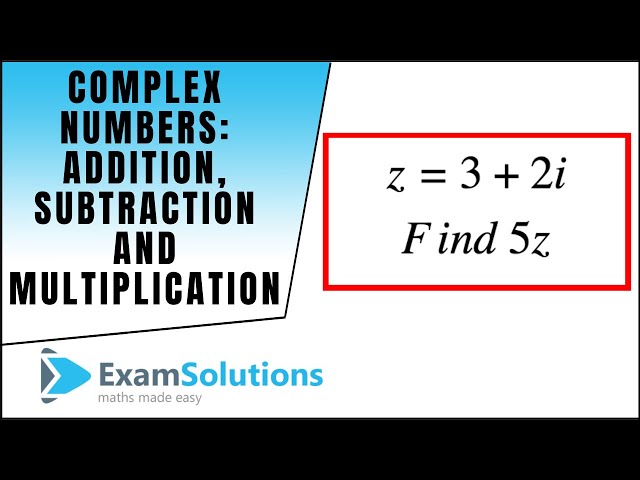
YOUTUBE CHANNEL at https://www.youtube.com/ExamSolutions
EXAMSOLUTIONS WEBSITE at https://www.examsolutions.net/ where you will have access to all playlists covering pure maths, statistics and mechanics.
FACEBOOK: https://www.facebook.com/examsolutions.net/
TWITTER: https:...
Get to 10:00
????
Y u delete ur comment?
heady harness
yes, that is what you solved for on the piece of paper
rain mulch
Hm


 night wigeon
i tried integrating 1/4x to ln(4x) when i tried it first time
and it gave me the wrong answer
so i assumed you had to take out the 1/4
This was my original working
 undone pawn
ok but that doesn't explain a random square root being introduced
undone pawn
bruh
night wigeon
i made the top line too wide cause i was rushing
uncut mulch
$\int$ looks very different to $\sqrt{ \ \ }$
undone pawn
your integral thing needs work
obsidian monolithBOT
ramonov:
night wigeon
oh your right
ill fix that symbol now then
where else did i go wrong
i cant figure it out
i tried a different question
and im still getting it wrong
where am i going wrong
 serene heath
integral of 1/3x
uncut mulch
()
night wigeon
i havent done integration in a long time is there a integration sheet with all the different integrals i can use to refresh my memory