#precalculus
1 messages · Page 175 of 1
 stuck lark
what's the top?
stuck lark
that's it
 cobalt totem
i forgot about - 3
if i were doing this on paper it'd be easier haha
so not drop a - 3
these are fun problems
thank you guys
stuck lark
you're welcome 
stuck lark
i'd say limits are from the first few days of a calc 1 class
cobalt totem
yea
I know kind of how to do some of these problems from graphs because I took a college algebra class over the summer and we pretty much did limits without doing limits
we found horizontal asymptotes by looking at end behavior
which is what you do with a limit to infinity
 viscid thistle
Can anyone help me out on this
I'm not sure which one it would be
Wouldn't that be D?
Just wanna make sure I'm correct
<@&286206848099549185>
 normal sundial
Why do you say its D
viscid thistle
i assumed id have to find the position vs time graph
since i need to find f(x)
and its in velocity form
rn
normal sundial
yeah
viscid thistle
so is it?
normal sundial
well that means that f has to be increasing
viscid thistle
would it be C?
normal sundial
the entire time
viscid thistle
oh.
normal sundial
after that
viscid thistle
B..?
viscid thistle
well
ik that when f increases, f prime x has all x
on the x axis
right?
sorry its late and im tired so i cant think properly
viscid thistle
so in that case, what graph would f be
im going to assume A
i keep changing my answer so much
normal sundial
You tell me
viscid thistle
I think it's A
normal sundial
ok. do you know what it means for f'(x) = 0 ?
viscid thistle
nvm, i found it
it's C
i think i understand it now.
correcT?
are any of those graphs right lmaop
normal sundial
it cant be c because c decreases and f' is positive
normal sundial
its supposed to be A
viscid thistle
A has y=0 when -3 on the x-axis, makes no sense
 formal patrol
A changes concavity at x=1 because f'' is 0 at x=1
normal sundial
yes
viscid thistle
Its supposed to be A
formal patrol
f' goes from decreasing to increasing
viscid thistle
but I dont think the proportions are right
formal patrol
it is A
normal sundial
yeah i hate these questions
normal sundial
yeah
 last bloom
i mean i just looked at all the parts where f'(x) was flat
and then that would be a
even if its not very accurate
 open eagle
Why is there the gap in the middle, shouldn't it be 2 petals?
That join at (0, 0 radians)
stuck lark
@open eagle your calc looks wonky. https://www.desmos.com/calculator/keqsdxjz2h
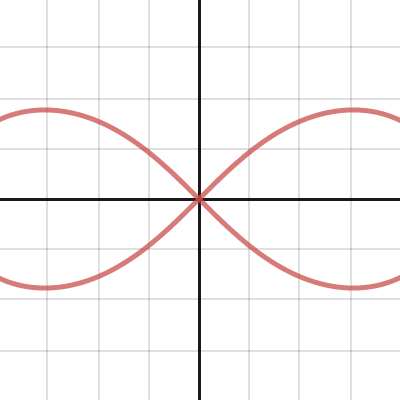
Desmos Graphing Calculator
 stuck ivy
I'm not quite sure how I messed up here since to turn my question into natural law I do ln(x)/ln(6)/ln(x)/ln(7)
 uncut mulch
not ln(x)/ln(6)/ln(x)/ln(7) but
(ln(x)/ln(6)) / (ln(x)/ln(7))
stuck ivy
Yeah
you're right
I figured it out
but it gave me a weird error
for the last question
uncut mulch
show your working out
stuck ivy
Yeah so when I solved it I used x as the numerator out of habit
rather than using a instead
uncut mulch
is your answer fixed now?
uncut mulch
what have you tried?
stuck ivy
I tried to like take out the exponent from the function and put it on the left
 proven dove
is absolute max also relative max?
stuck lark
relative and absolute extrema are NOT the same idea
proven dove
i changed it @stuck lark
stuck ivy
It wants something like a + b +c
stuck lark
still no
proven dove
so absolute max cannot also be considered a relative max?
stuck lark
it is POSSIBLE for some function to have global max be also a relative max but in general you shouldn't say relative and global extrema are the same
proven dove
ok
open eagle
isnt global max always a relative max, but not necessarily the other way around
stuck lark
not true at all
proven dove
uncut mulch
@stuck ivy can log (y^7 z^5) be written as a sum of 2 logs?
stuck ivy
like log(y^7) + log(z^5) ?
open eagle
yup I was wrong, seems absolute extrema are not considered local if at the end of a functions domain
but an absolute extrema can be a relative extrema
proven dove
isn't a global max the same as abs max?
stuck lark
same thing
proven dove
nvm
 summer sierra
A rectangular box with a square base is to have a volume of 20 cubic feet. The material for the base costs 30 cents/square foot. The material for the sides costs 10 cents/square foot. The material for the top costs 20 cents/square foot. Determine the dimensions that will yield minimum cost. Let x = length of the side of the base. Construct a rational function to help solve this problem.
summer sierra
Can someone help?
 languid crane
Why is this channel full of calculus problems
 willow bear

 timid dock
compared to
write a 4th deg polynomial with only 3 real zeros
for the second question, i accepted that if the multiplicity was two on a zero then the zero wasn't real
willow bear
uh. no?
willow bear
(x-7)^2 has one real zero of multiplicity 2
anyway i'm gonna transcribe the problem in plaintext for my own sake so i don't have to squint every time
Write a polynomial of degree 5 with real coefficients that has two real roots, one of multiplicity 2 and one of multiplicity 1.
wdym, "what counts"
timid dock
since we have x(x-1)(x-2)(x-3)(x-4) as a 5th deg polynomial with 5 zeros, what would be considered not to be a real zero
willow bear
its zeroes are 0, 1, 2, 3 and 4. these are all real numbers.
timid dock
so if i get an irrational number then it wouldn't be a real zero?
willow bear
why would it not be? irrational numbers are still real.
timid dock
i meant imaginary
willow bear
x^2 - 2 has -sqrt(2) and sqrt(2) as zeroes. these are both real numbers.
ok, i didn't know you meant imaginary when you said irrational.
if a zero is not real, then it is not real.
timid dock
now?
willow bear
first off, please write i, not sqrt(-1).
second, what you wrote is not a polynomial with real coefficients.
timid dock
im not sure if mty teacher can accept that
willow bear
accept what
willow bear
why would she not accept that though
i mean, aside from your polynomial not having real coefficients
timid dock
she gets picky idk
the question "write a 4th deg polynomial with only 3 real zeros" did not ask for it
willow bear
well ok if it didn't mention real coefficients then that's fine i suppose
timid dock
ah ok
how would i do the first question then
do I find the factored form and then multiply?
willow bear
yes, construct the polynomial by its factorization first
timid dock
hmm
willow bear
one possible polynomial is (x-3)(x-4)^2(x^2+1)
timid dock
does the x^2 count towards the degree of 5?
willow bear
...what do you mean, "does it count"
why would it possibly not count
this polynomial is quintic
timid dock
oh wait nevermind
i didnt think about that
yeah yeah sorry
see that's my problem. i never think about the simplest things when doing math problems
thanks though
willow bear
yeah you seem to overthink things a lot
willow bear
"discount Tuong"
timid dock
ah ok
willow bear
it's a bit of an injoke
timid dock
is it a chain of people à prix réduit
willow bear
yes. but i think it currently ends at @spring thunder
timid dock
how far does it even go
 spring thunder
4ppl
willow bear
SA isn't around anymore though 😢
timid dock
how long have you been learning french
willow bear
well i mean i'm shit at actually SPEAKING french
timid dock
just practice speaking a lot
well
hang out in the voice chats more
theyre talking right now
but mostly in english
willow bear
if you wish
timid dock
got it
willow bear
@alpine cove no, that doesn't make any sense
timid dock
why is the range from [0,4]
oh
nvm
forget i asked
why do we change f(x) to |f(x)| when finding the range
willow bear
which step are you confused about
timid dock
are we building on f(x-2)?
willow bear
wdym by "building on"
willow bear
but yes we are starting with f(x-2) and buidling up to g(x) from there
timid dock
why do we do that and not the other way around
willow bear
we know the range of f
timid dock
so if we dont know the range of f we cant do anything
given that they don't give us anything to work with
holy sh*t pg&e is gonna make me cry
willow bear
pg&e?
timid dock
no power for half a week
it's an american thing
pacific gas and electric
cutting off power in california bc of wildfire risk
not all at once
 flint stirrup
@timid dock LOL im the part of cali not in that bucket
timid dock
in Domain g = {x| |x-3| ∈ [0,∞)} why is it all real numbers
is it because there is an absolute value
@flint stirrup so cal or middle of the valley/bay area/san jose not foothills
willow bear
yes the absolute value of anything is in [0, +∞)
timid dock
but not all real numbers are >= 0
timid dock
why is the domain of g all real numbers
one sec
sry i didnt give the entire question
willow bear
|x-3| ≥ 0 is true for any real value of x
willow bear
yeah, sqrt(|x-3|) is defined for all real x since |x-3| ≥ 0 always
timid dock
ohh
i always get the order wrong
how would you solev for the domain of g(x)
no need to type the answer just tell me how you would do it
willow bear
the only point not in the domain of g is the point which makes |x-3| = 0
willow bear
that isn't what i'm talking about
timid dock
oh
willow bear
!= for ≠ is fine
what isn't fine is that you insist on not writing this thing as x != 3
willow bear
no!
timid dock
sorry
do i only have to add 3 to each side to get that
or do i also consider the |x-3| < 0 part
timid dock
its 2 am and i cant think straight
willow bear
why are you doing math at 2 am
willow bear
go get some sleep ffs
willow bear
go. get. some. mother. fucking. sleep. 2 am. is. not. a. time. to. do. math.
willow bear
no goddamn clue, it seems really fucking irrelevant given how g doesn't involve f at all
willow bear
the problem is poorly written
timid dock
the teacher is extremely ambiguous sometimes
well i guess 5 minutes is up
im gonna go sleep now
thanks for the help
 alpine cove
Lol
 river kindle
Seems like graph translations regarding base function f of x
 trail badge
,w graph y=|(1/(|x-3|))-2|
 obsidian monolithBOT
 Requested by Digicat195#1491
 willow bear
,w x^3 - 6x^2 + 11x - 10 = 0
obsidian monolithBOT
 Requested by Ann#0413
willow bear
Requested by Ann#0413
willow bear
nope
 hollow bluff
how would I solve this problem?
 serene heath
How did u get that
 hollow bluff
Somebody in class was explaining it to me
and he said he got that but i still dont know how to do it
so that's why I came here
willow bear
so you copied this from someone else?
without knowing how it was arrived at, at all?
hollow bluff
He tried explaining it but I just didnt understand his process
So what are the right steps to solving this?
wait
willow bear
dispel from your head the notion that there is always a uniquely defined set of "right steps" to do a given problem.
hollow bluff
ok
let me try at this one more time
Is this correct?
That is how i got to it
Sorry its flipped its from my phone
willow bear
,rotate -90
obsidian monolithBOT
hollow bluff
oh that's helpful
hollow bluff
oh well then
willow bear
for starters, this has 0 as a root. and also fails to have 2+i or 2-i as roots.
p sure you fucked up with the minus signs here, both in placement and in accidental omission
hollow bluff
then (x-2) has a zero of 2
willow bear
@limber bone please do not interrupt!!!!
 limber bone
lol
willow bear
ok @hollow bluff so far so good
a factor of (x-2) gives you 2 as a zero
that is correct
hollow bluff
alright
so I tried to recall what my teacher said about the i equations and i thought [x(x(2+i)] was right
hollow bluff
the complex zeros
willow bear
"2+i" isn't an equation
an equation has, first and foremost, an equals sign
why else would it be called an equation
willow bear
it's very important that you know the right word(s).
otherwise, you will not be able to communicate well.
willow bear
second, it's not like complex numbers are that different from real numbers
the corresponding factor would be (x - (2+i)), plain and simple.
but then, you'll want the conjugate too, since the polynomial has to have real coefficients. so (x - (2-i)) is your third factor.
hollow bluff
Oh ok so i messed up with the subtraction sign and its placement
willow bear
all that's left is to multiply these three together.
willow bear
what brackets
hollow bluff
my teachers uses [ ]
willow bear
oh, do you mean [] vs ()?
willow bear
the only difference is aesthetic
willow bear
[] have a different meaning as part of interval notation, yes.
obsidian monolithBOT
 Requested by Chudderino#8237
spring thunder
Requested by Chudderino#8237
spring thunder
well, what could prevent 4/(x²+7x-8) from being defined?
 lament garden
Do i have to make the x^2 + 7x -8 equal to 0? Sorry it’s that my teacher really dosen’t teach so i have to do the things by myself
spring thunder
yeah if the denominator is 0 you're pretty screwed indeed
serene heath
Na
lament garden
It’s not?
serene heath
Expand it out
lament garden
How?
 grim current
Let's go through your original expression. You have (x^2 + 7x - 8) in the denominator.
But first, I'll ask you a question. Let's say you have 2 apples, and there are 0 people to distribute it to. Does it make sense to distribute them?
@lament garden
lament garden
Oh my bad i had to go eat
grim current
Dw. So, does it make sense?
lament garden
yeah
grim current
Why?
Note you have no people to distribute it to.
It could be written as "2/0". A division that shows 2 apples are being distributed among 0 people.
But it doesn't make sense to do such division if you don't have - in this case - someone to divide it by (or distribute it to).
Do you get it?
 green zenith
how do we solve 5^(2log5(3)+log5(2))?
im familiar with the rules of the logarithm but logarithm in the exponents are very confusing to me
uncut mulch
how well do you know your exponent laws?
green zenith
about average
uncut mulch
do you have an idea of what your first step should be?
green zenith
yeah i think i got it a little bit now
the product rule of logarithm
the power rule, first, then product rule
and one of the properties of logarithm
ah i got it now
uncut mulch
nice
green zenith
thanks
green zenith
is there a way to simplify (-5/log(2/3))log2?
i was trying to solve an equation and im stuck there
i have to find the equation of y=c+b.loga(x) that contains the two points (2,4) and (3,9)
so i minus both equations 4-9=c-c+blog2-blog3
which gets me b = -5/log(2/3)
then i use one of the points of the graph to solve the equation and put b in it
4=c+(-5/log(2/3))log2
here is where i'm stuck. could the two logs be divided normally?
 clever agate
willow bear
clever agate
willow bear
$(4-\sqrt{5})^2 = 16 + 5 - 2 \cdot 4 \cdot \sqrt{5}$
obsidian monolithBOT
Ann:
alpine cove
f(x)=x^2 is a algebraic function ,g(x) =sinx is a trig f then what is h(x)=x^2+sinx
alpine cove
What are these types of f called
willow bear
there is no name
alpine cove
Ok.
Also
Lets say $h(x)=f(x)+g(x)+k(x)$ then the domain is $D_f \cap D_g \cap D_k$ .
obsidian monolithBOT
Born Killer:
willow bear
yes
alpine cove
Ok
alpine cove
${x:x , x^2=9 ,2x=4 }$ does that comma mean intersection?
obsidian monolithBOT
Born Killer:
 heady jewel
you have 2 commas
willow bear
uh
this is a very weird way to describe the empty set but sure commas in this context mean AND
alpine cove
Yes that what i wanted to ask
green zenith
When equating exponents, do we always use ln and not log?
 hard hornet
give an example
green zenith
Like 5^x=7
hard hornet
you can use ln, or log base n, as long as it's consistent
but ln is slightly more preferred
green zenith
What do you mean by log base n?
hard hornet
$\log_2(x)$
obsidian monolithBOT
MemesPlease:
obsidian monolithBOT
MemesPlease:
green zenith
So as long as im using the same base for both sides?
hard hornet
yup
green zenith
But isnt log(x) not equals to ln(x)?
obsidian monolithBOT
MemesPlease:
hard hornet
when you are taking the logarithm of something, the base matters
$log_2(16) = 4$
while
obsidian monolithBOT
MemesPlease:
hard hornet
$log_4(16) = 2$
obsidian monolithBOT
MemesPlease:
hard hornet
it matters
willow bear
\log
hard hornet
mb
green zenith
Ahhh
It was confusing me because the calculator is not posting the same answers
I thought ln(7)/ln(5) is not equal to log(7)/log(5)
willow bear
ln(7)/ln(5) IS equal to log(7)/log(5).
hard hornet
yes they're equal, but the base matters, in the case of comparing logs, they're not equal, but if you did something like what u did above, theyre the same
 rugged nimbus
Help me polar coordinates so hard
willow bear
what exactly are you finding hard about polar coordinates
is there a problem that involves them that you're stuck on
rugged nimbus

willow bear
- don't advertise your questions in other channels, as per the rules
- don't ping me out of left field like this
viscid thistle
oh srry but fluffyy was also putting his/her question in 2 channels even though the channel i put in my question first then she put in hers
viscid thistle
cause u posted ur exact same question in questions-B and questions-y
 prisma prairie
obsidian monolithBOT
prisma prairie
obsidian monolithBOT
Ann:
viscid thistle

im confused as to why the angle was subtracted from 360
the vector lies in the third quadrant, shouldnt we use 180 + theta?
willow bear
cos(180°+θ) is not equal to cos(θ) so you can't do that
viscid thistle
im talking about the direction of angle
not cos(180+theta)
last line beta = 360 - arccos(...)
why isnt it beta = 180 + arccos(...)
the vector lies within the third quadrant
willow bear
well for starters arccos(negative value) lies in quadrant 2
viscid thistle
so if the angle lies within quadrant 2 we subtract it from 360?
willow bear
no
subtracting the angle from 360° preserves its cosine
cos(360°-x) = cos(x)
but if x is in quadrants 1 or 2 then 360°-x is in quadrants 4 or 3 resp
green zenith
when estimating large numbers, do we always use log K?
for example K=e^700
do we always log both side instead of using ln?
willow bear
well you want to estimate
so at least to get an order of magnitude estimation yeah you'll need decimal log
green zenith
Is it because log have base 10 that we use it for estimating?
willow bear
yes
 lyric cliff
Hey, How do I find the average rate of change of f(x)=2^x? Without an interval given.
 hearty storm
would this be true or false?
 proud sparrow
@lyric cliff well, maybe you need to assume an interval [a, b]
can we see the original question?
@hearty storm what do you think? How do you convert?
hollow bluff
how would i attempt to solve this
river kindle
I believe so. imaginary zeroes typically have a conjugate
hollow bluff
that's what im thinking
willow bear
it's not "typically"
if your polynomial has real coefficients, then its nonreal zeroes ALWAYS come in conjugate pairs
hollow bluff
ok
river kindle
Well, I just learned this stuff last chapter, so I spoke without confidence on the always. 😛
willow bear
-3i would have been a valid answer to a as well
willow bear
so you know that R has 4 nonreal zeroes already
 patent beacon
You can't get real coefficients without having the conjugate as a root as well, to give reasoning
willow bear
you're gonna need that info to do b
hollow bluff
4 nonreal zeros because of the 3i and -3+2i right?
hollow bluff
ok
river kindle
Well, they're asking maximum, so I wouldn't get hung up on that technicality as far as answering.
hollow bluff
So if i understand this then if the polynomial has real coefficients then its nonreal zeroes always will have conjugate pairs
and because we singled out 4 nonreal zeroes we can solve B
patent beacon
Yes, exactly
hollow bluff
so is it because 11-4= 7 real zeroes im allowed to answer B?
river kindle
That would be how I would answer b, myself
willow bear
yes there are 7 more zeroes that haven't been pinned down and it's impossible for there to be more than 7 real ones
hollow bluff
alright
willow bear
so yes b is 7
hollow bluff
and C is 4
patent beacon
Nope, you can have more complex zeroes
river kindle
I don't think so. It's asking for max
river kindle
And you need at least one real for the conjugate stuff to be true, if I understand it.
hollow bluff
alright
hollow bluff
mhm
willow bear
so with 11 zeroes total...
hollow bluff
so would that mean instead of 7 real zeroes one isnt part of a pair?
so would that one be a nonreal
patent beacon
These would have to be different polynomials
willow bear
the zero that isn't part of a pair IS real
hollow bluff
Oh ok
patent beacon
The one with 7 real zeroes is not the same one with max complex zeroes
hollow bluff
alright
so with that all explained to me What i understand is that I dont have to find the unreal numbers right?
but how would i find the total number of unreal numbers
willow bear
"unreal"
willow bear
okay so like
the nonreal zeroes of your polynomial come in pairs
and there's 11 of them total
hollow bluff
22?
willow bear
if you have 11 objects and you're arranging them in pairs, how many pairs can you make
willow bear
yes
so
so if your nonreal zeroes form 5 conjugate pairs
and the eleventh zero is real
willow bear
no
hollow bluff
wait 10
hollow bluff
my bad
I was thinking 5 pairs
sorry
so this would be correct
so if we had a degree of 15 then we would have 7 pairs making 14 the maximum number of nonreal zeros
Thank you ann
initial price of an item is when you set t=0 right?
willow bear
initial
stuck lark
the word "initial" does indicate at the start of time, so yes, the initial price is presumably when t=0
hollow bluff
ez
willow bear
$\bigcup_{i=1}^{30} A_i$
obsidian monolithBOT
Ann:
willow bear
is this what you wanted to type
limber bone
whats A_i
proud sparrow
probably something to do with incidence matrices (okay maybe not)
It's just a 5 element set
Think about the total number of elements in B_1...B_N
alpine cove
I want to understand the question
proud sparrow
looks like you are interrupting something
oh wait
you changed dp
no wonder
okay tell me what you understand from the question so far
alpine cove
I get the question
proud sparrow
okay, so now you know how to solve it?
alpine cove
Now i dont get the solution
alpine cove
What ?
proud sparrow
$n(S)=\frac{1}{10}\sum_{i=1}^{30}n(A_i)$
obsidian monolithBOT
Element118:
alpine cove
Yws that what they wrote
alpine cove
I dont get why they divided by 10
proud sparrow
because each element is in 10 sets
by counting the number of elements in Ai, we have overcounted by a factor of 10
obsidian monolithBOT
Krishna:
willow bear
actually, no, you are wrong on that front
first off
the second equals sign equates a NUMBER with a SET, which is nonsensical
@alpine cove
alpine cove
Oh yes
willow bear
so what you wrote is nonsense
obsidian monolithBOT
Krishna:
willow bear
now that's no longer nonsensical but just wrong
n(A U B) != n(A) + n(B) generally
the first and the last quantities are in fact equal to each other (even if the one on the right is badly typeset) but not to the quantity in the middle
because yes $S = A_1 \cup A_2 \cup \cdots \cup A_{30}$
obsidian monolithBOT
Ann:
alpine cove
I juusr cant undesrtand the problem aand solution
 leaden stratus
How to solve? I divided both terms by 17 and then?
 flint vale
you can remove the outer parenthesis then
and multiply the half by the the rest of the exponent bc they are both exponents
do for right side too
observe the difference in powers between 2 and 4 to make them the same
flint vale
what is the question
i thought you solve for x
and compare with the inequality on the side
ur right tho
flint vale
im just curious what the question is
leaden stratus
Find the x
flint vale
yes, you did that
leaden stratus
Yeah. I forgot multipling for 2 the second term
leaden stratus
P.S. Thanks @flint vale
flint vale
mp
leaden stratus
@trim fable what's your question
leaden stratus
Uhm, I don't think I've done an inequality with more than an inequality symbol
But I think you have to separate the inequalities
Then you find the intersection of the inequalities. The first one does not have a solution. I found that the first one gives x < 3 and x > 4 but leads to no solution
 remote relic
you need to isolate the x
 trim fable
how 😅
lol im good at math but this stuff is just confusing me..
like im like wow i dont know ahhhh!!
coz like dont u get
remote relic
so
 regal peak
how do i solve 4 log(2,n) = n
(that's log base 2)
remote relic
@trim fable so you need to seperate the inequality
trim fable
what do u mean by
remote relic
so then you would have x-3 < 3-x and 3-x<x-5
trim fable
oh
remote relic
yes
then you move all the x to one side
then you do the same thing for the other equation
remote relic
yes
trim fable
and for the second one
trim fable
x>-3 and 4>x
but why is that no solution?
how do u know when there isn't a solution
 flint river
it is
remote relic
the first one is no solution because you can't have x be less than 3 and also be greater than 4
flint river
-3 < x < 4
trim fable
makes sense
thanksss guyss
wait but
for
3>x>4
wont the number line be like this
flint river
uh there's no number below 3 and above 4 at the same time
trim fable
it goes both ways right
oh so like if x is 2 it cant be less than 3 and greater than 4
makes sense!!!!!!!
LOL
oh
i have another question
equation from # 12 is
so should i just think of f as being x? and same with c?
flint river
yeah solve for F
trim fable
so c would be like x?
or f is like x?
i dont get this
the c and f are confusing me
@flint river
flint river
it converts from C to F
stuck lark
you're being really unclear when you say "is F like x?"
yeah solve for F
that's all there is to it. isolate F
stuck lark
👍🏽
trim fable
ok
but like
hows that an inequality?
the inequality things just confusing me
can someone just tell me what an inequality means
stuck lark
first off
(9c/5)+32= F
is not an inequality
trim fable
whats an inequality tho
obsidian monolithBOT
RokettoJanpu:
willow bear
stuck lark
isn't that more effort than linking lmgtfy?
stuck lark
you are right
stuck lark
look, first read what i said about what a<b means. if you're still confused on inequalities, then look through your past algebra material on that stuff, or google it as suggested
trim fable
ok im not confused anymore
 pseudo sonnet
Determine which quadrant the terminal side of the angle -16.92lies in.
what is -16.92?
the angle or length of terminal side
im confused af
stuck lark
the angle
stuck lark
i'd assume so too
pseudo sonnet
how do I convert -16.92 to degrees if I cant use 180/pie
 clear glade
how do i find phase shift of a graph?
pseudo sonnet
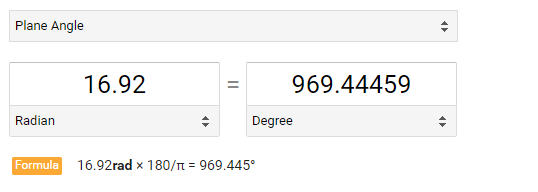
is this how I would do it?
then keep adding 360 till i get to coterminal
its suppose to be -16.92
stuck lark
are you not confident in traveling around the unit circle using radians?
pseudo sonnet
well the problem is
im use to seeing x/Pie radians
this is just -16.92
would I add 2pie
stuck lark
what's an approximate decimal representation of pi?
stuck lark
how about 2pi?
pseudo sonnet
6.28
stuck lark
now run with that
pseudo sonnet
but i want an exact answer
not approximation
wait so
do I add 2pi to -16.92
or do I add 6.28 to -16.92
stuck lark
getting a decimal in converting rad to deg will never be exact since the conversion involves pi
then keep adding 360 till i get to coterminal
what's the equivalent action when working in radians?
pseudo sonnet
2pie
but since the original question isnt in pie radians
do I just approximate 2pie to 6.28
then add that to -16.92
till i get to positive coterminal
stuck lark
sounds fine
 velvet elm
I am stuck on this problem.
I use change of base and get log(b,2.8) over log(b,5b), (sorry I don't know latex)
so the denom = B+1, but i don't know what to do with the logb2.8
willow bear
$\frac{\log_b(2.8)}{\log_b(5b)} = \frac{\log_b(2.8)}{B+1}$
obsidian monolithBOT
Ann:
willow bear
so this is what you have to far, right?
velvet elm
Yes
willow bear
$2.8 = \frac{14}{5}$
obsidian monolithBOT
Ann:
velvet elm
Ohh...
Hmm let me think where to take that, but that helps! thanks!
(A+C-B)/B+1
Thank you! @willow bear
willow bear
the denom needs parentheses around it too but yes
velvet elm
You're right, I wrote it into my online homework correctly, just not here
stuck lark
close enough 👍🏽
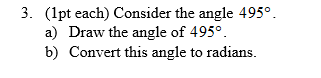 stuck lark
looks fine



 willow bear
seems so
pseudo sonnet
how come for e)
$sin(5\pi/3) = -\sqrt{3}/2$
idk how to put pi and square root lel
but my answer was positive
and the correct answer is negative
 gentle vigil
How was your answer positive?
willow bear
ew bad tex
willow bear
$\pi$
obsidian monolithBOT
Ann:
willow bear
$\sqrt{123}$
obsidian monolithBOT
Ann:
gentle vigil
Is that correct?
obsidian monolithBOT
Vici:
gentle vigil
$\sin{5\pi/3} =\sin{(2\pi-\pi/3)}$
obsidian monolithBOT
oscillatingEquilibrium:
gentle vigil
I didn't understand how you did it
gentle vigil
$\sin{(x-\pi)} = -\sin{x}$
obsidian monolithBOT
Vici:
stuck lark
5pi/3 is not coterminal with 2pi/3
obsidian monolithBOT
oscillatingEquilibrium:
stuck lark
previously, how did you find the coterminal of some big ugly angle?
stuck lark
how did you find the coterminal of some big ugly angle?
gentle vigil
For sin, cos, sec, csc, it's better to add or subtract multiples of $2\pi$, not $\pi$
obsidian monolithBOT
oscillatingEquilibrium:
gentle vigil
It won't change sign of the functins
 hoary valley
What's the next step in solving this problem ? I want to get rid of one of the t's to solve for the other T...
stuck lark
that can be rewritten as a quadratic equation
gentle vigil
@hoary valley seems like a physics problem 😂
hoary valley
It is, but I'm struggling with the math part of it...
pseudo sonnet
smh
stuck lark
do you know the general form of a quadratic equation?
hoary valley
yes x^2 + x + number = 0 @stuck lark
gentle vigil
$t = \frac{-b ± \sqrt{\Delta}}{2a}$
obsidian monolithBOT
oscillatingEquilibrium:
hoary valley
something like that
gentle vigil
Are you familiar with this?
stuck lark
@hoary valley not quite
stuck lark
$ax^2+bx+c=0 \\ a \neq 0 \ a,b,c \in \bR$
obsidian monolithBOT
RokettoJanpu:
$ax^2+bx+c=0 \\\\ a \neq 0 \\ a,b,c \in \bR$
Wait I think I get it @stuck lark I will get 2 answers one of them will be correct
I will try solving
@stuck lark Wait I'm used to solve x^2 but this x^2 has a -4.9 next to it
stuck lark
how would you deal with that?